

Magnus Corvus
1.1k Posts

Magnus Corvus
Report
Block User
I'm Crypto Analyst & Elite Trader:X-@MagnusCorvus_
22 Following
6.3K+ Followers
1.9K+ Liked
Posts
·
--
Bullish
AI stocks are running hot. But I’m more interested in what AI spending is creating BEHIND the obvious winners.
I’m bullish on AI long term, but I’m not convinced that buying every AI-labelled stock after a huge run is the smartest way to play the theme.
Nvidia’s latest quarter is a good example of how big the demand has become: revenue reached $96.2B, up 106% YoY, while Data Center revenue hit $89B, up 117%. Nvidia is also forecasting roughly 70% revenue growth for its next fiscal year.
But here’s the part I’m watching more closely: AI needs an enormous physical infrastructure.
More AI means more data centers → more electricity → more grids, transformers, cooling, networking, storage and power infrastructure.
The IEA estimates data-center electricity consumption grew 17% in 2025, while AI-focused data centers grew even faster, at 50%. It also says annual grid investment may need to rise by roughly 50% by 2030 to meet expected demand.
So maybe the next opportunity isn’t just the company selling the AI chip.
Maybe it’s the companies quietly selling the electricity, cooling and infrastructure required to run millions of them.
That’s the AI trade I’m watching next.
Are you still buying the headline AI stocks, or looking at the “picks and shovels” behind the AI boom?
#AIStocksWhatNext
AI stocks are running hot. But I’m more interested in what AI spending is creating BEHIND the obvious winners.
I’m bullish on AI long term, but I’m not convinced that buying every AI-labelled stock after a huge run is the smartest way to play the theme.
Nvidia’s latest quarter is a good example of how big the demand has become: revenue reached $96.2B, up 106% YoY, while Data Center revenue hit $89B, up 117%. Nvidia is also forecasting roughly 70% revenue growth for its next fiscal year.
But here’s the part I’m watching more closely: AI needs an enormous physical infrastructure.
More AI means more data centers → more electricity → more grids, transformers, cooling, networking, storage and power infrastructure.
The IEA estimates data-center electricity consumption grew 17% in 2025, while AI-focused data centers grew even faster, at 50%. It also says annual grid investment may need to rise by roughly 50% by 2030 to meet expected demand.
So maybe the next opportunity isn’t just the company selling the AI chip.
Maybe it’s the companies quietly selling the electricity, cooling and infrastructure required to run millions of them.
That’s the AI trade I’m watching next.
Are you still buying the headline AI stocks, or looking at the “picks and shovels” behind the AI boom?
#AIStocksWhatNext
I’m bullish on AI long term, but I’m not convinced that buying every AI-labelled stock after a huge run is the smartest way to play the theme.
Nvidia’s latest quarter is a good example of how big the demand has become: revenue reached $96.2B, up 106% YoY, while Data Center revenue hit $89B, up 117%. Nvidia is also forecasting roughly 70% revenue growth for its next fiscal year.
But here’s the part I’m watching more closely: AI needs an enormous physical infrastructure.
More AI means more data centers → more electricity → more grids, transformers, cooling, networking, storage and power infrastructure.
The IEA estimates data-center electricity consumption grew 17% in 2025, while AI-focused data centers grew even faster, at 50%. It also says annual grid investment may need to rise by roughly 50% by 2030 to meet expected demand.
So maybe the next opportunity isn’t just the company selling the AI chip.
Maybe it’s the companies quietly selling the electricity, cooling and infrastructure required to run millions of them.
That’s the AI trade I’m watching next.
Are you still buying the headline AI stocks, or looking at the “picks and shovels” behind the AI boom?
#AIStocksWhatNext

75
·
--
Bullish
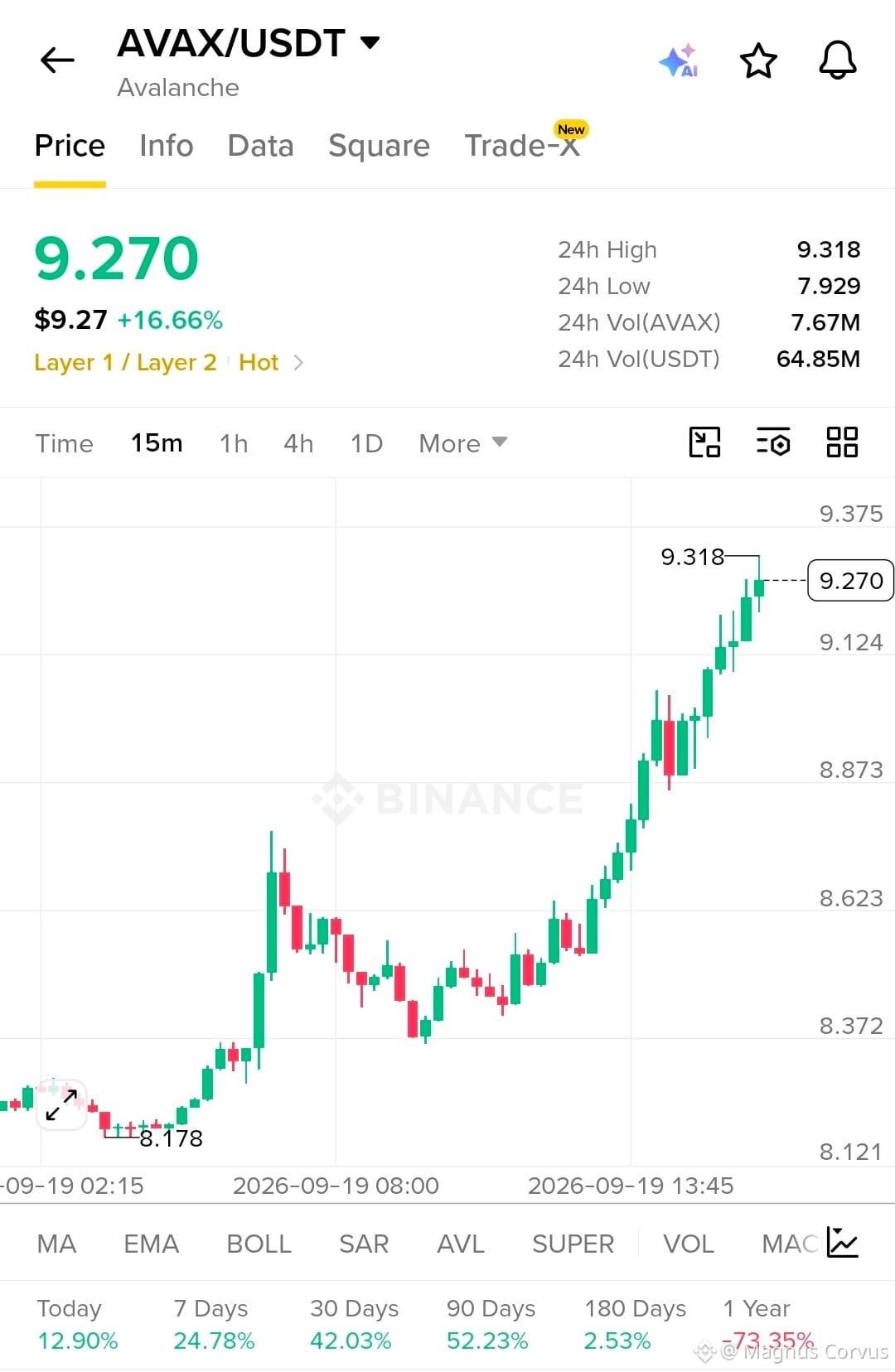
$AVAX is showing strong bullish momentum with aggressive upside expansion.
Buyers remain in control as the structure continues to print higher highs and higher lows.
Entry Zone: 9.12 - 9.20
Stop Loss: 8.98
Target 1: 9.32
Target 2: 9.50
Target 3: 9.70
Liquidity is building above 9.318, while the recent breakout structure supports continuation if price holds the 9.12 - 9.20 reaction zone. A clean retest with buyer reaction keeps the bullish structure intact.
Let’s go and Trade now $AVAX
$AVAX is showing strong bullish momentum with aggressive upside expansion.
Buyers remain in control as the structure continues to print higher highs and higher lows.
Entry Zone: 9.12 - 9.20
Stop Loss: 8.98
Target 1: 9.32
Target 2: 9.50
Target 3: 9.70
Liquidity is building above 9.318, while the recent breakout structure supports continuation if price holds the 9.12 - 9.20 reaction zone. A clean retest with buyer reaction keeps the bullish structure intact.
Let’s go and Trade now $AVAX
Buyers remain in control as the structure continues to print higher highs and higher lows.
Entry Zone: 9.12 - 9.20
Stop Loss: 8.98
Target 1: 9.32
Target 2: 9.50
Target 3: 9.70
Liquidity is building above 9.318, while the recent breakout structure supports continuation if price holds the 9.12 - 9.20 reaction zone. A clean retest with buyer reaction keeps the bullish structure intact.
Let’s go and Trade now $AVAX
79
·
--
Bullish
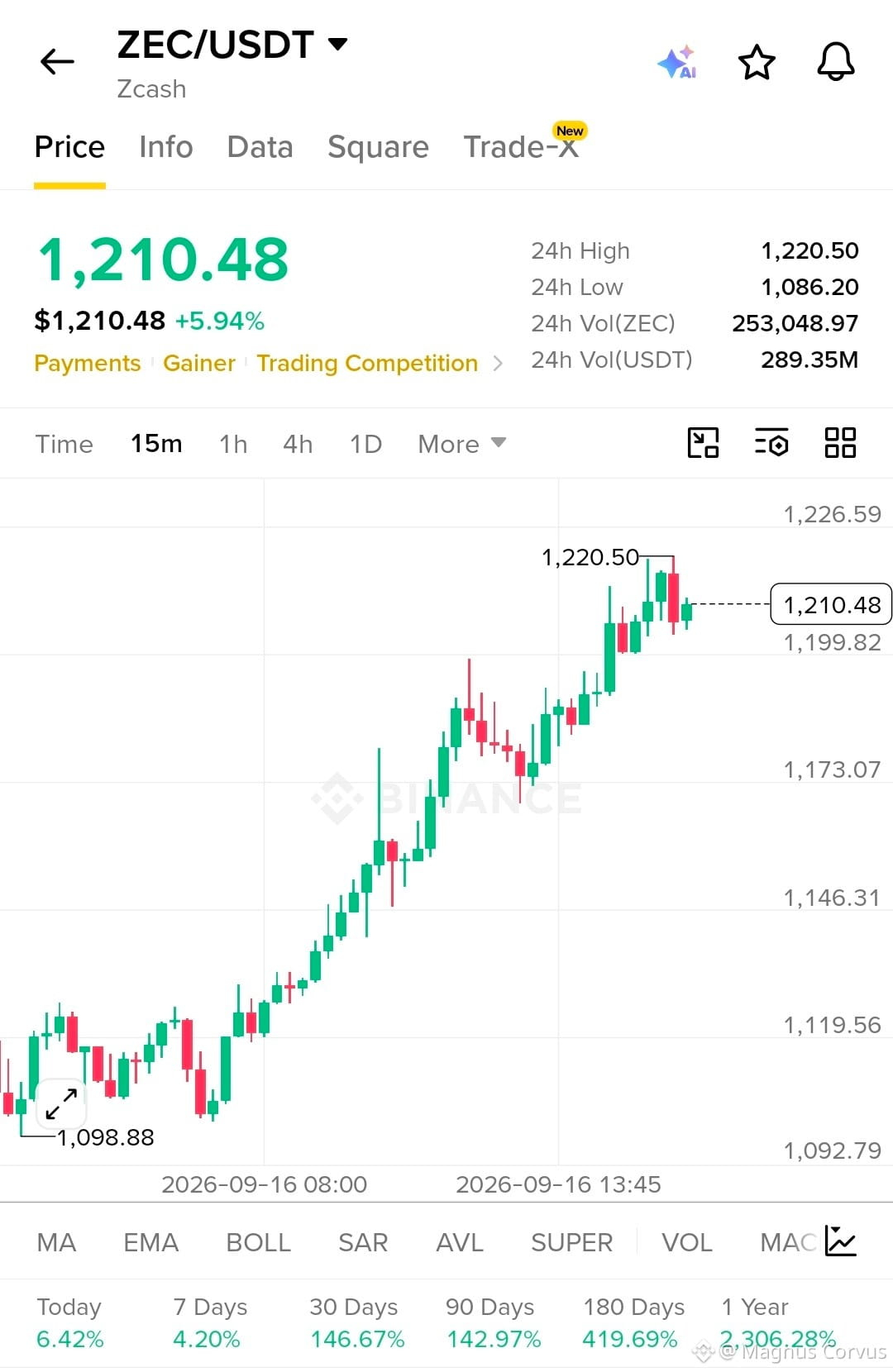
$ZEC is showing strong bullish momentum with buyers firmly in control.
Higher highs and higher lows confirm the bullish structure remains intact.
Entry Zone: 1198 - 1205
Stop Loss: 1185
Target 1: 1220
Target 2: 1235
Target 3: 1250
Liquidity is building above the recent high, while pullbacks are being absorbed around the 1200 area. A clean reaction from the entry zone can maintain structure and open the next upside levels.
Let’s go and Trade now $ZEC
$ZEC is showing strong bullish momentum with buyers firmly in control.
Higher highs and higher lows confirm the bullish structure remains intact.
Entry Zone: 1198 - 1205
Stop Loss: 1185
Target 1: 1220
Target 2: 1235
Target 3: 1250
Liquidity is building above the recent high, while pullbacks are being absorbed around the 1200 area. A clean reaction from the entry zone can maintain structure and open the next upside levels.
Let’s go and Trade now $ZEC
Higher highs and higher lows confirm the bullish structure remains intact.
Entry Zone: 1198 - 1205
Stop Loss: 1185
Target 1: 1220
Target 2: 1235
Target 3: 1250
Liquidity is building above the recent high, while pullbacks are being absorbed around the 1200 area. A clean reaction from the entry zone can maintain structure and open the next upside levels.
Let’s go and Trade now $ZEC
287
·
--
Bullish
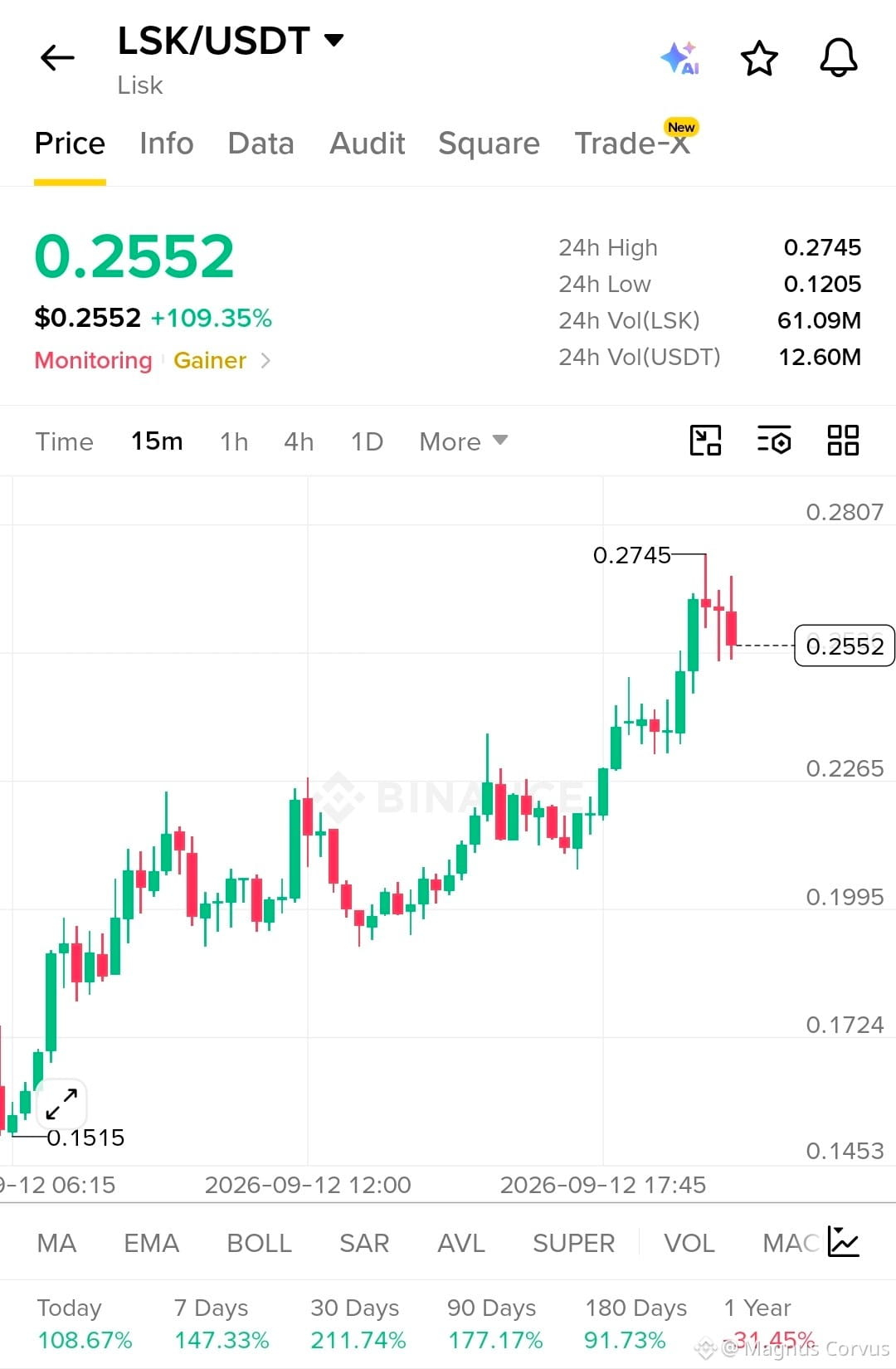
$LSK is showing explosive strength with buyers firmly in control.
The bullish structure remains intact as price holds above the recent breakout zone.
Entry Zone: 0.2480 - 0.2550
Stop Loss: 0.2380
Target 1: 0.2650
Target 2: 0.2745
Target 3: 0.2900
Liquidity is building above the recent high, while the reaction from lower levels confirms strong demand. Holding the breakout structure keeps momentum positioned for another upside expansion.
Let’s go and Trade now $LSK
$LSK is showing explosive strength with buyers firmly in control.
The bullish structure remains intact as price holds above the recent breakout zone.
Entry Zone: 0.2480 - 0.2550
Stop Loss: 0.2380
Target 1: 0.2650
Target 2: 0.2745
Target 3: 0.2900
Liquidity is building above the recent high, while the reaction from lower levels confirms strong demand. Holding the breakout structure keeps momentum positioned for another upside expansion.
Let’s go and Trade now $LSK
The bullish structure remains intact as price holds above the recent breakout zone.
Entry Zone: 0.2480 - 0.2550
Stop Loss: 0.2380
Target 1: 0.2650
Target 2: 0.2745
Target 3: 0.2900
Liquidity is building above the recent high, while the reaction from lower levels confirms strong demand. Holding the breakout structure keeps momentum positioned for another upside expansion.
Let’s go and Trade now $LSK
209
·
--
Bullish
The Fed is walking into a real “Goldilocks” test.
Strong payrolls say the economy still has momentum, but that strength becomes a problem if inflation refuses to cool. For me, the key question isn’t simply “hike or hold?” — it’s whether the data lets the Fed stay patient without losing credibility.
My base case is a hold, but I’d expect a firm message if inflation stays sticky. That would keep markets sensitive to yields and the dollar.
I’m neutral on stocks until I see which side wins: softer inflation could revive risk appetite, while another hot reading could quickly punish high-beta names. Gold may benefit from uncertainty, but higher real yields could limit the move.
So I’m not chasing the first reaction. I want confirmation from rates, the dollar, and market breadth before choosing a direction.
What would change your Fed view first?
#CPIWatch
The Fed is walking into a real “Goldilocks” test.
Strong payrolls say the economy still has momentum, but that strength becomes a problem if inflation refuses to cool. For me, the key question isn’t simply “hike or hold?” — it’s whether the data lets the Fed stay patient without losing credibility.
My base case is a hold, but I’d expect a firm message if inflation stays sticky. That would keep markets sensitive to yields and the dollar.
I’m neutral on stocks until I see which side wins: softer inflation could revive risk appetite, while another hot reading could quickly punish high-beta names. Gold may benefit from uncertainty, but higher real yields could limit the move.
So I’m not chasing the first reaction. I want confirmation from rates, the dollar, and market breadth before choosing a direction.
What would change your Fed view first?
#CPIWatch
Strong payrolls say the economy still has momentum, but that strength becomes a problem if inflation refuses to cool. For me, the key question isn’t simply “hike or hold?” — it’s whether the data lets the Fed stay patient without losing credibility.
My base case is a hold, but I’d expect a firm message if inflation stays sticky. That would keep markets sensitive to yields and the dollar.
I’m neutral on stocks until I see which side wins: softer inflation could revive risk appetite, while another hot reading could quickly punish high-beta names. Gold may benefit from uncertainty, but higher real yields could limit the move.
So I’m not chasing the first reaction. I want confirmation from rates, the dollar, and market breadth before choosing a direction.
What would change your Fed view first?
#CPIWatch

83
·
--
Bullish
$VTHO is showing strong recovery potential after a sharp reaction from the recent low.
Buyers are defending the structure while price holds above the key support zone.
Entry Zone: 0.000561 - 0.000576
Stop Loss: 0.000545
Target 1: 0.000602
Target 2: 0.000644
Target 3: 0.000676
Liquidity is building above the recent highs, while reactions around 0.000561 continue to support the recovery structure. Holding this zone keeps the upside structure intact and puts higher liquidity levels in focus.
Let’s go and Trade now $VTHO
$VTHO is showing strong recovery potential after a sharp reaction from the recent low.
Buyers are defending the structure while price holds above the key support zone.
Entry Zone: 0.000561 - 0.000576
Stop Loss: 0.000545
Target 1: 0.000602
Target 2: 0.000644
Target 3: 0.000676
Liquidity is building above the recent highs, while reactions around 0.000561 continue to support the recovery structure. Holding this zone keeps the upside structure intact and puts higher liquidity levels in focus.
Let’s go and Trade now $VTHO
Buyers are defending the structure while price holds above the key support zone.
Entry Zone: 0.000561 - 0.000576
Stop Loss: 0.000545
Target 1: 0.000602
Target 2: 0.000644
Target 3: 0.000676
Liquidity is building above the recent highs, while reactions around 0.000561 continue to support the recovery structure. Holding this zone keeps the upside structure intact and puts higher liquidity levels in focus.
Let’s go and Trade now $VTHO

153
·
--
Bullish
$SAHARA is showing strong bearish momentum after a sharp breakdown from the recent range.
Sellers remain in control while the structure holds below the key resistance zone.
Entry Zone: 0.00887 - 0.00897
Stop Loss: 0.00912
Target 1: 0.00875
Target 2: 0.00860
Target 3: 0.00840
Liquidity is building below the recent 0.00887 low, while reactions around 0.00897 continue to confirm bearish pressure. Holding below this zone keeps the downside structure intact and puts lower liquidity levels in focus.
Let’s go and Trade now $SAHARA
$SAHARA is showing strong bearish momentum after a sharp breakdown from the recent range.
Sellers remain in control while the structure holds below the key resistance zone.
Entry Zone: 0.00887 - 0.00897
Stop Loss: 0.00912
Target 1: 0.00875
Target 2: 0.00860
Target 3: 0.00840
Liquidity is building below the recent 0.00887 low, while reactions around 0.00897 continue to confirm bearish pressure. Holding below this zone keeps the downside structure intact and puts lower liquidity levels in focus.
Let’s go and Trade now $SAHARA
Sellers remain in control while the structure holds below the key resistance zone.
Entry Zone: 0.00887 - 0.00897
Stop Loss: 0.00912
Target 1: 0.00875
Target 2: 0.00860
Target 3: 0.00840
Liquidity is building below the recent 0.00887 low, while reactions around 0.00897 continue to confirm bearish pressure. Holding below this zone keeps the downside structure intact and puts lower liquidity levels in focus.
Let’s go and Trade now $SAHARA

131
·
--
Bullish
$MARSCOIN is showing strong bullish momentum after a sharp expansion from the lows.
Buyers remain in control while the structure holds above the key support zone.
Entry Zone: 0.1250 - 0.1275
Stop Loss: 0.1205
Target 1: 0.1300
Target 2: 0.1330
Target 3: 0.1380
Liquidity is building above the recent 0.1330 high, while reactions around 0.1250 continue to support the bullish structure. Holding this zone keeps the upside structure intact and puts higher liquidity levels in focus.
Let’s go and Trade now $MARSCOIN
$MARSCOIN is showing strong bullish momentum after a sharp expansion from the lows.
Buyers remain in control while the structure holds above the key support zone.
Entry Zone: 0.1250 - 0.1275
Stop Loss: 0.1205
Target 1: 0.1300
Target 2: 0.1330
Target 3: 0.1380
Liquidity is building above the recent 0.1330 high, while reactions around 0.1250 continue to support the bullish structure. Holding this zone keeps the upside structure intact and puts higher liquidity levels in focus.
Let’s go and Trade now $MARSCOIN
Buyers remain in control while the structure holds above the key support zone.
Entry Zone: 0.1250 - 0.1275
Stop Loss: 0.1205
Target 1: 0.1300
Target 2: 0.1330
Target 3: 0.1380
Liquidity is building above the recent 0.1330 high, while reactions around 0.1250 continue to support the bullish structure. Holding this zone keeps the upside structure intact and puts higher liquidity levels in focus.
Let’s go and Trade now $MARSCOIN

133
·
--
Bullish
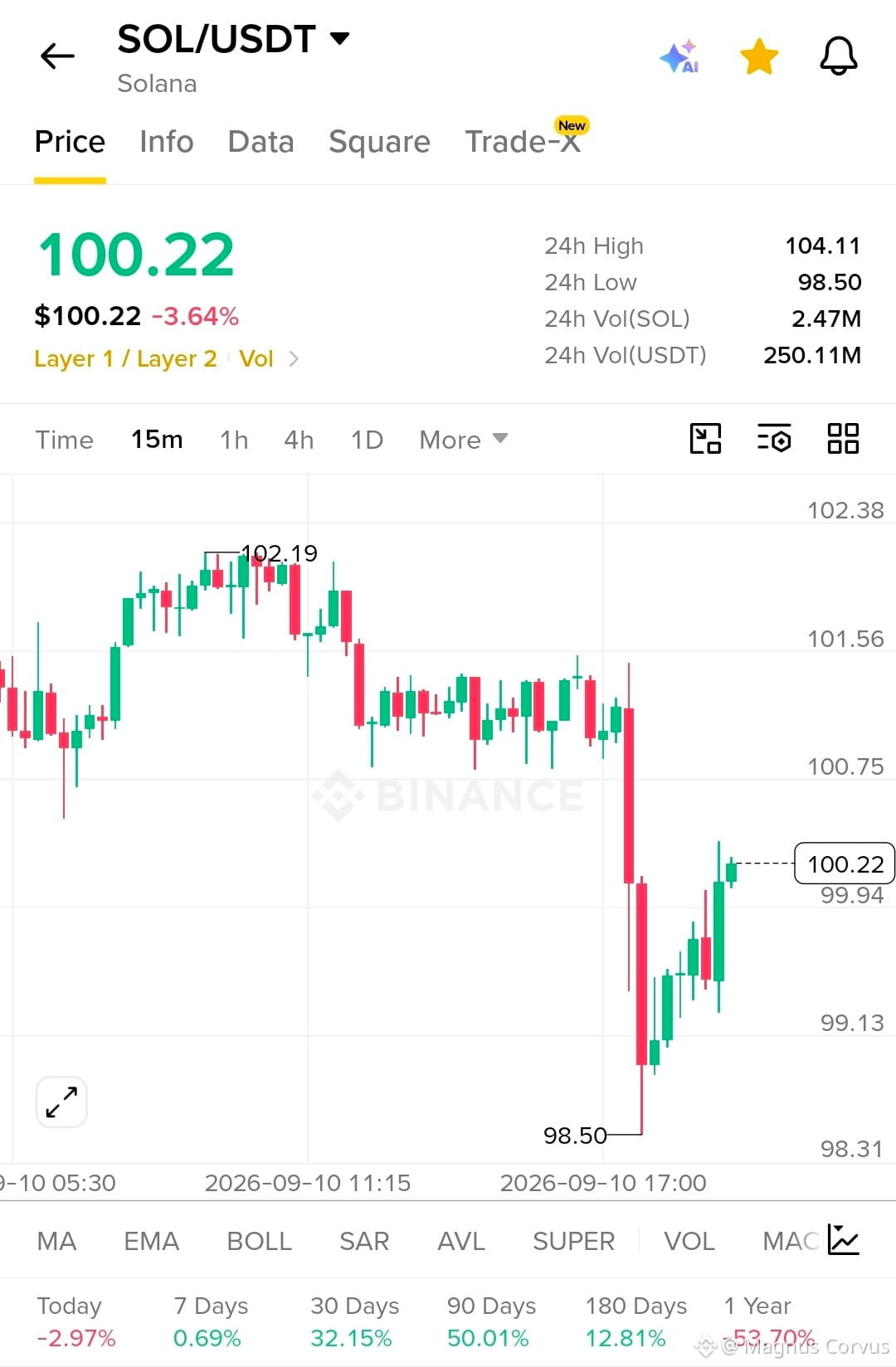
$SOL is showing strong recovery momentum after defending the key liquidity zone.
Buyers are regaining control as the structure starts reacting from the 98.50 low.
Entry Zone: 99.90 - 100.30
Stop Loss: 98.40
Target 1: 100.75
Target 2: 101.56
Target 3: 102.19
Liquidity was swept below 99.00 before a sharp reaction pushed SOL back toward 100.22. Holding this recovery structure keeps the upside levels in focus, while losing the liquidity low would weaken the setup.
Let’s go and Trade now $SOL
$SOL is showing strong recovery momentum after defending the key liquidity zone.
Buyers are regaining control as the structure starts reacting from the 98.50 low.
Entry Zone: 99.90 - 100.30
Stop Loss: 98.40
Target 1: 100.75
Target 2: 101.56
Target 3: 102.19
Liquidity was swept below 99.00 before a sharp reaction pushed SOL back toward 100.22. Holding this recovery structure keeps the upside levels in focus, while losing the liquidity low would weaken the setup.
Let’s go and Trade now $SOL
Buyers are regaining control as the structure starts reacting from the 98.50 low.
Entry Zone: 99.90 - 100.30
Stop Loss: 98.40
Target 1: 100.75
Target 2: 101.56
Target 3: 102.19
Liquidity was swept below 99.00 before a sharp reaction pushed SOL back toward 100.22. Holding this recovery structure keeps the upside levels in focus, while losing the liquidity low would weaken the setup.
Let’s go and Trade now $SOL
126
·
--
Bullish
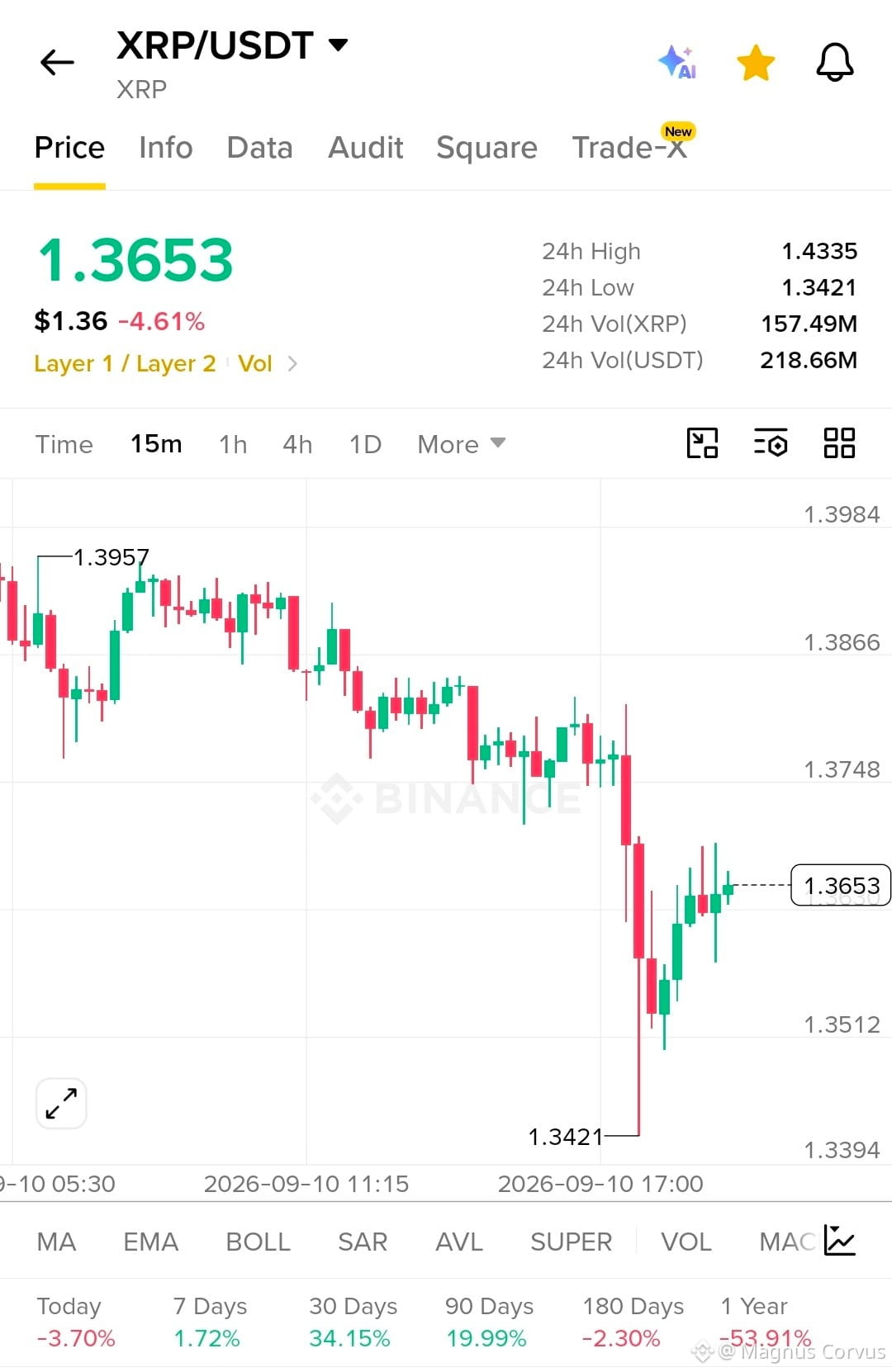
$XRP is showing strong recovery momentum after defending the key liquidity zone.
Buyers are regaining control as the structure starts reacting from the 1.3421 low.
Entry Zone: 1.3600 - 1.3660
Stop Loss: 1.3410
Target 1: 1.3748
Target 2: 1.3866
Target 3: 1.3957
Liquidity was swept below 1.35 before a sharp reaction pushed XRP back toward 1.3653. Holding this recovery structure keeps the upside levels in focus, while losing the liquidity low would weaken the setup.
Let’s go and Trade now $XRP
$XRP is showing strong recovery momentum after defending the key liquidity zone.
Buyers are regaining control as the structure starts reacting from the 1.3421 low.
Entry Zone: 1.3600 - 1.3660
Stop Loss: 1.3410
Target 1: 1.3748
Target 2: 1.3866
Target 3: 1.3957
Liquidity was swept below 1.35 before a sharp reaction pushed XRP back toward 1.3653. Holding this recovery structure keeps the upside levels in focus, while losing the liquidity low would weaken the setup.
Let’s go and Trade now $XRP
Buyers are regaining control as the structure starts reacting from the 1.3421 low.
Entry Zone: 1.3600 - 1.3660
Stop Loss: 1.3410
Target 1: 1.3748
Target 2: 1.3866
Target 3: 1.3957
Liquidity was swept below 1.35 before a sharp reaction pushed XRP back toward 1.3653. Holding this recovery structure keeps the upside levels in focus, while losing the liquidity low would weaken the setup.
Let’s go and Trade now $XRP
104
·
--
Bullish
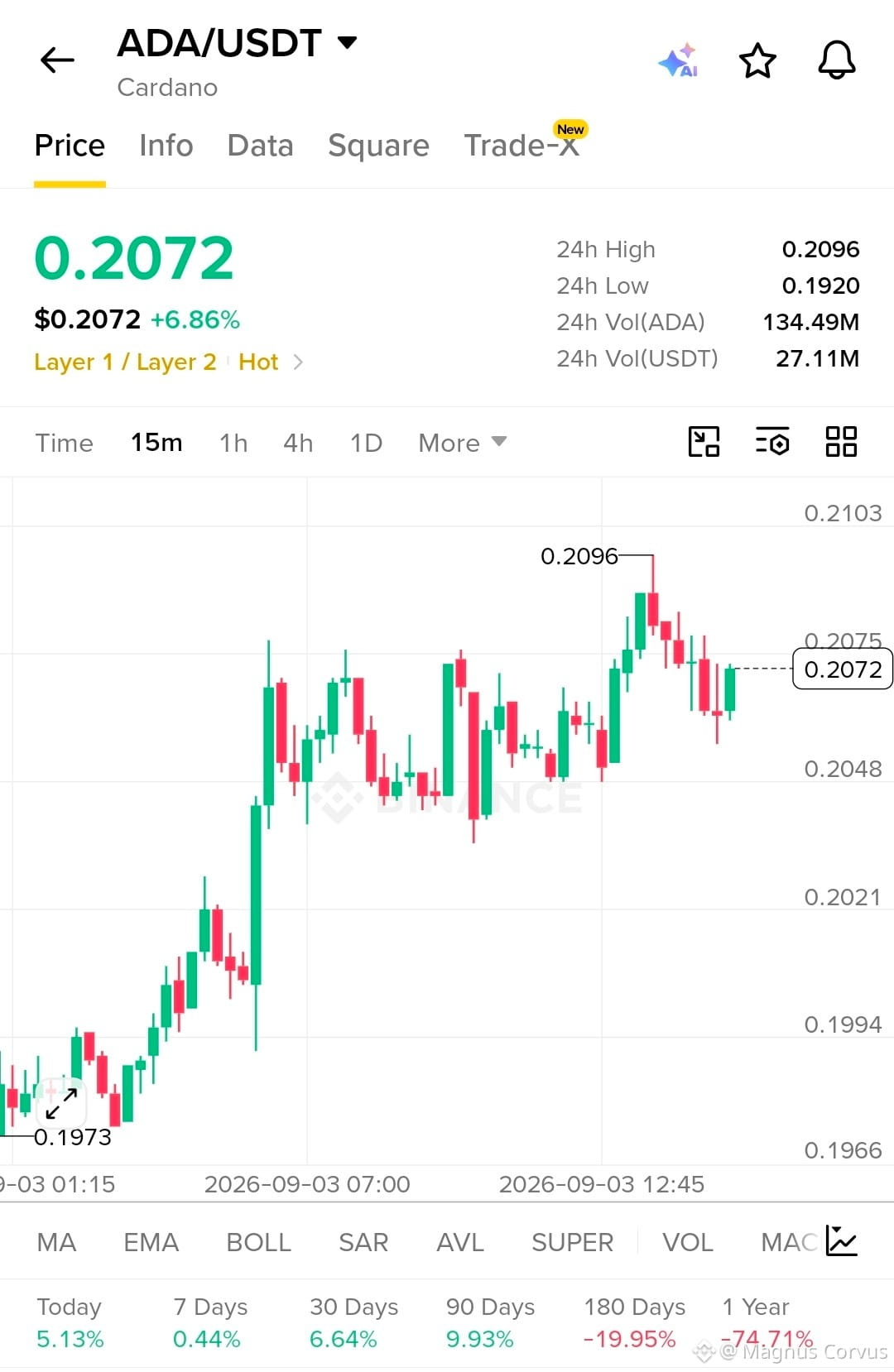
$ADA is showing strong momentum after a clean expansion from the lower range.
The structure remains bullish while buyers maintain control above the key support zone.
Entry Zone: 0.2050 - 0.2072
Stop Loss: 0.2020
Target 1: 0.2096
Target 2: 0.2125
Target 3: 0.2160
Liquidity is building above 0.2096, with ADA showing a strong reaction from the 0.2048 structure. Holding this zone keeps buyers in control and opens the path toward the next upside liquidity levels.
Let’s go and Trade now $ADA
$ADA is showing strong momentum after a clean expansion from the lower range.
The structure remains bullish while buyers maintain control above the key support zone.
Entry Zone: 0.2050 - 0.2072
Stop Loss: 0.2020
Target 1: 0.2096
Target 2: 0.2125
Target 3: 0.2160
Liquidity is building above 0.2096, with ADA showing a strong reaction from the 0.2048 structure. Holding this zone keeps buyers in control and opens the path toward the next upside liquidity levels.
Let’s go and Trade now $ADA
The structure remains bullish while buyers maintain control above the key support zone.
Entry Zone: 0.2050 - 0.2072
Stop Loss: 0.2020
Target 1: 0.2096
Target 2: 0.2125
Target 3: 0.2160
Liquidity is building above 0.2096, with ADA showing a strong reaction from the 0.2048 structure. Holding this zone keeps buyers in control and opens the path toward the next upside liquidity levels.
Let’s go and Trade now $ADA
1
76
·
--
Bullish
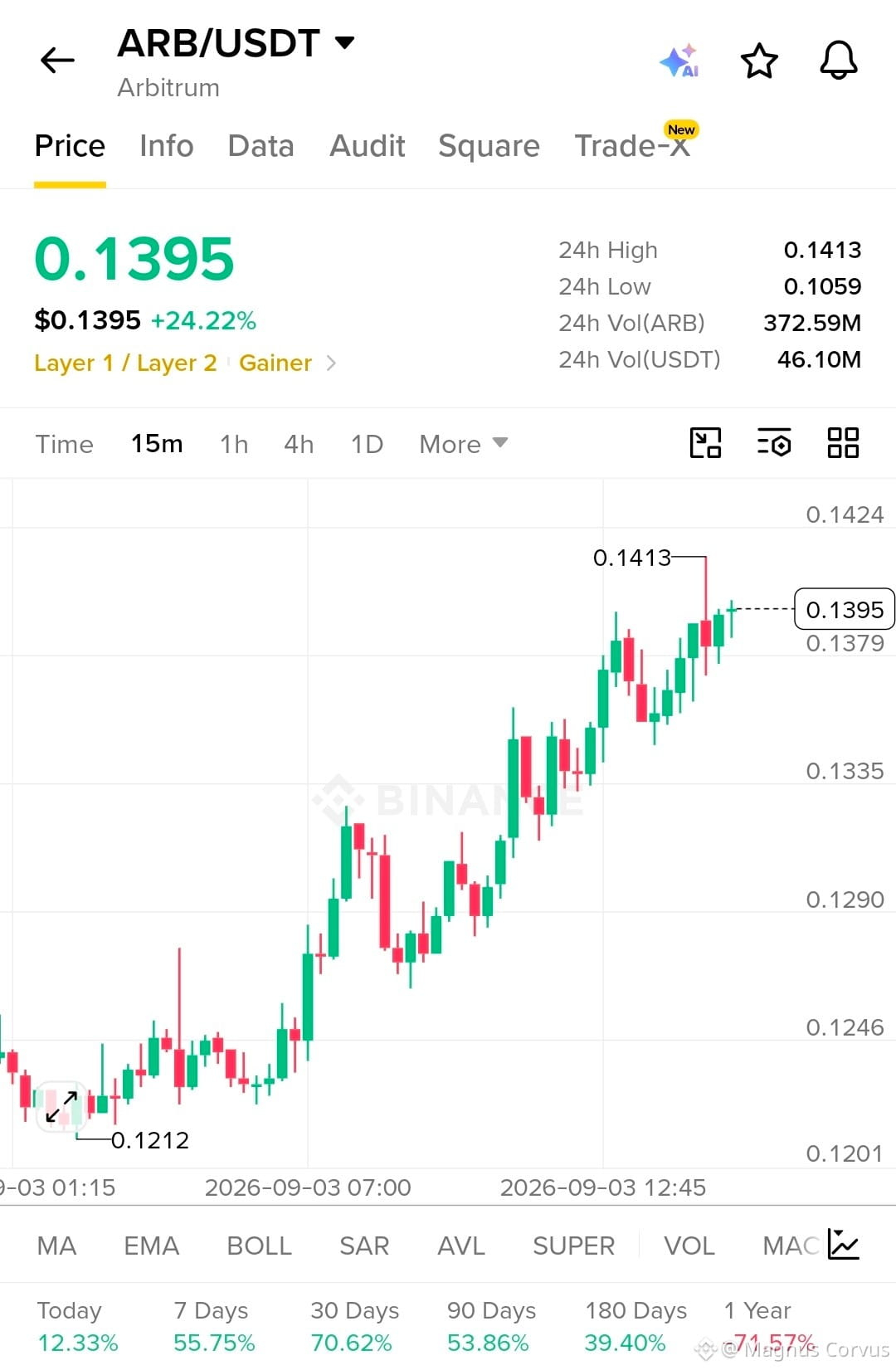
$ARB is showing strong momentum after a clean expansion toward the recent highs.
The structure remains bullish while buyers maintain control above the key support zone.
Entry Zone: 0.1375 - 0.1395
Stop Loss: 0.1335
Target 1: 0.1413
Target 2: 0.1424
Target 3: 0.1450
Liquidity is building above 0.1413, with ARB reacting strongly on every pullback. Holding this structure keeps buyers in control and opens the path toward the next upside liquidity levels.
Let’s go and Trade now $ARB
$ARB is showing strong momentum after a clean expansion toward the recent highs.
The structure remains bullish while buyers maintain control above the key support zone.
Entry Zone: 0.1375 - 0.1395
Stop Loss: 0.1335
Target 1: 0.1413
Target 2: 0.1424
Target 3: 0.1450
Liquidity is building above 0.1413, with ARB reacting strongly on every pullback. Holding this structure keeps buyers in control and opens the path toward the next upside liquidity levels.
Let’s go and Trade now $ARB
The structure remains bullish while buyers maintain control above the key support zone.
Entry Zone: 0.1375 - 0.1395
Stop Loss: 0.1335
Target 1: 0.1413
Target 2: 0.1424
Target 3: 0.1450
Liquidity is building above 0.1413, with ARB reacting strongly on every pullback. Holding this structure keeps buyers in control and opens the path toward the next upside liquidity levels.
Let’s go and Trade now $ARB
173
·
--
Bullish
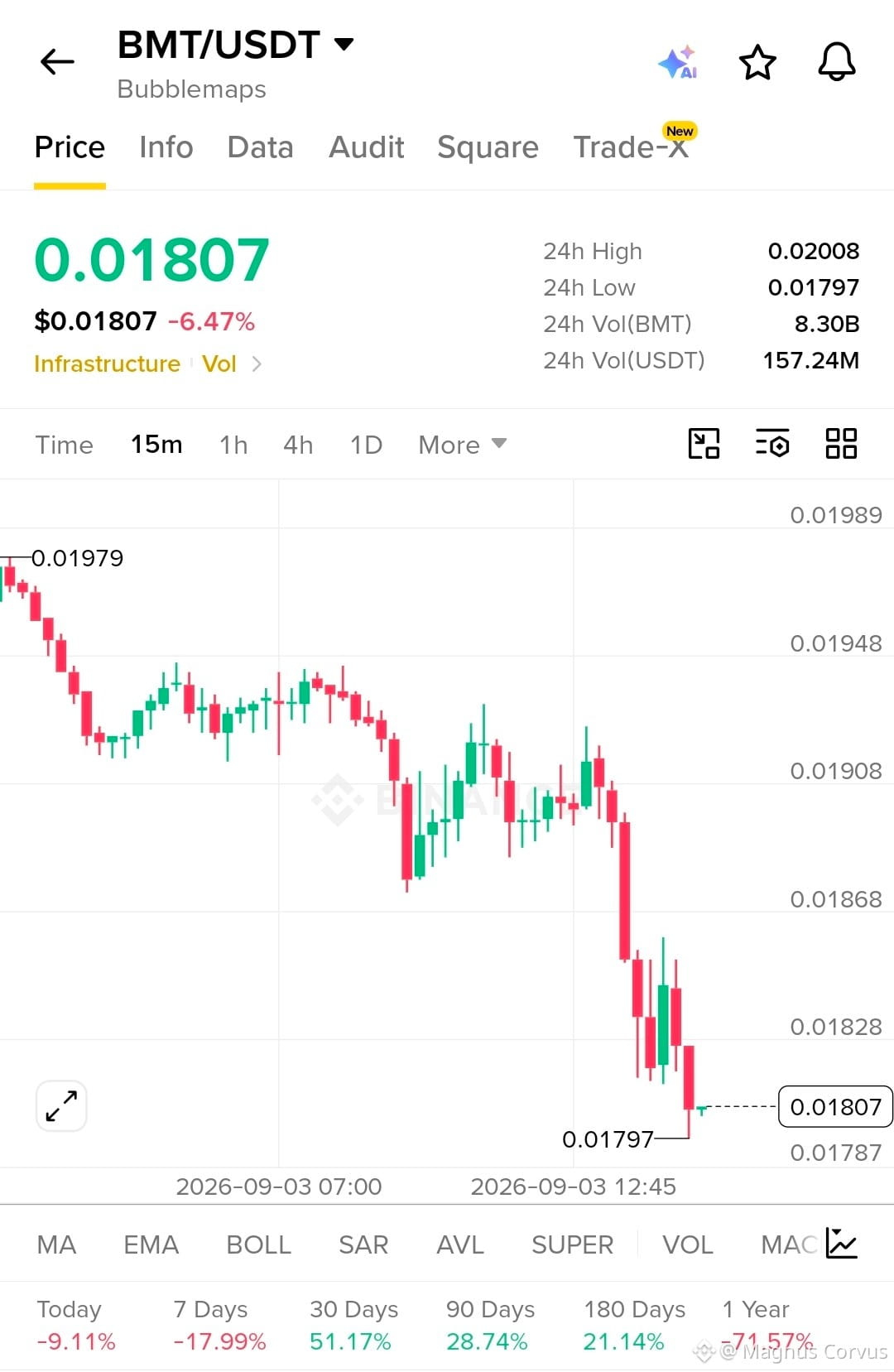
$BMT is showing strength at the lower range after absorbing aggressive selling pressure.
The structure is stabilizing while buyers defend the key liquidity zone.
Entry Zone: 0.01800 - 0.01815
Stop Loss: 0.01785
Target 1: 0.01868
Target 2: 0.01908
Target 3: 0.01948
Liquidity has been swept around 0.01797, with BMT showing a reaction near the lows. Holding this structure can shift control back toward buyers and open the path toward the upside liquidity levels.
Let’s go and Trade now $BMT
$BMT is showing strength at the lower range after absorbing aggressive selling pressure.
The structure is stabilizing while buyers defend the key liquidity zone.
Entry Zone: 0.01800 - 0.01815
Stop Loss: 0.01785
Target 1: 0.01868
Target 2: 0.01908
Target 3: 0.01948
Liquidity has been swept around 0.01797, with BMT showing a reaction near the lows. Holding this structure can shift control back toward buyers and open the path toward the upside liquidity levels.
Let’s go and Trade now $BMT
The structure is stabilizing while buyers defend the key liquidity zone.
Entry Zone: 0.01800 - 0.01815
Stop Loss: 0.01785
Target 1: 0.01868
Target 2: 0.01908
Target 3: 0.01948
Liquidity has been swept around 0.01797, with BMT showing a reaction near the lows. Holding this structure can shift control back toward buyers and open the path toward the upside liquidity levels.
Let’s go and Trade now $BMT
228
·
--
Bullish
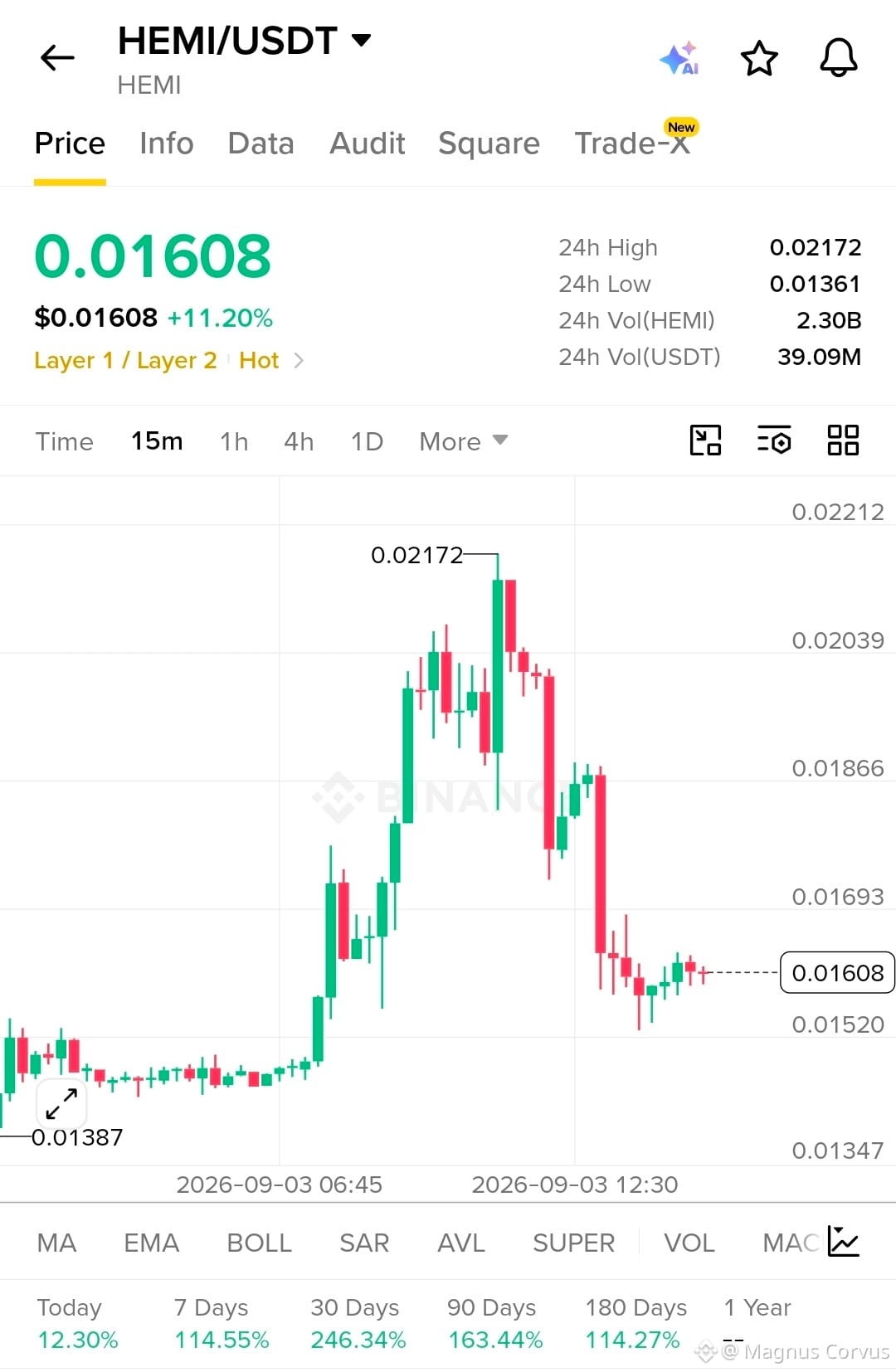
$HEMI is showing strong momentum after a sharp expansion from the lower range.
The structure remains constructive while buyers defend the key liquidity zone.
Entry Zone: 0.01580 - 0.01615
Stop Loss: 0.01515
Target 1: 0.01693
Target 2: 0.01866
Target 3: 0.02039
Liquidity has been swept after the rejection from 0.02172, with HEMI now reacting around the 0.01600 zone. Holding this structure can bring buyers back into control and open the path toward the upside liquidity levels.
Let’s go and Trade now $HEMI
$HEMI is showing strong momentum after a sharp expansion from the lower range.
The structure remains constructive while buyers defend the key liquidity zone.
Entry Zone: 0.01580 - 0.01615
Stop Loss: 0.01515
Target 1: 0.01693
Target 2: 0.01866
Target 3: 0.02039
Liquidity has been swept after the rejection from 0.02172, with HEMI now reacting around the 0.01600 zone. Holding this structure can bring buyers back into control and open the path toward the upside liquidity levels.
Let’s go and Trade now $HEMI
The structure remains constructive while buyers defend the key liquidity zone.
Entry Zone: 0.01580 - 0.01615
Stop Loss: 0.01515
Target 1: 0.01693
Target 2: 0.01866
Target 3: 0.02039
Liquidity has been swept after the rejection from 0.02172, with HEMI now reacting around the 0.01600 zone. Holding this structure can bring buyers back into control and open the path toward the upside liquidity levels.
Let’s go and Trade now $HEMI
129
·
--
Bullish
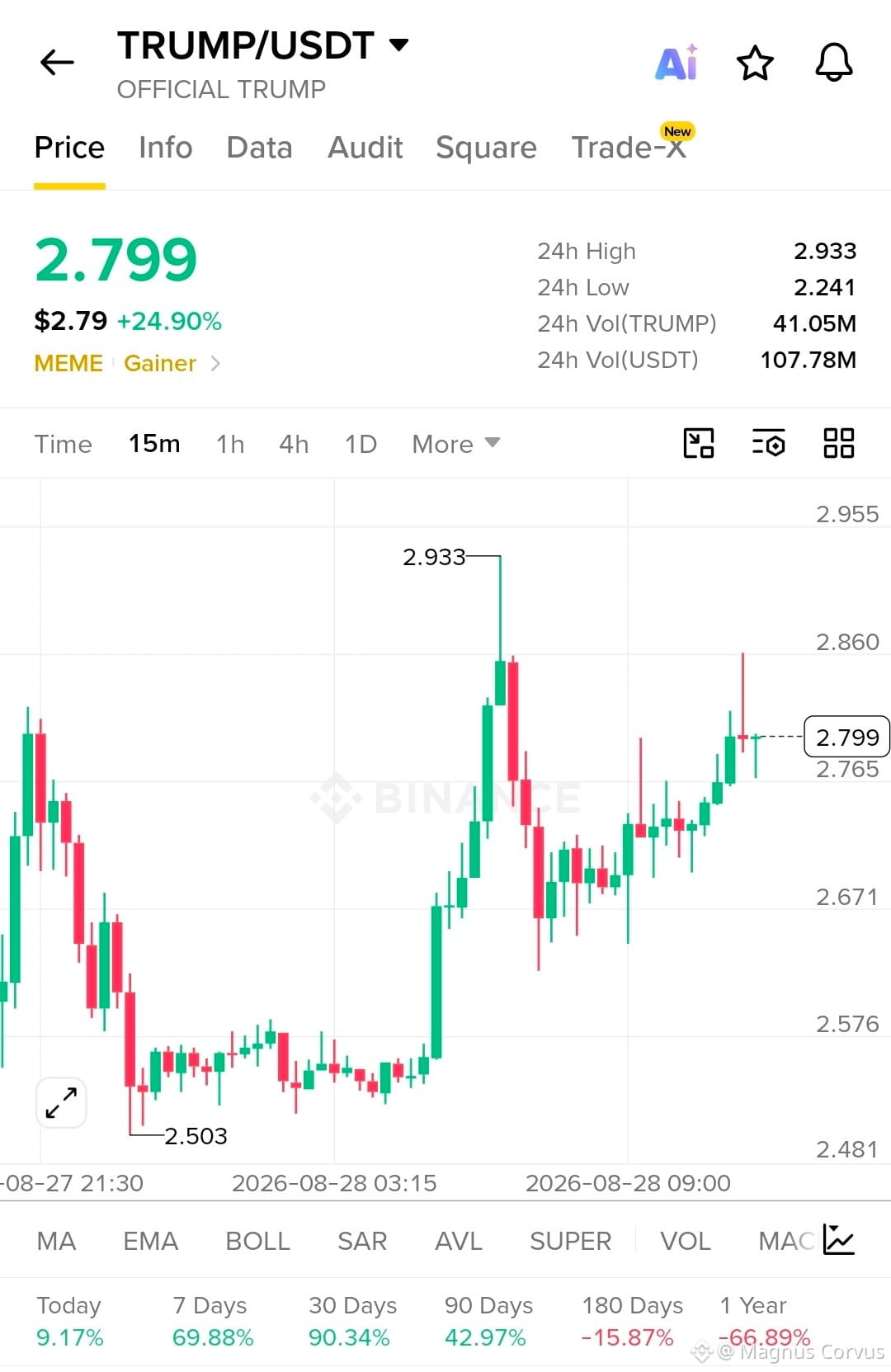
$TRUMP is showing strong bullish momentum with buyers firmly in control.
Structure remains bullish above the 2.671 support zone.
Entry Zone: 2.765 - 2.800
Stop Loss: 2.665
Target 1: 2.860
Target 2: 2.933
Target 3: 3.050
Liquidity reacted strongly from lower levels, while TRUMP continues holding its bullish structure. Sustained control above the entry zone can drive another liquidity push toward the upper targets.
Let’s go and Trade now $TRUMP
$TRUMP is showing strong bullish momentum with buyers firmly in control.
Structure remains bullish above the 2.671 support zone.
Entry Zone: 2.765 - 2.800
Stop Loss: 2.665
Target 1: 2.860
Target 2: 2.933
Target 3: 3.050
Liquidity reacted strongly from lower levels, while TRUMP continues holding its bullish structure. Sustained control above the entry zone can drive another liquidity push toward the upper targets.
Let’s go and Trade now $TRUMP
Structure remains bullish above the 2.671 support zone.
Entry Zone: 2.765 - 2.800
Stop Loss: 2.665
Target 1: 2.860
Target 2: 2.933
Target 3: 3.050
Liquidity reacted strongly from lower levels, while TRUMP continues holding its bullish structure. Sustained control above the entry zone can drive another liquidity push toward the upper targets.
Let’s go and Trade now $TRUMP
157
·
--
Bullish
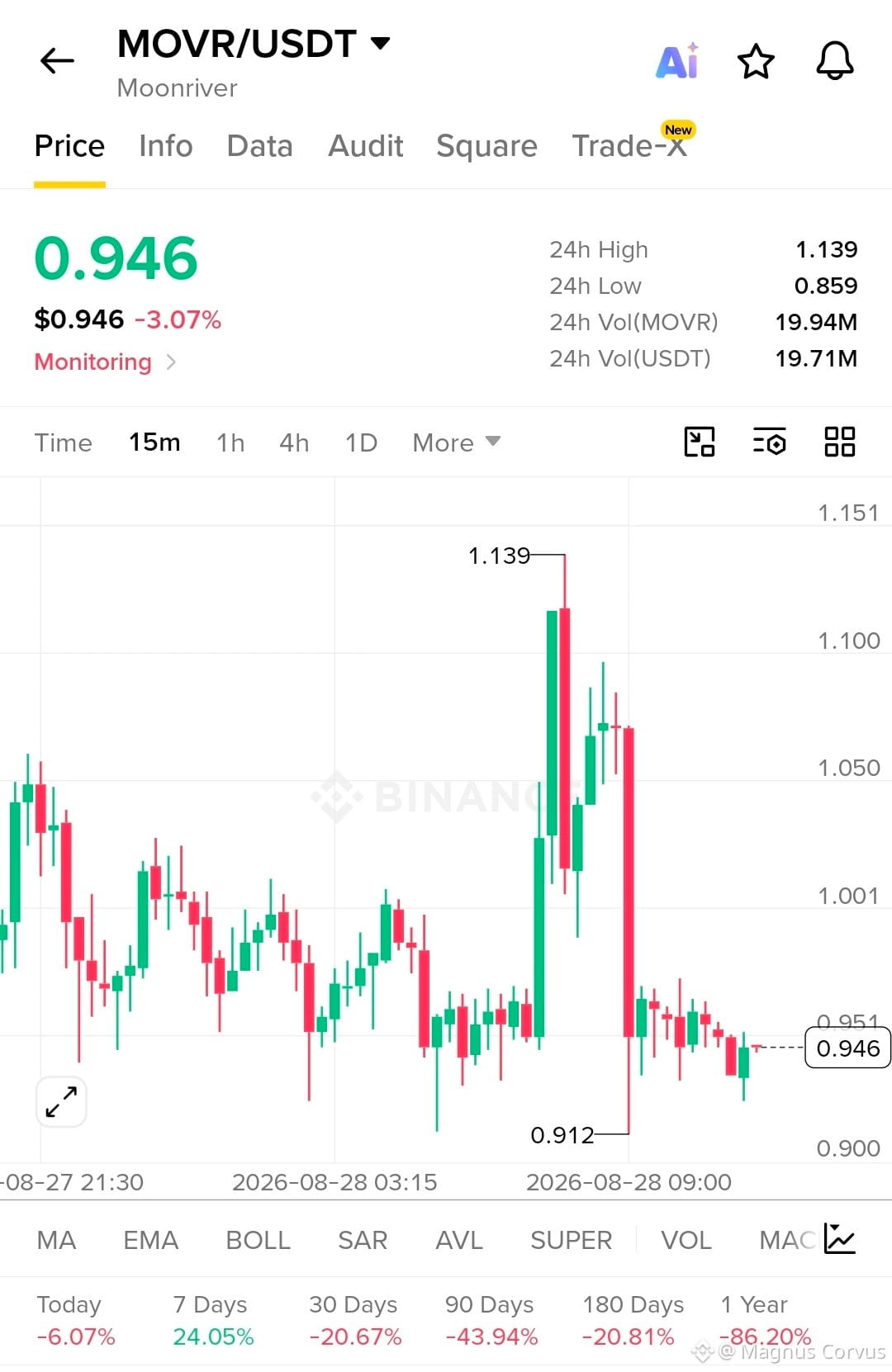
$MOVR is holding a key support zone with strong rebound potential.
Structure remains controlled above the 0.912 liquidity low.
Entry Zone: 0.940 - 0.955
Stop Loss: 0.910
Target 1: 1.001
Target 2: 1.050
Target 3: 1.100
Liquidity was swept near 0.912 before a sharp reaction, while MOVR is now consolidating around 0.946. Holding this structure can trigger another move toward the upper liquidity levels.
Let’s go and Trade now $MOVR
$MOVR is holding a key support zone with strong rebound potential.
Structure remains controlled above the 0.912 liquidity low.
Entry Zone: 0.940 - 0.955
Stop Loss: 0.910
Target 1: 1.001
Target 2: 1.050
Target 3: 1.100
Liquidity was swept near 0.912 before a sharp reaction, while MOVR is now consolidating around 0.946. Holding this structure can trigger another move toward the upper liquidity levels.
Let’s go and Trade now $MOVR
Structure remains controlled above the 0.912 liquidity low.
Entry Zone: 0.940 - 0.955
Stop Loss: 0.910
Target 1: 1.001
Target 2: 1.050
Target 3: 1.100
Liquidity was swept near 0.912 before a sharp reaction, while MOVR is now consolidating around 0.946. Holding this structure can trigger another move toward the upper liquidity levels.
Let’s go and Trade now $MOVR
209
·
--
Bullish
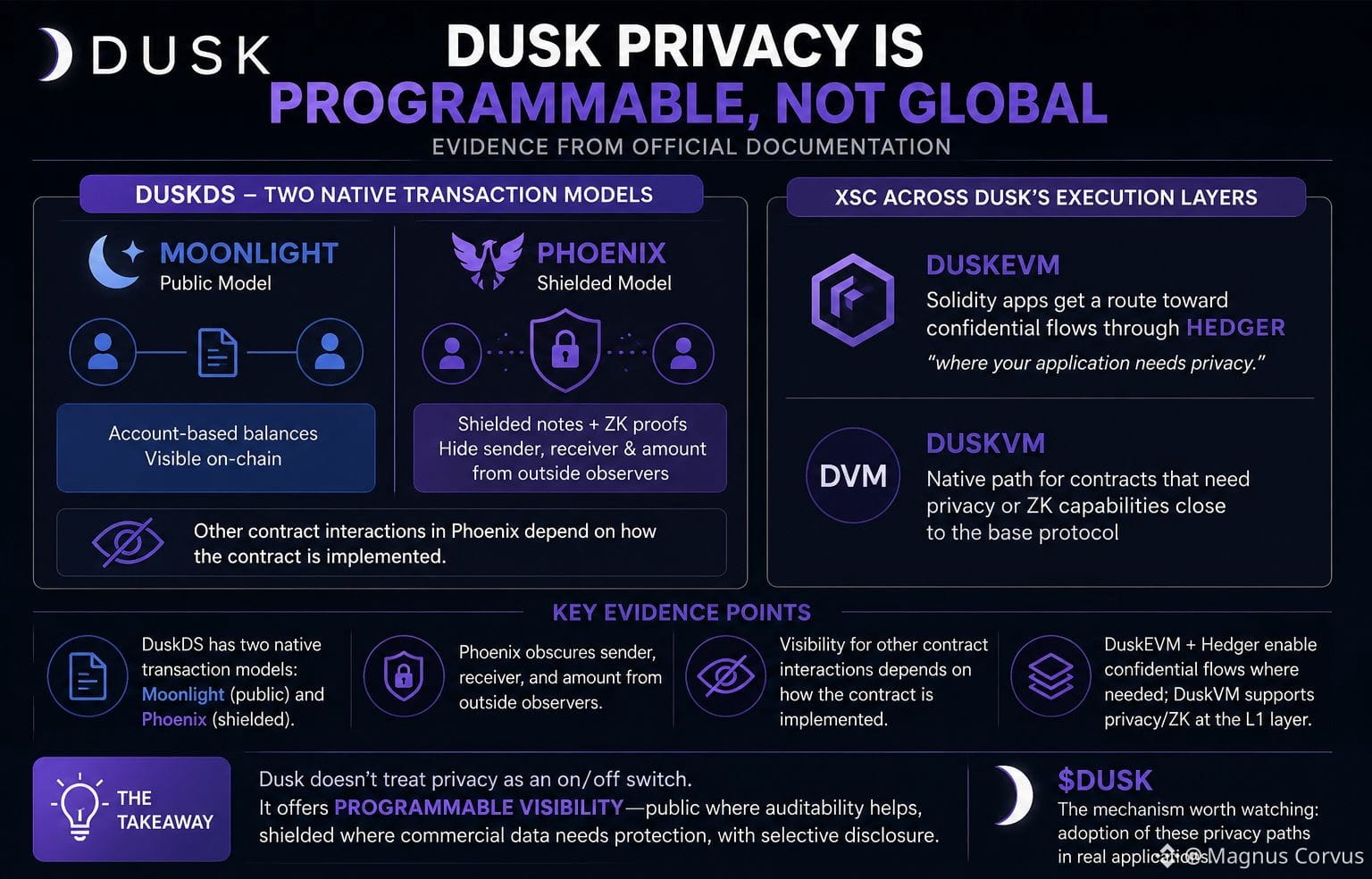
The part of Dusk that changed my view is that “privacy” is not a network-wide switch.
Dusk’s own docs show two native transaction models on DuskDS: Moonlight uses public, account-based balances, while Phoenix uses shielded notes and zero-knowledge proofs.
The official explorer documentation goes further: Phoenix hides sender, receiver and amount from outside observers, but visibility for other contract interactions depends on how the contract is implemented.
That matters for XSC. It is easy to read “Confidential Security Contract” and assume every financial workflow is automatically opaque. The architecture is more deliberate than that. Dusk’s current developer docs say Solidity apps on DuskEVM get a route toward confidential flows through Hedger “where your application needs privacy,” while DuskVM is the native path for contracts that need privacy or ZK capabilities close to the base protocol.
So the useful distinction is not private versus public blockchain.
It is programmable visibility: public where auditability helps, shielded where commercial data needs protection, with selective disclosure for authorized parties.
For DUSK, the mechanism worth watching is adoption of these privacy paths in real applications—not just whether the chain supports them.
@Dusk_Foundation $DUSK #dusk
The part of Dusk that changed my view is that “privacy” is not a network-wide switch.
Dusk’s own docs show two native transaction models on DuskDS: Moonlight uses public, account-based balances, while Phoenix uses shielded notes and zero-knowledge proofs.
The official explorer documentation goes further: Phoenix hides sender, receiver and amount from outside observers, but visibility for other contract interactions depends on how the contract is implemented.
That matters for XSC. It is easy to read “Confidential Security Contract” and assume every financial workflow is automatically opaque. The architecture is more deliberate than that. Dusk’s current developer docs say Solidity apps on DuskEVM get a route toward confidential flows through Hedger “where your application needs privacy,” while DuskVM is the native path for contracts that need privacy or ZK capabilities close to the base protocol.
So the useful distinction is not private versus public blockchain.
It is programmable visibility: public where auditability helps, shielded where commercial data needs protection, with selective disclosure for authorized parties.
For DUSK, the mechanism worth watching is adoption of these privacy paths in real applications—not just whether the chain supports them.
@Dusk $DUSK #dusk
Dusk’s own docs show two native transaction models on DuskDS: Moonlight uses public, account-based balances, while Phoenix uses shielded notes and zero-knowledge proofs.
The official explorer documentation goes further: Phoenix hides sender, receiver and amount from outside observers, but visibility for other contract interactions depends on how the contract is implemented.
That matters for XSC. It is easy to read “Confidential Security Contract” and assume every financial workflow is automatically opaque. The architecture is more deliberate than that. Dusk’s current developer docs say Solidity apps on DuskEVM get a route toward confidential flows through Hedger “where your application needs privacy,” while DuskVM is the native path for contracts that need privacy or ZK capabilities close to the base protocol.
So the useful distinction is not private versus public blockchain.
It is programmable visibility: public where auditability helps, shielded where commercial data needs protection, with selective disclosure for authorized parties.
For DUSK, the mechanism worth watching is adoption of these privacy paths in real applications—not just whether the chain supports them.
@Dusk $DUSK #dusk
120
·
--
Bullish
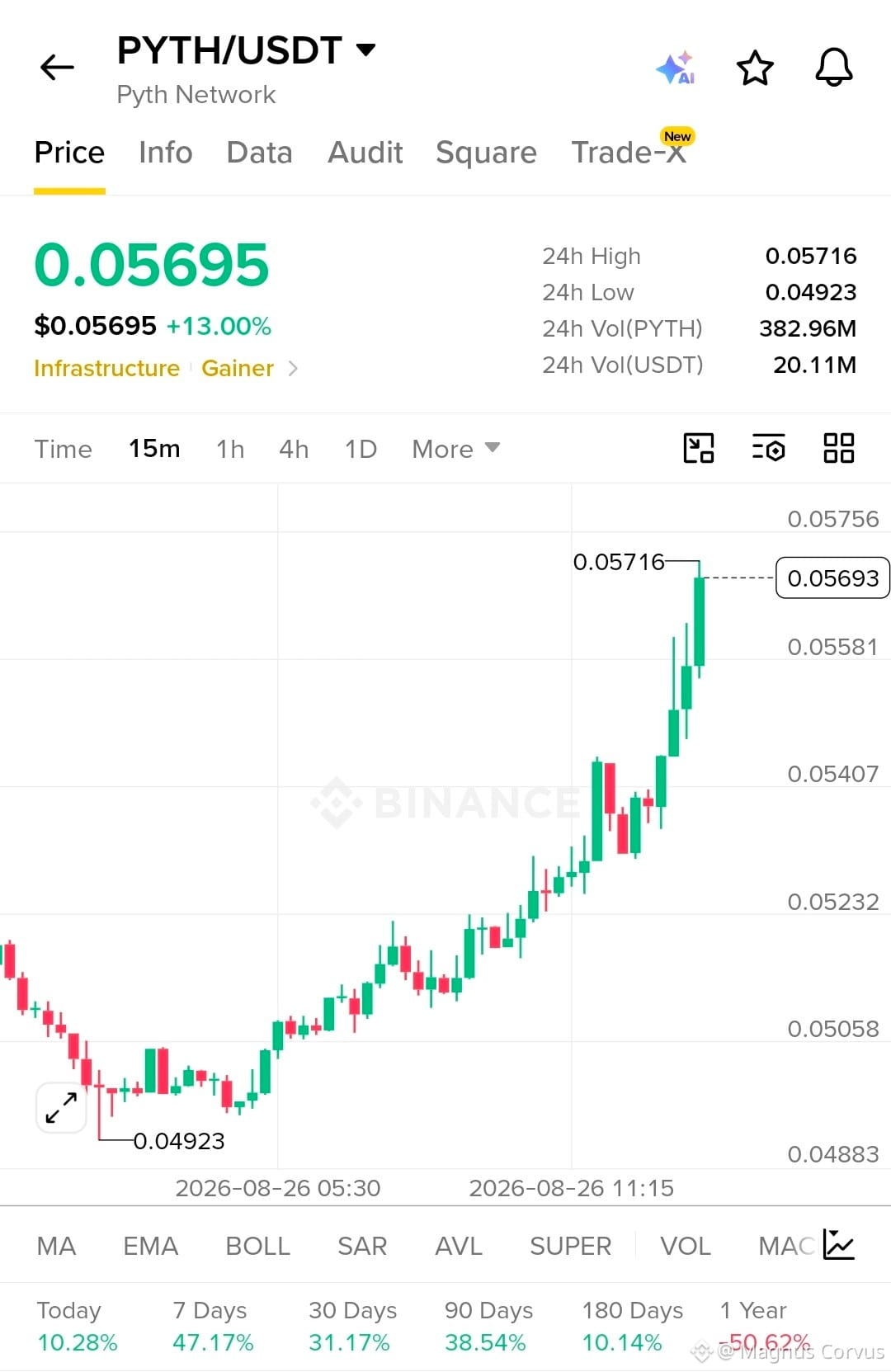
$PYTH is showing strong momentum after a clean expansion from the lows.
The structure confirms buyers are still maintaining control above key support.
Entry Zone: 0.05520 - 0.05620
Stop Loss: 0.05380
Target 1: 0.05720
Target 2: 0.05850
Target 3: 0.06000
Liquidity is building above the recent high, while every downside reaction continues to find buyers. PYTH is holding a bullish structure, and sustained control above the entry zone can trigger another liquidity push toward the upper levels.
Let’s go and Trade now $PYTH
$PYTH is showing strong momentum after a clean expansion from the lows.
The structure confirms buyers are still maintaining control above key support.
Entry Zone: 0.05520 - 0.05620
Stop Loss: 0.05380
Target 1: 0.05720
Target 2: 0.05850
Target 3: 0.06000
Liquidity is building above the recent high, while every downside reaction continues to find buyers. PYTH is holding a bullish structure, and sustained control above the entry zone can trigger another liquidity push toward the upper levels.
Let’s go and Trade now $PYTH
The structure confirms buyers are still maintaining control above key support.
Entry Zone: 0.05520 - 0.05620
Stop Loss: 0.05380
Target 1: 0.05720
Target 2: 0.05850
Target 3: 0.06000
Liquidity is building above the recent high, while every downside reaction continues to find buyers. PYTH is holding a bullish structure, and sustained control above the entry zone can trigger another liquidity push toward the upper levels.
Let’s go and Trade now $PYTH
118
·
--
Bullish
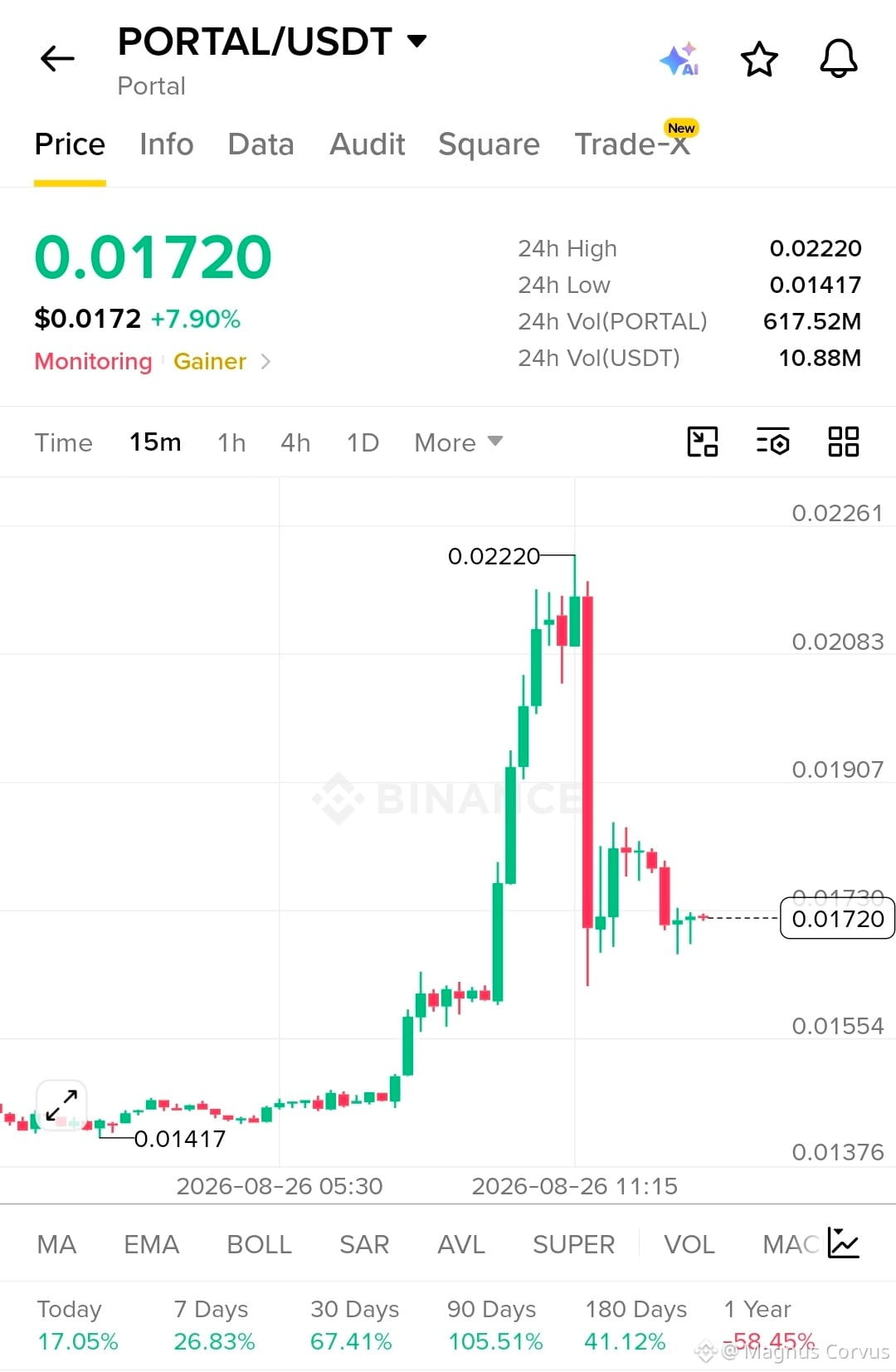
$PORTAL is showing strong momentum after a sharp expansion from the lows.
The structure confirms buyers are still defending control above key support.
Entry Zone: 0.01680 - 0.01725
Stop Loss: 0.01550
Target 1: 0.01850
Target 2: 0.02080
Target 3: 0.02220
Liquidity was swept near the highs, followed by a sharp reaction into support. PORTAL is now stabilizing around the entry zone, and holding this structure can trigger another liquidity push toward the upper levels.
Let’s go and Trade now $PORTAL
$PORTAL is showing strong momentum after a sharp expansion from the lows.
The structure confirms buyers are still defending control above key support.
Entry Zone: 0.01680 - 0.01725
Stop Loss: 0.01550
Target 1: 0.01850
Target 2: 0.02080
Target 3: 0.02220
Liquidity was swept near the highs, followed by a sharp reaction into support. PORTAL is now stabilizing around the entry zone, and holding this structure can trigger another liquidity push toward the upper levels.
Let’s go and Trade now $PORTAL
The structure confirms buyers are still defending control above key support.
Entry Zone: 0.01680 - 0.01725
Stop Loss: 0.01550
Target 1: 0.01850
Target 2: 0.02080
Target 3: 0.02220
Liquidity was swept near the highs, followed by a sharp reaction into support. PORTAL is now stabilizing around the entry zone, and holding this structure can trigger another liquidity push toward the upper levels.
Let’s go and Trade now $PORTAL
149
·
--
Bullish
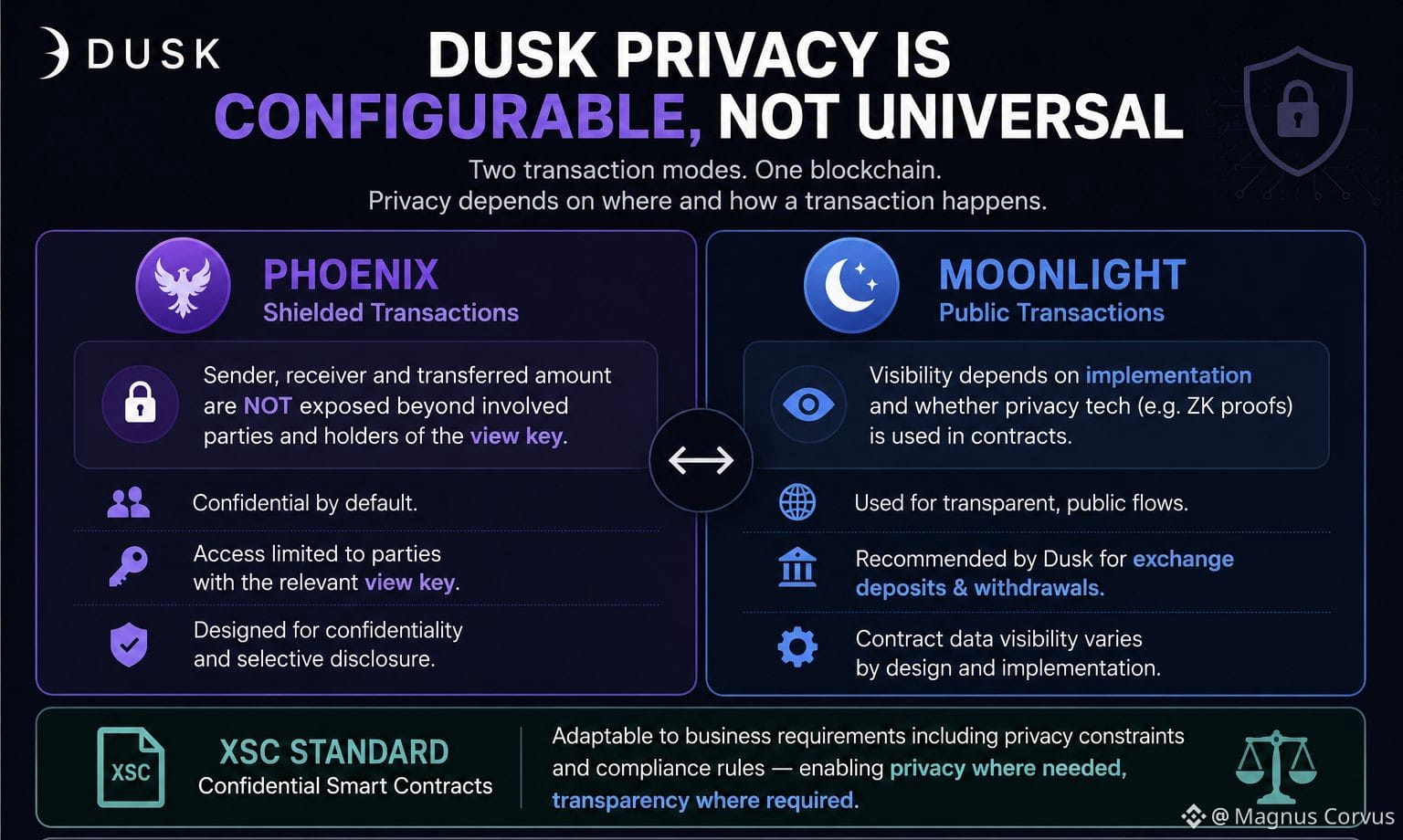
Dusk’s “privacy blockchain” label hides a more useful detail: privacy on Dusk is not one universal transaction mode.
The current docs split activity between Moonlight (public) and Phoenix (shielded).
For Phoenix transactions, Dusk says the sender, receiver and transferred amount are not exposed beyond involved parties and holders of the view key.
But for Moonlight transactions—and other contract interactions—visibility depends on the implementation and whether privacy tech such as zero-knowledge proofs is used.
That distinction changed how I read the XSC story.
The glossary describes XSC as a confidential smart-contract standard adaptable to business requirements, including privacy constraints and compliance rules.
So the architecture is not simply “hide everything.”
It can support privacy where confidentiality matters while still allowing transparent flows where operational requirements demand them.
There is a practical clue: Dusk’s own exchange-integration guide recommends Moonlight for exchange deposits and withdrawals, while Phoenix requires a different custody and scanning model.
For financial applications, that flexibility may be more important than maximal privacy by default.
What I’m watching is how XSC deployments expose this choice in practice: which data stays shielded, which becomes auditable, and who controls that boundary.
@Dusk_Foundation $DUSK #dusk
Dusk’s “privacy blockchain” label hides a more useful detail: privacy on Dusk is not one universal transaction mode.
The current docs split activity between Moonlight (public) and Phoenix (shielded).
For Phoenix transactions, Dusk says the sender, receiver and transferred amount are not exposed beyond involved parties and holders of the view key.
But for Moonlight transactions—and other contract interactions—visibility depends on the implementation and whether privacy tech such as zero-knowledge proofs is used.
That distinction changed how I read the XSC story.
The glossary describes XSC as a confidential smart-contract standard adaptable to business requirements, including privacy constraints and compliance rules.
So the architecture is not simply “hide everything.”
It can support privacy where confidentiality matters while still allowing transparent flows where operational requirements demand them.
There is a practical clue: Dusk’s own exchange-integration guide recommends Moonlight for exchange deposits and withdrawals, while Phoenix requires a different custody and scanning model.
For financial applications, that flexibility may be more important than maximal privacy by default.
What I’m watching is how XSC deployments expose this choice in practice: which data stays shielded, which becomes auditable, and who controls that boundary.
@Dusk $DUSK #dusk
The current docs split activity between Moonlight (public) and Phoenix (shielded).
For Phoenix transactions, Dusk says the sender, receiver and transferred amount are not exposed beyond involved parties and holders of the view key.
But for Moonlight transactions—and other contract interactions—visibility depends on the implementation and whether privacy tech such as zero-knowledge proofs is used.
That distinction changed how I read the XSC story.
The glossary describes XSC as a confidential smart-contract standard adaptable to business requirements, including privacy constraints and compliance rules.
So the architecture is not simply “hide everything.”
It can support privacy where confidentiality matters while still allowing transparent flows where operational requirements demand them.
There is a practical clue: Dusk’s own exchange-integration guide recommends Moonlight for exchange deposits and withdrawals, while Phoenix requires a different custody and scanning model.
For financial applications, that flexibility may be more important than maximal privacy by default.
What I’m watching is how XSC deployments expose this choice in practice: which data stays shielded, which becomes auditable, and who controls that boundary.
@Dusk $DUSK #dusk
172
Log in to explore more content
Join global crypto users on Binance Square
⚡️ Get latest and useful information about crypto.
💬 Trusted by the world’s largest crypto exchange.
👍 Discover real insights from verified creators.
Email / Phone number
Trending Topics
GoldFallsTo$4144
1,320 views
38 Discussing
#GoldFallsTo$4144 🚨 GOLD JUST GOT HIT HARD. $4,144 IS THE LEVEL TO WATCH! 🥇📉
Gold prices took a drop now trading near $4,144 per ounce as traders rethink the Federal Reserve’s path on interest rates.
What’s pushing gold lower? Here’s what’s happening:
🔴 Fed hike bets are rising → When interest rates go up holding gold becomes more expensive because it doesn’t pay any interest. That makes bonds or savings accounts look better by comparison.
🛢️ Oil prices are climbing → Higher oil means inflation risks. That pushes banks to keep rates higher for longer which hurts gold.
💵 Yields and dollar strength → When bond yields rise—especially U.S. Treasuries—and the dollar strengthens investors often move out of gold into assets that earn returns.
So the big debate now: Is this a short-term correction after golds massive rally in 2026… or is it the start of a deeper trend reversal?
👀 Traders need to keep an eye on two levels:
- $4,200. A potential support zone
- $4,144. A critical level where price action could shift either way
Will gold bounce back, from here?. Will we see more downside pressure ahead?
#GOLD #Khan62 #trading #Investing
$PAXG · $BTC · $XAG
Khan 62
·0 Likes
·121 views
QNTFallsOver40%FromMorningHigh
8,526 views
308 Discussing
KospiFalls2.7%SamsungSKHynixDropOver5%
478 views
82 Discussing