

Jeffrey Sebron soER
102 Posts

Jeffrey Sebron soER
Report
Block User
9 Following
4 Followers
9 Liked
Posts
Market Check-In — October 27, 2026
Crypto markets are trading with mixed momentum as traders weigh liquidity, macro signals, and shifting risk appetite. Bitcoin remains the main sentiment anchor, while larger altcoins are seeing more selective moves rather than a broad rally. Volatility can change quickly, so price action and volume confirmation matter more than headlines alone.
The above is market analysis and does not constitute investment advice.
$ETH $BTC
#crypto #binancetrading #MarketSentimentToday
18

Article
ETH Market Instability: Why Cautious Trading MattersEthereum (ETH) can experience rapid price swings, making it one of the most closely watched assets in the crypto market. Its price can be affected by broader market sentiment, Bitcoin’s movement, macroeconomic news, Ethereum network developments, and derivatives activity.
Key Causes of ETH Market Instability
Bitcoin correlation: ETH often reacts when BTC makes a large move, especially during periods of broad market uncertainty.Macroeconomic events: Interest-rate decisions, inflation data, and changes in risk appetite can affect crypto prices.Derivatives liquidations: High leverage in ETH futures can intensify moves when long or short positions are liquidated.Network and ecosystem news: Updates involving Ethereum, staking, DeFi, stablecoins, or major applications can influence sentiment.Liquidity conditions: Lower liquidity can cause price movements to become more abrupt, particularly outside peak trading hours.Market emotion: Fear of missing out during rallies and panic during declines may amplify volatility.
What Instability Can Look Like
Large price candles within a short time.Sudden increases in trading volume.Fast reversals after a rally or sell-off.Sharp changes in futures funding rates.Increased liquidation activity in leveraged markets.Wider spreads or weaker liquidity during volatile periods.
Cautious Trading Practices
Use smaller exposure: High volatility can make a normal position feel much larger in risk terms.Avoid chasing price: Entering after a sudden move may expose traders to quick reversals.Watch volume and liquidity: Strong volume may provide context, but it does not guarantee that a move will continue.Be conservative with leverage: Leverage magnifies both potential gains and potential losses, and volatility can trigger liquidations quickly.Set a risk limit before trading: Decide in advance how much loss is acceptable for your overall financial situation.Separate trading funds from essential money: Do not use funds needed for daily living, emergencies, or near-term obligations.Review derivatives data: Funding rates, open interest, and liquidation activity can help explain whether leverage is affecting the move.Stay flexible: Market conditions can change quickly, so reassess assumptions instead of treating a short-term move as certain.
Important Reminder
ETH may offer trading opportunities, but it also carries substantial downside risk. No indicator, chart pattern, or market narrative can guarantee future price direction. Historical performance does not guarantee future results, and each trader should consider their own risk tolerance, financial goals, and time horizon before acting.
$ETH
{spot}(ETHUSDT)
#MarketSentimentToday #ETH #CautiousTrading #MarketInstability
ETH Market Instability: Why Cautious Trading Matters
Ethereum (ETH) can experience rapid price swings, making it one of the most closely watched assets in the crypto market. Its price can be affected by broader market sentiment, Bitcoin’s movement, macroeconomic news, Ethereum network developments, and derivatives activity.
Key Causes of ETH Market Instability
Bitcoin correlation: ETH often reacts when BTC makes a large move, especially during periods of broad market uncertainty.Macroeconomic events: Interest-rate decisions, inflation data, and changes in risk appetite can affect crypto prices.Derivatives liquidations: High leverage in ETH futures can intensify moves when long or short positions are liquidated.Network and ecosystem news: Updates involving Ethereum, staking, DeFi, stablecoins, or major applications can influence sentiment.Liquidity conditions: Lower liquidity can cause price movements to become more abrupt, particularly outside peak trading hours.Market emotion: Fear of missing out during rallies and panic during declines may amplify volatility.
What Instability Can Look Like
Large price candles within a short time.Sudden increases in trading volume.Fast reversals after a rally or sell-off.Sharp changes in futures funding rates.Increased liquidation activity in leveraged markets.Wider spreads or weaker liquidity during volatile periods.
Cautious Trading Practices
Use smaller exposure: High volatility can make a normal position feel much larger in risk terms.Avoid chasing price: Entering after a sudden move may expose traders to quick reversals.Watch volume and liquidity: Strong volume may provide context, but it does not guarantee that a move will continue.Be conservative with leverage: Leverage magnifies both potential gains and potential losses, and volatility can trigger liquidations quickly.Set a risk limit before trading: Decide in advance how much loss is acceptable for your overall financial situation.Separate trading funds from essential money: Do not use funds needed for daily living, emergencies, or near-term obligations.Review derivatives data: Funding rates, open interest, and liquidation activity can help explain whether leverage is affecting the move.Stay flexible: Market conditions can change quickly, so reassess assumptions instead of treating a short-term move as certain.
Important Reminder
ETH may offer trading opportunities, but it also carries substantial downside risk. No indicator, chart pattern, or market narrative can guarantee future price direction. Historical performance does not guarantee future results, and each trader should consider their own risk tolerance, financial goals, and time horizon before acting.
$ETH
#MarketSentimentToday #ETH #CautiousTrading #MarketInstability
71
Learning the market before trying to beat it.
I’ve been spending more time learning the market than trading it lately—studying candlesticks, price action, and how momentum changes.
Observing without rushing into every move teaches you a lot. Sometimes the best trade is no trade; learning patience and reading the chart matters just as much as taking entries. 📈
$ETH $BTC $BNB
#tradingeducation #CandlestickSecrets #CryptoLearning #BinanceSquare
Do you think it was a good decision?
yes
100%
no
0%
2 votes • Voting closed
482
$ETH is heading into a key macro session near $2.43k👇🏻
There’s no Fed rate decision today, but Chair Warsh’s Jackson Hole remarks could still move risk assets through expectations for rates, liquidity, and the dollar.
A hawkish message may weigh on ETH and broader crypto sentiment; a more balanced tone could ease pressure. Either way, expect headline-driven volatility and watch how ETH reacts after the speech—not just the first move.
#Ethereum #JacksonHole #CryptoMarkets
150
Here we're in bull's run manipulation
$BTC $ETH
{future}(BTCUSDT)
{future}(ETHUSDT)
Here we're in bull's run manipulation
$BTC $ETH
$BTC $ETH
38
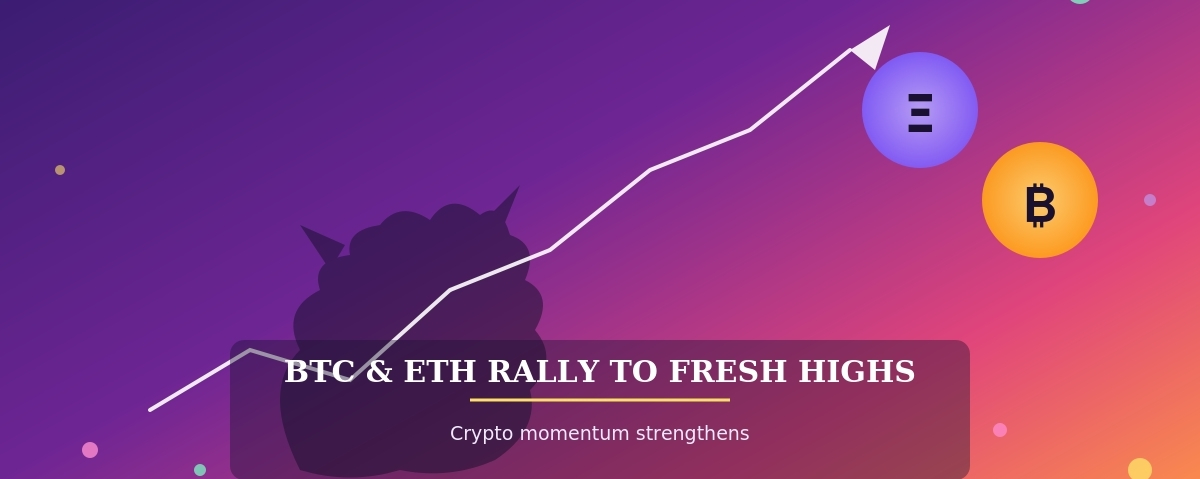
Article
BTC & ETH Rally to Fresh Highs as Crypto Momentum Strengthens
🚀What happened:
Bitcoin and Ethereum are drawing renewed attention after a sharp upside move that pushed both assets toward fresh short-term highs. $BTC climbed above the $68,000 area, while $ETH broke back above $2,000 and showed even stronger percentage momentum during the move.
Why it happened:
The rally appears to be driven by a combination of improving risk appetite, positive institutional-flow sentiment, and a wave of short liquidations across the crypto market. When heavily positioned short traders are forced to close positions as prices rise, that buying pressure can accelerate an already strong move.
Ethereum's performance has stood out, with renewed interest in the broader Ethereum ecosystem and a return above the key $2,000 level helping strengthen market confidence. Meanwhile, Bitcoin continues to lead overall market sentiment as the largest and most closely watched crypto asset.
Psychological approach:
A move like this creates two very different emotional pulls at once. Short sellers, forced out at a loss, often re-enter later chasing the same trend they just fought — flipping from doubt to urgency almost overnight. Meanwhile, traders watching from the sidelines feel the pull of missing out, which can push people into a move well after the easiest gains are already behind it. Both reactions come from the same place: responding to how fast price moved, rather than to what's actually changed underneath it.
When to watch next:
The positive takeaway is that this was not just a small rebound — both BTC and ETH showed strong momentum and attracted broad market participation. However, crypto markets can remain highly volatile after rapid rallies, so sustained trading volume and continued spot demand will be important to watch in the days ahead.
BTC and ETH are showing that market confidence can return quickly when momentum, liquidity, and sentiment align. 🚀
#bitcoin #BTC #ETH #CryptoMarkets
BTC & ETH Rally to Fresh Highs as Crypto Momentum Strengthens 🚀
What happened:
Bitcoin and Ethereum are drawing renewed attention after a sharp upside move that pushed both assets toward fresh short-term highs. $BTC climbed above the $68,000 area, while $ETH broke back above $2,000 and showed even stronger percentage momentum during the move.
Why it happened:
The rally appears to be driven by a combination of improving risk appetite, positive institutional-flow sentiment, and a wave of short liquidations across the crypto market. When heavily positioned short traders are forced to close positions as prices rise, that buying pressure can accelerate an already strong move.
Ethereum's performance has stood out, with renewed interest in the broader Ethereum ecosystem and a return above the key $2,000 level helping strengthen market confidence. Meanwhile, Bitcoin continues to lead overall market sentiment as the largest and most closely watched crypto asset.
Psychological approach:
A move like this creates two very different emotional pulls at once. Short sellers, forced out at a loss, often re-enter later chasing the same trend they just fought — flipping from doubt to urgency almost overnight. Meanwhile, traders watching from the sidelines feel the pull of missing out, which can push people into a move well after the easiest gains are already behind it. Both reactions come from the same place: responding to how fast price moved, rather than to what's actually changed underneath it.
When to watch next:
The positive takeaway is that this was not just a small rebound — both BTC and ETH showed strong momentum and attracted broad market participation. However, crypto markets can remain highly volatile after rapid rallies, so sustained trading volume and continued spot demand will be important to watch in the days ahead.
BTC and ETH are showing that market confidence can return quickly when momentum, liquidity, and sentiment align. 🚀
#bitcoin #BTC #ETH #CryptoMarkets
131
$ETH hits $2100
$BTC hits $69k
Finally we're back💥
$ETH hits $2100
$BTC hits $69k
Finally we're back💥
$BTC hits $69k
Finally we're back💥
105
🔥BTC & ETH surge to fresh session highs 🚀🔥
Bitcoin and Ethereum have delivered a strong upside move in the last 24 hours. BTC jumped from $64,805.47 to $67,960.33 (+4.87%), briefly reaching $69,500. ETH climbed from $1,916.36 to $2,072.64 (+8.15%), with a session high of round $2,130.
The move is especially positive because both major assets pushed toward new short-term highs rather than merely bouncing from weakness. ETH’s stronger percentage gain also suggests increased appetite for higher-beta crypto exposure, while BTC continues to provide the broader market leadership.
Still, sharp rallies can bring volatility and profit-taking. The next phase will depend on whether prices can maintain momentum with sustained trading activity rather than a short-lived spike.
click to trade $ETH $BTC
114
Happy Independence Day🇵🇰
Long live Pakistan♥️
Happy Independence Day🇵🇰
Long live Pakistan♥️
Long live Pakistan♥️
27
Fear despite flat price
Market sentiment can remain cautious even when price action looks relatively stable. That disconnect matters because fear is not always driven by sharp drops alone — it can also reflect uncertainty, weak conviction, or concern about what comes next.
Takeaway: Sentiment can stay fragile even when the chart looks calm.
$ETH
{future}(ETHUSDT)
$BTC
{future}(BTCUSDT)
Fear despite flat price
Market sentiment can remain cautious even when price action looks relatively stable. That disconnect matters because fear is not always driven by sharp drops alone — it can also reflect uncertainty, weak conviction, or concern about what comes next.
Takeaway: Sentiment can stay fragile even when the chart looks calm.
$ETH
$BTC
116
🔥Solana leading while majors lag🔥
When one major asset holds up better than others during a softer market session, traders often watch it for signs of relative strength. If Solana continues to outperform while Bitcoin and Ethereum struggle to gain traction, that may signal where market attention and risk appetite are still active.
Takeaway: Relative strength can sometimes say more than the broader pullback.
$SOL
{future}(SOLUSDT)
#Market_Update #SolanaStrong
🔥Solana leading while majors lag🔥
When one major asset holds up better than others during a softer market session, traders often watch it for signs of relative strength. If Solana continues to outperform while Bitcoin and Ethereum struggle to gain traction, that may signal where market attention and risk appetite are still active.
Takeaway: Relative strength can sometimes say more than the broader pullback.
$SOL
#Market_Update #SolanaStrong
61
🔥BTC dominance concentration🔥
Bitcoin dominance remains elevated while many altcoins continue to lag. That can suggest capital is staying concentrated in BTC rather than rotating more broadly across the market. Some traders read that as Bitcoin strength, while others see it as a sign of a more cautious risk environment.
Takeaway: Rising dominance can reflect selective strength, but it can also point to weaker conviction across alts.
$BTC
{future}(BTCUSDT)
$BNB
{future}(BNBUSDT)
$ETH
{future}(ETHUSDT)
🔥BTC dominance concentration🔥
Bitcoin dominance remains elevated while many altcoins continue to lag. That can suggest capital is staying concentrated in BTC rather than rotating more broadly across the market. Some traders read that as Bitcoin strength, while others see it as a sign of a more cautious risk environment.
Takeaway: Rising dominance can reflect selective strength, but it can also point to weaker conviction across alts.
$BTC
$BNB
$ETH
92
✨CLARITY Act odds shift✨
The odds tied to the CLARITY Act appear to have moved higher in recent days. That still doesn’t make passage likely, but it does show how quickly sentiment can respond to changing expectations. Markets often react to the direction of probability before any outcome is confirmed.
Takeaway: Watch how expectations shift, not just the final result.
$ETH $BTC
77

Article
A Cautious Market, Waiting: What the Current Setup Is Really SayingWhat's happening:
Bitcoin and Ethereum are both trading slightly lower today, while Solana is one of the few large-cap assets in the green. Bitcoin dominance remains elevated, sitting close to 59%, and broad market sentiment is still reading in "fear" territory even as prices haven't moved dramatically in either direction. Derivatives activity has also slowed. Adding to the wait-and-see mood, the next major U.S. inflation report (CPI) is due in a few days, and its outcome is expected to shape expectations heading into the Federal Reserve's next interest-rate decision in September.
Why it matters:
This is a market that isn't confused so much as it's paused. Elevated Bitcoin dominance alongside underperforming altcoins usually signals that capital is staying concentrated rather than spreading out — a sign of caution, not confidence. Slowing derivatives activity reinforces that: fewer leveraged bets generally means participants are waiting for a clearer signal before committing more risk. The upcoming CPI report is the kind of scheduled event that can shift that mood quickly in either direction, which is exactly why the market feels like it's holding its breath.
Psychological approach 1 — Mistaking stillness for certainty:
When price isn't moving much, it's tempting to read that as the market having "figured something out." In reality, a quiet market ahead of a major data release often reflects the opposite — genuine uncertainty, with participants deliberately avoiding big commitments until they have more information. Calm and confident are not the same thing.
Psychological approach 2 — Underweighting scheduled, "boring" catalysts:
A geopolitical headline or a sudden price swing tends to grab attention instantly. A calendar date for an inflation report doesn't carry the same emotional urgency, even though it's often a bigger actual driver of what happens next. Traders who only react to dramatic news can end up caught off guard by the quieter, scheduled events that were visible well in advance.
Solution strategy:
Treat concentrated dominance and slowing derivatives activity as useful context, not something to react to emotionally — they describe where the market currently stands, not where it's going next. Keep the CPI release date and the September Fed decision clearly on your radar, since these are the kind of confirmed, scheduled events that tend to move markets more than daily headlines do. Watch how price behaves specifically around the data release, rather than trying to guess the outcome in advance.
Takeaway:
A cautious, quiet market isn't a market without a story — it's a market waiting for its next real piece of information. The traders paying closest attention right now aren't trying to force a direction out of today's flat price action. They're getting ready for the data that's already scheduled to arrive.
$ETH
{future}(ETHUSDT)
$BITCOIN
{alpha}(10x72e4f9f808c49a2a61de9c5896298920dc4eeea9)
A Cautious Market, Waiting: What the Current Setup Is Really Saying
What's happening:
Bitcoin and Ethereum are both trading slightly lower today, while Solana is one of the few large-cap assets in the green. Bitcoin dominance remains elevated, sitting close to 59%, and broad market sentiment is still reading in "fear" territory even as prices haven't moved dramatically in either direction. Derivatives activity has also slowed. Adding to the wait-and-see mood, the next major U.S. inflation report (CPI) is due in a few days, and its outcome is expected to shape expectations heading into the Federal Reserve's next interest-rate decision in September.
Why it matters:
This is a market that isn't confused so much as it's paused. Elevated Bitcoin dominance alongside underperforming altcoins usually signals that capital is staying concentrated rather than spreading out — a sign of caution, not confidence. Slowing derivatives activity reinforces that: fewer leveraged bets generally means participants are waiting for a clearer signal before committing more risk. The upcoming CPI report is the kind of scheduled event that can shift that mood quickly in either direction, which is exactly why the market feels like it's holding its breath.
Psychological approach 1 — Mistaking stillness for certainty:
When price isn't moving much, it's tempting to read that as the market having "figured something out." In reality, a quiet market ahead of a major data release often reflects the opposite — genuine uncertainty, with participants deliberately avoiding big commitments until they have more information. Calm and confident are not the same thing.
Psychological approach 2 — Underweighting scheduled, "boring" catalysts:
A geopolitical headline or a sudden price swing tends to grab attention instantly. A calendar date for an inflation report doesn't carry the same emotional urgency, even though it's often a bigger actual driver of what happens next. Traders who only react to dramatic news can end up caught off guard by the quieter, scheduled events that were visible well in advance.
Solution strategy:
Treat concentrated dominance and slowing derivatives activity as useful context, not something to react to emotionally — they describe where the market currently stands, not where it's going next. Keep the CPI release date and the September Fed decision clearly on your radar, since these are the kind of confirmed, scheduled events that tend to move markets more than daily headlines do. Watch how price behaves specifically around the data release, rather than trying to guess the outcome in advance.
Takeaway:
A cautious, quiet market isn't a market without a story — it's a market waiting for its next real piece of information. The traders paying closest attention right now aren't trying to force a direction out of today's flat price action. They're getting ready for the data that's already scheduled to arrive.
$ETH
$BITCOIN
90

Article
Current Crypto Market Overview: A Time for Patience and DisciplineThe crypto market is currently moving through a mixed and cautious environment, with traders closely watching momentum, liquidity conditions, and broader macroeconomic signals. Bitcoin remains the leading indicator for overall sentiment, while Ethereum and major altcoins continue to reflect shifts in risk appetite across the market.
At this stage, price action suggests the market is still searching for stronger conviction. Rather than seeing broad, aggressive follow-through across all sectors, traders appear to be reacting selectively to strength, volume, and narrative-driven opportunities. This kind of environment often rewards patience and discipline more than emotional decision-making.
Bitcoin continues to play a central role in market direction. When BTC holds up well, it often supports confidence across the rest of the market. When it weakens, altcoins usually experience sharper reactions. Ethereum also remains an important asset to monitor, as it often reflects whether capital is staying concentrated in higher-quality large caps or rotating into more speculative parts of the market.
Several key themes are shaping market behavior right now.
Macro and liquidity conditions remain important. Interest-rate expectations, inflation data, and broader risk sentiment still influence crypto alongside traditional markets. Even strong crypto-specific developments can face resistance if the macro backdrop becomes less supportive.Sector rotation is another major factor. Capital does not always leave the market entirely during uncertainty — it often shifts between Bitcoin, Ethereum, large-cap altcoins, and higher-risk narratives. Watching where attention and volume are moving can provide useful context for understanding short-term market behavior.Selective participation is also becoming more visible. This is not a uniform market where all assets move with equal strength. Traders and investors are paying closer attention to relative strength, market structure, project-specific developments, and liquidity before increasing exposure.
From a broader perspective, the current market appears to favor flexibility. Stronger assets may continue to outperform if momentum holds, while weaker names could remain under pressure in the absence of sustained buying interest. As always, volatility can increase quickly once the market gains clearer directional conviction.
Final Thoughts
The market remains active, but it is also sensitive. In this kind of environment, many participants are focusing on discipline, risk awareness, and confirmation rather than reacting to every short-term move. Whether the next phase brings continuation or renewed volatility, market structure and sentiment will likely remain the key factors to watch.
Disclaimer: This post is for market commentary and educational purposes only. It is not financial advice, investment advice, or a recommendation to buy or sell any asset. Crypto markets are volatile, and all participants should do their own research and make independent decisions.
$ETH
{future}(ETHUSDT)
$BTC
{future}(BTCUSDT)
Current Crypto Market Overview: A Time for Patience and Discipline
The crypto market is currently moving through a mixed and cautious environment, with traders closely watching momentum, liquidity conditions, and broader macroeconomic signals. Bitcoin remains the leading indicator for overall sentiment, while Ethereum and major altcoins continue to reflect shifts in risk appetite across the market.
At this stage, price action suggests the market is still searching for stronger conviction. Rather than seeing broad, aggressive follow-through across all sectors, traders appear to be reacting selectively to strength, volume, and narrative-driven opportunities. This kind of environment often rewards patience and discipline more than emotional decision-making.
Bitcoin continues to play a central role in market direction. When BTC holds up well, it often supports confidence across the rest of the market. When it weakens, altcoins usually experience sharper reactions. Ethereum also remains an important asset to monitor, as it often reflects whether capital is staying concentrated in higher-quality large caps or rotating into more speculative parts of the market.
Several key themes are shaping market behavior right now.
Macro and liquidity conditions remain important. Interest-rate expectations, inflation data, and broader risk sentiment still influence crypto alongside traditional markets. Even strong crypto-specific developments can face resistance if the macro backdrop becomes less supportive.Sector rotation is another major factor. Capital does not always leave the market entirely during uncertainty — it often shifts between Bitcoin, Ethereum, large-cap altcoins, and higher-risk narratives. Watching where attention and volume are moving can provide useful context for understanding short-term market behavior.Selective participation is also becoming more visible. This is not a uniform market where all assets move with equal strength. Traders and investors are paying closer attention to relative strength, market structure, project-specific developments, and liquidity before increasing exposure.
From a broader perspective, the current market appears to favor flexibility. Stronger assets may continue to outperform if momentum holds, while weaker names could remain under pressure in the absence of sustained buying interest. As always, volatility can increase quickly once the market gains clearer directional conviction.
Final Thoughts
The market remains active, but it is also sensitive. In this kind of environment, many participants are focusing on discipline, risk awareness, and confirmation rather than reacting to every short-term move. Whether the next phase brings continuation or renewed volatility, market structure and sentiment will likely remain the key factors to watch.
Disclaimer: This post is for market commentary and educational purposes only. It is not financial advice, investment advice, or a recommendation to buy or sell any asset. Crypto markets are volatile, and all participants should do their own research and make independent decisions.
$ETH
$BTC
76
What is your take at the moment ??
I'm taking long on $ETH
What is your take at the moment ??
I'm taking long on $ETH
I'm taking long on $ETH
88

Article
Bitcoin Survived a Rough Month. Now Comes the Harder Part.What happened:
Bitcoin ended the month still holding onto gains despite a steady run of negative headlines — a notably resilient result on the surface. But analysts describe the path ahead as choppy rather than clearly bullish, in part because the earlier wave of panic-driven selling appears to have largely passed through the market. What remains is not a market breaking decisively higher, but one stabilizing as traders wait for the next key catalysts, especially upcoming jobs data and persistent uncertainty around interest rates.
Why it matters:
A market that absorbs bad news is different from one that has simply gone quiet. Absorbing pressure suggests there were real sellers to clear and enough demand to meet them. But the idea that panic selling has mostly run its course cuts both ways: it can mean weaker hands have already exited, which may improve market stability, but it also means the next major move is more likely to depend on fresh information than on the fading effects of earlier liquidation.
Psychological approach 1 — Mistaking survival for strength:
Holding a monthly gain after a difficult stretch can feel like confirmation that the market is strong again. That is where traders can get ahead of themselves. Surviving pressure and building fresh momentum are not the same thing. Treating resilience as proof of a new uptrend risks turning relief into overconfidence before the evidence is there.
Psychological approach 2 — Underestimating “quiet” data risk:
Jobs data and rate expectations often feel less emotionally urgent than war, exchange failures, or sudden liquidations, which makes them easy to discount. But in structural terms, scheduled macro data has repeatedly been one of the clearest drivers of major crypto moves. The quieter the headline, the easier it is for traders to be psychologically unprepared when volatility returns.
$BTC $ETH
Bitcoin Survived a Rough Month. Now Comes the Harder Part.
What happened:
Bitcoin ended the month still holding onto gains despite a steady run of negative headlines — a notably resilient result on the surface. But analysts describe the path ahead as choppy rather than clearly bullish, in part because the earlier wave of panic-driven selling appears to have largely passed through the market. What remains is not a market breaking decisively higher, but one stabilizing as traders wait for the next key catalysts, especially upcoming jobs data and persistent uncertainty around interest rates.
Why it matters:
A market that absorbs bad news is different from one that has simply gone quiet. Absorbing pressure suggests there were real sellers to clear and enough demand to meet them. But the idea that panic selling has mostly run its course cuts both ways: it can mean weaker hands have already exited, which may improve market stability, but it also means the next major move is more likely to depend on fresh information than on the fading effects of earlier liquidation.
Psychological approach 1 — Mistaking survival for strength:
Holding a monthly gain after a difficult stretch can feel like confirmation that the market is strong again. That is where traders can get ahead of themselves. Surviving pressure and building fresh momentum are not the same thing. Treating resilience as proof of a new uptrend risks turning relief into overconfidence before the evidence is there.
Psychological approach 2 — Underestimating “quiet” data risk:
Jobs data and rate expectations often feel less emotionally urgent than war, exchange failures, or sudden liquidations, which makes them easy to discount. But in structural terms, scheduled macro data has repeatedly been one of the clearest drivers of major crypto moves. The quieter the headline, the easier it is for traders to be psychologically unprepared when volatility returns.
$BTC $ETH
88
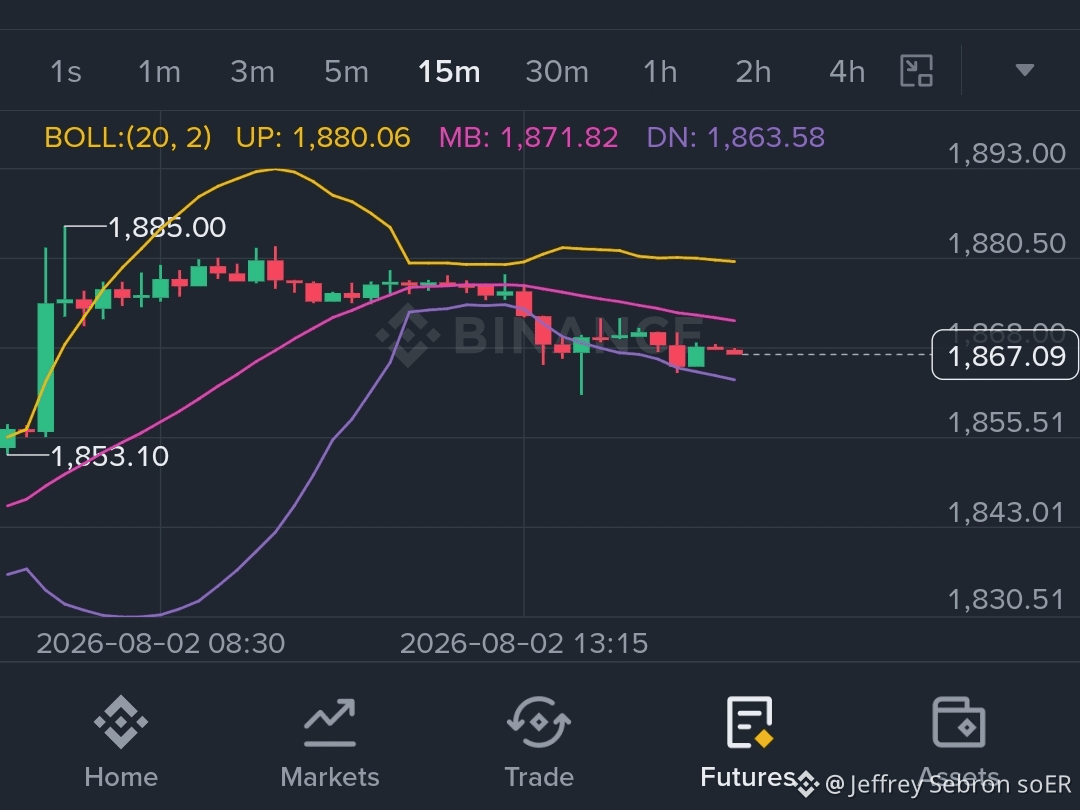
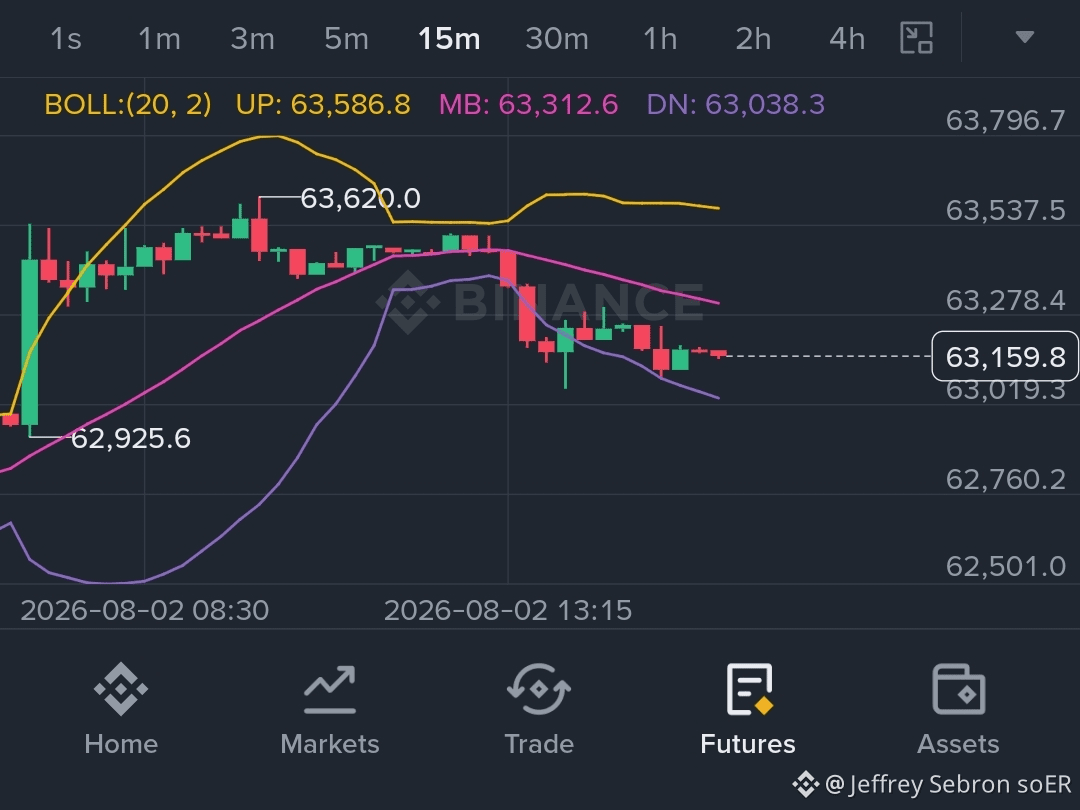
Can we call em twins??💥
Look at the charts guys, or it might be my first time noticing such a similarity
$ETH $BTC
Can we call em twins??💥
Look at the charts guys, or it might be my first time noticing such a similarity
$ETH $BTC
Look at the charts guys, or it might be my first time noticing such a similarity
$ETH $BTC
90
Log in to explore more content
Join global crypto users on Binance Square
⚡️ Get latest and useful information about crypto.
💬 Trusted by the world’s largest crypto exchange.
👍 Discover real insights from verified creators.
Email / Phone number