
Sidra Mayo
20 Posts

Sidra Mayo
Report
Block User
1 Following
20 Followers
23 Liked
Posts
·
--
🚨 BINANCE + CIRCLE: $100M INVESTMENT
Binance has reportedly invested $100 million in Circle, the issuer of USDC, strengthening their partnership. 💰🤝
Could this bring more growth and adoption to the stablecoin market? 👀
What do you think about this move?
#Binance #Circle #USDC #Crypto #Stablecoin #Web3 #CryptoNews
🚨 BINANCE + CIRCLE: $100M INVESTMENT
Binance has reportedly invested $100 million in Circle, the issuer of USDC, strengthening their partnership. 💰🤝
Could this bring more growth and adoption to the stablecoin market? 👀
What do you think about this move?
#Binance #Circle #USDC #Crypto #Stablecoin #Web3 #CryptoNews
Binance has reportedly invested $100 million in Circle, the issuer of USDC, strengthening their partnership. 💰🤝
Could this bring more growth and adoption to the stablecoin market? 👀
What do you think about this move?
#Binance #Circle #USDC #Crypto #Stablecoin #Web3 #CryptoNews
81
·
--
🚀 BTC ABOVE $85K — WHAT’S NEXT? 👀
Bitcoin has surged above $85K, briefly reaching around $87K today. 📈
🟢 Support: $80K–$82K
🔴 Resistance: ~$89K
The market is moving fast — but confirmation still matters.
👇 Can $BTC BTC break $89K, or will we see a pullback first?
#Bitcoin #BTC #BinanceSquare #Crypto #CryptoNews #TradingTales
🚀 BTC ABOVE $85K — WHAT’S NEXT? 👀
Bitcoin has surged above $85K, briefly reaching around $87K today. 📈
🟢 Support: $80K–$82K
🔴 Resistance: ~$89K
The market is moving fast — but confirmation still matters.
👇 Can $BTC BTC break $89K, or will we see a pullback first?
#Bitcoin #BTC #BinanceSquare #Crypto #CryptoNews #TradingTales
Bitcoin has surged above $85K, briefly reaching around $87K today. 📈
🟢 Support: $80K–$82K
🔴 Resistance: ~$89K
The market is moving fast — but confirmation still matters.
👇 Can $BTC BTC break $89K, or will we see a pullback first?
#Bitcoin #BTC #BinanceSquare #Crypto #CryptoNews #TradingTales
68
·
--
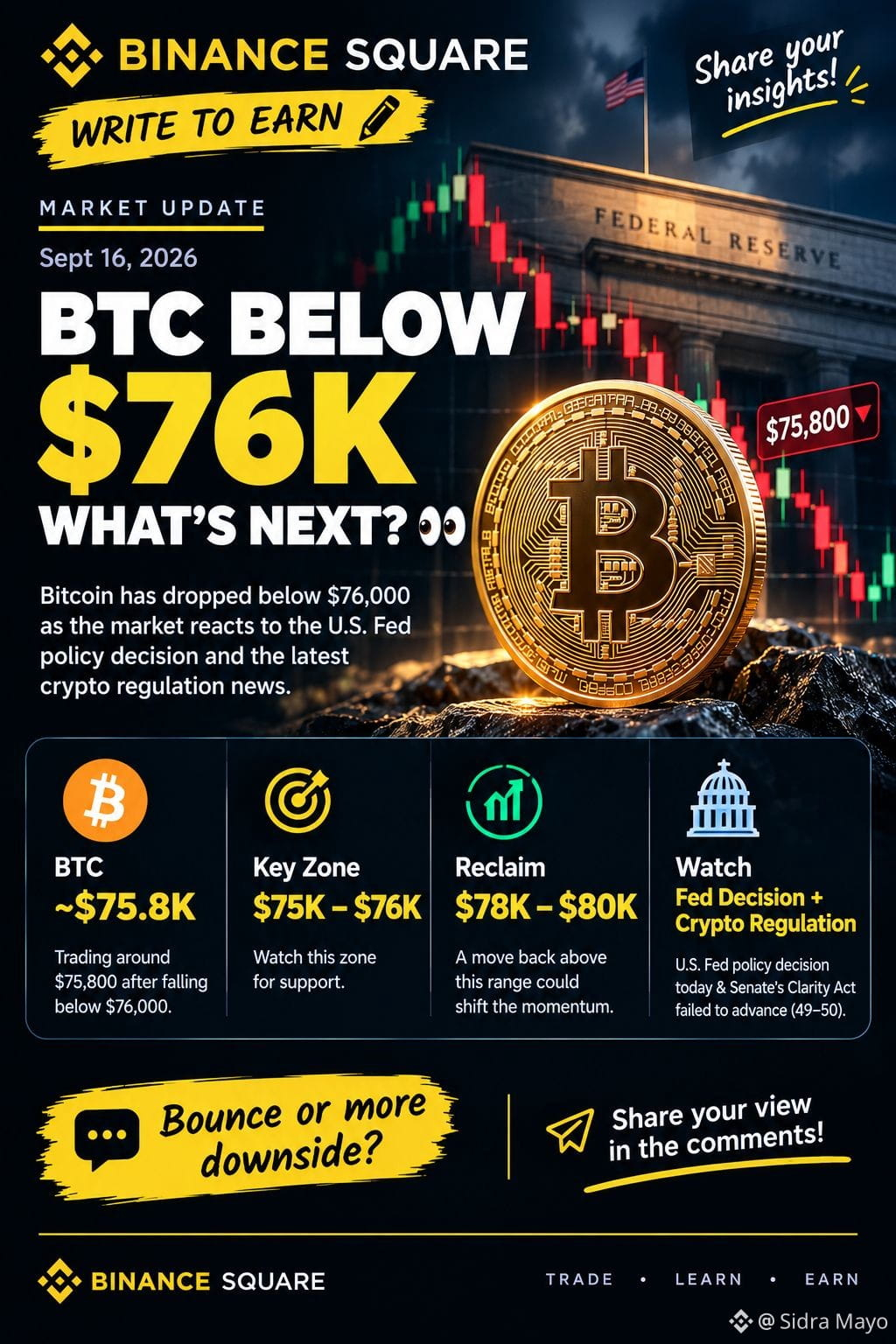
🚨 BTC BELOW $76K — WHAT’S NEXT? 👀
Bitcoin slipped below $76K as traders react to the Fed decision and fresh crypto-regulation uncertainty. 📉
$BTC
🟢 Key zone: $75K–$76K
🟡 Reclaim: $78K–$80K
🔥 Watch: Fed + regulation news
Bounce from support or more downside?
👇 What’s your take?
#Bitcoin #BTC #BinanceSquare #Crypto #CryptoNews #Trading
$BTC
🚨 BTC BELOW $76K — WHAT’S NEXT? 👀
Bitcoin slipped below $76K as traders react to the Fed decision and fresh crypto-regulation uncertainty. 📉
$BTC
🟢 Key zone: $75K–$76K
🟡 Reclaim: $78K–$80K
🔥 Watch: Fed + regulation news
Bounce from support or more downside?
👇 What’s your take?
#Bitcoin #BTC #BinanceSquare #Crypto #CryptoNews #Trading
$BTC
Bitcoin slipped below $76K as traders react to the Fed decision and fresh crypto-regulation uncertainty. 📉
$BTC
🟢 Key zone: $75K–$76K
🟡 Reclaim: $78K–$80K
🔥 Watch: Fed + regulation news
Bounce from support or more downside?
👇 What’s your take?
#Bitcoin #BTC #BinanceSquare #Crypto #CryptoNews #Trading
$BTC
69
·
--
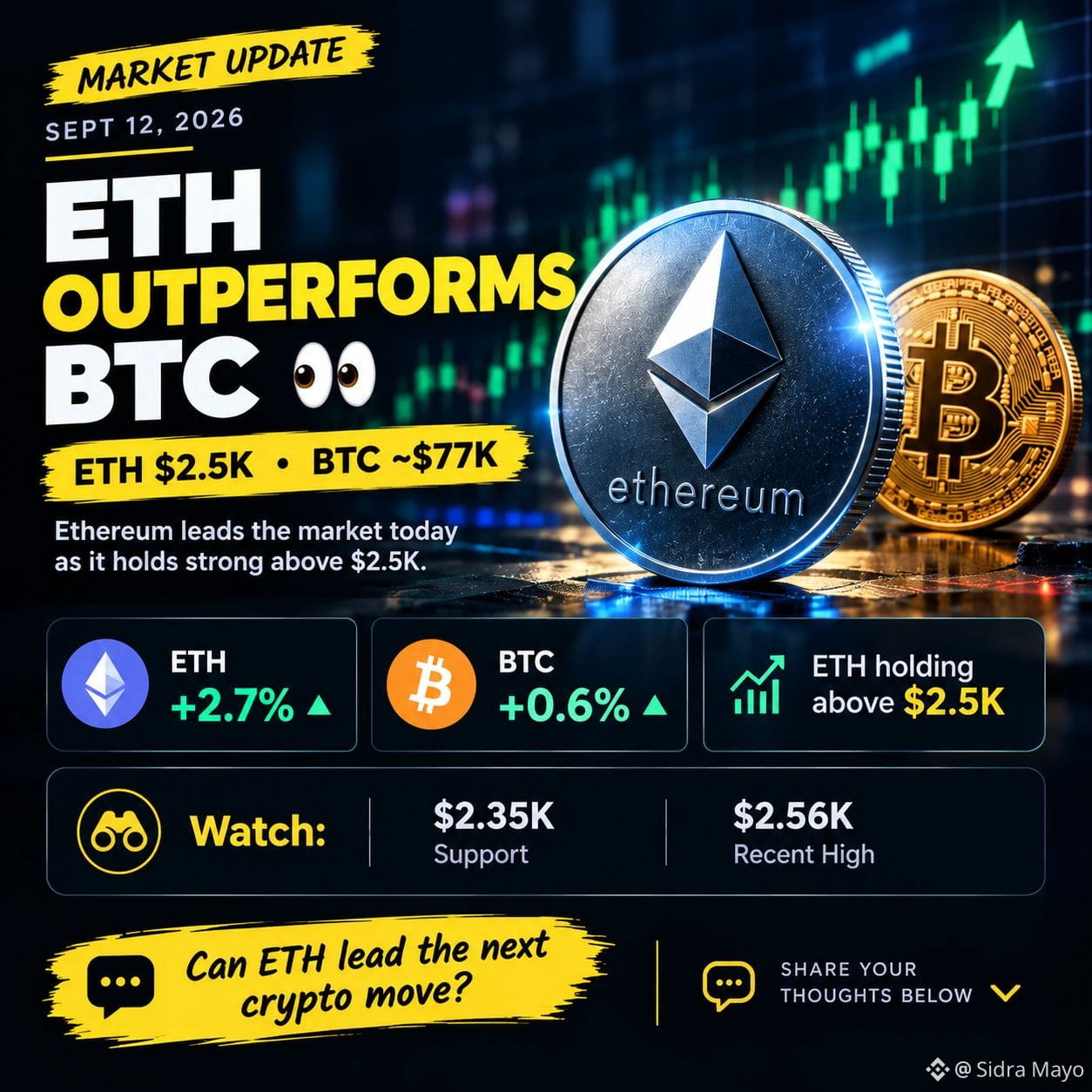
🚨 ETH IS OUTPERFORMING BTC 👀
ETH is holding around $2.5K, while BTC stays near $77K.
📈 ETH: stronger momentum
₿ BTC: still consolidating
The big question: Can ETH lead the next crypto move? 🔥
$ETH
{future}(ETHUSDT)
👇 Bullish on ETH or BTC?
#Ethereum #ETH #Bitcoin #BTC #BinanceSquare #Crypto #Altcoins
🚨 ETH IS OUTPERFORMING BTC 👀
ETH is holding around $2.5K, while BTC stays near $77K.
📈 ETH: stronger momentum
₿ BTC: still consolidating
The big question: Can ETH lead the next crypto move? 🔥
$ETH
👇 Bullish on ETH or BTC?
#Ethereum #ETH #Bitcoin #BTC #BinanceSquare #Crypto #Altcoins
ETH is holding around $2.5K, while BTC stays near $77K.
📈 ETH: stronger momentum
₿ BTC: still consolidating
The big question: Can ETH lead the next crypto move? 🔥
$ETH
👇 Bullish on ETH or BTC?
#Ethereum #ETH #Bitcoin #BTC #BinanceSquare #Crypto #Altcoins
57
·
--
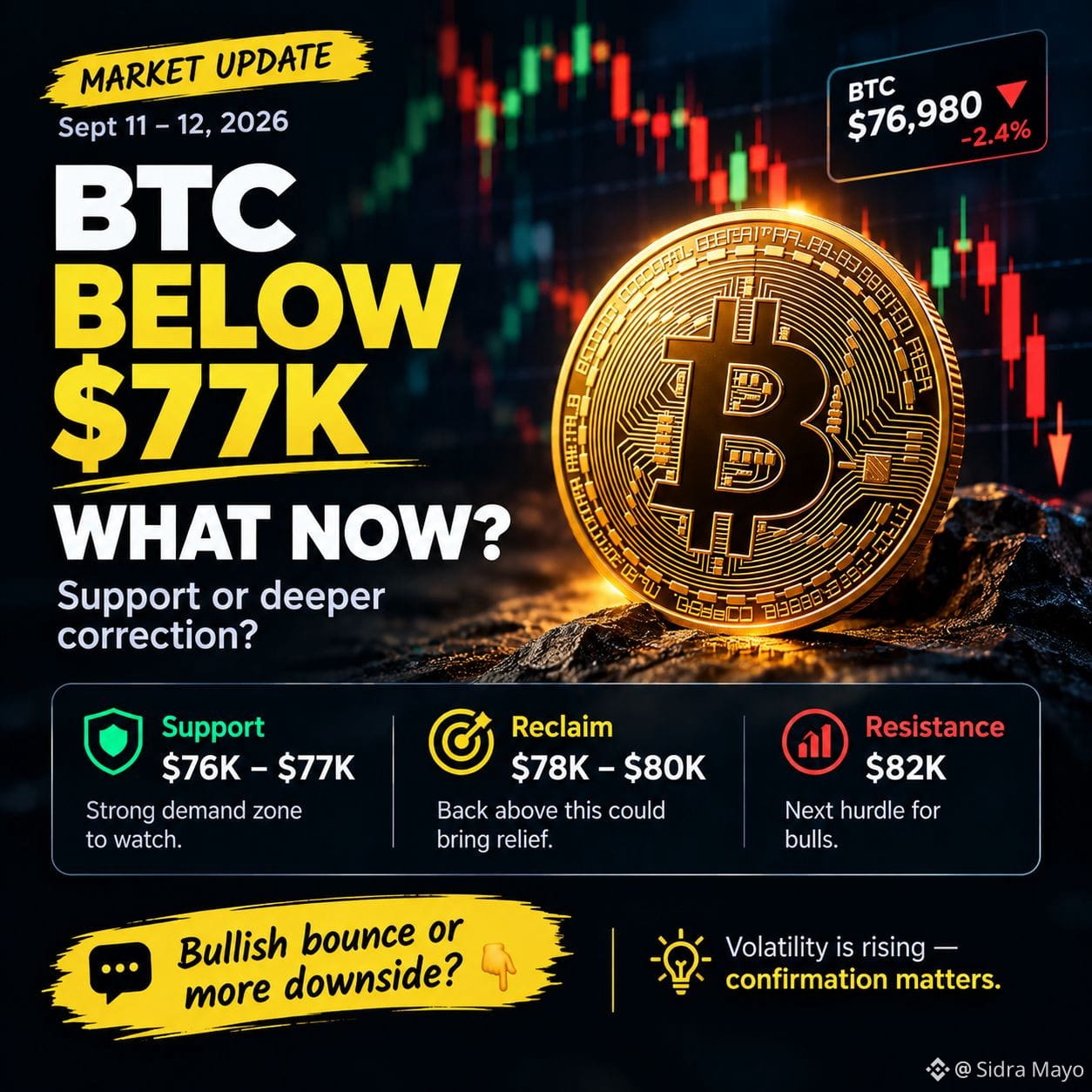
🚨 BTC BELOW $77K — WHAT NOW? 👀
Bitcoin $BTC
{spot}(BTCUSDT)
has pulled back sharply after recently trading above $80K.
📉 Support: $76K–$77K
🟡 Reclaim: $78K–$80K
🔴 Resistance: ~$82K
The big question: bullish bounce or deeper correction?
Don’t chase the move. Watch the key levels and wait for confirmation. 📊
👇 What’s your prediction?
🚀 Bounce
📉 More downside
#Bitcoin #BTC #BinanceSquare #Crypto #CryptoNews #Trading #BTCUSDT
🚨 BTC BELOW $77K — WHAT NOW? 👀
Bitcoin $BTC
has pulled back sharply after recently trading above $80K.
📉 Support: $76K–$77K
🟡 Reclaim: $78K–$80K
🔴 Resistance: ~$82K
The big question: bullish bounce or deeper correction?
Don’t chase the move. Watch the key levels and wait for confirmation. 📊
👇 What’s your prediction?
🚀 Bounce
📉 More downside
#Bitcoin #BTC #BinanceSquare #Crypto #CryptoNews #Trading #BTCUSDT
Bitcoin $BTC
has pulled back sharply after recently trading above $80K.
📉 Support: $76K–$77K
🟡 Reclaim: $78K–$80K
🔴 Resistance: ~$82K
The big question: bullish bounce or deeper correction?
Don’t chase the move. Watch the key levels and wait for confirmation. 📊
👇 What’s your prediction?
🚀 Bounce
📉 More downside
#Bitcoin #BTC #BinanceSquare #Crypto #CryptoNews #Trading #BTCUSDT
76
·
--
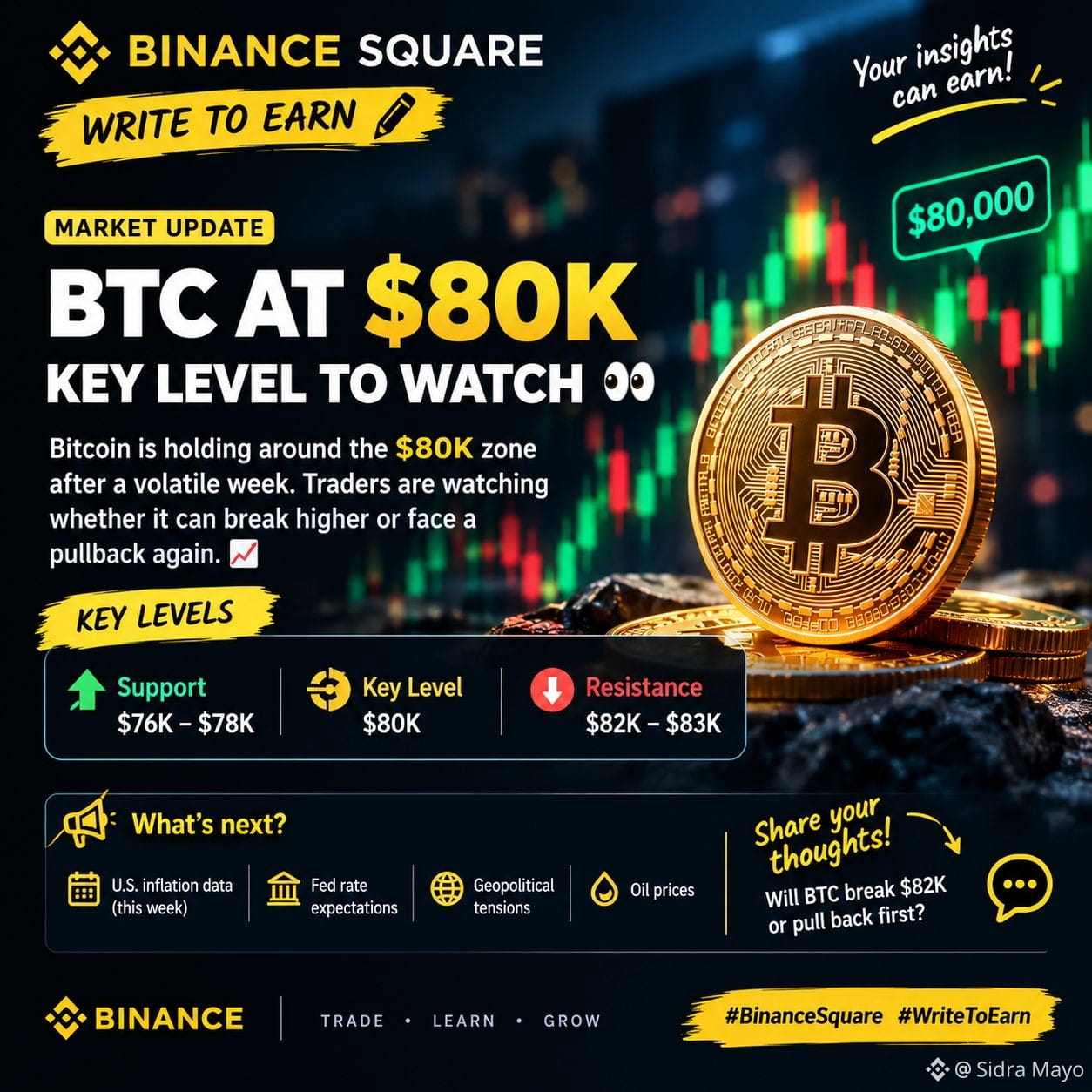
🚨 BTC $80K — KEY LEVEL TO WATCH 👀
Bitcoin $BTC is hovering around the $78K–$80K zone as traders wait for U.S. inflation data and fresh Fed signals. 📊
🟢 Support: $76K–$78K
🟡 Key level: $80K
🔴 Resistance: $82K–$83K
Will BTC break higher 🚀 or pull back first 📉?
What’s your prediction? 👇
⚠️ Not financial advice. DYOR.
#Bitcoin #BTC #Crypto #BinanceSquare #WriteToEarn
🚨 BTC $80K — KEY LEVEL TO WATCH 👀
Bitcoin $BTC is hovering around the $78K–$80K zone as traders wait for U.S. inflation data and fresh Fed signals. 📊
🟢 Support: $76K–$78K
🟡 Key level: $80K
🔴 Resistance: $82K–$83K
Will BTC break higher 🚀 or pull back first 📉?
What’s your prediction? 👇
⚠️ Not financial advice. DYOR.
#Bitcoin #BTC #Crypto #BinanceSquare #WriteToEarn
Bitcoin $BTC is hovering around the $78K–$80K zone as traders wait for U.S. inflation data and fresh Fed signals. 📊
🟢 Support: $76K–$78K
🟡 Key level: $80K
🔴 Resistance: $82K–$83K
Will BTC break higher 🚀 or pull back first 📉?
What’s your prediction? 👇
⚠️ Not financial advice. DYOR.
#Bitcoin #BTC #Crypto #BinanceSquare #WriteToEarn
71
·
--
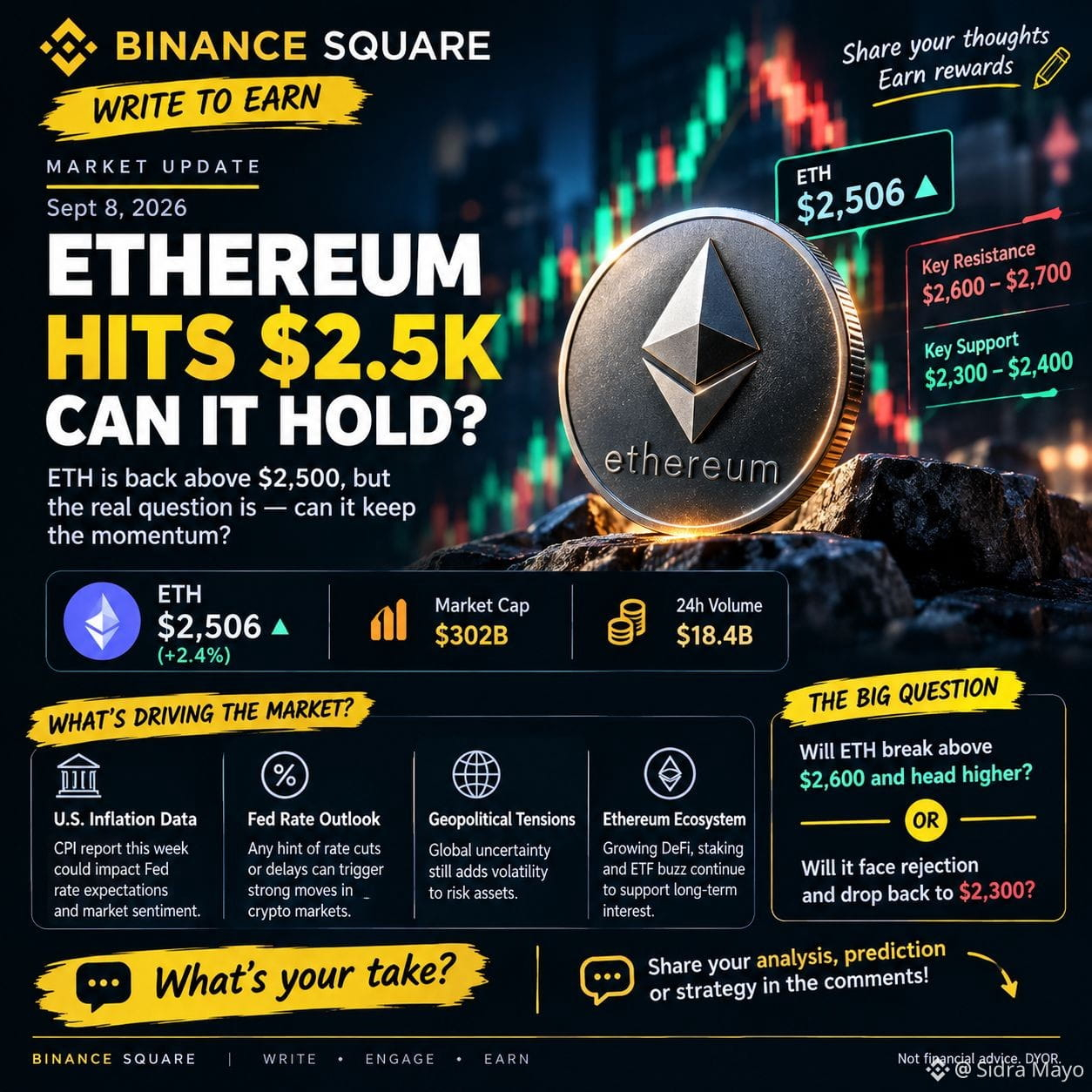
🚨 ETH AT $2.5K — THE NEXT BIG MOVE? 👀
Ethereum is back around the $2,500 level, $ETH but the bigger question is whether bulls can turn this area into a launchpad for the next move. 📊
Here are the levels I’m watching:
🟢 Support: $2.30K–$2.40K
🟡 Key level: $2.50K
🔴 Resistance: $2.60K–$2.70K
Meanwhile, macro conditions remain important.
🇺🇸 U.S. inflation data is coming this week, while traders are also$ETH watching the Fed’s upcoming decision. Rising oil prices and geopolitical tensions are adding another layer of uncertainty to risk assets.
💡 My view:
ETH doesn’t need hype—it needs confirmation.
If buyers can hold above $2.5K and push through resistance, momentum could become interesting. But if $2.5K fails, traders may start watching lower support.
👇 What do you think?
🚀 ETH → $2.7K+
📉 ETH → $2.3K
🔄 ETH → Sideways
Drop your prediction below! 👇
⚠️ Not financial advice. Crypto is highly volatile. DYOR.
#Ethereum #ETH #Crypto #BinanceSquare #CryptoNews #ETHUSDT #Trading #Altcoins #CryptoMarketMoves
🚨 ETH AT $2.5K — THE NEXT BIG MOVE? 👀
Ethereum is back around the $2,500 level, $ETH but the bigger question is whether bulls can turn this area into a launchpad for the next move. 📊
Here are the levels I’m watching:
🟢 Support: $2.30K–$2.40K
🟡 Key level: $2.50K
🔴 Resistance: $2.60K–$2.70K
Meanwhile, macro conditions remain important.
🇺🇸 U.S. inflation data is coming this week, while traders are also$ETH watching the Fed’s upcoming decision. Rising oil prices and geopolitical tensions are adding another layer of uncertainty to risk assets.
💡 My view:
ETH doesn’t need hype—it needs confirmation.
If buyers can hold above $2.5K and push through resistance, momentum could become interesting. But if $2.5K fails, traders may start watching lower support.
👇 What do you think?
🚀 ETH → $2.7K+
📉 ETH → $2.3K
🔄 ETH → Sideways
Drop your prediction below! 👇
⚠️ Not financial advice. Crypto is highly volatile. DYOR.
#Ethereum #ETH #Crypto #BinanceSquare #CryptoNews #ETHUSDT #Trading #Altcoins #CryptoMarketMoves
Ethereum is back around the $2,500 level, $ETH but the bigger question is whether bulls can turn this area into a launchpad for the next move. 📊
Here are the levels I’m watching:
🟢 Support: $2.30K–$2.40K
🟡 Key level: $2.50K
🔴 Resistance: $2.60K–$2.70K
Meanwhile, macro conditions remain important.
🇺🇸 U.S. inflation data is coming this week, while traders are also$ETH watching the Fed’s upcoming decision. Rising oil prices and geopolitical tensions are adding another layer of uncertainty to risk assets.
💡 My view:
ETH doesn’t need hype—it needs confirmation.
If buyers can hold above $2.5K and push through resistance, momentum could become interesting. But if $2.5K fails, traders may start watching lower support.
👇 What do you think?
🚀 ETH → $2.7K+
📉 ETH → $2.3K
🔄 ETH → Sideways
Drop your prediction below! 👇
⚠️ Not financial advice. Crypto is highly volatile. DYOR.
#Ethereum #ETH #Crypto #BinanceSquare #CryptoNews #ETHUSDT #Trading #Altcoins #CryptoMarketMoves
62
·
--
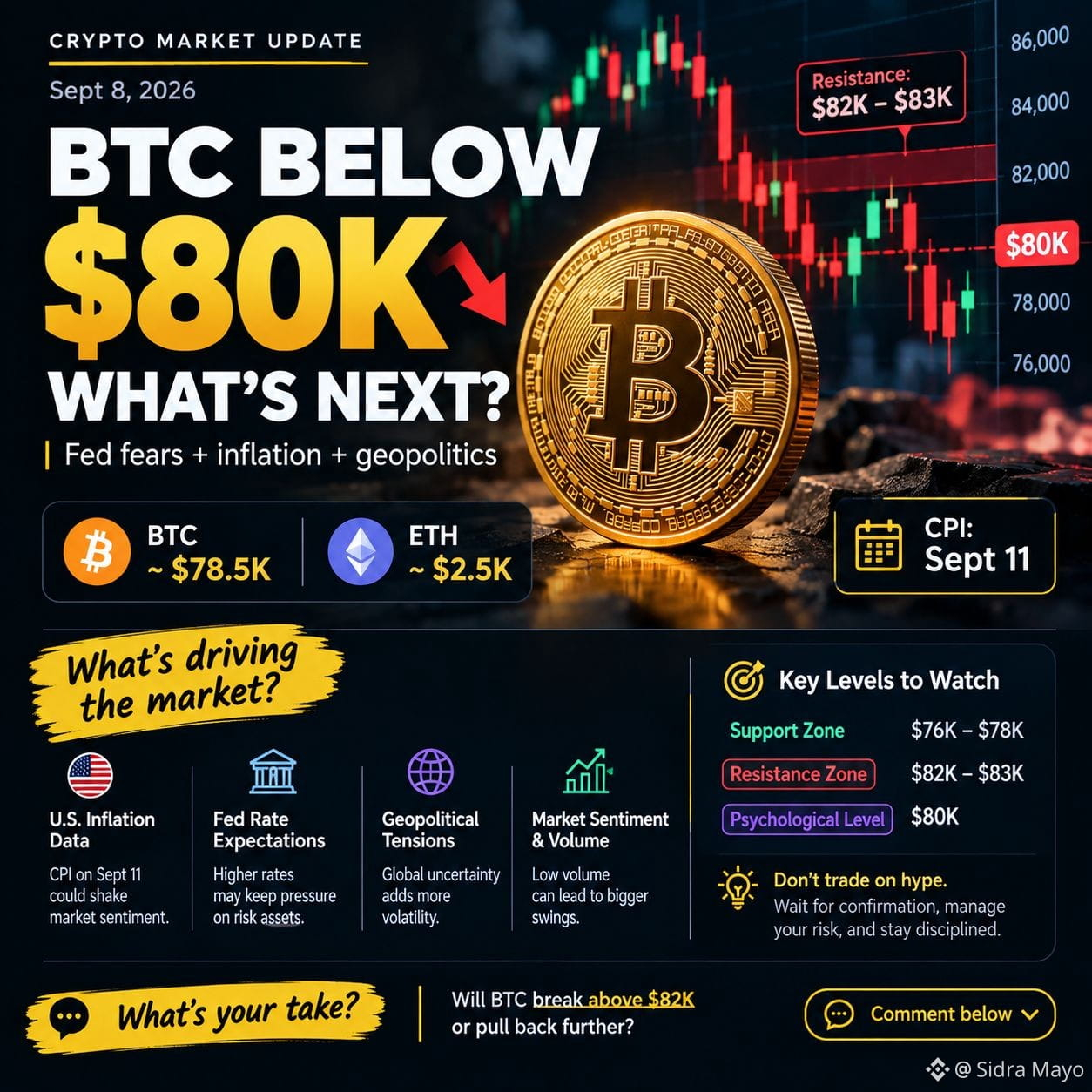
🚨 BTC BELOW $80K — WHAT’S NEXT?
Bitcoin$BTC is facing another important test. After recently trading above $82K, BTC has pulled back toward the $78K–$79K area.
Now the big question is:
🔥 Can BTC reclaim $80K and challenge $82K–$83K again?
OR
📉 Will sellers push price toward lower support?
Here are the levels I’m watching:
🟢 Support: $76K–$78K
🟡 Psychological level: $80K
🔴 Resistance: $82K–$83K
The bigger $BTC catalyst could be U.S. inflation data, with CPI due later this week. Higher inflation could strengthen expectations for tighter monetary policy, potentially adding pressure to risk assets.
💡 My takeaway:
Don’t chase the first pump or panic on the first dump. Let price confirm the direction and manage risk carefully.
👇 Your prediction?
🚀 BTC breaks $82K
📉 BTC falls below $76K
🔄 BTC stays between $76K–$83K
Comment your prediction! 👇
⚠️ Not financial advice. Crypto is highly volatile. DYOR.
#Bitcoin #BTC #Crypto #BinanceSquare #CryptoNews #BTCUSDT #Trading #BitcoinAnalysis #CryptoMarketAlert
🚨 BTC BELOW $80K — WHAT’S NEXT?
Bitcoin$BTC is facing another important test. After recently trading above $82K, BTC has pulled back toward the $78K–$79K area.
Now the big question is:
🔥 Can BTC reclaim $80K and challenge $82K–$83K again?
OR
📉 Will sellers push price toward lower support?
Here are the levels I’m watching:
🟢 Support: $76K–$78K
🟡 Psychological level: $80K
🔴 Resistance: $82K–$83K
The bigger $BTC catalyst could be U.S. inflation data, with CPI due later this week. Higher inflation could strengthen expectations for tighter monetary policy, potentially adding pressure to risk assets.
💡 My takeaway:
Don’t chase the first pump or panic on the first dump. Let price confirm the direction and manage risk carefully.
👇 Your prediction?
🚀 BTC breaks $82K
📉 BTC falls below $76K
🔄 BTC stays between $76K–$83K
Comment your prediction! 👇
⚠️ Not financial advice. Crypto is highly volatile. DYOR.
#Bitcoin #BTC #Crypto #BinanceSquare #CryptoNews #BTCUSDT #Trading #BitcoinAnalysis #CryptoMarketAlert
Bitcoin$BTC is facing another important test. After recently trading above $82K, BTC has pulled back toward the $78K–$79K area.
Now the big question is:
🔥 Can BTC reclaim $80K and challenge $82K–$83K again?
OR
📉 Will sellers push price toward lower support?
Here are the levels I’m watching:
🟢 Support: $76K–$78K
🟡 Psychological level: $80K
🔴 Resistance: $82K–$83K
The bigger $BTC catalyst could be U.S. inflation data, with CPI due later this week. Higher inflation could strengthen expectations for tighter monetary policy, potentially adding pressure to risk assets.
💡 My takeaway:
Don’t chase the first pump or panic on the first dump. Let price confirm the direction and manage risk carefully.
👇 Your prediction?
🚀 BTC breaks $82K
📉 BTC falls below $76K
🔄 BTC stays between $76K–$83K
Comment your prediction! 👇
⚠️ Not financial advice. Crypto is highly volatile. DYOR.
#Bitcoin #BTC #Crypto #BinanceSquare #CryptoNews #BTCUSDT #Trading #BitcoinAnalysis #CryptoMarketAlert
49
·
--
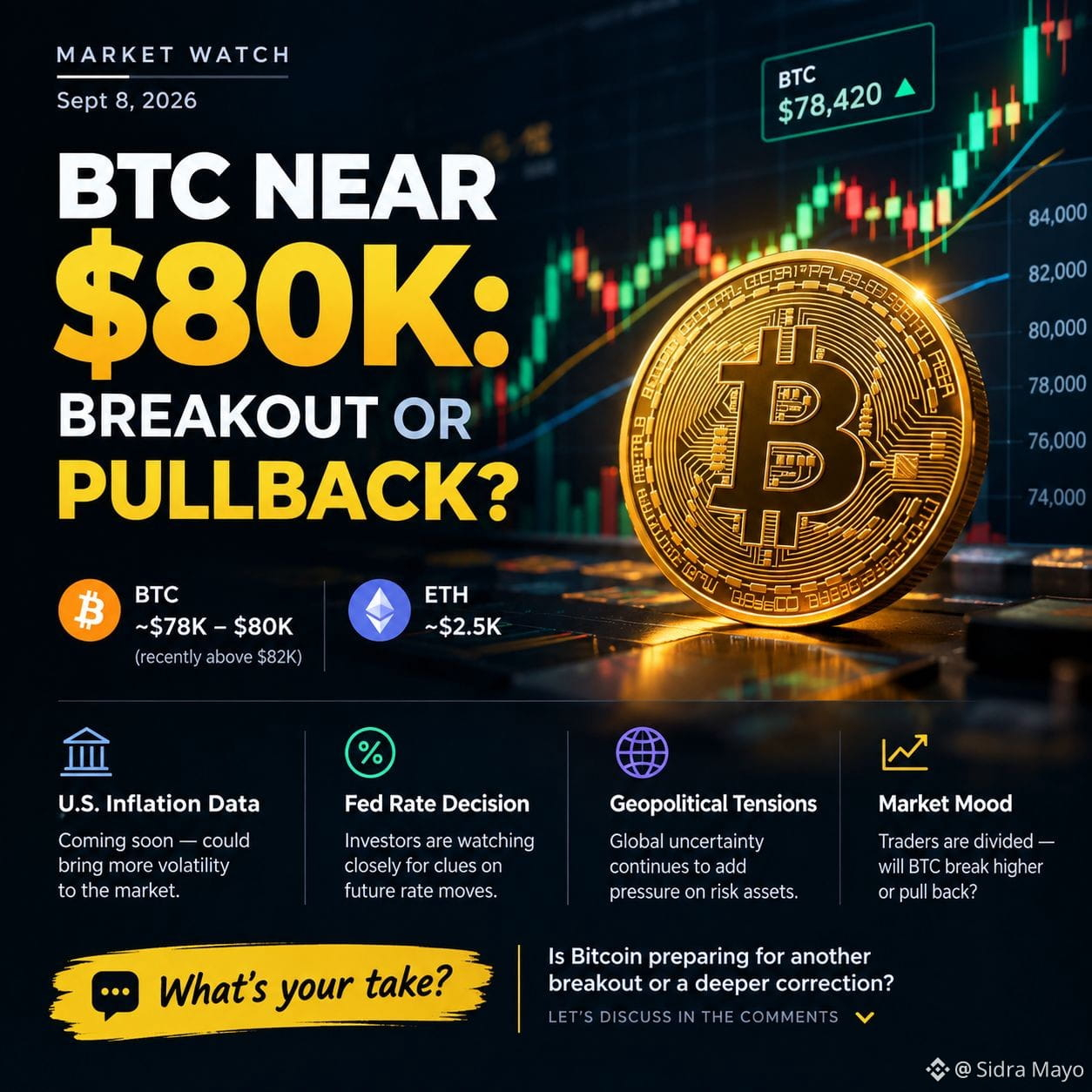
🚨 BTC NEAR $80K — BREAKOUT OR PULLBACK? 👀
Bitcoin is back in the spotlight as traders watch the $80K zone closely.$BTC
BTC recently pushed above $82K, but the market is now showing signs of caution. Meanwhile, ETH is hovering around the $2.5K area.
🔥 What could move the market next?
• 🇺🇸 U.S. inflation data
• 🏦 Fed rate expectations
• 🌍 Geopolitical uncertainty
• 📊 BTC volume & market sentiment
$BTC
The key lesson? Don’t trade just because everyone is excited.
Wait for confirmation. Manage your risk. Avoid FOMO. 🧠
👇 Your prediction:
BTC → Breaks above $82K 🚀
OR
BTC→ Pulls back first 📉?
Drop your view in the comments!
⚠️ This post is for educational purposes only and is not financial advice. Always DYOR.
#Bitcoin #BTC #Ethereum #ETH #BinanceSquare #Crypto #CryptoNews #BTCUSDT #Trading #MarketUpdate #SaudiHaltsSouthernEnergySitesAfterAttacks
🚨 BTC NEAR $80K — BREAKOUT OR PULLBACK? 👀
Bitcoin is back in the spotlight as traders watch the $80K zone closely.$BTC
BTC recently pushed above $82K, but the market is now showing signs of caution. Meanwhile, ETH is hovering around the $2.5K area.
🔥 What could move the market next?
• 🇺🇸 U.S. inflation data
• 🏦 Fed rate expectations
• 🌍 Geopolitical uncertainty
• 📊 BTC volume & market sentiment
$BTC
The key lesson? Don’t trade just because everyone is excited.
Wait for confirmation. Manage your risk. Avoid FOMO. 🧠
👇 Your prediction:
BTC → Breaks above $82K 🚀
OR
BTC→ Pulls back first 📉?
Drop your view in the comments!
⚠️ This post is for educational purposes only and is not financial advice. Always DYOR.
#Bitcoin #BTC #Ethereum #ETH #BinanceSquare #Crypto #CryptoNews #BTCUSDT #Trading #MarketUpdate #SaudiHaltsSouthernEnergySitesAfterAttacks
Bitcoin is back in the spotlight as traders watch the $80K zone closely.$BTC
BTC recently pushed above $82K, but the market is now showing signs of caution. Meanwhile, ETH is hovering around the $2.5K area.
🔥 What could move the market next?
• 🇺🇸 U.S. inflation data
• 🏦 Fed rate expectations
• 🌍 Geopolitical uncertainty
• 📊 BTC volume & market sentiment
$BTC
The key lesson? Don’t trade just because everyone is excited.
Wait for confirmation. Manage your risk. Avoid FOMO. 🧠
👇 Your prediction:
BTC → Breaks above $82K 🚀
OR
BTC→ Pulls back first 📉?
Drop your view in the comments!
⚠️ This post is for educational purposes only and is not financial advice. Always DYOR.
#Bitcoin #BTC #Ethereum #ETH #BinanceSquare #Crypto #CryptoNews #BTCUSDT #Trading #MarketUpdate #SaudiHaltsSouthernEnergySitesAfterAttacks
69
·
--
🚨 Bitcoin Is Testing Traders’ Patience
$NVDAB
{spot}(NVDABUSDT)
Bitcoin’s biggest challenge isn’t always a sudden crash—it’s the uncertainty before the next big move. 📊
When the market moves sideways, many traders become impatient and start chasing every small pump or dump.
But smart traders focus on risk management, key levels, and patience rather than emotions.
💡 Remember:
A missed trade is better than a bad trade.
Before entering any position, ask yourself:
• Where am I entering?
• Where will I exit if I’m wrong?
• How much am I willing to risk?
Crypto rewards preparation—not FOMO. 🚀
What do you think: Is $NVDAB Bitcoin preparing for another breakout or a deeper correction? 👇
#Bitcoin #BTC #Crypto #Binance #Trading #CryptoMarketAlert
🚨 Bitcoin Is Testing Traders’ Patience
$NVDAB
Bitcoin’s biggest challenge isn’t always a sudden crash—it’s the uncertainty before the next big move. 📊
When the market moves sideways, many traders become impatient and start chasing every small pump or dump.
But smart traders focus on risk management, key levels, and patience rather than emotions.
💡 Remember:
A missed trade is better than a bad trade.
Before entering any position, ask yourself:
• Where am I entering?
• Where will I exit if I’m wrong?
• How much am I willing to risk?
Crypto rewards preparation—not FOMO. 🚀
What do you think: Is $NVDAB Bitcoin preparing for another breakout or a deeper correction? 👇
#Bitcoin #BTC #Crypto #Binance #Trading #CryptoMarketAlert
$NVDAB
Bitcoin’s biggest challenge isn’t always a sudden crash—it’s the uncertainty before the next big move. 📊
When the market moves sideways, many traders become impatient and start chasing every small pump or dump.
But smart traders focus on risk management, key levels, and patience rather than emotions.
💡 Remember:
A missed trade is better than a bad trade.
Before entering any position, ask yourself:
• Where am I entering?
• Where will I exit if I’m wrong?
• How much am I willing to risk?
Crypto rewards preparation—not FOMO. 🚀
What do you think: Is $NVDAB Bitcoin preparing for another breakout or a deeper correction? 👇
#Bitcoin #BTC #Crypto #Binance #Trading #CryptoMarketAlert
55
·
--
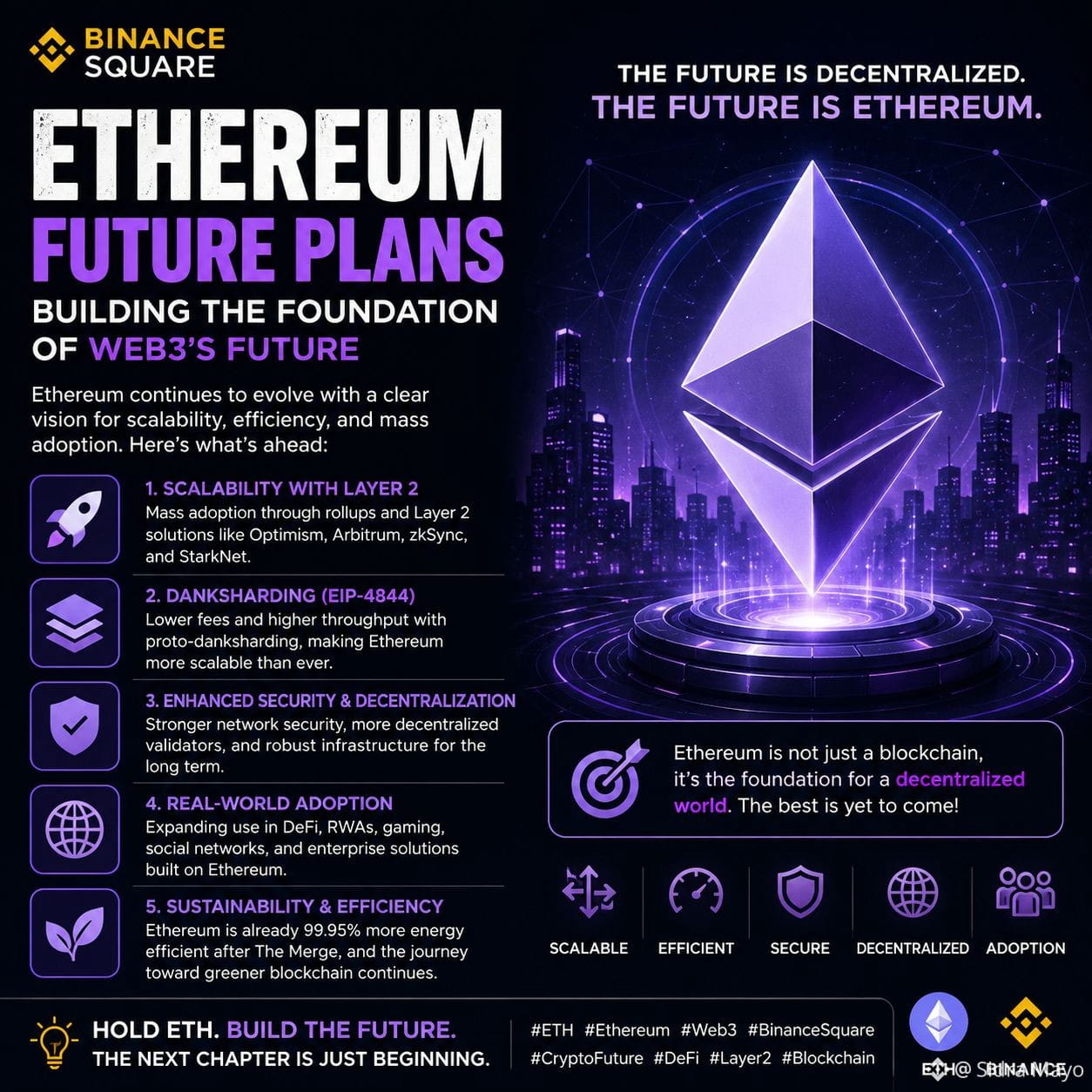
🚀 ETHEREUM’S FUTURE: WHAT COMES NEXT?
Ethereum is entering another major phase of development — and the goal is clear: more scalability, better efficiency, stronger security, and wider adoption. 🔥
🔹 Glamsterdam — Ethereum’s upcoming major upgrade, focused on scaling L1 capacity, improving block construction, and preparing the network for higher throughput.
🔹 Hegotá — planned for later in 2026, with further work on account abstraction, security and the long-term evolution of Ethereum.
🔹 More Scaling —$ETH Ethereum’s roadmap continues to push rollups, blob capacity and cheaper transactions.
🔹 Stronger Security — developers are also working toward censorship resistance and long-term, post-quantum security.
💡 The bigger picture: Ethereum isn’t just trying to process more transactions. It’s building infrastructure for DeFi, stablecoins, tokenized assets, applications and the next generation of Web3.
ETH’s story is becoming less about “just a coin” and more about the infrastructure behind an entire digital economy. 🌐
What do you think — Can Ethereum become the dominant settlement layer for the next wave of Web3? 👇
#Ethereum #ETH #EthereumRoadmap #Glamsterdam #Hegota #Crypto #DeFi #Web3 #Layer2 #Blockchain #BinanceSquare #CryptoNews
$ETH
{spot}(ETHUSDT)
🚀 ETHEREUM’S FUTURE: WHAT COMES NEXT?
Ethereum is entering another major phase of development — and the goal is clear: more scalability, better efficiency, stronger security, and wider adoption. 🔥
🔹 Glamsterdam — Ethereum’s upcoming major upgrade, focused on scaling L1 capacity, improving block construction, and preparing the network for higher throughput.
🔹 Hegotá — planned for later in 2026, with further work on account abstraction, security and the long-term evolution of Ethereum.
🔹 More Scaling —$ETH Ethereum’s roadmap continues to push rollups, blob capacity and cheaper transactions.
🔹 Stronger Security — developers are also working toward censorship resistance and long-term, post-quantum security.
💡 The bigger picture: Ethereum isn’t just trying to process more transactions. It’s building infrastructure for DeFi, stablecoins, tokenized assets, applications and the next generation of Web3.
ETH’s story is becoming less about “just a coin” and more about the infrastructure behind an entire digital economy. 🌐
What do you think — Can Ethereum become the dominant settlement layer for the next wave of Web3? 👇
#Ethereum #ETH #EthereumRoadmap #Glamsterdam #Hegota #Crypto #DeFi #Web3 #Layer2 #Blockchain #BinanceSquare #CryptoNews
$ETH
Ethereum is entering another major phase of development — and the goal is clear: more scalability, better efficiency, stronger security, and wider adoption. 🔥
🔹 Glamsterdam — Ethereum’s upcoming major upgrade, focused on scaling L1 capacity, improving block construction, and preparing the network for higher throughput.
🔹 Hegotá — planned for later in 2026, with further work on account abstraction, security and the long-term evolution of Ethereum.
🔹 More Scaling —$ETH Ethereum’s roadmap continues to push rollups, blob capacity and cheaper transactions.
🔹 Stronger Security — developers are also working toward censorship resistance and long-term, post-quantum security.
💡 The bigger picture: Ethereum isn’t just trying to process more transactions. It’s building infrastructure for DeFi, stablecoins, tokenized assets, applications and the next generation of Web3.
ETH’s story is becoming less about “just a coin” and more about the infrastructure behind an entire digital economy. 🌐
What do you think — Can Ethereum become the dominant settlement layer for the next wave of Web3? 👇
#Ethereum #ETH #EthereumRoadmap #Glamsterdam #Hegota #Crypto #DeFi #Web3 #Layer2 #Blockchain #BinanceSquare #CryptoNews
$ETH
78
·
--
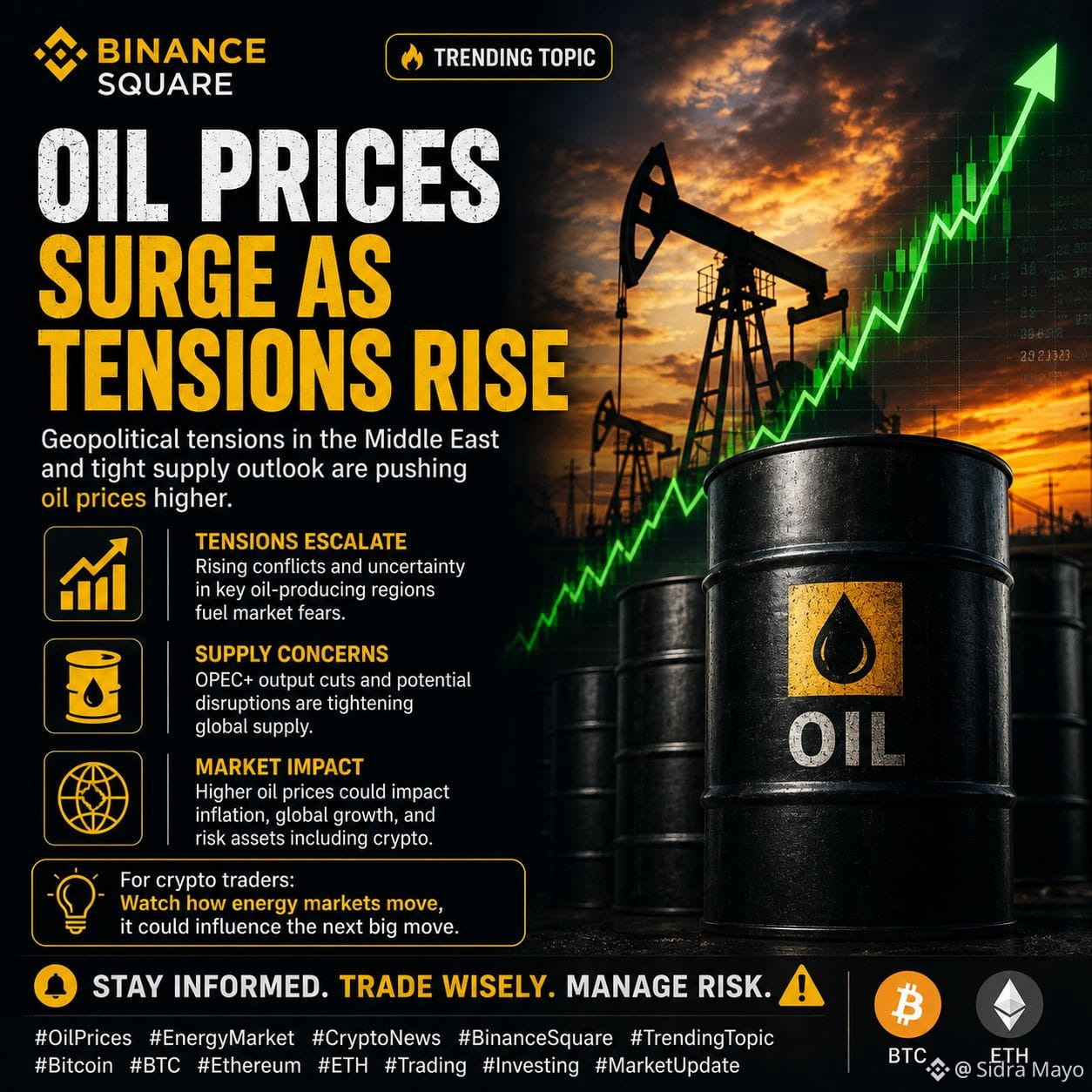
🔥 OIL PRICES SURGE AS GEOPOLITICAL TENSIONS RISE
Oil markets are back in focus as rising geopolitical tensions and supply concerns push energy prices higher. 📈🛢️
Why does this matter for crypto traders?
🌍 Higher oil prices can increase inflation pressure
💵 Markets may expect tighter monetary policy
📉 Risk assets can face additional volatility
₿ Bitcoin and crypto could react to changing global risk sentiment
The big question: Will rising energy prices trigger another risk-off move across global markets?
👀 Keep an eye on oil, the dollar, and BTC.
Stay informed. Trade wisely. Manage risk. ⚠️
#OilPrices #CryptoNews #Bitcoin #BTC #Ethereum #ETH #BinanceSquare #Trading #Investing #MarketUpdate #CryptoTrading #Geopolitics
$BTC
$ETH
{spot}(ETHUSDT)
🔥 OIL PRICES SURGE AS GEOPOLITICAL TENSIONS RISE
Oil markets are back in focus as rising geopolitical tensions and supply concerns push energy prices higher. 📈🛢️
Why does this matter for crypto traders?
🌍 Higher oil prices can increase inflation pressure
💵 Markets may expect tighter monetary policy
📉 Risk assets can face additional volatility
₿ Bitcoin and crypto could react to changing global risk sentiment
The big question: Will rising energy prices trigger another risk-off move across global markets?
👀 Keep an eye on oil, the dollar, and BTC.
Stay informed. Trade wisely. Manage risk. ⚠️
#OilPrices #CryptoNews #Bitcoin #BTC #Ethereum #ETH #BinanceSquare #Trading #Investing #MarketUpdate #CryptoTrading #Geopolitics
$BTC
$ETH
Oil markets are back in focus as rising geopolitical tensions and supply concerns push energy prices higher. 📈🛢️
Why does this matter for crypto traders?
🌍 Higher oil prices can increase inflation pressure
💵 Markets may expect tighter monetary policy
📉 Risk assets can face additional volatility
₿ Bitcoin and crypto could react to changing global risk sentiment
The big question: Will rising energy prices trigger another risk-off move across global markets?
👀 Keep an eye on oil, the dollar, and BTC.
Stay informed. Trade wisely. Manage risk. ⚠️
#OilPrices #CryptoNews #Bitcoin #BTC #Ethereum #ETH #BinanceSquare #Trading #Investing #MarketUpdate #CryptoTrading #Geopolitics
$BTC
$ETH
66
·
--
#KoreanChipStocksFallAsFundsRotateOut
🇰🇷 Korean Chip Stocks Slide as Funds Rotate Out
Korean semiconductor stocks are facing renewed pressure as investors shift capital away from the chip sector and into other areas of the market.
📉 Fund rotation is weighing on sentiment
💻 Semiconductor shares remain under pressure
🌏 Global investors are watching the next move closely
For crypto traders, the key question is whether this risk-off rotation could spill over into broader tech and digital-asset markets.
Stay alert. Watch liquidity. Manage risk. ⚠️
#KoreanChipStocks #Semiconductor #Crypto #Bitcoin #BinanceSquare #MarketUpdate #Trading #Investing #BTC #ETH
{spot}(BTCUSDT)
#KoreanChipStocksFallAsFundsRotateOut
🇰🇷 Korean Chip Stocks Slide as Funds Rotate Out
Korean semiconductor stocks are facing renewed pressure as investors shift capital away from the chip sector and into other areas of the market.
📉 Fund rotation is weighing on sentiment
💻 Semiconductor shares remain under pressure
🌏 Global investors are watching the next move closely
For crypto traders, the key question is whether this risk-off rotation could spill over into broader tech and digital-asset markets.
Stay alert. Watch liquidity. Manage risk. ⚠️
#KoreanChipStocks #Semiconductor #Crypto #Bitcoin #BinanceSquare #MarketUpdate #Trading #Investing #BTC #ETH
🇰🇷 Korean Chip Stocks Slide as Funds Rotate Out
Korean semiconductor stocks are facing renewed pressure as investors shift capital away from the chip sector and into other areas of the market.
📉 Fund rotation is weighing on sentiment
💻 Semiconductor shares remain under pressure
🌏 Global investors are watching the next move closely
For crypto traders, the key question is whether this risk-off rotation could spill over into broader tech and digital-asset markets.
Stay alert. Watch liquidity. Manage risk. ⚠️
#KoreanChipStocks #Semiconductor #Crypto #Bitcoin #BinanceSquare #MarketUpdate #Trading #Investing #BTC #ETH

72
·
--
Article
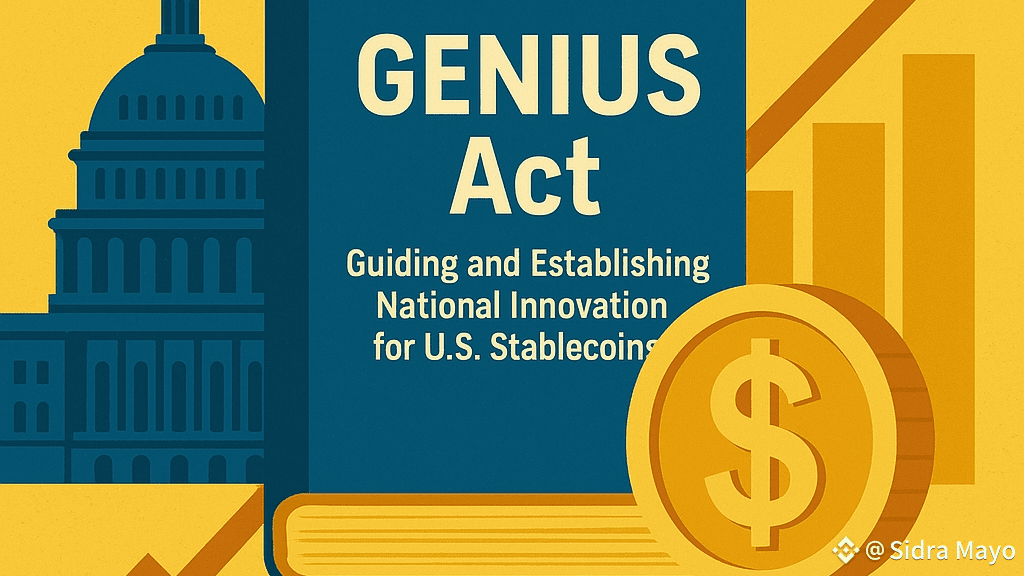
The GENIUS Act: A Turning Point for U.S. Stablecoin RegulationThe U.S. Senate is on the verge of passing the GENIUS Act (Guiding and Establishing National Innovation for U.S. Stablecoins Act of 2025), a landmark bill poised to reshape the American crypto landscape. If enacted, it would establish the first comprehensive federal framework for payment stablecoins—digital assets pegged to the U.S. dollar and backed 1:1 by safe, liquid reserves like cash or Treasury bills.
Key Provisions of the GENIUS Act
Dual Regulatory Pathways: Issuers can choose between federal oversight (via the Office of the Comptroller of the Currency and Federal Reserve) or state-level regulation, provided state laws align with federal standards.
Reserve and Transparency Requirements: Stablecoins must be fully backed by high-quality liquid assets. Issuers are mandated to provide monthly reserve disclosures and undergo third-party audits.
Consumer Protections: The bill enforces timely redemption rights, prohibits the rehypothecation of reserves, and requires adherence to anti-money laundering (AML) and know-your-customer (KYC) regulations.
Clarification of Legal Status: Payment stablecoins are explicitly excluded from being classified as securities or commodities under federal law, providing much-needed legal clarity.
Political Dynamics and Controversies
While the GENIUS Act has garnered bipartisan support, it faces criticism over potential conflicts of interest. Senator Elizabeth Warren and other Democrats have raised concerns about former President Donald Trump's involvement in stablecoin ventures, particularly the USD1 token issued by his company, World Liberty Financial. They argue that the bill could enable Trump to profit from legislation he supports, raising ethical questions.
Implications for the Crypto Industry
If passed, the GENIUS Act could significantly boost the U.S. stablecoin market. Analysts at Standard Chartered Bank predict that the U.S. stablecoin supply could surge to $2 trillion by 2028, driven by regulatory clarity and increased institutional adoption.
#GENIUSAct
The GENIUS Act: A Turning Point for U.S. Stablecoin Regulation
The U.S. Senate is on the verge of passing the GENIUS Act (Guiding and Establishing National Innovation for U.S. Stablecoins Act of 2025), a landmark bill poised to reshape the American crypto landscape. If enacted, it would establish the first comprehensive federal framework for payment stablecoins—digital assets pegged to the U.S. dollar and backed 1:1 by safe, liquid reserves like cash or Treasury bills.
Key Provisions of the GENIUS Act
Dual Regulatory Pathways: Issuers can choose between federal oversight (via the Office of the Comptroller of the Currency and Federal Reserve) or state-level regulation, provided state laws align with federal standards.
Reserve and Transparency Requirements: Stablecoins must be fully backed by high-quality liquid assets. Issuers are mandated to provide monthly reserve disclosures and undergo third-party audits.
Consumer Protections: The bill enforces timely redemption rights, prohibits the rehypothecation of reserves, and requires adherence to anti-money laundering (AML) and know-your-customer (KYC) regulations.
Clarification of Legal Status: Payment stablecoins are explicitly excluded from being classified as securities or commodities under federal law, providing much-needed legal clarity.
Political Dynamics and Controversies
While the GENIUS Act has garnered bipartisan support, it faces criticism over potential conflicts of interest. Senator Elizabeth Warren and other Democrats have raised concerns about former President Donald Trump's involvement in stablecoin ventures, particularly the USD1 token issued by his company, World Liberty Financial. They argue that the bill could enable Trump to profit from legislation he supports, raising ethical questions.
Implications for the Crypto Industry
If passed, the GENIUS Act could significantly boost the U.S. stablecoin market. Analysts at Standard Chartered Bank predict that the U.S. stablecoin supply could surge to $2 trillion by 2028, driven by regulatory clarity and increased institutional adoption.
#GENIUSAct
Key Provisions of the GENIUS Act
Dual Regulatory Pathways: Issuers can choose between federal oversight (via the Office of the Comptroller of the Currency and Federal Reserve) or state-level regulation, provided state laws align with federal standards.
Reserve and Transparency Requirements: Stablecoins must be fully backed by high-quality liquid assets. Issuers are mandated to provide monthly reserve disclosures and undergo third-party audits.
Consumer Protections: The bill enforces timely redemption rights, prohibits the rehypothecation of reserves, and requires adherence to anti-money laundering (AML) and know-your-customer (KYC) regulations.
Clarification of Legal Status: Payment stablecoins are explicitly excluded from being classified as securities or commodities under federal law, providing much-needed legal clarity.
Political Dynamics and Controversies
While the GENIUS Act has garnered bipartisan support, it faces criticism over potential conflicts of interest. Senator Elizabeth Warren and other Democrats have raised concerns about former President Donald Trump's involvement in stablecoin ventures, particularly the USD1 token issued by his company, World Liberty Financial. They argue that the bill could enable Trump to profit from legislation he supports, raising ethical questions.
Implications for the Crypto Industry
If passed, the GENIUS Act could significantly boost the U.S. stablecoin market. Analysts at Standard Chartered Bank predict that the U.S. stablecoin supply could surge to $2 trillion by 2028, driven by regulatory clarity and increased institutional adoption.
#GENIUSAct
1
5.9k
·
--
Article
BinanceAlphaAlertBinanceAlphaAlert is your real-time source for high-impact crypto signals—tracking on-chain activity, whale movements, and emerging trends across Binance and BNB Chain.
Why it matters:
• Instant Alerts: Get notified of unusual token spikes, smart money flows, and rising narratives.
• On-Chain Intelligence: Go beyond price charts—follow wallet behavior and early token activity.
• BNB$BNB
{spot}(BNBUSDT)
Focused: Tailored insights for Binance-listed tokens and the broader Binance ecosystem.
Example Alert:
“$XYZ active wallets +450%, social mentions up 200%. Liquidity added on BNB Chain—possible memecoin trend forming.”
How to Access:
Follow @BinanceAlphaAlert on Binance Square and turn on notifications. Get smarter, faster, and stay ahead of the market.
#BinanceAlphaAlert
BinanceAlphaAlert
BinanceAlphaAlert is your real-time source for high-impact crypto signals—tracking on-chain activity, whale movements, and emerging trends across Binance and BNB Chain.
Why it matters:
• Instant Alerts: Get notified of unusual token spikes, smart money flows, and rising narratives.
• On-Chain Intelligence: Go beyond price charts—follow wallet behavior and early token activity.
• BNB$BNB
Focused: Tailored insights for Binance-listed tokens and the broader Binance ecosystem.
Example Alert:
“$XYZ active wallets +450%, social mentions up 200%. Liquidity added on BNB Chain—possible memecoin trend forming.”
How to Access:
Follow @BinanceAlphaAlert on Binance Square and turn on notifications. Get smarter, faster, and stay ahead of the market.
#BinanceAlphaAlert
Why it matters:
• Instant Alerts: Get notified of unusual token spikes, smart money flows, and rising narratives.
• On-Chain Intelligence: Go beyond price charts—follow wallet behavior and early token activity.
• BNB$BNB
Focused: Tailored insights for Binance-listed tokens and the broader Binance ecosystem.
Example Alert:
“$XYZ active wallets +450%, social mentions up 200%. Liquidity added on BNB Chain—possible memecoin trend forming.”
How to Access:
Follow @BinanceAlphaAlert on Binance Square and turn on notifications. Get smarter, faster, and stay ahead of the market.
#BinanceAlphaAlert
2
641
·
--
#BTCBackto100K
#BTCBackto100K
The bull is waking up, the charts are heating up, and the countdown is on.
Bitcoin$BTC
{spot}(BTCUSDT)
isn’t just a currency — it’s a movement.
Are you ready for the next leg up?
$100K is not a dream. It’s a destination.
#BTCBackto100K #CryptoComeback #bitcoin
#BTCBackto100K
#BTCBackto100K
The bull is waking up, the charts are heating up, and the countdown is on.
Bitcoin$BTC
isn’t just a currency — it’s a movement.
Are you ready for the next leg up?
$100K is not a dream. It’s a destination.
#BTCBackto100K #CryptoComeback #bitcoin
#BTCBackto100K
The bull is waking up, the charts are heating up, and the countdown is on.
Bitcoin$BTC
isn’t just a currency — it’s a movement.
Are you ready for the next leg up?
$100K is not a dream. It’s a destination.
#BTCBackto100K #CryptoComeback #bitcoin
57
·
--
Article
The CryptoComeback: Why 2025 Is the Year of Digital Asset ResurgenceAfter a tumultuous bear market and a wave of regulatory uncertainty, 2025 is shaping up to be the year of the CryptoComeback. From Bitcoin$BTC
{future}(BTCUSDT)
reclaiming dominance to altcoins finding renewed utility, the digital asset space is proving once again that innovation never sleeps.
Market Momentum Returns
Bitcoin surged past $70,000 earlier this year, marking a full recovery from the post-2021 slump. But unlike previous cycles, this rally feels different—more mature, more measured, and backed by a growing ecosystem of real-world applications.
$ETH
{spot}(ETHUSDT)
Ethereum’s transition to proof-of-stake has begun to pay dividends in scalability and sustainability, while layer 2 networks like Arbitrum and Optimism are enabling faster, cheaper transactions for DeFi and NFTs.
Institutional Re-Entry
The comeback is being fueled not just by retail investors, but also by renewed institutional interest. Spot Bitcoin ETFs in the U.S. and Asia are now attracting billions in inflows monthly, signaling that digital assets are becoming a staple in diversified portfolios.
Major banks and asset managers have launched blockchain-focused investment products, and tokenization of real-world assets (RWAs) is gaining serious traction—turning everything from real estate to carbon credits into on-chain assets.
The Role of Binance
Binance remains at the forefront of this resurgence. With new product launches, improved compliance infrastructure, and regional licenses, the platform is evolving with the times—offering both new and experienced users the tools to navigate this next chapter of crypto growth.
Whether it’s through Launchpool, Binance Earn, or Web3 Wallet integrations, Binance is helping the community capitalize on the momentum of this new bull cycle—safely and strategically.
#CryptoComeback #BTCtrade
The CryptoComeback: Why 2025 Is the Year of Digital Asset Resurgence
After a tumultuous bear market and a wave of regulatory uncertainty, 2025 is shaping up to be the year of the CryptoComeback. From Bitcoin$BTC
reclaiming dominance to altcoins finding renewed utility, the digital asset space is proving once again that innovation never sleeps.
Market Momentum Returns
Bitcoin surged past $70,000 earlier this year, marking a full recovery from the post-2021 slump. But unlike previous cycles, this rally feels different—more mature, more measured, and backed by a growing ecosystem of real-world applications.
$ETH
Ethereum’s transition to proof-of-stake has begun to pay dividends in scalability and sustainability, while layer 2 networks like Arbitrum and Optimism are enabling faster, cheaper transactions for DeFi and NFTs.
Institutional Re-Entry
The comeback is being fueled not just by retail investors, but also by renewed institutional interest. Spot Bitcoin ETFs in the U.S. and Asia are now attracting billions in inflows monthly, signaling that digital assets are becoming a staple in diversified portfolios.
Major banks and asset managers have launched blockchain-focused investment products, and tokenization of real-world assets (RWAs) is gaining serious traction—turning everything from real estate to carbon credits into on-chain assets.
The Role of Binance
Binance remains at the forefront of this resurgence. With new product launches, improved compliance infrastructure, and regional licenses, the platform is evolving with the times—offering both new and experienced users the tools to navigate this next chapter of crypto growth.
Whether it’s through Launchpool, Binance Earn, or Web3 Wallet integrations, Binance is helping the community capitalize on the momentum of this new bull cycle—safely and strategically.
#CryptoComeback #BTCtrade
reclaiming dominance to altcoins finding renewed utility, the digital asset space is proving once again that innovation never sleeps.
Market Momentum Returns
Bitcoin surged past $70,000 earlier this year, marking a full recovery from the post-2021 slump. But unlike previous cycles, this rally feels different—more mature, more measured, and backed by a growing ecosystem of real-world applications.
$ETH
Ethereum’s transition to proof-of-stake has begun to pay dividends in scalability and sustainability, while layer 2 networks like Arbitrum and Optimism are enabling faster, cheaper transactions for DeFi and NFTs.
Institutional Re-Entry
The comeback is being fueled not just by retail investors, but also by renewed institutional interest. Spot Bitcoin ETFs in the U.S. and Asia are now attracting billions in inflows monthly, signaling that digital assets are becoming a staple in diversified portfolios.
Major banks and asset managers have launched blockchain-focused investment products, and tokenization of real-world assets (RWAs) is gaining serious traction—turning everything from real estate to carbon credits into on-chain assets.
The Role of Binance
Binance remains at the forefront of this resurgence. With new product launches, improved compliance infrastructure, and regional licenses, the platform is evolving with the times—offering both new and experienced users the tools to navigate this next chapter of crypto growth.
Whether it’s through Launchpool, Binance Earn, or Web3 Wallet integrations, Binance is helping the community capitalize on the momentum of this new bull cycle—safely and strategically.
#CryptoComeback #BTCtrade
164
·
--
Article
BTCTrade: Bridging Accessibility and Security in the Bitcoin MarketWhat is BTCTrade?
Founded in 2013, BTCTrade is one of the earliest crypto exchanges to emerge in the Asian market, particularly recognized for serving Chinese-speaking users. While not as globally known as Binance or Coinbase, it played a crucial role during the formative years of $BTC
{spot}(BTCUSDT)
Bitcoin adoption in China by offering a user-friendly interface, fast transactions, and fiat on-ramp capabilities.
Today, BTCTrade continues to support Bitcoin and a select group of altcoins, focusing on simplicity, regional fiat compatibility, and efficient customer support—often appealing to newcomers and retail traders who prioritize ease of use.
Key Features
1. Fiat Integration:
BTCTrade offers direct fiat-to-crypto trading pairs, allowing users to buy Bitcoin using local currency, making it a valuable platform in markets where access to crypto is limited or highly regulated.
2. Security-first Approach:
The platform has maintained a relatively clean track record, placing emphasis on wallet security, multi-layered account protection, and compliance with evolving digital finance regulations.
3. Simplified UX for Retail Traders:
BTCTrade’s minimalist interface, mobile accessibility, and low entry barriers make it ideal for users entering the market without advanced trading experience.
4. Regional Relevance:
Its support for local payment methods and Chinese language UI has helped it maintain a niche but loyal user base even amid tightening regulatory conditions in some jurisdictions.
BTCTrade vs. Global Giants
While Binance offers an expansive suite of DeFi, $NFT, and advanced trading tools, BTCTrade focuses on being a gateway exchange—especially for users who need simple access to Bitcoin without the learning curve of a full-fledged trading terminal. It plays a complementary role in the ecosystem, serving as an initial entry point before users graduate to more feature-rich platforms like Binance.
#BTCtrade #TradeStories
BTCTrade: Bridging Accessibility and Security in the Bitcoin Market
What is BTCTrade?
Founded in 2013, BTCTrade is one of the earliest crypto exchanges to emerge in the Asian market, particularly recognized for serving Chinese-speaking users. While not as globally known as Binance or Coinbase, it played a crucial role during the formative years of $BTC
Bitcoin adoption in China by offering a user-friendly interface, fast transactions, and fiat on-ramp capabilities.
Today, BTCTrade continues to support Bitcoin and a select group of altcoins, focusing on simplicity, regional fiat compatibility, and efficient customer support—often appealing to newcomers and retail traders who prioritize ease of use.
Key Features
1. Fiat Integration:
BTCTrade offers direct fiat-to-crypto trading pairs, allowing users to buy Bitcoin using local currency, making it a valuable platform in markets where access to crypto is limited or highly regulated.
2. Security-first Approach:
The platform has maintained a relatively clean track record, placing emphasis on wallet security, multi-layered account protection, and compliance with evolving digital finance regulations.
3. Simplified UX for Retail Traders:
BTCTrade’s minimalist interface, mobile accessibility, and low entry barriers make it ideal for users entering the market without advanced trading experience.
4. Regional Relevance:
Its support for local payment methods and Chinese language UI has helped it maintain a niche but loyal user base even amid tightening regulatory conditions in some jurisdictions.
BTCTrade vs. Global Giants
While Binance offers an expansive suite of DeFi, $NFT, and advanced trading tools, BTCTrade focuses on being a gateway exchange—especially for users who need simple access to Bitcoin without the learning curve of a full-fledged trading terminal. It plays a complementary role in the ecosystem, serving as an initial entry point before users graduate to more feature-rich platforms like Binance.
#BTCtrade #TradeStories
Founded in 2013, BTCTrade is one of the earliest crypto exchanges to emerge in the Asian market, particularly recognized for serving Chinese-speaking users. While not as globally known as Binance or Coinbase, it played a crucial role during the formative years of $BTC
Bitcoin adoption in China by offering a user-friendly interface, fast transactions, and fiat on-ramp capabilities.
Today, BTCTrade continues to support Bitcoin and a select group of altcoins, focusing on simplicity, regional fiat compatibility, and efficient customer support—often appealing to newcomers and retail traders who prioritize ease of use.
Key Features
1. Fiat Integration:
BTCTrade offers direct fiat-to-crypto trading pairs, allowing users to buy Bitcoin using local currency, making it a valuable platform in markets where access to crypto is limited or highly regulated.
2. Security-first Approach:
The platform has maintained a relatively clean track record, placing emphasis on wallet security, multi-layered account protection, and compliance with evolving digital finance regulations.
3. Simplified UX for Retail Traders:
BTCTrade’s minimalist interface, mobile accessibility, and low entry barriers make it ideal for users entering the market without advanced trading experience.
4. Regional Relevance:
Its support for local payment methods and Chinese language UI has helped it maintain a niche but loyal user base even amid tightening regulatory conditions in some jurisdictions.
BTCTrade vs. Global Giants
While Binance offers an expansive suite of DeFi, $NFT, and advanced trading tools, BTCTrade focuses on being a gateway exchange—especially for users who need simple access to Bitcoin without the learning curve of a full-fledged trading terminal. It plays a complementary role in the ecosystem, serving as an initial entry point before users graduate to more feature-rich platforms like Binance.
#BTCtrade #TradeStories
9
·
--
Article
#TradeStories: Real Journeys Behind the ChartsIn the ever-evolving world of crypto, every trader has a story. Behind every green candle, every dip, and every breakout lies a decision — driven by instinct, research, risk, or sheer luck. Welcome to #TradeStories, a community-driven series where we celebrate the human side of trading.
The Untold Side of Crypto Trading
Crypto isn’t just numbers and charts. It’s waking up at 3 AM for a market-moving announcement. It’s the thrill of catching a 10x altcoin run. It’s the heartbreak of selling too early — or too late. Whether you're a seasoned trader navigating DeFi, or a beginner making your first spot buy on Binance, your experience matters.
TradeStories aims to spotlight those moments:
* The first time you made a profitable trade.
* That one lesson you learned the hard way.
* How you bounced back from a loss.
* The strategy that worked against all odds.
Why Share Your TradeStory?
1. Educate– Your story might help someone avoid a mistake.
2. Inspire – Wins and losses both shape our journey.
3. Connect– Find your tribe. Engage with others who've been through similar paths.
4. Grow– Reflecting on your own $BTC
{spot}(BTCUSDT)
trades can sharpen your future strategy.
How to Share?
Join the movement on Binance Square:
1. Post your story using the hashtag #TradeStories
2. Be honest — the best stories aren’t always about winning
3. Include charts, screenshots, or insights if you like
4. Engage with others who post — let's build a smarter trading community
Featured Stories Coming Soon
Each week, Binance Square will highlight some of the most insightful and inspiring #TradeStories from the community. Yours could be next.
What’s Your TradeStory?
Let’s learn from each other, grow together, and make the crypto space not just profitable — but personal.
#TradeSmart #CryptoCommunity #TradeSmart #CryptoCommunity #BinanceSquar #TradeStories
#TradeStories: Real Journeys Behind the Charts
In the ever-evolving world of crypto, every trader has a story. Behind every green candle, every dip, and every breakout lies a decision — driven by instinct, research, risk, or sheer luck. Welcome to #TradeStories, a community-driven series where we celebrate the human side of trading.
The Untold Side of Crypto Trading
Crypto isn’t just numbers and charts. It’s waking up at 3 AM for a market-moving announcement. It’s the thrill of catching a 10x altcoin run. It’s the heartbreak of selling too early — or too late. Whether you're a seasoned trader navigating DeFi, or a beginner making your first spot buy on Binance, your experience matters.
TradeStories aims to spotlight those moments:
* The first time you made a profitable trade.
* That one lesson you learned the hard way.
* How you bounced back from a loss.
* The strategy that worked against all odds.
Why Share Your TradeStory?
1. Educate– Your story might help someone avoid a mistake.
2. Inspire – Wins and losses both shape our journey.
3. Connect– Find your tribe. Engage with others who've been through similar paths.
4. Grow– Reflecting on your own $BTC
trades can sharpen your future strategy.
How to Share?
Join the movement on Binance Square:
1. Post your story using the hashtag #TradeStories
2. Be honest — the best stories aren’t always about winning
3. Include charts, screenshots, or insights if you like
4. Engage with others who post — let's build a smarter trading community
Featured Stories Coming Soon
Each week, Binance Square will highlight some of the most insightful and inspiring #TradeStories from the community. Yours could be next.
What’s Your TradeStory?
Let’s learn from each other, grow together, and make the crypto space not just profitable — but personal.
#TradeSmart #CryptoCommunity #TradeSmart #CryptoCommunity #BinanceSquar #TradeStories
The Untold Side of Crypto Trading
Crypto isn’t just numbers and charts. It’s waking up at 3 AM for a market-moving announcement. It’s the thrill of catching a 10x altcoin run. It’s the heartbreak of selling too early — or too late. Whether you're a seasoned trader navigating DeFi, or a beginner making your first spot buy on Binance, your experience matters.
TradeStories aims to spotlight those moments:
* The first time you made a profitable trade.
* That one lesson you learned the hard way.
* How you bounced back from a loss.
* The strategy that worked against all odds.
Why Share Your TradeStory?
1. Educate– Your story might help someone avoid a mistake.
2. Inspire – Wins and losses both shape our journey.
3. Connect– Find your tribe. Engage with others who've been through similar paths.
4. Grow– Reflecting on your own $BTC
trades can sharpen your future strategy.
How to Share?
Join the movement on Binance Square:
1. Post your story using the hashtag #TradeStories
2. Be honest — the best stories aren’t always about winning
3. Include charts, screenshots, or insights if you like
4. Engage with others who post — let's build a smarter trading community
Featured Stories Coming Soon
Each week, Binance Square will highlight some of the most insightful and inspiring #TradeStories from the community. Yours could be next.
What’s Your TradeStory?
Let’s learn from each other, grow together, and make the crypto space not just profitable — but personal.
#TradeSmart #CryptoCommunity #TradeSmart #CryptoCommunity #BinanceSquar #TradeStories
10
29
·
--
Bullish
Understanding the FOMC Meeting: What It Means for the Economy
The Federal Open Market Committee (FOMC) Meeting is a key event that financial markets and policymakers closely watch. Held approximately every six weeks, the FOMC Meeting is where members of the Federal Reserve Board gather to assess the current state of the U.S. economy and determine monetary policy, most notably the direction of interest rates.
At the heart of each meeting is a discussion of inflation, employment, and economic growth. Based on this analysis, the FOMC may decide to raise, lower, or maintain the federal funds rate — the interest rate at which banks lend to each other overnight. This decision has far-reaching effects, influencing everything from mortgage rates to $BTC credit card interest and stock market behavior.
In recent years, the FOMC has been especially important amid economic uncertainty, including post-pandemic recovery, global inflation concerns, and financial sector volatility. Market participants analyze the FOMC’s statement, economic projections, and Fed Chair’s press conference for hints about future policy direction.
In short, the FOMC Meeting serves as a key signal for the U.S. and global economy. Its outcomes shape investor sentiment, consumer confidence, and broader economic trends.
#FOMCMeeting
#USHouseMarketStructureDraft
Understanding the FOMC Meeting: What It Means for the Economy
The Federal Open Market Committee (FOMC) Meeting is a key event that financial markets and policymakers closely watch. Held approximately every six weeks, the FOMC Meeting is where members of the Federal Reserve Board gather to assess the current state of the U.S. economy and determine monetary policy, most notably the direction of interest rates.
At the heart of each meeting is a discussion of inflation, employment, and economic growth. Based on this analysis, the FOMC may decide to raise, lower, or maintain the federal funds rate — the interest rate at which banks lend to each other overnight. This decision has far-reaching effects, influencing everything from mortgage rates to $BTC credit card interest and stock market behavior.
In recent years, the FOMC has been especially important amid economic uncertainty, including post-pandemic recovery, global inflation concerns, and financial sector volatility. Market participants analyze the FOMC’s statement, economic projections, and Fed Chair’s press conference for hints about future policy direction.
In short, the FOMC Meeting serves as a key signal for the U.S. and global economy. Its outcomes shape investor sentiment, consumer confidence, and broader economic trends.
#FOMCMeeting
#USHouseMarketStructureDraft
The Federal Open Market Committee (FOMC) Meeting is a key event that financial markets and policymakers closely watch. Held approximately every six weeks, the FOMC Meeting is where members of the Federal Reserve Board gather to assess the current state of the U.S. economy and determine monetary policy, most notably the direction of interest rates.
At the heart of each meeting is a discussion of inflation, employment, and economic growth. Based on this analysis, the FOMC may decide to raise, lower, or maintain the federal funds rate — the interest rate at which banks lend to each other overnight. This decision has far-reaching effects, influencing everything from mortgage rates to $BTC credit card interest and stock market behavior.
In recent years, the FOMC has been especially important amid economic uncertainty, including post-pandemic recovery, global inflation concerns, and financial sector volatility. Market participants analyze the FOMC’s statement, economic projections, and Fed Chair’s press conference for hints about future policy direction.
In short, the FOMC Meeting serves as a key signal for the U.S. and global economy. Its outcomes shape investor sentiment, consumer confidence, and broader economic trends.
#FOMCMeeting
#USHouseMarketStructureDraft
10
10
Log in to explore more content
Join global crypto users on Binance Square
⚡️ Get latest and useful information about crypto.
💬 Trusted by the world’s largest crypto exchange.
👍 Discover real insights from verified creators.
Email / Phone number
Trending Topics
AIStocksWhatNext
699,872 views
5,222 Discussing
Share & Win Traffic Reward in our Trending Hashtag Campaign
✨Topic: What Other Investment Opportunities Remain as AI Stocks Keep Rising?
👉How to Join:
Publish a short post or article with hashtag #AIStocksWhatNext
Share whether you’re bullish or bearish, and post your AI stock holdings or trade — using the trade widget may improve your eligibility.
You can also strengthen your post by sharing data or charts, and avoiding AI-generated images.
✍️Create content based on the below angles:
- Nvidia says chip sales will double next year, and top AI companies keep hitting record revenue, the compute spend behind it is just as staggering. Is AI demand really taking off? And how long can it last? AI stocks are up across the board. Is this a real breakout, or just a short-term bounce?
- Industry leaders are calling to slow down AI development, while Trump plans to build an “AI Force”, claiming AI could account for 25% of U.S. GDP in the future. Whose side are you on? Will state-level backing be a long-term win for AI stocks?
- Are you buying AI stocks? Share your AI-related trade/holdings with our trade sharing widget.
⏰Campaign Period:
- 2026-09-22 7:00 - 2026-09-24 4:00 UTC
🎁Reward:
- Qualified posts that comply with the above guidelines and contain more than 100 words will be reviewed and may receive a random traffic boost of 500 to 3,000 views. You will receive a notification from your feed secretary if your post is selected.
- Get a chance to have your article featured on Binance Square Official
Need ideas for your post? Visit the topic page #AIStocksWhatNext or the Square Guide on How to Post for Better Reach.
Binance Square Official
·512 Likes
·1.4M views
21SharesLaunchesEuropesFirstZcashETP
18,048 views
623 Discussing
CardanoJoinsX402PaymentStandard
12,699 views
467 Discussing