
Virus平常心
547 Posts

Virus平常心
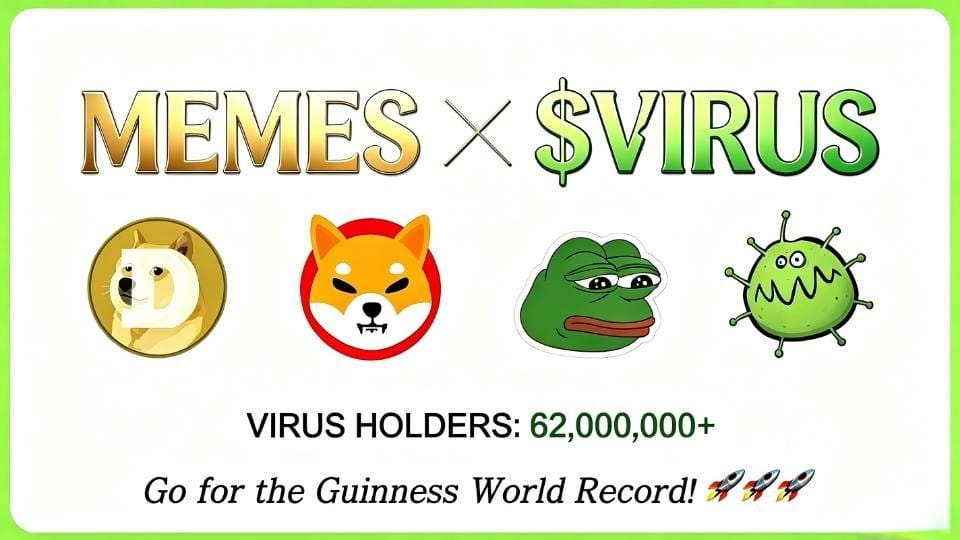
#virus是BSC上持币地址最多的meme。200天,持币地址5700多万。
287 Following
12.0K+ Followers
6.1K+ Liked
Posts
All
Quotes
Videos
Live
PINNED
红包🧧🧧🧧

virus二二
·
--
Virus will be great again.
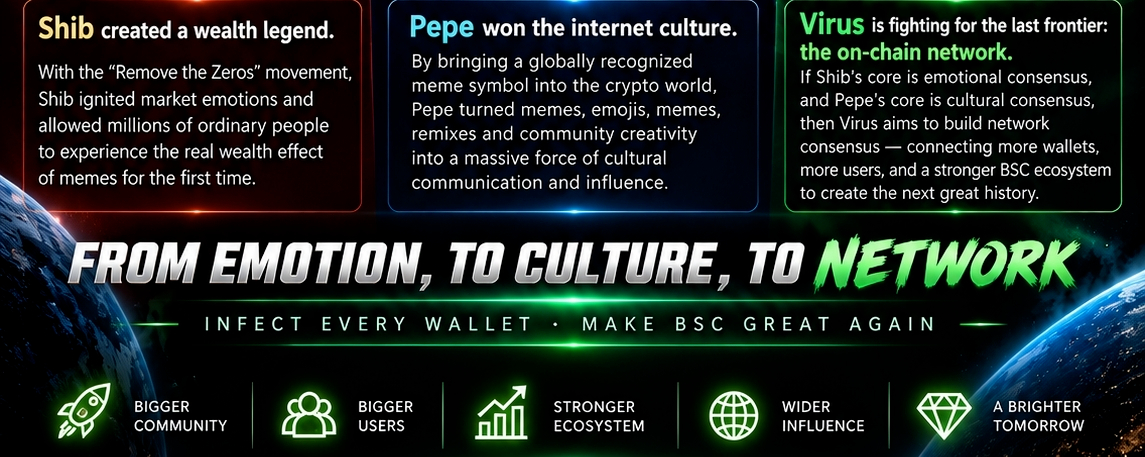
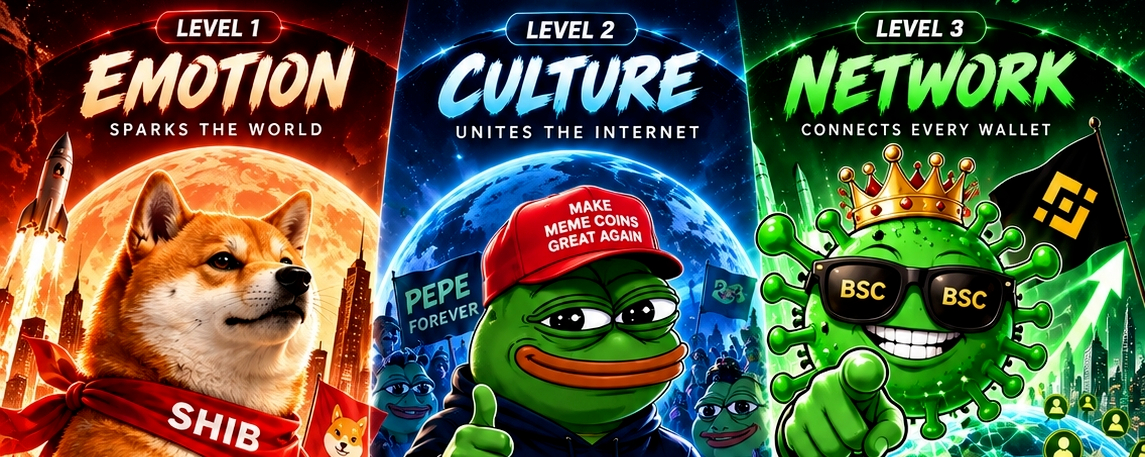
Virus tells you: A truly great meme must have three layers.
Layer | First Layer | Second Layer | Third Layer
---|---|---|---
Core | Emotion | Culture | Network
Representatives | Shib | Pepe | Virus
Narrative | Zeroing Out | Meme Greatness | BSC Greatness
Shib has won the wealth myth.
It ignited market sentiment with its “zeroing-out campaign,” allowing countless ordinary people to experience, for the first time, the wealth‑creating power of a meme.
Pepe has conquered internet culture.
It brought a globally recognized meme icon into the crypto world, turning emojis, memes, secondary creations, and community culture itself into forces of dissemination.
Virus is now vying for the final frontier—the on-chain network.
If Shib’s core is emotional consensus and Pepe’s core is cultural consensus, then Virus seeks to build yet another layer: network consensus—moving from emotion to culture, and finally to connectivity; from attracting attention to influencing behavior, and ultimately connecting people.
Thus, what Virus truly aims to challenge isn’t just the next hot meme—it’s a much larger question: Can the viral reach of memes be distilled into a vast, on-chain holding network?
Shib: Zeroing out.
Pepe: Making memes great again.
Virus: Making BSC great again, infecting every wallet.
In a nutshell:
Shib proved the power of emotion, Pepe demonstrated the power of culture, and Virus is here to validate the power of the network.
Layer | First Layer | Second Layer | Third Layer
---|---|---|---
Core | Emotion | Culture | Network
Representatives | Shib | Pepe | Virus
Narrative | Zeroing Out | Meme Greatness | BSC Greatness
Shib has won the wealth myth.
It ignited market sentiment with its “zeroing-out campaign,” allowing countless ordinary people to experience, for the first time, the wealth‑creating power of a meme.
Pepe has conquered internet culture.
It brought a globally recognized meme icon into the crypto world, turning emojis, memes, secondary creations, and community culture itself into forces of dissemination.
Virus is now vying for the final frontier—the on-chain network.
If Shib’s core is emotional consensus and Pepe’s core is cultural consensus, then Virus seeks to build yet another layer: network consensus—moving from emotion to culture, and finally to connectivity; from attracting attention to influencing behavior, and ultimately connecting people.
Thus, what Virus truly aims to challenge isn’t just the next hot meme—it’s a much larger question: Can the viral reach of memes be distilled into a vast, on-chain holding network?
Shib: Zeroing out.
Pepe: Making memes great again.
Virus: Making BSC great again, infecting every wallet.
In a nutshell:
Shib proved the power of emotion, Pepe demonstrated the power of culture, and Virus is here to validate the power of the network.
持币地址6200万,太牛了🧧🧧🧧

VIRUS UOB
·
--
Bullish🧧🧧🧧🧧🧧
$virus地址突破6200万!6200万!你还在观望吗?别盯K线那点破数字了!地址才是链上的钢筋铁骨,是Virus扎进加密世界的6200万根钉子!
空投、僵尸、休眠?哪个全球网络不是从地址堆里杀出来的?价格能一夜翻倍也能腰斩,但地址只增不减——每多一个,就多一扇永不关闭的入口,多一个被世界发现的可能。
看地址在涨,分布在散,交易在跑,开发者在拼命!这才是底气,这才是十年生死的锚点!
6200万不是终点,是Virus从资产变成符号的起爆点!当网络疯长,文化传染,市场终将疯狂重新定价。
转!让6200万节点烧穿下一个里程碑!
$virus地址突破6200万!6200万!你还在观望吗?别盯K线那点破数字了!地址才是链上的钢筋铁骨,是Virus扎进加密世界的6200万根钉子!
空投、僵尸、休眠?哪个全球网络不是从地址堆里杀出来的?价格能一夜翻倍也能腰斩,但地址只增不减——每多一个,就多一扇永不关闭的入口,多一个被世界发现的可能。
看地址在涨,分布在散,交易在跑,开发者在拼命!这才是底气,这才是十年生死的锚点!
6200万不是终点,是Virus从资产变成符号的起爆点!当网络疯长,文化传染,市场终将疯狂重新定价。
转!让6200万节点烧穿下一个里程碑!
🧧🧧🧧💰💰💰
virus二二
·
--
Bullish🧧🧧🧧🧧The virus has surpassed 62 million wallet addresses holding crypto, ranking first globally and topping all blockchains! It’s the world’s leading investment—sure to deliver massive returns in the future! Join the champion!
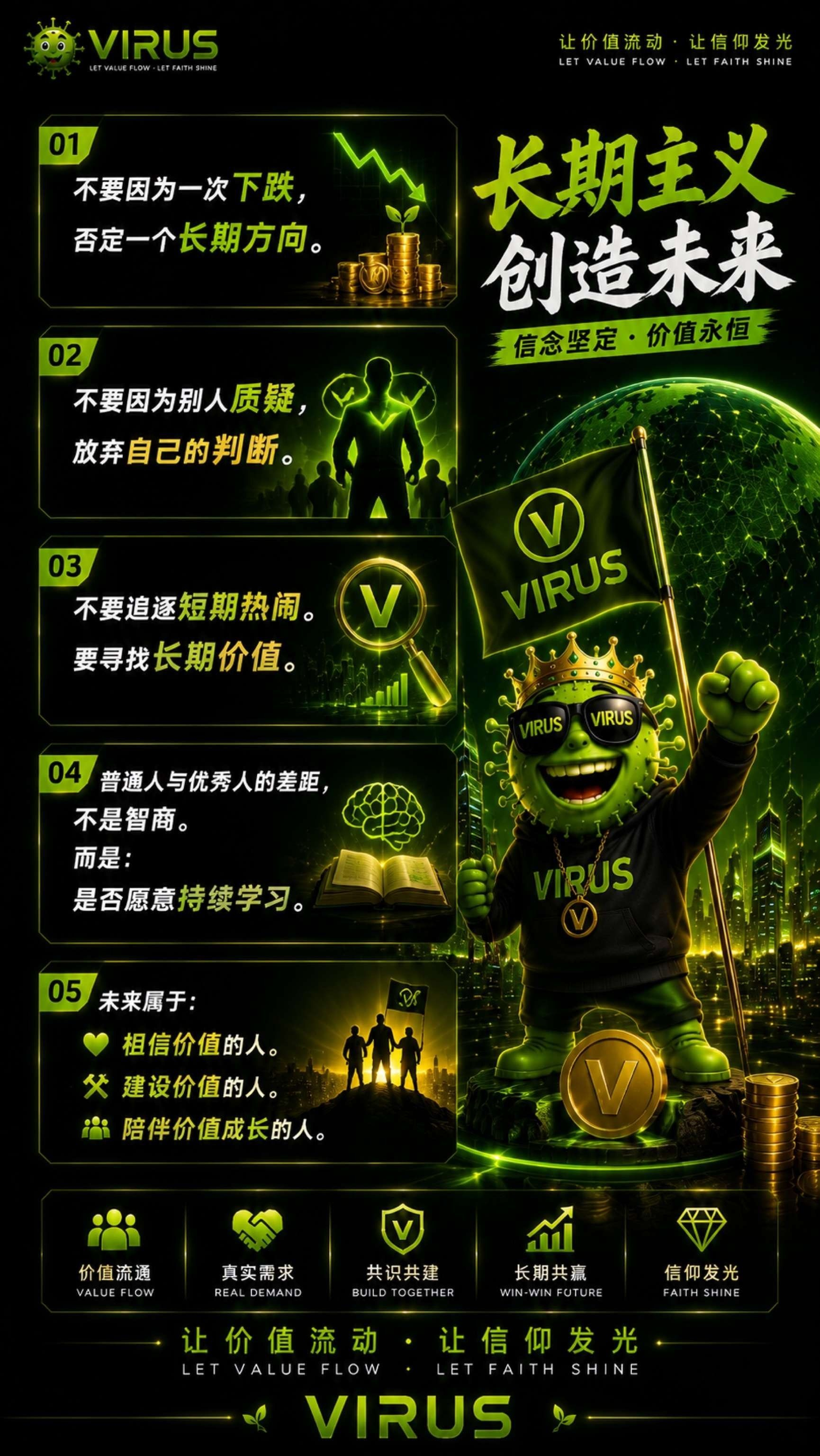

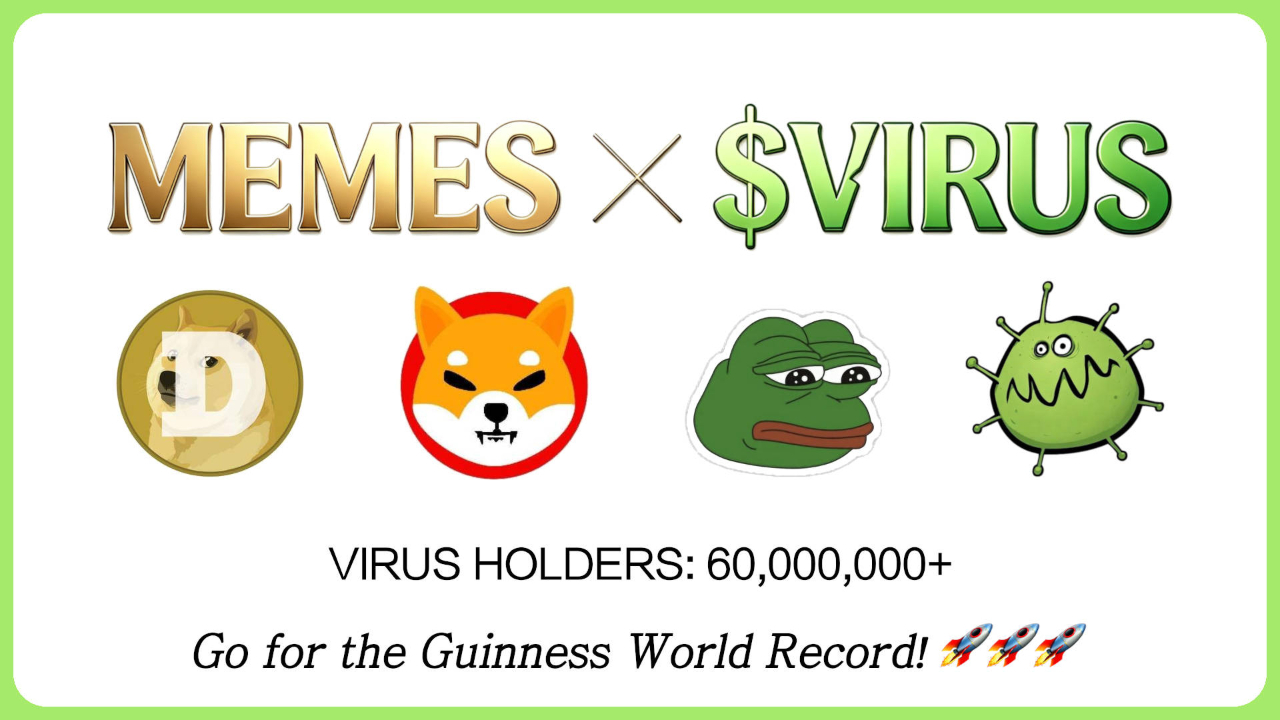
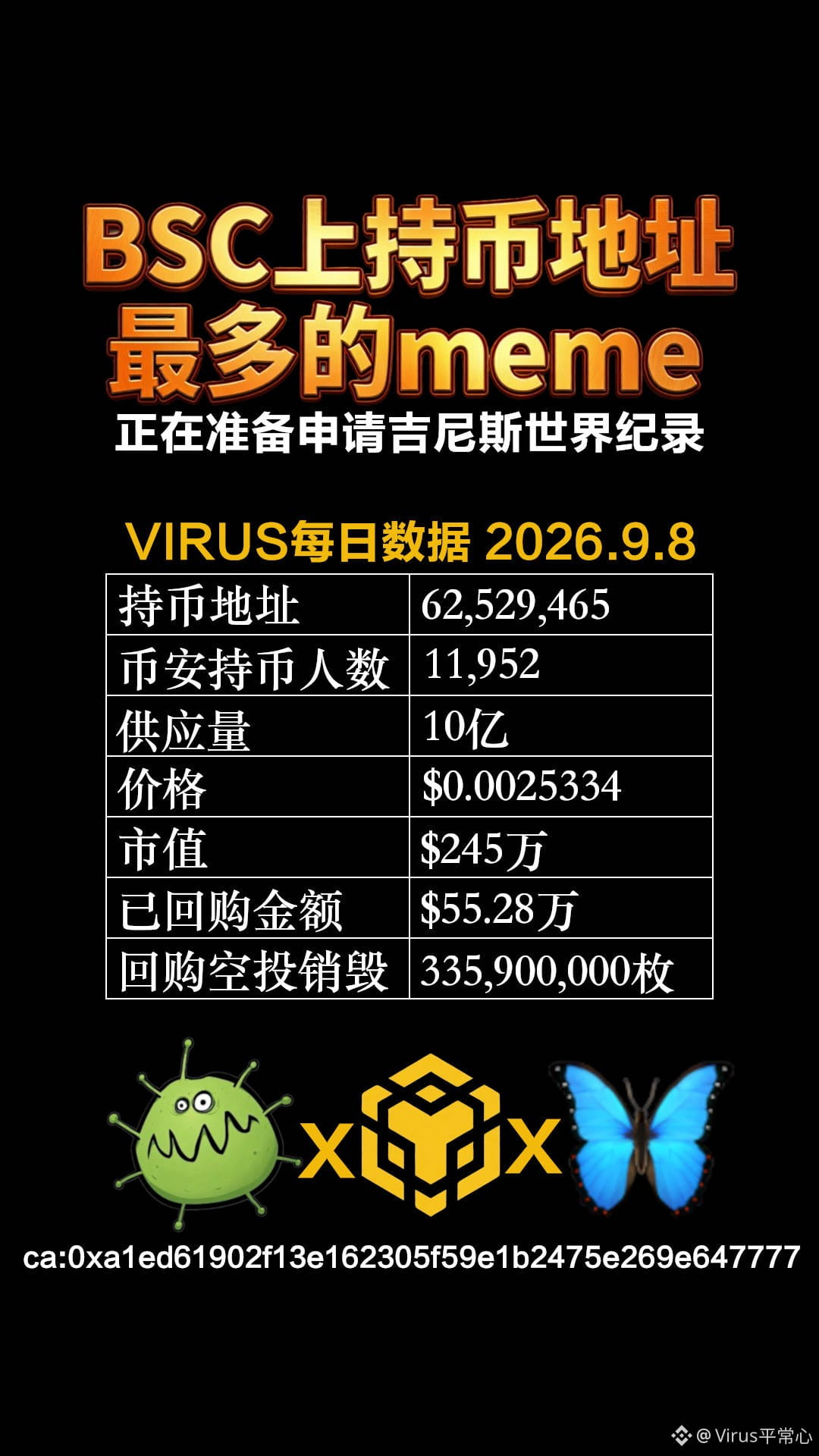
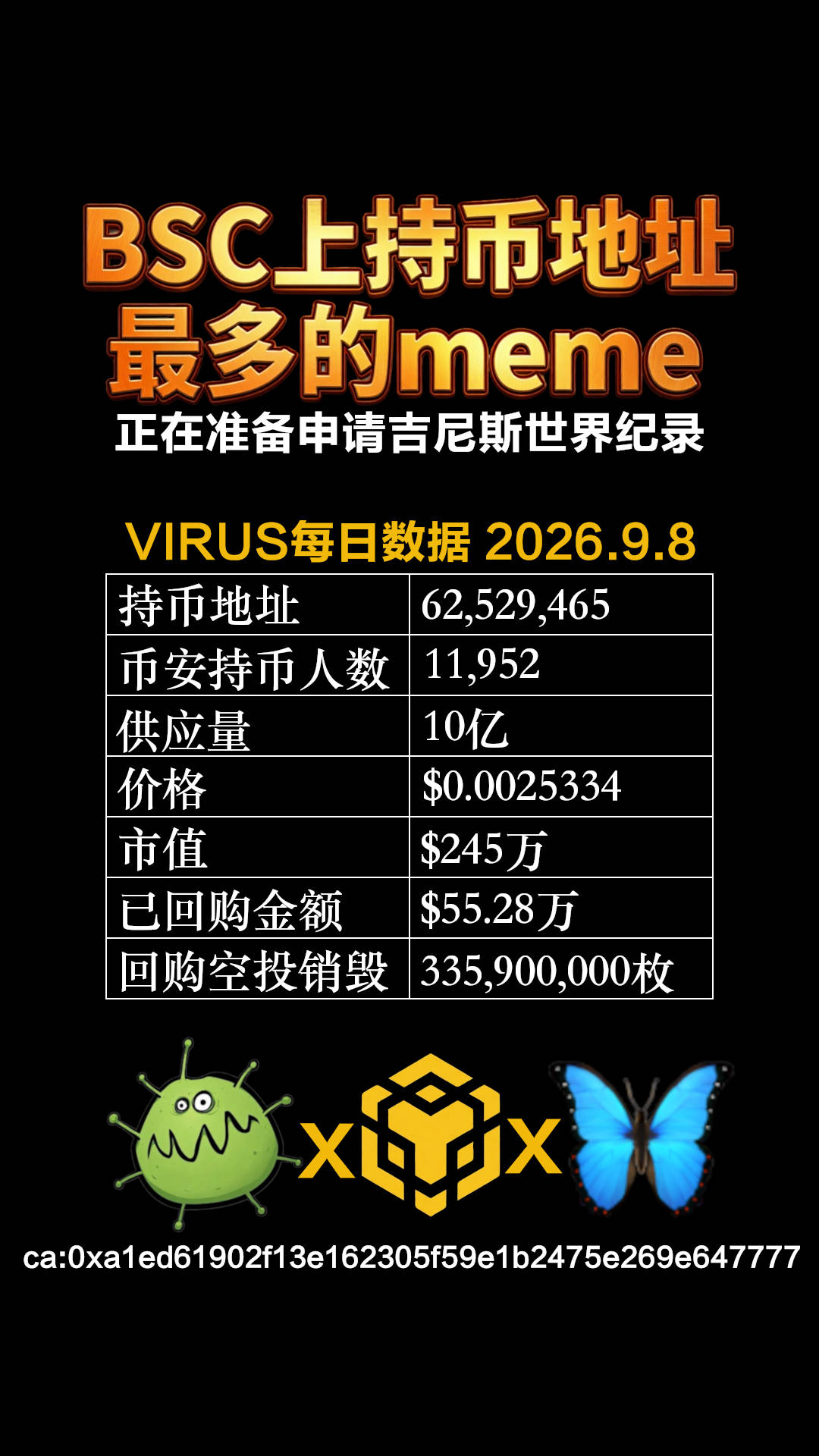
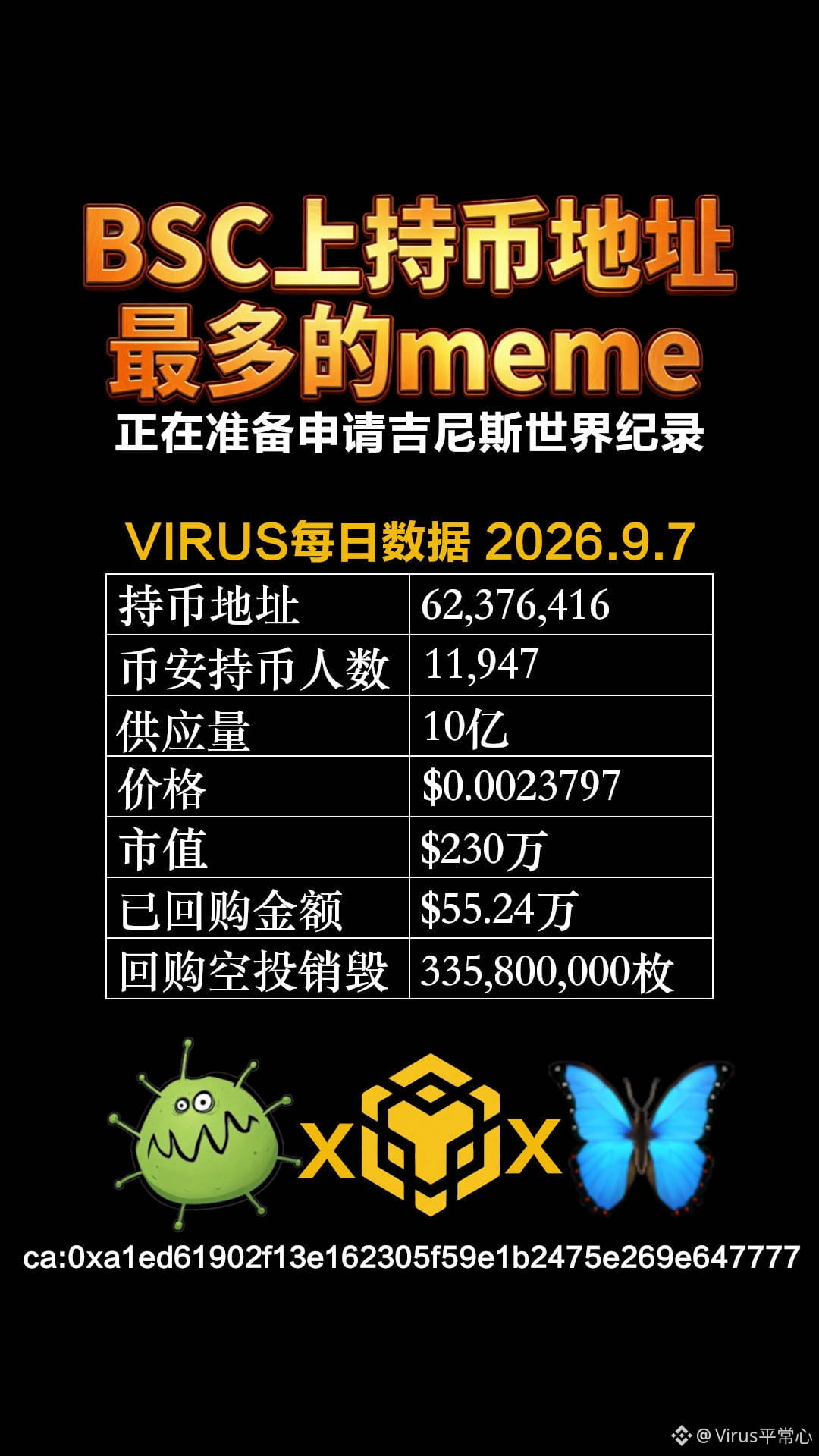
🧧#virus病毒 每日数据,2026年9月8日,昨天回购空投10万枚。
Virus平常心
·
--
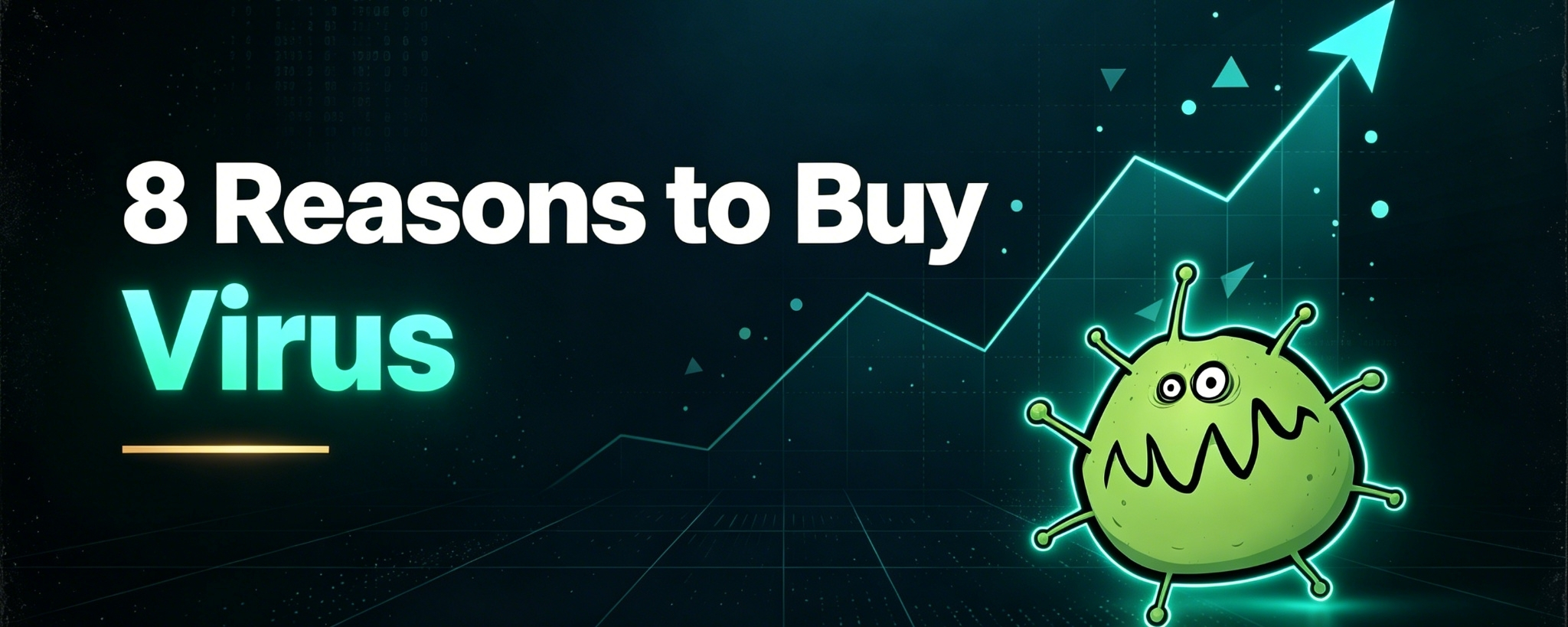
购买virus的8大理由
认准唯一合约:0xa1ed61902f13e162305f59e1b2475e269e647777
1.virus的特殊机制:买卖3%的税,全部用于回购,然后随机空投到所有bsc地址,变相销毁。
持续步道,持续建设,就能持续带来交易量,有交易量就有销毁,销毁越来越多,流通越来越少,你手里的币就越来越值钱。
2.virus的不凡使命:做区块链史上持币人最多的代币,同时创造并申请吉尼斯世界纪录,成为第一个创造吉尼斯记录的加密货币。
3.virus的历史意义:做一个体现bsc链低gas,高效率的形象币,virus的存在就是为就是证明BSC能够承载大规模商业应用,千万笔交易几乎0费用。
4.virus的诞生背景:
ordinals,起源于btc链的升级,区块可以铭刻数据,从而诞生了市值20亿美元的ordi。
virus诞生于币安链Maxwell硬分叉升级,大幅降低gas,可以实现大批量低成本的空投。
牛逼的币总是相似的,都是特殊历史时刻诞生的时代之子。
5.永不过时的叙事
virus的社区不靠双圣奶,不靠外部web2的热度,所有购买的人都是因为它的机制和使命,不受时间限制,随时可以cx,适合长期建设,越建设,越通缩,币越值钱。
6.virus是属于bsc的独有浪漫叙事,eth的gas太贵,sol需要账户租金,做不了这么多持币人,叙事没有任何分流。
7.不买virus的人,只是因为还不了解它的内在美,virus后续每一次上alpha,上合约,上线现货,都是增加曝光量的时机,不像热度meme,利好落地变利空,virus每一次利好都会带来大量买盘。
8.之前没有人意识到bsc链的价值,直到virus的出现,人们才意识到bsc链gas多低,速度多快。
🧧在Crypto,知道什么时候进场很重要,知道什么时候什么都不做,同样重要。


🧧🧧🧧💰💰💰

Virus繁华
·
--
交易量为什么是Virus经济飞轮的燃料,而不是最终目标?
交易量为什么是Virus经济飞轮的燃料,而不是最终目标?
真正重要的,不是今天成交了多少,而是每一笔成交为下一圈留下了什么
一辆汽车的发动机轰鸣,并不代表它一定正在前进。
它也可能只是停在原地,不断消耗燃料。
同样,一个代币拥有巨大的交易量,也不代表它正在创造更大的价值。交易量可以来自真实需求,也可以来自短线博弈、恐慌抛售、套利交易,甚至无意义的重复买卖。
所以,判断一个项目是否健康,不能只问:
“今天交易量有多少?”
更应该问:
“这些交易最终为项目沉淀了什么?”
对Virus而言,交易量最重要的意义,不是成为排行榜上的一个数字,而是为整个经济飞轮提供持续运转的燃料。
一、交易量是“流量”,但流量不等于价值
交易量记录的是一定时间内发生了多少买卖。
但它无法单独告诉我们:
买入多还是卖出多?
新增用户多还是原有用户频繁交易?
流动性正在增加还是减少?
筹码正在分散还是重新集中?
社区共识正在增强还是投机情绪正在升温?
一笔买入和一笔卖出,都会被计入交易量。
市场上涨时会产生交易量,市场下跌时同样会产生交易量。
甚至在价格几乎没有变化的情况下,大量资金来回交换,也可以制造很高的成交数字。
因此,交易量只代表市场正在活动。
它不天然代表增长,更不天然代表价值。
交易量是过程数据,不是成功结论。
真正决定它有没有意义的,是项目能否把交易过程中产生的能量,转化为长期可以保留下来的资产。
二、Virus为什么需要交易量?
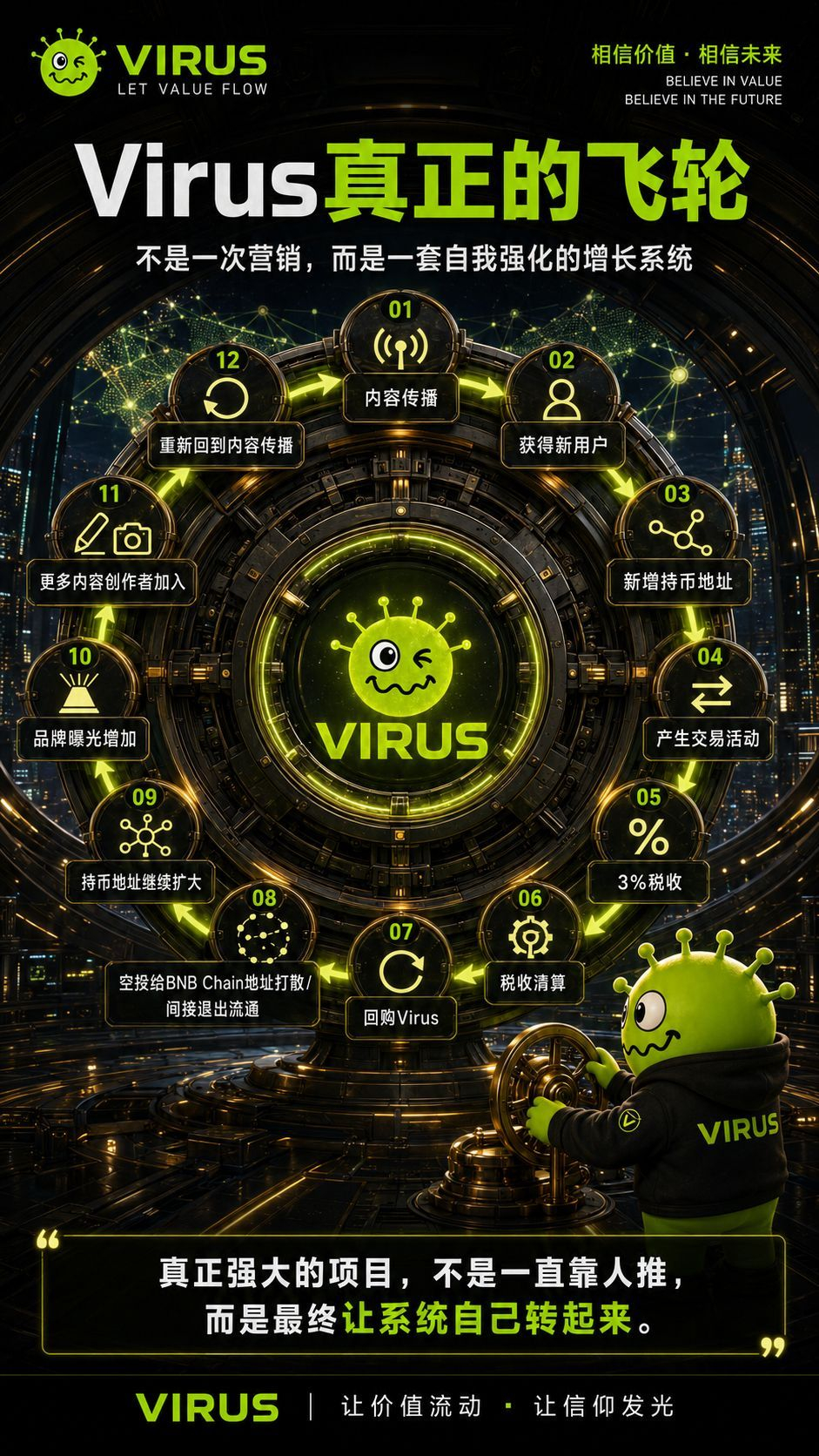
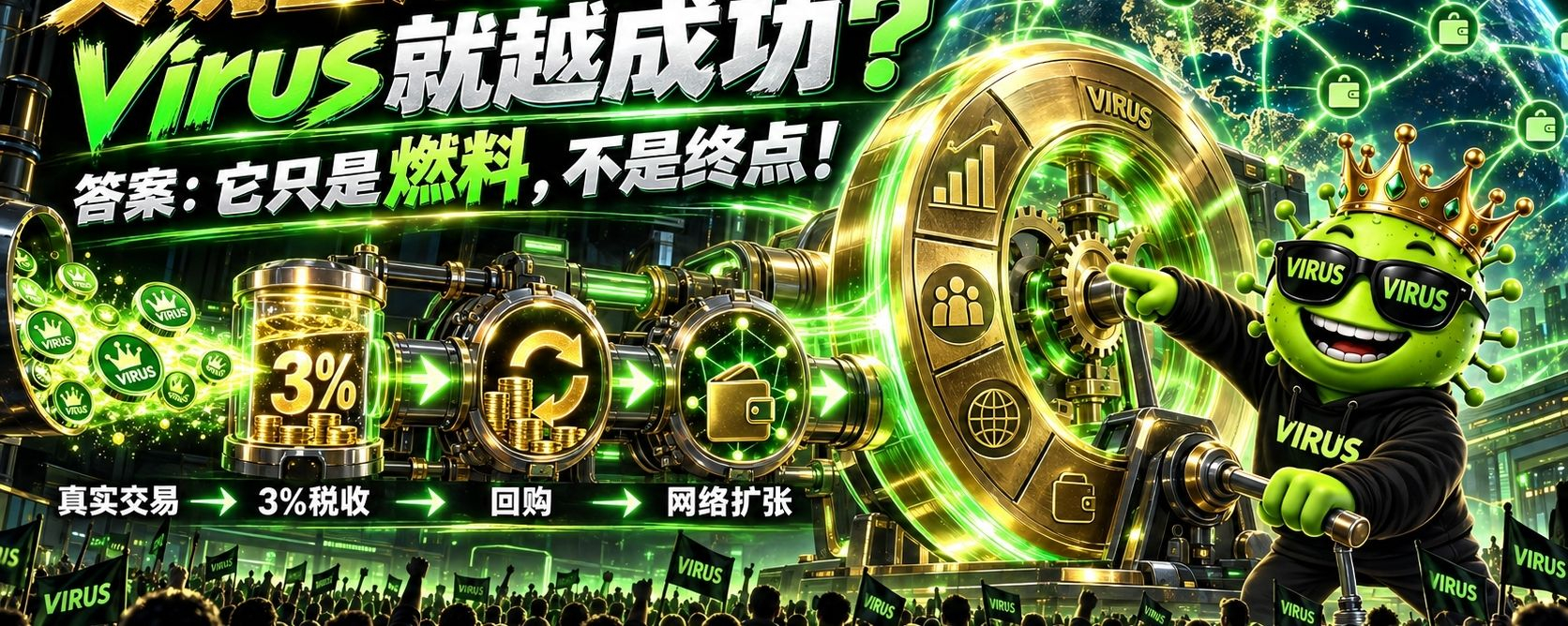
按照Virus当前的机制设计,符合规则的买卖会产生3%交易税。
相关资产经过累计和清算后,进入回购流程;回购获得的Virus再通过链上分发等方式,继续扩大BNB地址网络。
它试图形成的逻辑是:
真实交易产生税收;
税收形成机制燃料;
机制燃料推动回购;
回购结果继续进入链上分发;
链上分发扩大地址网络;
地址增长沉淀链上数据;
链上数据制造新的话题;
话题带来内容传播;
传播吸引新的关注者和参与者;
新的参与者又可能产生新的真实交易。
最终重新回到起点。
这就是Virus经济飞轮的基本结构。
在这套结构中,交易量不是终点,而是整个循环的燃料入口。
如果没有真实交易,税收无法持续积累,回购循环就会缺少动力。
但如果只有交易量,没有后续的回购、分发、数据沉淀、内容传播和用户增长,那么燃料只是被燃烧了,并没有推动飞轮真正前进。
三、交易量只有被“转化”,才会产生长期意义
燃料本身不会自动变成速度。
它必须经过发动机、传动系统和车轮,才能推动一辆车向前。
Virus也是一样。
交易量要形成长期价值,必须经过多个环节的转化:
交易量,是燃料入口;
3%机制,是能量收集器;
清算与回购,是传动系统;
链上分发,是网络扩张工具;
持币地址,是数据沉淀;
内容矩阵,是传播放大器;
建设者与文化,是飞轮持续运转的力量。
任何一个环节失效,飞轮都会减速。
如果有交易量,却没有公开透明的机制执行,交易无法沉淀信任。
如果有回购,却没有健康的流动性和真实需求,回购也难以独立支撑长期价值。
如果地址增加,却没有认知、互动和参与,地址就只是静止的数据。
如果有数据,却没有人记录、解释和传播,数据也很难转化为外部影响力。
所以,Virus真正要追求的,不是某一天出现巨额成交,而是建立一套能够把成交持续转化为网络资产的系统。
四、为什么不能把交易量本身设为最终目标?
一旦一个社区把交易量当成最终目标,行为就很容易发生偏移。
为了追求数据好看,大家可能开始鼓励没有必要的频繁交易。
为了冲击排行榜,可能出现短期集中买卖。
为了制造热度,可能把全部注意力放在成交数字上。
但每一次交易都伴随着税收、滑点、矿工费和市场风险。
如果只是让相同资金来回交易,不仅不会创造真实价值,反而可能不断消耗参与者的资产,并扭曲市场对真实需求的判断。
这不是飞轮。
这是空转。
真正健康的交易量,应该来自:
不断扩大的真实用户基础;
不同规模参与者的自然买卖;
合理的市场流动性;
真实的信息传播和认知增长;
长期持有者与新参与者之间的正常流通。
交易量应该是网络成长的结果,同时又成为下一轮网络成长的燃料。
而不是为了制造交易量,让社区成员人为地消耗自己。
五、Virus真正应该关注的是“交易量转化率”
与其只看一天成交了多少,不如关注每一单位真实交易量,最终为系统留下了什么。
至少应该同时观察六组数据。
1. 真实参与度
有多少独立地址参与交易?
交易是否过度集中在少数钱包?
新增交易者是否持续增加?
只有参与主体越来越丰富,交易量才具有网络扩张意义。
2. 流动性质量
底池深度是否健康?
大额交易的滑点是否可控?
成交增加时,流动性是否能够承受市场波动?
没有足够的流动性,再大的交易量也可能只是短暂冲击。
3. 机制执行情况
税收累计了多少?
何时触发清算?
回购是否真实发生?
资金与代币最终流向哪里?
这些环节应该尽可能通过链上记录公开验证。
4. 地址网络质量
持币地址是否持续增长?
余额结构是否更加多层次?
有多少地址长期保留余额?
有多少地址从低活跃状态转化为真实参与?
总地址决定网络的宽度,活跃地址决定网络的温度。
5. 内容传播转化
一次交易热点产生了多少文章、视频、海报和讨论?
有多少新用户因此开始研究Virus?
有多少普通持币者成长为内容创作者?
当链上行为能够不断转化为传播素材,经济数据才开始成为注意力资产。
6. 热度退去后的留存
当某一天交易量下降之后,还有多少人继续持有、学习、创作和建设?
真正的飞轮,不是只有行情热闹时才会运转。
真正的飞轮,是市场安静以后,系统仍然留下了更多地址、更强认知、更多内容和更成熟的组织。
六、好的交易量与坏的交易量,有本质区别
好的交易量具有几个特点:
来源更加分散;
参与地址持续增加;
流动性能够承受交易;
机制执行公开透明;
交易之后留下新的持币者、新的数据和新的内容。
坏的交易量则往往表现为:
少数钱包频繁买卖;
成交突然暴增又迅速消失;
只有数字变化,没有用户沉淀;
交易成本持续消耗社区;
热度结束以后,什么都没有留下。
所以,Virus需要的不是“任何交易量”。
而是:
真实的、分散的、可持续的、能够进入经济循环的交易量。
交易量越真实,机制燃料才越有意义。
参与者越多元,网络效应才越健康。
数据越透明,外界信任才越容易建立。
七、Virus真正的目标,是让飞轮一圈比一圈更强
Virus的最终目标不应该是创造历史最高的单日交易量。
因为再大的成交数字,也可能在第二天消失。
真正值得追求的是:
经过一轮交易,回购能力增强了一点;
经过一轮回购,链上分布扩大了一点;
经过一轮分发,地址网络增长了一点;
经过一轮数据增长,外部讨论增加了一点;
经过一轮传播,建设者和内容增加了一点;
经过一轮建设,新的真实参与者又增加了一点。
每一圈看起来只向前走了一小步。
但只要系统能够持续积累,这些小变化最终会形成复利。
这才是飞轮最重要的特征:
不是某一圈转得特别快,而是每转一圈,都为下一圈留下更多力量。
八、最终目标不是成交,而是一个能够自我生长的网络
交易量可以带来税收。
税收可以推动回购。
回购可以继续扩大分布。
分布可以形成地址数据。
数据可以制造内容。
内容可以吸引参与者。
参与者可以成长为建设者。
建设者可以创造文化。
文化又可以跨越语言、国家和平台,继续带来新的用户。
当这条链路真正形成闭环,Virus拥有的就不再只是一个交易活跃的代币。
而是:
一套能够循环的经济机制;
一张不断扩大的地址网络;
一个持续生产内容的媒体矩阵;
一种能够被全球用户二次创造的文化。
这才是Virus真正应该到达的地方。
结语:不要只问成交了多少,要问留下了什么
如果一亿成交量过后,只留下税收、滑点和价格波动,那么它不是飞轮。
如果一轮真实交易过后,留下了回购记录、更多地址、更广分布、更强数据、更多内容和新的建设者,那么交易量才真正完成了自己的使命。
所以,对Virus而言:
交易量不是荣耀本身。
交易量只是把经济机制点燃的第一束火。
价格可以制造注意力。
交易可以提供燃料。
机制可以传递能量。
网络可以沉淀数据。
建设可以形成组织。
文化才能穿越周期。
Virus真正要追求的,从来不是让发动机永远轰鸣。
而是让每一滴燃料,都推动这辆车驶向更远的地方。
有成交,不等于有增长。
能够把成交沉淀成网络资产,才叫真正的飞轮。
让Virus转起来!
让Virus传起来!
让每一笔真实交易,都成为下一圈增长的起点!
#Virus #BNB #经济飞轮 #链上数据 #社区建设
本文仅作机制与社区发展逻辑分析,不构成投资建议。交易量、回购和地址增长均不能保证代币价格上涨;数字资产波动较大,请核验合约与链上数据,并独立评估风险。
真正重要的,不是今天成交了多少,而是每一笔成交为下一圈留下了什么
一辆汽车的发动机轰鸣,并不代表它一定正在前进。
它也可能只是停在原地,不断消耗燃料。
同样,一个代币拥有巨大的交易量,也不代表它正在创造更大的价值。交易量可以来自真实需求,也可以来自短线博弈、恐慌抛售、套利交易,甚至无意义的重复买卖。
所以,判断一个项目是否健康,不能只问:
“今天交易量有多少?”
更应该问:
“这些交易最终为项目沉淀了什么?”
对Virus而言,交易量最重要的意义,不是成为排行榜上的一个数字,而是为整个经济飞轮提供持续运转的燃料。
一、交易量是“流量”,但流量不等于价值
交易量记录的是一定时间内发生了多少买卖。
但它无法单独告诉我们:
买入多还是卖出多?
新增用户多还是原有用户频繁交易?
流动性正在增加还是减少?
筹码正在分散还是重新集中?
社区共识正在增强还是投机情绪正在升温?
一笔买入和一笔卖出,都会被计入交易量。
市场上涨时会产生交易量,市场下跌时同样会产生交易量。
甚至在价格几乎没有变化的情况下,大量资金来回交换,也可以制造很高的成交数字。
因此,交易量只代表市场正在活动。
它不天然代表增长,更不天然代表价值。
交易量是过程数据,不是成功结论。
真正决定它有没有意义的,是项目能否把交易过程中产生的能量,转化为长期可以保留下来的资产。
二、Virus为什么需要交易量?
按照Virus当前的机制设计,符合规则的买卖会产生3%交易税。
相关资产经过累计和清算后,进入回购流程;回购获得的Virus再通过链上分发等方式,继续扩大BNB地址网络。
它试图形成的逻辑是:
真实交易产生税收;
税收形成机制燃料;
机制燃料推动回购;
回购结果继续进入链上分发;
链上分发扩大地址网络;
地址增长沉淀链上数据;
链上数据制造新的话题;
话题带来内容传播;
传播吸引新的关注者和参与者;
新的参与者又可能产生新的真实交易。
最终重新回到起点。
这就是Virus经济飞轮的基本结构。
在这套结构中,交易量不是终点,而是整个循环的燃料入口。
如果没有真实交易,税收无法持续积累,回购循环就会缺少动力。
但如果只有交易量,没有后续的回购、分发、数据沉淀、内容传播和用户增长,那么燃料只是被燃烧了,并没有推动飞轮真正前进。
三、交易量只有被“转化”,才会产生长期意义
燃料本身不会自动变成速度。
它必须经过发动机、传动系统和车轮,才能推动一辆车向前。
Virus也是一样。
交易量要形成长期价值,必须经过多个环节的转化:
交易量,是燃料入口;
3%机制,是能量收集器;
清算与回购,是传动系统;
链上分发,是网络扩张工具;
持币地址,是数据沉淀;
内容矩阵,是传播放大器;
建设者与文化,是飞轮持续运转的力量。
任何一个环节失效,飞轮都会减速。
如果有交易量,却没有公开透明的机制执行,交易无法沉淀信任。
如果有回购,却没有健康的流动性和真实需求,回购也难以独立支撑长期价值。
如果地址增加,却没有认知、互动和参与,地址就只是静止的数据。
如果有数据,却没有人记录、解释和传播,数据也很难转化为外部影响力。
所以,Virus真正要追求的,不是某一天出现巨额成交,而是建立一套能够把成交持续转化为网络资产的系统。
四、为什么不能把交易量本身设为最终目标?
一旦一个社区把交易量当成最终目标,行为就很容易发生偏移。
为了追求数据好看,大家可能开始鼓励没有必要的频繁交易。
为了冲击排行榜,可能出现短期集中买卖。
为了制造热度,可能把全部注意力放在成交数字上。
但每一次交易都伴随着税收、滑点、矿工费和市场风险。
如果只是让相同资金来回交易,不仅不会创造真实价值,反而可能不断消耗参与者的资产,并扭曲市场对真实需求的判断。
这不是飞轮。
这是空转。
真正健康的交易量,应该来自:
不断扩大的真实用户基础;
不同规模参与者的自然买卖;
合理的市场流动性;
真实的信息传播和认知增长;
长期持有者与新参与者之间的正常流通。
交易量应该是网络成长的结果,同时又成为下一轮网络成长的燃料。
而不是为了制造交易量,让社区成员人为地消耗自己。
五、Virus真正应该关注的是“交易量转化率”
与其只看一天成交了多少,不如关注每一单位真实交易量,最终为系统留下了什么。
至少应该同时观察六组数据。
1. 真实参与度
有多少独立地址参与交易?
交易是否过度集中在少数钱包?
新增交易者是否持续增加?
只有参与主体越来越丰富,交易量才具有网络扩张意义。
2. 流动性质量
底池深度是否健康?
大额交易的滑点是否可控?
成交增加时,流动性是否能够承受市场波动?
没有足够的流动性,再大的交易量也可能只是短暂冲击。
3. 机制执行情况
税收累计了多少?
何时触发清算?
回购是否真实发生?
资金与代币最终流向哪里?
这些环节应该尽可能通过链上记录公开验证。
4. 地址网络质量
持币地址是否持续增长?
余额结构是否更加多层次?
有多少地址长期保留余额?
有多少地址从低活跃状态转化为真实参与?
总地址决定网络的宽度,活跃地址决定网络的温度。
5. 内容传播转化
一次交易热点产生了多少文章、视频、海报和讨论?
有多少新用户因此开始研究Virus?
有多少普通持币者成长为内容创作者?
当链上行为能够不断转化为传播素材,经济数据才开始成为注意力资产。
6. 热度退去后的留存
当某一天交易量下降之后,还有多少人继续持有、学习、创作和建设?
真正的飞轮,不是只有行情热闹时才会运转。
真正的飞轮,是市场安静以后,系统仍然留下了更多地址、更强认知、更多内容和更成熟的组织。
六、好的交易量与坏的交易量,有本质区别
好的交易量具有几个特点:
来源更加分散;
参与地址持续增加;
流动性能够承受交易;
机制执行公开透明;
交易之后留下新的持币者、新的数据和新的内容。
坏的交易量则往往表现为:
少数钱包频繁买卖;
成交突然暴增又迅速消失;
只有数字变化,没有用户沉淀;
交易成本持续消耗社区;
热度结束以后,什么都没有留下。
所以,Virus需要的不是“任何交易量”。
而是:
真实的、分散的、可持续的、能够进入经济循环的交易量。
交易量越真实,机制燃料才越有意义。
参与者越多元,网络效应才越健康。
数据越透明,外界信任才越容易建立。
七、Virus真正的目标,是让飞轮一圈比一圈更强
Virus的最终目标不应该是创造历史最高的单日交易量。
因为再大的成交数字,也可能在第二天消失。
真正值得追求的是:
经过一轮交易,回购能力增强了一点;
经过一轮回购,链上分布扩大了一点;
经过一轮分发,地址网络增长了一点;
经过一轮数据增长,外部讨论增加了一点;
经过一轮传播,建设者和内容增加了一点;
经过一轮建设,新的真实参与者又增加了一点。
每一圈看起来只向前走了一小步。
但只要系统能够持续积累,这些小变化最终会形成复利。
这才是飞轮最重要的特征:
不是某一圈转得特别快,而是每转一圈,都为下一圈留下更多力量。
八、最终目标不是成交,而是一个能够自我生长的网络
交易量可以带来税收。
税收可以推动回购。
回购可以继续扩大分布。
分布可以形成地址数据。
数据可以制造内容。
内容可以吸引参与者。
参与者可以成长为建设者。
建设者可以创造文化。
文化又可以跨越语言、国家和平台,继续带来新的用户。
当这条链路真正形成闭环,Virus拥有的就不再只是一个交易活跃的代币。
而是:
一套能够循环的经济机制;
一张不断扩大的地址网络;
一个持续生产内容的媒体矩阵;
一种能够被全球用户二次创造的文化。
这才是Virus真正应该到达的地方。
结语:不要只问成交了多少,要问留下了什么
如果一亿成交量过后,只留下税收、滑点和价格波动,那么它不是飞轮。
如果一轮真实交易过后,留下了回购记录、更多地址、更广分布、更强数据、更多内容和新的建设者,那么交易量才真正完成了自己的使命。
所以,对Virus而言:
交易量不是荣耀本身。
交易量只是把经济机制点燃的第一束火。
价格可以制造注意力。
交易可以提供燃料。
机制可以传递能量。
网络可以沉淀数据。
建设可以形成组织。
文化才能穿越周期。
Virus真正要追求的,从来不是让发动机永远轰鸣。
而是让每一滴燃料,都推动这辆车驶向更远的地方。
有成交,不等于有增长。
能够把成交沉淀成网络资产,才叫真正的飞轮。
让Virus转起来!
让Virus传起来!
让每一笔真实交易,都成为下一圈增长的起点!
#Virus #BNB #经济飞轮 #链上数据 #社区建设
本文仅作机制与社区发展逻辑分析,不构成投资建议。交易量、回购和地址增长均不能保证代币价格上涨;数字资产波动较大,请核验合约与链上数据,并独立评估风险。
太牛了🧧🧧🧧
VIRUS财源广进
·
--
🧧🧧每日消息!不要错过!消息就是机遇!💰💰💰💰💰💰

Virus直播开始了🧧🧧🧧

VIRUS-逍遥
·
--
[Replay] 🎙️ VIRUS让bsc链再次伟大
02 h 55 m 55 s · 2.3k listens
🧧🧧🧧,💰💰💰

区块链-琳达
·
--
🧧🧧 Web3最珍贵的不是某个热点,而是任何普通人都有机会成为新时代的参与者。

🧧来了

Virus吉时已到1314
·
--
🧧🧧🧧币价可以制造共识,但是只有文化,价值和参与感,才能让共识真正沉淀下来!

牛逼呀🧧🧧🧧
virus二二
·
--
VIRUS will soar again.
Ten thousand—just a number, it seems.
In reality, it’s more like a moat.
Imagine that in the future, every new wallet added on BSC could be Virus’s first-ever encounter with users.
Then Virus would no longer rely on advertising to acquire customers. Instead, it would depend on viral spread across the blockchain.
Each additional address adds a bit of value to the network. That’s the classic network effect: prices don’t drive users; rather, users drive prices.
Virus’s true flywheel isn’t upward price movement—it’s circulation.
Many projects follow just one growth trajectory:
Price surge → FOMO → Price drop → Dormancy
Virus aims to forge an entirely different path:
Once its flywheel is set in motion, the project’s momentum no longer comes from a single KOL—but from the system itself.
So why say Virus is amplifying BSC, rather than simply consuming it?
In the past, many memecoins were built on top of public blockchains but failed to give back to the ecosystem.
Virus, however, has a completely different goal:
* More wallets created
* More on-chain transactions
* More active addresses on the chain
* Higher BSC user retention
In other words, Virus’s growth is fundamentally about expanding BSC’s user network.
In the future, when people think of BSC, they won’t just recall its transaction speed—they’ll also remember that meme that spans wallets worldwide.
That’s what will make BSC great again.
A truly great meme must have three layers:
Layer 1: Emotion
Layer 2: Culture
Layer 3: Network
Shib — emotion
Pepe — culture
Virus — network
Shib captured the myth of wealth.
Pepe captured internet culture.
And Virus is now vying for the final frontier: the on-chain network.
Virus’s greatest potential lies not in multiplying by a hundredfold, but in becoming a default presence.
Picture this future: open any BSC wallet—whether you’re in New York, Tokyo, Dubai, or Shanghai—and there’s a Virus token inside.
At that point, people won’t ask, “What is Virus?” anymore. They’ll ask, “Why do I already have Virus in my wallet?”
When a token shifts from being “actively purchased” to becoming a “default presence,” it completes a leap—from asset to culture, and from culture to network.
That, indeed, is its true historical significance.
In conclusion: the real battle is never about price.
Shib changed consensus.
Pepe changed culture.
And Virus is now trying to change the network.
Prices fluctuate, cycles repeat, and trends eventually fade. But Virus’s ultimate aim isn’t to become the biggest meme—it’s to become BSC’s most widely shared digital symbol, turning every wallet into a piece of history.Virus: The truly great thing isn’t becoming the next meme—it’s making BSC great again.
Shib’s mission is to eliminate zeros. Pepe’s mission is to make memes great once more. And Virus’s mission is to restore BSC to its former glory, infecting every wallet and creating the next chapter in history.
At first glance, these three statements may seem like mere slogans. But they actually represent the evolutionary trajectory of three generations of memes.
The first-generation meme—Shib—proved that “consensus can triumph over capital.”
Shib’s greatest legacy to the crypto world isn’t its price; it’s what it showed ordinary people: even a community without venture capitalists, star teams, or technological moats can generate a consensus worth hundreds of billions of dollars. It redefined what a meme could be. From then on, the market began to believe that sentiment itself is an asset.
That’s why Shib’s historical mission was to drive the “zero‑out” movement—breaking through the ceiling of price.
The second-generation meme—Pepe—demonstrated that culture can dominate traffic.
Pepe has no complicated mechanisms. Its true strength lies in its status as one of the most widely shared cultural symbols on the internet. It transformed memes from mere tokens into a language: a single emoji can spread across the globe, while a single viral phrase can unlock billions of dollars in market value.
Thus, Pepe’s mission is to make memes great again—by commanding attention.
Now comes the third generation of memes: Virus. Instead of competing for attention, Virus aims to capture “network scale.”
This is where the story begins to shift. Most memes compete over one thing: who can spread faster. But Virus competes over something entirely different: who can accumulate the largest number of wallets.
These two approaches may appear similar at first glance, but they are fundamentally distinct. Attention belongs to platforms, while wallet addresses belong to blockchains. This means Virus isn’t chasing fleeting hype—it’s building a long-term network asset, with its narrative centered around having the highest number of holding addresses worldwide and driving exponential growth on-chain.
So why might Virus’s historical significance outweigh its price?
In the past, when evaluating a project, we typically asked:
* What’s the market cap?
* How high is the TVL?
* How many users do you have?
Virus flips this order completely. It argues: first come the addresses, then the transactions; first comes the network, then the value. This is one of the most fundamental principles underlying internet development.
Facebook didn’t become great because of advertising. WeChat wasn’t built on payments. Taobao didn’t thrive thanks to products alone. Their real greatness stemmed from achieving massive network scale.
And Virus is attempting to bring this same logic to the world of memes for the very first time.
What does 62 million addresses really mean? Many people see 62 million…
In reality, it’s more like a moat.
Imagine that in the future, every new wallet added on BSC could be Virus’s first-ever encounter with users.
Then Virus would no longer rely on advertising to acquire customers. Instead, it would depend on viral spread across the blockchain.
Each additional address adds a bit of value to the network. That’s the classic network effect: prices don’t drive users; rather, users drive prices.
Virus’s true flywheel isn’t upward price movement—it’s circulation.
Many projects follow just one growth trajectory:
Price surge → FOMO → Price drop → Dormancy
Virus aims to forge an entirely different path:
Once its flywheel is set in motion, the project’s momentum no longer comes from a single KOL—but from the system itself.
So why say Virus is amplifying BSC, rather than simply consuming it?
In the past, many memecoins were built on top of public blockchains but failed to give back to the ecosystem.
Virus, however, has a completely different goal:
* More wallets created
* More on-chain transactions
* More active addresses on the chain
* Higher BSC user retention
In other words, Virus’s growth is fundamentally about expanding BSC’s user network.
In the future, when people think of BSC, they won’t just recall its transaction speed—they’ll also remember that meme that spans wallets worldwide.
That’s what will make BSC great again.
A truly great meme must have three layers:
Layer 1: Emotion
Layer 2: Culture
Layer 3: Network
Shib — emotion
Pepe — culture
Virus — network
Shib captured the myth of wealth.
Pepe captured internet culture.
And Virus is now vying for the final frontier: the on-chain network.
Virus’s greatest potential lies not in multiplying by a hundredfold, but in becoming a default presence.
Picture this future: open any BSC wallet—whether you’re in New York, Tokyo, Dubai, or Shanghai—and there’s a Virus token inside.
At that point, people won’t ask, “What is Virus?” anymore. They’ll ask, “Why do I already have Virus in my wallet?”
When a token shifts from being “actively purchased” to becoming a “default presence,” it completes a leap—from asset to culture, and from culture to network.
That, indeed, is its true historical significance.
In conclusion: the real battle is never about price.
Shib changed consensus.
Pepe changed culture.
And Virus is now trying to change the network.
Prices fluctuate, cycles repeat, and trends eventually fade. But Virus’s ultimate aim isn’t to become the biggest meme—it’s to become BSC’s most widely shared digital symbol, turning every wallet into a piece of history.Virus: The truly great thing isn’t becoming the next meme—it’s making BSC great again.
Shib’s mission is to eliminate zeros. Pepe’s mission is to make memes great once more. And Virus’s mission is to restore BSC to its former glory, infecting every wallet and creating the next chapter in history.
At first glance, these three statements may seem like mere slogans. But they actually represent the evolutionary trajectory of three generations of memes.
The first-generation meme—Shib—proved that “consensus can triumph over capital.”
Shib’s greatest legacy to the crypto world isn’t its price; it’s what it showed ordinary people: even a community without venture capitalists, star teams, or technological moats can generate a consensus worth hundreds of billions of dollars. It redefined what a meme could be. From then on, the market began to believe that sentiment itself is an asset.
That’s why Shib’s historical mission was to drive the “zero‑out” movement—breaking through the ceiling of price.
The second-generation meme—Pepe—demonstrated that culture can dominate traffic.
Pepe has no complicated mechanisms. Its true strength lies in its status as one of the most widely shared cultural symbols on the internet. It transformed memes from mere tokens into a language: a single emoji can spread across the globe, while a single viral phrase can unlock billions of dollars in market value.
Thus, Pepe’s mission is to make memes great again—by commanding attention.
Now comes the third generation of memes: Virus. Instead of competing for attention, Virus aims to capture “network scale.”
This is where the story begins to shift. Most memes compete over one thing: who can spread faster. But Virus competes over something entirely different: who can accumulate the largest number of wallets.
These two approaches may appear similar at first glance, but they are fundamentally distinct. Attention belongs to platforms, while wallet addresses belong to blockchains. This means Virus isn’t chasing fleeting hype—it’s building a long-term network asset, with its narrative centered around having the highest number of holding addresses worldwide and driving exponential growth on-chain.
So why might Virus’s historical significance outweigh its price?
In the past, when evaluating a project, we typically asked:
* What’s the market cap?
* How high is the TVL?
* How many users do you have?
Virus flips this order completely. It argues: first come the addresses, then the transactions; first comes the network, then the value. This is one of the most fundamental principles underlying internet development.
Facebook didn’t become great because of advertising. WeChat wasn’t built on payments. Taobao didn’t thrive thanks to products alone. Their real greatness stemmed from achieving massive network scale.
And Virus is attempting to bring this same logic to the world of memes for the very first time.
What does 62 million addresses really mean? Many people see 62 million…
Virus让BSC更伟大,🧧🧧🧧

Virus财智峰
·
--
Virus:真正伟大的,不是成为下一只 Meme,而是让 BSC 再次伟大
Shib 的使命,是去零。 Pepe 的使命,是让 Meme 再次伟大。 而 Virus 的使命,是让 BSC 再次伟大,感染每一个钱包,创造下一个历史。
这三句话,看似只是口号。
但它们代表的,其实是 三代 Meme 的进化方向。
第一代 Meme:Shib 证明了“共识可以战胜资本”
Shib 留给加密世界最大的遗产,并不是价格。
而是它告诉所有普通人:
一个没有 VC、没有明星团队、没有技术护城河的社区,也能创造数千亿美元的共识奇迹。
它改变了 Meme 的定义。
从此以后,市场开始相信:
情绪,也是一种资产。
所以 Shib 的历史使命,是 去零行动。
它打破的是价格的天花板。
第二代 Meme:Pepe 证明了文化能够统治流量
Pepe 没有复杂机制。
它真正强大的地方,在于它拥有互联网最广泛传播的文化符号。
它让 Meme 不再只是代币,而是一种语言。
一个表情,可以传播到全世界。
一句梗,可以形成几十亿美元市值。
所以 Pepe 的使命,是:
让 Meme 再次伟大。
它统治的是 注意力。
第三代 Meme:Virus 不再争夺注意力,而是争夺“网络规模”
这里,故事开始发生改变。
绝大多数 Meme,都在竞争一件事:
谁更会传播。
而 Virus 在竞争另一件事:
谁能拥有最多的钱包。
这两个方向,看似相近,实际上完全不同。
注意力属于平台。
钱包地址属于区块链。
这意味着 Virus 追求的,不是一次热点,而是一种长期网络资产。其叙事核心始终围绕 “全球最多持币地址” 与 链上飞轮增长 展开。
为什么 Virus 的历史意义,可能比价格更重要?
过去我们评价一个项目,都会问:
市值多少?
TVL 多高?
用户多少?
Virus 把顺序彻底倒过来了。
它认为:
先有地址,再有交易;先有网络,再有价值。
这是互联网发展最经典的一条规律。
Facebook 不是因为广告伟大。
微信不是因为支付伟大。
淘宝不是因为商品伟大。
它们真正伟大的地方,是拥有了 网络规模。
而 Virus 正在尝试把这种逻辑,第一次搬到 Meme 世界。
6200 万地址意味着什么?
很多人看到 6200 万,只觉得这是一个数字。
其实它更像一条护城河。
假设未来 BSC 上每一个新增钱包,都可能第一次接触 Virus。
那么 Virus 不再依赖广告获客。
它依赖的是 链上传播。
每增加一个地址,网络价值都会增加一点。
这就是典型的网络效应。
不是价格推动用户。
而是用户推动价格。
Virus 的真正飞轮,不是上涨,而是循环
很多项目的增长路径只有一条:
拉盘 → FOMO → 下跌 → 沉寂
Virus 试图建立另一条路径:
当飞轮形成之后,项目的动力就不再来自某一个 KOL。
而来自系统本身。
为什么说 Virus 在放大 BSC,而不是消费 BSC?
过去很多 Meme,只是建立在公链上。
它们使用链,却没有反哺链。
Virus 的目标却完全不同。
它希望做到:
更多钱包创建
更多链上交易
更多链上活跃地址
更多 BSC 用户留存
换句话说:
Virus 的成长,本质上是在扩大 BSC 的用户网络。
如果未来提到 BSC,人们想到的不只是交易速度。
还会想到那个覆盖全球钱包的 Meme。
这就是:
让 BSC 再次伟大。
一个真正伟大的 Meme,一定拥有三个层次
第一层
第二层
第三层
情绪
文化
网络
Shib
Pepe
Virus
去零
Meme 伟大
BSC 伟大
Shib 赢得了财富神话。
Pepe 赢得了互联网文化。
Virus 正在争夺最后一个高地:
链上网络。
Virus 最大的潜力,不是百倍,而是成为一种默认存在
想象一个未来。
打开任何一个 BSC 钱包。
无论你来自纽约、东京、迪拜,还是上海。
钱包里,都有一枚 Virus。
那时候,人们不会再问:
“Virus 是什么?”
而会问:
“为什么我的钱包里也有 Virus?”
当一个代币从“主动购买”,变成“默认存在”,它就完成了从资产到文化、从文化到网络的跃迁。
这,才是真正的历史意义。
结语:真正的战争,从来不是币价
Shib 改变了共识。
Pepe 改变了文化。
Virus 正在尝试改变网络。
价格会波动,周期会轮回,热点终将消散。
但如果有一天,一个 Meme 真正连接了全球数亿个钱包,它所创造的,将不只是一个财富故事,而是一段属于区块链时代的新历史。
Virus 的终极目标,不是成为最大的 Meme。 而是成为 BSC 最广泛传播的网络符号,让每一个钱包,都成为历史的一部分。
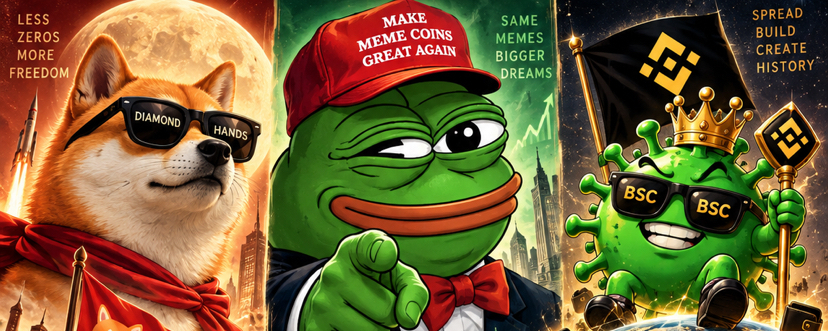
这个牛呀,🧧🧧🧧
virus二二
·
--
Bullish🧧🧧Shib (柴犬币)口号:去零行动
Pepe (佩佩蛙币)口号:让迷因币再次伟大
Virus (病毒币)口号:让BSC再次伟大,感染每一个钱包,创造下一个历史!
Pepe (佩佩蛙币)口号:让迷因币再次伟大
Virus (病毒币)口号:让BSC再次伟大,感染每一个钱包,创造下一个历史!

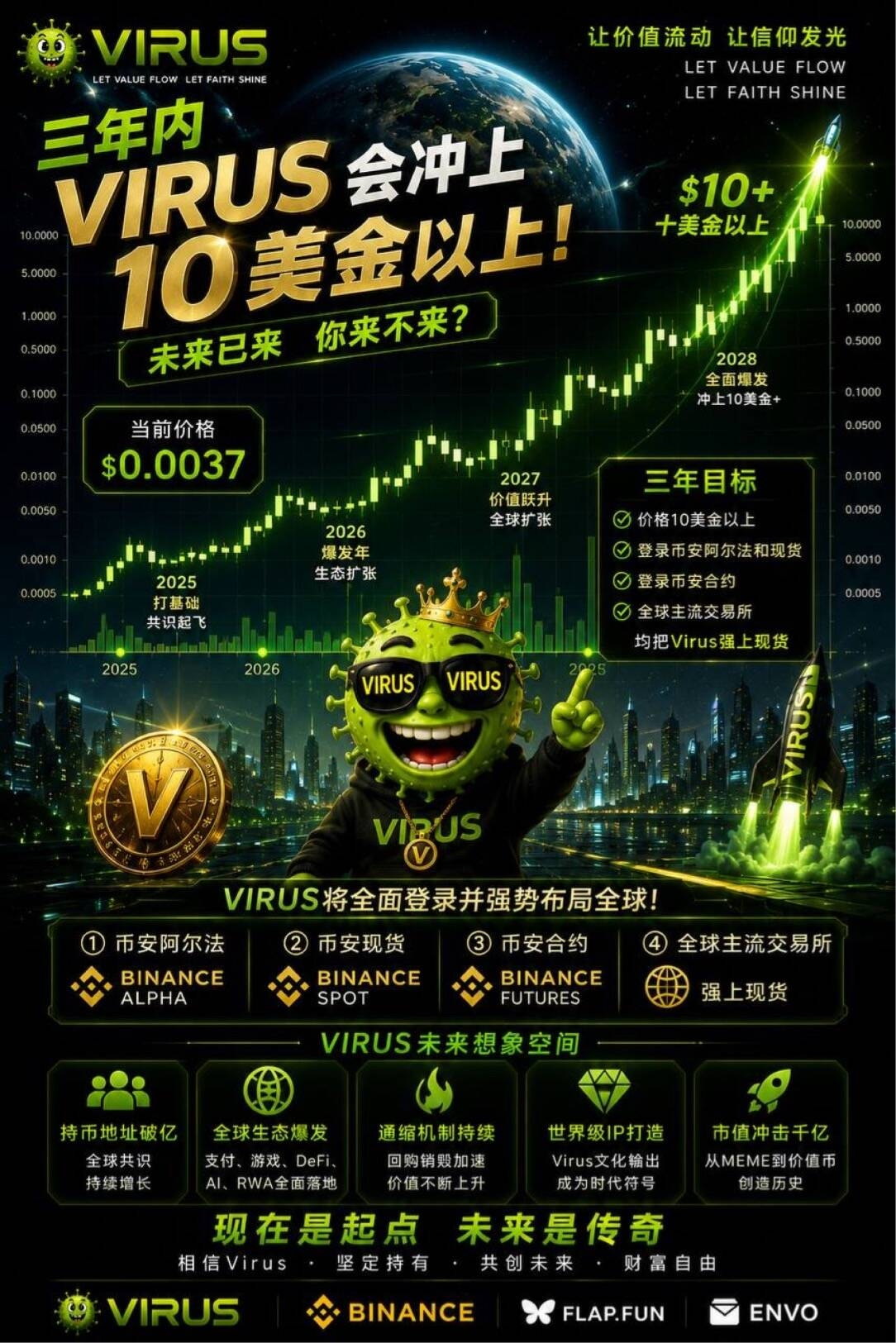
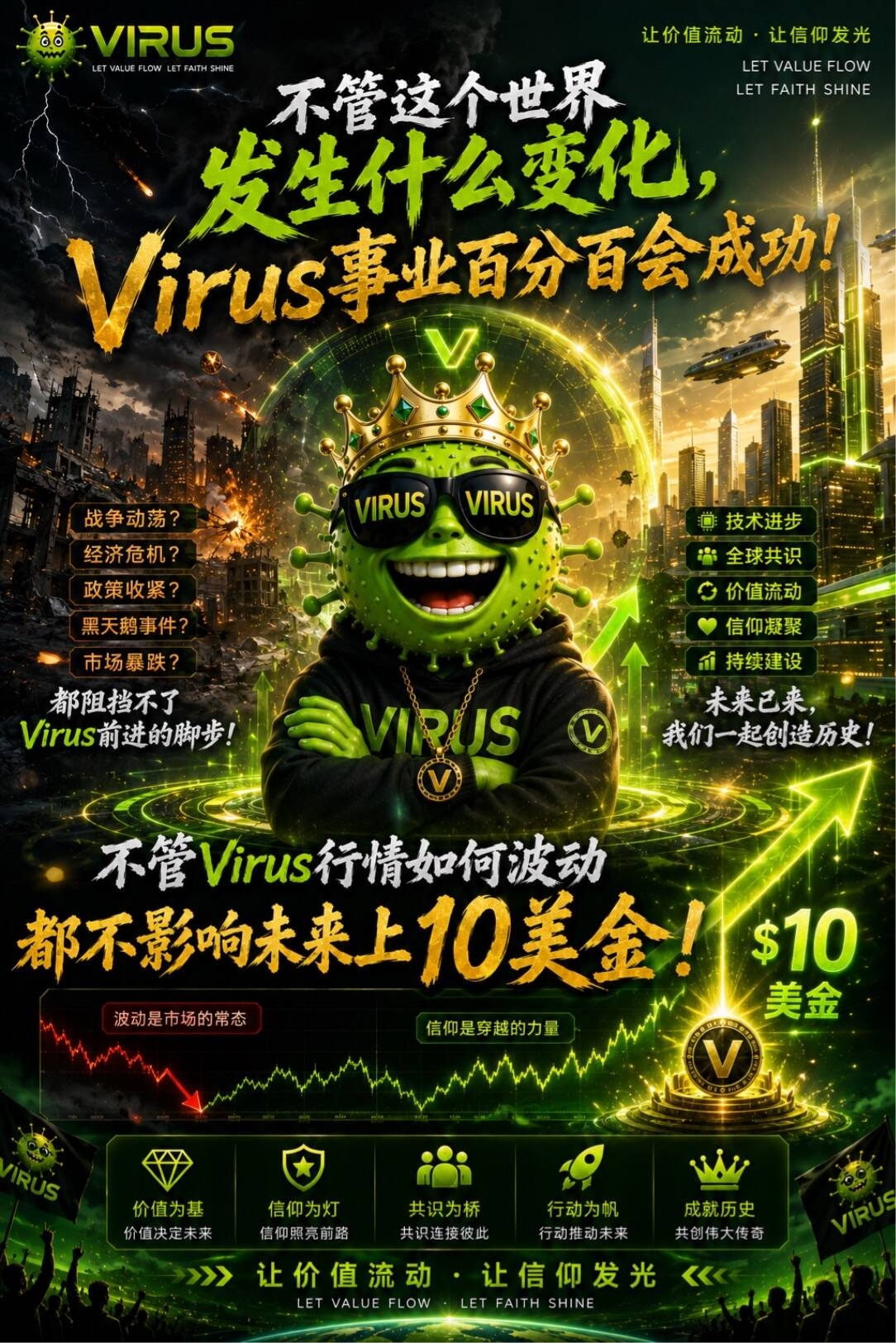
Virus牛逼,🧧🧧🧧
VIRUS UOB
·
--
Bullish🧧🧧🧧🧧🧧
Shib (柴犬币)口号:去零行动
Pepe (佩佩蛙币)口号:让迷因币再次伟大
Virus (病毒币)口号:让BSC再次伟大,感染每一个钱包:创造下一个历史!
下一个暴富机会就在眼前,你上车吗
Shib (柴犬币)口号:去零行动
Pepe (佩佩蛙币)口号:让迷因币再次伟大
Virus (病毒币)口号:让BSC再次伟大,感染每一个钱包:创造下一个历史!
下一个暴富机会就在眼前,你上车吗

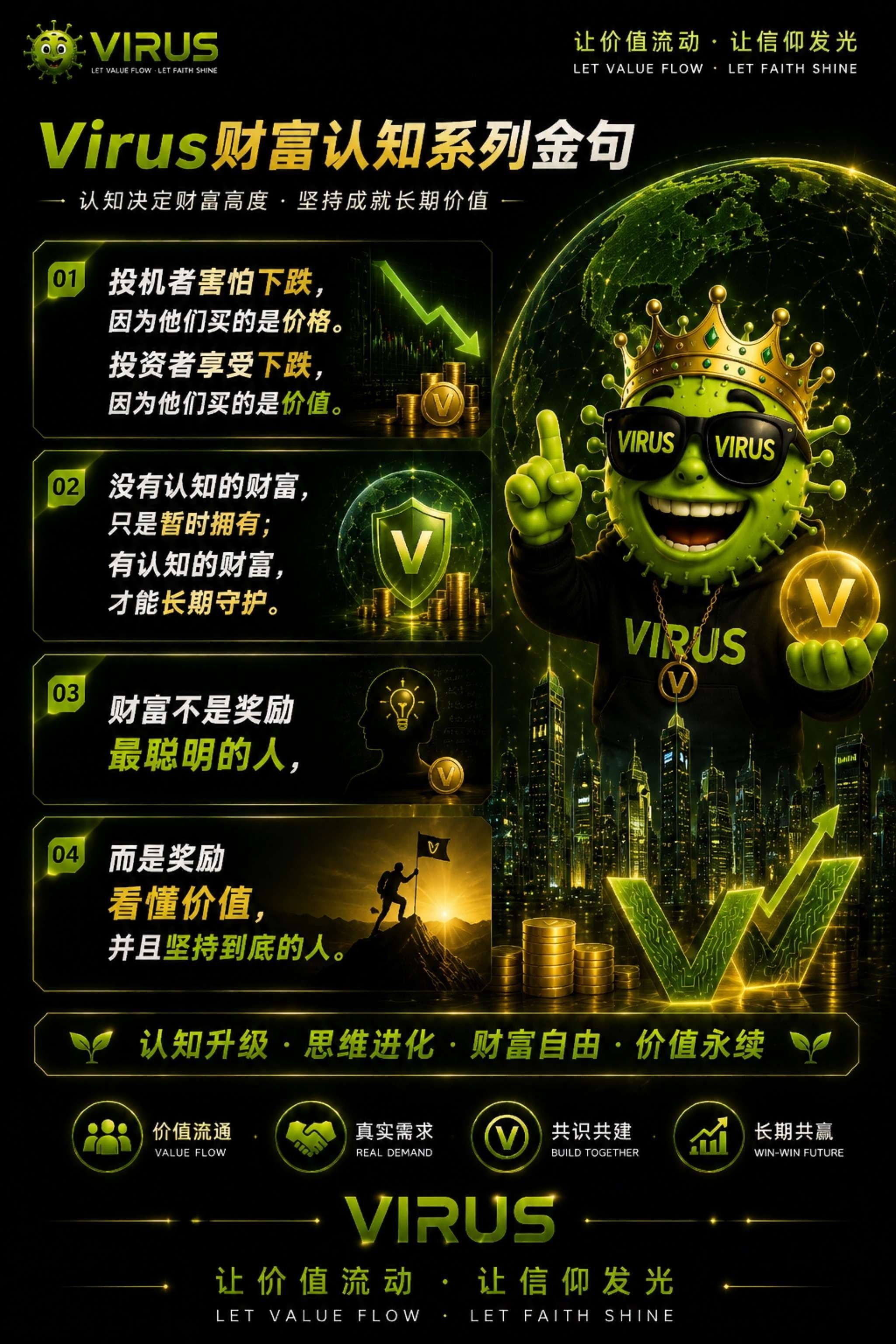
🧧市场不会因为你焦虑就上涨,也不会因为你恐慌就停止下跌。情绪稳定,本身就是优势。

#virus病毒 每日数据2026年9月7日,即将暴涨🧧
Virus平常心
·
--
购买virus的8大理由
认准唯一合约:0xa1ed61902f13e162305f59e1b2475e269e647777
1.virus的特殊机制:买卖3%的税,全部用于回购,然后随机空投到所有bsc地址,变相销毁。
持续步道,持续建设,就能持续带来交易量,有交易量就有销毁,销毁越来越多,流通越来越少,你手里的币就越来越值钱。
2.virus的不凡使命:做区块链史上持币人最多的代币,同时创造并申请吉尼斯世界纪录,成为第一个创造吉尼斯记录的加密货币。
3.virus的历史意义:做一个体现bsc链低gas,高效率的形象币,virus的存在就是为就是证明BSC能够承载大规模商业应用,千万笔交易几乎0费用。
4.virus的诞生背景:
ordinals,起源于btc链的升级,区块可以铭刻数据,从而诞生了市值20亿美元的ordi。
virus诞生于币安链Maxwell硬分叉升级,大幅降低gas,可以实现大批量低成本的空投。
牛逼的币总是相似的,都是特殊历史时刻诞生的时代之子。
5.永不过时的叙事
virus的社区不靠双圣奶,不靠外部web2的热度,所有购买的人都是因为它的机制和使命,不受时间限制,随时可以cx,适合长期建设,越建设,越通缩,币越值钱。
6.virus是属于bsc的独有浪漫叙事,eth的gas太贵,sol需要账户租金,做不了这么多持币人,叙事没有任何分流。
7.不买virus的人,只是因为还不了解它的内在美,virus后续每一次上alpha,上合约,上线现货,都是增加曝光量的时机,不像热度meme,利好落地变利空,virus每一次利好都会带来大量买盘。
8.之前没有人意识到bsc链的价值,直到virus的出现,人们才意识到bsc链gas多低,速度多快。
Log in to explore more content