

LIGHT WAGMII
2k Posts

LIGHT WAGMII
Report
Block User
Crypto And Blockchain Enthusiast | 🔍 Insights | 🚀 Latest Crypto Updates | IG X/Twitter : CryptoBySigma
Open Trade
Frequent Trader
4.2 Years
190 Following
20.9K+ Followers
6.5K+ Liked
Posts
Portfolio
All
Quotes
Videos
Live
PINNED
·
--
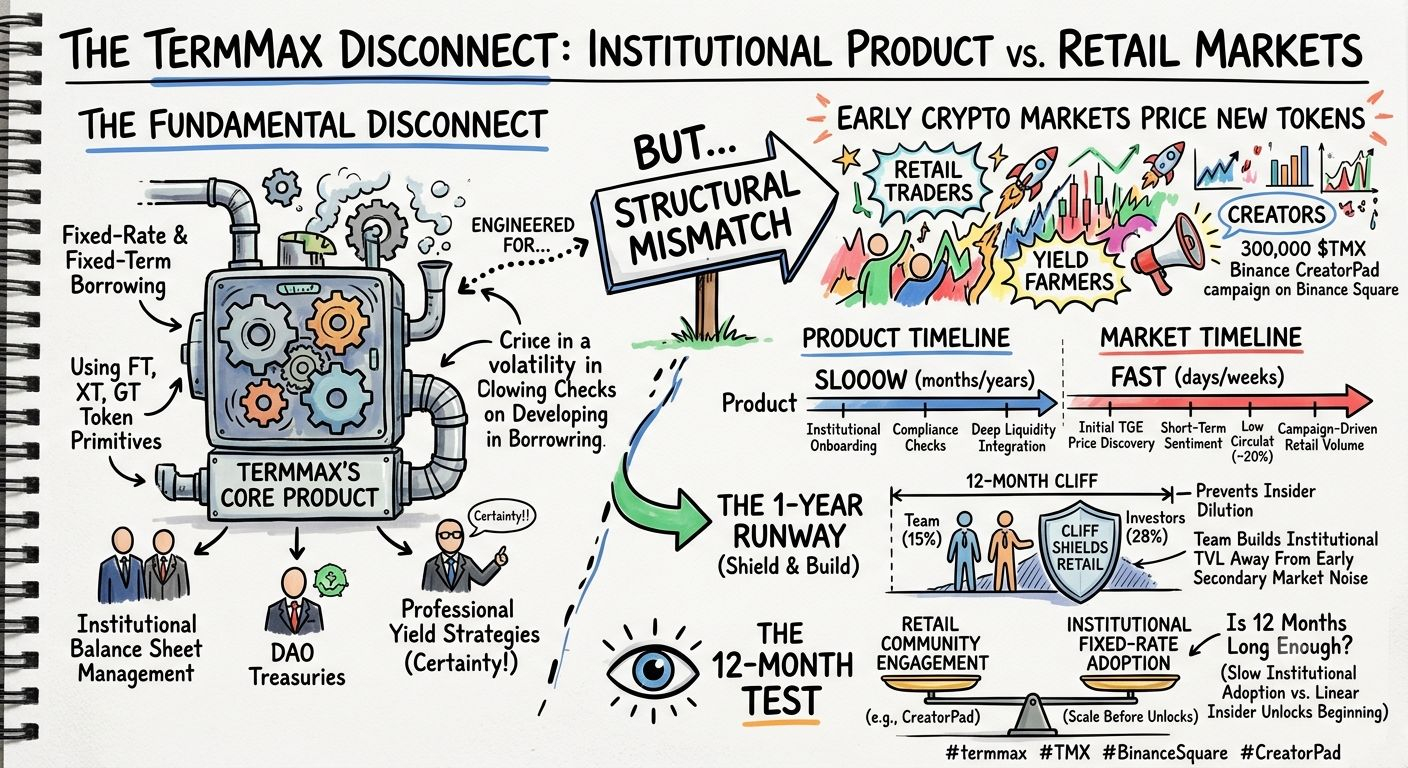
There is a fundamental disconnect between what @termmax is building and how early crypto markets price new tokens.
TermMax's core product—fixed-rate and fixed-term borrowing using FT, XT, and GT token primitives—is engineered for institutional balance sheet management, DAO treasuries, and professional yield strategies that demand interest rate certainty. Yet, during initial TGE price discovery, the primary market actors are retail traders, yield farmers, and creators participating in initiatives like the 300,000 $TMX Binance CreatorPad campaign on Binance Square.
This creates a structural mismatch:
Product Timeline: Institutional onboarding for fixed-income DeFi takes time, compliance checks, and deep liquidity integration.
Market Timeline: Early price action is driven by short-term sentiment, low circulating float (~20%), and campaign-driven retail volume.
The 12-month cliff imposed on the Team (15%) and Investors (28%) essentially buys the protocol a 1-year runway. It shields retail participants from insider dilution while giving the core team time to build institutional TVL away from early secondary market noise.
Counter-argument: Institutional adoption in DeFi moves notoriously slow. A 12-month window may not be long enough to achieve massive institutional scale before linear insider unlocks begin adding monthly supply.
Watching how $TMX balances retail community engagement on CreatorPad with institutional fixed-rate adoption will be the key test over the next 12 months.
#termmax #TMX #BinanceSquare #CreatorPad
There is a fundamental disconnect between what @TermMax is building and how early crypto markets price new tokens.
TermMax's core product—fixed-rate and fixed-term borrowing using FT, XT, and GT token primitives—is engineered for institutional balance sheet management, DAO treasuries, and professional yield strategies that demand interest rate certainty. Yet, during initial TGE price discovery, the primary market actors are retail traders, yield farmers, and creators participating in initiatives like the 300,000 $TMX Binance CreatorPad campaign on Binance Square.
This creates a structural mismatch:
Product Timeline: Institutional onboarding for fixed-income DeFi takes time, compliance checks, and deep liquidity integration.
Market Timeline: Early price action is driven by short-term sentiment, low circulating float (~20%), and campaign-driven retail volume.
The 12-month cliff imposed on the Team (15%) and Investors (28%) essentially buys the protocol a 1-year runway. It shields retail participants from insider dilution while giving the core team time to build institutional TVL away from early secondary market noise.
Counter-argument: Institutional adoption in DeFi moves notoriously slow. A 12-month window may not be long enough to achieve massive institutional scale before linear insider unlocks begin adding monthly supply.
Watching how $TMX balances retail community engagement on CreatorPad with institutional fixed-rate adoption will be the key test over the next 12 months.
#termmax #TMX #BinanceSquare #CreatorPad
TermMax's core product—fixed-rate and fixed-term borrowing using FT, XT, and GT token primitives—is engineered for institutional balance sheet management, DAO treasuries, and professional yield strategies that demand interest rate certainty. Yet, during initial TGE price discovery, the primary market actors are retail traders, yield farmers, and creators participating in initiatives like the 300,000 $TMX Binance CreatorPad campaign on Binance Square.
This creates a structural mismatch:
Product Timeline: Institutional onboarding for fixed-income DeFi takes time, compliance checks, and deep liquidity integration.
Market Timeline: Early price action is driven by short-term sentiment, low circulating float (~20%), and campaign-driven retail volume.
The 12-month cliff imposed on the Team (15%) and Investors (28%) essentially buys the protocol a 1-year runway. It shields retail participants from insider dilution while giving the core team time to build institutional TVL away from early secondary market noise.
Counter-argument: Institutional adoption in DeFi moves notoriously slow. A 12-month window may not be long enough to achieve massive institutional scale before linear insider unlocks begin adding monthly supply.
Watching how $TMX balances retail community engagement on CreatorPad with institutional fixed-rate adoption will be the key test over the next 12 months.
#termmax #TMX #BinanceSquare #CreatorPad
2
246
·
--
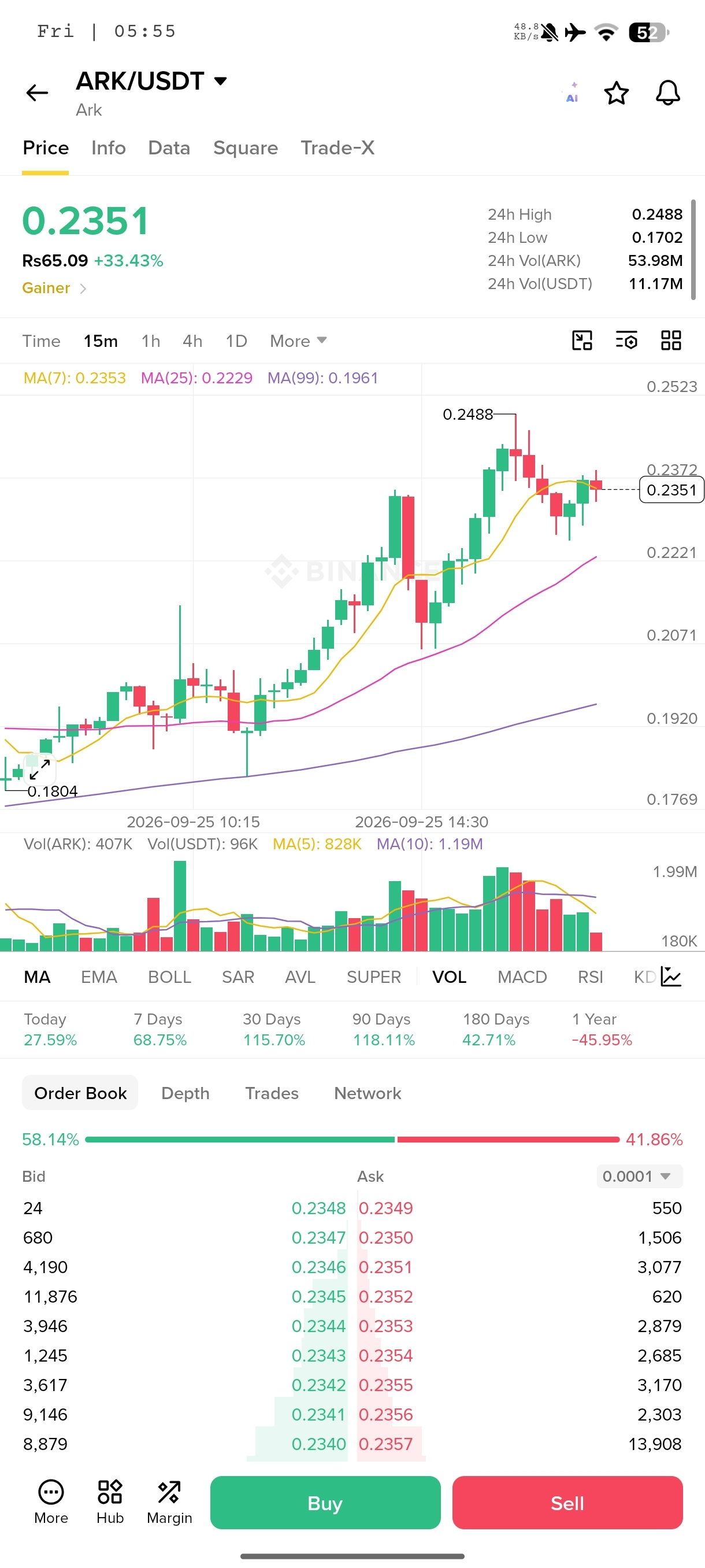
📈 $ARK — Bullish Long Setup
LONG $ARK
Entry: $0.228–$0.235
SL: $0.218
🎯 Take Profit:
TP1: $0.248
TP2: $0.265
TP3: $0.285
The 15m structure maintains a strong upward trend with higher highs and higher lows, bouncing cleanly after testing the $0.222 region near the 25-period moving average. Price action has reclaimed the 7-period moving average ($0.2353) with steady buying volume, holding above the immediate consolidation range. A minor dip back into the entry zone provides a well-defined risk-to-reward long opportunity toward recent highs.
🔑 Key Level:
$0.223 — holding above this MA(25) support zone validates the bullish structure for an upside continuation.
⚠️ Risk Note:
A breakdown below $0.218 invalidates the immediate bullish setup. Always wait for entry confirmation and manage position size with strict stop loss placement.
Bullish bias while support holds. 📈
Buy and Trade $ARK
{future}(ARKUSDT)
here 👇
📈 $ARK — Bullish Long Setup
LONG $ARK
Entry: $0.228–$0.235
SL: $0.218
🎯 Take Profit:
TP1: $0.248
TP2: $0.265
TP3: $0.285
The 15m structure maintains a strong upward trend with higher highs and higher lows, bouncing cleanly after testing the $0.222 region near the 25-period moving average. Price action has reclaimed the 7-period moving average ($0.2353) with steady buying volume, holding above the immediate consolidation range. A minor dip back into the entry zone provides a well-defined risk-to-reward long opportunity toward recent highs.
🔑 Key Level:
$0.223 — holding above this MA(25) support zone validates the bullish structure for an upside continuation.
⚠️ Risk Note:
A breakdown below $0.218 invalidates the immediate bullish setup. Always wait for entry confirmation and manage position size with strict stop loss placement.
Bullish bias while support holds. 📈
Buy and Trade $ARK
here 👇
LONG $ARK
Entry: $0.228–$0.235
SL: $0.218
🎯 Take Profit:
TP1: $0.248
TP2: $0.265
TP3: $0.285
The 15m structure maintains a strong upward trend with higher highs and higher lows, bouncing cleanly after testing the $0.222 region near the 25-period moving average. Price action has reclaimed the 7-period moving average ($0.2353) with steady buying volume, holding above the immediate consolidation range. A minor dip back into the entry zone provides a well-defined risk-to-reward long opportunity toward recent highs.
🔑 Key Level:
$0.223 — holding above this MA(25) support zone validates the bullish structure for an upside continuation.
⚠️ Risk Note:
A breakdown below $0.218 invalidates the immediate bullish setup. Always wait for entry confirmation and manage position size with strict stop loss placement.
Bullish bias while support holds. 📈
Buy and Trade $ARK
here 👇
80
·
--
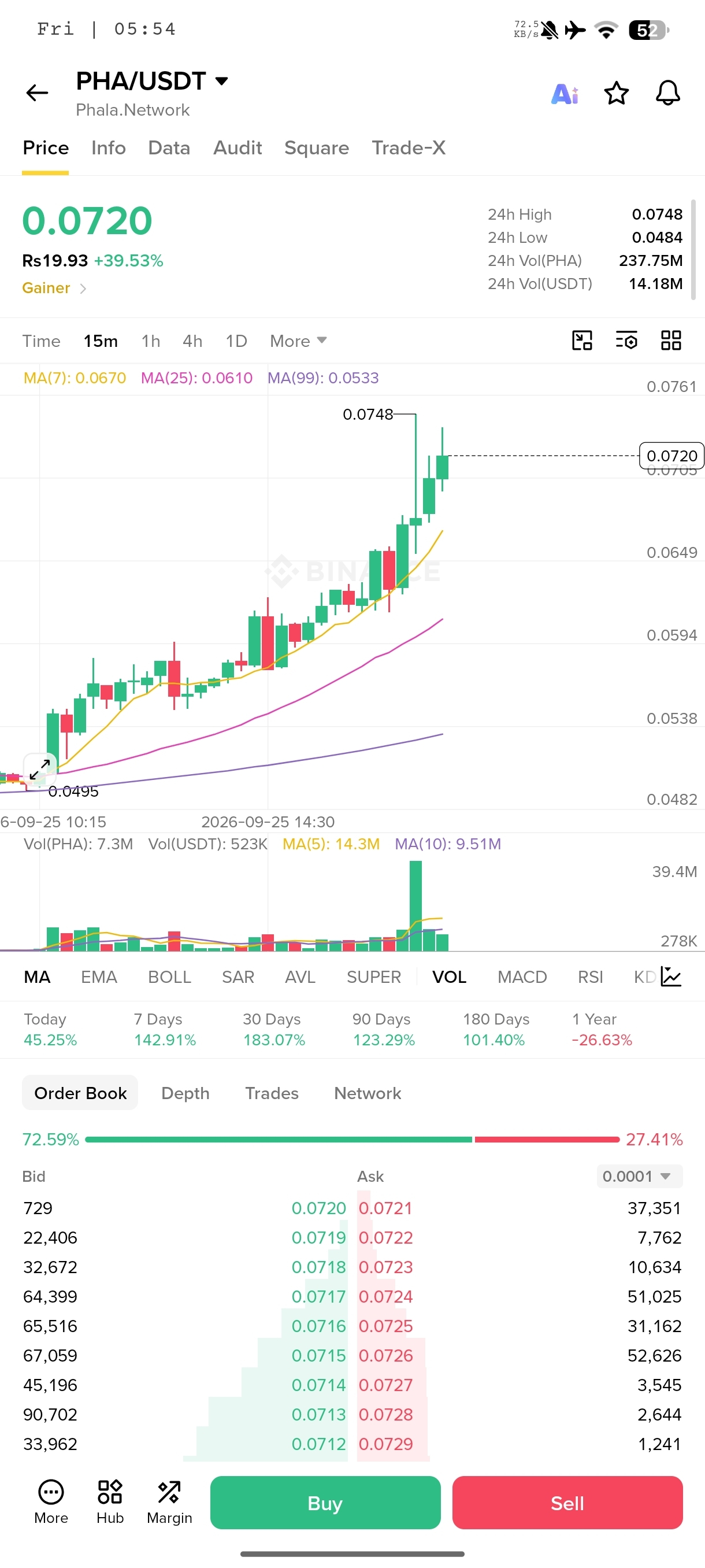
📈 $PHA
{future}(PHAUSDT)
— Bullish Long Setup
LONG $PHA
Entry: $0.0670–$0.0715
SL: $0.0605
🎯 Take Profit:
TP1: $0.0748
TP2: $0.0800
TP3: $0.0860
The price structure displays a strong bullish trend on the 15m chart, riding well above key moving averages with consistent higher highs and higher lows. After tapping a local peak at $0.0748 following a high-volume spike, price is holding firmly around $0.0720 above the dynamic MA(7) line ($0.0670). Entering on a minor retest of the MA support zone offers a high-probability continuation trade.
🔑 Key Level:
$0.0670 — holding above this 7-period moving average dynamic support zone validates the ongoing bullish impulse towards new local highs.
⚠️ Risk Note:
A breakdown below $0.0605 (MA 25 area) invalidates the aggressive bullish setup. Manage risk strictly and wait for retest confirmation before entering.
Bullish bias while support holds. 📈
Buy and Trade $PHA here 👇
📈 $PHA
— Bullish Long Setup
LONG $PHA
Entry: $0.0670–$0.0715
SL: $0.0605
🎯 Take Profit:
TP1: $0.0748
TP2: $0.0800
TP3: $0.0860
The price structure displays a strong bullish trend on the 15m chart, riding well above key moving averages with consistent higher highs and higher lows. After tapping a local peak at $0.0748 following a high-volume spike, price is holding firmly around $0.0720 above the dynamic MA(7) line ($0.0670). Entering on a minor retest of the MA support zone offers a high-probability continuation trade.
🔑 Key Level:
$0.0670 — holding above this 7-period moving average dynamic support zone validates the ongoing bullish impulse towards new local highs.
⚠️ Risk Note:
A breakdown below $0.0605 (MA 25 area) invalidates the aggressive bullish setup. Manage risk strictly and wait for retest confirmation before entering.
Bullish bias while support holds. 📈
Buy and Trade $PHA here 👇
— Bullish Long Setup
LONG $PHA
Entry: $0.0670–$0.0715
SL: $0.0605
🎯 Take Profit:
TP1: $0.0748
TP2: $0.0800
TP3: $0.0860
The price structure displays a strong bullish trend on the 15m chart, riding well above key moving averages with consistent higher highs and higher lows. After tapping a local peak at $0.0748 following a high-volume spike, price is holding firmly around $0.0720 above the dynamic MA(7) line ($0.0670). Entering on a minor retest of the MA support zone offers a high-probability continuation trade.
🔑 Key Level:
$0.0670 — holding above this 7-period moving average dynamic support zone validates the ongoing bullish impulse towards new local highs.
⚠️ Risk Note:
A breakdown below $0.0605 (MA 25 area) invalidates the aggressive bullish setup. Manage risk strictly and wait for retest confirmation before entering.
Bullish bias while support holds. 📈
Buy and Trade $PHA here 👇
243
·
--
Bullish
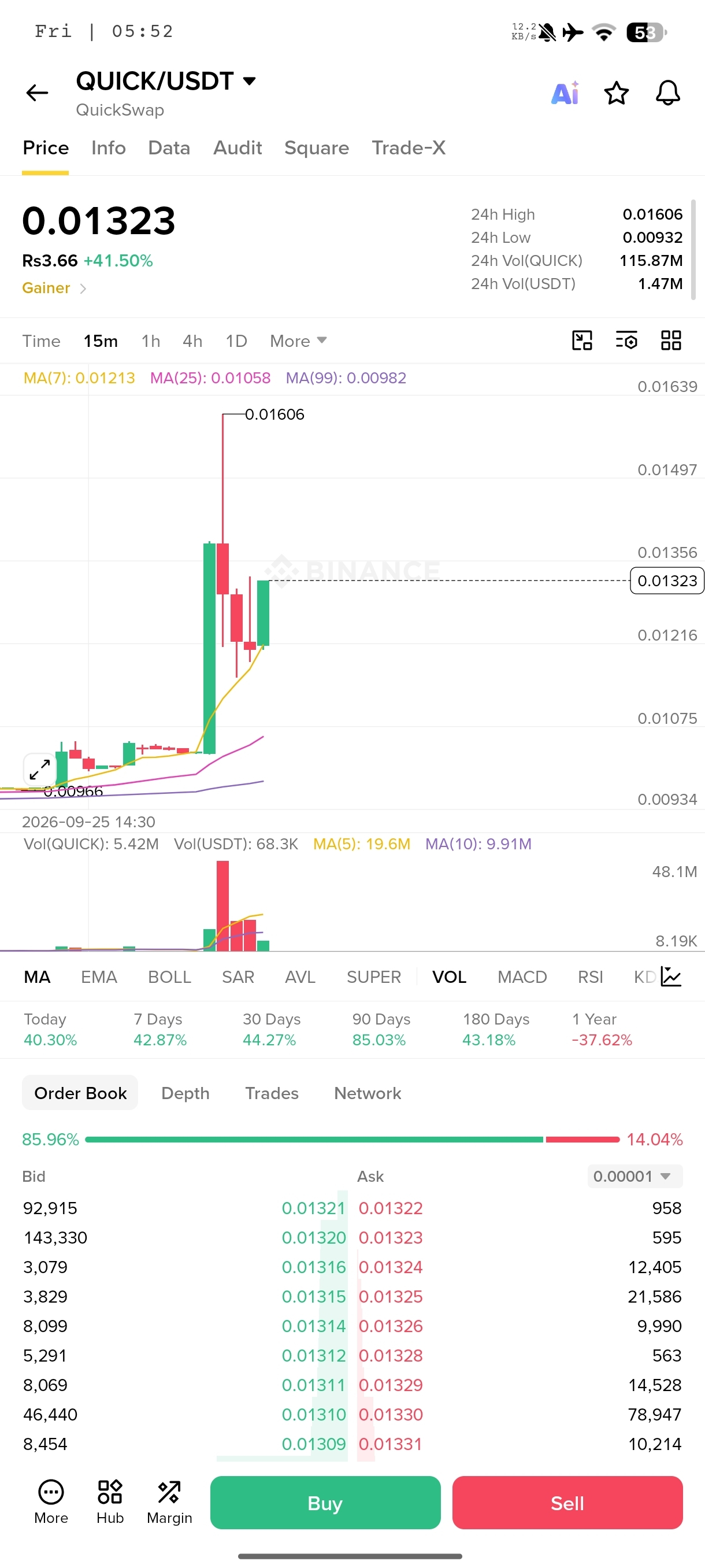
📈 $QUICK — Bullish Long Setup
LONG $QUICK
Entry: $0.0125–$0.0132
SL: $0.0115
🎯 Take Profit:
TP1: $0.0145
TP2: $0.0160
TP3: $0.0180
The price action spiked heavily up to $0.01606 before undergoing a brief pull-back. It is now holding structure above the 7-period moving average ($0.01213) on the 15m time frame. Buyers are stepping back in around the $0.0125 region, indicating momentum continuation following a healthy volatility contraction.
🔑 Key Level:
$0.01210 — holding above this dynamic MA(7) support keeps the immediate upside expansion intact for a retest of local highs.
⚠️ Risk Note:
A break below $0.0115 invalidates the short-term long structure. Wait for minor consolidation before entering and strictly adhere to risk management rules.
Bullish bias while support holds. 📈
Buy and Trade $QUICK here 👇
📈 $QUICK — Bullish Long Setup
LONG $QUICK
Entry: $0.0125–$0.0132
SL: $0.0115
🎯 Take Profit:
TP1: $0.0145
TP2: $0.0160
TP3: $0.0180
The price action spiked heavily up to $0.01606 before undergoing a brief pull-back. It is now holding structure above the 7-period moving average ($0.01213) on the 15m time frame. Buyers are stepping back in around the $0.0125 region, indicating momentum continuation following a healthy volatility contraction.
🔑 Key Level:
$0.01210 — holding above this dynamic MA(7) support keeps the immediate upside expansion intact for a retest of local highs.
⚠️ Risk Note:
A break below $0.0115 invalidates the short-term long structure. Wait for minor consolidation before entering and strictly adhere to risk management rules.
Bullish bias while support holds. 📈
Buy and Trade $QUICK here 👇
LONG $QUICK
Entry: $0.0125–$0.0132
SL: $0.0115
🎯 Take Profit:
TP1: $0.0145
TP2: $0.0160
TP3: $0.0180
The price action spiked heavily up to $0.01606 before undergoing a brief pull-back. It is now holding structure above the 7-period moving average ($0.01213) on the 15m time frame. Buyers are stepping back in around the $0.0125 region, indicating momentum continuation following a healthy volatility contraction.
🔑 Key Level:
$0.01210 — holding above this dynamic MA(7) support keeps the immediate upside expansion intact for a retest of local highs.
⚠️ Risk Note:
A break below $0.0115 invalidates the short-term long structure. Wait for minor consolidation before entering and strictly adhere to risk management rules.
Bullish bias while support holds. 📈
Buy and Trade $QUICK here 👇
362
·
--
Bullish
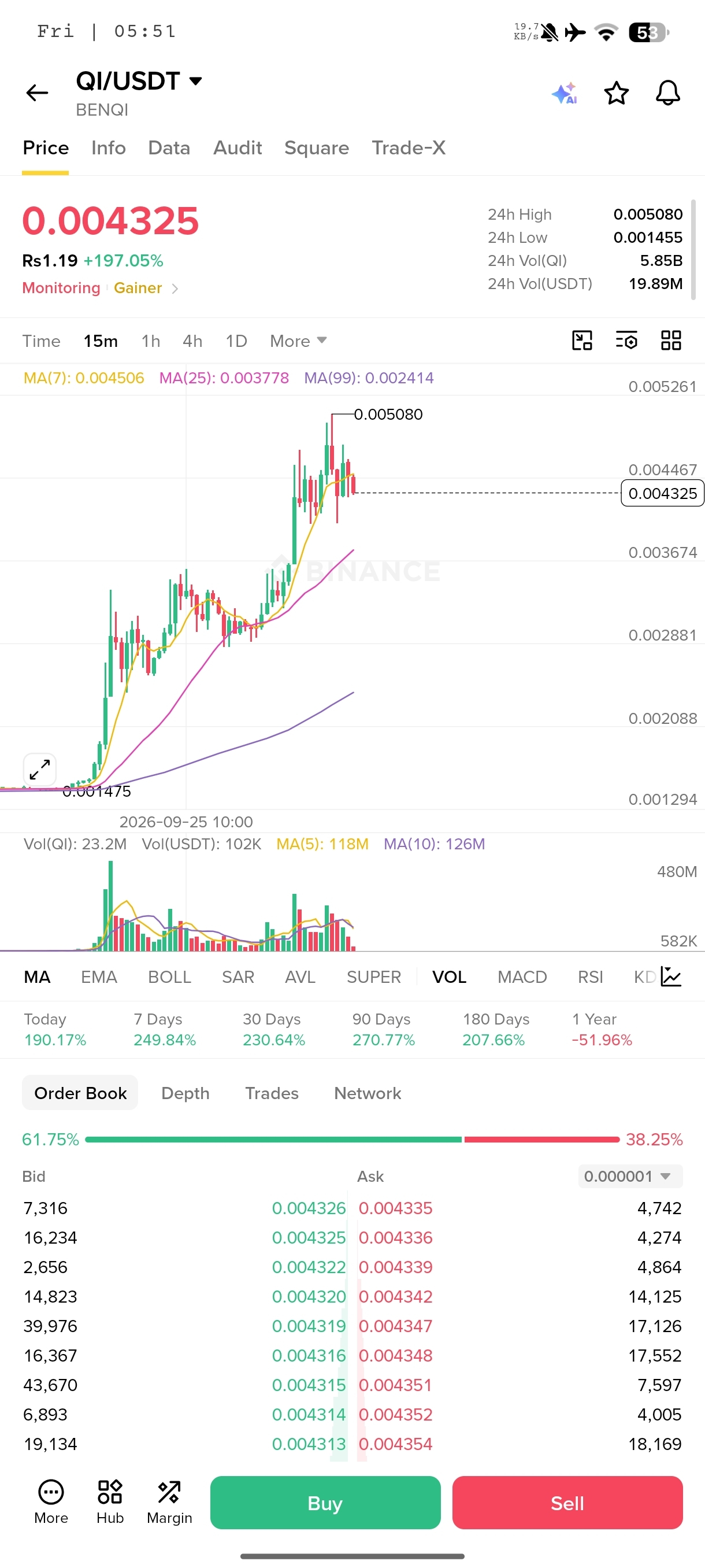
📈 $QI — Bullish Long Setup
LONG $QI
Entry: $0.00410–$0.00432
SL: $0.00370
🎯 Take Profit:
TP1: $0.00475
TP2: $0.00508
TP3: $0.00550
The price action exhibits clear parabolic bullish expansion, surging over 190% on massive volume. Following a peak at $0.00508, the chart is currently pulling back to construct a higher low above the 25-period moving average ($0.00377). Holding this short-term consolidation zone signals strong buyers defending the trend, offering a favorable pull-back entry before the next upward impulse.
🔑 Key Level:
$0.00375 — keeping price action above this key MA(25) dynamic zone maintains the bullish micro-structure for a retest of $0.00508.
⚠️ Risk Note:
A breakdown below $0.00370 invalidates the bullish setup and indicates a deeper corrective phase. Manage risk strictly with controlled position sizing and defined stop losses.
Bullish bias while dynamic support holds. 📈
Buy and Trade $QI here 👇
📈 $QI — Bullish Long Setup
LONG $QI
Entry: $0.00410–$0.00432
SL: $0.00370
🎯 Take Profit:
TP1: $0.00475
TP2: $0.00508
TP3: $0.00550
The price action exhibits clear parabolic bullish expansion, surging over 190% on massive volume. Following a peak at $0.00508, the chart is currently pulling back to construct a higher low above the 25-period moving average ($0.00377). Holding this short-term consolidation zone signals strong buyers defending the trend, offering a favorable pull-back entry before the next upward impulse.
🔑 Key Level:
$0.00375 — keeping price action above this key MA(25) dynamic zone maintains the bullish micro-structure for a retest of $0.00508.
⚠️ Risk Note:
A breakdown below $0.00370 invalidates the bullish setup and indicates a deeper corrective phase. Manage risk strictly with controlled position sizing and defined stop losses.
Bullish bias while dynamic support holds. 📈
Buy and Trade $QI here 👇
LONG $QI
Entry: $0.00410–$0.00432
SL: $0.00370
🎯 Take Profit:
TP1: $0.00475
TP2: $0.00508
TP3: $0.00550
The price action exhibits clear parabolic bullish expansion, surging over 190% on massive volume. Following a peak at $0.00508, the chart is currently pulling back to construct a higher low above the 25-period moving average ($0.00377). Holding this short-term consolidation zone signals strong buyers defending the trend, offering a favorable pull-back entry before the next upward impulse.
🔑 Key Level:
$0.00375 — keeping price action above this key MA(25) dynamic zone maintains the bullish micro-structure for a retest of $0.00508.
⚠️ Risk Note:
A breakdown below $0.00370 invalidates the bullish setup and indicates a deeper corrective phase. Manage risk strictly with controlled position sizing and defined stop losses.
Bullish bias while dynamic support holds. 📈
Buy and Trade $QI here 👇
217
·
--
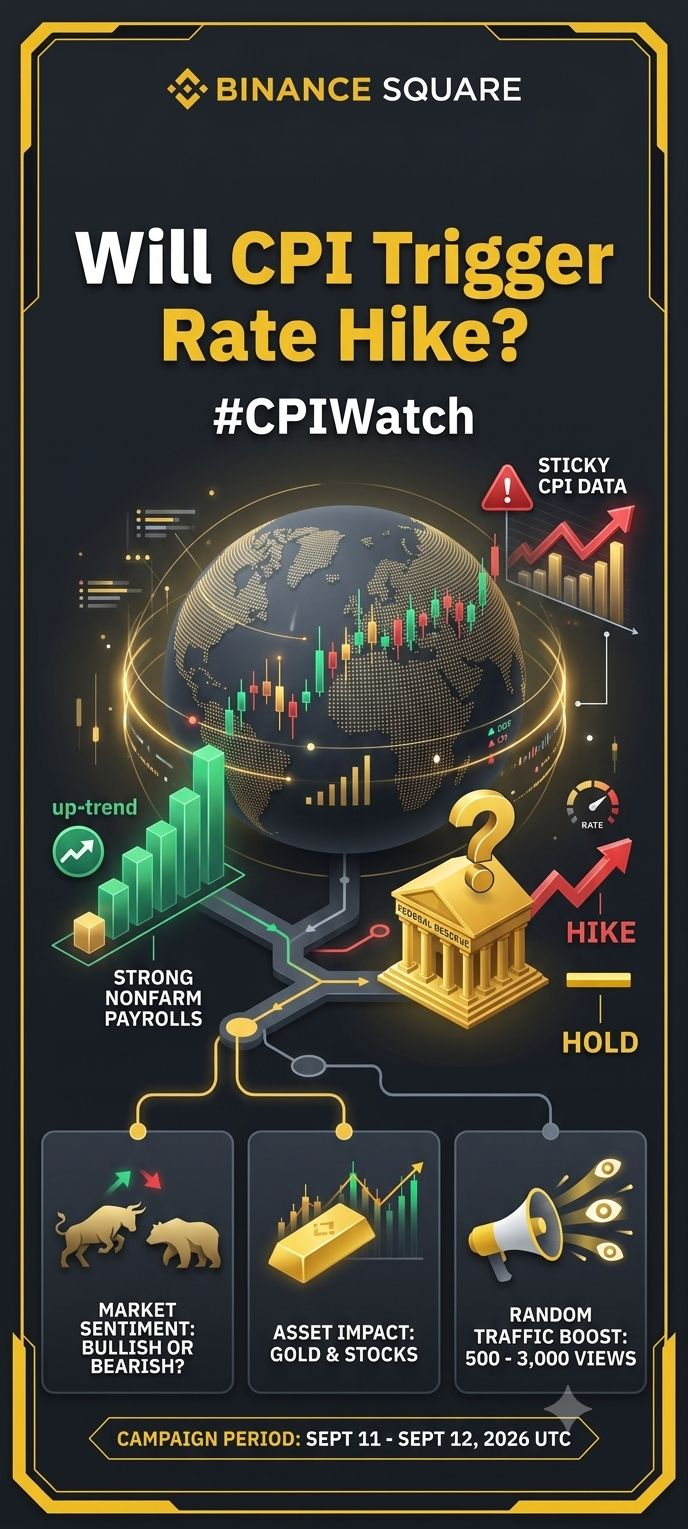
Macro Shift: Will Strong Jobs Data & CPI Force the Fed's Hand? 📊
With Nonfarm Payrolls beating expectations and showing persistent labor market resilience, all eyes turn to the upcoming CPI inflation print. Strong economic activity usually fuels inflation concerns, sparking debates over whether the Federal Reserve will maintain high interest rates or consider a rate hike to keep price pressures in check.
Fed Strategy: Hike or Hold?
While recent labor resilience suggests the economy isn't cooling as fast as expected, a rate hike remains unlikely unless CPI spikes sharply above consensus. The Fed is more likely to keep rates higher for longer to monitor lag effects. However, if CPI prints significantly hot, market rate-cut expectations will vanish quickly, tightening global liquidity conditions and pressuring risk assets.
Market Reaction & Outlook
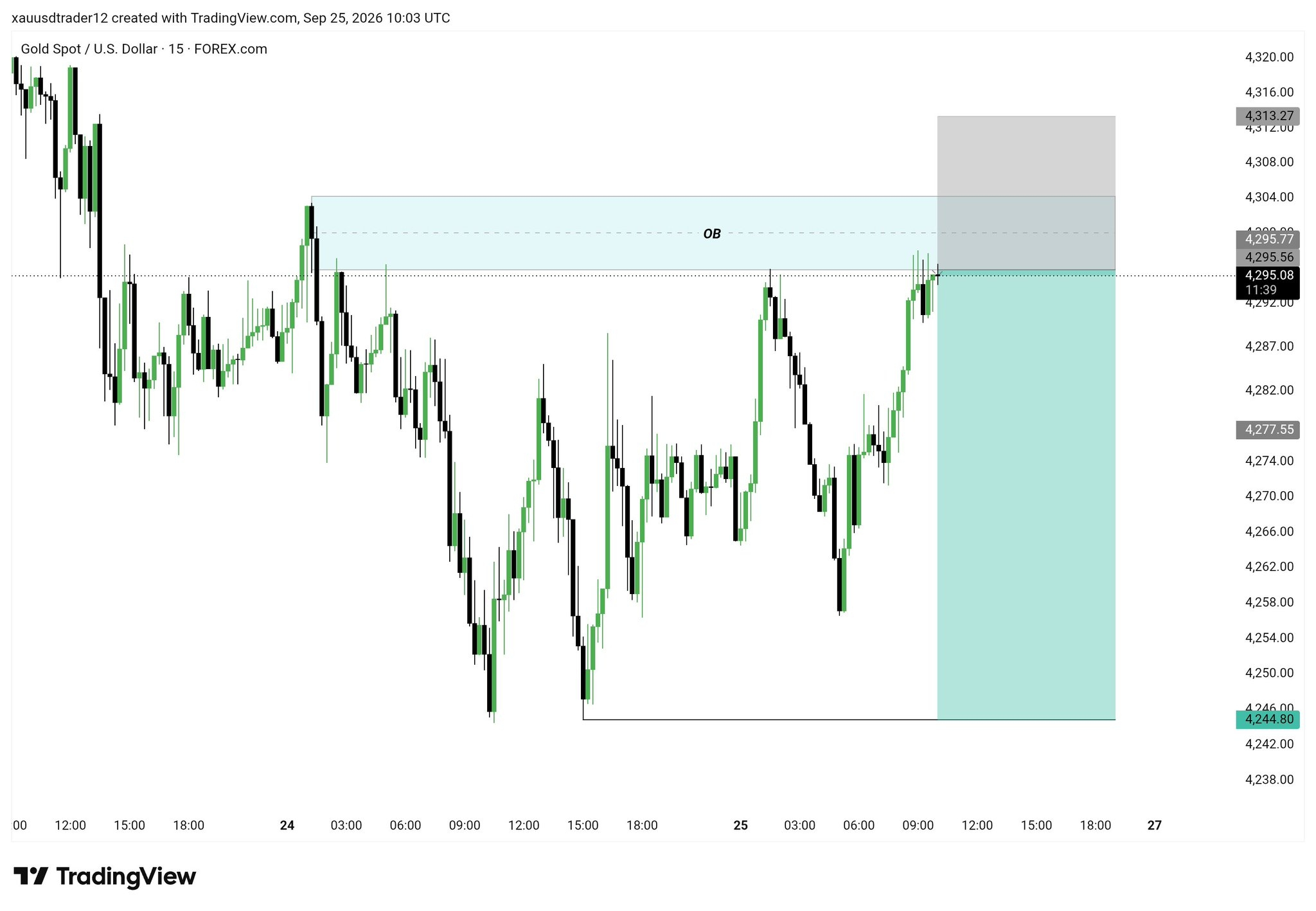
Gold ($XAU /USD): Higher rates or a strong US Dollar typically create temporary pressure on gold, but macroeconomic uncertainty continues to support safe-haven demand.
Risk Assets & Crypto: Persistently high rates squeeze traditional equity markets and crypto valuations as capital flows back into yield-bearing bonds.
If inflation remains sticky, expecting long-term high rates is the safest play. Keep a close eye on the CPI numbers before managing leveraged positions!
#CPIWatch
Macro Shift: Will Strong Jobs Data & CPI Force the Fed's Hand? 📊
With Nonfarm Payrolls beating expectations and showing persistent labor market resilience, all eyes turn to the upcoming CPI inflation print. Strong economic activity usually fuels inflation concerns, sparking debates over whether the Federal Reserve will maintain high interest rates or consider a rate hike to keep price pressures in check.
Fed Strategy: Hike or Hold?
While recent labor resilience suggests the economy isn't cooling as fast as expected, a rate hike remains unlikely unless CPI spikes sharply above consensus. The Fed is more likely to keep rates higher for longer to monitor lag effects. However, if CPI prints significantly hot, market rate-cut expectations will vanish quickly, tightening global liquidity conditions and pressuring risk assets.
Market Reaction & Outlook
Gold ($XAU /USD): Higher rates or a strong US Dollar typically create temporary pressure on gold, but macroeconomic uncertainty continues to support safe-haven demand.
Risk Assets & Crypto: Persistently high rates squeeze traditional equity markets and crypto valuations as capital flows back into yield-bearing bonds.
If inflation remains sticky, expecting long-term high rates is the safest play. Keep a close eye on the CPI numbers before managing leveraged positions!
#CPIWatch
With Nonfarm Payrolls beating expectations and showing persistent labor market resilience, all eyes turn to the upcoming CPI inflation print. Strong economic activity usually fuels inflation concerns, sparking debates over whether the Federal Reserve will maintain high interest rates or consider a rate hike to keep price pressures in check.
Fed Strategy: Hike or Hold?
While recent labor resilience suggests the economy isn't cooling as fast as expected, a rate hike remains unlikely unless CPI spikes sharply above consensus. The Fed is more likely to keep rates higher for longer to monitor lag effects. However, if CPI prints significantly hot, market rate-cut expectations will vanish quickly, tightening global liquidity conditions and pressuring risk assets.
Market Reaction & Outlook
Gold ($XAU /USD): Higher rates or a strong US Dollar typically create temporary pressure on gold, but macroeconomic uncertainty continues to support safe-haven demand.
Risk Assets & Crypto: Persistently high rates squeeze traditional equity markets and crypto valuations as capital flows back into yield-bearing bonds.
If inflation remains sticky, expecting long-term high rates is the safest play. Keep a close eye on the CPI numbers before managing leveraged positions!
#CPIWatch
1
2
362
·
--
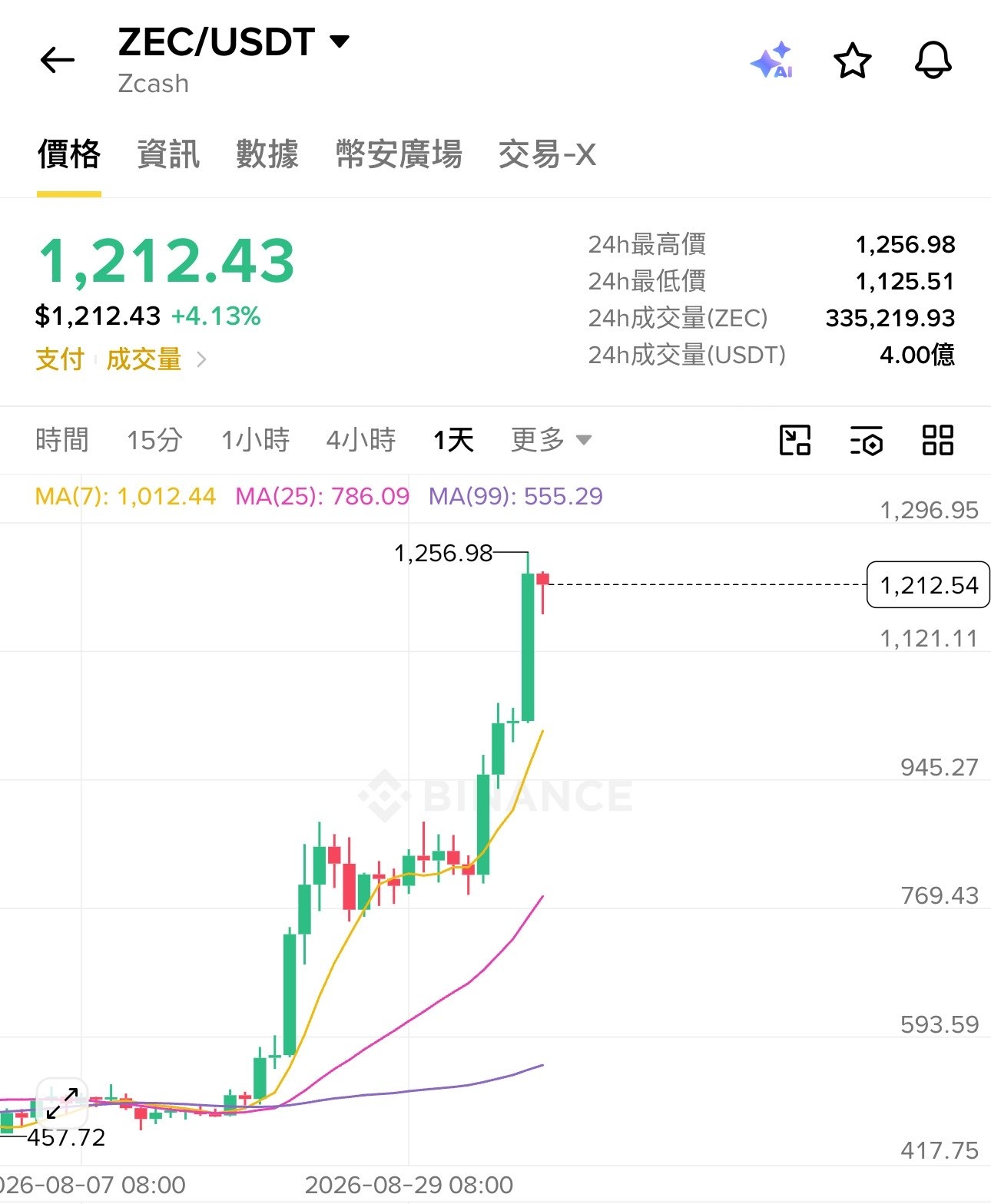
I've noticed that many coins that pump or break out are mining coins, like the recently popular zcash:native
Moreover, $BTC $ETH, the top two big shots in the crypto circle, were also born as mining coins, both starting with PoW mining (ETH later switched to PoS)
There are also many similar mining coins and star coins, such as FIL, XCH, etc., which convert electricity into computing power and produce output through mining with that computing power
Some mining machine sellers often pump up coin prices to achieve the goal of selling off their inventory. I don't know how long this round of ZEC's market momentum can last
(Many small coins claim a very short payback period before the mining machines are sold out, attracting users to buy the machines, but in reality, after users get the machines, the actual payback days keep getting longer)
I've noticed that many coins that pump or break out are mining coins, like the recently popular zcash:native
Moreover, $BTC $ETH, the top two big shots in the crypto circle, were also born as mining coins, both starting with PoW mining (ETH later switched to PoS)
There are also many similar mining coins and star coins, such as FIL, XCH, etc., which convert electricity into computing power and produce output through mining with that computing power
Some mining machine sellers often pump up coin prices to achieve the goal of selling off their inventory. I don't know how long this round of ZEC's market momentum can last
(Many small coins claim a very short payback period before the mining machines are sold out, attracting users to buy the machines, but in reality, after users get the machines, the actual payback days keep getting longer)
Moreover, $BTC $ETH, the top two big shots in the crypto circle, were also born as mining coins, both starting with PoW mining (ETH later switched to PoS)
There are also many similar mining coins and star coins, such as FIL, XCH, etc., which convert electricity into computing power and produce output through mining with that computing power
Some mining machine sellers often pump up coin prices to achieve the goal of selling off their inventory. I don't know how long this round of ZEC's market momentum can last
(Many small coins claim a very short payback period before the mining machines are sold out, attracting users to buy the machines, but in reality, after users get the machines, the actual payback days keep getting longer)
1
397


·
--
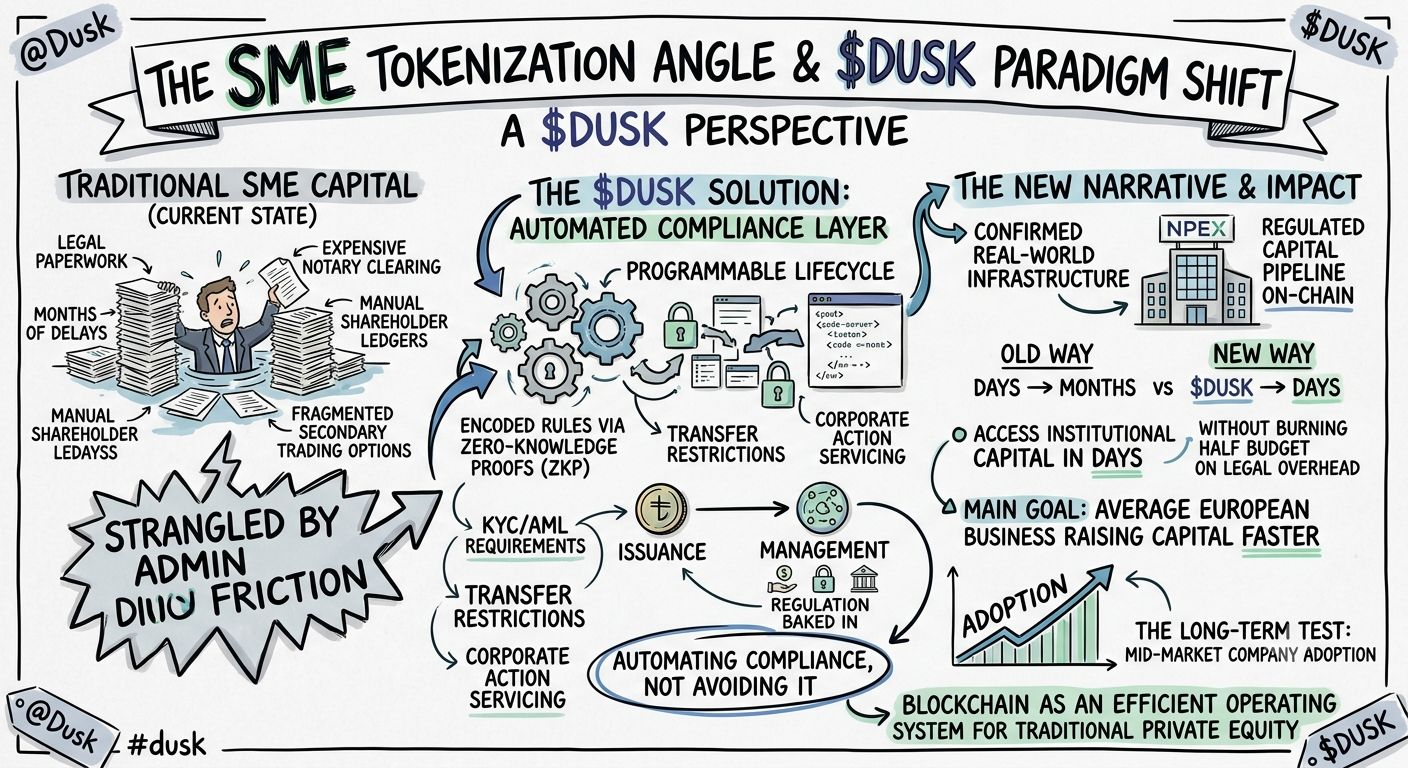
Looking at the SME tokenization angle from CreatorPad's deep-dive on $DUSK , there’s an interesting paradigm shift that usually gets lost in the usual RWA noise.
Most Web3 discussions around tokenization focus almost exclusively on high-net-worth real estate or massive institutional debt. But when you look at the infrastructure @Dusk is building, the real target market seems to be the millions of small-to-mid enterprise (SME) private companies currently strangled by traditional administrative friction.
Right now, an SME trying to issue equity or secure private credit has to wade through months of legal paperwork, expensive notary clearing, manual shareholder ledger updates, and fragmented secondary trading options. Dusk’s framework isn't promising an end-run around regulation; it's automating the compliance layer itself. By encoding KYC/AML requirements, transfer restrictions, and corporate action servicing directly into the token layer via Zero-Knowledge proofs, the entire issuance and management lifecycle becomes programmable.
With confirmed real-world infrastructure like NPEX bringing regulated capital pipelines on-chain, this shifts the $DUSK narrative. It isn't just about whether retail traders can buy fractional shares of a venture—it's about whether an average European business can access institutional capital in days instead of months, without burning half their budget on legal overhead.
If compliance is baked into the protocol level, blockchain stops feeling like a wild-west alternative and starts functioning as a far more efficient operating system for traditional private equity. The long-term test for $DUSK won't be speculative hype, but whether mid-market companies actually adopt this pipe to raise capital faster.
@Dusk_Foundation
#dusk
Looking at the SME tokenization angle from CreatorPad's deep-dive on $DUSK , there’s an interesting paradigm shift that usually gets lost in the usual RWA noise.
Most Web3 discussions around tokenization focus almost exclusively on high-net-worth real estate or massive institutional debt. But when you look at the infrastructure @Dusk is building, the real target market seems to be the millions of small-to-mid enterprise (SME) private companies currently strangled by traditional administrative friction.
Right now, an SME trying to issue equity or secure private credit has to wade through months of legal paperwork, expensive notary clearing, manual shareholder ledger updates, and fragmented secondary trading options. Dusk’s framework isn't promising an end-run around regulation; it's automating the compliance layer itself. By encoding KYC/AML requirements, transfer restrictions, and corporate action servicing directly into the token layer via Zero-Knowledge proofs, the entire issuance and management lifecycle becomes programmable.
With confirmed real-world infrastructure like NPEX bringing regulated capital pipelines on-chain, this shifts the $DUSK narrative. It isn't just about whether retail traders can buy fractional shares of a venture—it's about whether an average European business can access institutional capital in days instead of months, without burning half their budget on legal overhead.
If compliance is baked into the protocol level, blockchain stops feeling like a wild-west alternative and starts functioning as a far more efficient operating system for traditional private equity. The long-term test for $DUSK won't be speculative hype, but whether mid-market companies actually adopt this pipe to raise capital faster.
@Dusk
#dusk
Most Web3 discussions around tokenization focus almost exclusively on high-net-worth real estate or massive institutional debt. But when you look at the infrastructure @Dusk is building, the real target market seems to be the millions of small-to-mid enterprise (SME) private companies currently strangled by traditional administrative friction.
Right now, an SME trying to issue equity or secure private credit has to wade through months of legal paperwork, expensive notary clearing, manual shareholder ledger updates, and fragmented secondary trading options. Dusk’s framework isn't promising an end-run around regulation; it's automating the compliance layer itself. By encoding KYC/AML requirements, transfer restrictions, and corporate action servicing directly into the token layer via Zero-Knowledge proofs, the entire issuance and management lifecycle becomes programmable.
With confirmed real-world infrastructure like NPEX bringing regulated capital pipelines on-chain, this shifts the $DUSK narrative. It isn't just about whether retail traders can buy fractional shares of a venture—it's about whether an average European business can access institutional capital in days instead of months, without burning half their budget on legal overhead.
If compliance is baked into the protocol level, blockchain stops feeling like a wild-west alternative and starts functioning as a far more efficient operating system for traditional private equity. The long-term test for $DUSK won't be speculative hype, but whether mid-market companies actually adopt this pipe to raise capital faster.
@Dusk
#dusk
1
301
·
--
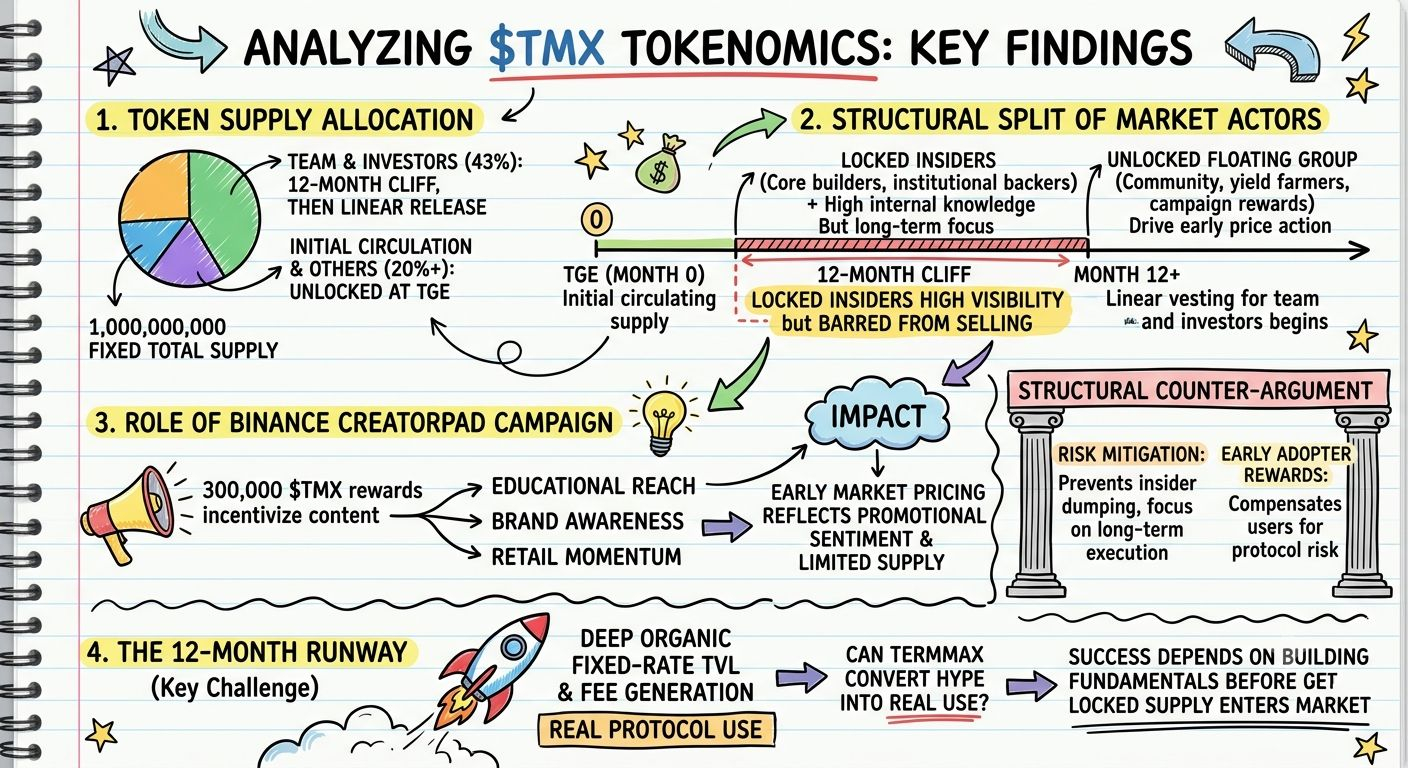
Analyzing $TMX Tokenomics: Information Asymmetry, Vesting Cliffs, and the Binance CreatorPad Dynamic
The token generation structure for TermMax ($TMX) presents a compelling case study in market design, liquidity management, and early-stage price discovery. Out of the 1,000,000,000 fixed total supply, roughly 20% enters initial circulation at TGE, while the Team (15%) and early Investors (28%) face a strict 12-month cliff followed by linear monthly releases.
This architecture creates a distinct structural split between market actors:
The Locked Insiders: The core builders and institutional backers hold the clearest visibility into internal operations, real protocol revenue, and borrower demand—yet they are structurally barred from selling for an entire year.
The Unlocked Floating Group: Early community participants, yield farmers, initial liquidity providers, and campaign reward recipients drive initial price formation before there is sufficient long-term data to prove organic demand for fixed-rate lending primitives.
The Role of the Binance CreatorPad Campaign
A major factor shaping early retail sentiment is the active 300,000 $TMX Binance CreatorPad campaign hosted on Binance Square. By incentivizing creators and analysts to break down TermMax’s custom AMM range orders and fixed-rate mechanics, CreatorPad drives immediate educational reach and brand awareness across the Web3 ecosystem.
However, from a purely analytical standpoint, this setup means early market pricing heavily reflects campaign-driven retail momentum, limited initial supply constraints, and promotional sentiment rather than fully established protocol cash flows. Early unlocked holders can derisk into thin initial liquidity, while the group with the highest fundamental conviction remains locked on the sidelines.
The Structural Counter-Argument
This lock-up and distribution strategy serves an important purpose. A 12-month cliff is a proven risk-mitigation tool that prevents insider dumping and forces core contributors to focus on multi-year execution.
#TermMax #CreatorPad @termmax
Analyzing $TMX Tokenomics: Information Asymmetry, Vesting Cliffs, and the Binance CreatorPad Dynamic
The token generation structure for TermMax ($TMX) presents a compelling case study in market design, liquidity management, and early-stage price discovery. Out of the 1,000,000,000 fixed total supply, roughly 20% enters initial circulation at TGE, while the Team (15%) and early Investors (28%) face a strict 12-month cliff followed by linear monthly releases.
This architecture creates a distinct structural split between market actors:
The Locked Insiders: The core builders and institutional backers hold the clearest visibility into internal operations, real protocol revenue, and borrower demand—yet they are structurally barred from selling for an entire year.
The Unlocked Floating Group: Early community participants, yield farmers, initial liquidity providers, and campaign reward recipients drive initial price formation before there is sufficient long-term data to prove organic demand for fixed-rate lending primitives.
The Role of the Binance CreatorPad Campaign
A major factor shaping early retail sentiment is the active 300,000 $TMX Binance CreatorPad campaign hosted on Binance Square. By incentivizing creators and analysts to break down TermMax’s custom AMM range orders and fixed-rate mechanics, CreatorPad drives immediate educational reach and brand awareness across the Web3 ecosystem.
However, from a purely analytical standpoint, this setup means early market pricing heavily reflects campaign-driven retail momentum, limited initial supply constraints, and promotional sentiment rather than fully established protocol cash flows. Early unlocked holders can derisk into thin initial liquidity, while the group with the highest fundamental conviction remains locked on the sidelines.
The Structural Counter-Argument
This lock-up and distribution strategy serves an important purpose. A 12-month cliff is a proven risk-mitigation tool that prevents insider dumping and forces core contributors to focus on multi-year execution.
#TermMax #CreatorPad @TermMax
The token generation structure for TermMax ($TMX) presents a compelling case study in market design, liquidity management, and early-stage price discovery. Out of the 1,000,000,000 fixed total supply, roughly 20% enters initial circulation at TGE, while the Team (15%) and early Investors (28%) face a strict 12-month cliff followed by linear monthly releases.
This architecture creates a distinct structural split between market actors:
The Locked Insiders: The core builders and institutional backers hold the clearest visibility into internal operations, real protocol revenue, and borrower demand—yet they are structurally barred from selling for an entire year.
The Unlocked Floating Group: Early community participants, yield farmers, initial liquidity providers, and campaign reward recipients drive initial price formation before there is sufficient long-term data to prove organic demand for fixed-rate lending primitives.
The Role of the Binance CreatorPad Campaign
A major factor shaping early retail sentiment is the active 300,000 $TMX Binance CreatorPad campaign hosted on Binance Square. By incentivizing creators and analysts to break down TermMax’s custom AMM range orders and fixed-rate mechanics, CreatorPad drives immediate educational reach and brand awareness across the Web3 ecosystem.
However, from a purely analytical standpoint, this setup means early market pricing heavily reflects campaign-driven retail momentum, limited initial supply constraints, and promotional sentiment rather than fully established protocol cash flows. Early unlocked holders can derisk into thin initial liquidity, while the group with the highest fundamental conviction remains locked on the sidelines.
The Structural Counter-Argument
This lock-up and distribution strategy serves an important purpose. A 12-month cliff is a proven risk-mitigation tool that prevents insider dumping and forces core contributors to focus on multi-year execution.
#TermMax #CreatorPad @TermMax
1
1
159
·
--
#dusk $DUSK @Dusk_Foundation
Theo bạn, tính năng cụ thể nào trong thiết kế của Dusk khiến bạn lạc quan nhất về khả năng được các tổ chức tài chính ứng dụng?
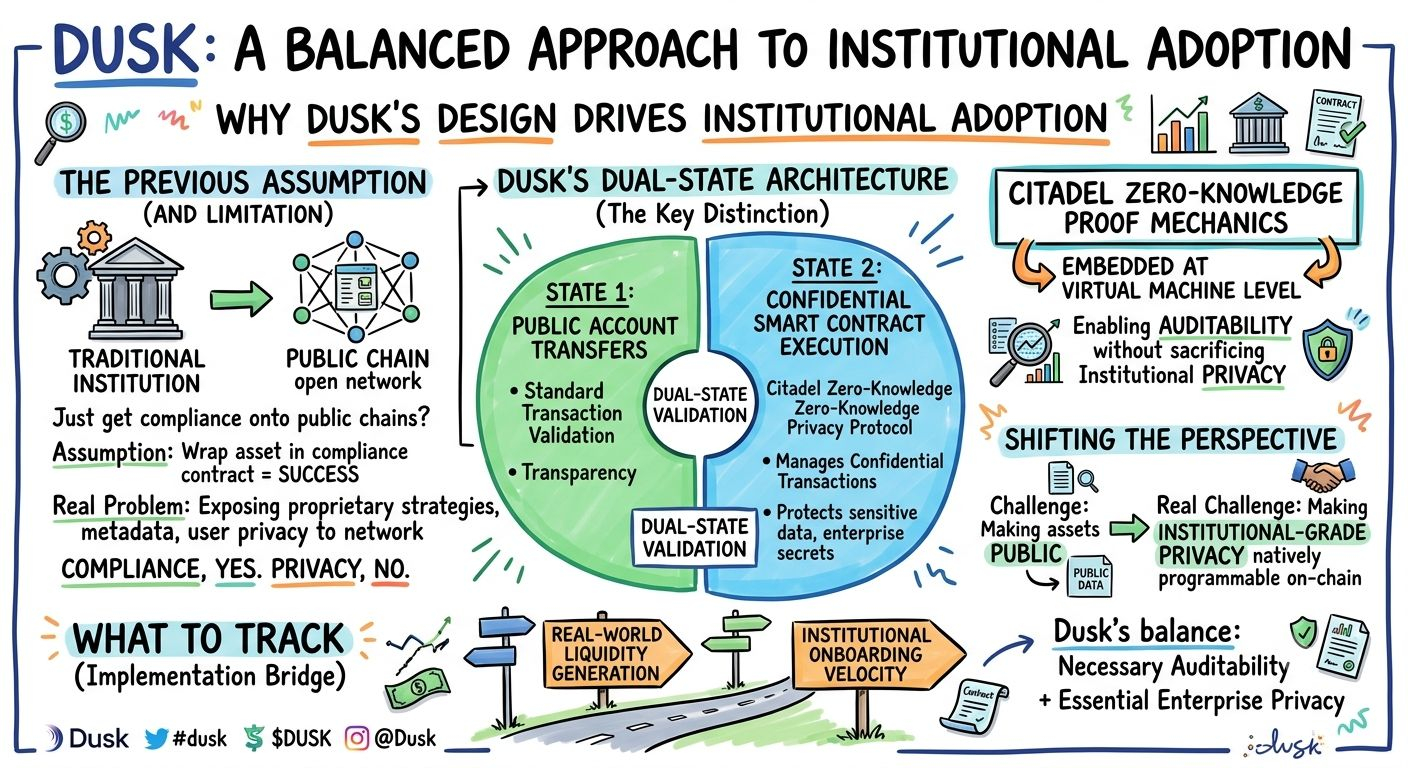
Trong một thời gian dài, tôi từng nghĩ rào cản lớn nhất đối với việc tích hợp Web3 vào các tổ chức tài chính chỉ đơn giản là đưa được khung pháp lý lên blockchain. Nếu có thể đóng gói một tài sản tài chính truyền thống vào một hợp đồng thông minh tuân thủ quy định, thì phần việc khó khăn nhất xem như đã xong.
Tuy nhiên, khi phân tích kiến trúc của Dusk, tôi đã phải suy nghĩ lại về giả định đó. Điều khiến tôi chú ý là cách Dusk phân tách giữa việc xác thực giao dịch công khai và việc thực thi hợp đồng thông minh bảo mật thông qua kiến trúc hai trạng thái (dual-state architecture). Một mặt xử lý các giao dịch chuyển tiền tài khoản công khai, trong khi giao thức bảo mật zero-knowledge Citadel đảm nhận các giao dịch bảo mật mà không làm lộ dữ liệu người dùng nhạy cảm hay bí mật kinh doanh của doanh nghiệp.
Sự khác biệt đó tuy nhỏ nhưng rất quan trọng. Nếu một tổ chức chỉ sử dụng các hợp đồng thông minh công khai, họ phải đối mặt với rủi ro lộ chiến lược tài chính nội bộ, dữ liệu giao dịch và quyền riêng tư của người dùng cho toàn bộ mạng lưới. Ngược lại, tính minh bạch bị ẩn hoàn toàn sẽ cản trở khả năng kiểm toán cần thiết. Dusk giải quyết bài toán này bằng cách tích hợp trực tiếp cơ chế bằng chứng không tiết lộ thông tin (zero-knowledge proof) vào cấp độ máy ảo, cho phép kiểm toán mà không phải đánh đổi quyền riêng tư cấp tổ chức.
#dusk $DUSK @Dusk
Theo bạn, tính năng cụ thể nào trong thiết kế của Dusk khiến bạn lạc quan nhất về khả năng được các tổ chức tài chính ứng dụng?
Trong một thời gian dài, tôi từng nghĩ rào cản lớn nhất đối với việc tích hợp Web3 vào các tổ chức tài chính chỉ đơn giản là đưa được khung pháp lý lên blockchain. Nếu có thể đóng gói một tài sản tài chính truyền thống vào một hợp đồng thông minh tuân thủ quy định, thì phần việc khó khăn nhất xem như đã xong.
Tuy nhiên, khi phân tích kiến trúc của Dusk, tôi đã phải suy nghĩ lại về giả định đó. Điều khiến tôi chú ý là cách Dusk phân tách giữa việc xác thực giao dịch công khai và việc thực thi hợp đồng thông minh bảo mật thông qua kiến trúc hai trạng thái (dual-state architecture). Một mặt xử lý các giao dịch chuyển tiền tài khoản công khai, trong khi giao thức bảo mật zero-knowledge Citadel đảm nhận các giao dịch bảo mật mà không làm lộ dữ liệu người dùng nhạy cảm hay bí mật kinh doanh của doanh nghiệp.
Sự khác biệt đó tuy nhỏ nhưng rất quan trọng. Nếu một tổ chức chỉ sử dụng các hợp đồng thông minh công khai, họ phải đối mặt với rủi ro lộ chiến lược tài chính nội bộ, dữ liệu giao dịch và quyền riêng tư của người dùng cho toàn bộ mạng lưới. Ngược lại, tính minh bạch bị ẩn hoàn toàn sẽ cản trở khả năng kiểm toán cần thiết. Dusk giải quyết bài toán này bằng cách tích hợp trực tiếp cơ chế bằng chứng không tiết lộ thông tin (zero-knowledge proof) vào cấp độ máy ảo, cho phép kiểm toán mà không phải đánh đổi quyền riêng tư cấp tổ chức.
Theo bạn, tính năng cụ thể nào trong thiết kế của Dusk khiến bạn lạc quan nhất về khả năng được các tổ chức tài chính ứng dụng?
Trong một thời gian dài, tôi từng nghĩ rào cản lớn nhất đối với việc tích hợp Web3 vào các tổ chức tài chính chỉ đơn giản là đưa được khung pháp lý lên blockchain. Nếu có thể đóng gói một tài sản tài chính truyền thống vào một hợp đồng thông minh tuân thủ quy định, thì phần việc khó khăn nhất xem như đã xong.
Tuy nhiên, khi phân tích kiến trúc của Dusk, tôi đã phải suy nghĩ lại về giả định đó. Điều khiến tôi chú ý là cách Dusk phân tách giữa việc xác thực giao dịch công khai và việc thực thi hợp đồng thông minh bảo mật thông qua kiến trúc hai trạng thái (dual-state architecture). Một mặt xử lý các giao dịch chuyển tiền tài khoản công khai, trong khi giao thức bảo mật zero-knowledge Citadel đảm nhận các giao dịch bảo mật mà không làm lộ dữ liệu người dùng nhạy cảm hay bí mật kinh doanh của doanh nghiệp.
Sự khác biệt đó tuy nhỏ nhưng rất quan trọng. Nếu một tổ chức chỉ sử dụng các hợp đồng thông minh công khai, họ phải đối mặt với rủi ro lộ chiến lược tài chính nội bộ, dữ liệu giao dịch và quyền riêng tư của người dùng cho toàn bộ mạng lưới. Ngược lại, tính minh bạch bị ẩn hoàn toàn sẽ cản trở khả năng kiểm toán cần thiết. Dusk giải quyết bài toán này bằng cách tích hợp trực tiếp cơ chế bằng chứng không tiết lộ thông tin (zero-knowledge proof) vào cấp độ máy ảo, cho phép kiểm toán mà không phải đánh đổi quyền riêng tư cấp tổ chức.
3
4
214
·
--
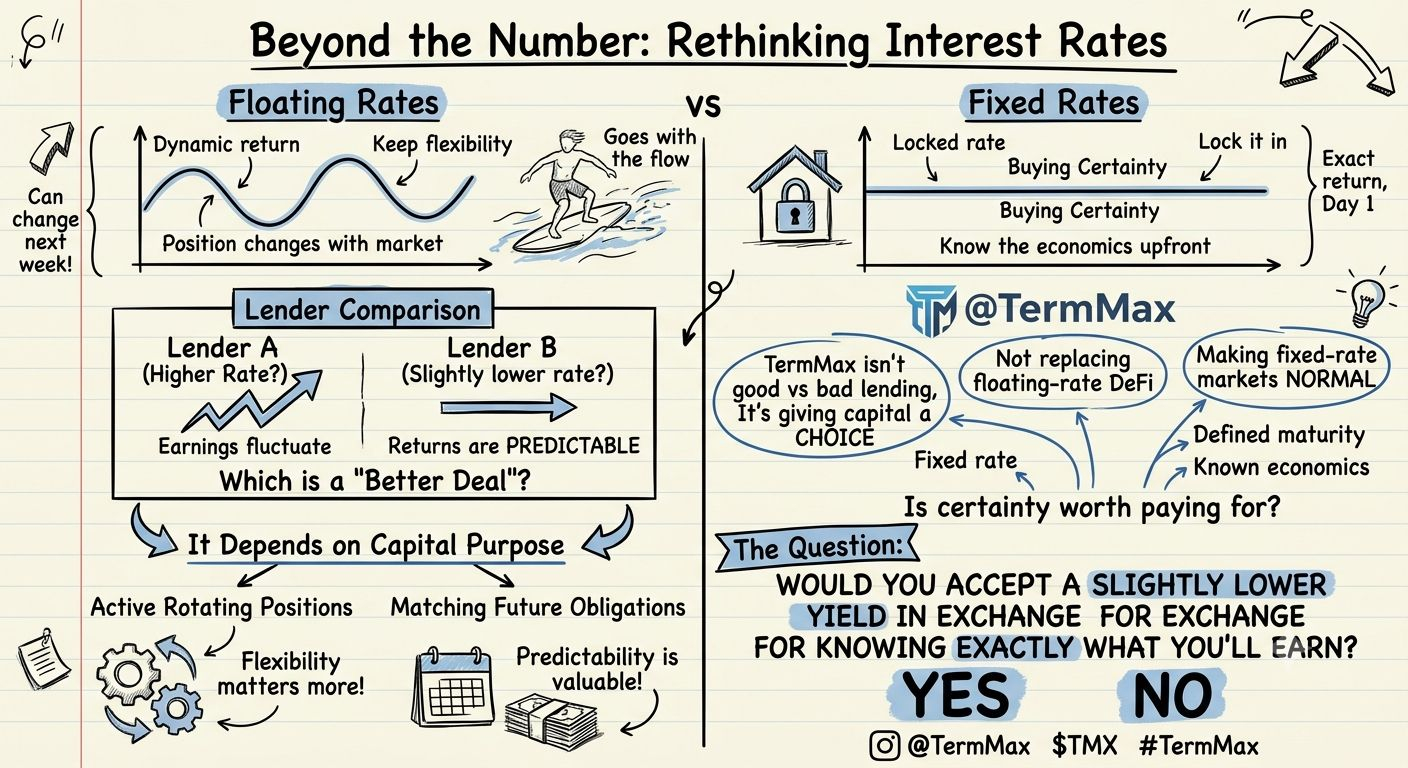
I used to think interest rates were mainly a number to compare.
5% vs 7%.
8% vs 10%.
Higher usually wins.
The more I look at fixed-rate markets like @termmax , the less simple that feels.
A rate isn't only a return.
It's also a commitment.
If I lend at a floating rate, I keep flexibility.
If market conditions change, my position changes with them.
But if I lock a fixed rate, I'm buying something else:
certainty.
I know the economics before the position starts.
That can matter more than squeezing out the highest possible yield.
Imagine two lenders.
Lender A earns a higher rate today, but the rate can change next week.
Lender B earns slightly less, but knows the exact return and maturity from day one.
Which one is actually getting the better deal?
I don't think there's a universal answer.
It depends on what the capital is for.
If I'm actively rotating positions, flexibility probably matters more.
If I'm matching lending with a future obligation, predictability becomes much more valuable.
That's why TermMax is interesting to me.
The product isn't really asking DeFi to choose between good and bad lending.
It's giving capital another choice.
Fixed rate.
Defined maturity.
Known economics.
And then the market decides when that certainty is worth paying for.
Maybe that's the bigger opportunity here.
Not replacing floating-rate DeFi.
Making fixed-rate markets normal enough that users can choose the financing structure that actually fits their strategy.
So here's my question:
Would you accept a slightly lower yield in exchange for knowing exactly what you'll earn?
Yes or no?
@termmax $TMX #TermMax
I used to think interest rates were mainly a number to compare.
5% vs 7%.
8% vs 10%.
Higher usually wins.
The more I look at fixed-rate markets like @TermMax , the less simple that feels.
A rate isn't only a return.
It's also a commitment.
If I lend at a floating rate, I keep flexibility.
If market conditions change, my position changes with them.
But if I lock a fixed rate, I'm buying something else:
certainty.
I know the economics before the position starts.
That can matter more than squeezing out the highest possible yield.
Imagine two lenders.
Lender A earns a higher rate today, but the rate can change next week.
Lender B earns slightly less, but knows the exact return and maturity from day one.
Which one is actually getting the better deal?
I don't think there's a universal answer.
It depends on what the capital is for.
If I'm actively rotating positions, flexibility probably matters more.
If I'm matching lending with a future obligation, predictability becomes much more valuable.
That's why TermMax is interesting to me.
The product isn't really asking DeFi to choose between good and bad lending.
It's giving capital another choice.
Fixed rate.
Defined maturity.
Known economics.
And then the market decides when that certainty is worth paying for.
Maybe that's the bigger opportunity here.
Not replacing floating-rate DeFi.
Making fixed-rate markets normal enough that users can choose the financing structure that actually fits their strategy.
So here's my question:
Would you accept a slightly lower yield in exchange for knowing exactly what you'll earn?
Yes or no?
@TermMax $TMX #TermMax
5% vs 7%.
8% vs 10%.
Higher usually wins.
The more I look at fixed-rate markets like @TermMax , the less simple that feels.
A rate isn't only a return.
It's also a commitment.
If I lend at a floating rate, I keep flexibility.
If market conditions change, my position changes with them.
But if I lock a fixed rate, I'm buying something else:
certainty.
I know the economics before the position starts.
That can matter more than squeezing out the highest possible yield.
Imagine two lenders.
Lender A earns a higher rate today, but the rate can change next week.
Lender B earns slightly less, but knows the exact return and maturity from day one.
Which one is actually getting the better deal?
I don't think there's a universal answer.
It depends on what the capital is for.
If I'm actively rotating positions, flexibility probably matters more.
If I'm matching lending with a future obligation, predictability becomes much more valuable.
That's why TermMax is interesting to me.
The product isn't really asking DeFi to choose between good and bad lending.
It's giving capital another choice.
Fixed rate.
Defined maturity.
Known economics.
And then the market decides when that certainty is worth paying for.
Maybe that's the bigger opportunity here.
Not replacing floating-rate DeFi.
Making fixed-rate markets normal enough that users can choose the financing structure that actually fits their strategy.
So here's my question:
Would you accept a slightly lower yield in exchange for knowing exactly what you'll earn?
Yes or no?
@TermMax $TMX #TermMax
214
·
--
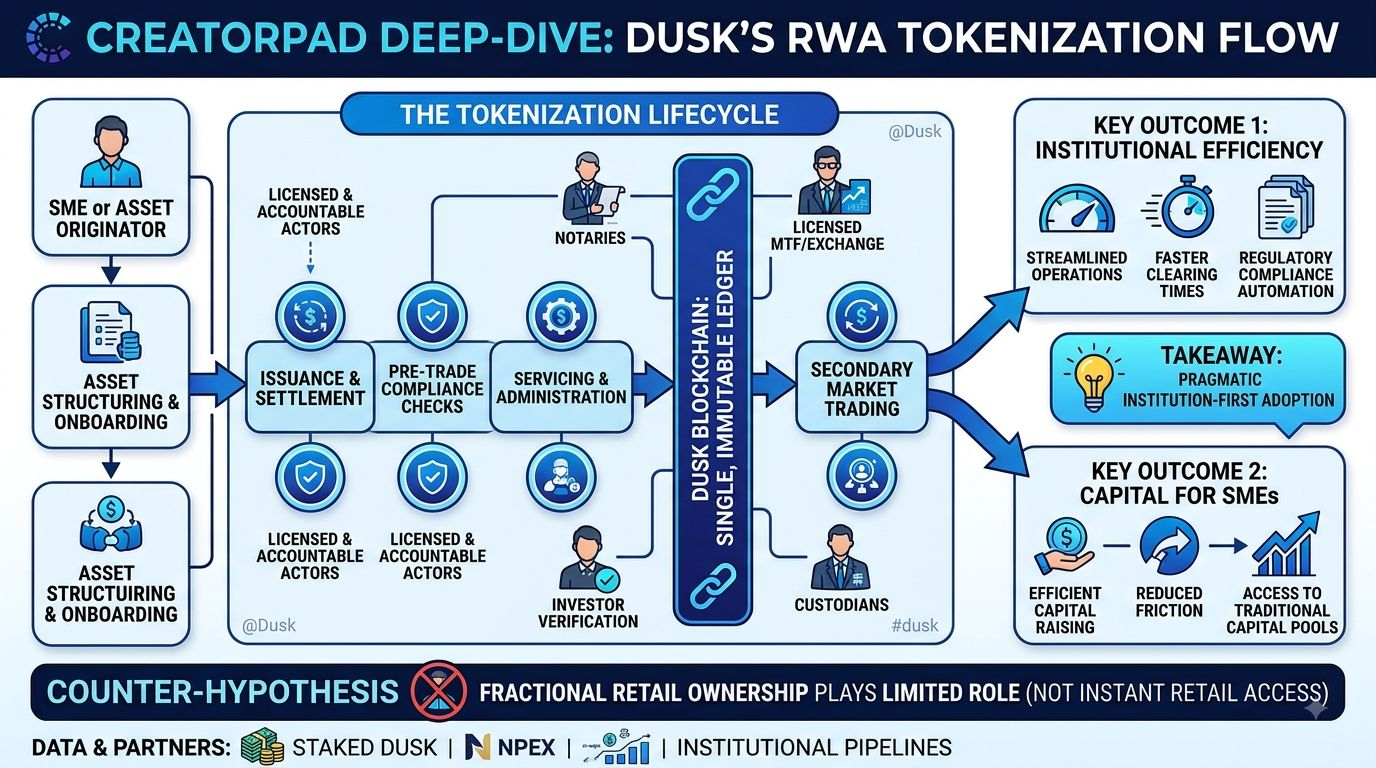
Doing a bit of a deep-dive on CreatorPad’s coverage of Dusk and $DUSK today, and one specific takeaway from their breakdown on SME tokenization caught me off guard — the argument that "fractional ownership plays a limited role" in real-world adoption. Not the standard speculative hype you usually expect around tokenized real-world assets (RWAs).
What makes you pause is how grounded the infrastructure actually is. Looking at the operational architecture outlined in the CreatorPad write-up — from asset structuring and onboarding to issuance, settlement, servicing, and secondary trading — every single stage remains bound to licensed, accountable actors. Notaries handling corporate share transfer, licensed MTF/exchange venues, and strict investor eligibility verification prior to settlement. The blockchain isn't acting as a magic wand to erase regulatory checkpoints; it's serving as a single, immutable ledger that saves those checkpoints from maintaining dozens of fragmented database records.
With hundreds of millions in DUSK staked and confirmed pipelines in institutional issuance through licensed partners like NPEX, there is real weight behind the setup.
The broad assumption has always been that "tokenizing private markets" meant instantly opening retail access to exclusive private equity deals. The reality highlight by CreatorPad is much more pragmatically institution-first: institutions get streamlined operational efficiency and faster clearing times, while local legal frameworks still dictate who gets entry to the deal room. "Opening markets to SMEs" ends up meaning capital reaches growing companies with far less friction,
It’s hard to fault the logic — building for existing institutional compliance is likely the only way tranches of private capital actually move on-chain. Still, it leaves an interesting open question: if traditional compliance gates every single transition point regardless, where does the end-user or everyday market participant actually start feeling the structural difference of an on-chain ecosystem?
@Dusk_Foundation
#dusk
$DUSK
Doing a bit of a deep-dive on CreatorPad’s coverage of Dusk and $DUSK today, and one specific takeaway from their breakdown on SME tokenization caught me off guard — the argument that "fractional ownership plays a limited role" in real-world adoption. Not the standard speculative hype you usually expect around tokenized real-world assets (RWAs).
What makes you pause is how grounded the infrastructure actually is. Looking at the operational architecture outlined in the CreatorPad write-up — from asset structuring and onboarding to issuance, settlement, servicing, and secondary trading — every single stage remains bound to licensed, accountable actors. Notaries handling corporate share transfer, licensed MTF/exchange venues, and strict investor eligibility verification prior to settlement. The blockchain isn't acting as a magic wand to erase regulatory checkpoints; it's serving as a single, immutable ledger that saves those checkpoints from maintaining dozens of fragmented database records.
With hundreds of millions in DUSK staked and confirmed pipelines in institutional issuance through licensed partners like NPEX, there is real weight behind the setup.
The broad assumption has always been that "tokenizing private markets" meant instantly opening retail access to exclusive private equity deals. The reality highlight by CreatorPad is much more pragmatically institution-first: institutions get streamlined operational efficiency and faster clearing times, while local legal frameworks still dictate who gets entry to the deal room. "Opening markets to SMEs" ends up meaning capital reaches growing companies with far less friction,
It’s hard to fault the logic — building for existing institutional compliance is likely the only way tranches of private capital actually move on-chain. Still, it leaves an interesting open question: if traditional compliance gates every single transition point regardless, where does the end-user or everyday market participant actually start feeling the structural difference of an on-chain ecosystem?
@Dusk
#dusk
$DUSK
What makes you pause is how grounded the infrastructure actually is. Looking at the operational architecture outlined in the CreatorPad write-up — from asset structuring and onboarding to issuance, settlement, servicing, and secondary trading — every single stage remains bound to licensed, accountable actors. Notaries handling corporate share transfer, licensed MTF/exchange venues, and strict investor eligibility verification prior to settlement. The blockchain isn't acting as a magic wand to erase regulatory checkpoints; it's serving as a single, immutable ledger that saves those checkpoints from maintaining dozens of fragmented database records.
With hundreds of millions in DUSK staked and confirmed pipelines in institutional issuance through licensed partners like NPEX, there is real weight behind the setup.
The broad assumption has always been that "tokenizing private markets" meant instantly opening retail access to exclusive private equity deals. The reality highlight by CreatorPad is much more pragmatically institution-first: institutions get streamlined operational efficiency and faster clearing times, while local legal frameworks still dictate who gets entry to the deal room. "Opening markets to SMEs" ends up meaning capital reaches growing companies with far less friction,
It’s hard to fault the logic — building for existing institutional compliance is likely the only way tranches of private capital actually move on-chain. Still, it leaves an interesting open question: if traditional compliance gates every single transition point regardless, where does the end-user or everyday market participant actually start feeling the structural difference of an on-chain ecosystem?
@Dusk
#dusk
$DUSK
2
1
166
Log in to explore more content
Join global crypto users on Binance Square
⚡️ Get latest and useful information about crypto.
💬 Trusted by the world’s largest crypto exchange.
👍 Discover real insights from verified creators.
Email / Phone number
Trending Topics
StrategyStriveAdd2305BitcoinThisWeek
6,193 views
279 Discussing
🔥 2,305 BTC In One Week — Watch $BTC
Corporate Bitcoin treasuries continue expanding.
Strategy + Strive added 2,305 $BTC, taking their combined reported holdings to about 872K BTC.
This doesn't guarantee where price goes next — but it shows why Bitcoin's fixed supply remains a major part of the investment discussion.
Spot $BTC. Real ownership. No leverage required. 📊🟠
#strategystriveadd2305bitcointhisweek
CryptoMahibaloch
·1 Likes
·1.4k views
TrumpRejectsIranHormuzReopening
11,492 views
348 Discussing
CircleTetherFreezeBitgetHackerWallet
34,028 views
505 Discussing