

Haseeb Ghiffari
1.3k Posts
Haseeb Ghiffari
Report
Block User
98 Following
16.7K+ Followers
1.5K+ Liked
Posts
All
Quotes
Live
PINNED
·
--
Bullish
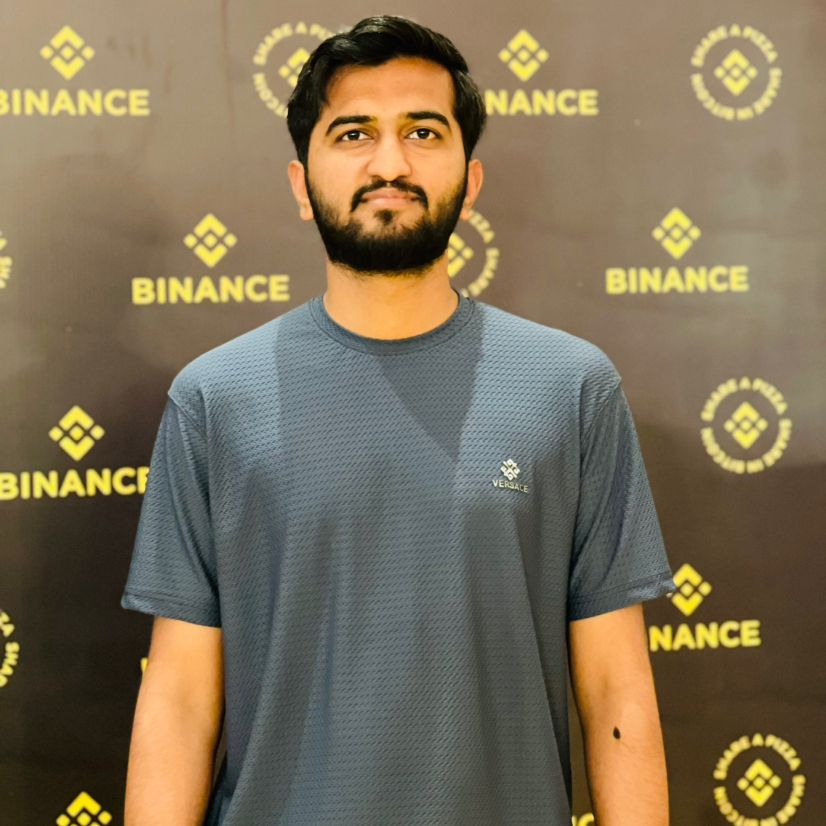
Binance Pizza Day in Lahore and I was there 🇵🇰
Met the community, heard the stories, felt the conviction. This is why we stay.
16 years ago a man paid 10,000 $BTC for pizza. Today we celebrate him like a legend. Rightfully so.
Still here. Still building. Still believing. 🧡
#BinancePizzaDay #BinancePizza #Binancepakistan #communitymeetup
Binance Pizza Day in Lahore and I was there 🇵🇰
Met the community, heard the stories, felt the conviction. This is why we stay.
16 years ago a man paid 10,000 $BTC for pizza. Today we celebrate him like a legend. Rightfully so.
Still here. Still building. Still believing. 🧡
#BinancePizzaDay #BinancePizza #Binancepakistan #communitymeetup
Met the community, heard the stories, felt the conviction. This is why we stay.
16 years ago a man paid 10,000 $BTC for pizza. Today we celebrate him like a legend. Rightfully so.
Still here. Still building. Still believing. 🧡
#BinancePizzaDay #BinancePizza #Binancepakistan #communitymeetup
8
12
209
·
--
Bullish
Noticed something odd going through Dusk's recent activity: the Web Wallet recipient blocklist went live almost immediately after the Aug 16 incident, but the bridge itself is still sitting paused a week and a half later. That gap is the thing I kept turning over.
Shipping a blocklist is fast, it's code. Reopening a bridge means trusting the same operational setup that just got compromised, or rebuilding parts of it, and that takes longer than a patch note. $DUSK team flagged a small number of transactions during the incident window and said no user losses are expected, which I believe, but "no losses expected" and "safe to reopen" are clearly two different bars internally.
It's a small thing, but it made me more comfortable with #dusk process than I expected. Slow caution after an incident reads better to me than a quick all-clear.
Still, a live product with a bridge that's been down for over a week is its own kind of signal. @Dusk_Foundation hasn't said when that changes.
Noticed something odd going through Dusk's recent activity: the Web Wallet recipient blocklist went live almost immediately after the Aug 16 incident, but the bridge itself is still sitting paused a week and a half later. That gap is the thing I kept turning over.
Shipping a blocklist is fast, it's code. Reopening a bridge means trusting the same operational setup that just got compromised, or rebuilding parts of it, and that takes longer than a patch note. $DUSK team flagged a small number of transactions during the incident window and said no user losses are expected, which I believe, but "no losses expected" and "safe to reopen" are clearly two different bars internally.
It's a small thing, but it made me more comfortable with #dusk process than I expected. Slow caution after an incident reads better to me than a quick all-clear.
Still, a live product with a bridge that's been down for over a week is its own kind of signal. @Dusk hasn't said when that changes.
Shipping a blocklist is fast, it's code. Reopening a bridge means trusting the same operational setup that just got compromised, or rebuilding parts of it, and that takes longer than a patch note. $DUSK team flagged a small number of transactions during the incident window and said no user losses are expected, which I believe, but "no losses expected" and "safe to reopen" are clearly two different bars internally.
It's a small thing, but it made me more comfortable with #dusk process than I expected. Slow caution after an incident reads better to me than a quick all-clear.
Still, a live product with a bridge that's been down for over a week is its own kind of signal. @Dusk hasn't said when that changes.
4
120
·
--
Bullish
Spent some time on a Dusk task for CreatorPad and the thing I kept chewing on afterward wasn't the tech, it was the sequencing. On August 16, bridge addresses got flagged, disabled, and recycled before most users even noticed anything was wrong. A blocklist went up. Binance got looped in only after part of the suspicious flow touched their platform.
So the order was: internal detection, internal containment, then external coordination. Regular users found out last, if at all.
That's not necessarily bad you don't want a bridge incident trending before it's contained. But it did shift how I think about "self-custody" claims around $DUSK . Self-custody is real for your funds, sure, but the response to a threat is still very centralized in practice. Someone with admin-level visibility saw this before anyone on-chain did.
Not a criticism exactly. Just noting the gap between the privacy pitch and how incident response actually works.
#dusk @Dusk_Foundation
Spent some time on a Dusk task for CreatorPad and the thing I kept chewing on afterward wasn't the tech, it was the sequencing. On August 16, bridge addresses got flagged, disabled, and recycled before most users even noticed anything was wrong. A blocklist went up. Binance got looped in only after part of the suspicious flow touched their platform.
So the order was: internal detection, internal containment, then external coordination. Regular users found out last, if at all.
That's not necessarily bad you don't want a bridge incident trending before it's contained. But it did shift how I think about "self-custody" claims around $DUSK . Self-custody is real for your funds, sure, but the response to a threat is still very centralized in practice. Someone with admin-level visibility saw this before anyone on-chain did.
Not a criticism exactly. Just noting the gap between the privacy pitch and how incident response actually works.
#dusk @Dusk
So the order was: internal detection, internal containment, then external coordination. Regular users found out last, if at all.
That's not necessarily bad you don't want a bridge incident trending before it's contained. But it did shift how I think about "self-custody" claims around $DUSK . Self-custody is real for your funds, sure, but the response to a threat is still very centralized in practice. Someone with admin-level visibility saw this before anyone on-chain did.
Not a criticism exactly. Just noting the gap between the privacy pitch and how incident response actually works.
#dusk @Dusk
4
138
·
--
Bullish
Checked in on @Dusk_Foundation 's bridge status again this week and it's still closed. Same message as before, security review ongoing, no confirmed reopening date yet. At this point that's the more interesting data point than the incident itself.
$DUSK 's core chain never stopped, that part was clear early. What's less clear is how "temporary" a pause like this actually is when it's tied to a bigger launch, DuskEVM in this case. The team explicitly linked the bridge reopening to getting that launch right too, so the timeline isn't just about patching a wallet, it's about not rushing two things at once.
I went in expecting a quick patch-and-reopen story. Instead I'm watching a team choose to sit in the uncomfortable middle, publicly, for longer than most projects would tolerate.
Not sure yet if that's discipline or just how long these reviews genuinely take. Guess that's the thing you can't verify from the outside.
#dusk
Checked in on @Dusk 's bridge status again this week and it's still closed. Same message as before, security review ongoing, no confirmed reopening date yet. At this point that's the more interesting data point than the incident itself.
$DUSK 's core chain never stopped, that part was clear early. What's less clear is how "temporary" a pause like this actually is when it's tied to a bigger launch, DuskEVM in this case. The team explicitly linked the bridge reopening to getting that launch right too, so the timeline isn't just about patching a wallet, it's about not rushing two things at once.
I went in expecting a quick patch-and-reopen story. Instead I'm watching a team choose to sit in the uncomfortable middle, publicly, for longer than most projects would tolerate.
Not sure yet if that's discipline or just how long these reviews genuinely take. Guess that's the thing you can't verify from the outside.
#dusk
$DUSK 's core chain never stopped, that part was clear early. What's less clear is how "temporary" a pause like this actually is when it's tied to a bigger launch, DuskEVM in this case. The team explicitly linked the bridge reopening to getting that launch right too, so the timeline isn't just about patching a wallet, it's about not rushing two things at once.
I went in expecting a quick patch-and-reopen story. Instead I'm watching a team choose to sit in the uncomfortable middle, publicly, for longer than most projects would tolerate.
Not sure yet if that's discipline or just how long these reviews genuinely take. Guess that's the thing you can't verify from the outside.
#dusk
4
107
·
--
Bullish
Went looking for something to write about $DUSK for CreatorPad and landed on @Dusk_Foundation bridge incident notice from August 16 instead of the roadmap pages. The phrase that got me: "a team-managed wallet used in bridge operations." For a project that leans so hard on decentralized, compliant, self-custodial messaging, that's a fairly plain admission that a human-controlled key sits somewhere in the bridge path.
Nothing catastrophic happened, by their own account. Addresses were disabled and recycled, bridge services paused, a small set of transactions occurred in the window, and coordination with Binance closed off part of the flow. DuskDS itself wasn't touched.
What changed for me wasn't the severity, it was the framing. I'd been treating "self-custody" as something that applied everywhere in the stack. It applies to the user's wallet. It doesn't automatically apply to the infrastructure moving assets between chains on their behalf, and that's a distinction most users, including me, gloss over.
Bridge is still offline while they finish hardening it. Not sure that gap gets closed just by better monitoring.
#dusk @Dusk_Foundation
Went looking for something to write about $DUSK for CreatorPad and landed on @Dusk bridge incident notice from August 16 instead of the roadmap pages. The phrase that got me: "a team-managed wallet used in bridge operations." For a project that leans so hard on decentralized, compliant, self-custodial messaging, that's a fairly plain admission that a human-controlled key sits somewhere in the bridge path.
Nothing catastrophic happened, by their own account. Addresses were disabled and recycled, bridge services paused, a small set of transactions occurred in the window, and coordination with Binance closed off part of the flow. DuskDS itself wasn't touched.
What changed for me wasn't the severity, it was the framing. I'd been treating "self-custody" as something that applied everywhere in the stack. It applies to the user's wallet. It doesn't automatically apply to the infrastructure moving assets between chains on their behalf, and that's a distinction most users, including me, gloss over.
Bridge is still offline while they finish hardening it. Not sure that gap gets closed just by better monitoring.
#dusk @Dusk
Nothing catastrophic happened, by their own account. Addresses were disabled and recycled, bridge services paused, a small set of transactions occurred in the window, and coordination with Binance closed off part of the flow. DuskDS itself wasn't touched.
What changed for me wasn't the severity, it was the framing. I'd been treating "self-custody" as something that applied everywhere in the stack. It applies to the user's wallet. It doesn't automatically apply to the infrastructure moving assets between chains on their behalf, and that's a distinction most users, including me, gloss over.
Bridge is still offline while they finish hardening it. Not sure that gap gets closed just by better monitoring.
#dusk @Dusk
5
142
·
--
Bullish
Noticed my bridge transfer wasn't confirming and went digging. The Dusk team had disabled bridge operations on August 16 after spotting irregular activity tied to a wallet they control, then recycled the addresses before reopening. $DUSK #dusk @Dusk_Foundation
What got me thinking wasn't the exploit attempt, that happens everywhere, it was how fast the response looked from the outside. Pause, contain, recycle, resume. No panic, no drawn-out postmortem thread. Almost procedural.
I'd assumed a project this focused on compliance would treat every incident as a disclosure event first. Instead it read more like internal ops handling a routine risk, and the community mostly found out after the fact through wallet monitoring rather than an announcement.
Not sure if that's discipline or just a small enough incident that it didn't need a bigger response. Either way, it's a different rhythm than I expected from a "regulated onchain finance" project.
Noticed my bridge transfer wasn't confirming and went digging. The Dusk team had disabled bridge operations on August 16 after spotting irregular activity tied to a wallet they control, then recycled the addresses before reopening. $DUSK #dusk @Dusk
What got me thinking wasn't the exploit attempt, that happens everywhere, it was how fast the response looked from the outside. Pause, contain, recycle, resume. No panic, no drawn-out postmortem thread. Almost procedural.
I'd assumed a project this focused on compliance would treat every incident as a disclosure event first. Instead it read more like internal ops handling a routine risk, and the community mostly found out after the fact through wallet monitoring rather than an announcement.
Not sure if that's discipline or just a small enough incident that it didn't need a bigger response. Either way, it's a different rhythm than I expected from a "regulated onchain finance" project.
What got me thinking wasn't the exploit attempt, that happens everywhere, it was how fast the response looked from the outside. Pause, contain, recycle, resume. No panic, no drawn-out postmortem thread. Almost procedural.
I'd assumed a project this focused on compliance would treat every incident as a disclosure event first. Instead it read more like internal ops handling a routine risk, and the community mostly found out after the fact through wallet monitoring rather than an announcement.
Not sure if that's discipline or just a small enough incident that it didn't need a bigger response. Either way, it's a different rhythm than I expected from a "regulated onchain finance" project.
3
5
231
·
--
Bullish
Went through a CreatorPad task on $DUSK and ended up stuck on something small. @Dusk_Foundation own update on the August 16 bridge pause mentioned the suspicious activity was tied to a "team-managed wallet used in bridge operations." #dusk
I'd assumed the bridge, given how much Dusk talks about compliance and institutional-grade infrastructure, would be further removed from any single point of failure like that. It wasn't. A wallet controlled by the team was close enough to bridge flows that its compromise attempt was enough to force a full pause.
My reaction was mixed. On one hand, pausing fast and recycling the addresses is the correct move, and no funds were lost. On the other, it's a reminder that "regulated onchain finance" still runs through very traditional operational security at certain points, no matter how much ZK machinery sits underneath.
Not sure that's a flaw exactly. Maybe it's just what compliance-first infrastructure actually looks like once you're past the pitch deck. Still turning that over.
Went through a CreatorPad task on $DUSK and ended up stuck on something small. @Dusk own update on the August 16 bridge pause mentioned the suspicious activity was tied to a "team-managed wallet used in bridge operations." #dusk
I'd assumed the bridge, given how much Dusk talks about compliance and institutional-grade infrastructure, would be further removed from any single point of failure like that. It wasn't. A wallet controlled by the team was close enough to bridge flows that its compromise attempt was enough to force a full pause.
My reaction was mixed. On one hand, pausing fast and recycling the addresses is the correct move, and no funds were lost. On the other, it's a reminder that "regulated onchain finance" still runs through very traditional operational security at certain points, no matter how much ZK machinery sits underneath.
Not sure that's a flaw exactly. Maybe it's just what compliance-first infrastructure actually looks like once you're past the pitch deck. Still turning that over.
I'd assumed the bridge, given how much Dusk talks about compliance and institutional-grade infrastructure, would be further removed from any single point of failure like that. It wasn't. A wallet controlled by the team was close enough to bridge flows that its compromise attempt was enough to force a full pause.
My reaction was mixed. On one hand, pausing fast and recycling the addresses is the correct move, and no funds were lost. On the other, it's a reminder that "regulated onchain finance" still runs through very traditional operational security at certain points, no matter how much ZK machinery sits underneath.
Not sure that's a flaw exactly. Maybe it's just what compliance-first infrastructure actually looks like once you're past the pitch deck. Still turning that over.
4
183
·
--
Bullish
I went back to TermMax's tokenized-stock integration with Ondo Global Markets and asked myself a harder question this time: what's actually being priced here?
A fixed-rate loan against NVDAon or TSLAon collateral isn't just a DeFi wrapper on a stock. It's a bet that on-chain liquidation can move as fast as a real margin call, on an asset that trades six and a half hours a day, not 24/7.
Ondo's tokenized securities platform has over $350m in TVL, which sounds substantial until you notice usage inside TermMax's own markets is still thin next to the core USDC loop.
That gap tells me the demand curve exists on paper before it exists on-chain. Institutions want the rate certainty. They're just not fully convinced yet that a smart contract handles an equity liquidation the way a prime broker would.
I don't think that trust gets built quickly. I do think TermMax is asking the right question early.
#TermMax @termmax
I went back to TermMax's tokenized-stock integration with Ondo Global Markets and asked myself a harder question this time: what's actually being priced here?
A fixed-rate loan against NVDAon or TSLAon collateral isn't just a DeFi wrapper on a stock. It's a bet that on-chain liquidation can move as fast as a real margin call, on an asset that trades six and a half hours a day, not 24/7.
Ondo's tokenized securities platform has over $350m in TVL, which sounds substantial until you notice usage inside TermMax's own markets is still thin next to the core USDC loop.
That gap tells me the demand curve exists on paper before it exists on-chain. Institutions want the rate certainty. They're just not fully convinced yet that a smart contract handles an equity liquidation the way a prime broker would.
I don't think that trust gets built quickly. I do think TermMax is asking the right question early.
#TermMax @TermMax
A fixed-rate loan against NVDAon or TSLAon collateral isn't just a DeFi wrapper on a stock. It's a bet that on-chain liquidation can move as fast as a real margin call, on an asset that trades six and a half hours a day, not 24/7.
Ondo's tokenized securities platform has over $350m in TVL, which sounds substantial until you notice usage inside TermMax's own markets is still thin next to the core USDC loop.
That gap tells me the demand curve exists on paper before it exists on-chain. Institutions want the rate certainty. They're just not fully convinced yet that a smart contract handles an equity liquidation the way a prime broker would.
I don't think that trust gets built quickly. I do think TermMax is asking the right question early.
#TermMax @TermMax
5
299
·
--
Bullish
#dusk $DUSK @Dusk_Foundation
I've always been a little suspicious of projects that lead with "regulation-friendly" as a selling point, it usually means slower shipping and weaker decentralization.
Dusk is making me reconsider that assumption.
Getting flagged as a MiCA-aligned L1 isn't just a compliance checkbox, it connects directly to things like the NPEX relationship, an EU DLT Pilot Regime licensed venue actually exploring issuance and settlement on Dusk infrastructure. That's not hypothetical RWA talk, that's a regulated market testing real rails.
The tension I keep sitting with, being early to regulation means building for rules that are still half-written. MiCA itself is still being interpreted case by case across the EU.
So is Dusk ahead of the curve, or just the first one exposed if the curve bends differently than expected.
Genuinely unsure. But it's the first time "compliant by design" made me curious instead of skeptical by default.
Which side are you on, first-mover advantage or first-mover risk?
#dusk $DUSK @Dusk
I've always been a little suspicious of projects that lead with "regulation-friendly" as a selling point, it usually means slower shipping and weaker decentralization.
Dusk is making me reconsider that assumption.
Getting flagged as a MiCA-aligned L1 isn't just a compliance checkbox, it connects directly to things like the NPEX relationship, an EU DLT Pilot Regime licensed venue actually exploring issuance and settlement on Dusk infrastructure. That's not hypothetical RWA talk, that's a regulated market testing real rails.
The tension I keep sitting with, being early to regulation means building for rules that are still half-written. MiCA itself is still being interpreted case by case across the EU.
So is Dusk ahead of the curve, or just the first one exposed if the curve bends differently than expected.
Genuinely unsure. But it's the first time "compliant by design" made me curious instead of skeptical by default.
Which side are you on, first-mover advantage or first-mover risk?
I've always been a little suspicious of projects that lead with "regulation-friendly" as a selling point, it usually means slower shipping and weaker decentralization.
Dusk is making me reconsider that assumption.
Getting flagged as a MiCA-aligned L1 isn't just a compliance checkbox, it connects directly to things like the NPEX relationship, an EU DLT Pilot Regime licensed venue actually exploring issuance and settlement on Dusk infrastructure. That's not hypothetical RWA talk, that's a regulated market testing real rails.
The tension I keep sitting with, being early to regulation means building for rules that are still half-written. MiCA itself is still being interpreted case by case across the EU.
So is Dusk ahead of the curve, or just the first one exposed if the curve bends differently than expected.
Genuinely unsure. But it's the first time "compliant by design" made me curious instead of skeptical by default.
Which side are you on, first-mover advantage or first-mover risk?
3
4
159
·
--
Bullish
At first I assumed the points system was just gamification, another leaderboard to keep wallets logging in before TGE. Then I looked at how XP, AP, and MP are structured to settle independently rather than merge into one score.
That changes the incentive completely. A wallet farming volume through leverage loops accumulates differently than one holding a position to maturity. If those tracks clear separately, the airdrop isn't rewarding activity, it's rewarding a specific kind of activity, and most farmers won't know which kind until allocations post.
15% of 1B tokens goes to community, unlocked immediately, no vesting. That's generous on paper. But generous only matters if the formula rewards the users who actually built the $90M in claimed deposits, not the ones who touched the protocol once for a badge.
Five days out, nobody outside the team knows the weighting. That's usually when the real signal shows up, not in the tokenomics slide, but in who stays quiet versus who starts asking questions.
#termmax @termmax
At first I assumed the points system was just gamification, another leaderboard to keep wallets logging in before TGE. Then I looked at how XP, AP, and MP are structured to settle independently rather than merge into one score.
That changes the incentive completely. A wallet farming volume through leverage loops accumulates differently than one holding a position to maturity. If those tracks clear separately, the airdrop isn't rewarding activity, it's rewarding a specific kind of activity, and most farmers won't know which kind until allocations post.
15% of 1B tokens goes to community, unlocked immediately, no vesting. That's generous on paper. But generous only matters if the formula rewards the users who actually built the $90M in claimed deposits, not the ones who touched the protocol once for a badge.
Five days out, nobody outside the team knows the weighting. That's usually when the real signal shows up, not in the tokenomics slide, but in who stays quiet versus who starts asking questions.
#termmax @TermMax
That changes the incentive completely. A wallet farming volume through leverage loops accumulates differently than one holding a position to maturity. If those tracks clear separately, the airdrop isn't rewarding activity, it's rewarding a specific kind of activity, and most farmers won't know which kind until allocations post.
15% of 1B tokens goes to community, unlocked immediately, no vesting. That's generous on paper. But generous only matters if the formula rewards the users who actually built the $90M in claimed deposits, not the ones who touched the protocol once for a badge.
Five days out, nobody outside the team knows the weighting. That's usually when the real signal shows up, not in the tokenomics slide, but in who stays quiet versus who starts asking questions.
#termmax @TermMax
4
117
·
--
Bullish
#dusk $DUSK @Dusk_Foundation
Privacy and EVM don't usually belong in the same sentence. Most privacy chains ask you to leave Ethereum's tooling behind entirely, which is exactly why Hedger Alpha made me stop and reread the docs twice.
It combines homomorphic encryption with zero-knowledge proofs not just ZK alone, which is what most DeFi privacy systems lean on. HE lets computation happen on encrypted values directly, ZK proves the computation was done correctly. Together, balances and amounts stay hidden, but the transaction is still verifiable.
What I keep coming back to is the "alpha" label. This is live on DuskEVM testnet now, meaning it's testable, not theoretical. For a chain built around regulated finance, that distinction between private and hidden matters more than it sounds.
Still early. Still testnet. But confidential transactions on an EVM-compatible layer isn't something I expected to see working this soon.
Wonder how this holds up once real transaction volume hits it
#dusk $DUSK @Dusk
Privacy and EVM don't usually belong in the same sentence. Most privacy chains ask you to leave Ethereum's tooling behind entirely, which is exactly why Hedger Alpha made me stop and reread the docs twice.
It combines homomorphic encryption with zero-knowledge proofs not just ZK alone, which is what most DeFi privacy systems lean on. HE lets computation happen on encrypted values directly, ZK proves the computation was done correctly. Together, balances and amounts stay hidden, but the transaction is still verifiable.
What I keep coming back to is the "alpha" label. This is live on DuskEVM testnet now, meaning it's testable, not theoretical. For a chain built around regulated finance, that distinction between private and hidden matters more than it sounds.
Still early. Still testnet. But confidential transactions on an EVM-compatible layer isn't something I expected to see working this soon.
Wonder how this holds up once real transaction volume hits it
Privacy and EVM don't usually belong in the same sentence. Most privacy chains ask you to leave Ethereum's tooling behind entirely, which is exactly why Hedger Alpha made me stop and reread the docs twice.
It combines homomorphic encryption with zero-knowledge proofs not just ZK alone, which is what most DeFi privacy systems lean on. HE lets computation happen on encrypted values directly, ZK proves the computation was done correctly. Together, balances and amounts stay hidden, but the transaction is still verifiable.
What I keep coming back to is the "alpha" label. This is live on DuskEVM testnet now, meaning it's testable, not theoretical. For a chain built around regulated finance, that distinction between private and hidden matters more than it sounds.
Still early. Still testnet. But confidential transactions on an EVM-compatible layer isn't something I expected to see working this soon.
Wonder how this holds up once real transaction volume hits it
Solid approach
0%
Too early to tell
50%
Overengineered
50%
2 votes • Voting closed
2
4
117
·
--
Bullish
Funny timing on @termmax . TGE whitepaper drops, and in the same stretch TVL has slipped about 7% over 30 days, down to roughly $31M.
Normally protocols try to walk into a TGE with growth numbers pointing up. This one's launching token economics while the underlying usage curve is bending the other way.
That's not automatically bearish. Fixed-rate lending isn't a momentum product TVL naturally breathes with maturities rolling off and rate spreads shifting. A dip during a volatile macro stretch isn't the same as users losing conviction.
Still, optics matter for a token launch. The pitch is "infrastructure for fixed-income DeFi." Infrastructure needs sticky capital, not capital that rotates out right before the incentive layer goes live.
I want to see the next 30 days of TVL before I read anything into the whitepaper numbers.
#termmax
What explains the TVL dip?
Funny timing on @TermMax . TGE whitepaper drops, and in the same stretch TVL has slipped about 7% over 30 days, down to roughly $31M.
Normally protocols try to walk into a TGE with growth numbers pointing up. This one's launching token economics while the underlying usage curve is bending the other way.
That's not automatically bearish. Fixed-rate lending isn't a momentum product TVL naturally breathes with maturities rolling off and rate spreads shifting. A dip during a volatile macro stretch isn't the same as users losing conviction.
Still, optics matter for a token launch. The pitch is "infrastructure for fixed-income DeFi." Infrastructure needs sticky capital, not capital that rotates out right before the incentive layer goes live.
I want to see the next 30 days of TVL before I read anything into the whitepaper numbers.
#termmax
What explains the TVL dip?
Normally protocols try to walk into a TGE with growth numbers pointing up. This one's launching token economics while the underlying usage curve is bending the other way.
That's not automatically bearish. Fixed-rate lending isn't a momentum product TVL naturally breathes with maturities rolling off and rate spreads shifting. A dip during a volatile macro stretch isn't the same as users losing conviction.
Still, optics matter for a token launch. The pitch is "infrastructure for fixed-income DeFi." Infrastructure needs sticky capital, not capital that rotates out right before the incentive layer goes live.
I want to see the next 30 days of TVL before I read anything into the whitepaper numbers.
#termmax
What explains the TVL dip?
Normal maturity cycle
50%
Users derisking early
50%
Just macro conditions
0%
2 votes • Voting closed
2
6
107
·
--
Bullish
#dusk $DUSK @Dusk_Foundation almost skipped past Hedger in the DuskEVM writeup, then went back and reread it twice.
everyone's calling this "privacy-preserving EVM," but Hedger is the actual privacy piece homomorphic encryption plus ZK proofs layered onto DuskEVM, not baked into the EVM itself.
that's a meaningfully different claim. the EVM layer is just Solidity tooling. privacy gets bolted on separately.
makes me wonder if "privacy-preserving" is doing more branding work than architecture work here. not saying it's wrong, saying it's a layered system pretending to be one thing.
for builders who need confidential execution, that's an extra integration step, not a default. worth knowing before assuming this works like a privacy-native chain out of the box.
still forming an opinion on whether that's a smart modular choice or added friction dressed as flexibility.
#dusk $DUSK @Dusk almost skipped past Hedger in the DuskEVM writeup, then went back and reread it twice.
everyone's calling this "privacy-preserving EVM," but Hedger is the actual privacy piece homomorphic encryption plus ZK proofs layered onto DuskEVM, not baked into the EVM itself.
that's a meaningfully different claim. the EVM layer is just Solidity tooling. privacy gets bolted on separately.
makes me wonder if "privacy-preserving" is doing more branding work than architecture work here. not saying it's wrong, saying it's a layered system pretending to be one thing.
for builders who need confidential execution, that's an extra integration step, not a default. worth knowing before assuming this works like a privacy-native chain out of the box.
still forming an opinion on whether that's a smart modular choice or added friction dressed as flexibility.
everyone's calling this "privacy-preserving EVM," but Hedger is the actual privacy piece homomorphic encryption plus ZK proofs layered onto DuskEVM, not baked into the EVM itself.
that's a meaningfully different claim. the EVM layer is just Solidity tooling. privacy gets bolted on separately.
makes me wonder if "privacy-preserving" is doing more branding work than architecture work here. not saying it's wrong, saying it's a layered system pretending to be one thing.
for builders who need confidential execution, that's an extra integration step, not a default. worth knowing before assuming this works like a privacy-native chain out of the box.
still forming an opinion on whether that's a smart modular choice or added friction dressed as flexibility.
Modular privacy is smarter
100%
Bolted-on privacy add friction
0%
Need to see it live first
0%
1 votes • Voting closed
1
4
169
·
--
Bullish
Every cycle produces a hundred protocols solving problems nobody had. TermMax launching feels different, and I say that reluctantly, because I've been wrong about "different" before.
Variable rates aren't a bug people learned to live with they're a wound the market reopens every single cycle. Lenders get burned by unpredictable yield. Borrowers get burned by unpredictable cost. Fixing that isn't clever engineering for its own sake.
It's addressing something the market keeps running into, not something the market invented to justify a token. What actually earned my attention, though, was the proof of reserves approach. Post-FTX, everyone pointed at wallet addresses as proof of solvency, which is roughly like proving you're financially stable by showing someone a photo of your bank card.
ZK proofs work differently they verify the underlying math is sound without revealing a single position. That's real proof, not performance. None of this guarantees adoption survives the noise of a token launch. Mainnet confirmation is a milestone, not a victory lap. I'm interested. I'm not sold yet.
#TermMax @termmax
Every cycle produces a hundred protocols solving problems nobody had. TermMax launching feels different, and I say that reluctantly, because I've been wrong about "different" before.
Variable rates aren't a bug people learned to live with they're a wound the market reopens every single cycle. Lenders get burned by unpredictable yield. Borrowers get burned by unpredictable cost. Fixing that isn't clever engineering for its own sake.
It's addressing something the market keeps running into, not something the market invented to justify a token. What actually earned my attention, though, was the proof of reserves approach. Post-FTX, everyone pointed at wallet addresses as proof of solvency, which is roughly like proving you're financially stable by showing someone a photo of your bank card.
ZK proofs work differently they verify the underlying math is sound without revealing a single position. That's real proof, not performance. None of this guarantees adoption survives the noise of a token launch. Mainnet confirmation is a milestone, not a victory lap. I'm interested. I'm not sold yet.
#TermMax @TermMax
Variable rates aren't a bug people learned to live with they're a wound the market reopens every single cycle. Lenders get burned by unpredictable yield. Borrowers get burned by unpredictable cost. Fixing that isn't clever engineering for its own sake.
It's addressing something the market keeps running into, not something the market invented to justify a token. What actually earned my attention, though, was the proof of reserves approach. Post-FTX, everyone pointed at wallet addresses as proof of solvency, which is roughly like proving you're financially stable by showing someone a photo of your bank card.
ZK proofs work differently they verify the underlying math is sound without revealing a single position. That's real proof, not performance. None of this guarantees adoption survives the noise of a token launch. Mainnet confirmation is a milestone, not a victory lap. I'm interested. I'm not sold yet.
#TermMax @TermMax
Real fix, not hype
0%
Adoption is the real test
0%
ZK proof earns my trust
100%
2 votes • Voting closed
1
5
125
·
--
Bullish
#dusk $DUSK @Dusk_Foundation
I always assumed confidential transactions and EVM compatibility were opposites. Hide the data or make it programmable pick one.
Hedger Alpha going live on DuskEVM testnet made me question that. It uses homomorphic encryption alongside zero-knowledge proofs to keep balances and transfer amounts hidden, while the transaction logic itself stays fully EVM-compatible.
What's interesting isn't that the amounts are hidden. Plenty of privacy chains do that. It's that the computation is happening in an environment developers already know how to build in, without them needing to learn a new cryptographic paradigm just to ship something.
I'm still cautious here. Alpha software on a testnet is not the same as production-grade confidential DeFi handling real value. Homomorphic encryption is computationally expensive, and nobody's proven this scales under real load yet.
Would you trust hidden balances on a new EVM chain?
#dusk $DUSK @Dusk
I always assumed confidential transactions and EVM compatibility were opposites. Hide the data or make it programmable pick one.
Hedger Alpha going live on DuskEVM testnet made me question that. It uses homomorphic encryption alongside zero-knowledge proofs to keep balances and transfer amounts hidden, while the transaction logic itself stays fully EVM-compatible.
What's interesting isn't that the amounts are hidden. Plenty of privacy chains do that. It's that the computation is happening in an environment developers already know how to build in, without them needing to learn a new cryptographic paradigm just to ship something.
I'm still cautious here. Alpha software on a testnet is not the same as production-grade confidential DeFi handling real value. Homomorphic encryption is computationally expensive, and nobody's proven this scales under real load yet.
Would you trust hidden balances on a new EVM chain?
I always assumed confidential transactions and EVM compatibility were opposites. Hide the data or make it programmable pick one.
Hedger Alpha going live on DuskEVM testnet made me question that. It uses homomorphic encryption alongside zero-knowledge proofs to keep balances and transfer amounts hidden, while the transaction logic itself stays fully EVM-compatible.
What's interesting isn't that the amounts are hidden. Plenty of privacy chains do that. It's that the computation is happening in an environment developers already know how to build in, without them needing to learn a new cryptographic paradigm just to ship something.
I'm still cautious here. Alpha software on a testnet is not the same as production-grade confidential DeFi handling real value. Homomorphic encryption is computationally expensive, and nobody's proven this scales under real load yet.
Would you trust hidden balances on a new EVM chain?
Yes, if audited well
50%
No, too early to trust
50%
2 votes • Voting closed
2
4
149
·
--
Bullish
Every cycle produces a dozen protocols solving problems the market invented for them. TermMax isn't doing that, and that's the only reason I kept reading past the mainnet announcement.
The problem it's actually chasing is old and boring: nobody in DeFi lending can prove solvency without asking you to trust a screenshot. After FTX, "proof of reserves" became a wallet address and a prayer the crypto version of showing someone a photo of your bank balance instead of the statement.
TermMax's ZK approach proves the underlying math holds without exposing the account itself. That's a real fix, not a rebrand. I've watched fixed-rate lending protocols promise stability before and buckle the first time volatility actually showed up.
Nothing here guarantees this one is different. Mainnet is live, the claims are testable now, and testable is more than most projects offer. I want to believe the recurring failure finally has an answer. I'm not there yet.
#TermMax @termmax
Every cycle produces a dozen protocols solving problems the market invented for them. TermMax isn't doing that, and that's the only reason I kept reading past the mainnet announcement.
The problem it's actually chasing is old and boring: nobody in DeFi lending can prove solvency without asking you to trust a screenshot. After FTX, "proof of reserves" became a wallet address and a prayer the crypto version of showing someone a photo of your bank balance instead of the statement.
TermMax's ZK approach proves the underlying math holds without exposing the account itself. That's a real fix, not a rebrand. I've watched fixed-rate lending protocols promise stability before and buckle the first time volatility actually showed up.
Nothing here guarantees this one is different. Mainnet is live, the claims are testable now, and testable is more than most projects offer. I want to believe the recurring failure finally has an answer. I'm not there yet.
#TermMax @TermMax
The problem it's actually chasing is old and boring: nobody in DeFi lending can prove solvency without asking you to trust a screenshot. After FTX, "proof of reserves" became a wallet address and a prayer the crypto version of showing someone a photo of your bank balance instead of the statement.
TermMax's ZK approach proves the underlying math holds without exposing the account itself. That's a real fix, not a rebrand. I've watched fixed-rate lending protocols promise stability before and buckle the first time volatility actually showed up.
Nothing here guarantees this one is different. Mainnet is live, the claims are testable now, and testable is more than most projects offer. I want to believe the recurring failure finally has an answer. I'm not there yet.
#TermMax @TermMax
4
110
·
--
Bullish
Checked DUSK again after a while and the number hadn't moved as much as I expected given everything shipping in the background, sitting around six cents, market cap hovering near thirty million. DuskEVM's been live on testnet, Solidity compatibility is basically there, and Dusk just put out a new piece on tokenizing SME private markets tied to the NPEX work.
None of that shows up in the chart. That's the part I keep sitting with. The gap between "infrastructure is maturing" and "capital is actually flowing through it" hasn't closed much this year. NPEX is still the strongest real signal they have, and it's a slow-moving regulated pipeline by design, MTFs don't onboard issuers overnight.
So the question isn't really whether the tech works anymore. It's whether the market is willing to wait out a genuinely institutional timeline, or whether it keeps pricing DUSK like a chain that's already missed its window. I don't think that's settled yet, and I'm not sure six months of building changes the answer either way.
#dusk $DUSK @Dusk_Foundation
Checked DUSK again after a while and the number hadn't moved as much as I expected given everything shipping in the background, sitting around six cents, market cap hovering near thirty million. DuskEVM's been live on testnet, Solidity compatibility is basically there, and Dusk just put out a new piece on tokenizing SME private markets tied to the NPEX work.
None of that shows up in the chart. That's the part I keep sitting with. The gap between "infrastructure is maturing" and "capital is actually flowing through it" hasn't closed much this year. NPEX is still the strongest real signal they have, and it's a slow-moving regulated pipeline by design, MTFs don't onboard issuers overnight.
So the question isn't really whether the tech works anymore. It's whether the market is willing to wait out a genuinely institutional timeline, or whether it keeps pricing DUSK like a chain that's already missed its window. I don't think that's settled yet, and I'm not sure six months of building changes the answer either way.
#dusk $DUSK @Dusk
None of that shows up in the chart. That's the part I keep sitting with. The gap between "infrastructure is maturing" and "capital is actually flowing through it" hasn't closed much this year. NPEX is still the strongest real signal they have, and it's a slow-moving regulated pipeline by design, MTFs don't onboard issuers overnight.
So the question isn't really whether the tech works anymore. It's whether the market is willing to wait out a genuinely institutional timeline, or whether it keeps pricing DUSK like a chain that's already missed its window. I don't think that's settled yet, and I'm not sure six months of building changes the answer either way.
#dusk $DUSK @Dusk
4
5
121
·
--
Bullish
Not every Dusk post this year gets to be about mainnet launches. In January the EVM bridge got hit, a compromised signing wallet let someone walk off with a meaningful chunk of DUSK.
It wasn't a flaw in the core protocol, and I think that distinction actually matters, bridges and base chains fail for very different reasons. But distinctions like that rarely land the way they should with holders watching a price chart move the wrong direction.
What stuck with me is how much of crypto's institutional pitch runs face-first into exactly this kind of event. You can build zero-knowledge proofs and selective disclosure and still lose funds to something as mundane as a mismanaged key. Dusk kept building through it, Boreas and DuskEVM readiness didn't stop.
But every regulated-finance narrative has to survive its ugly moments too, not just its launch days. I'm more interested in how they respond to failure than how they announce success.
@Dusk_Foundation #dusk $DUSK
Not every Dusk post this year gets to be about mainnet launches. In January the EVM bridge got hit, a compromised signing wallet let someone walk off with a meaningful chunk of DUSK.
It wasn't a flaw in the core protocol, and I think that distinction actually matters, bridges and base chains fail for very different reasons. But distinctions like that rarely land the way they should with holders watching a price chart move the wrong direction.
What stuck with me is how much of crypto's institutional pitch runs face-first into exactly this kind of event. You can build zero-knowledge proofs and selective disclosure and still lose funds to something as mundane as a mismanaged key. Dusk kept building through it, Boreas and DuskEVM readiness didn't stop.
But every regulated-finance narrative has to survive its ugly moments too, not just its launch days. I'm more interested in how they respond to failure than how they announce success.
@Dusk #dusk $DUSK
It wasn't a flaw in the core protocol, and I think that distinction actually matters, bridges and base chains fail for very different reasons. But distinctions like that rarely land the way they should with holders watching a price chart move the wrong direction.
What stuck with me is how much of crypto's institutional pitch runs face-first into exactly this kind of event. You can build zero-knowledge proofs and selective disclosure and still lose funds to something as mundane as a mismanaged key. Dusk kept building through it, Boreas and DuskEVM readiness didn't stop.
But every regulated-finance narrative has to survive its ugly moments too, not just its launch days. I'm more interested in how they respond to failure than how they announce success.
@Dusk #dusk $DUSK
4
4
202
·
--
Bullish
A traditional finance institution just ran a live workflow on Dusk. Not a pilot announcement. Not a memo. An actual production process, quietly moved on-chain. That distinction matters more than it sounds.
Press releases are marketing; production workflows are commitments, the kind institutions don't make lightly because reversing them is expensive and embarrassing. Dusk's core mechanism here is on-chain compliance without exposure, which is easier explained than most crypto jargon: it's like clearing airport security without emptying your bag onto the conveyor belt for strangers to inspect.
The authority verifies what it must. Nobody else sees anything. For institutions bound by regulation and confidentiality obligations simultaneously, that's not a nice-to-have, it's the whole blocker removed.
I've watched too many "institutional adoption" stories evaporate to get excited on a headline alone. This wasn't a headline. Still, one workflow isn't a trend, and regulatory frameworks can shift under a project overnight. I'm reluctantly paying attention now. Whether that attention is warranted, I genuinely don't know yet.
@Dusk_Foundation $DUSK #dusk
A traditional finance institution just ran a live workflow on Dusk. Not a pilot announcement. Not a memo. An actual production process, quietly moved on-chain. That distinction matters more than it sounds.
Press releases are marketing; production workflows are commitments, the kind institutions don't make lightly because reversing them is expensive and embarrassing. Dusk's core mechanism here is on-chain compliance without exposure, which is easier explained than most crypto jargon: it's like clearing airport security without emptying your bag onto the conveyor belt for strangers to inspect.
The authority verifies what it must. Nobody else sees anything. For institutions bound by regulation and confidentiality obligations simultaneously, that's not a nice-to-have, it's the whole blocker removed.
I've watched too many "institutional adoption" stories evaporate to get excited on a headline alone. This wasn't a headline. Still, one workflow isn't a trend, and regulatory frameworks can shift under a project overnight. I'm reluctantly paying attention now. Whether that attention is warranted, I genuinely don't know yet.
@Dusk $DUSK #dusk
Press releases are marketing; production workflows are commitments, the kind institutions don't make lightly because reversing them is expensive and embarrassing. Dusk's core mechanism here is on-chain compliance without exposure, which is easier explained than most crypto jargon: it's like clearing airport security without emptying your bag onto the conveyor belt for strangers to inspect.
The authority verifies what it must. Nobody else sees anything. For institutions bound by regulation and confidentiality obligations simultaneously, that's not a nice-to-have, it's the whole blocker removed.
I've watched too many "institutional adoption" stories evaporate to get excited on a headline alone. This wasn't a headline. Still, one workflow isn't a trend, and regulatory frameworks can shift under a project overnight. I'm reluctantly paying attention now. Whether that attention is warranted, I genuinely don't know yet.
@Dusk $DUSK #dusk
2
4
232
·
--
Bullish
I'm tired of privacy coins that promise discretion and deliver nothing regulators will touch. So the tier-one listing for $DUSK, full pairs and all, should have felt like just more noise in a market that rewards noise.
It didn't, not entirely. Dusk Foundation's core idea is shielded transactions, and the simplest way I can put it is this: a postcard and a sealed envelope both get delivered, but only the envelope keeps its contents from everyone who handles it in between.
That's the gap most blockchains never close. Public ledgers are postcards by design. Dusk is trying to build the envelope without breaking the delivery system, which is a harder problem than it sounds and one plenty of teams have failed at quietly.
I'm not convinced this survives contact with real regulatory friction. I'm not convinced the market rewards infrastructure plays over narrative plays, historically it hasn't. But the reasoning behind this one holds up longer than most reasoning does under pressure. That's rare enough to keep watching.
@Dusk_Foundation $DUSK #dusk
I'm tired of privacy coins that promise discretion and deliver nothing regulators will touch. So the tier-one listing for $DUSK , full pairs and all, should have felt like just more noise in a market that rewards noise.
It didn't, not entirely. Dusk Foundation's core idea is shielded transactions, and the simplest way I can put it is this: a postcard and a sealed envelope both get delivered, but only the envelope keeps its contents from everyone who handles it in between.
That's the gap most blockchains never close. Public ledgers are postcards by design. Dusk is trying to build the envelope without breaking the delivery system, which is a harder problem than it sounds and one plenty of teams have failed at quietly.
I'm not convinced this survives contact with real regulatory friction. I'm not convinced the market rewards infrastructure plays over narrative plays, historically it hasn't. But the reasoning behind this one holds up longer than most reasoning does under pressure. That's rare enough to keep watching.
@Dusk $DUSK #dusk
It didn't, not entirely. Dusk Foundation's core idea is shielded transactions, and the simplest way I can put it is this: a postcard and a sealed envelope both get delivered, but only the envelope keeps its contents from everyone who handles it in between.
That's the gap most blockchains never close. Public ledgers are postcards by design. Dusk is trying to build the envelope without breaking the delivery system, which is a harder problem than it sounds and one plenty of teams have failed at quietly.
I'm not convinced this survives contact with real regulatory friction. I'm not convinced the market rewards infrastructure plays over narrative plays, historically it hasn't. But the reasoning behind this one holds up longer than most reasoning does under pressure. That's rare enough to keep watching.
@Dusk $DUSK #dusk
3
4
108
Log in to explore more content
Join global crypto users on Binance Square
⚡️ Get latest and useful information about crypto.
💬 Trusted by the world’s largest crypto exchange.
👍 Discover real insights from verified creators.
Email / Phone number