

cryptotradehead
8.8k Posts
cryptotradehead
Report
Block User
backtesting, analyse, how to use AI for trading - can you be a good trader?
Open Trade
High-Frequency Trader
4.8 Years
7 Following
2.6K+ Followers
5.0K+ Liked
Posts
Portfolio
All
Quotes
Article
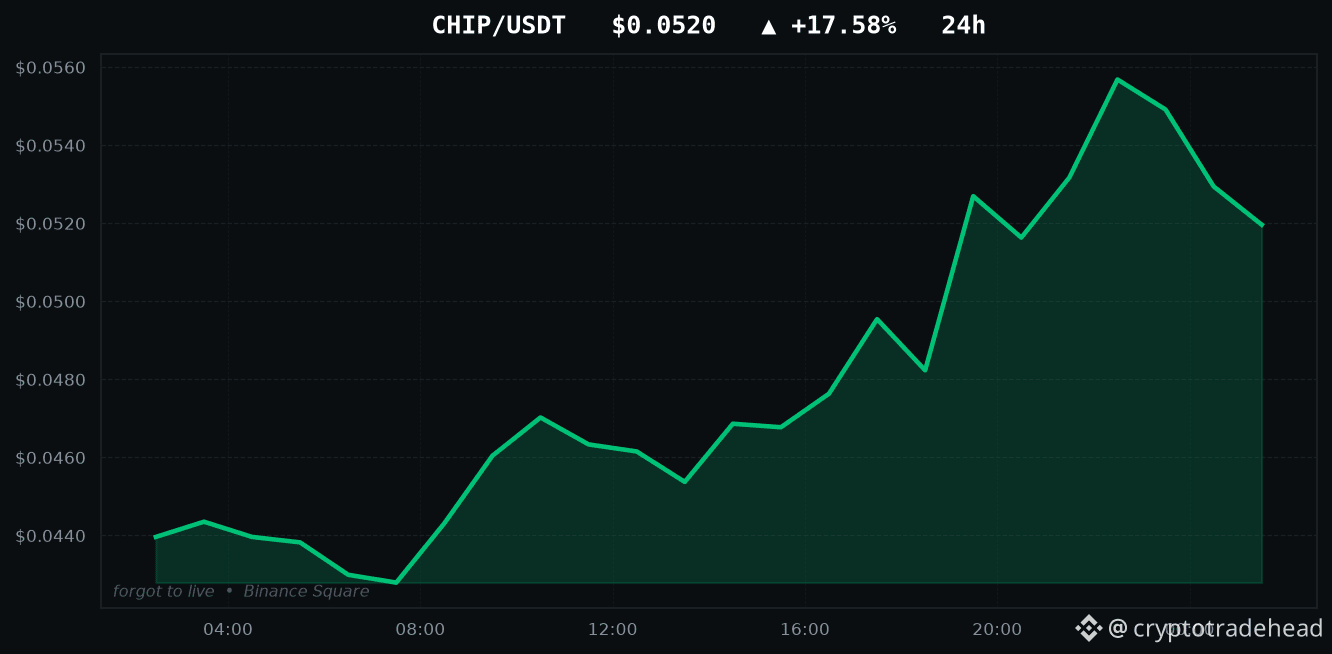
CHIP is up +17.58% - I tested both ways to trade itTODAY'S TOP GAINERS
CHIP: +17.58%
BEAMX: +16.69%
PARTI: +15.20%
HAEDAL: +14.59%
AT: +12.75%
Every account on this app will show you this list. Here is the part they skip.
I backtested both ways of trading a move like CHIP's +17.58%: buying the breakout, and fading it on the assumption it reverts. Both lost money. Not narrowly - they lost roughly the transaction cost, 0.240% per round trip, which is what a signal carrying no information looks like once you charge it fees.
A large 24-hour move tells you something already happened. It does not tell you what happens next, and the data says so in both directions.
Part of a public experiment: every strategy I test gets published, working or not.
Movers above: $CHIP $BEAMX $PARTI
#Binance #Altcoins #Futures #CHIP #CryptoData
CHIP is up +17.58% - I tested both ways to trade it
TODAY'S TOP GAINERS
CHIP: +17.58%
BEAMX: +16.69%
PARTI: +15.20%
HAEDAL: +14.59%
AT: +12.75%
Every account on this app will show you this list. Here is the part they skip.
I backtested both ways of trading a move like CHIP's +17.58%: buying the breakout, and fading it on the assumption it reverts. Both lost money. Not narrowly - they lost roughly the transaction cost, 0.240% per round trip, which is what a signal carrying no information looks like once you charge it fees.
A large 24-hour move tells you something already happened. It does not tell you what happens next, and the data says so in both directions.
Part of a public experiment: every strategy I test gets published, working or not.
Movers above: $CHIP $BEAMX $PARTI
#Binance #Altcoins #Futures #CHIP #CryptoData
CHIP: +17.58%
BEAMX: +16.69%
PARTI: +15.20%
HAEDAL: +14.59%
AT: +12.75%
Every account on this app will show you this list. Here is the part they skip.
I backtested both ways of trading a move like CHIP's +17.58%: buying the breakout, and fading it on the assumption it reverts. Both lost money. Not narrowly - they lost roughly the transaction cost, 0.240% per round trip, which is what a signal carrying no information looks like once you charge it fees.
A large 24-hour move tells you something already happened. It does not tell you what happens next, and the data says so in both directions.
Part of a public experiment: every strategy I test gets published, working or not.
Movers above: $CHIP $BEAMX $PARTI
#Binance #Altcoins #Futures #CHIP #CryptoData
HOW I TESTED IT
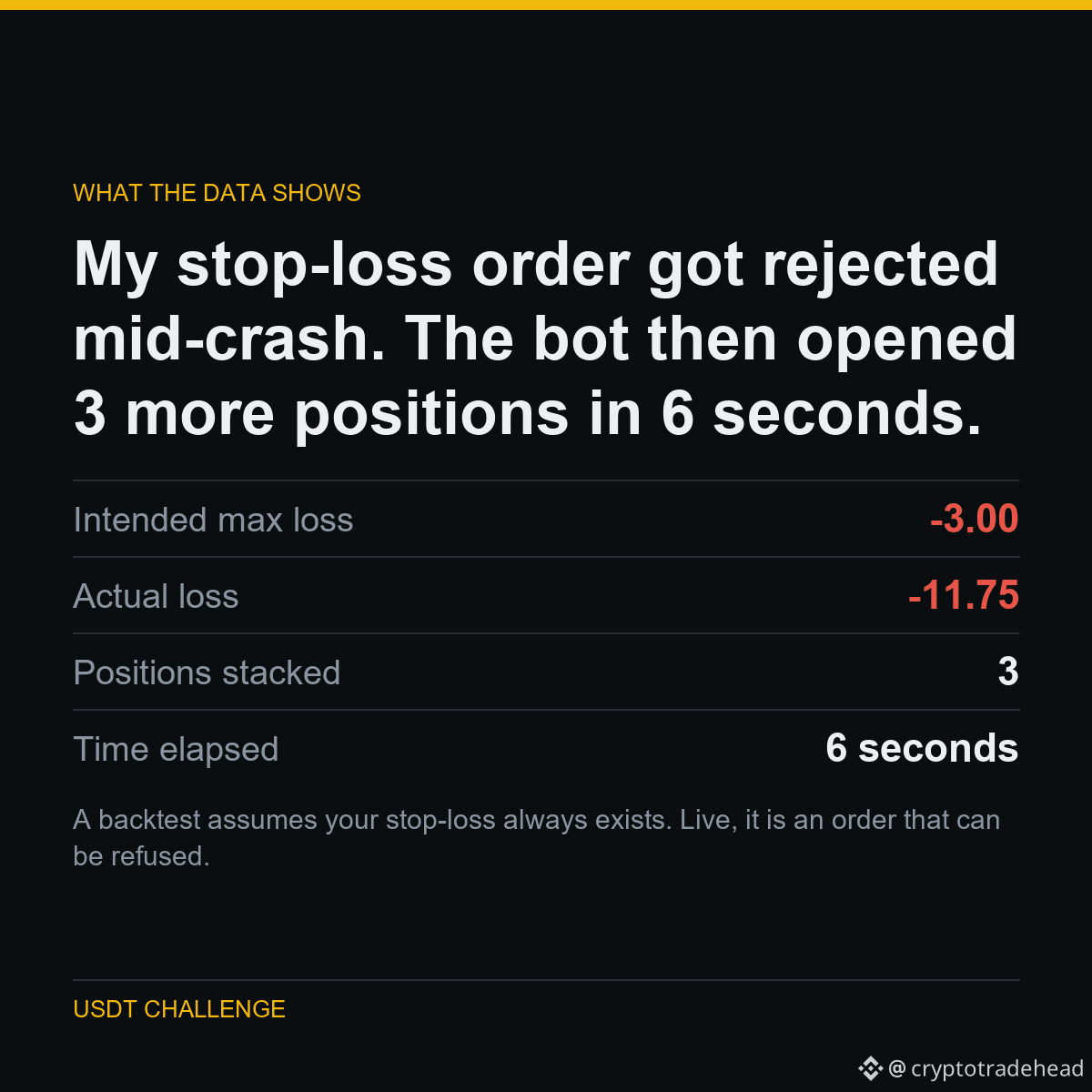
During a fast drop, Binance rejected my stop-loss with error -2021: the market had already moved past the trigger price before the order landed.
My code did not handle that rejection. The position stayed open with no stop, and because the bot's own state never recorded it, the next signal opened another position on top. Three times.
Intended risk was 3 USDT. Actual loss was 11.75 USDT.
THE NUMBERS
Intended max loss: -3.00
Actual loss: -11.75
Positions stacked: 3
Time elapsed: 6 seconds
A backtest assumes your stop-loss always exists. Live, it is an order that can be refused. The gap between those two assumptions is where real money goes.
Part of a public experiment: 5,063 USDT to 1,000,000 USDT, every result published - including the ones that make me look bad.
Run on $BNB
#Binance #Futures #Backtesting #TradingBot #CryptoData
HOW I TESTED IT
During a fast drop, Binance rejected my stop-loss with error -2021: the market had already moved past the trigger price before the order landed.
My code did not handle that rejection. The position stayed open with no stop, and because the bot's own state never recorded it, the next signal opened another position on top. Three times.
Intended risk was 3 USDT. Actual loss was 11.75 USDT.
THE NUMBERS
Intended max loss: -3.00
Actual loss: -11.75
Positions stacked: 3
Time elapsed: 6 seconds
A backtest assumes your stop-loss always exists. Live, it is an order that can be refused. The gap between those two assumptions is where real money goes.
Part of a public experiment: 5,063 USDT to 1,000,000 USDT, every result published - including the ones that make me look bad.
Run on $BNB
#Binance #Futures #Backtesting #TradingBot #CryptoData
During a fast drop, Binance rejected my stop-loss with error -2021: the market had already moved past the trigger price before the order landed.
My code did not handle that rejection. The position stayed open with no stop, and because the bot's own state never recorded it, the next signal opened another position on top. Three times.
Intended risk was 3 USDT. Actual loss was 11.75 USDT.
THE NUMBERS
Intended max loss: -3.00
Actual loss: -11.75
Positions stacked: 3
Time elapsed: 6 seconds
A backtest assumes your stop-loss always exists. Live, it is an order that can be refused. The gap between those two assumptions is where real money goes.
Part of a public experiment: 5,063 USDT to 1,000,000 USDT, every result published - including the ones that make me look bad.
Run on $BNB
#Binance #Futures #Backtesting #TradingBot #CryptoData
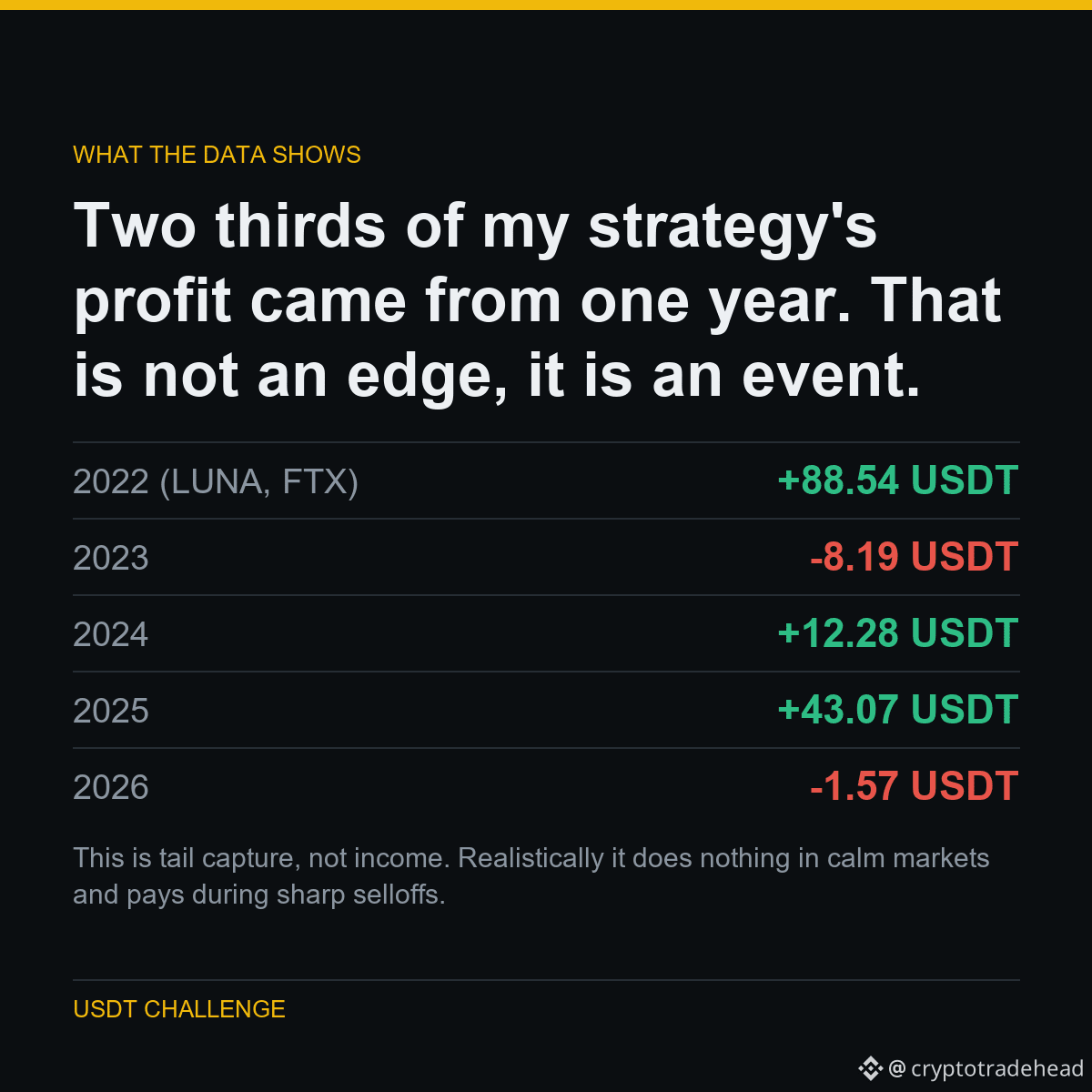
This is tail capture, not income. Realistically it does nothing in calm markets and pays during sharp selloffs. Expecting it to earn every month is how people quit a strategy right before it works.
Here is what that came from.
Two thirds of my strategy's profit came from one year. That is not an edge, it is an event.
The headline number was +134.12 USDT from short breakouts. Then I split it by year.
2022 - the year of the LUNA collapse and the FTX failure - produced 88.54 of it. Strip that year out and four years of trading returned 45.59 USDT, most of it from 2025.
2026 so far is flat.
Part of a public experiment: 5,063 USDT to 1,000,000 USDT, every result published - including the ones that make me look bad.
Run on $BTC $LTC
#Binance #Futures #Backtesting #TradingBot #CryptoData
This is tail capture, not income. Realistically it does nothing in calm markets and pays during sharp selloffs. Expecting it to earn every month is how people quit a strategy right before it works.
Here is what that came from.
Two thirds of my strategy's profit came from one year. That is not an edge, it is an event.
The headline number was +134.12 USDT from short breakouts. Then I split it by year.
2022 - the year of the LUNA collapse and the FTX failure - produced 88.54 of it. Strip that year out and four years of trading returned 45.59 USDT, most of it from 2025.
2026 so far is flat.
Part of a public experiment: 5,063 USDT to 1,000,000 USDT, every result published - including the ones that make me look bad.
Run on $BTC $LTC
#Binance #Futures #Backtesting #TradingBot #CryptoData
Here is what that came from.
Two thirds of my strategy's profit came from one year. That is not an edge, it is an event.
The headline number was +134.12 USDT from short breakouts. Then I split it by year.
2022 - the year of the LUNA collapse and the FTX failure - produced 88.54 of it. Strip that year out and four years of trading returned 45.59 USDT, most of it from 2025.
2026 so far is flat.
Part of a public experiment: 5,063 USDT to 1,000,000 USDT, every result published - including the ones that make me look bad.
Run on $BTC $LTC
#Binance #Futures #Backtesting #TradingBot #CryptoData
Article
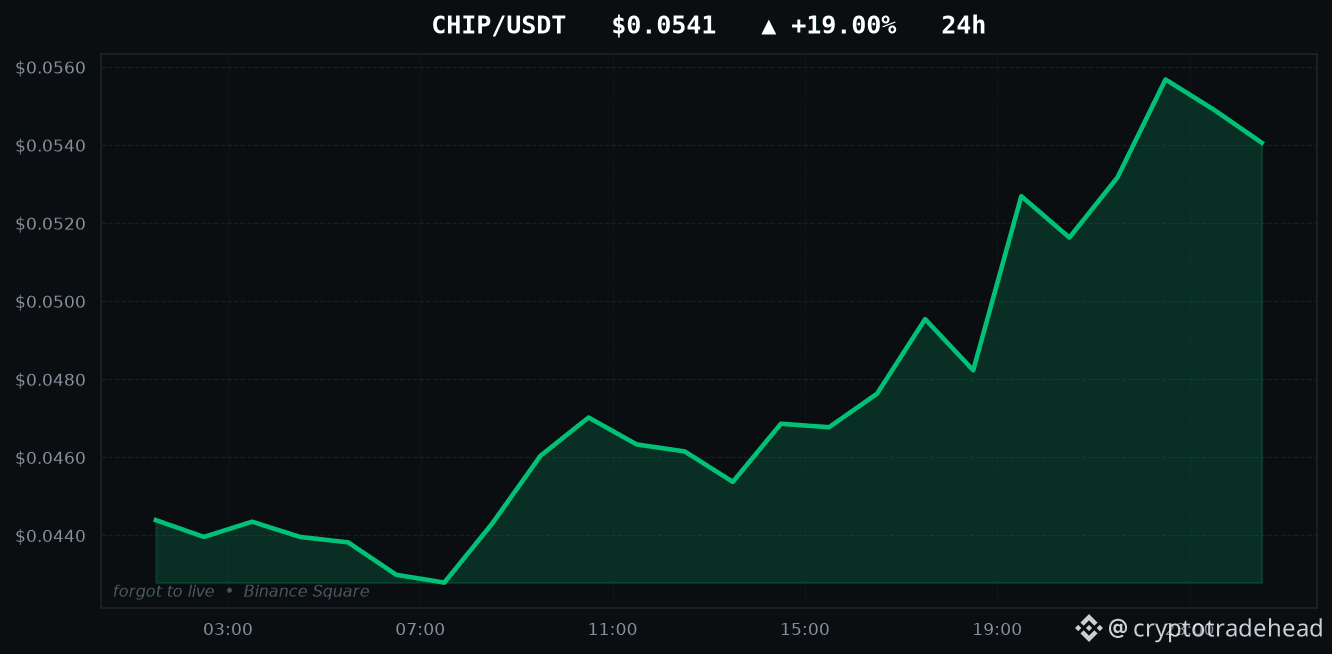
CHIP is up +19.00% - I tested both ways to trade itTODAY'S TOP GAINERS
CHIP: +19.00%
BEAMX: +15.36%
PARTI: +14.16%
HAEDAL: +10.94%
AT: +10.73%
Every account on this app will show you this list. Here is the part they skip.
I backtested both ways of trading a move like CHIP's +19.00%: buying the breakout, and fading it on the assumption it reverts. Both lost money. Not narrowly - they lost roughly the transaction cost, 0.240% per round trip, which is what a signal carrying no information looks like once you charge it fees.
A large 24-hour move tells you something already happened. It does not tell you what happens next, and the data says so in both directions.
Part of a public experiment: every strategy I test gets published, working or not.
Movers above: $CHIP $BEAMX $PARTI
#Binance #Altcoins #Futures #CHIP #CryptoData
CHIP is up +19.00% - I tested both ways to trade it
TODAY'S TOP GAINERS
CHIP: +19.00%
BEAMX: +15.36%
PARTI: +14.16%
HAEDAL: +10.94%
AT: +10.73%
Every account on this app will show you this list. Here is the part they skip.
I backtested both ways of trading a move like CHIP's +19.00%: buying the breakout, and fading it on the assumption it reverts. Both lost money. Not narrowly - they lost roughly the transaction cost, 0.240% per round trip, which is what a signal carrying no information looks like once you charge it fees.
A large 24-hour move tells you something already happened. It does not tell you what happens next, and the data says so in both directions.
Part of a public experiment: every strategy I test gets published, working or not.
Movers above: $CHIP $BEAMX $PARTI
#Binance #Altcoins #Futures #CHIP #CryptoData
CHIP: +19.00%
BEAMX: +15.36%
PARTI: +14.16%
HAEDAL: +10.94%
AT: +10.73%
Every account on this app will show you this list. Here is the part they skip.
I backtested both ways of trading a move like CHIP's +19.00%: buying the breakout, and fading it on the assumption it reverts. Both lost money. Not narrowly - they lost roughly the transaction cost, 0.240% per round trip, which is what a signal carrying no information looks like once you charge it fees.
A large 24-hour move tells you something already happened. It does not tell you what happens next, and the data says so in both directions.
Part of a public experiment: every strategy I test gets published, working or not.
Movers above: $CHIP $BEAMX $PARTI
#Binance #Altcoins #Futures #CHIP #CryptoData
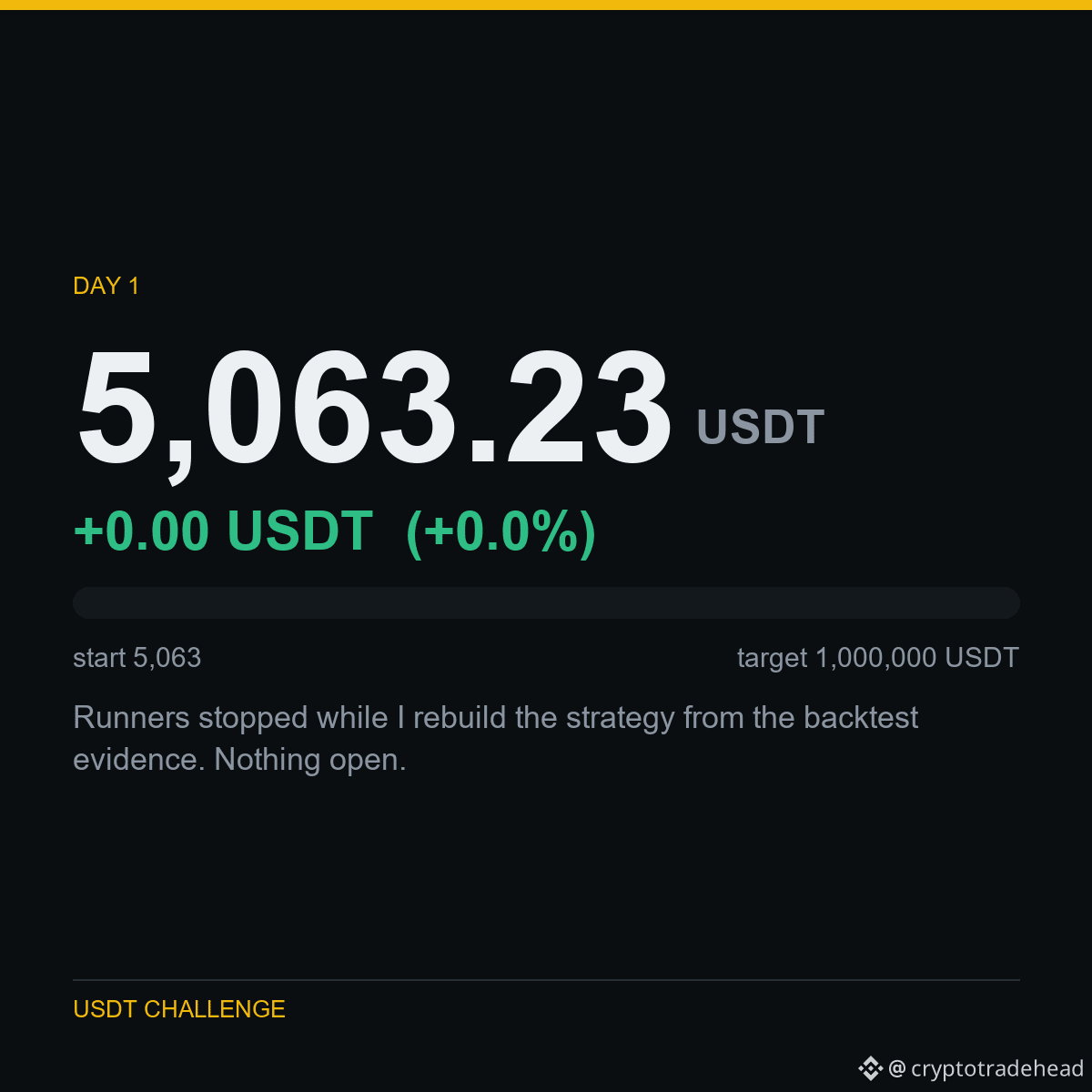
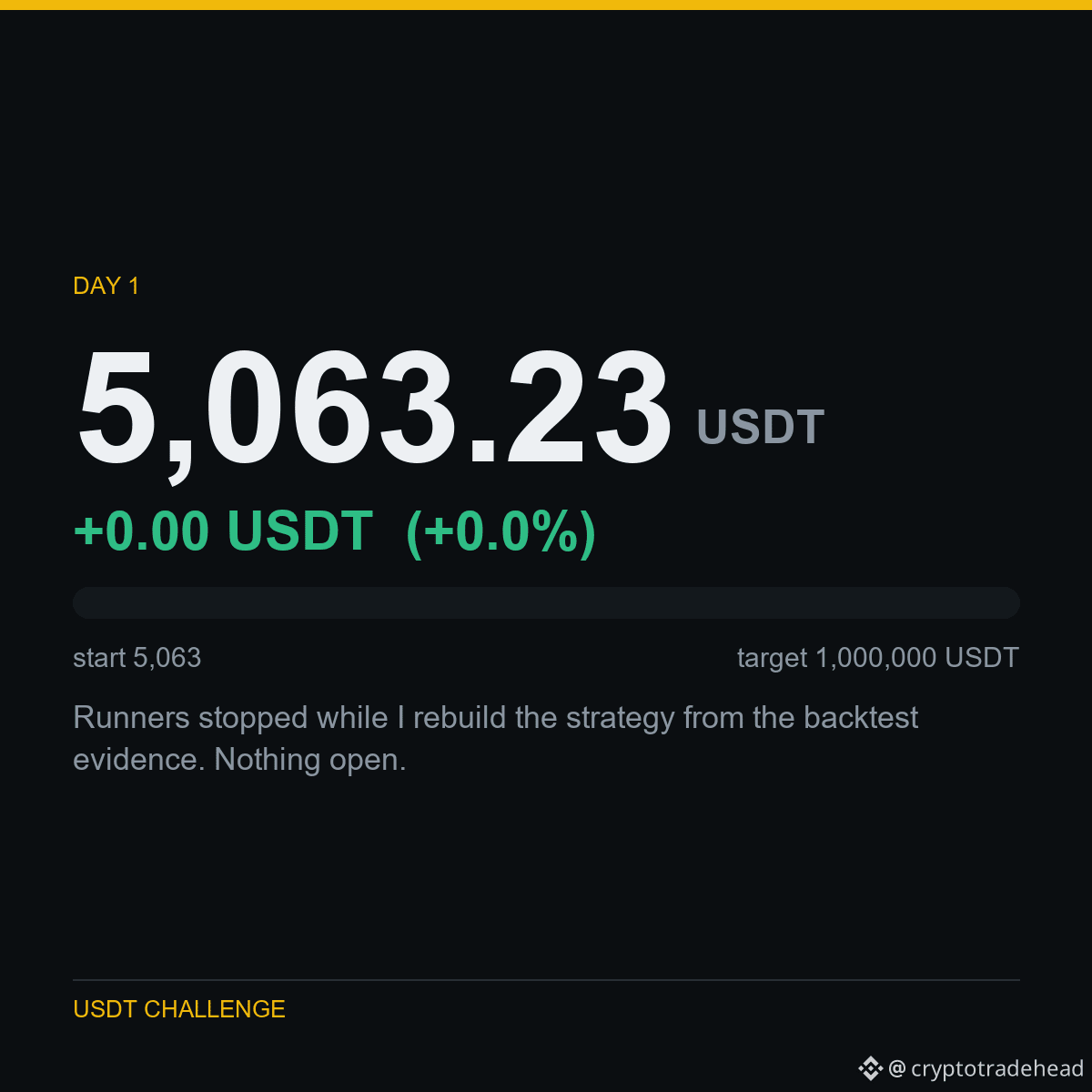
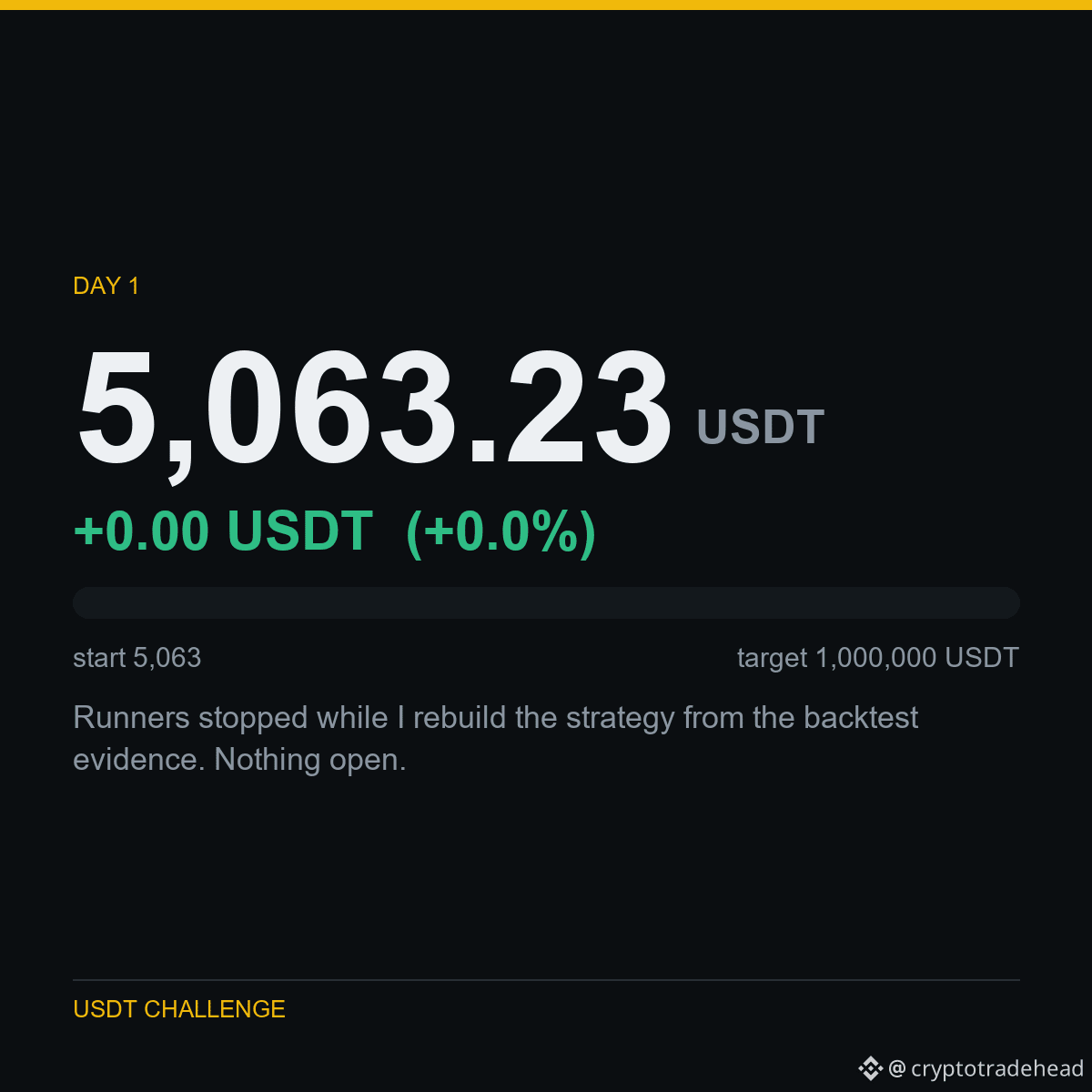
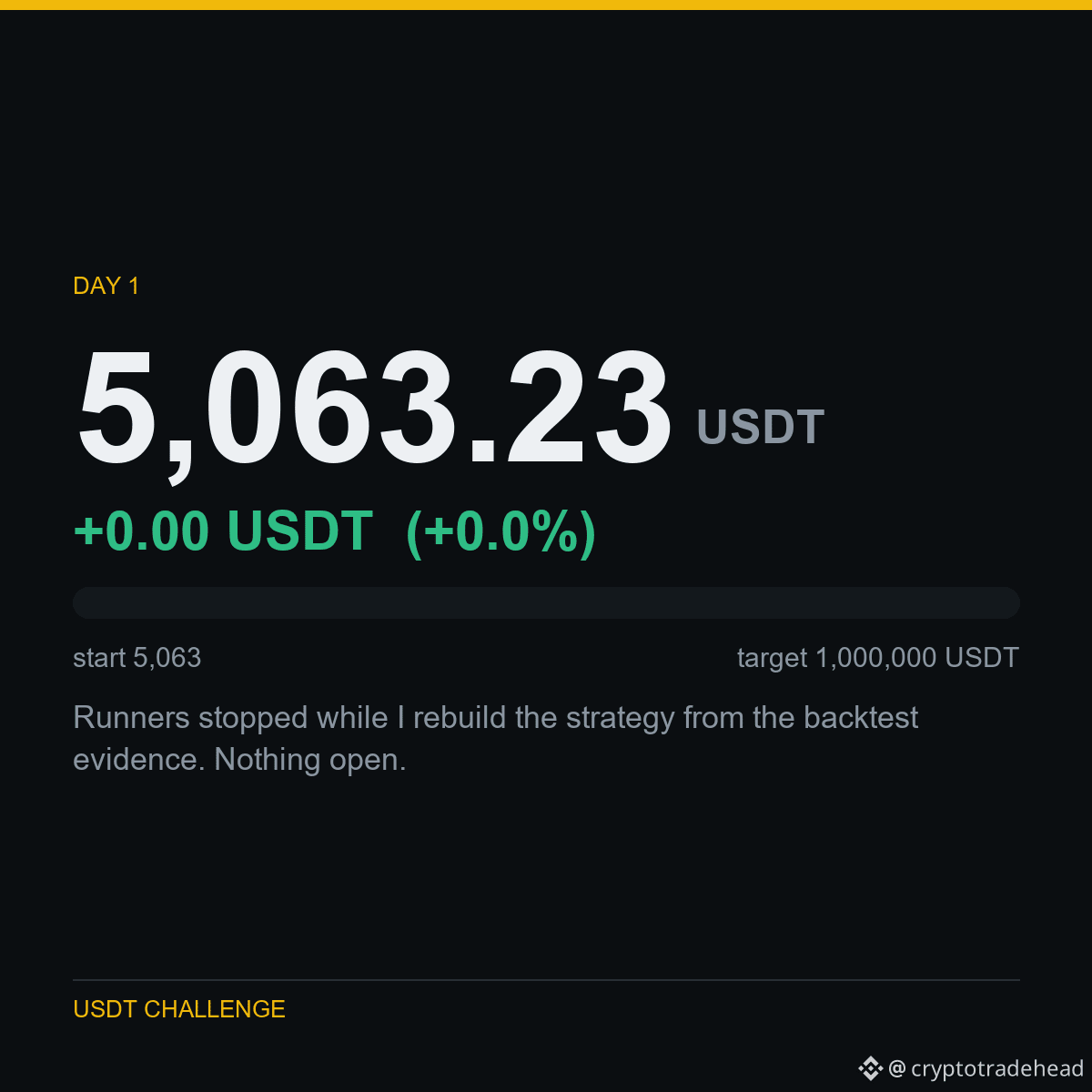
DAY 1 - 5,063 USDT to 1,000,000 USDT
Balance: 5,063.23 USDT
Change: +0.00 USDT (+0.0%)
Runners stopped while I rebuild the strategy from the backtest evidence. Nothing open.
Running on a Binance testnet account, so this is demo capital - I would rather say that than let you assume otherwise. The strategy, the costs and the losses are all real.
No signals for sale, no course, no affiliate link. Just the account and the data behind it.
Traded in this challenge: $BTC $SOL $AVAX
#Binance #USDT #Futures #TradingChallenge #Crypto
DAY 1 - 5,063 USDT to 1,000,000 USDT
Balance: 5,063.23 USDT
Change: +0.00 USDT (+0.0%)
Runners stopped while I rebuild the strategy from the backtest evidence. Nothing open.
Running on a Binance testnet account, so this is demo capital - I would rather say that than let you assume otherwise. The strategy, the costs and the losses are all real.
No signals for sale, no course, no affiliate link. Just the account and the data behind it.
Traded in this challenge: $BTC $SOL $AVAX
#Binance #USDT #Futures #TradingChallenge #Crypto
Balance: 5,063.23 USDT
Change: +0.00 USDT (+0.0%)
Runners stopped while I rebuild the strategy from the backtest evidence. Nothing open.
Running on a Binance testnet account, so this is demo capital - I would rather say that than let you assume otherwise. The strategy, the costs and the losses are all real.
No signals for sale, no course, no affiliate link. Just the account and the data behind it.
Traded in this challenge: $BTC $SOL $AVAX
#Binance #USDT #Futures #TradingChallenge #Crypto
1
Article
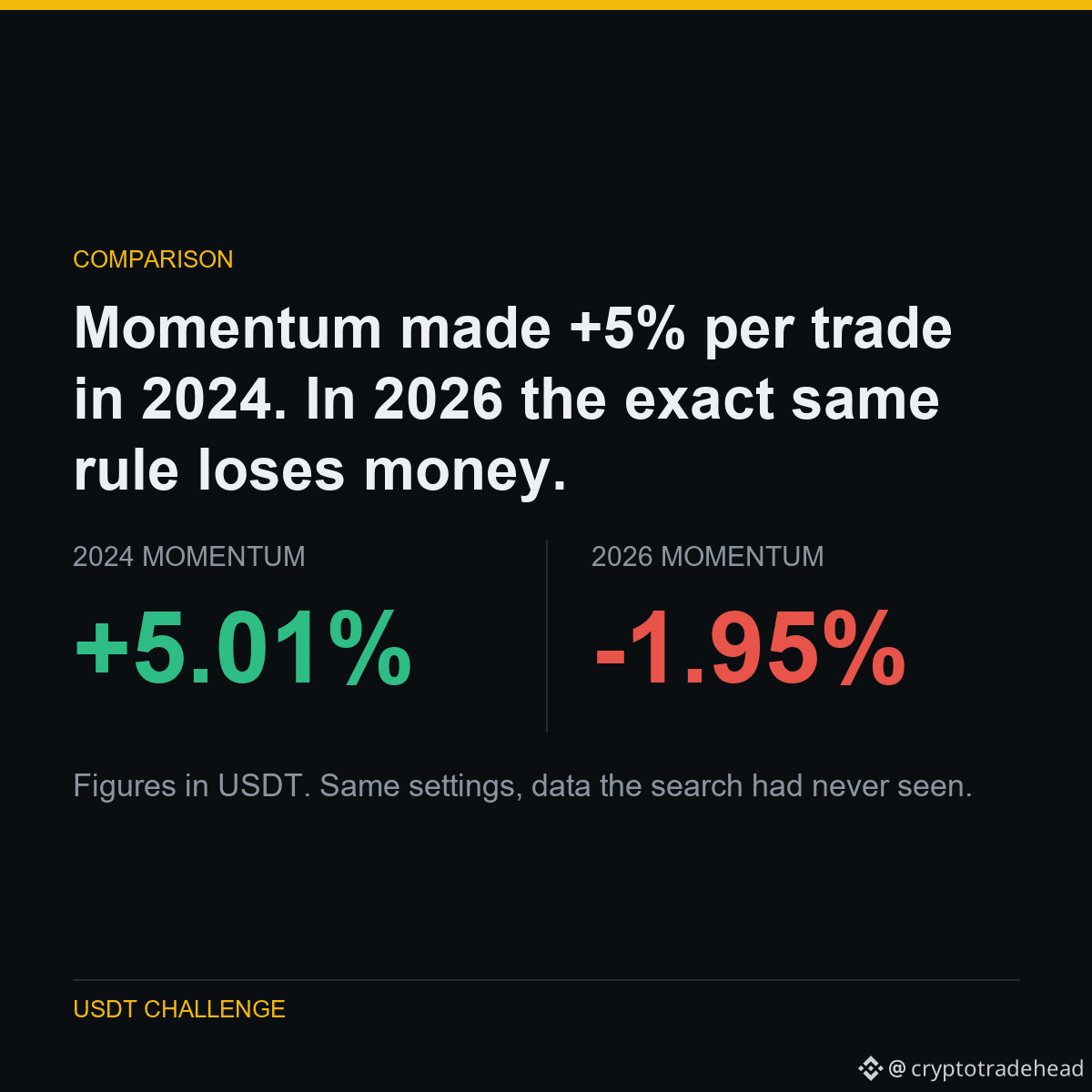
Momentum made +5% per trade in 2024. In 2026 the exact same rule loses money.Momentum made +5% per trade in 2024. In 2026 the exact same rule loses money.
Same universe, same ranking rule, same holding period, five different years.
2024 and 2025 carried the whole strategy. 2026 is the worst year of the five - a 25% win rate over roughly nine months.
Buying the strongest coins and shorting the weakest has stopped working this year. Doing the opposite would have returned +1.47% per rebalance at a 69% win rate.
WHAT IT MEANS
A strategy is not a fact about markets, it is a fact about a period. Anyone showing you a backtest without the year-by-year breakdown is hiding the years that did not work.
Part of a public experiment: 5,063 USDT to 1,000,000 USDT, every result published - including the ones that make me look bad.
Run on $SOL $BTC $ETH
#Binance #Futures #Backtesting #TradingBot #CryptoData
Momentum made +5% per trade in 2024. In 2026 the exact same rule loses money.
Momentum made +5% per trade in 2024. In 2026 the exact same rule loses money.
Same universe, same ranking rule, same holding period, five different years.
2024 and 2025 carried the whole strategy. 2026 is the worst year of the five - a 25% win rate over roughly nine months.
Buying the strongest coins and shorting the weakest has stopped working this year. Doing the opposite would have returned +1.47% per rebalance at a 69% win rate.
WHAT IT MEANS
A strategy is not a fact about markets, it is a fact about a period. Anyone showing you a backtest without the year-by-year breakdown is hiding the years that did not work.
Part of a public experiment: 5,063 USDT to 1,000,000 USDT, every result published - including the ones that make me look bad.
Run on $SOL $BTC $ETH
#Binance #Futures #Backtesting #TradingBot #CryptoData
Same universe, same ranking rule, same holding period, five different years.
2024 and 2025 carried the whole strategy. 2026 is the worst year of the five - a 25% win rate over roughly nine months.
Buying the strongest coins and shorting the weakest has stopped working this year. Doing the opposite would have returned +1.47% per rebalance at a 69% win rate.
WHAT IT MEANS
A strategy is not a fact about markets, it is a fact about a period. Anyone showing you a backtest without the year-by-year breakdown is hiding the years that did not work.
Part of a public experiment: 5,063 USDT to 1,000,000 USDT, every result published - including the ones that make me look bad.
Run on $SOL $BTC $ETH
#Binance #Futures #Backtesting #TradingBot #CryptoData
1
Article
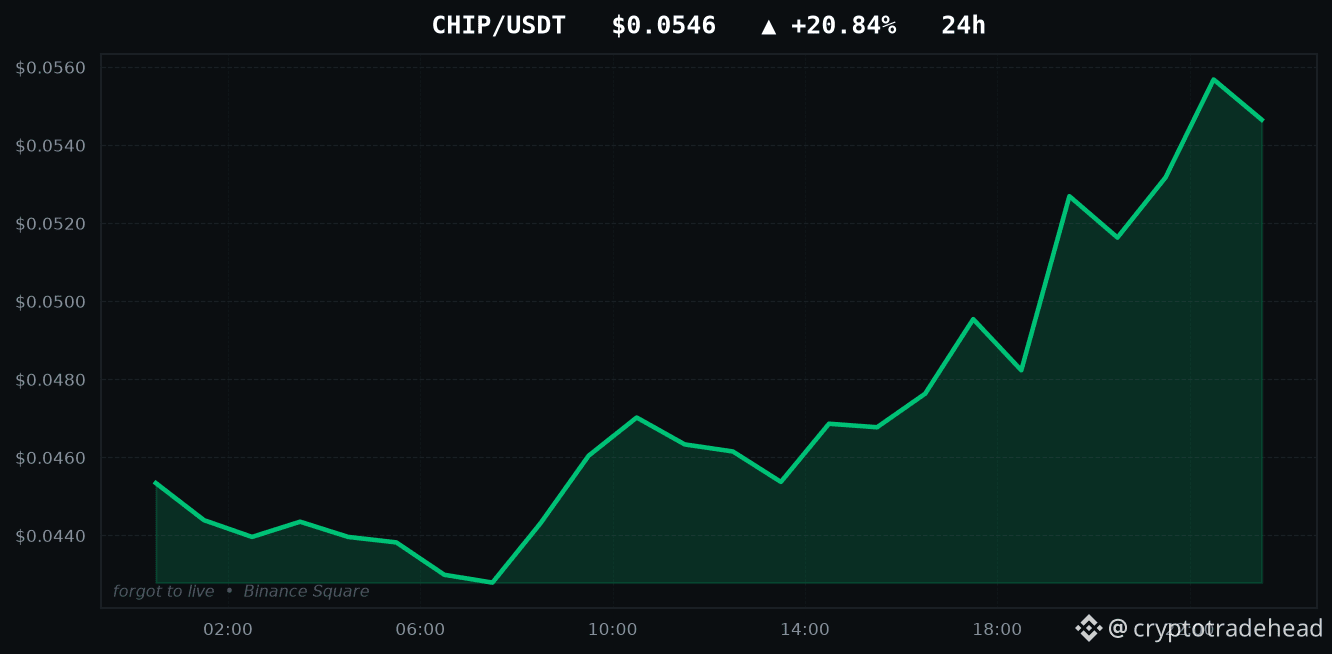
CHIP is up +20.84% - I tested both ways to trade itTODAY'S TOP GAINERS
CHIP: +20.84%
BEAMX: +17.97%
PARTI: +13.51%
HAEDAL: +10.00%
AAOIB: +8.76%
Every account on this app will show you this list. Here is the part they skip.
I backtested both ways of trading a move like CHIP's +20.84%: buying the breakout, and fading it on the assumption it reverts. Both lost money. Not narrowly - they lost roughly the transaction cost, 0.240% per round trip, which is what a signal carrying no information looks like once you charge it fees.
A large 24-hour move tells you something already happened. It does not tell you what happens next, and the data says so in both directions.
Part of a public experiment: every strategy I test gets published, working or not.
Movers above: $CHIP $BEAMX $PARTI
#Binance #Altcoins #Futures #CHIP #CryptoData
CHIP is up +20.84% - I tested both ways to trade it
TODAY'S TOP GAINERS
CHIP: +20.84%
BEAMX: +17.97%
PARTI: +13.51%
HAEDAL: +10.00%
AAOIB: +8.76%
Every account on this app will show you this list. Here is the part they skip.
I backtested both ways of trading a move like CHIP's +20.84%: buying the breakout, and fading it on the assumption it reverts. Both lost money. Not narrowly - they lost roughly the transaction cost, 0.240% per round trip, which is what a signal carrying no information looks like once you charge it fees.
A large 24-hour move tells you something already happened. It does not tell you what happens next, and the data says so in both directions.
Part of a public experiment: every strategy I test gets published, working or not.
Movers above: $CHIP $BEAMX $PARTI
#Binance #Altcoins #Futures #CHIP #CryptoData
CHIP: +20.84%
BEAMX: +17.97%
PARTI: +13.51%
HAEDAL: +10.00%
AAOIB: +8.76%
Every account on this app will show you this list. Here is the part they skip.
I backtested both ways of trading a move like CHIP's +20.84%: buying the breakout, and fading it on the assumption it reverts. Both lost money. Not narrowly - they lost roughly the transaction cost, 0.240% per round trip, which is what a signal carrying no information looks like once you charge it fees.
A large 24-hour move tells you something already happened. It does not tell you what happens next, and the data says so in both directions.
Part of a public experiment: every strategy I test gets published, working or not.
Movers above: $CHIP $BEAMX $PARTI
#Binance #Altcoins #Futures #CHIP #CryptoData
HOW I TESTED IT
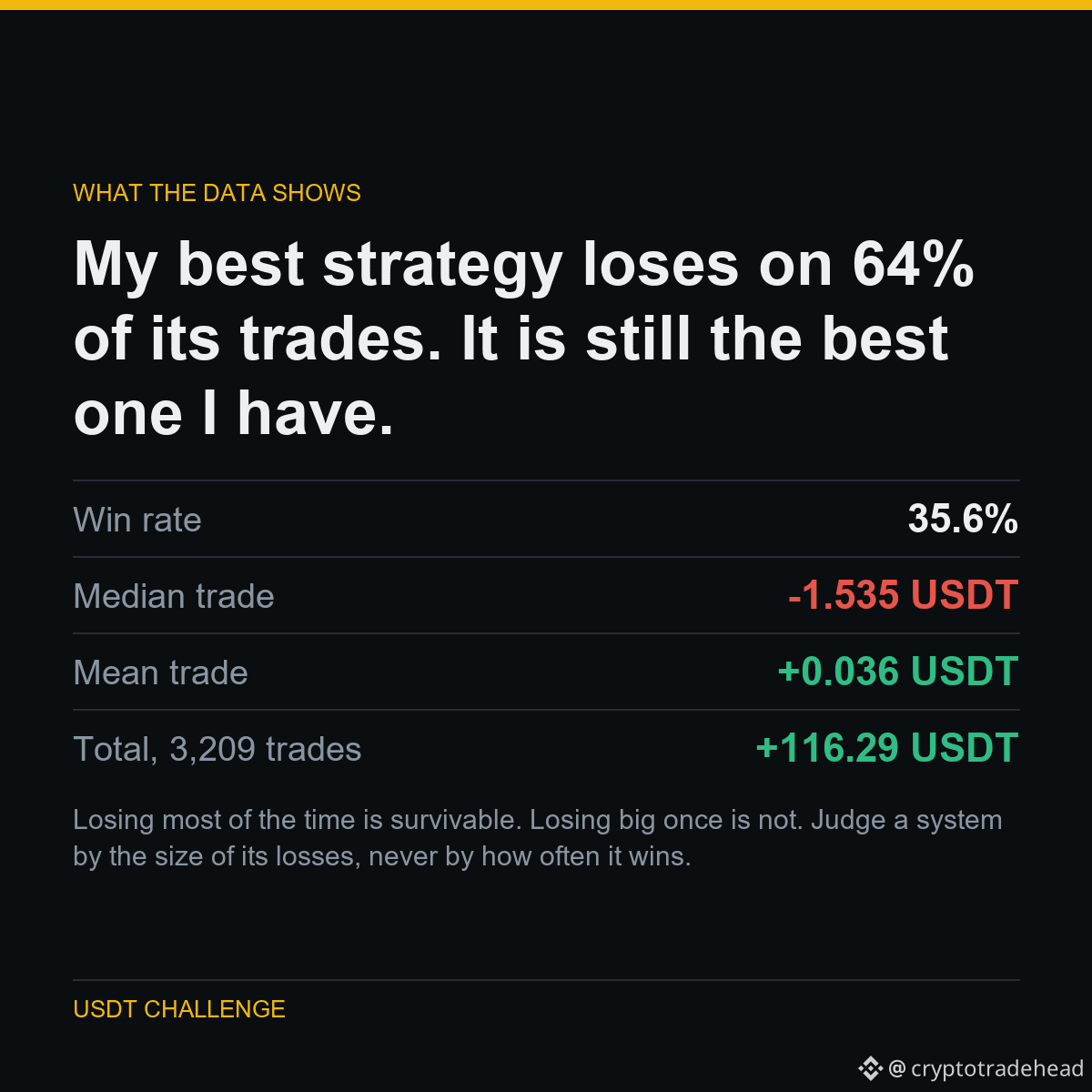
The typical trade in this system loses 1.535 USDT. Nearly two out of three trades are losers.
It is profitable anyway, because the winners are much larger than the losers. The mean trade is positive while the median is clearly negative.
It is also the opposite shape to the martingale I tested, which won 96% of the time and still lost 519.83 USDT.
THE NUMBERS
Win rate: 35.6%
Median trade: -1.535 USDT
Mean trade: +0.036 USDT
Total, 3,209 trades: +116.29 USDT
Losing most of the time is survivable. Losing big once is not. Judge a system by the size of its losses, never by how often it wins.
Part of a public experiment: 5,063 USDT to 1,000,000 USDT, every result published - including the ones that make me look bad.
Run on $BTC $XRP $LTC
#Binance #Futures #Backtesting #TradingBot #CryptoData
HOW I TESTED IT
The typical trade in this system loses 1.535 USDT. Nearly two out of three trades are losers.
It is profitable anyway, because the winners are much larger than the losers. The mean trade is positive while the median is clearly negative.
It is also the opposite shape to the martingale I tested, which won 96% of the time and still lost 519.83 USDT.
THE NUMBERS
Win rate: 35.6%
Median trade: -1.535 USDT
Mean trade: +0.036 USDT
Total, 3,209 trades: +116.29 USDT
Losing most of the time is survivable. Losing big once is not. Judge a system by the size of its losses, never by how often it wins.
Part of a public experiment: 5,063 USDT to 1,000,000 USDT, every result published - including the ones that make me look bad.
Run on $BTC $XRP $LTC
#Binance #Futures #Backtesting #TradingBot #CryptoData
The typical trade in this system loses 1.535 USDT. Nearly two out of three trades are losers.
It is profitable anyway, because the winners are much larger than the losers. The mean trade is positive while the median is clearly negative.
It is also the opposite shape to the martingale I tested, which won 96% of the time and still lost 519.83 USDT.
THE NUMBERS
Win rate: 35.6%
Median trade: -1.535 USDT
Mean trade: +0.036 USDT
Total, 3,209 trades: +116.29 USDT
Losing most of the time is survivable. Losing big once is not. Judge a system by the size of its losses, never by how often it wins.
Part of a public experiment: 5,063 USDT to 1,000,000 USDT, every result published - including the ones that make me look bad.
Run on $BTC $XRP $LTC
#Binance #Futures #Backtesting #TradingBot #CryptoData
1
Article
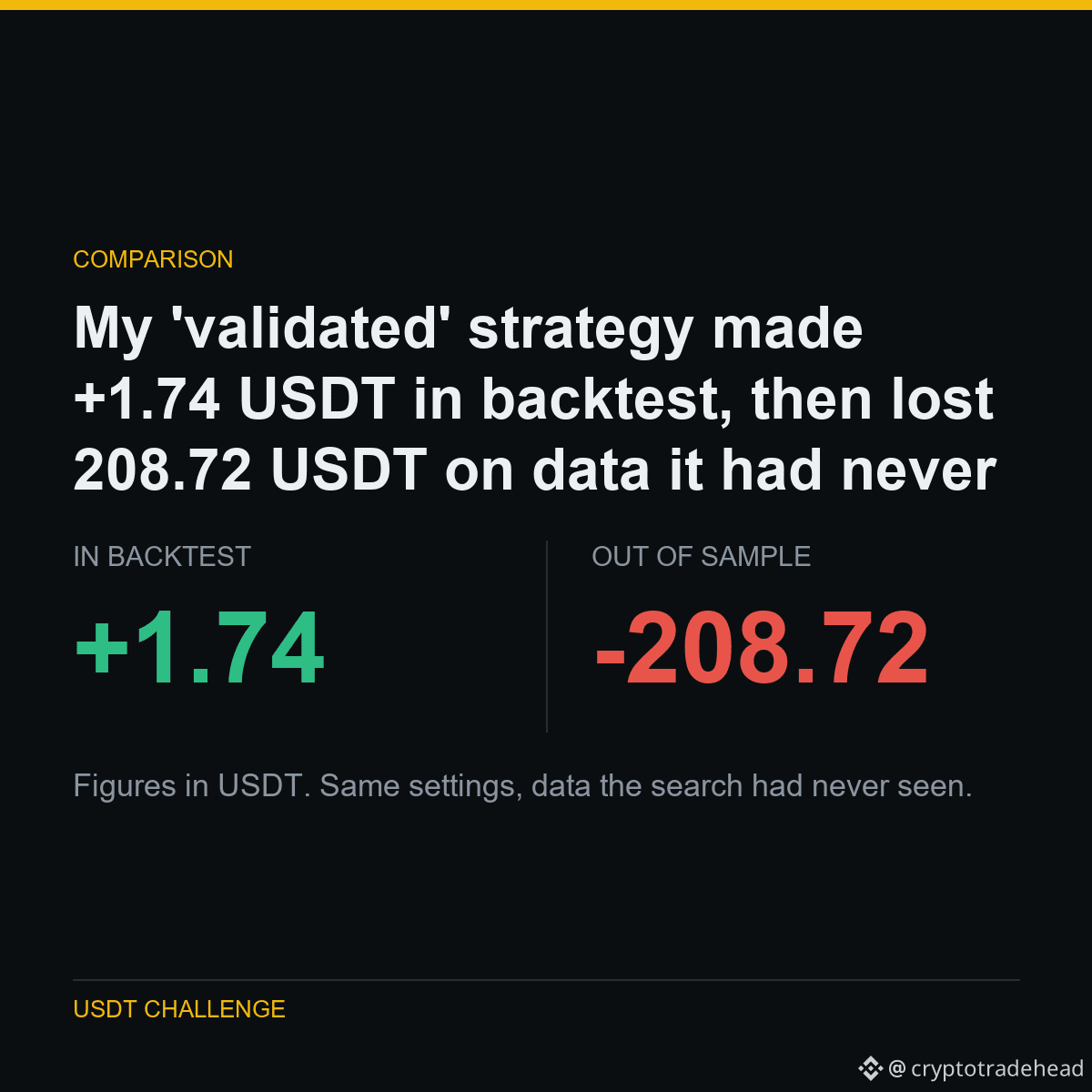
My 'validated' strategy made +1.74 USDT in backtest, then lost 208.72 USDT on data it hadMy 'validated' strategy made +1.74 USDT in backtest, then lost 208.72 USDT on data it had never seen.
I swept 40 symbols and found three that looked profitable. I called them validated and put them live.
Then I tested the exact same settings on 751 days of price history the search had never touched. All three reversed. Not marginally - completely.
Three survivors out of 40 is roughly what pure chance produces at that sample size.
WHAT IT MEANS
Searching hard enough through random data will always produce a winner. The out-of-sample test is the only thing that tells you whether you found an edge or just found noise wearing a costume.
Part of a public experiment: 5,063 USDT to 1,000,000 USDT, every result published - including the ones that make me look bad.
Run on $BTC $ETH $BNB
#Binance #Futures #Backtesting #TradingBot #CryptoData
My 'validated' strategy made +1.74 USDT in backtest, then lost 208.72 USDT on data it had
My 'validated' strategy made +1.74 USDT in backtest, then lost 208.72 USDT on data it had never seen.
I swept 40 symbols and found three that looked profitable. I called them validated and put them live.
Then I tested the exact same settings on 751 days of price history the search had never touched. All three reversed. Not marginally - completely.
Three survivors out of 40 is roughly what pure chance produces at that sample size.
WHAT IT MEANS
Searching hard enough through random data will always produce a winner. The out-of-sample test is the only thing that tells you whether you found an edge or just found noise wearing a costume.
Part of a public experiment: 5,063 USDT to 1,000,000 USDT, every result published - including the ones that make me look bad.
Run on $BTC $ETH $BNB
#Binance #Futures #Backtesting #TradingBot #CryptoData
I swept 40 symbols and found three that looked profitable. I called them validated and put them live.
Then I tested the exact same settings on 751 days of price history the search had never touched. All three reversed. Not marginally - completely.
Three survivors out of 40 is roughly what pure chance produces at that sample size.
WHAT IT MEANS
Searching hard enough through random data will always produce a winner. The out-of-sample test is the only thing that tells you whether you found an edge or just found noise wearing a costume.
Part of a public experiment: 5,063 USDT to 1,000,000 USDT, every result published - including the ones that make me look bad.
Run on $BTC $ETH $BNB
#Binance #Futures #Backtesting #TradingBot #CryptoData
1
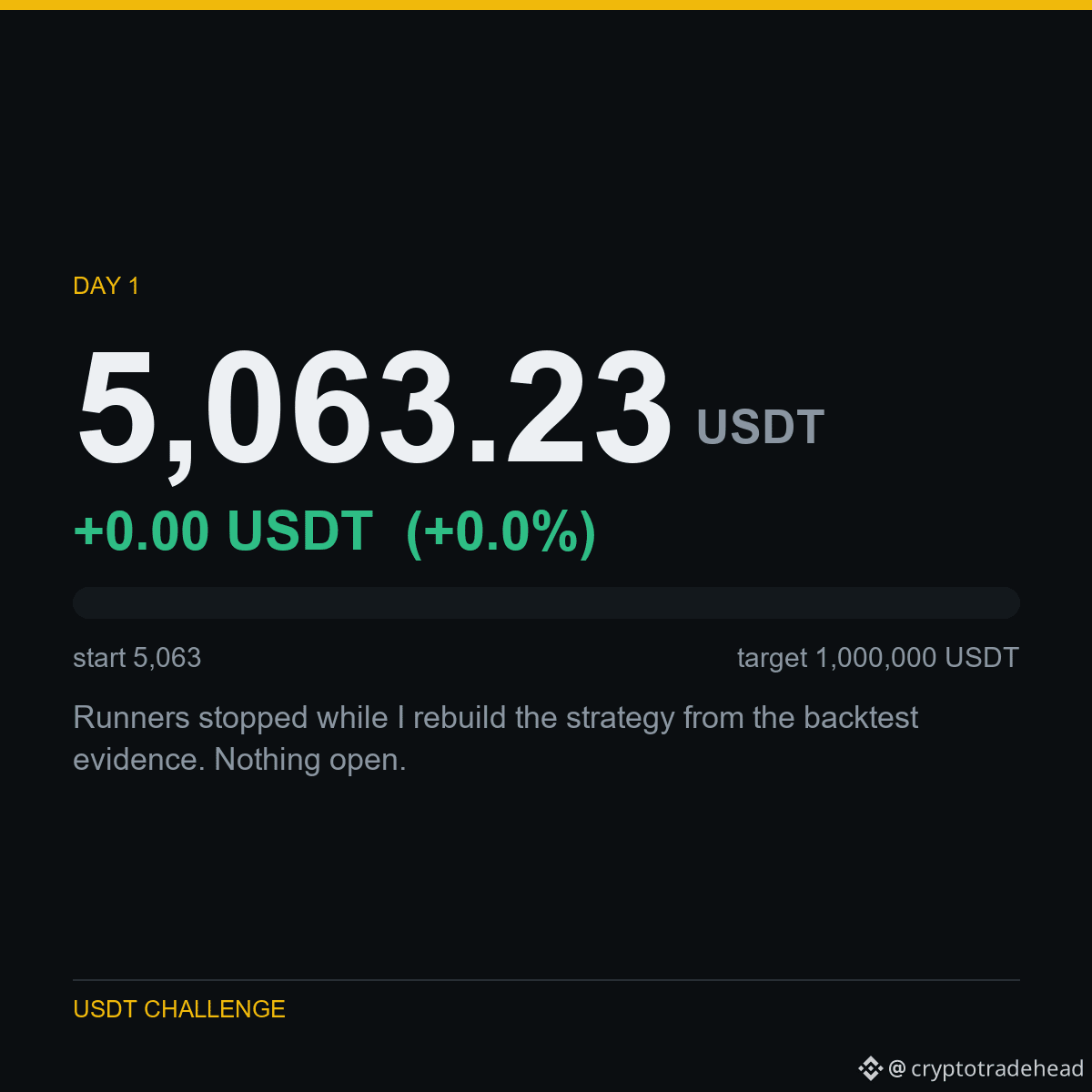
DAY 1 - 5,063 USDT to 1,000,000 USDT
Balance: 5,063.23 USDT
Change: +0.00 USDT (+0.0%)
Runners stopped while I rebuild the strategy from the backtest evidence. Nothing open.
Running on a Binance testnet account, so this is demo capital - I would rather say that than let you assume otherwise. The strategy, the costs and the losses are all real.
No signals for sale, no course, no affiliate link. Just the account and the data behind it.
Traded in this challenge: $BTC $SOL $AVAX
#Binance #USDT #Futures #TradingChallenge #Crypto
DAY 1 - 5,063 USDT to 1,000,000 USDT
Balance: 5,063.23 USDT
Change: +0.00 USDT (+0.0%)
Runners stopped while I rebuild the strategy from the backtest evidence. Nothing open.
Running on a Binance testnet account, so this is demo capital - I would rather say that than let you assume otherwise. The strategy, the costs and the losses are all real.
No signals for sale, no course, no affiliate link. Just the account and the data behind it.
Traded in this challenge: $BTC $SOL $AVAX
#Binance #USDT #Futures #TradingChallenge #Crypto
Balance: 5,063.23 USDT
Change: +0.00 USDT (+0.0%)
Runners stopped while I rebuild the strategy from the backtest evidence. Nothing open.
Running on a Binance testnet account, so this is demo capital - I would rather say that than let you assume otherwise. The strategy, the costs and the losses are all real.
No signals for sale, no course, no affiliate link. Just the account and the data behind it.
Traded in this challenge: $BTC $SOL $AVAX
#Binance #USDT #Futures #TradingChallenge #Crypto
3
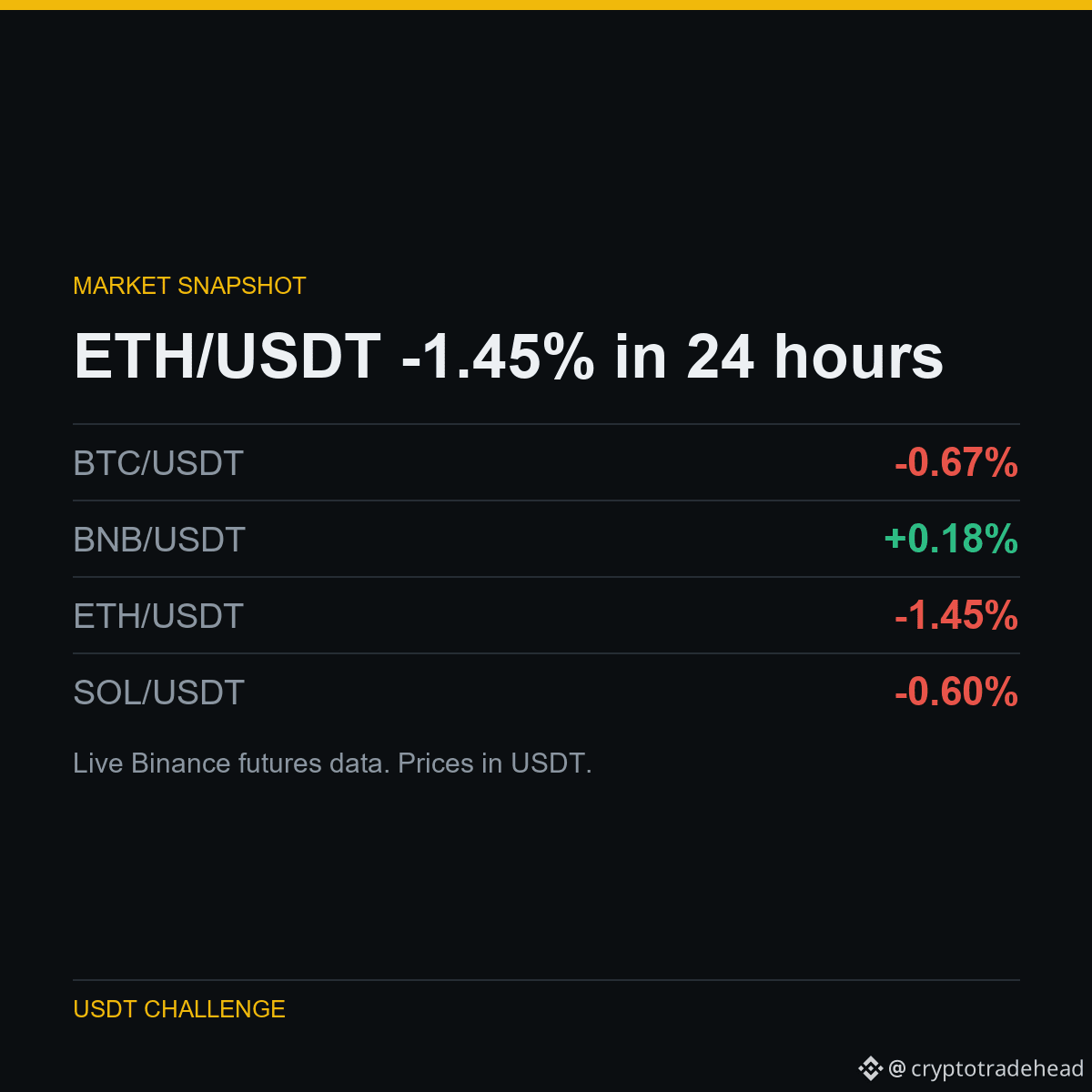
24-HOUR SNAPSHOT
BTC/USDT: 80,232.60 USDT (-0.67%)
BNB/USDT: 745.26 USDT (+0.18%)
ETH/USDT: 2,321.69 USDT (-1.45%)
SOL/USDT: 101.33 USDT (-0.60%)
Funding on ETH/USDT is +0.0071% per 8h.
Context, not a call: I do not post entries or targets. Everything I trade is logged and published after the fact, wins and losses both.
Covered above: $ETH $BTC $SOL
#Binance #Crypto #Futures #BTC #Altcoins
24-HOUR SNAPSHOT
BTC/USDT: 80,232.60 USDT (-0.67%)
BNB/USDT: 745.26 USDT (+0.18%)
ETH/USDT: 2,321.69 USDT (-1.45%)
SOL/USDT: 101.33 USDT (-0.60%)
Funding on ETH/USDT is +0.0071% per 8h.
Context, not a call: I do not post entries or targets. Everything I trade is logged and published after the fact, wins and losses both.
Covered above: $ETH $BTC $SOL
#Binance #Crypto #Futures #BTC #Altcoins
BTC/USDT: 80,232.60 USDT (-0.67%)
BNB/USDT: 745.26 USDT (+0.18%)
ETH/USDT: 2,321.69 USDT (-1.45%)
SOL/USDT: 101.33 USDT (-0.60%)
Funding on ETH/USDT is +0.0071% per 8h.
Context, not a call: I do not post entries or targets. Everything I trade is logged and published after the fact, wins and losses both.
Covered above: $ETH $BTC $SOL
#Binance #Crypto #Futures #BTC #Altcoins
2
DAY 1 - 5,063 USDT to 1,000,000 USDT
Balance: 5,063.23 USDT
Change: +0.00 USDT (+0.0%)
Runners stopped while I rebuild the strategy from the backtest evidence. Nothing open.
Running on a Binance testnet account, so this is demo capital - I would rather say that than let you assume otherwise. The strategy, the costs and the losses are all real.
No signals for sale, no course, no affiliate link. Just the account and the data behind it.
Traded in this challenge: $BTC $SOL $AVAX
#Binance #USDT #Futures #TradingChallenge #Crypto
DAY 1 - 5,063 USDT to 1,000,000 USDT
Balance: 5,063.23 USDT
Change: +0.00 USDT (+0.0%)
Runners stopped while I rebuild the strategy from the backtest evidence. Nothing open.
Running on a Binance testnet account, so this is demo capital - I would rather say that than let you assume otherwise. The strategy, the costs and the losses are all real.
No signals for sale, no course, no affiliate link. Just the account and the data behind it.
Traded in this challenge: $BTC $SOL $AVAX
#Binance #USDT #Futures #TradingChallenge #Crypto
Balance: 5,063.23 USDT
Change: +0.00 USDT (+0.0%)
Runners stopped while I rebuild the strategy from the backtest evidence. Nothing open.
Running on a Binance testnet account, so this is demo capital - I would rather say that than let you assume otherwise. The strategy, the costs and the losses are all real.
No signals for sale, no course, no affiliate link. Just the account and the data behind it.
Traded in this challenge: $BTC $SOL $AVAX
#Binance #USDT #Futures #TradingChallenge #Crypto
3
24-HOUR SNAPSHOT
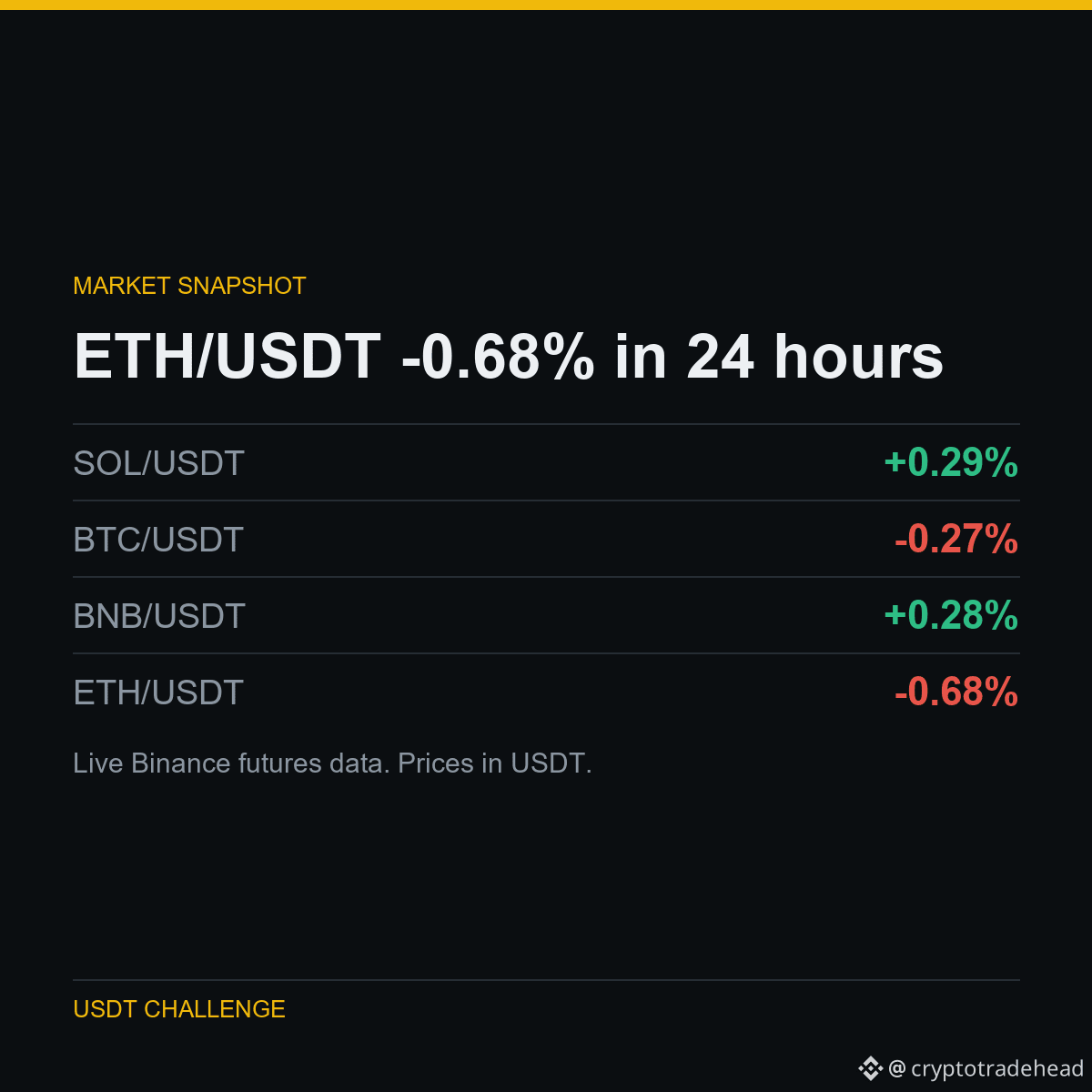
SOL/USDT: 101.84 USDT (+0.29%)
BTC/USDT: 80,387.20 USDT (-0.27%)
BNB/USDT: 745.14 USDT (+0.28%)
ETH/USDT: 2,327.50 USDT (-0.68%)
Funding on ETH/USDT is +0.0062% per 8h.
Context, not a call: I do not post entries or targets. Everything I trade is logged and published after the fact, wins and losses both.
Covered above: $ETH $SOL $BNB
#Binance #Crypto #Futures #BTC #Altcoins
24-HOUR SNAPSHOT
SOL/USDT: 101.84 USDT (+0.29%)
BTC/USDT: 80,387.20 USDT (-0.27%)
BNB/USDT: 745.14 USDT (+0.28%)
ETH/USDT: 2,327.50 USDT (-0.68%)
Funding on ETH/USDT is +0.0062% per 8h.
Context, not a call: I do not post entries or targets. Everything I trade is logged and published after the fact, wins and losses both.
Covered above: $ETH $SOL $BNB
#Binance #Crypto #Futures #BTC #Altcoins
SOL/USDT: 101.84 USDT (+0.29%)
BTC/USDT: 80,387.20 USDT (-0.27%)
BNB/USDT: 745.14 USDT (+0.28%)
ETH/USDT: 2,327.50 USDT (-0.68%)
Funding on ETH/USDT is +0.0062% per 8h.
Context, not a call: I do not post entries or targets. Everything I trade is logged and published after the fact, wins and losses both.
Covered above: $ETH $SOL $BNB
#Binance #Crypto #Futures #BTC #Altcoins
1
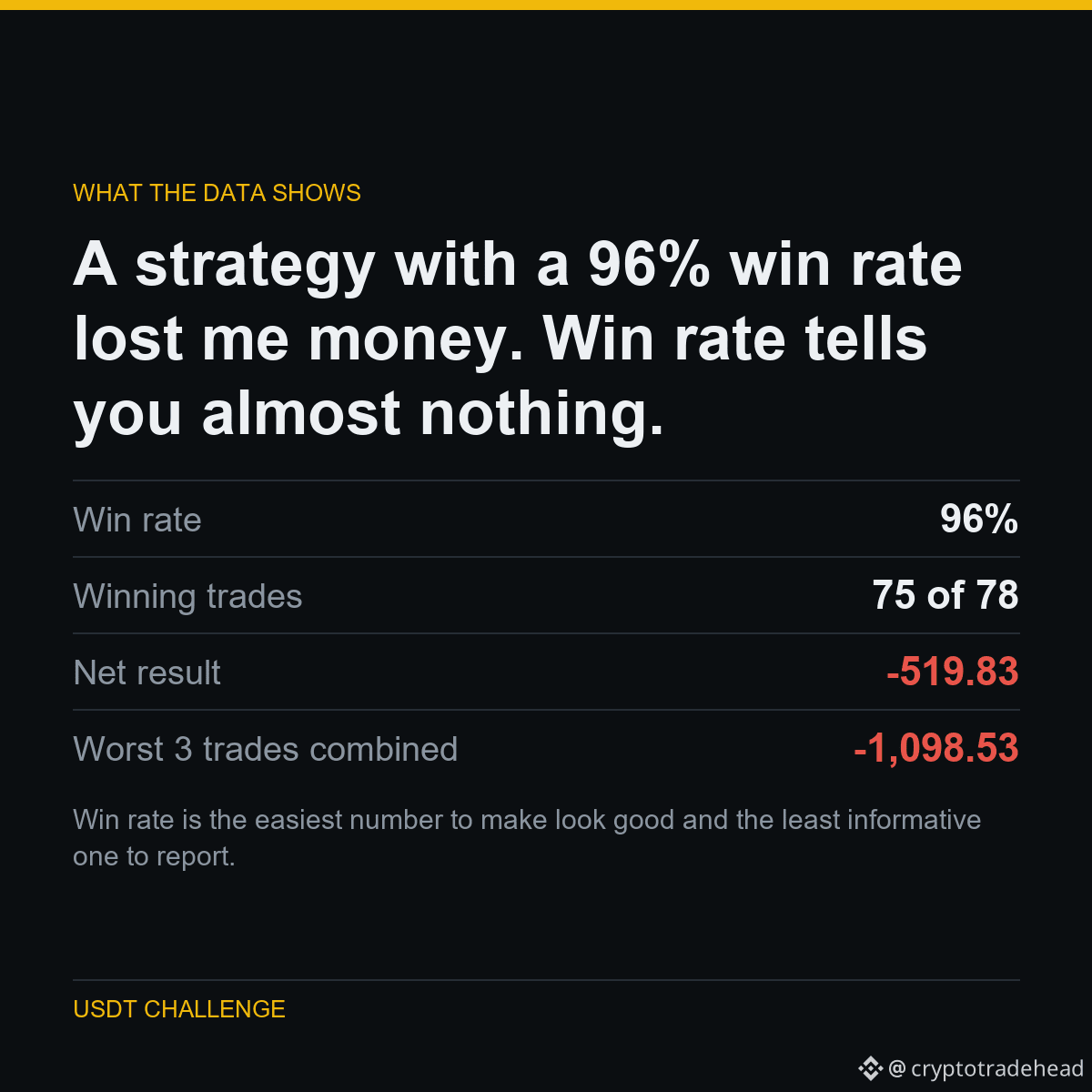
A strategy with a 96% win rate lost me money. Win rate tells you almost nothing.
I backtested a martingale system - add to losers, close when it recovers. 75 of 78 trades were winners.
It still lost 519.83 USDT, because the three losing trades gave back more than all 75 winners made combined.
Peak margin on those trades reached 4x the entire account.
WHAT IT MEANS
Win rate is the easiest number to make look good and the least informative one to report. Anyone showing you a win rate without the size of the losses is showing you the half of the picture that flatters them.
Part of a public experiment: 5,063 USDT to 1,000,000 USDT, every result published - including the ones that make me look bad.
Run on $BNB
#Binance #Futures #Backtesting #TradingBot #CryptoData
A strategy with a 96% win rate lost me money. Win rate tells you almost nothing.
I backtested a martingale system - add to losers, close when it recovers. 75 of 78 trades were winners.
It still lost 519.83 USDT, because the three losing trades gave back more than all 75 winners made combined.
Peak margin on those trades reached 4x the entire account.
WHAT IT MEANS
Win rate is the easiest number to make look good and the least informative one to report. Anyone showing you a win rate without the size of the losses is showing you the half of the picture that flatters them.
Part of a public experiment: 5,063 USDT to 1,000,000 USDT, every result published - including the ones that make me look bad.
Run on $BNB
#Binance #Futures #Backtesting #TradingBot #CryptoData
I backtested a martingale system - add to losers, close when it recovers. 75 of 78 trades were winners.
It still lost 519.83 USDT, because the three losing trades gave back more than all 75 winners made combined.
Peak margin on those trades reached 4x the entire account.
WHAT IT MEANS
Win rate is the easiest number to make look good and the least informative one to report. Anyone showing you a win rate without the size of the losses is showing you the half of the picture that flatters them.
Part of a public experiment: 5,063 USDT to 1,000,000 USDT, every result published - including the ones that make me look bad.
Run on $BNB
#Binance #Futures #Backtesting #TradingBot #CryptoData
6
Article
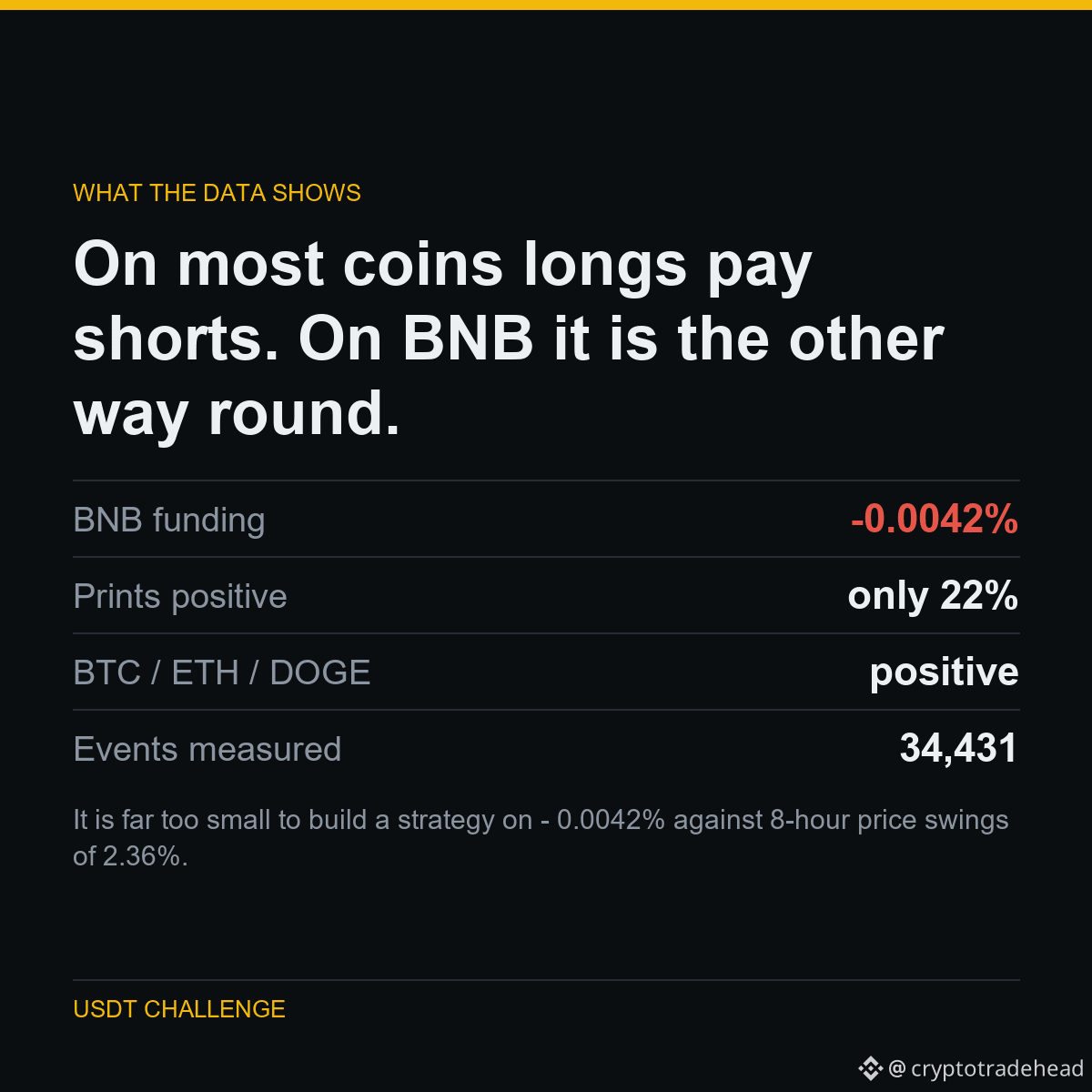
On most coins longs pay shorts. On BNB it is the other way round.On most coins longs pay shorts. On BNB it is the other way round.
Funding is the payment between long and short holders of a perpetual. Positive means longs pay shorts, which is the usual state of a market where most people are betting up.
Across 34,431 prints, BNB averages NEGATIVE funding - shorts pay longs - and only 22% of its prints are positive. BTC, ETH and DOGE are all positive.
So holding a long BNB perp is paid to exist, where a long BTC perp pays rent.
WHAT IT MEANS
It is far too small to build a strategy on - 0.0042% against 8-hour price swings of 2.36%. But if you are already holding a position, the direction of funding is not the same on every coin, and most people assume it is.
Part of a public experiment: 5,063 USDT to 1,000,000 USDT, every result published - including the ones that make me look bad.
Run on $BNB $BTC $ETH
#Binance #Futures #Backtesting #TradingBot #CryptoData
On most coins longs pay shorts. On BNB it is the other way round.
On most coins longs pay shorts. On BNB it is the other way round.
Funding is the payment between long and short holders of a perpetual. Positive means longs pay shorts, which is the usual state of a market where most people are betting up.
Across 34,431 prints, BNB averages NEGATIVE funding - shorts pay longs - and only 22% of its prints are positive. BTC, ETH and DOGE are all positive.
So holding a long BNB perp is paid to exist, where a long BTC perp pays rent.
WHAT IT MEANS
It is far too small to build a strategy on - 0.0042% against 8-hour price swings of 2.36%. But if you are already holding a position, the direction of funding is not the same on every coin, and most people assume it is.
Part of a public experiment: 5,063 USDT to 1,000,000 USDT, every result published - including the ones that make me look bad.
Run on $BNB $BTC $ETH
#Binance #Futures #Backtesting #TradingBot #CryptoData
Funding is the payment between long and short holders of a perpetual. Positive means longs pay shorts, which is the usual state of a market where most people are betting up.
Across 34,431 prints, BNB averages NEGATIVE funding - shorts pay longs - and only 22% of its prints are positive. BTC, ETH and DOGE are all positive.
So holding a long BNB perp is paid to exist, where a long BTC perp pays rent.
WHAT IT MEANS
It is far too small to build a strategy on - 0.0042% against 8-hour price swings of 2.36%. But if you are already holding a position, the direction of funding is not the same on every coin, and most people assume it is.
Part of a public experiment: 5,063 USDT to 1,000,000 USDT, every result published - including the ones that make me look bad.
Run on $BNB $BTC $ETH
#Binance #Futures #Backtesting #TradingBot #CryptoData
6
DAY 1 - 5,063 USDT to 1,000,000 USDT
Balance: 5,063.23 USDT
Change: +0.00 USDT (+0.0%)
Runners stopped while I rebuild the strategy from the backtest evidence. Nothing open.
Running on a Binance testnet account, so this is demo capital - I would rather say that than let you assume otherwise. The strategy, the costs and the losses are all real.
No signals for sale, no course, no affiliate link. Just the account and the data behind it.
Traded in this challenge: $BTC $SOL $AVAX
#Binance #USDT #Futures #TradingChallenge #Crypto
DAY 1 - 5,063 USDT to 1,000,000 USDT
Balance: 5,063.23 USDT
Change: +0.00 USDT (+0.0%)
Runners stopped while I rebuild the strategy from the backtest evidence. Nothing open.
Running on a Binance testnet account, so this is demo capital - I would rather say that than let you assume otherwise. The strategy, the costs and the losses are all real.
No signals for sale, no course, no affiliate link. Just the account and the data behind it.
Traded in this challenge: $BTC $SOL $AVAX
#Binance #USDT #Futures #TradingChallenge #Crypto
Balance: 5,063.23 USDT
Change: +0.00 USDT (+0.0%)
Runners stopped while I rebuild the strategy from the backtest evidence. Nothing open.
Running on a Binance testnet account, so this is demo capital - I would rather say that than let you assume otherwise. The strategy, the costs and the losses are all real.
No signals for sale, no course, no affiliate link. Just the account and the data behind it.
Traded in this challenge: $BTC $SOL $AVAX
#Binance #USDT #Futures #TradingChallenge #Crypto
5
Article
I measured real execution costs with 48 controlled trades. One number decides everything.I measured real execution costs with 48 controlled trades. One number decides everything.
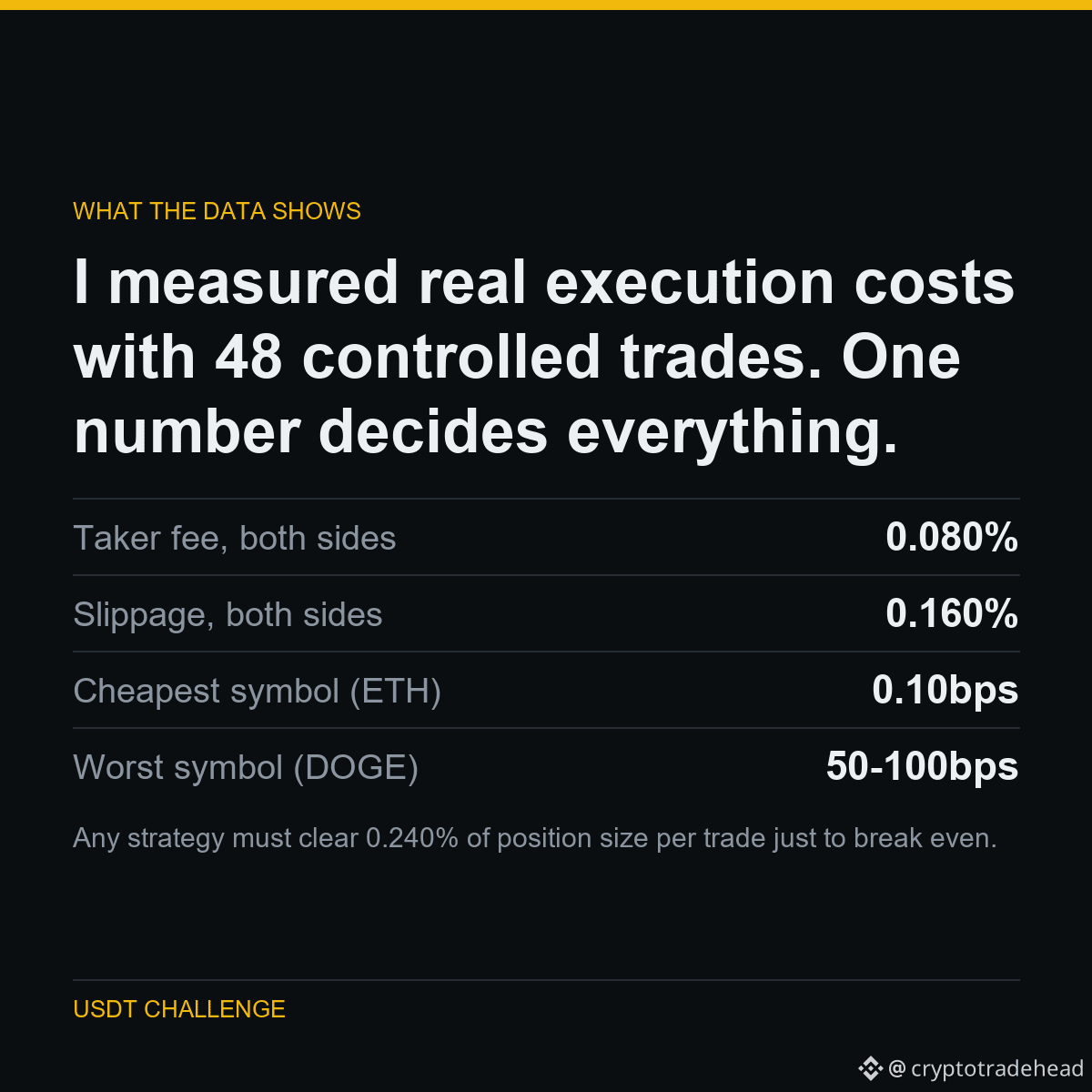
I stopped assuming what trading costs and measured it: 48 controlled round trips, entering and exiting immediately, recording the actual fill against the reference price.
Fee was constant at 0.04% per side. Slippage was not - ETH filled at essentially zero, while DOGE cost 50 to 100 basis points per round trip.
On a 150 USDT position, a round trip costs 0.36 USDT before the market moves at all.
WHAT IT MEANS
Any strategy must clear 0.240% of position size per trade just to break even. Most published setups never mention this number, which is why most published setups lose money.
Part of a public experiment: 5,063 USDT to 1,000,000 USDT, every result published - including the ones that make me look bad.
Run on $ETH $DOGE
#Binance #Futures #Backtesting #TradingBot #CryptoData
I measured real execution costs with 48 controlled trades. One number decides everything.
I measured real execution costs with 48 controlled trades. One number decides everything.
I stopped assuming what trading costs and measured it: 48 controlled round trips, entering and exiting immediately, recording the actual fill against the reference price.
Fee was constant at 0.04% per side. Slippage was not - ETH filled at essentially zero, while DOGE cost 50 to 100 basis points per round trip.
On a 150 USDT position, a round trip costs 0.36 USDT before the market moves at all.
WHAT IT MEANS
Any strategy must clear 0.240% of position size per trade just to break even. Most published setups never mention this number, which is why most published setups lose money.
Part of a public experiment: 5,063 USDT to 1,000,000 USDT, every result published - including the ones that make me look bad.
Run on $ETH $DOGE
#Binance #Futures #Backtesting #TradingBot #CryptoData
I stopped assuming what trading costs and measured it: 48 controlled round trips, entering and exiting immediately, recording the actual fill against the reference price.
Fee was constant at 0.04% per side. Slippage was not - ETH filled at essentially zero, while DOGE cost 50 to 100 basis points per round trip.
On a 150 USDT position, a round trip costs 0.36 USDT before the market moves at all.
WHAT IT MEANS
Any strategy must clear 0.240% of position size per trade just to break even. Most published setups never mention this number, which is why most published setups lose money.
Part of a public experiment: 5,063 USDT to 1,000,000 USDT, every result published - including the ones that make me look bad.
Run on $ETH $DOGE
#Binance #Futures #Backtesting #TradingBot #CryptoData
5
Article
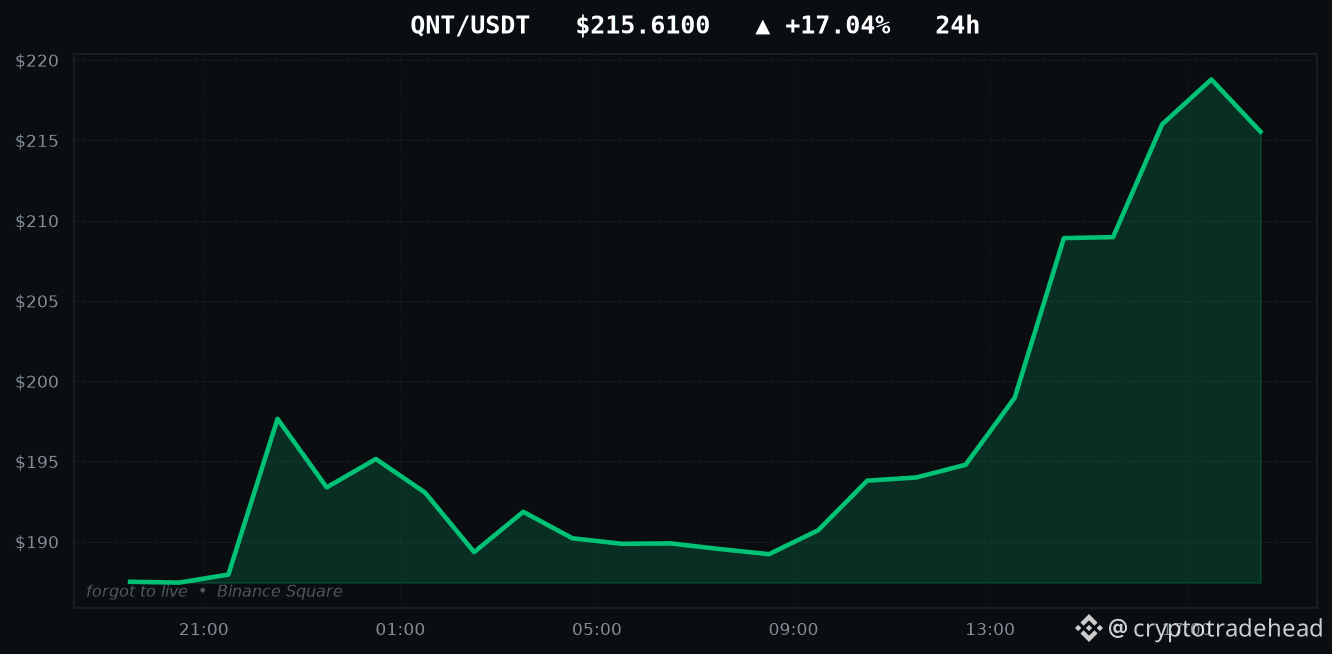
QNT is up +17.04% - I tested both ways to trade itTODAY'S TOP GAINERS
QNT: +17.04%
KAT: +14.21%
BEAMX: +13.64%
BANK: +13.56%
ERA: +12.28%
Every account on this app will show you this list. Here is the part they skip.
I backtested both ways of trading a move like QNT's +17.04%: buying the breakout, and fading it on the assumption it reverts. Both lost money. Not narrowly - they lost roughly the transaction cost, 0.240% per round trip, which is what a signal carrying no information looks like once you charge it fees.
A large 24-hour move tells you something already happened. It does not tell you what happens next, and the data says so in both directions.
Part of a public experiment: every strategy I test gets published, working or not.
Movers above: $QNT $KAT $BEAMX
#Binance #Altcoins #Futures #QNT #CryptoData
QNT is up +17.04% - I tested both ways to trade it
TODAY'S TOP GAINERS
QNT: +17.04%
KAT: +14.21%
BEAMX: +13.64%
BANK: +13.56%
ERA: +12.28%
Every account on this app will show you this list. Here is the part they skip.
I backtested both ways of trading a move like QNT's +17.04%: buying the breakout, and fading it on the assumption it reverts. Both lost money. Not narrowly - they lost roughly the transaction cost, 0.240% per round trip, which is what a signal carrying no information looks like once you charge it fees.
A large 24-hour move tells you something already happened. It does not tell you what happens next, and the data says so in both directions.
Part of a public experiment: every strategy I test gets published, working or not.
Movers above: $QNT $KAT $BEAMX
#Binance #Altcoins #Futures #QNT #CryptoData
QNT: +17.04%
KAT: +14.21%
BEAMX: +13.64%
BANK: +13.56%
ERA: +12.28%
Every account on this app will show you this list. Here is the part they skip.
I backtested both ways of trading a move like QNT's +17.04%: buying the breakout, and fading it on the assumption it reverts. Both lost money. Not narrowly - they lost roughly the transaction cost, 0.240% per round trip, which is what a signal carrying no information looks like once you charge it fees.
A large 24-hour move tells you something already happened. It does not tell you what happens next, and the data says so in both directions.
Part of a public experiment: every strategy I test gets published, working or not.
Movers above: $QNT $KAT $BEAMX
#Binance #Altcoins #Futures #QNT #CryptoData
4
HOW I TESTED IT
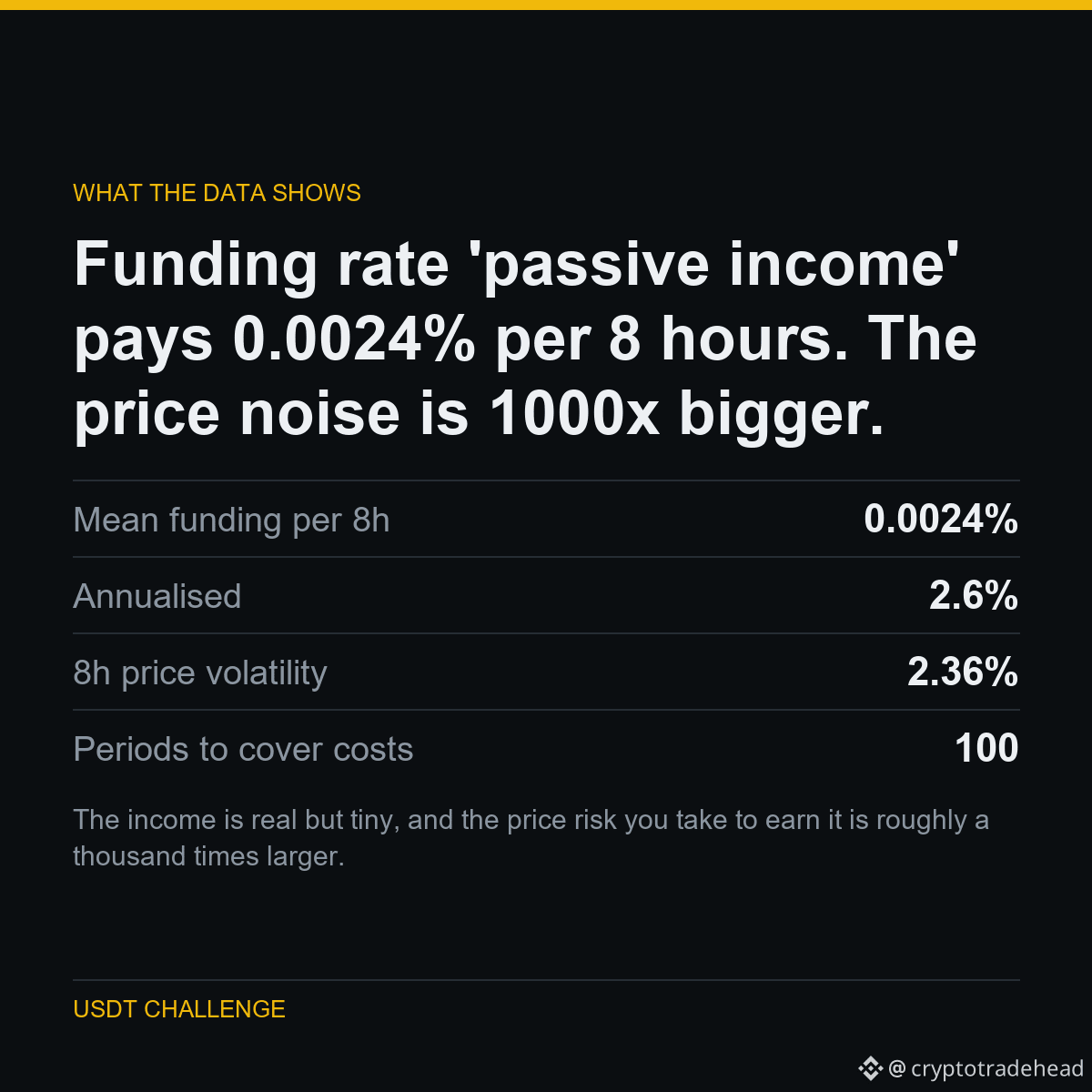
Collecting funding on perpetuals is sold as passive yield. I pulled 34,431 funding events across 7 symbols and measured it.
Average funding is 0.0024% per 8-hour period. On a 150 USDT position that is 0.0036 USDT. A round trip costs 0.36 USDT - you would hold for 33 days just to cover entry and exit.
Meanwhile the price moves 2.36% in a typical 8 hours.
THE NUMBERS
Mean funding per 8h: 0.0024%
Annualised: 2.6%
8h price volatility: 2.36%
Periods to cover costs: 100
The income is real but tiny, and the price risk you take to earn it is roughly a thousand times larger. This is why desks that trade it hedge with spot. Unhedged, it is not income - it is a directional bet with a rebate.
Part of a public experiment: 5,063 USDT to 1,000,000 USDT, every result published - including the ones that make me look bad.
Run on $BTC $ETH $SOL
#Binance #Futures #Backtesting #TradingBot #CryptoData
HOW I TESTED IT
Collecting funding on perpetuals is sold as passive yield. I pulled 34,431 funding events across 7 symbols and measured it.
Average funding is 0.0024% per 8-hour period. On a 150 USDT position that is 0.0036 USDT. A round trip costs 0.36 USDT - you would hold for 33 days just to cover entry and exit.
Meanwhile the price moves 2.36% in a typical 8 hours.
THE NUMBERS
Mean funding per 8h: 0.0024%
Annualised: 2.6%
8h price volatility: 2.36%
Periods to cover costs: 100
The income is real but tiny, and the price risk you take to earn it is roughly a thousand times larger. This is why desks that trade it hedge with spot. Unhedged, it is not income - it is a directional bet with a rebate.
Part of a public experiment: 5,063 USDT to 1,000,000 USDT, every result published - including the ones that make me look bad.
Run on $BTC $ETH $SOL
#Binance #Futures #Backtesting #TradingBot #CryptoData
Collecting funding on perpetuals is sold as passive yield. I pulled 34,431 funding events across 7 symbols and measured it.
Average funding is 0.0024% per 8-hour period. On a 150 USDT position that is 0.0036 USDT. A round trip costs 0.36 USDT - you would hold for 33 days just to cover entry and exit.
Meanwhile the price moves 2.36% in a typical 8 hours.
THE NUMBERS
Mean funding per 8h: 0.0024%
Annualised: 2.6%
8h price volatility: 2.36%
Periods to cover costs: 100
The income is real but tiny, and the price risk you take to earn it is roughly a thousand times larger. This is why desks that trade it hedge with spot. Unhedged, it is not income - it is a directional bet with a rebate.
Part of a public experiment: 5,063 USDT to 1,000,000 USDT, every result published - including the ones that make me look bad.
Run on $BTC $ETH $SOL
#Binance #Futures #Backtesting #TradingBot #CryptoData
1
DAY 1 - 5,063 USDT to 1,000,000 USDT
Balance: 5,063.23 USDT
Change: +0.00 USDT (+0.0%)
Runners stopped while I rebuild the strategy from the backtest evidence. Nothing open.
Running on a Binance testnet account, so this is demo capital - I would rather say that than let you assume otherwise. The strategy, the costs and the losses are all real.
No signals for sale, no course, no affiliate link. Just the account and the data behind it.
Traded in this challenge: $BTC $SOL $AVAX
#Binance #USDT #Futures #TradingChallenge #Crypto
DAY 1 - 5,063 USDT to 1,000,000 USDT
Balance: 5,063.23 USDT
Change: +0.00 USDT (+0.0%)
Runners stopped while I rebuild the strategy from the backtest evidence. Nothing open.
Running on a Binance testnet account, so this is demo capital - I would rather say that than let you assume otherwise. The strategy, the costs and the losses are all real.
No signals for sale, no course, no affiliate link. Just the account and the data behind it.
Traded in this challenge: $BTC $SOL $AVAX
#Binance #USDT #Futures #TradingChallenge #Crypto
Balance: 5,063.23 USDT
Change: +0.00 USDT (+0.0%)
Runners stopped while I rebuild the strategy from the backtest evidence. Nothing open.
Running on a Binance testnet account, so this is demo capital - I would rather say that than let you assume otherwise. The strategy, the costs and the losses are all real.
No signals for sale, no course, no affiliate link. Just the account and the data behind it.
Traded in this challenge: $BTC $SOL $AVAX
#Binance #USDT #Futures #TradingChallenge #Crypto
11
Log in to explore more content
Join global crypto users on Binance Square
⚡️ Get latest and useful information about crypto.
💬 Trusted by the world’s largest crypto exchange.
👍 Discover real insights from verified creators.
Email / Phone number