

MAY_SAM
5.4k Posts

MAY_SAM
 Square Verified
Report
Block User
📊 Crypto Strategist | 🚀 Binance Creator | 💡 Market Insights & Alpha |🧠X@Shahidbnb
33 Following
30.8K+ Followers
10.0K+ Liked
Posts
All
Live
PINNED
·
--
Verified
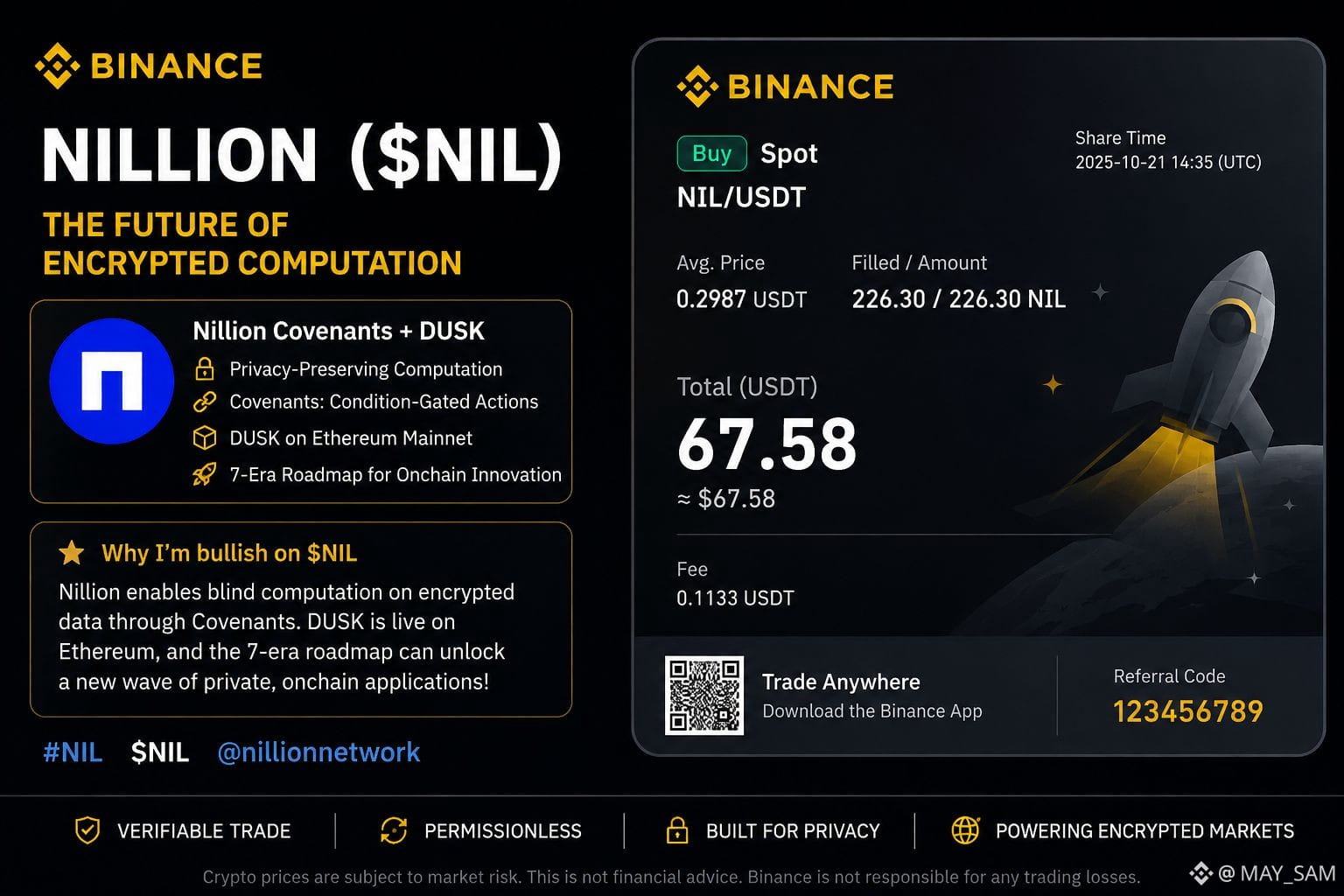
#nil $NIL @nillionnetwork Nillion is one of the projects I’m watching because it tackles a problem blockchains and AI still struggle with: using valuable data without exposing it. Instead of forcing sensitive information into the open, Nillion is building systems around encrypted data and blind computation.
What interests me most right now is Covenants. A Covenant can seal an instruction to a condition, keeping it unreadable until that condition is actually met. That opens the door to private, condition-based actions where no single operator holds the key or decides when the instruction should be revealed.
Dusk, the first phase of Nillion’s seven-phase Encrypted Markets roadmap, brings this idea to Ethereum. Dusk went live on Ethereum mainnet on September 28, introducing condition-gated Covenants, a permissionless node network rewarded by stake, and developer tooling designed to make the underlying cryptography easier to use.
The part I’m most excited about is what comes next: expanding Covenants across EVM chains, enabling cross-chain conditions and settlement, and eventually making conditions themselves private to the nodes evaluating them. If Nillion can make encrypted coordination practical for trading, AI agents, auctions, payments, and other data-heavy applications, that could become a meaningful new primitive for onchain markets.
Sharing my $NIL trade as I follow how this roadmap develops.
#nil $NIL @Nillion Nillion is one of the projects I’m watching because it tackles a problem blockchains and AI still struggle with: using valuable data without exposing it. Instead of forcing sensitive information into the open, Nillion is building systems around encrypted data and blind computation.
What interests me most right now is Covenants. A Covenant can seal an instruction to a condition, keeping it unreadable until that condition is actually met. That opens the door to private, condition-based actions where no single operator holds the key or decides when the instruction should be revealed.
Dusk, the first phase of Nillion’s seven-phase Encrypted Markets roadmap, brings this idea to Ethereum. Dusk went live on Ethereum mainnet on September 28, introducing condition-gated Covenants, a permissionless node network rewarded by stake, and developer tooling designed to make the underlying cryptography easier to use.
The part I’m most excited about is what comes next: expanding Covenants across EVM chains, enabling cross-chain conditions and settlement, and eventually making conditions themselves private to the nodes evaluating them. If Nillion can make encrypted coordination practical for trading, AI agents, auctions, payments, and other data-heavy applications, that could become a meaningful new primitive for onchain markets.
Sharing my $NIL trade as I follow how this roadmap develops.
What interests me most right now is Covenants. A Covenant can seal an instruction to a condition, keeping it unreadable until that condition is actually met. That opens the door to private, condition-based actions where no single operator holds the key or decides when the instruction should be revealed.
Dusk, the first phase of Nillion’s seven-phase Encrypted Markets roadmap, brings this idea to Ethereum. Dusk went live on Ethereum mainnet on September 28, introducing condition-gated Covenants, a permissionless node network rewarded by stake, and developer tooling designed to make the underlying cryptography easier to use.
The part I’m most excited about is what comes next: expanding Covenants across EVM chains, enabling cross-chain conditions and settlement, and eventually making conditions themselves private to the nodes evaluating them. If Nillion can make encrypted coordination practical for trading, AI agents, auctions, payments, and other data-heavy applications, that could become a meaningful new primitive for onchain markets.
Sharing my $NIL trade as I follow how this roadmap develops.
7
14
194
·
--
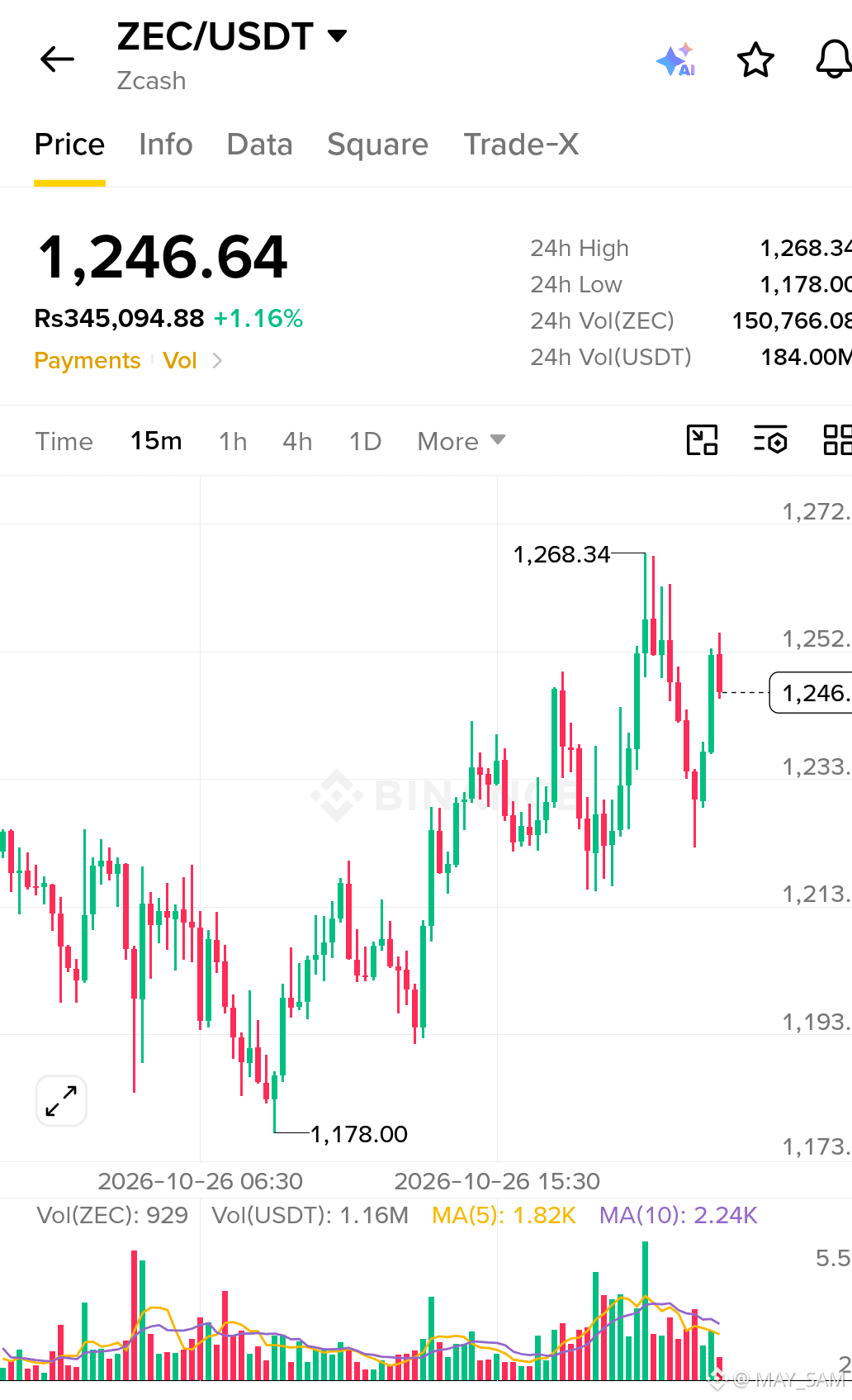
$ZEC bounced from 1,178 and climbed to 1,268.34. After that rally, price pulled back and rebounded again. Buyers are showing strength, but resistance remains overhead.
Current bias: cautiously bullish while price holds above 1,233. A rejection near 1,252–1,268 could trigger another pullback.
### Key price levels
### 1,268.34
24h high / major resistance
### 1,252–1,260
Near-term resistance
### 1,243–1,247
Current price zone
### 1,233
First support
### 1,213–1,218
Lower support
### 1,178
Major swing low
### Scenario 1 — LONG 📈
Wait for confirmation
* Trigger: A 15-minute candle closes above 1,252, followed by a successful retest.
* Potential targets: 1,260, then 1,268.
* Invalidation: Price loses the confirmed breakout/retest support; place a stop according to the candle structure and risk limit.
This setup becomes more convincing if breakout volume increases.
### Scenario 2 — SHORT 📉
Wait for breakdown
* Trigger: A 15-minute candle closes below 1,233, followed by a failed retest.
* Potential targets: 1,223, then 1,213.
* Invalidation: Price reclaims the broken support; define the stop before entering.
A brief dip below support without follow-through is not enough to confirm a short.
### Risk management
* Avoid entering directly into resistance or after an extended candle.
* Risk only a small, predefined portion of your trading capital.
* Calculate position size from the distance between entry and stop-loss.
* Recheck live price and volume before acting; the screenshot may no longer reflect current conditions.
My verdict: At 1,246.64, the chart is between nearby support and resistance. There is no clear confirmed entry from this screenshot alone. Waiting for a breakout above 1,252 or a breakdown below 1,233 offers a more structured intraday plan.
These levels are estimates from the uploaded chart, not live market data or guaranteed signals. Crypto trading Dyor, $BULLA $ZEC #BinancePick #EarningsSeason #AnthropicTTMRevenueGrewAbout1200% #SouthKoreaReportedlyWeighsFourthCryptoTaxDelay
$ZEC bounced from 1,178 and climbed to 1,268.34. After that rally, price pulled back and rebounded again. Buyers are showing strength, but resistance remains overhead.
Current bias: cautiously bullish while price holds above 1,233. A rejection near 1,252–1,268 could trigger another pullback.
### Key price levels
### 1,268.34
24h high / major resistance
### 1,252–1,260
Near-term resistance
### 1,243–1,247
Current price zone
### 1,233
First support
### 1,213–1,218
Lower support
### 1,178
Major swing low
### Scenario 1 — LONG 📈
Wait for confirmation
* Trigger: A 15-minute candle closes above 1,252, followed by a successful retest.
* Potential targets: 1,260, then 1,268.
* Invalidation: Price loses the confirmed breakout/retest support; place a stop according to the candle structure and risk limit.
This setup becomes more convincing if breakout volume increases.
### Scenario 2 — SHORT 📉
Wait for breakdown
* Trigger: A 15-minute candle closes below 1,233, followed by a failed retest.
* Potential targets: 1,223, then 1,213.
* Invalidation: Price reclaims the broken support; define the stop before entering.
A brief dip below support without follow-through is not enough to confirm a short.
### Risk management
* Avoid entering directly into resistance or after an extended candle.
* Risk only a small, predefined portion of your trading capital.
* Calculate position size from the distance between entry and stop-loss.
* Recheck live price and volume before acting; the screenshot may no longer reflect current conditions.
My verdict: At 1,246.64, the chart is between nearby support and resistance. There is no clear confirmed entry from this screenshot alone. Waiting for a breakout above 1,252 or a breakdown below 1,233 offers a more structured intraday plan.
These levels are estimates from the uploaded chart, not live market data or guaranteed signals. Crypto trading Dyor, $BULLA $ZEC #BinancePick #EarningsSeason #AnthropicTTMRevenueGrewAbout1200% #SouthKoreaReportedlyWeighsFourthCryptoTaxDelay
Current bias: cautiously bullish while price holds above 1,233. A rejection near 1,252–1,268 could trigger another pullback.
### Key price levels
### 1,268.34
24h high / major resistance
### 1,252–1,260
Near-term resistance
### 1,243–1,247
Current price zone
### 1,233
First support
### 1,213–1,218
Lower support
### 1,178
Major swing low
### Scenario 1 — LONG 📈
Wait for confirmation
* Trigger: A 15-minute candle closes above 1,252, followed by a successful retest.
* Potential targets: 1,260, then 1,268.
* Invalidation: Price loses the confirmed breakout/retest support; place a stop according to the candle structure and risk limit.
This setup becomes more convincing if breakout volume increases.
### Scenario 2 — SHORT 📉
Wait for breakdown
* Trigger: A 15-minute candle closes below 1,233, followed by a failed retest.
* Potential targets: 1,223, then 1,213.
* Invalidation: Price reclaims the broken support; define the stop before entering.
A brief dip below support without follow-through is not enough to confirm a short.
### Risk management
* Avoid entering directly into resistance or after an extended candle.
* Risk only a small, predefined portion of your trading capital.
* Calculate position size from the distance between entry and stop-loss.
* Recheck live price and volume before acting; the screenshot may no longer reflect current conditions.
My verdict: At 1,246.64, the chart is between nearby support and resistance. There is no clear confirmed entry from this screenshot alone. Waiting for a breakout above 1,252 or a breakdown below 1,233 offers a more structured intraday plan.
These levels are estimates from the uploaded chart, not live market data or guaranteed signals. Crypto trading Dyor, $BULLA $ZEC #BinancePick #EarningsSeason #AnthropicTTMRevenueGrewAbout1200% #SouthKoreaReportedlyWeighsFourthCryptoTaxDelay
657
·
--
Bullish
🚨 JUST IN: ROBINHOOD STOCK TOKENS ARE NOW LIVE ON MORPHO AS COLLATERAL TO BORROW STABLECOINS! 🔥
$BTC
{spot}(BTCUSDT)
$NIGHT
{spot}(NIGHTUSDT)
$LAB
{future}(LABUSDT)
#EarningsSeason #BinancePick #BitcoinHashrateHitsSevenMonthHigh #EthereumHoodiTestnetGlamsterdamHardForkDelayed #InterpolAfricaOperationArrests1462
🚨 JUST IN: ROBINHOOD STOCK TOKENS ARE NOW LIVE ON MORPHO AS COLLATERAL TO BORROW STABLECOINS! 🔥
$BTC
$NIGHT
$LAB
#EarningsSeason #BinancePick #BitcoinHashrateHitsSevenMonthHigh #EthereumHoodiTestnetGlamsterdamHardForkDelayed #InterpolAfricaOperationArrests1462
$BTC
$NIGHT
$LAB
#EarningsSeason #BinancePick #BitcoinHashrateHitsSevenMonthHigh #EthereumHoodiTestnetGlamsterdamHardForkDelayed #InterpolAfricaOperationArrests1462


2
334
·
--
Bullish
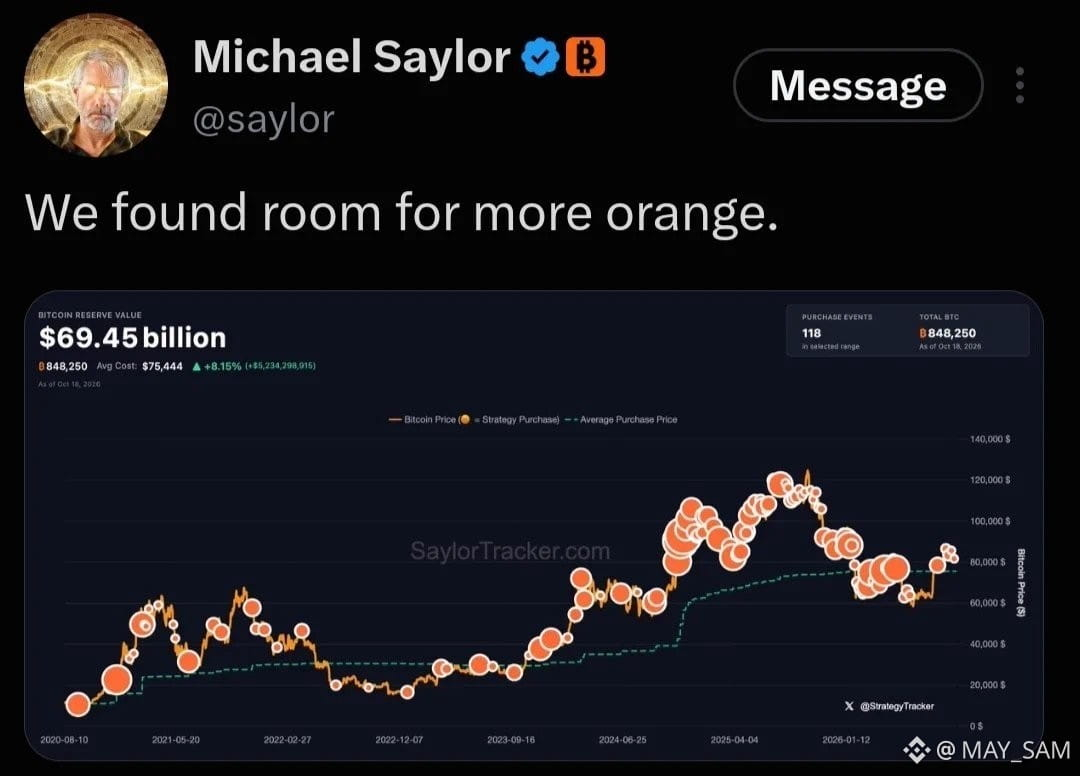
🇺🇸SAYLOR HINTS AT MORE BITCOIN BUYING!
“WE FOUND ROOM FOR MORE ORANGE.” 🔥
$LAB
{future}(LABUSDT)
$BTC
{spot}(BTCUSDT)
$ZEC
{spot}(ZECUSDT)
#GrayscaleAndRepublicLaunchThreeCryptoFunds #ElSalvadorBitcoinHoldingsSurpass7800BTC #DeepSeekReleasesUpdatedAIModel #NasdaqDowWeeklyGapWidestSinceJuly2002 #Nasdaq100Falls5.5%InWorstWeekIn18Months
🇺🇸SAYLOR HINTS AT MORE BITCOIN BUYING!
“WE FOUND ROOM FOR MORE ORANGE.” 🔥
$LAB
$BTC
$ZEC
#GrayscaleAndRepublicLaunchThreeCryptoFunds #ElSalvadorBitcoinHoldingsSurpass7800BTC #DeepSeekReleasesUpdatedAIModel #NasdaqDowWeeklyGapWidestSinceJuly2002 #Nasdaq100Falls5.5%InWorstWeekIn18Months
“WE FOUND ROOM FOR MORE ORANGE.” 🔥
$LAB
$BTC
$ZEC
#GrayscaleAndRepublicLaunchThreeCryptoFunds #ElSalvadorBitcoinHoldingsSurpass7800BTC #DeepSeekReleasesUpdatedAIModel #NasdaqDowWeeklyGapWidestSinceJuly2002 #Nasdaq100Falls5.5%InWorstWeekIn18Months
1
181
·
--
Bullish
Verified
I’m noticing something strange about the “agent economy.” We keep talking about how intelligent AI agents are becoming, but intelligence was never the part that worried me most.
Money was.
I’ve seen this before in crypto. A new narrative arrives, everyone talks about what becomes possible, and much less attention goes to the boring question that eventually matters: what happens when something goes wrong?
That’s why I keep coming back to Kite.
The interesting part isn’t simply giving an AI agent a wallet. It’s trying to give that agent limited authority: its own identity, a budget, transaction limits and a defined window in which it can act. Kite Passport is basically asking whether an agent can pay for an API, buy a service or complete a task without turning “autonomy” into unlimited permission.
That sounds small until you imagine thousands of agents paying other services per request through rails like x402 or MPP.
Still, I don’t fully trust the clean version of the agent-economy story. Agents can misunderstand intent. Services can fail. Credentials can be compromised. And putting rules onchain doesn’t magically make bad decisions good decisions.
But something about this feels different because Kite is focusing on the uncomfortable layer between AI capability and actual economic responsibility.
I’m not sure yet whether the agent economy becomes as autonomous as people expect.
I am increasingly convinced that if it does, the real battle won’t be over which agent thinks fastest.
It’ll be over who can safely trust one with money.
#KiteBBW $KITE @GoKiteAI
{spot}(KITEUSDT)
I’m noticing something strange about the “agent economy.” We keep talking about how intelligent AI agents are becoming, but intelligence was never the part that worried me most.
Money was.
I’ve seen this before in crypto. A new narrative arrives, everyone talks about what becomes possible, and much less attention goes to the boring question that eventually matters: what happens when something goes wrong?
That’s why I keep coming back to Kite.
The interesting part isn’t simply giving an AI agent a wallet. It’s trying to give that agent limited authority: its own identity, a budget, transaction limits and a defined window in which it can act. Kite Passport is basically asking whether an agent can pay for an API, buy a service or complete a task without turning “autonomy” into unlimited permission.
That sounds small until you imagine thousands of agents paying other services per request through rails like x402 or MPP.
Still, I don’t fully trust the clean version of the agent-economy story. Agents can misunderstand intent. Services can fail. Credentials can be compromised. And putting rules onchain doesn’t magically make bad decisions good decisions.
But something about this feels different because Kite is focusing on the uncomfortable layer between AI capability and actual economic responsibility.
I’m not sure yet whether the agent economy becomes as autonomous as people expect.
I am increasingly convinced that if it does, the real battle won’t be over which agent thinks fastest.
It’ll be over who can safely trust one with money.
#KiteBBW $KITE @KITE AI 中文
Money was.
I’ve seen this before in crypto. A new narrative arrives, everyone talks about what becomes possible, and much less attention goes to the boring question that eventually matters: what happens when something goes wrong?
That’s why I keep coming back to Kite.
The interesting part isn’t simply giving an AI agent a wallet. It’s trying to give that agent limited authority: its own identity, a budget, transaction limits and a defined window in which it can act. Kite Passport is basically asking whether an agent can pay for an API, buy a service or complete a task without turning “autonomy” into unlimited permission.
That sounds small until you imagine thousands of agents paying other services per request through rails like x402 or MPP.
Still, I don’t fully trust the clean version of the agent-economy story. Agents can misunderstand intent. Services can fail. Credentials can be compromised. And putting rules onchain doesn’t magically make bad decisions good decisions.
But something about this feels different because Kite is focusing on the uncomfortable layer between AI capability and actual economic responsibility.
I’m not sure yet whether the agent economy becomes as autonomous as people expect.
I am increasingly convinced that if it does, the real battle won’t be over which agent thinks fastest.
It’ll be over who can safely trust one with money.
#KiteBBW $KITE @KITE AI 中文

26
20
1.7k
·
--
⚡ LATEST: Capital Economics expects gold to slide for the rest of the year as the Fed keeps hiking.
#CelestiaRises16%To2026High #NasdaqDowWeeklyGapWidestSinceJuly2002 #Nasdaq100Falls5.5%InWorstWeekIn18Months #StrategySharesFall9%OnFriday #USPPIRises6.3%YearOverYear
$BTC
{spot}(BTCUSDT)
$ZEC
{spot}(ZECUSDT)
$LAB
{future}(LABUSDT)
⚡ LATEST: Capital Economics expects gold to slide for the rest of the year as the Fed keeps hiking.
#CelestiaRises16%To2026High #NasdaqDowWeeklyGapWidestSinceJuly2002 #Nasdaq100Falls5.5%InWorstWeekIn18Months #StrategySharesFall9%OnFriday #USPPIRises6.3%YearOverYear
$BTC
$ZEC
$LAB
#CelestiaRises16%To2026High #NasdaqDowWeeklyGapWidestSinceJuly2002 #Nasdaq100Falls5.5%InWorstWeekIn18Months #StrategySharesFall9%OnFriday #USPPIRises6.3%YearOverYear
$BTC
$ZEC
$LAB

1
910
·
--
Bullish
Verified
💰 HUT 8 LINKED WALLET MOVES $130M IN BTC TO EXCHANGES!
1,589 BTC TRANSFERRED IN 48 HOURS. 👀#AustraliaProposesCryptoTransactionReportingLaw #SolanaAlpenglowUpgradeToActivateOnOct21 #USSeptemberPPIRisesTo6.3% #RussiaToBanDirectCryptoP2PTradesFromJuly2027 #CrossRiverIntegratesRLUSDIntoCoreBanking
$BTC
{spot}(BTCUSDT)
$ETH
{spot}(ETHUSDT)
$LAB
{future}(LABUSDT)
💰 HUT 8 LINKED WALLET MOVES $130M IN BTC TO EXCHANGES!
1,589 BTC TRANSFERRED IN 48 HOURS. 👀#AustraliaProposesCryptoTransactionReportingLaw #SolanaAlpenglowUpgradeToActivateOnOct21 #USSeptemberPPIRisesTo6.3% #RussiaToBanDirectCryptoP2PTradesFromJuly2027 #CrossRiverIntegratesRLUSDIntoCoreBanking
$BTC
$ETH
$LAB
1,589 BTC TRANSFERRED IN 48 HOURS. 👀#AustraliaProposesCryptoTransactionReportingLaw #SolanaAlpenglowUpgradeToActivateOnOct21 #USSeptemberPPIRisesTo6.3% #RussiaToBanDirectCryptoP2PTradesFromJuly2027 #CrossRiverIntegratesRLUSDIntoCoreBanking
$BTC
$ETH
$LAB
2
632
·
--
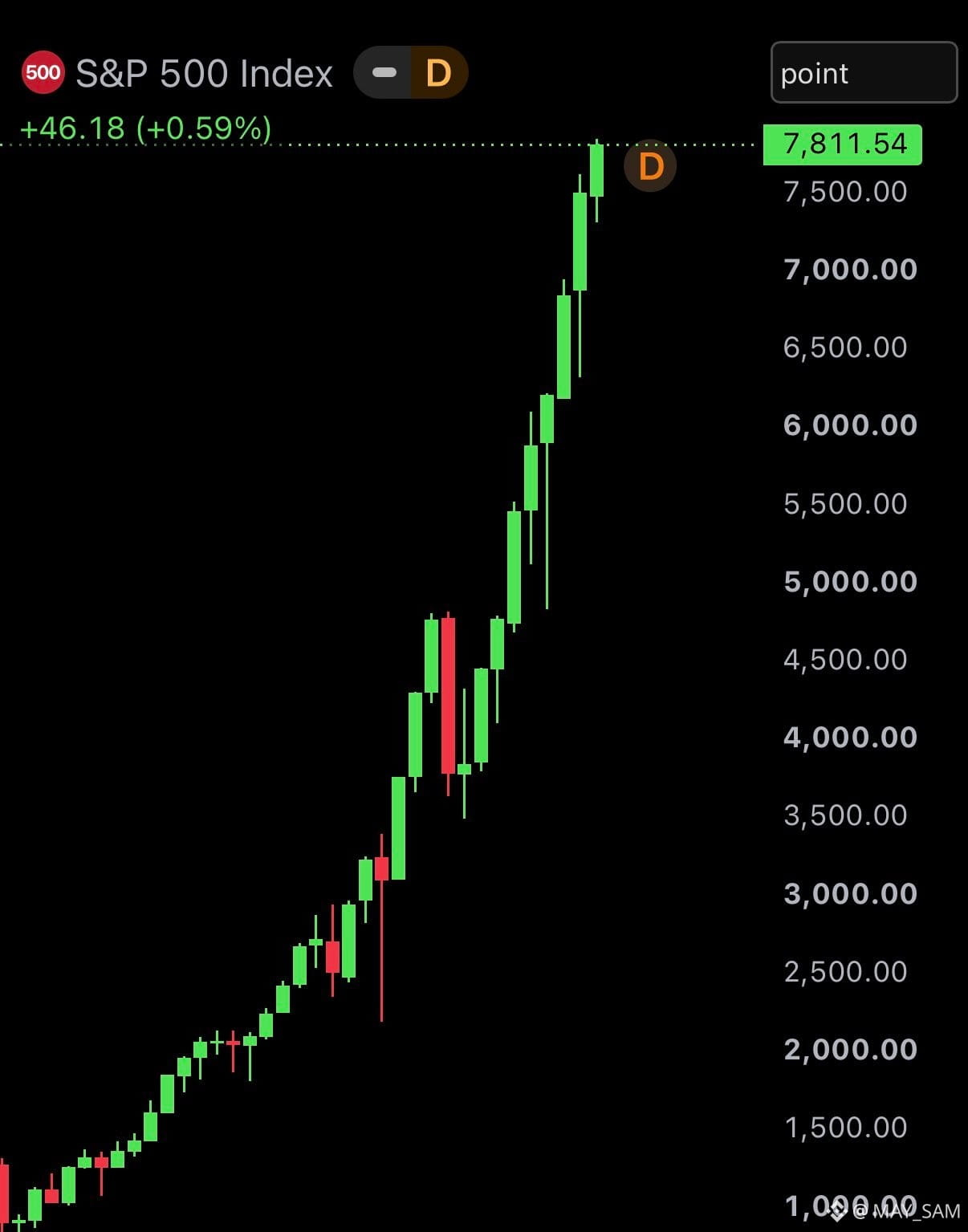
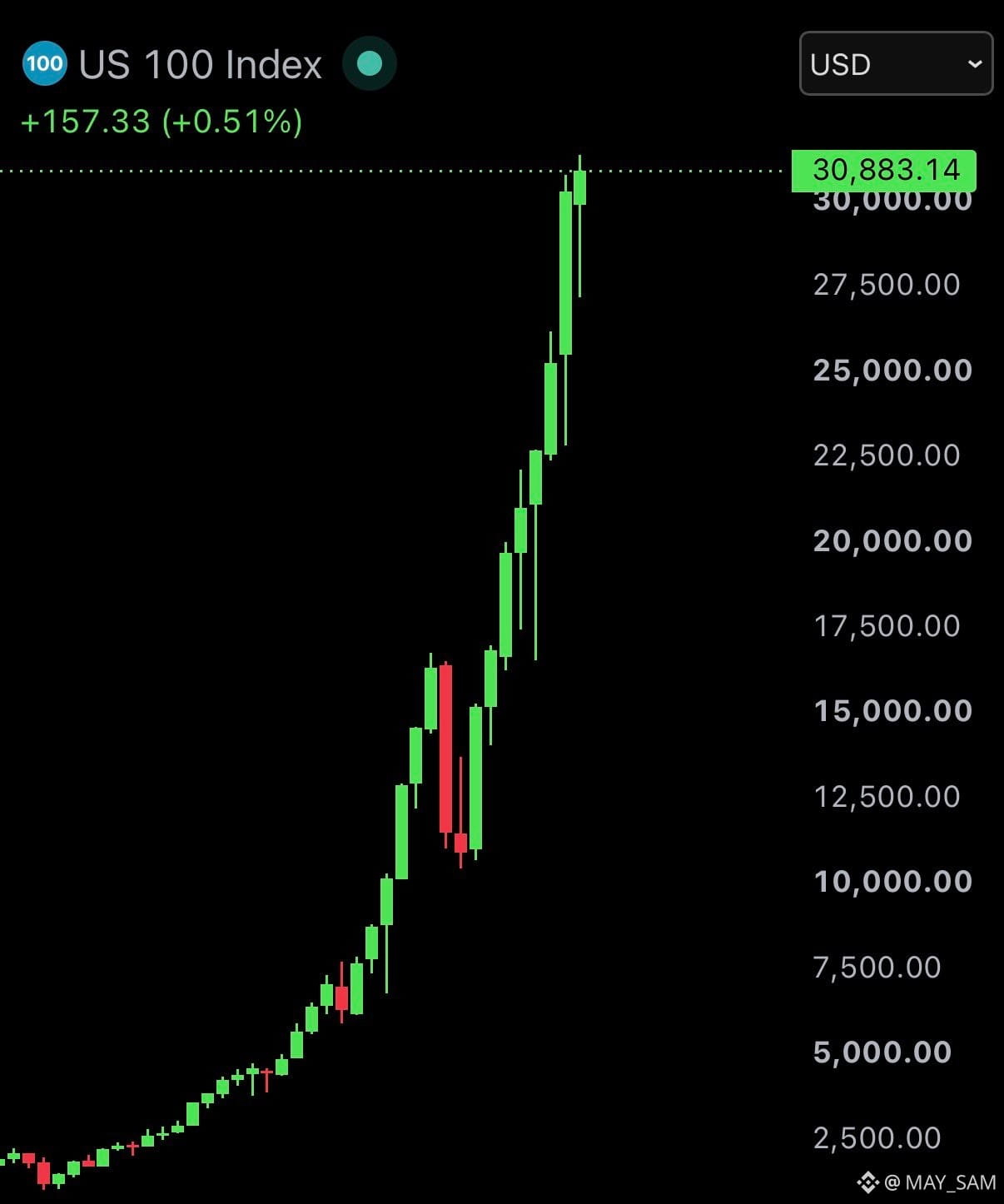
BREAKING 🇺🇸 The S&P 500 and Nasdaq just printed their highest weekly closes ever in history.
This is giga bullish for crypto.
#ZcashTargetsJanuaryForQuantumResistantPayments #SolanaPlansToCutBlockTimesTo200ms #ReusedBitcoinAddressesHold4.33MBTC #SenBlumenthalProbesCantorFitzgeraldTetherTies #Write2Earrn $BTC
{spot}(BTCUSDT)
$SOL
{spot}(SOLUSDT)
$ZEC
{spot}(ZECUSDT)
BREAKING 🇺🇸 The S&P 500 and Nasdaq just printed their highest weekly closes ever in history.
This is giga bullish for crypto.
#ZcashTargetsJanuaryForQuantumResistantPayments #SolanaPlansToCutBlockTimesTo200ms #ReusedBitcoinAddressesHold4.33MBTC #SenBlumenthalProbesCantorFitzgeraldTetherTies #Write2Earrn $BTC
$SOL
$ZEC
This is giga bullish for crypto.
#ZcashTargetsJanuaryForQuantumResistantPayments #SolanaPlansToCutBlockTimesTo200ms #ReusedBitcoinAddressesHold4.33MBTC #SenBlumenthalProbesCantorFitzgeraldTetherTies #Write2Earrn $BTC
$SOL
$ZEC
2
320
·
--
Bullish
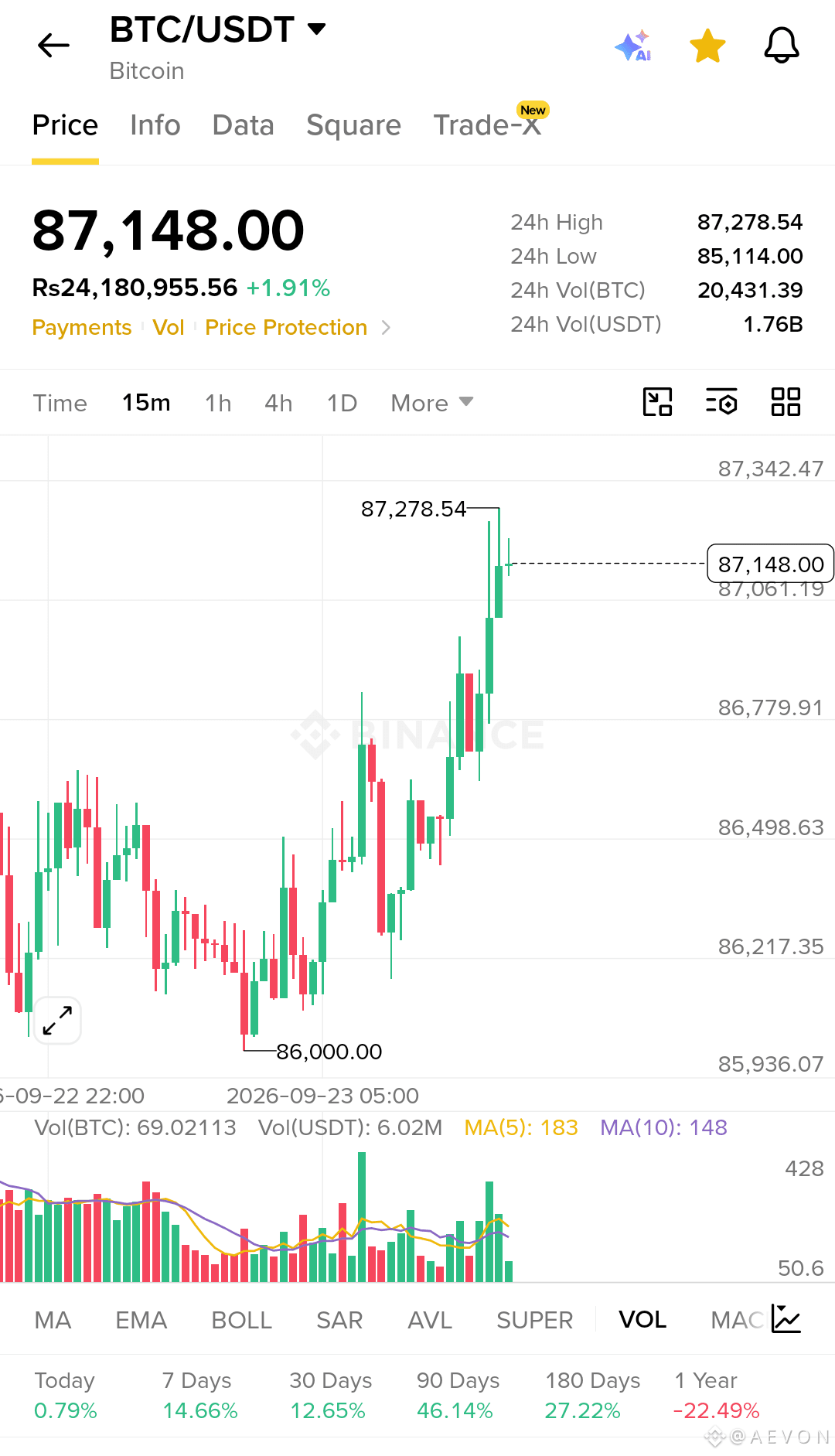
🚨 $BTC IS MOVING!
Bitcoin just pushed to $87.28K, up 1.91% in 24H. 📈
The $87K zone is heating up — will $BTC
{spot}(BTCUSDT)
break higher or face another rejection? 👀
Watching the next candle closely.
#Bitcoin #BTC #crypto #BinanceSquare
🚨 $BTC IS MOVING!
Bitcoin just pushed to $87.28K, up 1.91% in 24H. 📈
The $87K zone is heating up — will $BTC
break higher or face another rejection? 👀
Watching the next candle closely.
#Bitcoin #BTC #crypto #BinanceSquare
Bitcoin just pushed to $87.28K, up 1.91% in 24H. 📈
The $87K zone is heating up — will $BTC
break higher or face another rejection? 👀
Watching the next candle closely.
#Bitcoin #BTC #crypto #BinanceSquare
2
125
·
--
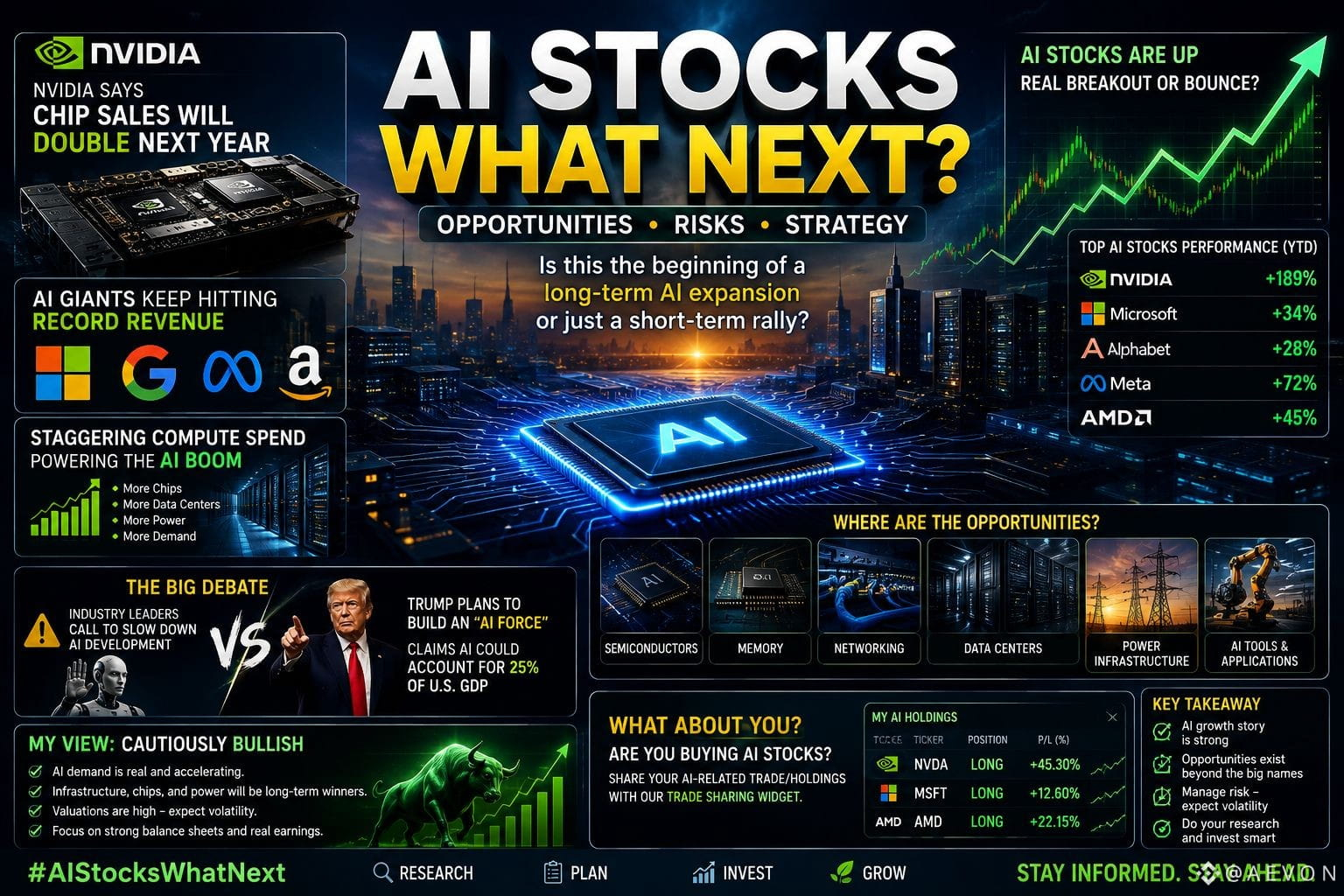
🚨 AI STOCKS ARE RISING BUT IS THE REAL OPPORTUNITY STILL IN AI?
AI stocks are back in the spotlight, and the bigger question isn’t simply “Will AI grow?” It’s: how much growth is already priced in?
Nvidia and other major AI players continue to benefit from enormous demand for chips, data centers, and computing power. At the same time, AI development is becoming a massive capital race, with companies spending heavily to build the infrastructure needed for the next wave of adoption.
I’m cautiously bullish on AI, but I don’t think every AI stock will move the same way.
The interesting opportunities may extend beyond the headline names — semiconductors, memory, networking, power infrastructure, data centers, and companies providing the “picks and shovels” behind AI could all play a role.
But there’s a major risk: expectations are extremely high. If AI spending slows, valuations could face serious pressure.
So the real question is:
🔥 Is this the beginning of a longer AI expansion — or another short-term rally?
I’m watching AI infrastructure + semiconductor demand closely.
What are you buying or watching?
#AIStocksWhatNext
🚨 AI STOCKS ARE RISING BUT IS THE REAL OPPORTUNITY STILL IN AI?
AI stocks are back in the spotlight, and the bigger question isn’t simply “Will AI grow?” It’s: how much growth is already priced in?
Nvidia and other major AI players continue to benefit from enormous demand for chips, data centers, and computing power. At the same time, AI development is becoming a massive capital race, with companies spending heavily to build the infrastructure needed for the next wave of adoption.
I’m cautiously bullish on AI, but I don’t think every AI stock will move the same way.
The interesting opportunities may extend beyond the headline names — semiconductors, memory, networking, power infrastructure, data centers, and companies providing the “picks and shovels” behind AI could all play a role.
But there’s a major risk: expectations are extremely high. If AI spending slows, valuations could face serious pressure.
So the real question is:
🔥 Is this the beginning of a longer AI expansion — or another short-term rally?
I’m watching AI infrastructure + semiconductor demand closely.
What are you buying or watching?
#AIStocksWhatNext
AI stocks are back in the spotlight, and the bigger question isn’t simply “Will AI grow?” It’s: how much growth is already priced in?
Nvidia and other major AI players continue to benefit from enormous demand for chips, data centers, and computing power. At the same time, AI development is becoming a massive capital race, with companies spending heavily to build the infrastructure needed for the next wave of adoption.
I’m cautiously bullish on AI, but I don’t think every AI stock will move the same way.
The interesting opportunities may extend beyond the headline names — semiconductors, memory, networking, power infrastructure, data centers, and companies providing the “picks and shovels” behind AI could all play a role.
But there’s a major risk: expectations are extremely high. If AI spending slows, valuations could face serious pressure.
So the real question is:
🔥 Is this the beginning of a longer AI expansion — or another short-term rally?
I’m watching AI infrastructure + semiconductor demand closely.
What are you buying or watching?
#AIStocksWhatNext
1
108
·
--
Binance, where are the Creator Campaigns? 👀
Many creators are waiting for new campaigns to participate, create original content, and contribute value to the Binance Square community.
It’s been weeks without a clear update. Can Binance please share when the next Creator Campaigns are expected to launch?
Creators are ready. We just need an update.
#BinanceSquare #Binance #CryptoCreators #CreatorCampaign #CZ @BiBi
@heyi @CZ @Binance_Earn_Official @NextGemHunter
Binance, where are the Creator Campaigns? 👀
Many creators are waiting for new campaigns to participate, create original content, and contribute value to the Binance Square community.
It’s been weeks without a clear update. Can Binance please share when the next Creator Campaigns are expected to launch?
Creators are ready. We just need an update.
#BinanceSquare #Binance #CryptoCreators #CreatorCampaign #CZ @Binance BiBi
@Yi He @CZ @Binance Earn Official @ParvezMayar
Many creators are waiting for new campaigns to participate, create original content, and contribute value to the Binance Square community.
It’s been weeks without a clear update. Can Binance please share when the next Creator Campaigns are expected to launch?
Creators are ready. We just need an update.
#BinanceSquare #Binance #CryptoCreators #CreatorCampaign #CZ @Binance BiBi
@Yi He @CZ @Binance Earn Official @ParvezMayar

5
5
316
·
--
Bullish
30D trade $BNB 2.8K USDT
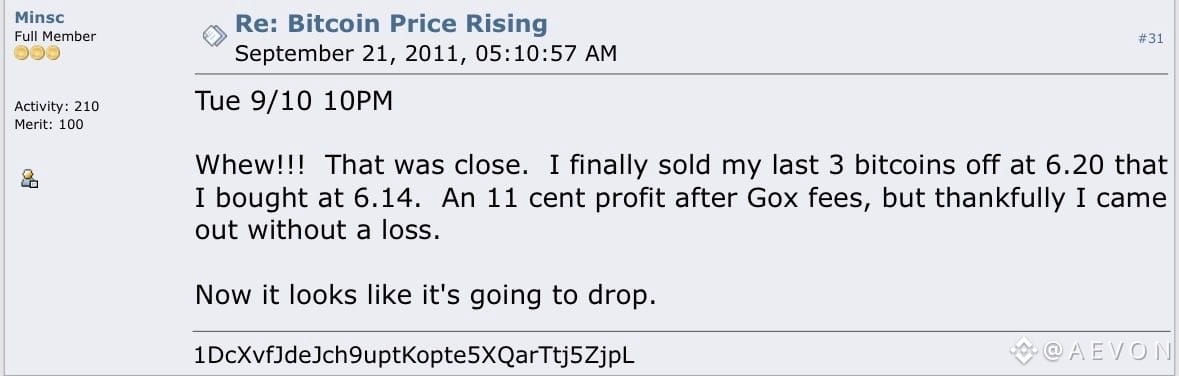
b> The year is 2011
> User buys 3 bitcoin for $6.14 each
> Then sold them for $6.20
> After fees, the total profit was “11 cents”
> The user was relieved and posted, “That was close…but thankfully I came out without a loss.”
#MultiversXPlansHardForkRecovery #SaylorHintsStrategyBitcoinBuy #CanaryFilesSecondAmendmentForStakedSEIETF #SouthAfricaProposesCryptoExchangeControls #ECBStartsBlockchainEuroSettlement $BTC
{spot}(BTCUSDT)
b> The year is 2011
> User buys 3 bitcoin for $6.14 each
> Then sold them for $6.20
> After fees, the total profit was “11 cents”
> The user was relieved and posted, “That was close…but thankfully I came out without a loss.”
#MultiversXPlansHardForkRecovery #SaylorHintsStrategyBitcoinBuy #CanaryFilesSecondAmendmentForStakedSEIETF #SouthAfricaProposesCryptoExchangeControls #ECBStartsBlockchainEuroSettlement $BTC
> User buys 3 bitcoin for $6.14 each
> Then sold them for $6.20
> After fees, the total profit was “11 cents”
> The user was relieved and posted, “That was close…but thankfully I came out without a loss.”
#MultiversXPlansHardForkRecovery #SaylorHintsStrategyBitcoinBuy #CanaryFilesSecondAmendmentForStakedSEIETF #SouthAfricaProposesCryptoExchangeControls #ECBStartsBlockchainEuroSettlement $BTC
1
147
·
--
Bullish
#FedRateWatch 🔥
September FOMC could be a major turning point for markets.
August U.S. CPI showed inflation remains sticky: headline CPI rose 0.4% MoM, while core CPI increased 0.3% MoM. With inflation still above the Fed’s 2% target, markets are pricing roughly 90%+ odds of a 25bp hike this week.
But the bigger question is: is this a one-off hike or the start of a longer hiking cycle?
My view: the hike may be largely priced in. The real market catalyst will be Powell’s guidance on future rates.
📌 BTC: A 25bp hike could create short-term pressure through higher yields and a stronger dollar. But if the move is fully priced in and the Fed sounds less aggressive, BTC could rebound sharply.
📌 Tech Stocks: Higher rates can pressure growth-stock valuations, but strong earnings and AI demand may cushion the downside.
📌 Gold: Higher real yields can weigh on gold initially, while inflation and uncertainty can support longer-term demand.
🎯 My trade plan: I won’t chase the first FOMC candle. I’m watching BTC’s key support/resistance and waiting for confirmation after volatility settles. For stocks and gold, I’ll focus on the Fed’s forward guidance and real-yield reaction.
What’s your call: 25bp hike, and one-off or the beginning of a new hiking cycle?
Share your BTC, stock or gold trade/hold strategy with the trade-sharing widget.
#FedRateWatch #FOMC #Bitcoin #BTC $LAB
{future}(LABUSDT)
$POWER
{future}(POWERUSDT)
$AKE
{future}(AKEUSDT)
#FedRateWatch 🔥
September FOMC could be a major turning point for markets.
August U.S. CPI showed inflation remains sticky: headline CPI rose 0.4% MoM, while core CPI increased 0.3% MoM. With inflation still above the Fed’s 2% target, markets are pricing roughly 90%+ odds of a 25bp hike this week.
But the bigger question is: is this a one-off hike or the start of a longer hiking cycle?
My view: the hike may be largely priced in. The real market catalyst will be Powell’s guidance on future rates.
📌 BTC: A 25bp hike could create short-term pressure through higher yields and a stronger dollar. But if the move is fully priced in and the Fed sounds less aggressive, BTC could rebound sharply.
📌 Tech Stocks: Higher rates can pressure growth-stock valuations, but strong earnings and AI demand may cushion the downside.
📌 Gold: Higher real yields can weigh on gold initially, while inflation and uncertainty can support longer-term demand.
🎯 My trade plan: I won’t chase the first FOMC candle. I’m watching BTC’s key support/resistance and waiting for confirmation after volatility settles. For stocks and gold, I’ll focus on the Fed’s forward guidance and real-yield reaction.
What’s your call: 25bp hike, and one-off or the beginning of a new hiking cycle?
Share your BTC, stock or gold trade/hold strategy with the trade-sharing widget.
#FedRateWatch #FOMC #Bitcoin #BTC $LAB
$POWER
$AKE
September FOMC could be a major turning point for markets.
August U.S. CPI showed inflation remains sticky: headline CPI rose 0.4% MoM, while core CPI increased 0.3% MoM. With inflation still above the Fed’s 2% target, markets are pricing roughly 90%+ odds of a 25bp hike this week.
But the bigger question is: is this a one-off hike or the start of a longer hiking cycle?
My view: the hike may be largely priced in. The real market catalyst will be Powell’s guidance on future rates.
📌 BTC: A 25bp hike could create short-term pressure through higher yields and a stronger dollar. But if the move is fully priced in and the Fed sounds less aggressive, BTC could rebound sharply.
📌 Tech Stocks: Higher rates can pressure growth-stock valuations, but strong earnings and AI demand may cushion the downside.
📌 Gold: Higher real yields can weigh on gold initially, while inflation and uncertainty can support longer-term demand.
🎯 My trade plan: I won’t chase the first FOMC candle. I’m watching BTC’s key support/resistance and waiting for confirmation after volatility settles. For stocks and gold, I’ll focus on the Fed’s forward guidance and real-yield reaction.
What’s your call: 25bp hike, and one-off or the beginning of a new hiking cycle?
Share your BTC, stock or gold trade/hold strategy with the trade-sharing widget.
#FedRateWatch #FOMC #Bitcoin #BTC $LAB
$POWER
$AKE
1
3
275
·
--
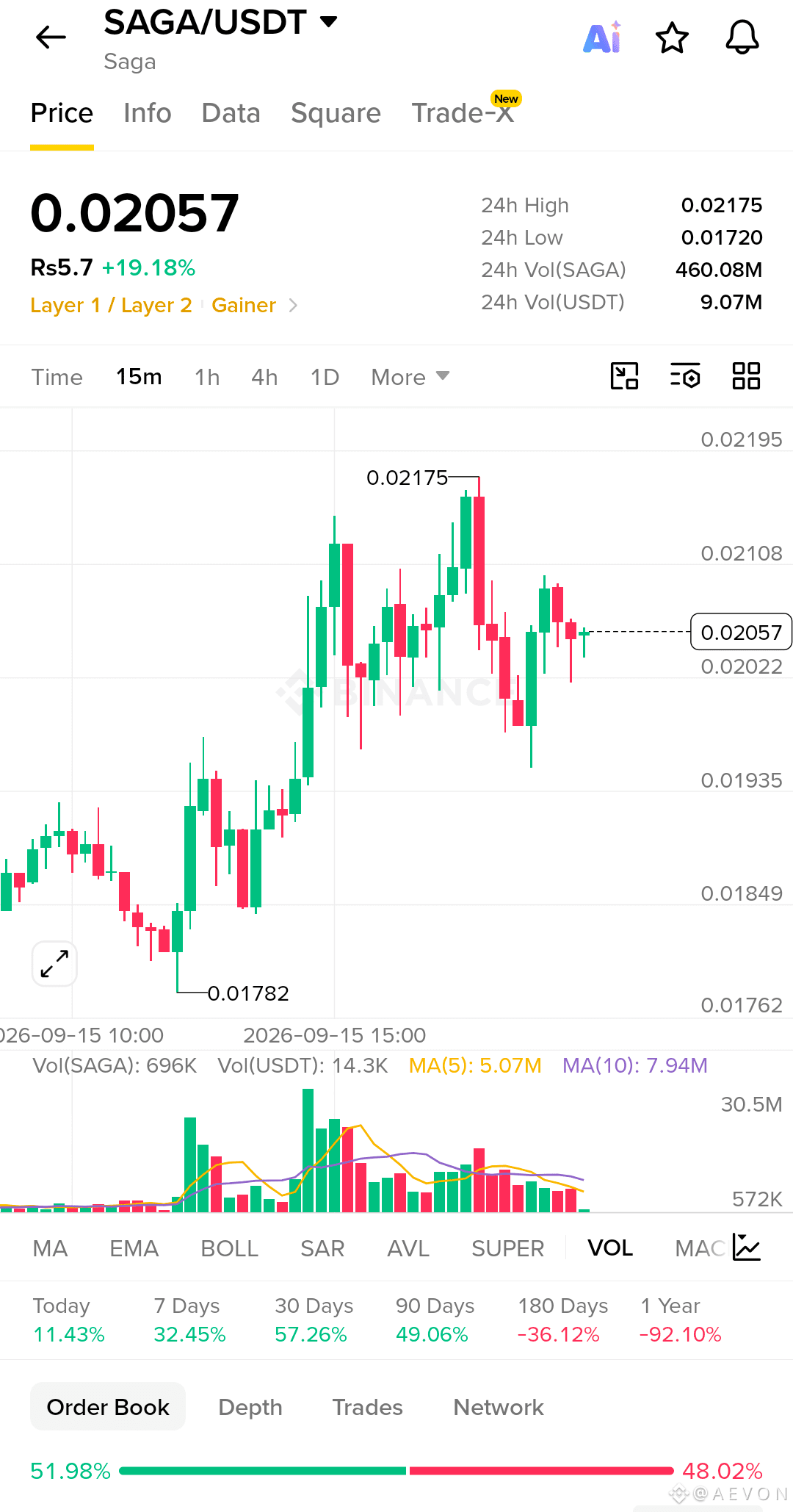
$SAGA is up +19% today… but is the pump ready to continue? 👀
SAGA is trading around $0.02057 after making a sharp move from the $0.01782 area.
The interesting part isn't the +19%.
It's what price does after the pump.
1️⃣ Buyers clearly stepped in
SAGA moved from around $0.01782 → $0.02175.
That's a major intraday expansion.
But after reaching $0.02175, sellers immediately pushed price lower.
This tells us the $0.0217–$0.0218 zone is currently being defended.
2️⃣ Now SAGA is consolidating
After the rejection, price has been moving around:
$0.0202–$0.0208
This is important.
Instead of immediately collapsing back to the breakout area, SAGA is holding relatively high.
That can mean buyers are absorbing some of the selling pressure.
But confirmation is still needed.
3️⃣ The key resistance 🚨
$0.02175
This is the major level from the chart.
If SAGA breaks above it with strong volume and holds the level on a retest, the bullish move could potentially continue.
A simple wick above resistance isn't enough.
Break + close + retest = stronger confirmation.
4️⃣ The key support 🛡️
The first area to watch is around:
$0.0202
If buyers continue defending this zone, the current consolidation can remain constructive.
Below that, the next important chart area is around $0.01935, followed by the previous swing area near $0.01782.
5️⃣ Volume is the confirmation signal
The pump came with noticeably larger volume.
But the latest candles are showing lower volume than the strongest part of the move.
That means traders should watch what happens if volume suddenly expands again.
📈 Rising price + rising volume = stronger breakout signal
📉 Rising price + falling volume = momentum may be weakening
Key SAGA levels 👇
🟢 Support: $0.0202
🟡 Next support: $0.01935
🔴 Major resistance: $0.02175
🚀 Bullish confirmation: Break & hold above $0.02175
⚠️ Bearish warning: Losing $0.0202 with strong selling volume
The biggest mistake after a +19% move?$SAGA
{spot}(SAGAUSDT)
$SAGA is up +19% today… but is the pump ready to continue? 👀
SAGA is trading around $0.02057 after making a sharp move from the $0.01782 area.
The interesting part isn't the +19%.
It's what price does after the pump.
1️⃣ Buyers clearly stepped in
SAGA moved from around $0.01782 → $0.02175.
That's a major intraday expansion.
But after reaching $0.02175, sellers immediately pushed price lower.
This tells us the $0.0217–$0.0218 zone is currently being defended.
2️⃣ Now SAGA is consolidating
After the rejection, price has been moving around:
$0.0202–$0.0208
This is important.
Instead of immediately collapsing back to the breakout area, SAGA is holding relatively high.
That can mean buyers are absorbing some of the selling pressure.
But confirmation is still needed.
3️⃣ The key resistance 🚨
$0.02175
This is the major level from the chart.
If SAGA breaks above it with strong volume and holds the level on a retest, the bullish move could potentially continue.
A simple wick above resistance isn't enough.
Break + close + retest = stronger confirmation.
4️⃣ The key support 🛡️
The first area to watch is around:
$0.0202
If buyers continue defending this zone, the current consolidation can remain constructive.
Below that, the next important chart area is around $0.01935, followed by the previous swing area near $0.01782.
5️⃣ Volume is the confirmation signal
The pump came with noticeably larger volume.
But the latest candles are showing lower volume than the strongest part of the move.
That means traders should watch what happens if volume suddenly expands again.
📈 Rising price + rising volume = stronger breakout signal
📉 Rising price + falling volume = momentum may be weakening
Key SAGA levels 👇
🟢 Support: $0.0202
🟡 Next support: $0.01935
🔴 Major resistance: $0.02175
🚀 Bullish confirmation: Break & hold above $0.02175
⚠️ Bearish warning: Losing $0.0202 with strong selling volume
The biggest mistake after a +19% move?$SAGA
SAGA is trading around $0.02057 after making a sharp move from the $0.01782 area.
The interesting part isn't the +19%.
It's what price does after the pump.
1️⃣ Buyers clearly stepped in
SAGA moved from around $0.01782 → $0.02175.
That's a major intraday expansion.
But after reaching $0.02175, sellers immediately pushed price lower.
This tells us the $0.0217–$0.0218 zone is currently being defended.
2️⃣ Now SAGA is consolidating
After the rejection, price has been moving around:
$0.0202–$0.0208
This is important.
Instead of immediately collapsing back to the breakout area, SAGA is holding relatively high.
That can mean buyers are absorbing some of the selling pressure.
But confirmation is still needed.
3️⃣ The key resistance 🚨
$0.02175
This is the major level from the chart.
If SAGA breaks above it with strong volume and holds the level on a retest, the bullish move could potentially continue.
A simple wick above resistance isn't enough.
Break + close + retest = stronger confirmation.
4️⃣ The key support 🛡️
The first area to watch is around:
$0.0202
If buyers continue defending this zone, the current consolidation can remain constructive.
Below that, the next important chart area is around $0.01935, followed by the previous swing area near $0.01782.
5️⃣ Volume is the confirmation signal
The pump came with noticeably larger volume.
But the latest candles are showing lower volume than the strongest part of the move.
That means traders should watch what happens if volume suddenly expands again.
📈 Rising price + rising volume = stronger breakout signal
📉 Rising price + falling volume = momentum may be weakening
Key SAGA levels 👇
🟢 Support: $0.0202
🟡 Next support: $0.01935
🔴 Major resistance: $0.02175
🚀 Bullish confirmation: Break & hold above $0.02175
⚠️ Bearish warning: Losing $0.0202 with strong selling volume
The biggest mistake after a +19% move?$SAGA
1
191
·
--
Bullish
CPI is coming… and this time, I’m watching the Fed reaction more than the headline itself. 👀
The stronger-than-expected Nonfarm Payrolls already gave the market something to think about. Now CPI is next, and this could be the number that changes the tone completely.
If inflation comes in hotter than expected, I wouldn’t be surprised to see traders start pricing in a more hawkish Fed. That could mean more pressure on stocks and a stronger dollar.
But if CPI comes in softer, the story could change quickly. A Fed hold would look more comfortable, and risk assets could get some breathing room. Gold could also become interesting as traders rethink the rate outlook.
My personal bias right now? Slightly bullish, but I’m staying cautious. 📊
I don’t want to guess the market before seeing the data. I’d rather watch the first reaction, see where the momentum goes, and then decide.
For now, gold and major stocks are on my watchlist. 🟡📈
What’s your call?
🟢 Hold — Bullish
🔴 Hold — Bearish
🟡 Hike — Bullish
⚫ Hike — Bearish
If you’re trading or holding stocks or gold, share your position with the Trade Sharing Widget.
Let’s see whose CPI call gets it right. 👇
#CPIWatch
#CLARITYActRevisionToRuleNonDeFiControllers #OracleJumpsOver6%OnEarningsBeat #USCoreCPIRises0.3%InAugustBeatingForecasts #BitcoinOpenInterestShareRisesTo42.1%
$BTC
{spot}(BTCUSDT)
$TRUMP
{spot}(TRUMPUSDT)
$NEAR
{spot}(NEARUSDT)
CPI is coming… and this time, I’m watching the Fed reaction more than the headline itself. 👀
The stronger-than-expected Nonfarm Payrolls already gave the market something to think about. Now CPI is next, and this could be the number that changes the tone completely.
If inflation comes in hotter than expected, I wouldn’t be surprised to see traders start pricing in a more hawkish Fed. That could mean more pressure on stocks and a stronger dollar.
But if CPI comes in softer, the story could change quickly. A Fed hold would look more comfortable, and risk assets could get some breathing room. Gold could also become interesting as traders rethink the rate outlook.
My personal bias right now? Slightly bullish, but I’m staying cautious. 📊
I don’t want to guess the market before seeing the data. I’d rather watch the first reaction, see where the momentum goes, and then decide.
For now, gold and major stocks are on my watchlist. 🟡📈
What’s your call?
🟢 Hold — Bullish
🔴 Hold — Bearish
🟡 Hike — Bullish
⚫ Hike — Bearish
If you’re trading or holding stocks or gold, share your position with the Trade Sharing Widget.
Let’s see whose CPI call gets it right. 👇
#CPIWatch
#CLARITYActRevisionToRuleNonDeFiControllers #OracleJumpsOver6%OnEarningsBeat #USCoreCPIRises0.3%InAugustBeatingForecasts #BitcoinOpenInterestShareRisesTo42.1%
$BTC
$TRUMP
$NEAR
The stronger-than-expected Nonfarm Payrolls already gave the market something to think about. Now CPI is next, and this could be the number that changes the tone completely.
If inflation comes in hotter than expected, I wouldn’t be surprised to see traders start pricing in a more hawkish Fed. That could mean more pressure on stocks and a stronger dollar.
But if CPI comes in softer, the story could change quickly. A Fed hold would look more comfortable, and risk assets could get some breathing room. Gold could also become interesting as traders rethink the rate outlook.
My personal bias right now? Slightly bullish, but I’m staying cautious. 📊
I don’t want to guess the market before seeing the data. I’d rather watch the first reaction, see where the momentum goes, and then decide.
For now, gold and major stocks are on my watchlist. 🟡📈
What’s your call?
🟢 Hold — Bullish
🔴 Hold — Bearish
🟡 Hike — Bullish
⚫ Hike — Bearish
If you’re trading or holding stocks or gold, share your position with the Trade Sharing Widget.
Let’s see whose CPI call gets it right. 👇
#CPIWatch
#CLARITYActRevisionToRuleNonDeFiControllers #OracleJumpsOver6%OnEarningsBeat #USCoreCPIRises0.3%InAugustBeatingForecasts #BitcoinOpenInterestShareRisesTo42.1%
$BTC
$TRUMP
$NEAR
🟢Hold — Bullish
0%
🔴 Hold — Bearish
100%
🟡 Hike — Bullish
0%
⚫ Hike — Bearish
0%
1 votes • Voting closed
2
6
157
·
--
Bullish
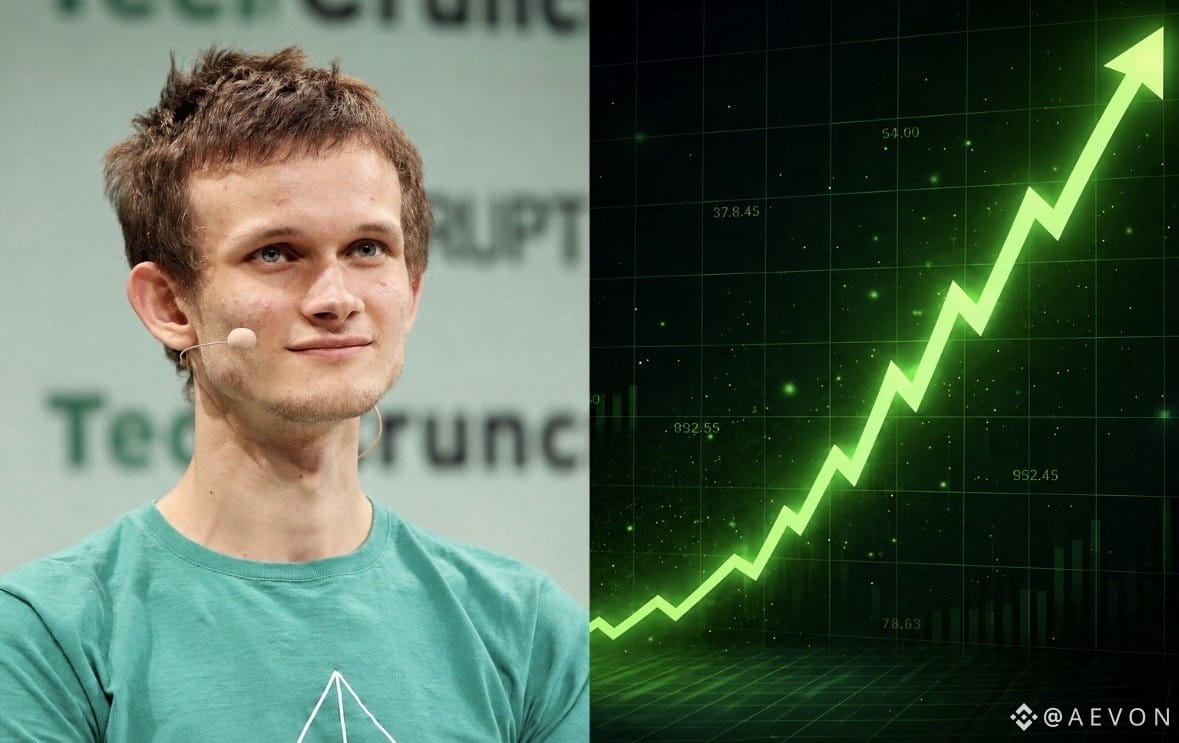
BREAKING: The Ethereum Foundation is making $ETH quantum-proof by 2029.
Giga bullish long term.
{spot}(ETHUSDT)
BREAKING: The Ethereum Foundation is making $ETH quantum-proof by 2029.
Giga bullish long term.
Giga bullish long term.
1
120
·
--
Bullish
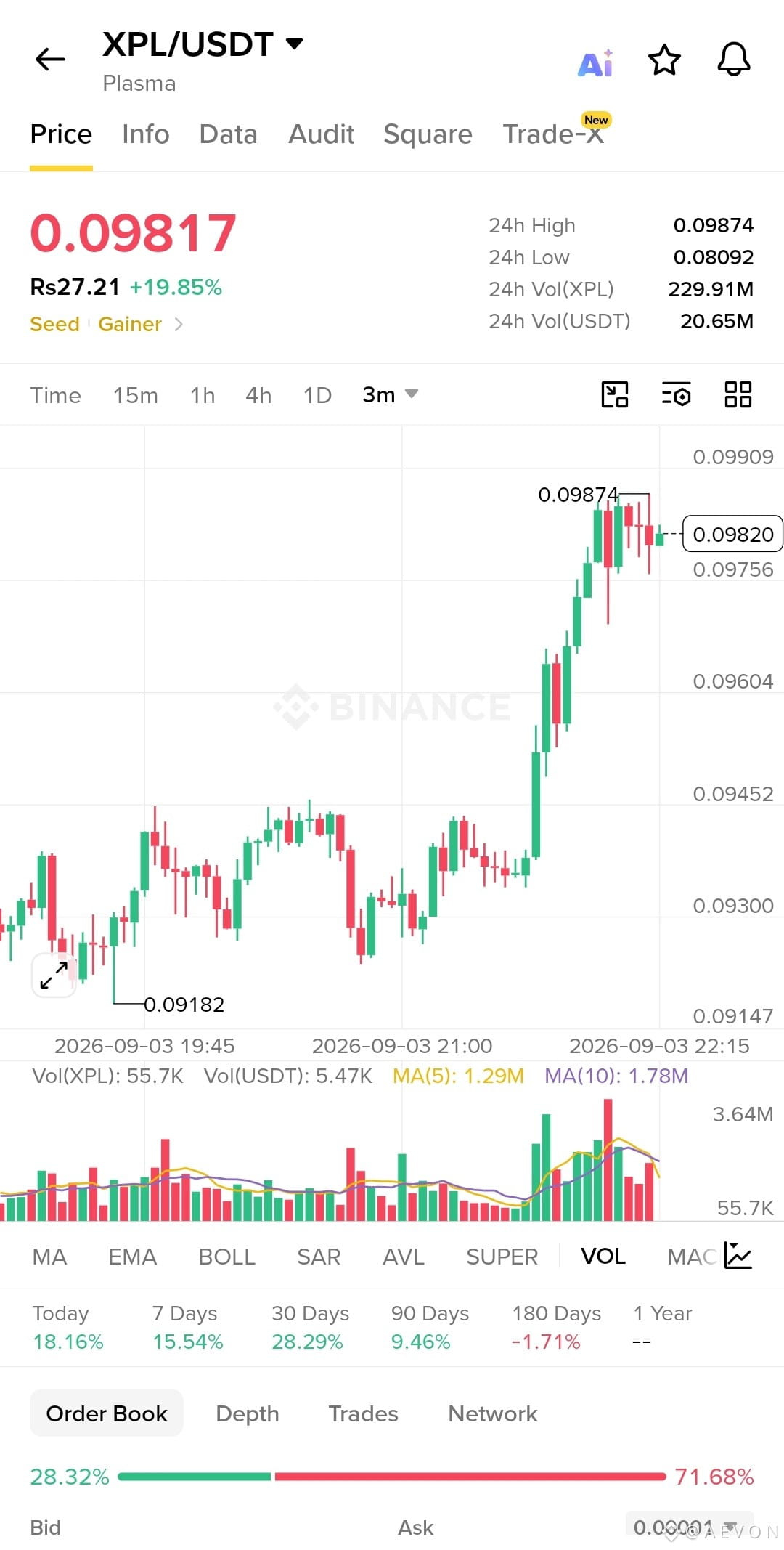
🚨 $XPL /USDT IS EXPLODING! 🔥
💰 Price: $0.09817
📈 24H: +19.85%
⚡ High: $0.09874
📊 Volume: 229.91M XPL
🎯 Key Levels:
🔴 Resistance: $0.09874 → $0.09909
🟢 Support: $0.09756 → $0.09604
⚠️ Order Book: 71.68% Ask vs 28.32% Bid — strong selling pressure near the top.
🔥 Market View: XPL has made a sharp breakout with heavy volume. A clean break above $0.09874 could open the door toward $0.09909+. But rejection here may trigger a quick pullback.
👀 Breakout or rejection — $XPL is at a critical level! 🚀
{spot}(XPLUSDT)
🚨 $XPL /USDT IS EXPLODING! 🔥
💰 Price: $0.09817
📈 24H: +19.85%
⚡ High: $0.09874
📊 Volume: 229.91M XPL
🎯 Key Levels:
🔴 Resistance: $0.09874 → $0.09909
🟢 Support: $0.09756 → $0.09604
⚠️ Order Book: 71.68% Ask vs 28.32% Bid — strong selling pressure near the top.
🔥 Market View: XPL has made a sharp breakout with heavy volume. A clean break above $0.09874 could open the door toward $0.09909+. But rejection here may trigger a quick pullback.
👀 Breakout or rejection — $XPL is at a critical level! 🚀
💰 Price: $0.09817
📈 24H: +19.85%
⚡ High: $0.09874
📊 Volume: 229.91M XPL
🎯 Key Levels:
🔴 Resistance: $0.09874 → $0.09909
🟢 Support: $0.09756 → $0.09604
⚠️ Order Book: 71.68% Ask vs 28.32% Bid — strong selling pressure near the top.
🔥 Market View: XPL has made a sharp breakout with heavy volume. A clean break above $0.09874 could open the door toward $0.09909+. But rejection here may trigger a quick pullback.
👀 Breakout or rejection — $XPL is at a critical level! 🚀
1
166
·
--
Bullish
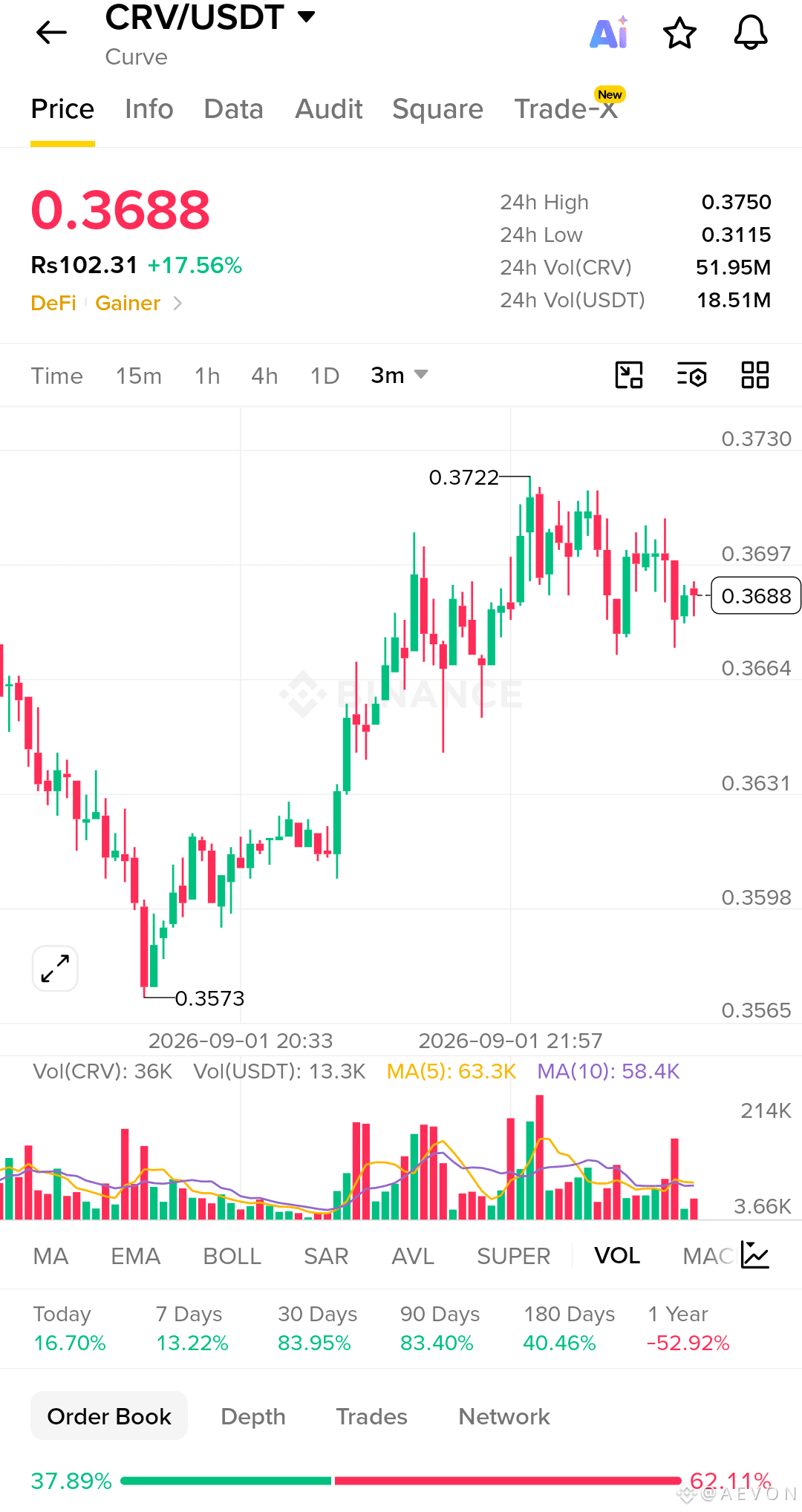
🚨 $CRV /USDT MOMENTUM ALERT! 🔥
$CRV is trading around $0.3688, up +17.56% in 24H 📈
⚡ 24H High: $0.3750
🟢 Key Support: $0.3664 → $0.3598
🔴 Resistance: $0.3697 → $0.3722 → $0.3750
📊 24H Volume: 51.95M CRV
⚠️ Order Book: 62.11% Sell vs 37.89% Buy
Market View: CRV is consolidating after a strong rally. A clean break above $0.3722–$0.3750 could trigger another upside move, while losing $0.3664 may bring short-term profit-taking. 👀🔥
Watch the breakout — $CRV is getting ready for its next move! 🚀
{spot}(CRVUSDT)
🚨 $CRV /USDT MOMENTUM ALERT! 🔥
$CRV is trading around $0.3688, up +17.56% in 24H 📈
⚡ 24H High: $0.3750
🟢 Key Support: $0.3664 → $0.3598
🔴 Resistance: $0.3697 → $0.3722 → $0.3750
📊 24H Volume: 51.95M CRV
⚠️ Order Book: 62.11% Sell vs 37.89% Buy
Market View: CRV is consolidating after a strong rally. A clean break above $0.3722–$0.3750 could trigger another upside move, while losing $0.3664 may bring short-term profit-taking. 👀🔥
Watch the breakout — $CRV is getting ready for its next move! 🚀
$CRV is trading around $0.3688, up +17.56% in 24H 📈
⚡ 24H High: $0.3750
🟢 Key Support: $0.3664 → $0.3598
🔴 Resistance: $0.3697 → $0.3722 → $0.3750
📊 24H Volume: 51.95M CRV
⚠️ Order Book: 62.11% Sell vs 37.89% Buy
Market View: CRV is consolidating after a strong rally. A clean break above $0.3722–$0.3750 could trigger another upside move, while losing $0.3664 may bring short-term profit-taking. 👀🔥
Watch the breakout — $CRV is getting ready for its next move! 🚀
1
173
·
--
Verified
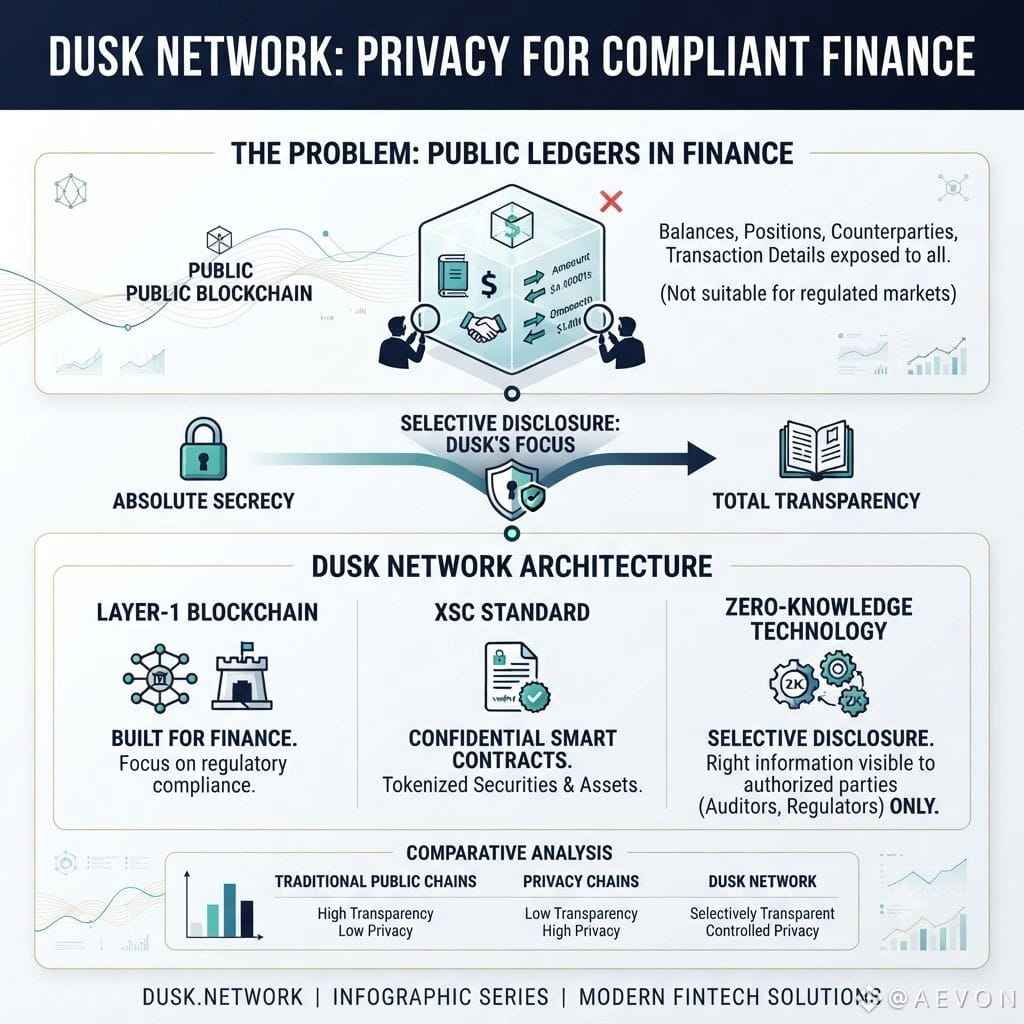
#dusk $DUSK @Dusk_Foundation I’m noticing Dusk Network at a time when I’m pretty tired of hearing “privacy” attached to every new chain. I’ve seen this before: a serious problem gets wrapped in a clean narrative, everyone gets excited, and six months later the hard parts are still sitting there.
What keeps pulling my attention back to Dusk is the narrower focus. It is a Layer-1 built around financial applications where putting every balance, position, counterparty, and transaction detail on a public ledger can actually be a problem. Its XSC standard is designed for confidential smart contracts and tokenized securities, while the network uses zero-knowledge technology and selective disclosure rather than treating privacy as simple invisibility. (Dusk)
That distinction matters to me. Real financial systems rarely want absolute secrecy; they want the right information hidden from the public and the right information available to whoever is legitimately entitled to see it. Dusk is clearly trying to build around that uncomfortable middle ground. (Dusk)
I’m not sure yet how far this can go. Privacy technology is difficult, regulated finance is slow, and crypto has a long history of confusing good architecture with actual adoption. I don’t fully trust the story just because the technology sounds sophisticated.
Still, after watching several cycles, something about this feels different: the problem Dusk is chasing is boring enough to be real. And honestly, that gets my attention more than another chain promising to change everything.
#dusk $DUSK @Dusk I’m noticing Dusk Network at a time when I’m pretty tired of hearing “privacy” attached to every new chain. I’ve seen this before: a serious problem gets wrapped in a clean narrative, everyone gets excited, and six months later the hard parts are still sitting there.
What keeps pulling my attention back to Dusk is the narrower focus. It is a Layer-1 built around financial applications where putting every balance, position, counterparty, and transaction detail on a public ledger can actually be a problem. Its XSC standard is designed for confidential smart contracts and tokenized securities, while the network uses zero-knowledge technology and selective disclosure rather than treating privacy as simple invisibility. (Dusk)
That distinction matters to me. Real financial systems rarely want absolute secrecy; they want the right information hidden from the public and the right information available to whoever is legitimately entitled to see it. Dusk is clearly trying to build around that uncomfortable middle ground. (Dusk)
I’m not sure yet how far this can go. Privacy technology is difficult, regulated finance is slow, and crypto has a long history of confusing good architecture with actual adoption. I don’t fully trust the story just because the technology sounds sophisticated.
Still, after watching several cycles, something about this feels different: the problem Dusk is chasing is boring enough to be real. And honestly, that gets my attention more than another chain promising to change everything.
What keeps pulling my attention back to Dusk is the narrower focus. It is a Layer-1 built around financial applications where putting every balance, position, counterparty, and transaction detail on a public ledger can actually be a problem. Its XSC standard is designed for confidential smart contracts and tokenized securities, while the network uses zero-knowledge technology and selective disclosure rather than treating privacy as simple invisibility. (Dusk)
That distinction matters to me. Real financial systems rarely want absolute secrecy; they want the right information hidden from the public and the right information available to whoever is legitimately entitled to see it. Dusk is clearly trying to build around that uncomfortable middle ground. (Dusk)
I’m not sure yet how far this can go. Privacy technology is difficult, regulated finance is slow, and crypto has a long history of confusing good architecture with actual adoption. I don’t fully trust the story just because the technology sounds sophisticated.
Still, after watching several cycles, something about this feels different: the problem Dusk is chasing is boring enough to be real. And honestly, that gets my attention more than another chain promising to change everything.
4
140
·
--
Verified
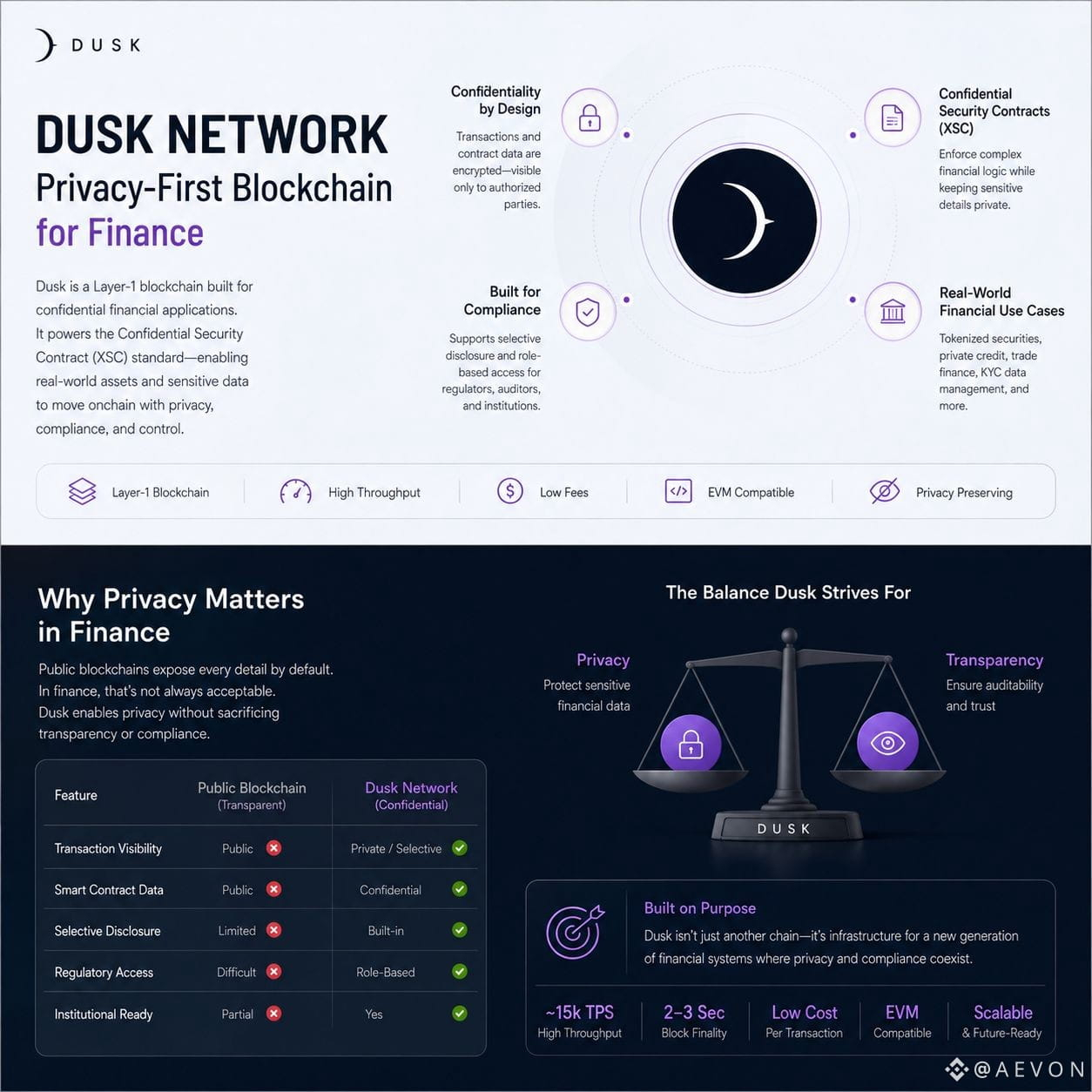
#dusk $DUSK @Dusk_Foundation I’ve seen this movie enough times to know that “privacy” in crypto can mean almost anything. Usually it means hiding a few numbers and hoping the market fills in the rest.
Dusk keeps pulling my attention for a different reason. The uncomfortable part of financial markets isn’t just moving assets onchain. It’s deciding what should be visible, to whom, and when. Dusk is building a Layer-1 around that mess, with confidential smart contracts and its XSC framework aimed at regulated assets, where balances, counterparties and transaction details may need privacy without destroying auditability.
I’ve watched projects chase institutional adoption by making everything sound effortless. It never is. Banks don’t suddenly become crypto-native because a blockchain has clever cryptography. There are compliance rules, permissions, liquidity problems, custody issues, and the simple fact that institutions usually want privacy with an escape hatch for regulators. Dusk’s selective-disclosure approach at least acknowledges that contradiction instead of pretending it doesn’t exist.
I’m not convinced yet. Architecture is one thing; getting people to actually use it is another.
But after years of watching the same narratives rotate, I find myself more interested in projects solving boring problems that won’t disappear when the market gets quiet. Dusk feels closer to that category than most. Whether that matters enough to win is still the part I’m watching.
#dusk $DUSK @Dusk I’ve seen this movie enough times to know that “privacy” in crypto can mean almost anything. Usually it means hiding a few numbers and hoping the market fills in the rest.
Dusk keeps pulling my attention for a different reason. The uncomfortable part of financial markets isn’t just moving assets onchain. It’s deciding what should be visible, to whom, and when. Dusk is building a Layer-1 around that mess, with confidential smart contracts and its XSC framework aimed at regulated assets, where balances, counterparties and transaction details may need privacy without destroying auditability.
I’ve watched projects chase institutional adoption by making everything sound effortless. It never is. Banks don’t suddenly become crypto-native because a blockchain has clever cryptography. There are compliance rules, permissions, liquidity problems, custody issues, and the simple fact that institutions usually want privacy with an escape hatch for regulators. Dusk’s selective-disclosure approach at least acknowledges that contradiction instead of pretending it doesn’t exist.
I’m not convinced yet. Architecture is one thing; getting people to actually use it is another.
But after years of watching the same narratives rotate, I find myself more interested in projects solving boring problems that won’t disappear when the market gets quiet. Dusk feels closer to that category than most. Whether that matters enough to win is still the part I’m watching.
Dusk keeps pulling my attention for a different reason. The uncomfortable part of financial markets isn’t just moving assets onchain. It’s deciding what should be visible, to whom, and when. Dusk is building a Layer-1 around that mess, with confidential smart contracts and its XSC framework aimed at regulated assets, where balances, counterparties and transaction details may need privacy without destroying auditability.
I’ve watched projects chase institutional adoption by making everything sound effortless. It never is. Banks don’t suddenly become crypto-native because a blockchain has clever cryptography. There are compliance rules, permissions, liquidity problems, custody issues, and the simple fact that institutions usually want privacy with an escape hatch for regulators. Dusk’s selective-disclosure approach at least acknowledges that contradiction instead of pretending it doesn’t exist.
I’m not convinced yet. Architecture is one thing; getting people to actually use it is another.
But after years of watching the same narratives rotate, I find myself more interested in projects solving boring problems that won’t disappear when the market gets quiet. Dusk feels closer to that category than most. Whether that matters enough to win is still the part I’m watching.
21
1
15
315
Log in to explore more content
Join global crypto users on Binance Square
⚡️ Get latest and useful information about crypto.
💬 Trusted by the world’s largest crypto exchange.
👍 Discover real insights from verified creators.
Email / Phone number