Binance Square
LARAXEN
618 Posts

LARAXEN

Binance Square Content Creator | TRADER |
29 Following
785 Followers
1.4K+ Liked
Posts
·
--
Hello
Hello
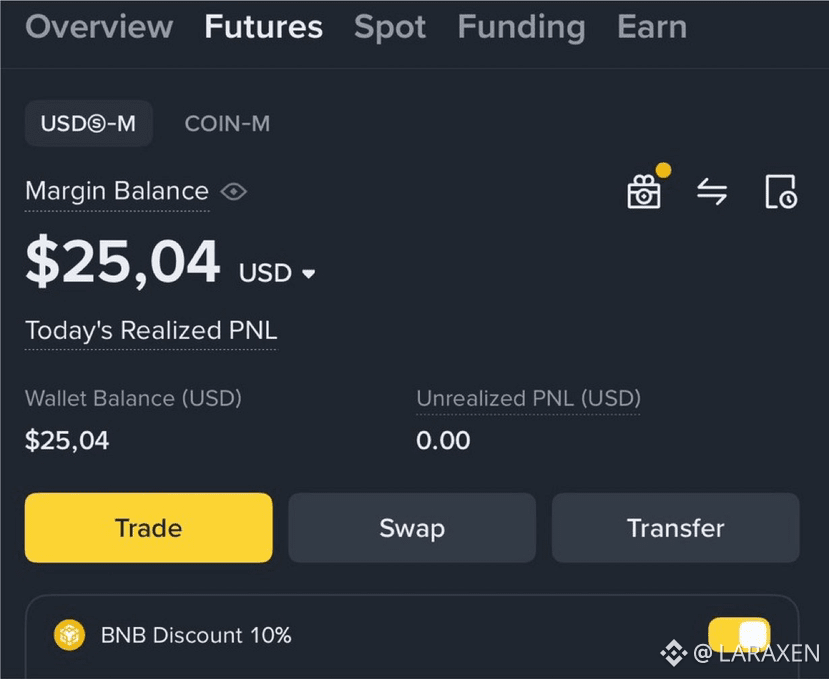
$1000 trip from $25. August 5, 2026 | START 🗻🌌 I will try to update as much as possible. Many people complain about the small balance. But that's not an excuse. Balance management is not made according to the balance amount, it is done according to the balance percentage. Do not make a wallet 0 with a single trade. Or do not reach 40-70% losses. This will cause you to become more ambitious or increase the X margin. This is more dangerous than anything. I will realize this adventure with @binance I can trade millions of coins. Stay away from dangerous and risky stock exchanges. During this period, we encountered many stock market closures. SAFU's (User secured asset fund) is the only stock exchange to reach 1 billion dollars... Thanks to the founder @cz_binance, he is a reliable man who made this safe community form in the world 🧍‍♂️ Now It'S Time To Trade.
$1000 trip from $25.

August 5, 2026 | START 🗻🌌

I will try to update as much as possible. Many people complain about the small balance. But that's not an excuse. Balance management is not made according to the balance amount, it is done according to the balance percentage.

Do not make a wallet 0 with a single trade. Or do not reach 40-70% losses. This will cause you to become more ambitious or increase the X margin. This is more dangerous than anything.

I will realize this adventure with @binance

I can trade millions of coins. Stay away
from dangerous and risky stock exchanges. During this period, we encountered many stock market closures. SAFU's (User secured asset fund) is the only stock exchange to reach 1 billion dollars...

Thanks to the founder @cz_binance, he is a reliable man who made this safe community form in the world 🧍‍♂️

Now It'S Time To Trade.
Good morning fam, my binance square adventure is starting now I want a hello from you.
I’ll take a look at this.
ZORA AND DEXE 🦒Why Did ZORA Buy $DEXE at $1.30 $1.50 Without a Stop-Loss🦒❔ ⏳When Zora revealed that he had accumulated $DEXE between $1.30 and $1.50 without using a stop loss, many traders focused on one question: 🧐 Why would an experienced trader buy into a collapsing market and deliberately leave the position without a stop? The answer may not be found in price action alone. Zora had previously stated that he shorted $RAVE around $26 and reportedly made approximately $500,000, while another short on $LAB generated around $300,000. Yet despite the fact that $RAVE and $LAB experienced crashes that appeared visually similar to $DEXE, he chose not to buy either of them. Instead, he bought $DEXE. That distinction is important. It suggests that he was not simply buying a chart because it had fallen heavily. He may have been evaluating the quality of the asset underneath the chart, the structure of the sell off, the available liquidity, and the asymmetry between downside risk and potential upside. The $1.30 – $1.50 Zone Was Probably a Value Area, Not a Random Entry Zora did not mention one exact entry price. He described a range: $1.30 – $1.50. This may indicate that the position was accumulated gradually rather than opened with a single market order. A trader using this approach could enter near $1.50, continue adding as the price moves lower, and build an average entry somewhere inside the range. This type of execution is especially useful during a violent sell off because exact bottoms are difficult to identify. Instead of trying to predict the lowest possible price, the trader defines an area where the asset becomes attractive enough to accumulate. The $1.30–$1.50 region may therefore have represented a combination of several factors: ☀️ A major historical support or high volume area ☀️A zone where previous buyers had accumulated ☀️ A region with strong liquidity ☀️ A potential exhaustion point for forced selling ☀️A level where the market appeared to be pricing in extreme fear The key idea is that the trader may not have believed that $1.30 was the absolute bottom. He may simply have believed that the market was offering $DEXE at a price where the potential reward became unusually attractive relative to the risk. The Difference Between a Crash and a Capitulation Not every large decline creates a buying opportunity. Some assets collapse because their liquidity disappears, their narrative breaks, or market participants lose confidence in the project. In those situations, a low price does not automatically mean value. However, a sharp decline can also create a capitulation event. Capitulation usually occurs when: 🌸 Leveraged long positions are liquidated 🌸 Stop loss orders are triggered 🌸 Panic sellers exit the market 🌸 Funding becomes heavily negative 🌸 Open interest contracts 💥Traders begin expecting the price to fall indefinitely During these moments, selling pressure can become concentrated and emotional. Once the forced sellers are exhausted, even a modest amount of demand may produce a strong rebound. Zora may have viewed the $DEXE decline through this lens. Rather than asking “How far has the price fallen?” he may have been asking “How much of the available selling pressure has already been absorbed?” That is a very different approach. 😏 Why $DEXEInstead of $RAVE or $LAB? This may be the most important part of the entire trade. Zora stated that the crashes of $RAVE and $LAB looked almost identical to $DEXE. Yet he did not buy them. If the charts looked similar but the trade selection was different, then the decision was probably based on factors beyond the chart. Dexe is the governance and utility token of the DeXe Protocol, a governance infrastructure designed to help communities create and manage decentralized autonomous organizations. The protocol includes governance, treasury management, delegation, voting, reward mechanisms, and DAO building tools. This gives Dexe a broader functional foundation than a token whose value depends primarily on speculation or short term attention. The token is connected to governance participation, proposal creation, voting, treasury coordination, and contributor incentives. Its value proposition is therefore linked to the development and adoption of the DeXe ecosystem rather than only to market momentum. (DeXe Network⁠) This does not guarantee that Dexe will recover. However, it may explain why an experienced trader could view a major decline in Dexe differently from a similar decline in $RAVE or $LAB. The chart may have looked the same. The underlying asset did not. The Importance of Token Structure Another possible reason behind the trade is $DEXE’s supply and treasury structure. DeXe has emphasized governance based token utility and treasury controlled allocation. A significant portion of the ecosystem’s token resources has been associated with governance and smart contract controlled treasury mechanisms. This can affect how traders interpret circulating supply. Token may have a large total supply while the amount actively available for trading is much smaller. If a meaningful portion is held in treasury structures, governance systems, or long term participation mechanisms, the effective market float may be more limited. A limited effective float can create two sided volatility: It can accelerate a selloff when liquidity becomes thin It can also amplify a recovery when demand returns Zorathzzz may have believed that the market was temporarily valuing Dexe as if its long term utility, governance role, and ecosystem value no longer mattered. If so, the trade was not simply a bet on a technical bounce. It may have been a bet that the market had overreacted. Why Was There No Stop Loss? The absence of a stop loss is one of the strongest clues about the intended trade structure. A trader does not necessarily avoid a stoploss because they believe the price cannot fall further. Sometimes the trader uses position sizing rather than a tight price stop to control risk. For example, if the position is small relative to total capital, the trader may be willing to tolerate large volatility without being forced out by a temporary liquidation wick or panic move. In that case, the risk management logic becomes: I will risk a limited amount of capital, but I will allow the position enough room to survive volatility. This is different from entering with an oversized position and refusing to exit. The decision not to use a stop may indicate that ZORA considered the $1.30 – $1.50 area a longer term accumulation zone rather than a short term momentum trade. He may have expected the price to remain volatile and believed that a conventional stop loss could be triggered before the thesis had time to play out. However, there is an important distinction: No stop loss does’t mean no risk management. Professional traders may manage risk through: 🌸 Smaller position size 🌸 Gradual accumulation 🌸 Limited portfolio exposure 🌸 Cash reserves for volatility 🌸 A longer investment horizon 🌸 A thesis-based invalidation level rather than a fixed percentage stop Without access to Zora’s full position size and portfolio, the exact method cannot be confirmed. The Asymmetric Risk Thesis ‼️ The trade may ultimately have been based on asymmetry. Suppose the average entry was close to $1.50 The trader may have believed that: The market had already experienced an extreme decline A large portion of panic selling had already occurred $DEXE retained meaningful protocol utility The project had a stronger fundamental base than comparable tokens A recovery could produce several multiples of upside In other words, the trader may have accepted the possibility of further downside because the potential upside was large enough to justify the risk. This is known as an asymmetric trade. The goal is not to achieve certainty. The goal is to find situations where the possible reward is much larger than the capital intentionally placed at risk. The Likely Logic Behind the Trade When all the available clues are combined, Zora’s decision may have followed a framework similar to this: The market experienced an extreme sell off. ↓ Forced liquidations and panic selling pushed the price into a major value and liquidity zone. ↓ The $1.30 $1.50 range offered an attractive area for gradual accumulation. ↓ Unlike $RAVE and $LAB, $DEXE had a governance focused protocol, established utility, treasury infrastructure, and a broader ecosystem thesis. ↓ The position was likely structured to tolerate volatility rather than being protected by a tight stop loss. ↓ The potential recovery was considered large enough to justify the risk. Final Conclusion 💁‍♀️ The most likely explanation is that Zora did not buy $DEXE simply because it had fallen. He may have bought because the decline created a rare combination of: extreme fear, potential capitulation, favorable liquidity, a historically attractive price area, limited effective float, and a fundamentally stronger asset than other tokens experiencing similar crashes. The $1.50 range was probably not viewed as an exact bottom. It was more likely treated as a high conviction accumulation zone. His decision not to use a stop loss may also suggest that this was not a short term trade. The position may have been sized to survive volatility, allowing the thesis to develop without being closed by a temporary price spike. The most important lesson is this: Similar charts do not necessarily represent similar opportunities. $RAVE, $LAB, and $DEXE may have experienced comparable price collapses, but Zorathzzz appears to have distinguished between the shape of the crash and the quality of the asset behind it. That may be why he ignored two falling charts and chose only one.

ZORA AND DEXE 🦒

Why Did ZORA Buy $DEXE at $1.30 $1.50 Without a Stop-Loss🦒❔
⏳When Zora revealed that he had accumulated $DEXE between $1.30 and $1.50 without using a stop loss, many traders focused on one question:
🧐 Why would an experienced trader buy into a collapsing market and deliberately leave the position without a stop?
The answer may not be found in price action alone.
Zora had previously stated that he shorted $RAVE around $26 and reportedly made approximately $500,000, while another short on $LAB generated around $300,000. Yet despite the fact that $RAVE and $LAB experienced crashes that appeared visually similar to $DEXE , he chose not to buy either of them.
Instead, he bought $DEXE .
That distinction is important. It suggests that he was not simply buying a chart because it had fallen heavily. He may have been evaluating the quality of the asset underneath the chart, the structure of the sell off, the available liquidity, and the asymmetry between downside risk and potential upside.
The $1.30 – $1.50 Zone Was Probably a Value Area, Not a Random Entry
Zora did not mention one exact entry price. He described a range:
$1.30 – $1.50.
This may indicate that the position was accumulated gradually rather than opened with a single market order. A trader using this approach could enter near $1.50, continue adding as the price moves lower, and build an average entry somewhere inside the range.
This type of execution is especially useful during a violent sell off because exact bottoms are difficult to identify. Instead of trying to predict the lowest possible price, the trader defines an area where the asset becomes attractive enough to accumulate.
The $1.30–$1.50 region may therefore have represented a combination of several factors:
☀️ A major historical support or high volume area
☀️A zone where previous buyers had accumulated
☀️ A region with strong liquidity
☀️ A potential exhaustion point for forced selling
☀️A level where the market appeared to be pricing in extreme fear
The key idea is that the trader may not have believed that $1.30 was the absolute bottom. He may simply have believed that the market was offering $DEXE at a price where the potential reward became unusually attractive relative to the risk.
The Difference Between a Crash and a Capitulation
Not every large decline creates a buying opportunity.
Some assets collapse because their liquidity disappears, their narrative breaks, or market participants lose confidence in the project. In those situations, a low price does not automatically mean value.
However, a sharp decline can also create a capitulation event.
Capitulation usually occurs when:
🌸 Leveraged long positions are liquidated
🌸 Stop loss orders are triggered
🌸 Panic sellers exit the market
🌸 Funding becomes heavily negative
🌸 Open interest contracts
💥Traders begin expecting the price to fall indefinitely
During these moments, selling pressure can become concentrated and emotional. Once the forced sellers are exhausted, even a modest amount of demand may produce a strong rebound.
Zora may have viewed the $DEXE decline through this lens. Rather than asking
“How far has the price fallen?”
he may have been asking
“How much of the available selling pressure has already been absorbed?”
That is a very different approach.
😏 Why $DEXEInstead of $RAVE or $LAB?
This may be the most important part of the entire trade.
Zora stated that the crashes of $RAVE and $LAB looked almost identical to $DEXE . Yet he did not buy them.
If the charts looked similar but the trade selection was different, then the decision was probably based on factors beyond the chart.
Dexe is the governance and utility token of the DeXe Protocol, a governance infrastructure designed to help communities create and manage decentralized autonomous organizations. The protocol includes governance, treasury management, delegation, voting, reward mechanisms, and DAO building tools.
This gives Dexe a broader functional foundation than a token whose value depends primarily on speculation or short term attention.
The token is connected to governance participation, proposal creation, voting, treasury coordination, and contributor incentives. Its value proposition is therefore linked to the development and adoption of the DeXe ecosystem rather than only to market momentum. (DeXe Network⁠)
This does not guarantee that Dexe will recover. However, it may explain why an experienced trader could view a major decline in Dexe differently from a similar decline in $RAVE or $LAB.
The chart may have looked the same.
The underlying asset did not.
The Importance of Token Structure
Another possible reason behind the trade is $DEXE ’s supply and treasury structure.
DeXe has emphasized governance based token utility and treasury controlled allocation. A significant portion of the ecosystem’s token resources has been associated with governance and smart contract controlled treasury mechanisms.
This can affect how traders interpret circulating supply.
Token may have a large total supply while the amount actively available for trading is much smaller. If a meaningful portion is held in treasury structures, governance systems, or long term participation mechanisms, the effective market float may be more limited.
A limited effective float can create two sided volatility:
It can accelerate a selloff when liquidity becomes thin
It can also amplify a recovery when demand returns
Zorathzzz may have believed that the market was temporarily valuing Dexe as if its long term utility, governance role, and ecosystem value no longer mattered.
If so, the trade was not simply a bet on a technical bounce. It may have been a bet that the market had overreacted.
Why Was There No Stop Loss?
The absence of a stop loss is one of the strongest clues about the intended trade structure.
A trader does not necessarily avoid a stoploss because they believe the price cannot fall further. Sometimes the trader uses position sizing rather than a tight price stop to control risk.
For example, if the position is small relative to total capital, the trader may be willing to tolerate large volatility without being forced out by a temporary liquidation wick or panic move.
In that case, the risk management logic becomes:
I will risk a limited amount of capital, but I will allow the position enough room to survive volatility.
This is different from entering with an oversized position and refusing to exit.
The decision not to use a stop may indicate that ZORA considered the $1.30 – $1.50 area a longer term accumulation zone rather than a short term momentum trade. He may have expected the price to remain volatile and believed that a conventional stop loss could be triggered before the thesis had time to play out.
However, there is an important distinction:
No stop loss does’t mean no risk management.
Professional traders may manage risk through:
🌸 Smaller position size
🌸 Gradual accumulation
🌸 Limited portfolio exposure
🌸 Cash reserves for volatility
🌸 A longer investment horizon
🌸 A thesis-based invalidation level rather than a fixed percentage stop
Without access to Zora’s full position size and portfolio, the exact method cannot be confirmed.
The Asymmetric Risk Thesis ‼️
The trade may ultimately have been based on asymmetry.
Suppose the average entry was close to $1.50
The trader may have believed that:
The market had already experienced an extreme decline
A large portion of panic selling had already occurred
$DEXE retained meaningful protocol utility
The project had a stronger fundamental base than comparable tokens
A recovery could produce several multiples of upside
In other words, the trader may have accepted the possibility of further downside because the potential upside was large enough to justify the risk.
This is known as an asymmetric trade.
The goal is not to achieve certainty.
The goal is to find situations where the possible reward is much larger than the capital intentionally placed at risk.
The Likely Logic Behind the Trade
When all the available clues are combined, Zora’s decision may have followed a framework similar to this:
The market experienced an extreme sell off.

Forced liquidations and panic selling pushed the price into a major value and liquidity zone.

The $1.30 $1.50 range offered an attractive area for gradual accumulation.

Unlike $RAVE and $LAB, $DEXE had a governance focused protocol, established utility, treasury infrastructure, and a broader ecosystem thesis.

The position was likely structured to tolerate volatility rather than being protected by a tight stop loss.

The potential recovery was considered large enough to justify the risk.
Final Conclusion 💁‍♀️
The most likely explanation is that Zora did not buy $DEXE simply because it had fallen.
He may have bought because the decline created a rare combination of:
extreme fear, potential capitulation, favorable liquidity, a historically attractive price area, limited effective float, and a fundamentally stronger asset than other tokens experiencing similar crashes.
The $1.50 range was probably not viewed as an exact bottom. It was more likely treated as a high conviction accumulation zone.
His decision not to use a stop loss may also suggest that this was not a short term trade. The position may have been sized to survive volatility, allowing the thesis to develop without being closed by a temporary price spike.
The most important lesson is this:
Similar charts do not necessarily represent similar opportunities.
$RAVE, $LAB, and $DEXE may have experienced comparable price collapses, but Zorathzzz appears to have distinguished between the shape of the crash and the quality of the asset behind it.
That may be why he ignored two falling charts and chose only one.
#baby $BABY Baby coins are among the most exciting and speculative assets in the cryptocurrency market. They often begin as community-driven projects with low market capitalizations, giving them the potential for rapid price movements. While some baby coins grow into successful ecosystems through strong development, partnerships, and active communities, many fail to deliver on their promises. Investors should always research the project’s team, tokenomics, roadmap, utility, and community engagement before investing. High volatility means both significant opportunities and substantial risks. Never invest more than you can afford to lose, diversify your portfolio, and remember that patience and careful analysis are essential for long-term success.
ERA USDT SHORT POSITION ‼️ I expect a stretch from the price of 0.1084 to the price of 0.1032 A 5% correction will leave a good profit.
ERA USDT SHORT POSITION ‼️

I expect a stretch from the price of 0.1084 to the price of 0.1032

A 5% correction will leave a good profit.
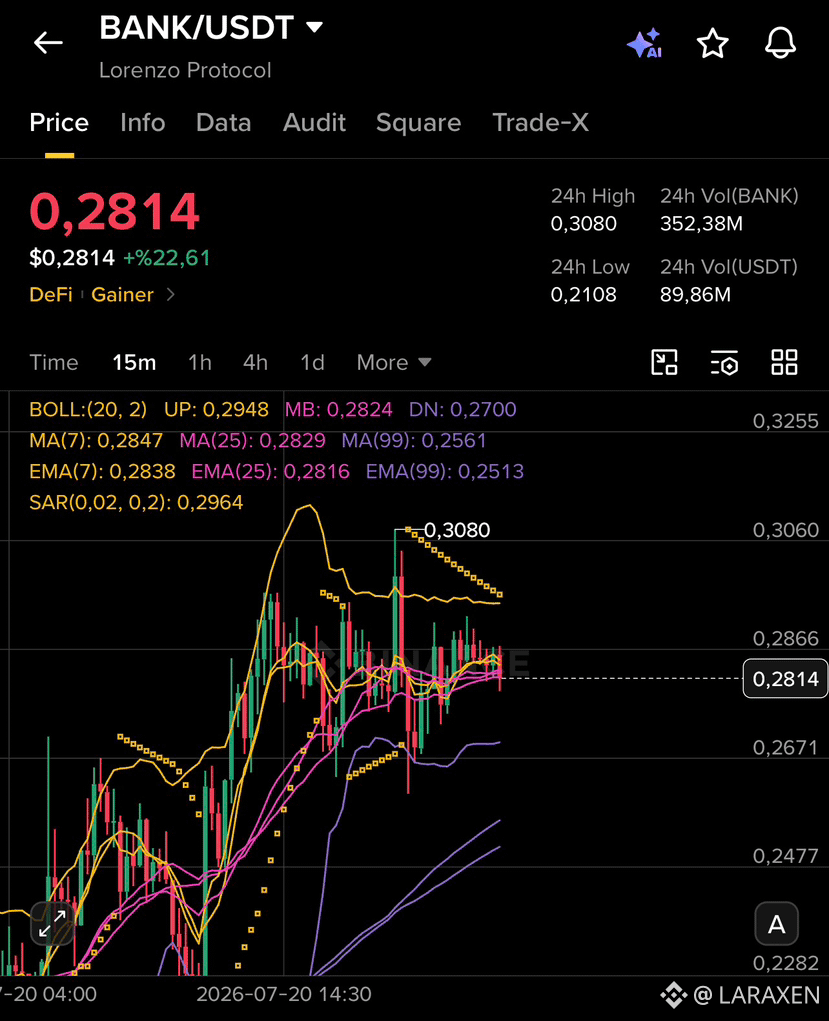
Even by looking at these screenshots, based on my experience, I can make a guess about what could happen next on $BANK .... If @Binance has sold, sooner or later the dump is coming... {spot}(BANKUSDT)
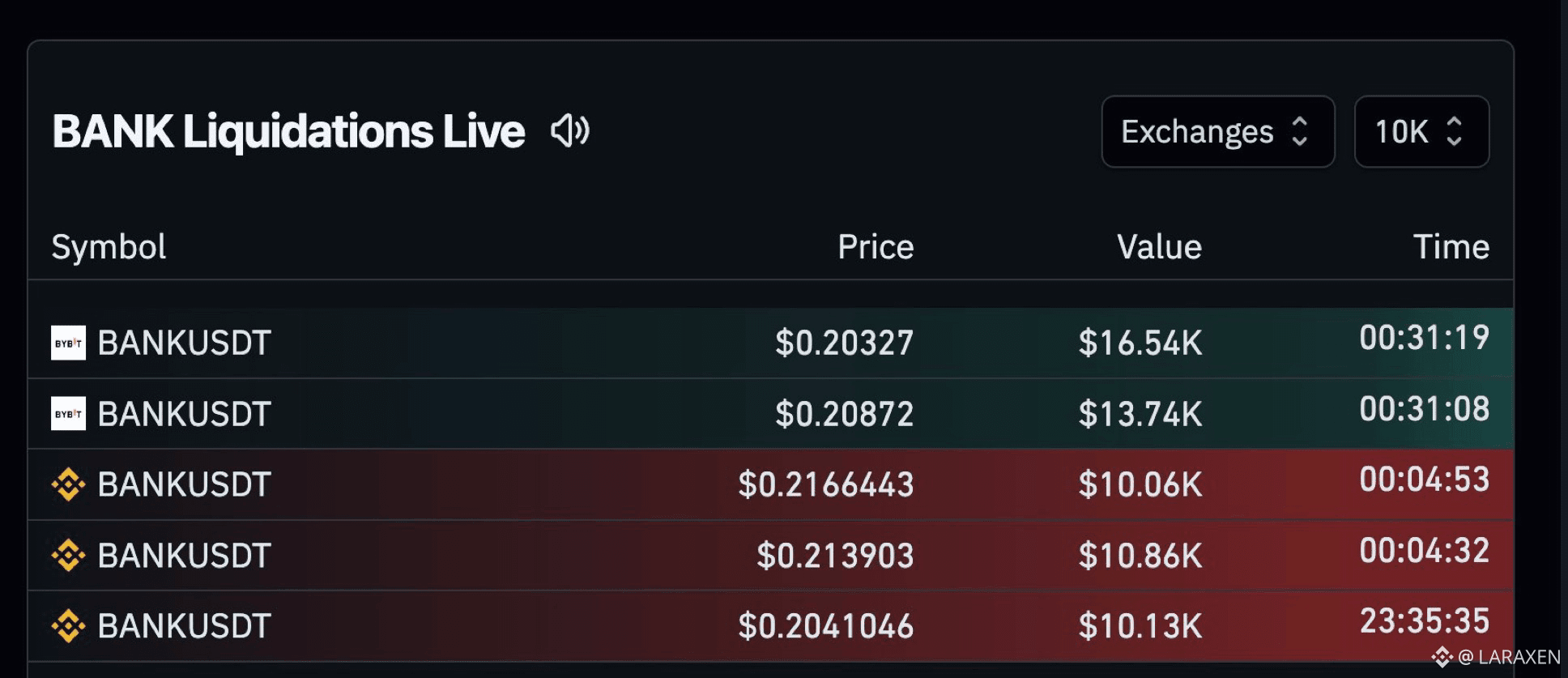
Even by looking at these screenshots, based on my experience, I can make a guess about what could happen next on $BANK ....

If @Binance has sold, sooner or later the dump is coming...
EARN $647 IN 12 MINUTES!? I MADE A NET PROFIT OF $600. (I had to pay $47, it's okay) Make sure you turn on notifications to log in with me from the right points with fast transactions. We will have a lot of fun together. We will create a process from time to time. $AIA {future}(AIAUSDT)
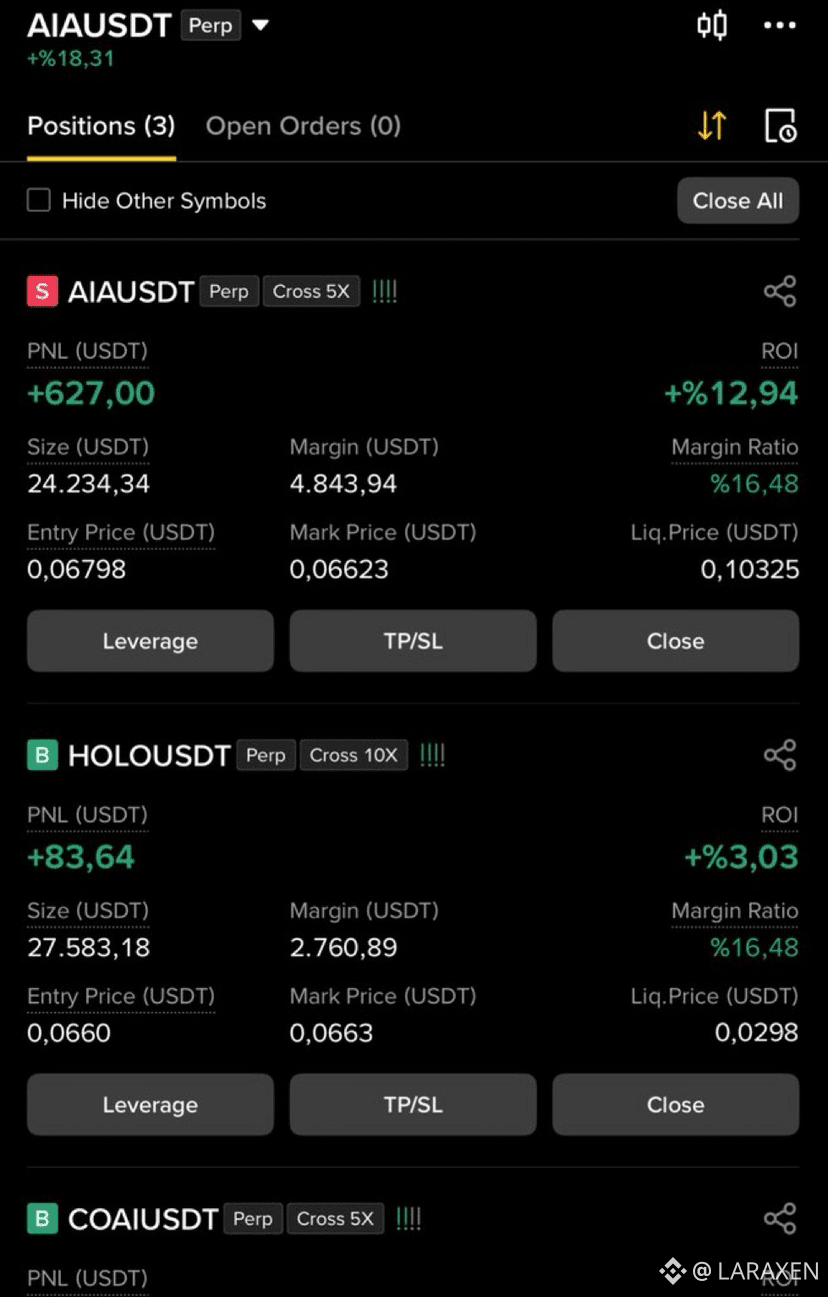
EARN $647 IN 12 MINUTES!?

I MADE A NET PROFIT OF $600. (I had to pay $47, it's okay)

Make sure you turn on notifications to log in with me from the right points with fast transactions.

We will have a lot of fun together. We will create a process from time to time. $AIA
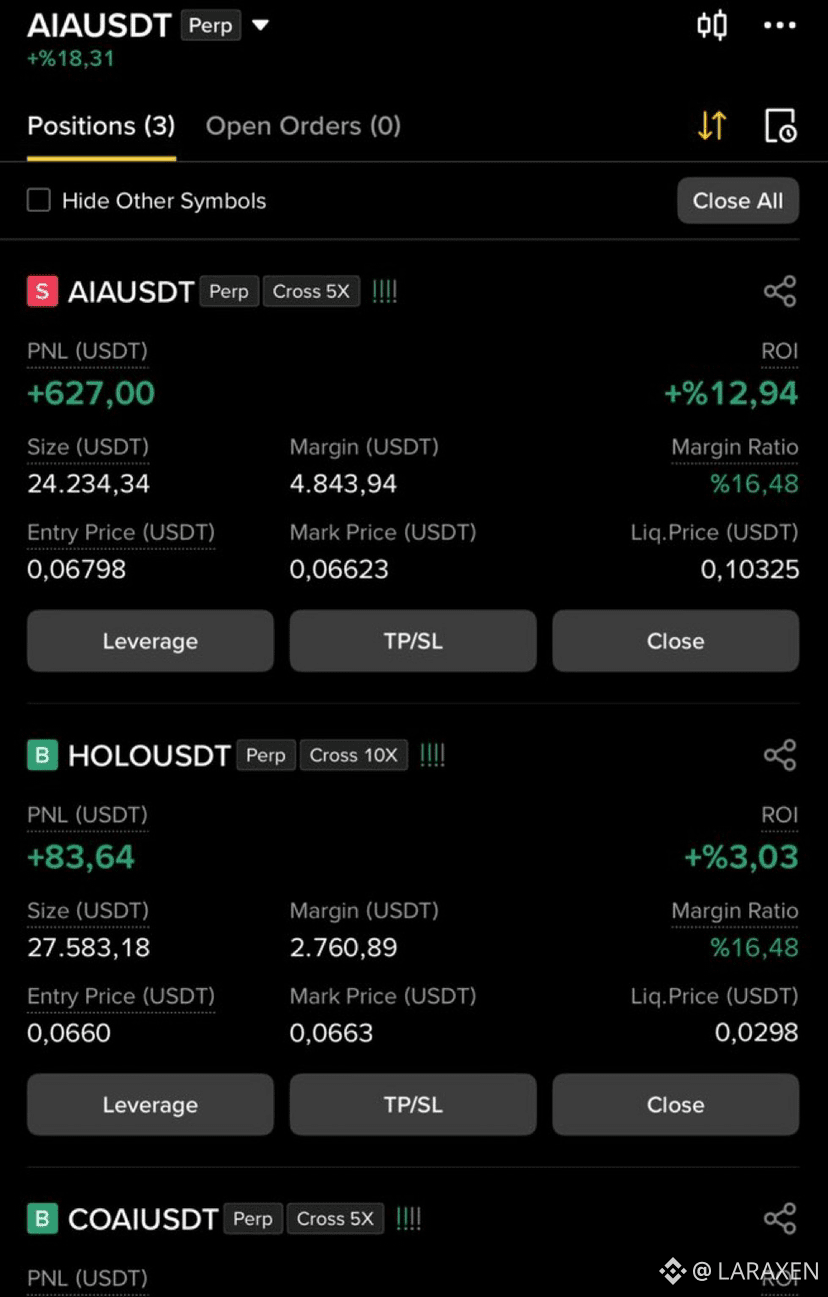
WIN $647 IN JUST 12 MINUTES!? $AIA I MADE A NET PROFIT OF $600. (I had to pay $47 Fee that’s not a problem) Make sure you turn on notifications to log in from the right points with me with quick trade. We will have a lot of fun together. We will create a trade from time to time. I will have more fun with my members. {future}(AIAUSDT)
WIN $647 IN JUST 12 MINUTES!? $AIA

I MADE A NET PROFIT OF $600. (I had to pay $47 Fee that’s not a problem)

Make sure you turn on notifications to log in from the right points with me with quick trade.

We will have a lot of fun together. We will create a trade from time to time. I will have more fun with my members.
If you open a trade according to the amount of the wallet, you will always notice that small amounts of losses lead to large losses over time. If you have a $100 balance, it doesn’t make sense to create a 40 dollar trade transaction, you will try to make your 100 dollars 200 dollars. Remember that while doing this, some people make 100,000 to 200,000 or 1M to 2M. When you earn $100 and $5, understand that it’s big. Because if you had 1 million dollars, the money you earned would be $50,000. I know it feels big when you say it like that. FOCUS ON THE PERCENTAGE AMOUNT, NOT THE MONEY IN THE PNL PART.
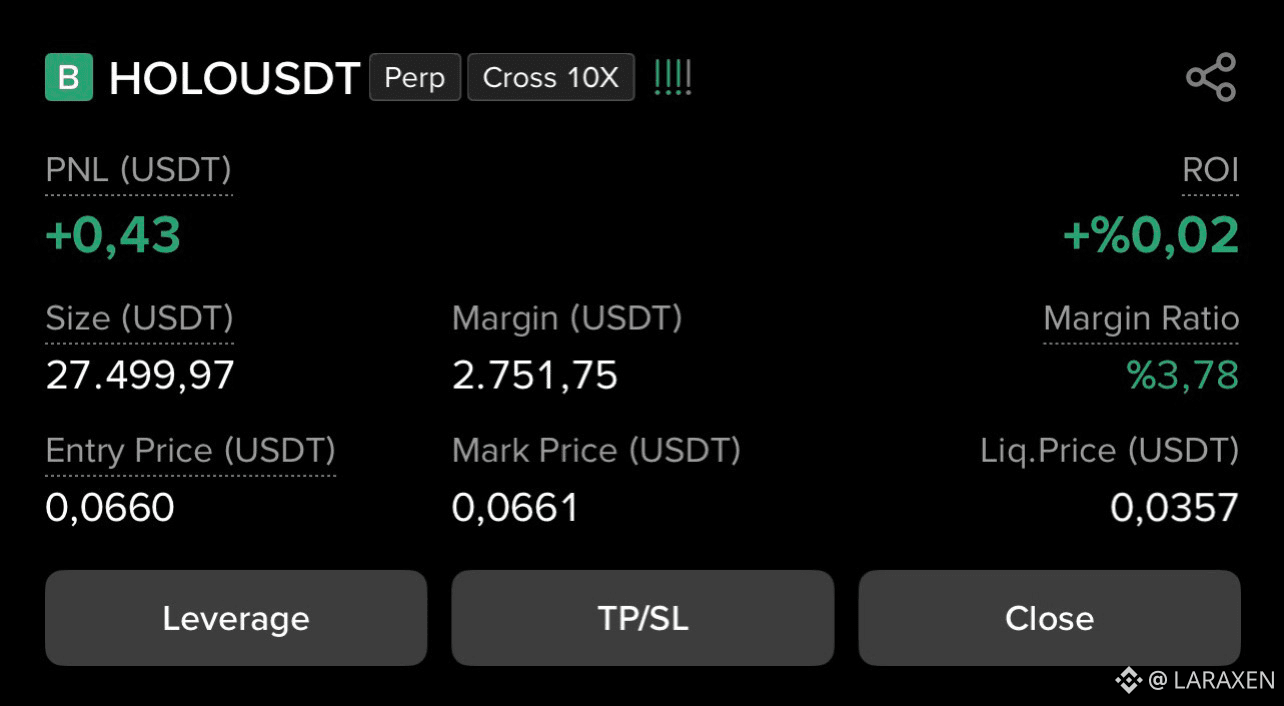
If you open a trade according to the amount of the wallet, you will always notice that small amounts of losses lead to large losses over time.

If you have a $100 balance, it doesn’t make sense to create a 40 dollar trade transaction, you will try to make your 100 dollars 200 dollars.

Remember that while doing this, some people make 100,000 to 200,000 or 1M to 2M.

When you earn $100 and $5, understand that it’s big. Because if you had 1 million dollars, the money you earned would be $50,000. I know it feels big when you say it like that.

FOCUS ON THE PERCENTAGE AMOUNT, NOT THE MONEY IN THE PNL PART.
$HOLO Looks good, I took a little long position. I’ll remind you of this.
$HOLO Looks good, I took a little long position.

I’ll remind you of this.
An investor who has been holding Bitcoins for 12 years has completed his sales. The investor, who sold a total of 5,000 $BTC for approximately 435.7 million dollars, disposed of the last 1,000 BTC ($65.6 million) to the stock exchange. An investment of approximately 1.66 million dollars turned into a profit of 434 million dollars and a return of 262 times.
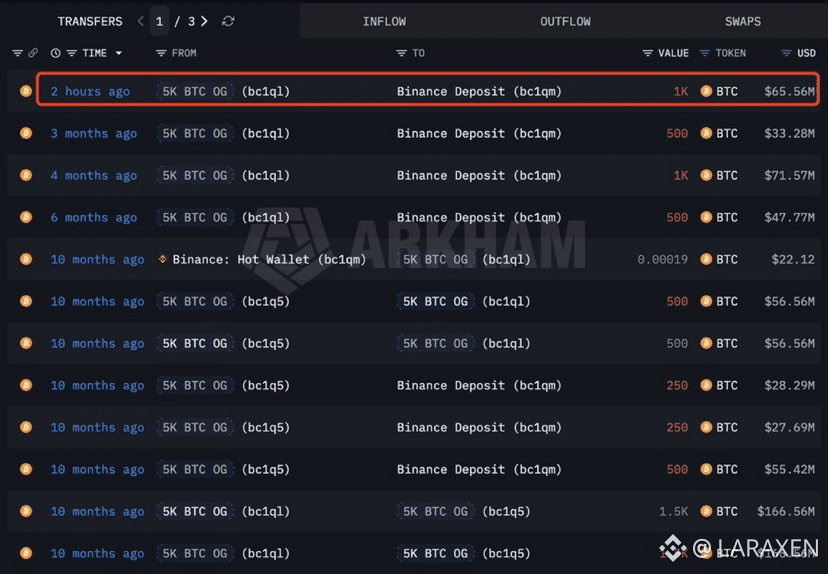
An investor who has been holding Bitcoins for 12 years has completed his sales.

The investor, who sold a total of 5,000 $BTC for approximately 435.7 million dollars, disposed of the last 1,000 BTC ($65.6 million) to the stock exchange.

An investment of approximately 1.66 million dollars turned into a profit of 434 million dollars and a return of 262 times.
My $BTC scenario hasn't changed much. Still, I think we're going to have another jam in the $68-70K zone before the surge after the World Cup finally resolves. Not necessarily right away, but in the coming weeks, my basic scenario is still a move towards medium $40K. $BTC is no longer just a retail risk asset. Under Trump, US policy is increasingly intertwined with state-level reserve strategy and political image. This changes the character of the market. Political assets can be pushed up for longer than the gaps that fundamentals would normally justify, before marginal demand disappears. At the same time, the macro background is still not particularly friendly to high beta assets. The GENIUS Act formalizes stablecoins within $USD and the U.S. Treasury system, less supportive of global liquidity, real returns remain positive, and risk assets are ground instead of breaking up. This is not a background that usually produces a clean, sustainable expansion in $BTC. The on-chain table is more complicated. Long-term keepers continue to absorb supply and liquid floats contract, but the price does not respond in a convincing upward direction. ETF and institutional flows are increasingly two-wayed. This may seem like accumulation, but it can also be structurally a finer market distribution. So my basic scenario is still the same: $BTC is doing another attempt at $68-70K, late buyers are chasing the break and then the market is losing marginal demand. From there, the greater downward movement develops in the place of collapse in an instant in the following weeks. Medium $40K is still my target. Thesis is overridden with a sustainable acceptance above the $70K area
My $BTC scenario hasn't changed much. Still, I think we're going to have another jam in the $68-70K zone before the surge after the World Cup finally resolves. Not necessarily right away, but in the coming weeks, my basic scenario is still a move towards medium $40K.

$BTC is no longer just a retail risk asset. Under Trump, US policy is increasingly intertwined with state-level reserve strategy and political image. This changes the character of the market. Political assets can be pushed up for longer than the gaps that fundamentals would normally justify, before marginal demand disappears.

At the same time, the macro background is still not particularly friendly to high beta assets. The GENIUS Act formalizes stablecoins within $USD and the U.S. Treasury system, less supportive of global liquidity, real returns remain positive, and risk assets are ground instead of breaking up. This is not a background that usually produces a clean, sustainable expansion in $BTC.

The on-chain table is more complicated. Long-term keepers continue to absorb supply and liquid floats contract, but the price does not respond in a convincing upward direction. ETF and institutional flows are increasingly two-wayed. This may seem like accumulation, but it can also be structurally a finer market distribution.

So my basic scenario is still the same: $BTC is doing another attempt at $68-70K, late buyers are chasing the break and then the market is losing marginal demand. From there, the greater downward movement develops in the place of collapse in an instant in the following weeks.

Medium $40K is still my target.

Thesis is overridden with a sustainable acceptance above the $70K area
It involves high risk !!!!️ Ryker ended his long position at $129. I created a high-risk position. We noticed that it broke easily while waiting for it to support the $129 level. A pump was made to test this area. I don’t think it will be successful.
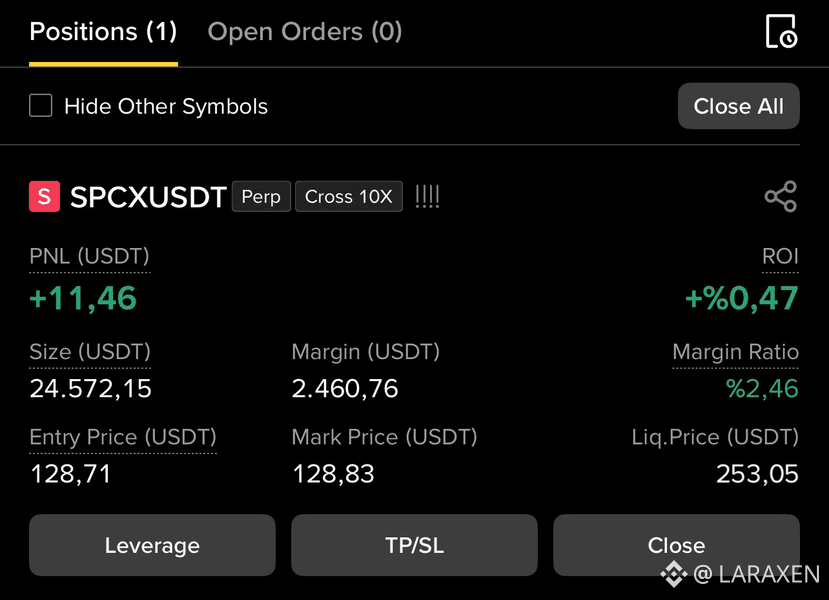
It involves high risk !!!!️

Ryker ended his long position at $129. I created a high-risk position.

We noticed that it broke easily while waiting for it to support the $129 level.

A pump was made to test this area. I don’t think it will be successful.
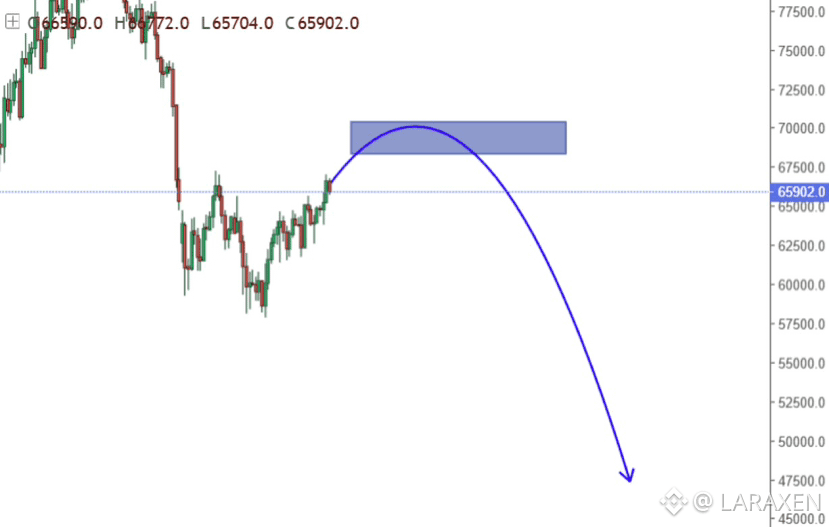
This graph is circulating in all X, and this sharing on the social side of the stock exchanges is a perfect FOMO. $BTC can push between 68,000-69000 with this reinforcement. Ancan, I am of the opinion that this will fail. I’m waiting for 44,000 levels.
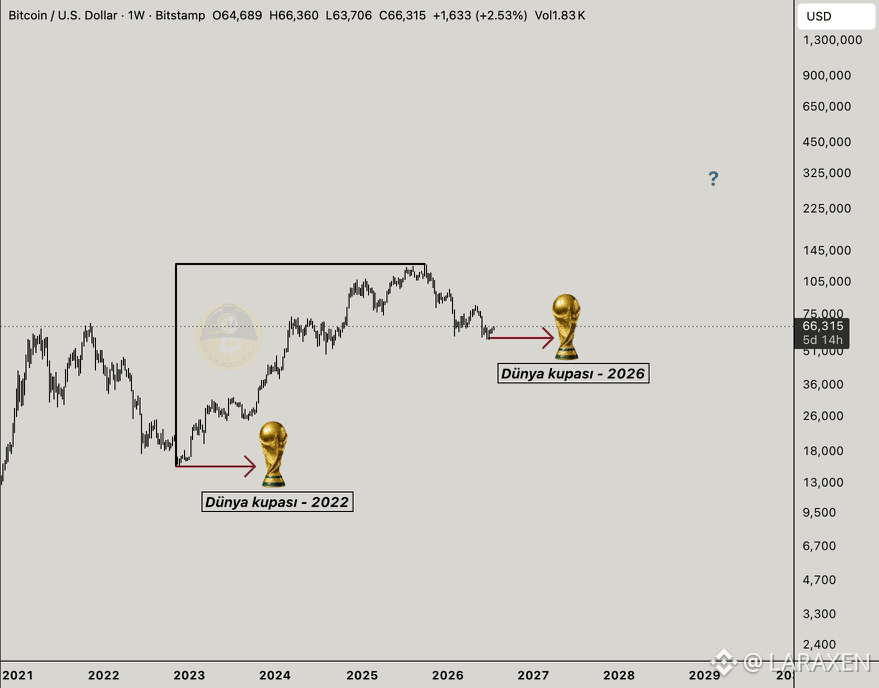
This graph is circulating in all X, and this sharing on the social side of the stock exchanges is a perfect FOMO.

$BTC can push between 68,000-69000 with this reinforcement.

Ancan, I am of the opinion that this will fail. I’m waiting for 44,000 levels.
$BANK update: The two whale wallets I mentioned yesterday are still sitting in their positions as the price continues to rise. Together they hold about 15.09M $BANK, currently worth more than $3.7M. There is no obvious sign of the exit yet. As long as smart money stays inside, $BANK deserves to be monitored closely.
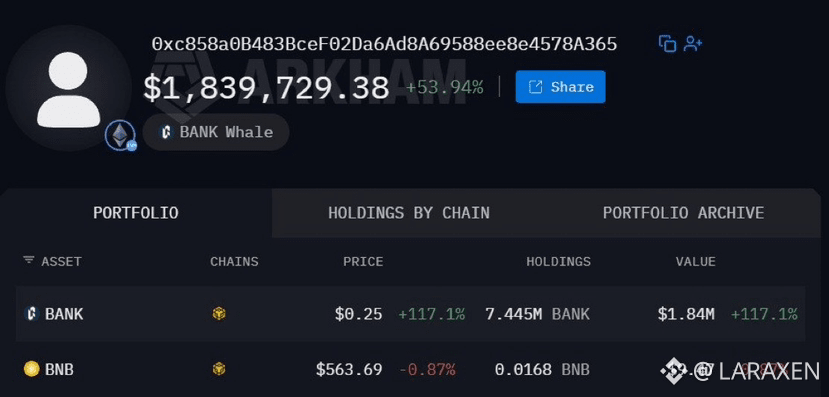
$BANK update:

The two whale wallets I mentioned yesterday are still sitting in their positions as the price continues to rise.

Together they hold about 15.09M $BANK, currently worth more than $3.7M.

There is no obvious sign of the exit yet. As long as smart money stays inside, $BANK deserves to be monitored closely.
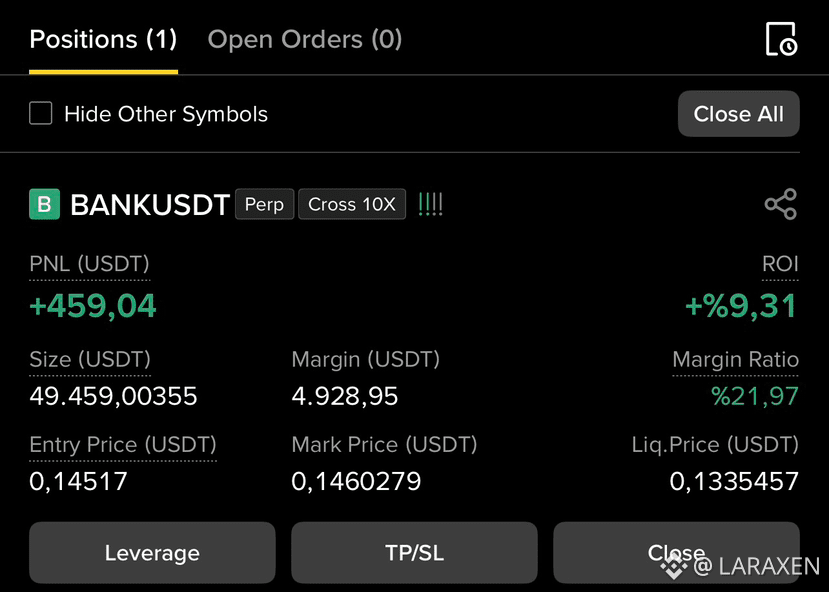
Partly True
$BANK update: The two whale wallets I mentioned yesterday are still sitting on their positions as price continues to trend higher. Together they hold roughly 15.09M $BANK, currently worth over $3.7M. No obvious signs of an exit yet. As long as smart money stays in, $BANK deserves close attention. DYOR. NFA.
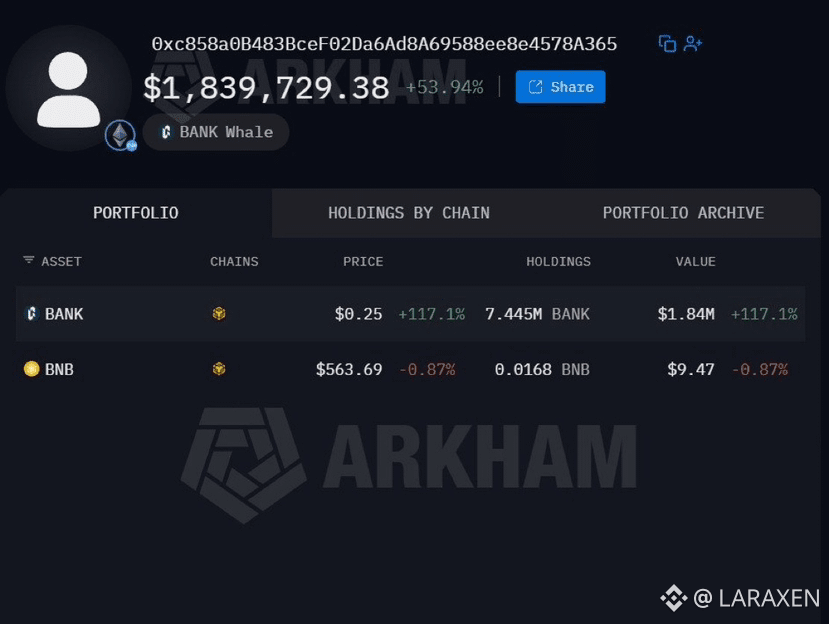
$BANK update:

The two whale wallets I mentioned yesterday are still sitting on their positions as price continues to trend higher.

Together they hold roughly 15.09M $BANK, currently worth over $3.7M.

No obvious signs of an exit yet. As long as smart money stays in, $BANK deserves close attention.

DYOR. NFA.
Log in to explore more content
Join global crypto users on Binance Square
⚡️ Get latest and useful information about crypto.
💬 Trusted by the world’s largest crypto exchange.
👍 Discover real insights from verified creators.
Email / Phone number
Sitemap
Cookie Preferences
Platform T&Cs