Bulls tried hard to defend the 1.804 level and held it for a while, but bears eventually broke through and the dip continued. Once that support gave way, momentum clearly shifted to the downside.
Now price is approaching the 0.017 area, which looks like the next key support and it’s close to breaking.
If that level flips into resistance, I’ll be watching for a pullback to that zone for a possible entry.
For now, structure is still bearish. I’ll wait for confirmation instead of rushing in. #Zama
All the gains made after the U.S. unemployment data just got wiped out in a matter of hours. What looked like a relief rally quickly turned into a full reset.
The S&P 500 is down 0.3%, Nasdaq down 0.35%, and the Russell 2000 is leading losses at -1.25%. That tells you risk appetite is fading fast, especially in small-cap stocks.
Crypto didn’t escape it either.
$BTC slipped below $66,000, $ETH touched $1,900, and nearly $90 billion has been erased from the total crypto market cap. Most assets are now sitting at their daily lows.
This is what happens when the market shifts from optimism to uncertainty in seconds. One minute it’s “soft landing,” next minute it’s “risk-off.”
Right now, it’s less about narratives and more about liquidity. When momentum fades, everything gets repriced quickly. #ETH #BTC
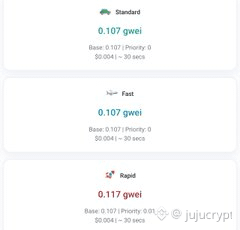
Someone just paid $128,322 in $ETH gas fees for a single transaction.
Yeah… just the fee. Not the transaction amount the fee.
For context, gas fees on Ethereum are what you pay validators to process and confirm your transaction. The more complex or urgent the transaction, the higher the gas. When the network is congested, fees can spike hard.
Now, paying over $128K in gas usually means one of a few things:
• It was a very large transaction (possibly millions being moved). • It involved a complex smart contract interaction. • The sender manually set an extremely high priority fee. • Or it was simply a costly mistake.
Sometimes whales don’t care about the fee if they’re moving serious size and need instant execution. In volatile markets, speed matters more than cost. Other times, bots miscalculate gas settings and overpay massively.
Either way, moves like this tell you one thing: big money is active on-chain.
When people are willing to burn six figures just to get a transaction through, it means something important is happening behind the scenes.
The real question is was this urgency, strategy, or an expensive error? #ETH
$GHST bounced right off the 0.128 area, exactly where we were watching for a reaction.
That zone acted as short-term support, and buyers stepped in cleanly from there. Price is now pushing up, but the key is whether it can build structure above this level.
If momentum holds and we start seeing higher lows, that bounce could mean something. If not, it might just turn into another consolidation phase.
For now, 0.128 proved important let’s see what price does next. #GHST
jujucrypt
·
--
$GHST had a strong pump, but now it’s clearly correcting.
On the 1H timeframe, it’s been breaking key support levels and forming lower highs, which shows sellers are in control for now.
Price is currently heading toward the 0.128 zone that’s the next level I’m watching.
If we get a clean reaction there, I’ll look for a possible entry. But no rush. I need proper confirmation first.
For now, momentum is still slightly bearish. #GHST
I Just Listened to CZ's All-In Podcast. Here's What I Learned
I spent 90+ minutes listening to CZ's first major interview since getting out of prison.
The All-In Podcast dropped it yesterday, and honestly? I wasn't expecting much. I figured it'd be the usual crypto hype, carefully scripted PR answers, maybe some generic "#bitcoin to the moon" takes. I was wrong.
CZ was... real. Honest. No filter. And he said some things that completely changed how I'm thinking about this market.
The biggest one? He thinks 2026 might break the traditional 4-year Bitcoin cycle. Not a typical bear year. A continuation. But that's just one piece. He also opened up about what prison was actually like, how the Trump pardon felt, why he's genuinely happy he doesn't run Binance anymore, and why he believes AI agents are going to become crypto's biggest users.
Let me break down what I picked up the stuff that actually matters. What I Learned About His Prison Time
First, let's talk about where he's been. CZ spent 4 months in federal prison after pleading guilty to anti-money laundering violations. The settlement? $4.3 billion. One of the largest in corporate history. What Prison Was Actually Like I was curious about this part. What's it like when you go from running a multi-billion dollar exchange to... federal prison? He was surprisingly open about it.
On the social hierarchy: "There are levels. Some people have been there 10+ years. You respect seniority." He talked about how there's a whole social structure inside. You don't just show up and act like you're CZ, crypto billionaire. You're just another inmate. On the mental side: "I went in knowing it was finite. 4 months. Some guys don't have a release date. That's a different kind of hell." This hit me. Knowing you have an end date changes everything. Imagine being in there without knowing when or if you're getting out.
The unexpected part: "I had time to think. No distractions. No pressure. Just... space." He actually described prison as mentally clarifying. Think about it: when you're running Binance, your brain never stops. Emails, crises, decisions 24/7. Prison? Forced pause.
"I actually got a lot of mental clarity," he said. I wasn't expecting that take. The Trump Pardon Question Then the hosts asked about the pardon. Trump granted CZ clemency in January 2025, cutting his sentence.
How did it feel? "Relief. Not celebration. Just... relief." I appreciated the honesty there. He didn't try to make it some triumphant moment.
The pay-to-play question: The hosts directly asked: "Was there a deal? Did you pay for this?" CZ's answer: "Absolutely not." He said he had zero contact with the Trump administration about it. It came as a surprise. "People want to create conspiracies. There was no deal. I didn't lobby for it. It happened."
So why did Trump do it? CZ thinks it's part of a bigger shift in how the U.S. government sees crypto. "The tide has turned. Crypto isn't the enemy anymore. Regulators are realizing they need to work WITH the industry, not against it." That part made sense to me. The political winds have definitely changed since 2023. He's Actually Happy He Doesn't Run Binance Anymore This was the quote that stuck with me most: "I am actually grateful that I don't have to run Binance anymore. The mental load is gone." Wait, what?
This is the guy who built Binance from zero to the largest crypto exchange on the planet. And he's... relieved to not run it? Yeah. He is. His explanation hit different: "Money is just one thread in a spiderweb. If you pull it too hard, the rest of the web family, health, peace snaps." That's real.
Running Binance was consuming him. Every waking moment. Every decision. Every crisis. Now? He's free. "I'm a normal dude," he said. "You don't need to be super smart to be successful, just consistent and a bit lucky." I found that refreshing. No ego. No "I'm a genius" flex. Just honesty. The 2026 Prediction That Got My Attention Okay, now the market stuff.
How Bitcoin Cycles Usually Work Historically, Bitcoin follows this pattern: Year 1: Bull market, new ATH Year 2: Crash, bear market Year 3: Bottoming, accumulation Year 4: Recovery, new ATH Then repeat. So: 2021: Peaked at $69K 2022: Crashed to $15.5K 2023: Bottomed around $25K-$30K 2024: Recovery, then new ATH at $126K 2026: ??? (Should be a bear year, right?) CZ Says: Maybe Not This Time Here's where it got interesting. CZ thinks 2026 could break the cycle. Not a typical bear year. Maybe a continuation.
His reasoning: 1. The ETFs changed everything. "The ETFs provide a floor. We're not going to see 80% crashes like we used to." He explained that institutional money doesn't panic. When Bitcoin drops, they buy more. Retail? We panic sell. Institutions? They accumulate.
2. Countries are buying Bitcoin now. El Salvador. Bhutan. Probably others we don't know about yet. Nation-states don't dump in bear markets. They're long-term holders.
3. Retail hasn't even FOMO'd yet. "Institutions are in. But retail? They're not euphoric yet. That's still coming." His point: If retail piles in AFTER institutions have already positioned, the cycle extends longer. What a Supercycle Would Look Like Instead of: 2026: Crash to $50K2027: Bottom and recover Maybe: 2026: Consolidate at $150K2027: Continue to $300K That's a supercycle. Do I Buy It? Honestly? I'm torn. The ETFs ARE different. We've never had $50+ billion in institutional vehicles before. And if countries are quietly stacking, that's new too. But... cycles exist for a reason. Euphoria builds. Leverage piles up. Then everything crashes. I think CZ might be right that crashes will be shallower (50% instead of 80%). But cycles ending completely? That feels optimistic. We'll see. His $200K Bitcoin Take The hosts tried to get CZ to make price predictions. He mostly dodged. "I don't do 3month, 6month calls. That's just noise." But long-term?
He's sure Bitcoin hits $200,000. "It's not IF. It's WHEN. 5-10 years." Why He's So Confident I wrote down his reasoning: 1. Math is simple. 21 million Bitcoin max. Demand keeps growing. Price has to go up. 2. We're still early. "Institutions just started getting in. This isn't the middle. It's the beginning." 3. Fiat keeps failing. "When national currencies collapse, people look for alternatives. Bitcoin is that." He didn't give a timeline. But his conviction was clear. $200K is coming. Just... eventually.
The AI + Crypto Idea That Blew My Mind CZ's not just sitting around post-Binance. He's building Giggle Academy (free education platform) and investing in AI + Crypto. And he made a prediction that I can't stop thinking about:
AI Agents Will Use Crypto More Than Humans Here's the thesis he laid out: AI agents need money to operate.
To: Pay for computing powerBuy dataHire servicesTransact with other AI agents But they can't use traditional banks.
Why? Can't open bank accounts (no KYC/identity)Can't pass verificationCan't hold credit cards So what's the solution? Crypto. "AI agents need native digital currency. They CAN'T use banks. Crypto is their only option." Why This Actually Makes Sense Think about it: If millions of AI agents are operating globally, all needing to transact, they can't exactly walk into a Chase branch and open an account. They need: Digital wallets (check)Instant transactions (check)No permission required (check) That's crypto. What This Means If CZ's right, crypto adoption won't be about convincing people. It'll be about AI agents using it by default because they have no other choice. That's infrastructure-level demand. Not speculative. Not optional. Required. "We won't need to sell people on crypto. AI will just use it," he said. I'm still processing this one. But it makes way more sense than I expected. His Brutal Take on Meme Coins
The hosts brought up meme coins. CZ didn't sugarcoat it. "90% of them will fail." Why Most Will Die "Most have no utility. No culture. No real community. Just speculation." He said only the ones with actual cultural staying power survive. Example: $DOGE coin. "Doge has been around for years. Real community. Cultural value. That's not going away." But the random dog coin from last week? "Gone in 6 months." What I Took From This If you're holding meme coins, ask yourself: Will people care about this in 2 years?Does it have real community beyond just pumping?Or is it pure hype?
If it's just hype, he's saying: take profits now. I appreciated the honesty. No shilling. Just reality. Regulation: The Fragmented Mess CZ was asked about the state of crypto regulation globally. His take: It's a mess. And it's getting worse.
The problem: Every country has different rules. What's legal in the U.S. is illegal in China.
What's allowed in Europe is banned in India.
What flies in Dubai gets you arrested in Nigeria. The result? Crypto companies are drowning in compliance costs. "You need a different legal team for every jurisdiction. It's unsustainable."
The solution? CZ advocates for "Regulatory Passporting" similar to the EU's MiCA framework. "If you get licensed in one region, it should apply across multiple countries. Like the EU passport system."
Will it happen? "It's the only realistic path forward. Otherwise, only giant companies can afford compliance. That kills innovation."
Binance's Future: Survival Over Growth CZ stepped down as Binance CEO as part of the DOJ settlement. New leadership. New structure. New phase. What's Binance's strategy now? "Survival over growth."
CZ was candid: "The hyper-growth days are over. Now it's about compliance, stability, and surviving long-term."
Binance is transitioning from a "move fast and break things" startup to a traditional corporate structure. Why? Because global regulators demand it.
Does CZ support this? Yes.
"Binance needs to mature. That means slower growth, but more stability. I'm okay with that." He genuinely seems relieved to not be dealing with it anymore. ETFs: The "Floor" That Changed Everything One of CZ's most important points: Spot Bitcoin ETFs are preventing the 80% crashes of the past.
How?
"ETFs provide a floor. When price drops, institutions BUY. They don't panic sell like retail."
Historical crashes: 2018: -85% (from $20K to $3K)2022: -78% (from $69K to $15.5K) Current crash: 2026: -46% (from $126K to $67K... so far) The difference? #ETFs . "Institutions see $70K Bitcoin and think 'discount.' Retail sees it and thinks 'it's going to zero.'" That behavioral difference creates a price floor. The implication: Bear markets might be shallower going forward. Not 80% crashes. Maybe 50-60% max.
But they might also last longer. Instead of a quick capitulation wick, we get a slow grind down as institutions accumulate.
What I'm Taking Away From All This After listening to the full 90 minutes, here's what stuck with me: 1. The 2026 Supercycle Idea CZ thinks the traditional 4-year cycle might break because: ETFs provide a floorCountries are buyingRetail hasn't peaked yet My take: Possible. But I'm not betting my whole portfolio on it. Cycles have a way of reasserting themselves.
2. Bitcoin to $200K He's certain. "When, not if." 5-10 years. My take: Seems reasonable long-term. Just don't expect it next month. 3. AI Agents + Crypto AI needs crypto because they can't use banks. My take: This is the idea I can't stop thinking about. If it plays out, it's a game-changer. 4. 90% of Meme Coins Die Only ones with real culture survive. My take: He's right. History will prove it. 5. ETFs Changed Everything They prevent 80% crashes. My take: Already seeing it. Current crash is 46%, not 80%. 6. He's Happier Now "Grateful I don't run Binance anymore." My take: Money isn't everything. Mental peace matters. My Bottom Line Honestly? This was one of the most refreshing crypto interviews I've heard in a while. No hype. No shilling. Just a guy who's been through hell and come out with clarity.
His message: Crypto's future is bright (institutions, AI, adoption)But it won't be a straight lineMost garbage will die (meme coins)Bitcoin will hit $200K eventually2026 might surprise us Whether you agree or not, CZ's thought deeply about where this is all going.
And I think his insights are worth paying attention to.
If you listened to the podcast too what did you pick up? Do you buy the supercycle thesis? And what about the AI + crypto idea? Let me know what you think.
At this rate, it doesn’t really look like $ZAMA has found a solid bottom yet. Since listing, it’s mostly been one direction sharp moves down with very little structure forming.
I actually spotted a decent entry a few hours ago, but I slept on it. Happens sometimes. Now I’m in a short position instead, just playing the momentum and seeing how price reacts from here.
For now, it’s still a fast-moving chart. Until we see real consolidation and buyers step in with strength, it feels like sellers are still in control. Let’s see how this plays out. #Zama
How Binance's 20% APY Grew USD1 to $5.4B in 10 Months (And Why a $10M Whale Is Now Buying WLFI)"
Most people aren't paying attention to $USD1 . They should be. In just 10 months since launch, World Liberty Financial's stablecoin USD1 has grown from $0 to $5.4 billion in market cap.
That makes it the 5th largest stablecoin in crypto sitting above household names and competing with coins that have been around for years. But here's the part that's really interesting: A whale just deployed $10 million $USDC into WLFI buys.
And that's not random. When liquidity expands (USD1 growing to $5.4B) and whale positioning heats up ($10M fresh capital) at the same time, it usually signals something bigger is brewing. Let me break down what's happening and why Binance's dominance of USD1 might be the most important part of this story.
USD1: From Zero to $5.4B in 10 Months
Let's put this growth in perspective. The Numbers
Launch: March 2025 Current market cap: $5.4 billion Timeframe: 10 months Ranking: 5th largest stablecoin globally For context, here's the full top 5:
$USDT (Tether): $184.5 billionUSDC (Circle): $75 billionDAI (MakerDAO): $6 billionPYUSD (PayPal): $5.5 billionUSD1 (World Liberty): $5.4 billion ← We are here
USD1 just overtook established players like FDUSD and is now neck-and-neck with PayPal's PYUSD.
That's not normal growth. That's explosive growth.
What Made This Possible? USD1 didn't just appear out of nowhere and hit $5.4B. There were specific catalysts: 1. Binance Integration (The Big One) In December 2025, Binance launched 20% APY on USD1 holdings. That's not a typo. Twenty percent annual yield on a stablecoin. For comparison: USDT on Binance: 3-5% APYUSDC on most platforms: 4-6% APYTraditional savings accounts: 0.5-2% 20% APY was a game-changer.
Suddenly, holding USD1 wasn't just safe it was profitable. Massively profitable. Capital flooded in. Within weeks, USD1's market cap doubled, then tripled.
2. World Liberty Financial's Backing USD1 isn't just another algorithmic stablecoin or DeFi experiment. It's backed by World Liberty Financial a project with serious institutional ambitions:
Applied for a US trust bank charterHosting the World Liberty Forum on February 18 at Mar-a-LagoBuilding infrastructure for real-world asset tokenizationFocused on compliance and regulation from day one This isn't a fly-by-night operation. It's positioned as a serious competitor to Circle and Tether.
3. Liquidity Begets Liquidity Once USD1 hit critical mass ($1-2B), network effects kicked in. More holders → More trading pairs → More DeFi integrations → More demand → Higher market cap The flywheel started spinning. And now, at $5.4B, USD1 has enough liquidity to be taken seriously by institutions, exchanges, and protocols.
Binance's 87% Stranglehold on USD1 Here's where it gets really interesting.
The Dominance Numbers Out of $5.4 billion in total USD1 supply: $4.7 billion sits on Binance. That's 87% of the entire supply.
The remaining 13% is split between: Other exchanges: 8%DeFi protocols and wallets: 5% No other major stablecoin has this level of single-exchange concentration.
For comparison:
USDT on Binance: 10% of total supplyUSDC on Binance: 12% of total supplyFDUSD on Binance: 50% of total supplyUSD1 on Binance: 87% of total supply ← Unprecedented
Why This Matters 1. Binance Controls USD1's Fate With 87% of supply, Binance essentially controls USD1's liquidity, trading volume, and adoption. If Binance maintains the 20% APY? USD1 keeps growing. If Binance reduces the yield? Growth slows. If Binance delists USD1? The project is in serious trouble.
This is both a strength and a risk. 2. The 20% APY Question Everyone's wondering: How long can Binance sustain 20% APY? Possible answers: Subsidized growth: Binance is paying to bootstrap USD1 adoptionLending revenue: Binance lends out USD1 at higher rates, passes 20% to usersStrategic partnership: World Liberty Financial compensates Binance to drive growthTemporary promotion: The rate will drop once critical mass is reached The truth is likely a mix of all four.
But here's what we know for sure: As long as the 20% APY continues, USD1 will keep growing.
3. Binance's Incentive Why would Binance want USD1 to succeed? Diversification away from USDT/USDC dominance Tether (USDT) and Circle (USDC) are the duopoly of stablecoins. They control 90%+ of the market. Binance has tried to break this with BUSD (failed, regulatory pressure) and FDUSD (moderate success). USD1 might be their best shot yet especially with:
World Liberty's regulatory-first approachUS trust bank charter applicationInstitutional backing and compliance focus
If USD1 succeeds, Binance gets a compliant, US-friendly stablecoin that it has significant influence over. That's strategic. The $10M WLFI Whale Buy: What's Really Happening Now let's talk about the WLFI token and why a $10 million whale buy is a big deal.
The Whale Activity What happened:
A newly created wallet address started buying WLFI on February 1st. Over the next 10 days, this wallet:
Deployed $10 million USDC into WLFI purchasesAccumulated 47.6 million WLFI tokensAverage entry price: $0.109 per tokenCurrent holdings value: ~$5.2 million (at current prices)Remaining capital: $4.83 million USDC (still ready to deploy) Why This Is Significant 1. Fresh Capital, Not Rotation This isn't an existing holder moving tokens around. This is a brand new wallet funded with fresh USDC. That means new money entering the ecosystem not internal shuffling.
2. Size Matters $10 million is whale-sized capital in crypto. For context: Most retail buys: $100-$10,000Small whales: $100K-$1MBig whales: $1M-$10MInstitutional/mega whales: $10M+ This wallet is in the institutional/mega whale category.
3. Strategic Accumulation The whale didn't market buy $10M all at once (which would spike price immediately). Instead, they accumulated slowly over 10 days, averaging $0.109 per token. This is patient, strategic accumulation not FOMO buying. And they still have $4.83M USDC left. They're not done. The Market Response WLFI's price jumped +11% in 24 hours after the whale activity became public. Trading volume surged to $227 million/day a 100% increase from the prior week. Translation: Other traders are noticing. They're front-running what they think comes next.
What This Signals: Liquidity + Whale Positioning = Bigger Expectations Here's the pattern to watch:
When two things happen simultaneously: 1. Liquidity expands (USD1 growing to $5.4B)
2. Whale positioning increases ($10M deployed into WLFI)
It usually means bigger expectations are forming behind the scenes. Let me explain why. Why Whales Buy When Liquidity Grows Whales don't buy randomly. They buy when:
Fundamentals are strongLiquidity is deep enough to support large positionsCatalysts are comingInsider information suggests upside USD1 hitting $5.4B provides the liquidity foundation. If a whale wants to build a $10M WLFI position, they need to know there's enough market depth to eventually EXIT that position. USD1's growth to $5.4B proves there's real liquidity in the World Liberty ecosystem. That gives whales confidence to deploy capital into WLFI. The Catalysts Whales Might Be Positioning For What could this whale know that we don't?
Possible catalysts: 1. World Liberty Forum (February 18) World Liberty Financial is hosting a major event at Mar-a-Lago on February 18th. Expected attendees: Institutional investors, crypto executives, policymakers. If major announcements are coming, positioning BEFORE the event makes sense.
2. US Trust Bank Charter World Liberty applied for a US trust bank charter. If approved, that would be MASSIVE it would give them legitimacy and regulatory clarity that most crypto projects can never achieve.
3. WLFI Utility Expansion WLFI is the governance and utility token for the World Liberty ecosystem. As USD1 grows, WLFI's utility could expand:
Governance over USD1 reservesRevenue sharing from USD1 feesStaking rewards tied to USD1 growthAccess to World Liberty banking services If USD1 is at $5.4B now, what's it worth at $10B? $20B?
And what's WLFI worth if it captures value from that growth?
The whale might be betting on this. The Bigger Picture: Is World Liberty Building Something Real?
Let's zoom out. USD1 didn't just appear. It's part of a bigger vision:
World Liberty Financial's goal: Build a compliant, institutional-grade crypto banking infrastructure. The components: USD1: Stablecoin for payments and savings (currently $5.4B)WLFI: Governance and utility token (whale accumulation happening)Trust bank charter: Regulatory legitimacy (applied, pending approval)Binance partnership: Distribution and liquidity (87% of USD1 supply)Institutional events: World Liberty Forum on Feb 18 This isn't just a stablecoin project. This is an attempt to build a regulated crypto bank.
And if they pull it off, the $5.4B in USD1 supply is just the beginning. The Risks You Need to Know
Before you get too excited, let's talk about what could go wrong. Risk #1: Binance Dependency 87% of USD1 sits on Binance. If Binance:
Reduces the 20% APY → Growth stallsFaces regulatory issues → USD1 gets dragged downDelists USD1 → Project faces existential crisis Concentration risk is real. Risk #2: Regulatory Uncertainty World Liberty applied for a US trust bank charter. What if it's denied? What if regulators decide USD1 doesn't meet compliance standards? What if the 20% APY is deemed unsustainable or misleading?
Regulatory risk is always present in crypto. Risk #3: WLFI Token Utility WLFI's value depends on utility. Right now, it's mostly speculative. If concrete utility (governance, revenue share, staking rewards) doesn't materialize, the token could underperform. The whale might be wrong. Risk #4: Sustainability of 20% APY Can Binance really sustain 20% APY long-term? If the yield drops to 8%, 5%, or even 3%, will users stay? Or will they rotate back to USDT/USDC? Yield sustainability is questionable. What Should You Watch? If you're interested in USD1 and WLFI, here's what to monitor: Key Metrics to Track 1. USD1 market cap growth Currently $5.4BIf it hits $10B, momentum is realIf it stalls or declines, red flag
2. Binance APY changes Currently 20%Any reduction signals a shift in strategyWatch for announcements 3. WLFI whale activity The $10M whale still has $4.83M to deployAre more whales accumulating?Or are they exiting? 4. World Liberty Forum (Feb 18) Major announcements?Institutional partnerships?Trust bank charter update? 5. WLFI token utility Does governance launch?Is there revenue sharing?Are staking rewards introduced? The Key Question Is this whale right? Are bigger expectations justified? Or is this just another speculative bet that doesn't pan out? We'll know soon.
The Bottom Line USD1 grew from $0 to $5.4 billion in 10 months. Binance controls 87% of the supply with 20% APY. A $10M whale just accumulated 47.6M WLFI tokens.
When liquidity expands and whale positioning heats up simultaneously, it signals something.
Maybe it's: Institutional positioning before the Feb 18 eventAnticipation of the trust bank charter approvalBelief that USD1 will hit $10B+ and WLFI captures value from that growth Or maybe it's just a well-capitalized speculator making a big bet.
But either way, the data is clear: The World Liberty ecosystem is growing faster than most people expected.
And smart money is starting to pay attention.
What's your take is USD1's growth sustainable, or is this just yield-chasing that ends when the APY drops? And is the WLFI whale onto something, or early to a party that never starts?
Bitcoin's Hash Rate Is at ATH. Active Addresses Are Up. So Why Is Price Down 46%?
Bitcoin is at $68,500. That’s a 46% drop from the $126,210 all-time high we saw in October. Fear & Greed Index: 9 (Extreme Fear). Twitter sentiment: "The bubble finally popped." Retail investors: Total capitulation. But here is the data that is confusing everyone: The #bitcoin network has never been stronger.
While the price chart looks like a disaster, the internal engine of the network is screaming growth. Hash rate is hitting new highs, active addresses are climbing, and the network hasn't skipped a beat. Let’s explain the massive disconnect and why this "Value Gap" matters more than the daily candle. The Data Everyone Is Ignoring Price is down 46%. But look at the actual health of the system: 1. Hash Rate (Network Security) Current: 1.06 Zettahash/s (1,060 EH/s)Change: +24% increase from the price peak.Bitcoin's hash rate the total computing power securing the network hit multiple all-time highs in early 2026. Despite a recent 11% difficulty drop due to U.S. winter storms and miner "de-leveraging," the long-term trend is up.
Translation: Miners are still deploying billions in hardware. They are betting on the next 10 years, not the next 10 days.
2. Active Addresses (Network Usage) Current: 733,000 daily active addresses (7-day average)Change: +23% increase.More people are moving Bitcoin now at $68K than when it was at $126K. This isn't just "HODLing"; it's utility.
Translation: Network adoption is accelerating even as speculators flee.
3. Institutional Stability (The ETF Factor) Context: We saw massive outflows of $1.9B year-to-date.The Shift: As of yesterday, spot ETFs recorded $145M in net inflows, marking a third straight day of positive momentum.
Translation: The "forced selling" phase is cooling off. Institutions are starting to buy the "blood in the streets."
Why the Disconnect? Sentiment vs. Reality
Right now, the market and the network are playing two different games. The Market (Short-Term): Driven by leverage, liquidations, and fear. When $5.5B in leveraged positions get wiped out, fundamentals don't matter. Forced selling doesn't care about hash rate.The Network (Long-Term): Driven by security, utility, and scarcity. The network is growing while the price is weak. This creates a "coiled spring" effect.
Historically, when the network grows and the price falls, the price eventually catches up. We saw this in the 2018 crash, the 2020 COVID dip, and the 2022 FTX collapse. Every single time, the fundamental strength was the leading indicator of the next bull run. The "Phase" of the Market We are currently moving out of Phase 1 (Leverage Unwind) and into Phase 2 (Capitulation/Bottoming). The Fear & Greed Index hitting 9 is a historic signal. In 2022, it hit 6 before we bottomed. We are deep in the "darkest before the dawn" zone. While retail investors are asking if Bitcoin is dead, smart money is looking at the 100% uptime and record security and asking, "How much can I buy at this discount?" What This Means For You Are you watching the candle or the engine? If you are a Trader: Respect the trend. $68K is a psychological battleground, and macro uncertainty from the delayed Jobs Report is keeping things volatile. Fundamentals won't save your margin call.If you are an Investor: This is the "Value Gap." The foundation of the house is getting stronger (Hash Rate) while the market price of the house is being slashed. This is where wealth is historically built. The Bottom Line Bitcoin’s network is flawless. Its security is at an all-time high. Its adoption is growing. Only the price is "broken." This disconnect won't last forever. Eventually, price aligns with the network. It always has. The question isn't if the fundamentals will matter, but when. What’s your take? Are you a Network Bull (buying the fundamental strength ) or a Macro Bear (waiting for a deeper flush )? Which data point are you watching most closely right now? Let me know in the comments below.
If you caught the $DUSK short and you’re still in the trade, price is currently going sideways around the same region.
That usually tells me the market is pausing, not reversing yet.
This kind of consolidation often happens after a strong move, as buyers and sellers battle for control.
As long as DUSK keeps failing to reclaim the key level above, the downside bias remains intact in my view.
For now, I’m still watching for a continuation toward the 0.093 area. If that level gets tested, that’s where we’ll really see whether sellers are still in control or if buyers finally step in. Until then, patience matters more than forcing a move.
jujucrypt
·
--
There might be a short opportunity setting up on $DUSK around the 0.1124 level. That area feels important, so it’s worth waiting to see how price reacts there instead of rushing in.
If sellers step in and price rejects that level, the short makes sense. But if it fails to reject and buyers keep pushing through, then it’s probably a sign of continuation to the upside instead.
For now, it’s a wait-and-watch situation. Let the level decide the next move.
$3.5B worth of $USDT was burned today, and that’s a quiet but important signal.
In simple terms, it means excess stablecoin supply is being removed from the market. There’s less “idle money” sitting around, which usually happens after volatility or heavy selling.
For the market, this points to tighter liquidity. Big moves may slow down for now, but it also means sell pressure is easing.
For traders, it’s a reminder that this is a reset phase patience matters here.
USDT burns don’t spark instant pumps, but they often show the market is clearing itself out before the next real move. #stablecoin
Tom Lee’s BitMine just added another $41.08M worth of $ETH today, and at this point it’s hard not to notice the pattern. He keeps buying, regardless of whether the market is calm, dumping, or going sideways.
That’s usually how big money moves. They’re not chasing green candles or trying to time the perfect bottom.
They DCA through uncertainty, build positions quietly, and let time do the heavy lifting. We’ve seen this play out before with large holders who accumulated during boring or painful periods, only for the narrative to flip months later.
To me, this doesn’t scream “short-term trade.” It looks more like long-term conviction. While price action shakes out weak hands, some of the biggest bags in the room are still stacking. That contrast alone is worth paying attention to. #ETH
#Ethereum✅ ETFs just recorded $57M in inflows yesterday, which tells you demand is still very much alive despite all the noise in the market.
What really stands out is Fidelity stepping in with a $67.3M $ETH purchase. That’s not a retail move, that’s long-term capital positioning while price action looks boring and sentiment is shaky.
Moments like this usually show the disconnect between headlines and what big players are actually doing.
While most people are focused on short-term volatility, institutions are slowly building exposure, likely betting on Ethereum’s role in ETFs, on-chain activity, and future adoption.
It doesn’t mean price goes up immediately, but it does suggest ETH is still being treated as a serious long-term asset behind the scenes.
Something serious is going on in the market right now.
Ahead of today’s emergency Fed announcement, reports are circulating that #BlackRock rapidly sold over $250M worth of $BTC and $ETH within minutes. The speed alone is what’s raising eyebrows this wasn’t a slow rebalance, it looked urgent.
When big players move like that, it usually means they’re de-risking before uncertainty, not chasing price. Whether this is about interest rates, liquidity stress, or something macro breaking behind the scenes, the timing matters.
For now, the market is on edge. Volatility is picking up, sentiment is shaky, and everyone’s waiting to hear what the Fed says next.
This feels like one of those moments where you stop forcing trades and just watch closely. #ETH
After a brief period of consolidation on the $XRP chart, bears are starting to apply pressure again.
Price is now being pushed toward the $1.30 level, and if that area fails to hold, a move toward $1.00 isn’t off the table. That said, I’m still keeping a close eye on $1.3866, as it remains a key level to watch.
For now, it’s all about how price reacts around these zones on the 1-hour timeframe. Let’s see how it plays out. #Ripple
It almost feels like someone copy-pasted the $BTC chart.
When you line up this cycle with the previous one, the similarities are hard to ignore. Same kind of structure, same pauses, same shakeouts. It’s not perfect, but the rhythm feels familiar.
Doesn’t mean history will repeat exactly, but when Bitcoin starts moving like this, it’s usually worth paying attention. Sometimes the market loves to rhyme. #bitcoin
There might be a short opportunity setting up on $DUSK around the 0.1124 level. That area feels important, so it’s worth waiting to see how price reacts there instead of rushing in.
If sellers step in and price rejects that level, the short makes sense. But if it fails to reject and buyers keep pushing through, then it’s probably a sign of continuation to the upside instead.
For now, it’s a wait-and-watch situation. Let the level decide the next move.