
yahyabro321
300 Posts

yahyabro321
Report
Block User
I am trader from 2024 on binance
Open Trade
Occasional Trader
2 Years
15 Following
126 Followers
403 Liked
Posts
Portfolio
All
Quotes
PINNED
·
--
Article
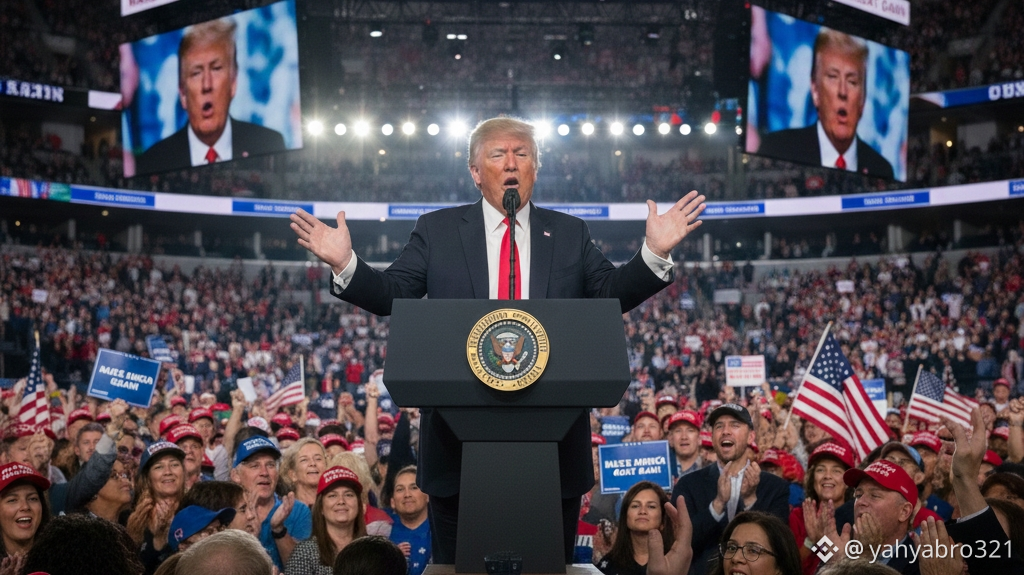
How Trump Tariff Impact On Crypto Market:How Trump’s Tariff Announcements Rattle Crypto Markets
The U.S. tariff regime under Donald Trump — including steep levies on imports from key trading partners — has become a recurring macro catalyst for crypto price volatility.
Direct Price Reactions
Bitcoin and major altcoins have experienced sharp sell-offs following tariff news, at times dragging prices down by 5–10% or more within days. Reactive selling tends to hit crypto harder than traditional assets due to its “risk-on” profile and lower liquidity during stress periods.
Liquidations of leveraged positions have wiped out billions in crypto exposure during some tariff announcements, intensifying short-term movements.
For example:
A 100% tariff proposal triggered one of the biggest wave of forced sales in crypto history.
Bitcoin faced pressure around $90K resistance amid tariff uncertainty.
Supreme Court delays on tariff rulings have triggered rally episodes, underscoring how policy timing feeds directly into crypto sentiment.
Why Tariffs Matter for Crypto Prices
Tariffs do not directly change blockchain fundamentals, but they influence the macro backdrop in several ways:
1) Economic Uncertainty & Risk Aversion
Tariffs generally signal rising trade tensions and possible economic slowdown. Risk assets like cryptocurrencies are often the first to feel the downside:
Investors shift capital to safer assets (USD, Treasuries, gold).
Crypto’s correlation with broader markets strengthens during periods of macro stress.
2) Liquidity and Money Flows
Tariffs can contribute to:
Lower economic growth expectations.
Tighter liquidity, which reduces speculative demand for high-beta assets like crypto.
This dynamic often manifests as price pressure even if the long-term adoption narrative remains intact.
3) Mining and Infrastructure Costs
Tariffs on tech components and chip imports raise costs for hardware and mining operations. Higher operating costs can reduce profitability and network hash-rate growth in certain regions.
4) Psychological & Sentiment Effects
Tariff news tends to:
Increase volatility.
Dampen investor confidence.
Trigger reflexive selling — where traders exit positions anticipating economic stress.
Macro Linkages: Crypto Isn’t Isolated
Though native to decentralization, crypto markets are increasingly intertwined with global macro:
Correlation with Traditional Markets
During tariff news:
Equities often slump.
Bitcoin and altcoins push lower alongside stocks, bonds, and risk assets.
This undermines the purely “uncorrelated store of value” thesis in the short term, especially when broader risk sentiment deteriorates.
⚖️ Policy Dualism: Pro-Crypto Rhetoric vs Trade Stress
Trump’s administration has sometimes mixed pro-crypto regulatory signals with aggressive trade tariffs — creating an asymmetric market reaction:
Positive regulatory pushes can bolster sentiment.
Trade shocks tend to overwhelm bullish narratives by elevating overall risk aversion.
The result? Crypto becomes a hybrid macro asset — sensitive to both blockchain-specific drivers and traditional economic conditions.
🧩 Case Studies from Markets
🔹 Tariff Announcements → Sharp Sell-offs
Crypto markets have seen dramatic downturns after tariff escalations:
Millions of dollars in liquidations.
Altcoins stagnating or crashing more than Bitcoin.
🔹 Tariff Pauses → Temporary Relief
Tariff pauses or delays sometimes spark relief rallies:
Bitcoin and Ethereum rising as fear eases.
Risk sentiment improves, even if briefly.
This emphasizes that crypto’s reaction is often sentiment-driven rather than fundamentally linked to trade flows.
What This Means for Binance Square & Crypto Investors
Short-Term Strategies
Stay alert to tariff headlines — they can trigger quick volatility spikes.
Use risk management tools (stop-losses, hedges) to protect leveraged positions.
Long-Term Outlook
While tariffs can influence short-term prices, they do not alter the core blockchain fundamentals like adoption, network security, or protocol development. Savvy investors differentiate between:
Macro sentiment noise → often temporary.
Fundamental growth drivers → long-lasting.
Risk and Diversification
Diversifying across asset classes and understanding how macro shocks interact with crypto can help navigate turbulent periods. Following macro indicators alongside blockchain metrics provides a fuller picture.
Conclusion
Trump’s tariff actions direct or anticipated have proven to be significant macro drivers of crypto market volatility. They don’t change how blockchains work, but they shape liquidity, investor psychology, and capital flows that reverberate through digital assets.
For traders and long-term holders alike, staying informed on policy developments and understanding the mechanisms behind macro shocks is vital for managing risk and identifying opportunities in an increasingly interconnected financial ecosystem.
#TrumpCryptoSupport
#TrumpTariffShock
#TrumpTariffPlan
#TrumpTariffOnIndia
#USDemocraticPartyBlueVault
$BTC
{spot}(BTCUSDT)
$SHIB
{spot}(SHIBUSDT)
$PEPE
{spot}(PEPEUSDT)
How Trump Tariff Impact On Crypto Market:
How Trump’s Tariff Announcements Rattle Crypto Markets
The U.S. tariff regime under Donald Trump — including steep levies on imports from key trading partners — has become a recurring macro catalyst for crypto price volatility.
Direct Price Reactions
Bitcoin and major altcoins have experienced sharp sell-offs following tariff news, at times dragging prices down by 5–10% or more within days. Reactive selling tends to hit crypto harder than traditional assets due to its “risk-on” profile and lower liquidity during stress periods.
Liquidations of leveraged positions have wiped out billions in crypto exposure during some tariff announcements, intensifying short-term movements.
For example:
A 100% tariff proposal triggered one of the biggest wave of forced sales in crypto history.
Bitcoin faced pressure around $90K resistance amid tariff uncertainty.
Supreme Court delays on tariff rulings have triggered rally episodes, underscoring how policy timing feeds directly into crypto sentiment.
Why Tariffs Matter for Crypto Prices
Tariffs do not directly change blockchain fundamentals, but they influence the macro backdrop in several ways:
1) Economic Uncertainty & Risk Aversion
Tariffs generally signal rising trade tensions and possible economic slowdown. Risk assets like cryptocurrencies are often the first to feel the downside:
Investors shift capital to safer assets (USD, Treasuries, gold).
Crypto’s correlation with broader markets strengthens during periods of macro stress.
2) Liquidity and Money Flows
Tariffs can contribute to:
Lower economic growth expectations.
Tighter liquidity, which reduces speculative demand for high-beta assets like crypto.
This dynamic often manifests as price pressure even if the long-term adoption narrative remains intact.
3) Mining and Infrastructure Costs
Tariffs on tech components and chip imports raise costs for hardware and mining operations. Higher operating costs can reduce profitability and network hash-rate growth in certain regions.
4) Psychological & Sentiment Effects
Tariff news tends to:
Increase volatility.
Dampen investor confidence.
Trigger reflexive selling — where traders exit positions anticipating economic stress.
Macro Linkages: Crypto Isn’t Isolated
Though native to decentralization, crypto markets are increasingly intertwined with global macro:
Correlation with Traditional Markets
During tariff news:
Equities often slump.
Bitcoin and altcoins push lower alongside stocks, bonds, and risk assets.
This undermines the purely “uncorrelated store of value” thesis in the short term, especially when broader risk sentiment deteriorates.
⚖️ Policy Dualism: Pro-Crypto Rhetoric vs Trade Stress
Trump’s administration has sometimes mixed pro-crypto regulatory signals with aggressive trade tariffs — creating an asymmetric market reaction:
Positive regulatory pushes can bolster sentiment.
Trade shocks tend to overwhelm bullish narratives by elevating overall risk aversion.
The result? Crypto becomes a hybrid macro asset — sensitive to both blockchain-specific drivers and traditional economic conditions.
🧩 Case Studies from Markets
🔹 Tariff Announcements → Sharp Sell-offs
Crypto markets have seen dramatic downturns after tariff escalations:
Millions of dollars in liquidations.
Altcoins stagnating or crashing more than Bitcoin.
🔹 Tariff Pauses → Temporary Relief
Tariff pauses or delays sometimes spark relief rallies:
Bitcoin and Ethereum rising as fear eases.
Risk sentiment improves, even if briefly.
This emphasizes that crypto’s reaction is often sentiment-driven rather than fundamentally linked to trade flows.
What This Means for Binance Square & Crypto Investors
Short-Term Strategies
Stay alert to tariff headlines — they can trigger quick volatility spikes.
Use risk management tools (stop-losses, hedges) to protect leveraged positions.
Long-Term Outlook
While tariffs can influence short-term prices, they do not alter the core blockchain fundamentals like adoption, network security, or protocol development. Savvy investors differentiate between:
Macro sentiment noise → often temporary.
Fundamental growth drivers → long-lasting.
Risk and Diversification
Diversifying across asset classes and understanding how macro shocks interact with crypto can help navigate turbulent periods. Following macro indicators alongside blockchain metrics provides a fuller picture.
Conclusion
Trump’s tariff actions direct or anticipated have proven to be significant macro drivers of crypto market volatility. They don’t change how blockchains work, but they shape liquidity, investor psychology, and capital flows that reverberate through digital assets.
For traders and long-term holders alike, staying informed on policy developments and understanding the mechanisms behind macro shocks is vital for managing risk and identifying opportunities in an increasingly interconnected financial ecosystem.
#TrumpCryptoSupport
#TrumpTariffShock
#TrumpTariffPlan
#TrumpTariffOnIndia
#USDemocraticPartyBlueVault
$BTC
$SHIB
$PEPE
The U.S. tariff regime under Donald Trump — including steep levies on imports from key trading partners — has become a recurring macro catalyst for crypto price volatility.
Direct Price Reactions
Bitcoin and major altcoins have experienced sharp sell-offs following tariff news, at times dragging prices down by 5–10% or more within days. Reactive selling tends to hit crypto harder than traditional assets due to its “risk-on” profile and lower liquidity during stress periods.
Liquidations of leveraged positions have wiped out billions in crypto exposure during some tariff announcements, intensifying short-term movements.
For example:
A 100% tariff proposal triggered one of the biggest wave of forced sales in crypto history.
Bitcoin faced pressure around $90K resistance amid tariff uncertainty.
Supreme Court delays on tariff rulings have triggered rally episodes, underscoring how policy timing feeds directly into crypto sentiment.
Why Tariffs Matter for Crypto Prices
Tariffs do not directly change blockchain fundamentals, but they influence the macro backdrop in several ways:
1) Economic Uncertainty & Risk Aversion
Tariffs generally signal rising trade tensions and possible economic slowdown. Risk assets like cryptocurrencies are often the first to feel the downside:
Investors shift capital to safer assets (USD, Treasuries, gold).
Crypto’s correlation with broader markets strengthens during periods of macro stress.
2) Liquidity and Money Flows
Tariffs can contribute to:
Lower economic growth expectations.
Tighter liquidity, which reduces speculative demand for high-beta assets like crypto.
This dynamic often manifests as price pressure even if the long-term adoption narrative remains intact.
3) Mining and Infrastructure Costs
Tariffs on tech components and chip imports raise costs for hardware and mining operations. Higher operating costs can reduce profitability and network hash-rate growth in certain regions.
4) Psychological & Sentiment Effects
Tariff news tends to:
Increase volatility.
Dampen investor confidence.
Trigger reflexive selling — where traders exit positions anticipating economic stress.
Macro Linkages: Crypto Isn’t Isolated
Though native to decentralization, crypto markets are increasingly intertwined with global macro:
Correlation with Traditional Markets
During tariff news:
Equities often slump.
Bitcoin and altcoins push lower alongside stocks, bonds, and risk assets.
This undermines the purely “uncorrelated store of value” thesis in the short term, especially when broader risk sentiment deteriorates.
⚖️ Policy Dualism: Pro-Crypto Rhetoric vs Trade Stress
Trump’s administration has sometimes mixed pro-crypto regulatory signals with aggressive trade tariffs — creating an asymmetric market reaction:
Positive regulatory pushes can bolster sentiment.
Trade shocks tend to overwhelm bullish narratives by elevating overall risk aversion.
The result? Crypto becomes a hybrid macro asset — sensitive to both blockchain-specific drivers and traditional economic conditions.
🧩 Case Studies from Markets
🔹 Tariff Announcements → Sharp Sell-offs
Crypto markets have seen dramatic downturns after tariff escalations:
Millions of dollars in liquidations.
Altcoins stagnating or crashing more than Bitcoin.
🔹 Tariff Pauses → Temporary Relief
Tariff pauses or delays sometimes spark relief rallies:
Bitcoin and Ethereum rising as fear eases.
Risk sentiment improves, even if briefly.
This emphasizes that crypto’s reaction is often sentiment-driven rather than fundamentally linked to trade flows.
What This Means for Binance Square & Crypto Investors
Short-Term Strategies
Stay alert to tariff headlines — they can trigger quick volatility spikes.
Use risk management tools (stop-losses, hedges) to protect leveraged positions.
Long-Term Outlook
While tariffs can influence short-term prices, they do not alter the core blockchain fundamentals like adoption, network security, or protocol development. Savvy investors differentiate between:
Macro sentiment noise → often temporary.
Fundamental growth drivers → long-lasting.
Risk and Diversification
Diversifying across asset classes and understanding how macro shocks interact with crypto can help navigate turbulent periods. Following macro indicators alongside blockchain metrics provides a fuller picture.
Conclusion
Trump’s tariff actions direct or anticipated have proven to be significant macro drivers of crypto market volatility. They don’t change how blockchains work, but they shape liquidity, investor psychology, and capital flows that reverberate through digital assets.
For traders and long-term holders alike, staying informed on policy developments and understanding the mechanisms behind macro shocks is vital for managing risk and identifying opportunities in an increasingly interconnected financial ecosystem.
#TrumpCryptoSupport
#TrumpTariffShock
#TrumpTariffPlan
#TrumpTariffOnIndia
#USDemocraticPartyBlueVault
$BTC
$SHIB
$PEPE
2
1
3
196
·
--
The Truth Behind Tesla Coin: An Investigative Warning for InvestorsTesla Coin has been circulating across social media and messaging apps as an exciting new cryptocurrency supposedly tied to Tesla or Elon Musk. But beneath the hype lies something far more dangerous for retail investors. This article cuts through the misinformation to expose the facts, explain common scams tied to “Tesla Coin,” and help you protect yourself from similar schemes.
🚫 Tesla Coin Is Not a Legitimate Tesla or Elon Musk Project
Despite flashy websites, countdown timers, and viral social media ads, Tesla (the company) has never issued a cryptocurrency called “Tesla Coin.” There is no official affiliation between any “Tesla Coin” offering and Tesla, Inc. or Elon Musk. The use of Tesla’s branding in these promotions is purely a tactic by fraudsters to borrow legitimacy from a world-famous name.
Legitimate companies only announce new products or services through verified channels. Any claim that Tesla is launching its own coin especially one pushed through unsolicited ads or emails should be treated with extreme skepticism.
🔍 How Scammers Exploit the Tesla Brand
🎯 Fake Presale Offers
One common Tesla Coin scam involves websites claiming Tesla is holding a limited presale of its token. These sites often display:
Countdown timers to create urgencyPromises of huge future returnsClaims of endorsement by Tesla or Elon Musk
Victims are instructed to send cryptocurrency (like Bitcoin, Ethereum, or USDT) to a wallet controlled by scammers with the promise that Tesla tokens will be deposited to their account. In reality, no such tokens ever exist, and once the funds are sent, they’re gone.
📣 Social Media and Paid Ads
Scammers also use Facebook, Instagram, TikTok, and WhatsApp to spread fake promotions. These ads can look surprisingly professional, even including photos of tech leaders or fake “news articles.” Once you submit personal info or funds, scammers disappear often by deleting the site or shutting it down.
🤖 Bots and Fake Conversations
Some operations automate contact through bots, sending localized messages in your language to build trust. These bots may escalate to human-like replies, convincing victims to deposit funds into the scam platform.
🚩 Red Flags of Crypto Scams
Recognizing scam indicators is key to avoiding fraud. Common warnings include:
Promises of guaranteed or high returns legitimate markets carry risk.Celebrity endorsement claims without official verification especially from Elon Musk or Tesla.Requests to send cryptocurrency first to “activate” an account real exchanges don’t do this.Countdowns and “limited time offers” designed to pressure you.Unsolicited contact or ads directing you to unknown sites.New or obscure websites with short lifespans — domain history reveals a lot.
📉 Past Crypto Scams: Lessons for Every Investor
History shows multiple high-profile crypto scams built on hype and deception.
Squid Game Token ($SQUID) soared then dropped to near zero after creators drained liquidity and vanished leaving investors powerless.OneCoin was a massive Ponzi cryptocurrency fraud with billions lost worldwide; operators misled investors without real blockchain functionality.Save the Kids token was promoted with celebrity endorsements but turned out to be a pump-and-dump scheme, causing heavy investor losses.These scams share common traits: false promises, manipulated markets, and exits by insiders once enough money was collected.
🛡️ How Investors Can Protect Themselves
Here’s a practical checklist to stay safe:
🔎 Do Your Own Research (DYOR)
Verify any token or project through reputable sources like CoinMarketCap, official social media of the company involved, and trusted news outlets.
🏦 Use Reputable Platforms Only
Stick to established exchanges (e.g., Binance, Coinbase) and avoid third-party links sent via ads or private messages.
🔐 Keep Private Keys Secure
Never share your wallet keys or seed phrases no legitimate service will ask for them.
🧠 Question Hype and Urgency
If an offer seems too good to be true, it probably is. Scammers rely on FOMO (fear of missing out) to override caution.
📣 Report Suspicious Activity
Report scam websites or social media promotions to platforms like Facebook and Twitter, and consider alerting local financial authorities.
⚠️ Final Takeaway
Tesla Coin, as promoted in viral posts and ads, is not a legitimate asset tied to Tesla or Elon Musk. It represents a category of fraudulent and speculative tokens that exploit brand recognition to deceive retail investors. Understanding the signs of deception, learning from past scams, and practicing careful due diligence are the best defenses against losing funds to such schemes.
Stay vigilant, stay informed, and always verify before you invest.
#TeslaBitcoinHoldings
#TestnetThunder
#VIRBNB
#TSLALinkedPerpsOnBinance
$TRX
{spot}(TRXUSDT)
The Truth Behind Tesla Coin: An Investigative Warning for Investors
Tesla Coin has been circulating across social media and messaging apps as an exciting new cryptocurrency supposedly tied to Tesla or Elon Musk. But beneath the hype lies something far more dangerous for retail investors. This article cuts through the misinformation to expose the facts, explain common scams tied to “Tesla Coin,” and help you protect yourself from similar schemes.
🚫 Tesla Coin Is Not a Legitimate Tesla or Elon Musk Project
Despite flashy websites, countdown timers, and viral social media ads, Tesla (the company) has never issued a cryptocurrency called “Tesla Coin.” There is no official affiliation between any “Tesla Coin” offering and Tesla, Inc. or Elon Musk. The use of Tesla’s branding in these promotions is purely a tactic by fraudsters to borrow legitimacy from a world-famous name.
Legitimate companies only announce new products or services through verified channels. Any claim that Tesla is launching its own coin especially one pushed through unsolicited ads or emails should be treated with extreme skepticism.
🔍 How Scammers Exploit the Tesla Brand
🎯 Fake Presale Offers
One common Tesla Coin scam involves websites claiming Tesla is holding a limited presale of its token. These sites often display:
Countdown timers to create urgencyPromises of huge future returnsClaims of endorsement by Tesla or Elon Musk
Victims are instructed to send cryptocurrency (like Bitcoin, Ethereum, or USDT) to a wallet controlled by scammers with the promise that Tesla tokens will be deposited to their account. In reality, no such tokens ever exist, and once the funds are sent, they’re gone.
📣 Social Media and Paid Ads
Scammers also use Facebook, Instagram, TikTok, and WhatsApp to spread fake promotions. These ads can look surprisingly professional, even including photos of tech leaders or fake “news articles.” Once you submit personal info or funds, scammers disappear often by deleting the site or shutting it down.
🤖 Bots and Fake Conversations
Some operations automate contact through bots, sending localized messages in your language to build trust. These bots may escalate to human-like replies, convincing victims to deposit funds into the scam platform.
🚩 Red Flags of Crypto Scams
Recognizing scam indicators is key to avoiding fraud. Common warnings include:
Promises of guaranteed or high returns legitimate markets carry risk.Celebrity endorsement claims without official verification especially from Elon Musk or Tesla.Requests to send cryptocurrency first to “activate” an account real exchanges don’t do this.Countdowns and “limited time offers” designed to pressure you.Unsolicited contact or ads directing you to unknown sites.New or obscure websites with short lifespans — domain history reveals a lot.
📉 Past Crypto Scams: Lessons for Every Investor
History shows multiple high-profile crypto scams built on hype and deception.
Squid Game Token ($SQUID) soared then dropped to near zero after creators drained liquidity and vanished leaving investors powerless.OneCoin was a massive Ponzi cryptocurrency fraud with billions lost worldwide; operators misled investors without real blockchain functionality.Save the Kids token was promoted with celebrity endorsements but turned out to be a pump-and-dump scheme, causing heavy investor losses.These scams share common traits: false promises, manipulated markets, and exits by insiders once enough money was collected.
🛡️ How Investors Can Protect Themselves
Here’s a practical checklist to stay safe:
🔎 Do Your Own Research (DYOR)
Verify any token or project through reputable sources like CoinMarketCap, official social media of the company involved, and trusted news outlets.
🏦 Use Reputable Platforms Only
Stick to established exchanges (e.g., Binance, Coinbase) and avoid third-party links sent via ads or private messages.
🔐 Keep Private Keys Secure
Never share your wallet keys or seed phrases no legitimate service will ask for them.
🧠 Question Hype and Urgency
If an offer seems too good to be true, it probably is. Scammers rely on FOMO (fear of missing out) to override caution.
📣 Report Suspicious Activity
Report scam websites or social media promotions to platforms like Facebook and Twitter, and consider alerting local financial authorities.
⚠️ Final Takeaway
Tesla Coin, as promoted in viral posts and ads, is not a legitimate asset tied to Tesla or Elon Musk. It represents a category of fraudulent and speculative tokens that exploit brand recognition to deceive retail investors. Understanding the signs of deception, learning from past scams, and practicing careful due diligence are the best defenses against losing funds to such schemes.
Stay vigilant, stay informed, and always verify before you invest.
#TeslaBitcoinHoldings
#TestnetThunder
#VIRBNB
#TSLALinkedPerpsOnBinance
$TRX
🚫 Tesla Coin Is Not a Legitimate Tesla or Elon Musk Project
Despite flashy websites, countdown timers, and viral social media ads, Tesla (the company) has never issued a cryptocurrency called “Tesla Coin.” There is no official affiliation between any “Tesla Coin” offering and Tesla, Inc. or Elon Musk. The use of Tesla’s branding in these promotions is purely a tactic by fraudsters to borrow legitimacy from a world-famous name.
Legitimate companies only announce new products or services through verified channels. Any claim that Tesla is launching its own coin especially one pushed through unsolicited ads or emails should be treated with extreme skepticism.
🔍 How Scammers Exploit the Tesla Brand
🎯 Fake Presale Offers
One common Tesla Coin scam involves websites claiming Tesla is holding a limited presale of its token. These sites often display:
Countdown timers to create urgencyPromises of huge future returnsClaims of endorsement by Tesla or Elon Musk
Victims are instructed to send cryptocurrency (like Bitcoin, Ethereum, or USDT) to a wallet controlled by scammers with the promise that Tesla tokens will be deposited to their account. In reality, no such tokens ever exist, and once the funds are sent, they’re gone.
📣 Social Media and Paid Ads
Scammers also use Facebook, Instagram, TikTok, and WhatsApp to spread fake promotions. These ads can look surprisingly professional, even including photos of tech leaders or fake “news articles.” Once you submit personal info or funds, scammers disappear often by deleting the site or shutting it down.
🤖 Bots and Fake Conversations
Some operations automate contact through bots, sending localized messages in your language to build trust. These bots may escalate to human-like replies, convincing victims to deposit funds into the scam platform.
🚩 Red Flags of Crypto Scams
Recognizing scam indicators is key to avoiding fraud. Common warnings include:
Promises of guaranteed or high returns legitimate markets carry risk.Celebrity endorsement claims without official verification especially from Elon Musk or Tesla.Requests to send cryptocurrency first to “activate” an account real exchanges don’t do this.Countdowns and “limited time offers” designed to pressure you.Unsolicited contact or ads directing you to unknown sites.New or obscure websites with short lifespans — domain history reveals a lot.
📉 Past Crypto Scams: Lessons for Every Investor
History shows multiple high-profile crypto scams built on hype and deception.
Squid Game Token ($SQUID) soared then dropped to near zero after creators drained liquidity and vanished leaving investors powerless.OneCoin was a massive Ponzi cryptocurrency fraud with billions lost worldwide; operators misled investors without real blockchain functionality.Save the Kids token was promoted with celebrity endorsements but turned out to be a pump-and-dump scheme, causing heavy investor losses.These scams share common traits: false promises, manipulated markets, and exits by insiders once enough money was collected.
🛡️ How Investors Can Protect Themselves
Here’s a practical checklist to stay safe:
🔎 Do Your Own Research (DYOR)
Verify any token or project through reputable sources like CoinMarketCap, official social media of the company involved, and trusted news outlets.
🏦 Use Reputable Platforms Only
Stick to established exchanges (e.g., Binance, Coinbase) and avoid third-party links sent via ads or private messages.
🔐 Keep Private Keys Secure
Never share your wallet keys or seed phrases no legitimate service will ask for them.
🧠 Question Hype and Urgency
If an offer seems too good to be true, it probably is. Scammers rely on FOMO (fear of missing out) to override caution.
📣 Report Suspicious Activity
Report scam websites or social media promotions to platforms like Facebook and Twitter, and consider alerting local financial authorities.
⚠️ Final Takeaway
Tesla Coin, as promoted in viral posts and ads, is not a legitimate asset tied to Tesla or Elon Musk. It represents a category of fraudulent and speculative tokens that exploit brand recognition to deceive retail investors. Understanding the signs of deception, learning from past scams, and practicing careful due diligence are the best defenses against losing funds to such schemes.
Stay vigilant, stay informed, and always verify before you invest.
#TeslaBitcoinHoldings
#TestnetThunder
#VIRBNB
#TSLALinkedPerpsOnBinance
$TRX
1
52
·
--
Article
The Clock Is Ticking: Markets Are Entering a Critical PhaseThe System Is Cracking And They Know It
The government is days away from a shutdown.
The White House is in chaos.
Not because they don’t see the problem
but because they’ve lost control of it.
They know what’s coming.
They know there’s no clean fix.
And they hate what they can’t manage or spin.
The old playbook still gets rolled out:
“Everything is fine. There’s nothing to worry about.”
But the public isn’t buying it anymore.
Lies work until they don’t.
And when the truth finally surfaces, the damage is always worse than if honesty had come first.
The Patterns Are Screaming 2008
This isn’t fear mongering.
It’s pattern recognition.
The Fed’s emergency repo facility just spiked a clear sign private lenders are pulling back from each other. This exact breakdown in trust showed up weeks before Lehman collapsed.The S&P 500–to–Gold ratio has broken a critical support level. The last time this happened was right before the 2008 financial crash.The Sahm Rule, which signals recession risk when unemployment rises sharply from its lows, has been hovering in the danger zone through late 2025 — a classic early-cycle warning.
These indicators don’t trigger headlines.
They trigger crises.
The Math Doesn’t Work Anymore
Under the surface, the numbers are collapsing:
Over $800 billion in commercial real estate debt matures this year. With rates still elevated, many properties are now worth 40% less than the loans against them. Banks aren’t fixing the problem — they’re quietly dumping the risk.Credit card delinquencies (90+ days past due) are back near levels last seen after the Global Financial Crisis. Auto loan delinquencies are accelerating. Household debt has surged to around $18.5 trillion.Business bankruptcies are climbing, especially among middle-market firms — the backbone of employment. These companies face a refinancing wall they simply can’t clear at current rates.
This isn’t a slowdown.
It’s structural stress.
Chaos at the Top Makes It Worse
As the economy weakens, political pressure is intensifying.
Public disputes over interest rates, central bank independence, and accountability are no longer behind closed doors. When monetary policy becomes political, markets don’t wait for outcomes — they react to uncertainty.
Confidence is fragile.
And it’s already leaking
The Real Shift: De-Dollarization
The biggest story isn’t just debt or rates.
It’s the decline of dollar dominance.
The U.S. dollar was once the uncontested center of global trade.
Now, by 2026, the majority of trade between major powers like Russia, China, and India is settled outside the USD system.
At the same time, the U.S. government is staring at nearly $1 trillion a year in interest payments.
That leaves only two paths:
Inflate the debt away
Or risk systemic failure
Neither is painless.
Neither protects savers.
No Plan. No Cushion. No Time
This is the uncomfortable truth:
There is no master plan.
There is no easy exit.
And there is no political appetite for honesty.
I’m not trying to scare you.
I’m warning you so you can prepare.
Because moments like this don’t destroy everyone
they transfer wealth.
Those who understand what’s happening move early.
Those who trust the narrative move last.
Final Thought
History doesn’t repeat perfectly — but it rhymes loudly.
When debt, liquidity, confidence, and currency all fracture at once, the outcome is never gradual.
The biggest wealth shift in modern history is accelerating.
What you do next is on you.
#ClawdBotSaysNoToken
#ETHWhaleMovements
#USIranStandoff
#MarketWisdom
#MarketFluctuations
$RIVER
{future}(RIVERUSDT)
$BNB
{spot}(BNBUSDT)
The Clock Is Ticking: Markets Are Entering a Critical Phase
The System Is Cracking And They Know It
The government is days away from a shutdown.
The White House is in chaos.
Not because they don’t see the problem
but because they’ve lost control of it.
They know what’s coming.
They know there’s no clean fix.
And they hate what they can’t manage or spin.
The old playbook still gets rolled out:
“Everything is fine. There’s nothing to worry about.”
But the public isn’t buying it anymore.
Lies work until they don’t.
And when the truth finally surfaces, the damage is always worse than if honesty had come first.
The Patterns Are Screaming 2008
This isn’t fear mongering.
It’s pattern recognition.
The Fed’s emergency repo facility just spiked a clear sign private lenders are pulling back from each other. This exact breakdown in trust showed up weeks before Lehman collapsed.The S&P 500–to–Gold ratio has broken a critical support level. The last time this happened was right before the 2008 financial crash.The Sahm Rule, which signals recession risk when unemployment rises sharply from its lows, has been hovering in the danger zone through late 2025 — a classic early-cycle warning.
These indicators don’t trigger headlines.
They trigger crises.
The Math Doesn’t Work Anymore
Under the surface, the numbers are collapsing:
Over $800 billion in commercial real estate debt matures this year. With rates still elevated, many properties are now worth 40% less than the loans against them. Banks aren’t fixing the problem — they’re quietly dumping the risk.Credit card delinquencies (90+ days past due) are back near levels last seen after the Global Financial Crisis. Auto loan delinquencies are accelerating. Household debt has surged to around $18.5 trillion.Business bankruptcies are climbing, especially among middle-market firms — the backbone of employment. These companies face a refinancing wall they simply can’t clear at current rates.
This isn’t a slowdown.
It’s structural stress.
Chaos at the Top Makes It Worse
As the economy weakens, political pressure is intensifying.
Public disputes over interest rates, central bank independence, and accountability are no longer behind closed doors. When monetary policy becomes political, markets don’t wait for outcomes — they react to uncertainty.
Confidence is fragile.
And it’s already leaking
The Real Shift: De-Dollarization
The biggest story isn’t just debt or rates.
It’s the decline of dollar dominance.
The U.S. dollar was once the uncontested center of global trade.
Now, by 2026, the majority of trade between major powers like Russia, China, and India is settled outside the USD system.
At the same time, the U.S. government is staring at nearly $1 trillion a year in interest payments.
That leaves only two paths:
Inflate the debt away
Or risk systemic failure
Neither is painless.
Neither protects savers.
No Plan. No Cushion. No Time
This is the uncomfortable truth:
There is no master plan.
There is no easy exit.
And there is no political appetite for honesty.
I’m not trying to scare you.
I’m warning you so you can prepare.
Because moments like this don’t destroy everyone
they transfer wealth.
Those who understand what’s happening move early.
Those who trust the narrative move last.
Final Thought
History doesn’t repeat perfectly — but it rhymes loudly.
When debt, liquidity, confidence, and currency all fracture at once, the outcome is never gradual.
The biggest wealth shift in modern history is accelerating.
What you do next is on you.
#ClawdBotSaysNoToken
#ETHWhaleMovements
#USIranStandoff
#MarketWisdom
#MarketFluctuations
$RIVER
$BNB
The government is days away from a shutdown.
The White House is in chaos.
Not because they don’t see the problem
but because they’ve lost control of it.
They know what’s coming.
They know there’s no clean fix.
And they hate what they can’t manage or spin.
The old playbook still gets rolled out:
“Everything is fine. There’s nothing to worry about.”
But the public isn’t buying it anymore.
Lies work until they don’t.
And when the truth finally surfaces, the damage is always worse than if honesty had come first.
The Patterns Are Screaming 2008
This isn’t fear mongering.
It’s pattern recognition.
The Fed’s emergency repo facility just spiked a clear sign private lenders are pulling back from each other. This exact breakdown in trust showed up weeks before Lehman collapsed.The S&P 500–to–Gold ratio has broken a critical support level. The last time this happened was right before the 2008 financial crash.The Sahm Rule, which signals recession risk when unemployment rises sharply from its lows, has been hovering in the danger zone through late 2025 — a classic early-cycle warning.
These indicators don’t trigger headlines.
They trigger crises.
The Math Doesn’t Work Anymore
Under the surface, the numbers are collapsing:
Over $800 billion in commercial real estate debt matures this year. With rates still elevated, many properties are now worth 40% less than the loans against them. Banks aren’t fixing the problem — they’re quietly dumping the risk.Credit card delinquencies (90+ days past due) are back near levels last seen after the Global Financial Crisis. Auto loan delinquencies are accelerating. Household debt has surged to around $18.5 trillion.Business bankruptcies are climbing, especially among middle-market firms — the backbone of employment. These companies face a refinancing wall they simply can’t clear at current rates.
This isn’t a slowdown.
It’s structural stress.
Chaos at the Top Makes It Worse
As the economy weakens, political pressure is intensifying.
Public disputes over interest rates, central bank independence, and accountability are no longer behind closed doors. When monetary policy becomes political, markets don’t wait for outcomes — they react to uncertainty.
Confidence is fragile.
And it’s already leaking
The Real Shift: De-Dollarization
The biggest story isn’t just debt or rates.
It’s the decline of dollar dominance.
The U.S. dollar was once the uncontested center of global trade.
Now, by 2026, the majority of trade between major powers like Russia, China, and India is settled outside the USD system.
At the same time, the U.S. government is staring at nearly $1 trillion a year in interest payments.
That leaves only two paths:
Inflate the debt away
Or risk systemic failure
Neither is painless.
Neither protects savers.
No Plan. No Cushion. No Time
This is the uncomfortable truth:
There is no master plan.
There is no easy exit.
And there is no political appetite for honesty.
I’m not trying to scare you.
I’m warning you so you can prepare.
Because moments like this don’t destroy everyone
they transfer wealth.
Those who understand what’s happening move early.
Those who trust the narrative move last.
Final Thought
History doesn’t repeat perfectly — but it rhymes loudly.
When debt, liquidity, confidence, and currency all fracture at once, the outcome is never gradual.
The biggest wealth shift in modern history is accelerating.
What you do next is on you.
#ClawdBotSaysNoToken
#ETHWhaleMovements
#USIranStandoff
#MarketWisdom
#MarketFluctuations
$RIVER
$BNB
375
·
--
Article
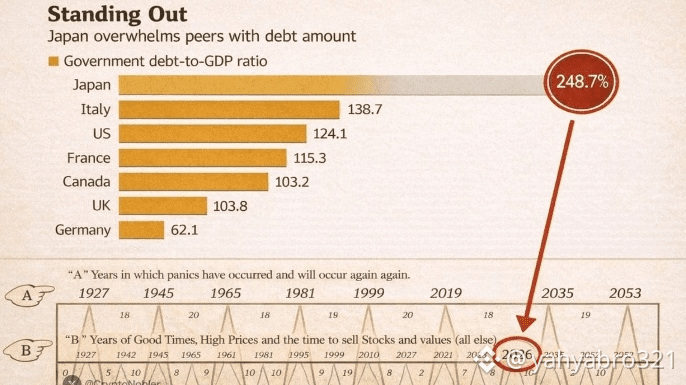
A Critical 48 Hour Window Opens After Japan’s Latest SignalWhat’s Really Going On?
Japan has quietly moved in a way that global markets never ignore.
No press conference.
No dramatic headlines.
Just a subtle but dangerous shift in financial posture — the kind that historically sets off chain reactions worldwide.
When Japan “pulls the pin,” it’s not noise.
It’s a warning clock.
Why Japan Matters More Than People Think
Japan isn’t just another economy.
🇯🇵 Largest foreign holder of U.S. Treasuries
🏦 Home to one of the world’s most aggressive central bank policies
💴 Anchor of the global yen carry trade, worth trillions
For decades, Japan’s ultra-low interest rates allowed global investors to:
1. Borrow cheaply in yen
2. Invest in higher-yielding assets worldwide
This kept markets liquid, calm, and inflated.
Now that structure is cracking.
The Trigger: Policy Shift Under Pressure
Japan is facing a triple threat:
Rising domestic inflation
Weakening yen
Growing pressure to normalize interest rates
Any signal that Japan is:
Allowing bond yields to rise
Defending the yen aggressively
Reducing stimulus or liquidity
forces global money to move fast.
That’s the “pin.”
Why the Next 48 Hours Matter
Markets don’t react instantly they position first.
Here’s what typically follows:
1. Yen Strength = Forced Unwinding
If the yen strengthens suddenly:
Carry trades become unprofitable
Investors rush to close positions
Risk assets face selling pressure
2. U.S. Bonds Feel the Shock
If Japan sells Treasuries or stops buying:
Yields spike
Dollar liquidity tightens
Global borrowing costs rise
3. Risk Assets Get Hit First
Historically, this impact:
📉 Tech stocks
📉 Crypto markets
📉 Emerging markets
Not because fundamentals changed
but because liquidity did.
This Isn’t Theory — It’s History
Similar setups preceded:
2008 — global deleveraging
2015 — China & FX shock
2020 — liquidity freeze
2022 — bond market breakdown
Each time, Japan’s bond and currency moves were early signals, not headlines.
What Smart Money Is Watching Right Now
In the next 48 hours, institutions are monitoring:
🇯🇵 Japanese Government Bond yields
💴 USD/JPY volatility
📊 Treasury market liquidity
🧠 Central bank language not actions
If volatility accelerates, markets won’t wait for confirmation.
They’ll move first.
Bottom Line
This isn’t panic.
It’s positioning.
When Japan shifts, the world recalibrates.
The pin may already be out
and markets now have hours, not weeks, to react.
Stay alert.
Liquidity events don’t announce themselves
they unfold fast.
#USIranStandoff
#ClawdBotSaysNoToken
#TSLALinkedPerpsOnBinance
#JapaneseCandlesticks
#JapanEconomy
$BTC
{spot}(BTCUSDT)
$XRP
{spot}(XRPUSDT)
A Critical 48 Hour Window Opens After Japan’s Latest Signal
What’s Really Going On?
Japan has quietly moved in a way that global markets never ignore.
No press conference.
No dramatic headlines.
Just a subtle but dangerous shift in financial posture — the kind that historically sets off chain reactions worldwide.
When Japan “pulls the pin,” it’s not noise.
It’s a warning clock.
Why Japan Matters More Than People Think
Japan isn’t just another economy.
🇯🇵 Largest foreign holder of U.S. Treasuries
🏦 Home to one of the world’s most aggressive central bank policies
💴 Anchor of the global yen carry trade, worth trillions
For decades, Japan’s ultra-low interest rates allowed global investors to:
1. Borrow cheaply in yen
2. Invest in higher-yielding assets worldwide
This kept markets liquid, calm, and inflated.
Now that structure is cracking.
The Trigger: Policy Shift Under Pressure
Japan is facing a triple threat:
Rising domestic inflation
Weakening yen
Growing pressure to normalize interest rates
Any signal that Japan is:
Allowing bond yields to rise
Defending the yen aggressively
Reducing stimulus or liquidity
forces global money to move fast.
That’s the “pin.”
Why the Next 48 Hours Matter
Markets don’t react instantly they position first.
Here’s what typically follows:
1. Yen Strength = Forced Unwinding
If the yen strengthens suddenly:
Carry trades become unprofitable
Investors rush to close positions
Risk assets face selling pressure
2. U.S. Bonds Feel the Shock
If Japan sells Treasuries or stops buying:
Yields spike
Dollar liquidity tightens
Global borrowing costs rise
3. Risk Assets Get Hit First
Historically, this impact:
📉 Tech stocks
📉 Crypto markets
📉 Emerging markets
Not because fundamentals changed
but because liquidity did.
This Isn’t Theory — It’s History
Similar setups preceded:
2008 — global deleveraging
2015 — China & FX shock
2020 — liquidity freeze
2022 — bond market breakdown
Each time, Japan’s bond and currency moves were early signals, not headlines.
What Smart Money Is Watching Right Now
In the next 48 hours, institutions are monitoring:
🇯🇵 Japanese Government Bond yields
💴 USD/JPY volatility
📊 Treasury market liquidity
🧠 Central bank language not actions
If volatility accelerates, markets won’t wait for confirmation.
They’ll move first.
Bottom Line
This isn’t panic.
It’s positioning.
When Japan shifts, the world recalibrates.
The pin may already be out
and markets now have hours, not weeks, to react.
Stay alert.
Liquidity events don’t announce themselves
they unfold fast.
#USIranStandoff
#ClawdBotSaysNoToken
#TSLALinkedPerpsOnBinance
#JapaneseCandlesticks
#JapanEconomy
$BTC
$XRP
Japan has quietly moved in a way that global markets never ignore.
No press conference.
No dramatic headlines.
Just a subtle but dangerous shift in financial posture — the kind that historically sets off chain reactions worldwide.
When Japan “pulls the pin,” it’s not noise.
It’s a warning clock.
Why Japan Matters More Than People Think
Japan isn’t just another economy.
🇯🇵 Largest foreign holder of U.S. Treasuries
🏦 Home to one of the world’s most aggressive central bank policies
💴 Anchor of the global yen carry trade, worth trillions
For decades, Japan’s ultra-low interest rates allowed global investors to:
1. Borrow cheaply in yen
2. Invest in higher-yielding assets worldwide
This kept markets liquid, calm, and inflated.
Now that structure is cracking.
The Trigger: Policy Shift Under Pressure
Japan is facing a triple threat:
Rising domestic inflation
Weakening yen
Growing pressure to normalize interest rates
Any signal that Japan is:
Allowing bond yields to rise
Defending the yen aggressively
Reducing stimulus or liquidity
forces global money to move fast.
That’s the “pin.”
Why the Next 48 Hours Matter
Markets don’t react instantly they position first.
Here’s what typically follows:
1. Yen Strength = Forced Unwinding
If the yen strengthens suddenly:
Carry trades become unprofitable
Investors rush to close positions
Risk assets face selling pressure
2. U.S. Bonds Feel the Shock
If Japan sells Treasuries or stops buying:
Yields spike
Dollar liquidity tightens
Global borrowing costs rise
3. Risk Assets Get Hit First
Historically, this impact:
📉 Tech stocks
📉 Crypto markets
📉 Emerging markets
Not because fundamentals changed
but because liquidity did.
This Isn’t Theory — It’s History
Similar setups preceded:
2008 — global deleveraging
2015 — China & FX shock
2020 — liquidity freeze
2022 — bond market breakdown
Each time, Japan’s bond and currency moves were early signals, not headlines.
What Smart Money Is Watching Right Now
In the next 48 hours, institutions are monitoring:
🇯🇵 Japanese Government Bond yields
💴 USD/JPY volatility
📊 Treasury market liquidity
🧠 Central bank language not actions
If volatility accelerates, markets won’t wait for confirmation.
They’ll move first.
Bottom Line
This isn’t panic.
It’s positioning.
When Japan shifts, the world recalibrates.
The pin may already be out
and markets now have hours, not weeks, to react.
Stay alert.
Liquidity events don’t announce themselves
they unfold fast.
#USIranStandoff
#ClawdBotSaysNoToken
#TSLALinkedPerpsOnBinance
#JapaneseCandlesticks
#JapanEconomy
$BTC
$XRP
1
156
·
--
Article
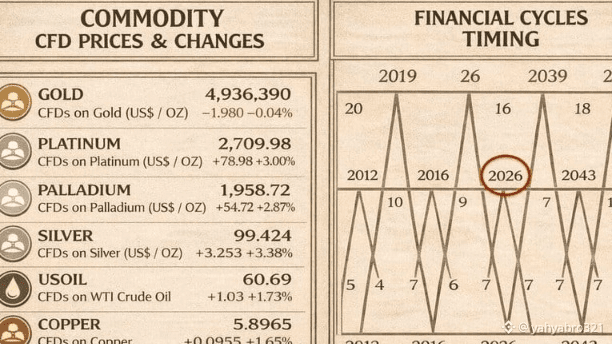
This Isn’t a Rally. It’s a Warning.🚨 THIS IS A SERIOUS WARNING SIGNAL
What we’re seeing right now is not normal market behavior.
Gold is climbing
Silver is climbing
Copper is climbing
These assets don’t usually move together.
• Copper rises when the economy is expanding
• Gold & silver rise when fear and uncertainty dominate
When all three surge at the same time, it points to stress beneath the surface.
🧠 What’s really happening?
Big investors aren’t rotating money into other assets
they’re pulling capital out entirely.
This is risk-off behavior, not confidence in growth.
A look at history
This rare setup has appeared only a few times:
• 2000 — Dot-com bubble burst
• 2008 — Global financial crisis
• 2019 — Liquidity crunch
Each time, a major economic slowdown followed.
Bottom line
When commodities and safe havens rise together, it’s not a rally
it’s a warning signal.
👀 Stay sharp. The system is under pressure.
#Macro
#macroeconomic
#USDTfree
#USIranMarketImpact
$BTC
{spot}(BTCUSDT)
This Isn’t a Rally. It’s a Warning.
🚨 THIS IS A SERIOUS WARNING SIGNAL
What we’re seeing right now is not normal market behavior.
Gold is climbing
Silver is climbing
Copper is climbing
These assets don’t usually move together.
• Copper rises when the economy is expanding
• Gold & silver rise when fear and uncertainty dominate
When all three surge at the same time, it points to stress beneath the surface.
🧠 What’s really happening?
Big investors aren’t rotating money into other assets
they’re pulling capital out entirely.
This is risk-off behavior, not confidence in growth.
A look at history
This rare setup has appeared only a few times:
• 2000 — Dot-com bubble burst
• 2008 — Global financial crisis
• 2019 — Liquidity crunch
Each time, a major economic slowdown followed.
Bottom line
When commodities and safe havens rise together, it’s not a rally
it’s a warning signal.
👀 Stay sharp. The system is under pressure.
#Macro
#macroeconomic
#USDTfree
#USIranMarketImpact
$BTC
What we’re seeing right now is not normal market behavior.
Gold is climbing
Silver is climbing
Copper is climbing
These assets don’t usually move together.
• Copper rises when the economy is expanding
• Gold & silver rise when fear and uncertainty dominate
When all three surge at the same time, it points to stress beneath the surface.
🧠 What’s really happening?
Big investors aren’t rotating money into other assets
they’re pulling capital out entirely.
This is risk-off behavior, not confidence in growth.
A look at history
This rare setup has appeared only a few times:
• 2000 — Dot-com bubble burst
• 2008 — Global financial crisis
• 2019 — Liquidity crunch
Each time, a major economic slowdown followed.
Bottom line
When commodities and safe havens rise together, it’s not a rally
it’s a warning signal.
👀 Stay sharp. The system is under pressure.
#Macro
#macroeconomic
#USDTfree
#USIranMarketImpact
$BTC
43
·
--
Article
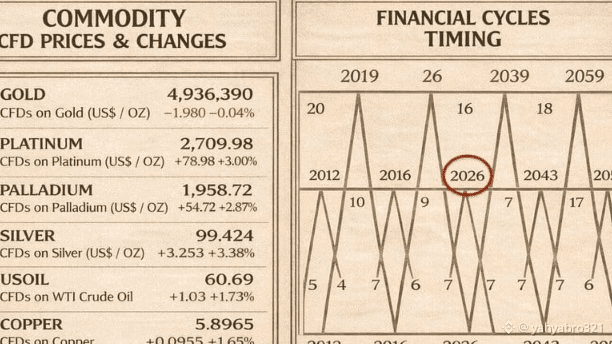
A Rare Market Pattern That Appears Before Every Major CrashTHIS IS NOT NORMAL AND IT’S DANGEROUS
Something is seriously wrong beneath the surface.
Gold is rising
Silver is rising
Copper is rising
These assets are not supposed to move up together.
Normally:
Copper rises when the economy is growing.
Gold rises when fear takes over.
They move in opposite directions but right now, they’re moving in sync.
That’s a red flag 🚩
This tells us big investors aren’t rotating money between assets anymore.
They’re not reallocating.
They’re pulling out completely.
This is not confidence.
This is fear.
History shows this pattern has appeared only three times before:
2000 — Dot-com crash
2008 — Global financial crisis
2019 — Liquidity crisis
Each time, a recession followed shortly after.
When commodities and safe haven assets rise together, it’s a warning signal. The system is under pressure. Liquidity is tightening. Stress is building.
Disclaimer: You can buy your own risk its not financial adivce.
#USIranMarketImpact
#btctrending
#MarketFluctuations
#dangers
$BTC
{spot}(BTCUSDT)
$SUI
{spot}(SUIUSDT)
A Rare Market Pattern That Appears Before Every Major Crash
THIS IS NOT NORMAL AND IT’S DANGEROUS
Something is seriously wrong beneath the surface.
Gold is rising
Silver is rising
Copper is rising
These assets are not supposed to move up together.
Normally:
Copper rises when the economy is growing.
Gold rises when fear takes over.
They move in opposite directions but right now, they’re moving in sync.
That’s a red flag 🚩
This tells us big investors aren’t rotating money between assets anymore.
They’re not reallocating.
They’re pulling out completely.
This is not confidence.
This is fear.
History shows this pattern has appeared only three times before:
2000 — Dot-com crash
2008 — Global financial crisis
2019 — Liquidity crisis
Each time, a recession followed shortly after.
When commodities and safe haven assets rise together, it’s a warning signal. The system is under pressure. Liquidity is tightening. Stress is building.
Disclaimer: You can buy your own risk its not financial adivce.
#USIranMarketImpact
#btctrending
#MarketFluctuations
#dangers
$BTC
$SUI
Something is seriously wrong beneath the surface.
Gold is rising
Silver is rising
Copper is rising
These assets are not supposed to move up together.
Normally:
Copper rises when the economy is growing.
Gold rises when fear takes over.
They move in opposite directions but right now, they’re moving in sync.
That’s a red flag 🚩
This tells us big investors aren’t rotating money between assets anymore.
They’re not reallocating.
They’re pulling out completely.
This is not confidence.
This is fear.
History shows this pattern has appeared only three times before:
2000 — Dot-com crash
2008 — Global financial crisis
2019 — Liquidity crisis
Each time, a recession followed shortly after.
When commodities and safe haven assets rise together, it’s a warning signal. The system is under pressure. Liquidity is tightening. Stress is building.
Disclaimer: You can buy your own risk its not financial adivce.
#USIranMarketImpact
#btctrending
#MarketFluctuations
#dangers
$BTC
$SUI
1
61
·
--
Article
Bitcoin (BTC): Digital Gold or the Foundation of a New Financial System?Bitcoin is not just the first cryptocurrency it is the most powerful financial idea of the 21st century. Since its launch in 2009, Bitcoin has challenged governments, banks, and traditional money itself, positioning itself as a hedge against inflation and a symbol of financial freedom.
🔹 What Is Bitcoin?
Bitcoin is a decentralized digital currency that operates without a central authority such as a bank or government.
Key characteristics:
No central control
Peer-to-peer transactions
Maximum supply capped at 21 million BTC
Transparent and verifiable via blockchain
Because of its limited supply and security, Bitcoin is often called “Digital Gold.”
🔹 How Bitcoin Works (Blockchain Explained)
Bitcoin runs on a Proof of Work (PoW) blockchain:
Miners validate transactions using computational power
A new block is added roughly every 10 minutes
The network becomes more secure as more miners participate
This system makes Bitcoin:
Extremely difficult to hack
Highly resistant to censorship
One of the most secure networks in the world
🔹 Why Bitcoin Matters Globally
1️⃣ Hedge Against Inflation
As governments print money and fiat currencies lose purchasing power, Bitcoin’s fixed supply makes it attractive as a store of value.
2️⃣ Institutional Adoption
Bitcoin is no longer “retail-only”:
Hedge funds
Asset managers
Public companies
Even governments
are now holding or considering BTC as a strategic asset.
3️⃣ Borderless & Permissionless
Bitcoin allows:
Global transfers
No bank approval
24/7 transactions
This makes it especially powerful in countries with weak currencies or strict capital controls.
🔹 What Drives Bitcoin’s Price?
Factor Impact
Bitcoin Halving (every 4 years) Reduces new Supply
Institutional demand Increases long-term buying pressure
Global economic crises Boosts safe-haven demand
Interest rates & liquidity Affects risk appetite
Historically, every Bitcoin halving has been followed by a major bull cycle, though future performance is never guaranteed.
🔹 Bitcoin Future Outlook (2025–2030)
Bullish Scenario
Bitcoin becomes a global reserve digital asset
Adoption by banks, ETFs, and sovereign entities grows
Long-term price potential: $150,000 – $300,000+
Bearish Risks
Regulatory pressure
Environmental concerns related to mining
High volatility (30–50% corrections are normal)
Reality Check:
Bitcoin is not a short term speculation tool it is a long-term conviction asset.
🔹 Bitcoin vs Gold
Feature Bitcoin Gold
Supply Fixed (21M) Unknown
Storage Digital Physical
Transfer Speed Minutes Days
Verification Blockchain Costly & manual
This is why many investors believe Bitcoin could outperform gold in the digital age.
🔹 Advice for Beginners
✅ Focus on long-term holding
✅ Use dollar-cost averaging
✅ Learn basic wallet security
❌ Avoid emotional trading
❌ Avoid high leverage if inexperienced
Final Verdict: Is Bitcoin Here to Stay?
Bitcoin was built to survive:
Inflation
Currency devaluation
Financial instability
As long as trust in traditional systems continues to weaken, Bitcoin’s narrative remains strong.
Bitcoin may fluctuate in price, but its core value proposition keeps getting stronger.
Disclaimer: You can buy your own risk its not a financial adivce.
#USIranMarketImpact
#GrayscaleBNBETFFiling
#bitcoin.”
#BitcoinHistory
#USReserveAsset
$BTC
{spot}(BTCUSDT)
Bitcoin (BTC): Digital Gold or the Foundation of a New Financial System?
Bitcoin is not just the first cryptocurrency it is the most powerful financial idea of the 21st century. Since its launch in 2009, Bitcoin has challenged governments, banks, and traditional money itself, positioning itself as a hedge against inflation and a symbol of financial freedom.
🔹 What Is Bitcoin?
Bitcoin is a decentralized digital currency that operates without a central authority such as a bank or government.
Key characteristics:
No central control
Peer-to-peer transactions
Maximum supply capped at 21 million BTC
Transparent and verifiable via blockchain
Because of its limited supply and security, Bitcoin is often called “Digital Gold.”
🔹 How Bitcoin Works (Blockchain Explained)
Bitcoin runs on a Proof of Work (PoW) blockchain:
Miners validate transactions using computational power
A new block is added roughly every 10 minutes
The network becomes more secure as more miners participate
This system makes Bitcoin:
Extremely difficult to hack
Highly resistant to censorship
One of the most secure networks in the world
🔹 Why Bitcoin Matters Globally
1️⃣ Hedge Against Inflation
As governments print money and fiat currencies lose purchasing power, Bitcoin’s fixed supply makes it attractive as a store of value.
2️⃣ Institutional Adoption
Bitcoin is no longer “retail-only”:
Hedge funds
Asset managers
Public companies
Even governments
are now holding or considering BTC as a strategic asset.
3️⃣ Borderless & Permissionless
Bitcoin allows:
Global transfers
No bank approval
24/7 transactions
This makes it especially powerful in countries with weak currencies or strict capital controls.
🔹 What Drives Bitcoin’s Price?
Factor Impact
Bitcoin Halving (every 4 years) Reduces new Supply
Institutional demand Increases long-term buying pressure
Global economic crises Boosts safe-haven demand
Interest rates & liquidity Affects risk appetite
Historically, every Bitcoin halving has been followed by a major bull cycle, though future performance is never guaranteed.
🔹 Bitcoin Future Outlook (2025–2030)
Bullish Scenario
Bitcoin becomes a global reserve digital asset
Adoption by banks, ETFs, and sovereign entities grows
Long-term price potential: $150,000 – $300,000+
Bearish Risks
Regulatory pressure
Environmental concerns related to mining
High volatility (30–50% corrections are normal)
Reality Check:
Bitcoin is not a short term speculation tool it is a long-term conviction asset.
🔹 Bitcoin vs Gold
Feature Bitcoin Gold
Supply Fixed (21M) Unknown
Storage Digital Physical
Transfer Speed Minutes Days
Verification Blockchain Costly & manual
This is why many investors believe Bitcoin could outperform gold in the digital age.
🔹 Advice for Beginners
✅ Focus on long-term holding
✅ Use dollar-cost averaging
✅ Learn basic wallet security
❌ Avoid emotional trading
❌ Avoid high leverage if inexperienced
Final Verdict: Is Bitcoin Here to Stay?
Bitcoin was built to survive:
Inflation
Currency devaluation
Financial instability
As long as trust in traditional systems continues to weaken, Bitcoin’s narrative remains strong.
Bitcoin may fluctuate in price, but its core value proposition keeps getting stronger.
Disclaimer: You can buy your own risk its not a financial adivce.
#USIranMarketImpact
#GrayscaleBNBETFFiling
#bitcoin.”
#BitcoinHistory
#USReserveAsset
$BTC
🔹 What Is Bitcoin?
Bitcoin is a decentralized digital currency that operates without a central authority such as a bank or government.
Key characteristics:
No central control
Peer-to-peer transactions
Maximum supply capped at 21 million BTC
Transparent and verifiable via blockchain
Because of its limited supply and security, Bitcoin is often called “Digital Gold.”
🔹 How Bitcoin Works (Blockchain Explained)
Bitcoin runs on a Proof of Work (PoW) blockchain:
Miners validate transactions using computational power
A new block is added roughly every 10 minutes
The network becomes more secure as more miners participate
This system makes Bitcoin:
Extremely difficult to hack
Highly resistant to censorship
One of the most secure networks in the world
🔹 Why Bitcoin Matters Globally
1️⃣ Hedge Against Inflation
As governments print money and fiat currencies lose purchasing power, Bitcoin’s fixed supply makes it attractive as a store of value.
2️⃣ Institutional Adoption
Bitcoin is no longer “retail-only”:
Hedge funds
Asset managers
Public companies
Even governments
are now holding or considering BTC as a strategic asset.
3️⃣ Borderless & Permissionless
Bitcoin allows:
Global transfers
No bank approval
24/7 transactions
This makes it especially powerful in countries with weak currencies or strict capital controls.
🔹 What Drives Bitcoin’s Price?
Factor Impact
Bitcoin Halving (every 4 years) Reduces new Supply
Institutional demand Increases long-term buying pressure
Global economic crises Boosts safe-haven demand
Interest rates & liquidity Affects risk appetite
Historically, every Bitcoin halving has been followed by a major bull cycle, though future performance is never guaranteed.
🔹 Bitcoin Future Outlook (2025–2030)
Bullish Scenario
Bitcoin becomes a global reserve digital asset
Adoption by banks, ETFs, and sovereign entities grows
Long-term price potential: $150,000 – $300,000+
Bearish Risks
Regulatory pressure
Environmental concerns related to mining
High volatility (30–50% corrections are normal)
Reality Check:
Bitcoin is not a short term speculation tool it is a long-term conviction asset.
🔹 Bitcoin vs Gold
Feature Bitcoin Gold
Supply Fixed (21M) Unknown
Storage Digital Physical
Transfer Speed Minutes Days
Verification Blockchain Costly & manual
This is why many investors believe Bitcoin could outperform gold in the digital age.
🔹 Advice for Beginners
✅ Focus on long-term holding
✅ Use dollar-cost averaging
✅ Learn basic wallet security
❌ Avoid emotional trading
❌ Avoid high leverage if inexperienced
Final Verdict: Is Bitcoin Here to Stay?
Bitcoin was built to survive:
Inflation
Currency devaluation
Financial instability
As long as trust in traditional systems continues to weaken, Bitcoin’s narrative remains strong.
Bitcoin may fluctuate in price, but its core value proposition keeps getting stronger.
Disclaimer: You can buy your own risk its not a financial adivce.
#USIranMarketImpact
#GrayscaleBNBETFFiling
#bitcoin.”
#BitcoinHistory
#USReserveAsset
$BTC
1
19
·
--
Article
SHOCKING RUMOR: Did Trump Warn the UAE “Invest $4 Trillion or Consequences Could Follow”?Introduction What’s Being Claimed
Recently, an online rumor has circulated mainly on social media posts suggesting that **U.S. President Donald Trump allegedly told the United Arab Emirates that it must invest $4 trillion in the U.S. (or possibly in Israel and America combined) and hinted that “consequences could follow” if it didn’t comply.
These claims have been shared in various unverified online posts, but there is no credible mainstream news reporting confirming that Trump issued such an ultimatum with threats or warnings tied to a $4 trillion demand.
The Real Context: UAE Investment Commitments
What is true and confirmed by reputable news outlets:
The United Arab Emirates has committed to a large investment framework with the United States, but the real figure publicly reported is about $1.4 trillion not $4 trillion and this pledge was not presented with threats or conditional ultimatums.
Here’s what we know:
During diplomatic engagements in early 2025, senior UAE officials, including Sheikh Tahnoon bin Zayed Al Nahyan, met with President Trump and U.S. leaders.
Following those talks, the UAE and the U.S. agreed to a 10-year investment framework valued at about $1.4 trillion.
This larger pact is intended to significantly boost Emirati investment in U.S. sectors such as artificial intelligence infrastructure, semiconductors, energy, and manufacturing.
This investment pledge is real and comes from official statements by the U.S. and Emirati governments, and confirmed Reuters reporting but nowhere in those reports is it linked to a coercive threat.
Where the “$4 Trillion” Figures Came From
The rumor likely distorts or exaggerates real economic numbers in a few ways:
1. Optimistic projections Some discussions about Trump’s Middle East trip in 2025 included estimates that total potential investment and economic deals from the Gulf region (including Saudi Arabia, the UAE, Qatar, and others) could approach or exceed $3.5–$4 trillion in aggregate potential economic activity over time.
These figures were context-based outlooks or economic commentary, not an ultimatum or formal demand from the U.S.
2. Social media rumors Posts on platforms like X and Facebook amplified the “$4 trillion” number without credible sourcing, often twisting it to imply a warning or threat.
3. Misinformation blending economic commentary with political rhetoric – In the digital era, speculative economic estimates and political narratives often become tangled, leading to misleading claims.
Did Trump Threaten the UAE?
No credible evidence supports the claim that Trump issued a warning tied to a $4 trillion ultimatum.
There are no verified reports from major news organizations stating that the U.S. president told the UAE they must invest $4 trillion “or else.”
The $1.4 trillion investment agreement was described publicly as mutually beneficial cooperation not as a threat, pressure tactic, or conditional demand.
Why the Rumor Spread
Several factors contribute to how this narrative gained traction:
1. Big Economic Figures Grab Attention
Large economic numbers (trillions of dollars) are eye-catching. Discussions about potential Gulf investments coming into U.S. markets often mention huge totals. Some outlets and social commentators even speculate about total regional investment potential surpassing $3.5 trillion.
2. Misinterpretation of Diplomatic and Investment Talks
Diplomatic negotiations often involve encouragement, economic incentives, and friendly exhortations to invest or strengthen partnerships. These can be mischaracterized as demands or threats on social media.
3. Social Media Amplification
Unverified posts spread quickly, especially when framed with dramatic language like “invest or consequences will follow.” These are usually not backed by fact-checking or credible sources.
What This Means for U.S.–UAE Relations
U.S.UAE relations are strategically important and involve cooperation across many areas, including investment, security, and technology.
The $1.4 trillion investment framework reflects a shared economic engagement rather than coercive diplomacy. These joint commitments aim to deepen bilateral ties and encourage economic growth not to impose ultimatums.
Conclusion Separating Fact from Rumor
Fact: The United Arab Emirates publicly agreed to invest about $1.4 trillion in the U.S. over a decade, following discussions with President Trump and U.S. leadership.
Rumor: There is no credible evidence that Trump issued a warning to the UAE to invest $4 trillion “or face consequences.”
The “$4 trillion warning” appears to be misinformation or exaggerated social media claims rather than documented political fact.
#USIranMarketImpact
#GrayscaleBNBETFFiling
#USImpact
#UAENEWS
$BNB
{spot}(BNBUSDT)
$TRUMP
{spot}(TRUMPUSDT)
SHOCKING RUMOR: Did Trump Warn the UAE “Invest $4 Trillion or Consequences Could Follow”?
Introduction What’s Being Claimed
Recently, an online rumor has circulated mainly on social media posts suggesting that **U.S. President Donald Trump allegedly told the United Arab Emirates that it must invest $4 trillion in the U.S. (or possibly in Israel and America combined) and hinted that “consequences could follow” if it didn’t comply.
These claims have been shared in various unverified online posts, but there is no credible mainstream news reporting confirming that Trump issued such an ultimatum with threats or warnings tied to a $4 trillion demand.
The Real Context: UAE Investment Commitments
What is true and confirmed by reputable news outlets:
The United Arab Emirates has committed to a large investment framework with the United States, but the real figure publicly reported is about $1.4 trillion not $4 trillion and this pledge was not presented with threats or conditional ultimatums.
Here’s what we know:
During diplomatic engagements in early 2025, senior UAE officials, including Sheikh Tahnoon bin Zayed Al Nahyan, met with President Trump and U.S. leaders.
Following those talks, the UAE and the U.S. agreed to a 10-year investment framework valued at about $1.4 trillion.
This larger pact is intended to significantly boost Emirati investment in U.S. sectors such as artificial intelligence infrastructure, semiconductors, energy, and manufacturing.
This investment pledge is real and comes from official statements by the U.S. and Emirati governments, and confirmed Reuters reporting but nowhere in those reports is it linked to a coercive threat.
Where the “$4 Trillion” Figures Came From
The rumor likely distorts or exaggerates real economic numbers in a few ways:
1. Optimistic projections Some discussions about Trump’s Middle East trip in 2025 included estimates that total potential investment and economic deals from the Gulf region (including Saudi Arabia, the UAE, Qatar, and others) could approach or exceed $3.5–$4 trillion in aggregate potential economic activity over time.
These figures were context-based outlooks or economic commentary, not an ultimatum or formal demand from the U.S.
2. Social media rumors Posts on platforms like X and Facebook amplified the “$4 trillion” number without credible sourcing, often twisting it to imply a warning or threat.
3. Misinformation blending economic commentary with political rhetoric – In the digital era, speculative economic estimates and political narratives often become tangled, leading to misleading claims.
Did Trump Threaten the UAE?
No credible evidence supports the claim that Trump issued a warning tied to a $4 trillion ultimatum.
There are no verified reports from major news organizations stating that the U.S. president told the UAE they must invest $4 trillion “or else.”
The $1.4 trillion investment agreement was described publicly as mutually beneficial cooperation not as a threat, pressure tactic, or conditional demand.
Why the Rumor Spread
Several factors contribute to how this narrative gained traction:
1. Big Economic Figures Grab Attention
Large economic numbers (trillions of dollars) are eye-catching. Discussions about potential Gulf investments coming into U.S. markets often mention huge totals. Some outlets and social commentators even speculate about total regional investment potential surpassing $3.5 trillion.
2. Misinterpretation of Diplomatic and Investment Talks
Diplomatic negotiations often involve encouragement, economic incentives, and friendly exhortations to invest or strengthen partnerships. These can be mischaracterized as demands or threats on social media.
3. Social Media Amplification
Unverified posts spread quickly, especially when framed with dramatic language like “invest or consequences will follow.” These are usually not backed by fact-checking or credible sources.
What This Means for U.S.–UAE Relations
U.S.UAE relations are strategically important and involve cooperation across many areas, including investment, security, and technology.
The $1.4 trillion investment framework reflects a shared economic engagement rather than coercive diplomacy. These joint commitments aim to deepen bilateral ties and encourage economic growth not to impose ultimatums.
Conclusion Separating Fact from Rumor
Fact: The United Arab Emirates publicly agreed to invest about $1.4 trillion in the U.S. over a decade, following discussions with President Trump and U.S. leadership.
Rumor: There is no credible evidence that Trump issued a warning to the UAE to invest $4 trillion “or face consequences.”
The “$4 trillion warning” appears to be misinformation or exaggerated social media claims rather than documented political fact.
#USIranMarketImpact
#GrayscaleBNBETFFiling
#USImpact
#UAENEWS
$BNB
$TRUMP
Recently, an online rumor has circulated mainly on social media posts suggesting that **U.S. President Donald Trump allegedly told the United Arab Emirates that it must invest $4 trillion in the U.S. (or possibly in Israel and America combined) and hinted that “consequences could follow” if it didn’t comply.
These claims have been shared in various unverified online posts, but there is no credible mainstream news reporting confirming that Trump issued such an ultimatum with threats or warnings tied to a $4 trillion demand.
The Real Context: UAE Investment Commitments
What is true and confirmed by reputable news outlets:
The United Arab Emirates has committed to a large investment framework with the United States, but the real figure publicly reported is about $1.4 trillion not $4 trillion and this pledge was not presented with threats or conditional ultimatums.
Here’s what we know:
During diplomatic engagements in early 2025, senior UAE officials, including Sheikh Tahnoon bin Zayed Al Nahyan, met with President Trump and U.S. leaders.
Following those talks, the UAE and the U.S. agreed to a 10-year investment framework valued at about $1.4 trillion.
This larger pact is intended to significantly boost Emirati investment in U.S. sectors such as artificial intelligence infrastructure, semiconductors, energy, and manufacturing.
This investment pledge is real and comes from official statements by the U.S. and Emirati governments, and confirmed Reuters reporting but nowhere in those reports is it linked to a coercive threat.
Where the “$4 Trillion” Figures Came From
The rumor likely distorts or exaggerates real economic numbers in a few ways:
1. Optimistic projections Some discussions about Trump’s Middle East trip in 2025 included estimates that total potential investment and economic deals from the Gulf region (including Saudi Arabia, the UAE, Qatar, and others) could approach or exceed $3.5–$4 trillion in aggregate potential economic activity over time.
These figures were context-based outlooks or economic commentary, not an ultimatum or formal demand from the U.S.
2. Social media rumors Posts on platforms like X and Facebook amplified the “$4 trillion” number without credible sourcing, often twisting it to imply a warning or threat.
3. Misinformation blending economic commentary with political rhetoric – In the digital era, speculative economic estimates and political narratives often become tangled, leading to misleading claims.
Did Trump Threaten the UAE?
No credible evidence supports the claim that Trump issued a warning tied to a $4 trillion ultimatum.
There are no verified reports from major news organizations stating that the U.S. president told the UAE they must invest $4 trillion “or else.”
The $1.4 trillion investment agreement was described publicly as mutually beneficial cooperation not as a threat, pressure tactic, or conditional demand.
Why the Rumor Spread
Several factors contribute to how this narrative gained traction:
1. Big Economic Figures Grab Attention
Large economic numbers (trillions of dollars) are eye-catching. Discussions about potential Gulf investments coming into U.S. markets often mention huge totals. Some outlets and social commentators even speculate about total regional investment potential surpassing $3.5 trillion.
2. Misinterpretation of Diplomatic and Investment Talks
Diplomatic negotiations often involve encouragement, economic incentives, and friendly exhortations to invest or strengthen partnerships. These can be mischaracterized as demands or threats on social media.
3. Social Media Amplification
Unverified posts spread quickly, especially when framed with dramatic language like “invest or consequences will follow.” These are usually not backed by fact-checking or credible sources.
What This Means for U.S.–UAE Relations
U.S.UAE relations are strategically important and involve cooperation across many areas, including investment, security, and technology.
The $1.4 trillion investment framework reflects a shared economic engagement rather than coercive diplomacy. These joint commitments aim to deepen bilateral ties and encourage economic growth not to impose ultimatums.
Conclusion Separating Fact from Rumor
Fact: The United Arab Emirates publicly agreed to invest about $1.4 trillion in the U.S. over a decade, following discussions with President Trump and U.S. leadership.
Rumor: There is no credible evidence that Trump issued a warning to the UAE to invest $4 trillion “or face consequences.”
The “$4 trillion warning” appears to be misinformation or exaggerated social media claims rather than documented political fact.
#USIranMarketImpact
#GrayscaleBNBETFFiling
#USImpact
#UAENEWS
$BNB
$TRUMP
1
170
·
--
Article
Middle East on High Alert A Comprehensive Overview1. What’s Triggering the Alert?
The Middle East is currently in a state of heightened alarm, primarily due to escalating hostilities between Iran, the United States, and regional actors. Recent developments include:
The United States has deployed a major naval force described by former President Donald Trump as an “armada” toward the region amid tensions with Iran.
Iran’s military leadership has said that any attack against its territory or sovereignty would be considered an “all-out war”, raising fears of large-scale retaliation.
Major international airlines (e.g., Lufthansa, Air France, Air Canada) have cancelled flights to Middle Eastern destinations, reflecting concerns over airspace safety.
These developments have created an atmosphere of intense diplomatic and military alertness across the region.
2. Iranian Position and Military Posture
Iran has adopted a defensive and highly vigilant military stance:
Senior Iranian officials have emphasized that any form of military strike even limited operations would be treated as full-scale war.
The Islamic Revolutionary Guard Corps (IRGC) has declared it is on “high readiness,” with its commanders asserting they have their “finger on the trigger.”
This rhetoric reflects Tehran’s aim to deter any potential military action by signaling a willingness to escalate in the event of hostility.
3. U.S. and Regional Military Movements
The U.S. military buildup in the Middle East including aircraft carriers and support vessels is intended as both a deterrent and a projection of strength:
U.S. forces across the region are expected to maintain elevated alert levels, with analysis suggesting a dispersed and defensive posture until tensions ease.
High-ranking U.S. and allied military officials are reportedly engaging with regional partners like Israel to coordinate security responses amid uncertainties.
The depth and readiness of American military assets reflect concerns that any miscalculation could rapidly spiral into broader conflict.
4. Wider Regional Impacts
The high-alert status is not limited to Iran and the U.S.; it is affecting the broader Middle East:
Israel
Israel has placed its own defenses on high alert amid fears of Iranian retaliation or proxy attacks.
The country’s readiness is informed by historical tensions and recent missile/drone threats in preceding months.
Civil Aviation and Airspace
Multiple airlines have cancelled flights and avoided Middle Eastern airspace due to rising risk, causing disruption in global travel hubs.
Economic and Humanitarian Concerns
Heightened alert and potential for conflict have driven geopolitical risk premiums higher, especially in energy markets reliant on Middle Eastern stability. Increased tensions can disrupt oil exports and supply chains.
5. What Could Happen Next?
While full-scale war is not inevitable, several scenarios are under active consideration by governments and analysts:
Diplomacy and De-escalation
There remains diplomatic pressure from countries worldwide to prevent a military showdown. Talks and back channel negotiations aiming to reduce tensions are believed to be underway.
Continued Military Buildup
If provocations persist like attacks on nuclear sites or military installations nations may further escalate defense postures or mobilize additional forces.
Proxy Conflict Expansion
Regional militias and allied forces (such as Hezbollah or other Iran aligned groups) could become involved, potentially expanding conflict dynamics beyond direct U.S.Iran confrontation.
6. Why This Matters Globally
The Middle East’s strategic significance from energy supplies and trade routes to global security alliances makes this situation particularly consequential:
Even the perception of possible conflict can influence global markets and investor confidence.
Civilian safety concerns and international travel advisories underscore how geopolitical tensions affect ordinary people.
In Summary
The “Middle East on high alert” situation in early 2026 stems from a complex interplay of military posturing, political brinkmanship, and longstanding regional rivalries. With the U.S. military buildup and Iran’s stern warnings, the region is navigating a perilous moment that could either lead to de-escalation through diplomacy or more dangerous escalations if missteps occur. Vigilance, strategic communication, and international cooperation will be critical in shaping what happens next.
#USIranMarketImpact
#GrayscaleBNBETFFiling
#middleeastconflict
#MiddleEastTensions #MilitaryCooperation #Geopolitics #BreakingNews $TRUMP
{spot}(TRUMPUSDT)
$XRP
{spot}(XRPUSDT)
Middle East on High Alert A Comprehensive Overview
1. What’s Triggering the Alert?
The Middle East is currently in a state of heightened alarm, primarily due to escalating hostilities between Iran, the United States, and regional actors. Recent developments include:
The United States has deployed a major naval force described by former President Donald Trump as an “armada” toward the region amid tensions with Iran.
Iran’s military leadership has said that any attack against its territory or sovereignty would be considered an “all-out war”, raising fears of large-scale retaliation.
Major international airlines (e.g., Lufthansa, Air France, Air Canada) have cancelled flights to Middle Eastern destinations, reflecting concerns over airspace safety.
These developments have created an atmosphere of intense diplomatic and military alertness across the region.
2. Iranian Position and Military Posture
Iran has adopted a defensive and highly vigilant military stance:
Senior Iranian officials have emphasized that any form of military strike even limited operations would be treated as full-scale war.
The Islamic Revolutionary Guard Corps (IRGC) has declared it is on “high readiness,” with its commanders asserting they have their “finger on the trigger.”
This rhetoric reflects Tehran’s aim to deter any potential military action by signaling a willingness to escalate in the event of hostility.
3. U.S. and Regional Military Movements
The U.S. military buildup in the Middle East including aircraft carriers and support vessels is intended as both a deterrent and a projection of strength:
U.S. forces across the region are expected to maintain elevated alert levels, with analysis suggesting a dispersed and defensive posture until tensions ease.
High-ranking U.S. and allied military officials are reportedly engaging with regional partners like Israel to coordinate security responses amid uncertainties.
The depth and readiness of American military assets reflect concerns that any miscalculation could rapidly spiral into broader conflict.
4. Wider Regional Impacts
The high-alert status is not limited to Iran and the U.S.; it is affecting the broader Middle East:
Israel
Israel has placed its own defenses on high alert amid fears of Iranian retaliation or proxy attacks.
The country’s readiness is informed by historical tensions and recent missile/drone threats in preceding months.
Civil Aviation and Airspace
Multiple airlines have cancelled flights and avoided Middle Eastern airspace due to rising risk, causing disruption in global travel hubs.
Economic and Humanitarian Concerns
Heightened alert and potential for conflict have driven geopolitical risk premiums higher, especially in energy markets reliant on Middle Eastern stability. Increased tensions can disrupt oil exports and supply chains.
5. What Could Happen Next?
While full-scale war is not inevitable, several scenarios are under active consideration by governments and analysts:
Diplomacy and De-escalation
There remains diplomatic pressure from countries worldwide to prevent a military showdown. Talks and back channel negotiations aiming to reduce tensions are believed to be underway.
Continued Military Buildup
If provocations persist like attacks on nuclear sites or military installations nations may further escalate defense postures or mobilize additional forces.
Proxy Conflict Expansion
Regional militias and allied forces (such as Hezbollah or other Iran aligned groups) could become involved, potentially expanding conflict dynamics beyond direct U.S.Iran confrontation.
6. Why This Matters Globally
The Middle East’s strategic significance from energy supplies and trade routes to global security alliances makes this situation particularly consequential:
Even the perception of possible conflict can influence global markets and investor confidence.
Civilian safety concerns and international travel advisories underscore how geopolitical tensions affect ordinary people.
In Summary
The “Middle East on high alert” situation in early 2026 stems from a complex interplay of military posturing, political brinkmanship, and longstanding regional rivalries. With the U.S. military buildup and Iran’s stern warnings, the region is navigating a perilous moment that could either lead to de-escalation through diplomacy or more dangerous escalations if missteps occur. Vigilance, strategic communication, and international cooperation will be critical in shaping what happens next.
#USIranMarketImpact
#GrayscaleBNBETFFiling
#middleeastconflict
#MiddleEastTensions #MilitaryCooperation #Geopolitics #BreakingNews $TRUMP
$XRP
The Middle East is currently in a state of heightened alarm, primarily due to escalating hostilities between Iran, the United States, and regional actors. Recent developments include:
The United States has deployed a major naval force described by former President Donald Trump as an “armada” toward the region amid tensions with Iran.
Iran’s military leadership has said that any attack against its territory or sovereignty would be considered an “all-out war”, raising fears of large-scale retaliation.
Major international airlines (e.g., Lufthansa, Air France, Air Canada) have cancelled flights to Middle Eastern destinations, reflecting concerns over airspace safety.
These developments have created an atmosphere of intense diplomatic and military alertness across the region.
2. Iranian Position and Military Posture
Iran has adopted a defensive and highly vigilant military stance:
Senior Iranian officials have emphasized that any form of military strike even limited operations would be treated as full-scale war.
The Islamic Revolutionary Guard Corps (IRGC) has declared it is on “high readiness,” with its commanders asserting they have their “finger on the trigger.”
This rhetoric reflects Tehran’s aim to deter any potential military action by signaling a willingness to escalate in the event of hostility.
3. U.S. and Regional Military Movements
The U.S. military buildup in the Middle East including aircraft carriers and support vessels is intended as both a deterrent and a projection of strength:
U.S. forces across the region are expected to maintain elevated alert levels, with analysis suggesting a dispersed and defensive posture until tensions ease.
High-ranking U.S. and allied military officials are reportedly engaging with regional partners like Israel to coordinate security responses amid uncertainties.
The depth and readiness of American military assets reflect concerns that any miscalculation could rapidly spiral into broader conflict.
4. Wider Regional Impacts
The high-alert status is not limited to Iran and the U.S.; it is affecting the broader Middle East:
Israel
Israel has placed its own defenses on high alert amid fears of Iranian retaliation or proxy attacks.
The country’s readiness is informed by historical tensions and recent missile/drone threats in preceding months.
Civil Aviation and Airspace
Multiple airlines have cancelled flights and avoided Middle Eastern airspace due to rising risk, causing disruption in global travel hubs.
Economic and Humanitarian Concerns
Heightened alert and potential for conflict have driven geopolitical risk premiums higher, especially in energy markets reliant on Middle Eastern stability. Increased tensions can disrupt oil exports and supply chains.
5. What Could Happen Next?
While full-scale war is not inevitable, several scenarios are under active consideration by governments and analysts:
Diplomacy and De-escalation
There remains diplomatic pressure from countries worldwide to prevent a military showdown. Talks and back channel negotiations aiming to reduce tensions are believed to be underway.
Continued Military Buildup
If provocations persist like attacks on nuclear sites or military installations nations may further escalate defense postures or mobilize additional forces.
Proxy Conflict Expansion
Regional militias and allied forces (such as Hezbollah or other Iran aligned groups) could become involved, potentially expanding conflict dynamics beyond direct U.S.Iran confrontation.
6. Why This Matters Globally
The Middle East’s strategic significance from energy supplies and trade routes to global security alliances makes this situation particularly consequential:
Even the perception of possible conflict can influence global markets and investor confidence.
Civilian safety concerns and international travel advisories underscore how geopolitical tensions affect ordinary people.
In Summary
The “Middle East on high alert” situation in early 2026 stems from a complex interplay of military posturing, political brinkmanship, and longstanding regional rivalries. With the U.S. military buildup and Iran’s stern warnings, the region is navigating a perilous moment that could either lead to de-escalation through diplomacy or more dangerous escalations if missteps occur. Vigilance, strategic communication, and international cooperation will be critical in shaping what happens next.
#USIranMarketImpact
#GrayscaleBNBETFFiling
#middleeastconflict
#MiddleEastTensions #MilitaryCooperation #Geopolitics #BreakingNews $TRUMP
$XRP
4
624
·
--
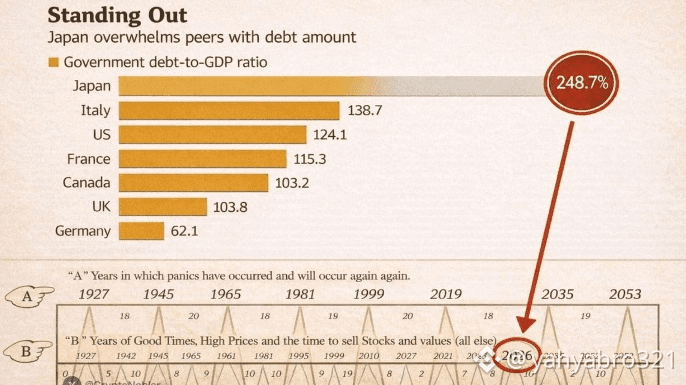
Article
Countries Are Dumping U.S. Treasuries Like Never BeforeFor decades, U.S. Treasuries have been the bedrock of the global financial system—the ultimate “risk-free” asset. Central banks hoarded them. Governments trusted them. Investors ran to them in every crisis.
But now… something is breaking.
Behind the scenes, countries around the world are offloading U.S. Treasuries at an alarming pace, and this shift could reshape global markets, currencies, and even geopolitics.
This isn’t just noise.
This is a structural change.
What’s Actually Happening?
Foreign governments and central banks have started reducing their holdings of U.S. debt, a trend that has accelerated over the last few years and intensified recently.
Instead of accumulating Treasuries, many nations are:
Selling existing holdings
Slowing new purchases
Diversifying reserves into gold, commodities, and non-USD assets
This behavior is unusual and dangerous because U.S. Treasuries rely heavily on foreign demand to keep borrowing costs low.
Who’s Leading the Sell-Off?
🇨🇳 China
Once the second-largest holder of U.S. Treasuries, China has been steadily dumping them for years.
Why?
Geopolitical tension with the U.S.
Sanction risk
Desire to reduce dollar dependence
China has instead been stockpiling gold and pushing trade settlement in non-USD currencies.
🇯🇵 Japan
Japan still holds massive amounts of Treasuries, but cracks are forming:
Yen weakness forces Japan to sell Treasuries to defend its currency
Rising domestic yields make U.S. bonds less attractive
Japan selling even a small portion can shake the entire bond market.
Emerging Markets
Countries in Asia, the Middle East, and Latin America are quietly:
Reducing USD exposure
Increasing gold reserves
Signing bilateral trade deals in local currencies
This is de-dollarization in slow motion.
💣 Why Are Countries Losing Faith in U.S. Treasuries?
1️⃣ Exploding U.S. Debt
U.S. government debt is growing at a parabolic rate.
Trillions are added every year just to fund deficits and interest payments.
Foreign holders are asking:
“How long can this continue?”
2️⃣ Weaponization of the Dollar
Sanctions, asset freezes, and financial restrictions have sent a loud message:
If you hold dollar assets, they can be politicized or frozen
That realization has terrified central banks.
3️⃣ Higher Yields = Higher Risk
As interest rates rise:
Bond prices fall
Losses hit foreign reserve portfolios
Long-term Treasuries become a liability, not a safe haven
4️⃣ Inflation Erosion
High inflation means:
Real returns on Treasuries turn negative
Purchasing power of dollar reserves melts away
Why hold an asset that guarantees loss in real terms?
What Happens If This Trend Accelerates?
This is where the storm forms.
Rising Interest Rates
Less foreign demand = the U.S. must offer higher yields to attract buyers.
That means:
More expensive government borrowing
Higher mortgage rates
Slower economic growth
Dollar Pressure
If Treasuries are dumped aggressively:
USD demand weakens
Import costs rise
Inflation risk returns
The dollar’s global dominance gets challenged.
Stock & Crypto Volatility
Higher yields drain liquidity from risk assets:
Stocks suffer
Crypto sees violent swings
Emerging markets face capital flight
Why Gold Is the Silent Winner
One asset is benefiting from this shift: GOLD.
Central banks are buying gold at record levels because:
No counterparty risk
No sanctions risk
No printing
Gold is becoming the neutral reserve asset in a divided world.
Is This the End of U.S. Treasuries?
Not yet.
The U.S. dollar is still dominant, Treasuries are still liquid, and there is no immediate replacement.
But make no mistake:
> This is the beginning of a long-term transition, not a temporary panic.
The world is slowly moving from trust-based finance to hedge-based finance.
Final Thoughts: The Storm Is Building
When countries dump U.S. Treasuries, they’re not just selling bonds—they’re voting against the current system.
This trend signals:
Rising geopolitical fragmentation
Declining trust in fiat systems
A future with more volatility and fewer safety nets
The big storm isn’t here yet—but the clouds are gathering fast.
#TrumpCancelsEUTariffThreat
#TrumpTarrifGame
#TRUMPPPUNCLEEE🤬😡🙄
#ChinaEconomy
$BNB
{spot}(BNBUSDT)
$XRP
{spot}(XRPUSDT)
Countries Are Dumping U.S. Treasuries Like Never Before
For decades, U.S. Treasuries have been the bedrock of the global financial system—the ultimate “risk-free” asset. Central banks hoarded them. Governments trusted them. Investors ran to them in every crisis.
But now… something is breaking.
Behind the scenes, countries around the world are offloading U.S. Treasuries at an alarming pace, and this shift could reshape global markets, currencies, and even geopolitics.
This isn’t just noise.
This is a structural change.
What’s Actually Happening?
Foreign governments and central banks have started reducing their holdings of U.S. debt, a trend that has accelerated over the last few years and intensified recently.
Instead of accumulating Treasuries, many nations are:
Selling existing holdings
Slowing new purchases
Diversifying reserves into gold, commodities, and non-USD assets
This behavior is unusual and dangerous because U.S. Treasuries rely heavily on foreign demand to keep borrowing costs low.
Who’s Leading the Sell-Off?
🇨🇳 China
Once the second-largest holder of U.S. Treasuries, China has been steadily dumping them for years.
Why?
Geopolitical tension with the U.S.
Sanction risk
Desire to reduce dollar dependence
China has instead been stockpiling gold and pushing trade settlement in non-USD currencies.
🇯🇵 Japan
Japan still holds massive amounts of Treasuries, but cracks are forming:
Yen weakness forces Japan to sell Treasuries to defend its currency
Rising domestic yields make U.S. bonds less attractive
Japan selling even a small portion can shake the entire bond market.
Emerging Markets
Countries in Asia, the Middle East, and Latin America are quietly:
Reducing USD exposure
Increasing gold reserves
Signing bilateral trade deals in local currencies
This is de-dollarization in slow motion.
💣 Why Are Countries Losing Faith in U.S. Treasuries?
1️⃣ Exploding U.S. Debt
U.S. government debt is growing at a parabolic rate.
Trillions are added every year just to fund deficits and interest payments.
Foreign holders are asking:
“How long can this continue?”
2️⃣ Weaponization of the Dollar
Sanctions, asset freezes, and financial restrictions have sent a loud message:
If you hold dollar assets, they can be politicized or frozen
That realization has terrified central banks.
3️⃣ Higher Yields = Higher Risk
As interest rates rise:
Bond prices fall
Losses hit foreign reserve portfolios
Long-term Treasuries become a liability, not a safe haven
4️⃣ Inflation Erosion
High inflation means:
Real returns on Treasuries turn negative
Purchasing power of dollar reserves melts away
Why hold an asset that guarantees loss in real terms?
What Happens If This Trend Accelerates?
This is where the storm forms.
Rising Interest Rates
Less foreign demand = the U.S. must offer higher yields to attract buyers.
That means:
More expensive government borrowing
Higher mortgage rates
Slower economic growth
Dollar Pressure
If Treasuries are dumped aggressively:
USD demand weakens
Import costs rise
Inflation risk returns
The dollar’s global dominance gets challenged.
Stock & Crypto Volatility
Higher yields drain liquidity from risk assets:
Stocks suffer
Crypto sees violent swings
Emerging markets face capital flight
Why Gold Is the Silent Winner
One asset is benefiting from this shift: GOLD.
Central banks are buying gold at record levels because:
No counterparty risk
No sanctions risk
No printing
Gold is becoming the neutral reserve asset in a divided world.
Is This the End of U.S. Treasuries?
Not yet.
The U.S. dollar is still dominant, Treasuries are still liquid, and there is no immediate replacement.
But make no mistake:
> This is the beginning of a long-term transition, not a temporary panic.
The world is slowly moving from trust-based finance to hedge-based finance.
Final Thoughts: The Storm Is Building
When countries dump U.S. Treasuries, they’re not just selling bonds—they’re voting against the current system.
This trend signals:
Rising geopolitical fragmentation
Declining trust in fiat systems
A future with more volatility and fewer safety nets
The big storm isn’t here yet—but the clouds are gathering fast.
#TrumpCancelsEUTariffThreat
#TrumpTarrifGame
#TRUMPPPUNCLEEE🤬😡🙄
#ChinaEconomy
$BNB
$XRP
But now… something is breaking.
Behind the scenes, countries around the world are offloading U.S. Treasuries at an alarming pace, and this shift could reshape global markets, currencies, and even geopolitics.
This isn’t just noise.
This is a structural change.
What’s Actually Happening?
Foreign governments and central banks have started reducing their holdings of U.S. debt, a trend that has accelerated over the last few years and intensified recently.
Instead of accumulating Treasuries, many nations are:
Selling existing holdings
Slowing new purchases
Diversifying reserves into gold, commodities, and non-USD assets
This behavior is unusual and dangerous because U.S. Treasuries rely heavily on foreign demand to keep borrowing costs low.
Who’s Leading the Sell-Off?
🇨🇳 China
Once the second-largest holder of U.S. Treasuries, China has been steadily dumping them for years.
Why?
Geopolitical tension with the U.S.
Sanction risk
Desire to reduce dollar dependence
China has instead been stockpiling gold and pushing trade settlement in non-USD currencies.
🇯🇵 Japan
Japan still holds massive amounts of Treasuries, but cracks are forming:
Yen weakness forces Japan to sell Treasuries to defend its currency
Rising domestic yields make U.S. bonds less attractive
Japan selling even a small portion can shake the entire bond market.
Emerging Markets
Countries in Asia, the Middle East, and Latin America are quietly:
Reducing USD exposure
Increasing gold reserves
Signing bilateral trade deals in local currencies
This is de-dollarization in slow motion.
💣 Why Are Countries Losing Faith in U.S. Treasuries?
1️⃣ Exploding U.S. Debt
U.S. government debt is growing at a parabolic rate.
Trillions are added every year just to fund deficits and interest payments.
Foreign holders are asking:
“How long can this continue?”
2️⃣ Weaponization of the Dollar
Sanctions, asset freezes, and financial restrictions have sent a loud message:
If you hold dollar assets, they can be politicized or frozen
That realization has terrified central banks.
3️⃣ Higher Yields = Higher Risk
As interest rates rise:
Bond prices fall
Losses hit foreign reserve portfolios
Long-term Treasuries become a liability, not a safe haven
4️⃣ Inflation Erosion
High inflation means:
Real returns on Treasuries turn negative
Purchasing power of dollar reserves melts away
Why hold an asset that guarantees loss in real terms?
What Happens If This Trend Accelerates?
This is where the storm forms.
Rising Interest Rates
Less foreign demand = the U.S. must offer higher yields to attract buyers.
That means:
More expensive government borrowing
Higher mortgage rates
Slower economic growth
Dollar Pressure
If Treasuries are dumped aggressively:
USD demand weakens
Import costs rise
Inflation risk returns
The dollar’s global dominance gets challenged.
Stock & Crypto Volatility
Higher yields drain liquidity from risk assets:
Stocks suffer
Crypto sees violent swings
Emerging markets face capital flight
Why Gold Is the Silent Winner
One asset is benefiting from this shift: GOLD.
Central banks are buying gold at record levels because:
No counterparty risk
No sanctions risk
No printing
Gold is becoming the neutral reserve asset in a divided world.
Is This the End of U.S. Treasuries?
Not yet.
The U.S. dollar is still dominant, Treasuries are still liquid, and there is no immediate replacement.
But make no mistake:
> This is the beginning of a long-term transition, not a temporary panic.
The world is slowly moving from trust-based finance to hedge-based finance.
Final Thoughts: The Storm Is Building
When countries dump U.S. Treasuries, they’re not just selling bonds—they’re voting against the current system.
This trend signals:
Rising geopolitical fragmentation
Declining trust in fiat systems
A future with more volatility and fewer safety nets
The big storm isn’t here yet—but the clouds are gathering fast.
#TrumpCancelsEUTariffThreat
#TrumpTarrifGame
#TRUMPPPUNCLEEE🤬😡🙄
#ChinaEconomy
$BNB
$XRP
1
3
308
·
--
Is America Being Flooded with Fake Gold and Silver? The Truth Investors Must KnowFake Gold & Silver: What’s Really Going On?
1. Prevalence of Counterfeit Coins and Bars
It is a documented reality that counterfeit gold and silver items — especially bullion coins and bars — exist in the U.S. market. This isn’t a conspiracy, but a known issue acknowledged by industry groups and specialists.
Surveys of U.S. coin dealers found that many have encountered counterfeit bullion coins, particularly popular ones like American Silver Eagles and American Gold Eagles. These are among the most frequently faked products because of their high recognition and liquidity.
Counterfeits aren’t limited to U.S. coins — foreign bullion like Krugerrands, Maple Leafs, and Mexican gold coins also appear in fake versions.
For collectible coins (not just bullion), classic issues like Morgan silver dollars are even more often counterfeited.
Importantly, the existence of counterfeits doesn’t mean most gold and silver in the market is fake — it means enough fake products circulate that buyers must be cautious.
2. Market Sources of Fakes
Fake precious metals reach U.S. buyers through several common routes:
Online Marketplaces
Platforms like eBay, Walmart’s marketplace ads, and social media frequently have listings for bullion that turns out to be counterfeit. Often, these listings:
Promise genuine coins or bars at prices below market value.
Use stock photos, misleading certifications, or fake authenticity claims.
Come from sellers with multiple identities or rotating websites.
Counterfeit sellers frequently change names and websites, making enforcement difficult.
Scams Posing as Investments
Some frauds don’t involve physical counterfeit coins at all — instead, they promise unreal returns tied to gold or silver holdings that don’t exist. For example, a U.S. court ordered restitution in a silver investment scheme where customers never received physical silver and were paid with Ponzi-style funds.
Impersonation Scams
Scammers also try to manipulate victims into buying precious metals under false pretenses, sometimes instructing them to liquidate savings and buy gold or silver for “protection,” only to steal the payment or metals.
3. Are Fake Metals Flooding the Market?
The word flooding implies overwhelming volume. In reality, the situation is more nuanced:
✅ Counterfeits do exist — and they reach unsuspecting buyers.
❌ Most gold and silver bullion traded through reputable dealers is real.
✅ Experts and coin dealers regularly encounter fake products — but they usually make up a small percentage of overall market volume.
❌ There’s no evidence that the U.S. market is overwhelmed with fake precious metals like an epidemic or takeover.
In many cases, counterfeit items pop up sporadically, not in huge batches. Dealers reported encounters with fakes over time some weekly, others only occasionally.
4. Why Fakes Are a Persistent Problem
High Demand, High Value
Gold and silver have global demand and high spot prices; counterfeiters pursue them because a fake can be sold for near-real value if undetected.
Low Barrier to Counterfeiting
With modern production tools and overseas manufacturing, high-quality lookalikes — especially plated base metals or even tungsten-core bars — can be produced cheaply.
Online Sales Reduce Buyer Verification
Online marketplaces lower barriers for sellers but also make it easy to misrepresent products. Without independent verification, buyers often have no way to confirm authenticity before purchase.
5. How to Protect Yourself (and Your Money)
If you’re buying gold or silver — whether as an investment or collectible — here are some key precautions:
Buy from Reputable Dealers
Dealers affiliated with recognized industry groups (e.g., Professional Numismatists Guild, Accredited Precious Metals Dealer Program) are far less likely to sell fakes.
Avoid Deals That Seem Too Good
Price significantly below current spot value is a classic red flag.
Use Testing Tools
Precise scales, specific gravity measurements, specialized machines, and professional assays can detect fakes.
Beware of Unsolicited Offers
Legitimate investment firms and government mints won’t call or email you out of the blue to sell metals.
Bottom Line
Fake gold and silver do exist in the U.S. market counterfeit bullion coins and bars have been documented by industry surveys and news reporting.
However, the notion of a flood of fake metals overtaking the market is an overstatement. The overall volume of counterfeits remains a small part of the legitimate market.
Most serious problems stem from fraudulent sellers and scams, not a systemic flooding of the market with fake gold and silver.
Investors and collectors who follow best practices buying from trusted sources and verifying authenticity can avoid most counterfeit risks.
#GoldSilverAtRecordHighs
#silverfake
#goldfake
#silverandgold
#TrumpCancelsEUTariffThreat
$BTC
{spot}(BTCUSDT)
$BNB
{spot}(BNBUSDT)
$SOL
{spot}(SOLUSDT)
Is America Being Flooded with Fake Gold and Silver? The Truth Investors Must Know
Fake Gold & Silver: What’s Really Going On?
1. Prevalence of Counterfeit Coins and Bars
It is a documented reality that counterfeit gold and silver items — especially bullion coins and bars — exist in the U.S. market. This isn’t a conspiracy, but a known issue acknowledged by industry groups and specialists.
Surveys of U.S. coin dealers found that many have encountered counterfeit bullion coins, particularly popular ones like American Silver Eagles and American Gold Eagles. These are among the most frequently faked products because of their high recognition and liquidity.
Counterfeits aren’t limited to U.S. coins — foreign bullion like Krugerrands, Maple Leafs, and Mexican gold coins also appear in fake versions.
For collectible coins (not just bullion), classic issues like Morgan silver dollars are even more often counterfeited.
Importantly, the existence of counterfeits doesn’t mean most gold and silver in the market is fake — it means enough fake products circulate that buyers must be cautious.
2. Market Sources of Fakes
Fake precious metals reach U.S. buyers through several common routes:
Online Marketplaces
Platforms like eBay, Walmart’s marketplace ads, and social media frequently have listings for bullion that turns out to be counterfeit. Often, these listings:
Promise genuine coins or bars at prices below market value.
Use stock photos, misleading certifications, or fake authenticity claims.
Come from sellers with multiple identities or rotating websites.
Counterfeit sellers frequently change names and websites, making enforcement difficult.
Scams Posing as Investments
Some frauds don’t involve physical counterfeit coins at all — instead, they promise unreal returns tied to gold or silver holdings that don’t exist. For example, a U.S. court ordered restitution in a silver investment scheme where customers never received physical silver and were paid with Ponzi-style funds.
Impersonation Scams
Scammers also try to manipulate victims into buying precious metals under false pretenses, sometimes instructing them to liquidate savings and buy gold or silver for “protection,” only to steal the payment or metals.
3. Are Fake Metals Flooding the Market?
The word flooding implies overwhelming volume. In reality, the situation is more nuanced:
✅ Counterfeits do exist — and they reach unsuspecting buyers.
❌ Most gold and silver bullion traded through reputable dealers is real.
✅ Experts and coin dealers regularly encounter fake products — but they usually make up a small percentage of overall market volume.
❌ There’s no evidence that the U.S. market is overwhelmed with fake precious metals like an epidemic or takeover.
In many cases, counterfeit items pop up sporadically, not in huge batches. Dealers reported encounters with fakes over time some weekly, others only occasionally.
4. Why Fakes Are a Persistent Problem
High Demand, High Value
Gold and silver have global demand and high spot prices; counterfeiters pursue them because a fake can be sold for near-real value if undetected.
Low Barrier to Counterfeiting
With modern production tools and overseas manufacturing, high-quality lookalikes — especially plated base metals or even tungsten-core bars — can be produced cheaply.
Online Sales Reduce Buyer Verification
Online marketplaces lower barriers for sellers but also make it easy to misrepresent products. Without independent verification, buyers often have no way to confirm authenticity before purchase.
5. How to Protect Yourself (and Your Money)
If you’re buying gold or silver — whether as an investment or collectible — here are some key precautions:
Buy from Reputable Dealers
Dealers affiliated with recognized industry groups (e.g., Professional Numismatists Guild, Accredited Precious Metals Dealer Program) are far less likely to sell fakes.
Avoid Deals That Seem Too Good
Price significantly below current spot value is a classic red flag.
Use Testing Tools
Precise scales, specific gravity measurements, specialized machines, and professional assays can detect fakes.
Beware of Unsolicited Offers
Legitimate investment firms and government mints won’t call or email you out of the blue to sell metals.
Bottom Line
Fake gold and silver do exist in the U.S. market counterfeit bullion coins and bars have been documented by industry surveys and news reporting.
However, the notion of a flood of fake metals overtaking the market is an overstatement. The overall volume of counterfeits remains a small part of the legitimate market.
Most serious problems stem from fraudulent sellers and scams, not a systemic flooding of the market with fake gold and silver.
Investors and collectors who follow best practices buying from trusted sources and verifying authenticity can avoid most counterfeit risks.
#GoldSilverAtRecordHighs
#silverfake
#goldfake
#silverandgold
#TrumpCancelsEUTariffThreat
$BTC
$BNB
$SOL
1. Prevalence of Counterfeit Coins and Bars
It is a documented reality that counterfeit gold and silver items — especially bullion coins and bars — exist in the U.S. market. This isn’t a conspiracy, but a known issue acknowledged by industry groups and specialists.
Surveys of U.S. coin dealers found that many have encountered counterfeit bullion coins, particularly popular ones like American Silver Eagles and American Gold Eagles. These are among the most frequently faked products because of their high recognition and liquidity.
Counterfeits aren’t limited to U.S. coins — foreign bullion like Krugerrands, Maple Leafs, and Mexican gold coins also appear in fake versions.
For collectible coins (not just bullion), classic issues like Morgan silver dollars are even more often counterfeited.
Importantly, the existence of counterfeits doesn’t mean most gold and silver in the market is fake — it means enough fake products circulate that buyers must be cautious.
2. Market Sources of Fakes
Fake precious metals reach U.S. buyers through several common routes:
Online Marketplaces
Platforms like eBay, Walmart’s marketplace ads, and social media frequently have listings for bullion that turns out to be counterfeit. Often, these listings:
Promise genuine coins or bars at prices below market value.
Use stock photos, misleading certifications, or fake authenticity claims.
Come from sellers with multiple identities or rotating websites.
Counterfeit sellers frequently change names and websites, making enforcement difficult.
Scams Posing as Investments
Some frauds don’t involve physical counterfeit coins at all — instead, they promise unreal returns tied to gold or silver holdings that don’t exist. For example, a U.S. court ordered restitution in a silver investment scheme where customers never received physical silver and were paid with Ponzi-style funds.
Impersonation Scams
Scammers also try to manipulate victims into buying precious metals under false pretenses, sometimes instructing them to liquidate savings and buy gold or silver for “protection,” only to steal the payment or metals.
3. Are Fake Metals Flooding the Market?
The word flooding implies overwhelming volume. In reality, the situation is more nuanced:
✅ Counterfeits do exist — and they reach unsuspecting buyers.
❌ Most gold and silver bullion traded through reputable dealers is real.
✅ Experts and coin dealers regularly encounter fake products — but they usually make up a small percentage of overall market volume.
❌ There’s no evidence that the U.S. market is overwhelmed with fake precious metals like an epidemic or takeover.
In many cases, counterfeit items pop up sporadically, not in huge batches. Dealers reported encounters with fakes over time some weekly, others only occasionally.
4. Why Fakes Are a Persistent Problem
High Demand, High Value
Gold and silver have global demand and high spot prices; counterfeiters pursue them because a fake can be sold for near-real value if undetected.
Low Barrier to Counterfeiting
With modern production tools and overseas manufacturing, high-quality lookalikes — especially plated base metals or even tungsten-core bars — can be produced cheaply.
Online Sales Reduce Buyer Verification
Online marketplaces lower barriers for sellers but also make it easy to misrepresent products. Without independent verification, buyers often have no way to confirm authenticity before purchase.
5. How to Protect Yourself (and Your Money)
If you’re buying gold or silver — whether as an investment or collectible — here are some key precautions:
Buy from Reputable Dealers
Dealers affiliated with recognized industry groups (e.g., Professional Numismatists Guild, Accredited Precious Metals Dealer Program) are far less likely to sell fakes.
Avoid Deals That Seem Too Good
Price significantly below current spot value is a classic red flag.
Use Testing Tools
Precise scales, specific gravity measurements, specialized machines, and professional assays can detect fakes.
Beware of Unsolicited Offers
Legitimate investment firms and government mints won’t call or email you out of the blue to sell metals.
Bottom Line
Fake gold and silver do exist in the U.S. market counterfeit bullion coins and bars have been documented by industry surveys and news reporting.
However, the notion of a flood of fake metals overtaking the market is an overstatement. The overall volume of counterfeits remains a small part of the legitimate market.
Most serious problems stem from fraudulent sellers and scams, not a systemic flooding of the market with fake gold and silver.
Investors and collectors who follow best practices buying from trusted sources and verifying authenticity can avoid most counterfeit risks.
#GoldSilverAtRecordHighs
#silverfake
#goldfake
#silverandgold
#TrumpCancelsEUTariffThreat
$BTC
$BNB
$SOL
25
·
--
The China Visa Journey: More Than a Stamp, It’s a StoryGetting a China visa isn’t just paperwork it’s the first chapter of your journey into one of the world’s oldest and most powerful civilizations.
From the moment you decide to visit China, the process gently reminds you of what the country represents: structure, discipline, and detail. Nothing is random and neither is the visa process.
Step 1: Choosing Your Purpose
China wants to know why you’re coming. Tourism, business, study, work, or family visit each reason has its own visa category. This isn’t bureaucracy for the sake of it; it’s China’s way of aligning your intent with its system.
Choose wisely, because your purpose defines everything that follows.
Step 2: Documents Tell Your Story
Your passport, photos, bank statements, invitation letters, hotel bookings—these aren’t just documents. They’re proof that you’re prepared, responsible, and respectful of the rules.
China values clarity. The clearer your documents, the smoother your journey.
Step 3: The Application Form Details Matter
The visa application form is where many people stumble. Every date, address, and detail must be accurate. China believes that small mistakes reflect big carelessness.
Patience here is rewarded.
Step 4: Submission Day
At the visa center or embassy, the atmosphere is calm but serious. Biometrics, document checks, and quiet waiting it feels less like a queue and more like a checkpoint into a new world.
No drama. No shortcuts. Just process.
Step 5: The Waiting Game
This is the hardest part. You wait while your application moves through unseen systems. Processing time varies, but one thing remains constant: if your documents are strong, silence is usually good news.
Step 6: The Final Decision
When you receive your passport back, the visa inside feels heavier than a sticker. It represents approval, trust, and permission to step into a country that blends ancient history with futuristic ambition.
Why the China Visa Process Feels Different
China’s visa system reflects its national mindset:
Discipline over chaos
Rules over assumptions
Preparation over luck
It may feel strict but it’s fair.
Final Thought
A China visa isn’t hard if you respect the process. It rewards travelers who plan ahead, stay honest, and follow instructions carefully.
And when you finally land in China whether under neon city lights or beside ancient temples you’ll realize the visa wasn’t an obstacle.
#WEFDavos2026
#TrumpCancelsEUTariffThreat
#ChinaTech
#ChinaEconomy
$BNB
{spot}(BNBUSDT)
The China Visa Journey: More Than a Stamp, It’s a Story
Getting a China visa isn’t just paperwork it’s the first chapter of your journey into one of the world’s oldest and most powerful civilizations.
From the moment you decide to visit China, the process gently reminds you of what the country represents: structure, discipline, and detail. Nothing is random and neither is the visa process.
Step 1: Choosing Your Purpose
China wants to know why you’re coming. Tourism, business, study, work, or family visit each reason has its own visa category. This isn’t bureaucracy for the sake of it; it’s China’s way of aligning your intent with its system.
Choose wisely, because your purpose defines everything that follows.
Step 2: Documents Tell Your Story
Your passport, photos, bank statements, invitation letters, hotel bookings—these aren’t just documents. They’re proof that you’re prepared, responsible, and respectful of the rules.
China values clarity. The clearer your documents, the smoother your journey.
Step 3: The Application Form Details Matter
The visa application form is where many people stumble. Every date, address, and detail must be accurate. China believes that small mistakes reflect big carelessness.
Patience here is rewarded.
Step 4: Submission Day
At the visa center or embassy, the atmosphere is calm but serious. Biometrics, document checks, and quiet waiting it feels less like a queue and more like a checkpoint into a new world.
No drama. No shortcuts. Just process.
Step 5: The Waiting Game
This is the hardest part. You wait while your application moves through unseen systems. Processing time varies, but one thing remains constant: if your documents are strong, silence is usually good news.
Step 6: The Final Decision
When you receive your passport back, the visa inside feels heavier than a sticker. It represents approval, trust, and permission to step into a country that blends ancient history with futuristic ambition.
Why the China Visa Process Feels Different
China’s visa system reflects its national mindset:
Discipline over chaos
Rules over assumptions
Preparation over luck
It may feel strict but it’s fair.
Final Thought
A China visa isn’t hard if you respect the process. It rewards travelers who plan ahead, stay honest, and follow instructions carefully.
And when you finally land in China whether under neon city lights or beside ancient temples you’ll realize the visa wasn’t an obstacle.
#WEFDavos2026
#TrumpCancelsEUTariffThreat
#ChinaTech
#ChinaEconomy
$BNB
From the moment you decide to visit China, the process gently reminds you of what the country represents: structure, discipline, and detail. Nothing is random and neither is the visa process.
Step 1: Choosing Your Purpose
China wants to know why you’re coming. Tourism, business, study, work, or family visit each reason has its own visa category. This isn’t bureaucracy for the sake of it; it’s China’s way of aligning your intent with its system.
Choose wisely, because your purpose defines everything that follows.
Step 2: Documents Tell Your Story
Your passport, photos, bank statements, invitation letters, hotel bookings—these aren’t just documents. They’re proof that you’re prepared, responsible, and respectful of the rules.
China values clarity. The clearer your documents, the smoother your journey.
Step 3: The Application Form Details Matter
The visa application form is where many people stumble. Every date, address, and detail must be accurate. China believes that small mistakes reflect big carelessness.
Patience here is rewarded.
Step 4: Submission Day
At the visa center or embassy, the atmosphere is calm but serious. Biometrics, document checks, and quiet waiting it feels less like a queue and more like a checkpoint into a new world.
No drama. No shortcuts. Just process.
Step 5: The Waiting Game
This is the hardest part. You wait while your application moves through unseen systems. Processing time varies, but one thing remains constant: if your documents are strong, silence is usually good news.
Step 6: The Final Decision
When you receive your passport back, the visa inside feels heavier than a sticker. It represents approval, trust, and permission to step into a country that blends ancient history with futuristic ambition.
Why the China Visa Process Feels Different
China’s visa system reflects its national mindset:
Discipline over chaos
Rules over assumptions
Preparation over luck
It may feel strict but it’s fair.
Final Thought
A China visa isn’t hard if you respect the process. It rewards travelers who plan ahead, stay honest, and follow instructions carefully.
And when you finally land in China whether under neon city lights or beside ancient temples you’ll realize the visa wasn’t an obstacle.
#WEFDavos2026
#TrumpCancelsEUTariffThreat
#ChinaTech
#ChinaEconomy
$BNB
8
·
--
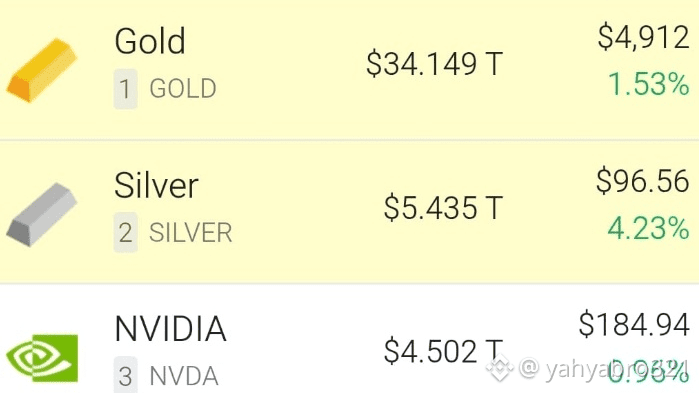
Article
SILVER BREAKS A HISTORIC RECORD — WHAT THIS MEANS FOR MARKETSSilver has officially entered the history books. After years of consolidation and repeated rejections, the metal has broken a historic price record, signaling a potential shift not just for commodities—but for global financial markets as a whole.
This breakout is more than just a technical event. It reflects deep macroeconomic stress, changing investor psychology, and growing distrust in fiat systems.
Why Silver’s Breakout Matters
Silver is unique. Unlike gold, it sits at the intersection of store-of-value and industrial demand.
This means when silver breaks major resistance, it often signals:
Rising inflation fears
Weakening confidence in paper currencies
Increasing demand from both investors and industries
A historic breakout suggests the market is repricing risk—and silver is one of the first assets to react.
Key Drivers Behind the Historic Move
1. Inflation & Currency Devaluation
Persistent inflation and aggressive money printing have pushed investors toward hard assets. Silver, often overlooked, is now catching up fast.
2. Industrial Demand Surge
Silver plays a critical role in:
Solar panels
Electric vehicles
Electronics & AI hardware
As green energy adoption accelerates, silver demand is rising structurally—not temporarily.
3. Supply Constraints
Silver mining supply has struggled to keep pace with demand. With limited new discoveries and rising production costs, supply pressure is tightening.
4. Safe-Haven Rotation
As volatility rises across equities and bonds, capital is rotating into tangible, scarce assets—silver included.
Technical Perspective: A Major Regime Shift
From a technical standpoint:
Multi-year resistance has been decisively broken
Momentum indicators favor continuation
Previous resistance may now act as strong support
Historically, when silver breaks long-term ranges, moves tend to be sharp and extended, not slow and linear.
What Comes Next? Bullish vs Risk Scenarios
Bullish Case
Continued inflation pressure
Strong industrial demand
Weakening dollar environment
Silver could enter a new long-term uptrend.
Risk Case
Profit-taking after rapid gains
Short-term pullbacks are healthy and likely
Volatility will increase
Corrections don’t invalidate the trend—they reset it.
Final Thoughts
Silver breaking a historic record is not noise—it’s a signal.
It tells us: Inflation isn’t “temporary”
Hard assets are back in demand
Markets are preparing for uncertainty
Whether you’re a commodities investor, a crypto trader, or a macro watcher—silver’s move deserves attention.
#Silver
#SilvergateSettlement
#MarketBreakout
#BinanceSquare
$SHIB
$SHIB
{spot}(SHIBUSDT)
$BNB
{spot}(BNBUSDT)
SILVER BREAKS A HISTORIC RECORD — WHAT THIS MEANS FOR MARKETS
Silver has officially entered the history books. After years of consolidation and repeated rejections, the metal has broken a historic price record, signaling a potential shift not just for commodities—but for global financial markets as a whole.
This breakout is more than just a technical event. It reflects deep macroeconomic stress, changing investor psychology, and growing distrust in fiat systems.
Why Silver’s Breakout Matters
Silver is unique. Unlike gold, it sits at the intersection of store-of-value and industrial demand.
This means when silver breaks major resistance, it often signals:
Rising inflation fears
Weakening confidence in paper currencies
Increasing demand from both investors and industries
A historic breakout suggests the market is repricing risk—and silver is one of the first assets to react.
Key Drivers Behind the Historic Move
1. Inflation & Currency Devaluation
Persistent inflation and aggressive money printing have pushed investors toward hard assets. Silver, often overlooked, is now catching up fast.
2. Industrial Demand Surge
Silver plays a critical role in:
Solar panels
Electric vehicles
Electronics & AI hardware
As green energy adoption accelerates, silver demand is rising structurally—not temporarily.
3. Supply Constraints
Silver mining supply has struggled to keep pace with demand. With limited new discoveries and rising production costs, supply pressure is tightening.
4. Safe-Haven Rotation
As volatility rises across equities and bonds, capital is rotating into tangible, scarce assets—silver included.
Technical Perspective: A Major Regime Shift
From a technical standpoint:
Multi-year resistance has been decisively broken
Momentum indicators favor continuation
Previous resistance may now act as strong support
Historically, when silver breaks long-term ranges, moves tend to be sharp and extended, not slow and linear.
What Comes Next? Bullish vs Risk Scenarios
Bullish Case
Continued inflation pressure
Strong industrial demand
Weakening dollar environment
Silver could enter a new long-term uptrend.
Risk Case
Profit-taking after rapid gains
Short-term pullbacks are healthy and likely
Volatility will increase
Corrections don’t invalidate the trend—they reset it.
Final Thoughts
Silver breaking a historic record is not noise—it’s a signal.
It tells us: Inflation isn’t “temporary”
Hard assets are back in demand
Markets are preparing for uncertainty
Whether you’re a commodities investor, a crypto trader, or a macro watcher—silver’s move deserves attention.
#Silver
#SilvergateSettlement
#MarketBreakout
#BinanceSquare
$SHIB
$SHIB
$BNB
This breakout is more than just a technical event. It reflects deep macroeconomic stress, changing investor psychology, and growing distrust in fiat systems.
Why Silver’s Breakout Matters
Silver is unique. Unlike gold, it sits at the intersection of store-of-value and industrial demand.
This means when silver breaks major resistance, it often signals:
Rising inflation fears
Weakening confidence in paper currencies
Increasing demand from both investors and industries
A historic breakout suggests the market is repricing risk—and silver is one of the first assets to react.
Key Drivers Behind the Historic Move
1. Inflation & Currency Devaluation
Persistent inflation and aggressive money printing have pushed investors toward hard assets. Silver, often overlooked, is now catching up fast.
2. Industrial Demand Surge
Silver plays a critical role in:
Solar panels
Electric vehicles
Electronics & AI hardware
As green energy adoption accelerates, silver demand is rising structurally—not temporarily.
3. Supply Constraints
Silver mining supply has struggled to keep pace with demand. With limited new discoveries and rising production costs, supply pressure is tightening.
4. Safe-Haven Rotation
As volatility rises across equities and bonds, capital is rotating into tangible, scarce assets—silver included.
Technical Perspective: A Major Regime Shift
From a technical standpoint:
Multi-year resistance has been decisively broken
Momentum indicators favor continuation
Previous resistance may now act as strong support
Historically, when silver breaks long-term ranges, moves tend to be sharp and extended, not slow and linear.
What Comes Next? Bullish vs Risk Scenarios
Bullish Case
Continued inflation pressure
Strong industrial demand
Weakening dollar environment
Silver could enter a new long-term uptrend.
Risk Case
Profit-taking after rapid gains
Short-term pullbacks are healthy and likely
Volatility will increase
Corrections don’t invalidate the trend—they reset it.
Final Thoughts
Silver breaking a historic record is not noise—it’s a signal.
It tells us: Inflation isn’t “temporary”
Hard assets are back in demand
Markets are preparing for uncertainty
Whether you’re a commodities investor, a crypto trader, or a macro watcher—silver’s move deserves attention.
#Silver
#SilvergateSettlement
#MarketBreakout
#BinanceSquare
$SHIB
$SHIB
$BNB
145
·
--
Bearish Warning: Market on Thin Ice
The crypto market is showing clear weakness.
🔻 Bitcoin struggling to reclaim resistance
🔻 Altcoins bleeding slowly, momentum fading
🔻 Low volume = fake pumps possible
Risk Alert:
This looks like a distribution phase, not accumulation. Sudden drops can wipe out late buyers.
Smart Traders Are:
• Reducing leverage
• Protecting capital
• Waiting for strong confirmation
In bearish markets, survival > profits.
#BearishMarket
#CryptoWarning
#RiskManagement
#BinanceSquare
#TrumTariffsImpactOnCrypto
$ETH
{spot}(ETHUSDT)
$BNB
{spot}(BNBUSDT)
$PEPE
{spot}(PEPEUSDT)
Bearish Warning: Market on Thin Ice
The crypto market is showing clear weakness.
🔻 Bitcoin struggling to reclaim resistance
🔻 Altcoins bleeding slowly, momentum fading
🔻 Low volume = fake pumps possible
Risk Alert:
This looks like a distribution phase, not accumulation. Sudden drops can wipe out late buyers.
Smart Traders Are:
• Reducing leverage
• Protecting capital
• Waiting for strong confirmation
In bearish markets, survival > profits.
#BearishMarket
#CryptoWarning
#RiskManagement
#BinanceSquare
#TrumTariffsImpactOnCrypto
$ETH
$BNB
$PEPE
The crypto market is showing clear weakness.
🔻 Bitcoin struggling to reclaim resistance
🔻 Altcoins bleeding slowly, momentum fading
🔻 Low volume = fake pumps possible
Risk Alert:
This looks like a distribution phase, not accumulation. Sudden drops can wipe out late buyers.
Smart Traders Are:
• Reducing leverage
• Protecting capital
• Waiting for strong confirmation
In bearish markets, survival > profits.
#BearishMarket
#CryptoWarning
#RiskManagement
#BinanceSquare
#TrumTariffsImpactOnCrypto
$ETH
$BNB
$PEPE
25
·
--
Crypto Market Update
The market is moving sideways with high volatility.
Bitcoin is holding key support, showing indecision
Alt coins are reacting fast to news, not fundamentals
Volume is low — a sign traders are waiting for confirmation
What this means:
No clear trend yet. This is a patience market — over trading can be risky.
Smart move:
Stick to strong projects, manage risk, and wait for a clear breakout or breakdown.
Market doesn’t reward emotions — it rewards discipline.
#CryptoMarketSentiment
#Bitcoin
#Altcoins
#BinanceSquare
#TrumpCancelsEUTariffThreat
$BTC
{spot}(BTCUSDT)
$XRP
{spot}(XRPUSDT)
$BNB
{spot}(BNBUSDT)
Crypto Market Update
The market is moving sideways with high volatility.
Bitcoin is holding key support, showing indecision
Alt coins are reacting fast to news, not fundamentals
Volume is low — a sign traders are waiting for confirmation
What this means:
No clear trend yet. This is a patience market — over trading can be risky.
Smart move:
Stick to strong projects, manage risk, and wait for a clear breakout or breakdown.
Market doesn’t reward emotions — it rewards discipline.
#CryptoMarketSentiment
#Bitcoin
#Altcoins
#BinanceSquare
#TrumpCancelsEUTariffThreat
$BTC
$XRP
$BNB
The market is moving sideways with high volatility.
Bitcoin is holding key support, showing indecision
Alt coins are reacting fast to news, not fundamentals
Volume is low — a sign traders are waiting for confirmation
What this means:
No clear trend yet. This is a patience market — over trading can be risky.
Smart move:
Stick to strong projects, manage risk, and wait for a clear breakout or breakdown.
Market doesn’t reward emotions — it rewards discipline.
#CryptoMarketSentiment
#Bitcoin
#Altcoins
#BinanceSquare
#TrumpCancelsEUTariffThreat
$BTC
$XRP
$BNB
1
7
·
--
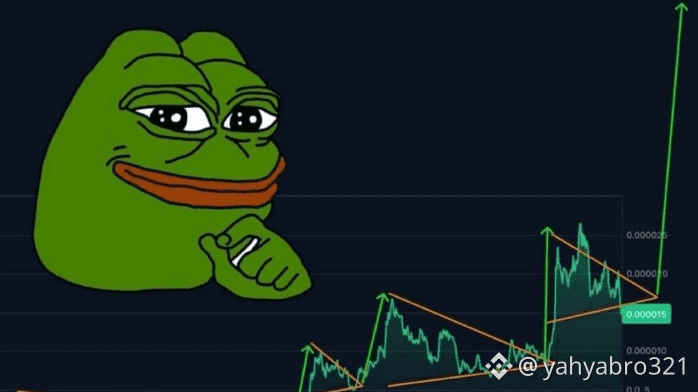
Article
Don’t Buy $PEPE? Understanding the Scam Risks, Hype, and RealityPEPE has become one of the most talked-about meme coins in crypto history. Explosive pumps, viral social media hype, and stories of overnight millionaires attract thousands of new investors every day. But alongside this hype, a strong warning keeps circulating:
“Don’t buy PEPE — people will scam you.”
Is PEPE itself a scam? Or is the real danger something else? Let’s break it down clearly.
1. PEPE Is Not a Utility Project
PEPE openly states that it has:
❌ No real-world use case
❌ No roadmap
❌ No long-term utility
❌ No intrinsic value
It exists purely as a meme.
This means its price depends almost entirely on:
Hype
Social media trends
Speculation
Whale behavior
When hype fades, price can collapse fast, leaving late buyers trapped.
2. Scam Tokens Using the PEPE Name
One of the biggest dangers is fake PEPE tokens.
Scammers often:
Launch tokens named PEPE2, PEPEAI, PEPE V3, BABYPEPE, etc.
Copy the logo and branding
Promote them aggressively on Twitter, Telegram, and TikTok
Disappear after liquidity is drained (rug pull)
Many beginners think they are buying the “real” PEPE but end up holding a worthless copy.
This is where most people get scammed not by PEPE itself, but by clones.
3. Whale Manipulation & Pump-and-Dump Risk
PEPE is heavily influenced by large holders (whales).
Typical pattern:
1. Price stays quiet → retail loses interest
2. Sudden pump → FOMO kicks in
3. Retail buys aggressively
4. Whales sell into the hype
5. Price crashes 40–80%
6. Retail holders are stuck
This is classic pump-and-dump behavior, common in meme coins.
4. No Protection for Retail Investors
Unlike regulated assets:
There is no investor protection
No refunds
No accountability if price collapses
No team obligation to “fix” anything
If you buy near the top, losses are permanent.
5. Social Media Influencer Traps
Many scams happen through:
Paid influencers shilling PEPE or PEPE-like tokens
“100x guaranteed” claims
Fake screenshots of profits
Urgent buy-now messaging
These influencers often:
Buy early
Promote aggressively
Sell silently
By the time followers buy, the exit liquidity is already provided by them.
6. Extreme Volatility = Emotional Trading Losses
PEPE can:
Drop 30% in hours
Pump 50% in minutes
Crash without warning
This volatility causes:
Panic selling
FOMO buying
Poor decision-making
Most retail traders lose money, even if the coin survives.
7. So… Is PEPE a Scam?
Important truth:
❌ PEPE itself is not officially labeled a scam
⚠️ But it is a high-risk speculative meme asset
🚨 The ecosystem around it is full of scams, clones, and manipulation
For beginners, this makes PEPE extremely dangerous.
Final Verdict: Should You Buy PEPE?
You should NOT buy PEPE if:
You are new to crypto
You cannot afford to lose 100%
You are buying due to hype or FOMO
You expect long-term fundamentals
Only consider it if:
You fully understand meme coin risks
You invest money you can lose completely
You enter early and exit emotionally detached
Bottom Line
People don’t say “Don’t buy PEPE” because it’s illegal —
they say it because most buyers lose money.
In meme coins:
Early buyers win.
Late buyers become liquidity.
Always remember: Hype makes money fast and takes it even faster.
#PEPEHYPE
#WhoIsNextFedChair
#TrumpCancelsEUTariffThreat
#TrumpTariffsOnEurope
#WriteToEarnUpgrade
$PEPE
{spot}(PEPEUSDT)
Don’t Buy $PEPE? Understanding the Scam Risks, Hype, and Reality
PEPE has become one of the most talked-about meme coins in crypto history. Explosive pumps, viral social media hype, and stories of overnight millionaires attract thousands of new investors every day. But alongside this hype, a strong warning keeps circulating:
“Don’t buy PEPE — people will scam you.”
Is PEPE itself a scam? Or is the real danger something else? Let’s break it down clearly.
1. PEPE Is Not a Utility Project
PEPE openly states that it has:
❌ No real-world use case
❌ No roadmap
❌ No long-term utility
❌ No intrinsic value
It exists purely as a meme.
This means its price depends almost entirely on:
Hype
Social media trends
Speculation
Whale behavior
When hype fades, price can collapse fast, leaving late buyers trapped.
2. Scam Tokens Using the PEPE Name
One of the biggest dangers is fake PEPE tokens.
Scammers often:
Launch tokens named PEPE2, PEPEAI, PEPE V3, BABYPEPE, etc.
Copy the logo and branding
Promote them aggressively on Twitter, Telegram, and TikTok
Disappear after liquidity is drained (rug pull)
Many beginners think they are buying the “real” PEPE but end up holding a worthless copy.
This is where most people get scammed not by PEPE itself, but by clones.
3. Whale Manipulation & Pump-and-Dump Risk
PEPE is heavily influenced by large holders (whales).
Typical pattern:
1. Price stays quiet → retail loses interest
2. Sudden pump → FOMO kicks in
3. Retail buys aggressively
4. Whales sell into the hype
5. Price crashes 40–80%
6. Retail holders are stuck
This is classic pump-and-dump behavior, common in meme coins.
4. No Protection for Retail Investors
Unlike regulated assets:
There is no investor protection
No refunds
No accountability if price collapses
No team obligation to “fix” anything
If you buy near the top, losses are permanent.
5. Social Media Influencer Traps
Many scams happen through:
Paid influencers shilling PEPE or PEPE-like tokens
“100x guaranteed” claims
Fake screenshots of profits
Urgent buy-now messaging
These influencers often:
Buy early
Promote aggressively
Sell silently
By the time followers buy, the exit liquidity is already provided by them.
6. Extreme Volatility = Emotional Trading Losses
PEPE can:
Drop 30% in hours
Pump 50% in minutes
Crash without warning
This volatility causes:
Panic selling
FOMO buying
Poor decision-making
Most retail traders lose money, even if the coin survives.
7. So… Is PEPE a Scam?
Important truth:
❌ PEPE itself is not officially labeled a scam
⚠️ But it is a high-risk speculative meme asset
🚨 The ecosystem around it is full of scams, clones, and manipulation
For beginners, this makes PEPE extremely dangerous.
Final Verdict: Should You Buy PEPE?
You should NOT buy PEPE if:
You are new to crypto
You cannot afford to lose 100%
You are buying due to hype or FOMO
You expect long-term fundamentals
Only consider it if:
You fully understand meme coin risks
You invest money you can lose completely
You enter early and exit emotionally detached
Bottom Line
People don’t say “Don’t buy PEPE” because it’s illegal —
they say it because most buyers lose money.
In meme coins:
Early buyers win.
Late buyers become liquidity.
Always remember: Hype makes money fast and takes it even faster.
#PEPEHYPE
#WhoIsNextFedChair
#TrumpCancelsEUTariffThreat
#TrumpTariffsOnEurope
#WriteToEarnUpgrade
$PEPE
“Don’t buy PEPE — people will scam you.”
Is PEPE itself a scam? Or is the real danger something else? Let’s break it down clearly.
1. PEPE Is Not a Utility Project
PEPE openly states that it has:
❌ No real-world use case
❌ No roadmap
❌ No long-term utility
❌ No intrinsic value
It exists purely as a meme.
This means its price depends almost entirely on:
Hype
Social media trends
Speculation
Whale behavior
When hype fades, price can collapse fast, leaving late buyers trapped.
2. Scam Tokens Using the PEPE Name
One of the biggest dangers is fake PEPE tokens.
Scammers often:
Launch tokens named PEPE2, PEPEAI, PEPE V3, BABYPEPE, etc.
Copy the logo and branding
Promote them aggressively on Twitter, Telegram, and TikTok
Disappear after liquidity is drained (rug pull)
Many beginners think they are buying the “real” PEPE but end up holding a worthless copy.
This is where most people get scammed not by PEPE itself, but by clones.
3. Whale Manipulation & Pump-and-Dump Risk
PEPE is heavily influenced by large holders (whales).
Typical pattern:
1. Price stays quiet → retail loses interest
2. Sudden pump → FOMO kicks in
3. Retail buys aggressively
4. Whales sell into the hype
5. Price crashes 40–80%
6. Retail holders are stuck
This is classic pump-and-dump behavior, common in meme coins.
4. No Protection for Retail Investors
Unlike regulated assets:
There is no investor protection
No refunds
No accountability if price collapses
No team obligation to “fix” anything
If you buy near the top, losses are permanent.
5. Social Media Influencer Traps
Many scams happen through:
Paid influencers shilling PEPE or PEPE-like tokens
“100x guaranteed” claims
Fake screenshots of profits
Urgent buy-now messaging
These influencers often:
Buy early
Promote aggressively
Sell silently
By the time followers buy, the exit liquidity is already provided by them.
6. Extreme Volatility = Emotional Trading Losses
PEPE can:
Drop 30% in hours
Pump 50% in minutes
Crash without warning
This volatility causes:
Panic selling
FOMO buying
Poor decision-making
Most retail traders lose money, even if the coin survives.
7. So… Is PEPE a Scam?
Important truth:
❌ PEPE itself is not officially labeled a scam
⚠️ But it is a high-risk speculative meme asset
🚨 The ecosystem around it is full of scams, clones, and manipulation
For beginners, this makes PEPE extremely dangerous.
Final Verdict: Should You Buy PEPE?
You should NOT buy PEPE if:
You are new to crypto
You cannot afford to lose 100%
You are buying due to hype or FOMO
You expect long-term fundamentals
Only consider it if:
You fully understand meme coin risks
You invest money you can lose completely
You enter early and exit emotionally detached
Bottom Line
People don’t say “Don’t buy PEPE” because it’s illegal —
they say it because most buyers lose money.
In meme coins:
Early buyers win.
Late buyers become liquidity.
Always remember: Hype makes money fast and takes it even faster.
#PEPEHYPE
#WhoIsNextFedChair
#TrumpCancelsEUTariffThreat
#TrumpTariffsOnEurope
#WriteToEarnUpgrade
$PEPE
2
1
1
291
·
--
XRP: Real Utility vs Hype — A Study in Quiet StrengthIn a market fueled by excitement, XRP has always felt like an outlier. While much of crypto thrives on bold promises and viral narratives, XRP has taken a different path—one grounded in function over fantasy. This contrast makes XRP a compelling case study in the ongoing debate between real utility and hype.
The Hype Cycle: Loud but Fragile
Hype-driven projects often rise quickly. They dominate headlines, trend on social platforms, and attract waves of short-term attention. But hype is inherently fragile. It depends on momentum, sentiment, and constant excitement. When the narrative fades, so often does the value. In crypto history, countless projects have burned bright—then disappeared—because they offered little beyond speculation.
XRP’s Utility-First Philosophy
XRP was built to solve a specific problem: inefficient cross-border payments. Its network enables fast, low-cost transactions designed for real financial infrastructure. Rather than positioning itself as a get-rich-quick asset, XRP functions as a bridge—moving value across borders in seconds, not days.
This practical focus has attracted attention from banks, payment providers, and institutions exploring blockchain-based settlement systems. While such partnerships rarely generate viral hype, they represent something more durable: real-world relevance.
Why Utility Often Looks Boring
Utility doesn’t trend easily. It develops quietly, through integrations, testing, and gradual adoption. XRP’s progress often happens outside the spotlight, making it easy to overlook in a market obsessed with instant results. But history shows that foundational technologies rarely arrive with fireworks—they arrive with reliability.
Adoption vs Speculation
Speculation asks, “How high can this go?”
Utility asks, “Does this actually work?”
XRP’s long-term narrative leans toward the second question. As global finance evolves—embracing tokenization, faster settlements, and regulatory clarity—networks that already align with these needs gain an advantage. In such an environment, usefulness becomes a stronger signal than popularity.
The Long Game
Hype creates cycles. Utility builds systems. XRP’s journey reflects a long-game mindset in an industry often driven by impatience. It may never be the loudest voice in the room, but it doesn’t need to be. Its strength lies in doing the job it was designed for—consistently, efficiently, and at scale.
Conclusion
In the end, the crypto market doesn’t just reward excitement—it rewards endurance. While hype can ignite interest, utility sustains value. XRP stands as a reminder that not every winner shouts; some simply keep working, block by block, transaction by transaction.
#BTC100kNext?
#xrpfeutures
#Xrppridection
$XRP
{spot}(XRPUSDT)
XRP: Real Utility vs Hype — A Study in Quiet Strength
In a market fueled by excitement, XRP has always felt like an outlier. While much of crypto thrives on bold promises and viral narratives, XRP has taken a different path—one grounded in function over fantasy. This contrast makes XRP a compelling case study in the ongoing debate between real utility and hype.
The Hype Cycle: Loud but Fragile
Hype-driven projects often rise quickly. They dominate headlines, trend on social platforms, and attract waves of short-term attention. But hype is inherently fragile. It depends on momentum, sentiment, and constant excitement. When the narrative fades, so often does the value. In crypto history, countless projects have burned bright—then disappeared—because they offered little beyond speculation.
XRP’s Utility-First Philosophy
XRP was built to solve a specific problem: inefficient cross-border payments. Its network enables fast, low-cost transactions designed for real financial infrastructure. Rather than positioning itself as a get-rich-quick asset, XRP functions as a bridge—moving value across borders in seconds, not days.
This practical focus has attracted attention from banks, payment providers, and institutions exploring blockchain-based settlement systems. While such partnerships rarely generate viral hype, they represent something more durable: real-world relevance.
Why Utility Often Looks Boring
Utility doesn’t trend easily. It develops quietly, through integrations, testing, and gradual adoption. XRP’s progress often happens outside the spotlight, making it easy to overlook in a market obsessed with instant results. But history shows that foundational technologies rarely arrive with fireworks—they arrive with reliability.
Adoption vs Speculation
Speculation asks, “How high can this go?”
Utility asks, “Does this actually work?”
XRP’s long-term narrative leans toward the second question. As global finance evolves—embracing tokenization, faster settlements, and regulatory clarity—networks that already align with these needs gain an advantage. In such an environment, usefulness becomes a stronger signal than popularity.
The Long Game
Hype creates cycles. Utility builds systems. XRP’s journey reflects a long-game mindset in an industry often driven by impatience. It may never be the loudest voice in the room, but it doesn’t need to be. Its strength lies in doing the job it was designed for—consistently, efficiently, and at scale.
Conclusion
In the end, the crypto market doesn’t just reward excitement—it rewards endurance. While hype can ignite interest, utility sustains value. XRP stands as a reminder that not every winner shouts; some simply keep working, block by block, transaction by transaction.
#BTC100kNext?
#xrpfeutures
#Xrppridection
$XRP
The Hype Cycle: Loud but Fragile
Hype-driven projects often rise quickly. They dominate headlines, trend on social platforms, and attract waves of short-term attention. But hype is inherently fragile. It depends on momentum, sentiment, and constant excitement. When the narrative fades, so often does the value. In crypto history, countless projects have burned bright—then disappeared—because they offered little beyond speculation.
XRP’s Utility-First Philosophy
XRP was built to solve a specific problem: inefficient cross-border payments. Its network enables fast, low-cost transactions designed for real financial infrastructure. Rather than positioning itself as a get-rich-quick asset, XRP functions as a bridge—moving value across borders in seconds, not days.
This practical focus has attracted attention from banks, payment providers, and institutions exploring blockchain-based settlement systems. While such partnerships rarely generate viral hype, they represent something more durable: real-world relevance.
Why Utility Often Looks Boring
Utility doesn’t trend easily. It develops quietly, through integrations, testing, and gradual adoption. XRP’s progress often happens outside the spotlight, making it easy to overlook in a market obsessed with instant results. But history shows that foundational technologies rarely arrive with fireworks—they arrive with reliability.
Adoption vs Speculation
Speculation asks, “How high can this go?”
Utility asks, “Does this actually work?”
XRP’s long-term narrative leans toward the second question. As global finance evolves—embracing tokenization, faster settlements, and regulatory clarity—networks that already align with these needs gain an advantage. In such an environment, usefulness becomes a stronger signal than popularity.
The Long Game
Hype creates cycles. Utility builds systems. XRP’s journey reflects a long-game mindset in an industry often driven by impatience. It may never be the loudest voice in the room, but it doesn’t need to be. Its strength lies in doing the job it was designed for—consistently, efficiently, and at scale.
Conclusion
In the end, the crypto market doesn’t just reward excitement—it rewards endurance. While hype can ignite interest, utility sustains value. XRP stands as a reminder that not every winner shouts; some simply keep working, block by block, transaction by transaction.
#BTC100kNext?
#xrpfeutures
#Xrppridection
$XRP
89
·
--
Pi Network’s Ecosystem Development: Why Real Utility Matters More Than Hype1. A Utility-First Vision
Pi Network was designed with the idea that a cryptocurrency’s long-term value should come from usefulness, not speculation. Instead of launching with an open market focus, the project prioritized building the infrastructure needed for real-world usage. This includes a mobile-first approach, identity-verified users, and a controlled environment where genuine participation matters more than short-term trading interest.
2. Ecosystem Growth Through Real Applications
A key part of Pi Network’s development is its growing ecosystem of applications and services. These include peer-to-peer marketplaces, digital services, and community-driven apps where Pi can be used as a medium of exchange. By encouraging developers and entrepreneurs to build within the network, Pi aims to create internal economic activity rather than relying solely on external exchanges.
3. The Role of Community and Merchants
Unlike many crypto projects that depend heavily on institutional adoption, Pi Network emphasizes grassroots participation. Merchants, small businesses, and individuals play a central role by accepting Pi for goods and services. This helps establish real demand and practical circulation, which are essential for any digital currency seeking long-term relevance.
4. Why Real Utility Is More Sustainable Than Hype
Hype can attract attention quickly, but it often fades just as fast. Projects built mainly on excitement tend to struggle once market sentiment changes. Utility, on the other hand, creates lasting value by solving real problems. When users rely on a network for transactions, services, or economic activity, value becomes tied to function rather than speculation.
5. Stability Through Gradual Development
Pi Network’s slower, step-by-step development approach allows time for testing, refinement, and community education. This reduces the risk of unsustainable growth and helps align incentives among users, developers, and businesses. A stable ecosystem is more likely to survive market volatility than one driven purely by hype cycles.
6. Long-Term Relevance in a Maturing Crypto Industry
As the cryptocurrency industry evolves, regulatory clarity and real-world use cases are becoming increasingly important. Networks with active ecosystems, real users, and functional applications are better positioned to adapt. Pi Network’s focus on ecosystem maturity reflects a long-term strategy aimed at relevance and resilience rather than short-lived excitement.
Conclusion
Pi Network’s ecosystem development highlights an important principle in crypto: real utility builds lasting value. While hype may generate temporary visibility, sustainable growth comes from practical use, community participation, and a functioning economy. By prioritizing utility over speculation, Pi Network aims to establish itself as a meaningful digital currency for everyday use.
#PiOnBinance
#PiCoreTeam
#PiNetworkMainnet
#BinanceExplorers
$BTC
{spot}(BTCUSDT)
Pi Network’s Ecosystem Development: Why Real Utility Matters More Than Hype
1. A Utility-First Vision
Pi Network was designed with the idea that a cryptocurrency’s long-term value should come from usefulness, not speculation. Instead of launching with an open market focus, the project prioritized building the infrastructure needed for real-world usage. This includes a mobile-first approach, identity-verified users, and a controlled environment where genuine participation matters more than short-term trading interest.
2. Ecosystem Growth Through Real Applications
A key part of Pi Network’s development is its growing ecosystem of applications and services. These include peer-to-peer marketplaces, digital services, and community-driven apps where Pi can be used as a medium of exchange. By encouraging developers and entrepreneurs to build within the network, Pi aims to create internal economic activity rather than relying solely on external exchanges.
3. The Role of Community and Merchants
Unlike many crypto projects that depend heavily on institutional adoption, Pi Network emphasizes grassroots participation. Merchants, small businesses, and individuals play a central role by accepting Pi for goods and services. This helps establish real demand and practical circulation, which are essential for any digital currency seeking long-term relevance.
4. Why Real Utility Is More Sustainable Than Hype
Hype can attract attention quickly, but it often fades just as fast. Projects built mainly on excitement tend to struggle once market sentiment changes. Utility, on the other hand, creates lasting value by solving real problems. When users rely on a network for transactions, services, or economic activity, value becomes tied to function rather than speculation.
5. Stability Through Gradual Development
Pi Network’s slower, step-by-step development approach allows time for testing, refinement, and community education. This reduces the risk of unsustainable growth and helps align incentives among users, developers, and businesses. A stable ecosystem is more likely to survive market volatility than one driven purely by hype cycles.
6. Long-Term Relevance in a Maturing Crypto Industry
As the cryptocurrency industry evolves, regulatory clarity and real-world use cases are becoming increasingly important. Networks with active ecosystems, real users, and functional applications are better positioned to adapt. Pi Network’s focus on ecosystem maturity reflects a long-term strategy aimed at relevance and resilience rather than short-lived excitement.
Conclusion
Pi Network’s ecosystem development highlights an important principle in crypto: real utility builds lasting value. While hype may generate temporary visibility, sustainable growth comes from practical use, community participation, and a functioning economy. By prioritizing utility over speculation, Pi Network aims to establish itself as a meaningful digital currency for everyday use.
#PiOnBinance
#PiCoreTeam
#PiNetworkMainnet
#BinanceExplorers
$BTC
Pi Network was designed with the idea that a cryptocurrency’s long-term value should come from usefulness, not speculation. Instead of launching with an open market focus, the project prioritized building the infrastructure needed for real-world usage. This includes a mobile-first approach, identity-verified users, and a controlled environment where genuine participation matters more than short-term trading interest.
2. Ecosystem Growth Through Real Applications
A key part of Pi Network’s development is its growing ecosystem of applications and services. These include peer-to-peer marketplaces, digital services, and community-driven apps where Pi can be used as a medium of exchange. By encouraging developers and entrepreneurs to build within the network, Pi aims to create internal economic activity rather than relying solely on external exchanges.
3. The Role of Community and Merchants
Unlike many crypto projects that depend heavily on institutional adoption, Pi Network emphasizes grassroots participation. Merchants, small businesses, and individuals play a central role by accepting Pi for goods and services. This helps establish real demand and practical circulation, which are essential for any digital currency seeking long-term relevance.
4. Why Real Utility Is More Sustainable Than Hype
Hype can attract attention quickly, but it often fades just as fast. Projects built mainly on excitement tend to struggle once market sentiment changes. Utility, on the other hand, creates lasting value by solving real problems. When users rely on a network for transactions, services, or economic activity, value becomes tied to function rather than speculation.
5. Stability Through Gradual Development
Pi Network’s slower, step-by-step development approach allows time for testing, refinement, and community education. This reduces the risk of unsustainable growth and helps align incentives among users, developers, and businesses. A stable ecosystem is more likely to survive market volatility than one driven purely by hype cycles.
6. Long-Term Relevance in a Maturing Crypto Industry
As the cryptocurrency industry evolves, regulatory clarity and real-world use cases are becoming increasingly important. Networks with active ecosystems, real users, and functional applications are better positioned to adapt. Pi Network’s focus on ecosystem maturity reflects a long-term strategy aimed at relevance and resilience rather than short-lived excitement.
Conclusion
Pi Network’s ecosystem development highlights an important principle in crypto: real utility builds lasting value. While hype may generate temporary visibility, sustainable growth comes from practical use, community participation, and a functioning economy. By prioritizing utility over speculation, Pi Network aims to establish itself as a meaningful digital currency for everyday use.
#PiOnBinance
#PiCoreTeam
#PiNetworkMainnet
#BinanceExplorers
$BTC
1
32
·
--
XRP’s Future: Built for the World That’s Coming
While many cryptocurrencies chase short-term hype, XRP has always played the long game. Its future isn’t just about price movements—it’s about function. Speed, scalability, and real-world utility sit at the core of XRP’s design.
As global finance moves toward faster cross-border payments, tokenized assets, and regulated digital systems, XRP is positioned as a bridge between traditional banking and blockchain technology. Transactions that once took days can happen in seconds, with minimal cost—this is where XRP quietly shines.
The future of XRP may not be explosive overnight, but it could be structural. In a maturing crypto ecosystem, coins that solve real problems are more likely to endure. And in that world, XRP doesn’t need noise to matter—it needs adoption.
The future belongs to what works, not just what trends.
#MarketRebound
#XRPRealityCheck
#xrpfutureprice
#WriteToEarnUpgrade
$XRP
{spot}(XRPUSDT)
XRP’s Future: Built for the World That’s Coming
While many cryptocurrencies chase short-term hype, XRP has always played the long game. Its future isn’t just about price movements—it’s about function. Speed, scalability, and real-world utility sit at the core of XRP’s design.
As global finance moves toward faster cross-border payments, tokenized assets, and regulated digital systems, XRP is positioned as a bridge between traditional banking and blockchain technology. Transactions that once took days can happen in seconds, with minimal cost—this is where XRP quietly shines.
The future of XRP may not be explosive overnight, but it could be structural. In a maturing crypto ecosystem, coins that solve real problems are more likely to endure. And in that world, XRP doesn’t need noise to matter—it needs adoption.
The future belongs to what works, not just what trends.
#MarketRebound
#XRPRealityCheck
#xrpfutureprice
#WriteToEarnUpgrade
$XRP
While many cryptocurrencies chase short-term hype, XRP has always played the long game. Its future isn’t just about price movements—it’s about function. Speed, scalability, and real-world utility sit at the core of XRP’s design.
As global finance moves toward faster cross-border payments, tokenized assets, and regulated digital systems, XRP is positioned as a bridge between traditional banking and blockchain technology. Transactions that once took days can happen in seconds, with minimal cost—this is where XRP quietly shines.
The future of XRP may not be explosive overnight, but it could be structural. In a maturing crypto ecosystem, coins that solve real problems are more likely to endure. And in that world, XRP doesn’t need noise to matter—it needs adoption.
The future belongs to what works, not just what trends.
#MarketRebound
#XRPRealityCheck
#xrpfutureprice
#WriteToEarnUpgrade
$XRP
68
·
--

Article
Putin and the Greenland Controversy: What’s Real and What’s NotThe Claim
Recently, headlines and social media posts have suggested that Russian President Vladimir Putin “dropped a bombshell” regarding Greenland — implying a major geopolitical move or threat by Russia tied to the Arctic island. Let’s unpack the facts.
What Putin Actually Said
Putin has not announced any plan to take control of Greenland himself, nor has Russia made any formal territorial claims over the island in 2026. However, statements he made previously and context around them are fueling the current noise:
At the International Arctic Forum in Murmansk, Putin commented that the U.S. interest in Greenland is serious and rooted in history — not just a bizarre idea. He noted Washington was pushing its strategic interests in the Arctic, a region Russia also views as vital.
Putin indicated that Russia would watch Arctic developments carefully, especially increased NATO activity in the region tied to Greenland.
So the “bombshell” wasn’t a threat or aggressive move from Putin — but a recognition and assessment of the evolving geopolitical situation.
Context: Why Greenland Matters
Greenland — an autonomous territory of Denmark — is strategically crucial:
It lies near key Arctic sea routes.
It holds vast mineral and energy potential.
It hosts significant U.S. military assets, including radar and missile facilities.
Due to these factors, the Arctic has become a hotspot of strategic competition involving the U.S., Russia, NATO countries, and China.
The U.S. Factor
Much of the recent tension stems from renewed U.S. rhetoric under President Trump about taking control of Greenland for strategic reasons — even raising the possibility of military options if necessary. That has alarmed European allies and sharpened NATO debates.
This American push is the real driver of the geopolitical storm around Greenland — not a sudden Russian takeover plan.
Russia’s Current Position
From verified reporting this week:
Russian Foreign Minister Sergei Lavrov said Greenland “is not a natural part of Denmark,” a comment reflecting Russia’s broader skepticism about Western territorial claims — but not a direct claim on Greenland itself.
Russia has stated it has no intention of interfering in Greenland’s affairs, framing it as a European and U.S. matter.
European and NATO Reactions
The Greenland situation has prompted:
The EU to work on Arctic security packages, emphasizing joint defense of sovereignty and infrastructure.
Diplomatic tensions at international forums like Davos, where U.S. actions overshadowed other discussions.
European leaders are pushing back strongly against any notion of territorial change or coercion.
So Is the “Bombshell” Real?
Not in the sensational way some posts imply. There is no credible verified report that Putin launched a direct new policy or threat targeting Greenland. The key truths are: ✔️ Putin has publicly assessed U.S. Greenland ambitions as serious.
✔️ Russia is cautious, monitoring Arctic developments.
✔️ Russia denies plans to intervene directly in Greenland.
❌ There is no confirmation that Russia is planning to annex, invade, or claim Greenland.
Why the Headlines Are Confusing
Many sensational “bombshell” claims arise from:
Social media exaggeration and meme culture.
Outdated or misinterpreted quotes from previous meetings.
Mixing rhetoric about U.S. policy with imagined Russian reactions.
Reliable reporting shows that the geopolitical tension is driven more by U.S.–Europe disagreements and NATO alignment than by any Russian land grab.
What’s at Stake Going Forward
The real geopolitical battle isn’t a secret Russian plot. It’s:
U.S.–European friction over strategic direction in the Arctic.
NATO cohesion and defense planning.
Arctic security amid climate change and new economic routes.
Russia’s approach so far is to watch, position itself diplomatically, and emphasize its own interests in the Arctic, without making overt moves on Greenland itself.
Bottom Line
🚫 No, Putin hasn’t dropped a verified “bombshell” about Greenland in 2026.
What has happened is a complex geopolitical reaction to U.S. Arctic ambitions and growing strategic competition — and Russia is part of that broader story, not the central actor seeking to seize Greenland.
#USandChinaTrade
#GreenlandIndependence
#GreenlandCrisis
#Greenland #Putin #Geopolitics #Arctic #NATO #MarketInsights $BTC
{spot}(BTCUSDT)
$PEPE
{spot}(PEPEUSDT)
$TRUMP
{spot}(TRUMPUSDT)
Putin and the Greenland Controversy: What’s Real and What’s Not
The Claim
Recently, headlines and social media posts have suggested that Russian President Vladimir Putin “dropped a bombshell” regarding Greenland — implying a major geopolitical move or threat by Russia tied to the Arctic island. Let’s unpack the facts.
What Putin Actually Said
Putin has not announced any plan to take control of Greenland himself, nor has Russia made any formal territorial claims over the island in 2026. However, statements he made previously and context around them are fueling the current noise:
At the International Arctic Forum in Murmansk, Putin commented that the U.S. interest in Greenland is serious and rooted in history — not just a bizarre idea. He noted Washington was pushing its strategic interests in the Arctic, a region Russia also views as vital.
Putin indicated that Russia would watch Arctic developments carefully, especially increased NATO activity in the region tied to Greenland.
So the “bombshell” wasn’t a threat or aggressive move from Putin — but a recognition and assessment of the evolving geopolitical situation.
Context: Why Greenland Matters
Greenland — an autonomous territory of Denmark — is strategically crucial:
It lies near key Arctic sea routes.
It holds vast mineral and energy potential.
It hosts significant U.S. military assets, including radar and missile facilities.
Due to these factors, the Arctic has become a hotspot of strategic competition involving the U.S., Russia, NATO countries, and China.
The U.S. Factor
Much of the recent tension stems from renewed U.S. rhetoric under President Trump about taking control of Greenland for strategic reasons — even raising the possibility of military options if necessary. That has alarmed European allies and sharpened NATO debates.
This American push is the real driver of the geopolitical storm around Greenland — not a sudden Russian takeover plan.
Russia’s Current Position
From verified reporting this week:
Russian Foreign Minister Sergei Lavrov said Greenland “is not a natural part of Denmark,” a comment reflecting Russia’s broader skepticism about Western territorial claims — but not a direct claim on Greenland itself.
Russia has stated it has no intention of interfering in Greenland’s affairs, framing it as a European and U.S. matter.
European and NATO Reactions
The Greenland situation has prompted:
The EU to work on Arctic security packages, emphasizing joint defense of sovereignty and infrastructure.
Diplomatic tensions at international forums like Davos, where U.S. actions overshadowed other discussions.
European leaders are pushing back strongly against any notion of territorial change or coercion.
So Is the “Bombshell” Real?
Not in the sensational way some posts imply. There is no credible verified report that Putin launched a direct new policy or threat targeting Greenland. The key truths are: ✔️ Putin has publicly assessed U.S. Greenland ambitions as serious.
✔️ Russia is cautious, monitoring Arctic developments.
✔️ Russia denies plans to intervene directly in Greenland.
❌ There is no confirmation that Russia is planning to annex, invade, or claim Greenland.
Why the Headlines Are Confusing
Many sensational “bombshell” claims arise from:
Social media exaggeration and meme culture.
Outdated or misinterpreted quotes from previous meetings.
Mixing rhetoric about U.S. policy with imagined Russian reactions.
Reliable reporting shows that the geopolitical tension is driven more by U.S.–Europe disagreements and NATO alignment than by any Russian land grab.
What’s at Stake Going Forward
The real geopolitical battle isn’t a secret Russian plot. It’s:
U.S.–European friction over strategic direction in the Arctic.
NATO cohesion and defense planning.
Arctic security amid climate change and new economic routes.
Russia’s approach so far is to watch, position itself diplomatically, and emphasize its own interests in the Arctic, without making overt moves on Greenland itself.
Bottom Line
🚫 No, Putin hasn’t dropped a verified “bombshell” about Greenland in 2026.
What has happened is a complex geopolitical reaction to U.S. Arctic ambitions and growing strategic competition — and Russia is part of that broader story, not the central actor seeking to seize Greenland.
#USandChinaTrade
#GreenlandIndependence
#GreenlandCrisis
#Greenland #Putin #Geopolitics #Arctic #NATO #MarketInsights $BTC
$PEPE
$TRUMP
Recently, headlines and social media posts have suggested that Russian President Vladimir Putin “dropped a bombshell” regarding Greenland — implying a major geopolitical move or threat by Russia tied to the Arctic island. Let’s unpack the facts.
What Putin Actually Said
Putin has not announced any plan to take control of Greenland himself, nor has Russia made any formal territorial claims over the island in 2026. However, statements he made previously and context around them are fueling the current noise:
At the International Arctic Forum in Murmansk, Putin commented that the U.S. interest in Greenland is serious and rooted in history — not just a bizarre idea. He noted Washington was pushing its strategic interests in the Arctic, a region Russia also views as vital.
Putin indicated that Russia would watch Arctic developments carefully, especially increased NATO activity in the region tied to Greenland.
So the “bombshell” wasn’t a threat or aggressive move from Putin — but a recognition and assessment of the evolving geopolitical situation.
Context: Why Greenland Matters
Greenland — an autonomous territory of Denmark — is strategically crucial:
It lies near key Arctic sea routes.
It holds vast mineral and energy potential.
It hosts significant U.S. military assets, including radar and missile facilities.
Due to these factors, the Arctic has become a hotspot of strategic competition involving the U.S., Russia, NATO countries, and China.
The U.S. Factor
Much of the recent tension stems from renewed U.S. rhetoric under President Trump about taking control of Greenland for strategic reasons — even raising the possibility of military options if necessary. That has alarmed European allies and sharpened NATO debates.
This American push is the real driver of the geopolitical storm around Greenland — not a sudden Russian takeover plan.
Russia’s Current Position
From verified reporting this week:
Russian Foreign Minister Sergei Lavrov said Greenland “is not a natural part of Denmark,” a comment reflecting Russia’s broader skepticism about Western territorial claims — but not a direct claim on Greenland itself.
Russia has stated it has no intention of interfering in Greenland’s affairs, framing it as a European and U.S. matter.
European and NATO Reactions
The Greenland situation has prompted:
The EU to work on Arctic security packages, emphasizing joint defense of sovereignty and infrastructure.
Diplomatic tensions at international forums like Davos, where U.S. actions overshadowed other discussions.
European leaders are pushing back strongly against any notion of territorial change or coercion.
So Is the “Bombshell” Real?
Not in the sensational way some posts imply. There is no credible verified report that Putin launched a direct new policy or threat targeting Greenland. The key truths are: ✔️ Putin has publicly assessed U.S. Greenland ambitions as serious.
✔️ Russia is cautious, monitoring Arctic developments.
✔️ Russia denies plans to intervene directly in Greenland.
❌ There is no confirmation that Russia is planning to annex, invade, or claim Greenland.
Why the Headlines Are Confusing
Many sensational “bombshell” claims arise from:
Social media exaggeration and meme culture.
Outdated or misinterpreted quotes from previous meetings.
Mixing rhetoric about U.S. policy with imagined Russian reactions.
Reliable reporting shows that the geopolitical tension is driven more by U.S.–Europe disagreements and NATO alignment than by any Russian land grab.
What’s at Stake Going Forward
The real geopolitical battle isn’t a secret Russian plot. It’s:
U.S.–European friction over strategic direction in the Arctic.
NATO cohesion and defense planning.
Arctic security amid climate change and new economic routes.
Russia’s approach so far is to watch, position itself diplomatically, and emphasize its own interests in the Arctic, without making overt moves on Greenland itself.
Bottom Line
🚫 No, Putin hasn’t dropped a verified “bombshell” about Greenland in 2026.
What has happened is a complex geopolitical reaction to U.S. Arctic ambitions and growing strategic competition — and Russia is part of that broader story, not the central actor seeking to seize Greenland.
#USandChinaTrade
#GreenlandIndependence
#GreenlandCrisis
#Greenland #Putin #Geopolitics #Arctic #NATO #MarketInsights $BTC
$PEPE
$TRUMP
84
Log in to explore more content
Join global crypto users on Binance Square
⚡️ Get latest and useful information about crypto.
💬 Trusted by the world’s largest crypto exchange.
👍 Discover real insights from verified creators.
Email / Phone number
Trending Topics
AntiQuantumBitcoinTransactionMinedOnMainnet
661 views
58 Discussing
#AntiQuantumBitcoinTransactionMinedOnMainnet
Bitcoin Just Defended Itself Against Quantum Computers That Do Not Even Exist Yet 🔮🛡️
August 26. StarkWare researcher Avihu Levy, working on his own time with engineer Tomer Giladi, mined the first quantum resistant Bitcoin transaction on mainnet, block 964,199, moving 10,000 satoshis. The method, Quantum Safe Bitcoin, uses signature grinding and RIPEMD-160 hashing instead of standard elliptic curve cryptography, achieving roughly 118-bit resistance against Shor's algorithm. No soft fork. No hard fork. No consensus rule change. Bitcoin apparently already had the tools to defend itself, it just needed someone to notice. 😂
Here is the honest technical nuance worth understanding 🧠
Bitcoin sitting in a standard address is already considered quantum safe. The actual vulnerability appears only during the roughly ten minutes a transaction sits unconfirmed in the mempool, when the wallet's public key briefly gets exposed. QSB protects exactly that narrow window, nothing more. It is a stopgap for a threat that does not currently exist, built for a moment that may arrive years from now. 💡
The comedy hiding in the mechanics 🎭
This transaction was so nonstandard that ordinary Bitcoin nodes would not even relay it. StarkWare had to hand it directly to mining company MARA through a special service just to get it included. It also cost $150 to $200 in computation and took hours to complete, works only on older pre-SegWit addresses, and has zero support for Taproot or Lightning. Revolutionary proof of concept, genuinely impractical for everyday use right now. 💎
The honest bottom line 🎯
Even StarkWare's own CEO calls this a stopgap, still pushing for an actual protocol level fix called BIP-360. Bitcoin proved it can defend itself today. Whether anyone will actually use this particular method before a real upgrade arrives is a separate question entirely. 🚀
$BTC
Philboom
·1 Likes
·80 views
BitcoinSpotETFEnds9DayInflowStreak
1 views
12 Discussing
YenPasses160PerDollarToOneMonthLow
17,054 views
384 Discussing