

Jackson Liam
19.6k Posts

Jackson Liam
 Square Verified+
Report
Block User
Blockchain Storyteller • Exposing hidden gems • Riding every wave with precision
Open Trade
Frequent Trader
2 Years
59 Following
43.2K+ Followers
53.6K+ Liked
Posts
Portfolio
All
Quotes
Live
·
--
龙虾
Breakout momentum is heating up.
Price is pushing hard after reclaiming the 0.0598 area — bulls are in control.
BUY ZONE: 0.0680–0.0730
EP: 0.0710
TP1: 0.0793
TP2: 0.0823
TP3: 0.0950
SL: 0.0620
Break above 0.0823 and the next leg could accelerate fast.
Let's go $龙虾
{future}(龙虾USDT)
$BR
{future}(BRUSDT)
$NMR
{spot}(NMRUSDT)
龙虾
Breakout momentum is heating up.
Price is pushing hard after reclaiming the 0.0598 area — bulls are in control.
BUY ZONE: 0.0680–0.0730
EP: 0.0710
TP1: 0.0793
TP2: 0.0823
TP3: 0.0950
SL: 0.0620
Break above 0.0823 and the next leg could accelerate fast.
Let's go $龙虾
$BR
$NMR
Breakout momentum is heating up.
Price is pushing hard after reclaiming the 0.0598 area — bulls are in control.
BUY ZONE: 0.0680–0.0730
EP: 0.0710
TP1: 0.0793
TP2: 0.0823
TP3: 0.0950
SL: 0.0620
Break above 0.0823 and the next leg could accelerate fast.
Let's go $龙虾
$BR
$NMR
0.0823 — Retest
0.0950 — Next breakout
0.1100+ — Full send
Dump back below 0.0600
22 hr(s) left
1
4
3.9k
·
--
Bullish
🔥 BREAKING 🚨ALTSEASON MAY BE WAKING UP. 👀
Something interesting is happening in the altcoin market.
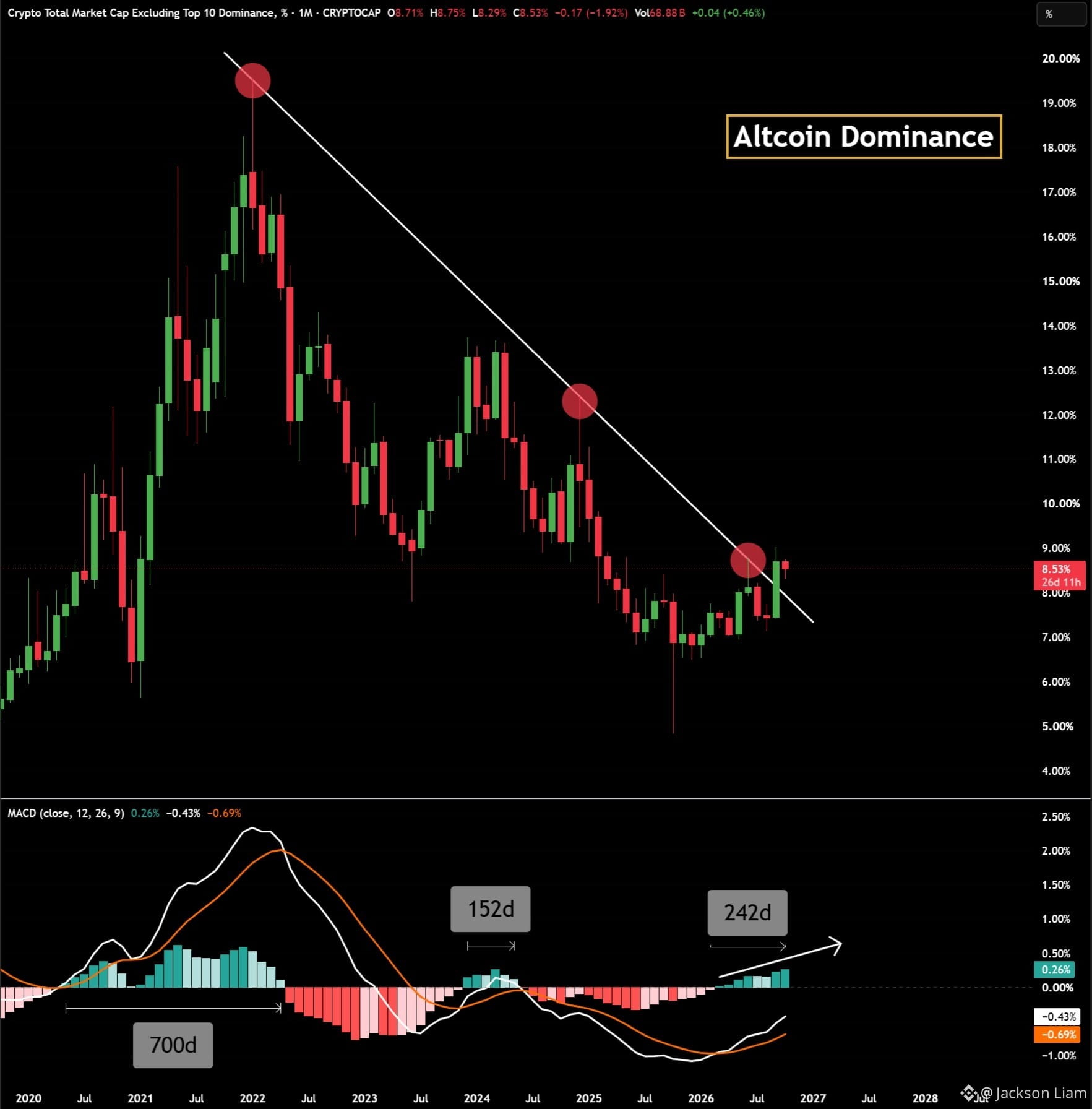
Altcoin dominance has finally broken out of a nearly 5-year downtrend — a trend that has kept altcoins under pressure for years.
And there’s another signal that makes this move even more interesting:
The monthly MACD has now stayed green for 7 straight months.
That is the longest positive streak we’ve seen since the 2020–21 cycle.
Think about what happened back then.
Bitcoin led the market first.
Then capital slowly started moving into Ethereum and larger altcoins.
Then the momentum spread across the wider market.
That’s how a full-blown AltSeason started to take shape.
Could history be repeating?
Nothing is guaranteed, and one breakout alone doesn’t mean every altcoin is about to explode.
But when a multi-year trend finally breaks and long-term momentum starts turning positive, it’s definitely something worth watching.
The big question now is simple:
Are we watching the early stages of the next major AltSeason?
If this structure keeps holding, the next few months could get VERY interesting. 🚀
🔥 BREAKING 🚨ALTSEASON MAY BE WAKING UP. 👀
Something interesting is happening in the altcoin market.
Altcoin dominance has finally broken out of a nearly 5-year downtrend — a trend that has kept altcoins under pressure for years.
And there’s another signal that makes this move even more interesting:
The monthly MACD has now stayed green for 7 straight months.
That is the longest positive streak we’ve seen since the 2020–21 cycle.
Think about what happened back then.
Bitcoin led the market first.
Then capital slowly started moving into Ethereum and larger altcoins.
Then the momentum spread across the wider market.
That’s how a full-blown AltSeason started to take shape.
Could history be repeating?
Nothing is guaranteed, and one breakout alone doesn’t mean every altcoin is about to explode.
But when a multi-year trend finally breaks and long-term momentum starts turning positive, it’s definitely something worth watching.
The big question now is simple:
Are we watching the early stages of the next major AltSeason?
If this structure keeps holding, the next few months could get VERY interesting. 🚀
Something interesting is happening in the altcoin market.
Altcoin dominance has finally broken out of a nearly 5-year downtrend — a trend that has kept altcoins under pressure for years.
And there’s another signal that makes this move even more interesting:
The monthly MACD has now stayed green for 7 straight months.
That is the longest positive streak we’ve seen since the 2020–21 cycle.
Think about what happened back then.
Bitcoin led the market first.
Then capital slowly started moving into Ethereum and larger altcoins.
Then the momentum spread across the wider market.
That’s how a full-blown AltSeason started to take shape.
Could history be repeating?
Nothing is guaranteed, and one breakout alone doesn’t mean every altcoin is about to explode.
But when a multi-year trend finally breaks and long-term momentum starts turning positive, it’s definitely something worth watching.
The big question now is simple:
Are we watching the early stages of the next major AltSeason?
If this structure keeps holding, the next few months could get VERY interesting. 🚀
175
·
--
Bullish
🚨 BITCOIN BULLISH CROSSOVER! 🚨
Something interesting is happening in Bitcoin right now.
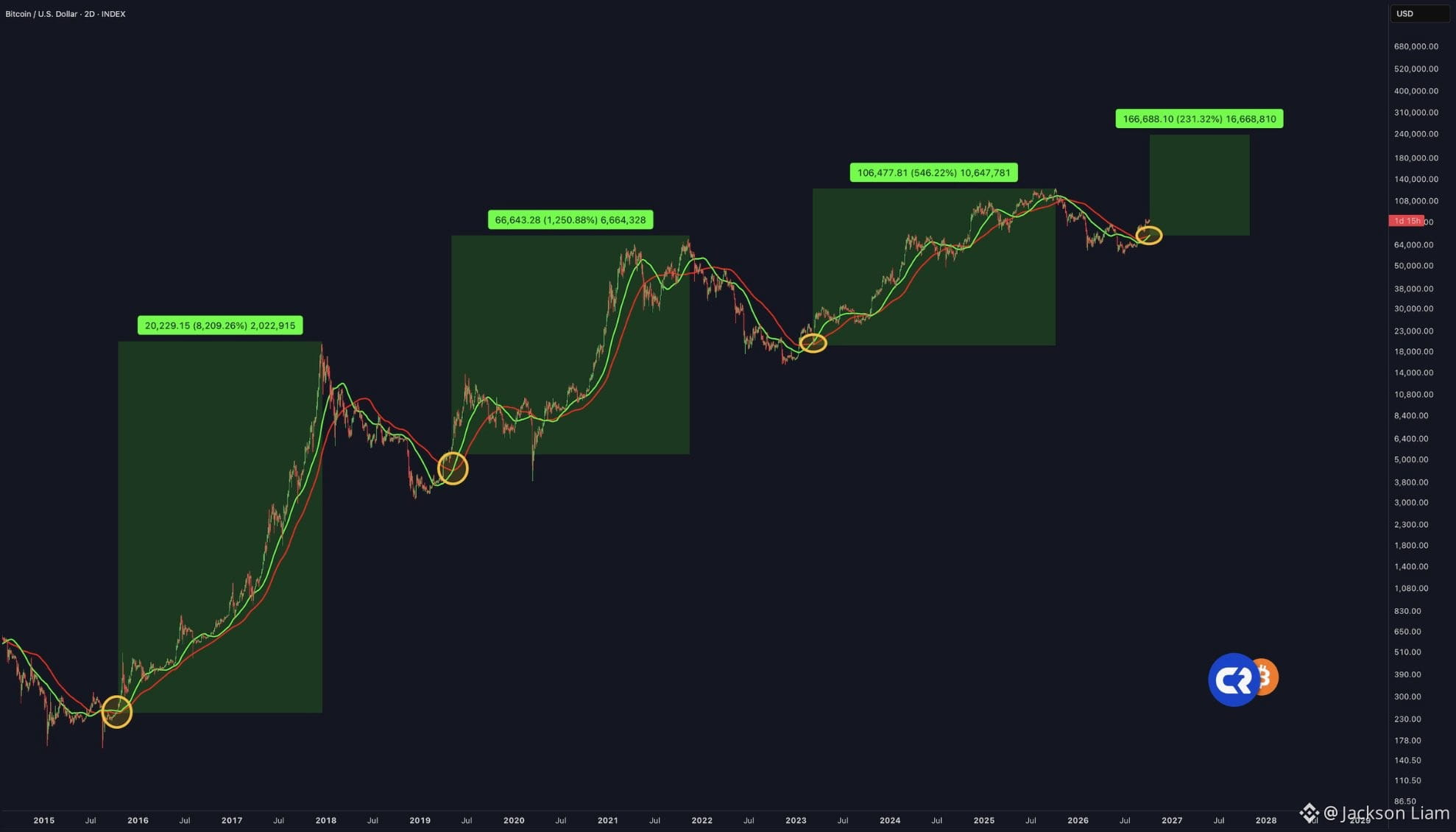
A bullish crossover is flashing on the chart, a signal traders often watch for when momentum starts shifting back toward the buyers.
But here’s the important part: one crossover does not guarantee a straight move up. Bitcoin can still shake out weak hands, retest support, and move sideways before making its next big move.
If this signal holds and buying pressure continues, the setup could become very interesting.
📈 Momentum: Turning bullish
🔥 Buyers: Starting to show strength
👀 Key focus: Volume, support levels, and follow-through
⚡ Market mood: Getting more exciting
Bitcoin has a history of making its biggest moves when momentum, liquidity, and market sentiment line up.
So now the real question is:
Is this the start of Bitcoin’s next major move, or just another fakeout?
Keep your eyes on the chart. The next few moves could tell us a lot.
🚨 BITCOIN BULLISH CROSSOVER! 🚨
Something interesting is happening in Bitcoin right now.
A bullish crossover is flashing on the chart, a signal traders often watch for when momentum starts shifting back toward the buyers.
But here’s the important part: one crossover does not guarantee a straight move up. Bitcoin can still shake out weak hands, retest support, and move sideways before making its next big move.
If this signal holds and buying pressure continues, the setup could become very interesting.
📈 Momentum: Turning bullish
🔥 Buyers: Starting to show strength
👀 Key focus: Volume, support levels, and follow-through
⚡ Market mood: Getting more exciting
Bitcoin has a history of making its biggest moves when momentum, liquidity, and market sentiment line up.
So now the real question is:
Is this the start of Bitcoin’s next major move, or just another fakeout?
Keep your eyes on the chart. The next few moves could tell us a lot.
Something interesting is happening in Bitcoin right now.
A bullish crossover is flashing on the chart, a signal traders often watch for when momentum starts shifting back toward the buyers.
But here’s the important part: one crossover does not guarantee a straight move up. Bitcoin can still shake out weak hands, retest support, and move sideways before making its next big move.
If this signal holds and buying pressure continues, the setup could become very interesting.
📈 Momentum: Turning bullish
🔥 Buyers: Starting to show strength
👀 Key focus: Volume, support levels, and follow-through
⚡ Market mood: Getting more exciting
Bitcoin has a history of making its biggest moves when momentum, liquidity, and market sentiment line up.
So now the real question is:
Is this the start of Bitcoin’s next major move, or just another fakeout?
Keep your eyes on the chart. The next few moves could tell us a lot.
224
·
--
Bullish
iExec RLC (RLC) is ripping after a massive breakout, up 130.68% with price holding near 0.86. Momentum is strong, but chasing the spike is risky.
BUY ZONE: $0.76–$0.82
EP: $0.80
TP1: $0.945
TP2: $1.00
TP3: $1.10
SL: $0.70
A clean hold above $0.945 could open the door to the psychological $1 level and beyond.
Momentum is the story. Can RLC turn this breakout into a sustained run?
$RLC
{future}(RLCUSDT)
$ORCA
{future}(ORCAUSDT)
$CAP
{future}(CAPUSDT)
iExec RLC (RLC) is ripping after a massive breakout, up 130.68% with price holding near 0.86. Momentum is strong, but chasing the spike is risky.
BUY ZONE: $0.76–$0.82
EP: $0.80
TP1: $0.945
TP2: $1.00
TP3: $1.10
SL: $0.70
A clean hold above $0.945 could open the door to the psychological $1 level and beyond.
Momentum is the story. Can RLC turn this breakout into a sustained run?
$RLC
$ORCA
$CAP
BUY ZONE: $0.76–$0.82
EP: $0.80
TP1: $0.945
TP2: $1.00
TP3: $1.10
SL: $0.70
A clean hold above $0.945 could open the door to the psychological $1 level and beyond.
Momentum is the story. Can RLC turn this breakout into a sustained run?
$RLC
$ORCA
$CAP
$RLC breaks $1.00
$RLC pushes toward $1.10+
Healthy pullback another rally
Breakout gets rejected
32 min(s) left
2
2.3k
·
--
Bullish
Gitcoin (GTC) — breakout momentum is heating up after a sharp move above the 0.18 area. Price is holding near 0.216, with 0.2206 as the immediate trigger and 0.2488 as the major resistance.
Buy Zone: 0.205–0.212
Ep: 0.208
TP1: 0.2206
TP2: 0.2488
TP3: 0.2570
Sl: 0.1940
Clean setup: reclaim 0.2206 and momentum could accelerate toward the recent high. Below 0.194, the breakout structure starts losing strength.
Let's go $GTC
{spot}(GTCUSDT)
$RLC
{spot}(RLCUSDT)
$FLUID
{future}(FLUIDUSDT)
Gitcoin (GTC) — breakout momentum is heating up after a sharp move above the 0.18 area. Price is holding near 0.216, with 0.2206 as the immediate trigger and 0.2488 as the major resistance.
Buy Zone: 0.205–0.212
Ep: 0.208
TP1: 0.2206
TP2: 0.2488
TP3: 0.2570
Sl: 0.1940
Clean setup: reclaim 0.2206 and momentum could accelerate toward the recent high. Below 0.194, the breakout structure starts losing strength.
Let's go $GTC
$RLC
$FLUID
Buy Zone: 0.205–0.212
Ep: 0.208
TP1: 0.2206
TP2: 0.2488
TP3: 0.2570
Sl: 0.1940
Clean setup: reclaim 0.2206 and momentum could accelerate toward the recent high. Below 0.194, the breakout structure starts losing strength.
Let's go $GTC
$RLC
$FLUID
$0.25+ — breakout continues
28%
$0.30+ — major rally incoming
23%
$0.20–$0.22 — consolidation
3%
Below $0.19 — breakout fails
46%
39 votes • Voting closed
1
3.7k
·
--
Bullish
🔥🚀 The crypto market just added $300 billion in less than a month.
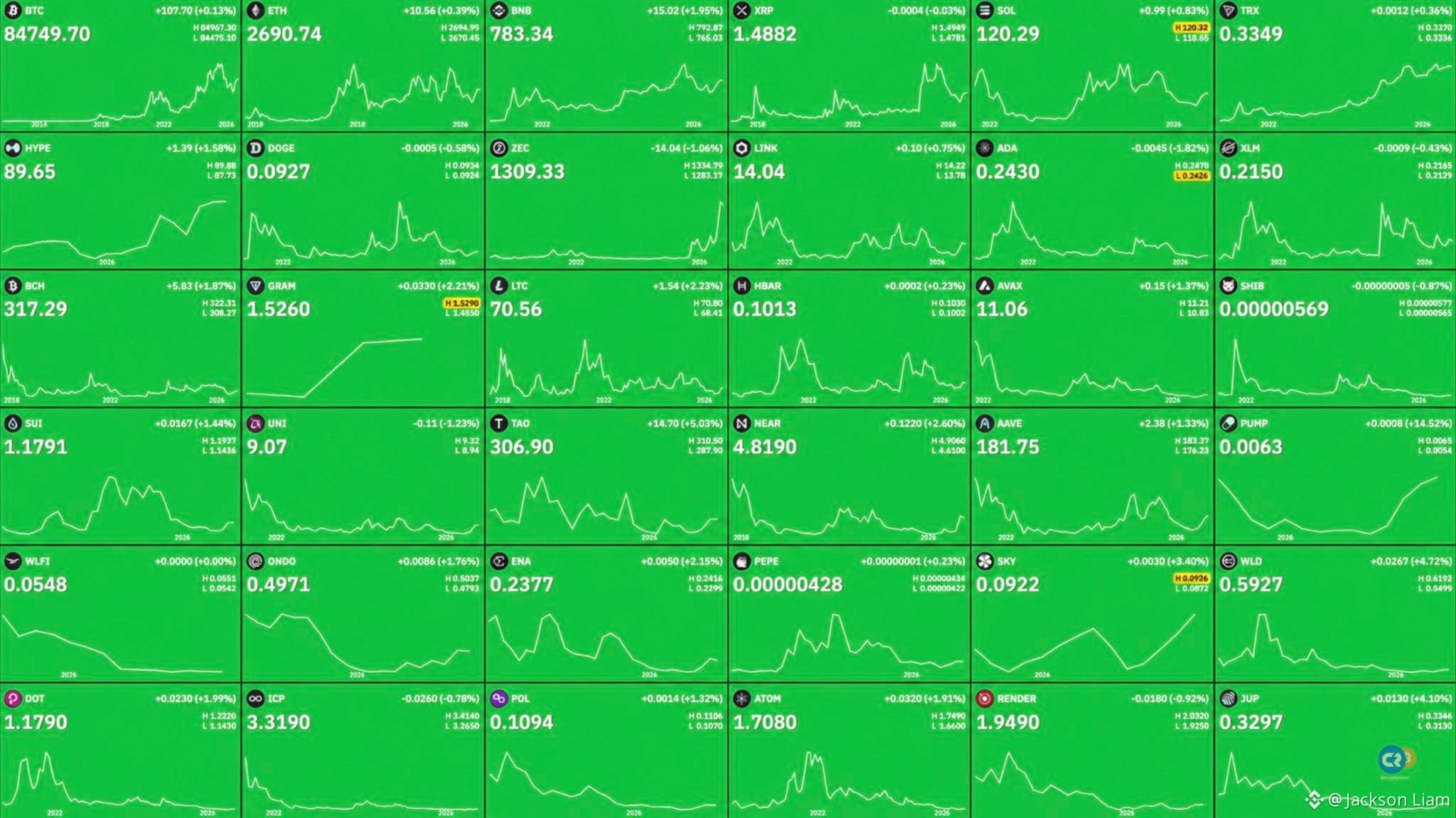
That is not a small move. It shows how quickly money and attention can return to crypto when market sentiment starts shifting.
In just a few weeks, the total crypto market value has jumped by roughly $300,000,000,000.
Think about that for a moment:
💰 $300 billion added
📈 Less than one month
⚡ A major shift in market value
👀 Traders are watching the next move closely
Big market moves like this can change the mood very quickly. Fear can turn into confidence, sidelined money can start flowing back in, and smaller cryptocurrencies can suddenly get much more attention.
But the bigger question is still ahead:
Is this the start of a much larger crypto rally, or is the market getting ahead of itself?
The next few weeks could tell us a lot. 🚀
🔥🚀 The crypto market just added $300 billion in less than a month.
That is not a small move. It shows how quickly money and attention can return to crypto when market sentiment starts shifting.
In just a few weeks, the total crypto market value has jumped by roughly $300,000,000,000.
Think about that for a moment:
💰 $300 billion added
📈 Less than one month
⚡ A major shift in market value
👀 Traders are watching the next move closely
Big market moves like this can change the mood very quickly. Fear can turn into confidence, sidelined money can start flowing back in, and smaller cryptocurrencies can suddenly get much more attention.
But the bigger question is still ahead:
Is this the start of a much larger crypto rally, or is the market getting ahead of itself?
The next few weeks could tell us a lot. 🚀
That is not a small move. It shows how quickly money and attention can return to crypto when market sentiment starts shifting.
In just a few weeks, the total crypto market value has jumped by roughly $300,000,000,000.
Think about that for a moment:
💰 $300 billion added
📈 Less than one month
⚡ A major shift in market value
👀 Traders are watching the next move closely
Big market moves like this can change the mood very quickly. Fear can turn into confidence, sidelined money can start flowing back in, and smaller cryptocurrencies can suddenly get much more attention.
But the bigger question is still ahead:
Is this the start of a much larger crypto rally, or is the market getting ahead of itself?
The next few weeks could tell us a lot. 🚀
1
762
·
--
AINUSDT
+104.47% in 24H. AIN is showing explosive momentum after breaking out from the 0.02–0.03 range.
BUY ZONE: 0.0460–0.0490
EP: 0.0480–0.0490
TP1: 0.0516
TP2: 0.0578
TP3: 0.0597
SL: 0.0430
Momentum is strong, but volatility is extreme. Wait for a clean hold of the buy zone rather than chasing the spike.
Let’s go $AIN
{future}(AINUSDT)
$STRK
{future}(STRKUSDT)
$SPORTFUN
{future}(SPORTFUNUSDT)
AINUSDT
+104.47% in 24H. AIN is showing explosive momentum after breaking out from the 0.02–0.03 range.
BUY ZONE: 0.0460–0.0490
EP: 0.0480–0.0490
TP1: 0.0516
TP2: 0.0578
TP3: 0.0597
SL: 0.0430
Momentum is strong, but volatility is extreme. Wait for a clean hold of the buy zone rather than chasing the spike.
Let’s go $AIN
$STRK
$SPORTFUN
+104.47% in 24H. AIN is showing explosive momentum after breaking out from the 0.02–0.03 range.
BUY ZONE: 0.0460–0.0490
EP: 0.0480–0.0490
TP1: 0.0516
TP2: 0.0578
TP3: 0.0597
SL: 0.0430
Momentum is strong, but volatility is extreme. Wait for a clean hold of the buy zone rather than chasing the spike.
Let’s go $AIN
$STRK
$SPORTFUN
A) Breaks 0.058
50%
B) Pulls back to 0.046–0.049
25%
C) Explodes above 0.060
13%
D) Reverses hard
12%
8 votes • Voting closed
1
1
887
·
--
Bullish
🚨 BREAKING: TRUMP’S $5,000 DIVIDEND COULD SEND A MASSIVE SHOCKWAVE THROUGH MARKETS 🇺🇸
President Trump says every adult U.S. citizen could receive a $5,000 “Trump Dividend” if Republicans win both the House and Senate in the midterms.
That’s roughly 240–245 MILLION adults.
💰 Total potential cost: ~$1.2 TRILLION
Trump says the money could come from the strength of the U.S. economy and tariff revenue, but the plan would still require congressional approval.
And here’s where markets get interesting…
A $1.2T cash injection could mean more spending, more liquidity and potentially more money flowing into risk assets.
Crypto traders are already watching closely.
If even a small portion of that money finds its way into stocks, Bitcoin and crypto…
🔥 WE COULD SEE A SERIOUS LIQUIDITY SHOCK.
The big question now:
Will this actually become policy — and where will the money come from?
🚨 BREAKING: TRUMP’S $5,000 DIVIDEND COULD SEND A MASSIVE SHOCKWAVE THROUGH MARKETS 🇺🇸
President Trump says every adult U.S. citizen could receive a $5,000 “Trump Dividend” if Republicans win both the House and Senate in the midterms.
That’s roughly 240–245 MILLION adults.
💰 Total potential cost: ~$1.2 TRILLION
Trump says the money could come from the strength of the U.S. economy and tariff revenue, but the plan would still require congressional approval.
And here’s where markets get interesting…
A $1.2T cash injection could mean more spending, more liquidity and potentially more money flowing into risk assets.
Crypto traders are already watching closely.
If even a small portion of that money finds its way into stocks, Bitcoin and crypto…
🔥 WE COULD SEE A SERIOUS LIQUIDITY SHOCK.
The big question now:
Will this actually become policy — and where will the money come from?
President Trump says every adult U.S. citizen could receive a $5,000 “Trump Dividend” if Republicans win both the House and Senate in the midterms.
That’s roughly 240–245 MILLION adults.
💰 Total potential cost: ~$1.2 TRILLION
Trump says the money could come from the strength of the U.S. economy and tariff revenue, but the plan would still require congressional approval.
And here’s where markets get interesting…
A $1.2T cash injection could mean more spending, more liquidity and potentially more money flowing into risk assets.
Crypto traders are already watching closely.
If even a small portion of that money finds its way into stocks, Bitcoin and crypto…
🔥 WE COULD SEE A SERIOUS LIQUIDITY SHOCK.
The big question now:
Will this actually become policy — and where will the money come from?
3
1
1k
·
--
Bearish
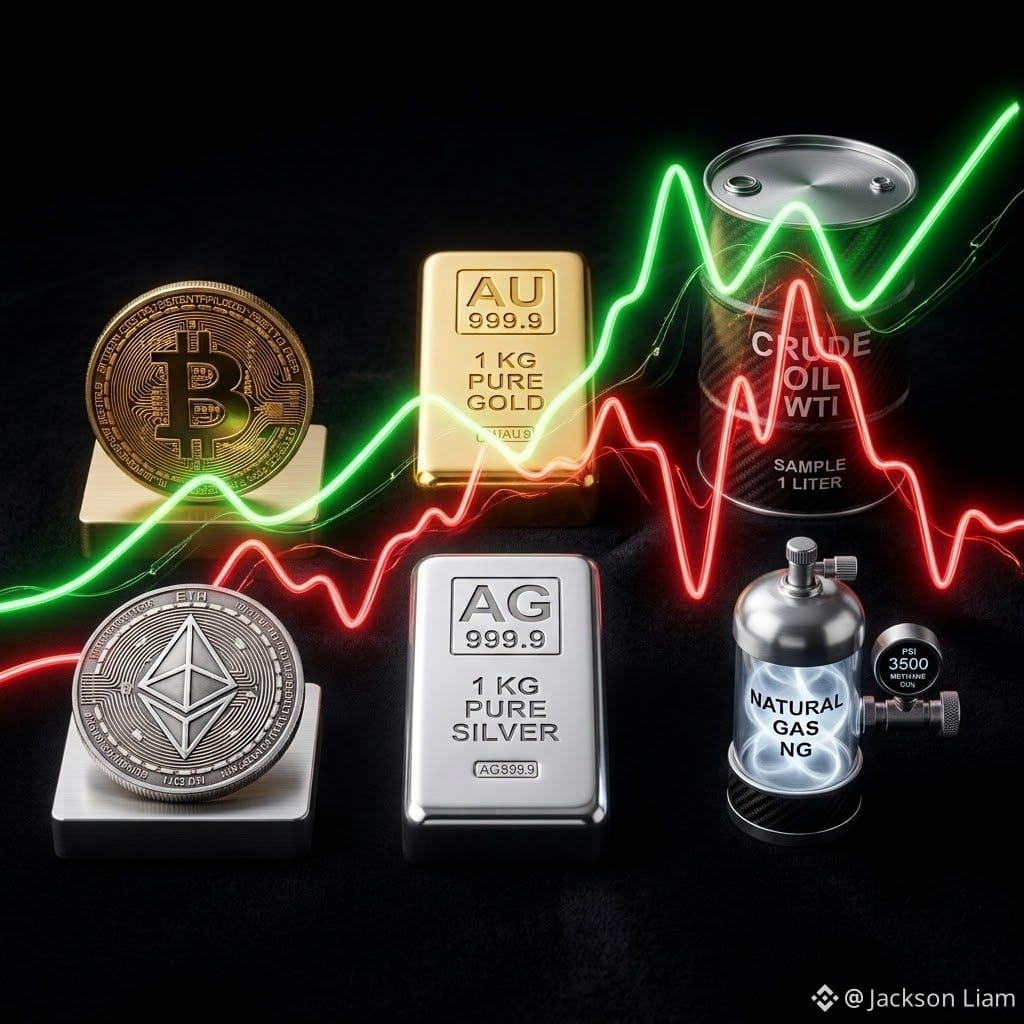
🚨 SEC JUST CLEARED 3X DAILY LEVERAGED PRODUCTS
Big move for traders.
The SEC has cleared 3x daily leveraged products tied to Bitcoin, Ether, Gold, Silver, Crude Oil and Natural Gas.
Volatility Shares gets the win, with Cboe cleared to list the products.
One important detail: the shares are NOT live yet.
This could give traders a much more aggressive way to gain exposure to major crypto, commodities and energy markets — with 3x daily leverage.
But 3x leverage cuts both ways. Bigger upside also means losses can stack up much faster, especially during volatile markets.
The approval is here.
Now the market waits for the actual launch. 🚀
$XAU
{future}(XAUUSDT)
$XAG
{future}(XAGUSDT)
$BTC
{future}(BTCUSDT)
🚨 SEC JUST CLEARED 3X DAILY LEVERAGED PRODUCTS
Big move for traders.
The SEC has cleared 3x daily leveraged products tied to Bitcoin, Ether, Gold, Silver, Crude Oil and Natural Gas.
Volatility Shares gets the win, with Cboe cleared to list the products.
One important detail: the shares are NOT live yet.
This could give traders a much more aggressive way to gain exposure to major crypto, commodities and energy markets — with 3x daily leverage.
But 3x leverage cuts both ways. Bigger upside also means losses can stack up much faster, especially during volatile markets.
The approval is here.
Now the market waits for the actual launch. 🚀
$XAU
$XAG
$BTC
Big move for traders.
The SEC has cleared 3x daily leveraged products tied to Bitcoin, Ether, Gold, Silver, Crude Oil and Natural Gas.
Volatility Shares gets the win, with Cboe cleared to list the products.
One important detail: the shares are NOT live yet.
This could give traders a much more aggressive way to gain exposure to major crypto, commodities and energy markets — with 3x daily leverage.
But 3x leverage cuts both ways. Bigger upside also means losses can stack up much faster, especially during volatile markets.
The approval is here.
Now the market waits for the actual launch. 🚀
$XAU
$XAG
$BTC

1
1
2
632
·
--
Bullish
SAND
Strong breakout with momentum still intact. After the sharp move, I’d avoid chasing the candle and look for a controlled pullback into support.
Buy Zone: 0.0745–0.0765
TP1: 0.0815
TP2: 0.0860
TP3: 0.0920
SL: 0.0705
EP: 0.0745–0.0765
TP: 0.0815 / 0.0860 / 0.0920
SL: 0.0705
Breakout is strong, but volatility is extreme. Let the retest confirm before entry.
Let's go $SAND
{future}(SANDUSDT)
$MAGMA
{future}(MAGMAUSDT)
$VELVET
{future}(VELVETUSDT)
SAND
Strong breakout with momentum still intact. After the sharp move, I’d avoid chasing the candle and look for a controlled pullback into support.
Buy Zone: 0.0745–0.0765
TP1: 0.0815
TP2: 0.0860
TP3: 0.0920
SL: 0.0705
EP: 0.0745–0.0765
TP: 0.0815 / 0.0860 / 0.0920
SL: 0.0705
Breakout is strong, but volatility is extreme. Let the retest confirm before entry.
Let's go $SAND
$MAGMA
$VELVET
Strong breakout with momentum still intact. After the sharp move, I’d avoid chasing the candle and look for a controlled pullback into support.
Buy Zone: 0.0745–0.0765
TP1: 0.0815
TP2: 0.0860
TP3: 0.0920
SL: 0.0705
EP: 0.0745–0.0765
TP: 0.0815 / 0.0860 / 0.0920
SL: 0.0705
Breakout is strong, but volatility is extreme. Let the retest confirm before entry.
Let's go $SAND
$MAGMA
$VELVET
Bullish — $0.09+ next
49%
Neutral — Needs a retest
10%
Bearish — Pullback coming
41%
76 votes • Voting closed
1
3.5k
·
--
Bullish
🇺🇸🚨 JUST IN: Trump is expected to name former SEC Chair Jay Clayton as the White House’s new AI czar, according to CNN.
Clayton currently serves as Director of National Intelligence and previously led the SEC during Trump’s first term.
The move comes as the White House prepares to launch its new “AI Force” and increase its focus on America’s race to stay ahead in artificial intelligence.
Trump has said he wants someone who can help guide AI policy while making sure the U.S. does not slow down the industry.
Clayton has described AI as both a major opportunity and a potential threat, saying the U.S. needs to “get its arms around it.”
The White House has not officially confirmed the appointment yet.
If confirmed, Clayton could soon have a major role in shaping how the U.S. approaches AI, regulation, national security and the competition with China.
🇺🇸🚨 JUST IN: Trump is expected to name former SEC Chair Jay Clayton as the White House’s new AI czar, according to CNN.
Clayton currently serves as Director of National Intelligence and previously led the SEC during Trump’s first term.
The move comes as the White House prepares to launch its new “AI Force” and increase its focus on America’s race to stay ahead in artificial intelligence.
Trump has said he wants someone who can help guide AI policy while making sure the U.S. does not slow down the industry.
Clayton has described AI as both a major opportunity and a potential threat, saying the U.S. needs to “get its arms around it.”
The White House has not officially confirmed the appointment yet.
If confirmed, Clayton could soon have a major role in shaping how the U.S. approaches AI, regulation, national security and the competition with China.
Clayton currently serves as Director of National Intelligence and previously led the SEC during Trump’s first term.
The move comes as the White House prepares to launch its new “AI Force” and increase its focus on America’s race to stay ahead in artificial intelligence.
Trump has said he wants someone who can help guide AI policy while making sure the U.S. does not slow down the industry.
Clayton has described AI as both a major opportunity and a potential threat, saying the U.S. needs to “get its arms around it.”
The White House has not officially confirmed the appointment yet.
If confirmed, Clayton could soon have a major role in shaping how the U.S. approaches AI, regulation, national security and the competition with China.


3
392
·
--
Bullish
Partly True
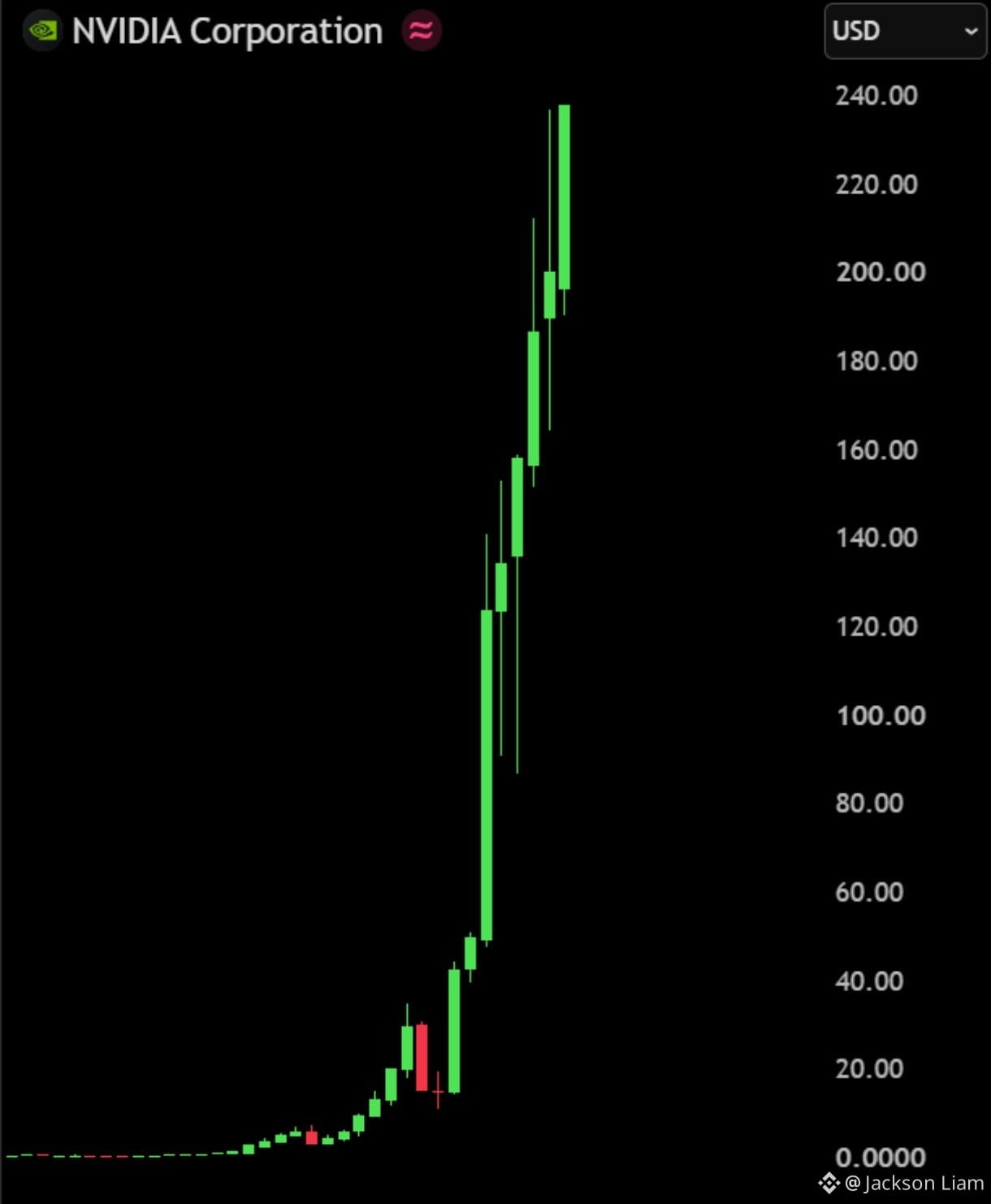
🚨 BREAKING: NVIDIA JUST HIT A NEW ALL-TIME HIGH! 🚀
From its IPO to today, $NVDA has delivered a mind-blowing gain of more than 947,000%.
And here’s the crazy part:
If you had invested $10,000 in NVIDIA back in 2008 and simply held on, that investment would be worth around $16 MILLION today. 🤯
AI, GPUs, data centers and years of relentless growth turned NVIDIA from a chip company into one of the biggest winners in market history.
$10K → $16M.
That’s what long-term compounding can look like when you catch a massive trend early and have the patience to hold.
NVIDIA’s journey is a reminder of just how powerful a great company + a huge technology shift + time can be.
$SAND
{future}(SANDUSDT)
$MAGMA
{future}(MAGMAUSDT)
{future}(NVDAUSDT)
🚨 BREAKING: NVIDIA JUST HIT A NEW ALL-TIME HIGH! 🚀
From its IPO to today, $NVDA has delivered a mind-blowing gain of more than 947,000%.
And here’s the crazy part:
If you had invested $10,000 in NVIDIA back in 2008 and simply held on, that investment would be worth around $16 MILLION today. 🤯
AI, GPUs, data centers and years of relentless growth turned NVIDIA from a chip company into one of the biggest winners in market history.
$10K → $16M.
That’s what long-term compounding can look like when you catch a massive trend early and have the patience to hold.
NVIDIA’s journey is a reminder of just how powerful a great company + a huge technology shift + time can be.
$SAND
$MAGMA
From its IPO to today, $NVDA has delivered a mind-blowing gain of more than 947,000%.
And here’s the crazy part:
If you had invested $10,000 in NVIDIA back in 2008 and simply held on, that investment would be worth around $16 MILLION today. 🤯
AI, GPUs, data centers and years of relentless growth turned NVIDIA from a chip company into one of the biggest winners in market history.
$10K → $16M.
That’s what long-term compounding can look like when you catch a massive trend early and have the patience to hold.
NVIDIA’s journey is a reminder of just how powerful a great company + a huge technology shift + time can be.
$SAND
$MAGMA

1
2
895
·
--
Bullish
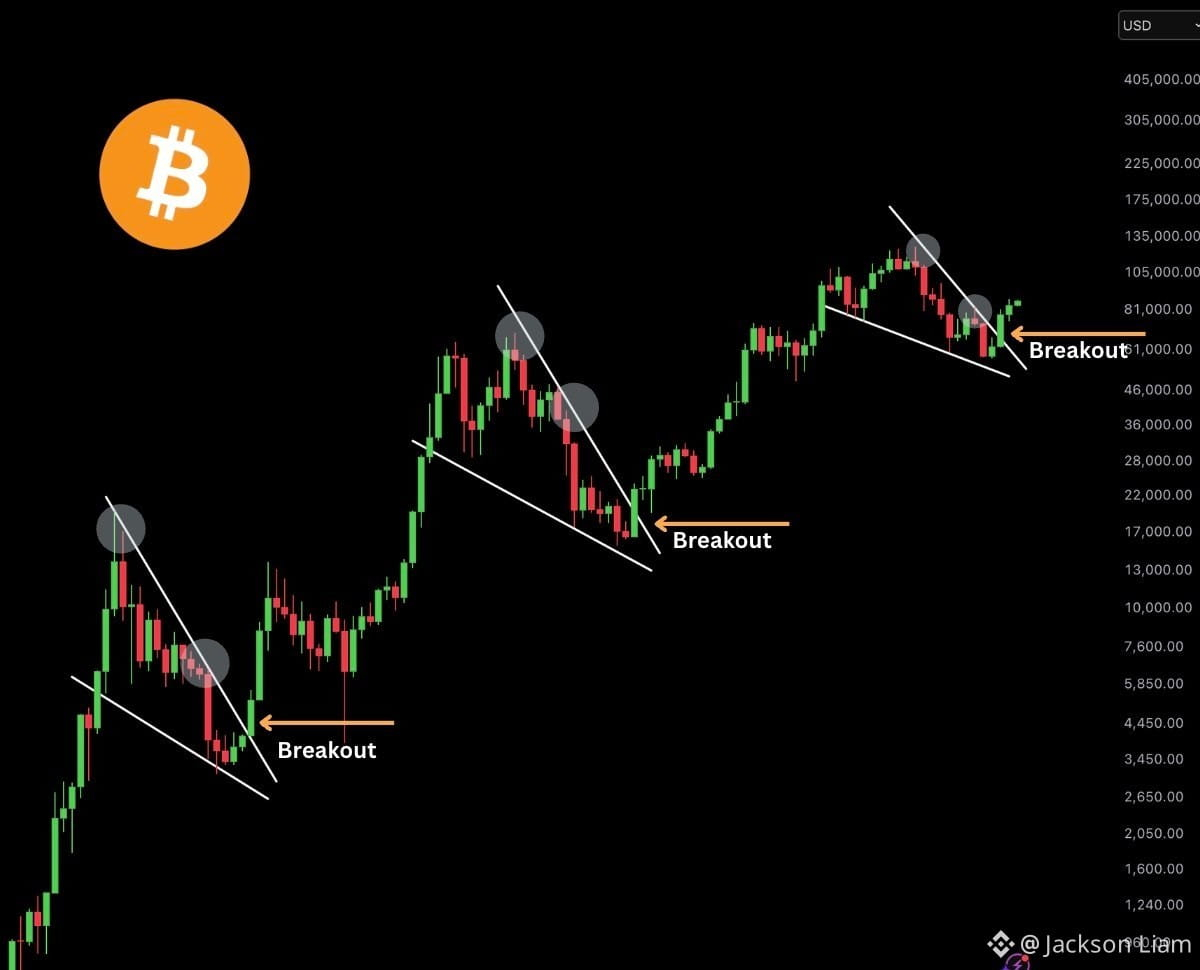
🚨 BITCOIN MAY BE SHOWING THE SAME SIGNAL AGAIN.
Every time Bitcoin has broken above its monthly bear market structure, it has marked a major shift in trend.
And now, we’re seeing that same breakout setup appear again.
This isn’t just another move on the chart.
If history rhymes, breaking above this structure could mean Bitcoin is moving from a long period of weakness into a new bullish phase.
The key now is confirmation.
If $BTC can hold above the breakout zone on the monthly timeframe, the signal becomes much more interesting.
One thing is clear:
The bears are losing control.
And Bitcoin may be preparing for its next major move. 🚀
🚨 BITCOIN MAY BE SHOWING THE SAME SIGNAL AGAIN.
Every time Bitcoin has broken above its monthly bear market structure, it has marked a major shift in trend.
And now, we’re seeing that same breakout setup appear again.
This isn’t just another move on the chart.
If history rhymes, breaking above this structure could mean Bitcoin is moving from a long period of weakness into a new bullish phase.
The key now is confirmation.
If $BTC can hold above the breakout zone on the monthly timeframe, the signal becomes much more interesting.
One thing is clear:
The bears are losing control.
And Bitcoin may be preparing for its next major move. 🚀
Every time Bitcoin has broken above its monthly bear market structure, it has marked a major shift in trend.
And now, we’re seeing that same breakout setup appear again.
This isn’t just another move on the chart.
If history rhymes, breaking above this structure could mean Bitcoin is moving from a long period of weakness into a new bullish phase.
The key now is confirmation.
If $BTC can hold above the breakout zone on the monthly timeframe, the signal becomes much more interesting.
One thing is clear:
The bears are losing control.
And Bitcoin may be preparing for its next major move. 🚀
1
163
·
--
Bullish
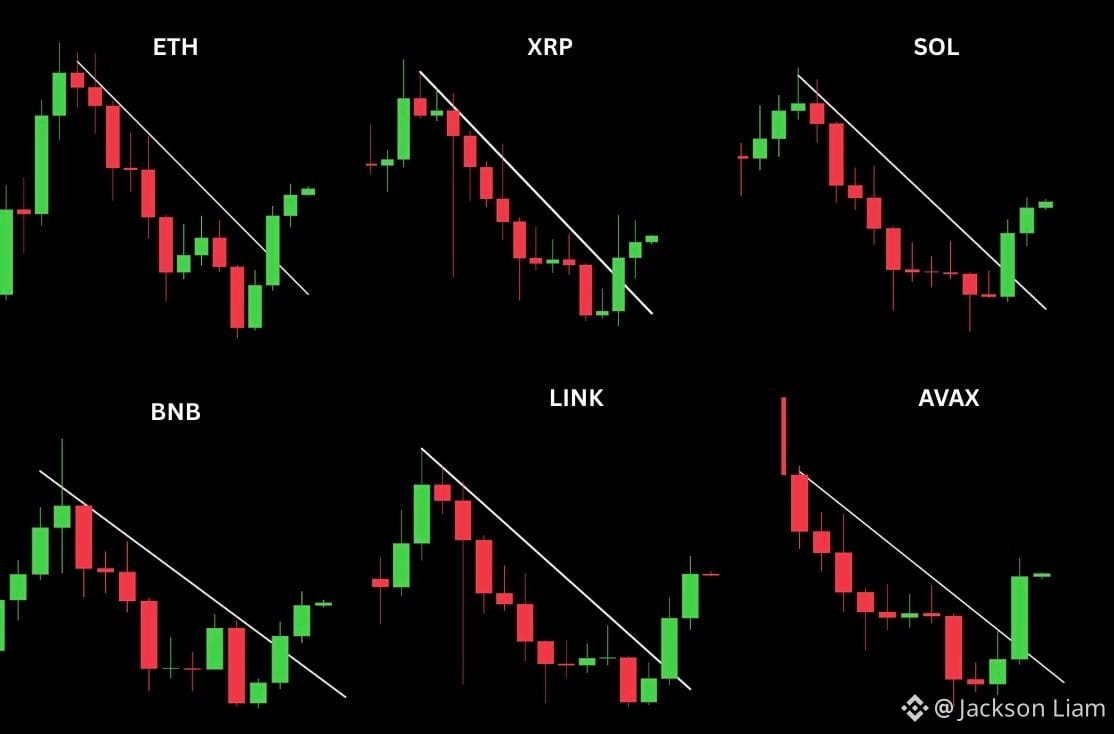
🚀 ALTCOINS JUST CLOSED SEPTEMBER WITH MASSIVE STRENGTH!
September is officially in the books, and altcoins are heading into October with serious momentum.
Now comes Uptober. 👀
If this strength continues, October could bring bigger moves, fresh breakouts, and plenty of opportunities across the altcoin market.
The setup is simple: momentum is here, market confidence is rising, and traders are watching closely for the next leg up.
September gave us the signal.
Now let’s see what October delivers. 🔥
Bigger moves. Bigger opportunities. Bigger Uptober. 🚀
🚀 ALTCOINS JUST CLOSED SEPTEMBER WITH MASSIVE STRENGTH!
September is officially in the books, and altcoins are heading into October with serious momentum.
Now comes Uptober. 👀
If this strength continues, October could bring bigger moves, fresh breakouts, and plenty of opportunities across the altcoin market.
The setup is simple: momentum is here, market confidence is rising, and traders are watching closely for the next leg up.
September gave us the signal.
Now let’s see what October delivers. 🔥
Bigger moves. Bigger opportunities. Bigger Uptober. 🚀
September is officially in the books, and altcoins are heading into October with serious momentum.
Now comes Uptober. 👀
If this strength continues, October could bring bigger moves, fresh breakouts, and plenty of opportunities across the altcoin market.
The setup is simple: momentum is here, market confidence is rising, and traders are watching closely for the next leg up.
September gave us the signal.
Now let’s see what October delivers. 🔥
Bigger moves. Bigger opportunities. Bigger Uptober. 🚀
1
1
297
·
--
Bullish
MOVR
Breakout is in full force after reclaiming 2.00 with heavy momentum.
Buy Zone: 2.05–2.20
EP: 2.15
TP1: 2.45
TP2: 2.70
TP3: 3.00
SL: 1.90
Momentum remains bullish above the 2.00 area. A clean break and hold above 2.45 can open the next leg higher.
Let's go $MOVR
{future}(MOVRUSDT)
$US
{future}(USUSDT)
$AGT
{future}(AGTUSDT)
MOVR
Breakout is in full force after reclaiming 2.00 with heavy momentum.
Buy Zone: 2.05–2.20
EP: 2.15
TP1: 2.45
TP2: 2.70
TP3: 3.00
SL: 1.90
Momentum remains bullish above the 2.00 area. A clean break and hold above 2.45 can open the next leg higher.
Let's go $MOVR
$US
$AGT
Breakout is in full force after reclaiming 2.00 with heavy momentum.
Buy Zone: 2.05–2.20
EP: 2.15
TP1: 2.45
TP2: 2.70
TP3: 3.00
SL: 1.90
Momentum remains bullish above the 2.00 area. A clean break and hold above 2.45 can open the next leg higher.
Let's go $MOVR
$US
$AGT
A) $2.50–$2.70
27%
B) $2.70–$3.00
24%
C) $3.00
39%
Pullback before another leg up
10%
119 votes • Voting closed
3
2
3.4k
·
--
Bullish
🚨 JUST IN: BITCOIN HITS $85,000! ₿
BTC has reclaimed the key $85K level as crypto momentum picks up.
🔥 Bitcoin is now trading around the $85K zone
📈 BTC recently pushed above $86K
💰 Q3 gains are above 40%
🏦 Strong ETF inflows have helped fuel the rebound
⚠️ But rising U.S. Treasury yields remain a major risk
The battle around $85K is heating up. 👀
🚨 JUST IN: BITCOIN HITS $85,000! ₿
BTC has reclaimed the key $85K level as crypto momentum picks up.
🔥 Bitcoin is now trading around the $85K zone
📈 BTC recently pushed above $86K
💰 Q3 gains are above 40%
🏦 Strong ETF inflows have helped fuel the rebound
⚠️ But rising U.S. Treasury yields remain a major risk
The battle around $85K is heating up. 👀
BTC has reclaimed the key $85K level as crypto momentum picks up.
🔥 Bitcoin is now trading around the $85K zone
📈 BTC recently pushed above $86K
💰 Q3 gains are above 40%
🏦 Strong ETF inflows have helped fuel the rebound
⚠️ But rising U.S. Treasury yields remain a major risk
The battle around $85K is heating up. 👀

5
2
628
·
--
Bullish
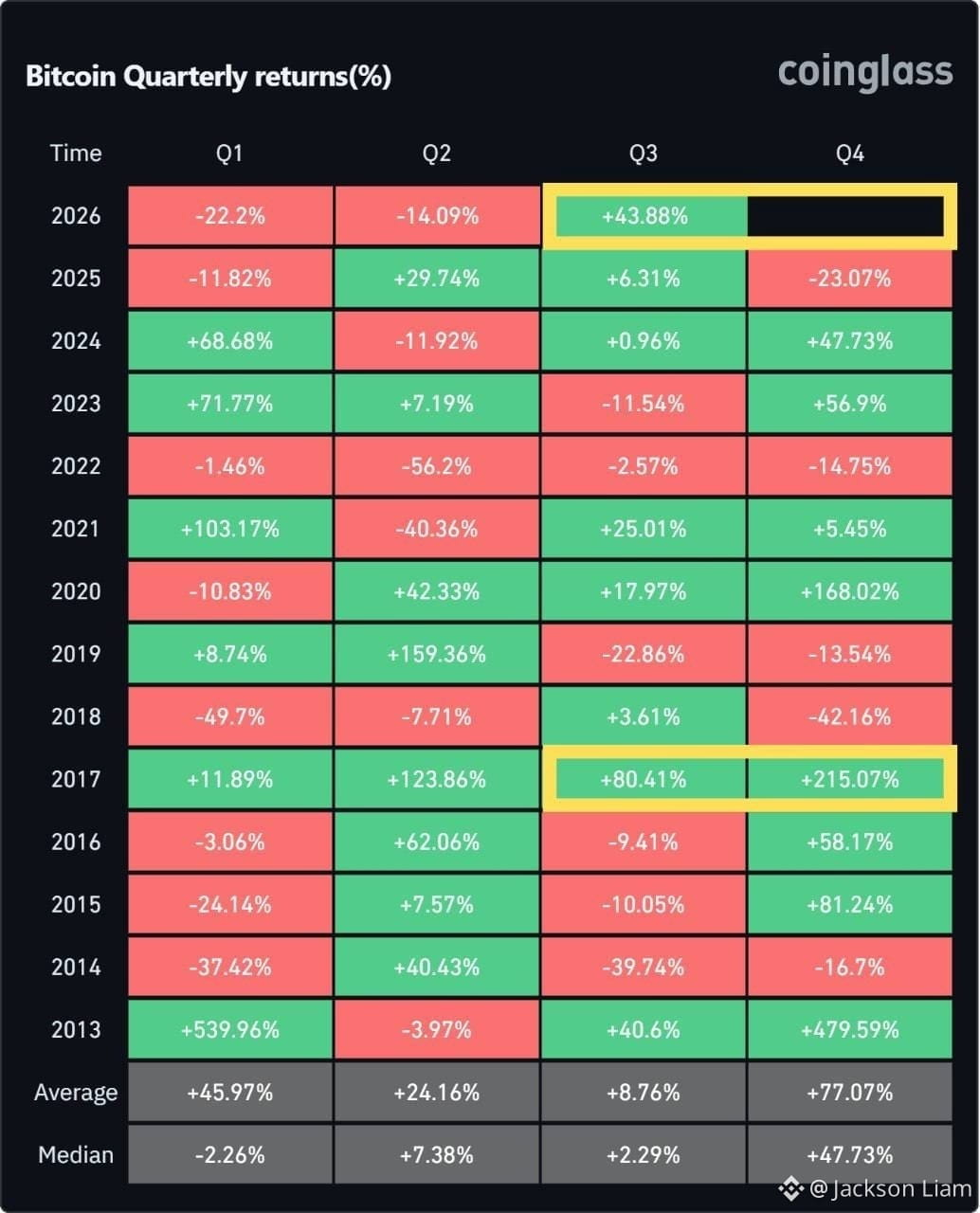
🚨 $BTC JUST PRINTED ITS 2ND-STRONGEST Q3 EVER.
Bitcoin is up roughly 43% in Q3 — only 2017 was stronger.
And here’s where it gets interesting:
🔥 Q4 is historically Bitcoin’s strongest quarter
🔥 2017’s Q4 saw BTC rally over 200%
🔥 Q4 has historically delivered a ~77% average return
The same seasonal setup is showing up again.
After a massive Q3, all eyes are now on Q4. 👀
Is history about to repeat?
🚨 $BTC JUST PRINTED ITS 2ND-STRONGEST Q3 EVER.
Bitcoin is up roughly 43% in Q3 — only 2017 was stronger.
And here’s where it gets interesting:
🔥 Q4 is historically Bitcoin’s strongest quarter
🔥 2017’s Q4 saw BTC rally over 200%
🔥 Q4 has historically delivered a ~77% average return
The same seasonal setup is showing up again.
After a massive Q3, all eyes are now on Q4. 👀
Is history about to repeat?
Bitcoin is up roughly 43% in Q3 — only 2017 was stronger.
And here’s where it gets interesting:
🔥 Q4 is historically Bitcoin’s strongest quarter
🔥 2017’s Q4 saw BTC rally over 200%
🔥 Q4 has historically delivered a ~77% average return
The same seasonal setup is showing up again.
After a massive Q3, all eyes are now on Q4. 👀
Is history about to repeat?
3
279
·
--
Bullish
🚨 JUST IN: TOM LEE SAYS CRYPTO HAS ENTERED A “BULL MARKET.”
Tom Lee is turning bullish on crypto.
He says the market has officially entered a new bull phase, signaling that the recent weakness could be giving way to a much bigger move higher.
His view comes as investors watch Bitcoin and the broader crypto market for signs of renewed momentum.
If this cycle is really getting started, the big question now is how far the next move can go. 👀
Crypto bulls are back in the game.
🚨 JUST IN: TOM LEE SAYS CRYPTO HAS ENTERED A “BULL MARKET.”
Tom Lee is turning bullish on crypto.
He says the market has officially entered a new bull phase, signaling that the recent weakness could be giving way to a much bigger move higher.
His view comes as investors watch Bitcoin and the broader crypto market for signs of renewed momentum.
If this cycle is really getting started, the big question now is how far the next move can go. 👀
Crypto bulls are back in the game.
Tom Lee is turning bullish on crypto.
He says the market has officially entered a new bull phase, signaling that the recent weakness could be giving way to a much bigger move higher.
His view comes as investors watch Bitcoin and the broader crypto market for signs of renewed momentum.
If this cycle is really getting started, the big question now is how far the next move can go. 👀
Crypto bulls are back in the game.

7
1
1
565
·
--
Bullish
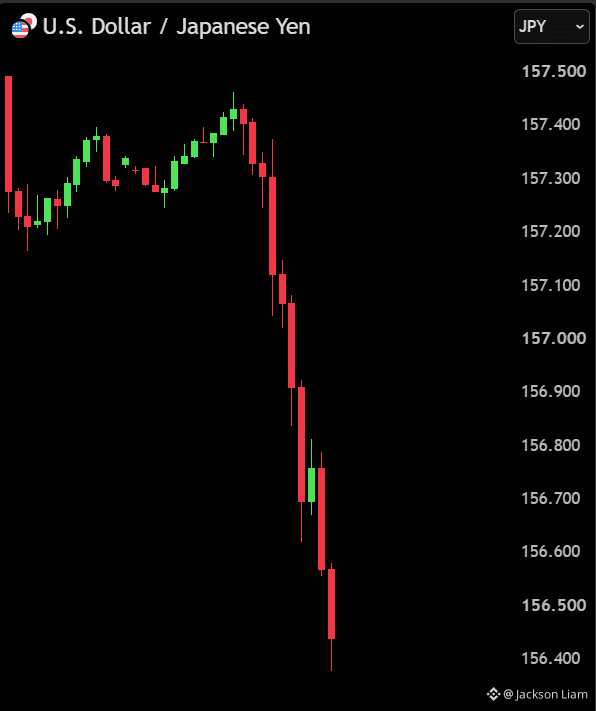
🚨 BREAKING: THE YEN IS SURGING — USD/JPY DROPS BELOW 156.5
The Japanese yen is making a sharp comeback as several forces hit the dollar at the same time.
🇯🇵 1. Weak factory output
Softer Japanese factory data has reduced expectations for another immediate BOJ rate hike, but the yen is still finding support elsewhere.
⚠️ 2. Intervention fears are back
Japan’s Finance Minister has called the yen’s weakness a problem and confirmed closer FX cooperation with the US. Officials have also warned markets to take their message seriously — keeping intervention fears alive.
📊 3. Month-end + quarter-end flows
Portfolio rebalancing is creating extra demand for the yen as investors adjust positions into the end of the quarter.
🇺🇸 4. US data is the next big trigger
Traders are cutting some dollar positions ahead of the ADP jobs report and PCE inflation data. Strong data could revive Fed rate-hike bets, while weaker numbers could put more pressure on the dollar.
The result?
USD/JPY is under pressure, while the yen is suddenly back in focus.
The next move could get very volatile.
🚨 BREAKING: THE YEN IS SURGING — USD/JPY DROPS BELOW 156.5
The Japanese yen is making a sharp comeback as several forces hit the dollar at the same time.
🇯🇵 1. Weak factory output
Softer Japanese factory data has reduced expectations for another immediate BOJ rate hike, but the yen is still finding support elsewhere.
⚠️ 2. Intervention fears are back
Japan’s Finance Minister has called the yen’s weakness a problem and confirmed closer FX cooperation with the US. Officials have also warned markets to take their message seriously — keeping intervention fears alive.
📊 3. Month-end + quarter-end flows
Portfolio rebalancing is creating extra demand for the yen as investors adjust positions into the end of the quarter.
🇺🇸 4. US data is the next big trigger
Traders are cutting some dollar positions ahead of the ADP jobs report and PCE inflation data. Strong data could revive Fed rate-hike bets, while weaker numbers could put more pressure on the dollar.
The result?
USD/JPY is under pressure, while the yen is suddenly back in focus.
The next move could get very volatile.
The Japanese yen is making a sharp comeback as several forces hit the dollar at the same time.
🇯🇵 1. Weak factory output
Softer Japanese factory data has reduced expectations for another immediate BOJ rate hike, but the yen is still finding support elsewhere.
⚠️ 2. Intervention fears are back
Japan’s Finance Minister has called the yen’s weakness a problem and confirmed closer FX cooperation with the US. Officials have also warned markets to take their message seriously — keeping intervention fears alive.
📊 3. Month-end + quarter-end flows
Portfolio rebalancing is creating extra demand for the yen as investors adjust positions into the end of the quarter.
🇺🇸 4. US data is the next big trigger
Traders are cutting some dollar positions ahead of the ADP jobs report and PCE inflation data. Strong data could revive Fed rate-hike bets, while weaker numbers could put more pressure on the dollar.
The result?
USD/JPY is under pressure, while the yen is suddenly back in focus.
The next move could get very volatile.
2
451
·
--
Bullish
EARNINGS SEASON IS ABOUT TO TEST THE MARKET 🚨
The market has been pricing in growth, strong demand, and resilient corporate profits.
Now companies have to prove it.
Investors won’t just be looking at whether earnings beat or missed estimates.
They’ll be watching:
💰 Revenue growth
📈 Profit margins
👀 Future guidance
🏦 Consumer demand
⚙️ Business spending
🌍 Global risks
📉 Cost pressures
And here’s where things get interesting:
A company can beat earnings and still fall if expectations were too high.
Another can miss estimates and rally if management delivers stronger guidance.
That’s why this earnings season could create some serious opportunities — and some painful surprises.
One headline can move a stock.
A major earnings wave can move an entire sector.
The numbers are about to tell us whether the market’s optimism is backed by real business growth.
#EarningsSeason
EARNINGS SEASON IS ABOUT TO TEST THE MARKET 🚨
The market has been pricing in growth, strong demand, and resilient corporate profits.
Now companies have to prove it.
Investors won’t just be looking at whether earnings beat or missed estimates.
They’ll be watching:
💰 Revenue growth
📈 Profit margins
👀 Future guidance
🏦 Consumer demand
⚙️ Business spending
🌍 Global risks
📉 Cost pressures
And here’s where things get interesting:
A company can beat earnings and still fall if expectations were too high.
Another can miss estimates and rally if management delivers stronger guidance.
That’s why this earnings season could create some serious opportunities — and some painful surprises.
One headline can move a stock.
A major earnings wave can move an entire sector.
The numbers are about to tell us whether the market’s optimism is backed by real business growth.
#EarningsSeason
The market has been pricing in growth, strong demand, and resilient corporate profits.
Now companies have to prove it.
Investors won’t just be looking at whether earnings beat or missed estimates.
They’ll be watching:
💰 Revenue growth
📈 Profit margins
👀 Future guidance
🏦 Consumer demand
⚙️ Business spending
🌍 Global risks
📉 Cost pressures
And here’s where things get interesting:
A company can beat earnings and still fall if expectations were too high.
Another can miss estimates and rally if management delivers stronger guidance.
That’s why this earnings season could create some serious opportunities — and some painful surprises.
One headline can move a stock.
A major earnings wave can move an entire sector.
The numbers are about to tell us whether the market’s optimism is backed by real business growth.
#EarningsSeason

2
237
Log in to explore more content
Join global crypto users on Binance Square
⚡️ Get latest and useful information about crypto.
💬 Trusted by the world’s largest crypto exchange.
👍 Discover real insights from verified creators.
Email / Phone number
Trending Topics
BinanceLaunchesBinanceIntelligence
641,031 views
3,913 Discussing
#binancelaunchesbinanceintelligence
🚨 BINANCE JUST PUSHED AI DEEPER INTO CRYPTO.
Binance has launched Binance Intelligence — a new AI-powered layer built around market research, trading workflows, and crypto data.
The interesting part?
It’s not just one tool.
🧠 Binance AI → personalized market briefs, alerts and portfolio insights
⚡ Binance AI Pro → turns natural-language ideas into trading workflows
🤖 Agent OS → connects AI agents with market, wallet and on-chain capabilities
That’s a big shift.
Crypto platforms are no longer only giving traders charts and data.
They’re starting to give them AI systems that can interpret that data.
The real question is:
Will AI become as normal for traders as indicators and charts are today? 👀
$BTC $ETH
#Binance #Aİ #crypto #BTC
Doomsday-Trader
·1 Likes
·528 views
BTCFallsBelow$84K
8,244 views
44 Discussing
DubaiVARAIssuesReserveAssetAuditCircular
13 views
20 Discussing