
Sir Ismail
197 Posts

Sir Ismail
Report
Block User
BP-A6DD7B781409
26 Following
89 Followers
112 Liked
Posts
All
Quotes
·
--
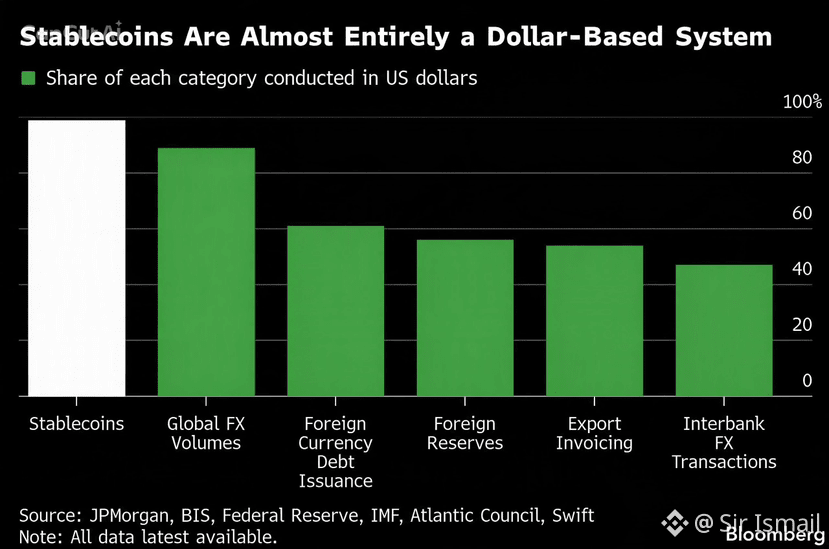
Stablecoins are becoming more global but the money is still overwhelmingly moving in one direction.
The US dollar.
DIA’s October 2026 research highlights a striking difference:
The dollar represents:
57.1% of global foreign-exchange reserves.
45% of global FX turnover.
99.4% of total stablecoin supply.
Think about that shift.
The dollar already plays a major role in traditional finance but its dominance becomes even stronger in the stablecoin market.
USDT alone has a reported supply of $183 billion around 108 times the size of all non-dollar stablecoins combined.
So are stablecoins really moving us towards a multi-currency financial system?
The answer is more complicated.
Issuers, regulations and use cases are becoming more diverse but when it comes to the actual money, dollar dominance remains enormous.
That is one of the biggest findings in DIA’s stablecoin research.
The market is fragmenting but its liquidity is still heavily dollar-focused.
Do you think other currencies can meaningfully challenge the dollar’s position in stablecoins over the next five years?
Read the full research 👇
diadata.org/map/global-sta…
Explore the Global Stablecoin Map:
diadata.org/map/global-sta…
Stablecoins are becoming more global but the money is still overwhelmingly moving in one direction.
The US dollar.
DIA’s October 2026 research highlights a striking difference:
The dollar represents:
57.1% of global foreign-exchange reserves.
45% of global FX turnover.
99.4% of total stablecoin supply.
Think about that shift.
The dollar already plays a major role in traditional finance but its dominance becomes even stronger in the stablecoin market.
USDT alone has a reported supply of $183 billion around 108 times the size of all non-dollar stablecoins combined.
So are stablecoins really moving us towards a multi-currency financial system?
The answer is more complicated.
Issuers, regulations and use cases are becoming more diverse but when it comes to the actual money, dollar dominance remains enormous.
That is one of the biggest findings in DIA’s stablecoin research.
The market is fragmenting but its liquidity is still heavily dollar-focused.
Do you think other currencies can meaningfully challenge the dollar’s position in stablecoins over the next five years?
Read the full research 👇
diadata.org/map/global-sta…
Explore the Global Stablecoin Map:
diadata.org/map/global-sta…
The US dollar.
DIA’s October 2026 research highlights a striking difference:
The dollar represents:
57.1% of global foreign-exchange reserves.
45% of global FX turnover.
99.4% of total stablecoin supply.
Think about that shift.
The dollar already plays a major role in traditional finance but its dominance becomes even stronger in the stablecoin market.
USDT alone has a reported supply of $183 billion around 108 times the size of all non-dollar stablecoins combined.
So are stablecoins really moving us towards a multi-currency financial system?
The answer is more complicated.
Issuers, regulations and use cases are becoming more diverse but when it comes to the actual money, dollar dominance remains enormous.
That is one of the biggest findings in DIA’s stablecoin research.
The market is fragmenting but its liquidity is still heavily dollar-focused.
Do you think other currencies can meaningfully challenge the dollar’s position in stablecoins over the next five years?
Read the full research 👇
diadata.org/map/global-sta…
Explore the Global Stablecoin Map:
diadata.org/map/global-sta…
60
·
--
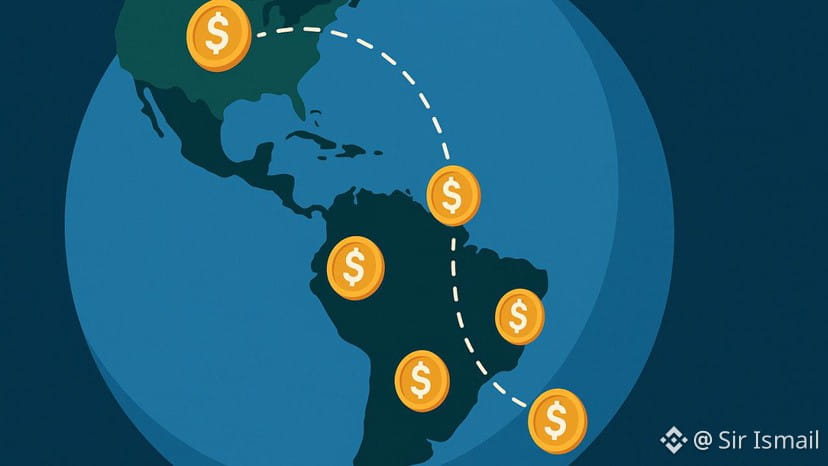
Latin America’s stablecoin story reveals something important.
When people lose confidence in their local currency, they don’t always look for a digital version of that currency.
They look for dollars.
DIA’s October 2026 research gives us a clear example.
Argentina received $93.9 billion in crypto value between July 2024 and June 2025.
Yet its local-currency stablecoin supply was just $19.9 million in October 2026.
Think about that difference.
People are using crypto, but the demand is largely directed towards dollar-linked assets rather than peso-backed stablecoins.
Brazil tells a different story. Its local-currency stablecoin market has grown around PIX, the country’s instant payment system, which makes moving between reais and stablecoins easier.
This shows us that stablecoin adoption is not just about issuing tokens.
It’s about solving real problems: access to dollars, payments and financial connectivity.
The real question is not how many local stablecoins exist, but whether people have a reason to use them.
What do you think will drive stablecoin adoption across Latin America: dollar access, better payment systems or clearer regulation?
Explore DIA’s full research 👇
https://www.diadata.org/map/global-stablecoins/report/
Latin America’s stablecoin story reveals something important.
When people lose confidence in their local currency, they don’t always look for a digital version of that currency.
They look for dollars.
DIA’s October 2026 research gives us a clear example.
Argentina received $93.9 billion in crypto value between July 2024 and June 2025.
Yet its local-currency stablecoin supply was just $19.9 million in October 2026.
Think about that difference.
People are using crypto, but the demand is largely directed towards dollar-linked assets rather than peso-backed stablecoins.
Brazil tells a different story. Its local-currency stablecoin market has grown around PIX, the country’s instant payment system, which makes moving between reais and stablecoins easier.
This shows us that stablecoin adoption is not just about issuing tokens.
It’s about solving real problems: access to dollars, payments and financial connectivity.
The real question is not how many local stablecoins exist, but whether people have a reason to use them.
What do you think will drive stablecoin adoption across Latin America: dollar access, better payment systems or clearer regulation?
Explore DIA’s full research 👇
https://www.diadata.org/map/global-stablecoins/report/
When people lose confidence in their local currency, they don’t always look for a digital version of that currency.
They look for dollars.
DIA’s October 2026 research gives us a clear example.
Argentina received $93.9 billion in crypto value between July 2024 and June 2025.
Yet its local-currency stablecoin supply was just $19.9 million in October 2026.
Think about that difference.
People are using crypto, but the demand is largely directed towards dollar-linked assets rather than peso-backed stablecoins.
Brazil tells a different story. Its local-currency stablecoin market has grown around PIX, the country’s instant payment system, which makes moving between reais and stablecoins easier.
This shows us that stablecoin adoption is not just about issuing tokens.
It’s about solving real problems: access to dollars, payments and financial connectivity.
The real question is not how many local stablecoins exist, but whether people have a reason to use them.
What do you think will drive stablecoin adoption across Latin America: dollar access, better payment systems or clearer regulation?
Explore DIA’s full research 👇
https://www.diadata.org/map/global-stablecoins/report/
2
·
--
DIA had a strong week focused on stablecoin transparency, expanding its Global Stablecoin Map across 6+ issuers while highlighting the significant gap between euro FX turnover (14.5%) and its share of stablecoin supply (around 0.25%).
The updates reinforce an important point: stablecoin research must go beyond supply figures to examine chain distribution, peg stability, holders, and actual DeFi usage.
The next milestone is seeing whether risk teams, DeFi curators, and lending protocols turn this data into better decisions.
Explore the Global Stablecoin Map and follow how DIA is turning transparent data into practical DeFi infrastructure. $DIA
DIA had a strong week focused on stablecoin transparency, expanding its Global Stablecoin Map across 6+ issuers while highlighting the significant gap between euro FX turnover (14.5%) and its share of stablecoin supply (around 0.25%).
The updates reinforce an important point: stablecoin research must go beyond supply figures to examine chain distribution, peg stability, holders, and actual DeFi usage.
The next milestone is seeing whether risk teams, DeFi curators, and lending protocols turn this data into better decisions.
Explore the Global Stablecoin Map and follow how DIA is turning transparent data into practical DeFi infrastructure. $DIA
The updates reinforce an important point: stablecoin research must go beyond supply figures to examine chain distribution, peg stability, holders, and actual DeFi usage.
The next milestone is seeing whether risk teams, DeFi curators, and lending protocols turn this data into better decisions.
Explore the Global Stablecoin Map and follow how DIA is turning transparent data into practical DeFi infrastructure. $DIA
142
·
--
Latin America’s stablecoin story reveals something interesting.
When local currencies lose value, people don’t necessarily look for a digital version of their own currency.
They look for dollars.
DIA’s October 2026 research highlights this clearly:
Argentina received $93.9 billion in crypto value over the 12 months to June 2025.
Yet its local-currency stablecoin supply was only $19.9 million as of October 2026.
That’s a huge difference.
The report finds a similar pattern across the region: demand is largely focused on dollar-linked stablecoins, which people use to preserve dollar exposure and access global markets.
Brazil offers an interesting contrast. Its local-currency stablecoin market has grown around PIX, the country’s instant payment system.
The bigger lesson?
Stablecoin adoption is not simply about putting local currencies onchain. It’s about understanding what people actually need: access to dollars, easier payments and useful financial infrastructure.
Latin America shows why looking beyond market cap matters.
What do you think will drive the next stage of stablecoin adoption in the region: dollar access, local payment systems or clearer regulation?
Explore the full research 👇
https://www.diadata.org/map/global-stablecoins/report/
@DIAdata_org
Latin America’s stablecoin story reveals something interesting.
When local currencies lose value, people don’t necessarily look for a digital version of their own currency.
They look for dollars.
DIA’s October 2026 research highlights this clearly:
Argentina received $93.9 billion in crypto value over the 12 months to June 2025.
Yet its local-currency stablecoin supply was only $19.9 million as of October 2026.
That’s a huge difference.
The report finds a similar pattern across the region: demand is largely focused on dollar-linked stablecoins, which people use to preserve dollar exposure and access global markets.
Brazil offers an interesting contrast. Its local-currency stablecoin market has grown around PIX, the country’s instant payment system.
The bigger lesson?
Stablecoin adoption is not simply about putting local currencies onchain. It’s about understanding what people actually need: access to dollars, easier payments and useful financial infrastructure.
Latin America shows why looking beyond market cap matters.
What do you think will drive the next stage of stablecoin adoption in the region: dollar access, local payment systems or clearer regulation?
Explore the full research 👇
https://www.diadata.org/map/global-stablecoins/report/
@DIAdata_org
When local currencies lose value, people don’t necessarily look for a digital version of their own currency.
They look for dollars.
DIA’s October 2026 research highlights this clearly:
Argentina received $93.9 billion in crypto value over the 12 months to June 2025.
Yet its local-currency stablecoin supply was only $19.9 million as of October 2026.
That’s a huge difference.
The report finds a similar pattern across the region: demand is largely focused on dollar-linked stablecoins, which people use to preserve dollar exposure and access global markets.
Brazil offers an interesting contrast. Its local-currency stablecoin market has grown around PIX, the country’s instant payment system.
The bigger lesson?
Stablecoin adoption is not simply about putting local currencies onchain. It’s about understanding what people actually need: access to dollars, easier payments and useful financial infrastructure.
Latin America shows why looking beyond market cap matters.
What do you think will drive the next stage of stablecoin adoption in the region: dollar access, local payment systems or clearer regulation?
Explore the full research 👇
https://www.diadata.org/map/global-stablecoins/report/
@DIAdata_org
174
·
--
Did you know that most stablecoin dashboards stop at market cap.
DIA’s Global Stablecoin Map tracks the actual picture:
→ On-chain supply reads
→ Peg history
→ Chain coverage (native vs bridged)
→ Which lending markets actually use the coin
→ Regional breakdowns
146 active stablecoins across 25 currencies right now.
Dollar still ~$285B and Non-USD sitting around $1.7B — mostly in specific local markets.
This is really useful if you care about more than just USDT/USDC size imo.
https://www.diadata.org/map/global-stablecoins/
Did you know that most stablecoin dashboards stop at market cap.
DIA’s Global Stablecoin Map tracks the actual picture:
→ On-chain supply reads
→ Peg history
→ Chain coverage (native vs bridged)
→ Which lending markets actually use the coin
→ Regional breakdowns
146 active stablecoins across 25 currencies right now.
Dollar still ~$285B and Non-USD sitting around $1.7B — mostly in specific local markets.
This is really useful if you care about more than just USDT/USDC size imo.
https://www.diadata.org/map/global-stablecoins/
DIA’s Global Stablecoin Map tracks the actual picture:
→ On-chain supply reads
→ Peg history
→ Chain coverage (native vs bridged)
→ Which lending markets actually use the coin
→ Regional breakdowns
146 active stablecoins across 25 currencies right now.
Dollar still ~$285B and Non-USD sitting around $1.7B — mostly in specific local markets.
This is really useful if you care about more than just USDT/USDC size imo.
https://www.diadata.org/map/global-stablecoins/
121
·
--
Asia’s stablecoin story has an interesting twist.
You might expect countries like South Korea and Japan to drive demand for their own local-currency stablecoins but the reality is more complicated.
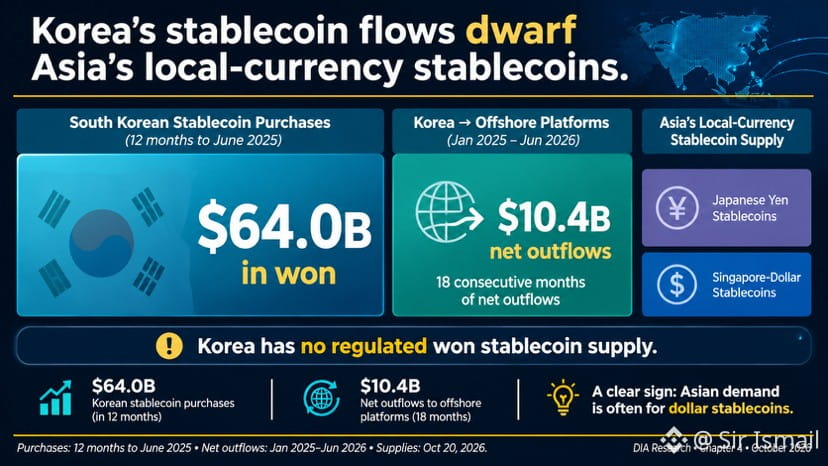
According to DIA’s October 2026 research, South Korean investors moved $10.4 billion in net stablecoin outflows to offshore platforms between January 2025 and June 2026.
Why?
Access to global crypto markets and dollar-denominated products is a major part of the story.
Meanwhile, South Korea still has no regulated won stablecoin supply.
This tells us something important:
People don’t always use the stablecoin linked to their local currency. They use the one that gives them access to the markets and services they need.
Stablecoin adoption is not just about issuing tokens. It’s also about demand, access and real-world use.
Explore the Asia findings in DIA’s research 👇
diadata.org/map/global-sta…
Asia’s stablecoin story has an interesting twist.
You might expect countries like South Korea and Japan to drive demand for their own local-currency stablecoins but the reality is more complicated.
According to DIA’s October 2026 research, South Korean investors moved $10.4 billion in net stablecoin outflows to offshore platforms between January 2025 and June 2026.
Why?
Access to global crypto markets and dollar-denominated products is a major part of the story.
Meanwhile, South Korea still has no regulated won stablecoin supply.
This tells us something important:
People don’t always use the stablecoin linked to their local currency. They use the one that gives them access to the markets and services they need.
Stablecoin adoption is not just about issuing tokens. It’s also about demand, access and real-world use.
Explore the Asia findings in DIA’s research 👇
diadata.org/map/global-sta…
You might expect countries like South Korea and Japan to drive demand for their own local-currency stablecoins but the reality is more complicated.
According to DIA’s October 2026 research, South Korean investors moved $10.4 billion in net stablecoin outflows to offshore platforms between January 2025 and June 2026.
Why?
Access to global crypto markets and dollar-denominated products is a major part of the story.
Meanwhile, South Korea still has no regulated won stablecoin supply.
This tells us something important:
People don’t always use the stablecoin linked to their local currency. They use the one that gives them access to the markets and services they need.
Stablecoin adoption is not just about issuing tokens. It’s also about demand, access and real-world use.
Explore the Asia findings in DIA’s research 👇
diadata.org/map/global-sta…
78
·
--
Europe introduced a major regulatory framework for stablecoins.
But here’s the interesting part: regulation and adoption don’t always move at the same speed.
According to DIA’s October 2026 research:
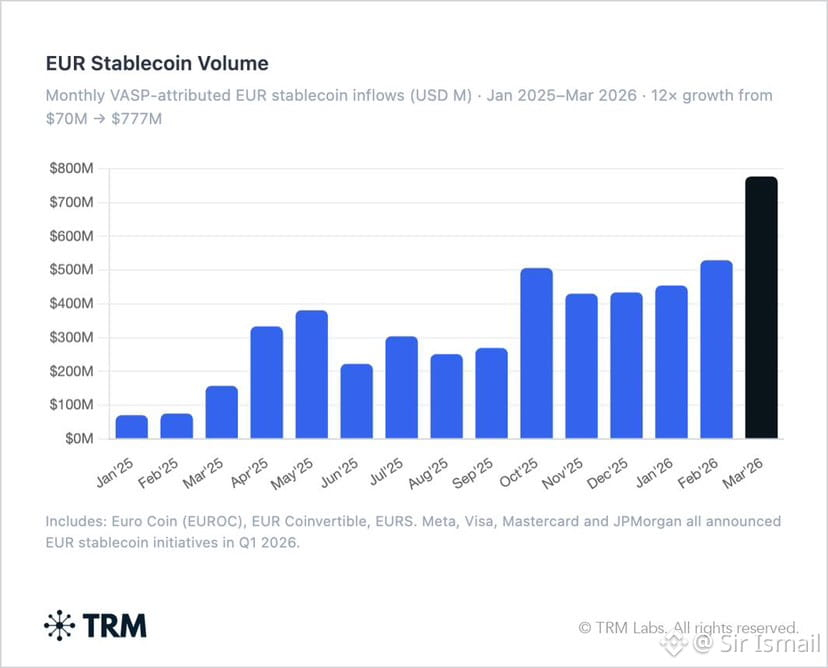
Euro stablecoin supply reached $790 million, growing 54% in one year and licensed issuers now account for 98% of euro stablecoin supply compared with just 27% in December 2023.
But there’s another side to the story.
During the USDT delisting period on European licensed platforms, global USDC supply grew by $20.5 billion while euro stablecoins added just $61 million.
The lesson?
A clearer regulatory framework can reshape who issues stablecoins without necessarily making local-currency stablecoins the preferred choice.
This is one of the findings worth exploring in DIA’s Global Stablecoin Map and research.
Read the report 👇
diadata.org/map/global-sta…
Europe introduced a major regulatory framework for stablecoins.
But here’s the interesting part: regulation and adoption don’t always move at the same speed.
According to DIA’s October 2026 research:
Euro stablecoin supply reached $790 million, growing 54% in one year and licensed issuers now account for 98% of euro stablecoin supply compared with just 27% in December 2023.
But there’s another side to the story.
During the USDT delisting period on European licensed platforms, global USDC supply grew by $20.5 billion while euro stablecoins added just $61 million.
The lesson?
A clearer regulatory framework can reshape who issues stablecoins without necessarily making local-currency stablecoins the preferred choice.
This is one of the findings worth exploring in DIA’s Global Stablecoin Map and research.
Read the report 👇
diadata.org/map/global-sta…
But here’s the interesting part: regulation and adoption don’t always move at the same speed.
According to DIA’s October 2026 research:
Euro stablecoin supply reached $790 million, growing 54% in one year and licensed issuers now account for 98% of euro stablecoin supply compared with just 27% in December 2023.
But there’s another side to the story.
During the USDT delisting period on European licensed platforms, global USDC supply grew by $20.5 billion while euro stablecoins added just $61 million.
The lesson?
A clearer regulatory framework can reshape who issues stablecoins without necessarily making local-currency stablecoins the preferred choice.
This is one of the findings worth exploring in DIA’s Global Stablecoin Map and research.
Read the report 👇
diadata.org/map/global-sta…
146
·
--
Two stablecoins can share the same peg and still be completely different products.
They can have different issuers, backing structures, regulatory positions, supported chains and real-world use cases.
That’s why knowing a stablecoin’s ticker and market cap isn’t enough.
You also need to understand the entity behind it.
DIA’s Global Stablecoin Map tracks 102 issuers across the market.
For anyone researching stablecoins, that’s a useful starting point.
Look beyond the ticker.
https://www.diadata.org/map/global-stablecoins/
Two stablecoins can share the same peg and still be completely different products.
They can have different issuers, backing structures, regulatory positions, supported chains and real-world use cases.
That’s why knowing a stablecoin’s ticker and market cap isn’t enough.
You also need to understand the entity behind it.
DIA’s Global Stablecoin Map tracks 102 issuers across the market.
For anyone researching stablecoins, that’s a useful starting point.
Look beyond the ticker.
https://www.diadata.org/map/global-stablecoins/
They can have different issuers, backing structures, regulatory positions, supported chains and real-world use cases.
That’s why knowing a stablecoin’s ticker and market cap isn’t enough.
You also need to understand the entity behind it.
DIA’s Global Stablecoin Map tracks 102 issuers across the market.
For anyone researching stablecoins, that’s a useful starting point.
Look beyond the ticker.
https://www.diadata.org/map/global-stablecoins/
107
·
--
Did you know ?
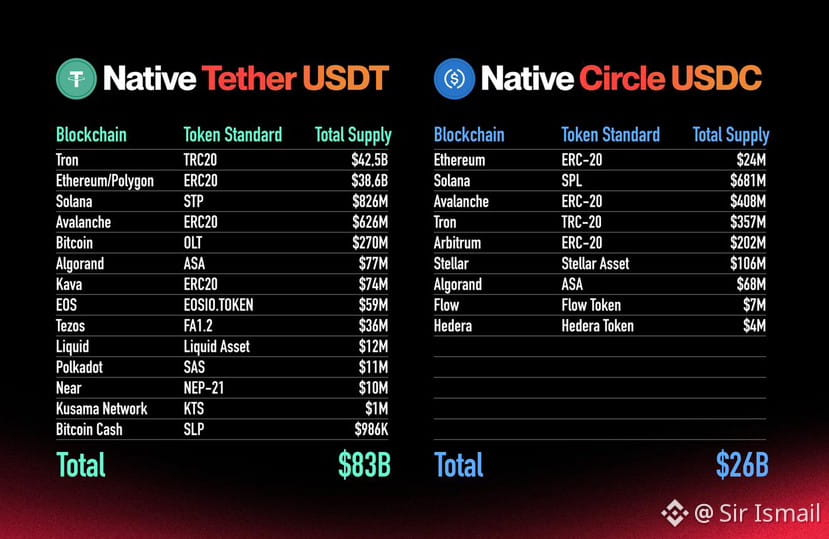
USDT and USDC may share the same dollar peg, but their market structures reveal very different adoption patterns. USDT leads in supply, while USDC shows broader lending activity across multiple chains, highlighting why stablecoin analysis must go beyond market cap to examine distribution, peg behaviour, and actual DeFi usage.
DIA’s Global Stablecoin Map makes these differences easier to understand.
Explore the map and look beyond the headline numbers to see how stablecoin liquidity is moving across the ecosystem
https://www.diadata.org/map/global-stablecoins/
Did you know ?
USDT and USDC may share the same dollar peg, but their market structures reveal very different adoption patterns. USDT leads in supply, while USDC shows broader lending activity across multiple chains, highlighting why stablecoin analysis must go beyond market cap to examine distribution, peg behaviour, and actual DeFi usage.
DIA’s Global Stablecoin Map makes these differences easier to understand.
Explore the map and look beyond the headline numbers to see how stablecoin liquidity is moving across the ecosystem
https://www.diadata.org/map/global-stablecoins/
USDT and USDC may share the same dollar peg, but their market structures reveal very different adoption patterns. USDT leads in supply, while USDC shows broader lending activity across multiple chains, highlighting why stablecoin analysis must go beyond market cap to examine distribution, peg behaviour, and actual DeFi usage.
DIA’s Global Stablecoin Map makes these differences easier to understand.
Explore the map and look beyond the headline numbers to see how stablecoin liquidity is moving across the ecosystem
https://www.diadata.org/map/global-stablecoins/
124
·
--
Here’s something worth thinking about this Sunday.
Stablecoins are expanding into more currencies and markets but there’s one important detail:
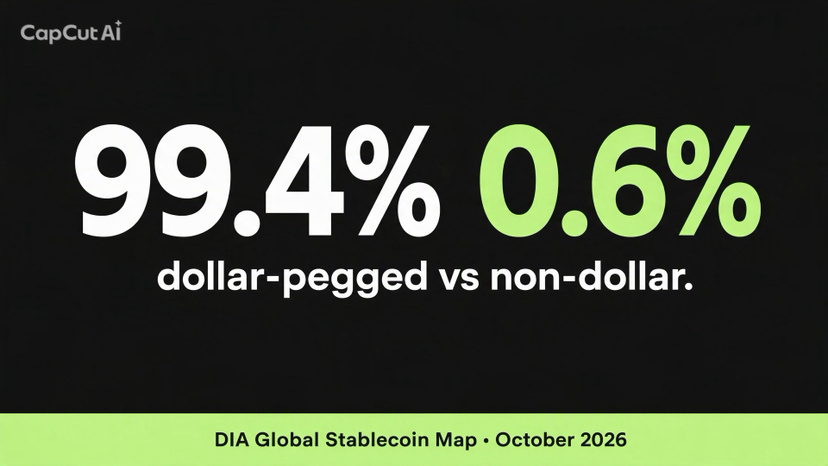
The stablecoin market is still 99.4% dollar-dominated.
According to DIA’s October 2026 research, dollar-pegged stablecoins account for 99.4% of the market.
The remaining 0.6% is shared across non-dollar currencies.
So yes, stablecoins are becoming more global but the money is still heavily concentrated around one currency.
This raises an interesting question:
What will it take for non-dollar stablecoins to gain a bigger place in the market?
DIA’s Global Stablecoin Map gives us a way to follow this shift.
Explore the research 👇
diadata.org/map/global-sta…
Here’s something worth thinking about this Sunday.
Stablecoins are expanding into more currencies and markets but there’s one important detail:
The stablecoin market is still 99.4% dollar-dominated.
According to DIA’s October 2026 research, dollar-pegged stablecoins account for 99.4% of the market.
The remaining 0.6% is shared across non-dollar currencies.
So yes, stablecoins are becoming more global but the money is still heavily concentrated around one currency.
This raises an interesting question:
What will it take for non-dollar stablecoins to gain a bigger place in the market?
DIA’s Global Stablecoin Map gives us a way to follow this shift.
Explore the research 👇
diadata.org/map/global-sta…
Stablecoins are expanding into more currencies and markets but there’s one important detail:
The stablecoin market is still 99.4% dollar-dominated.
According to DIA’s October 2026 research, dollar-pegged stablecoins account for 99.4% of the market.
The remaining 0.6% is shared across non-dollar currencies.
So yes, stablecoins are becoming more global but the money is still heavily concentrated around one currency.
This raises an interesting question:
What will it take for non-dollar stablecoins to gain a bigger place in the market?
DIA’s Global Stablecoin Map gives us a way to follow this shift.
Explore the research 👇
diadata.org/map/global-sta…
141
·
--
The dollar still dominates the stablecoin market.
DIA’s Global Stablecoin Map currently tracks:
• 147 active stablecoins
• 25 peg currencies
• 102 issuers
• $290.7B in combined supply
Yet non-dollar stablecoins account for only 0.6% of that supply.
That’s an interesting gap.
There are stablecoins representing different currencies but their market adoption is far from equal.
Understanding why requires looking beyond market cap.
That’s where DIA’s research becomes interesting.
Explore the data:
diadata.org/map/global-sta…
Source: DIA Global Stablecoin Map, November 5, 2026.
The dollar still dominates the stablecoin market.
DIA’s Global Stablecoin Map currently tracks:
• 147 active stablecoins
• 25 peg currencies
• 102 issuers
• $290.7B in combined supply
Yet non-dollar stablecoins account for only 0.6% of that supply.
That’s an interesting gap.
There are stablecoins representing different currencies but their market adoption is far from equal.
Understanding why requires looking beyond market cap.
That’s where DIA’s research becomes interesting.
Explore the data:
diadata.org/map/global-sta…
Source: DIA Global Stablecoin Map, November 5, 2026.
DIA’s Global Stablecoin Map currently tracks:
• 147 active stablecoins
• 25 peg currencies
• 102 issuers
• $290.7B in combined supply
Yet non-dollar stablecoins account for only 0.6% of that supply.
That’s an interesting gap.
There are stablecoins representing different currencies but their market adoption is far from equal.
Understanding why requires looking beyond market cap.
That’s where DIA’s research becomes interesting.
Explore the data:
diadata.org/map/global-sta…
Source: DIA Global Stablecoin Map, November 5, 2026.
144
·
--
Good afternoon legends
Everyone talks about USDT and USDC when discussing stablecoins.
But are we paying enough attention to what’s happening outside the two biggest names?
Europe has its own stablecoin story.
Asia is showing strong demand for dollar stablecoins.
Latin America has a different set of adoption drivers.
The stablecoin market is not one single story. It’s developing differently across regions, currencies and regulations.
That’s what makes DIA’s Global Stablecoin Map worth exploring.
It brings these different markets together and helps us see how the stablecoin landscape is changing.
The bigger question is:
Are we watching the entire stablecoin market, or just the part we already know?
Explore the map 👇
https://www.diadata.org/map/global-stablecoins/
Good afternoon legends
Everyone talks about USDT and USDC when discussing stablecoins.
But are we paying enough attention to what’s happening outside the two biggest names?
Europe has its own stablecoin story.
Asia is showing strong demand for dollar stablecoins.
Latin America has a different set of adoption drivers.
The stablecoin market is not one single story. It’s developing differently across regions, currencies and regulations.
That’s what makes DIA’s Global Stablecoin Map worth exploring.
It brings these different markets together and helps us see how the stablecoin landscape is changing.
The bigger question is:
Are we watching the entire stablecoin market, or just the part we already know?
Explore the map 👇
https://www.diadata.org/map/global-stablecoins/
Everyone talks about USDT and USDC when discussing stablecoins.
But are we paying enough attention to what’s happening outside the two biggest names?
Europe has its own stablecoin story.
Asia is showing strong demand for dollar stablecoins.
Latin America has a different set of adoption drivers.
The stablecoin market is not one single story. It’s developing differently across regions, currencies and regulations.
That’s what makes DIA’s Global Stablecoin Map worth exploring.
It brings these different markets together and helps us see how the stablecoin landscape is changing.
The bigger question is:
Are we watching the entire stablecoin market, or just the part we already know?
Explore the map 👇
https://www.diadata.org/map/global-stablecoins/
113
·
--
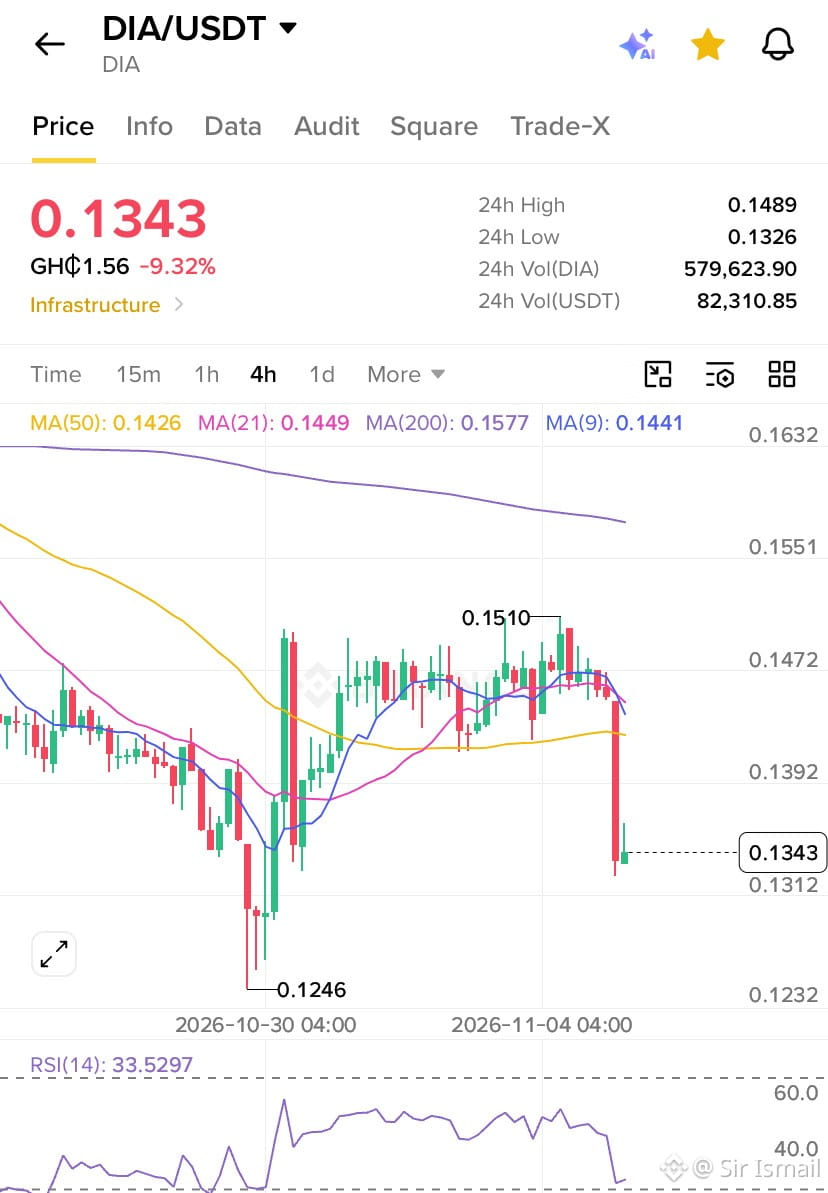
$DIA just took a serious hit on the 4H chart.
The bullish structure we were watching has weakened significantly.
Price is now around $0.1343, down 9.32%, and has fallen below all major moving averages.
Here’s what I’m watching:
Bearish pressure: Price is below the 9 EMA ($0.1441), 21 MA ($0.1449), 50 MA ($0.1426) and 200 MA ($0.1577).
RSI: At 33.5, momentum is weak and approaching oversold territory.
Key support: $0.131–$0.132. If this fails, the previous swing low around $0.1246 becomes important.
Recovery scenario: DIA needs to reclaim $0.139–$0.143 first, then $0.145, before a stronger recovery can develop.
For now, sellers have control. I want to see buyers defend support and reclaim lost levels before getting bullish again.
Is this a liquidity sweep before recovery, or are we heading for another leg down?
Watching the 4H close.
$DIA just took a serious hit on the 4H chart.
The bullish structure we were watching has weakened significantly.
Price is now around $0.1343, down 9.32%, and has fallen below all major moving averages.
Here’s what I’m watching:
Bearish pressure: Price is below the 9 EMA ($0.1441), 21 MA ($0.1449), 50 MA ($0.1426) and 200 MA ($0.1577).
RSI: At 33.5, momentum is weak and approaching oversold territory.
Key support: $0.131–$0.132. If this fails, the previous swing low around $0.1246 becomes important.
Recovery scenario: DIA needs to reclaim $0.139–$0.143 first, then $0.145, before a stronger recovery can develop.
For now, sellers have control. I want to see buyers defend support and reclaim lost levels before getting bullish again.
Is this a liquidity sweep before recovery, or are we heading for another leg down?
Watching the 4H close.
The bullish structure we were watching has weakened significantly.
Price is now around $0.1343, down 9.32%, and has fallen below all major moving averages.
Here’s what I’m watching:
Bearish pressure: Price is below the 9 EMA ($0.1441), 21 MA ($0.1449), 50 MA ($0.1426) and 200 MA ($0.1577).
RSI: At 33.5, momentum is weak and approaching oversold territory.
Key support: $0.131–$0.132. If this fails, the previous swing low around $0.1246 becomes important.
Recovery scenario: DIA needs to reclaim $0.139–$0.143 first, then $0.145, before a stronger recovery can develop.
For now, sellers have control. I want to see buyers defend support and reclaim lost levels before getting bullish again.
Is this a liquidity sweep before recovery, or are we heading for another leg down?
Watching the 4H close.
99
·
--
Most people judge a stablecoin by one number: its market cap but that number doesn’t tell the whole story.
Who issues it?
Is it maintaining its peg?
Which blockchains does it operate on?
How is it being used in DeFi?
And how is its supply changing over time?
These are important questions when trying to understand the stablecoin market.
That’s why DIA’s new Global Stablecoin Map caught my attention.
It brings stablecoins and issuers into one place with data on supply, peg history, market trends, DeFi activity and regulation.
This is not just another market cap tracker guys! it’s a clearer picture of how stablecoins are evolving.
Explore the map and the research behind it 👇
diadata.org/map/global-sta…
Most people judge a stablecoin by one number: its market cap but that number doesn’t tell the whole story.
Who issues it?
Is it maintaining its peg?
Which blockchains does it operate on?
How is it being used in DeFi?
And how is its supply changing over time?
These are important questions when trying to understand the stablecoin market.
That’s why DIA’s new Global Stablecoin Map caught my attention.
It brings stablecoins and issuers into one place with data on supply, peg history, market trends, DeFi activity and regulation.
This is not just another market cap tracker guys! it’s a clearer picture of how stablecoins are evolving.
Explore the map and the research behind it 👇
diadata.org/map/global-sta…
Who issues it?
Is it maintaining its peg?
Which blockchains does it operate on?
How is it being used in DeFi?
And how is its supply changing over time?
These are important questions when trying to understand the stablecoin market.
That’s why DIA’s new Global Stablecoin Map caught my attention.
It brings stablecoins and issuers into one place with data on supply, peg history, market trends, DeFi activity and regulation.
This is not just another market cap tracker guys! it’s a clearer picture of how stablecoins are evolving.
Explore the map and the research behind it 👇
diadata.org/map/global-sta…

99
·
--
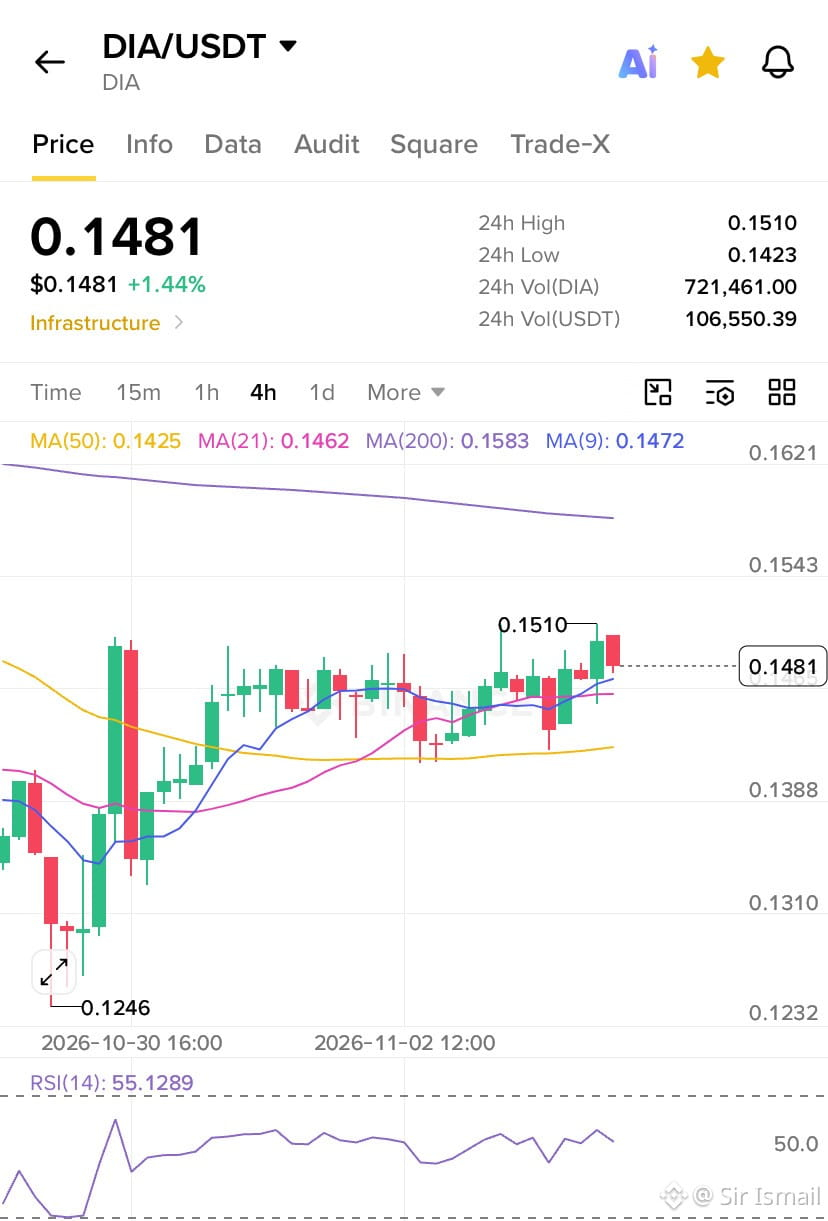
Bullish
$DIA is back above three key moving averages and now bulls have one level to break: $0.151.
Key levels:
Resistance: $0.151, then $0.158
Support: $0.147, then $0.142
Hold above $0.147 and break $0.151 and that would put $0.158 in focus.
Lose $0.147 and price could revisit $0.142 with $0.138 as the next downside level.
The recovery is holding but bulls still need to clear the local high.
$0.151 is the continuation level. Watch how price reacts there.
$DIA is back above three key moving averages and now bulls have one level to break: $0.151.
Key levels:
Resistance: $0.151, then $0.158
Support: $0.147, then $0.142
Hold above $0.147 and break $0.151 and that would put $0.158 in focus.
Lose $0.147 and price could revisit $0.142 with $0.138 as the next downside level.
The recovery is holding but bulls still need to clear the local high.
$0.151 is the continuation level. Watch how price reacts there.
Key levels:
Resistance: $0.151, then $0.158
Support: $0.147, then $0.142
Hold above $0.147 and break $0.151 and that would put $0.158 in focus.
Lose $0.147 and price could revisit $0.142 with $0.138 as the next downside level.
The recovery is holding but bulls still need to clear the local high.
$0.151 is the continuation level. Watch how price reacts there.
88
·
--
Imagine an AI agent managing millions in DeFi.
It decides when to move funds, adjust positions or liquidate a loan but what happens if the price data behind those decisions is wrong?
It tells you an AI agent is only as reliable as the data it uses.
That’s why oracles still matter.
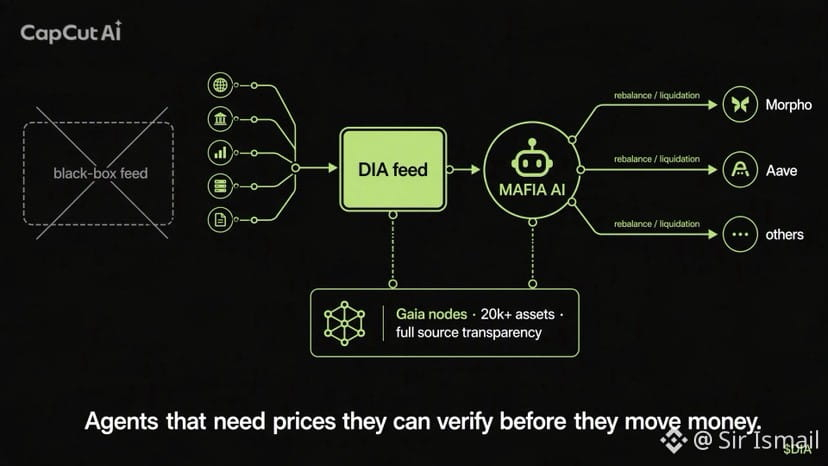
DIA is already providing the official price feed for MAFIA AI, where agents allocate funds across protocols like Morpho and Aave based on users’ risk and yield targets.
Every rebalance and liquidation decision relies on first-party, verifiable price data rather than an unexplained price feed.
And there’s more.
👉🏽Gaia also uses DIA oracles across 20,000+ assets through its decentralized AI nodes.
This means agents can access prices and trace where the data comes from.
Think about the bigger picture.
AI agents can make decisions automatically but they still need reliable information before moving money.
It’s not just about combining AI and crypto. It’s about giving AI agents data they can verify and trust before they act.
That’s where DIA fits into the future of autonomous finance. $DIA accumulation happening now imo
Stay bullish!
Imagine an AI agent managing millions in DeFi.
It decides when to move funds, adjust positions or liquidate a loan but what happens if the price data behind those decisions is wrong?
It tells you an AI agent is only as reliable as the data it uses.
That’s why oracles still matter.
DIA is already providing the official price feed for MAFIA AI, where agents allocate funds across protocols like Morpho and Aave based on users’ risk and yield targets.
Every rebalance and liquidation decision relies on first-party, verifiable price data rather than an unexplained price feed.
And there’s more.
👉🏽Gaia also uses DIA oracles across 20,000+ assets through its decentralized AI nodes.
This means agents can access prices and trace where the data comes from.
Think about the bigger picture.
AI agents can make decisions automatically but they still need reliable information before moving money.
It’s not just about combining AI and crypto. It’s about giving AI agents data they can verify and trust before they act.
That’s where DIA fits into the future of autonomous finance. $DIA accumulation happening now imo
Stay bullish!
It decides when to move funds, adjust positions or liquidate a loan but what happens if the price data behind those decisions is wrong?
It tells you an AI agent is only as reliable as the data it uses.
That’s why oracles still matter.
DIA is already providing the official price feed for MAFIA AI, where agents allocate funds across protocols like Morpho and Aave based on users’ risk and yield targets.
Every rebalance and liquidation decision relies on first-party, verifiable price data rather than an unexplained price feed.
And there’s more.
👉🏽Gaia also uses DIA oracles across 20,000+ assets through its decentralized AI nodes.
This means agents can access prices and trace where the data comes from.
Think about the bigger picture.
AI agents can make decisions automatically but they still need reliable information before moving money.
It’s not just about combining AI and crypto. It’s about giving AI agents data they can verify and trust before they act.
That’s where DIA fits into the future of autonomous finance. $DIA accumulation happening now imo
Stay bullish!
6
·
--
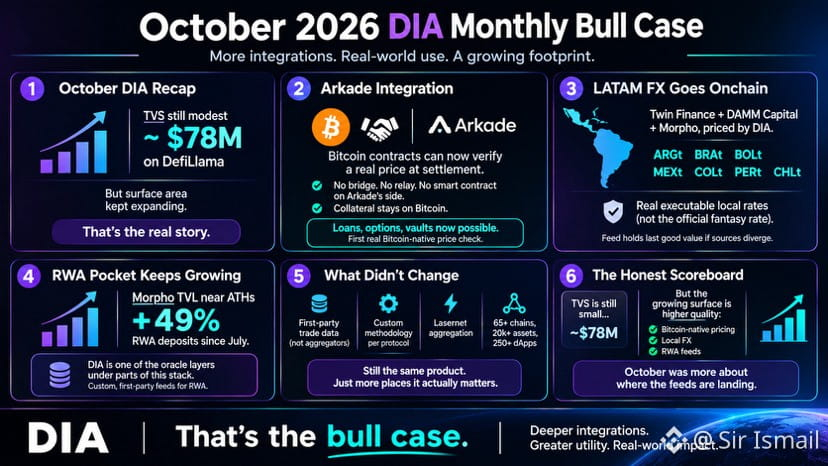
Just in case you missed out on some key @DIAdata_org activities last month
1) TVS still modest (~$78m on DefiLlama right now).
Surface area kept expanding.
2/ Biggest unlock of the month:
Arkade integrated DIA’s signed BTC/USD feed.
Bitcoin contracts can now verify a real price at settlement.
No bridge. No relay. No smart contract on Arkade’s side.
Collateral stays on Bitcoin.
Loans, options, vaults become possible without wrapping.
First real Bitcoin-native price check.
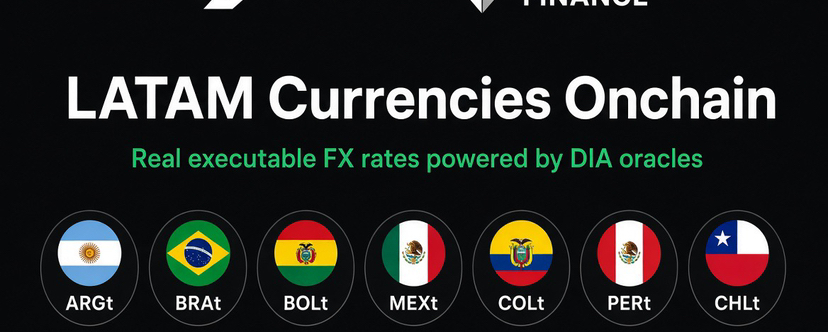
3/ LATAM FX went onchain.
Twin Finance + DAMM Capital + Morpho, priced by DIA.
ARGt, BRAt, BOLt, MEXt, COLt, PERt, CHLt — priced at real executable local rates (not the official fantasy rate).
When sources diverge past the threshold, the feed holds the last good value instead of pushing a broken price into liquidations.
4/ RWA pocket kept growing while most of DeFi was in drawdown.
Morpho TVL near ATHs. RWA deposits +49% since July. Active RWA loans up meaningfully. Majority private credit.
DIA is one of the oracle layers under parts of that stack — custom, first-party feeds protocols can actually verify from source to chain.
5/ What didn’t change:
• First-party trade data (not third-party aggregators)
• Custom methodology per protocol
• Lasernet aggregation
• 65+ chains, 20k+ assets, 250+ dApps
Still the same product. Just more places it actually matters.
6/ Honest scoreboard: TVS is still small.
The surface that is growing (Bitcoin-native pricing, local FX, RWA/fundamental feeds) is the higher-quality kind.
October was more about where the feeds are landing than how big the number is.
That’s the full bull case.
Stay bullish $DIA fam
Just in case you missed out on some key @DIAdata_org activities last month
1) TVS still modest (~$78m on DefiLlama right now).
Surface area kept expanding.
2/ Biggest unlock of the month:
Arkade integrated DIA’s signed BTC/USD feed.
Bitcoin contracts can now verify a real price at settlement.
No bridge. No relay. No smart contract on Arkade’s side.
Collateral stays on Bitcoin.
Loans, options, vaults become possible without wrapping.
First real Bitcoin-native price check.
3/ LATAM FX went onchain.
Twin Finance + DAMM Capital + Morpho, priced by DIA.
ARGt, BRAt, BOLt, MEXt, COLt, PERt, CHLt — priced at real executable local rates (not the official fantasy rate).
When sources diverge past the threshold, the feed holds the last good value instead of pushing a broken price into liquidations.
4/ RWA pocket kept growing while most of DeFi was in drawdown.
Morpho TVL near ATHs. RWA deposits +49% since July. Active RWA loans up meaningfully. Majority private credit.
DIA is one of the oracle layers under parts of that stack — custom, first-party feeds protocols can actually verify from source to chain.
5/ What didn’t change:
• First-party trade data (not third-party aggregators)
• Custom methodology per protocol
• Lasernet aggregation
• 65+ chains, 20k+ assets, 250+ dApps
Still the same product. Just more places it actually matters.
6/ Honest scoreboard: TVS is still small.
The surface that is growing (Bitcoin-native pricing, local FX, RWA/fundamental feeds) is the higher-quality kind.
October was more about where the feeds are landing than how big the number is.
That’s the full bull case.
Stay bullish $DIA fam
1) TVS still modest (~$78m on DefiLlama right now).
Surface area kept expanding.
2/ Biggest unlock of the month:
Arkade integrated DIA’s signed BTC/USD feed.
Bitcoin contracts can now verify a real price at settlement.
No bridge. No relay. No smart contract on Arkade’s side.
Collateral stays on Bitcoin.
Loans, options, vaults become possible without wrapping.
First real Bitcoin-native price check.
3/ LATAM FX went onchain.
Twin Finance + DAMM Capital + Morpho, priced by DIA.
ARGt, BRAt, BOLt, MEXt, COLt, PERt, CHLt — priced at real executable local rates (not the official fantasy rate).
When sources diverge past the threshold, the feed holds the last good value instead of pushing a broken price into liquidations.
4/ RWA pocket kept growing while most of DeFi was in drawdown.
Morpho TVL near ATHs. RWA deposits +49% since July. Active RWA loans up meaningfully. Majority private credit.
DIA is one of the oracle layers under parts of that stack — custom, first-party feeds protocols can actually verify from source to chain.
5/ What didn’t change:
• First-party trade data (not third-party aggregators)
• Custom methodology per protocol
• Lasernet aggregation
• 65+ chains, 20k+ assets, 250+ dApps
Still the same product. Just more places it actually matters.
6/ Honest scoreboard: TVS is still small.
The surface that is growing (Bitcoin-native pricing, local FX, RWA/fundamental feeds) is the higher-quality kind.
October was more about where the feeds are landing than how big the number is.
That’s the full bull case.
Stay bullish $DIA fam
149
·
--
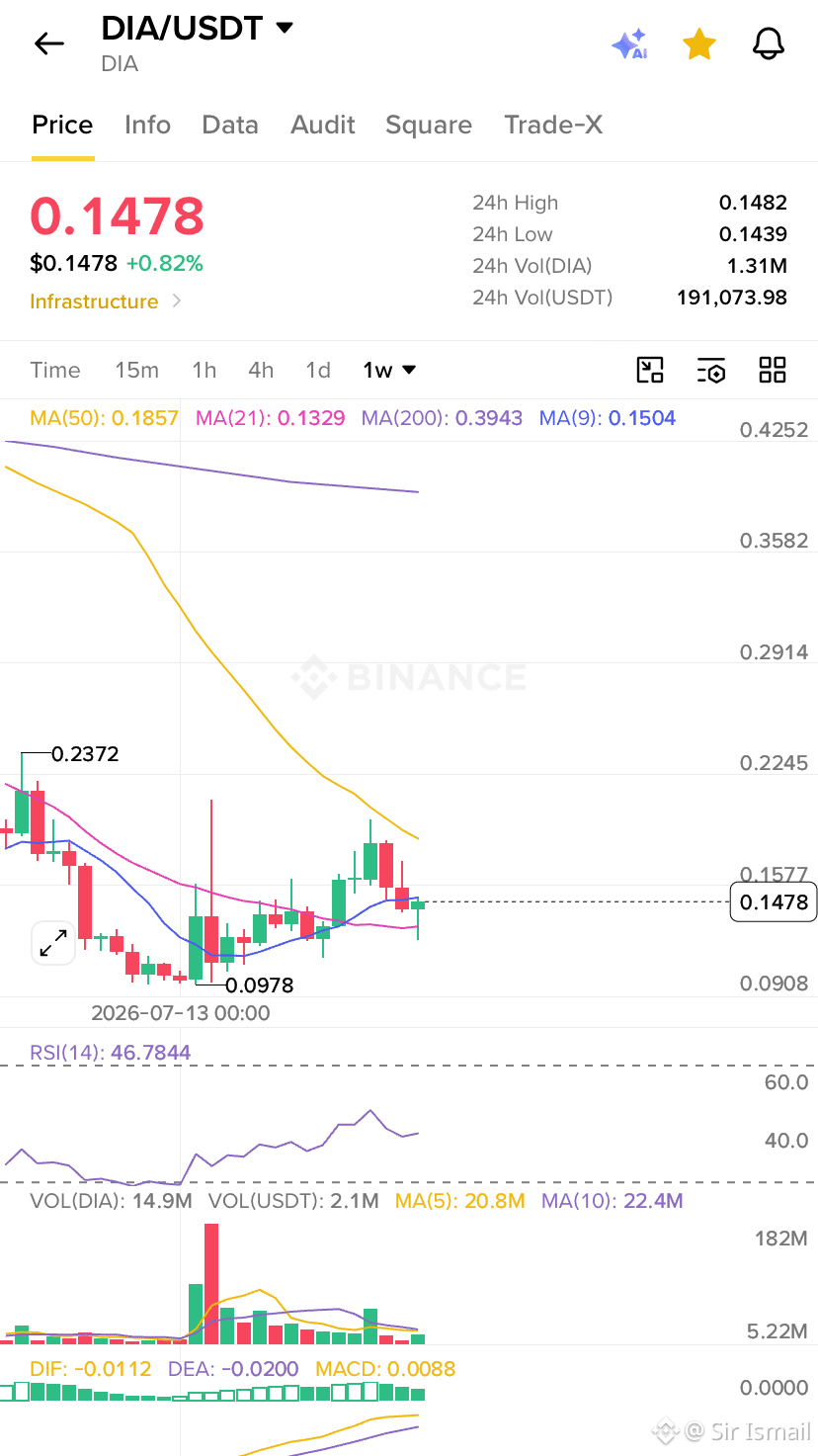
$DIA bulls are finally pushing back but the real test starts at $0.150.
On the weekly, DIA is showing its first signs of stabilization after last week’s sell-off but bulls still have resistance to clear.
Key levels:
Resistance: $0.150–$0.152 → $0.166 → $0.180
Support: $0.144 → $0.140 → $0.135
Bull case: Reclaim $0.150–$0.152 and hold it as support and that would strengthen the recovery and establish the $0.140 dip as a potential higher low, opening the way toward $0.166.
Bear case: Rejection around $0.150–$0.152, followed by a loss of $0.144, would weaken the bounce. A retest of $0.140 becomes likely with $0.135 next if support fails.
Momentum is improving but the trend has not confirmed a reversal. The MA9 and $0.150–$0.152 resistance zone are the immediate tests.
$0.150 is the continuation level. A clean reclaim matters more than the bounce itself.
Stay bullish guys!
$DIA bulls are finally pushing back but the real test starts at $0.150.
On the weekly, DIA is showing its first signs of stabilization after last week’s sell-off but bulls still have resistance to clear.
Key levels:
Resistance: $0.150–$0.152 → $0.166 → $0.180
Support: $0.144 → $0.140 → $0.135
Bull case: Reclaim $0.150–$0.152 and hold it as support and that would strengthen the recovery and establish the $0.140 dip as a potential higher low, opening the way toward $0.166.
Bear case: Rejection around $0.150–$0.152, followed by a loss of $0.144, would weaken the bounce. A retest of $0.140 becomes likely with $0.135 next if support fails.
Momentum is improving but the trend has not confirmed a reversal. The MA9 and $0.150–$0.152 resistance zone are the immediate tests.
$0.150 is the continuation level. A clean reclaim matters more than the bounce itself.
Stay bullish guys!
On the weekly, DIA is showing its first signs of stabilization after last week’s sell-off but bulls still have resistance to clear.
Key levels:
Resistance: $0.150–$0.152 → $0.166 → $0.180
Support: $0.144 → $0.140 → $0.135
Bull case: Reclaim $0.150–$0.152 and hold it as support and that would strengthen the recovery and establish the $0.140 dip as a potential higher low, opening the way toward $0.166.
Bear case: Rejection around $0.150–$0.152, followed by a loss of $0.144, would weaken the bounce. A retest of $0.140 becomes likely with $0.135 next if support fails.
Momentum is improving but the trend has not confirmed a reversal. The MA9 and $0.150–$0.152 resistance zone are the immediate tests.
$0.150 is the continuation level. A clean reclaim matters more than the bounce itself.
Stay bullish guys!
138
·
--
Article
DIA: The Oracle Opportunity Beyond TVSThe bull case for DIA is not its Total Value Secured (TVS). It is the market that its current TVS does not yet capture.
According to DefiLlama, DIA currently secures approximately $115 million, with Zest accounting for most of that figure. For comparison, Chainlink secures tens of billions of dollars.
There is no need to ignore that difference. It reflects the current size of the two ecosystems.
But looking at TVS alone misses a much bigger question: What happens when the next generation of onchain assets needs price feeds that traditional oracle models cannot properly provide?
That is where DIA's opportunity becomes interesting.
The opportunity starts with what can be priced
DIA covers more than 20,000 assets across 65+ blockchains. Its coverage includes stocks, foreign exchange (FX), commodities, and fair-value feeds for assets that do not have active markets.
It also works with more than 100 first-party data sources and supports over 250 dApps.
The important distinction is that DIA is not simply trying to provide prices for assets that already trade on liquid markets.
It is building infrastructure for assets that need different approaches to valuation.
Most oracles focus on pricing what already trades. DIA is also working on how to price what does not
Why last-traded prices are not always enough
Consider vault shares.
A vault share does not necessarily have a meaningful last-traded price. Its value may depend on the assets held inside the vault, its reserves, or the exchange rate between deposits and withdrawals.
This is where DIA's integrations with Vetro and River become relevant.
Vetro prices VUSD using treasury reserves divided by the circulating supply, with a cap of $1.
River uses the vault exchange rate to price satUSD+.
In both cases, the objective is to reflect the underlying value of the asset rather than rely entirely on activity in a thin liquidity pool.
This matters because DeFi protocols need reliable valuations when accepting assets as collateral, calculating positions, or managing risk.
Tokenized equities need reliable pricing around the clock
Tokenized equities introduce another challenge.
Traditional stock markets have opening and closing hours, but blockchain markets can operate continuously.
ST0x brings tokenized equity trading to Base around the clock. However, continuous trading also requires pricing infrastructure that can account for different market sessions.
DIA provides midpoint pricing with signed timestamps and freshness information for each market session.
This gives applications a way to evaluate prices while considering when the underlying market data was produced.
As tokenized equities expand, reliable pricing will become an important part of the infrastructure supporting them.
Bringing markets with limited liquidity onchain
Foreign exchange is another area where the opportunity becomes clearer.
Latin American FX markets do not necessarily have deep onchain liquidity pools that applications can use to establish reliable prices.
Twin Finance and DAMM Capital are working with DIA to bring these FX rates onchain.
The challenge is straightforward: you cannot depend on liquidity that barely exists.
You need reliable price coverage before applications can properly build around these assets.
This is an important distinction because expanding onchain finance is not only about bringing more assets onto blockchains. It is also about making the information required to use those assets available.
Tokenized commodities are opening another market
Tokenized commodities have already grown into a $5.5 billion market.
Almost 90% of that growth came from gold, supported by the ability to verify both the underlying reserves and the reference price.
But the opportunity does not end with gold.
Silver and copper are natural candidates for further tokenization. As these markets develop, they will also need reliable pricing and verifiable information about the assets backing them.
A token alone does not create a functioning financial market.
The underlying asset needs to be identifiable, its value needs to be measurable, and applications need dependable data to interact with it.
That is another area where oracle infrastructure becomes essential
Private credit needs more than a market price
Private credit presents a slightly different challenge.
Lending activity is growing inside Morpho, but private credit assets do not always have active order books or frequent market transactions.
This makes valuation more complicated.
When lenders accept these assets as collateral, they need information about what backs them and how that backing should be valued.
A simple last-traded price may not be available or meaningful.
Reliable valuation data therefore becomes particularly important as private credit expands into DeFi.
The more financial activity moves onchain, the greater the need for data that reflects the actual structure and backing of these assets.
Taking price verification directly to Bitcoin
DIA's work is not limited to Ethereum-compatible ecosystems.
It has also shipped signed BTC prices to Arkade, allowing contracts built on Bitcoin Script to verify price information directly.
The important part is the verification model.
There is no bridge or relay required for the described price-verification process. Collateral can remain on Bitcoin while applications use signed price information.
Options are the initial use case, with lending and protection among the potential applications that can follow.
This is another example of the broader direction DIA is pursuing: making reliable price information available across different blockchain environments.
The bigger picture: A different oracle opportunity
When these developments are considered together, the opportunity becomes easier to understand.
Vault shares, tokenized equities, Latin American FX, commodities, private credit, and Bitcoin-based financial products all have different pricing requirements.
They cannot all be valued reliably through the same last-traded-price model.
Some depend on treasury reserves. Others require exchange rates, midpoint calculations, reference prices, or information about underlying collateral.
This is the market DIA is positioning itself to serve.
Its current TVS may still be small compared with established oracle networks. That is a reality worth acknowledging.
But the potential market for oracle infrastructure is not limited to assets that already have deep liquidity and established price feeds.
As more real-world assets move onchain, the demand for reliable, verifiable and asset-specific pricing will become increasingly important.
The real DIA bull case is not simply capturing a larger share of today's oracle market. It is helping create the pricing infrastructure for tomorrow's onchain markets.
Price any asset. Verify every feed.
DIA: The Oracle Opportunity Beyond TVS
The bull case for DIA is not its Total Value Secured (TVS). It is the market that its current TVS does not yet capture.
According to DefiLlama, DIA currently secures approximately $115 million, with Zest accounting for most of that figure. For comparison, Chainlink secures tens of billions of dollars.
There is no need to ignore that difference. It reflects the current size of the two ecosystems.
But looking at TVS alone misses a much bigger question: What happens when the next generation of onchain assets needs price feeds that traditional oracle models cannot properly provide?
That is where DIA's opportunity becomes interesting.
The opportunity starts with what can be priced
DIA covers more than 20,000 assets across 65+ blockchains. Its coverage includes stocks, foreign exchange (FX), commodities, and fair-value feeds for assets that do not have active markets.
It also works with more than 100 first-party data sources and supports over 250 dApps.
The important distinction is that DIA is not simply trying to provide prices for assets that already trade on liquid markets.
It is building infrastructure for assets that need different approaches to valuation.
Most oracles focus on pricing what already trades. DIA is also working on how to price what does not
Why last-traded prices are not always enough
Consider vault shares.
A vault share does not necessarily have a meaningful last-traded price. Its value may depend on the assets held inside the vault, its reserves, or the exchange rate between deposits and withdrawals.
This is where DIA's integrations with Vetro and River become relevant.
Vetro prices VUSD using treasury reserves divided by the circulating supply, with a cap of $1.
River uses the vault exchange rate to price satUSD+.
In both cases, the objective is to reflect the underlying value of the asset rather than rely entirely on activity in a thin liquidity pool.
This matters because DeFi protocols need reliable valuations when accepting assets as collateral, calculating positions, or managing risk.
Tokenized equities need reliable pricing around the clock
Tokenized equities introduce another challenge.
Traditional stock markets have opening and closing hours, but blockchain markets can operate continuously.
ST0x brings tokenized equity trading to Base around the clock. However, continuous trading also requires pricing infrastructure that can account for different market sessions.
DIA provides midpoint pricing with signed timestamps and freshness information for each market session.
This gives applications a way to evaluate prices while considering when the underlying market data was produced.
As tokenized equities expand, reliable pricing will become an important part of the infrastructure supporting them.
Bringing markets with limited liquidity onchain
Foreign exchange is another area where the opportunity becomes clearer.
Latin American FX markets do not necessarily have deep onchain liquidity pools that applications can use to establish reliable prices.
Twin Finance and DAMM Capital are working with DIA to bring these FX rates onchain.
The challenge is straightforward: you cannot depend on liquidity that barely exists.
You need reliable price coverage before applications can properly build around these assets.
This is an important distinction because expanding onchain finance is not only about bringing more assets onto blockchains. It is also about making the information required to use those assets available.
Tokenized commodities are opening another market
Tokenized commodities have already grown into a $5.5 billion market.
Almost 90% of that growth came from gold, supported by the ability to verify both the underlying reserves and the reference price.
But the opportunity does not end with gold.
Silver and copper are natural candidates for further tokenization. As these markets develop, they will also need reliable pricing and verifiable information about the assets backing them.
A token alone does not create a functioning financial market.
The underlying asset needs to be identifiable, its value needs to be measurable, and applications need dependable data to interact with it.
That is another area where oracle infrastructure becomes essential
Private credit needs more than a market price
Private credit presents a slightly different challenge.
Lending activity is growing inside Morpho, but private credit assets do not always have active order books or frequent market transactions.
This makes valuation more complicated.
When lenders accept these assets as collateral, they need information about what backs them and how that backing should be valued.
A simple last-traded price may not be available or meaningful.
Reliable valuation data therefore becomes particularly important as private credit expands into DeFi.
The more financial activity moves onchain, the greater the need for data that reflects the actual structure and backing of these assets.
Taking price verification directly to Bitcoin
DIA's work is not limited to Ethereum-compatible ecosystems.
It has also shipped signed BTC prices to Arkade, allowing contracts built on Bitcoin Script to verify price information directly.
The important part is the verification model.
There is no bridge or relay required for the described price-verification process. Collateral can remain on Bitcoin while applications use signed price information.
Options are the initial use case, with lending and protection among the potential applications that can follow.
This is another example of the broader direction DIA is pursuing: making reliable price information available across different blockchain environments.
The bigger picture: A different oracle opportunity
When these developments are considered together, the opportunity becomes easier to understand.
Vault shares, tokenized equities, Latin American FX, commodities, private credit, and Bitcoin-based financial products all have different pricing requirements.
They cannot all be valued reliably through the same last-traded-price model.
Some depend on treasury reserves. Others require exchange rates, midpoint calculations, reference prices, or information about underlying collateral.
This is the market DIA is positioning itself to serve.
Its current TVS may still be small compared with established oracle networks. That is a reality worth acknowledging.
But the potential market for oracle infrastructure is not limited to assets that already have deep liquidity and established price feeds.
As more real-world assets move onchain, the demand for reliable, verifiable and asset-specific pricing will become increasingly important.
The real DIA bull case is not simply capturing a larger share of today's oracle market. It is helping create the pricing infrastructure for tomorrow's onchain markets.
Price any asset. Verify every feed.
According to DefiLlama, DIA currently secures approximately $115 million, with Zest accounting for most of that figure. For comparison, Chainlink secures tens of billions of dollars.
There is no need to ignore that difference. It reflects the current size of the two ecosystems.
But looking at TVS alone misses a much bigger question: What happens when the next generation of onchain assets needs price feeds that traditional oracle models cannot properly provide?
That is where DIA's opportunity becomes interesting.
The opportunity starts with what can be priced
DIA covers more than 20,000 assets across 65+ blockchains. Its coverage includes stocks, foreign exchange (FX), commodities, and fair-value feeds for assets that do not have active markets.
It also works with more than 100 first-party data sources and supports over 250 dApps.
The important distinction is that DIA is not simply trying to provide prices for assets that already trade on liquid markets.
It is building infrastructure for assets that need different approaches to valuation.
Most oracles focus on pricing what already trades. DIA is also working on how to price what does not
Why last-traded prices are not always enough
Consider vault shares.
A vault share does not necessarily have a meaningful last-traded price. Its value may depend on the assets held inside the vault, its reserves, or the exchange rate between deposits and withdrawals.
This is where DIA's integrations with Vetro and River become relevant.
Vetro prices VUSD using treasury reserves divided by the circulating supply, with a cap of $1.
River uses the vault exchange rate to price satUSD+.
In both cases, the objective is to reflect the underlying value of the asset rather than rely entirely on activity in a thin liquidity pool.
This matters because DeFi protocols need reliable valuations when accepting assets as collateral, calculating positions, or managing risk.
Tokenized equities need reliable pricing around the clock
Tokenized equities introduce another challenge.
Traditional stock markets have opening and closing hours, but blockchain markets can operate continuously.
ST0x brings tokenized equity trading to Base around the clock. However, continuous trading also requires pricing infrastructure that can account for different market sessions.
DIA provides midpoint pricing with signed timestamps and freshness information for each market session.
This gives applications a way to evaluate prices while considering when the underlying market data was produced.
As tokenized equities expand, reliable pricing will become an important part of the infrastructure supporting them.
Bringing markets with limited liquidity onchain
Foreign exchange is another area where the opportunity becomes clearer.
Latin American FX markets do not necessarily have deep onchain liquidity pools that applications can use to establish reliable prices.
Twin Finance and DAMM Capital are working with DIA to bring these FX rates onchain.
The challenge is straightforward: you cannot depend on liquidity that barely exists.
You need reliable price coverage before applications can properly build around these assets.
This is an important distinction because expanding onchain finance is not only about bringing more assets onto blockchains. It is also about making the information required to use those assets available.
Tokenized commodities are opening another market
Tokenized commodities have already grown into a $5.5 billion market.
Almost 90% of that growth came from gold, supported by the ability to verify both the underlying reserves and the reference price.
But the opportunity does not end with gold.
Silver and copper are natural candidates for further tokenization. As these markets develop, they will also need reliable pricing and verifiable information about the assets backing them.
A token alone does not create a functioning financial market.
The underlying asset needs to be identifiable, its value needs to be measurable, and applications need dependable data to interact with it.
That is another area where oracle infrastructure becomes essential
Private credit needs more than a market price
Private credit presents a slightly different challenge.
Lending activity is growing inside Morpho, but private credit assets do not always have active order books or frequent market transactions.
This makes valuation more complicated.
When lenders accept these assets as collateral, they need information about what backs them and how that backing should be valued.
A simple last-traded price may not be available or meaningful.
Reliable valuation data therefore becomes particularly important as private credit expands into DeFi.
The more financial activity moves onchain, the greater the need for data that reflects the actual structure and backing of these assets.
Taking price verification directly to Bitcoin
DIA's work is not limited to Ethereum-compatible ecosystems.
It has also shipped signed BTC prices to Arkade, allowing contracts built on Bitcoin Script to verify price information directly.
The important part is the verification model.
There is no bridge or relay required for the described price-verification process. Collateral can remain on Bitcoin while applications use signed price information.
Options are the initial use case, with lending and protection among the potential applications that can follow.
This is another example of the broader direction DIA is pursuing: making reliable price information available across different blockchain environments.
The bigger picture: A different oracle opportunity
When these developments are considered together, the opportunity becomes easier to understand.
Vault shares, tokenized equities, Latin American FX, commodities, private credit, and Bitcoin-based financial products all have different pricing requirements.
They cannot all be valued reliably through the same last-traded-price model.
Some depend on treasury reserves. Others require exchange rates, midpoint calculations, reference prices, or information about underlying collateral.
This is the market DIA is positioning itself to serve.
Its current TVS may still be small compared with established oracle networks. That is a reality worth acknowledging.
But the potential market for oracle infrastructure is not limited to assets that already have deep liquidity and established price feeds.
As more real-world assets move onchain, the demand for reliable, verifiable and asset-specific pricing will become increasingly important.
The real DIA bull case is not simply capturing a larger share of today's oracle market. It is helping create the pricing infrastructure for tomorrow's onchain markets.
Price any asset. Verify every feed.
156
·
--
DeFi is still recovering from its 2025 peak but not every part of the market is moving in the same direction.
While much of the sector remains in a drawdown, Morpho is showing a different picture.
Its TVL is near an all-time high of around $10.4B.
And look at what’s happening inside it:
→ RWA deposits grew from $1.07B to $1.58B since July (+49%).
→ Active RWA loans increased from $411M to $641M.
→ Around 58% of those deposits are in private credit.
The wider DeFi market is struggling but tokenized credit is still attracting capital.
This growth also creates a need for better price data.
Private credit isn’t traded like BTC or ETH. Protocols need reliable information about the underlying assets not just the latest market price.
That’s where @DIAdata_org fits in.
DIA provides custom, first-party oracle feeds that protocols can verify from the original data source all the way to the blockchain.
To be fair, DIA’s TVS is still relatively small at around $78M on DefiLlama but its data coverage reaches across a much wider range of assets and markets.
The opportunity is bigger than today’s TVS. As tokenized credit grows, reliable data becomes more important and that’s a market DIA is positioned to serve. $DIA
DeFi is still recovering from its 2025 peak but not every part of the market is moving in the same direction.
While much of the sector remains in a drawdown, Morpho is showing a different picture.
Its TVL is near an all-time high of around $10.4B.
And look at what’s happening inside it:
→ RWA deposits grew from $1.07B to $1.58B since July (+49%).
→ Active RWA loans increased from $411M to $641M.
→ Around 58% of those deposits are in private credit.
The wider DeFi market is struggling but tokenized credit is still attracting capital.
This growth also creates a need for better price data.
Private credit isn’t traded like BTC or ETH. Protocols need reliable information about the underlying assets not just the latest market price.
That’s where @DIAdata_org fits in.
DIA provides custom, first-party oracle feeds that protocols can verify from the original data source all the way to the blockchain.
To be fair, DIA’s TVS is still relatively small at around $78M on DefiLlama but its data coverage reaches across a much wider range of assets and markets.
The opportunity is bigger than today’s TVS. As tokenized credit grows, reliable data becomes more important and that’s a market DIA is positioned to serve. $DIA
While much of the sector remains in a drawdown, Morpho is showing a different picture.
Its TVL is near an all-time high of around $10.4B.
And look at what’s happening inside it:
→ RWA deposits grew from $1.07B to $1.58B since July (+49%).
→ Active RWA loans increased from $411M to $641M.
→ Around 58% of those deposits are in private credit.
The wider DeFi market is struggling but tokenized credit is still attracting capital.
This growth also creates a need for better price data.
Private credit isn’t traded like BTC or ETH. Protocols need reliable information about the underlying assets not just the latest market price.
That’s where @DIAdata_org fits in.
DIA provides custom, first-party oracle feeds that protocols can verify from the original data source all the way to the blockchain.
To be fair, DIA’s TVS is still relatively small at around $78M on DefiLlama but its data coverage reaches across a much wider range of assets and markets.
The opportunity is bigger than today’s TVS. As tokenized credit grows, reliable data becomes more important and that’s a market DIA is positioned to serve. $DIA

1
1.7k
Log in to explore more content
Join global crypto users on Binance Square
⚡️ Get latest and useful information about crypto.
💬 Trusted by the world’s largest crypto exchange.
👍 Discover real insights from verified creators.
Email / Phone number
Trending Topics
NvidiaBeatsEstimatesWith$130BQ4Outlook
7,265 views
118 Discussing
Nvidia Beats With $115.8 Billion in Revenue, Guides to $130 Billion and Adds $150 Billion Buyback
Binance News
·38 Likes
·38.1k views
AnthropicIPOPriceCouldExceed$80
13,361 views
116 Discussing
CanNvidia’sDataCenterGrowthContinue?
38,444 views
547 Discussing