

Inflectiv AI
226 Posts

Inflectiv AI
Report
Block User
Liberating Trapped Intelligence.
Fueling agents, automation, and robotics.
Structured, tokenized, perpetual.
0 Following
83 Followers
3.2K+ Liked
Posts
All
Quotes
Videos
PINNED
·
--
Creating a dataset sounds technical. It's not.
Upload PDFs, docs, links, sheets, whatever you've got. Inflectiv structures it all automatically.
Here's how to create one instantly using multiple data sources 👇
🔗 Link in the comments to create your dataset now
Creating a dataset sounds technical. It's not.
Upload PDFs, docs, links, sheets, whatever you've got. Inflectiv structures it all automatically.
Here's how to create one instantly using multiple data sources 👇
🔗 Link in the comments to create your dataset now
Upload PDFs, docs, links, sheets, whatever you've got. Inflectiv structures it all automatically.
Here's how to create one instantly using multiple data sources 👇
🔗 Link in the comments to create your dataset now
6
2
52
690
·
--
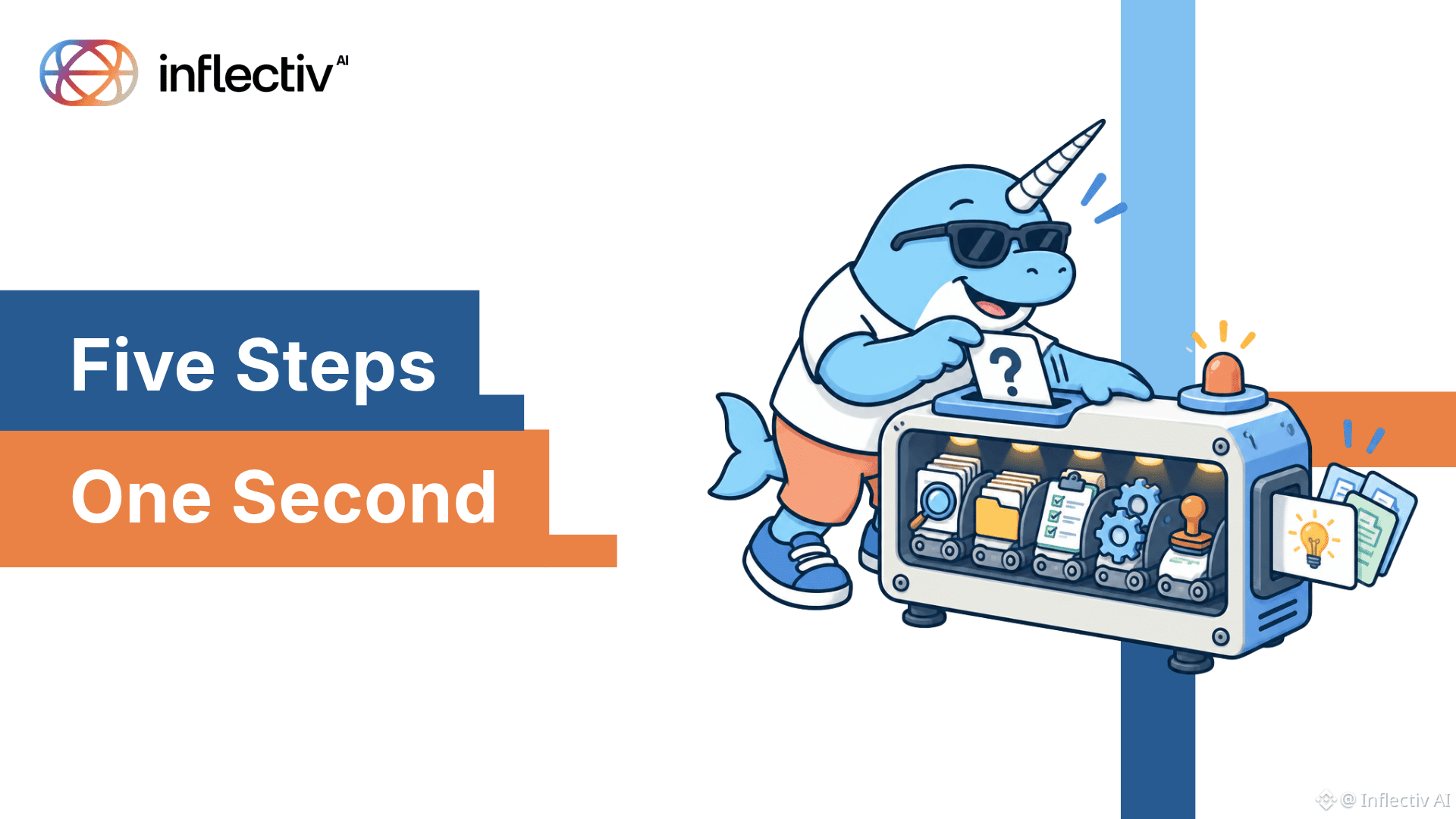
What actually happens when your agent asks a dataset a question?
👉 Five steps: https://x.com/inflectivAI/status/2102704093353615523
What actually happens when your agent asks a dataset a question?
👉 Five steps: https://x.com/inflectivAI/status/2102704093353615523
👉 Five steps: https://x.com/inflectivAI/status/2102704093353615523
73
·
--
Trying to work out who is actually reading this.
Where are you right now?
Trying to work out who is actually reading this.
Where are you right now?
Where are you right now?
Data, no agent
0%
Agent, no data
0%
Both
0%
Neither yet
0%
0 votes • Voting closed
58
·
--
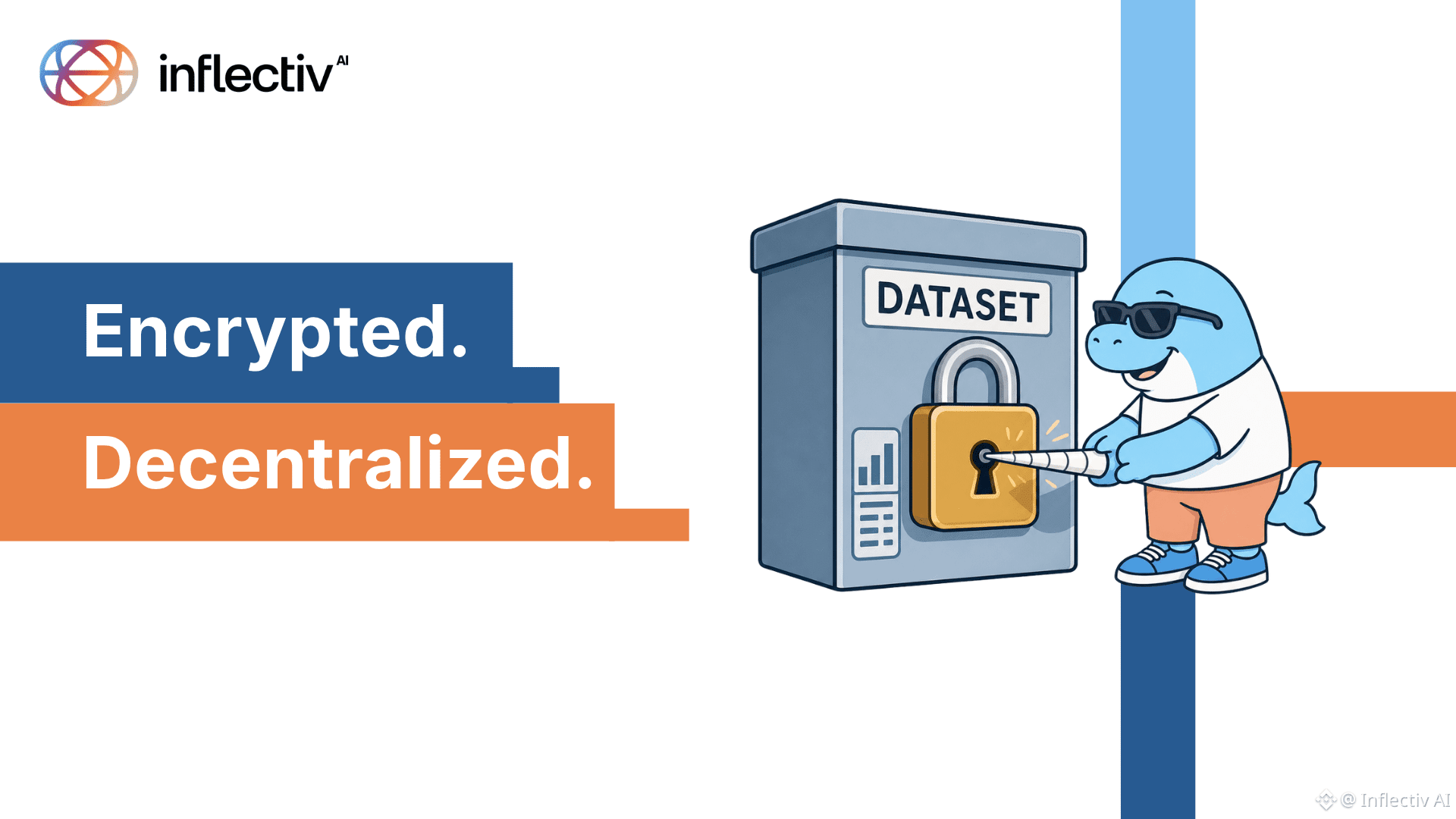
Encrypted datasets on Inflectiv:
✔️ Encrypted with Seal before it is shared
✔️ Stored on Walrus, a decentralized network
✔️ Registered on Sui with a cryptographic blob ID
✔️ 4,000+ datasets already anchored
Private. Verifiable. Tamper-proof.
Encrypt yours 👉 https://app.inflectiv.ai
Encrypted datasets on Inflectiv:
✔️ Encrypted with Seal before it is shared
✔️ Stored on Walrus, a decentralized network
✔️ Registered on Sui with a cryptographic blob ID
✔️ 4,000+ datasets already anchored
Private. Verifiable. Tamper-proof.
Encrypt yours 👉 https://app.inflectiv.ai
✔️ Encrypted with Seal before it is shared
✔️ Stored on Walrus, a decentralized network
✔️ Registered on Sui with a cryptographic blob ID
✔️ 4,000+ datasets already anchored
Private. Verifiable. Tamper-proof.
Encrypt yours 👉 https://app.inflectiv.ai
99
·
--
You listed a dataset. Nobody bought it.
Nine times out of ten, the data is fine. The listing is what's costing you sales.
Here are the five fixes that turn views into buyers 👇
https://x.com/inflectivAI/status/2098368912018592028
You listed a dataset. Nobody bought it.
Nine times out of ten, the data is fine. The listing is what's costing you sales.
Here are the five fixes that turn views into buyers 👇
https://x.com/inflectivAI/status/2098368912018592028
Nine times out of ten, the data is fine. The listing is what's costing you sales.
Here are the five fixes that turn views into buyers 👇
https://x.com/inflectivAI/status/2098368912018592028

50
·
--
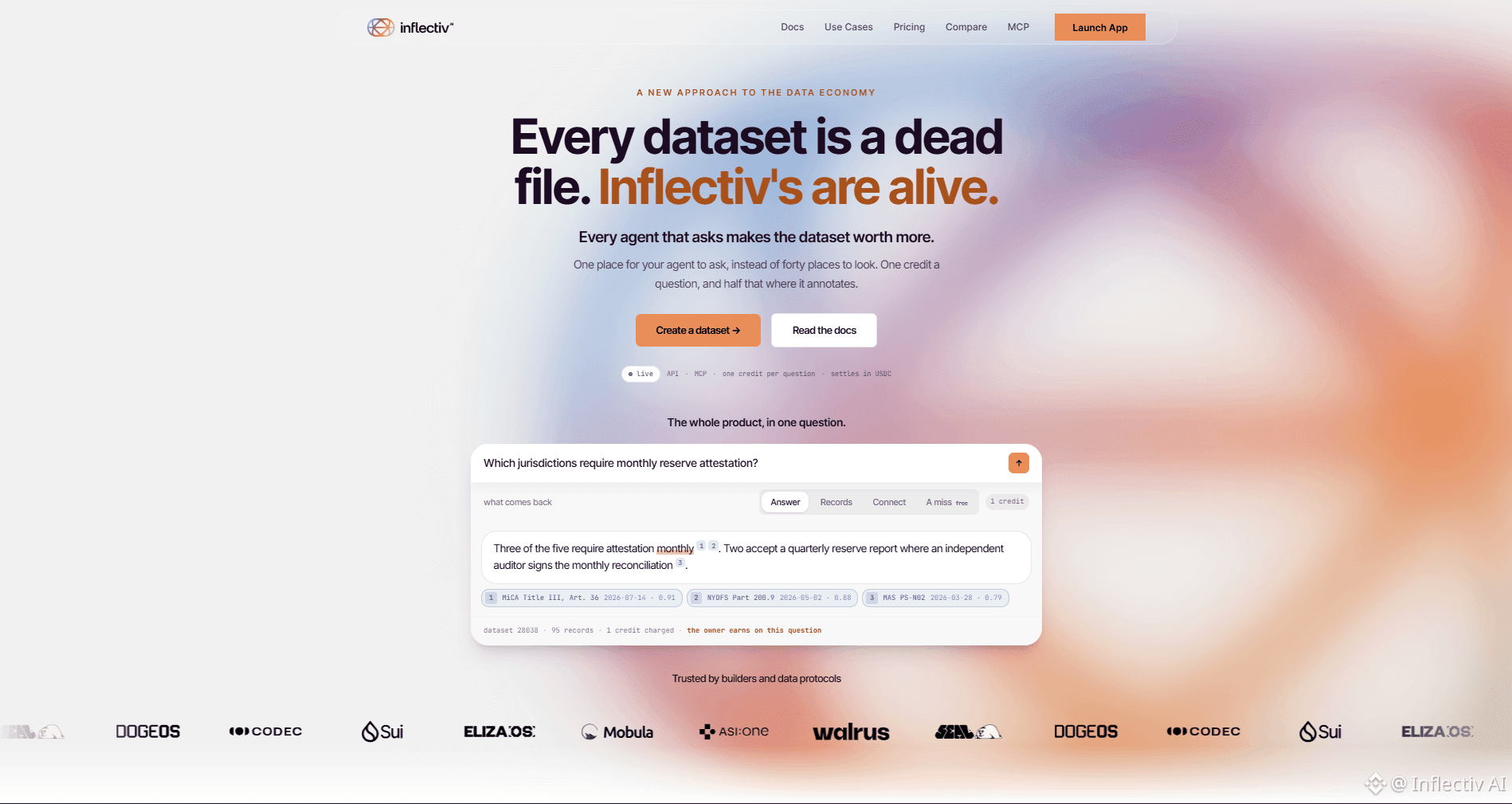
Our new website is live.
Most datasets are dead files. Ours stay alive. Your agent asks a question, pays 1 credit, gets an answer with sources, and adds back what it learned.
Read more here: https://x.com/inflectivAI/status/2096929336662086117
See it: https://inflectiv.ai
Our new website is live.
Most datasets are dead files. Ours stay alive. Your agent asks a question, pays 1 credit, gets an answer with sources, and adds back what it learned.
Read more here: https://x.com/inflectivAI/status/2096929336662086117
See it: https://inflectiv.ai
Most datasets are dead files. Ours stay alive. Your agent asks a question, pays 1 credit, gets an answer with sources, and adds back what it learned.
Read more here: https://x.com/inflectivAI/status/2096929336662086117
See it: https://inflectiv.ai
64
·
--
Domain expertise has always been rentable by the hour. It has never been queryable by the second.
Make yours queryable: https://app.inflectiv.ai
Domain expertise has always been rentable by the hour. It has never been queryable by the second.
Make yours queryable: https://app.inflectiv.ai
Make yours queryable: https://app.inflectiv.ai
71
·
--
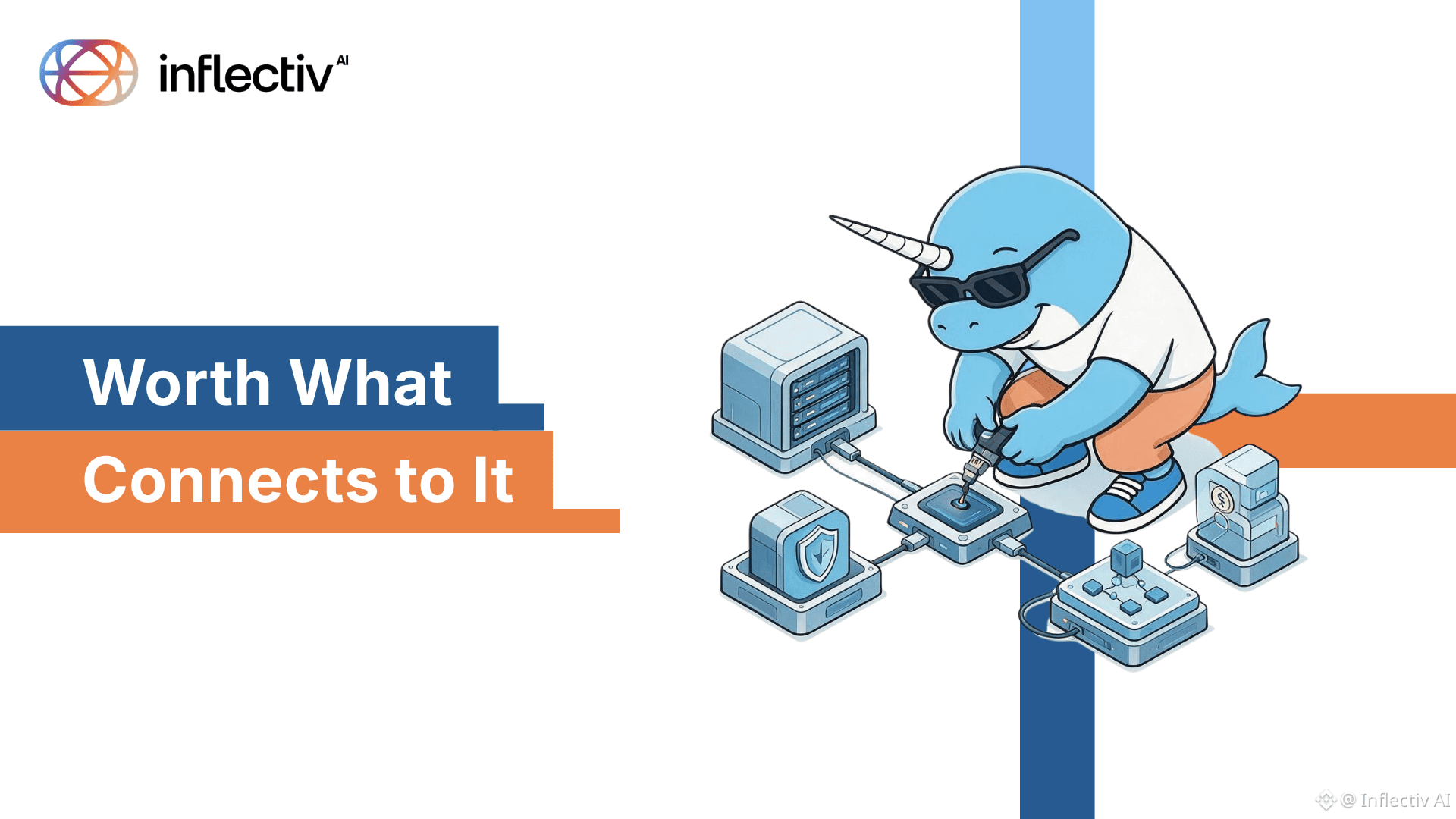
Inflectiv doesn’t run alone.
It connects data, intelligence, and real-world use cases into one powerful layer.
A layer is only worth what connects to it.
Explore Inflectiv: https://inflectiv.ai
Inflectiv doesn’t run alone.
It connects data, intelligence, and real-world use cases into one powerful layer.
A layer is only worth what connects to it.
Explore Inflectiv: https://inflectiv.ai
It connects data, intelligence, and real-world use cases into one powerful layer.
A layer is only worth what connects to it.
Explore Inflectiv: https://inflectiv.ai
101
·
--
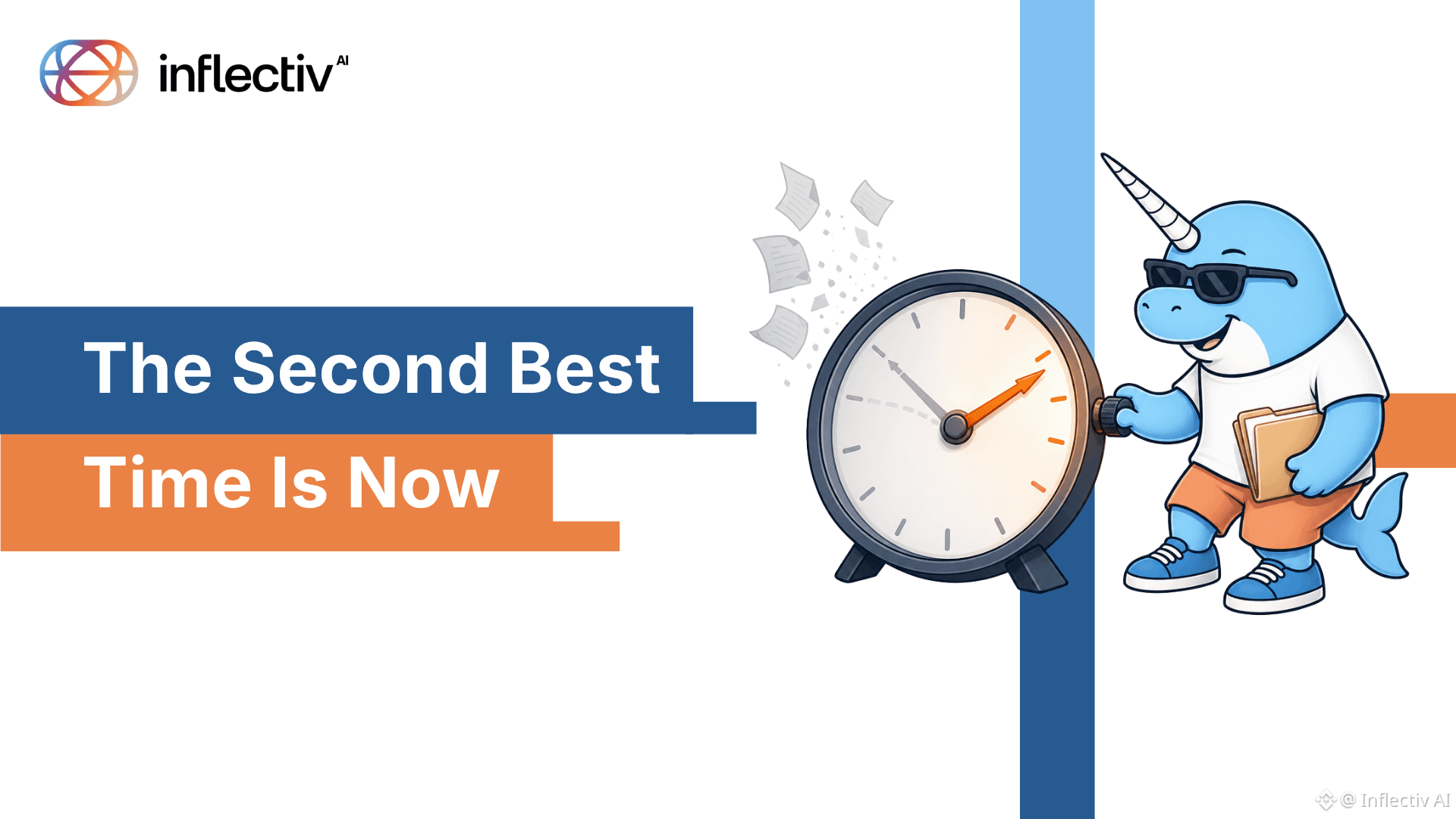
The best time to structure your knowledge was when you first created it.
The second best time is right now.
Upload one file today. See what happens.
Start: app.inflectiv.ai
The best time to structure your knowledge was when you first created it.
The second best time is right now.
Upload one file today. See what happens.
Start: app.inflectiv.ai
The second best time is right now.
Upload one file today. See what happens.
Start: app.inflectiv.ai
81
·
--
Article
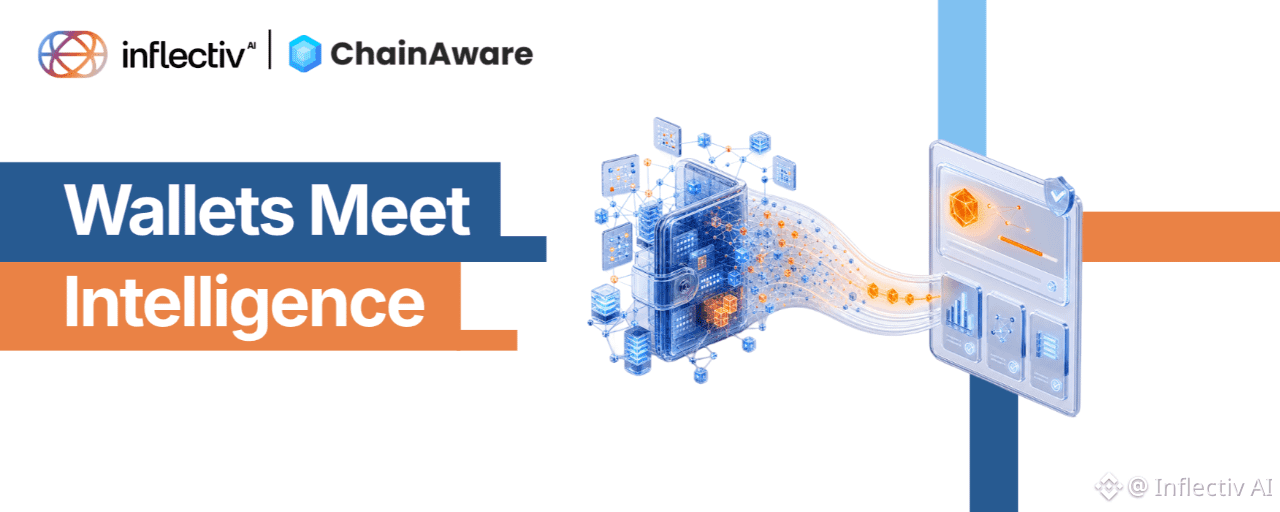
Your Agent Can Now Tell You If a Wallet Is SafeEvery agent that touches crypto eventually faces the same question: is this wallet safe to deal with? Until today, most agent platforms answered with a shrug.
Inflectiv agents now carry ChainAware's wallet intelligence, a live read on fraud probability, rug-pull risk, wallet behavior, segmentation, crypto credit scoring, and token community rankings.
Think of it as a credit bureau for crypto wallets, built directly into your agent's answers.
What your agent can do now
Ask a direct question, "Is this wallet safe to pay?", and your Inflectiv agent queries ChainAware live, mid-conversation, and answers in plain language with the result attached.
No separate ChainAware account. No dashboard. No code.
Builders get the same intelligence through a shared gateway: one key, one credit system, one place to manage access. Every agent on the platform can carry wallet intelligence without integrating ChainAware directly.
Why it matters
Speed was never the hard part for agents. An agent that executes, pays an invoice, approves a transaction, or recommends a counterparty needs judgment behind that speed, not just raw throughput.
Wallet intelligence turns "execute" into "execute with confidence."
The first wave of use cases: compliance screening, DeFi risk checks, and wallet onboarding, due diligence that used to mean a separate tool, a login, and a human reading the output. Now it happens in the same conversation.
How it works
Every ChainAware call runs through Inflectiv's credit system, so usage stays tied to real activity.
Identical lookups- the same wallet queried the same day- are served from a short cache, since wallet scores hold steady within a day, fast where it can be, fresh where it counts.
ChainAware reads the wallet. Inflectiv turns that read into an agent, a distribution channel, and a bill you already understand.
Coverage today
ChainAware runs on Ethereum and major EVM chains, with credit scoring live on Ethereum.
Dogecoin and Sui agents inside Inflectiv don't carry ChainAware features yet. That expansion is next.
What's next
This first release covers wallet fraud probability, rug-pull risk, behavior analysis, segmentation, crypto credit scoring, and token community rankings, rolling out to selected agents and workspaces first.
Build a wallet-aware agent today: https://inflectiv.ai/
Your Agent Can Now Tell You If a Wallet Is Safe
Every agent that touches crypto eventually faces the same question: is this wallet safe to deal with? Until today, most agent platforms answered with a shrug.
Inflectiv agents now carry ChainAware's wallet intelligence, a live read on fraud probability, rug-pull risk, wallet behavior, segmentation, crypto credit scoring, and token community rankings.
Think of it as a credit bureau for crypto wallets, built directly into your agent's answers.
What your agent can do now
Ask a direct question, "Is this wallet safe to pay?", and your Inflectiv agent queries ChainAware live, mid-conversation, and answers in plain language with the result attached.
No separate ChainAware account. No dashboard. No code.
Builders get the same intelligence through a shared gateway: one key, one credit system, one place to manage access. Every agent on the platform can carry wallet intelligence without integrating ChainAware directly.
Why it matters
Speed was never the hard part for agents. An agent that executes, pays an invoice, approves a transaction, or recommends a counterparty needs judgment behind that speed, not just raw throughput.
Wallet intelligence turns "execute" into "execute with confidence."
The first wave of use cases: compliance screening, DeFi risk checks, and wallet onboarding, due diligence that used to mean a separate tool, a login, and a human reading the output. Now it happens in the same conversation.
How it works
Every ChainAware call runs through Inflectiv's credit system, so usage stays tied to real activity.
Identical lookups- the same wallet queried the same day- are served from a short cache, since wallet scores hold steady within a day, fast where it can be, fresh where it counts.
ChainAware reads the wallet. Inflectiv turns that read into an agent, a distribution channel, and a bill you already understand.
Coverage today
ChainAware runs on Ethereum and major EVM chains, with credit scoring live on Ethereum.
Dogecoin and Sui agents inside Inflectiv don't carry ChainAware features yet. That expansion is next.
What's next
This first release covers wallet fraud probability, rug-pull risk, behavior analysis, segmentation, crypto credit scoring, and token community rankings, rolling out to selected agents and workspaces first.
Build a wallet-aware agent today: https://inflectiv.ai/
Inflectiv agents now carry ChainAware's wallet intelligence, a live read on fraud probability, rug-pull risk, wallet behavior, segmentation, crypto credit scoring, and token community rankings.
Think of it as a credit bureau for crypto wallets, built directly into your agent's answers.
What your agent can do now
Ask a direct question, "Is this wallet safe to pay?", and your Inflectiv agent queries ChainAware live, mid-conversation, and answers in plain language with the result attached.
No separate ChainAware account. No dashboard. No code.
Builders get the same intelligence through a shared gateway: one key, one credit system, one place to manage access. Every agent on the platform can carry wallet intelligence without integrating ChainAware directly.
Why it matters
Speed was never the hard part for agents. An agent that executes, pays an invoice, approves a transaction, or recommends a counterparty needs judgment behind that speed, not just raw throughput.
Wallet intelligence turns "execute" into "execute with confidence."
The first wave of use cases: compliance screening, DeFi risk checks, and wallet onboarding, due diligence that used to mean a separate tool, a login, and a human reading the output. Now it happens in the same conversation.
How it works
Every ChainAware call runs through Inflectiv's credit system, so usage stays tied to real activity.
Identical lookups- the same wallet queried the same day- are served from a short cache, since wallet scores hold steady within a day, fast where it can be, fresh where it counts.
ChainAware reads the wallet. Inflectiv turns that read into an agent, a distribution channel, and a bill you already understand.
Coverage today
ChainAware runs on Ethereum and major EVM chains, with credit scoring live on Ethereum.
Dogecoin and Sui agents inside Inflectiv don't carry ChainAware features yet. That expansion is next.
What's next
This first release covers wallet fraud probability, rug-pull risk, behavior analysis, segmentation, crypto credit scoring, and token community rankings, rolling out to selected agents and workspaces first.
Build a wallet-aware agent today: https://inflectiv.ai/
71
·
--
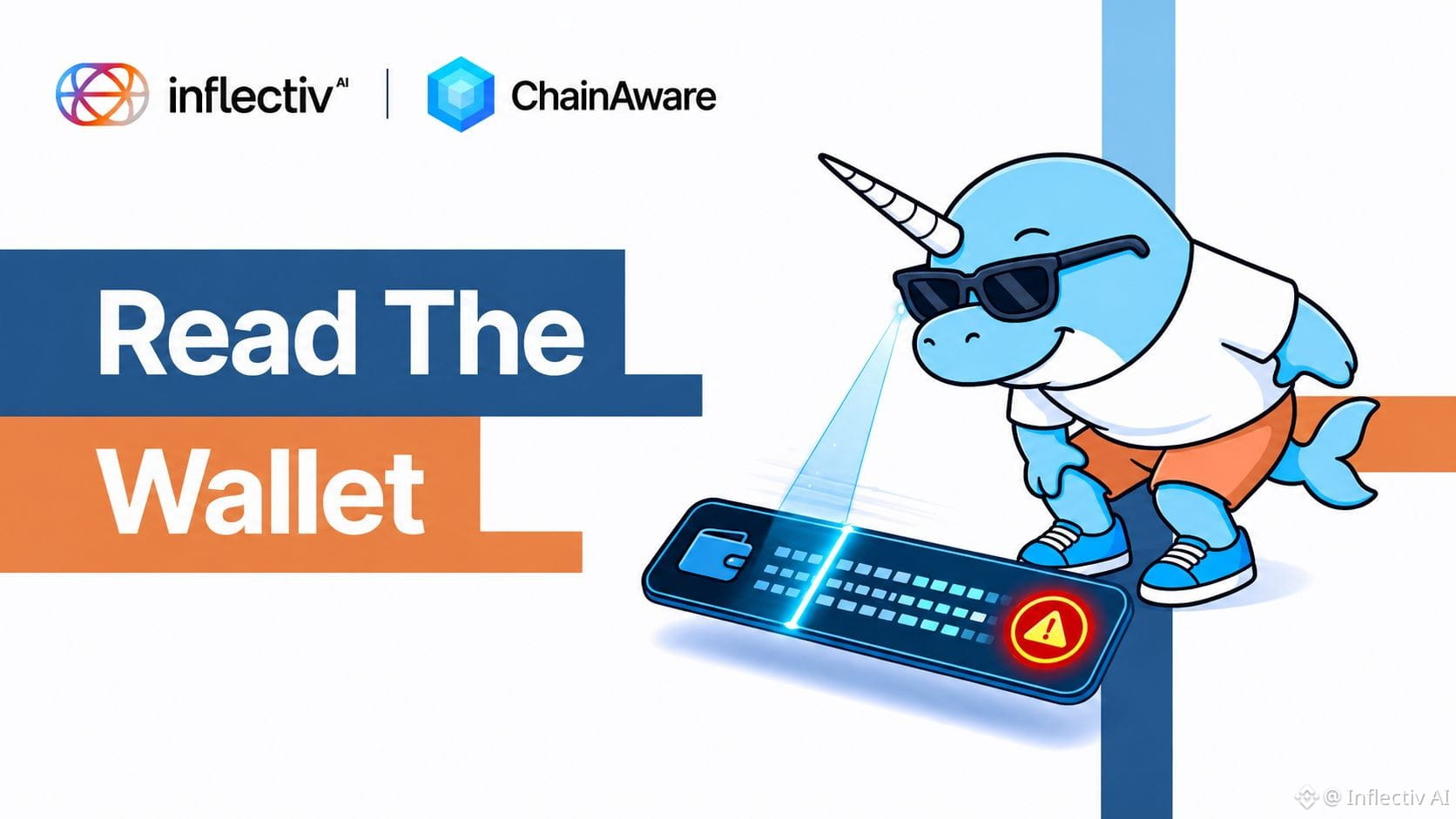
Your agent can execute a trade, sign a transaction, and move funds in seconds.
Speed was never the hard part. Trust was. Today that changes.
ChainAware is NOW live inside Inflectiv.
Read more here: https://x.com/inflectivAI/status/2091888510114349098
Your agent can execute a trade, sign a transaction, and move funds in seconds.
Speed was never the hard part. Trust was. Today that changes.
ChainAware is NOW live inside Inflectiv.
Read more here: https://x.com/inflectivAI/status/2091888510114349098
Speed was never the hard part. Trust was. Today that changes.
ChainAware is NOW live inside Inflectiv.
Read more here: https://x.com/inflectivAI/status/2091888510114349098
78
·
--
Datasets process faster than ever on Inflectiv 2.5.
What's the first thing you'll build with that speed?
Datasets process faster than ever on Inflectiv 2.5.
What's the first thing you'll build with that speed?
What's the first thing you'll build with that speed?
AI agent
0%
Tokenize a dataset
0%
Sell on marketplace
0%
Build with MCP
0%
0 votes • Voting closed
94
·
--

Article
Inflectiv 2.5 Now Live: Every Second CountsInflectiv 2.5 is now live.
We rebuilt how Inflectiv reads your files and your websites.
Here's everything that's new.
Faster file processing
Large documents now process in pieces, all at the same time.
• If one piece fails, only that piece retries, not the whole file
• There's no more file size limit
• Upload up to 20 files at once
Crawling, rebuilt
Crawling got faster too, especially on bigger sites.
• A 20-page crawl now takes 4 seconds instead of 33
• The bigger the site, the bigger the improvement
• Text comes back cleaner: no navigation menus, footers, or extra clutter
Fairer queues, automatic refunds
Processing is fairer now.
• Each account runs up to 5 files and 1 crawl at a time
• Extra jobs line up and start on their own, nothing to retry by hand
• Failed jobs refund your credits automatically
• Credit costs are checked before you upload, so there are no surprises
Smoother chat
Chat replies now stream faster, with quicker first responses.
Also fixed
• Settings has a new layout: sidebar on the side, more room for content
• Text inside screenshots and images is now captured more accurately
Inflectiv 2.5 is live now on app.inflectiv.ai.
Try it on your next file or crawl.
Inflectiv 2.5 Now Live: Every Second Counts
Inflectiv 2.5 is now live.
We rebuilt how Inflectiv reads your files and your websites.
Here's everything that's new.
Faster file processing
Large documents now process in pieces, all at the same time.
• If one piece fails, only that piece retries, not the whole file
• There's no more file size limit
• Upload up to 20 files at once
Crawling, rebuilt
Crawling got faster too, especially on bigger sites.
• A 20-page crawl now takes 4 seconds instead of 33
• The bigger the site, the bigger the improvement
• Text comes back cleaner: no navigation menus, footers, or extra clutter
Fairer queues, automatic refunds
Processing is fairer now.
• Each account runs up to 5 files and 1 crawl at a time
• Extra jobs line up and start on their own, nothing to retry by hand
• Failed jobs refund your credits automatically
• Credit costs are checked before you upload, so there are no surprises
Smoother chat
Chat replies now stream faster, with quicker first responses.
Also fixed
• Settings has a new layout: sidebar on the side, more room for content
• Text inside screenshots and images is now captured more accurately
Inflectiv 2.5 is live now on app.inflectiv.ai.
Try it on your next file or crawl.
We rebuilt how Inflectiv reads your files and your websites.
Here's everything that's new.
Faster file processing
Large documents now process in pieces, all at the same time.
• If one piece fails, only that piece retries, not the whole file
• There's no more file size limit
• Upload up to 20 files at once
Crawling, rebuilt
Crawling got faster too, especially on bigger sites.
• A 20-page crawl now takes 4 seconds instead of 33
• The bigger the site, the bigger the improvement
• Text comes back cleaner: no navigation menus, footers, or extra clutter
Fairer queues, automatic refunds
Processing is fairer now.
• Each account runs up to 5 files and 1 crawl at a time
• Extra jobs line up and start on their own, nothing to retry by hand
• Failed jobs refund your credits automatically
• Credit costs are checked before you upload, so there are no surprises
Smoother chat
Chat replies now stream faster, with quicker first responses.
Also fixed
• Settings has a new layout: sidebar on the side, more room for content
• Text inside screenshots and images is now captured more accurately
Inflectiv 2.5 is live now on app.inflectiv.ai.
Try it on your next file or crawl.
77
·
--
Inflectiv 2.5 is live. And it's fast.
33 seconds down to 4. Same 20-page crawl, over 8x faster.
Parallel file processing. Fairer queues. Refunds that land automatically.
Here's what changed 👇
Read full thread here: https://x.com/inflectivAI/status/2088212709204513145
Inflectiv 2.5 is live. And it's fast.
33 seconds down to 4. Same 20-page crawl, over 8x faster.
Parallel file processing. Fairer queues. Refunds that land automatically.
Here's what changed 👇
Read full thread here: https://x.com/inflectivAI/status/2088212709204513145
33 seconds down to 4. Same 20-page crawl, over 8x faster.
Parallel file processing. Fairer queues. Refunds that land automatically.
Here's what changed 👇
Read full thread here: https://x.com/inflectivAI/status/2088212709204513145

81
·
--
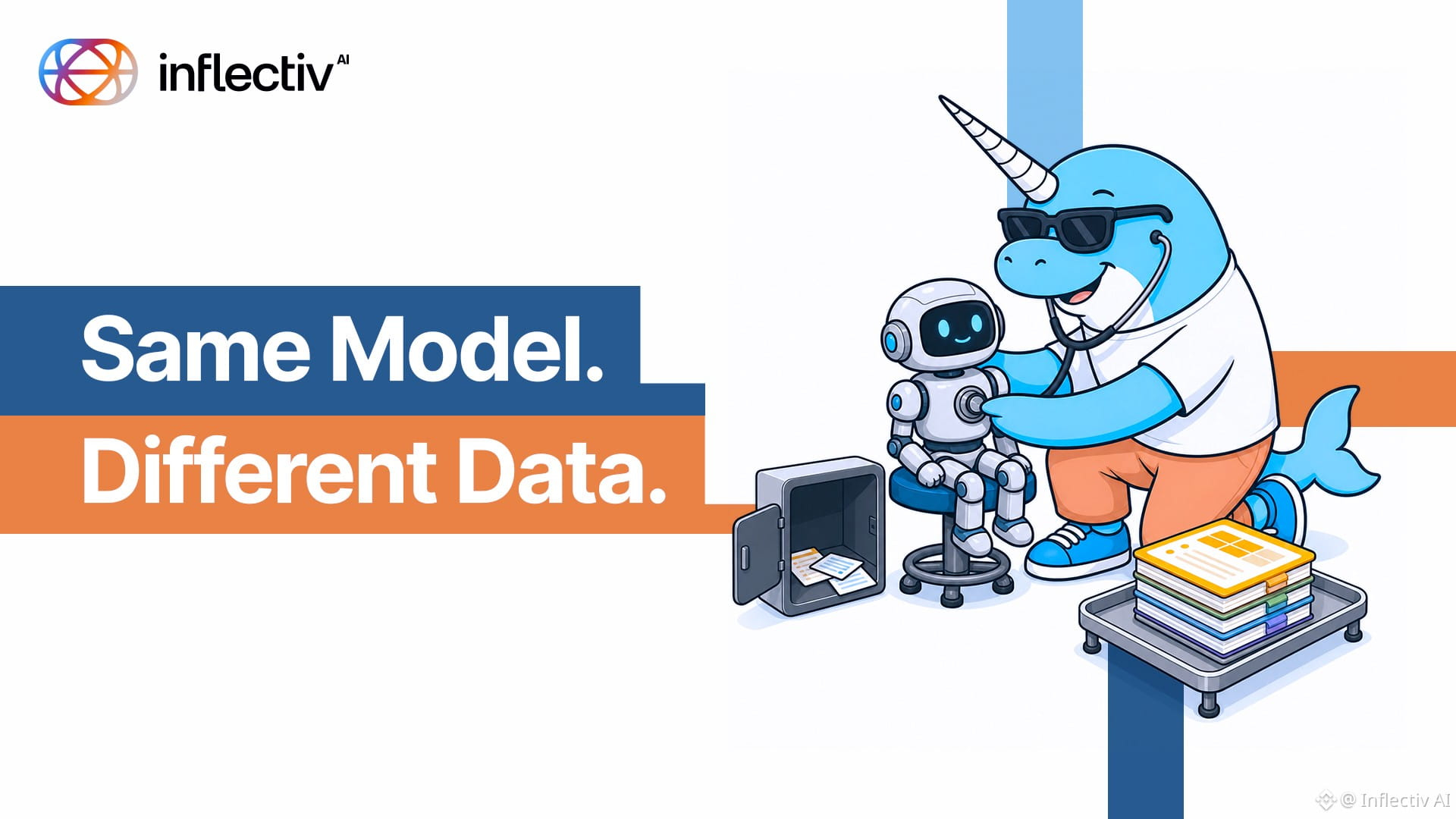
AI hallucination is a data problem. Not a model problem.
And it is solvable today.
Full thread 👉 https://x.com/inflectivAI/status/2087464576975548755
AI hallucination is a data problem. Not a model problem.
And it is solvable today.
Full thread 👉 https://x.com/inflectivAI/status/2087464576975548755
And it is solvable today.
Full thread 👉 https://x.com/inflectivAI/status/2087464576975548755
65
·
--
Inflectiv MCP means you never leave your editor.
Create agents. Upload docs. Search knowledge. Browse the marketplace. Pay with USDC.
26 tools. One command.
Connect your IDE: app.inflectiv.ai
Inflectiv MCP means you never leave your editor.
Create agents. Upload docs. Search knowledge. Browse the marketplace. Pay with USDC.
26 tools. One command.
Connect your IDE: app.inflectiv.ai
Create agents. Upload docs. Search knowledge. Browse the marketplace. Pay with USDC.
26 tools. One command.
Connect your IDE: app.inflectiv.ai

72
·
--

Article
When Agents Start Writing, Everything Changes.Three things happened this week, and they all point to the same shift.
For two years, agents were readers. Pull the context, answer the question, forget by the next run. A bad answer stayed on the screen. This week, we sat with what changes when they stop reading and start acting.
First, the honest number. Nobody tells you this when you start building AI agents: the model is ten percent of the work. The data is ninety. Most teams spend their time on the ten and wonder why their agent keeps missing the mark. That was Monday's post, short, direct, and the setup for everything after it.
Focus on what matters.
https://x.com/inflectivAI/status/2084246734696259589
Then, the economics.
Tokenization went live, and the deal changed. The old model sold access once. You earned once. Done. A tokenized dataset becomes a tradeable on-chain asset, creator fees on every trade, buys and sells, not just at launch. The bonding curve handles pricing and liquidity automatically. Early supporters get lower prices.
When demand hits the target, the token graduates to a real DEX. And the part that matters most: if the token goes to zero, the dataset still earns. Two independent layers. No downside risk on the underlying asset.
Then, the reason all of this needed a lock.
An agent that only reads can embarrass you. An agent that writes can cost you. That's the whole thesis behind Agent Vault. Most agents today store their credentials in plain-text environment variables and hand every key to the model at once. One prompt injection prints the whole environment. Nothing checks what the agent touches. Nothing writes down what it did. Agent Vault sits between the agent and everything it reaches, deny by default, grant only what a profile allows, log every decision, revoke instantly.
The agent never sees the raw credential. It sees the result of an action it was permitted to take. AES-256-GCM encryption, YAML permission profiles, an immutable audit trail. MIT licensed and open.
Read the full breakdown: https://x.com/inflectivAI/status/2085298019826618869
Read is easy. Write is where the market gets built, and where the risk gets real.
The rest of this year is the story of what happens when agents stop being research projects and start being infrastructure. This week was the beginning of that conversation.
When Agents Start Writing, Everything Changes.
Three things happened this week, and they all point to the same shift.
For two years, agents were readers. Pull the context, answer the question, forget by the next run. A bad answer stayed on the screen. This week, we sat with what changes when they stop reading and start acting.
First, the honest number. Nobody tells you this when you start building AI agents: the model is ten percent of the work. The data is ninety. Most teams spend their time on the ten and wonder why their agent keeps missing the mark. That was Monday's post, short, direct, and the setup for everything after it.
Focus on what matters.
https://x.com/inflectivAI/status/2084246734696259589
Then, the economics.
Tokenization went live, and the deal changed. The old model sold access once. You earned once. Done. A tokenized dataset becomes a tradeable on-chain asset, creator fees on every trade, buys and sells, not just at launch. The bonding curve handles pricing and liquidity automatically. Early supporters get lower prices.
When demand hits the target, the token graduates to a real DEX. And the part that matters most: if the token goes to zero, the dataset still earns. Two independent layers. No downside risk on the underlying asset.
Then, the reason all of this needed a lock.
An agent that only reads can embarrass you. An agent that writes can cost you. That's the whole thesis behind Agent Vault. Most agents today store their credentials in plain-text environment variables and hand every key to the model at once. One prompt injection prints the whole environment. Nothing checks what the agent touches. Nothing writes down what it did. Agent Vault sits between the agent and everything it reaches, deny by default, grant only what a profile allows, log every decision, revoke instantly.
The agent never sees the raw credential. It sees the result of an action it was permitted to take. AES-256-GCM encryption, YAML permission profiles, an immutable audit trail. MIT licensed and open.
Read the full breakdown: https://x.com/inflectivAI/status/2085298019826618869
Read is easy. Write is where the market gets built, and where the risk gets real.
The rest of this year is the story of what happens when agents stop being research projects and start being infrastructure. This week was the beginning of that conversation.
For two years, agents were readers. Pull the context, answer the question, forget by the next run. A bad answer stayed on the screen. This week, we sat with what changes when they stop reading and start acting.
First, the honest number. Nobody tells you this when you start building AI agents: the model is ten percent of the work. The data is ninety. Most teams spend their time on the ten and wonder why their agent keeps missing the mark. That was Monday's post, short, direct, and the setup for everything after it.
Focus on what matters.
https://x.com/inflectivAI/status/2084246734696259589
Then, the economics.
Tokenization went live, and the deal changed. The old model sold access once. You earned once. Done. A tokenized dataset becomes a tradeable on-chain asset, creator fees on every trade, buys and sells, not just at launch. The bonding curve handles pricing and liquidity automatically. Early supporters get lower prices.
When demand hits the target, the token graduates to a real DEX. And the part that matters most: if the token goes to zero, the dataset still earns. Two independent layers. No downside risk on the underlying asset.
Then, the reason all of this needed a lock.
An agent that only reads can embarrass you. An agent that writes can cost you. That's the whole thesis behind Agent Vault. Most agents today store their credentials in plain-text environment variables and hand every key to the model at once. One prompt injection prints the whole environment. Nothing checks what the agent touches. Nothing writes down what it did. Agent Vault sits between the agent and everything it reaches, deny by default, grant only what a profile allows, log every decision, revoke instantly.
The agent never sees the raw credential. It sees the result of an action it was permitted to take. AES-256-GCM encryption, YAML permission profiles, an immutable audit trail. MIT licensed and open.
Read the full breakdown: https://x.com/inflectivAI/status/2085298019826618869
Read is easy. Write is where the market gets built, and where the risk gets real.
The rest of this year is the story of what happens when agents stop being research projects and start being infrastructure. This week was the beginning of that conversation.
68
·
--
Article
A Reading Agent Is Safe. A Writing Agent Is Not.An agent that only reads can embarrass you. An agent that writes can cost you.
That single line is the whole reason Agent Vault exists.
For most of the last two years, agents were readers. They pulled context, answered a question, and forgot everything by the next run. A bad answer was a bad answer. You corrected it and moved on. The blast radius ended at the screen.
Then agents started acting. Sending the email. Moving the funds. Updating the record. Writing back to the system other people depend on.
The moment an agent can write, the question changes. It stops being "is the answer good" and becomes "what is this thing allowed to touch."
Most agents today cannot answer that question at all.
How agents actually hold your secrets
Open a typical agent project and look at how it stores credentials. API keys sit in plain text in an environment variable. The agent gets handed all of them at once. Nothing checks what it does with them. Nothing writes down what happened.
This works right up until it doesn't.
A prompt injection talks the agent into printing its own environment. A single over-broad key turns a small mistake into a large one. Something goes wrong at 2 am and there is no log to tell you which action caused it, because no action was ever recorded.
None of that is a model failure. The model did what it was told. The failure is that the agent was trusted by default, and trust by default is not a security model. It is the absence of one.
Put a doorman in front of the door
Agent Vault sits between the agent and everything it reaches. The agent no longer holds the keys. It makes a request, and the request goes through a check first.
The rule underneath it is simple: start with no access. An agent begins with nothing. It receives exactly what a written profile grants it, nothing more. Every request is evaluated against that profile. Every decision is logged. Access can be pulled back the instant something looks wrong.
The agent never sees the raw credential. It sees the result of an action it was permitted to take. The difference sounds small and is not. A key the agent cannot read is a key a prompt injection cannot leak.
The parts that make it real
Credentials are encrypted at rest with AES-256-GCM, each with its own salt. The agent never touches the plaintext.
Permissions live in a profile written in plain YAML. Allow this. Deny that. Redact the sensitive field but keep the variable name so the agent still works. A person can read the whole permission set in one sitting and know precisely what the agent can do.
Every decision the vault makes lands in an audit trail that cannot be quietly edited later. When you need to know what happened, the answer is already written down.
And the standard underneath all of it, the Agent Vault Protocol, is open and MIT licensed. Not a black box you have to trust. A specification you can read, run, and carry between tools.
Why this had to come now
Inflectiv is built so agents write intelligence back to the network, not just read from it. That is the entire point of a supply side that compounds. But the instant an agent can write to something other people rely on, a permission model stops being a nice-to-have and becomes the load-bearing wall.
You cannot invite agents to produce and leave them holding every key in the building.
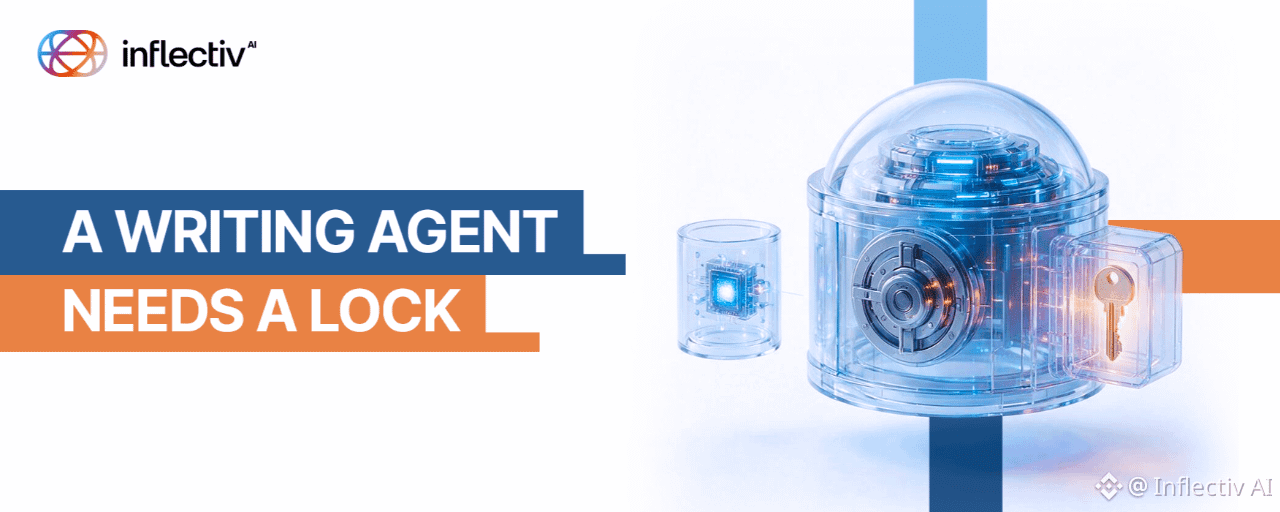
A reading agent is safe. A writing agent needs a lock.
Agent Vault is the lock.
Live at agentvault.inflectiv.ai.
A Reading Agent Is Safe. A Writing Agent Is Not.
An agent that only reads can embarrass you. An agent that writes can cost you.
That single line is the whole reason Agent Vault exists.
For most of the last two years, agents were readers. They pulled context, answered a question, and forgot everything by the next run. A bad answer was a bad answer. You corrected it and moved on. The blast radius ended at the screen.
Then agents started acting. Sending the email. Moving the funds. Updating the record. Writing back to the system other people depend on.
The moment an agent can write, the question changes. It stops being "is the answer good" and becomes "what is this thing allowed to touch."
Most agents today cannot answer that question at all.
How agents actually hold your secrets
Open a typical agent project and look at how it stores credentials. API keys sit in plain text in an environment variable. The agent gets handed all of them at once. Nothing checks what it does with them. Nothing writes down what happened.
This works right up until it doesn't.
A prompt injection talks the agent into printing its own environment. A single over-broad key turns a small mistake into a large one. Something goes wrong at 2 am and there is no log to tell you which action caused it, because no action was ever recorded.
None of that is a model failure. The model did what it was told. The failure is that the agent was trusted by default, and trust by default is not a security model. It is the absence of one.
Put a doorman in front of the door
Agent Vault sits between the agent and everything it reaches. The agent no longer holds the keys. It makes a request, and the request goes through a check first.
The rule underneath it is simple: start with no access. An agent begins with nothing. It receives exactly what a written profile grants it, nothing more. Every request is evaluated against that profile. Every decision is logged. Access can be pulled back the instant something looks wrong.
The agent never sees the raw credential. It sees the result of an action it was permitted to take. The difference sounds small and is not. A key the agent cannot read is a key a prompt injection cannot leak.
The parts that make it real
Credentials are encrypted at rest with AES-256-GCM, each with its own salt. The agent never touches the plaintext.
Permissions live in a profile written in plain YAML. Allow this. Deny that. Redact the sensitive field but keep the variable name so the agent still works. A person can read the whole permission set in one sitting and know precisely what the agent can do.
Every decision the vault makes lands in an audit trail that cannot be quietly edited later. When you need to know what happened, the answer is already written down.
And the standard underneath all of it, the Agent Vault Protocol, is open and MIT licensed. Not a black box you have to trust. A specification you can read, run, and carry between tools.
Why this had to come now
Inflectiv is built so agents write intelligence back to the network, not just read from it. That is the entire point of a supply side that compounds. But the instant an agent can write to something other people rely on, a permission model stops being a nice-to-have and becomes the load-bearing wall.
You cannot invite agents to produce and leave them holding every key in the building.
A reading agent is safe. A writing agent needs a lock.
Agent Vault is the lock.
Live at agentvault.inflectiv.ai.
That single line is the whole reason Agent Vault exists.
For most of the last two years, agents were readers. They pulled context, answered a question, and forgot everything by the next run. A bad answer was a bad answer. You corrected it and moved on. The blast radius ended at the screen.
Then agents started acting. Sending the email. Moving the funds. Updating the record. Writing back to the system other people depend on.
The moment an agent can write, the question changes. It stops being "is the answer good" and becomes "what is this thing allowed to touch."
Most agents today cannot answer that question at all.
How agents actually hold your secrets
Open a typical agent project and look at how it stores credentials. API keys sit in plain text in an environment variable. The agent gets handed all of them at once. Nothing checks what it does with them. Nothing writes down what happened.
This works right up until it doesn't.
A prompt injection talks the agent into printing its own environment. A single over-broad key turns a small mistake into a large one. Something goes wrong at 2 am and there is no log to tell you which action caused it, because no action was ever recorded.
None of that is a model failure. The model did what it was told. The failure is that the agent was trusted by default, and trust by default is not a security model. It is the absence of one.
Put a doorman in front of the door
Agent Vault sits between the agent and everything it reaches. The agent no longer holds the keys. It makes a request, and the request goes through a check first.
The rule underneath it is simple: start with no access. An agent begins with nothing. It receives exactly what a written profile grants it, nothing more. Every request is evaluated against that profile. Every decision is logged. Access can be pulled back the instant something looks wrong.
The agent never sees the raw credential. It sees the result of an action it was permitted to take. The difference sounds small and is not. A key the agent cannot read is a key a prompt injection cannot leak.
The parts that make it real
Credentials are encrypted at rest with AES-256-GCM, each with its own salt. The agent never touches the plaintext.
Permissions live in a profile written in plain YAML. Allow this. Deny that. Redact the sensitive field but keep the variable name so the agent still works. A person can read the whole permission set in one sitting and know precisely what the agent can do.
Every decision the vault makes lands in an audit trail that cannot be quietly edited later. When you need to know what happened, the answer is already written down.
And the standard underneath all of it, the Agent Vault Protocol, is open and MIT licensed. Not a black box you have to trust. A specification you can read, run, and carry between tools.
Why this had to come now
Inflectiv is built so agents write intelligence back to the network, not just read from it. That is the entire point of a supply side that compounds. But the instant an agent can write to something other people rely on, a permission model stops being a nice-to-have and becomes the load-bearing wall.
You cannot invite agents to produce and leave them holding every key in the building.
A reading agent is safe. A writing agent needs a lock.
Agent Vault is the lock.
Live at agentvault.inflectiv.ai.
69
·
--
What nobody tells you about building AI agents:
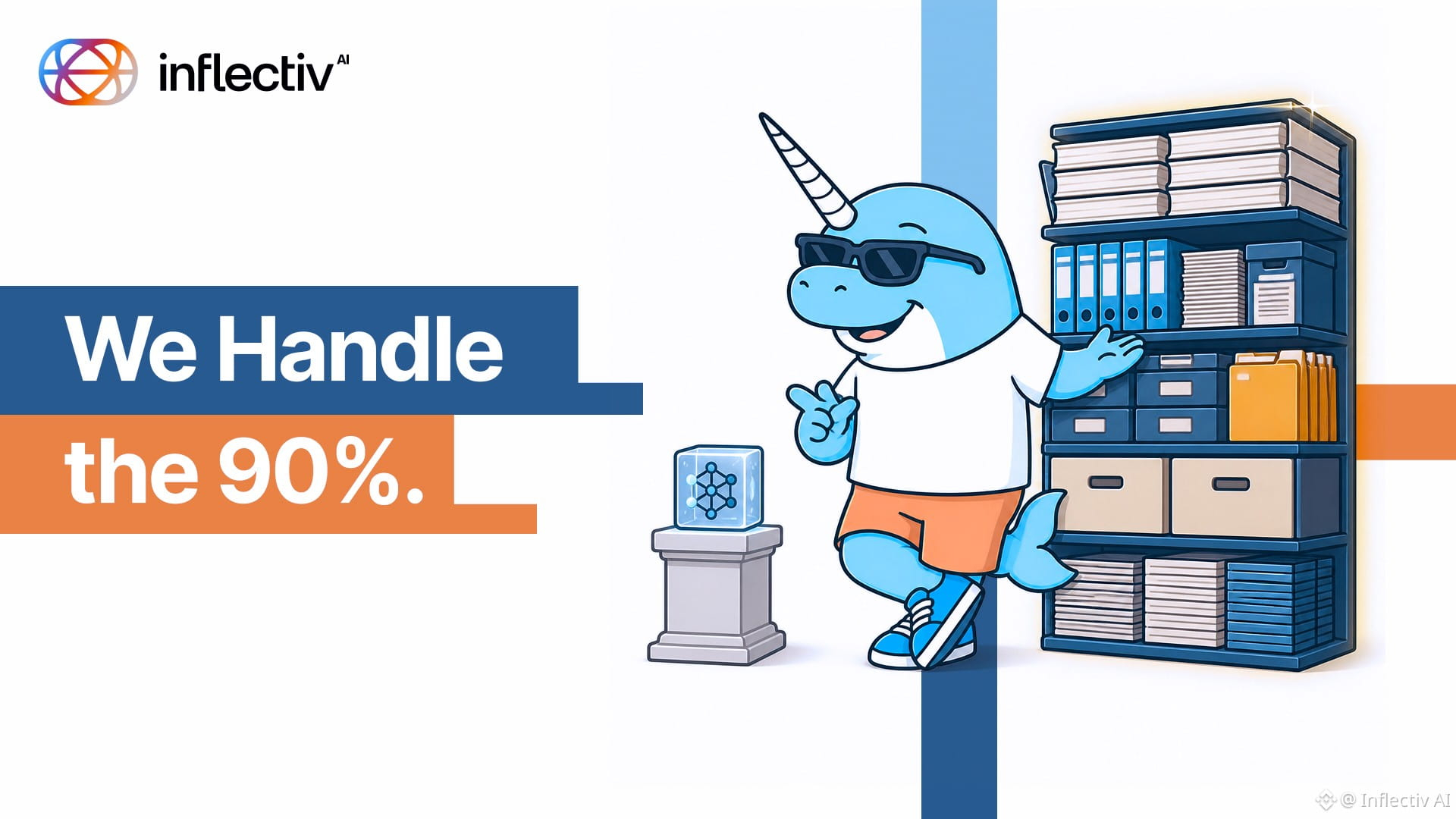
The model is 10% of the work.
The data is 90% of the work.
Inflectiv handles the hard 90%.
Focus on what matters: https://app.inflectiv.ai
What nobody tells you about building AI agents:
The model is 10% of the work.
The data is 90% of the work.
Inflectiv handles the hard 90%.
Focus on what matters: https://app.inflectiv.ai
The model is 10% of the work.
The data is 90% of the work.
Inflectiv handles the hard 90%.
Focus on what matters: https://app.inflectiv.ai
71
·
--
What is the first thing you would build on Inflectiv?
What is the first thing you would build on Inflectiv?
Support agent
0%
Research tool
0%
Knowledge base
0%
Dataset to sell
0%
0 votes • Voting closed
78
Log in to explore more content
Join global crypto users on Binance Square
⚡️ Get latest and useful information about crypto.
💬 Trusted by the world’s largest crypto exchange.
👍 Discover real insights from verified creators.
Email / Phone number
Trending Topics
QNTRises39%
38,416 views
1,110 Discussing
🚨 QNT IS SURGING! 📈
$QNT is making a huge move today, climbing nearly 40% as buying pressure accelerates.
The rally has put Quant firmly back in the spotlight, with traders watching to see whether this momentum can continue or if a pullback comes next.
🔥 Key things to watch:
• Strong trading volume
• Momentum above recent highs
• The $100 psychological level
• Whether buyers can maintain control
Big moves bring big volatility. Stay alert and manage risk.
Are you watching $QNT? 👀
#QNT #altcoins #CryptoNews
#qntrises39% $QNT
The07
·4 Likes
·4k views
EthereumBreaksAbove$2700
3,555 views
110 Discussing
BitgetBreachForgedRequestsNotStolenKeys
36,796 views
878 Discussing