


Imran Khan Dahri
📊 Crypto Markets | Charts | Trade Setups 🎯 Real levels. | Selective Trades. No FOMO. 🧠 Analysis • Insights • Disciplines
Open Trade
Frequent Trader
1.7 Years
138 Following
167 Followers
307 Liked
Posts
Portfolio
All
Quotes
Videos
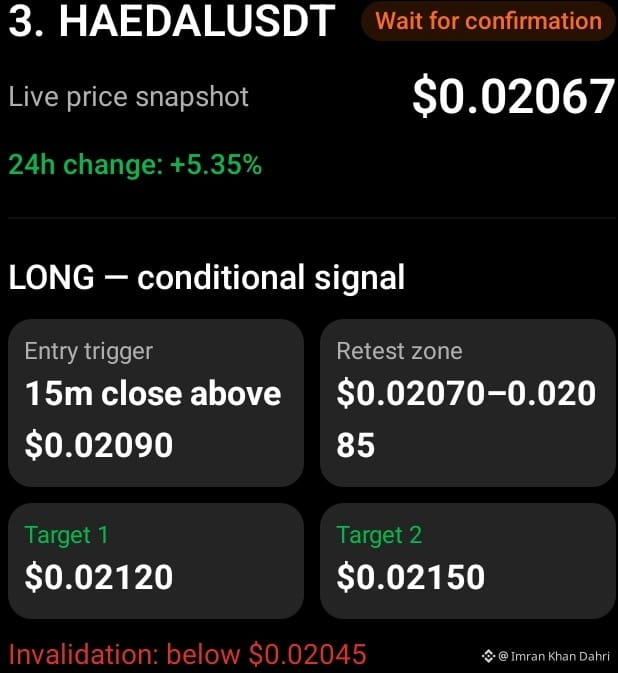
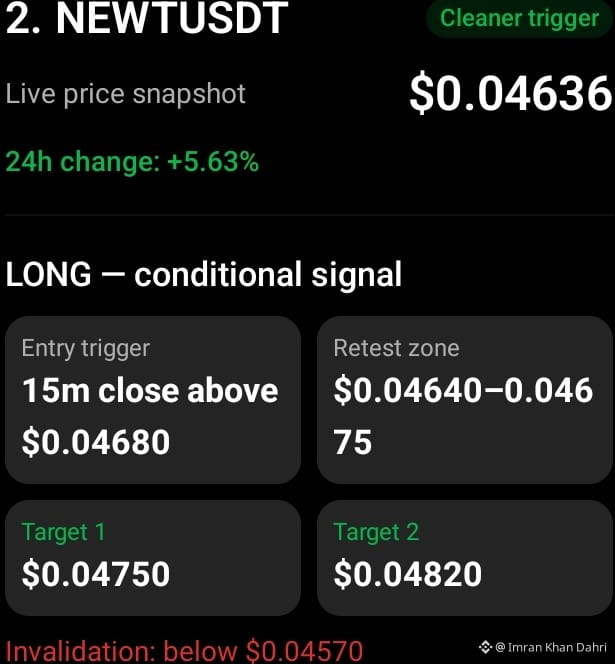
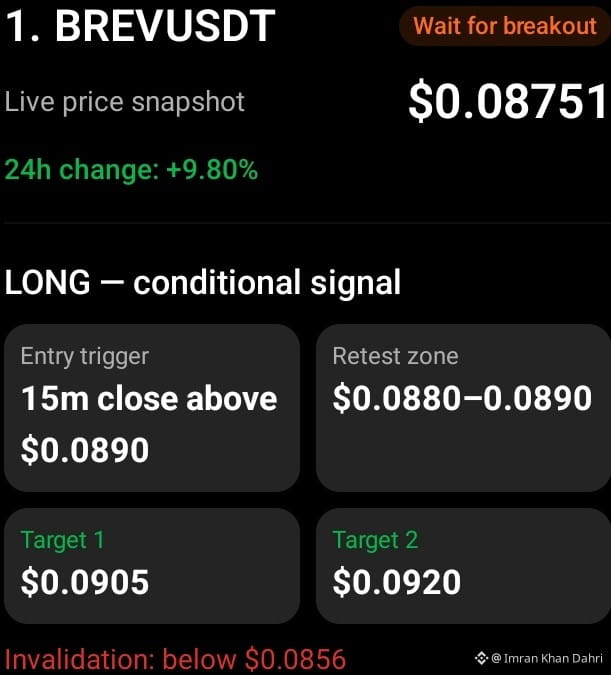
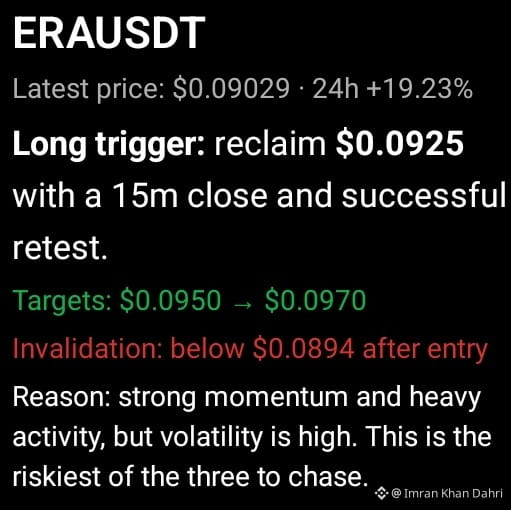
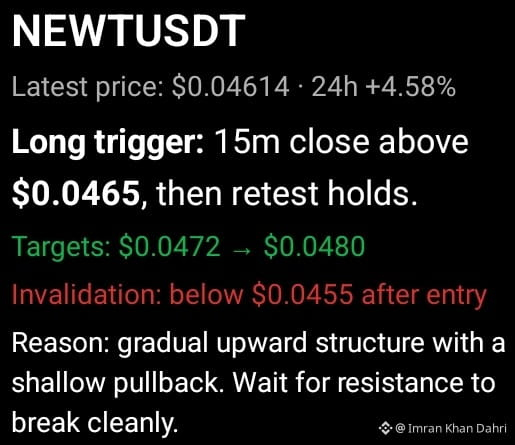
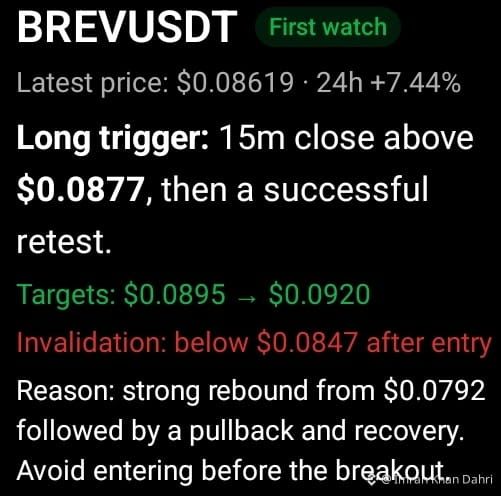
Imran Khan Dahri
·
--
Crypto Survival School — Episode 4
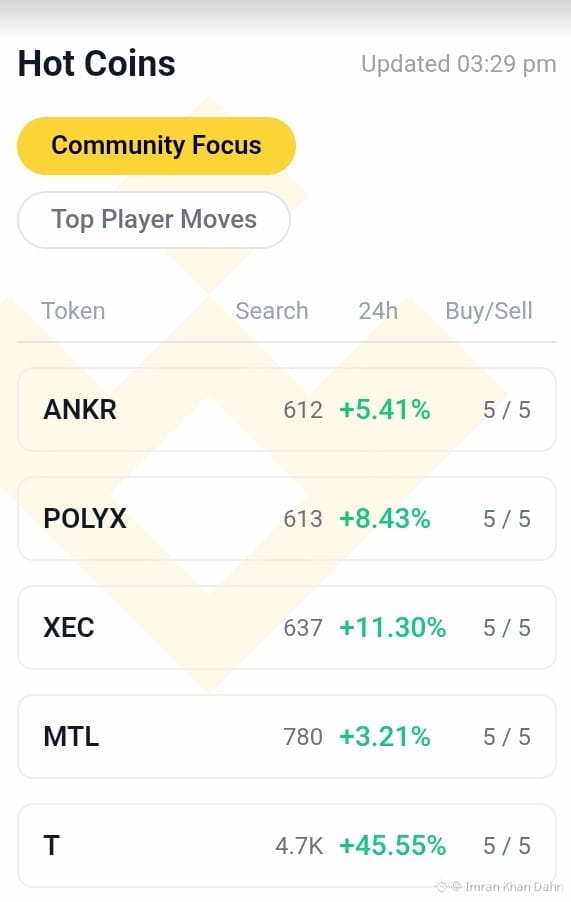
A Coin Is Trending. Who Is Left to Buy It?
You open Binance and see a coin flying.
It's up 40%. Its trading volume has exploded. People are talking about it everywhere.
One thought enters your mind:
"If I buy now, maybe I can catch another 20%."
You buy.
For a few minutes, nothing happens. Then the price starts slipping. The green candles become smaller, and suddenly the coin you thought was about to take off is falling.
You check the market again. The coin is still up massively over the last 24 hours.
So why are you losing money?
Because you saw how far the coin had already travelled, but you never asked what could drive it higher from your entry price.
Let's talk about the question that can save a beginner from a lot of painful decisions.
A trending coin needs something you can't see on a percentage chart
Imagine a token rises from $1 to $1.40.
That's a 40% increase.
Now thousands of people notice it. Some buy because of the chart. Others buy because their friends are talking about it. Some traders who bought much earlier begin taking profits.
All of these people can be looking at the same coin for completely different reasons.
And here's the interesting part: the fact that the price has risen doesn't tell you how many people are still willing to buy it at $1.40, $1.50, or $1.60.
The next move depends on what buyers and sellers actually do.
If buyers are willing to keep paying higher prices, the rally can continue.
If buyers become less aggressive while sellers are increasingly willing to sell, the price can stall or fall.
Neither outcome is guaranteed simply because the coin is trending.
Popularity tells you that people are paying attention. It doesn't tell you what they'll pay next.
The volume number is more misleading than you might think
Let's say you see a coin with $20 million in trading volume over 24 hours.
That sounds impressive.
But what does the number actually tell you?
It tells you how much trading took place during that period, according to the reported volume measure.
It does not mean $20 million of brand-new money entered the coin and is now waiting to push its price higher.
Every completed trade has a buyer and a seller. One person may be opening a position while another is closing one. Traders can buy and sell repeatedly, generating substantial volume without that number telling you which direction the price will move next.
High volume can accompany a strong breakout. It can also accompany heavy selling, profit-taking, or a battle between buyers and sellers.
So don't look at a large volume number and automatically translate it into "more upside coming."
Ask a better question:
What is the price actually doing while all this trading is happening?
Is it continuing to make progress? Is it breaking above a level and holding it? Or is the price repeatedly pushing higher and then falling back?
Volume provides context. It doesn't predict the future by itself.
Here's a detail beginners often overlook: getting out matters, too
Suppose you find a smaller token that looks ready to move.
Its chart is exciting, and the last price looks attractive.
But you check the order book and discover that the gap between the best available buying price and selling price is relatively wide. There aren't many orders near the current price, either.
That matters.
Liquidity describes how easily you can buy or sell without significantly affecting the price. When liquidity is thin, a market order may execute at a worse average price than you expected. That difference is called slippage.
In plain English, the price you see on the screen isn't always the price you get.
This can hurt when entering a trade, and it can hurt again when exiting.
A coin might look easy to trade while its price is rising, but that doesn't guarantee you'll be able to sell your position at the price you want if the market suddenly turns.
That's why a spectacular percentage gain isn't enough to judge a trading opportunity.
You also need to consider the market in which you're trading.
So how do you judge a coin that's already trending?
You don't have to predict the exact top. Nobody can do that consistently.
Instead, take a moment to examine four things before you decide whether a trade is worth considering.
First, look beyond the 24-hour percentage.
Open the chart and zoom out.
Has the coin just broken above a level it struggled to cross previously? Or has it already travelled a long way from its recent trading range?
A large move doesn't automatically mean the rally is finished. But it does mean you should understand where you're entering rather than buying simply because the number is green.
Second, watch what happens after the surge.
Does the price hold near the breakout area, or does it quickly fall back into its previous range?
A breakout that holds may provide a different trading opportunity from one that immediately fails.
Neither pattern guarantees success. The point is to observe the market's response instead of assuming the next candle must be green.
Third, check the trading conditions.
Look at the bid-ask spread and the available orders near the current price.
A deep order book generally makes it easier to trade without moving the price as much. A thin book can make execution more difficult.
Remember, visible orders can change or disappear, so an order book is a snapshot—not a promise that liquidity will remain available.
Finally, know what would make you walk away.
Before entering, decide what would invalidate your trading idea and how much you can afford to lose if you're wrong.
If the only reason you want to buy is that the coin is trending, you haven't yet established a reason to take the trade.
You can simply wait.
What if the coin keeps rising without you?
This is where the hardest part begins.
You decide not to buy. Then the coin rises another 10%.
Now you feel foolish for waiting.
You think you should have trusted your instincts. Next time, you promise yourself, you'll enter earlier.
But notice what just happened.
You made a decision based on the information available at the time. The market then moved in a direction you didn't capture. That doesn't automatically make your decision wrong.
A cautious decision can miss a profitable move. An impulsive decision can occasionally make money.
The result of one trade doesn't tell you whether your decision-making process is good.
Research published in Psychology & Marketing examined how fear-of-missing-out messages influence crypto investment decisions. Across five studies involving eight experiments, the researchers found that FOMO appeals could influence investment intentions and encourage repeated investment decisions, including after previous losses.
That doesn't mean every trending coin is dangerous. It means the feeling of missing out can itself become a reason to take risks.
And that's worth recognizing before you click Buy.
The question to remember
The next time a coin suddenly appears everywhere, don't ask only:
"How much higher can this go?"
Ask:
"What evidence would convince me that buyers are still in control—and what would tell me I'm wrong?"
You might still decide to trade it. You might decide to wait for a pullback or a confirmed breakout. You might decide the opportunity isn't worth the risk.
Those are different choices, but each can be made deliberately.
You don't have to catch every rally to become a better trader.
Sometimes the most valuable skill is learning to watch a coin run without feeling that you must chase it.
Let me ask you something:
When you see a coin up 30–50% on the trending list, what's your first instinct?
Do you buy because the momentum looks strong, wait for a pullback, or avoid it altogether?
Tell me why. I'm interested in how beginners actually make these decisions—not just what the perfect answer looks like after the chart has already moved.
Next in Crypto Survival School: The Stop-Loss That Didn't Save You — Understanding Why Your Exit Price Isn't Always Your Final Price.

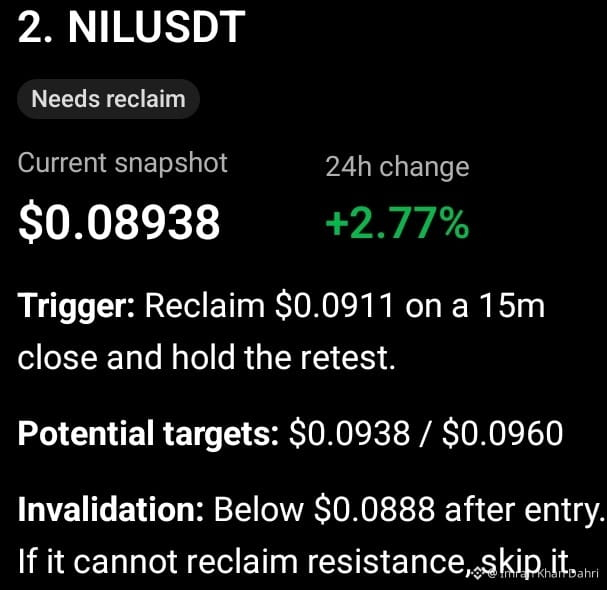
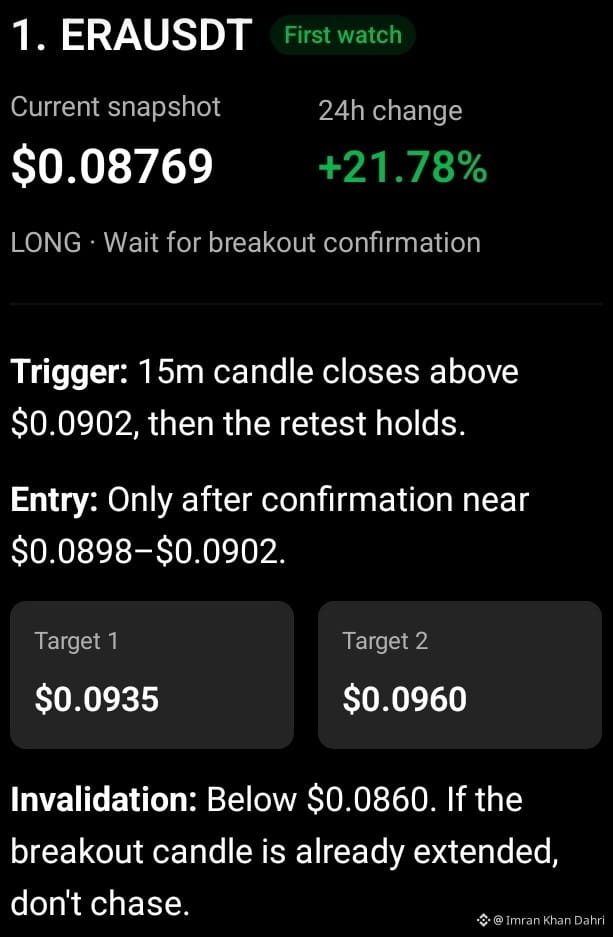
Imran Khan Dahri
·
--
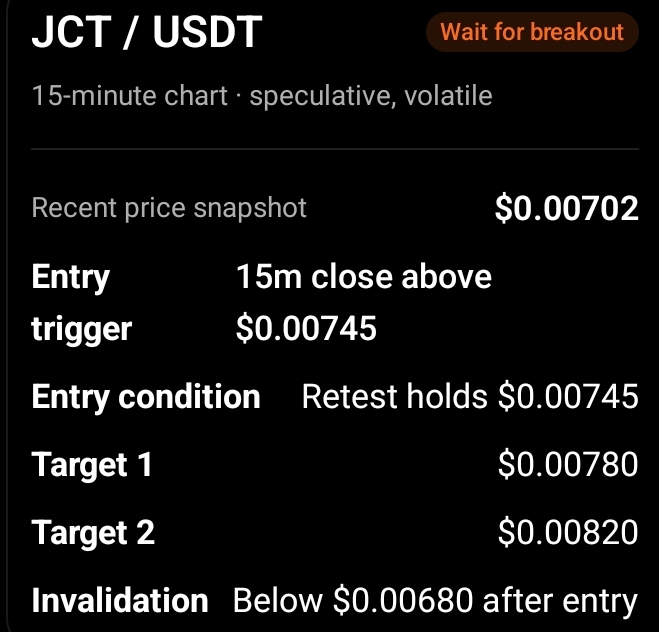
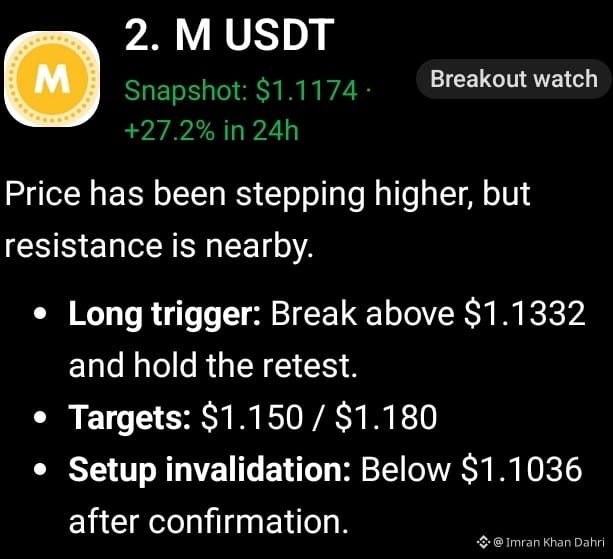
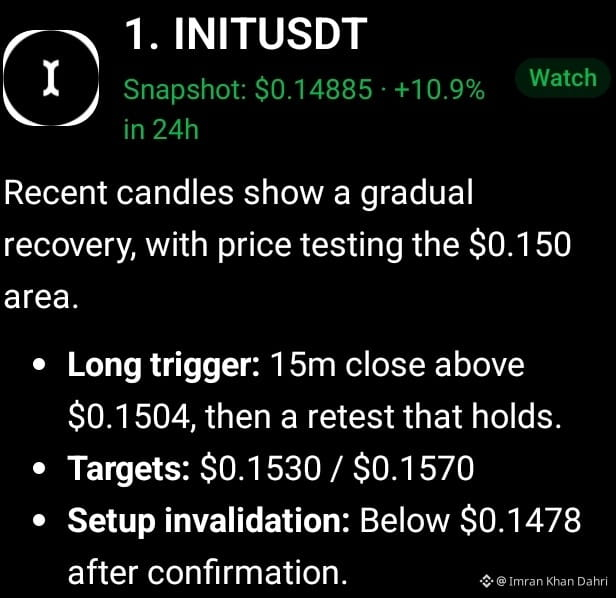
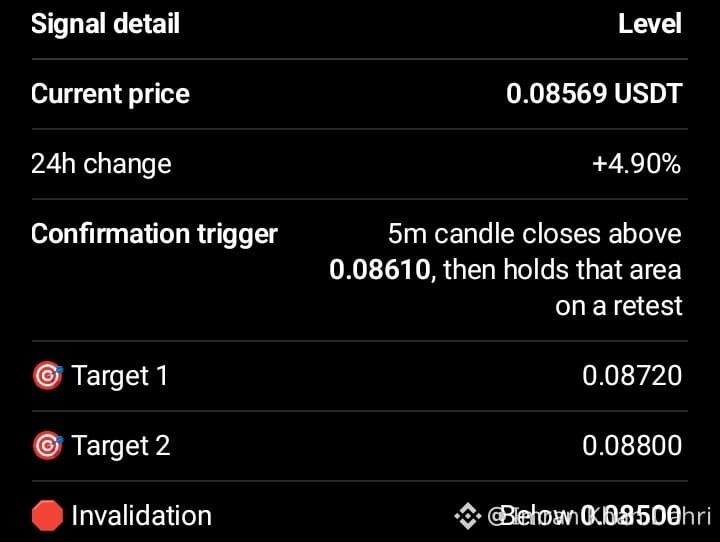
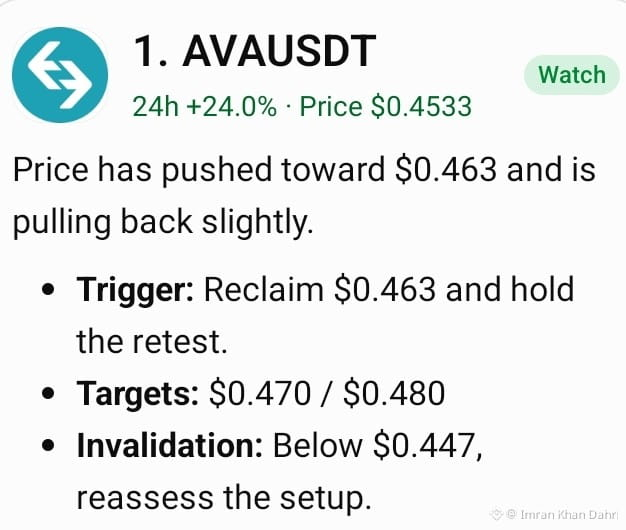
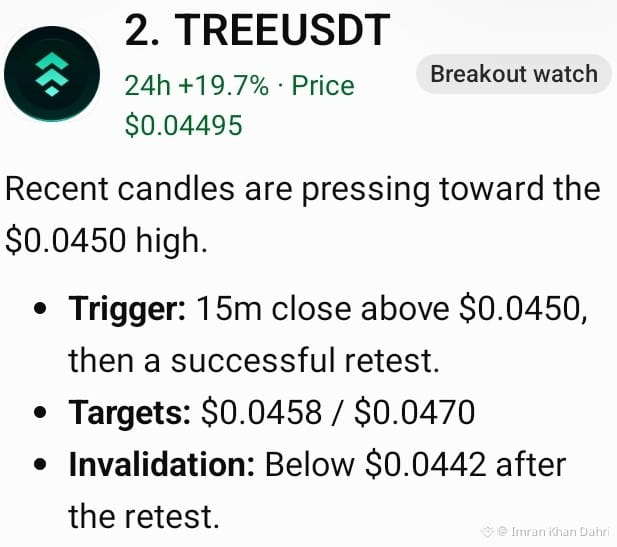
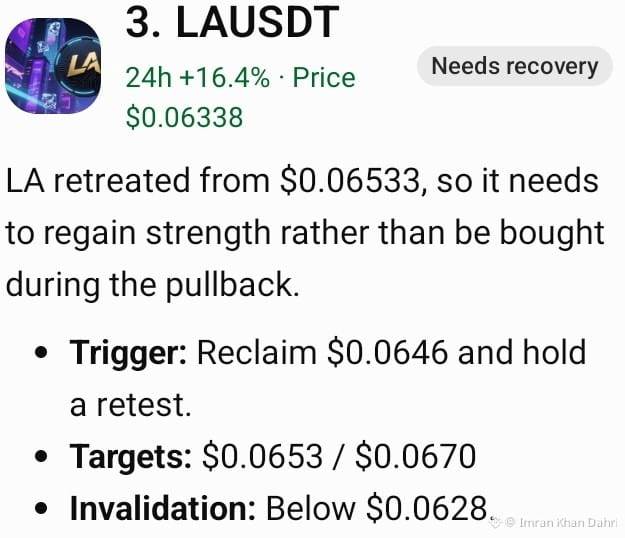
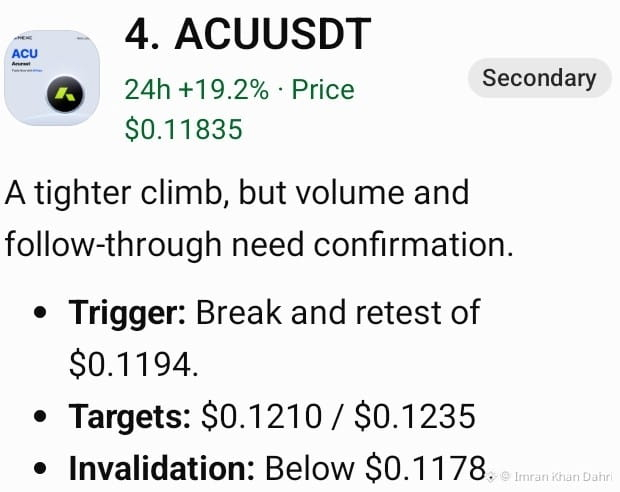
BullishHere is new signal in image 👇 check image
$JCT
My decision: no market entry now. If JCT fails to confirm, we skip it—no forcing a trade just to find a winner. Use isolated margin and very low leverage; with a small account, fees and volatility can quickly eat into your balance.
$JCT
My decision: no market entry now. If JCT fails to confirm, we skip it—no forcing a trade just to find a winner. Use isolated margin and very low leverage; with a small account, fees and volatility can quickly eat into your balance.
Imran Khan Dahri
·
--
Crypto Survival School — Episode 3
You Have $10. Here's How Much You Can Actually Afford to Lose.
Let's say you have $10 in your crypto account.
You find a coin you like. The chart looks promising, and you start imagining what would happen if your $10 became $20.
A 100% return. Double your money.
But here's a question most beginners ask too late:
If this trade goes wrong, how much of your $10 are you prepared to lose?
Not how much you hope to make.
How much can you lose without turning one bad trade into a desperate attempt to win it back?
That question might be more important than finding your next coin.
The $10 mistake that doesn't look dangerous
Imagine you put your entire $10 into a coin.
The price falls 5%.
Your position is now worth $9.50, before trading costs.
You've lost just 50 cents.
Sounds harmless, right?
But look at it another way: you've lost 5% of your entire account in one trade.
Now imagine you do the same thing five times, losing 5% of your remaining balance on each trade.
Your $10 would fall to about $7.74, before fees.
And that's assuming you never increase your position to recover a loss, never panic-buy another coin, and never make a bigger mistake.
The problem isn't that 50 cents is a huge amount of money.
The problem is the habit you're building: committing too much of your account to a single idea without first deciding what happens if you're wrong.
There's a difference between your position and your risk
This is where many new traders get confused.
They think, "I have $10, so I'll trade with $10."
But the amount you put into a trade isn't the same as the amount you stand to lose.
Let's use a simple example.
You have $10 and decide, as a conservative learning exercise, to risk no more than 1% of your account on a trade.
One percent of $10 is 10 cents.
Suppose your planned stop-loss is 5% below your entry price.
Ignoring fees and slippage, a $2 position would lose about 10 cents if the price fell 5% and your exit executed at the intended level.
Here's the calculation:
$2 position × 5% price decline = $0.10 loss.
Compare that with putting the entire $10 into the same trade.
$10 position × 5% price decline = $0.50 loss.
Same coin. Same price movement. Five times the loss.
That's the power of position sizing.
The 1% figure is a commonly used risk-management guideline, not a universal rule or a guarantee of safety. Your circumstances, strategy and ability to absorb losses still matter.
And remember, these calculations assume the exit happens at the intended price. Actual losses can be higher because of fees, slippage or fast market movements.
Here's the uncomfortable part about a $10 account
You might now be thinking, "Fine. I'll risk just 10 cents per trade."
Good thinking. But there's another problem.
Real trading has costs and restrictions.
Depending on the trading pair and product, minimum order sizes can make a very small position impractical. Trading fees can also take a noticeable percentage of a tiny account.
That means the mathematically sensible position may not be practical to place on a particular market.
And this is where beginners sometimes make a costly mistake.
Instead of accepting that their account is too small for the trade, they increase the position, move their stop farther away or use leverage to make the potential profit look more attractive.
They've solved the problem of placing a bigger trade.
They haven't solved the problem of managing risk.
A small account doesn't become safer just because you make the trade bigger.
Sometimes the correct decision is to skip the trade and practise on a demo account until you understand the process and have enough capital to trade within sensible limits.
And then there's leverage…
Suppose your $10 backs a $30 futures position using 3× leverage.
A 5% move against that position would produce a loss of approximately $1.50 before fees and funding costs, assuming a straightforward linear position and ignoring liquidation mechanics.
That's 15% of your original $10 account.
The coin hasn't even moved 10% against you.
This is why leverage deserves more respect than it usually gets from beginners.
It changes how much exposure you have relative to your own capital. In futures, liquidation can also close a position when its margin falls below the required maintenance level. The exact liquidation price depends on the contract, position and exchange rules.
Leverage doesn't guarantee a loss, of course. But it makes the consequences of an adverse price move larger relative to your margin.
If you're still learning how entries, exits and stop-losses work, you don't need leverage to prove that you're serious about trading.
You need to understand what you're doing before increasing the stakes.
Try this before your next trade
Open a calculator. You don't need another indicator for this exercise.
Write down these four numbers before entering any trade:
1. Your account balance
How much money have you actually allocated to trading? Don't include money you need for food, bills, emergencies or other essentials.
2. Your maximum planned loss
Choose a loss limit that you can genuinely afford. For this example, we'll use 1% of a $10 account: $0.10.
3. Your invalidation point
At what price would your reason for entering the trade no longer make sense?
Don't choose a stop-loss just because you want a particular position size. The stop should reflect the trade idea and market conditions.
4. Your position size
Calculate how large the position can be while keeping the planned loss within your limit.
For a simple spot trade:
Position size ≈ maximum planned loss ÷ stop-loss distance.
For example:
$0.10 ÷ 0.05 = $2.
That's a $2 position when the stop is 5% below entry, before fees and execution differences.
If the minimum order size or trading costs make that plan impractical, don't force it. Use a demo account or wait until you can trade within your limits.
A calculator won't tell you whether a coin will rise.
It can help you understand what you're risking before you find out whether your idea was wrong.
Your first goal shouldn't be turning $10 into $100
I know why that goal is attractive.
A small account can feel frustrating when you see other people sharing large profits. You might wonder how long it will take to build meaningful capital if you only make small gains.
But trying to force a small account to produce a large return can encourage you to take risks that make it even smaller.
For now, measure progress differently.
Can you explain why you entered a trade?
Can you identify what would invalidate your idea?
Can you calculate your potential loss before entering?
And when a trade goes wrong, can you accept it without immediately trying to win the money back?
Those are useful skills whether your account contains $10, $100 or $10,000.
You can practise them without risking real money, too.
Because the purpose of learning isn't to prove how quickly you can grow a small account.
It's to build a decision-making process that doesn't fall apart the moment the market moves against you.
One question for the community
If you started crypto trading today with just $10, what would you focus on first?
A) Learning spot trading without leverage.
B) Practising entries and risk management on a demo account.
C) Trying futures because you want to learn how leverage works.
Tell me your choice and why. I'm especially interested in hearing from people who started with a small account and learned something the hard way.
Sometimes the most valuable lesson isn't how someone made money.
It's what they stopped doing after losing it.
---
Coming next in Crypto Survival School: A Coin Is Trending. Who Is Left to Buy It?

Log in to explore more content