

GoliMoli
306 Posts

GoliMoli
Report
Block User
Open Trade
Frequent Trader
1.8 Years
18 Following
1.6K+ Followers
407 Liked
Posts
Portfolio
All
Quotes


·
--
Bullish
Good 👍
Good 👍


Binance News
·
--
U.S. President Donald Trump Says AI Needs Only a Strong President in Charge
According to Wallstreetcn, U.S. President Donald Trump said AI only needs a strong president in charge, that the administration already has regulatory power over these companies, and that Dario is pretending to be a "perfect little angel."
1
3
·
--
Bullish
🚨 $BIO /USDT Signal Update 🚨
The monthly chart is showing signs of accumulation after a long correction. If buying volume continues to increase and key resistance levels are broken, a strong bullish rally could follow.
🎯 Potential Targets:
• Short-term: $0.05 – $0.10
• Mid-term: $0.20 – $0.50
• $1 is a possible moon target this month only if momentum, volume, and overall market conditions become extremely bullish..
#BIO #biousdt #BİNANCE #Crypto #Altcoins #DYOR #Bullish
{future}(BIOUSDT)
🚨 $BIO /USDT Signal Update 🚨
The monthly chart is showing signs of accumulation after a long correction. If buying volume continues to increase and key resistance levels are broken, a strong bullish rally could follow.
🎯 Potential Targets:
• Short-term: $0.05 – $0.10
• Mid-term: $0.20 – $0.50
• $1 is a possible moon target this month only if momentum, volume, and overall market conditions become extremely bullish..
#BIO #biousdt #BİNANCE #Crypto #Altcoins #DYOR #Bullish
The monthly chart is showing signs of accumulation after a long correction. If buying volume continues to increase and key resistance levels are broken, a strong bullish rally could follow.
🎯 Potential Targets:
• Short-term: $0.05 – $0.10
• Mid-term: $0.20 – $0.50
• $1 is a possible moon target this month only if momentum, volume, and overall market conditions become extremely bullish..
#BIO #biousdt #BİNANCE #Crypto #Altcoins #DYOR #Bullish

1
173
·
--
Bullish
Bitcoin is currently trading at $65,885.78. Over the last 24 hours, it is seen a slight dip of about 0.47%, though it has shown some resilience with a 1.49% gain over the past week and a 3.11% increase over the last month. 📈
Bitcoin is currently trading at $65,885.78. Over the last 24 hours, it is seen a slight dip of about 0.47%, though it has shown some resilience with a 1.49% gain over the past week and a 3.11% increase over the last month. 📈
2
140
·
--
Bullish
Ready to test your market knowledge? 🚀 #BinancePickAndWin is a fun way for crypto enthusiasts to predict market movements, challenge their insights, and earn exciting rewards. Whether you're an experienced trader or just getting started, every prediction is a chance to learn more about the market while joining a global community of participants. Make your picks, stay informed, and enjoy the excitement with
Ready to test your market knowledge? 🚀 #BinancePickAndWin is a fun way for crypto enthusiasts to predict market movements, challenge their insights, and earn exciting rewards. Whether you're an experienced trader or just getting started, every prediction is a chance to learn more about the market while joining a global community of participants. Make your picks, stay informed, and enjoy the excitement with

1
14
·
--
Bearish
$BTC Will touch $62,450 🤑 Yes or No , Predictions Please 🫠🙃 #BTC
$BTC Will touch $62,450 🤑 Yes or No , Predictions Please 🫠🙃 #BTC

1
91
·
--
Bullish
#BinancePickAndWin The excitement is on with #BinancePickAndWin! It's a fun opportunity for crypto enthusiasts to test their market predictions while competing for exciting rewards. Whether you're an experienced trader or just getting started, every pick adds to the thrill. Join the action, make your predictions, and see if your market insights can lead you to victory. Don't miss your chance to participate and be part of the excitement with #BinancePickAndWin!
#BinancePickAndWin The excitement is on with #BinancePickAndWin! It's a fun opportunity for crypto enthusiasts to test their market predictions while competing for exciting rewards. Whether you're an experienced trader or just getting started, every pick adds to the thrill. Join the action, make your predictions, and see if your market insights can lead you to victory. Don't miss your chance to participate and be part of the excitement with #BinancePickAndWin!
1
73
·
--
Bullish
#BinanceTurns9 Binance Turns 9 - Built By You[Click here for join the Competition](https://www.binance.com/activity/binance-turns-9?ref=1046843152)
#BinanceTurns9 Binance Turns 9 - Built By YouClick here for join the Competition

1
41
·
--
Bullish

1
15
·
--
Bullish
0.2
48%
0.1
45%
0.02
7%
0.01
0%
29 votes • Voting closed
2
343
·
--
Mira Network: Building Trust in Artificial Intelligence Through Decentralized VerificationAs artificial intelligence systems become deeply embedded in finance, healthcare, governance, and autonomous technologies, the need for reliability has never been greater. While modern AI models are powerful, they are also prone to hallucinations, factual inaccuracies, hidden biases, and unpredictable behavior. These limitations make them risky for high-stakes, real-world applications where accuracy and accountability are critical.
$MIRA Network emerges as a solution to this growing challenge — a decentralized verification protocol designed to transform AI outputs into cryptographically verified, trustworthy information.
The Reliability Problem in Modern AI
Large AI models generate responses by predicting patterns in data rather than verifying facts. This can lead to:
Fabricated information (“hallucinations”)
Hidden or systemic bias
Inconsistent outputs
Lack of transparent validation
In critical sectors such as legal systems, financial services, defense, or medical diagnostics, these weaknesses can result in serious consequences. Centralized verification methods rely heavily on a single authority or organization, which introduces its own risks — censorship, manipulation, or single points of failure.
#Mira Network proposes a fundamentally different approach.
A Decentralized Approach to AI Verification
Mira Network operates as a decentralized verification layer for artificial intelligence systems. Instead of trusting one model or institution, the protocol distributes verification across a network of independent AI models and validators.
Here’s how it works:
1. AI Output Decomposition
Complex AI-generated content is broken down into smaller, verifiable claims.
2. Distributed Validation
These claims are assigned to independent AI agents across the network for evaluation and cross-checking.
3. Cryptographic Proof Generation
Once validated through consensus, results are recorded using blockchain-based cryptographic proofs.
4. Economic Incentives
Validators are rewarded for accurate assessments and penalized for incorrect or malicious behavior, aligning incentives with truthfulness.
Through this process, Mira transforms probabilistic AI responses into verifiable, consensus-backed outputs.
Blockchain-Powered Trustless Consensus
At the core of Mira Network is blockchain consensus. Instead of relying on centralized oversight, validation occurs through transparent, tamper-resistant mechanisms.
This ensures:
Trustless operation — No need to rely on a single authority
Transparency — Verification processes can be audited
Security — Cryptographic records prevent manipulation
Accountability — Economic incentives discourage dishonesty
By combining distributed AI evaluation with blockchain infrastructure, Mira creates a hybrid system where machine intelligence is both powerful and accountable.
Economic Design and Incentive Alignment
One of the protocol’s strongest features is its incentive model. Participants in the network — AI validators, node operators, and contributors — are economically motivated to act honestly.
Accurate validation earns rewards
Incorrect or malicious activity results in penalties
Reputation systems enhance long-term trust
This game-theoretic framework transforms verification from a centralized responsibility into a decentralized market for truth.
Enabling Autonomous and High-Stakes AI Applications
By solving the verification problem, Mira Network opens the door to safer AI deployment in:
Autonomous financial systems
AI-powered governance tools
Critical infrastructure management
Legal and compliance automation
Healthcare diagnostics
Where traditional AI may struggle due to uncertainty, Mira introduces an additional assurance layer.
A Foundation for Agent-Native Infrastructure
As AI agents increasingly interact with one another — negotiating, transacting, and executing decisions — the need for machine-verifiable truth becomes essential. Mira Network positions itself as infrastructure for this emerging agent-driven economy.
Rather than replacing AI systems, Mira enhances them — acting as a decentralized truth engine that strengthens reliability at scale.
Conclusion
Artificial intelligence is advancing rapidly, but trust remains its greatest barrier to full autonomy. Mira Network addresses this challenge by decentralizing verification, distributing accountability, and embedding economic incentives into the validation process.
By transforming AI outputs into cryptographically verified information through blockchain consensus, Mira introduces a new paradigm: not just intelligent systems, but verifiably intelligent systems.
In an era where AI is shaping the future, Mira Network is building the trust layer that makes that future secure.
@mira_network
{future}(MIRAUSDT)
Mira Network: Building Trust in Artificial Intelligence Through Decentralized Verification
As artificial intelligence systems become deeply embedded in finance, healthcare, governance, and autonomous technologies, the need for reliability has never been greater. While modern AI models are powerful, they are also prone to hallucinations, factual inaccuracies, hidden biases, and unpredictable behavior. These limitations make them risky for high-stakes, real-world applications where accuracy and accountability are critical.
$MIRA Network emerges as a solution to this growing challenge — a decentralized verification protocol designed to transform AI outputs into cryptographically verified, trustworthy information.
The Reliability Problem in Modern AI
Large AI models generate responses by predicting patterns in data rather than verifying facts. This can lead to:
Fabricated information (“hallucinations”)
Hidden or systemic bias
Inconsistent outputs
Lack of transparent validation
In critical sectors such as legal systems, financial services, defense, or medical diagnostics, these weaknesses can result in serious consequences. Centralized verification methods rely heavily on a single authority or organization, which introduces its own risks — censorship, manipulation, or single points of failure.
#Mira Network proposes a fundamentally different approach.
A Decentralized Approach to AI Verification
Mira Network operates as a decentralized verification layer for artificial intelligence systems. Instead of trusting one model or institution, the protocol distributes verification across a network of independent AI models and validators.
Here’s how it works:
1. AI Output Decomposition
Complex AI-generated content is broken down into smaller, verifiable claims.
2. Distributed Validation
These claims are assigned to independent AI agents across the network for evaluation and cross-checking.
3. Cryptographic Proof Generation
Once validated through consensus, results are recorded using blockchain-based cryptographic proofs.
4. Economic Incentives
Validators are rewarded for accurate assessments and penalized for incorrect or malicious behavior, aligning incentives with truthfulness.
Through this process, Mira transforms probabilistic AI responses into verifiable, consensus-backed outputs.
Blockchain-Powered Trustless Consensus
At the core of Mira Network is blockchain consensus. Instead of relying on centralized oversight, validation occurs through transparent, tamper-resistant mechanisms.
This ensures:
Trustless operation — No need to rely on a single authority
Transparency — Verification processes can be audited
Security — Cryptographic records prevent manipulation
Accountability — Economic incentives discourage dishonesty
By combining distributed AI evaluation with blockchain infrastructure, Mira creates a hybrid system where machine intelligence is both powerful and accountable.
Economic Design and Incentive Alignment
One of the protocol’s strongest features is its incentive model. Participants in the network — AI validators, node operators, and contributors — are economically motivated to act honestly.
Accurate validation earns rewards
Incorrect or malicious activity results in penalties
Reputation systems enhance long-term trust
This game-theoretic framework transforms verification from a centralized responsibility into a decentralized market for truth.
Enabling Autonomous and High-Stakes AI Applications
By solving the verification problem, Mira Network opens the door to safer AI deployment in:
Autonomous financial systems
AI-powered governance tools
Critical infrastructure management
Legal and compliance automation
Healthcare diagnostics
Where traditional AI may struggle due to uncertainty, Mira introduces an additional assurance layer.
A Foundation for Agent-Native Infrastructure
As AI agents increasingly interact with one another — negotiating, transacting, and executing decisions — the need for machine-verifiable truth becomes essential. Mira Network positions itself as infrastructure for this emerging agent-driven economy.
Rather than replacing AI systems, Mira enhances them — acting as a decentralized truth engine that strengthens reliability at scale.
Conclusion
Artificial intelligence is advancing rapidly, but trust remains its greatest barrier to full autonomy. Mira Network addresses this challenge by decentralizing verification, distributing accountability, and embedding economic incentives into the validation process.
By transforming AI outputs into cryptographically verified information through blockchain consensus, Mira introduces a new paradigm: not just intelligent systems, but verifiably intelligent systems.
In an era where AI is shaping the future, Mira Network is building the trust layer that makes that future secure.
@Mira - Trust Layer of AI
$MIRA Network emerges as a solution to this growing challenge — a decentralized verification protocol designed to transform AI outputs into cryptographically verified, trustworthy information.
The Reliability Problem in Modern AI
Large AI models generate responses by predicting patterns in data rather than verifying facts. This can lead to:
Fabricated information (“hallucinations”)
Hidden or systemic bias
Inconsistent outputs
Lack of transparent validation
In critical sectors such as legal systems, financial services, defense, or medical diagnostics, these weaknesses can result in serious consequences. Centralized verification methods rely heavily on a single authority or organization, which introduces its own risks — censorship, manipulation, or single points of failure.
#Mira Network proposes a fundamentally different approach.
A Decentralized Approach to AI Verification
Mira Network operates as a decentralized verification layer for artificial intelligence systems. Instead of trusting one model or institution, the protocol distributes verification across a network of independent AI models and validators.
Here’s how it works:
1. AI Output Decomposition
Complex AI-generated content is broken down into smaller, verifiable claims.
2. Distributed Validation
These claims are assigned to independent AI agents across the network for evaluation and cross-checking.
3. Cryptographic Proof Generation
Once validated through consensus, results are recorded using blockchain-based cryptographic proofs.
4. Economic Incentives
Validators are rewarded for accurate assessments and penalized for incorrect or malicious behavior, aligning incentives with truthfulness.
Through this process, Mira transforms probabilistic AI responses into verifiable, consensus-backed outputs.
Blockchain-Powered Trustless Consensus
At the core of Mira Network is blockchain consensus. Instead of relying on centralized oversight, validation occurs through transparent, tamper-resistant mechanisms.
This ensures:
Trustless operation — No need to rely on a single authority
Transparency — Verification processes can be audited
Security — Cryptographic records prevent manipulation
Accountability — Economic incentives discourage dishonesty
By combining distributed AI evaluation with blockchain infrastructure, Mira creates a hybrid system where machine intelligence is both powerful and accountable.
Economic Design and Incentive Alignment
One of the protocol’s strongest features is its incentive model. Participants in the network — AI validators, node operators, and contributors — are economically motivated to act honestly.
Accurate validation earns rewards
Incorrect or malicious activity results in penalties
Reputation systems enhance long-term trust
This game-theoretic framework transforms verification from a centralized responsibility into a decentralized market for truth.
Enabling Autonomous and High-Stakes AI Applications
By solving the verification problem, Mira Network opens the door to safer AI deployment in:
Autonomous financial systems
AI-powered governance tools
Critical infrastructure management
Legal and compliance automation
Healthcare diagnostics
Where traditional AI may struggle due to uncertainty, Mira introduces an additional assurance layer.
A Foundation for Agent-Native Infrastructure
As AI agents increasingly interact with one another — negotiating, transacting, and executing decisions — the need for machine-verifiable truth becomes essential. Mira Network positions itself as infrastructure for this emerging agent-driven economy.
Rather than replacing AI systems, Mira enhances them — acting as a decentralized truth engine that strengthens reliability at scale.
Conclusion
Artificial intelligence is advancing rapidly, but trust remains its greatest barrier to full autonomy. Mira Network addresses this challenge by decentralizing verification, distributing accountability, and embedding economic incentives into the validation process.
By transforming AI outputs into cryptographically verified information through blockchain consensus, Mira introduces a new paradigm: not just intelligent systems, but verifiably intelligent systems.
In an era where AI is shaping the future, Mira Network is building the trust layer that makes that future secure.
@Mira - Trust Layer of AI
5
35
·
--
Bullish
$MIRA Network is a decentralized verification protocol built to solve the challenge of reliability in artificial intelligence systems. Modern AI is often limited by errors such as hallucinations and bias, making them unsuitable for autonomous operation in critical use cases. The project addresses the issue by transforming AI outputs into cryptographically verified information through blockchain consensus. By breaking down complex content into verifiable claims and distributing them across a network of independent AI models, #Mira ensures that results are validated through economic incentives and trustless consensus rather than centralized control.
@mira_network
{future}(MIRAUSDT)
$MIRA Network is a decentralized verification protocol built to solve the challenge of reliability in artificial intelligence systems. Modern AI is often limited by errors such as hallucinations and bias, making them unsuitable for autonomous operation in critical use cases. The project addresses the issue by transforming AI outputs into cryptographically verified information through blockchain consensus. By breaking down complex content into verifiable claims and distributing them across a network of independent AI models, #Mira ensures that results are validated through economic incentives and trustless consensus rather than centralized control.
@Mira - Trust Layer of AI
@Mira - Trust Layer of AI
1
16
·
--
Article
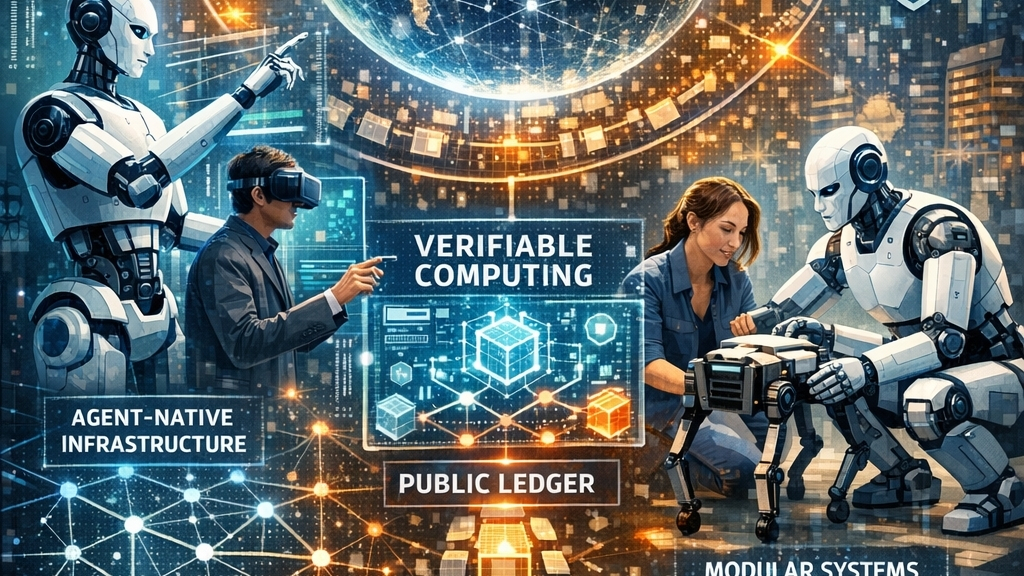
Fabric Protocol : Building the Global Infrastructure for General-Purpose RoboticsIn an era where robotics and artificial intelligence are advancing at an unprecedented pace, the need for a unified, transparent, and trustworthy infrastructure has become essential. Fabric Protocol emerges as a global open network designed to power the next generation of general-purpose robots. Backed by the Fabric Foundation, the protocol establishes a decentralized framework for the development, governance, and continuous evolution of intelligent robotic systems.
A Global Open Network for Robotics
Fabric Protocol is designed as an open, borderless infrastructure that enables developers, researchers, organizations, and communities to collaboratively build and manage general-purpose robots. Rather than relying on centralized systems or proprietary ecosystems, the protocol leverages a public ledger to coordinate:
$ROBO
Data exchange
Computational processes
Regulatory compliance
Governance mechanisms
By operating as a shared network, Fabric Protocol ensures that robotic systems evolve transparently and remain accountable to the broader ecosystem.
Verifiable Computing: Trust by Design
One of the core innovations of Fabric Protocol is its integration of verifiable computing. This approach ensures that robotic actions, decision-making processes, and AI outputs can be cryptographically verified.
Verifiable computing enables:
Proof that computations were executed correctly
Tamper-resistant logging of robotic behavior
Transparent validation of AI-generated decisions
Increased reliability in mission-critical environments
This is particularly crucial as robots begin operating autonomously in industries such as healthcare, logistics, manufacturing, and public infrastructure.
Agent-Native Infrastructure
Fabric Protocol introduces agent-native infrastructure, a design philosophy where robots and AI agents are first-class participants within the network. Instead of being passive tools, robotic agents can:
Interact directly with the protocol
Access shared datasets
Execute tasks with verifiable accountability
Participate in governance mechanisms
This architecture enables autonomous agents to coordinate with one another securely while maintaining transparency and compliance with predefined rules.
Governance and Collaborative Evolution
Unlike traditional robotics platforms controlled by a single corporation, Fabric Protocol emphasizes decentralized governance. Through its public ledger framework, stakeholders can collaboratively:
Propose upgrades to robotic standards
Define operational rules and compliance requirements
Vote on infrastructure improvements
Ensure ethical deployment practices
This governance model supports the long-term evolution of robotics in a way that balances innovation with responsibility.
Modular Infrastructure for Scalable Systems
Fabric Protocol is built on modular infrastructure, allowing developers to assemble robotic systems using interchangeable components. This modularity:
Reduces development friction
Encourages interoperability
Enables rapid experimentation
Supports scalable deployment across industries
#Robo
Developers can integrate hardware modules, AI models, compliance layers, and computational resources into cohesive systems coordinated by the protocol’s public ledger.
Safe and Transparent Human-Machine Collaboration
At its core, Fabric Protocol is designed to foster safe human-machine collaboration. Transparency, auditability, and regulatory alignment are foundational principles. The network’s architecture ensures that:
Robotic actions are traceable
AI decisions are verifiable
Human oversight remains possible
Ethical standards are enforceable
This framework builds trust between humans and increasingly autonomous machines.
The Future of Robotics Infrastructure
As robotics shifts from specialized industrial machines to adaptable, general-purpose systems, the infrastructure supporting them must evolve. Fabric Protocol positions itself as the foundational layer for this transformation — combining decentralized coordination, verifiable computing, and collaborative governance into a unified global network.
Backed by the Fabric Foundation, Fabric Protocol aims to create an open ecosystem where innovation thrives responsibly, and robots operate transparently within a shared, trusted digital framework.
In doing so, it lays the groundwork for a future where humans and machines collaborate safely, efficiently, and with mutual accountability.
@FabricFND
{future}(ROBOUSDT)
Fabric Protocol : Building the Global Infrastructure for General-Purpose Robotics
In an era where robotics and artificial intelligence are advancing at an unprecedented pace, the need for a unified, transparent, and trustworthy infrastructure has become essential. Fabric Protocol emerges as a global open network designed to power the next generation of general-purpose robots. Backed by the Fabric Foundation, the protocol establishes a decentralized framework for the development, governance, and continuous evolution of intelligent robotic systems.
A Global Open Network for Robotics
Fabric Protocol is designed as an open, borderless infrastructure that enables developers, researchers, organizations, and communities to collaboratively build and manage general-purpose robots. Rather than relying on centralized systems or proprietary ecosystems, the protocol leverages a public ledger to coordinate:
$ROBO
Data exchange
Computational processes
Regulatory compliance
Governance mechanisms
By operating as a shared network, Fabric Protocol ensures that robotic systems evolve transparently and remain accountable to the broader ecosystem.
Verifiable Computing: Trust by Design
One of the core innovations of Fabric Protocol is its integration of verifiable computing. This approach ensures that robotic actions, decision-making processes, and AI outputs can be cryptographically verified.
Verifiable computing enables:
Proof that computations were executed correctly
Tamper-resistant logging of robotic behavior
Transparent validation of AI-generated decisions
Increased reliability in mission-critical environments
This is particularly crucial as robots begin operating autonomously in industries such as healthcare, logistics, manufacturing, and public infrastructure.
Agent-Native Infrastructure
Fabric Protocol introduces agent-native infrastructure, a design philosophy where robots and AI agents are first-class participants within the network. Instead of being passive tools, robotic agents can:
Interact directly with the protocol
Access shared datasets
Execute tasks with verifiable accountability
Participate in governance mechanisms
This architecture enables autonomous agents to coordinate with one another securely while maintaining transparency and compliance with predefined rules.
Governance and Collaborative Evolution
Unlike traditional robotics platforms controlled by a single corporation, Fabric Protocol emphasizes decentralized governance. Through its public ledger framework, stakeholders can collaboratively:
Propose upgrades to robotic standards
Define operational rules and compliance requirements
Vote on infrastructure improvements
Ensure ethical deployment practices
This governance model supports the long-term evolution of robotics in a way that balances innovation with responsibility.
Modular Infrastructure for Scalable Systems
Fabric Protocol is built on modular infrastructure, allowing developers to assemble robotic systems using interchangeable components. This modularity:
Reduces development friction
Encourages interoperability
Enables rapid experimentation
Supports scalable deployment across industries
#Robo
Developers can integrate hardware modules, AI models, compliance layers, and computational resources into cohesive systems coordinated by the protocol’s public ledger.
Safe and Transparent Human-Machine Collaboration
At its core, Fabric Protocol is designed to foster safe human-machine collaboration. Transparency, auditability, and regulatory alignment are foundational principles. The network’s architecture ensures that:
Robotic actions are traceable
AI decisions are verifiable
Human oversight remains possible
Ethical standards are enforceable
This framework builds trust between humans and increasingly autonomous machines.
The Future of Robotics Infrastructure
As robotics shifts from specialized industrial machines to adaptable, general-purpose systems, the infrastructure supporting them must evolve. Fabric Protocol positions itself as the foundational layer for this transformation — combining decentralized coordination, verifiable computing, and collaborative governance into a unified global network.
Backed by the Fabric Foundation, Fabric Protocol aims to create an open ecosystem where innovation thrives responsibly, and robots operate transparently within a shared, trusted digital framework.
In doing so, it lays the groundwork for a future where humans and machines collaborate safely, efficiently, and with mutual accountability.
@Fabric Foundation
A Global Open Network for Robotics
Fabric Protocol is designed as an open, borderless infrastructure that enables developers, researchers, organizations, and communities to collaboratively build and manage general-purpose robots. Rather than relying on centralized systems or proprietary ecosystems, the protocol leverages a public ledger to coordinate:
$ROBO
Data exchange
Computational processes
Regulatory compliance
Governance mechanisms
By operating as a shared network, Fabric Protocol ensures that robotic systems evolve transparently and remain accountable to the broader ecosystem.
Verifiable Computing: Trust by Design
One of the core innovations of Fabric Protocol is its integration of verifiable computing. This approach ensures that robotic actions, decision-making processes, and AI outputs can be cryptographically verified.
Verifiable computing enables:
Proof that computations were executed correctly
Tamper-resistant logging of robotic behavior
Transparent validation of AI-generated decisions
Increased reliability in mission-critical environments
This is particularly crucial as robots begin operating autonomously in industries such as healthcare, logistics, manufacturing, and public infrastructure.
Agent-Native Infrastructure
Fabric Protocol introduces agent-native infrastructure, a design philosophy where robots and AI agents are first-class participants within the network. Instead of being passive tools, robotic agents can:
Interact directly with the protocol
Access shared datasets
Execute tasks with verifiable accountability
Participate in governance mechanisms
This architecture enables autonomous agents to coordinate with one another securely while maintaining transparency and compliance with predefined rules.
Governance and Collaborative Evolution
Unlike traditional robotics platforms controlled by a single corporation, Fabric Protocol emphasizes decentralized governance. Through its public ledger framework, stakeholders can collaboratively:
Propose upgrades to robotic standards
Define operational rules and compliance requirements
Vote on infrastructure improvements
Ensure ethical deployment practices
This governance model supports the long-term evolution of robotics in a way that balances innovation with responsibility.
Modular Infrastructure for Scalable Systems
Fabric Protocol is built on modular infrastructure, allowing developers to assemble robotic systems using interchangeable components. This modularity:
Reduces development friction
Encourages interoperability
Enables rapid experimentation
Supports scalable deployment across industries
#Robo
Developers can integrate hardware modules, AI models, compliance layers, and computational resources into cohesive systems coordinated by the protocol’s public ledger.
Safe and Transparent Human-Machine Collaboration
At its core, Fabric Protocol is designed to foster safe human-machine collaboration. Transparency, auditability, and regulatory alignment are foundational principles. The network’s architecture ensures that:
Robotic actions are traceable
AI decisions are verifiable
Human oversight remains possible
Ethical standards are enforceable
This framework builds trust between humans and increasingly autonomous machines.
The Future of Robotics Infrastructure
As robotics shifts from specialized industrial machines to adaptable, general-purpose systems, the infrastructure supporting them must evolve. Fabric Protocol positions itself as the foundational layer for this transformation — combining decentralized coordination, verifiable computing, and collaborative governance into a unified global network.
Backed by the Fabric Foundation, Fabric Protocol aims to create an open ecosystem where innovation thrives responsibly, and robots operate transparently within a shared, trusted digital framework.
In doing so, it lays the groundwork for a future where humans and machines collaborate safely, efficiently, and with mutual accountability.
@Fabric Foundation
3
41
·
--
Bullish
$ROBO Fabric Protocol is a global open network backed by the Fabric Foundation that enables the development, governance, and evolution of general-purpose robots. It uses verifiable computing and agent-native infrastructure to coordinate data, computation, and regulation through a public ledger, supporting modular systems designed for safe and transparent human-machine collaboration.
#robo @FabricFND
{alpha}(560x475cbf5919608e0c6af00e7bf87fab83bf3ef6e2)
$ROBO Fabric Protocol is a global open network backed by the Fabric Foundation that enables the development, governance, and evolution of general-purpose robots. It uses verifiable computing and agent-native infrastructure to coordinate data, computation, and regulation through a public ledger, supporting modular systems designed for safe and transparent human-machine collaboration.
#robo @Fabric Foundation
#robo @Fabric Foundation
1
15
·
--
Article
MIRA - A New AI-Blockchain Crypto Project Listed on BinanceIn September 2025, the cryptocurrency exchange Binance officially listed a new blockchain project called Mira (ticker: MIRA) — generating considerable buzz in the crypto community for blending artificial intelligence (AI) and decentralized technology. The token was launched with trading support including the popular MIRA/USDT pair.
What Is $MIRA ?
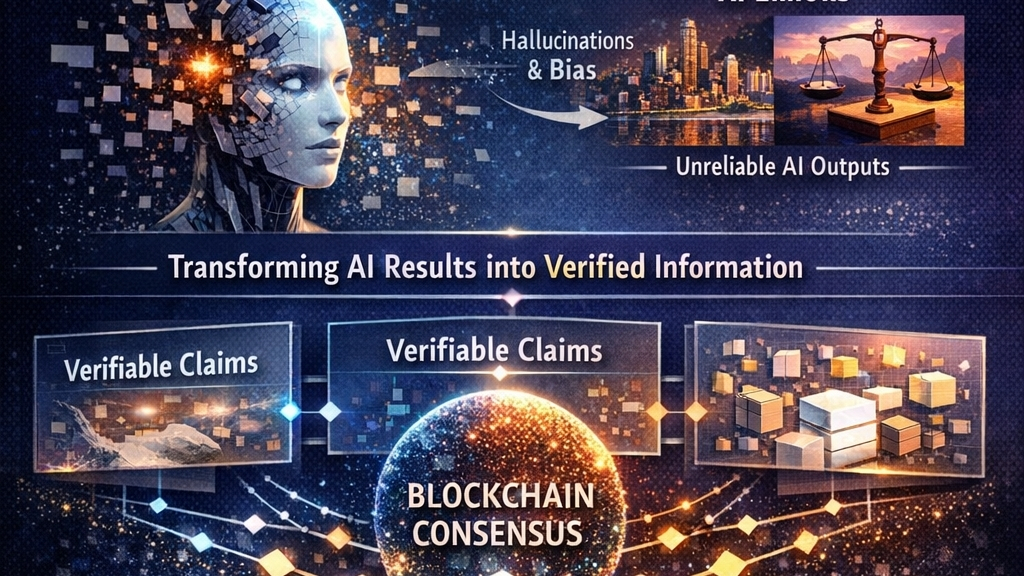
Mira is a decentralized verification network designed to solve one of the biggest challenges in today’s AI systems: trust and accuracy. Unlike conventional AI models that often depend heavily on human moderation, Mira aims to create a trust layer for AI outputs by using blockchain mechanisms that verify claims at scale across a network of independent verifiers.
At its core, Mira breaks down AI outputs into simpler, verifiable statements, called claims, and distributes them among independent verifiers. These participants check each claim, and the results are aggregated to produce trustworthy, decentralized validation of AI responses — reducing hallucinations and biases.
How #Mira Works
Mira’s innovative verification system revolves around three key components:
1. Binarization: AI outputs are split into discrete statements for individual verification.
2. Distributed Verification: Independent nodes check claims to prevent centralized manipulation.
3. Proof of Verification: A consensus system combining economic incentives ensures honest participation — with rewards for accuracy and penalties for dishonest behavior.
This process is designed to make AI results more reliable, transparent, and resistant to bias, which can unlock safer use of AI in fields like education, research, healthcare, and more.
The MIRA Token Explained
The $MIRA token is the native utility token of the Mira Network, built as an ERC-20 token on the Base Network (a Layer-2 chain). It plays several roles within the ecosystem:
API Access: Users pay for AI services and API requests with MIRA, receiving priority access and discounted rates.
Staking: Participants can stake MIRA to secure the network and earn rewards.
Governance: Token holders help decide on upgrades, emission rates, and other governance decisions.
The token has a maximum supply of 1 billion MIRA, with a portion allocated for ecosystem incentives, early supporters, node rewards, and development.
Binance Listing & Trading
Binance listed MIRA on September 26, 2025, with trading available across multiple pairs including MIRA/USDT, MIRA/USDC, MIRA/BNB, MIRA/FDUSD, and MIRA/TRY. The exchange also opened responsibilities like margin borrowing, perpetual contracts, and earning products to boost liquidity and trading options.
As part of its launch campaign, Binance included MIRA in its HODLer Airdrops program, rewarding users who had staked BNB in eligible Binance products with a total of 20 million MIRA tokens — enhancing community engagement and bootstrapping early adoption.
Why It Matters
Mira marks one of the first prominent projects to combine AI trust mechanisms with blockchain infrastructure at scale. While many crypto projects focus on decentralized finance (DeFi), decentralized identity, or NFTs, Mira’s core proposition — making AI outputs verifiably reliable — sets it apart and appeals to both tech developers and blockchain enthusiasts alike.
By integrating with Binance — one of the world’s largest crypto exchanges — MIRA benefits from wide accessibility, deep liquidity, and extensive trading infrastructure, making it easier for both retail and institutional investors to participate.
Conclusion
In a crypto landscape often dominated by speculation and memecoins, Mira (MIRA) presents a more technology-driven narrative by targeting the reliability gap in AI using decentralized verification. Its listing on Binance with the MIRA/USDT pair has attracted significant attention, positioning it as one of the noteworthy intersections between blockchain and artificial intelligence for 2025 and beyond.
@mira_network
{future}(MIRAUSDT)
MIRA - A New AI-Blockchain Crypto Project Listed on Binance
In September 2025, the cryptocurrency exchange Binance officially listed a new blockchain project called Mira (ticker: MIRA) — generating considerable buzz in the crypto community for blending artificial intelligence (AI) and decentralized technology. The token was launched with trading support including the popular MIRA/USDT pair.
What Is $MIRA ?
Mira is a decentralized verification network designed to solve one of the biggest challenges in today’s AI systems: trust and accuracy. Unlike conventional AI models that often depend heavily on human moderation, Mira aims to create a trust layer for AI outputs by using blockchain mechanisms that verify claims at scale across a network of independent verifiers.
At its core, Mira breaks down AI outputs into simpler, verifiable statements, called claims, and distributes them among independent verifiers. These participants check each claim, and the results are aggregated to produce trustworthy, decentralized validation of AI responses — reducing hallucinations and biases.
How #Mira Works
Mira’s innovative verification system revolves around three key components:
1. Binarization: AI outputs are split into discrete statements for individual verification.
2. Distributed Verification: Independent nodes check claims to prevent centralized manipulation.
3. Proof of Verification: A consensus system combining economic incentives ensures honest participation — with rewards for accuracy and penalties for dishonest behavior.
This process is designed to make AI results more reliable, transparent, and resistant to bias, which can unlock safer use of AI in fields like education, research, healthcare, and more.
The MIRA Token Explained
The $MIRA token is the native utility token of the Mira Network, built as an ERC-20 token on the Base Network (a Layer-2 chain). It plays several roles within the ecosystem:
API Access: Users pay for AI services and API requests with MIRA, receiving priority access and discounted rates.
Staking: Participants can stake MIRA to secure the network and earn rewards.
Governance: Token holders help decide on upgrades, emission rates, and other governance decisions.
The token has a maximum supply of 1 billion MIRA, with a portion allocated for ecosystem incentives, early supporters, node rewards, and development.
Binance Listing & Trading
Binance listed MIRA on September 26, 2025, with trading available across multiple pairs including MIRA/USDT, MIRA/USDC, MIRA/BNB, MIRA/FDUSD, and MIRA/TRY. The exchange also opened responsibilities like margin borrowing, perpetual contracts, and earning products to boost liquidity and trading options.
As part of its launch campaign, Binance included MIRA in its HODLer Airdrops program, rewarding users who had staked BNB in eligible Binance products with a total of 20 million MIRA tokens — enhancing community engagement and bootstrapping early adoption.
Why It Matters
Mira marks one of the first prominent projects to combine AI trust mechanisms with blockchain infrastructure at scale. While many crypto projects focus on decentralized finance (DeFi), decentralized identity, or NFTs, Mira’s core proposition — making AI outputs verifiably reliable — sets it apart and appeals to both tech developers and blockchain enthusiasts alike.
By integrating with Binance — one of the world’s largest crypto exchanges — MIRA benefits from wide accessibility, deep liquidity, and extensive trading infrastructure, making it easier for both retail and institutional investors to participate.
Conclusion
In a crypto landscape often dominated by speculation and memecoins, Mira (MIRA) presents a more technology-driven narrative by targeting the reliability gap in AI using decentralized verification. Its listing on Binance with the MIRA/USDT pair has attracted significant attention, positioning it as one of the noteworthy intersections between blockchain and artificial intelligence for 2025 and beyond.
@Mira - Trust Layer of AI
What Is $MIRA ?
Mira is a decentralized verification network designed to solve one of the biggest challenges in today’s AI systems: trust and accuracy. Unlike conventional AI models that often depend heavily on human moderation, Mira aims to create a trust layer for AI outputs by using blockchain mechanisms that verify claims at scale across a network of independent verifiers.
At its core, Mira breaks down AI outputs into simpler, verifiable statements, called claims, and distributes them among independent verifiers. These participants check each claim, and the results are aggregated to produce trustworthy, decentralized validation of AI responses — reducing hallucinations and biases.
How #Mira Works
Mira’s innovative verification system revolves around three key components:
1. Binarization: AI outputs are split into discrete statements for individual verification.
2. Distributed Verification: Independent nodes check claims to prevent centralized manipulation.
3. Proof of Verification: A consensus system combining economic incentives ensures honest participation — with rewards for accuracy and penalties for dishonest behavior.
This process is designed to make AI results more reliable, transparent, and resistant to bias, which can unlock safer use of AI in fields like education, research, healthcare, and more.
The MIRA Token Explained
The $MIRA token is the native utility token of the Mira Network, built as an ERC-20 token on the Base Network (a Layer-2 chain). It plays several roles within the ecosystem:
API Access: Users pay for AI services and API requests with MIRA, receiving priority access and discounted rates.
Staking: Participants can stake MIRA to secure the network and earn rewards.
Governance: Token holders help decide on upgrades, emission rates, and other governance decisions.
The token has a maximum supply of 1 billion MIRA, with a portion allocated for ecosystem incentives, early supporters, node rewards, and development.
Binance Listing & Trading
Binance listed MIRA on September 26, 2025, with trading available across multiple pairs including MIRA/USDT, MIRA/USDC, MIRA/BNB, MIRA/FDUSD, and MIRA/TRY. The exchange also opened responsibilities like margin borrowing, perpetual contracts, and earning products to boost liquidity and trading options.
As part of its launch campaign, Binance included MIRA in its HODLer Airdrops program, rewarding users who had staked BNB in eligible Binance products with a total of 20 million MIRA tokens — enhancing community engagement and bootstrapping early adoption.
Why It Matters
Mira marks one of the first prominent projects to combine AI trust mechanisms with blockchain infrastructure at scale. While many crypto projects focus on decentralized finance (DeFi), decentralized identity, or NFTs, Mira’s core proposition — making AI outputs verifiably reliable — sets it apart and appeals to both tech developers and blockchain enthusiasts alike.
By integrating with Binance — one of the world’s largest crypto exchanges — MIRA benefits from wide accessibility, deep liquidity, and extensive trading infrastructure, making it easier for both retail and institutional investors to participate.
Conclusion
In a crypto landscape often dominated by speculation and memecoins, Mira (MIRA) presents a more technology-driven narrative by targeting the reliability gap in AI using decentralized verification. Its listing on Binance with the MIRA/USDT pair has attracted significant attention, positioning it as one of the noteworthy intersections between blockchain and artificial intelligence for 2025 and beyond.
@Mira - Trust Layer of AI
3
52
·
--
Bullish
$MIRA Network is a decentralized verification protocol built to solve the challenge of reliability in artificial intelligence systems. Modern AI is often limited by errors such as hallucinations and bias, making them unsuitable for autonomous operation in critical use cases. The project addresses the issue by transforming AI outputs into cryptographically verified information through blockchain consensus. By breaking down complex content into verifiable claims and distributing them across a network of independent AI models, #Mira ensures that results are validated through economic incentives and trustless consensus rather than centralized control.
@mira_network
$MIRA Network is a decentralized verification protocol built to solve the challenge of reliability in artificial intelligence systems. Modern AI is often limited by errors such as hallucinations and bias, making them unsuitable for autonomous operation in critical use cases. The project addresses the issue by transforming AI outputs into cryptographically verified information through blockchain consensus. By breaking down complex content into verifiable claims and distributing them across a network of independent AI models, #Mira ensures that results are validated through economic incentives and trustless consensus rather than centralized control.
@Mira - Trust Layer of AI
@Mira - Trust Layer of AI
2
6
·
--
Article
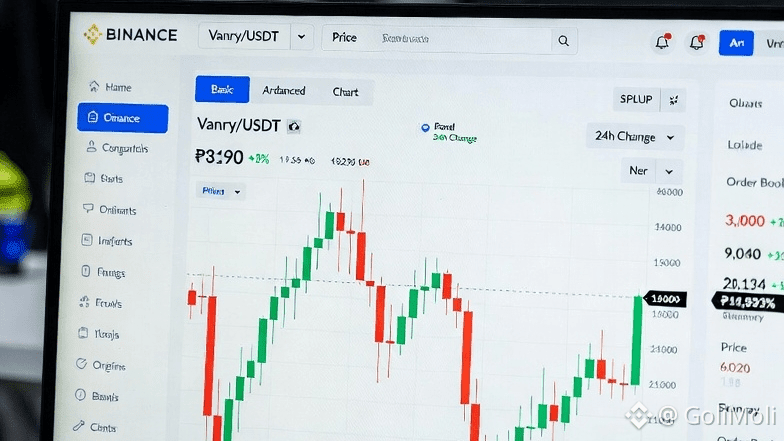
Vanryusdt ( VANRY ) A Growing Crypto Project Listed on BinanceVANRY / USDT represents the trading pair of the Vanar Chain’s native token $VANRY against the stablecoin Tether (USDT) on major cryptocurrency exchanges, including Binance. Vanar Chain is a Layer-1 blockchain platform that has rebranded from its earlier identity (previously known as Virtua) to support broad adoption in entertainment, gaming, AI-driven applications, and real-world financial systems.
What Is Vanar Chain and $VANRY ?
@Vanar distinguishes itself as an AI-native blockchain that integrates artificial intelligence tools into its core infrastructure. This integration enables advanced data storage, compression, and on-chain intelligence, making the network suitable for applications such as AI agents, gaming economies, and tokenized real-world assets. The VANRY token serves as the utility and gas token of the ecosystem, facilitating transactions, powering smart contracts, and enabling governance functions as the platform evolves.
Binance Listing and Market Presence
The VANRY/USDT trading pair on Binance serves as a key access point for traders and investors to buy, sell, and speculate on the price of VANRY relative to USDT. Binance’s support for VANRY trading instruments, including spot trading and perpetual futures contracts, has expanded the token’s liquidity and market visibility, attracting traders seeking exposure to Vanar Chain’s growth potential.
In addition to #Binance , VANRY’s presence has grown across other platforms. It has been listed on other #exchanges too , where the VANRY / USDT spot pair is available, and supported with various trading instruments on other derivatives platforms. #vanar
Ecosystem Development and Adoption
Vanar Chain’s development extends beyond token listings. The project has pursued partnerships and integrations aimed at strengthening its ecosystem, such as collaborations with major technology providers and community-focused platforms. These efforts aim to support use cases across AI, gaming, entertainment, and decentralized finance ( DeFi ) , creating broader real-world utility for VANRY.
The token’s market performance shows active trading interest, with the VANRY / USDT pair consistently generating volume on Binance and reflecting broader sentiment in the #crypto markets.
{future}(VANRYUSDT)
Vanryusdt ( VANRY ) A Growing Crypto Project Listed on Binance
VANRY / USDT represents the trading pair of the Vanar Chain’s native token $VANRY against the stablecoin Tether (USDT) on major cryptocurrency exchanges, including Binance. Vanar Chain is a Layer-1 blockchain platform that has rebranded from its earlier identity (previously known as Virtua) to support broad adoption in entertainment, gaming, AI-driven applications, and real-world financial systems.
What Is Vanar Chain and $VANRY ?
@Vanar distinguishes itself as an AI-native blockchain that integrates artificial intelligence tools into its core infrastructure. This integration enables advanced data storage, compression, and on-chain intelligence, making the network suitable for applications such as AI agents, gaming economies, and tokenized real-world assets. The VANRY token serves as the utility and gas token of the ecosystem, facilitating transactions, powering smart contracts, and enabling governance functions as the platform evolves.
Binance Listing and Market Presence
The VANRY/USDT trading pair on Binance serves as a key access point for traders and investors to buy, sell, and speculate on the price of VANRY relative to USDT. Binance’s support for VANRY trading instruments, including spot trading and perpetual futures contracts, has expanded the token’s liquidity and market visibility, attracting traders seeking exposure to Vanar Chain’s growth potential.
In addition to #Binance , VANRY’s presence has grown across other platforms. It has been listed on other #exchanges too , where the VANRY / USDT spot pair is available, and supported with various trading instruments on other derivatives platforms. #vanar
Ecosystem Development and Adoption
Vanar Chain’s development extends beyond token listings. The project has pursued partnerships and integrations aimed at strengthening its ecosystem, such as collaborations with major technology providers and community-focused platforms. These efforts aim to support use cases across AI, gaming, entertainment, and decentralized finance ( DeFi ) , creating broader real-world utility for VANRY.
The token’s market performance shows active trading interest, with the VANRY / USDT pair consistently generating volume on Binance and reflecting broader sentiment in the #crypto markets.
What Is Vanar Chain and $VANRY ?
@Vanar distinguishes itself as an AI-native blockchain that integrates artificial intelligence tools into its core infrastructure. This integration enables advanced data storage, compression, and on-chain intelligence, making the network suitable for applications such as AI agents, gaming economies, and tokenized real-world assets. The VANRY token serves as the utility and gas token of the ecosystem, facilitating transactions, powering smart contracts, and enabling governance functions as the platform evolves.
Binance Listing and Market Presence
The VANRY/USDT trading pair on Binance serves as a key access point for traders and investors to buy, sell, and speculate on the price of VANRY relative to USDT. Binance’s support for VANRY trading instruments, including spot trading and perpetual futures contracts, has expanded the token’s liquidity and market visibility, attracting traders seeking exposure to Vanar Chain’s growth potential.
In addition to #Binance , VANRY’s presence has grown across other platforms. It has been listed on other #exchanges too , where the VANRY / USDT spot pair is available, and supported with various trading instruments on other derivatives platforms. #vanar
Ecosystem Development and Adoption
Vanar Chain’s development extends beyond token listings. The project has pursued partnerships and integrations aimed at strengthening its ecosystem, such as collaborations with major technology providers and community-focused platforms. These efforts aim to support use cases across AI, gaming, entertainment, and decentralized finance ( DeFi ) , creating broader real-world utility for VANRY.
The token’s market performance shows active trading interest, with the VANRY / USDT pair consistently generating volume on Binance and reflecting broader sentiment in the #crypto markets.
2
4
·
--
Bullish
$VANRY USDT is a trading pair for the Vanar Chain ( VANRY ) token against Tether ( USDT ) that is listed on major cryptocurrency exchanges like Binance, where it represents the market activity and price of the VANRY token in USDT terms. Vanar Chain is a Layer 1 blockchain ecosystem focused on realworld adoption, especially in gaming, entertainment, and metaverse applications, with its native VANRY token powering transactions, smart contracts, and governance on the network. The VANRYUSDT pair tracks price and volume data on spot and futures markets, allowing traders to speculate or hedge the value of VANRY relative to USDT, and it has also been supported on other platforms with derivatives trading such as perpetual contracts. Market data shows fluctuating prices and significant trading interest, reflecting broader crypto market dynamics and trader sentiment around the #vanar project.
@Vanar
{future}(VANRYUSDT)
$VANRY USDT is a trading pair for the Vanar Chain ( VANRY ) token against Tether ( USDT ) that is listed on major cryptocurrency exchanges like Binance, where it represents the market activity and price of the VANRY token in USDT terms. Vanar Chain is a Layer 1 blockchain ecosystem focused on realworld adoption, especially in gaming, entertainment, and metaverse applications, with its native VANRY token powering transactions, smart contracts, and governance on the network. The VANRYUSDT pair tracks price and volume data on spot and futures markets, allowing traders to speculate or hedge the value of VANRY relative to USDT, and it has also been supported on other platforms with derivatives trading such as perpetual contracts. Market data shows fluctuating prices and significant trading interest, reflecting broader crypto market dynamics and trader sentiment around the #vanar project.
@Vanar
@Vanar
2
3

Log in to explore more content
Join global crypto users on Binance Square
⚡️ Get latest and useful information about crypto.
💬 Trusted by the world’s largest crypto exchange.
👍 Discover real insights from verified creators.
Email / Phone number
Trending Topics
BitwiseFilesFinalNEARSpotETFProspectus
38,381 views
1,008 Discussing
#bitwisefilesfinalnearspotetfprospectus 🚀
Can the NEAR token reach $562?$NEAR
Bitwise is preparing a spot NEAR ETF, listed under the ticker NRR on NYSE Arca. The manager was already discussing targets of $155, or even $562 by 2030.$RESOLV $DASH
Rajo C
·6 Likes
·3.7k views
BitgetHackerMoves$83MStolenXRP
21,686 views
142 Discussing
SOLSpotETFWeeklyInflow$188M
12,207 views
107 Discussing