

EthioCoinGiram1
3.1k Posts

EthioCoinGiram1
Report
Block User
@EthioCoinGram delivers the latest on crypto markets, trends, blockchain, ETFs, Web3, and media news — simple, fresh, and made for traders and enthusiasts alike
Open Trade
Frequent Trader
2.4 Years
2.6K+ Following
7.3K+ Followers
5.9K+ Liked
Posts
Portfolio
All
Quotes
Videos
Live
·
--
Don't forget where you came from so that you don't lose sight of where you are going!
#BitcoinShortTermHoldersReach4.08MBTC #OctoberFedHikeOddsFallToAround17% #NEARRisesNearly10%
@EthioCoinGram1
Don't forget where you came from so that you don't lose sight of where you are going!
#BitcoinShortTermHoldersReach4.08MBTC #OctoberFedHikeOddsFallToAround17% #NEARRisesNearly10%
@EthioCoinGiram1
#BitcoinShortTermHoldersReach4.08MBTC #OctoberFedHikeOddsFallToAround17% #NEARRisesNearly10%
@EthioCoinGiram1
75
·
--
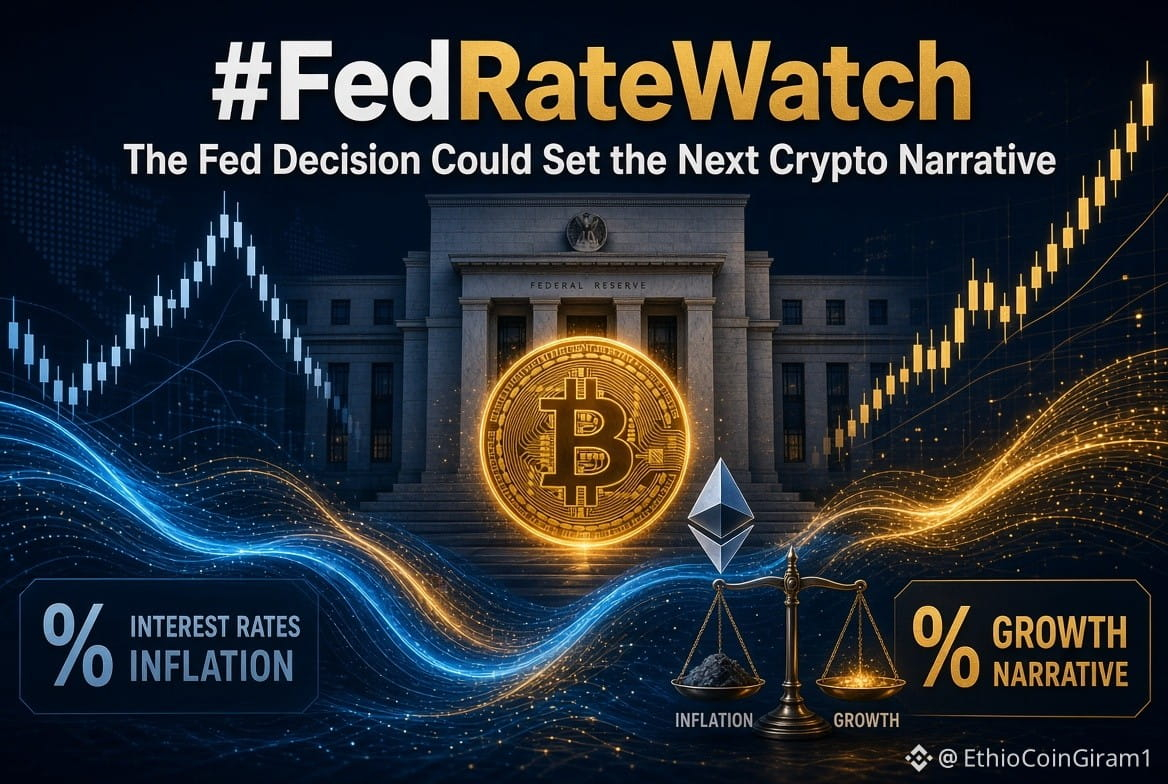
#fedratewatch #FedRateWatch: The Fed Decision Could Set the Next Crypto Narrative
I’ve been watching the Fed closely because today’s decision is about more than just a single interest-rate number.
The Federal Reserve’s September 15–16 FOMC meeting concludes today, with the rate decision followed by the press conference.
For crypto traders, the important question is simple:
What happens to liquidity after the decision?
🧠 Why does the Fed matter to Bitcoin?
When interest rates stay high, cash and Treasury yields become more attractive. At the same time, financial conditions can remain tighter, which may reduce the appetite for higher-risk assets such as Bitcoin and altcoins.
When markets expect easier policy, the opposite dynamic can develop: investors may become more willing to take risk.
But there’s an important detail many traders overlook:
Crypto often reacts more to the Fed’s message than the headline rate itself.
The statement, economic projections and press conference can change expectations for the next several meetings.
📊 What I’m watching today
1. The rate decision
Markets have been repricing the September meeting sharply. CME-related market data recently showed the probability of a 25-basis-point hike rising substantially as inflation data came in.
2. Powell’s language
If the Fed sounds more concerned about inflation, markets could interpret that as a signal for tighter policy ahead.
If policymakers emphasize economic weakness or declining inflation pressures, traders may focus more heavily on the possibility of future easing.
3. Bitcoin’s reaction
I would watch BTC volume and price structure rather than reacting to the first candle after the announcement.
A sharp move followed by a quick reversal could indicate that the initial reaction was mostly positioning.
🔎 The bigger picture
The Federal Reserve is balancing inflation against economic growth, while markets are simultaneously watching Treasury yields, the dollar and broader liquidity conditions.#bitcoin #BTC #Ethereum
#fedratewatch #FedRateWatch: The Fed Decision Could Set the Next Crypto Narrative
I’ve been watching the Fed closely because today’s decision is about more than just a single interest-rate number.
The Federal Reserve’s September 15–16 FOMC meeting concludes today, with the rate decision followed by the press conference.
For crypto traders, the important question is simple:
What happens to liquidity after the decision?
🧠 Why does the Fed matter to Bitcoin?
When interest rates stay high, cash and Treasury yields become more attractive. At the same time, financial conditions can remain tighter, which may reduce the appetite for higher-risk assets such as Bitcoin and altcoins.
When markets expect easier policy, the opposite dynamic can develop: investors may become more willing to take risk.
But there’s an important detail many traders overlook:
Crypto often reacts more to the Fed’s message than the headline rate itself.
The statement, economic projections and press conference can change expectations for the next several meetings.
📊 What I’m watching today
1. The rate decision
Markets have been repricing the September meeting sharply. CME-related market data recently showed the probability of a 25-basis-point hike rising substantially as inflation data came in.
2. Powell’s language
If the Fed sounds more concerned about inflation, markets could interpret that as a signal for tighter policy ahead.
If policymakers emphasize economic weakness or declining inflation pressures, traders may focus more heavily on the possibility of future easing.
3. Bitcoin’s reaction
I would watch BTC volume and price structure rather than reacting to the first candle after the announcement.
A sharp move followed by a quick reversal could indicate that the initial reaction was mostly positioning.
🔎 The bigger picture
The Federal Reserve is balancing inflation against economic growth, while markets are simultaneously watching Treasury yields, the dollar and broader liquidity conditions.#bitcoin #BTC #Ethereum
I’ve been watching the Fed closely because today’s decision is about more than just a single interest-rate number.
The Federal Reserve’s September 15–16 FOMC meeting concludes today, with the rate decision followed by the press conference.
For crypto traders, the important question is simple:
What happens to liquidity after the decision?
🧠 Why does the Fed matter to Bitcoin?
When interest rates stay high, cash and Treasury yields become more attractive. At the same time, financial conditions can remain tighter, which may reduce the appetite for higher-risk assets such as Bitcoin and altcoins.
When markets expect easier policy, the opposite dynamic can develop: investors may become more willing to take risk.
But there’s an important detail many traders overlook:
Crypto often reacts more to the Fed’s message than the headline rate itself.
The statement, economic projections and press conference can change expectations for the next several meetings.
📊 What I’m watching today
1. The rate decision
Markets have been repricing the September meeting sharply. CME-related market data recently showed the probability of a 25-basis-point hike rising substantially as inflation data came in.
2. Powell’s language
If the Fed sounds more concerned about inflation, markets could interpret that as a signal for tighter policy ahead.
If policymakers emphasize economic weakness or declining inflation pressures, traders may focus more heavily on the possibility of future easing.
3. Bitcoin’s reaction
I would watch BTC volume and price structure rather than reacting to the first candle after the announcement.
A sharp move followed by a quick reversal could indicate that the initial reaction was mostly positioning.
🔎 The bigger picture
The Federal Reserve is balancing inflation against economic growth, while markets are simultaneously watching Treasury yields, the dollar and broader liquidity conditions.#bitcoin #BTC #Ethereum
663

·
--
🎙️ Show up on Live Binance Square visibility today crypto market News
End
08 m 36 s
9

AMB
Holding
0
0
0
·
--
Article
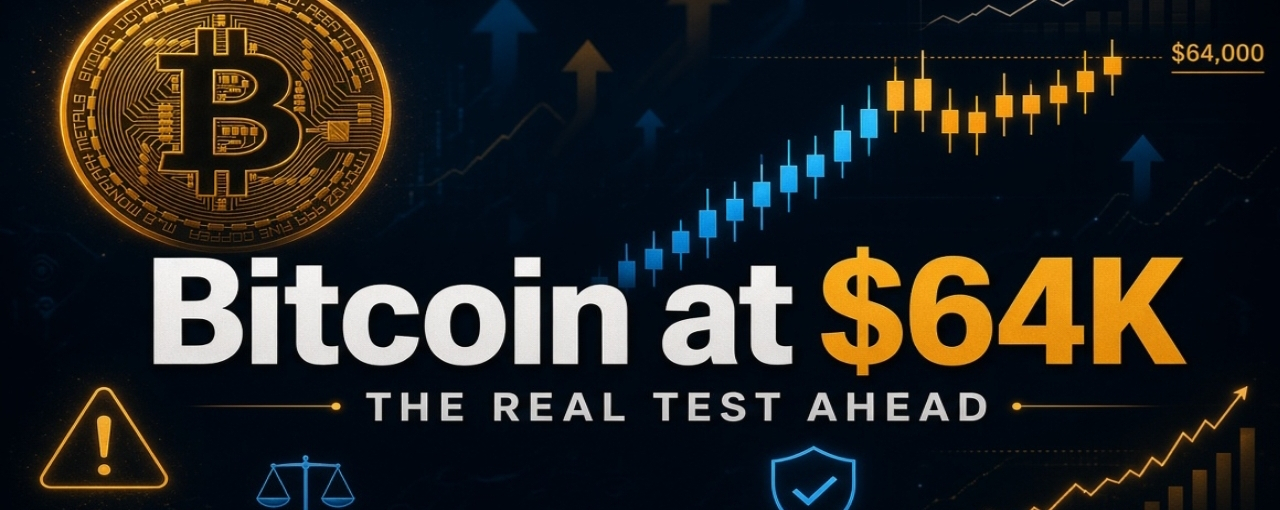
Bitcoin Is Pausing at $64K — But the Real Test May Be AheadI’ve been watching Bitcoin closely today, and the interesting part isn’t simply that BTC is hovering around $64,000. It’s why the market is struggling to push higher despite having several potential catalysts in front of it.
Bitcoin recently rebounded from around $62,600 toward $64,600, but momentum has started to cool as Treasury yields and oil prices move higher. Brent crude has climbed back toward $94 after the 60-day U.S.-Iran ceasefire expired without a new agreement. That matters because higher energy prices can reinforce inflation concerns, which can keep pressure on interest-rate expectations and risk assets.
From my experience, this is where crypto narratives can become misleading.
The market may be talking about Bitcoin, but the bigger story is increasingly macro liquidity. Crypto has matured from the early smart-contract era, through DeFi and Layer-2 expansion, into a market increasingly influenced by rates, institutional positioning, derivatives, and global risk sentiment.
And right now, leverage deserves attention.
The reported rise in Bitcoin funding rates is important because it suggests traders are becoming increasingly willing to pay for leveraged long exposure. That can support upside when spot demand confirms it—but it can also make the market more fragile if price fails to follow.
That’s the part I’m watching.
If BTC remains around $64K while bullish positioning continues building, the market could eventually face a simple question: are traders anticipating the move before actual demand arrives?
Wednesday could provide some answers.
The Federal Reserve’s July FOMC minutes are due, giving traders another look at how policymakers viewed inflation, growth and the path for rates. At the same time, the White House is expected to host a crypto-focused meeting involving President Trump, regulators and industry leaders.
Those are very different catalysts, but they can influence the same thing: market confidence.
The Fed minutes could reshape expectations around monetary policy. The White House meeting could influence the regulatory narrative surrounding digital assets. Neither guarantees a Bitcoin rally, but both have the potential to change sentiment quickly.
This is also where Binance communities become interesting. Crypto narratives can spread extremely fast when traders collectively focus on one catalyst. But visibility is not the same as execution. A headline can create attention in minutes; sustained buying usually requires deeper confirmation.
So for me, the key question isn’t whether Bitcoin can briefly move above $64K.
It’s whether BTC can attract enough genuine demand to absorb higher yields, elevated leverage and renewed geopolitical uncertainty at the same time.
Bitcoin is holding up—but Wednesday may tell us whether this is quiet accumulation or simply another pause before volatility returns.#StrategySellsStockToRepurchasePreferred #USMemoryStocksExtendGainsSanDiskUp10.5% #DOJProbesA16zOverRivalAIBoardSeats #DollarHits3MonthLow #Write2Earn
Bitcoin Is Pausing at $64K — But the Real Test May Be Ahead
I’ve been watching Bitcoin closely today, and the interesting part isn’t simply that BTC is hovering around $64,000. It’s why the market is struggling to push higher despite having several potential catalysts in front of it.
Bitcoin recently rebounded from around $62,600 toward $64,600, but momentum has started to cool as Treasury yields and oil prices move higher. Brent crude has climbed back toward $94 after the 60-day U.S.-Iran ceasefire expired without a new agreement. That matters because higher energy prices can reinforce inflation concerns, which can keep pressure on interest-rate expectations and risk assets.
From my experience, this is where crypto narratives can become misleading.
The market may be talking about Bitcoin, but the bigger story is increasingly macro liquidity. Crypto has matured from the early smart-contract era, through DeFi and Layer-2 expansion, into a market increasingly influenced by rates, institutional positioning, derivatives, and global risk sentiment.
And right now, leverage deserves attention.
The reported rise in Bitcoin funding rates is important because it suggests traders are becoming increasingly willing to pay for leveraged long exposure. That can support upside when spot demand confirms it—but it can also make the market more fragile if price fails to follow.
That’s the part I’m watching.
If BTC remains around $64K while bullish positioning continues building, the market could eventually face a simple question: are traders anticipating the move before actual demand arrives?
Wednesday could provide some answers.
The Federal Reserve’s July FOMC minutes are due, giving traders another look at how policymakers viewed inflation, growth and the path for rates. At the same time, the White House is expected to host a crypto-focused meeting involving President Trump, regulators and industry leaders.
Those are very different catalysts, but they can influence the same thing: market confidence.
The Fed minutes could reshape expectations around monetary policy. The White House meeting could influence the regulatory narrative surrounding digital assets. Neither guarantees a Bitcoin rally, but both have the potential to change sentiment quickly.
This is also where Binance communities become interesting. Crypto narratives can spread extremely fast when traders collectively focus on one catalyst. But visibility is not the same as execution. A headline can create attention in minutes; sustained buying usually requires deeper confirmation.
So for me, the key question isn’t whether Bitcoin can briefly move above $64K.
It’s whether BTC can attract enough genuine demand to absorb higher yields, elevated leverage and renewed geopolitical uncertainty at the same time.
Bitcoin is holding up—but Wednesday may tell us whether this is quiet accumulation or simply another pause before volatility returns.#StrategySellsStockToRepurchasePreferred #USMemoryStocksExtendGainsSanDiskUp10.5% #DOJProbesA16zOverRivalAIBoardSeats #DollarHits3MonthLow #Write2Earn
Bitcoin recently rebounded from around $62,600 toward $64,600, but momentum has started to cool as Treasury yields and oil prices move higher. Brent crude has climbed back toward $94 after the 60-day U.S.-Iran ceasefire expired without a new agreement. That matters because higher energy prices can reinforce inflation concerns, which can keep pressure on interest-rate expectations and risk assets.
From my experience, this is where crypto narratives can become misleading.
The market may be talking about Bitcoin, but the bigger story is increasingly macro liquidity. Crypto has matured from the early smart-contract era, through DeFi and Layer-2 expansion, into a market increasingly influenced by rates, institutional positioning, derivatives, and global risk sentiment.
And right now, leverage deserves attention.
The reported rise in Bitcoin funding rates is important because it suggests traders are becoming increasingly willing to pay for leveraged long exposure. That can support upside when spot demand confirms it—but it can also make the market more fragile if price fails to follow.
That’s the part I’m watching.
If BTC remains around $64K while bullish positioning continues building, the market could eventually face a simple question: are traders anticipating the move before actual demand arrives?
Wednesday could provide some answers.
The Federal Reserve’s July FOMC minutes are due, giving traders another look at how policymakers viewed inflation, growth and the path for rates. At the same time, the White House is expected to host a crypto-focused meeting involving President Trump, regulators and industry leaders.
Those are very different catalysts, but they can influence the same thing: market confidence.
The Fed minutes could reshape expectations around monetary policy. The White House meeting could influence the regulatory narrative surrounding digital assets. Neither guarantees a Bitcoin rally, but both have the potential to change sentiment quickly.
This is also where Binance communities become interesting. Crypto narratives can spread extremely fast when traders collectively focus on one catalyst. But visibility is not the same as execution. A headline can create attention in minutes; sustained buying usually requires deeper confirmation.
So for me, the key question isn’t whether Bitcoin can briefly move above $64K.
It’s whether BTC can attract enough genuine demand to absorb higher yields, elevated leverage and renewed geopolitical uncertainty at the same time.
Bitcoin is holding up—but Wednesday may tell us whether this is quiet accumulation or simply another pause before volatility returns.#StrategySellsStockToRepurchasePreferred #USMemoryStocksExtendGainsSanDiskUp10.5% #DOJProbesA16zOverRivalAIBoardSeats #DollarHits3MonthLow #Write2Earn
82
·
--
Crypto News Today: Bitcoin Pauses at $64,000 as Brent Jumps to $94 on Expired Ceasefire — Funding Rates Hit 20-Month High, FOMC Minutes and White House Crypto Summit Due Wednesday
Bitcoin traded around $64,000 — down 0.6% since midnight UTC — after rallying from $62,600 on Monday, as Nasdaq 100 futures slipped 1.1% and Treasury yields rose ahead of Wednesday's FOMC July meeting minutes release. Brent crude rose back to $94 per barrel after the 60-day US-Iran ceasefire expired Monday without a deal, reviving the oil-inflation headwind that has capped Bitcoin all summer. BTC perpetual funding rates surged to a 20-month high according to CryptoQuant — the strongest expression of bullish futures bias since the current bear market began — while BTC's positive CVD showed buyer leadership even as ETH, SOL, LTC, LINK, and DOGE all registered negative CVD, suggesting the bullish sentiment is concentrated in Bitcoin rather than broadly distributed. Also due Wednesday: US President Trump is expected to attend a meeting with crypto CEOs at the White House — a policy catalyst that has been identified as a key driver of Bitcoin's stop-start range-bound performance."
$BTC
{future}(BTCUSDT)
#Binance
Crypto News Today: Bitcoin Pauses at $64,000 as Brent Jumps to $94 on Expired Ceasefire — Funding Rates Hit 20-Month High, FOMC Minutes and White House Crypto Summit Due Wednesday
Bitcoin traded around $64,000 — down 0.6% since midnight UTC — after rallying from $62,600 on Monday, as Nasdaq 100 futures slipped 1.1% and Treasury yields rose ahead of Wednesday's FOMC July meeting minutes release. Brent crude rose back to $94 per barrel after the 60-day US-Iran ceasefire expired Monday without a deal, reviving the oil-inflation headwind that has capped Bitcoin all summer. BTC perpetual funding rates surged to a 20-month high according to CryptoQuant — the strongest expression of bullish futures bias since the current bear market began — while BTC's positive CVD showed buyer leadership even as ETH, SOL, LTC, LINK, and DOGE all registered negative CVD, suggesting the bullish sentiment is concentrated in Bitcoin rather than broadly distributed. Also due Wednesday: US President Trump is expected to attend a meeting with crypto CEOs at the White House — a policy catalyst that has been identified as a key driver of Bitcoin's stop-start range-bound performance."
$BTC
#Binance
Bitcoin traded around $64,000 — down 0.6% since midnight UTC — after rallying from $62,600 on Monday, as Nasdaq 100 futures slipped 1.1% and Treasury yields rose ahead of Wednesday's FOMC July meeting minutes release. Brent crude rose back to $94 per barrel after the 60-day US-Iran ceasefire expired Monday without a deal, reviving the oil-inflation headwind that has capped Bitcoin all summer. BTC perpetual funding rates surged to a 20-month high according to CryptoQuant — the strongest expression of bullish futures bias since the current bear market began — while BTC's positive CVD showed buyer leadership even as ETH, SOL, LTC, LINK, and DOGE all registered negative CVD, suggesting the bullish sentiment is concentrated in Bitcoin rather than broadly distributed. Also due Wednesday: US President Trump is expected to attend a meeting with crypto CEOs at the White House — a policy catalyst that has been identified as a key driver of Bitcoin's stop-start range-bound performance."
$BTC
#Binance
114
·
--
$COW: Why I’m Watching This Token CloselyI’ve been watching the crypto market shift from simple narratives toward infrastructure that can actually solve problems. AI has become one of the biggest themes, but underneath that trend, another story is developing: how decentralized finance can become more efficient, automated, and easier to use.
That’s one reason $COW has caught my attention.
Crypto has gone through several major narrative cycles. First came smart contracts, then DeFi, followed by Layer-2 scaling and now AI-driven infrastructure. Each cycle changed what the market considered valuable. But there’s a common lesson across all of them: narratives can attract attention, while real utility determines whether that attention lasts.
For me, that’s where Cow Protocol becomes interesting.
Cow Protocol is focused on improving the way decentralized trading works, particularly through its approach to trade execution and batch auctions. Instead of simply competing for attention with another token narrative, the project is trying to address a practical problem in DeFi: how users can get efficient execution while reducing unnecessary costs and risks associated with traditional DEX trading.
That distinction matters.
I’ve seen plenty of crypto projects become popular because their narrative was strong. But once the attention faded, the market started asking harder questions: Are people actually using the product? Is the technology improving? Does the ecosystem have a reason to keep growing?
Those are the questions I’d rather ask about $COW.
Another thing I’m watching is visibility. Binance communities and other crypto platforms can accelerate attention around smaller projects very quickly. A token can move from being relatively unknown to becoming part of the broader market conversation almost overnight.
But increased visibility cuts both ways.
More attention can bring liquidity, users, developers, and new ideas. At the same time, it can create short-term speculation that has little connection to fundamentals. That’s why I’m trying to separate market excitement from actual ecosystem progress.
From my perspective, the interesting part of $COW isn’t simply whether the token moves higher or lower in the short term. It’s whether Cow Protocol can continue building useful infrastructure as DeFi becomes more sophisticated.
If decentralized trading keeps evolving, execution quality, liquidity efficiency, MEV protection, and user experience could become increasingly important.
#ChinaJulyOutputRetailInvestmentAllMiss #CMESeptemberHikeOddsFallTo30.6% #Write2Earn
So I’m keeping $COW on my watchlist—not because I think it is guaranteed to outperform, but because the underlying problem it is targeting is real.
$COW: Why I’m Watching This Token Closely
I’ve been watching the crypto market shift from simple narratives toward infrastructure that can actually solve problems. AI has become one of the biggest themes, but underneath that trend, another story is developing: how decentralized finance can become more efficient, automated, and easier to use.
That’s one reason $COW has caught my attention.
Crypto has gone through several major narrative cycles. First came smart contracts, then DeFi, followed by Layer-2 scaling and now AI-driven infrastructure. Each cycle changed what the market considered valuable. But there’s a common lesson across all of them: narratives can attract attention, while real utility determines whether that attention lasts.
For me, that’s where Cow Protocol becomes interesting.
Cow Protocol is focused on improving the way decentralized trading works, particularly through its approach to trade execution and batch auctions. Instead of simply competing for attention with another token narrative, the project is trying to address a practical problem in DeFi: how users can get efficient execution while reducing unnecessary costs and risks associated with traditional DEX trading.
That distinction matters.
I’ve seen plenty of crypto projects become popular because their narrative was strong. But once the attention faded, the market started asking harder questions: Are people actually using the product? Is the technology improving? Does the ecosystem have a reason to keep growing?
Those are the questions I’d rather ask about $COW.
Another thing I’m watching is visibility. Binance communities and other crypto platforms can accelerate attention around smaller projects very quickly. A token can move from being relatively unknown to becoming part of the broader market conversation almost overnight.
But increased visibility cuts both ways.
More attention can bring liquidity, users, developers, and new ideas. At the same time, it can create short-term speculation that has little connection to fundamentals. That’s why I’m trying to separate market excitement from actual ecosystem progress.
From my perspective, the interesting part of $COW isn’t simply whether the token moves higher or lower in the short term. It’s whether Cow Protocol can continue building useful infrastructure as DeFi becomes more sophisticated.
If decentralized trading keeps evolving, execution quality, liquidity efficiency, MEV protection, and user experience could become increasingly important.
#ChinaJulyOutputRetailInvestmentAllMiss #CMESeptemberHikeOddsFallTo30.6% #Write2Earn
So I’m keeping $COW on my watchlist—not because I think it is guaranteed to outperform, but because the underlying problem it is targeting is real.
That’s one reason $COW has caught my attention.
Crypto has gone through several major narrative cycles. First came smart contracts, then DeFi, followed by Layer-2 scaling and now AI-driven infrastructure. Each cycle changed what the market considered valuable. But there’s a common lesson across all of them: narratives can attract attention, while real utility determines whether that attention lasts.
For me, that’s where Cow Protocol becomes interesting.
Cow Protocol is focused on improving the way decentralized trading works, particularly through its approach to trade execution and batch auctions. Instead of simply competing for attention with another token narrative, the project is trying to address a practical problem in DeFi: how users can get efficient execution while reducing unnecessary costs and risks associated with traditional DEX trading.
That distinction matters.
I’ve seen plenty of crypto projects become popular because their narrative was strong. But once the attention faded, the market started asking harder questions: Are people actually using the product? Is the technology improving? Does the ecosystem have a reason to keep growing?
Those are the questions I’d rather ask about $COW.
Another thing I’m watching is visibility. Binance communities and other crypto platforms can accelerate attention around smaller projects very quickly. A token can move from being relatively unknown to becoming part of the broader market conversation almost overnight.
But increased visibility cuts both ways.
More attention can bring liquidity, users, developers, and new ideas. At the same time, it can create short-term speculation that has little connection to fundamentals. That’s why I’m trying to separate market excitement from actual ecosystem progress.
From my perspective, the interesting part of $COW isn’t simply whether the token moves higher or lower in the short term. It’s whether Cow Protocol can continue building useful infrastructure as DeFi becomes more sophisticated.
If decentralized trading keeps evolving, execution quality, liquidity efficiency, MEV protection, and user experience could become increasingly important.
#ChinaJulyOutputRetailInvestmentAllMiss #CMESeptemberHikeOddsFallTo30.6% #Write2Earn
So I’m keeping $COW on my watchlist—not because I think it is guaranteed to outperform, but because the underlying problem it is targeting is real.
228
·
--
$APR
{alpha}(560x299ad4299da5b2b93fba4c96967b040c7f611099)
— One to Watch 👀
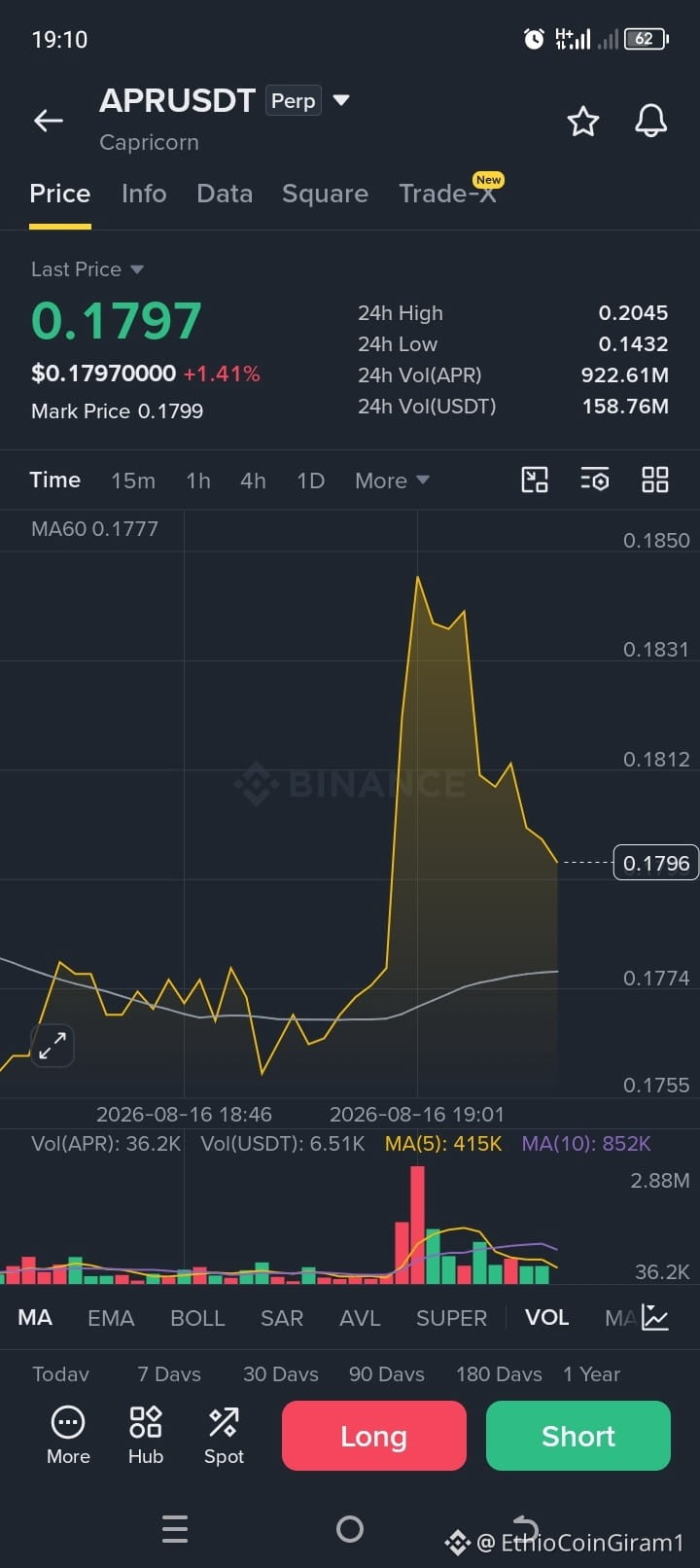
I’m keeping an eye on $APR as market attention shifts toward smaller-cap opportunities. The key question now is whether volume and momentum can support a sustained move.
#APR #Crypto #BinanceSquare
$APR
— One to Watch 👀
I’m keeping an eye on $APR as market attention shifts toward smaller-cap opportunities. The key question now is whether volume and momentum can support a sustained move.
#APR #Crypto #BinanceSquare
— One to Watch 👀
I’m keeping an eye on $APR as market attention shifts toward smaller-cap opportunities. The key question now is whether volume and momentum can support a sustained move.
#APR #Crypto #BinanceSquare
159
·
--
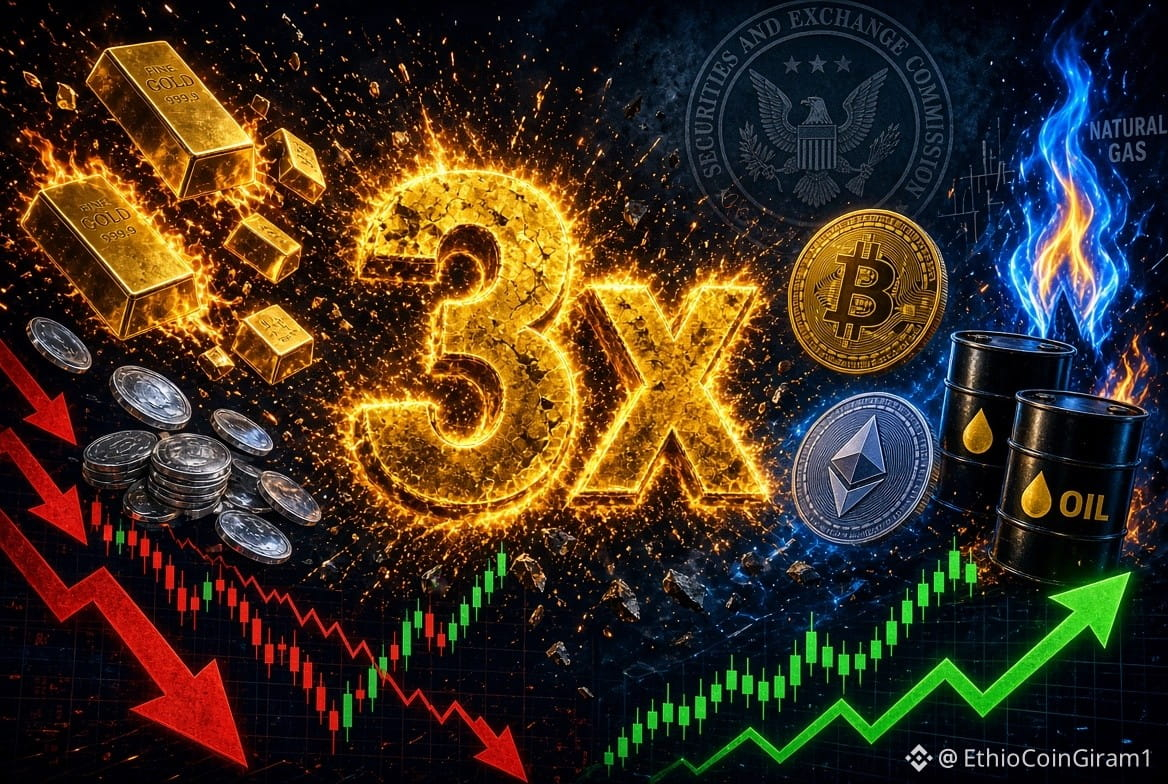
#SECReviewsSix3xLeveragedCommodityETFs Okay, so the SEC is taking a look at these wild new 3x leveraged ETFs that would track gold, silver, Bitcoin, Ethereum, crude oil, and natural gas. Basically, they’re giving you three times the daily returns—good or bad—of whatever direction those assets go. Sounds like rocket fuel, right? But honestly, it’s also a bit of playing with fire.
I remember the first time I dabbled with a leveraged ETF. I thought I was set to make it big—like, easy money! I just... didn’t read the fine print about how these things “reset” every single day. Ran the numbers in my head for a week, then checked my account, and—ugh. Let’s just say, it didn’t work out quite like I’d imagined. Leverage giveth, leverage taketh away. You might catch a lucky streak, but miss one swing in the wrong direction and, ouch.
So, what the SEC is doing now isn’t saying “yes” to these ETFs. They’re just opening the box and poking around. Before anything trades, there’s a lot of paperwork, reviews, and probably a few heated debates. These funds, run by Volatility Shares (catchy name, by the way), wouldn’t hold gold bars or actual Bitcoin—they use futures contracts. That adds another layer of complexity. Futures roll costs, tracking error, volatility—all that messy stuff that can mess up your nice, clean chart.
Short-term traders might love the speed and power. You want three times the action? Here it is. But if you’re thinking about buying and just sitting on it for months, like a classic ETF, you’ll probably regret it. Volatility drag alone can chew up returns, even if you pick the right direction.
Here’s my take: the SEC’s review is a starting whistle, not the finish line. No guarantees these ETFs hit the market. And even if they do, “bigger opportunity” also means “bigger risk.” Double check your risk tolerance before diving in. Or at least, don’t do what I did—thinking you found a money-printing machine, only to find it spits out confetti some days.
#USToPressNationsToPickUSOrChinaAICoalition
#SECReviewsSix3xLeveragedCommodityETFs Okay, so the SEC is taking a look at these wild new 3x leveraged ETFs that would track gold, silver, Bitcoin, Ethereum, crude oil, and natural gas. Basically, they’re giving you three times the daily returns—good or bad—of whatever direction those assets go. Sounds like rocket fuel, right? But honestly, it’s also a bit of playing with fire.
I remember the first time I dabbled with a leveraged ETF. I thought I was set to make it big—like, easy money! I just... didn’t read the fine print about how these things “reset” every single day. Ran the numbers in my head for a week, then checked my account, and—ugh. Let’s just say, it didn’t work out quite like I’d imagined. Leverage giveth, leverage taketh away. You might catch a lucky streak, but miss one swing in the wrong direction and, ouch.
So, what the SEC is doing now isn’t saying “yes” to these ETFs. They’re just opening the box and poking around. Before anything trades, there’s a lot of paperwork, reviews, and probably a few heated debates. These funds, run by Volatility Shares (catchy name, by the way), wouldn’t hold gold bars or actual Bitcoin—they use futures contracts. That adds another layer of complexity. Futures roll costs, tracking error, volatility—all that messy stuff that can mess up your nice, clean chart.
Short-term traders might love the speed and power. You want three times the action? Here it is. But if you’re thinking about buying and just sitting on it for months, like a classic ETF, you’ll probably regret it. Volatility drag alone can chew up returns, even if you pick the right direction.
Here’s my take: the SEC’s review is a starting whistle, not the finish line. No guarantees these ETFs hit the market. And even if they do, “bigger opportunity” also means “bigger risk.” Double check your risk tolerance before diving in. Or at least, don’t do what I did—thinking you found a money-printing machine, only to find it spits out confetti some days.
#USToPressNationsToPickUSOrChinaAICoalition
I remember the first time I dabbled with a leveraged ETF. I thought I was set to make it big—like, easy money! I just... didn’t read the fine print about how these things “reset” every single day. Ran the numbers in my head for a week, then checked my account, and—ugh. Let’s just say, it didn’t work out quite like I’d imagined. Leverage giveth, leverage taketh away. You might catch a lucky streak, but miss one swing in the wrong direction and, ouch.
So, what the SEC is doing now isn’t saying “yes” to these ETFs. They’re just opening the box and poking around. Before anything trades, there’s a lot of paperwork, reviews, and probably a few heated debates. These funds, run by Volatility Shares (catchy name, by the way), wouldn’t hold gold bars or actual Bitcoin—they use futures contracts. That adds another layer of complexity. Futures roll costs, tracking error, volatility—all that messy stuff that can mess up your nice, clean chart.
Short-term traders might love the speed and power. You want three times the action? Here it is. But if you’re thinking about buying and just sitting on it for months, like a classic ETF, you’ll probably regret it. Volatility drag alone can chew up returns, even if you pick the right direction.
Here’s my take: the SEC’s review is a starting whistle, not the finish line. No guarantees these ETFs hit the market. And even if they do, “bigger opportunity” also means “bigger risk.” Double check your risk tolerance before diving in. Or at least, don’t do what I did—thinking you found a money-printing machine, only to find it spits out confetti some days.
#USToPressNationsToPickUSOrChinaAICoalition
146
·
--
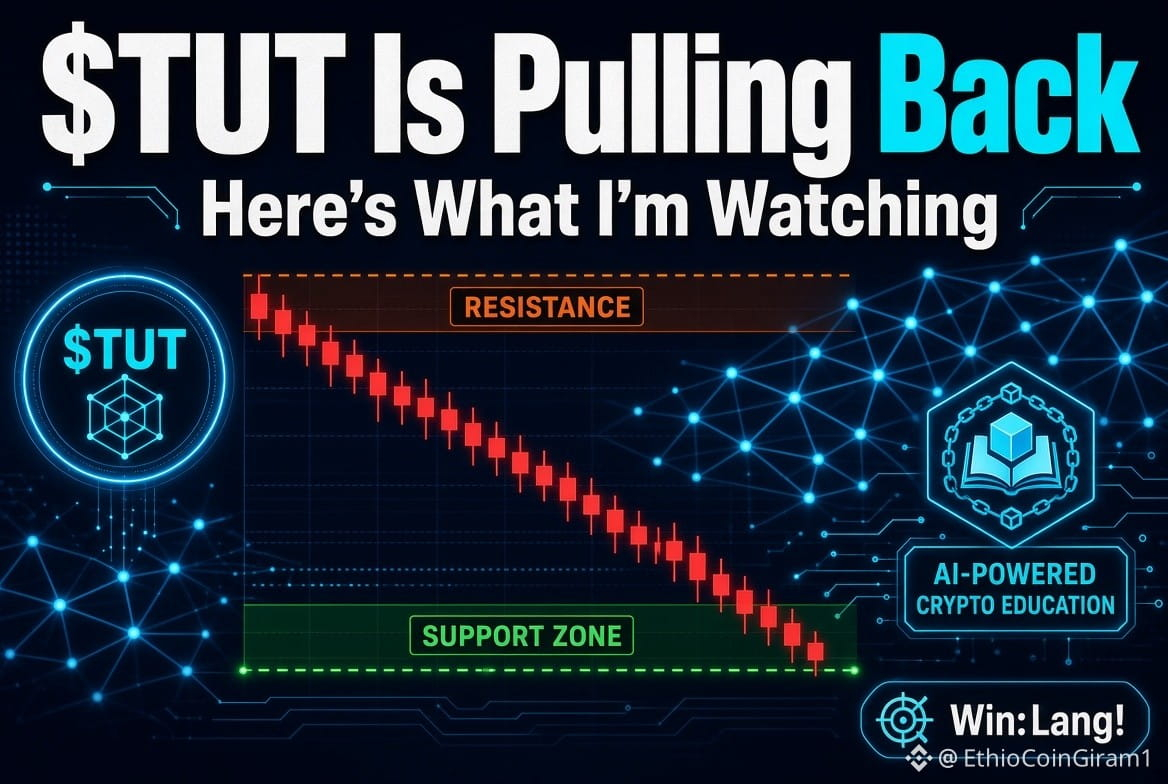
$TUT Is Pulling Back — Here’s What I’m Watching
I’ve been watching $TUT
{future}(TUTUSDT)
(Tutorial) closely, and today’s price action is a good reminder that momentum can change quickly in smaller-cap crypto assets.
TUT is trading around $0.033, with Binance showing a 24-hour range near $0.0292–$0.0384 and the token down roughly 4% over 24 hours at the time of checking.
What makes TUT interesting to me isn’t only the chart. Tutorial is positioned around AI-powered crypto education, with TUT designed for platform rewards, feature access and governance.
From a market perspective, the first thing I’d watch is whether the $0.029–$0.030 area continues to attract buyers. Holding that zone could give bulls a chance to rebuild momentum.
On the upside, $0.038–$0.040 looks like an important area to reclaim. A sustained move above that range, especially with stronger volume, would make the short-term structure more interesting.
But I wouldn’t ignore the downside. If support breaks decisively, the market could become more cautious and sellers may gain control.
For me, the bigger question is whether TUT can turn its AI + crypto education narrative into sustained ecosystem activity rather than relying mainly on short-term market attention.
$TUT is definitely one I’m keeping on the watchlist.
What are you watching here — a recovery above $0.040, or another test of support first?#SECReviewsSix3xLeveragedCommodityETFs #USToPressNationsToPickUSOrChinaAICoalition #SP500TopsRecord7800 #Write2Earn
$TUT Is Pulling Back — Here’s What I’m Watching
I’ve been watching $TUT
(Tutorial) closely, and today’s price action is a good reminder that momentum can change quickly in smaller-cap crypto assets.
TUT is trading around $0.033, with Binance showing a 24-hour range near $0.0292–$0.0384 and the token down roughly 4% over 24 hours at the time of checking.
What makes TUT interesting to me isn’t only the chart. Tutorial is positioned around AI-powered crypto education, with TUT designed for platform rewards, feature access and governance.
From a market perspective, the first thing I’d watch is whether the $0.029–$0.030 area continues to attract buyers. Holding that zone could give bulls a chance to rebuild momentum.
On the upside, $0.038–$0.040 looks like an important area to reclaim. A sustained move above that range, especially with stronger volume, would make the short-term structure more interesting.
But I wouldn’t ignore the downside. If support breaks decisively, the market could become more cautious and sellers may gain control.
For me, the bigger question is whether TUT can turn its AI + crypto education narrative into sustained ecosystem activity rather than relying mainly on short-term market attention.
$TUT is definitely one I’m keeping on the watchlist.
What are you watching here — a recovery above $0.040, or another test of support first?#SECReviewsSix3xLeveragedCommodityETFs #USToPressNationsToPickUSOrChinaAICoalition #SP500TopsRecord7800 #Write2Earn
I’ve been watching $TUT
(Tutorial) closely, and today’s price action is a good reminder that momentum can change quickly in smaller-cap crypto assets.
TUT is trading around $0.033, with Binance showing a 24-hour range near $0.0292–$0.0384 and the token down roughly 4% over 24 hours at the time of checking.
What makes TUT interesting to me isn’t only the chart. Tutorial is positioned around AI-powered crypto education, with TUT designed for platform rewards, feature access and governance.
From a market perspective, the first thing I’d watch is whether the $0.029–$0.030 area continues to attract buyers. Holding that zone could give bulls a chance to rebuild momentum.
On the upside, $0.038–$0.040 looks like an important area to reclaim. A sustained move above that range, especially with stronger volume, would make the short-term structure more interesting.
But I wouldn’t ignore the downside. If support breaks decisively, the market could become more cautious and sellers may gain control.
For me, the bigger question is whether TUT can turn its AI + crypto education narrative into sustained ecosystem activity rather than relying mainly on short-term market attention.
$TUT is definitely one I’m keeping on the watchlist.
What are you watching here — a recovery above $0.040, or another test of support first?#SECReviewsSix3xLeveragedCommodityETFs #USToPressNationsToPickUSOrChinaAICoalition #SP500TopsRecord7800 #Write2Earn
147
·
--
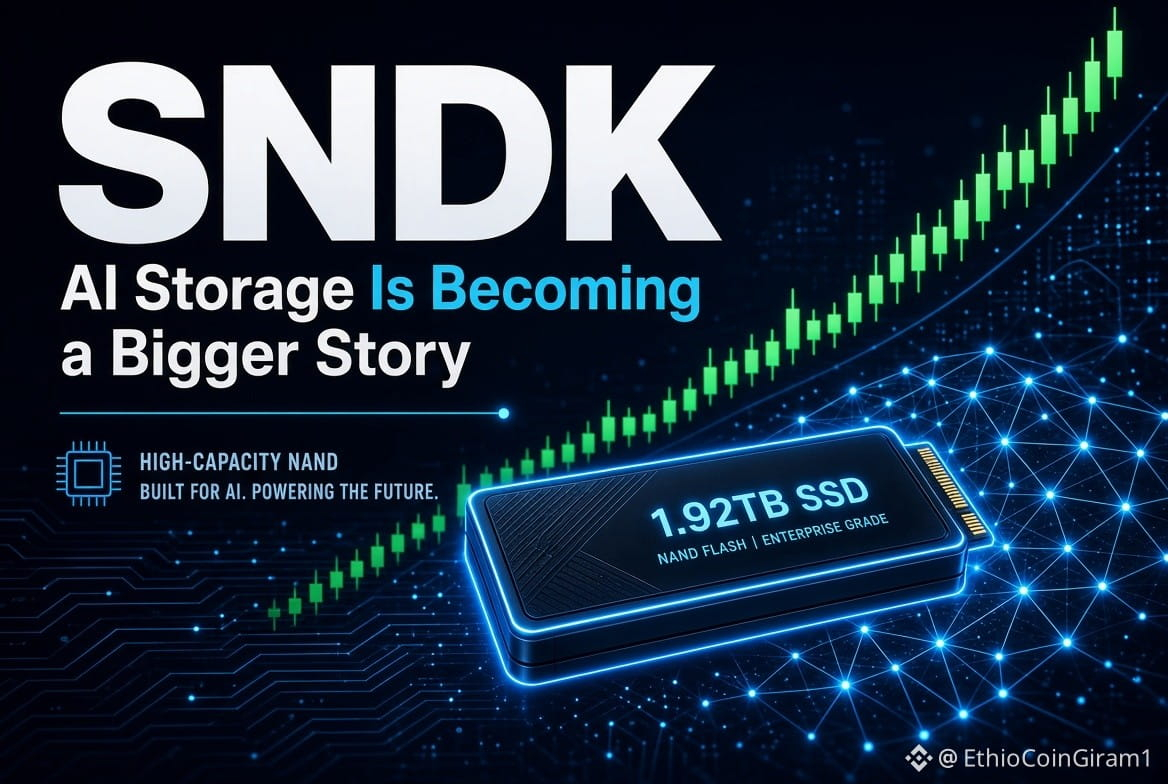
SNDK — AI Storage Is Becoming a Bigger Story
So, SanDisk ($SNDK) suddenly has everyone talking. I mean, you can actually feel the buzz—everybody’s rethinking how important NAND flash is going to be as AI just eats up more and more infrastructure.
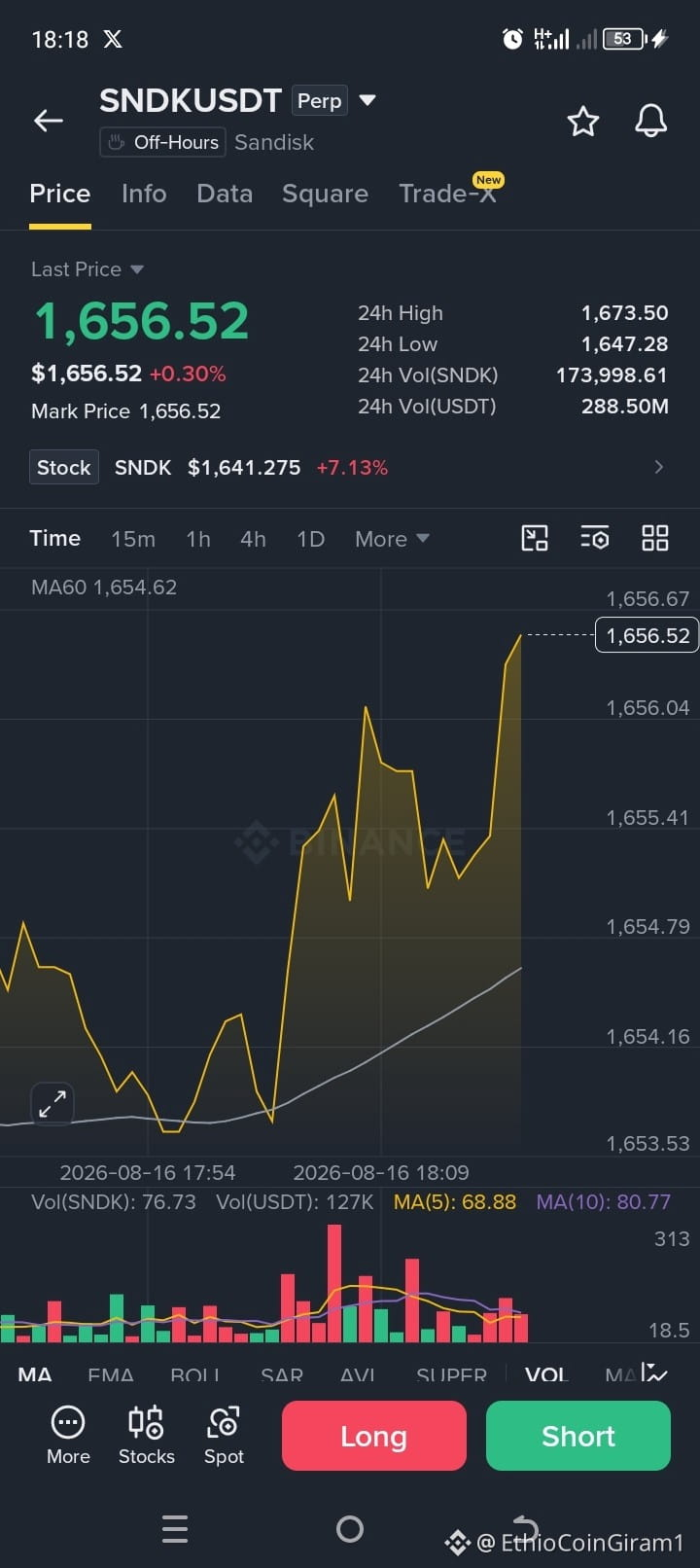
Friday was wild. The stock closed at about $1,628, up 6.5% in just one day, and up almost 35% over the week. Not bad, right? But honestly, the price jump isn’t even the most interesting part for me.
Here’s what really hooked me: management at their recent Investor Day laid out this big, bold vision. They’re talking mid-to-high teen percentage revenue growth all the way through 2030. And get this—targeting 80% adjusted gross margins, aiming for 75% operating margins. Those are high-flying numbers. It's the kind of thing that makes you stop and think, are they really going to pull this off?
And then there’s this little anecdote that says a lot. Years ago, the memory industry felt like riding a roller coaster—up, down, up, down—no predictability. But now, SanDisk says they’ve signed multi-year deals with eight big customers, agreements that could cover two-thirds of their 2028 memory output. That’s a huge buffer from the old “enjoy it while it lasts” cycle.
The AI angle just makes it all more intense. AI is tidal-waving data everywhere. High-capacity storage isn’t just nice to have—it’s everything now. SanDisk is pushing into high-bandwidth flash just for these machine learning workloads. Honestly, five years ago, who even thought “storage” would be the sexy part of the AI stack?
But, and it’s a big but, after a move like this in the stock—whew, I wouldn’t just blindly chase the hype. The real test is still coming: can SanDisk turn this avalanche of AI demand into real profits and actual cash flow over the long term? Those wild margins are nice on paper, but we’ve all seen rosy PowerPoints before.
$SNDK
{future}(SNDKUSDT)
#COWRises55.77%In24h #SECReviewsSix3xLeveragedCommodityETFs #Write2Earn @EthioCoinGram1
SNDK — AI Storage Is Becoming a Bigger Story
So, SanDisk ($SNDK ) suddenly has everyone talking. I mean, you can actually feel the buzz—everybody’s rethinking how important NAND flash is going to be as AI just eats up more and more infrastructure.
Friday was wild. The stock closed at about $1,628, up 6.5% in just one day, and up almost 35% over the week. Not bad, right? But honestly, the price jump isn’t even the most interesting part for me.
Here’s what really hooked me: management at their recent Investor Day laid out this big, bold vision. They’re talking mid-to-high teen percentage revenue growth all the way through 2030. And get this—targeting 80% adjusted gross margins, aiming for 75% operating margins. Those are high-flying numbers. It's the kind of thing that makes you stop and think, are they really going to pull this off?
And then there’s this little anecdote that says a lot. Years ago, the memory industry felt like riding a roller coaster—up, down, up, down—no predictability. But now, SanDisk says they’ve signed multi-year deals with eight big customers, agreements that could cover two-thirds of their 2028 memory output. That’s a huge buffer from the old “enjoy it while it lasts” cycle.
The AI angle just makes it all more intense. AI is tidal-waving data everywhere. High-capacity storage isn’t just nice to have—it’s everything now. SanDisk is pushing into high-bandwidth flash just for these machine learning workloads. Honestly, five years ago, who even thought “storage” would be the sexy part of the AI stack?
But, and it’s a big but, after a move like this in the stock—whew, I wouldn’t just blindly chase the hype. The real test is still coming: can SanDisk turn this avalanche of AI demand into real profits and actual cash flow over the long term? Those wild margins are nice on paper, but we’ve all seen rosy PowerPoints before.
$SNDK
#COWRises55.77%In24h #SECReviewsSix3xLeveragedCommodityETFs #Write2Earn @EthioCoinGiram1
So, SanDisk ($SNDK ) suddenly has everyone talking. I mean, you can actually feel the buzz—everybody’s rethinking how important NAND flash is going to be as AI just eats up more and more infrastructure.
Friday was wild. The stock closed at about $1,628, up 6.5% in just one day, and up almost 35% over the week. Not bad, right? But honestly, the price jump isn’t even the most interesting part for me.
Here’s what really hooked me: management at their recent Investor Day laid out this big, bold vision. They’re talking mid-to-high teen percentage revenue growth all the way through 2030. And get this—targeting 80% adjusted gross margins, aiming for 75% operating margins. Those are high-flying numbers. It's the kind of thing that makes you stop and think, are they really going to pull this off?
And then there’s this little anecdote that says a lot. Years ago, the memory industry felt like riding a roller coaster—up, down, up, down—no predictability. But now, SanDisk says they’ve signed multi-year deals with eight big customers, agreements that could cover two-thirds of their 2028 memory output. That’s a huge buffer from the old “enjoy it while it lasts” cycle.
The AI angle just makes it all more intense. AI is tidal-waving data everywhere. High-capacity storage isn’t just nice to have—it’s everything now. SanDisk is pushing into high-bandwidth flash just for these machine learning workloads. Honestly, five years ago, who even thought “storage” would be the sexy part of the AI stack?
But, and it’s a big but, after a move like this in the stock—whew, I wouldn’t just blindly chase the hype. The real test is still coming: can SanDisk turn this avalanche of AI demand into real profits and actual cash flow over the long term? Those wild margins are nice on paper, but we’ve all seen rosy PowerPoints before.
$SNDK
#COWRises55.77%In24h #SECReviewsSix3xLeveragedCommodityETFs #Write2Earn @EthioCoinGiram1
276
·
--
#SpaceX Shares Rise Toward $140 — Is the Market Repricing the Story? 🚀
I’ve been watching SpaceX closely, and the move back toward the $140 area is interesting—not simply because of the price, but because of what it says about investor sentiment.
SpaceX has been through a highly volatile post-IPO period. After falling sharply from its early highs, the stock recently recovered above its $135 IPO price, with shares closing around $138.74 on August 10.
What stands out to me is the resilience around the IPO price. Concerns about insider share unlocks created a potential supply overhang, yet the expected wave of selling did not immediately materialize. That helped restore some confidence.
The bigger story is still the combination of Starlink, launch services, AI infrastructure, and Musk’s broader technology ecosystem. Nvidia has disclosed a major SpaceX stake, while Alphabet’s investment has also become extremely valuable.
But I wouldn’t ignore valuation risk. At these levels, the market is already pricing in significant future growth. The question is whether SpaceX can turn its ambitious plans into sustained revenue and earnings growth.
For me, $140 is less about a magic number and more about sentiment. If buyers can keep defending this zone, the recovery narrative becomes more interesting. If momentum fades, valuation concerns could return quickly.
#SECReviewsSix3xLeveragedCommodityETFs #USToPressNationsToPickUSOrChinaAICoalition #SP500TopsRecord7800 #Write2Earn
#SpaceX Shares Rise Toward $140 — Is the Market Repricing the Story? 🚀
I’ve been watching SpaceX closely, and the move back toward the $140 area is interesting—not simply because of the price, but because of what it says about investor sentiment.
SpaceX has been through a highly volatile post-IPO period. After falling sharply from its early highs, the stock recently recovered above its $135 IPO price, with shares closing around $138.74 on August 10.
What stands out to me is the resilience around the IPO price. Concerns about insider share unlocks created a potential supply overhang, yet the expected wave of selling did not immediately materialize. That helped restore some confidence.
The bigger story is still the combination of Starlink, launch services, AI infrastructure, and Musk’s broader technology ecosystem. Nvidia has disclosed a major SpaceX stake, while Alphabet’s investment has also become extremely valuable.
But I wouldn’t ignore valuation risk. At these levels, the market is already pricing in significant future growth. The question is whether SpaceX can turn its ambitious plans into sustained revenue and earnings growth.
For me, $140 is less about a magic number and more about sentiment. If buyers can keep defending this zone, the recovery narrative becomes more interesting. If momentum fades, valuation concerns could return quickly.
#SECReviewsSix3xLeveragedCommodityETFs #USToPressNationsToPickUSOrChinaAICoalition #SP500TopsRecord7800 #Write2Earn
I’ve been watching SpaceX closely, and the move back toward the $140 area is interesting—not simply because of the price, but because of what it says about investor sentiment.
SpaceX has been through a highly volatile post-IPO period. After falling sharply from its early highs, the stock recently recovered above its $135 IPO price, with shares closing around $138.74 on August 10.
What stands out to me is the resilience around the IPO price. Concerns about insider share unlocks created a potential supply overhang, yet the expected wave of selling did not immediately materialize. That helped restore some confidence.
The bigger story is still the combination of Starlink, launch services, AI infrastructure, and Musk’s broader technology ecosystem. Nvidia has disclosed a major SpaceX stake, while Alphabet’s investment has also become extremely valuable.
But I wouldn’t ignore valuation risk. At these levels, the market is already pricing in significant future growth. The question is whether SpaceX can turn its ambitious plans into sustained revenue and earnings growth.
For me, $140 is less about a magic number and more about sentiment. If buyers can keep defending this zone, the recovery narrative becomes more interesting. If momentum fades, valuation concerns could return quickly.
#SECReviewsSix3xLeveragedCommodityETFs #USToPressNationsToPickUSOrChinaAICoalition #SP500TopsRecord7800 #Write2Earn

72
·
--
Bitcoin Holder Loses Exchange Funds After Google Account Hack: A Security Wake-Up CallOne Compromised Account Can Become a Gateway to Crypto Funds
Introduction
A recent account from a Bitcoin holder highlights a security risk that is easy to underestimate: your crypto exchange may be protected, but the email and accounts connected to it can become the weakest link.
The reported victim said a phishing attack compromised their Google account, exposing access to passwords, authentication information, and exchange-related emails. The attackers allegedly used that access to reach crypto exchange accounts and withdraw funds.
What Happened?
The important lesson is not simply “Google was hacked.” According to the account, the attack began with a convincing phishing message that led the victim to a fake Google login page. Once the attacker obtained account credentials, information stored or accessible through the Google account reportedly helped them identify and access crypto exchanges.
This type of attack shows why crypto security needs multiple independent layers.
I’ve always viewed an exchange account like a house: a strong front door is useful, but protecting the windows and spare keys matters too.
How Crypto Users Can Reduce the Risk
Use a unique email for important financial accounts. Keep recovery codes offline, avoid clicking unexpected security links, and consider stronger authentication methods such as hardware security keys.
For larger holdings, separating long-term assets from exchange accounts can also reduce the impact of an account takeover.
Conclusion
The biggest takeaway is simple: protecting crypto is not only about protecting the wallet or exchange. It is also about protecting every account connected to them.
FAQs
Can a Google account compromise expose crypto?
Potentially, especially when passwords, recovery information, or exchange communications are accessible through it.
What is the safest first step?
Secure your primary email, use unique passwords, enable strong 2FA, and keep recovery information offline.
Should all crypto stay on an exchange?
That depends on individual circumstances, but concentration of funds in one place can increase security risk.
What do you think matters more for crypto security: the exchange or the user's personal security setup?
@undefined #Binance
#BTC #CyberSecurity #CryptoNews #BinanceSquare
Bitcoin Holder Loses Exchange Funds After Google Account Hack: A Security Wake-Up Call
One Compromised Account Can Become a Gateway to Crypto Funds
Introduction
A recent account from a Bitcoin holder highlights a security risk that is easy to underestimate: your crypto exchange may be protected, but the email and accounts connected to it can become the weakest link.
The reported victim said a phishing attack compromised their Google account, exposing access to passwords, authentication information, and exchange-related emails. The attackers allegedly used that access to reach crypto exchange accounts and withdraw funds.
What Happened?
The important lesson is not simply “Google was hacked.” According to the account, the attack began with a convincing phishing message that led the victim to a fake Google login page. Once the attacker obtained account credentials, information stored or accessible through the Google account reportedly helped them identify and access crypto exchanges.
This type of attack shows why crypto security needs multiple independent layers.
I’ve always viewed an exchange account like a house: a strong front door is useful, but protecting the windows and spare keys matters too.
How Crypto Users Can Reduce the Risk
Use a unique email for important financial accounts. Keep recovery codes offline, avoid clicking unexpected security links, and consider stronger authentication methods such as hardware security keys.
For larger holdings, separating long-term assets from exchange accounts can also reduce the impact of an account takeover.
Conclusion
The biggest takeaway is simple: protecting crypto is not only about protecting the wallet or exchange. It is also about protecting every account connected to them.
FAQs
Can a Google account compromise expose crypto?
Potentially, especially when passwords, recovery information, or exchange communications are accessible through it.
What is the safest first step?
Secure your primary email, use unique passwords, enable strong 2FA, and keep recovery information offline.
Should all crypto stay on an exchange?
That depends on individual circumstances, but concentration of funds in one place can increase security risk.
What do you think matters more for crypto security: the exchange or the user's personal security setup?
@undefined #Binance
#BTC #CyberSecurity #CryptoNews #BinanceSquare
Introduction
A recent account from a Bitcoin holder highlights a security risk that is easy to underestimate: your crypto exchange may be protected, but the email and accounts connected to it can become the weakest link.
The reported victim said a phishing attack compromised their Google account, exposing access to passwords, authentication information, and exchange-related emails. The attackers allegedly used that access to reach crypto exchange accounts and withdraw funds.
What Happened?
The important lesson is not simply “Google was hacked.” According to the account, the attack began with a convincing phishing message that led the victim to a fake Google login page. Once the attacker obtained account credentials, information stored or accessible through the Google account reportedly helped them identify and access crypto exchanges.
This type of attack shows why crypto security needs multiple independent layers.
I’ve always viewed an exchange account like a house: a strong front door is useful, but protecting the windows and spare keys matters too.
How Crypto Users Can Reduce the Risk
Use a unique email for important financial accounts. Keep recovery codes offline, avoid clicking unexpected security links, and consider stronger authentication methods such as hardware security keys.
For larger holdings, separating long-term assets from exchange accounts can also reduce the impact of an account takeover.
Conclusion
The biggest takeaway is simple: protecting crypto is not only about protecting the wallet or exchange. It is also about protecting every account connected to them.
FAQs
Can a Google account compromise expose crypto?
Potentially, especially when passwords, recovery information, or exchange communications are accessible through it.
What is the safest first step?
Secure your primary email, use unique passwords, enable strong 2FA, and keep recovery information offline.
Should all crypto stay on an exchange?
That depends on individual circumstances, but concentration of funds in one place can increase security risk.
What do you think matters more for crypto security: the exchange or the user's personal security setup?
@undefined #Binance
#BTC #CyberSecurity #CryptoNews #BinanceSquare
75
·
--
$AKE (AKEDO) Today: Breakout Hype, But Big Unlock Looms
Today, the $AKE crowd is absolutely buzzing. It’s one of those days where you can feel the FOMO through the screen—AKEDO keeps pumping after that wild breakout. I saw it chopping around $0.0098 last I checked, with some swings between about $0.0088 and $0.0116. Volume? Insane. We’re talking $23.4 million just sloshing around. I mean, I remember last time I saw these kinds of numbers, the pullback almost felt inevitable—but people just kept buying.
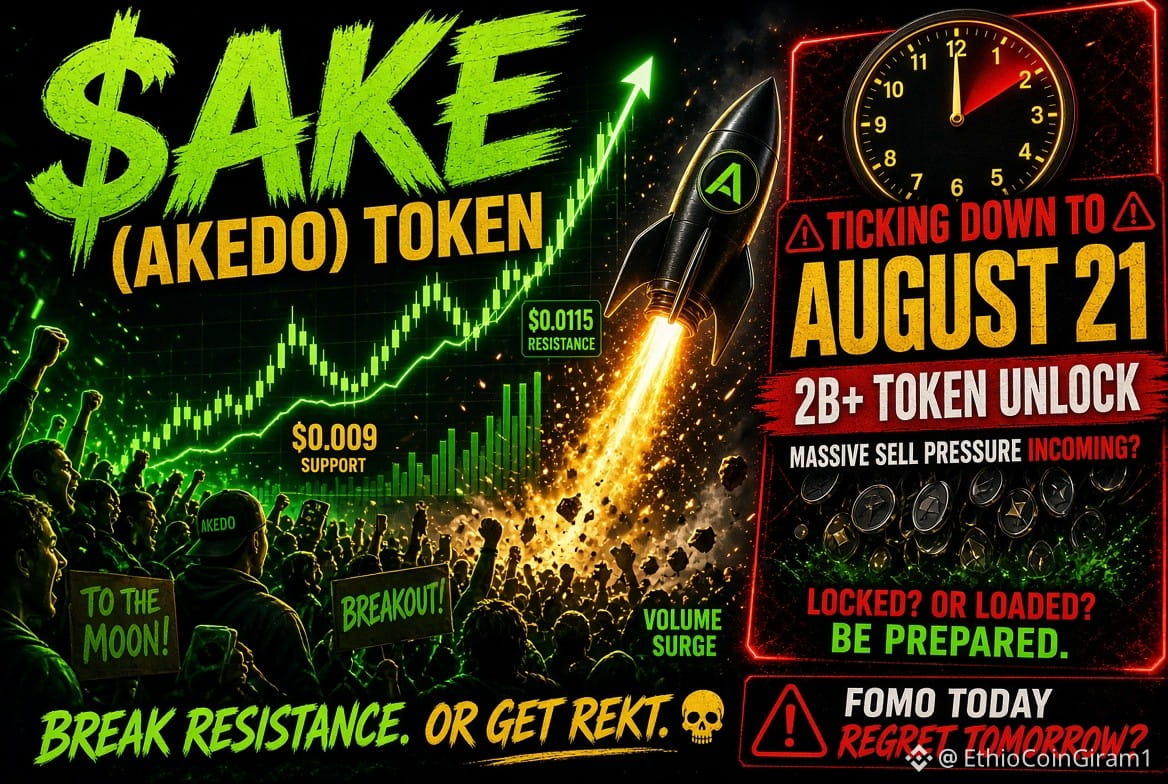
Now, here’s the thing everyone’s buzzing about (and honestly, the part that’s got me glued to the charts): there’s this massive token unlock coming up. No joke—over 2 billion AKE tokens drop on August 21, worth about $16.3 million. That gets my palms sweaty, because we've all seen what happens when that fresh supply hits.
But let’s back up—how'd we even get here? Short answer: pure, unfiltered momentum. This thing doubled in a day during the breakout, and everywhere you look, it’s shorts getting wrecked. Like 88% of about $8.5 million in liquidations? Ouch.
So here’s what I’m watching now—
First, resistance: that $0.0115-ish zone. If it punches through, and volume holds up, I’ll eat my hat—buyers are still hungry. But if it stumbles and starts sliding back to $0.009, that’s a pretty clear signal the party might be winding down.
Honestly, the scariest bit is that August 21 unlock. I’ve been burned before thinking demand would soak up all the new tokens, only for price to just...dribble lower for days. You get this “uh oh” feeling as the sell pressure starts.
So, where’s my head? I love a good hype run, sure, and the narrative is strong here. But with that unlock looming, chasing the green candle feels—yeah, kind of wild. Real demand needs to show up and catch all that supply, or this could unwind fast.
$AKE
{alpha}(560x2c3a8ee94ddd97244a93bc48298f97d2c412f7db)
#Write2Earn #SECReviewsSix3xLeveragedCommodityETFs #USToPressNationsToPickUSOrChinaAICoalition
$AKE (AKEDO) Today: Breakout Hype, But Big Unlock Looms
Today, the $AKE crowd is absolutely buzzing. It’s one of those days where you can feel the FOMO through the screen—AKEDO keeps pumping after that wild breakout. I saw it chopping around $0.0098 last I checked, with some swings between about $0.0088 and $0.0116. Volume? Insane. We’re talking $23.4 million just sloshing around. I mean, I remember last time I saw these kinds of numbers, the pullback almost felt inevitable—but people just kept buying.
Now, here’s the thing everyone’s buzzing about (and honestly, the part that’s got me glued to the charts): there’s this massive token unlock coming up. No joke—over 2 billion AKE tokens drop on August 21, worth about $16.3 million. That gets my palms sweaty, because we've all seen what happens when that fresh supply hits.
But let’s back up—how'd we even get here? Short answer: pure, unfiltered momentum. This thing doubled in a day during the breakout, and everywhere you look, it’s shorts getting wrecked. Like 88% of about $8.5 million in liquidations? Ouch.
So here’s what I’m watching now—
First, resistance: that $0.0115-ish zone. If it punches through, and volume holds up, I’ll eat my hat—buyers are still hungry. But if it stumbles and starts sliding back to $0.009, that’s a pretty clear signal the party might be winding down.
Honestly, the scariest bit is that August 21 unlock. I’ve been burned before thinking demand would soak up all the new tokens, only for price to just...dribble lower for days. You get this “uh oh” feeling as the sell pressure starts.
So, where’s my head? I love a good hype run, sure, and the narrative is strong here. But with that unlock looming, chasing the green candle feels—yeah, kind of wild. Real demand needs to show up and catch all that supply, or this could unwind fast.
$AKE
#Write2Earn #SECReviewsSix3xLeveragedCommodityETFs #USToPressNationsToPickUSOrChinaAICoalition
Today, the $AKE crowd is absolutely buzzing. It’s one of those days where you can feel the FOMO through the screen—AKEDO keeps pumping after that wild breakout. I saw it chopping around $0.0098 last I checked, with some swings between about $0.0088 and $0.0116. Volume? Insane. We’re talking $23.4 million just sloshing around. I mean, I remember last time I saw these kinds of numbers, the pullback almost felt inevitable—but people just kept buying.
Now, here’s the thing everyone’s buzzing about (and honestly, the part that’s got me glued to the charts): there’s this massive token unlock coming up. No joke—over 2 billion AKE tokens drop on August 21, worth about $16.3 million. That gets my palms sweaty, because we've all seen what happens when that fresh supply hits.
But let’s back up—how'd we even get here? Short answer: pure, unfiltered momentum. This thing doubled in a day during the breakout, and everywhere you look, it’s shorts getting wrecked. Like 88% of about $8.5 million in liquidations? Ouch.
So here’s what I’m watching now—
First, resistance: that $0.0115-ish zone. If it punches through, and volume holds up, I’ll eat my hat—buyers are still hungry. But if it stumbles and starts sliding back to $0.009, that’s a pretty clear signal the party might be winding down.
Honestly, the scariest bit is that August 21 unlock. I’ve been burned before thinking demand would soak up all the new tokens, only for price to just...dribble lower for days. You get this “uh oh” feeling as the sell pressure starts.
So, where’s my head? I love a good hype run, sure, and the narrative is strong here. But with that unlock looming, chasing the green candle feels—yeah, kind of wild. Real demand needs to show up and catch all that supply, or this could unwind fast.
$AKE
#Write2Earn #SECReviewsSix3xLeveragedCommodityETFs #USToPressNationsToPickUSOrChinaAICoalition
412
·
--
This breakdown hits the exact structural tension making $AKE
{alpha}(560x2c3a8ee94ddd97244a93bc48298f97d2c412f7db)
one of the most interesting short-term setups in the market right now. The collision between high-velocity momentum and an upcoming supply shock creates a textbook risk profile.
Key Catalyst Dynamics
Short Squeeze Tailwinds: The recent flush of short positions (~88% of liquidations) provided the fuel needed to break overhead resistance. However, squeeze-driven rallies tend to decay quickly once derivative funding rates stabilize unless spot demand steps in to absorb supply."
This breakdown hits the exact structural tension making $AKE
one of the most interesting short-term setups in the market right now. The collision between high-velocity momentum and an upcoming supply shock creates a textbook risk profile.
Key Catalyst Dynamics
Short Squeeze Tailwinds: The recent flush of short positions (~88% of liquidations) provided the fuel needed to break overhead resistance. However, squeeze-driven rallies tend to decay quickly once derivative funding rates stabilize unless spot demand steps in to absorb supply."
one of the most interesting short-term setups in the market right now. The collision between high-velocity momentum and an upcoming supply shock creates a textbook risk profile.
Key Catalyst Dynamics
Short Squeeze Tailwinds: The recent flush of short positions (~88% of liquidations) provided the fuel needed to break overhead resistance. However, squeeze-driven rallies tend to decay quickly once derivative funding rates stabilize unless spot demand steps in to absorb supply."
267
Log in to explore more content
Join global crypto users on Binance Square
⚡️ Get latest and useful information about crypto.
💬 Trusted by the world’s largest crypto exchange.
👍 Discover real insights from verified creators.
Email / Phone number
Trending Topics
BinancePick
2.7M views
143,489 Discussing
Join #EarningsSeason: Predict Earnings on Binance Pick, Share Your Take on Binance Square!
Binance Square Official
·402 Likes
·339.1k views
EarningsSeason
5M views
24,628 Discussing
SouthKoreaReportedlyWeighsFourthCryptoTaxDelay
1,176 views
94 Discussing