
CryptoThesis
172 Posts

CryptoThesis
Crypto market research & insights.
Market structure • Trends • Narratives.
BTC & major altcoins.
135 Following
45 Followers
60 Liked
Posts
All
Quotes
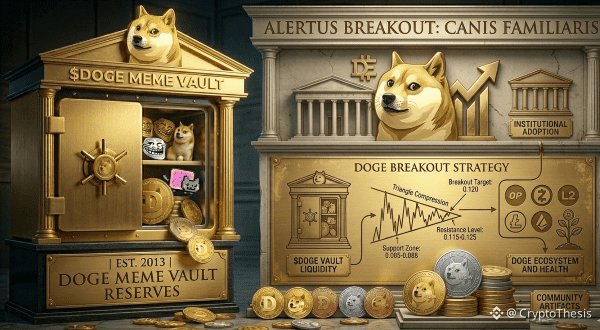
$DOGE has historically been influenced more by online sentiment and social media activity than by traditional on-chain fundamentals.
As one of the earliest meme coins, it has maintained relevance through community use cases like tipping and its visibility across platforms such as X and Reddit.
Because of this, price movements in DOGE are often linked to shifts in attention and engagement, making it different from assets driven mainly by utility or network activity.
#DOGE #DOGECOİN #Crypto #MemeCoins #Blockchain
As one of the earliest meme coins, it has maintained relevance through community use cases like tipping and its visibility across platforms such as X and Reddit.
Because of this, price movements in DOGE are often linked to shifts in attention and engagement, making it different from assets driven mainly by utility or network activity.
#DOGE #DOGECOİN #Crypto #MemeCoins #Blockchain
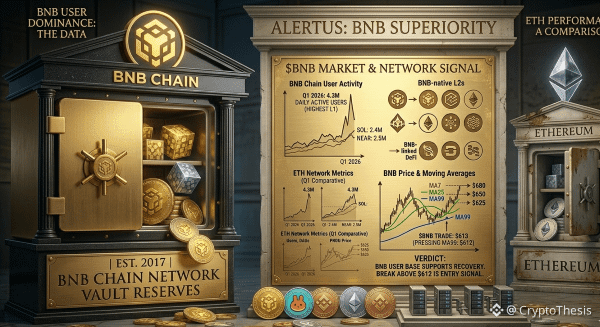
$BNB has recently shown relative strength compared to Ethereum in short-term price action.
On-chain data also shows strong user activity on BNB Chain, with higher daily active users compared to some other networks in recent periods.
From a technical perspective, price has moved back toward commonly watched moving averages, which traders often use to assess momentum.
These factors are being monitored together to understand how user activity and price structure evolve.
#BNB #Ethereum #Crypto #Blockchain #OnChain
On-chain data also shows strong user activity on BNB Chain, with higher daily active users compared to some other networks in recent periods.
From a technical perspective, price has moved back toward commonly watched moving averages, which traders often use to assess momentum.
These factors are being monitored together to understand how user activity and price structure evolve.
#BNB #Ethereum #Crypto #Blockchain #OnChain
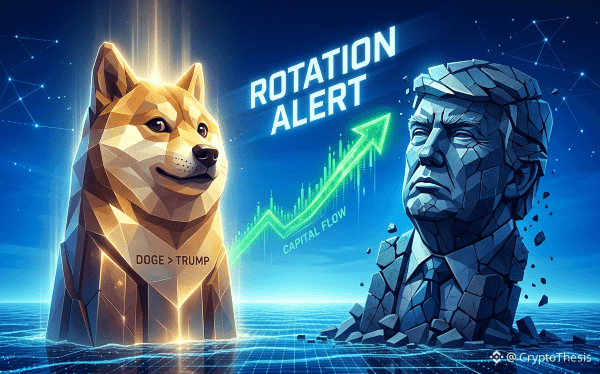
$DOGE has shown slightly stronger price stability compared to $TRUMP over the past few days.
While TRUMP has seen minor declines, DOGE has held relatively steady, creating a small performance gap between the two. Differences like this can reflect short-term shifts in market attention within similar asset categories.
For now, traders are watching whether this trend continues or if both assets move back in line with broader market conditions.
#DOGE #Crypto #MemeCoins #Markets #Altcoins
While TRUMP has seen minor declines, DOGE has held relatively steady, creating a small performance gap between the two. Differences like this can reflect short-term shifts in market attention within similar asset categories.
For now, traders are watching whether this trend continues or if both assets move back in line with broader market conditions.
#DOGE #Crypto #MemeCoins #Markets #Altcoins
Three perfect products:
A car that drives you.
A robot that serves you.
An asset that pays you.
A car that drives you.
A robot that serves you.
An asset that pays you.
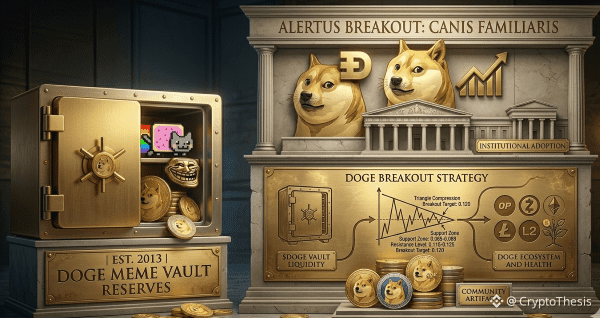
$DOGE is currently trading within a tightening range between $0.085 and $0.088 support and a higher resistance zone above.
This type of range compression is often observed before a larger move, as volatility decreases and price consolidates.
Traders are watching for a clear break outside this range to better understand the next short-term direction.
#DOGE #Crypto #TechnicalAnalysis #Altcoins #Markets
This type of range compression is often observed before a larger move, as volatility decreases and price consolidates.
Traders are watching for a clear break outside this range to better understand the next short-term direction.
#DOGE #Crypto #TechnicalAnalysis #Altcoins #Markets
$SOL has seen a decline in DEX trading activity, with recent volumes reported at lower levels compared to previous months. Network fees have also decreased during the same period.
At the same time, Ethereum has gained DEX market share, supported in part by growth across its Layer-2 ecosystem.
Shifts like this are common in crypto, as liquidity and user activity move between different networks over time.
#Solana #Ethereum #DeFi #Crypto #Blockchain
At the same time, Ethereum has gained DEX market share, supported in part by growth across its Layer-2 ecosystem.
Shifts like this are common in crypto, as liquidity and user activity move between different networks over time.
#Solana #Ethereum #DeFi #Crypto #Blockchain

There is ongoing discussion about capital rotation within the crypto market.
Some analysts note that $BTC dominance has been increasing, while parts of the market—such as smaller or more speculative tokens—have seen reduced activity.
Bitcoin is often viewed as having deeper liquidity compared to other digital assets, which can make it more suitable for larger allocations.
For now, shifts in dominance and capital flows are being closely watched as indicators of broader market trends.
#Bitcoin #BTC #Crypto #Markets #Blockchain
Some analysts note that $BTC dominance has been increasing, while parts of the market—such as smaller or more speculative tokens—have seen reduced activity.
Bitcoin is often viewed as having deeper liquidity compared to other digital assets, which can make it more suitable for larger allocations.
For now, shifts in dominance and capital flows are being closely watched as indicators of broader market trends.
#Bitcoin #BTC #Crypto #Markets #Blockchain

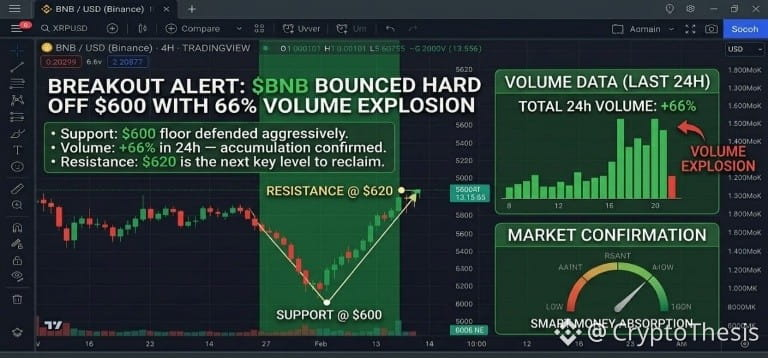
$BNB recently bounced from the $600 area, which has acted as a key support level.
The move was accompanied by a noticeable increase in trading volume over a short period, suggesting higher market activity during the rebound.
Price is now approaching the $620 region, which traders may watch as a nearby resistance level to better understand the next phase of the trend.
#BNB #Crypto #TechnicalAnalysis #altcoins #markets
The move was accompanied by a noticeable increase in trading volume over a short period, suggesting higher market activity during the rebound.
Price is now approaching the $620 region, which traders may watch as a nearby resistance level to better understand the next phase of the trend.
#BNB #Crypto #TechnicalAnalysis #altcoins #markets
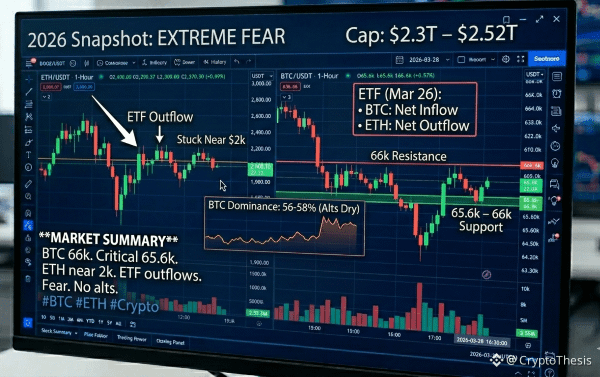
Recent market data points to a more cautious sentiment across crypto.
$BTC has been trading in a range, with repeated tests around the mid-$60K area, while $ETH remains near $2K and has seen continued ETF outflows.
At the same time, Bitcoin dominance has increased, suggesting capital is not strongly rotating into altcoins. Sentiment indicators have also dropped to lower levels, reflecting a more risk-off environment.
Despite this, Bitcoin ETF flows have remained relatively steady, showing that institutional participation is still present.
For now, markets appear to be in a wait-and-see phase, influenced by macro factors like monetary policy and global developments.
#Bitcoin #Ethereum #Crypto #Markets #Blockchain
$BTC has been trading in a range, with repeated tests around the mid-$60K area, while $ETH remains near $2K and has seen continued ETF outflows.
At the same time, Bitcoin dominance has increased, suggesting capital is not strongly rotating into altcoins. Sentiment indicators have also dropped to lower levels, reflecting a more risk-off environment.
Despite this, Bitcoin ETF flows have remained relatively steady, showing that institutional participation is still present.
For now, markets appear to be in a wait-and-see phase, influenced by macro factors like monetary policy and global developments.
#Bitcoin #Ethereum #Crypto #Markets #Blockchain
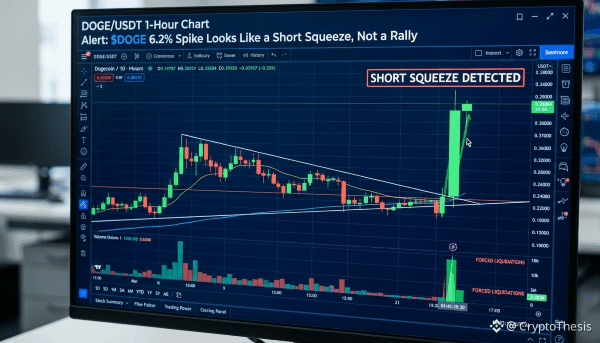
$DOGE recently moved up about 6% in a short period, drawing attention from traders.
Rapid price spikes like this are sometimes linked to short liquidations, where positions are forced to close, adding temporary buying pressure. These moves can happen quickly but don’t always reflect sustained demand.
Because of this, traders often watch whether price holds the new level or pulls back, which can help indicate if the move has stronger underlying support.
#DOGE #Crypto #TechnicalAnalysis #Markets #Altcoins
Rapid price spikes like this are sometimes linked to short liquidations, where positions are forced to close, adding temporary buying pressure. These moves can happen quickly but don’t always reflect sustained demand.
Because of this, traders often watch whether price holds the new level or pulls back, which can help indicate if the move has stronger underlying support.
#DOGE #Crypto #TechnicalAnalysis #Markets #Altcoins
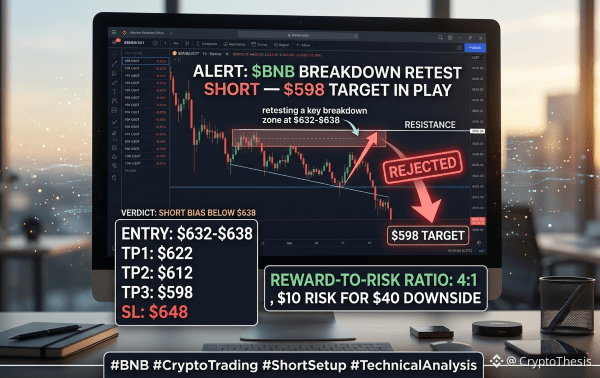
$BNB is currently retesting a previous support area around the $632–$638 range, which may now act as resistance.
In technical analysis, these “retest” zones are often watched closely, as price can either get rejected and continue lower or reclaim the level and stabilize.
For now, traders are monitoring how BNB behaves around this area to better understand the short-term market direction.
#BNB #Crypto #TechnicalAnalysis #Altcoins #Markets
In technical analysis, these “retest” zones are often watched closely, as price can either get rejected and continue lower or reclaim the level and stabilize.
For now, traders are monitoring how BNB behaves around this area to better understand the short-term market direction.
#BNB #Crypto #TechnicalAnalysis #Altcoins #Markets
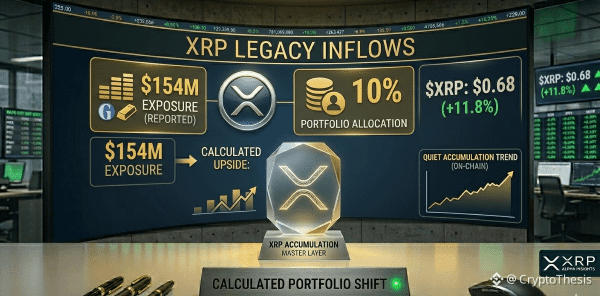
There is growing discussion around institutional interest in $XRP .
Reports suggest that Goldman Sachs has exposure to XRP-related products, while metals investor Andy Schectman has mentioned holding a personal position.
Some investors frame XRP’s potential around its possible role in payment infrastructure, particularly if adoption by financial institutions increases over time.
For now, views remain mixed, and much depends on how real-world use cases and adoption develop.
#XRP #Crypto #Blockchain #InstitutionalCrypto #Payments
Reports suggest that Goldman Sachs has exposure to XRP-related products, while metals investor Andy Schectman has mentioned holding a personal position.
Some investors frame XRP’s potential around its possible role in payment infrastructure, particularly if adoption by financial institutions increases over time.
For now, views remain mixed, and much depends on how real-world use cases and adoption develop.
#XRP #Crypto #Blockchain #InstitutionalCrypto #Payments
Curious to see the perspective on resilience and user protection


CZ
·
--
Finally finalized the draft of the book, I hope. Should be publishing soon.
To avoid any potential leaks, the book name:
English:
Freedom of Money
A Memoir of Protecting Users, Resilience, and the Founding of Binance
Chinese:
币安人生
幸运、韧性与保护用户的回忆录
To avoid any potential leaks, the book name:
English:
Freedom of Money
A Memoir of Protecting Users, Resilience, and the Founding of Binance
Chinese:
币安人生
幸运、韧性与保护用户的回忆录
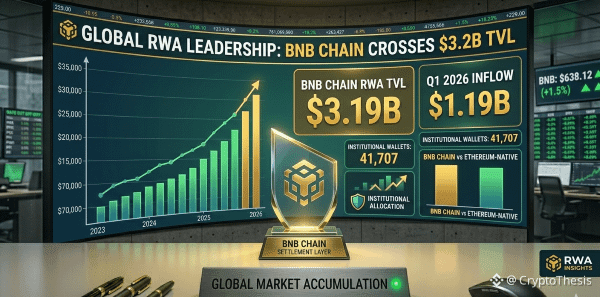
$BNB Chain has reached around $3.2B in total value locked (TVL) in real-world assets (RWA), with about **$1.19B added in the latest quarter.
Data also shows over 40,000 wallets holding RWA-related positions on the network. These assets typically represent tokenized versions of traditional financial instruments.
Growth in this sector reflects increasing interest in using blockchain networks for on-chain representation of real-world assets, alongside similar developments on other platforms.
#BNBChain #RWA #Crypto #Blockchain
Data also shows over 40,000 wallets holding RWA-related positions on the network. These assets typically represent tokenized versions of traditional financial instruments.
Growth in this sector reflects increasing interest in using blockchain networks for on-chain representation of real-world assets, alongside similar developments on other platforms.
#BNBChain #RWA #Crypto #Blockchain
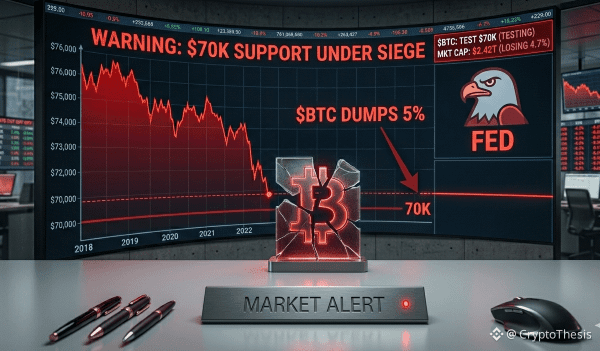
Warning: $BTC Dumps 5% After Fed — $70K Support Now Under Siege
$BTC just fell from $76K to test $70K after the Fed delivered a hawkish hold. Rates unchanged at 3.5%–3.75%, but Powell raised the inflation forecast to 2.7% and kept rate cuts off the table.
Core PCE at 3.1%. PPI at 3.4%. The macro signal is clear: higher-for-longer.
Crypto market cap wiped 4.7% — $2.42 trillion on the board.
$70K is the last line of defense. Lose it, and $BTC opens the door to deeper downside.
The signal is bearish. Don't fight the Fed.
#Bitcoin #BTC #FOMC #CryptoMarket
$BTC just fell from $76K to test $70K after the Fed delivered a hawkish hold. Rates unchanged at 3.5%–3.75%, but Powell raised the inflation forecast to 2.7% and kept rate cuts off the table.
Core PCE at 3.1%. PPI at 3.4%. The macro signal is clear: higher-for-longer.
Crypto market cap wiped 4.7% — $2.42 trillion on the board.
$70K is the last line of defense. Lose it, and $BTC opens the door to deeper downside.
The signal is bearish. Don't fight the Fed.
#Bitcoin #BTC #FOMC #CryptoMarket
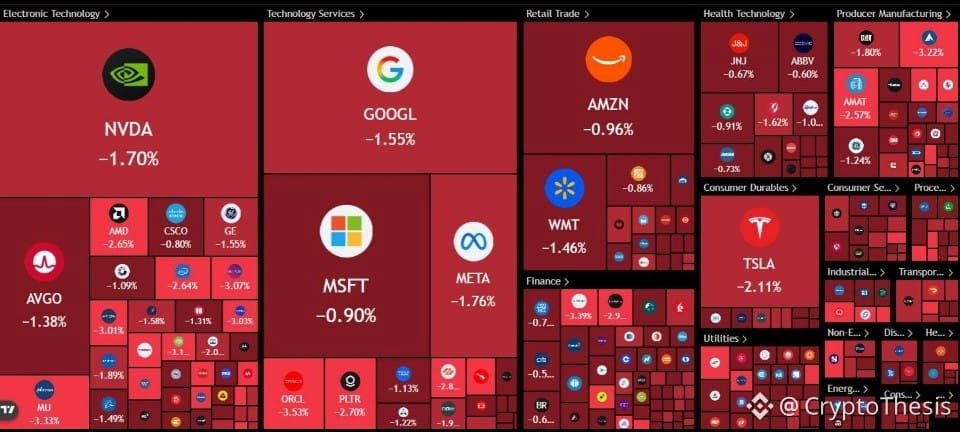
🚨 Nearly $600,000,000,000 has been wiped out from US stock market today.
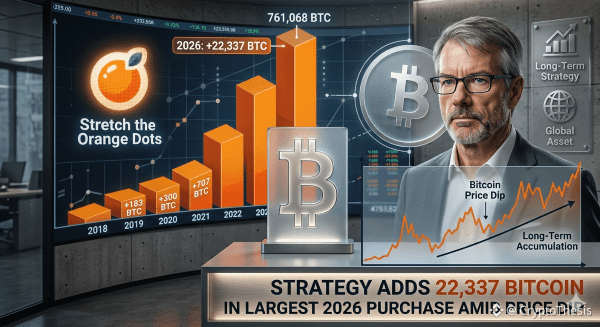
Strategy has added 22,337 $BTC in its largest purchase of 2026.
The company now holds around 761,000 BTC, representing roughly 3.6% of the circulating supply of Bitcoin. The accumulation follows a series of recent buys, partly financed through stock-related instruments.
Executive chairman Michael Saylor continues to position Bitcoin as a long-term store of value, while market reactions remain mixed between support and skepticism.
The move reflects ongoing institutional interest and different perspectives on long-term accumulation strategies.
#Bitcoin #BTC #Crypto #InstitutionalCrypto #Blockchain
The company now holds around 761,000 BTC, representing roughly 3.6% of the circulating supply of Bitcoin. The accumulation follows a series of recent buys, partly financed through stock-related instruments.
Executive chairman Michael Saylor continues to position Bitcoin as a long-term store of value, while market reactions remain mixed between support and skepticism.
The move reflects ongoing institutional interest and different perspectives on long-term accumulation strategies.
#Bitcoin #BTC #Crypto #InstitutionalCrypto #Blockchain

There are ongoing discussions around how regulators classify $ETH .
Some interpretations suggest that, under frameworks like the Howey Test, ETH may be viewed more as a commodity rather than a security, depending on how its network operates and evolves.
If confirmed through official guidance, this type of classification could affect how financial products, such as ETFs, are structured and regulated.
For now, the topic remains part of a broader regulatory conversation, and market participants are watching for clearer statements from the U.S. Securities and Exchange Commission.
#Ethereum #ETH #CryptoRegulation #Blockchain #Crypto
Some interpretations suggest that, under frameworks like the Howey Test, ETH may be viewed more as a commodity rather than a security, depending on how its network operates and evolves.
If confirmed through official guidance, this type of classification could affect how financial products, such as ETFs, are structured and regulated.
For now, the topic remains part of a broader regulatory conversation, and market participants are watching for clearer statements from the U.S. Securities and Exchange Commission.
#Ethereum #ETH #CryptoRegulation #Blockchain #Crypto

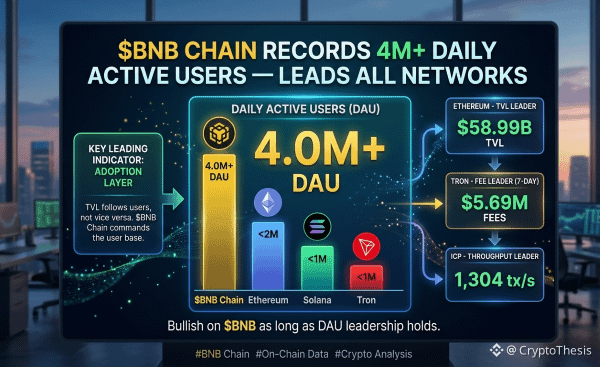
$BNB Chain recently recorded over 4 million daily active users, placing it among the most used networks by this metric.
Different blockchains tend to lead in different areas. For example, Ethereum remains ahead in total value locked (TVL), while TRON generates strong fee activity, and Internet Computer stands out in transaction throughput.
User activity is one of several indicators analysts follow to understand how blockchain ecosystems are evolving over time.
#BNB #Crypto #OnChain #Blockchain #Data
Different blockchains tend to lead in different areas. For example, Ethereum remains ahead in total value locked (TVL), while TRON generates strong fee activity, and Internet Computer stands out in transaction throughput.
User activity is one of several indicators analysts follow to understand how blockchain ecosystems are evolving over time.
#BNB #Crypto #OnChain #Blockchain #Data
Log in to explore more content