

CryptoQuant Quicktake
9.3k Posts

CryptoQuant Quicktake
 Square Verified+
Report
Block User
CryptoQuant.com - Leading On-chain Data/Analytics Provider
0 Following
25.2K+ Followers
27.4K+ Liked
Posts
Article
Binance-tagged Inflow Index Reaches Its Lowest Level Since 20 Aug 2026Sample: 56 Binance-listed ERC-20 tokens, data to 26 Oct 2026
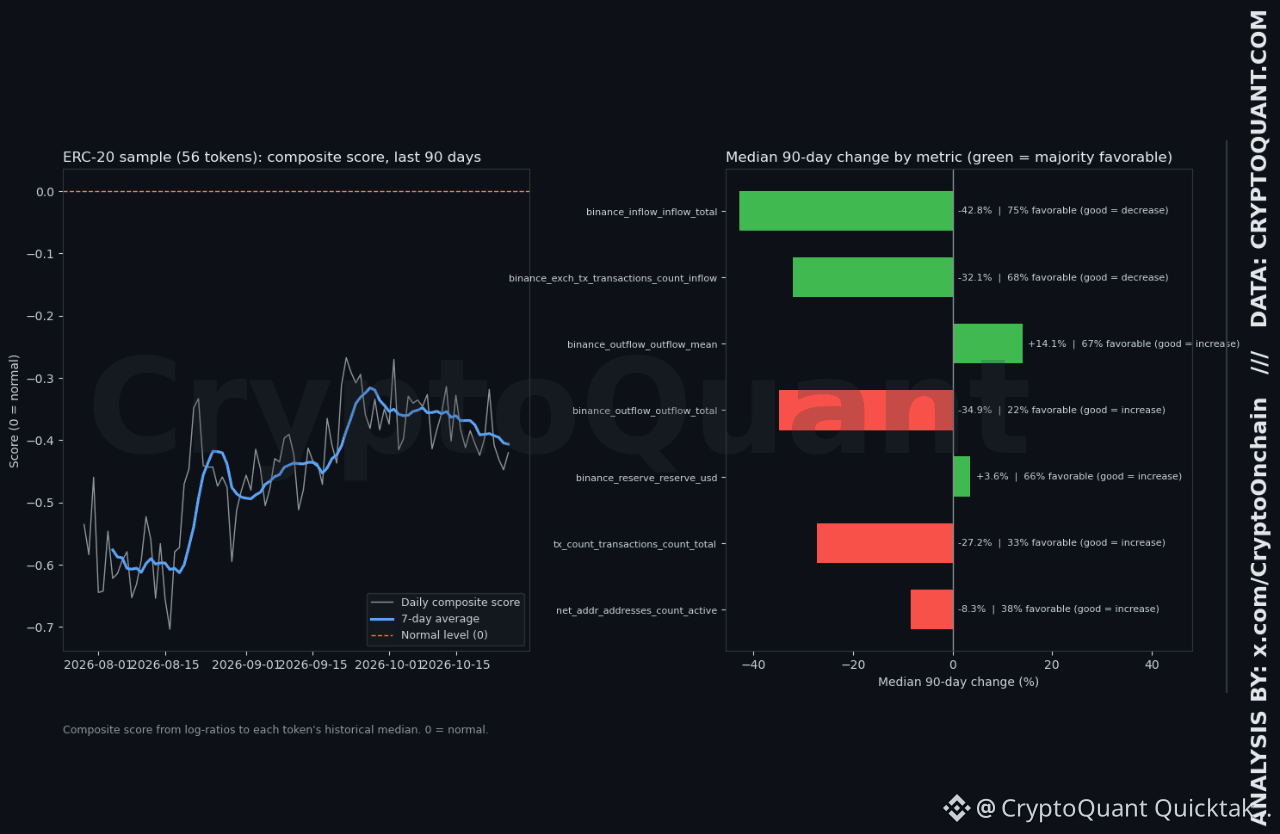
On 26 Oct 2026, the market inflow index for Binance-tagged addresses stood at 0.80 (1.00 = each token's historical median). Over 90 days, the median token-level change in total inflow was −43%, and median transaction counts fell 27%.
These figures describe this sample, not the full altcoin market. The sample's composite score was −0.41 over the last seven days (0 = normal), moving only −0.05 against the prior 30 days.
Exchange-flow metrics do not move in one direction. Average outflow per transfer rose 14%, while total outflow fell 35%. Over the same period, active addresses fell 8% and sending addresses fell 13%.
[Macro context: name the CPI, PPI, rate, or DXY event of 20–26 Oct 2026 and verify it before publishing.]
These readings may create conditions worth comparing with past periods of similar inflow and activity patterns. That comparison has not yet been run on this sample.
One candidate explanation, unverified: holders may be moving tokens to self-custody. The data do not confirm this.
Volume and burn/mint counts are excluded. The top five tokens hold 99.8% of recent volume. Binance address labels should be verified before publication.
"For now, the clearest reading is that exchange-flow metrics have improved on some measures while on-chain activity has weakened, in a sample too small to describe the wider altcoin market."
Written by CryptoOnchain
Binance-tagged Inflow Index Reaches Its Lowest Level Since 20 Aug 2026
Sample: 56 Binance-listed ERC-20 tokens, data to 26 Oct 2026
On 26 Oct 2026, the market inflow index for Binance-tagged addresses stood at 0.80 (1.00 = each token's historical median). Over 90 days, the median token-level change in total inflow was −43%, and median transaction counts fell 27%.
These figures describe this sample, not the full altcoin market. The sample's composite score was −0.41 over the last seven days (0 = normal), moving only −0.05 against the prior 30 days.
Exchange-flow metrics do not move in one direction. Average outflow per transfer rose 14%, while total outflow fell 35%. Over the same period, active addresses fell 8% and sending addresses fell 13%.
[Macro context: name the CPI, PPI, rate, or DXY event of 20–26 Oct 2026 and verify it before publishing.]
These readings may create conditions worth comparing with past periods of similar inflow and activity patterns. That comparison has not yet been run on this sample.
One candidate explanation, unverified: holders may be moving tokens to self-custody. The data do not confirm this.
Volume and burn/mint counts are excluded. The top five tokens hold 99.8% of recent volume. Binance address labels should be verified before publication.
"For now, the clearest reading is that exchange-flow metrics have improved on some measures while on-chain activity has weakened, in a sample too small to describe the wider altcoin market."
Written by CryptoOnchain
On 26 Oct 2026, the market inflow index for Binance-tagged addresses stood at 0.80 (1.00 = each token's historical median). Over 90 days, the median token-level change in total inflow was −43%, and median transaction counts fell 27%.
These figures describe this sample, not the full altcoin market. The sample's composite score was −0.41 over the last seven days (0 = normal), moving only −0.05 against the prior 30 days.
Exchange-flow metrics do not move in one direction. Average outflow per transfer rose 14%, while total outflow fell 35%. Over the same period, active addresses fell 8% and sending addresses fell 13%.
[Macro context: name the CPI, PPI, rate, or DXY event of 20–26 Oct 2026 and verify it before publishing.]
These readings may create conditions worth comparing with past periods of similar inflow and activity patterns. That comparison has not yet been run on this sample.
One candidate explanation, unverified: holders may be moving tokens to self-custody. The data do not confirm this.
Volume and burn/mint counts are excluded. The top five tokens hold 99.8% of recent volume. Binance address labels should be verified before publication.
"For now, the clearest reading is that exchange-flow metrics have improved on some measures while on-chain activity has weakened, in a sample too small to describe the wider altcoin market."
Written by CryptoOnchain
9
Article
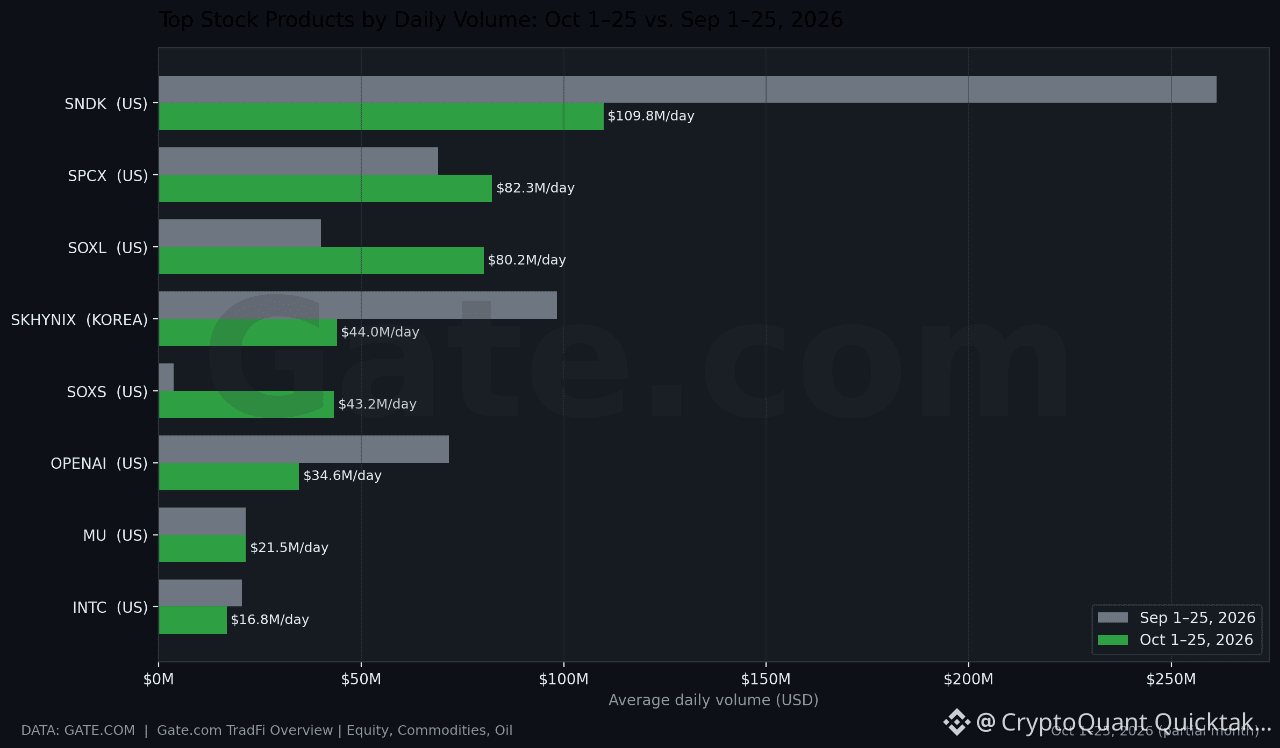
Gate.com Stock Trading Stays Active in Early October, Led By Semiconductor ProductsFrom October 1 to 25, 2026, stock product volume on Gate.com averaged $463.7M per day. That is 28% below the same 25 days of September, but the platform remained a central venue for US-linked equity products, which made up about 89% of the total.
Most traded products
SNDK: $109.8M/day (down 58% vs. September)
SPCX: $82.3M/day (up 19%)
SOXL: $80.2M/day (up 100%)
SK Hynix: $44.0M/day (down 55%)
SOXS: $43.2M/day
Regional mix
US-linked listings: $414.2M/day, 89% of stock volume
Korea-linked listings: $49.5M/day, 11% of stock volume, down 56%
Our read: Activity has concentrated in leveraged semiconductor products. Traders are moving quickly between names, which is why several large tickers show sharp swings in both directions. Gate.com's share of TradFi volume across the exchanges in this dataset was 8.2% for the period.
Data note: Figures cover October 1–25, 2026, from Gate.com TradFi datasets. They are not official Gate statistics and do not yet include October 26. This is not financial advice.
Written by CryptoOnchain
Gate.com Stock Trading Stays Active in Early October, Led By Semiconductor Products
From October 1 to 25, 2026, stock product volume on Gate.com averaged $463.7M per day. That is 28% below the same 25 days of September, but the platform remained a central venue for US-linked equity products, which made up about 89% of the total.
Most traded products
SNDK: $109.8M/day (down 58% vs. September)
SPCX: $82.3M/day (up 19%)
SOXL: $80.2M/day (up 100%)
SK Hynix: $44.0M/day (down 55%)
SOXS: $43.2M/day
Regional mix
US-linked listings: $414.2M/day, 89% of stock volume
Korea-linked listings: $49.5M/day, 11% of stock volume, down 56%
Our read: Activity has concentrated in leveraged semiconductor products. Traders are moving quickly between names, which is why several large tickers show sharp swings in both directions. Gate.com's share of TradFi volume across the exchanges in this dataset was 8.2% for the period.
Data note: Figures cover October 1–25, 2026, from Gate.com TradFi datasets. They are not official Gate statistics and do not yet include October 26. This is not financial advice.
Written by CryptoOnchain
Most traded products
SNDK: $109.8M/day (down 58% vs. September)
SPCX: $82.3M/day (up 19%)
SOXL: $80.2M/day (up 100%)
SK Hynix: $44.0M/day (down 55%)
SOXS: $43.2M/day
Regional mix
US-linked listings: $414.2M/day, 89% of stock volume
Korea-linked listings: $49.5M/day, 11% of stock volume, down 56%
Our read: Activity has concentrated in leveraged semiconductor products. Traders are moving quickly between names, which is why several large tickers show sharp swings in both directions. Gate.com's share of TradFi volume across the exchanges in this dataset was 8.2% for the period.
Data note: Figures cover October 1–25, 2026, from Gate.com TradFi datasets. They are not official Gate statistics and do not yet include October 26. This is not financial advice.
Written by CryptoOnchain
179
Article
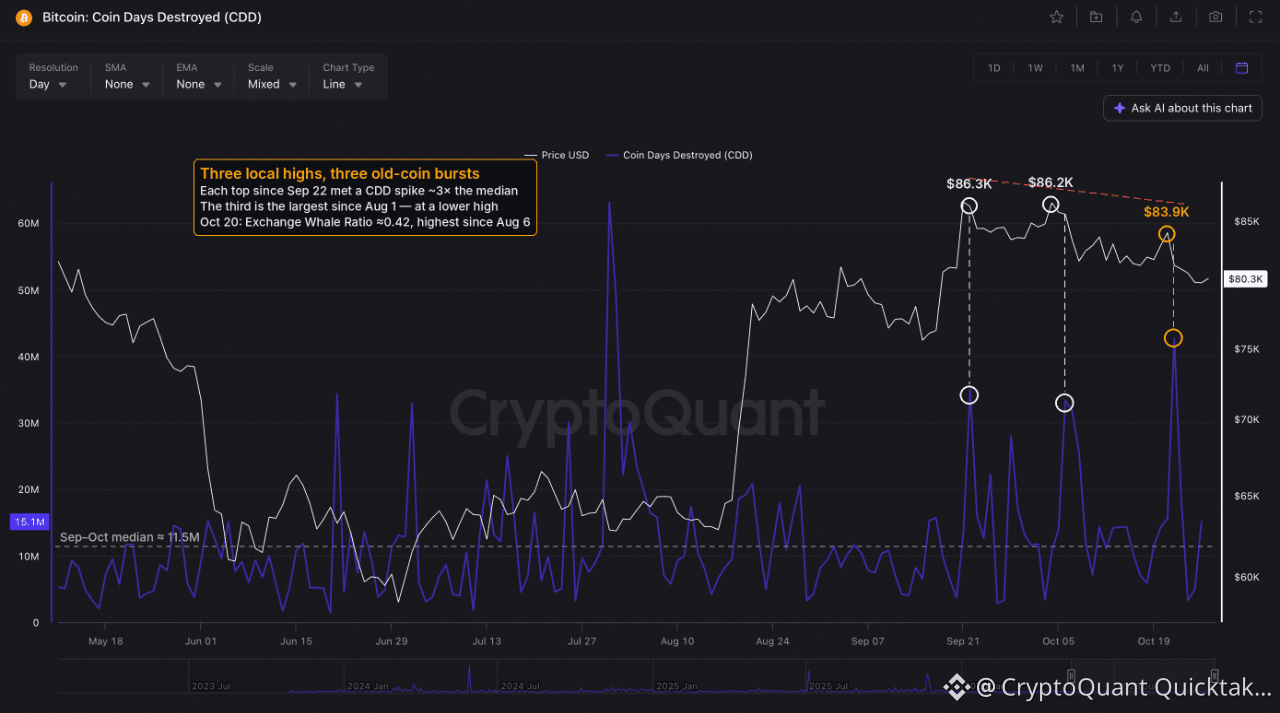
Bitcoin’s October 21 Rebound StalledCoin Days Destroyed (CDD) has increased sharply at every local Bitcoin high since September. On September 22 it reached around 34M as Bitcoin peaked near $86.3K. A similar pattern appeared on October 6-8. The latest spike happened on October 22, one day after Bitcoin's rebound peaked near $83.9K. This was also around 3.7 times higher than the September-October median of 11.5M. Interestingly, Bitcoin has been making lower highs while CDD spikes have remained relatively strong or even increased.
But first two spikes don’t necessarily indicate selling pressure. Both happened during periods of large net exchange outflows. On September 22, around 19.1K BTC left exchanges, followed by another 14.2K BTC on October 6. At the same time, the Exchange Whale Ratio remained close to its median of 0.23. This situation makes me think that these movements most probably related to transfers between wallets rather than actual selling.
Third spike shows a different thing. On October 20 the Exchange Whale Ratio increased to around 0.42 which was its highest level since August 6. This means that large deposits from whales made up a much bigger share of total exchange inflows. Two days later, CDD reached 43M while the taker buy/sell ratio dropped to approximately 0.92. This shows stronger selling activity in the market. Spent Output Age Bands also show that most of the coins moved on October 22 belonged to the 1M–3M group. These investors were holding around 12% unrealized profit at that time.
Of course, a rise in CDD doesn’t always mean that investors are selling, as it can also reflect transfers between wallets. But the combination of increased old-coin activity, higher whale deposits and Bitcoin forming another lower high suggests that distribution may be taking place. So far, this is one of the strongest on-chain signals of selling pressure within the current price range.
Written by YavuzAkbay
Bitcoin’s October 21 Rebound Stalled
Coin Days Destroyed (CDD) has increased sharply at every local Bitcoin high since September. On September 22 it reached around 34M as Bitcoin peaked near $86.3K. A similar pattern appeared on October 6-8. The latest spike happened on October 22, one day after Bitcoin's rebound peaked near $83.9K. This was also around 3.7 times higher than the September-October median of 11.5M. Interestingly, Bitcoin has been making lower highs while CDD spikes have remained relatively strong or even increased.
But first two spikes don’t necessarily indicate selling pressure. Both happened during periods of large net exchange outflows. On September 22, around 19.1K BTC left exchanges, followed by another 14.2K BTC on October 6. At the same time, the Exchange Whale Ratio remained close to its median of 0.23. This situation makes me think that these movements most probably related to transfers between wallets rather than actual selling.
Third spike shows a different thing. On October 20 the Exchange Whale Ratio increased to around 0.42 which was its highest level since August 6. This means that large deposits from whales made up a much bigger share of total exchange inflows. Two days later, CDD reached 43M while the taker buy/sell ratio dropped to approximately 0.92. This shows stronger selling activity in the market. Spent Output Age Bands also show that most of the coins moved on October 22 belonged to the 1M–3M group. These investors were holding around 12% unrealized profit at that time.
Of course, a rise in CDD doesn’t always mean that investors are selling, as it can also reflect transfers between wallets. But the combination of increased old-coin activity, higher whale deposits and Bitcoin forming another lower high suggests that distribution may be taking place. So far, this is one of the strongest on-chain signals of selling pressure within the current price range.
Written by YavuzAkbay
But first two spikes don’t necessarily indicate selling pressure. Both happened during periods of large net exchange outflows. On September 22, around 19.1K BTC left exchanges, followed by another 14.2K BTC on October 6. At the same time, the Exchange Whale Ratio remained close to its median of 0.23. This situation makes me think that these movements most probably related to transfers between wallets rather than actual selling.
Third spike shows a different thing. On October 20 the Exchange Whale Ratio increased to around 0.42 which was its highest level since August 6. This means that large deposits from whales made up a much bigger share of total exchange inflows. Two days later, CDD reached 43M while the taker buy/sell ratio dropped to approximately 0.92. This shows stronger selling activity in the market. Spent Output Age Bands also show that most of the coins moved on October 22 belonged to the 1M–3M group. These investors were holding around 12% unrealized profit at that time.
Of course, a rise in CDD doesn’t always mean that investors are selling, as it can also reflect transfers between wallets. But the combination of increased old-coin activity, higher whale deposits and Bitcoin forming another lower high suggests that distribution may be taking place. So far, this is one of the strongest on-chain signals of selling pressure within the current price range.
Written by YavuzAkbay
91
Article
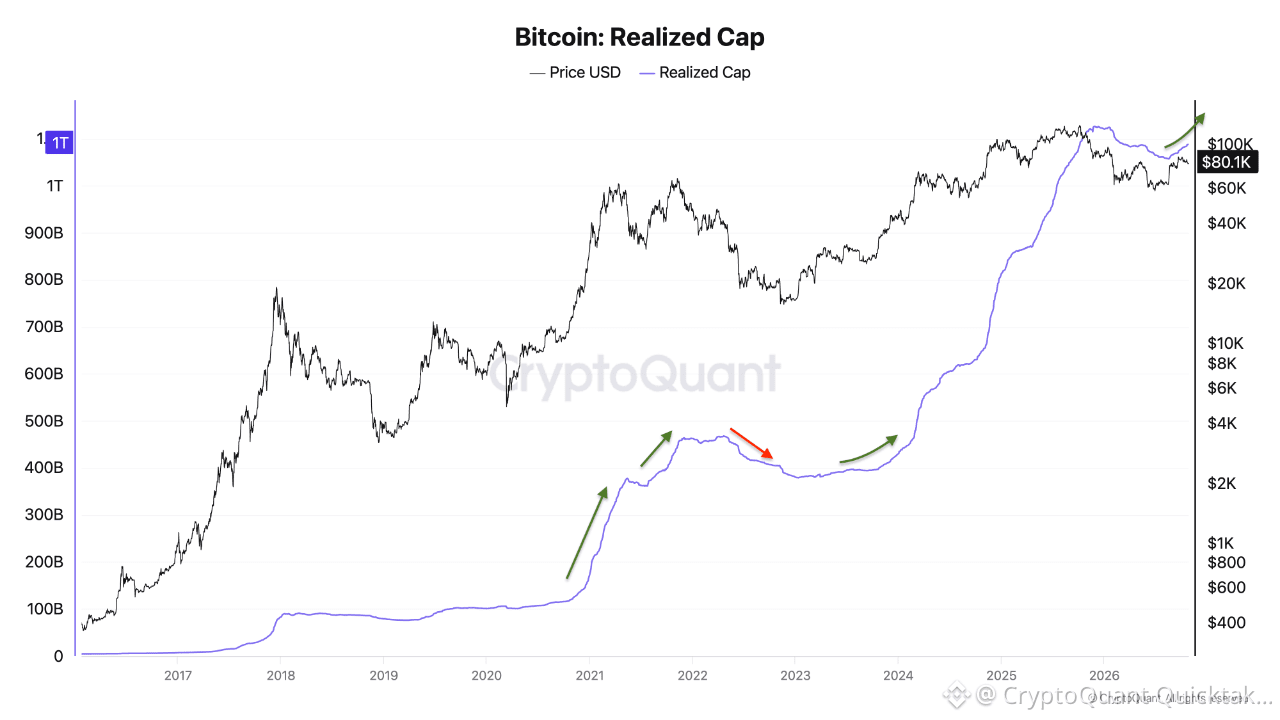
A Renewed Rise in Bitcoin’s Realized Cap Is a Good Sign, but It Needs Follow-ThroughRealized Cap values each bitcoin at the price it last moved onchain. It effectively measures the network’s aggregate cost basis, or the capital actually stored in Bitcoin.
A rising Realized Cap means coins are changing hands at higher prices as fresh capital enters. A falling Realized Cap means coins are being sold at a loss as capital exits.
History offers a clear reference. In 2022, Realized Cap declined alongside bear market capitulation. In 2023, it turned higher again, marking the early stage of the next bull cycle.
After the late-2025 peak, Realized Cap pulled back for several months. It has now turned up again, rising from $1.057T to $1.088T, a gain of about $31B (+2.9%). Over the same period, price climbed from $69K to $80K (+16%).
Price has outpaced the growth in the network’s cost basis. This suggests the rally has been driven more by holders’ reluctance to sell than by large-scale new capital.
A rising Realized Cap does not guarantee higher prices. It was also climbing near the 2025 top, when long-term holders were distributing coins at a profit to new buyers.
Two things to watch:
1. Whether Realized Cap keeps expanding rather than stalling.
2. Whether price can hold its gains as inflows build.
If both hold, this renewed rise could mark the early stage of a healthier market structure, as it did in 2023.
Written by Crypto Mommy
A Renewed Rise in Bitcoin’s Realized Cap Is a Good Sign, but It Needs Follow-Through
Realized Cap values each bitcoin at the price it last moved onchain. It effectively measures the network’s aggregate cost basis, or the capital actually stored in Bitcoin.
A rising Realized Cap means coins are changing hands at higher prices as fresh capital enters. A falling Realized Cap means coins are being sold at a loss as capital exits.
History offers a clear reference. In 2022, Realized Cap declined alongside bear market capitulation. In 2023, it turned higher again, marking the early stage of the next bull cycle.
After the late-2025 peak, Realized Cap pulled back for several months. It has now turned up again, rising from $1.057T to $1.088T, a gain of about $31B (+2.9%). Over the same period, price climbed from $69K to $80K (+16%).
Price has outpaced the growth in the network’s cost basis. This suggests the rally has been driven more by holders’ reluctance to sell than by large-scale new capital.
A rising Realized Cap does not guarantee higher prices. It was also climbing near the 2025 top, when long-term holders were distributing coins at a profit to new buyers.
Two things to watch:
1. Whether Realized Cap keeps expanding rather than stalling.
2. Whether price can hold its gains as inflows build.
If both hold, this renewed rise could mark the early stage of a healthier market structure, as it did in 2023.
Written by Crypto Mommy
A rising Realized Cap means coins are changing hands at higher prices as fresh capital enters. A falling Realized Cap means coins are being sold at a loss as capital exits.
History offers a clear reference. In 2022, Realized Cap declined alongside bear market capitulation. In 2023, it turned higher again, marking the early stage of the next bull cycle.
After the late-2025 peak, Realized Cap pulled back for several months. It has now turned up again, rising from $1.057T to $1.088T, a gain of about $31B (+2.9%). Over the same period, price climbed from $69K to $80K (+16%).
Price has outpaced the growth in the network’s cost basis. This suggests the rally has been driven more by holders’ reluctance to sell than by large-scale new capital.
A rising Realized Cap does not guarantee higher prices. It was also climbing near the 2025 top, when long-term holders were distributing coins at a profit to new buyers.
Two things to watch:
1. Whether Realized Cap keeps expanding rather than stalling.
2. Whether price can hold its gains as inflows build.
If both hold, this renewed rise could mark the early stage of a healthier market structure, as it did in 2023.
Written by Crypto Mommy
91
Article
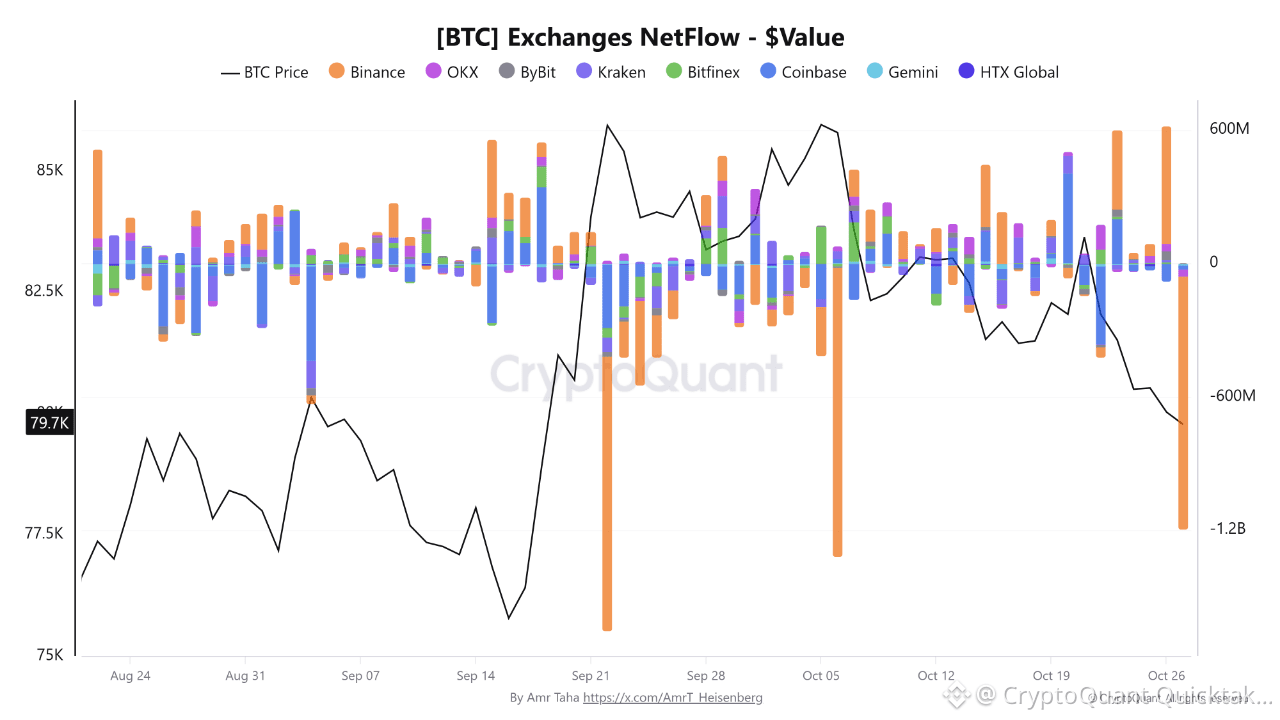
$2.65B in Large USDT Wallet Changes Precedes $1.13B Bitcoin Outflow From BinanceBinance recorded $1.13 billion in Bitcoin net outflows on October 27, the third-largest negative reading in the chart's period, while BTC traded near $79,700 .
The reading was just $170 million below the $1.30 billion outflow on October 6 and $100 million below September 22's $1.23 billion.
A separate Ethereum-based USDT metric adds another signal.
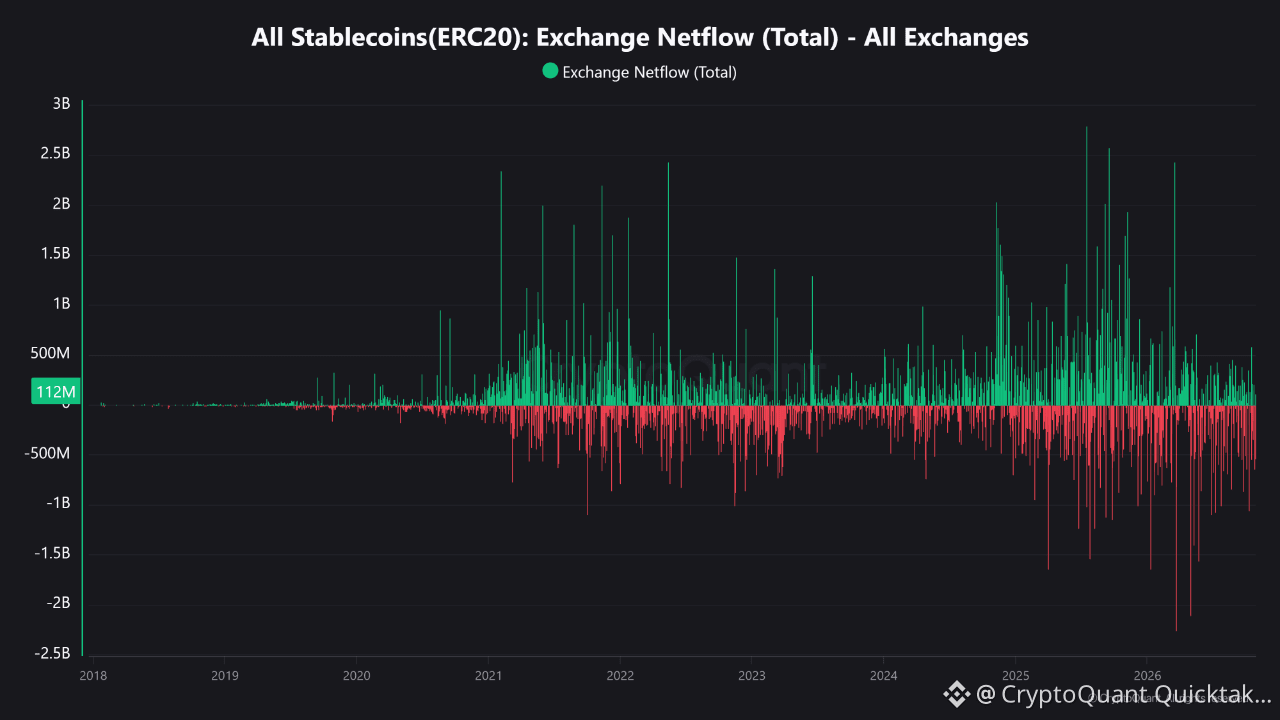
On October 25, the largest wallet-change tier (over $100 million) registered $2.65 billion in absolute daily balance changes, its highest reading since August 27's $3.96 billion, and $1.31 billion below that benchmark.
The USDT figure measures the magnitude of wallet balance changes, not net inflows or money available for Bitcoin purchases.
Written by Amr Taha
$2.65B in Large USDT Wallet Changes Precedes $1.13B Bitcoin Outflow From Binance
Binance recorded $1.13 billion in Bitcoin net outflows on October 27, the third-largest negative reading in the chart's period, while BTC traded near $79,700 .
The reading was just $170 million below the $1.30 billion outflow on October 6 and $100 million below September 22's $1.23 billion.
A separate Ethereum-based USDT metric adds another signal.
On October 25, the largest wallet-change tier (over $100 million) registered $2.65 billion in absolute daily balance changes, its highest reading since August 27's $3.96 billion, and $1.31 billion below that benchmark.
The USDT figure measures the magnitude of wallet balance changes, not net inflows or money available for Bitcoin purchases.
Written by Amr Taha
The reading was just $170 million below the $1.30 billion outflow on October 6 and $100 million below September 22's $1.23 billion.
A separate Ethereum-based USDT metric adds another signal.
On October 25, the largest wallet-change tier (over $100 million) registered $2.65 billion in absolute daily balance changes, its highest reading since August 27's $3.96 billion, and $1.31 billion below that benchmark.
The USDT figure measures the magnitude of wallet balance changes, not net inflows or money available for Bitcoin purchases.
Written by Amr Taha
139
Article
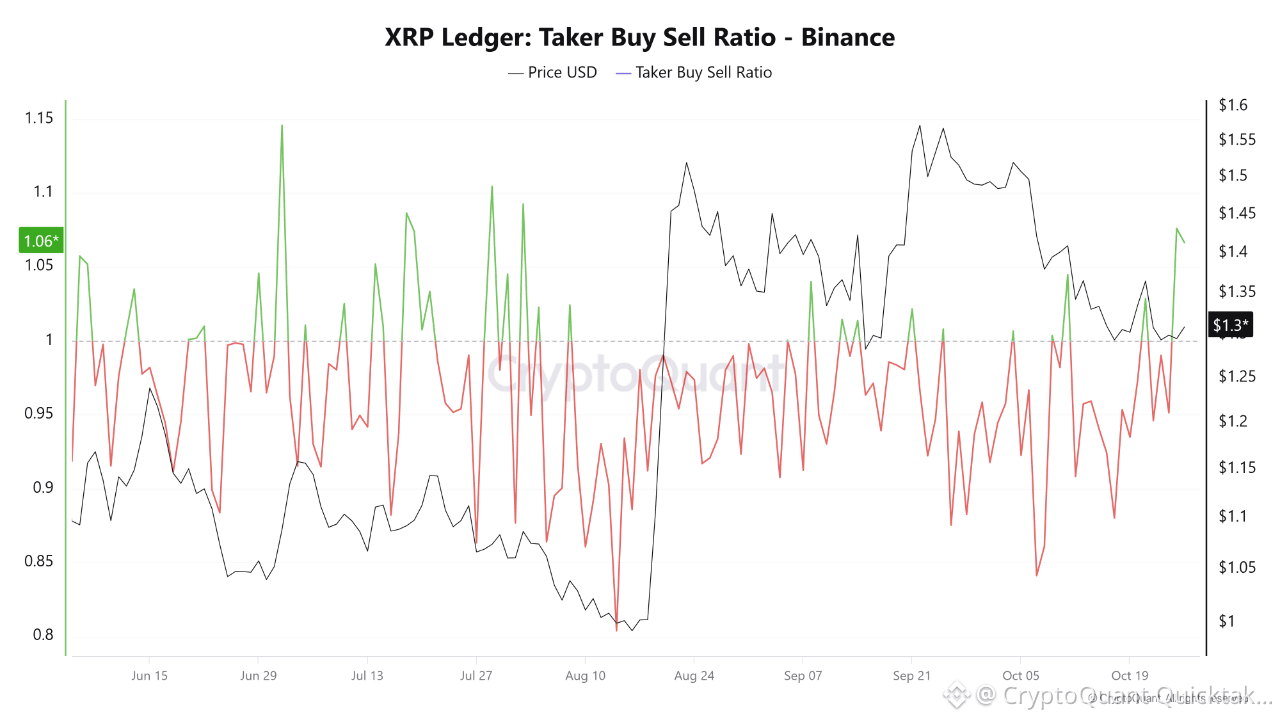
XRP Buying Pressure Hits Three-Month High on BinanceData from the Binance platform indicates that the Taker Buy/Sell Ratio for XRP has risen to approximately 1.076 its highest level in three months signaling a clear improvement in the balance between buy and sell orders executed in the market.
When this ratio exceeds 1, it indicates that the volume of buy orders executed by traders entering positions directly surpasses the volume of sell orders, pointing to a notable increase in buying pressure. This rise is particularly significant given that the ratio had previously hovered below 1, characterized by frequent fluctuations between buying and selling pressure.
Concurrently, XRP is trading near $1.29, following a period of price volatility. The increase in the buy/sell ratio may suggest a growing appetite among traders to open new positions, especially if the ratio remains above 1 in the coming sessions.
Furthermore, reaching a three-month high could reflect a shift in market participants’ behavior, moving away from the dominance of sell orders toward increased demand for XRP. Nevertheless, this indicator alone is insufficient to confirm a sustained uptrend. Factors such as price action, trading volume, and the persistence of buying pressure remain critical for assessing the strength of this shift.
Written by Arab Chain
XRP Buying Pressure Hits Three-Month High on Binance
Data from the Binance platform indicates that the Taker Buy/Sell Ratio for XRP has risen to approximately 1.076 its highest level in three months signaling a clear improvement in the balance between buy and sell orders executed in the market.
When this ratio exceeds 1, it indicates that the volume of buy orders executed by traders entering positions directly surpasses the volume of sell orders, pointing to a notable increase in buying pressure. This rise is particularly significant given that the ratio had previously hovered below 1, characterized by frequent fluctuations between buying and selling pressure.
Concurrently, XRP is trading near $1.29, following a period of price volatility. The increase in the buy/sell ratio may suggest a growing appetite among traders to open new positions, especially if the ratio remains above 1 in the coming sessions.
Furthermore, reaching a three-month high could reflect a shift in market participants’ behavior, moving away from the dominance of sell orders toward increased demand for XRP. Nevertheless, this indicator alone is insufficient to confirm a sustained uptrend. Factors such as price action, trading volume, and the persistence of buying pressure remain critical for assessing the strength of this shift.
Written by Arab Chain
When this ratio exceeds 1, it indicates that the volume of buy orders executed by traders entering positions directly surpasses the volume of sell orders, pointing to a notable increase in buying pressure. This rise is particularly significant given that the ratio had previously hovered below 1, characterized by frequent fluctuations between buying and selling pressure.
Concurrently, XRP is trading near $1.29, following a period of price volatility. The increase in the buy/sell ratio may suggest a growing appetite among traders to open new positions, especially if the ratio remains above 1 in the coming sessions.
Furthermore, reaching a three-month high could reflect a shift in market participants’ behavior, moving away from the dominance of sell orders toward increased demand for XRP. Nevertheless, this indicator alone is insufficient to confirm a sustained uptrend. Factors such as price action, trading volume, and the persistence of buying pressure remain critical for assessing the strength of this shift.
Written by Arab Chain
95
Article
Stablecoins: High Turnover, Net Drain: the Quiet Rotation Ahead of Fed/BOJ DecisionsAs of October 27, the total stablecoin market cap stands at around $299–305B, down approximately $2.4B over the past week and still well below the May peak of over $320B. The 30-day Supply Shock Index sits at –2.17%, placing it in the deep net-redemption zone, at the 3rd percentile of the published series.
What stands out is the shift in composition. USDT (approximately $182B) is only slightly lower over the past 30 days (–0.8%), while USDC (approximately $71B) has contracted more sharply (–5.5%). Several smaller stablecoins, including PYUSD, RLUSD and USDF, are expanding, showing clear 30-day growth even as the aggregate market cap declines.
Gross activity remains elevated, with roughly $110B minted and $114B burned over the past 30 days. However, the net result remains negative. The float is turning over rapidly, but it is not expanding.
Exchange-side balances remain near their lowest levels of the year, limiting immediately deployable spot buying power. Crypto trading volume has also fallen to its lowest levels of 2026, just as the Fed and BOJ decisions approach.
Key Take
This is not simply a story of liquidity disappearing. It points to a selective rotation, with capital leaving the two largest fiat-backed stablecoins while a handful of newer or payment-oriented alternatives absorb some of the flow.
Until the Supply Shock Index turns positive and the contraction in major stablecoins slows, the market lacks the broad expansion in dry powder that typically supports stronger spot upside.
Over the next 7–10 days, watch the daily and weekly changes in total issued supply, alongside USDC’s relative performance against the expanding second-tier stablecoins.
Written by theophiluspep
Stablecoins: High Turnover, Net Drain: the Quiet Rotation Ahead of Fed/BOJ Decisions
As of October 27, the total stablecoin market cap stands at around $299–305B, down approximately $2.4B over the past week and still well below the May peak of over $320B. The 30-day Supply Shock Index sits at –2.17%, placing it in the deep net-redemption zone, at the 3rd percentile of the published series.
What stands out is the shift in composition. USDT (approximately $182B) is only slightly lower over the past 30 days (–0.8%), while USDC (approximately $71B) has contracted more sharply (–5.5%). Several smaller stablecoins, including PYUSD, RLUSD and USDF, are expanding, showing clear 30-day growth even as the aggregate market cap declines.
Gross activity remains elevated, with roughly $110B minted and $114B burned over the past 30 days. However, the net result remains negative. The float is turning over rapidly, but it is not expanding.
Exchange-side balances remain near their lowest levels of the year, limiting immediately deployable spot buying power. Crypto trading volume has also fallen to its lowest levels of 2026, just as the Fed and BOJ decisions approach.
Key Take
This is not simply a story of liquidity disappearing. It points to a selective rotation, with capital leaving the two largest fiat-backed stablecoins while a handful of newer or payment-oriented alternatives absorb some of the flow.
Until the Supply Shock Index turns positive and the contraction in major stablecoins slows, the market lacks the broad expansion in dry powder that typically supports stronger spot upside.
Over the next 7–10 days, watch the daily and weekly changes in total issued supply, alongside USDC’s relative performance against the expanding second-tier stablecoins.
Written by theophiluspep
What stands out is the shift in composition. USDT (approximately $182B) is only slightly lower over the past 30 days (–0.8%), while USDC (approximately $71B) has contracted more sharply (–5.5%). Several smaller stablecoins, including PYUSD, RLUSD and USDF, are expanding, showing clear 30-day growth even as the aggregate market cap declines.
Gross activity remains elevated, with roughly $110B minted and $114B burned over the past 30 days. However, the net result remains negative. The float is turning over rapidly, but it is not expanding.
Exchange-side balances remain near their lowest levels of the year, limiting immediately deployable spot buying power. Crypto trading volume has also fallen to its lowest levels of 2026, just as the Fed and BOJ decisions approach.
Key Take
This is not simply a story of liquidity disappearing. It points to a selective rotation, with capital leaving the two largest fiat-backed stablecoins while a handful of newer or payment-oriented alternatives absorb some of the flow.
Until the Supply Shock Index turns positive and the contraction in major stablecoins slows, the market lacks the broad expansion in dry powder that typically supports stronger spot upside.
Over the next 7–10 days, watch the daily and weekly changes in total issued supply, alongside USDC’s relative performance against the expanding second-tier stablecoins.
Written by theophiluspep
55
Article
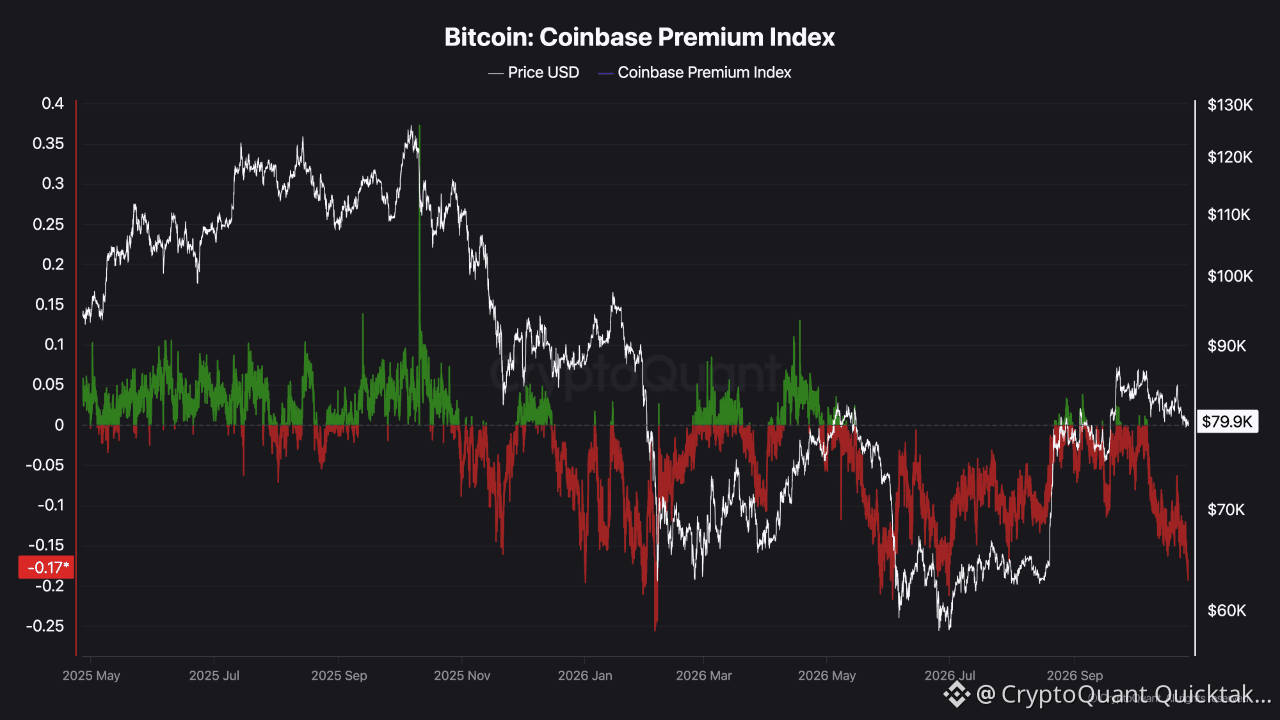
Coinbase Premium Drops Sharply to -0.17 As Bitcoin Tests Sub-$80K LevelsThe Bitcoin Coinbase Premium Index has deteriorated sharply into deeply negative territory, dropping to -0.17 as U.S.-based spot demand cools off. With BTC teetering just below the $80k threshold at around $79.9K, this widening discount echoes earlier setups that preceded prolonged sell-offs, suggesting the market may need to brace for continued downside risk rather than an immediate relief rally.
Written by nino
Coinbase Premium Drops Sharply to -0.17 As Bitcoin Tests Sub-$80K Levels
The Bitcoin Coinbase Premium Index has deteriorated sharply into deeply negative territory, dropping to -0.17 as U.S.-based spot demand cools off. With BTC teetering just below the $80k threshold at around $79.9K, this widening discount echoes earlier setups that preceded prolonged sell-offs, suggesting the market may need to brace for continued downside risk rather than an immediate relief rally.
Written by nino
Written by nino
1
98
Article
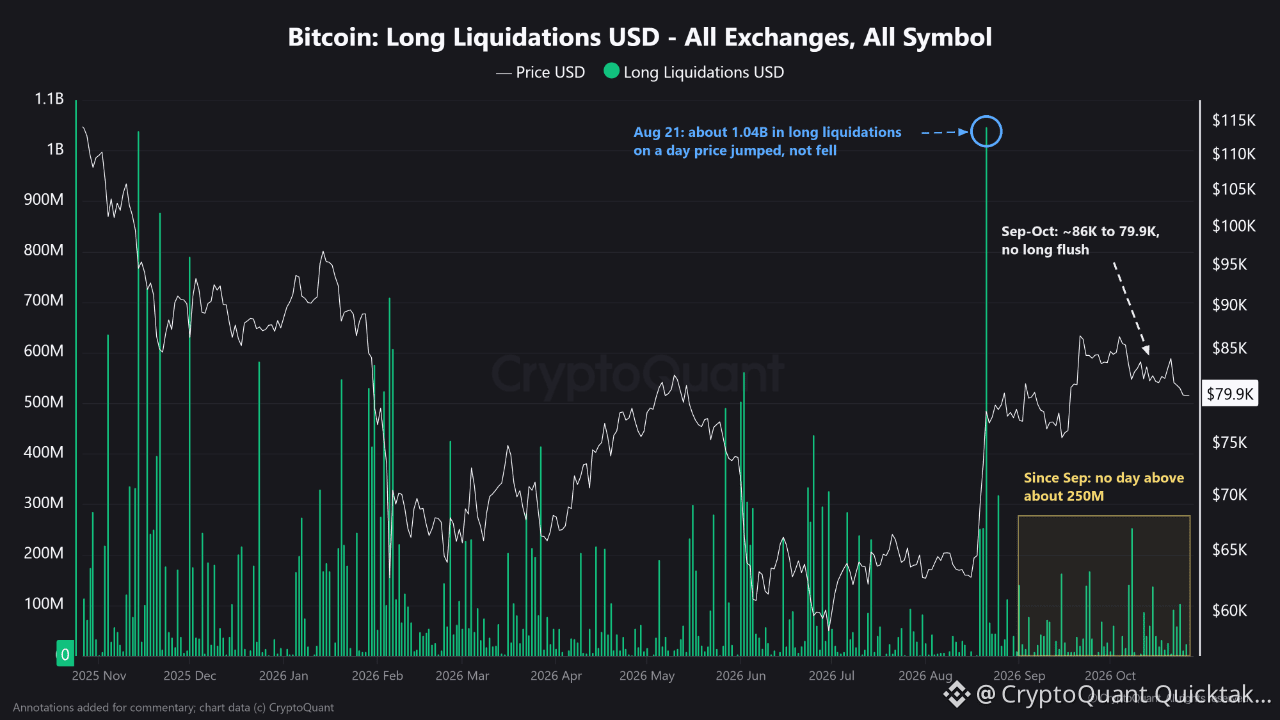
Bitcoin Long Liquidations: an Outlier on the Breakout, and a Low-leverage Drift SinceLong Liquidations USD (CryptoQuant, daily, all exchanges, all BTC symbols) is the dollar value of long derivatives positions forcibly closed when margin falls below the maintenance level. It is a flow measure: it shows how much leverage was removed on a given day, not how much is still open. Open interest and funding are needed for the full picture.
Readings over the past year:
- Nov 2025, Feb 2026 and Jun 2026: the large bars, about 560M to 1.04B, all lined up with fast drops in price, the textbook pattern.
- Aug 19-25: a cluster during the move from around 64K to 78K, including about 1.04B on Aug 21 and around 310M on Aug 25.
- Sep 1 to now: the largest day is about 250M (around Oct 8) and most days are under 100M, while price slipped from near 86K to 79.9K.
The Aug 21 bar stands out because long liquidations normally peak on down days. A daily total cannot show the path inside the day. One possibility is a sharp intraday drop that cleared crowded longs before the breakout. Another is a data or aggregation artifact. Exchange-level and intraday data would be needed to tell them apart.
The more useful signal is the regime since September. A pullback of roughly 7% produced only small long liquidations, which points to lower long leverage or to longs de-risking before being forced out.
What comes next likely depends more on positioning than on this chart. If open interest has been climbing through the pullback, leverage may be rebuilding quietly, and a break below the September range could bring larger liquidations back. If it has stayed flat, the market looks more like it is simply cooling off after the August run. Either way, a day back above 500M would be worth a closer look.
Written by Rei Researcher
Bitcoin Long Liquidations: an Outlier on the Breakout, and a Low-leverage Drift Since
Long Liquidations USD (CryptoQuant, daily, all exchanges, all BTC symbols) is the dollar value of long derivatives positions forcibly closed when margin falls below the maintenance level. It is a flow measure: it shows how much leverage was removed on a given day, not how much is still open. Open interest and funding are needed for the full picture.
Readings over the past year:
- Nov 2025, Feb 2026 and Jun 2026: the large bars, about 560M to 1.04B, all lined up with fast drops in price, the textbook pattern.
- Aug 19-25: a cluster during the move from around 64K to 78K, including about 1.04B on Aug 21 and around 310M on Aug 25.
- Sep 1 to now: the largest day is about 250M (around Oct 8) and most days are under 100M, while price slipped from near 86K to 79.9K.
The Aug 21 bar stands out because long liquidations normally peak on down days. A daily total cannot show the path inside the day. One possibility is a sharp intraday drop that cleared crowded longs before the breakout. Another is a data or aggregation artifact. Exchange-level and intraday data would be needed to tell them apart.
The more useful signal is the regime since September. A pullback of roughly 7% produced only small long liquidations, which points to lower long leverage or to longs de-risking before being forced out.
What comes next likely depends more on positioning than on this chart. If open interest has been climbing through the pullback, leverage may be rebuilding quietly, and a break below the September range could bring larger liquidations back. If it has stayed flat, the market looks more like it is simply cooling off after the August run. Either way, a day back above 500M would be worth a closer look.
Written by Rei Researcher
Readings over the past year:
- Nov 2025, Feb 2026 and Jun 2026: the large bars, about 560M to 1.04B, all lined up with fast drops in price, the textbook pattern.
- Aug 19-25: a cluster during the move from around 64K to 78K, including about 1.04B on Aug 21 and around 310M on Aug 25.
- Sep 1 to now: the largest day is about 250M (around Oct 8) and most days are under 100M, while price slipped from near 86K to 79.9K.
The Aug 21 bar stands out because long liquidations normally peak on down days. A daily total cannot show the path inside the day. One possibility is a sharp intraday drop that cleared crowded longs before the breakout. Another is a data or aggregation artifact. Exchange-level and intraday data would be needed to tell them apart.
The more useful signal is the regime since September. A pullback of roughly 7% produced only small long liquidations, which points to lower long leverage or to longs de-risking before being forced out.
What comes next likely depends more on positioning than on this chart. If open interest has been climbing through the pullback, leverage may be rebuilding quietly, and a break below the September range could bring larger liquidations back. If it has stayed flat, the market looks more like it is simply cooling off after the August run. Either way, a day back above 500M would be worth a closer look.
Written by Rei Researcher
143
Article
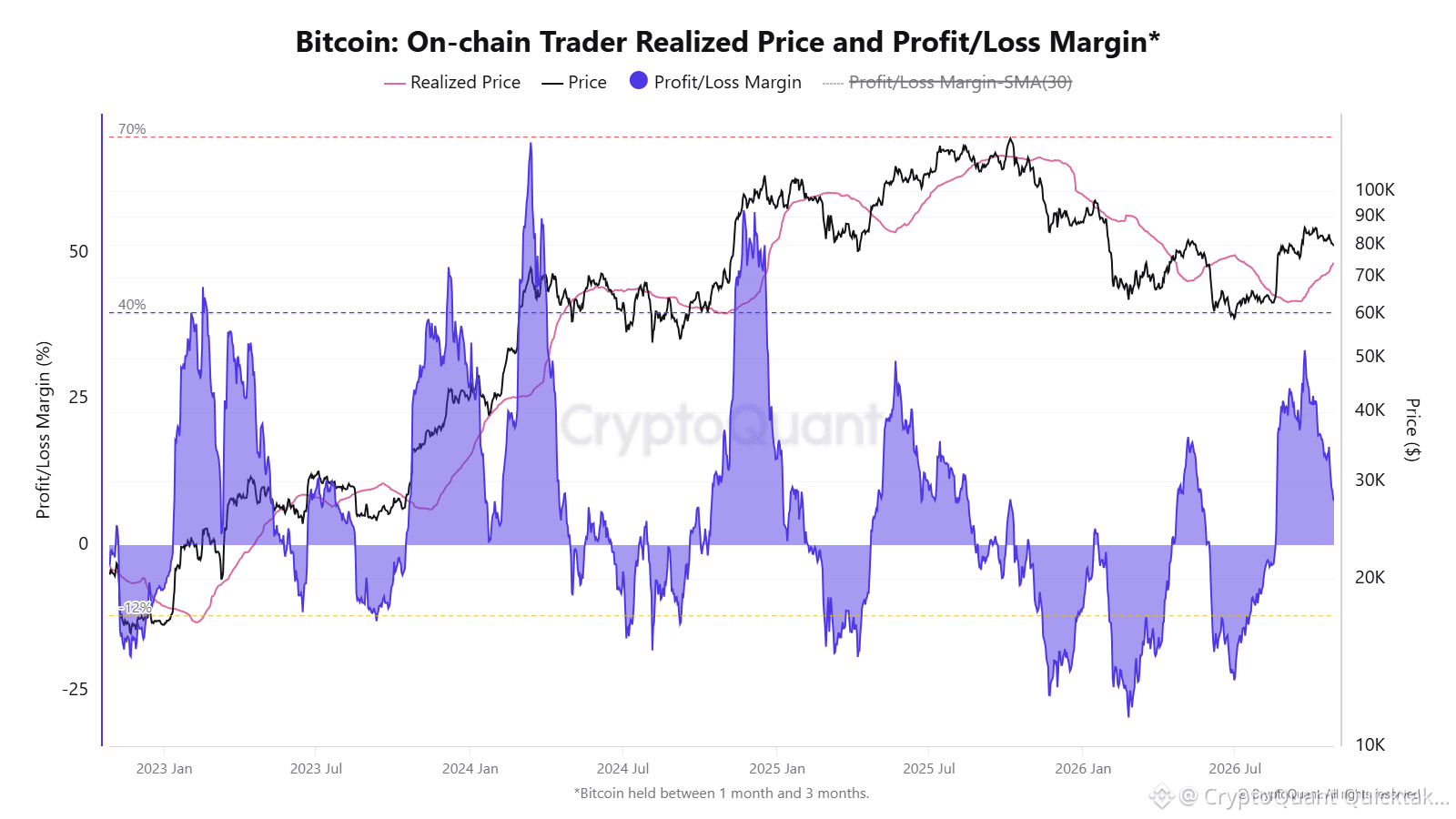
$BTC Remains Above the Realized Price of On-chain Traders.$BTC is saw a higher than the realized price of on-chain traders.
The bullish trend continues.
The realized price of on-chain traders serves as a psychologically significant support level. If a further decline occurs, it will act as a key support.
The current bullish trend remains intact. However, if there is further downward movement, the $74k level will serve as a strong support.
As long as this level holds, the bullish trend will continue.
Written by CW8900
$BTC Remains Above the Realized Price of On-chain Traders.
$BTC is saw a higher than the realized price of on-chain traders.
The bullish trend continues.
The realized price of on-chain traders serves as a psychologically significant support level. If a further decline occurs, it will act as a key support.
The current bullish trend remains intact. However, if there is further downward movement, the $74k level will serve as a strong support.
As long as this level holds, the bullish trend will continue.
Written by CW8900
The bullish trend continues.
The realized price of on-chain traders serves as a psychologically significant support level. If a further decline occurs, it will act as a key support.
The current bullish trend remains intact. However, if there is further downward movement, the $74k level will serve as a strong support.
As long as this level holds, the bullish trend will continue.
Written by CW8900
1
138
Article
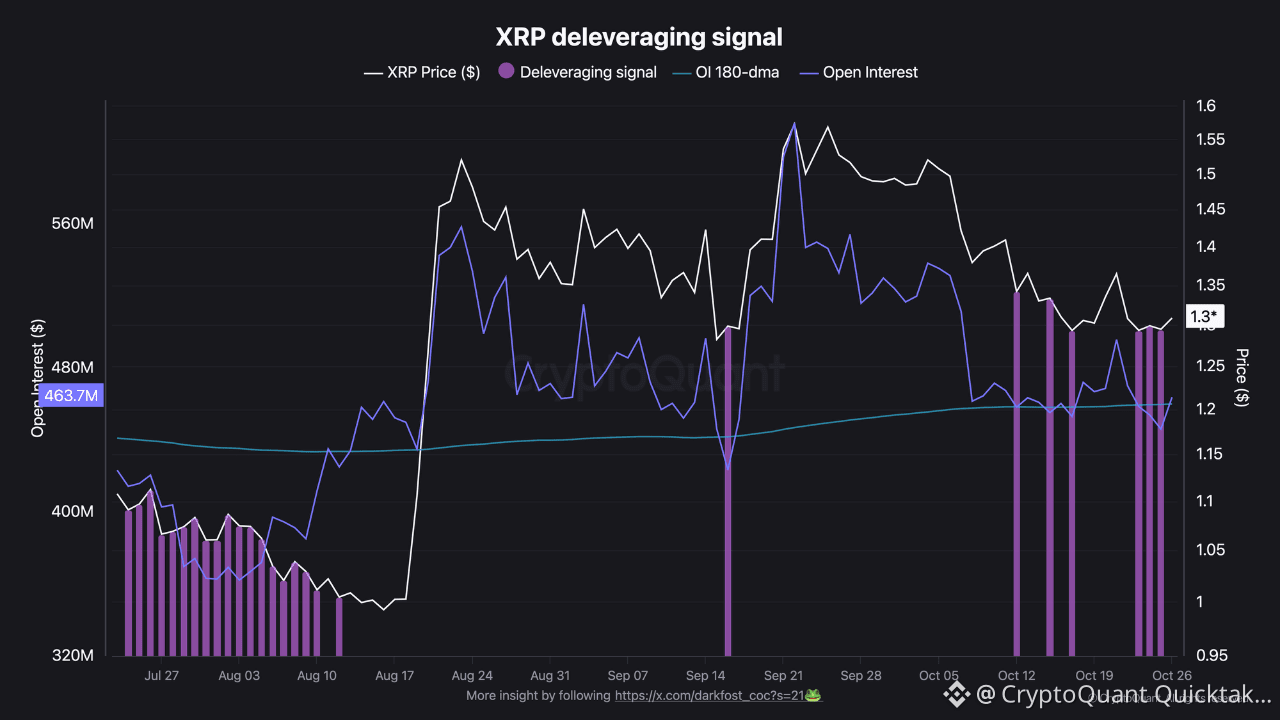
XRP Deleveraging Signal Appears As Binance Open Interest Falls By 28%XRP has just flashed a new deleveraging signal on Binance derivatives
XRP’s Open Interest on Binance has just dropped to $445 million, falling below its 180-day average of roughly $460 million. This marks a clear contraction in the value of positions held on the derivatives market.
Since September 22, Open Interest has fallen by nearly 28%, while XRP’s price has declined by 17% over the same period.
This drop is partly driven by the price decline itself. As XRP falls, the value of existing positions shrinks, which mechanically reduces the weight they carry in the derivatives market. In addition, the sell-off triggered liquidations, which further contributed to the decline in Open Interest.
This deleveraging dynamic is a rather positive signal as it suggests that pressure on XRP futures is gradually easing.
When this happens, it tends to stabilize the asset and helps put in place some of the conditions that favor a potential short-term rebound. We saw this in mid-September, when XRP gained 32% in the following period, and after the mid-August episode, which was followed by a 72% rally.
Written by Darkfost
XRP Deleveraging Signal Appears As Binance Open Interest Falls By 28%
XRP has just flashed a new deleveraging signal on Binance derivatives
XRP’s Open Interest on Binance has just dropped to $445 million, falling below its 180-day average of roughly $460 million. This marks a clear contraction in the value of positions held on the derivatives market.
Since September 22, Open Interest has fallen by nearly 28%, while XRP’s price has declined by 17% over the same period.
This drop is partly driven by the price decline itself. As XRP falls, the value of existing positions shrinks, which mechanically reduces the weight they carry in the derivatives market. In addition, the sell-off triggered liquidations, which further contributed to the decline in Open Interest.
This deleveraging dynamic is a rather positive signal as it suggests that pressure on XRP futures is gradually easing.
When this happens, it tends to stabilize the asset and helps put in place some of the conditions that favor a potential short-term rebound. We saw this in mid-September, when XRP gained 32% in the following period, and after the mid-August episode, which was followed by a 72% rally.
Written by Darkfost
XRP’s Open Interest on Binance has just dropped to $445 million, falling below its 180-day average of roughly $460 million. This marks a clear contraction in the value of positions held on the derivatives market.
Since September 22, Open Interest has fallen by nearly 28%, while XRP’s price has declined by 17% over the same period.
This drop is partly driven by the price decline itself. As XRP falls, the value of existing positions shrinks, which mechanically reduces the weight they carry in the derivatives market. In addition, the sell-off triggered liquidations, which further contributed to the decline in Open Interest.
This deleveraging dynamic is a rather positive signal as it suggests that pressure on XRP futures is gradually easing.
When this happens, it tends to stabilize the asset and helps put in place some of the conditions that favor a potential short-term rebound. We saw this in mid-September, when XRP gained 32% in the following period, and after the mid-August episode, which was followed by a 72% rally.
Written by Darkfost
246
Partly True
Article
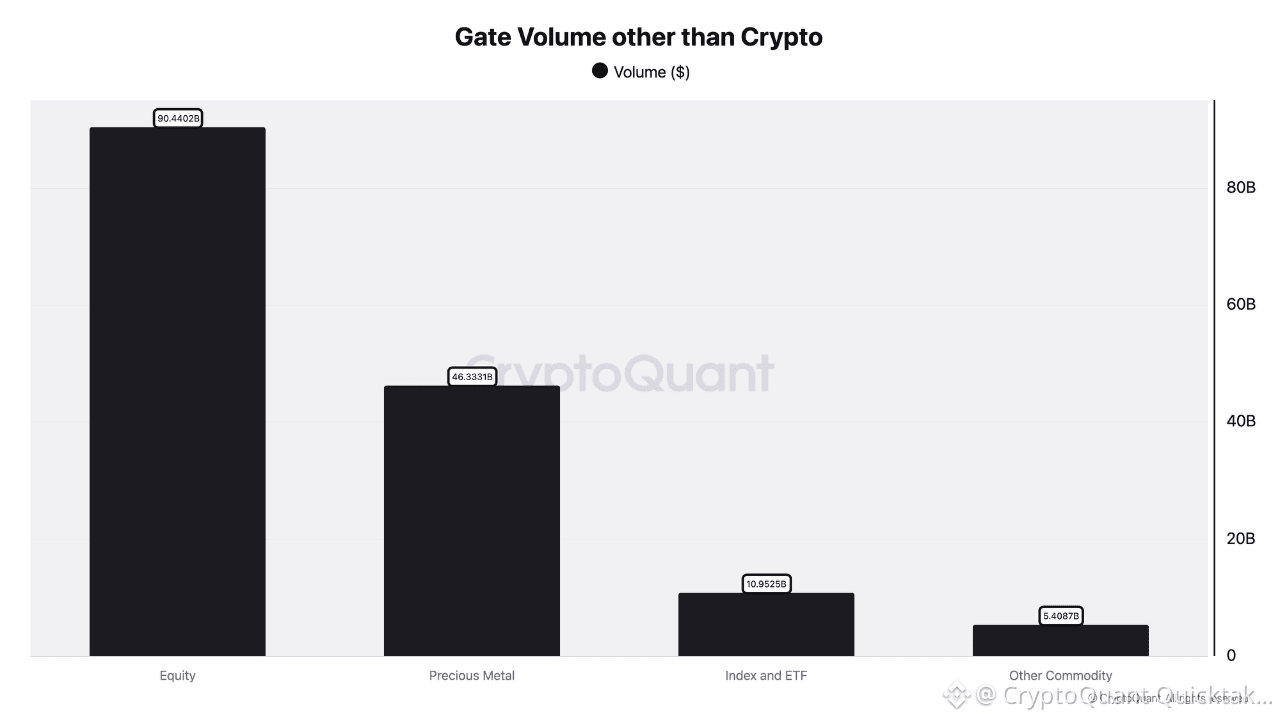
Equity Season : Gate Equity Volume Tops $90B in Four Months2026 has been a difficult year for crypto, with the market in a bear phase that began in late 2025.
Over the same period, equities kept climbing: the S&P 500 is up as much as 17% and the Nasdaq more than 26%.
Naturally, some investors coming from the crypto world took the opportunity to gain exposure to equities on certain exchanges, hoping to benefit from the expansion of these markets.
As a result, Gate’s equity volumes have surpassed $90 billion since the launch of Gate Stock in June 2026. That is a colossal figure for such a short period, fueled by extraordinary volumes on certain tickers that have become true global phenomena.
On a 7-d sum basis, several records were broken on some assets, including :
- Sandisk, with a record of $12.43B, after earnings that beat expectations and the announcement of a NAND shortage.
- SK Hynix, which recorded more than $2.25B, driven by record revenue and a tie-up with Sandisk.
- SpaceX, with a peak of more than $1.54B, just a few weeks after its IPO.
- MU, which logged more than $600M in its best week.
Today, excluding crypto, equities account for nearly 60% of the volume on Gate. Next come precious metals at 30% (more than $46B), driven by the performance of gold and silver, followed by ETFs and indices at 7%.
After a slight pullback in equities in July, crypto investors seem to have made extensive use of access to these assets on Gate to chase performance in a sector that brings together the biggest companies of the moment.
Written by Darkfost
Equity Season : Gate Equity Volume Tops $90B in Four Months
2026 has been a difficult year for crypto, with the market in a bear phase that began in late 2025.
Over the same period, equities kept climbing: the S&P 500 is up as much as 17% and the Nasdaq more than 26%.
Naturally, some investors coming from the crypto world took the opportunity to gain exposure to equities on certain exchanges, hoping to benefit from the expansion of these markets.
As a result, Gate’s equity volumes have surpassed $90 billion since the launch of Gate Stock in June 2026. That is a colossal figure for such a short period, fueled by extraordinary volumes on certain tickers that have become true global phenomena.
On a 7-d sum basis, several records were broken on some assets, including :
- Sandisk, with a record of $12.43B, after earnings that beat expectations and the announcement of a NAND shortage.
- SK Hynix, which recorded more than $2.25B, driven by record revenue and a tie-up with Sandisk.
- SpaceX, with a peak of more than $1.54B, just a few weeks after its IPO.
- MU, which logged more than $600M in its best week.
Today, excluding crypto, equities account for nearly 60% of the volume on Gate. Next come precious metals at 30% (more than $46B), driven by the performance of gold and silver, followed by ETFs and indices at 7%.
After a slight pullback in equities in July, crypto investors seem to have made extensive use of access to these assets on Gate to chase performance in a sector that brings together the biggest companies of the moment.
Written by Darkfost
Over the same period, equities kept climbing: the S&P 500 is up as much as 17% and the Nasdaq more than 26%.
Naturally, some investors coming from the crypto world took the opportunity to gain exposure to equities on certain exchanges, hoping to benefit from the expansion of these markets.
As a result, Gate’s equity volumes have surpassed $90 billion since the launch of Gate Stock in June 2026. That is a colossal figure for such a short period, fueled by extraordinary volumes on certain tickers that have become true global phenomena.
On a 7-d sum basis, several records were broken on some assets, including :
- Sandisk, with a record of $12.43B, after earnings that beat expectations and the announcement of a NAND shortage.
- SK Hynix, which recorded more than $2.25B, driven by record revenue and a tie-up with Sandisk.
- SpaceX, with a peak of more than $1.54B, just a few weeks after its IPO.
- MU, which logged more than $600M in its best week.
Today, excluding crypto, equities account for nearly 60% of the volume on Gate. Next come precious metals at 30% (more than $46B), driven by the performance of gold and silver, followed by ETFs and indices at 7%.
After a slight pullback in equities in July, crypto investors seem to have made extensive use of access to these assets on Gate to chase performance in a sector that brings together the biggest companies of the moment.
Written by Darkfost
735
Article
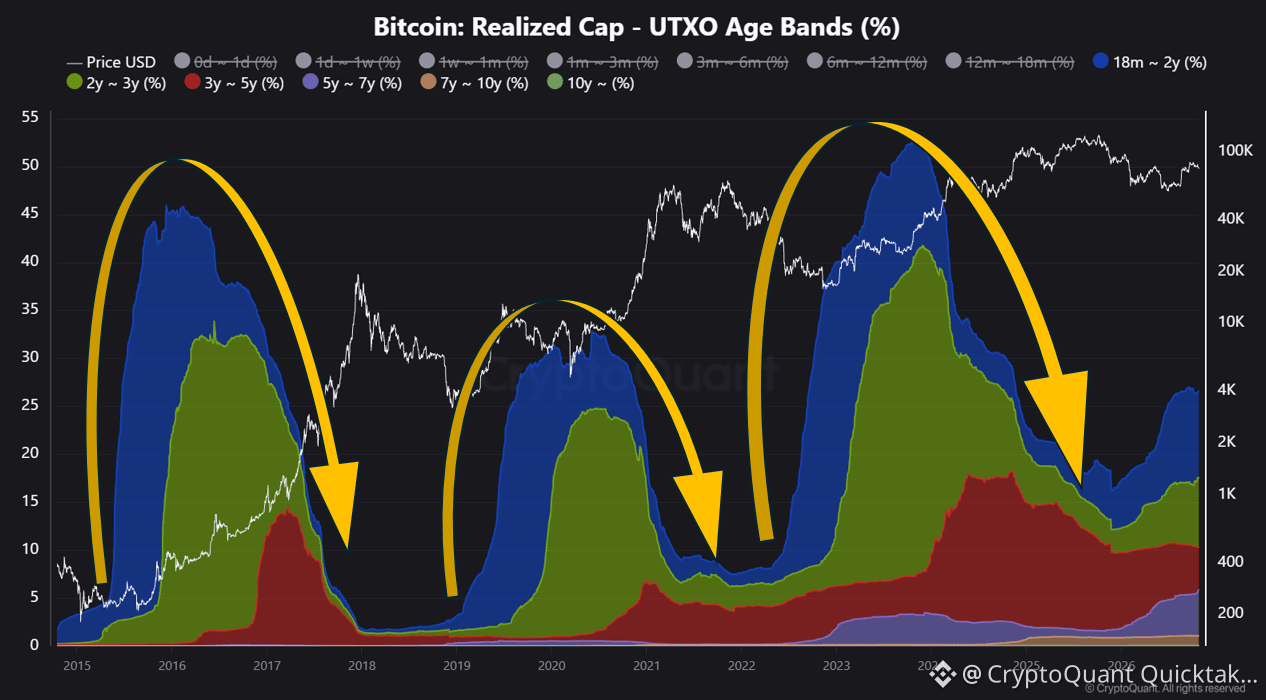
The Crypto Market Is Quietly Preparing for Its Next RallyThe pattern has always been the same: when the proportion of Bitcoin held for more than 18 months across the entire network rises and then starts to decline, a strong rally follows.
The market has now shifted into a bullish cycle, but we still appear to be in the early stages of the cycle, where such a signal has not even begun yet.
This looks like a point where we can remain positive about both the potential upside and the duration of the rally.
Thankfully, most people are still not interested in investing in crypto. Even those who are interested are mostly just watching from the sidelines.
The market is not overheated yet, and the real rally may not have even started.
Written by Crypto Dan
The Crypto Market Is Quietly Preparing for Its Next Rally
The pattern has always been the same: when the proportion of Bitcoin held for more than 18 months across the entire network rises and then starts to decline, a strong rally follows.
The market has now shifted into a bullish cycle, but we still appear to be in the early stages of the cycle, where such a signal has not even begun yet.
This looks like a point where we can remain positive about both the potential upside and the duration of the rally.
Thankfully, most people are still not interested in investing in crypto. Even those who are interested are mostly just watching from the sidelines.
The market is not overheated yet, and the real rally may not have even started.
Written by Crypto Dan
The market has now shifted into a bullish cycle, but we still appear to be in the early stages of the cycle, where such a signal has not even begun yet.
This looks like a point where we can remain positive about both the potential upside and the duration of the rally.
Thankfully, most people are still not interested in investing in crypto. Even those who are interested are mostly just watching from the sidelines.
The market is not overheated yet, and the real rally may not have even started.
Written by Crypto Dan
3
374
Article
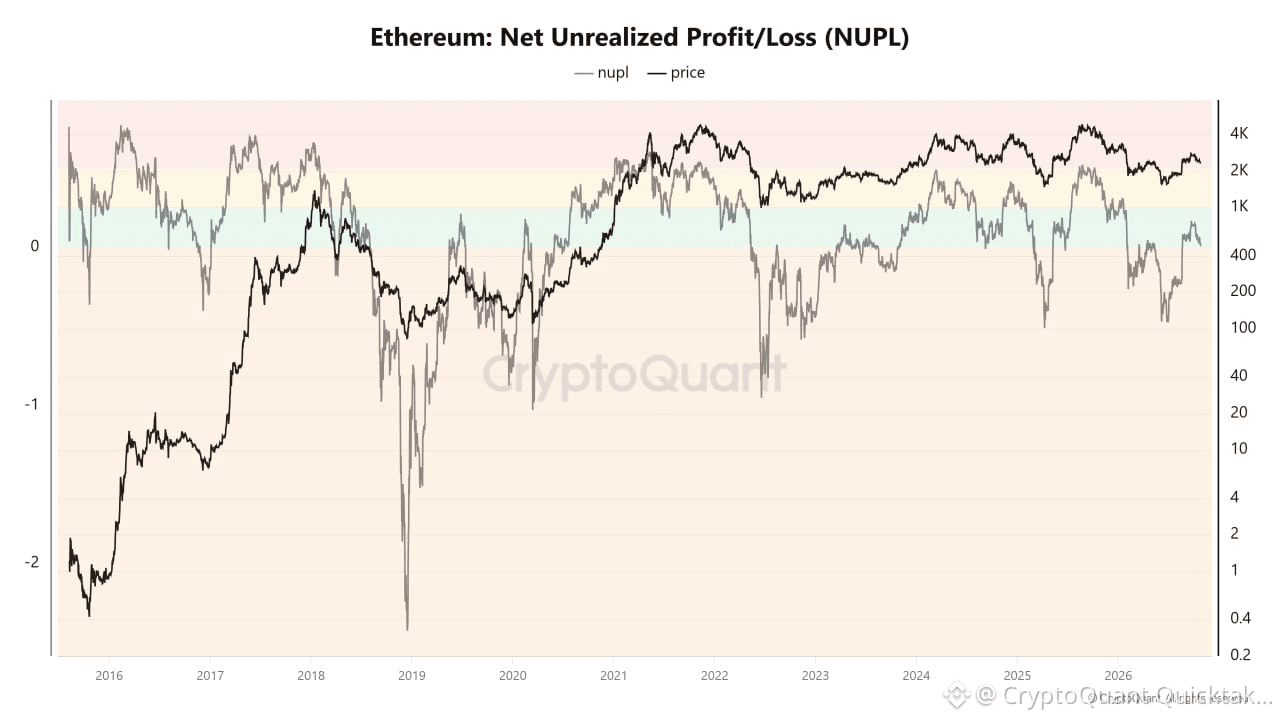
Ethereum NUPL Nears Zero As Binance Outflows Increase in OctoberThe Net Unrealized Profit/Loss (NUPL) indicator for Ethereum has fallen to approximately 0.0073, approaching the zero mark. This signals a decline in investors' unrealized profits and suggests that the market is nearing a balance between unrealized gains and losses.
This level coincides with notable outflows from Binance throughout October. The data shows recurring periods of negative netflows, meaning that the volume of Ethereum leaving the exchange exceeded the volume entering it. Some days recorded particularly large outflows, highlighting continued movements of ETH between Binance and external wallets.
A persistently low NUPL, or one hovering near zero, suggests that investors are holding relatively limited unrealized profits. Consequently, future price movements and changes in market behavior will be crucial in determining the market's next direction.
The combination of Ethereum's near-zero NUPL and rising outflows from Binance in October highlights an intriguing market dynamic: even as investors' unrealized profits shrink, the volume of ETH leaving the exchange is increasing. This may indicate that some of the available supply is moving away from trading platforms at a time when the profitability of holdings is declining, potentially reducing selling pressure if the trend continues.
Against this backdrop, changes in Ethereum's exchange balances and subsequent price movements will be key to determining whether these developments reflect an accumulation phase or precede a new wave of market volatility.
Written by Arab Chain
Ethereum NUPL Nears Zero As Binance Outflows Increase in October
The Net Unrealized Profit/Loss (NUPL) indicator for Ethereum has fallen to approximately 0.0073, approaching the zero mark. This signals a decline in investors' unrealized profits and suggests that the market is nearing a balance between unrealized gains and losses.
This level coincides with notable outflows from Binance throughout October. The data shows recurring periods of negative netflows, meaning that the volume of Ethereum leaving the exchange exceeded the volume entering it. Some days recorded particularly large outflows, highlighting continued movements of ETH between Binance and external wallets.
A persistently low NUPL, or one hovering near zero, suggests that investors are holding relatively limited unrealized profits. Consequently, future price movements and changes in market behavior will be crucial in determining the market's next direction.
The combination of Ethereum's near-zero NUPL and rising outflows from Binance in October highlights an intriguing market dynamic: even as investors' unrealized profits shrink, the volume of ETH leaving the exchange is increasing. This may indicate that some of the available supply is moving away from trading platforms at a time when the profitability of holdings is declining, potentially reducing selling pressure if the trend continues.
Against this backdrop, changes in Ethereum's exchange balances and subsequent price movements will be key to determining whether these developments reflect an accumulation phase or precede a new wave of market volatility.
Written by Arab Chain
This level coincides with notable outflows from Binance throughout October. The data shows recurring periods of negative netflows, meaning that the volume of Ethereum leaving the exchange exceeded the volume entering it. Some days recorded particularly large outflows, highlighting continued movements of ETH between Binance and external wallets.
A persistently low NUPL, or one hovering near zero, suggests that investors are holding relatively limited unrealized profits. Consequently, future price movements and changes in market behavior will be crucial in determining the market's next direction.
The combination of Ethereum's near-zero NUPL and rising outflows from Binance in October highlights an intriguing market dynamic: even as investors' unrealized profits shrink, the volume of ETH leaving the exchange is increasing. This may indicate that some of the available supply is moving away from trading platforms at a time when the profitability of holdings is declining, potentially reducing selling pressure if the trend continues.
Against this backdrop, changes in Ethereum's exchange balances and subsequent price movements will be key to determining whether these developments reflect an accumulation phase or precede a new wave of market volatility.
Written by Arab Chain
270
Article
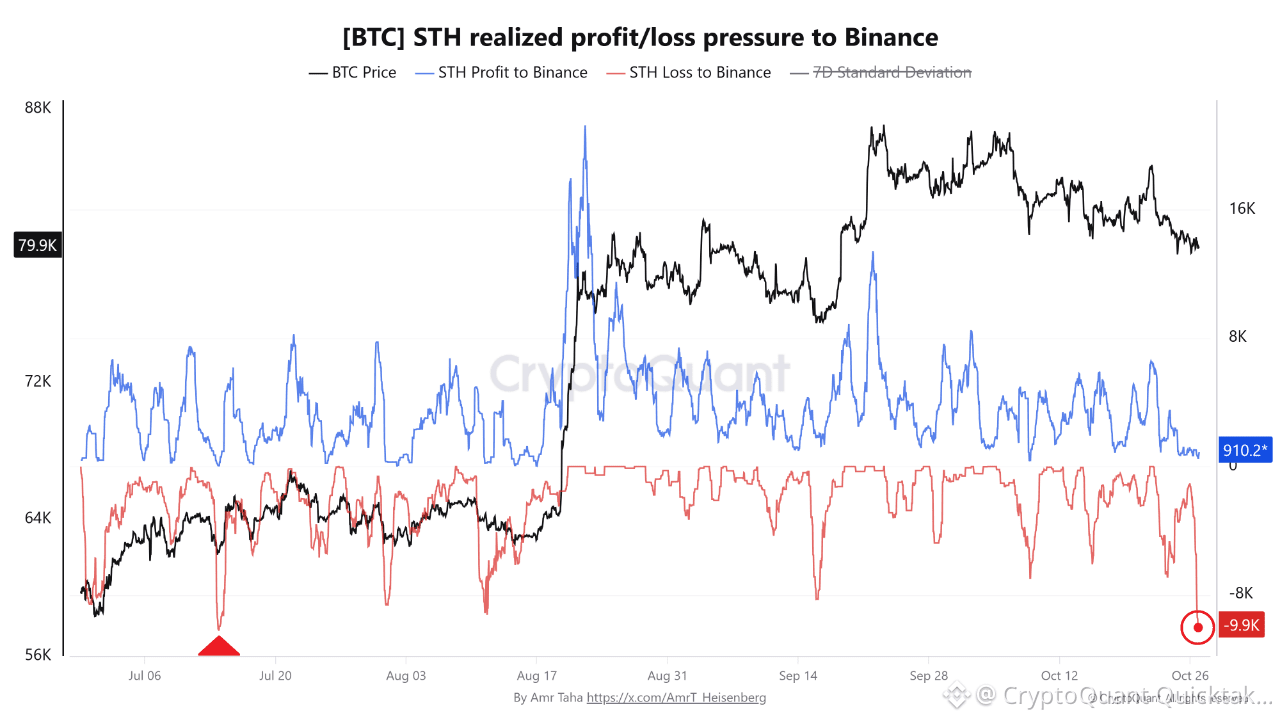
Ahead of Fed Decision: Bitcoin STH Binance Inflows Reach −9,990 BTC At $79.9K Vs −10,232 BTC At $...Bitcoin short-term holder (STH) inflows to Binance approached a four-month extreme on October 26, just two days before the Federal Reserve's interest-rate decision, even as BTC traded far above its July level.
The loss-regime inflow indicator reached −9,990 BTC at a Bitcoin price of $79,900, compared with −10,232 BTC on July 13 when BTC traded near $62,000.
The latest reading was only 242 BTC less negative despite Bitcoin being $17,900 higher.
It marked the second-most-negative reading since June 30 and the sixth below −8,000 BTC over that period.
The indicator measures Bitcoin inflows from short-term holders (STH) to Binance alongside broader profit-and-loss conditions .
Negative readings reflect exchange-bound transfers during periods when short-term holders across the Bitcoin network are realizing losses on average.
Such activity may indicate growing selling pressure, as investors facing losses could transfer their holdings to exchanges to reduce exposure, protect remaining capital, or prepare for potential sales. However, these transfers do not necessarily represent completed selling transactions.
Four days earlier, on October 22, Bitcoin short-term holders (STH) recorded a staggering $3.13 billion in net realized profits, the highest reading in more than 15 months and the second-highest level on the chart.
The figure came just $190 million below the $3.32 billion peak recorded on July 16, 2025, while exceeding the $2.28 billion registered on April 23, 2025, by $850 million.
This places the latest surge among the most significant profit-realization events for Bitcoin short-term holders during the observed period, just six days before the Federal Reserve's interest-rate decision.
The contrast is notable: a sharp rise in net realized profits was followed by renewed loss-related activity among short-term Bitcoin holders transferring coins to Binance, potentially signaling early signs of short-term holder capitulation.
This behavior may reflect growing
Written by Amr Taha
Ahead of Fed Decision: Bitcoin STH Binance Inflows Reach −9,990 BTC At $79.9K Vs −10,232 BTC At $...
Bitcoin short-term holder (STH) inflows to Binance approached a four-month extreme on October 26, just two days before the Federal Reserve's interest-rate decision, even as BTC traded far above its July level.
The loss-regime inflow indicator reached −9,990 BTC at a Bitcoin price of $79,900, compared with −10,232 BTC on July 13 when BTC traded near $62,000.
The latest reading was only 242 BTC less negative despite Bitcoin being $17,900 higher.
It marked the second-most-negative reading since June 30 and the sixth below −8,000 BTC over that period.
The indicator measures Bitcoin inflows from short-term holders (STH) to Binance alongside broader profit-and-loss conditions .
Negative readings reflect exchange-bound transfers during periods when short-term holders across the Bitcoin network are realizing losses on average.
Such activity may indicate growing selling pressure, as investors facing losses could transfer their holdings to exchanges to reduce exposure, protect remaining capital, or prepare for potential sales. However, these transfers do not necessarily represent completed selling transactions.
Four days earlier, on October 22, Bitcoin short-term holders (STH) recorded a staggering $3.13 billion in net realized profits, the highest reading in more than 15 months and the second-highest level on the chart.
The figure came just $190 million below the $3.32 billion peak recorded on July 16, 2025, while exceeding the $2.28 billion registered on April 23, 2025, by $850 million.
This places the latest surge among the most significant profit-realization events for Bitcoin short-term holders during the observed period, just six days before the Federal Reserve's interest-rate decision.
The contrast is notable: a sharp rise in net realized profits was followed by renewed loss-related activity among short-term Bitcoin holders transferring coins to Binance, potentially signaling early signs of short-term holder capitulation.
This behavior may reflect growing
Written by Amr Taha
The loss-regime inflow indicator reached −9,990 BTC at a Bitcoin price of $79,900, compared with −10,232 BTC on July 13 when BTC traded near $62,000.
The latest reading was only 242 BTC less negative despite Bitcoin being $17,900 higher.
It marked the second-most-negative reading since June 30 and the sixth below −8,000 BTC over that period.
The indicator measures Bitcoin inflows from short-term holders (STH) to Binance alongside broader profit-and-loss conditions .
Negative readings reflect exchange-bound transfers during periods when short-term holders across the Bitcoin network are realizing losses on average.
Such activity may indicate growing selling pressure, as investors facing losses could transfer their holdings to exchanges to reduce exposure, protect remaining capital, or prepare for potential sales. However, these transfers do not necessarily represent completed selling transactions.
Four days earlier, on October 22, Bitcoin short-term holders (STH) recorded a staggering $3.13 billion in net realized profits, the highest reading in more than 15 months and the second-highest level on the chart.
The figure came just $190 million below the $3.32 billion peak recorded on July 16, 2025, while exceeding the $2.28 billion registered on April 23, 2025, by $850 million.
This places the latest surge among the most significant profit-realization events for Bitcoin short-term holders during the observed period, just six days before the Federal Reserve's interest-rate decision.
The contrast is notable: a sharp rise in net realized profits was followed by renewed loss-related activity among short-term Bitcoin holders transferring coins to Binance, potentially signaling early signs of short-term holder capitulation.
This behavior may reflect growing
Written by Amr Taha
363
Article
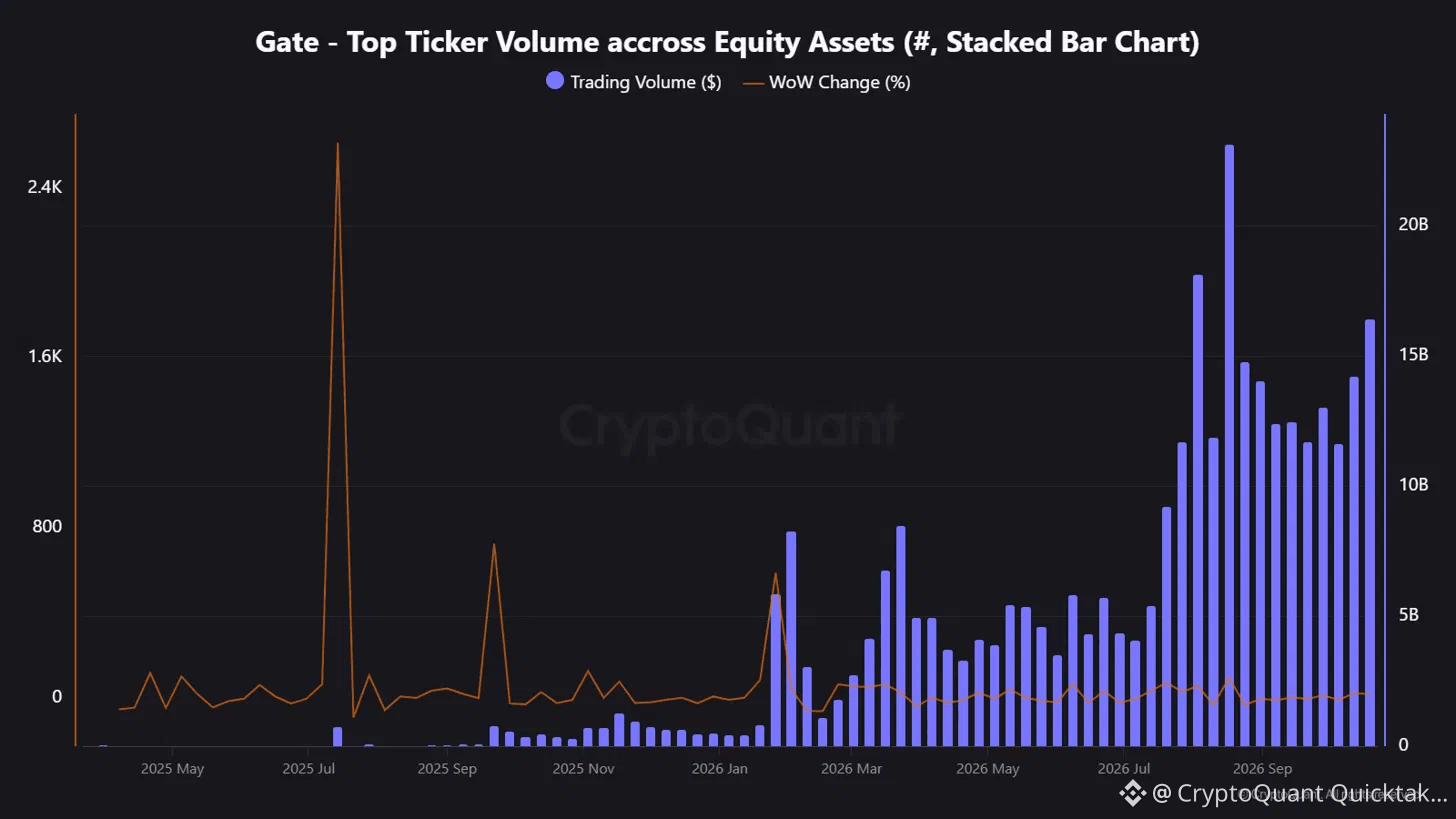
Beyond Crypto: the Rise of Equities and TradFi on GateThe fastest-growing product on a crypto exchange is no longer crypto.
According to CryptoQuant data, the weekly trading volume of equity-based assets on Gate was almost zero for most of 2025. The first surge came at the beginning of 2026, and by the end of August, the weekly volume peaked, surpassing $20 billion. It has been on the rise again in recent weeks, standing above $15 billion.
TradFi volume also became visible on the chart during the same period. It is still a small slice of the total, but it is growing month by month.
The other side of the picture is also important. Gate's main engine is still futures trading. In late August and early September of 2025, daily futures volume had exceeded $60 billion. Today, the total daily volume ranges between $15 billion and $25 billion on most days. This means the trading appetite on the crypto side is well below those peaks.
Therefore, the growth in equities and TradFi can be interpreted as a diversification move. As crypto volume cools down, the exchange is shifting its users to other markets within the same app.
From the user's perspective, however, there is a separate question. Trading an equity-based product on a crypto exchange might not be the same as buying that stock from a traditional brokerage. One should not enter a trade without knowing exactly what the product is, what rights it grants, and what determines its price.
Exchanges no longer just sell coins. It remains up to the user to know that products looking identical on the screen are not necessarily the same thing.
Written by BaykusCharts
Beyond Crypto: the Rise of Equities and TradFi on Gate
The fastest-growing product on a crypto exchange is no longer crypto.
According to CryptoQuant data, the weekly trading volume of equity-based assets on Gate was almost zero for most of 2025. The first surge came at the beginning of 2026, and by the end of August, the weekly volume peaked, surpassing $20 billion. It has been on the rise again in recent weeks, standing above $15 billion.
TradFi volume also became visible on the chart during the same period. It is still a small slice of the total, but it is growing month by month.
The other side of the picture is also important. Gate's main engine is still futures trading. In late August and early September of 2025, daily futures volume had exceeded $60 billion. Today, the total daily volume ranges between $15 billion and $25 billion on most days. This means the trading appetite on the crypto side is well below those peaks.
Therefore, the growth in equities and TradFi can be interpreted as a diversification move. As crypto volume cools down, the exchange is shifting its users to other markets within the same app.
From the user's perspective, however, there is a separate question. Trading an equity-based product on a crypto exchange might not be the same as buying that stock from a traditional brokerage. One should not enter a trade without knowing exactly what the product is, what rights it grants, and what determines its price.
Exchanges no longer just sell coins. It remains up to the user to know that products looking identical on the screen are not necessarily the same thing.
Written by BaykusCharts
According to CryptoQuant data, the weekly trading volume of equity-based assets on Gate was almost zero for most of 2025. The first surge came at the beginning of 2026, and by the end of August, the weekly volume peaked, surpassing $20 billion. It has been on the rise again in recent weeks, standing above $15 billion.
TradFi volume also became visible on the chart during the same period. It is still a small slice of the total, but it is growing month by month.
The other side of the picture is also important. Gate's main engine is still futures trading. In late August and early September of 2025, daily futures volume had exceeded $60 billion. Today, the total daily volume ranges between $15 billion and $25 billion on most days. This means the trading appetite on the crypto side is well below those peaks.
Therefore, the growth in equities and TradFi can be interpreted as a diversification move. As crypto volume cools down, the exchange is shifting its users to other markets within the same app.
From the user's perspective, however, there is a separate question. Trading an equity-based product on a crypto exchange might not be the same as buying that stock from a traditional brokerage. One should not enter a trade without knowing exactly what the product is, what rights it grants, and what determines its price.
Exchanges no longer just sell coins. It remains up to the user to know that products looking identical on the screen are not necessarily the same thing.
Written by BaykusCharts
81
Article
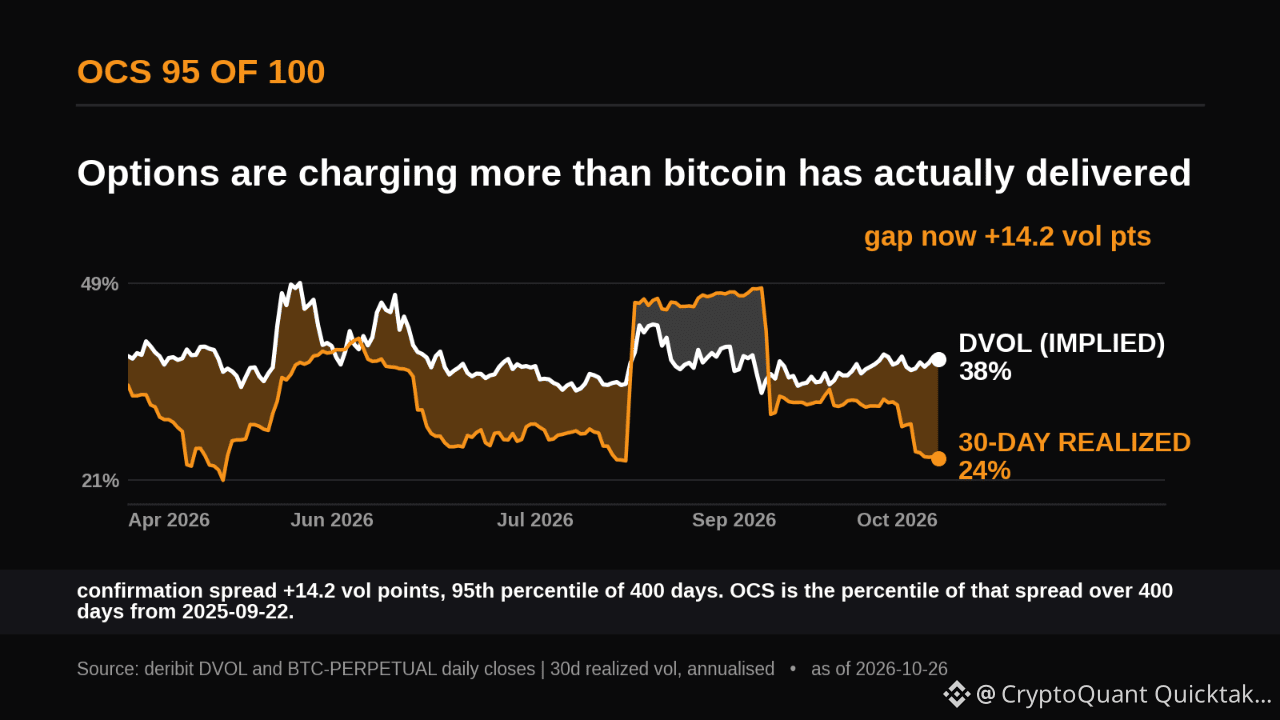
Bitcoin's 30-Day Realized Volatility Is Lower Than on 97% of Days Since 2021Bitcoin's 30-day realized volatility sits at 24.23, lower than on 97% of days since 2021-03-24. Price has drifted lower over the month, but in small daily steps with no sharp session.
Options are not pricing that calm forward. On Deribit, the 27 November monthly expiry carries 36.69% implied volatility against 24.23% delivered. Into Wednesday's FOMC decision, options price a 2.27% move (about $1,819) over the 28 to 29 October window, a forward implied vol of 43.4% against 34.8% for the window after it.
CryptoQuant's all-exchange ELR, its estimate of open interest against exchange reserves, has held between 0.22 and 0.26 for the past month and reads 0.246 today. Positioning has not been flushed out, and it has not built up either. The quiet tape is not the product of a forced unwind.
The caveat belongs early. A gap between implied and delivered vol is the normal state of this market: from April 2022 to September 2026, DVOL priced more volatility than the next 30 days delivered on 73.8% of 1,613 days, by a median 10.6 points. A wide gap does not mean a move is coming.
What the record does show: in 16 distinct episodes since 2021-03-24 with OCS between 90 and 100, 30-day realized vol finished above the implied vol charged on entry once.
Calm months like this one have paid option sellers in 15 of 16 episodes.
The falsifier is two-sided. A BTC move of more than 2.27% in either direction across the FOMC window, or 30-day realized vol back above 30 by 9 November, breaks this read. Realized vol still under 26 at the 30 October expiry confirms it.
Written by The Daily Digits
Bitcoin's 30-Day Realized Volatility Is Lower Than on 97% of Days Since 2021
Bitcoin's 30-day realized volatility sits at 24.23, lower than on 97% of days since 2021-03-24. Price has drifted lower over the month, but in small daily steps with no sharp session.
Options are not pricing that calm forward. On Deribit, the 27 November monthly expiry carries 36.69% implied volatility against 24.23% delivered. Into Wednesday's FOMC decision, options price a 2.27% move (about $1,819) over the 28 to 29 October window, a forward implied vol of 43.4% against 34.8% for the window after it.
CryptoQuant's all-exchange ELR, its estimate of open interest against exchange reserves, has held between 0.22 and 0.26 for the past month and reads 0.246 today. Positioning has not been flushed out, and it has not built up either. The quiet tape is not the product of a forced unwind.
The caveat belongs early. A gap between implied and delivered vol is the normal state of this market: from April 2022 to September 2026, DVOL priced more volatility than the next 30 days delivered on 73.8% of 1,613 days, by a median 10.6 points. A wide gap does not mean a move is coming.
What the record does show: in 16 distinct episodes since 2021-03-24 with OCS between 90 and 100, 30-day realized vol finished above the implied vol charged on entry once.
Calm months like this one have paid option sellers in 15 of 16 episodes.
The falsifier is two-sided. A BTC move of more than 2.27% in either direction across the FOMC window, or 30-day realized vol back above 30 by 9 November, breaks this read. Realized vol still under 26 at the 30 October expiry confirms it.
Written by The Daily Digits
Options are not pricing that calm forward. On Deribit, the 27 November monthly expiry carries 36.69% implied volatility against 24.23% delivered. Into Wednesday's FOMC decision, options price a 2.27% move (about $1,819) over the 28 to 29 October window, a forward implied vol of 43.4% against 34.8% for the window after it.
CryptoQuant's all-exchange ELR, its estimate of open interest against exchange reserves, has held between 0.22 and 0.26 for the past month and reads 0.246 today. Positioning has not been flushed out, and it has not built up either. The quiet tape is not the product of a forced unwind.
The caveat belongs early. A gap between implied and delivered vol is the normal state of this market: from April 2022 to September 2026, DVOL priced more volatility than the next 30 days delivered on 73.8% of 1,613 days, by a median 10.6 points. A wide gap does not mean a move is coming.
What the record does show: in 16 distinct episodes since 2021-03-24 with OCS between 90 and 100, 30-day realized vol finished above the implied vol charged on entry once.
Calm months like this one have paid option sellers in 15 of 16 episodes.
The falsifier is two-sided. A BTC move of more than 2.27% in either direction across the FOMC window, or 30-day realized vol back above 30 by 9 November, breaks this read. Realized vol still under 26 at the 30 October expiry confirms it.
Written by The Daily Digits
154
Partly True
Article
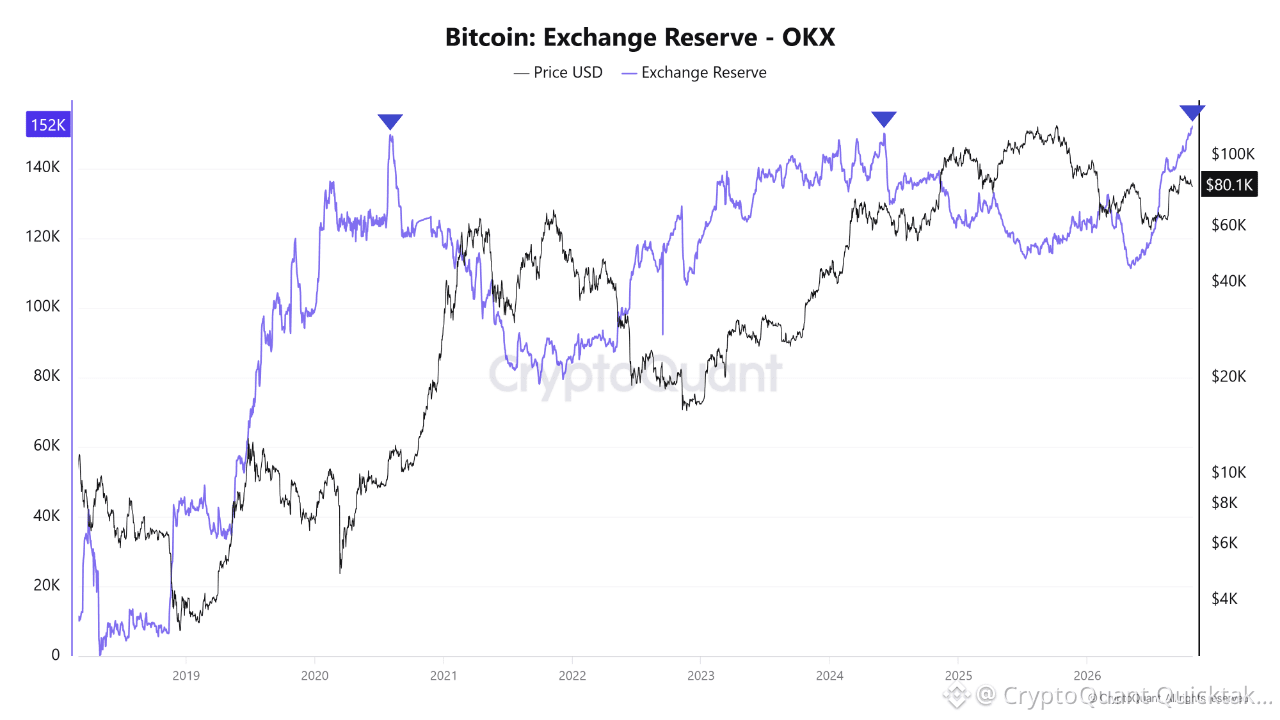
$69 Billion in Bitcoin: OKX Hits Historic Reserve Peak As Binance Crosses Key 2024 LevelBitcoin reserves on OKX rose to 152,070 BTC on October 26, their highest level in chart dating back to 2018. Meanwhile, Binance reserves stood at 711,310 BTC, putting both exchanges above notable historical reference points.
OKX has surpassed the 149,700 BTC recorded on August 2, 2020, by 2,370 BTC (1.58%), and the 150,000 BTC registered on June 3, 2024, by 2,070 BTC (1.38%).
Its latest balance is also 730 BTC higher than the 151,340 BTC recorded on October 24.
Binance's current reserves exceed the August 12, 2024 reading of 705,959 BTC by 5,351 BTC (0.76%).
This marks the second move above that benchmark in 2026, following a rise to 724,236 BTC on September 21. However, Binance remains 12,926 BTC (1.78%) below that September peak.
Combined, Binance and OKX now hold 863,380 BTC in measured reserves, worth approximately $69.16 billion at Bitcoin's charted price of $80,100.
The simultaneous elevation of reserves across both exchanges highlights a notable shift in exchange-held Bitcoin balances.
While higher reserves increase the amount of BTC held on trading venues, they do not independently confirm active selling .
Written by Amr Taha
$69 Billion in Bitcoin: OKX Hits Historic Reserve Peak As Binance Crosses Key 2024 Level
Bitcoin reserves on OKX rose to 152,070 BTC on October 26, their highest level in chart dating back to 2018. Meanwhile, Binance reserves stood at 711,310 BTC, putting both exchanges above notable historical reference points.
OKX has surpassed the 149,700 BTC recorded on August 2, 2020, by 2,370 BTC (1.58%), and the 150,000 BTC registered on June 3, 2024, by 2,070 BTC (1.38%).
Its latest balance is also 730 BTC higher than the 151,340 BTC recorded on October 24.
Binance's current reserves exceed the August 12, 2024 reading of 705,959 BTC by 5,351 BTC (0.76%).
This marks the second move above that benchmark in 2026, following a rise to 724,236 BTC on September 21. However, Binance remains 12,926 BTC (1.78%) below that September peak.
Combined, Binance and OKX now hold 863,380 BTC in measured reserves, worth approximately $69.16 billion at Bitcoin's charted price of $80,100.
The simultaneous elevation of reserves across both exchanges highlights a notable shift in exchange-held Bitcoin balances.
While higher reserves increase the amount of BTC held on trading venues, they do not independently confirm active selling .
Written by Amr Taha
OKX has surpassed the 149,700 BTC recorded on August 2, 2020, by 2,370 BTC (1.58%), and the 150,000 BTC registered on June 3, 2024, by 2,070 BTC (1.38%).
Its latest balance is also 730 BTC higher than the 151,340 BTC recorded on October 24.
Binance's current reserves exceed the August 12, 2024 reading of 705,959 BTC by 5,351 BTC (0.76%).
This marks the second move above that benchmark in 2026, following a rise to 724,236 BTC on September 21. However, Binance remains 12,926 BTC (1.78%) below that September peak.
Combined, Binance and OKX now hold 863,380 BTC in measured reserves, worth approximately $69.16 billion at Bitcoin's charted price of $80,100.
The simultaneous elevation of reserves across both exchanges highlights a notable shift in exchange-held Bitcoin balances.
While higher reserves increase the amount of BTC held on trading venues, they do not independently confirm active selling .
Written by Amr Taha
84
Verified
Article
Binance Dominates Nearly 75% of Stablecoin Reserves Across ExchangesBinance continues to demonstrate its enormous influence over liquidity in the cryptocurrency market.
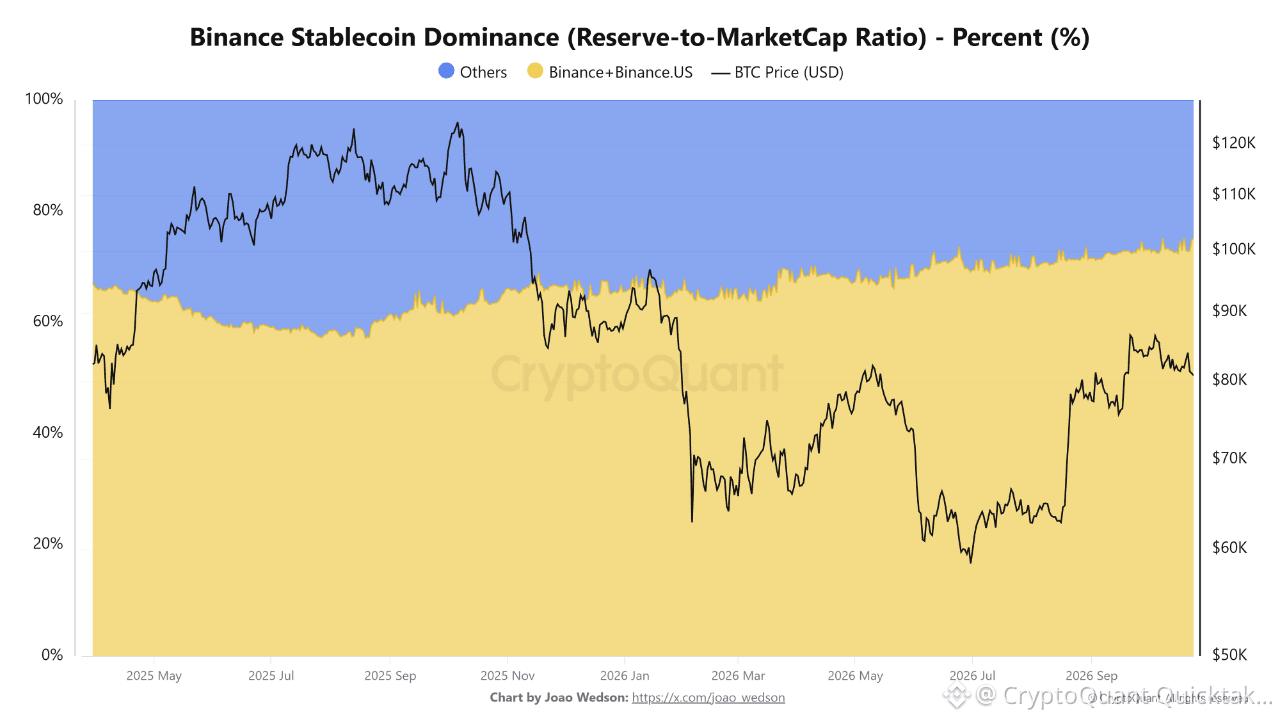
According to CryptoQuant data, **Binance, together with Binance.US, holds approximately 75% of all monitored stablecoin reserves across exchanges**, while all other platforms account for just 25%.
What makes this even more interesting is how this dominance has evolved over the past 18 months.
In mid-2025, Binance's share stood at approximately 58%. Since then, it has steadily increased, reaching nearly 75% in October 2026.
But what does this concentration actually mean for the market?
1. Liquidity Concentration: Binance has established itself as the leading hub for stablecoin reserves among monitored exchanges, holding a significant portion of the capital potentially available for trading.
2. Market Influence: With such a high concentration, significant changes in Binance's stablecoin flows could provide valuable insights into investor behavior.
3. Potential Buying Power: Stablecoins represent capital that could flow into Bitcoin and other crypto assets. However, large reserves do not necessarily translate into immediate buying pressure.
4. Dominance Despite Market Corrections: While Bitcoin experienced significant declines in 2026, Binance's relative market share continued to increase.
Importantly, rising dominance does not necessarily indicate net capital inflows, as it may also reflect declining reserves on competing exchanges.
Conclusion
Binance now holds nearly three-quarters of monitored stablecoin reserves, highlighting the market's growing dependence on a single platform.
The key question is whether this concentration of capital will translate into renewed demand for Bitcoin or whether investors will continue waiting for better opportunities.
Written by joaowedson
Binance Dominates Nearly 75% of Stablecoin Reserves Across Exchanges
Binance continues to demonstrate its enormous influence over liquidity in the cryptocurrency market.
According to CryptoQuant data, **Binance, together with Binance.US, holds approximately 75% of all monitored stablecoin reserves across exchanges**, while all other platforms account for just 25%.
What makes this even more interesting is how this dominance has evolved over the past 18 months.
In mid-2025, Binance's share stood at approximately 58%. Since then, it has steadily increased, reaching nearly 75% in October 2026.
But what does this concentration actually mean for the market?
1. Liquidity Concentration: Binance has established itself as the leading hub for stablecoin reserves among monitored exchanges, holding a significant portion of the capital potentially available for trading.
2. Market Influence: With such a high concentration, significant changes in Binance's stablecoin flows could provide valuable insights into investor behavior.
3. Potential Buying Power: Stablecoins represent capital that could flow into Bitcoin and other crypto assets. However, large reserves do not necessarily translate into immediate buying pressure.
4. Dominance Despite Market Corrections: While Bitcoin experienced significant declines in 2026, Binance's relative market share continued to increase.
Importantly, rising dominance does not necessarily indicate net capital inflows, as it may also reflect declining reserves on competing exchanges.
Conclusion
Binance now holds nearly three-quarters of monitored stablecoin reserves, highlighting the market's growing dependence on a single platform.
The key question is whether this concentration of capital will translate into renewed demand for Bitcoin or whether investors will continue waiting for better opportunities.
Written by joaowedson
According to CryptoQuant data, **Binance, together with Binance.US, holds approximately 75% of all monitored stablecoin reserves across exchanges**, while all other platforms account for just 25%.
What makes this even more interesting is how this dominance has evolved over the past 18 months.
In mid-2025, Binance's share stood at approximately 58%. Since then, it has steadily increased, reaching nearly 75% in October 2026.
But what does this concentration actually mean for the market?
1. Liquidity Concentration: Binance has established itself as the leading hub for stablecoin reserves among monitored exchanges, holding a significant portion of the capital potentially available for trading.
2. Market Influence: With such a high concentration, significant changes in Binance's stablecoin flows could provide valuable insights into investor behavior.
3. Potential Buying Power: Stablecoins represent capital that could flow into Bitcoin and other crypto assets. However, large reserves do not necessarily translate into immediate buying pressure.
4. Dominance Despite Market Corrections: While Bitcoin experienced significant declines in 2026, Binance's relative market share continued to increase.
Importantly, rising dominance does not necessarily indicate net capital inflows, as it may also reflect declining reserves on competing exchanges.
Conclusion
Binance now holds nearly three-quarters of monitored stablecoin reserves, highlighting the market's growing dependence on a single platform.
The key question is whether this concentration of capital will translate into renewed demand for Bitcoin or whether investors will continue waiting for better opportunities.
Written by joaowedson
1
152
Article
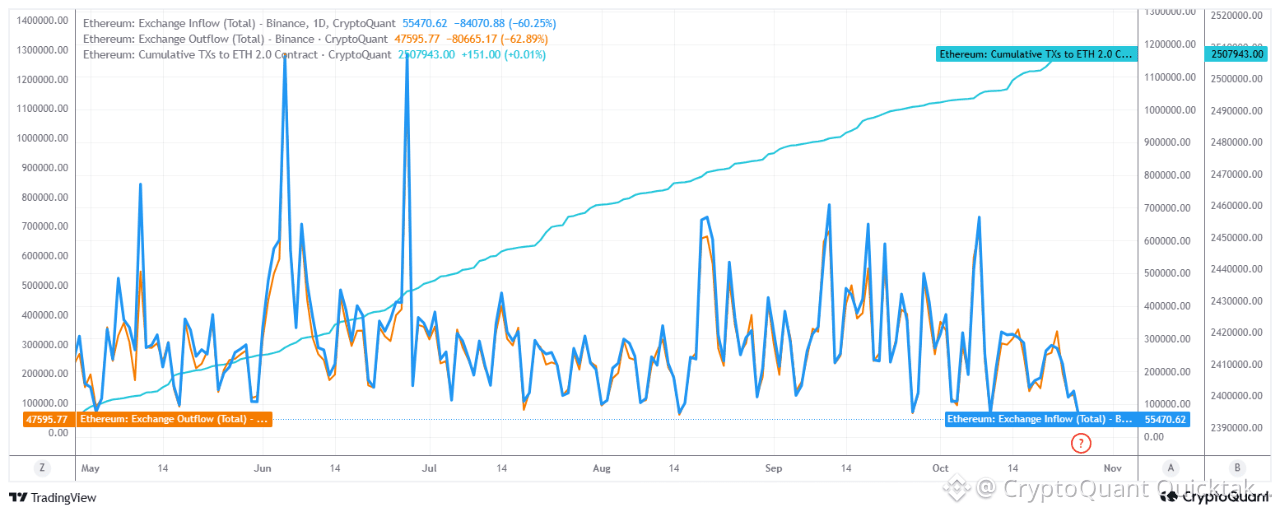
ETHEREUM Binance Inflows Could Be Preparation for the FED DecisionRecently, there have been approximately 55,471 ETH in inflows to Binance and 47,596 ETH in outflows. In other words, we see net inflows of 7,875 ETH outweighing outflows. This means that the amount of ETH available for sale on Binance increased that day, and short term selling pressure may have risen slightly. The recent downward trend in the price also proves this.
The recent decline in both flows suggests that trading and transfer activity may have quieted down.
The cumulative number of transactions to the Ethereum 2.0 deposit contract continues to rise steadily. Although this is not a direct indicator of demand for ETH, it suggests that the network’s active use holds promise.
On the macroeconomic front, the U.S. 10 year Treasury yield is around 4.97%, and oil prices remain high. Higher bond yields and inflation concerns may limit appetite for risk assets that do not generate yield. In addition, markets are cautious ahead of the Fed’s decision on October 28; interest rate expectations and bond movements may increase volatility in liquidity-sensitive assets such as crypto.
For this reason, if net inflows continue throughout the week, ETF outflows persist, and bond yields remain high, selling pressure could intensify. The risk would increase if the price fails to hold the approximately $2,280–$2,300 area toward the end of October.
The net inflow at the end of the chart is slightly negative in the short term; while the cumulative Ethereum 2.0 line is positive for long term network activity, it does not help the market today. Given the price decline throughout October, ETF outflows, and the upcoming Fed decision, it seems more consistent to take downside risks more seriously for now and wait for confirmation in flows and price before assuming a recovery.
Written by PelinayPA
ETHEREUM Binance Inflows Could Be Preparation for the FED Decision
Recently, there have been approximately 55,471 ETH in inflows to Binance and 47,596 ETH in outflows. In other words, we see net inflows of 7,875 ETH outweighing outflows. This means that the amount of ETH available for sale on Binance increased that day, and short term selling pressure may have risen slightly. The recent downward trend in the price also proves this.
The recent decline in both flows suggests that trading and transfer activity may have quieted down.
The cumulative number of transactions to the Ethereum 2.0 deposit contract continues to rise steadily. Although this is not a direct indicator of demand for ETH, it suggests that the network’s active use holds promise.
On the macroeconomic front, the U.S. 10 year Treasury yield is around 4.97%, and oil prices remain high. Higher bond yields and inflation concerns may limit appetite for risk assets that do not generate yield. In addition, markets are cautious ahead of the Fed’s decision on October 28; interest rate expectations and bond movements may increase volatility in liquidity-sensitive assets such as crypto.
For this reason, if net inflows continue throughout the week, ETF outflows persist, and bond yields remain high, selling pressure could intensify. The risk would increase if the price fails to hold the approximately $2,280–$2,300 area toward the end of October.
The net inflow at the end of the chart is slightly negative in the short term; while the cumulative Ethereum 2.0 line is positive for long term network activity, it does not help the market today. Given the price decline throughout October, ETF outflows, and the upcoming Fed decision, it seems more consistent to take downside risks more seriously for now and wait for confirmation in flows and price before assuming a recovery.
Written by PelinayPA
The recent decline in both flows suggests that trading and transfer activity may have quieted down.
The cumulative number of transactions to the Ethereum 2.0 deposit contract continues to rise steadily. Although this is not a direct indicator of demand for ETH, it suggests that the network’s active use holds promise.
On the macroeconomic front, the U.S. 10 year Treasury yield is around 4.97%, and oil prices remain high. Higher bond yields and inflation concerns may limit appetite for risk assets that do not generate yield. In addition, markets are cautious ahead of the Fed’s decision on October 28; interest rate expectations and bond movements may increase volatility in liquidity-sensitive assets such as crypto.
For this reason, if net inflows continue throughout the week, ETF outflows persist, and bond yields remain high, selling pressure could intensify. The risk would increase if the price fails to hold the approximately $2,280–$2,300 area toward the end of October.
The net inflow at the end of the chart is slightly negative in the short term; while the cumulative Ethereum 2.0 line is positive for long term network activity, it does not help the market today. Given the price decline throughout October, ETF outflows, and the upcoming Fed decision, it seems more consistent to take downside risks more seriously for now and wait for confirmation in flows and price before assuming a recovery.
Written by PelinayPA
162
Log in to explore more content
Join global crypto users on Binance Square
⚡️ Get latest and useful information about crypto.
💬 Trusted by the world’s largest crypto exchange.
👍 Discover real insights from verified creators.
Email / Phone number