

CryptoLite_247
1.5k Posts

CryptoLite_247
Report
Block User
Free Stock Market News ACCURATE, CONSISTENT, & RELIABLE || https://x.com/Yusty121 || Crypto first commentary with Marco Market Context
Open Trade
Frequent Trader
5.5 Years
7 Following
882 Followers
3.0K+ Liked
Posts
Portfolio
All
Quotes
Videos
PINNED
Elon Musk says “~90% of $SPCX revenue this year will be commercial” with government revenue falling below 5% in Q4.
Starlink has changed the mix so much that SpaceX really looks more like a connectivity platform rather than a government launch business.
Elon Musk says “~90% of $SPCX revenue this year will be commercial” with government revenue falling below 5% in Q4.
Starlink has changed the mix so much that SpaceX really looks more like a connectivity platform rather than a government launch business.
Starlink has changed the mix so much that SpaceX really looks more like a connectivity platform rather than a government launch business.


39
11
191
198.9k
PINNED
$SPCX just launched USSF-385 on B1100 which is the 100th Falcon 9 Block 5 booster SpaceX has built.
The mission is carrying a classified Space Force payload but the thick fog at Vandenberg made the launch clip look incredible.
$SPCX just launched USSF-385 on B1100 which is the 100th Falcon 9 Block 5 booster SpaceX has built.
The mission is carrying a classified Space Force payload but the thick fog at Vandenberg made the launch clip look incredible.
The mission is carrying a classified Space Force payload but the thick fog at Vandenberg made the launch clip look incredible.

25
15
137
128.1k
·
--
Bullish
$NBIS is tackling one of AI infrastructure’s biggest bottlenecks: power.
Nebius has activated its first Bloom Energy fuel cell power block at its 300 MW New Jersey data center site, marking a step toward dedicated, on-site electricity generation for its AI operations.
Building data centers and securing GPUs isn't enough. AI cloud providers also need reliable power to bring capacity online and deliver computing services to customers.
The multiyear Bloom Energy arrangement could help Nebius address that challenge as it expands its infrastructure footprint. If the power setup supports dependable operations and strong utilization, it could strengthen the company’s ability to turn capacity into recurring AI-cloud revenue.
Fuel cells and large-scale data center development come with substantial costs and long-term commitments. Nebius still needs to demonstrate that its expanding infrastructure can generate enough revenue and cash flow to justify the investment.
The activation is real operational progress, but it doesn't yet prove the economics will work at scale.
$NBIS is tackling one of AI infrastructure’s biggest bottlenecks: power.
Nebius has activated its first Bloom Energy fuel cell power block at its 300 MW New Jersey data center site, marking a step toward dedicated, on-site electricity generation for its AI operations.
Building data centers and securing GPUs isn't enough. AI cloud providers also need reliable power to bring capacity online and deliver computing services to customers.
The multiyear Bloom Energy arrangement could help Nebius address that challenge as it expands its infrastructure footprint. If the power setup supports dependable operations and strong utilization, it could strengthen the company’s ability to turn capacity into recurring AI-cloud revenue.
Fuel cells and large-scale data center development come with substantial costs and long-term commitments. Nebius still needs to demonstrate that its expanding infrastructure can generate enough revenue and cash flow to justify the investment.
The activation is real operational progress, but it doesn't yet prove the economics will work at scale.
Nebius has activated its first Bloom Energy fuel cell power block at its 300 MW New Jersey data center site, marking a step toward dedicated, on-site electricity generation for its AI operations.
Building data centers and securing GPUs isn't enough. AI cloud providers also need reliable power to bring capacity online and deliver computing services to customers.
The multiyear Bloom Energy arrangement could help Nebius address that challenge as it expands its infrastructure footprint. If the power setup supports dependable operations and strong utilization, it could strengthen the company’s ability to turn capacity into recurring AI-cloud revenue.
Fuel cells and large-scale data center development come with substantial costs and long-term commitments. Nebius still needs to demonstrate that its expanding infrastructure can generate enough revenue and cash flow to justify the investment.
The activation is real operational progress, but it doesn't yet prove the economics will work at scale.
1
157
·
--
Bullish
Elon Musk just delivered another blow to the neocloud trade: “Pointless.”
CRWV, NBIS and IREN extended their declines after Musk said SpaceX has no interest in acquiring a neocloud company, warning that more than 200 players could face consolidation and failures.
The overnight reaction was immediate:
🔻 $CRWV : -2.3%
🔻 $NBIS : -2.3%
🔻 $IREN : -2%
The bigger concern is funding. Musk argued that debt markets have become far less accessible for companies without substantial revenue streams independent of AI data centers. SpaceX, he said, is in a different position.
Venture capitalist Chamath Palihapitiya echoed the warning, highlighting weak capitalization, potential data-center delays and the risk that expensive computing capacity could sit underutilized in 2027.
That’s the real issue for neocloud investors. AI demand can be enormous, but demand alone doesn't guarantee that every infrastructure provider will earn an attractive return on billions of dollars in spending.
Still, this isn't proof that every neocloud will fail. Companies with strong customer commitments, reliable power, disciplined financing and high utilization could emerge stronger as the sector consolidates.
Elon Musk just delivered another blow to the neocloud trade: “Pointless.”
CRWV, NBIS and IREN extended their declines after Musk said SpaceX has no interest in acquiring a neocloud company, warning that more than 200 players could face consolidation and failures.
The overnight reaction was immediate:
🔻 $CRWV : -2.3%
🔻 $NBIS : -2.3%
🔻 $IREN : -2%
The bigger concern is funding. Musk argued that debt markets have become far less accessible for companies without substantial revenue streams independent of AI data centers. SpaceX, he said, is in a different position.
Venture capitalist Chamath Palihapitiya echoed the warning, highlighting weak capitalization, potential data-center delays and the risk that expensive computing capacity could sit underutilized in 2027.
That’s the real issue for neocloud investors. AI demand can be enormous, but demand alone doesn't guarantee that every infrastructure provider will earn an attractive return on billions of dollars in spending.
Still, this isn't proof that every neocloud will fail. Companies with strong customer commitments, reliable power, disciplined financing and high utilization could emerge stronger as the sector consolidates.
CRWV, NBIS and IREN extended their declines after Musk said SpaceX has no interest in acquiring a neocloud company, warning that more than 200 players could face consolidation and failures.
The overnight reaction was immediate:
🔻 $CRWV : -2.3%
🔻 $NBIS : -2.3%
🔻 $IREN : -2%
The bigger concern is funding. Musk argued that debt markets have become far less accessible for companies without substantial revenue streams independent of AI data centers. SpaceX, he said, is in a different position.
Venture capitalist Chamath Palihapitiya echoed the warning, highlighting weak capitalization, potential data-center delays and the risk that expensive computing capacity could sit underutilized in 2027.
That’s the real issue for neocloud investors. AI demand can be enormous, but demand alone doesn't guarantee that every infrastructure provider will earn an attractive return on billions of dollars in spending.
Still, this isn't proof that every neocloud will fail. Companies with strong customer commitments, reliable power, disciplined financing and high utilization could emerge stronger as the sector consolidates.
3
430
·
--
Bullish
Today's Key Events (All EST) $BTC — 10/26/2026
08:30: Chicago National Activity Index
10:30: Dallas Fed Mfg. Bus. Index
13:00: US 2-Year Note Auction
Before Open 👇
07:00: Verizon Communications (VZ)
BMO: Medifast (MED)
BMO: MakeMyTrip (MMYT)
After Hours 👇
16:00: Cadence Design Systems (CDNS)
16:00: Amkor (AMKR)
16:00: Kforce (KFRC)
16:05: Rambus (RMBS)
16:05: Welltower (WELL)
16:05: Whirlpool (WHR)
16:05: The Hartford Financial Services (HIG)
16:05: Public Storage (PSA)
16:05: Agilysys (AGYS)
16:05: Northwest Bancshares (NWBI)
16:10: Flexsteel Industries (FLXS)
16:10: Hawkins (HWKN)
16:15: Principal Financial Group (PFG)
16:15: Phillips Edison & Company (PECO)
16:30: Nucor (NUE)
16:30: Sun Communities (SUI)
16:35: Celestica (CLS)
17:00: Brown & Brown (BRO)
Today's Key Events (All EST) $BTC — 10/26/2026
08:30: Chicago National Activity Index
10:30: Dallas Fed Mfg. Bus. Index
13:00: US 2-Year Note Auction
Before Open 👇
07:00: Verizon Communications (VZ)
BMO: Medifast (MED)
BMO: MakeMyTrip (MMYT)
After Hours 👇
16:00: Cadence Design Systems (CDNS)
16:00: Amkor (AMKR)
16:00: Kforce (KFRC)
16:05: Rambus (RMBS)
16:05: Welltower (WELL)
16:05: Whirlpool (WHR)
16:05: The Hartford Financial Services (HIG)
16:05: Public Storage (PSA)
16:05: Agilysys (AGYS)
16:05: Northwest Bancshares (NWBI)
16:10: Flexsteel Industries (FLXS)
16:10: Hawkins (HWKN)
16:15: Principal Financial Group (PFG)
16:15: Phillips Edison & Company (PECO)
16:30: Nucor (NUE)
16:30: Sun Communities (SUI)
16:35: Celestica (CLS)
17:00: Brown & Brown (BRO)
08:30: Chicago National Activity Index
10:30: Dallas Fed Mfg. Bus. Index
13:00: US 2-Year Note Auction
Before Open 👇
07:00: Verizon Communications (VZ)
BMO: Medifast (MED)
BMO: MakeMyTrip (MMYT)
After Hours 👇
16:00: Cadence Design Systems (CDNS)
16:00: Amkor (AMKR)
16:00: Kforce (KFRC)
16:05: Rambus (RMBS)
16:05: Welltower (WELL)
16:05: Whirlpool (WHR)
16:05: The Hartford Financial Services (HIG)
16:05: Public Storage (PSA)
16:05: Agilysys (AGYS)
16:05: Northwest Bancshares (NWBI)
16:10: Flexsteel Industries (FLXS)
16:10: Hawkins (HWKN)
16:15: Principal Financial Group (PFG)
16:15: Phillips Edison & Company (PECO)
16:30: Nucor (NUE)
16:30: Sun Communities (SUI)
16:35: Celestica (CLS)
17:00: Brown & Brown (BRO)
1
82
·
--
Bullish
$NBIS : The fact that Griffin has the temerity to talk about GPU overcapacity when the world is still scrambling for compute is sickening.
Have we already forgotten the FUD that reportedly helped trigger the July selloff involving Leopold Aschenbrenner?
Now, with the market already gripped by panic, here comes another overcapacity narrative that could fuel further selling.
This is how fear works. Create doubt, exploit uncertainty, and let panic do the damage.
Sadly, too many investors fall for it, forgetting that short-term market narratives don't automatically change long-term fundamentals.
$NBIS : The fact that Griffin has the temerity to talk about GPU overcapacity when the world is still scrambling for compute is sickening.
Have we already forgotten the FUD that reportedly helped trigger the July selloff involving Leopold Aschenbrenner?
Now, with the market already gripped by panic, here comes another overcapacity narrative that could fuel further selling.
This is how fear works. Create doubt, exploit uncertainty, and let panic do the damage.
Sadly, too many investors fall for it, forgetting that short-term market narratives don't automatically change long-term fundamentals.
Have we already forgotten the FUD that reportedly helped trigger the July selloff involving Leopold Aschenbrenner?
Now, with the market already gripped by panic, here comes another overcapacity narrative that could fuel further selling.
This is how fear works. Create doubt, exploit uncertainty, and let panic do the damage.
Sadly, too many investors fall for it, forgetting that short-term market narratives don't automatically change long-term fundamentals.
2
215
·
--
Bullish
Please stop DMing asking me if "I think $NBIS R/R is attractive at this level"
You should already know where I stand from day one.
I know a lot of people are scared about Elon Musk statement which I feel is way blown out of proportion.
You work hard for your money so I shouldn't be the one dictating for you how to invest it.
If you think there is opportunity there, take it and if you are not comfortable yet, leave it.
Please stop DMing asking me if "I think $NBIS R/R is attractive at this level"
You should already know where I stand from day one.
I know a lot of people are scared about Elon Musk statement which I feel is way blown out of proportion.
You work hard for your money so I shouldn't be the one dictating for you how to invest it.
If you think there is opportunity there, take it and if you are not comfortable yet, leave it.
You should already know where I stand from day one.
I know a lot of people are scared about Elon Musk statement which I feel is way blown out of proportion.
You work hard for your money so I shouldn't be the one dictating for you how to invest it.
If you think there is opportunity there, take it and if you are not comfortable yet, leave it.
1
248
·
--
Bullish
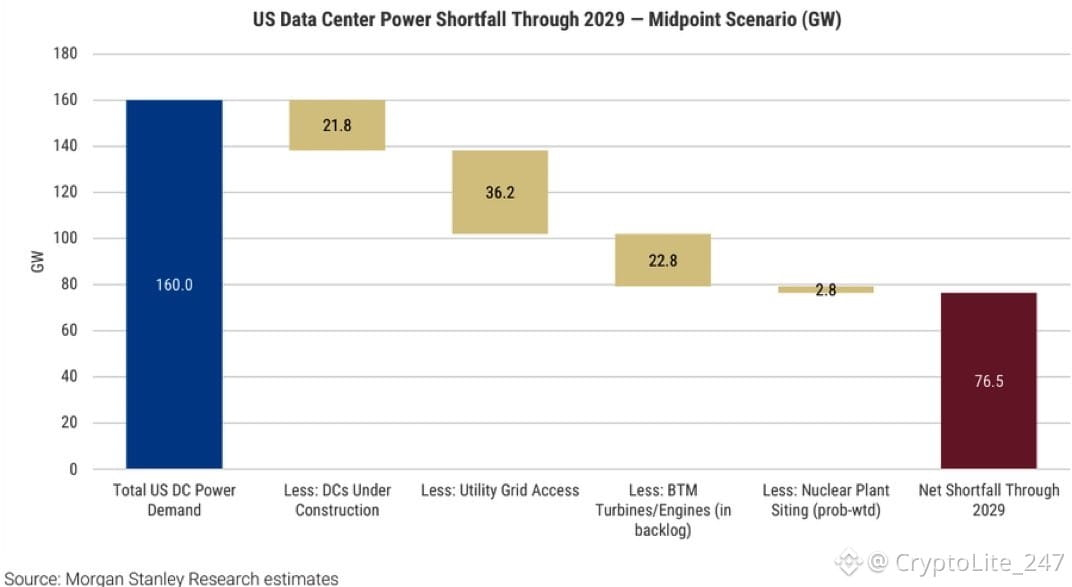
Morgan Stanley sees ~160 GW of U.S. data center power demand through 2029 against an insane ~77 GW shortfall leaving nearly half of that demand at risk of going unpowered.
That’s a massive opportunity for $GEV with its sold-out gas turbines and $BEB with onsite fuel cells that can generate electricity without relying on turbines.
And getting that power into AI data centers creates another opportunity for VRT in power delivery and cooling, FPS in transformers and prefabricated electrical systems and ON and NVTS in improving efficiency through SiC and GaN.
Morgan Stanley sees ~160 GW of U.S. data center power demand through 2029 against an insane ~77 GW shortfall leaving nearly half of that demand at risk of going unpowered.
That’s a massive opportunity for $GEV with its sold-out gas turbines and $BEB with onsite fuel cells that can generate electricity without relying on turbines.
And getting that power into AI data centers creates another opportunity for VRT in power delivery and cooling, FPS in transformers and prefabricated electrical systems and ON and NVTS in improving efficiency through SiC and GaN.
That’s a massive opportunity for $GEV with its sold-out gas turbines and $BEB with onsite fuel cells that can generate electricity without relying on turbines.
And getting that power into AI data centers creates another opportunity for VRT in power delivery and cooling, FPS in transformers and prefabricated electrical systems and ON and NVTS in improving efficiency through SiC and GaN.
1
205
·
--
Bullish
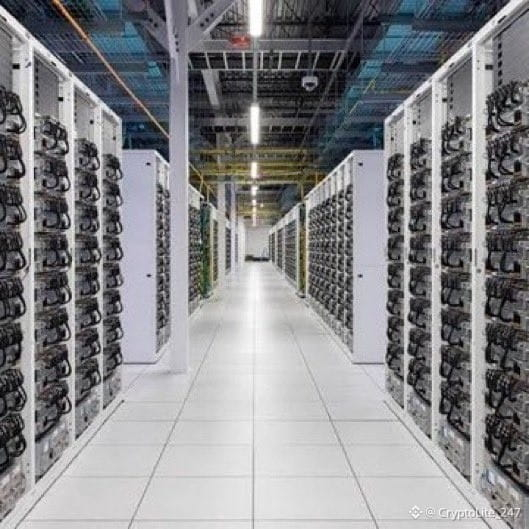
$SPCX CEO Elon Musk says we’re going to see “a lot of stranded compute in partially complete data centers” as GPUs arrive faster than power infrastructure needed to run them.
That sounds bearish but could actually keep GPU rental prices higher for longer as companies with power already secured benefit from tight supply while idle chips lose value with every new generation.
$SPCX CEO Elon Musk says we’re going to see “a lot of stranded compute in partially complete data centers” as GPUs arrive faster than power infrastructure needed to run them.
That sounds bearish but could actually keep GPU rental prices higher for longer as companies with power already secured benefit from tight supply while idle chips lose value with every new generation.
That sounds bearish but could actually keep GPU rental prices higher for longer as companies with power already secured benefit from tight supply while idle chips lose value with every new generation.

2
1
4
5.1k
·
--
Bullish
Verified
This is what I mean when I say $AAOI has a massive opportunity but an even bigger execution risk with Glassdoor showing just 1.7 stars and 1% CEO approval.
When management is trying to ramp monthly production from ~150K to over 650K transceivers keeping experienced workers becomes just as important as having strong customer demand.
This is what I mean when I say $AAOI has a massive opportunity but an even bigger execution risk with Glassdoor showing just 1.7 stars and 1% CEO approval.
When management is trying to ramp monthly production from ~150K to over 650K transceivers keeping experienced workers becomes just as important as having strong customer demand.
When management is trying to ramp monthly production from ~150K to over 650K transceivers keeping experienced workers becomes just as important as having strong customer demand.
1
766
·
--
Bullish
$BTC
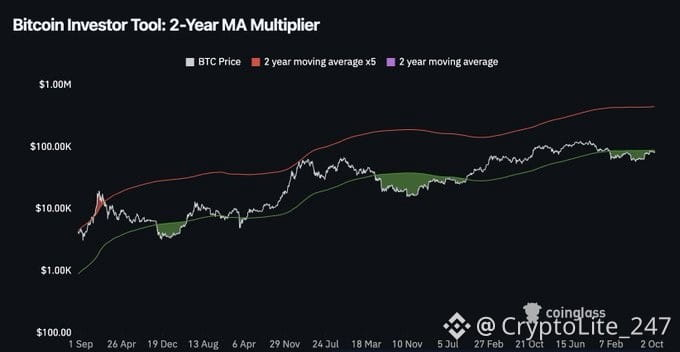
Has meanwhile moved back to its 2 year moving average price after deviating below it for some time.
In my previous tweet I mentioned how Bitcoin tends to. historically trade at good high timeframe value when it is below that level. The big question is usually how long it remains below that area. In this case it didn't take a long time because since then, price moved up from $63K to $87K at its recent high in just 3 months.
Good reason why I always like to keep looking at these high timeframe "indicators" to determine when BTC is at historically good value levels.
$BTC
Has meanwhile moved back to its 2 year moving average price after deviating below it for some time.
In my previous tweet I mentioned how Bitcoin tends to. historically trade at good high timeframe value when it is below that level. The big question is usually how long it remains below that area. In this case it didn't take a long time because since then, price moved up from $63K to $87K at its recent high in just 3 months.
Good reason why I always like to keep looking at these high timeframe "indicators" to determine when BTC is at historically good value levels.
Has meanwhile moved back to its 2 year moving average price after deviating below it for some time.
In my previous tweet I mentioned how Bitcoin tends to. historically trade at good high timeframe value when it is below that level. The big question is usually how long it remains below that area. In this case it didn't take a long time because since then, price moved up from $63K to $87K at its recent high in just 3 months.
Good reason why I always like to keep looking at these high timeframe "indicators" to determine when BTC is at historically good value levels.
1
390
·
--
Bullish
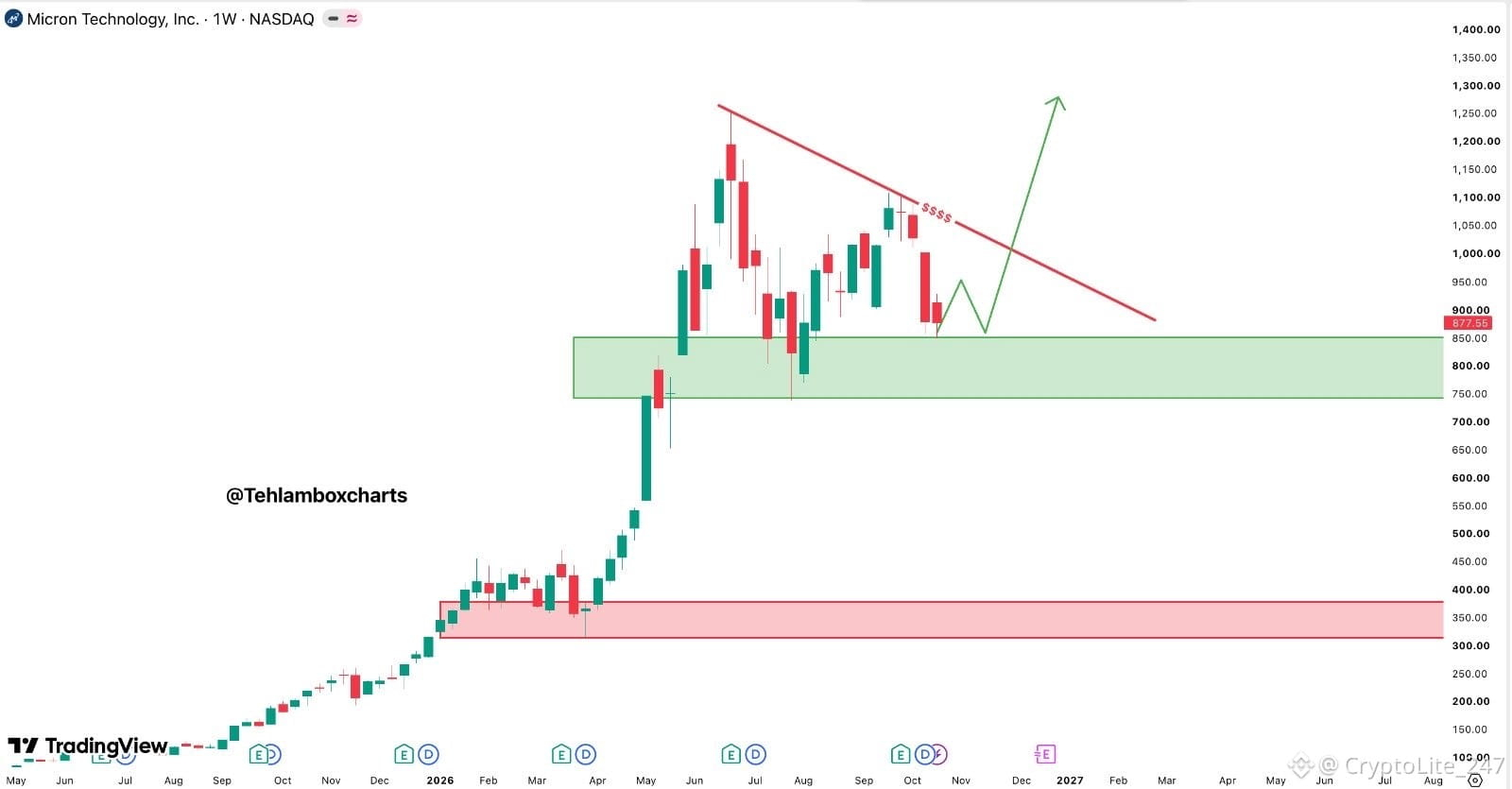
$MU is at a make-or-break zone
$850 needs to hold
if bulls reclaim this trendline, $1,000+ could be back on the table
$MU is at a make-or-break zone
$850 needs to hold
if bulls reclaim this trendline, $1,000+ could be back on the table
$850 needs to hold
if bulls reclaim this trendline, $1,000+ could be back on the table
1
464
·
--
Bullish
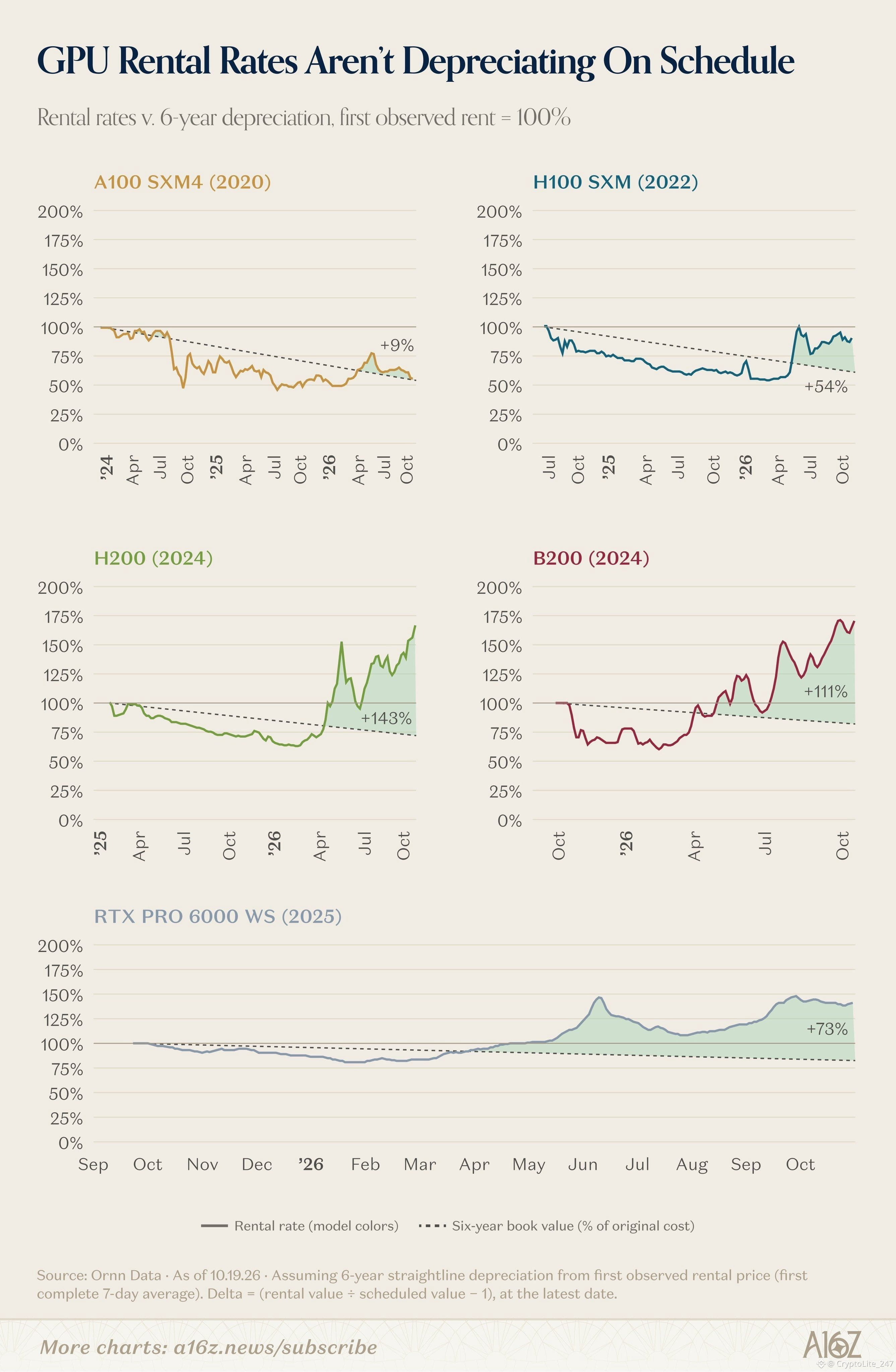
This is the kind of data that makes me even more bullish on the neocloud thesis. 👀
GPU rental prices are running ABOVE a standard 6-year depreciation schedule.
• H200: +143%
• B200: +111%
• RTX PRO 6000: +73%
• H100: +54%
• A100: +9%
Most of this gap opened up after April as token demand accelerated.
Think about what this means for $NBIS , $IREN and $CRWV .
AI compute demand is pushing rental prices beyond depreciation expectations, strengthening the case for sustained pricing power and stronger returns on GPU infrastructure.
The market is still underestimating what happens when demand keeps outpacing available capacity.
This is the kind of data that makes me even more bullish on the neocloud thesis. 👀
GPU rental prices are running ABOVE a standard 6-year depreciation schedule.
• H200: +143%
• B200: +111%
• RTX PRO 6000: +73%
• H100: +54%
• A100: +9%
Most of this gap opened up after April as token demand accelerated.
Think about what this means for $NBIS , $IREN and $CRWV .
AI compute demand is pushing rental prices beyond depreciation expectations, strengthening the case for sustained pricing power and stronger returns on GPU infrastructure.
The market is still underestimating what happens when demand keeps outpacing available capacity.
GPU rental prices are running ABOVE a standard 6-year depreciation schedule.
• H200: +143%
• B200: +111%
• RTX PRO 6000: +73%
• H100: +54%
• A100: +9%
Most of this gap opened up after April as token demand accelerated.
Think about what this means for $NBIS , $IREN and $CRWV .
AI compute demand is pushing rental prices beyond depreciation expectations, strengthening the case for sustained pricing power and stronger returns on GPU infrastructure.
The market is still underestimating what happens when demand keeps outpacing available capacity.
2
2
1.7k
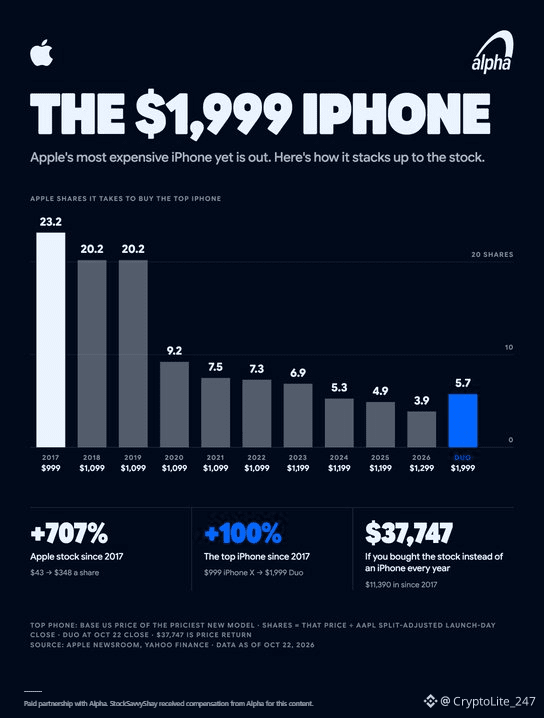
$AAPL just launched its most expensive iPhone ever with the $1,999 iPhone Duo and preorders reportedly sold out by 5:20 a.m.
Raising your top price 54% and still selling out that quickly is some serious pricing power.
$AAPL just launched its most expensive iPhone ever with the $1,999 iPhone Duo and preorders reportedly sold out by 5:20 a.m.
Raising your top price 54% and still selling out that quickly is some serious pricing power.
Raising your top price 54% and still selling out that quickly is some serious pricing power.
1
429
·
--
Bullish
$CRWD CEO warns “you’re going to see a lot of breaches happening in the coming months” following the discovery of critical PHP security flaws.
CrowdStrike’s massive threat data could become an even bigger advantage with AI now finding vulnerabilities humans missed for decades.
$CRWD CEO warns “you’re going to see a lot of breaches happening in the coming months” following the discovery of critical PHP security flaws.
CrowdStrike’s massive threat data could become an even bigger advantage with AI now finding vulnerabilities humans missed for decades.
CrowdStrike’s massive threat data could become an even bigger advantage with AI now finding vulnerabilities humans missed for decades.
1
183
·
--
Bullish
Verified
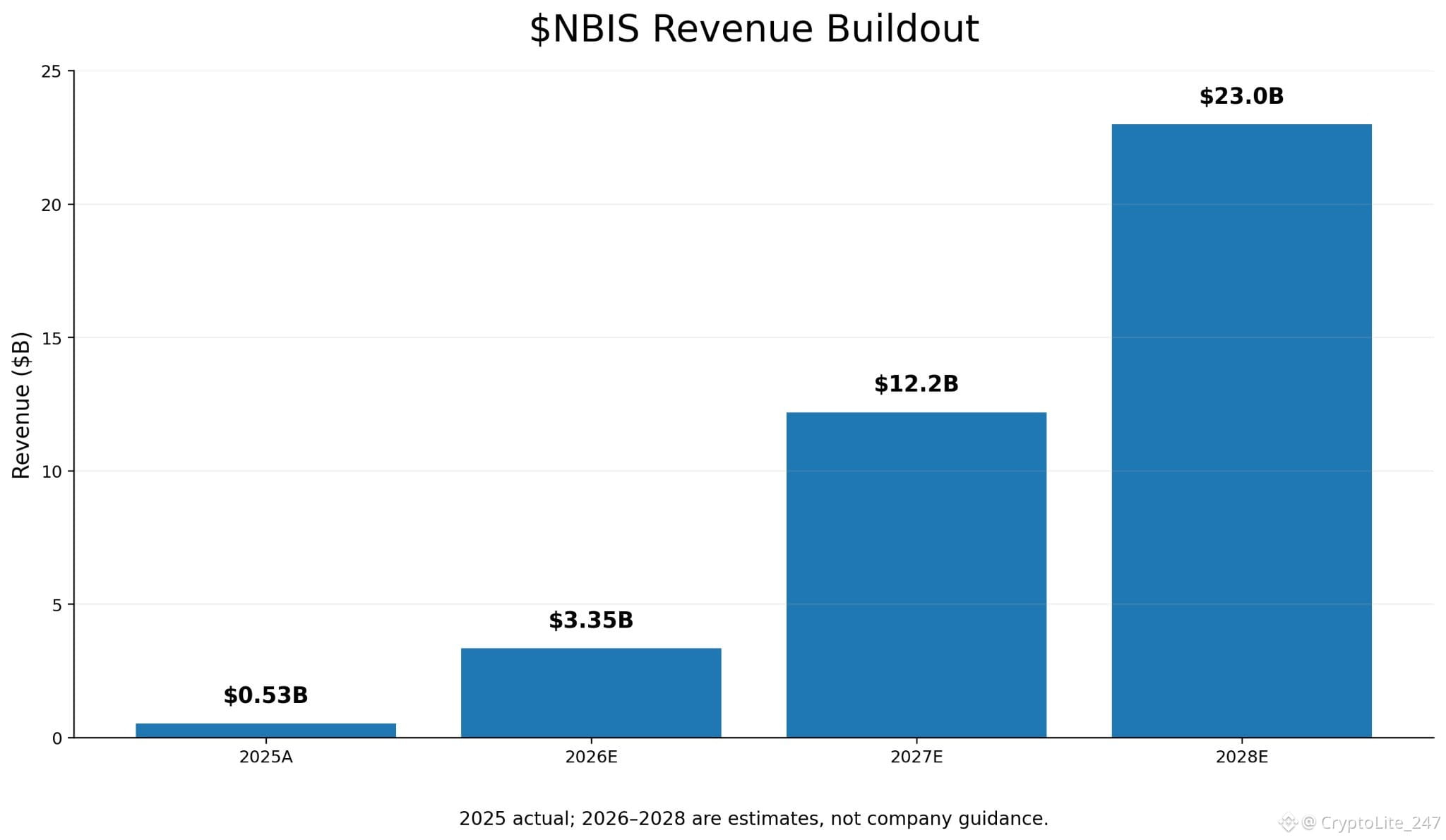
The recent pullback in $NBIS does not make me more bullish by itself.
What makes me more interested is that the business is finally giving us numbers to judge instead of only future capacity.
Q2 revenue reached $582.3M and adjusted EBITDA was $236.2M. At the same time, Nebius is still spending aggressively, raising new financing and building capacity that has to turn into real usage.
That is where I think the whole story sits now.
The demand side looks strong enough. $MSFT , META and other customers have already shown they are willing to commit serious money.
The harder part is what Nebius does with that demand.
If new MW comes online on time, utilization stays high and customer contracts keep supporting cheaper asset financing, the economics can improve very fast.
But if deployment slips, or too much capital gets tied up before revenue catches up, the same growth story becomes much less attractive for shareholders.
I like the company more than I like the idea of blindly chasing the stock.
For me, the next stage is simple, prove that every new dollar of capital creates more revenue and more value per share, not just a bigger data-center footprint.
The recent pullback in $NBIS does not make me more bullish by itself.
What makes me more interested is that the business is finally giving us numbers to judge instead of only future capacity.
Q2 revenue reached $582.3M and adjusted EBITDA was $236.2M. At the same time, Nebius is still spending aggressively, raising new financing and building capacity that has to turn into real usage.
That is where I think the whole story sits now.
The demand side looks strong enough. $MSFT , META and other customers have already shown they are willing to commit serious money.
The harder part is what Nebius does with that demand.
If new MW comes online on time, utilization stays high and customer contracts keep supporting cheaper asset financing, the economics can improve very fast.
But if deployment slips, or too much capital gets tied up before revenue catches up, the same growth story becomes much less attractive for shareholders.
I like the company more than I like the idea of blindly chasing the stock.
For me, the next stage is simple, prove that every new dollar of capital creates more revenue and more value per share, not just a bigger data-center footprint.
What makes me more interested is that the business is finally giving us numbers to judge instead of only future capacity.
Q2 revenue reached $582.3M and adjusted EBITDA was $236.2M. At the same time, Nebius is still spending aggressively, raising new financing and building capacity that has to turn into real usage.
That is where I think the whole story sits now.
The demand side looks strong enough. $MSFT , META and other customers have already shown they are willing to commit serious money.
The harder part is what Nebius does with that demand.
If new MW comes online on time, utilization stays high and customer contracts keep supporting cheaper asset financing, the economics can improve very fast.
But if deployment slips, or too much capital gets tied up before revenue catches up, the same growth story becomes much less attractive for shareholders.
I like the company more than I like the idea of blindly chasing the stock.
For me, the next stage is simple, prove that every new dollar of capital creates more revenue and more value per share, not just a bigger data-center footprint.
2
583
·
--
Bullish
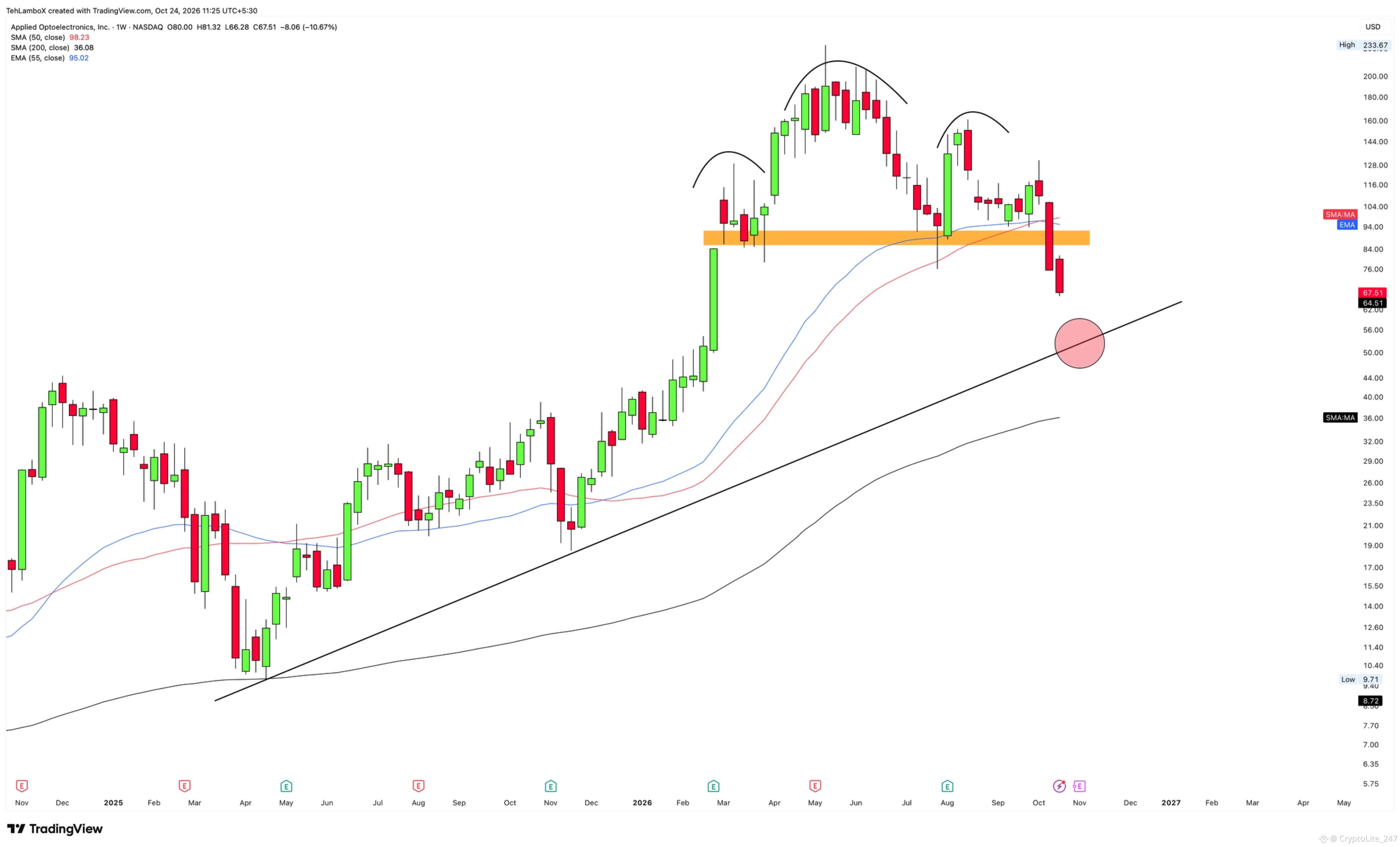
$AAOI perhaps this week we test this level at 50..
HnS breakdown done, EMA55 and SMA50 broken, next stop has to be the trendline..
$AAOI perhaps this week we test this level at 50..
HnS breakdown done, EMA55 and SMA50 broken, next stop has to be the trendline..
HnS breakdown done, EMA55 and SMA50 broken, next stop has to be the trendline..
704
·
--
Bullish
$META just acquired Sundial which is an AI analytics startup founded by former Meta executives.
And with Meta spending over $130B on AI this year knowing which models, compute clusters and ad products actually generate returns is becoming just as important as building them.
$META just acquired Sundial which is an AI analytics startup founded by former Meta executives.
And with Meta spending over $130B on AI this year knowing which models, compute clusters and ad products actually generate returns is becoming just as important as building them.
And with Meta spending over $130B on AI this year knowing which models, compute clusters and ad products actually generate returns is becoming just as important as building them.
1
519
·
--
Bullish
$AMZN CEO says AI inference is still “an order of magnitude too expensive” for widespread adoption and believes Amazon’s Trainium chips could help bring costs down.
And even at today’s prices AWS has already sold out its major capacity commitments for 2026 with most of 2027 and a good chunk of 2028 booked so imagine how much more demand cheaper inference could unlock.
$AMZN CEO says AI inference is still “an order of magnitude too expensive” for widespread adoption and believes Amazon’s Trainium chips could help bring costs down.
And even at today’s prices AWS has already sold out its major capacity commitments for 2026 with most of 2027 and a good chunk of 2028 booked so imagine how much more demand cheaper inference could unlock.
And even at today’s prices AWS has already sold out its major capacity commitments for 2026 with most of 2027 and a good chunk of 2028 booked so imagine how much more demand cheaper inference could unlock.

2
423
·
--
Bullish
$NBIS
{spot}(NBISBUSDT)
CRO says "theres a lot of upside to pricing in the market today" and Nebius could sell out its entire 2027 AI compute capacity immediately at current prices.
Even more interesting is that customers are already trying to secure capacity into 2028 which is the same year so many AI bears expected supply to finally catch up with demand.
That's why Nebius is holding back capacity for shorter deals reportedly priced ~$50M per MW annually rather than locking everything in early with $SPCX, $CRWV and $IREN also seeing similar strength in GPU pricing.
$NBIS
CRO says "theres a lot of upside to pricing in the market today" and Nebius could sell out its entire 2027 AI compute capacity immediately at current prices.
Even more interesting is that customers are already trying to secure capacity into 2028 which is the same year so many AI bears expected supply to finally catch up with demand.
That's why Nebius is holding back capacity for shorter deals reportedly priced ~$50M per MW annually rather than locking everything in early with $SPCX, $CRWV and $IREN also seeing similar strength in GPU pricing.
CRO says "theres a lot of upside to pricing in the market today" and Nebius could sell out its entire 2027 AI compute capacity immediately at current prices.
Even more interesting is that customers are already trying to secure capacity into 2028 which is the same year so many AI bears expected supply to finally catch up with demand.
That's why Nebius is holding back capacity for shorter deals reportedly priced ~$50M per MW annually rather than locking everything in early with $SPCX, $CRWV and $IREN also seeing similar strength in GPU pricing.
1
353
Log in to explore more content
Join global crypto users on Binance Square
⚡️ Get latest and useful information about crypto.
💬 Trusted by the world’s largest crypto exchange.
👍 Discover real insights from verified creators.
Email / Phone number
Trending Topics
BinancePick
2.7M views
144,317 Discussing
Join #EarningsSeason: Predict Earnings on Binance Pick, Share Your Take on Binance Square!
Binance Square Official
·402 Likes
·339.4k views
EarningsSeason
5M views
24,749 Discussing
SouthKoreaReportedlyWeighsFourthCryptoTaxDelay
4,117 views
155 Discussing