
Cryptofuturist2148
189 Posts

Cryptofuturist2148
Report
Block User
I post cool projects that I am into.Not financial advice.
0 Following
132 Followers
205 Liked
Posts
All
Quotes
PINNED
🌹💰Attention , From October 9, 2026, to April 7, 2027, we are executing 180 high-conviction daily calls across Binance.
The Strategy: Deploying capital into one coin daily ($10 to $100 per day). Risk is managed coin-by-coin with strict invalidations, only spot trading with zero leverage no gambling, if you want to put leverage into this proceed at your own risk.
The Target: Out of 180 total daily calls, we are hunting for 60 winning asymmetric outliers hitting 10x to 1,000x returns.
The Potential Balance Range:
Conservative Tier ($10/day, averaging 10x-25x on wins): $60,000 to $150,000 📈💵
Balanced Tier ($50/day, averaging 50x on wins): $294,000 to $300,000+ 💵💵💵💵
Outlier Tier ($100/day, hitting heavier 100x+ multipliers): $600,000 to $1,000,000+ 💵💵💵💵💵💵💵💵
Who is ready to print with me for the next 180 days
👇 Drop "READY" below for the first post.
20
I am always early
I am always early
Cryptofuturist2148
·
--
HUMA Rips 46% in 24 Hours: The Flush, the Arf Link, and the Unlock That Decides It
Prices and percentages as of Oct 27, 2026, ~1:37 PM. Figures marked (est.) are my own calculations, explained in the methodology note at the end.
⚡ TL;DR: HUMA is trading near $0.0265 after a violent overnight rebound. The headline number overstates the move, the most interesting catalyst is indirect, and a 332.5M-token unlock lands in a month. This is a real move on a small base, but it isn’t a confirmed trend change.
📊 1. Two numbers, one move
Binance’s rolling 24-hour view shows +46.18%, while the HUMA/USDT daily candle on TradingView shows +17.63%. Backing into the math, the 24-hour window starts near $0.0181 (est.), and the daily candle opens near $0.0227 (est.). HUMA flushed to roughly $0.018 overnight, bounced, and reclaimed its prior range. 🩸➡️🟢 About 30 points of the 46% is the V-shaped recovery, not new upside.
For context, the token traded at $0.0263 on October 24 before sliding 5.14% to $0.0232 on October 26. 📉 It’s still down 13.65% over 30 days and 37.36% over a year. All-time-high figures differ by source: some list $0.0693, while CoinGecko lists $0.1156, likely capturing the launch spike. Either way, HUMA is far below it.
🧩 2. What Huma is, and the split that matters
Huma is a payment-finance protocol on Solana. ☀️ Depositors put in USDC and receive PST, a receipt token that accrues yield from short-term payment financing. For anyone trading HUMA, the key point is that PST is the yield engine while HUMA handles governance. The product that has grown is not the token that’s pumping.
The product is growing 📈:
💰 PST reportedly crossed $322M in market cap on September 14, more than double April’s $158M, with yield in a 7–9% range (per Crypto Briefing).🏦 DefiLlama shows $211M in TVL, up 17.1% in 30 days, ranking #4 among yield protocols.✅ Huma says it has facilitated over $12B in cumulative payment volume with zero credit defaults. These are the project’s own claims and not independently verified.
🔗 3. Why the Ripple–Arf news matters more than it looks
At first glance it’s an XRPL deal that doesn’t involve HUMA. The link is concentration. Solana Compass reports that much of Huma’s institutional volume runs through Arf, and a community post on Binance Square (not an official source) identifies Arf facilities as the largest asset generating PayFi yield. That cuts both ways:
🟢 Bull read: Ripple and Arf are bringing RLUSD settlement liquidity to licensed cross-border payment firms. Arf reports about $10B in annual settlement volume (self-reported) and merged with Huma in 2024. A stronger Arf means a stronger demand pipeline for Huma’s rails.🔴 Bear read: Arf is expanding onto XRPL with RLUSD, which competes for the same settlement capital, and PST’s yield structure carries counterparty concentration. Also, no financial commitment or RLUSD allocation was disclosed.
So the headline is real but second-order. 🕵️ Traders likely front-ran the narrative, and I found no HUMA-specific announcement today.
🏛️ 4. The institutional layer
PST is gaining TradFi-adjacent distribution. Bitwise launched a Morpho vault where PST makes up about 39.74% of the collateral basket, and Bitwise’s PAPY vault lets borrowers pledge Huma’s PST alongside other tokenized credit. That validates the product. ⚠️ What’s unproven is how much of it flows to HUMA holders, since I found no revenue share for the token.
⚖️ 5. The valuation disconnect
At $0.0265, HUMA’s market cap is roughly $86M (est.) on about 3.26B circulating, or about $265M fully diluted (est.) on the 10B max supply. Note that aggregators disagree on circulating supply (roughly 1.7B to 3.5B), so the market cap moves with the source. 🤯 PST’s $322M market cap is larger than HUMA’s entire FDV, but PST is a USDC-backed receipt, not equity, so the comparison shows scale, not cheapness. The real question is whether governance rights and Feathers-based allocations (the Maxi mode forgoes base yield to maximize Feather accumulation toward HUMA allocation) create durable demand once incentive seasons end. The last revenue figure I found, $8M annualized in April 2025 (project-reported), is stale, so I’m not building a valuation multiple on it.
🔓 6. The unlock, the real risk
The first team and investor unlock was pushed from May to November 26, covering allocations that total 39.9% of supply, with about 332.5M HUMA in the first batch (per CoinMarketCap’s AI-generated summaries, so verify against the official tokenomics before relying on it). That’s about 10% of circulating supply (est.), roughly $8.8M at today’s price (est.). 🚨 The original pre-launch design described linear vesting over three years after the lock-up, so this is likely the start of a recurring overhang, not a one-off. I couldn’t verify how the delay changed that schedule. Recipients also got a better exit price than they had last week. 💸
🎯 7. Levels and macro
🧱 Resistance: $0.027, with $0.0263 being the October 24 high. Support sits near $0.025.✅ Confirmation: a daily close above $0.027 on rising volume.❌ Invalidation: losing $0.025, which retraces the move.🌍 Macro: Bitcoin is near $80,000 after slipping below it on pre-Fed de-risking, with the Fed decision October 28 and PCE data October 29.
🔮 8. Scenarios
🐂 Bull: narrative rotation into PayFi, a clean close above $0.027, and volume holding. Price consolidates above $0.025 into the unlock.
⚖️ Base: HUMA chops between $0.023 and $0.027 as macro volatility hits, and the percentage gain bleeds off.
🐻 Bear: no HUMA-specific catalyst appears, the macro events go badly, and unlock positioning pushes price back toward the $0.018 flush low (est.).
🔍 Data caveats
I don’t have the exact 24h low or volume for Binance’s HUMA/USDT pair, so the $0.018 flush level is inferred.I couldn’t confirm that the Arf/Ripple news drove today’s bid.I found no whale, listing, or leverage data for today’s move.
🏁 Bottom line
HUMA bounced hard off an overnight low, and the underlying product is growing. 📈 But today’s gain mostly recovers a dip, the token is separate from the yield product, and the unlock is a month out. Wait for the close above $0.027. 🧠 Not financial advice. Size for the volatility.
🧮 Methodology note (est.)
$0.0181 and $0.0227: current price divided by (1 + the displayed percentage change) for the 24h and daily figures.~$86M market cap: $0.0265 × ~3.26B circulating.~$265M FDV: $0.0265 × 10B max supply.~10% float: 332.5M ÷ ~3.26B.~$8.8M unlock value: 332.5M × $0.0265.
📚 Sources
Price and market data
Binance HUMA price page and TradingView HUMAUSDT (screenshots, Oct 27, 1:37 PM)CoinMarketCap AI price analysis (auto-generated): coinmarketcap.com/cmc-ai/huma-finance/price-analysis/Zypto gainers board: zypto.com/crypto-prices/top/gainers/KuCoin HUMA page: kucoin.com/price/humaCoinGecko HUMA page: coingecko.com/en/coins/huma-finance/usdAnalytics Insight, Bitcoin near $80K ahead of the Fed: analyticsinsight.net
Protocol and PST
Solana Compass, PST $322M: solanacompass.com/news/huma-finances-pst-crosses-322m-market-cap-solanas-largest-yield-bearing-assetCrypto Briefing, PST $322M: cryptobriefing.com/huma-finance-pst-token-322m-solana/Solana Compass, PST $200M (relays Huma’s self-reported $12B volume and zero-defaults claims): solanacompass.com/news/huma-finances-pst-crosses-200m-market-cap-a-top-3-yield-bearing-asset-on-solanaSolana Compass project page: solanacompass.com/projects/humaDefiLlama, Huma Finance V2: defillama.com/protocol/huma-finance-v2Binance Square community post (user-generated, not official): binance.com/en/square/profile/bchillmanChainwire/Decrypt, Huma 2.0 launch (project press release): decrypt.co/314278
Arf and Ripple
FXStreet, Ripple and Arf partnership: fxstreet.comCrypto Briefing, Arf and Ripple RLUSD liquidity: cryptobriefing.com/arf-ripple-rlusd-xrp-ledger-liquidity/DiarioBitcoin, no commitment disclosed: diariobitcoin.com
Institutional
Stablecon, Bitwise and Sentora vaults on Morpho: content.stablecon.com
Tokenomics and unlock
CoinMarketCap AI, latest updates (auto-generated): coinmarketcap.com/cmc-ai/huma-finance/latest-updates/CoinMarketCap AI, price prediction (auto-generated): coinmarketcap.com/cmc-ai/huma-finance/price-prediction/NFT Evening, original vesting terms (pre-launch): nftevening.com/huma-finance-price-prediction-huma/

8
Verified
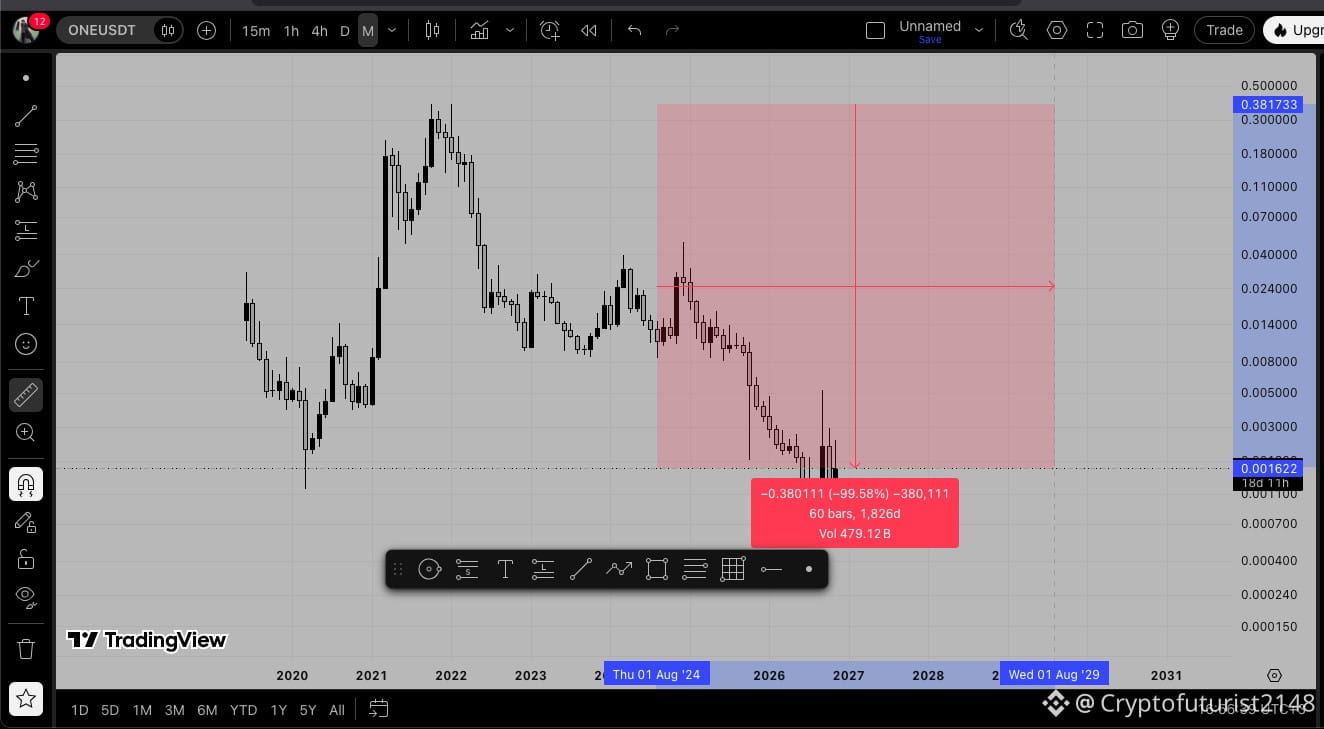
$ONE just proposed shutting down its own blockchain 🪦
Harmony, once pitched as an Ethereum competitor, proposed shutting down its mainnet, saying threats from AI agents and nation-state actors are too severe.
📉 ONE hit an all-time high of $0.379. It now trades around $0.00073, roughly 99.8% below its peak.
The plan:
🔹 ONE is reissued as an Ethereum ERC-20 token.
🔹 Balances are snapshotted at the final block and airdropped to the same wallet addresses on Ethereum.
🔹 Multisig safes, liquidity pools and onchain apps won’t migrate.
🔹 Future emissions would fund “The Remix Economy for AI Video.”
How it got here: a $100M bridge hack in 2022 and an August 2026 exploit that forged over 3 trillion ONE.
⚠️ The proposals are non-binding, and nothing guarantees ONE keeps the same value after migration.
Would you hold a small-cap L1 token through a migration like this? 👇
#Harmony #ONE #Ethereum #Crypto
1
539
Part 3/4: How CIS Actually Trades 🧠
CIS started in 2000 at about 21, reportedly with around ¥3 million saved from his job. He tried long-term investing first, then switched to day trading. 🔄
His method isn't complicated. He tracks volume and price movement and follows momentum. His basic rule: buy what's being bought, sell what's being sold.
That's why the Nikkei trade in Part 2 wasn't a prediction. He said he had no idea whether China would drag down the global economy, and he didn't care. 🤷
Three ideas keep coming up in how he's described:
📈 Pattern recognition, not fundamentals. He credits his video game background for his eye for patterns. He read the tape, not the news.
✂️ Cut losers fast, let winners run. Small losses, big wins. That asymmetry is what compounds.
🔁 Volume. In 2014 he said he made 6 billion yen after taxes, across more than a million trades. One trade rarely made his year, so the edge is repeated thousands of times.
He's also not a perfect trader. The documentary account says he lost about $6M in a single day during 2008, and the stress hit his health. 🩹
The $34M trade made headlines, but the process behind it is what built the fortune.
Next, Part 4: what you can actually take from CIS (and what you shouldn't copy). 👇
Which would you rather copy: the discipline, or the nerve?
A caveat: most of his numbers are self-reported, and the million-trades figure comes from his own claims to Bloomberg. You may want to add "reportedly" in a spot or two, as in Part 2.
I can also draft Part 4 or trim this to a tighter length for X.
106
Verified
Article
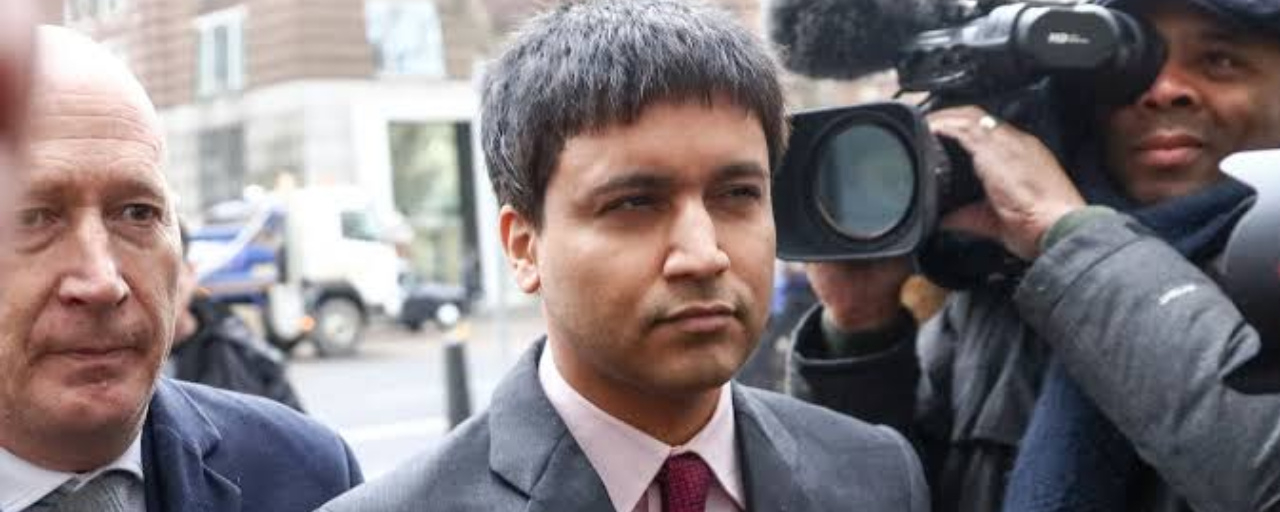
Navinder Singh Sarao:The Solo Trader Who brought Wall street to its kneesOn May 6, 2010, the U.S. stock market evaporated nearly $1 trillion in market capitalization in under 36 minutes—an event remembered as the "Flash Crash". Five years later, federal agents arrested a 36-year-old day trader named Navinder Singh Sarao in his parents' modest home in Hounslow, West London.
U.S. authorities alleged that operating from a suburban bedroom in tracksuits, Sarao used custom trading software to single-handedly trigger the crash using a market manipulation tactic known as "spoofing".
To the mainstream financial press, he was the "Hound of Hounslow". But a deeper look into the microstructure of the markets, quantitative research, and regulatory history reveals a far more complex narrative: the tragic story of an autistic savant who beat high-frequency algorithms at their own game, was turned into a convenient political scapegoat, and left behind a blueprint of both inspiration and warning for retail traders worldwide.
1. Proof That the Machine Can Be Beaten
Modern financial markets are dominated by institutional High-Frequency Trading (HFT) firms armed with microsecond fiber-optic cables, co-located server racks, and multi-million-dollar algorithmic infrastructure designed to extract profit from order flow.
Sarao proved something radical: algorithms are not omnipotent—they are reactionary.
Decoding the Algorithmic Mind: Sarao realized that HFT market-making algorithms operated on rigid risk parameters. By engineering custom software that submitted massive phantom sell orders deep outside the bid-ask spread, he tricked algorithms into sensing an incoming institutional sell-off. The algorithms backed off, lowering their bids.Exploiting the Reaction: Once the predatory algorithms overreacted and drove prices down, Sarao stepped in to buy the artificial bottom, canceled his spoofed sell orders, and captured multi-million-dollar spreads in minutes when prices snapped back.The Ultimate Asymmetry: Armed only with basic trading terminals and acute pattern recognition, a lone retail trader turned Wall Street's own speed and automation against itself.
2. Was He Innocent? The Case for the Scapegoat
While federal prosecutors threatened Sarao with 22 criminal counts and over 300 years in jail, quantitative researchers and academic economists quickly challenged the government's narrative.
The Math Didn't Add Up: Academic studies—including prominent market research into microstructural mechanics—revealed that Sarao’s spoofed orders sat far down the order book where normal HFT algorithms routinely ignore quotes. The actual primary catalyst for the Flash Crash was mutual fund giant Waddell & Reed dumping 75,000 E-mini futures contracts ($4.1 billion) without price limits in under 20 minutes, completely overwhelming market liquidity.Regulatory Cover-Up: For five years, regulatory agencies failed to explain how modern electronic markets could shatter in minutes. Blaming a lone "rogue trader" in suburban London gave prosecutors a human face to pin a $1 trillion structural system failure on.Changing Rules Post-Facto: When Sarao began spoofing, the practice was legal gray-area standard practice among HFT firms probing market depth. Spoofing was only explicitly criminalized under the Dodd-Frank Act after the 2010 Flash Crash took place. Sarao didn't invent quote manipulation; he simply out-traded institutional firms at a game they created.
3. The Tragedy: The Asymmetry of Power and Capital
Despite generating over $40 million in profits, Sarao lived a surprisingly modest lifestyle—wearing old clothes, driving a cheap car, and staying in his childhood bedroom. Tragically, he lost nearly his entire fortune to offshore Ponzi schemes and fraudulent investment managers, leaving him almost penniless at the time of his arrest.
When major institutional firms crash market liquidity, they are routinely met with civil fines—a simple cost of doing business. When a solo bedroom trader exposes institutional vulnerabilities, the entire machinery of federal law enforcement is mobilized for extradition.
Eventually, after pleading guilty and providing extraordinary assistance to U.S. enforcement agencies to help catch algorithmic fraudsters, a federal judge sentenced Sarao to time served and home confinement, recognizing both his severe autism and his lack of malice.
Key Takeaways for the Modern Trader
Market Mechanics: Algorithms run on code, logic, and rigid rules. A trader with deep microstructural awareness can find and exploit structural inefficiencies. However, regulatory definitions change rapidly, and what works today as a trading edge can be retroactively categorized as illegal manipulation tomorrow.Position Sizing: Scaling size on high-probability structural edges builds massive wealth quickly. Yet, moving too much size on the order book changes the market state itself, inviting exchange compliance, regulatory prosecution, and liquidity destruction.Wealth Preservation: Making millions in active trading is only half the battle. Protecting capital requires equal discipline, as offshore scams can erase a $40 million fortune faster than trading ever built it.
The Legacy
Navinder Sarao remains a modern folk hero of financial markets—an autistic genius who saw through the complex facade of modern market structure.
His story serves as a dual reminder: the retail trader is never inherently doomed to be institutional liquidity, but when you step into the institutional ring and win too big, the house will not just fight back—it will rewrite the rules, shut down the arena, and call the marshals.
Navinder Singh Sarao:The Solo Trader Who brought Wall street to its knees
On May 6, 2010, the U.S. stock market evaporated nearly $1 trillion in market capitalization in under 36 minutes—an event remembered as the "Flash Crash". Five years later, federal agents arrested a 36-year-old day trader named Navinder Singh Sarao in his parents' modest home in Hounslow, West London.
U.S. authorities alleged that operating from a suburban bedroom in tracksuits, Sarao used custom trading software to single-handedly trigger the crash using a market manipulation tactic known as "spoofing".
To the mainstream financial press, he was the "Hound of Hounslow". But a deeper look into the microstructure of the markets, quantitative research, and regulatory history reveals a far more complex narrative: the tragic story of an autistic savant who beat high-frequency algorithms at their own game, was turned into a convenient political scapegoat, and left behind a blueprint of both inspiration and warning for retail traders worldwide.
1. Proof That the Machine Can Be Beaten
Modern financial markets are dominated by institutional High-Frequency Trading (HFT) firms armed with microsecond fiber-optic cables, co-located server racks, and multi-million-dollar algorithmic infrastructure designed to extract profit from order flow.
Sarao proved something radical: algorithms are not omnipotent—they are reactionary.
Decoding the Algorithmic Mind: Sarao realized that HFT market-making algorithms operated on rigid risk parameters. By engineering custom software that submitted massive phantom sell orders deep outside the bid-ask spread, he tricked algorithms into sensing an incoming institutional sell-off. The algorithms backed off, lowering their bids.Exploiting the Reaction: Once the predatory algorithms overreacted and drove prices down, Sarao stepped in to buy the artificial bottom, canceled his spoofed sell orders, and captured multi-million-dollar spreads in minutes when prices snapped back.The Ultimate Asymmetry: Armed only with basic trading terminals and acute pattern recognition, a lone retail trader turned Wall Street's own speed and automation against itself.
2. Was He Innocent? The Case for the Scapegoat
While federal prosecutors threatened Sarao with 22 criminal counts and over 300 years in jail, quantitative researchers and academic economists quickly challenged the government's narrative.
The Math Didn't Add Up: Academic studies—including prominent market research into microstructural mechanics—revealed that Sarao’s spoofed orders sat far down the order book where normal HFT algorithms routinely ignore quotes. The actual primary catalyst for the Flash Crash was mutual fund giant Waddell & Reed dumping 75,000 E-mini futures contracts ($4.1 billion) without price limits in under 20 minutes, completely overwhelming market liquidity.Regulatory Cover-Up: For five years, regulatory agencies failed to explain how modern electronic markets could shatter in minutes. Blaming a lone "rogue trader" in suburban London gave prosecutors a human face to pin a $1 trillion structural system failure on.Changing Rules Post-Facto: When Sarao began spoofing, the practice was legal gray-area standard practice among HFT firms probing market depth. Spoofing was only explicitly criminalized under the Dodd-Frank Act after the 2010 Flash Crash took place. Sarao didn't invent quote manipulation; he simply out-traded institutional firms at a game they created.
3. The Tragedy: The Asymmetry of Power and Capital
Despite generating over $40 million in profits, Sarao lived a surprisingly modest lifestyle—wearing old clothes, driving a cheap car, and staying in his childhood bedroom. Tragically, he lost nearly his entire fortune to offshore Ponzi schemes and fraudulent investment managers, leaving him almost penniless at the time of his arrest.
When major institutional firms crash market liquidity, they are routinely met with civil fines—a simple cost of doing business. When a solo bedroom trader exposes institutional vulnerabilities, the entire machinery of federal law enforcement is mobilized for extradition.
Eventually, after pleading guilty and providing extraordinary assistance to U.S. enforcement agencies to help catch algorithmic fraudsters, a federal judge sentenced Sarao to time served and home confinement, recognizing both his severe autism and his lack of malice.
Key Takeaways for the Modern Trader
Market Mechanics: Algorithms run on code, logic, and rigid rules. A trader with deep microstructural awareness can find and exploit structural inefficiencies. However, regulatory definitions change rapidly, and what works today as a trading edge can be retroactively categorized as illegal manipulation tomorrow.Position Sizing: Scaling size on high-probability structural edges builds massive wealth quickly. Yet, moving too much size on the order book changes the market state itself, inviting exchange compliance, regulatory prosecution, and liquidity destruction.Wealth Preservation: Making millions in active trading is only half the battle. Protecting capital requires equal discipline, as offshore scams can erase a $40 million fortune faster than trading ever built it.
The Legacy
Navinder Sarao remains a modern folk hero of financial markets—an autistic genius who saw through the complex facade of modern market structure.
His story serves as a dual reminder: the retail trader is never inherently doomed to be institutional liquidity, but when you step into the institutional ring and win too big, the house will not just fight back—it will rewrite the rules, shut down the arena, and call the marshals.
121
Article
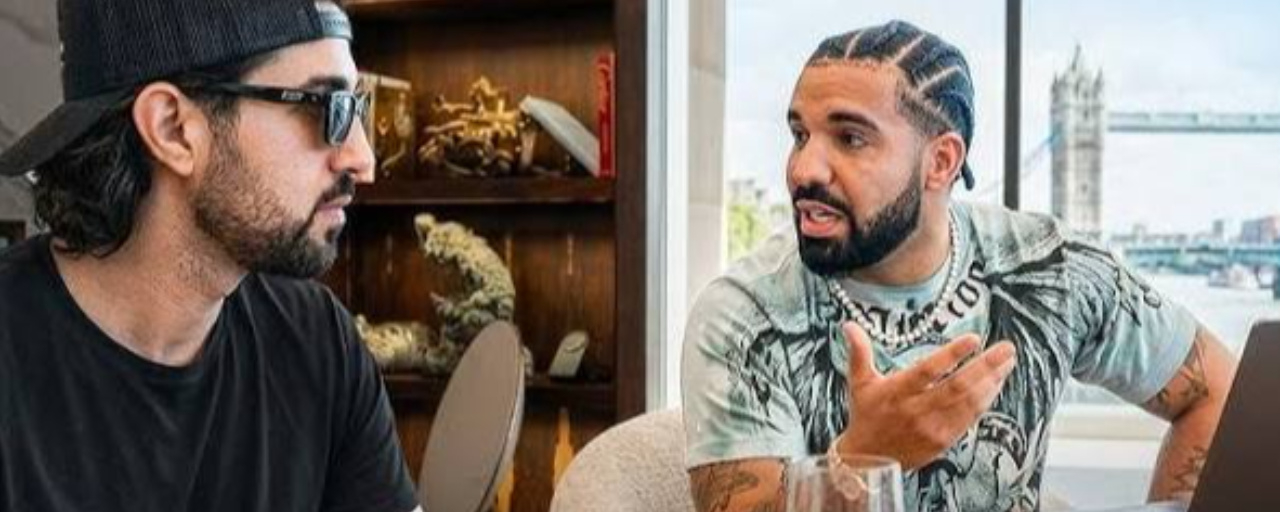
Quiet Capital: Inside the Multi-Hundred-Million Dollar Empire of Julian PetroulasMost high-net-worth entrepreneurs spend as much effort broadcasting their wealth as they do building it. They plaster rent-a-yachts across social media feeds, pitch paid masterminds, and push speculative trading courses to line their pockets.
Then there’s Julian Petroulas.
To the public, the Sydney-born entrepreneur is known primarily for his meteoric rise in music management. Starting out at just 15 handing out printed flyers in his hometown to promote local gigs, Petroulas went on to drop out of high school at 16, launch Over Agency at 24, and engineer the viral rise of global stars like William Singe and Timmy Trumpet. By age 25, he was already profiled in major media outlets as a mega-manager with a string of business sales under his belt.
YouTube+ 1
Behind the scenes, however, Petroulas was playing a much larger game—quietly compounding capital away from the public gaze, moving out of active agency operations, and steering massive liquidity into high-yield physical and financial assets that have pushed his estimated valuation well over $200 million.
From Music Royalty to Institutional-Scale Capital
Traditional managers make their living taking 15% to 20% commission off artist touring revenue, but Petroulas used his early agency earnings as seed capital for larger macro positions.Rather than reinvesting solely into digital services or entertainment ventures, he pivoted into heavy liquidity plays—crypto position trading, equity markets, and physical asset acquisition.Unlike social media traders who sell signal groups or stream daily charts, Petroulas operates entirely in the dark.Market observers note that he keeps his precise execution frameworks and trade logs strictly confidential.His long-term position trading style—taking strategic macro positions across digital and traditional asset classes—became the primary engine behind his wealth expansion toward the multi-hundred-million-dollar mark.
The Physical Pivot: Real Estate, Hospitality, and Equities
Hospitality & Real Estate Assets: Recognizing the volatility of financial markets, Petroulas systematically converted liquid gains into tangible, income-generating physical assets, including boutique hospitality ventures, luxury real estate, and hotel stakes across global hubs like Dubai, Europe, and Australia.Stock & Equity Portfolios: Petroulas maintains sizeable long-term equity holdings in disruptive technologies and established corporate assets, treating stock holdings not as short-term flips, but as foundational wealth anchors.Direct Private Investments: Scaling up from angel investing to institutional seed checks, Petroulas has deployed capital into early-stage and high-growth companies—frequently injecting millions directly into venture-backed entities.
Why The Low Profile Matters
In an era dominated by noise, Petroulas’s operating strategy relies on stealth.He does not sell courses, run subscription Discord groups, or peddle masterclasses.His high-value connections remain locked behind closed doors, allowing him to navigate major investment rounds, luxury real estate deals, and institutional stock allocations without public speculation skewing his entries or valuations.By pairing the audience-building principles he used to build multi-million-follower music icons with an institutional investment playbook, Julian Petroulas has quietly bridged the gap between young creative hustler and massive asset holder.As his portfolio expands across global equities, hospitality holdings, and private investments, he remains one of the most enigmatic figures operating at an ultra-high-net-worth scale—strictly on his own terms.
5 Lessons From the Petroulas Playbook
Treat Active Income as Seed Capital: Do not use business cash flow to fund lifestyle creep; use active agency or client profits to fund macro investments, equities, and hard assets.Master Position Trading Over Day Noise: Real wealth in trading isn't built scalability-wise on 5-minute charts; hold higher-timeframe positions in core assets while ignoring daily market noise.Transition Paper Wealth into Real Assets: Paper gains in digital markets or tech equities remain unrealized until locked into cash-flowing physical assets like hospitality, land, and real estate.Protect Your Edge in Silence: True conviction does not require public validation. Avoid broadcasting entry levels or size when operating at scale.Scale via Asymmetric Risk: Leverage your distribution network and capital to place targeted private equity and venture bets where downside is capped but upside offers structural step-changes.
Quiet Capital: Inside the Multi-Hundred-Million Dollar Empire of Julian Petroulas
Most high-net-worth entrepreneurs spend as much effort broadcasting their wealth as they do building it. They plaster rent-a-yachts across social media feeds, pitch paid masterminds, and push speculative trading courses to line their pockets.
Then there’s Julian Petroulas.
To the public, the Sydney-born entrepreneur is known primarily for his meteoric rise in music management. Starting out at just 15 handing out printed flyers in his hometown to promote local gigs, Petroulas went on to drop out of high school at 16, launch Over Agency at 24, and engineer the viral rise of global stars like William Singe and Timmy Trumpet. By age 25, he was already profiled in major media outlets as a mega-manager with a string of business sales under his belt.
YouTube+ 1
Behind the scenes, however, Petroulas was playing a much larger game—quietly compounding capital away from the public gaze, moving out of active agency operations, and steering massive liquidity into high-yield physical and financial assets that have pushed his estimated valuation well over $200 million.
From Music Royalty to Institutional-Scale Capital
Traditional managers make their living taking 15% to 20% commission off artist touring revenue, but Petroulas used his early agency earnings as seed capital for larger macro positions.Rather than reinvesting solely into digital services or entertainment ventures, he pivoted into heavy liquidity plays—crypto position trading, equity markets, and physical asset acquisition.Unlike social media traders who sell signal groups or stream daily charts, Petroulas operates entirely in the dark.Market observers note that he keeps his precise execution frameworks and trade logs strictly confidential.His long-term position trading style—taking strategic macro positions across digital and traditional asset classes—became the primary engine behind his wealth expansion toward the multi-hundred-million-dollar mark.
The Physical Pivot: Real Estate, Hospitality, and Equities
Hospitality & Real Estate Assets: Recognizing the volatility of financial markets, Petroulas systematically converted liquid gains into tangible, income-generating physical assets, including boutique hospitality ventures, luxury real estate, and hotel stakes across global hubs like Dubai, Europe, and Australia.Stock & Equity Portfolios: Petroulas maintains sizeable long-term equity holdings in disruptive technologies and established corporate assets, treating stock holdings not as short-term flips, but as foundational wealth anchors.Direct Private Investments: Scaling up from angel investing to institutional seed checks, Petroulas has deployed capital into early-stage and high-growth companies—frequently injecting millions directly into venture-backed entities.
Why The Low Profile Matters
In an era dominated by noise, Petroulas’s operating strategy relies on stealth.He does not sell courses, run subscription Discord groups, or peddle masterclasses.His high-value connections remain locked behind closed doors, allowing him to navigate major investment rounds, luxury real estate deals, and institutional stock allocations without public speculation skewing his entries or valuations.By pairing the audience-building principles he used to build multi-million-follower music icons with an institutional investment playbook, Julian Petroulas has quietly bridged the gap between young creative hustler and massive asset holder.As his portfolio expands across global equities, hospitality holdings, and private investments, he remains one of the most enigmatic figures operating at an ultra-high-net-worth scale—strictly on his own terms.
5 Lessons From the Petroulas Playbook
Treat Active Income as Seed Capital: Do not use business cash flow to fund lifestyle creep; use active agency or client profits to fund macro investments, equities, and hard assets.Master Position Trading Over Day Noise: Real wealth in trading isn't built scalability-wise on 5-minute charts; hold higher-timeframe positions in core assets while ignoring daily market noise.Transition Paper Wealth into Real Assets: Paper gains in digital markets or tech equities remain unrealized until locked into cash-flowing physical assets like hospitality, land, and real estate.Protect Your Edge in Silence: True conviction does not require public validation. Avoid broadcasting entry levels or size when operating at scale.Scale via Asymmetric Risk: Leverage your distribution network and capital to place targeted private equity and venture bets where downside is capped but upside offers structural step-changes.
97
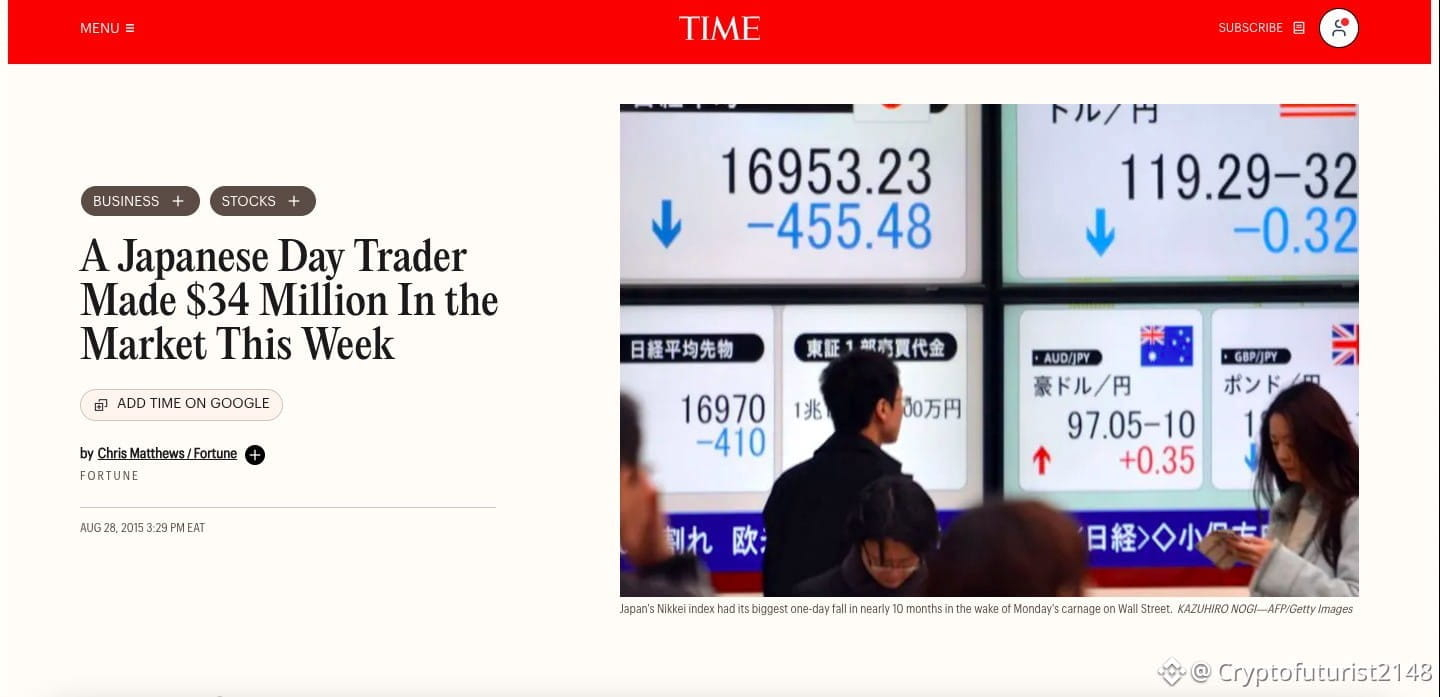
How CIS Turned $25,000 Into $200 Million, and Made $34 Million in a Day
Part 2/4: The Trade 🇯🇵
Mid-August 2015. CIS starts shorting Nikkei 225 futures. Then the market sits still for days, and he reportedly passes the time playing video games. 🎮
Monday, Aug 24. China fears hit and Japan sold off hard. By the Tokyo close, his paper profit was about $13M.
Most people would have taken the money. CIS kept building the position.
Then he flipped. As panic peaked, he turned long and bet on the rebound, narrating it live to his ~40,000 followers.
By Tuesday afternoon he was out, reportedly up $34M in under 24 hours.
His line to Bloomberg: “I do my best work when other people are panicking.”
For him it was one trade out of thousands that year. 👇 Part 3: how he actually trades.
Ever flipped from short to long in the middle of a crash?
#CIS #TraderMindset
EWJETF+0.06%
131

Article
Gigantic Rebirth: Inside the Legend of Crypto's Most Feared ContrarianHow an anonymous trader turned conviction, timing and a public track record into crypto's most enduring legend.
The man with no face
Crypto is full of loud voices. The one that echoes longest belongs to someone nobody can pick out of a crowd.
Gigantic Rebirth, known simply as GCR, is a pseudonymous trader. He has no confirmed name, no public face and no company brochure. What he has is a record that other traders could actually look at. On the FTX exchange he traded under the alias Gigantic-Cassocked-Rebirth and regularly appeared on the platform's Top 100 trader leaderboard, which ranks accounts by profit and loss. In early 2022 CoinDesk reported he sat at No. 12 with more than 85,000 followers on Twitter.
That combination, anonymity plus verifiable results, is the foundation of the legend. You can't check his résumé. You can check his calls.
The top call: shorting the top in 2021
By late 2021, crypto had just finished a bull run of roughly twenty months, and nothing suggested it was ending. Prices were up, sentiment was euphoric, and most of Crypto Twitter was looking for the next leg higher.
GCR told his followers he was getting bearish. CoinDesk later reported how his circle, nicknamed the "Big Short DAO," shorted altcoins into the sell-off that followed. The bet wasn't a lucky guess about one coin. It was a bet against the mood of the entire market, and it paid as the cycle turned.
That is the first thing to understand about him: he is a contrarian. When everyone agrees, he starts looking for the other side.
The $10 million bet against Do Kwon
The call that made his name came in March 2022. Terra's founder, Do Kwon, was promoting LUNA as unstoppable. GCR thought the algorithmic stablecoin design was fragile, and he put money behind it.
He wagered $10 million that LUNA would fall below $92.40 within a year. Kwon took the other side. Both sent $10 million in stablecoins (USDT from Kwon, USDC from GCR) to an escrow wallet held by the veteran trader Cobie. GCR then told The Block he was doubling down, adding another $10 million short because he expected competing algorithmic stablecoins to put pressure on LUNA.
About two months later, in May 2022, the Terra ecosystem collapsed. LUNA and its sister stablecoin UST went to nearly zero, wiping out tens of billions of dollars of value and dragging the whole market with it.
GCR didn't predict the exact date or the exact mechanism. He identified that a structure built on reflexive confidence could fail, and he sized a position as if he meant it. That's the difference between an opinion and a trade.
Round two: shorting the zombie
Terra's remains kept trading as Luna Classic (LUNC), and by September 2022 the token had surged more than 33,000% from its May low. GCR was back. On September 9 he announced a short on LUNC, with the price around $0.00042. It later traded near $0.00033.
He framed it as finishing what he'd started, echoing a famous boast of Do Kwon's. The lesson: once a thesis has been proven, he is willing to keep pressing it when a parabolic bounce gives him a better entry.
Silence, then the comeback
After the FTX collapse and the 2022 bear market, GCR went quiet. His main account stopped posting, and for a long time he was something between a retired legend and a rumor.
In April 2024 he reappeared on X with a message of resilience, during a volatile stretch for crypto. Mostly he let his on-chain footprint speak instead, and blockchain trackers like Lookonchain and Arkham began identifying wallets they believed were his.
The memecoin turn
The next chapter surprised people who thought of him only as a short-seller. Lookonchain reported that a wallet suspected to be his bought about 1.08 million MAGA (TRUMP) tokens with roughly $540,000 of USDT at an average price near $0.50, a position that was up more than 16x by mid-2024. A separate wallet tagged as GCR was reported to hold another 936,279 TRUMP worth about $7.2 million at the time, with profits above $6.5 million. Lookonchain later said over half of the stack had been sent to the exchange MEXC, presumably to sell.
He also made headlines in the NFT world. A buyer called Gigantic Rebirth Ventures won the auction for the original dogwifhat photo with a bid of 1,210.8 ETH, worth about $4.3 million.
Note the pattern. Long or short, bearish or bullish, he was positioned where the market's attention was going before it arrived, and he sold into the crowd rather than with it. Wallet attribution is never certain, and I've labeled these as reported, not confirmed.
What about the fortune?
The internet loves a number, and estimates of GCR's wealth run from hundreds of millions to around a billion dollars, often with a story about starting from $1,000. None of that has been confirmed, and some of the sources repeating it are low quality. Coinspot, in its profile, says only that billionaire status is possible but unconfirmed. Treat the headline figure as folklore.
What is solid is the public record: an FTX leaderboard ranking, a documented $10 million bet, and a series of on-chain positions that were, at minimum, very large.
The philosophy
Those who study him tend to land on a few ideas:
Fade the consensus. When a narrative is crowded, the trade is often against it, not with it.Narratives are liquidity events. One analysis of his style describes treating every raging story as a chance to sell to someone else, not as a belief system to join.Think in reflexivity. Markets can feed on themselves, which means they can also unwind on themselves, especially structures that depend on confidence.Size matters more than being right. A correct call with a tiny position does nothing. The bet against Do Kwon worked because it was big enough to matter.Keep your freedom. The point of winning is to be able to walk away. He did.
The honest caveats
For all the legend, it's worth being careful.
Survivorship bias. We remember the trader whose calls worked and the thousands of anonymous accounts that blew up don't get profiles. A great record doesn't mean a repeatable method for you.
Hindsight. The Terra short looks obvious now. At the time, it meant $10 million at risk against a founder with a loud following and a rising token.
Scale. Contrarian trading at his size is not the same thing as contrarian trading on a small account with leverage. Being early with a small account can mean getting liquidated before you're proven right.
Attribution. Much of what is said about him after 2022 comes from wallet-tracking firms labeling addresses they believe are his.
Why the legend lasts
GCR endures because he represents something many traders want and few achieve: an independent view, held under pressure, expressed with real money, and verified in public.
You can't copy his positions. By the time you see them, the trade has moved. What you can copy is the discipline: define a thesis, ask what the crowd is assuming, size the bet so that it matters but doesn't ruin you, and be willing to be alone.
Whether he is a god of crypto is a matter of taste. As a case study in conviction, timing and risk, he is hard to beat.
This article is for information and entertainment only and is not investment advice. Trading crypto and leveraged products carries a high risk of loss. Facts here are drawn from reporting by CoinDesk, The Block, Daily Hodl and Lookonchain, MPost, Cryptobriefing, and Arkham and Coinspot profiles. Wallet attributions and wealth estimates are unconfirmed.
Gigantic Rebirth: Inside the Legend of Crypto's Most Feared Contrarian
How an anonymous trader turned conviction, timing and a public track record into crypto's most enduring legend.
The man with no face
Crypto is full of loud voices. The one that echoes longest belongs to someone nobody can pick out of a crowd.
Gigantic Rebirth, known simply as GCR, is a pseudonymous trader. He has no confirmed name, no public face and no company brochure. What he has is a record that other traders could actually look at. On the FTX exchange he traded under the alias Gigantic-Cassocked-Rebirth and regularly appeared on the platform's Top 100 trader leaderboard, which ranks accounts by profit and loss. In early 2022 CoinDesk reported he sat at No. 12 with more than 85,000 followers on Twitter.
That combination, anonymity plus verifiable results, is the foundation of the legend. You can't check his résumé. You can check his calls.
The top call: shorting the top in 2021
By late 2021, crypto had just finished a bull run of roughly twenty months, and nothing suggested it was ending. Prices were up, sentiment was euphoric, and most of Crypto Twitter was looking for the next leg higher.
GCR told his followers he was getting bearish. CoinDesk later reported how his circle, nicknamed the "Big Short DAO," shorted altcoins into the sell-off that followed. The bet wasn't a lucky guess about one coin. It was a bet against the mood of the entire market, and it paid as the cycle turned.
That is the first thing to understand about him: he is a contrarian. When everyone agrees, he starts looking for the other side.
The $10 million bet against Do Kwon
The call that made his name came in March 2022. Terra's founder, Do Kwon, was promoting LUNA as unstoppable. GCR thought the algorithmic stablecoin design was fragile, and he put money behind it.
He wagered $10 million that LUNA would fall below $92.40 within a year. Kwon took the other side. Both sent $10 million in stablecoins (USDT from Kwon, USDC from GCR) to an escrow wallet held by the veteran trader Cobie. GCR then told The Block he was doubling down, adding another $10 million short because he expected competing algorithmic stablecoins to put pressure on LUNA.
About two months later, in May 2022, the Terra ecosystem collapsed. LUNA and its sister stablecoin UST went to nearly zero, wiping out tens of billions of dollars of value and dragging the whole market with it.
GCR didn't predict the exact date or the exact mechanism. He identified that a structure built on reflexive confidence could fail, and he sized a position as if he meant it. That's the difference between an opinion and a trade.
Round two: shorting the zombie
Terra's remains kept trading as Luna Classic (LUNC), and by September 2022 the token had surged more than 33,000% from its May low. GCR was back. On September 9 he announced a short on LUNC, with the price around $0.00042. It later traded near $0.00033.
He framed it as finishing what he'd started, echoing a famous boast of Do Kwon's. The lesson: once a thesis has been proven, he is willing to keep pressing it when a parabolic bounce gives him a better entry.
Silence, then the comeback
After the FTX collapse and the 2022 bear market, GCR went quiet. His main account stopped posting, and for a long time he was something between a retired legend and a rumor.
In April 2024 he reappeared on X with a message of resilience, during a volatile stretch for crypto. Mostly he let his on-chain footprint speak instead, and blockchain trackers like Lookonchain and Arkham began identifying wallets they believed were his.
The memecoin turn
The next chapter surprised people who thought of him only as a short-seller. Lookonchain reported that a wallet suspected to be his bought about 1.08 million MAGA (TRUMP) tokens with roughly $540,000 of USDT at an average price near $0.50, a position that was up more than 16x by mid-2024. A separate wallet tagged as GCR was reported to hold another 936,279 TRUMP worth about $7.2 million at the time, with profits above $6.5 million. Lookonchain later said over half of the stack had been sent to the exchange MEXC, presumably to sell.
He also made headlines in the NFT world. A buyer called Gigantic Rebirth Ventures won the auction for the original dogwifhat photo with a bid of 1,210.8 ETH, worth about $4.3 million.
Note the pattern. Long or short, bearish or bullish, he was positioned where the market's attention was going before it arrived, and he sold into the crowd rather than with it. Wallet attribution is never certain, and I've labeled these as reported, not confirmed.
What about the fortune?
The internet loves a number, and estimates of GCR's wealth run from hundreds of millions to around a billion dollars, often with a story about starting from $1,000. None of that has been confirmed, and some of the sources repeating it are low quality. Coinspot, in its profile, says only that billionaire status is possible but unconfirmed. Treat the headline figure as folklore.
What is solid is the public record: an FTX leaderboard ranking, a documented $10 million bet, and a series of on-chain positions that were, at minimum, very large.
The philosophy
Those who study him tend to land on a few ideas:
Fade the consensus. When a narrative is crowded, the trade is often against it, not with it.Narratives are liquidity events. One analysis of his style describes treating every raging story as a chance to sell to someone else, not as a belief system to join.Think in reflexivity. Markets can feed on themselves, which means they can also unwind on themselves, especially structures that depend on confidence.Size matters more than being right. A correct call with a tiny position does nothing. The bet against Do Kwon worked because it was big enough to matter.Keep your freedom. The point of winning is to be able to walk away. He did.
The honest caveats
For all the legend, it's worth being careful.
Survivorship bias. We remember the trader whose calls worked and the thousands of anonymous accounts that blew up don't get profiles. A great record doesn't mean a repeatable method for you.
Hindsight. The Terra short looks obvious now. At the time, it meant $10 million at risk against a founder with a loud following and a rising token.
Scale. Contrarian trading at his size is not the same thing as contrarian trading on a small account with leverage. Being early with a small account can mean getting liquidated before you're proven right.
Attribution. Much of what is said about him after 2022 comes from wallet-tracking firms labeling addresses they believe are his.
Why the legend lasts
GCR endures because he represents something many traders want and few achieve: an independent view, held under pressure, expressed with real money, and verified in public.
You can't copy his positions. By the time you see them, the trade has moved. What you can copy is the discipline: define a thesis, ask what the crowd is assuming, size the bet so that it matters but doesn't ruin you, and be willing to be alone.
Whether he is a god of crypto is a matter of taste. As a case study in conviction, timing and risk, he is hard to beat.
This article is for information and entertainment only and is not investment advice. Trading crypto and leveraged products carries a high risk of loss. Facts here are drawn from reporting by CoinDesk, The Block, Daily Hodl and Lookonchain, MPost, Cryptobriefing, and Arkham and Coinspot profiles. Wallet attributions and wealth estimates are unconfirmed.
2
1
486
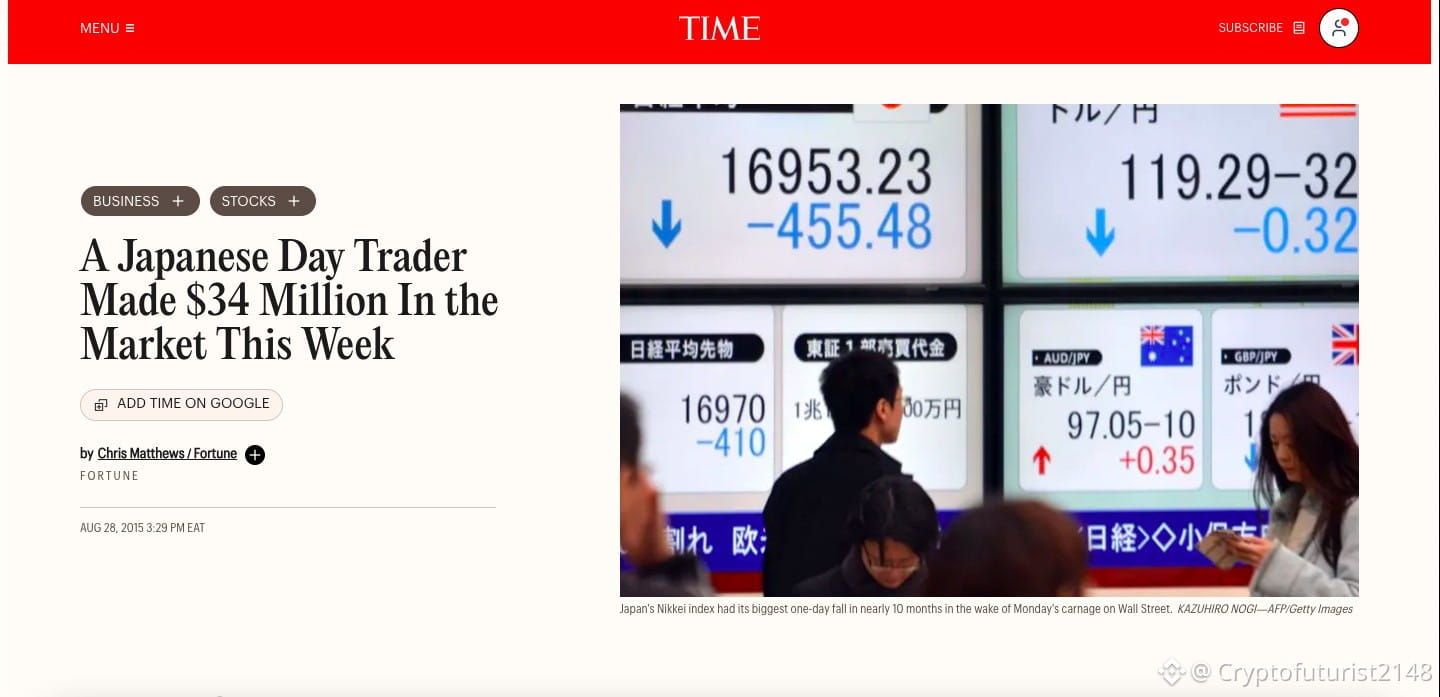
How CIS Turned $25,000 Into $200 Million, and Made $34 Million in a Day Part 1/4: The Setup
He started with $25,000. He ended up with a reported $200 million. 🇯🇵
In 2000, a Japanese university student began trading with about 3 million yen (~$25K). No mentor, no firm.
He lost at first. His own book has a chapter called “At first, I just lost.”
He kept going. Years later, he’s known only by a handle: CIS.
By 2014, he told Bloomberg he’d built about $150M from a spare bedroom. By 2018, his publisher put it at 23 billion yen (~$202M).
Then, in August 2015, he made $34 million in less than 24 hours.
But the one-day part is the smallest piece of the story. 👇 Part 2 coming.
What was your first account size?
#CIS #TraderMindset
1
757
Article
The Red Candle: A short story about trials and tribulations of the average joe's in trading1. Green
The first time Maya made four thousand dollars before breakfast, she just sat back in her second-hand desk chair and laughed to herself in the quiet apartment.
She’d been trading for eight months. Three monitors, a cold cup of coffee, and a mug that said World's Okayest Accountant—a leftover joke from her old job at the accounting firm. By now, the charts didn't feel like random noise anymore. She’d learned to read the rhythm: a quick pull-back, a little patience, a clean entry. Green.
She called her sister, Claire, that evening. "I think I've actually figured this out," she said.
"You sound really happy, May," Claire replied.
"I am. Honestly."
And she meant it. Looking back later, that was the part that hurt the most to remember—it wasn't just about the cash. It was the feeling of being right, like she’d cracked a code.
2. The First Small Lie
The first loss that actually hit her was eleven hundred dollars, but she couldn't bring herself to take it.
A stop-loss is supposed to be an objective contract you make with yourself when your head is clear: if price reaches this line, I’m out. At 10:40 AM, the market drifted down and touched her risk level. She watched the tick hit her price. Then, she clicked and dragged the stop-loss lower.
Just a few more ticks, she rationalized. The setup is still valid. The market is just hunting liquidity.
By noon, she was down twenty-six hundred dollars.
She finally closed the trade manually, her jaw tight and her hands cold. The financial loss stung, but the gut-punch was the sudden, sharp embarrassment of being caught off-guard. It felt like being called out in class for a stupid mistake.
When Claire called that night, Maya didn't bring it up. She just said trading was going fine.
3. Tilt
Traders have a word for what happened next: tilt. Maya had read all the psychology books. She could have easily explained the concept to anyone else—how a frustrating loss triggers revenge trading, oversized positions, and thrown-out trading plans. She had even highlighted those chapters.
Yet at 12:15 PM, she opened a new position at double her normal position size.
It wasn't a setup strategy. She was just trying to get her morning back. There was an anxious, nagging impulse in her chest demanding that she fix the P&L immediately.
The trade moved against her almost right away. Instead of cutting it, she added to the loser.
By the time the market closed, she had lost nearly nine thousand dollars—more than her entire best month of gains. She sat motionless as the market went quiet. Her apartment was dead silent except for the hum of the fridge. She skipped dinner and spent the night staring at the ceiling, promising herself she’d fix it tomorrow.
4. The Grind
It’s easy to miss the moment a habit turns into an obsession.
First, she stopped going for her evening walks because the Asian session was opening and she didn't want to miss a move. Then she started ignoring text messages during the day, and eventually in the evenings, too. Her sleep fractured into two-hour blocks. She’d wake up at 3:00 AM out of nowhere, immediately reaching for her phone to check futures contracts.
Her body started keeping the score. A constant tension headache behind her eyes. A tight stomach every time a chart alert popped up. Her hands shook a bit when she lifted her coffee mug, which she blamed on caffeine before pouring another cup.
The worst part was that winning trades didn't even feel good anymore. A good trade used to feel like an achievement. Now, it was just a temporary sigh of relief that lasted a few minutes until the anxiety of the next trade set in. Her whole emotional state was tied to a small set of changing numbers in the top corner of her screen.
When Claire called, Maya let it go to voicemail. She’d text back later: Super busy with market research!! Let's catch up soon!—hoping the extra exclamation points would hide how exhausted she actually was.
5. Breaking Point
On a Thursday morning, she broke the one rule she had written in bold black marker on an index card taped right to her main monitor:
NEVER RISK RENT MONEY.
She looked at the card. She looked at her broker account balance. She transferred the funds from her checking account anyway. The index card didn't feel like a helpful boundary anymore; it felt like a reminder of how far she’d slipped.
The trade failed.
Maya sat in the glow of the screens for a long time. She didn't rage or cry. She just felt entirely hollowed out. A quiet, heavy thought settled into her mind: I’m just not built for this.
It wasn't even about trading anymore. The loss felt like a definitive statement on her character, her discipline, and her intelligence. She felt like she'd been sitting in a courtroom for months, and the verdict was finally in.
She picked up her phone out of pure muscle memory. Scrolling down, she saw Claire’s last text message from nearly a week ago: Hey, just thinking of you. Don't worry about replying right now, just wanted to check in.
Maya read it a few times. Then she hit the call button.
6. Calling Home
Claire answered on the second ring.
"Hey," Maya said. Her voice caught instantly.
"Hey," Claire said softly. "I'm here. What's going on?"
The filter completely dissolved. Maya blurted out everything—moving her stops, the double-sized revenge trades, losing nine grand, digging into her rent money, waking up at 3:00 AM, and the card taped to the desk.
"I feel so stupid," Maya whispered. "I was supposed to be smart enough to manage this."
Claire didn't lecture her. She didn't say I told you so, even though she’d warned her months ago about the risks of leaving her job too early. She waited a moment, then said, "You've been carrying all of this by yourself in that apartment, haven't you?"
Maya pulled her knees up to her chest and stayed quiet.
"The money is a real issue," Claire said calmly. "But we can figure out a budget and fix a financial problem. I’m more concerned about you. Have you been eating real meals? Are you sleeping?"
"Not really."
"Okay. Let's start there first. Forget the charts for a minute."
7. Someone Showing Up
Claire didn't promise to call back the next day. "Stay on speaker for a second," she said. Maya heard typing and mouse clicks on the other end of the line.
"What are you doing?"
"Booking a flight."
"Claire, no, it's a cross-country flight. You have work tomorrow—"
"I have paid time off. I'm going to pack a bag. Eat something, shut down those computers, and I’ll text you when I board."
She arrived the next evening. When Maya opened her front door, neither of them said much at first. Claire just set her backpack down and hugged her tightly. Maya finally broke down, releasing months of built-up pressure and isolation.
Having someone physically present in the room broke the spell the screens had over her. They made dinner together, talked through the damage to her savings, and put together a basic financial recovery plan to cover rent. For the first time in months, Maya slept through the entire night.
8. Resetting
Maya didn't quit trading overnight, but she immediately cut her position sizes down to a fraction of what they were.
That next week, she set up an appointment with a therapist who worked with high-stress professions and behavioral loops. During their first session, the therapist wrote something down that stuck with Maya: A bad trade is just an expense of doing business. The shame comes from breaking your own boundaries.
They worked on breaking the emotional feedback loop. Maya realized she’d been using her trading account as a direct measure of her self-worth. When the P&L was up, she felt validated; when it was down, she felt worthless.
She established a new, rigid set of execution rules:
Risk no more than 1% per trade, period.
Hard stops set immediately upon entry—no manual adjustments allowed.
Maximum of two trades a day. Once the limit is hit, close the platform.
No checking charts after 5:00 PM or before breakfast.
She taped a new index card right under the old one:
MY P&L IS NOT MY PERSONALITY.
9. A Different Pace
The next few months were unglamorous. Trading became slow, methodical, and occasionally boring—which she realized was actually how proper risk management was supposed to feel.
There were still tough days. On a rainy Tuesday, after taking a bad loss on a false breakout, she felt that familiar surge of heat in her chest—the urge to jump right back in and smash the buy button. But this time, she recognized the sensation. That's tilt, she acknowledged. Instead of placing another order, she closed her laptop, walked out of the apartment, and took a long walk until her heart rate settled.
She texted Claire that evening: Took a bad stop today, felt the urge to revenge trade, shut down the desk instead.
Claire texted back: Proud of you. That's a win.
10. Weather
A year after that terrible Thursday, Maya sat at her desk with a fresh cup of coffee.
The two index cards were still taped to her screen. The top one was slightly faded; the bottom one was clean. She opened her platform and looked at the morning charts. Candles moving red and green, forming patterns across the screen.
She looked at them differently now. They weren't a test of her value, an opponent to fight, or a slot machine. They were just data. Just market movement.
She checked her trade plan, marked her key levels, set her risk parameters, and executed her morning strategy. Whatever happened with the trade today, she knew she had her rules in place, her life outside the room, and people who had her back. She took a sip of her coffee, stayed patient, and waited for the setup.
The Red Candle: A short story about trials and tribulations of the average joe's in trading
1. Green
The first time Maya made four thousand dollars before breakfast, she just sat back in her second-hand desk chair and laughed to herself in the quiet apartment.
She’d been trading for eight months. Three monitors, a cold cup of coffee, and a mug that said World's Okayest Accountant—a leftover joke from her old job at the accounting firm. By now, the charts didn't feel like random noise anymore. She’d learned to read the rhythm: a quick pull-back, a little patience, a clean entry. Green.
She called her sister, Claire, that evening. "I think I've actually figured this out," she said.
"You sound really happy, May," Claire replied.
"I am. Honestly."
And she meant it. Looking back later, that was the part that hurt the most to remember—it wasn't just about the cash. It was the feeling of being right, like she’d cracked a code.
2. The First Small Lie
The first loss that actually hit her was eleven hundred dollars, but she couldn't bring herself to take it.
A stop-loss is supposed to be an objective contract you make with yourself when your head is clear: if price reaches this line, I’m out. At 10:40 AM, the market drifted down and touched her risk level. She watched the tick hit her price. Then, she clicked and dragged the stop-loss lower.
Just a few more ticks, she rationalized. The setup is still valid. The market is just hunting liquidity.
By noon, she was down twenty-six hundred dollars.
She finally closed the trade manually, her jaw tight and her hands cold. The financial loss stung, but the gut-punch was the sudden, sharp embarrassment of being caught off-guard. It felt like being called out in class for a stupid mistake.
When Claire called that night, Maya didn't bring it up. She just said trading was going fine.
3. Tilt
Traders have a word for what happened next: tilt. Maya had read all the psychology books. She could have easily explained the concept to anyone else—how a frustrating loss triggers revenge trading, oversized positions, and thrown-out trading plans. She had even highlighted those chapters.
Yet at 12:15 PM, she opened a new position at double her normal position size.
It wasn't a setup strategy. She was just trying to get her morning back. There was an anxious, nagging impulse in her chest demanding that she fix the P&L immediately.
The trade moved against her almost right away. Instead of cutting it, she added to the loser.
By the time the market closed, she had lost nearly nine thousand dollars—more than her entire best month of gains. She sat motionless as the market went quiet. Her apartment was dead silent except for the hum of the fridge. She skipped dinner and spent the night staring at the ceiling, promising herself she’d fix it tomorrow.
4. The Grind
It’s easy to miss the moment a habit turns into an obsession.
First, she stopped going for her evening walks because the Asian session was opening and she didn't want to miss a move. Then she started ignoring text messages during the day, and eventually in the evenings, too. Her sleep fractured into two-hour blocks. She’d wake up at 3:00 AM out of nowhere, immediately reaching for her phone to check futures contracts.
Her body started keeping the score. A constant tension headache behind her eyes. A tight stomach every time a chart alert popped up. Her hands shook a bit when she lifted her coffee mug, which she blamed on caffeine before pouring another cup.
The worst part was that winning trades didn't even feel good anymore. A good trade used to feel like an achievement. Now, it was just a temporary sigh of relief that lasted a few minutes until the anxiety of the next trade set in. Her whole emotional state was tied to a small set of changing numbers in the top corner of her screen.
When Claire called, Maya let it go to voicemail. She’d text back later: Super busy with market research!! Let's catch up soon!—hoping the extra exclamation points would hide how exhausted she actually was.
5. Breaking Point
On a Thursday morning, she broke the one rule she had written in bold black marker on an index card taped right to her main monitor:
NEVER RISK RENT MONEY.
She looked at the card. She looked at her broker account balance. She transferred the funds from her checking account anyway. The index card didn't feel like a helpful boundary anymore; it felt like a reminder of how far she’d slipped.
The trade failed.
Maya sat in the glow of the screens for a long time. She didn't rage or cry. She just felt entirely hollowed out. A quiet, heavy thought settled into her mind: I’m just not built for this.
It wasn't even about trading anymore. The loss felt like a definitive statement on her character, her discipline, and her intelligence. She felt like she'd been sitting in a courtroom for months, and the verdict was finally in.
She picked up her phone out of pure muscle memory. Scrolling down, she saw Claire’s last text message from nearly a week ago: Hey, just thinking of you. Don't worry about replying right now, just wanted to check in.
Maya read it a few times. Then she hit the call button.
6. Calling Home
Claire answered on the second ring.
"Hey," Maya said. Her voice caught instantly.
"Hey," Claire said softly. "I'm here. What's going on?"
The filter completely dissolved. Maya blurted out everything—moving her stops, the double-sized revenge trades, losing nine grand, digging into her rent money, waking up at 3:00 AM, and the card taped to the desk.
"I feel so stupid," Maya whispered. "I was supposed to be smart enough to manage this."
Claire didn't lecture her. She didn't say I told you so, even though she’d warned her months ago about the risks of leaving her job too early. She waited a moment, then said, "You've been carrying all of this by yourself in that apartment, haven't you?"
Maya pulled her knees up to her chest and stayed quiet.
"The money is a real issue," Claire said calmly. "But we can figure out a budget and fix a financial problem. I’m more concerned about you. Have you been eating real meals? Are you sleeping?"
"Not really."
"Okay. Let's start there first. Forget the charts for a minute."
7. Someone Showing Up
Claire didn't promise to call back the next day. "Stay on speaker for a second," she said. Maya heard typing and mouse clicks on the other end of the line.
"What are you doing?"
"Booking a flight."
"Claire, no, it's a cross-country flight. You have work tomorrow—"
"I have paid time off. I'm going to pack a bag. Eat something, shut down those computers, and I’ll text you when I board."
She arrived the next evening. When Maya opened her front door, neither of them said much at first. Claire just set her backpack down and hugged her tightly. Maya finally broke down, releasing months of built-up pressure and isolation.
Having someone physically present in the room broke the spell the screens had over her. They made dinner together, talked through the damage to her savings, and put together a basic financial recovery plan to cover rent. For the first time in months, Maya slept through the entire night.
8. Resetting
Maya didn't quit trading overnight, but she immediately cut her position sizes down to a fraction of what they were.
That next week, she set up an appointment with a therapist who worked with high-stress professions and behavioral loops. During their first session, the therapist wrote something down that stuck with Maya: A bad trade is just an expense of doing business. The shame comes from breaking your own boundaries.
They worked on breaking the emotional feedback loop. Maya realized she’d been using her trading account as a direct measure of her self-worth. When the P&L was up, she felt validated; when it was down, she felt worthless.
She established a new, rigid set of execution rules:
Risk no more than 1% per trade, period.
Hard stops set immediately upon entry—no manual adjustments allowed.
Maximum of two trades a day. Once the limit is hit, close the platform.
No checking charts after 5:00 PM or before breakfast.
She taped a new index card right under the old one:
MY P&L IS NOT MY PERSONALITY.
9. A Different Pace
The next few months were unglamorous. Trading became slow, methodical, and occasionally boring—which she realized was actually how proper risk management was supposed to feel.
There were still tough days. On a rainy Tuesday, after taking a bad loss on a false breakout, she felt that familiar surge of heat in her chest—the urge to jump right back in and smash the buy button. But this time, she recognized the sensation. That's tilt, she acknowledged. Instead of placing another order, she closed her laptop, walked out of the apartment, and took a long walk until her heart rate settled.
She texted Claire that evening: Took a bad stop today, felt the urge to revenge trade, shut down the desk instead.
Claire texted back: Proud of you. That's a win.
10. Weather
A year after that terrible Thursday, Maya sat at her desk with a fresh cup of coffee.
The two index cards were still taped to her screen. The top one was slightly faded; the bottom one was clean. She opened her platform and looked at the morning charts. Candles moving red and green, forming patterns across the screen.
She looked at them differently now. They weren't a test of her value, an opponent to fight, or a slot machine. They were just data. Just market movement.
She checked her trade plan, marked her key levels, set her risk parameters, and executed her morning strategy. Whatever happened with the trade today, she knew she had her rules in place, her life outside the room, and people who had her back. She took a sip of her coffee, stayed patient, and waited for the setup.
166

Article
From Blown Accounts to a Reported $100M: What Ordinary Traders Can Learn from QullamaggieThe Qullamaggie story, read through Mark Douglas and William O'Neil, and what it means if you trade with a normal account and a normal life.
The part nobody talks about
Most trading stories start at the top: the big account, the big number, the screenshot. The story of Kristjan Kullamägi, who trades under the name Qullamaggie, is more useful because of where it starts.
According to his own biography, he began trading in 2011 at age 23, while studying biomedical laboratory science at Karolinska Institutet in Stockholm. He had a few thousand dollars and no real process. He followed alerts, chased stocks, and risked too much. Over 2011 and 2012 he blew up three or four small accounts.
That is the normal beginning. It is the beginning of most people who are reading this.
What the numbers are, and what they aren't
The famous version of the story is that he turned a small account into more than $100 million. Here is the honest version: the starting figure is repeated differently across sources, from about $5,000 to about $10,000, and the end figure ranges from roughly $80 million to over $100 million. These are self-reported and widely repeated, not independently audited.
We also couldn't verify claims about any single record-setting day, so this article doesn't make any. The numbers matter less than the process behind them, and the process is documented much better than the returns are.
What changed after the blowups
His first profitable year was 2013. By his account, four things changed.
He stopped outsourcing decisions. Instead of following alerts, he studied decades of historical market leaders himself to see what big winners looked like before they ran.
He moved from day trading to swing trading. The largest moves in stocks tend to unfold over weeks and months, so holding longer gave him room to capture them.
He cut his playbook to three setups. Breakouts from consolidations, episodic pivots after a major catalyst, and parabolic shorts. Fewer patterns meant he knew exactly what a good one and a failing one looked like.
He sized around a predefined failure point. Every position had a stop decided in advance, and the size of the position came from how much he was willing to lose, not from how much he hoped to make.
He says he reached financial independence in 2017, and began streaming on Twitch in 2019. He doesn't sell alerts or a paid service. His stated goal is to help serious traders stand on their own.
The mind: what Mark Douglas explains
Mark Douglas's Trading in the Zone is a book about why most people can know a method and still fail to follow it. His answer is that the problem isn't the method. It is how we relate to uncertainty.
The ideas that matter most for ordinary traders, in plain terms:
Anything can happen on any trade. Even a textbook setup can fail. A single outcome tells you almost nothing about whether your approach is good.
You don't need to predict the next move to make money. An edge is only a slightly better than even chance that one thing happens more often than another. It plays out over many trades, not one.
Wins and losses are scattered randomly inside a good strategy. You can lose five in a row with a perfectly valid edge. If you read that as proof you're broken, you'll abandon the plan at the worst moment.
Fear is what happens when you haven't accepted the risk. If you decided in advance exactly what you can lose, a stop-out is just a cost of doing business. If you didn't, every red candle feels personal.
This lines up with Kullamägi's early failures. Oversized positions and no predefined exit are what turn a normal losing trade into an emotional event, and emotional events are how accounts get blown up. A third-party analysis of his data, drawn from his tweets and streams, suggests he is in a drawdown about 80 percent of the time. A trader who is in drawdown that often and still wins is not relying on feeling good. He is relying on rules.
The method: what William O'Neil explains
William O'Neil's How to Make Money in Stocks is the opposite half of the puzzle. Douglas tells you how to behave. O'Neil tells you what to look at.
O'Neil studied the biggest historical winners and found that they had things in common: strong and accelerating earnings, a leading position in a hot group, heavy buying by large institutions, and a tendency to break out to new highs from orderly bases rather than at bargain prices. His practical rules for ordinary investors were equally blunt:
Cut losses short. Sell a losing position when it drops roughly 7 to 8 percent below your purchase price, and never average down into a loser.
Buy strength, not bargains. Stocks that are making new highs tend to keep going. Stocks that look cheap after a collapse often stay cheap for a reason.
Respect the market first. Most stocks move with the overall market, so a perfect setup in a falling market has much worse odds.
Kullamägi's approach is a modern, more specialized version of the same instincts. His breakouts require a prior big move followed by an orderly consolidation, and he has described staying out when the broader market isn't trending, using a rising short-term moving average on the Nasdaq as a quick filter. He also built a large personal database of historical charts, which is O'Neil's study-the-past method taken to its extreme.
What this means if you're an ordinary trader
You don't have a Twitch audience, a decade of chart studies, or a large account. You have a smaller account, a job or a lack of one, and a lot of pressure. Here is what carries over.
1. Expect to be wrong constantly. Plan for it. Your edge, if you have one, will show up across twenty or fifty trades, not today's trade.
2. Decide your loss before you enter. The stop comes first, then the position size. Never the other way around.
3. Risk small enough to survive the bad stretch. The first goal for a small account is still being alive in a year. Kullamägi's first profitable year came only after he stopped risking money in ways that ended his accounts.
4. Pick one or two setups and master them. Variety feels productive but it's usually noise. Depth is what lets you tell a good trade from a bad one at a glance.
5. Check the market before the stock. If the overall tape is weak, being flat is a position. You don't have to trade every day.
6. Study history more than you read tips. Patterns repeat because fear and greed repeat. An hour with old charts teaches you more than a day of alerts.
7. Judge yourself on process, not on profit. Did you follow the plan? That is the question. A profitable trade you took against your rules is a bad trade that got lucky, and it will cost you later.
8. Keep your life outside the account. Don't trade money you need for rent, family, or survival. Pressure destroys the calm that Douglas says is the whole game. If a loss would put you on the street, the position is too big, whatever the chart says.
The honest warning
Most traders lose money, and a few spectacular success stories are not typical results. Kullamägi's own materials stress that outcomes during the 2020 to 2021 speculative cycle were exceptional and shouldn't be treated as an expected return. His material is meant as a prompt for independent research, not a shortcut.
The real lesson
The order of events is the takeaway: fail small, get humble, specialize, study the history, size small enough to survive being wrong, and repeat for years. Failure was part of the tuition. For most people who eventually get good at this, a blown account isn't the end of the story. It is the first chapter.
From Blown Accounts to a Reported $100M: What Ordinary Traders Can Learn from Qullamaggie
The Qullamaggie story, read through Mark Douglas and William O'Neil, and what it means if you trade with a normal account and a normal life.
The part nobody talks about
Most trading stories start at the top: the big account, the big number, the screenshot. The story of Kristjan Kullamägi, who trades under the name Qullamaggie, is more useful because of where it starts.
According to his own biography, he began trading in 2011 at age 23, while studying biomedical laboratory science at Karolinska Institutet in Stockholm. He had a few thousand dollars and no real process. He followed alerts, chased stocks, and risked too much. Over 2011 and 2012 he blew up three or four small accounts.
That is the normal beginning. It is the beginning of most people who are reading this.
What the numbers are, and what they aren't
The famous version of the story is that he turned a small account into more than $100 million. Here is the honest version: the starting figure is repeated differently across sources, from about $5,000 to about $10,000, and the end figure ranges from roughly $80 million to over $100 million. These are self-reported and widely repeated, not independently audited.
We also couldn't verify claims about any single record-setting day, so this article doesn't make any. The numbers matter less than the process behind them, and the process is documented much better than the returns are.
What changed after the blowups
His first profitable year was 2013. By his account, four things changed.
He stopped outsourcing decisions. Instead of following alerts, he studied decades of historical market leaders himself to see what big winners looked like before they ran.
He moved from day trading to swing trading. The largest moves in stocks tend to unfold over weeks and months, so holding longer gave him room to capture them.
He cut his playbook to three setups. Breakouts from consolidations, episodic pivots after a major catalyst, and parabolic shorts. Fewer patterns meant he knew exactly what a good one and a failing one looked like.
He sized around a predefined failure point. Every position had a stop decided in advance, and the size of the position came from how much he was willing to lose, not from how much he hoped to make.
He says he reached financial independence in 2017, and began streaming on Twitch in 2019. He doesn't sell alerts or a paid service. His stated goal is to help serious traders stand on their own.
The mind: what Mark Douglas explains
Mark Douglas's Trading in the Zone is a book about why most people can know a method and still fail to follow it. His answer is that the problem isn't the method. It is how we relate to uncertainty.
The ideas that matter most for ordinary traders, in plain terms:
Anything can happen on any trade. Even a textbook setup can fail. A single outcome tells you almost nothing about whether your approach is good.
You don't need to predict the next move to make money. An edge is only a slightly better than even chance that one thing happens more often than another. It plays out over many trades, not one.
Wins and losses are scattered randomly inside a good strategy. You can lose five in a row with a perfectly valid edge. If you read that as proof you're broken, you'll abandon the plan at the worst moment.
Fear is what happens when you haven't accepted the risk. If you decided in advance exactly what you can lose, a stop-out is just a cost of doing business. If you didn't, every red candle feels personal.
This lines up with Kullamägi's early failures. Oversized positions and no predefined exit are what turn a normal losing trade into an emotional event, and emotional events are how accounts get blown up. A third-party analysis of his data, drawn from his tweets and streams, suggests he is in a drawdown about 80 percent of the time. A trader who is in drawdown that often and still wins is not relying on feeling good. He is relying on rules.
The method: what William O'Neil explains
William O'Neil's How to Make Money in Stocks is the opposite half of the puzzle. Douglas tells you how to behave. O'Neil tells you what to look at.
O'Neil studied the biggest historical winners and found that they had things in common: strong and accelerating earnings, a leading position in a hot group, heavy buying by large institutions, and a tendency to break out to new highs from orderly bases rather than at bargain prices. His practical rules for ordinary investors were equally blunt:
Cut losses short. Sell a losing position when it drops roughly 7 to 8 percent below your purchase price, and never average down into a loser.
Buy strength, not bargains. Stocks that are making new highs tend to keep going. Stocks that look cheap after a collapse often stay cheap for a reason.
Respect the market first. Most stocks move with the overall market, so a perfect setup in a falling market has much worse odds.
Kullamägi's approach is a modern, more specialized version of the same instincts. His breakouts require a prior big move followed by an orderly consolidation, and he has described staying out when the broader market isn't trending, using a rising short-term moving average on the Nasdaq as a quick filter. He also built a large personal database of historical charts, which is O'Neil's study-the-past method taken to its extreme.
What this means if you're an ordinary trader
You don't have a Twitch audience, a decade of chart studies, or a large account. You have a smaller account, a job or a lack of one, and a lot of pressure. Here is what carries over.
1. Expect to be wrong constantly. Plan for it. Your edge, if you have one, will show up across twenty or fifty trades, not today's trade.
2. Decide your loss before you enter. The stop comes first, then the position size. Never the other way around.
3. Risk small enough to survive the bad stretch. The first goal for a small account is still being alive in a year. Kullamägi's first profitable year came only after he stopped risking money in ways that ended his accounts.
4. Pick one or two setups and master them. Variety feels productive but it's usually noise. Depth is what lets you tell a good trade from a bad one at a glance.
5. Check the market before the stock. If the overall tape is weak, being flat is a position. You don't have to trade every day.
6. Study history more than you read tips. Patterns repeat because fear and greed repeat. An hour with old charts teaches you more than a day of alerts.
7. Judge yourself on process, not on profit. Did you follow the plan? That is the question. A profitable trade you took against your rules is a bad trade that got lucky, and it will cost you later.
8. Keep your life outside the account. Don't trade money you need for rent, family, or survival. Pressure destroys the calm that Douglas says is the whole game. If a loss would put you on the street, the position is too big, whatever the chart says.
The honest warning
Most traders lose money, and a few spectacular success stories are not typical results. Kullamägi's own materials stress that outcomes during the 2020 to 2021 speculative cycle were exceptional and shouldn't be treated as an expected return. His material is meant as a prompt for independent research, not a shortcut.
The real lesson
The order of events is the takeaway: fail small, get humble, specialize, study the history, size small enough to survive being wrong, and repeat for years. Failure was part of the tuition. For most people who eventually get good at this, a blown account isn't the end of the story. It is the first chapter.
91
Article
HOT/USDT: 387 Days Sideways, Then +56% in Two WeeksWhat a year of nothing looks like right before everything.
For 387 days, HOT/USDT did almost nothing. No trend, no breakout, no drama. Just a flat line that made most traders close the tab and stop checking.
Then, in about two weeks, it ran roughly 56%.
If you were watching, you probably felt two things at once: I should have seen that coming, and I never would have held through that. Both are fair. Here is what's actually going on in a move like this, and what to take from it.
The 387 days
A year-plus of sideways price action is not a pause. It is a process.
Every week the chart stays flat, three things happen. Impatient holders sell to put their money somewhere that moves. Volume shrinks and attention drifts to louder coins. And the remaining holders get either stubborn or bored, and either way they stop adding.
By the end, the people who wanted out are mostly out. The price is quiet because sellers have run low on reasons to sell. That is the setup, and it looks identical to a dead coin right up until the day it doesn't.
Why a flat chart ends in a big move
Long ranges compress price. When the chart finally leaves the range, there's little supply sitting overhead from people trapped at higher prices, so even modest buying can move it fast.
The other piece is liquidity. HOT is a small-cap token. Recent figures on trackers put its market cap in the tens of millions of dollars, and daily trading volume often runs somewhere between about $100,000 and a few hundred thousand dollars. A market that thin doesn't need a huge flow of money to move 56%. It needs a small amount of persistent buying and not many sellers willing to meet it.
That cuts both ways. Thin markets rise fast, and they can drop just as fast.
Why you can't chase this
The hardest truth about breakouts: the best entry is the one nobody wants. It's day 300 of a boring range, when buying feels pointless.
By the time the chart shows +56%, the risk-reward has flipped. You'd be buying after a big move in a thin market, with your stop either far away or too tight to survive normal pullbacks. That is how late buyers end up becoming exit liquidity for the people who were there early.
If you missed it, you did not lose anything. You just did not take a trade. The next one will look similar.
What to take from it
Sideways is information. A tight, long range means energy is building, not that nothing is happening. Put it on a watchlist and wait for the market to show its hand.Wait for confirmation, not prediction. You don't need to catch the exact bottom. A clean break above the range on rising volume, with a defined level where you're wrong, is a trade you can size.Size for thin markets. Low liquidity means slippage and violent reversals. Smaller positions, limit orders, and a plan for exiting before you need to.Have an exit before you enter. After a 56% move, the question is no longer where to buy. It's where you take profits and where the trade is invalid.Don't confuse a move with a trend. Two weeks is a burst. Whether it holds is decided by what happens on the first pullback.
For the trader reading this
If you sat in this coin for a year and watched it do nothing, you did something harder than any single trade. You held through boredom, and boredom is where most people lose their nerve.
If you missed it, don't punish yourself. Every trader has a list of moves they didn't take. The urge to jump into the next one just to make up for it is how small misses turn into real losses.
And if you're up on this one, take a breath before the next decision. Winning on a small-cap makes the next trade feel easier than it is. Write down your plan while you're calm.
And if trading has started to weigh on you more than the numbers explain, talk to someone. A friend, family, or a professional. A good trader is still a person.
Educational only, not financial advice. Check the chart and the numbers yourself before you trade anything.
HOT/USDT: 387 Days Sideways, Then +56% in Two Weeks
What a year of nothing looks like right before everything.
For 387 days, HOT/USDT did almost nothing. No trend, no breakout, no drama. Just a flat line that made most traders close the tab and stop checking.
Then, in about two weeks, it ran roughly 56%.
If you were watching, you probably felt two things at once: I should have seen that coming, and I never would have held through that. Both are fair. Here is what's actually going on in a move like this, and what to take from it.
The 387 days
A year-plus of sideways price action is not a pause. It is a process.
Every week the chart stays flat, three things happen. Impatient holders sell to put their money somewhere that moves. Volume shrinks and attention drifts to louder coins. And the remaining holders get either stubborn or bored, and either way they stop adding.
By the end, the people who wanted out are mostly out. The price is quiet because sellers have run low on reasons to sell. That is the setup, and it looks identical to a dead coin right up until the day it doesn't.
Why a flat chart ends in a big move
Long ranges compress price. When the chart finally leaves the range, there's little supply sitting overhead from people trapped at higher prices, so even modest buying can move it fast.
The other piece is liquidity. HOT is a small-cap token. Recent figures on trackers put its market cap in the tens of millions of dollars, and daily trading volume often runs somewhere between about $100,000 and a few hundred thousand dollars. A market that thin doesn't need a huge flow of money to move 56%. It needs a small amount of persistent buying and not many sellers willing to meet it.
That cuts both ways. Thin markets rise fast, and they can drop just as fast.
Why you can't chase this
The hardest truth about breakouts: the best entry is the one nobody wants. It's day 300 of a boring range, when buying feels pointless.
By the time the chart shows +56%, the risk-reward has flipped. You'd be buying after a big move in a thin market, with your stop either far away or too tight to survive normal pullbacks. That is how late buyers end up becoming exit liquidity for the people who were there early.
If you missed it, you did not lose anything. You just did not take a trade. The next one will look similar.
What to take from it
Sideways is information. A tight, long range means energy is building, not that nothing is happening. Put it on a watchlist and wait for the market to show its hand.Wait for confirmation, not prediction. You don't need to catch the exact bottom. A clean break above the range on rising volume, with a defined level where you're wrong, is a trade you can size.Size for thin markets. Low liquidity means slippage and violent reversals. Smaller positions, limit orders, and a plan for exiting before you need to.Have an exit before you enter. After a 56% move, the question is no longer where to buy. It's where you take profits and where the trade is invalid.Don't confuse a move with a trend. Two weeks is a burst. Whether it holds is decided by what happens on the first pullback.
For the trader reading this
If you sat in this coin for a year and watched it do nothing, you did something harder than any single trade. You held through boredom, and boredom is where most people lose their nerve.
If you missed it, don't punish yourself. Every trader has a list of moves they didn't take. The urge to jump into the next one just to make up for it is how small misses turn into real losses.
And if you're up on this one, take a breath before the next decision. Winning on a small-cap makes the next trade feel easier than it is. Write down your plan while you're calm.
And if trading has started to weigh on you more than the numbers explain, talk to someone. A friend, family, or a professional. A good trader is still a person.
Educational only, not financial advice. Check the chart and the numbers yourself before you trade anything.
377
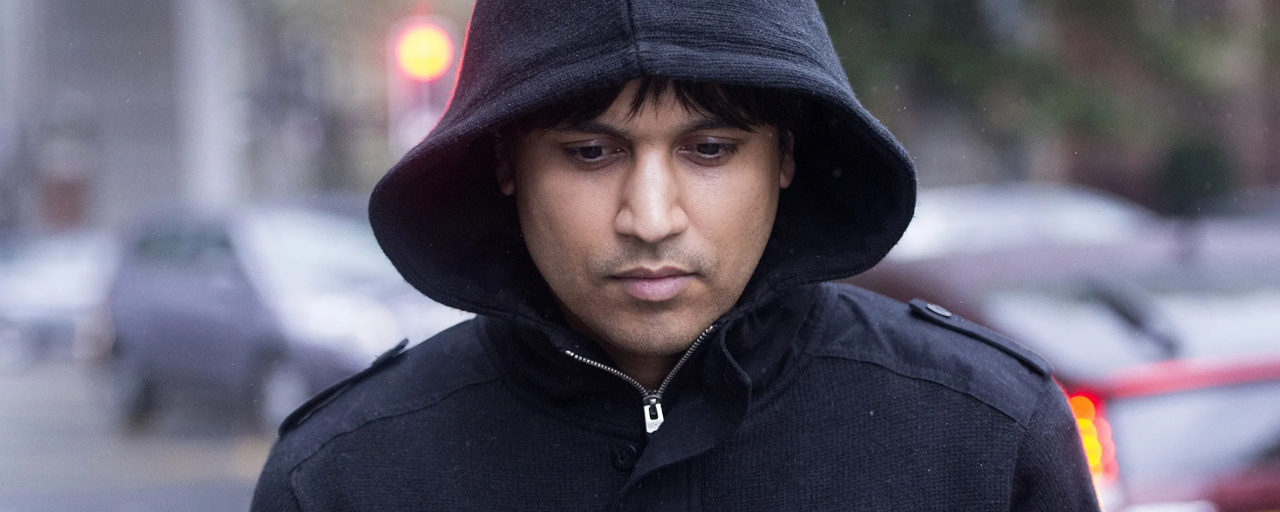
Article
The Robin Hood of HounslowHow one man took on Wall Street and the financial world from his bedroom.A modern day David versus Goliath story.
The legend says he brought the financial world to its knees. Navinder Sarao traded out of Hounslow, a West London suburb under Heathrow's flight path, with no bank behind him, no trading desk and no badge.
Then the United States government decided he was a threat to the global financial system.
It's the oldest story there is, David against Goliath, and retail traders can't let go of it.
The crash
May 6, 2010. The Dow drops nearly 1,000 points in minutes, then snaps back. Roughly a trillion dollars of value vanishes and returns before most people finish reading the headline.
The official SEC and CFTC report that autumn blamed a huge automated sell order from a mutual fund, Waddell & Reed, worth around $4 billion. Nav Sarao's name wasn't in it.
Five years later, in April 2015, he was arrested.
The charge
Prosecutors said he layered large fake sell orders into E-mini S&P 500 futures, cancelled them before they filled, and traded against the moves that created. They put his profit that day at about $879,000, and around $40 million over several years.
He fought extradition for over a year, lost, and was sent to the U.S. in 2016. He pleaded guilty, cooperated, and in January 2020 was sentenced to time served plus a year of home confinement. He forfeited about $12.9 million.
For the man the headlines called the guy who crashed the market, that is a strange ending. Which is exactly the point his supporters make.
David versus Goliath
Three reasons this was never a fair fight.
He was alone. No legal department, no PR team, no lobbyists. When big firms get caught in spoofing cases, they usually write a check. JPMorgan paid roughly $920 million to settle in 2020. Sarao got extradited.
The blame was convenient. The crash needed a face, the official story had already been written, and then a trader in West London showed up as the new villain. Whether his orders were a major cause is still argued, and the case against him said he contributed, not that he did it alone.
He beat the machines. One person, in the most heavily automated market on earth, making the giants react to him. Whatever you think of the method, that gets under the skin of every trader who has ever felt out-resourced.
How David won
Goliath had everything: banks with billion-dollar budgets, high-frequency firms with servers parked next to the exchange, regulators on two continents, and the U.S. Department of Justice.
David had a trading account and a sharp read on how order books behave.
He beat them at their own game. E-mini S&P 500 futures are among the deepest, most competitive markets in the world, packed with firms that spend fortunes on speed. Prosecutors say he made around $40 million there.
He outlasted them. Five years from the crash to his arrest, then more than a year of fighting extradition. Two governments' machinery ground on, and he was still standing at the end.
He walked out. He faced charges that carried decades in prison. He got time served and a year of home confinement. Goliath swung with everything and mostly missed.
He didn't win clean. He pleaded guilty and gave up around $12.9 million. But against opponents like that, walking out free is the win.
The part we don't skip
He pleaded guilty. Spoofing is manipulation, and the people on the other side of those trades were real. Exchanges had also warned him before it came to this.
So the honest case for Sarao is not that he did nothing wrong. It is that he was punished through a process that went easier on the big players, and that the myth built around him as the man who broke the market was always bigger than the evidence.
You can think he was a scapegoat and still think he crossed a line. Both hold.
What to take from it
Don't build an edge you can't explain out loud. If it only works while nobody understands it, it has a countdown on it.Treat warnings as deadlines. Exchanges and brokers usually send signals before they send lawyers.Solo is powerful and risky. Nobody to slow you down also means nobody to stop you. Build your own checks: a mentor, an accountant, a lawyer when the money gets serious.Guard your money from scams too. He reportedly lost a large share of his fortune to a fraud, which tells you skill on a screen doesn't protect you everywhere else.Be careful with the hero story. Feeling like an outsider against a rigged game is sometimes accurate, and sometimes just a comfortable excuse.
One more thing
If you trade alone and the weight of it all is getting heavy, the hours, the isolation, the sense that nobody gets what you do, talk to someone. A friend, family, a professional. His story has years of pressure and public blame in it. Nobody should carry that quietly.
Admire the skill. Question the story. Never trade something you wouldn't explain to the exchange.
The Robin Hood of Hounslow
How one man took on Wall Street and the financial world from his bedroom.A modern day David versus Goliath story.
The legend says he brought the financial world to its knees. Navinder Sarao traded out of Hounslow, a West London suburb under Heathrow's flight path, with no bank behind him, no trading desk and no badge.
Then the United States government decided he was a threat to the global financial system.
It's the oldest story there is, David against Goliath, and retail traders can't let go of it.
The crash
May 6, 2010. The Dow drops nearly 1,000 points in minutes, then snaps back. Roughly a trillion dollars of value vanishes and returns before most people finish reading the headline.
The official SEC and CFTC report that autumn blamed a huge automated sell order from a mutual fund, Waddell & Reed, worth around $4 billion. Nav Sarao's name wasn't in it.
Five years later, in April 2015, he was arrested.
The charge
Prosecutors said he layered large fake sell orders into E-mini S&P 500 futures, cancelled them before they filled, and traded against the moves that created. They put his profit that day at about $879,000, and around $40 million over several years.
He fought extradition for over a year, lost, and was sent to the U.S. in 2016. He pleaded guilty, cooperated, and in January 2020 was sentenced to time served plus a year of home confinement. He forfeited about $12.9 million.
For the man the headlines called the guy who crashed the market, that is a strange ending. Which is exactly the point his supporters make.
David versus Goliath
Three reasons this was never a fair fight.
He was alone. No legal department, no PR team, no lobbyists. When big firms get caught in spoofing cases, they usually write a check. JPMorgan paid roughly $920 million to settle in 2020. Sarao got extradited.
The blame was convenient. The crash needed a face, the official story had already been written, and then a trader in West London showed up as the new villain. Whether his orders were a major cause is still argued, and the case against him said he contributed, not that he did it alone.
He beat the machines. One person, in the most heavily automated market on earth, making the giants react to him. Whatever you think of the method, that gets under the skin of every trader who has ever felt out-resourced.
How David won
Goliath had everything: banks with billion-dollar budgets, high-frequency firms with servers parked next to the exchange, regulators on two continents, and the U.S. Department of Justice.
David had a trading account and a sharp read on how order books behave.
He beat them at their own game. E-mini S&P 500 futures are among the deepest, most competitive markets in the world, packed with firms that spend fortunes on speed. Prosecutors say he made around $40 million there.
He outlasted them. Five years from the crash to his arrest, then more than a year of fighting extradition. Two governments' machinery ground on, and he was still standing at the end.
He walked out. He faced charges that carried decades in prison. He got time served and a year of home confinement. Goliath swung with everything and mostly missed.
He didn't win clean. He pleaded guilty and gave up around $12.9 million. But against opponents like that, walking out free is the win.
The part we don't skip
He pleaded guilty. Spoofing is manipulation, and the people on the other side of those trades were real. Exchanges had also warned him before it came to this.
So the honest case for Sarao is not that he did nothing wrong. It is that he was punished through a process that went easier on the big players, and that the myth built around him as the man who broke the market was always bigger than the evidence.
You can think he was a scapegoat and still think he crossed a line. Both hold.
What to take from it
Don't build an edge you can't explain out loud. If it only works while nobody understands it, it has a countdown on it.Treat warnings as deadlines. Exchanges and brokers usually send signals before they send lawyers.Solo is powerful and risky. Nobody to slow you down also means nobody to stop you. Build your own checks: a mentor, an accountant, a lawyer when the money gets serious.Guard your money from scams too. He reportedly lost a large share of his fortune to a fraud, which tells you skill on a screen doesn't protect you everywhere else.Be careful with the hero story. Feeling like an outsider against a rigged game is sometimes accurate, and sometimes just a comfortable excuse.
One more thing
If you trade alone and the weight of it all is getting heavy, the hours, the isolation, the sense that nobody gets what you do, talk to someone. A friend, family, a professional. His story has years of pressure and public blame in it. Nobody should carry that quietly.
Admire the skill. Question the story. Never trade something you wouldn't explain to the exchange.
90
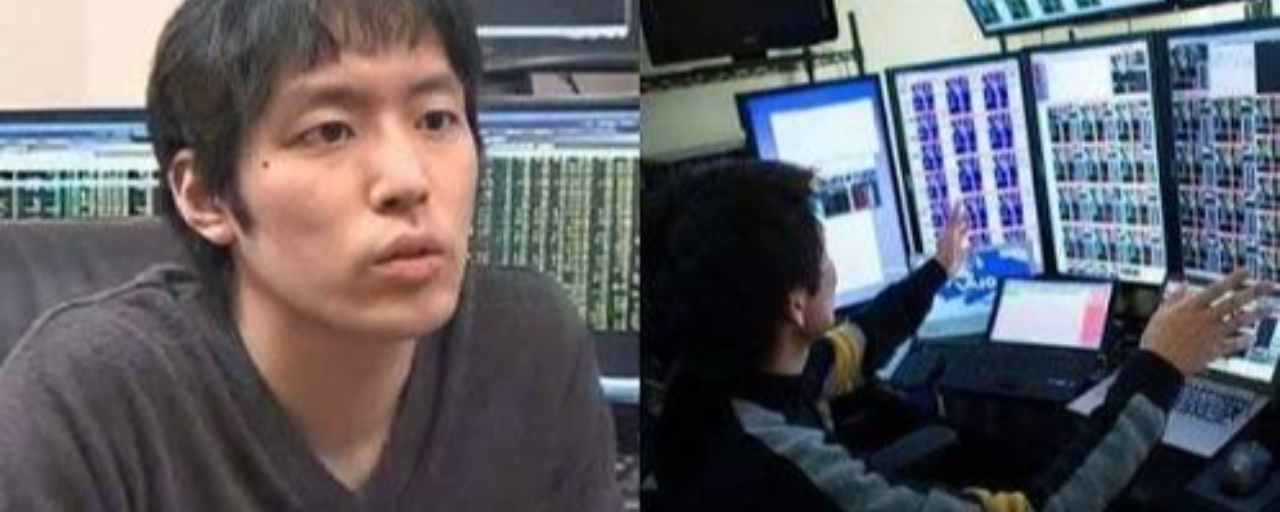
Article
BNF: How Takashi Kotegawa Turned $13,000 Into $150 MillionTakashi Kotegawa, known as BNF, and the discipline of staying small enough to survive
The Inheritance
In the early 2000s, a young man in Japan sat down with roughly 1.6 million yen ($13,000–14,000), much of it reportedly inherited after his mother's death. He had no connections, no firm, no famous mentor. He had a computer, a lot of free hours, and an almost unnatural patience for looking at screens.
His name was Takashi Kotegawa. The online forums knew him by a handle: BNF.
Over the next several years, that small account grew into a fortune widely reported to be in the neighborhood of 20 billion yen ($150–200 million), depending on the exchange rate of the day. He did it from his apartment, as an individual retail trader, with no team and, for the most part, no public profile.
And unlike many of the traders who earn a mythic reputation, he never became a cautionary tale.
What He Actually Did
The popular image of a legendary trader is someone with a secret. Kotegawa's secret, as far as anyone has been able to piece together, was that there wasn't one.
His approach, described in the few interviews and profiles that exist, was built around mean reversion and relentless screening. He would hunt for stocks that had fallen too far, too fast, usually measured by how far they had dropped below their moving average, and buy them when panic had pushed prices past what the fundamentals could justify. Then he sold when the rebound came. Often within days. Sometimes within hours.
He reportedly watched hundreds of stocks a day. He studied the charts, the order flow, the sentiment. He did this for something like fifteen hours daily. It wasn't glamorous. It was repetitive, tedious, and brutally disciplined.
Where many traders look for the big idea, he looked for a large number of small, repeatable edges, and he executed them with the consistency of a machine.
The Day the Market Made a Mistake
Every legend has a moment, and BNF's came in December 2005.
A trader at a Japanese brokerage meant to sell one share of a recruiting company, J-Com, at 610,000 yen ($5,500). Instead, the order was entered as 610,000 shares at one yen each (under a cent). A catastrophic typo. The market went wild.
Kotegawa spotted the anomaly almost instantly. He bought aggressively, then sold into the chaos once the mistake was corrected, and walked away with a reported profit of around 2 billion yen ($17 million) in a single episode. It remains one of the most famous trades in Japanese market history.
There is an important detail here: he didn't get lucky by accident. He got lucky because he was already sitting there, already watching, already prepared to act at the exact moment when other people would freeze. Opportunity came to the person who had spent thousands of hours being ready for it.
Then came the Livedoor shock in early 2006 and the global financial crisis in 2008. These periods were a bloodbath for most investors. For Kotegawa, they were harvest seasons. Panic created the very dislocations his strategy was designed to exploit.
The Quiet Life
Here is where BNF diverges from nearly every other story of extraordinary trading success.
He did not spend like a king. He reportedly lived modestly, ate cheap meals, and avoided publicity. When he did buy something big, it was a building in Tokyo's Akihabara district, a commercial property reportedly purchased for around ten billion yen ($110 million), which he treated as an income-producing asset, not a trophy.
He avoided the spotlight, the parties, the media, the lifestyle that so often poisons winners. When he did speak, his tone was understated. He said, in essence, that he did not see himself as a genius, only as someone who did the work.
In a world full of loud winners, BNF's greatest feat may have been staying quiet.
What the Story Teaches
1. Compounding favors the consistent, not the spectacular. He turned a small account into a vast fortune not through a single bold bet, but through thousands of modest, repeated wins. Most traders chase a home run. He built an engine. If you take one thing away, let it be this: your goal is not the greatest trade ever. It is the thousandth good trade.
2. Do the unglamorous work. Long hours. Constant screening. Endless review. There is no shortcut around it, and anyone who sells you one is selling something else. Edge is built in the boring hours, not in the dramatic ones.
3. Panic is a product, and you can learn to buy it. He made his money by being the calm person in a room where everyone else was afraid. That does not mean fearlessness. It means preparation. Know your plan before the crash, so that when it arrives, you are acting from a script rather than from your nervous system.
4. Be ready, because luck visits the prepared. The J-Com error is a famous story because it looks like luck. It was luck, but luck that landed in the lap of someone who had trained for exactly that kind of moment. You cannot control when chaos shows up. You can control whether you are in a position to use it.
5. Keep your life small, and your discipline large. When money arrives, lifestyle tends to expand to swallow it, and ego tends to follow. BNF kept his needs modest and his habits steady. A trader who is not trying to prove anything to anyone is a trader who can make rational decisions at the worst moments.
6. Keep a low profile. There is real power in not being known. No audience to perform for, no brand to protect, no pressure to maintain a persona. Not everyone can disappear like he did, but you can resist the urge to turn your trading into a performance.
For the Trader Reading This
I want to speak plainly to the person who is reading this and feeling small.
Maybe you started with a few thousand dollars, or less. Maybe your account feels laughable next to the numbers online. BNF began with about the price of a used car and no one watching. He did not need a huge start. He needed a repeatable process and the stubbornness to stick with it. Your small account is not a disadvantage to be ashamed of. It is the same starting line he stood on.
Maybe you have been grinding for months or years and it feels like nothing is happening. Progress in trading is quiet before it is loud. Most of what looks like success from the outside is a long stretch of invisible effort. If you are showing up, reviewing your trades, learning from your mistakes, you are doing the thing that matters, even on days when the numbers say otherwise.
But I will also say this gently. Fifteen-hour days in a room alone is a way of working that works for some people and wears down many others. Do not copy the hours without asking what they cost. A trader who never rests is not disciplined. They are depleted. Sleep, movement, sunlight, and people are not a distraction from the craft. They are what let you keep doing it for twenty years instead of two. If isolation has started to feel heavy, if your screens have become your only company, please talk to someone, a friend, a family member, a professional. Needing support does not make you a weaker trader. It makes you a sustainable one.
And if you have taken a big loss lately, know that BNF lost plenty of trades too. A fortune is built out of many losses that were small enough to survive. One bad day is data, not a verdict.
The Lesson Beneath the Lesson
The most mythic traders are usually remembered for how spectacularly they rose or fell. Kotegawa is remembered for something rarer: he didn't. He stayed in the room, kept the process, and let time do the heavy lifting.
There is a kind of greatness that does not look like greatness from the outside. It looks like routine. It looks like ordinary people who decided, day after day, to do the same disciplined thing and to ignore the noise.
You may never hit a trade like the J-Com error. You do not need to. You need to build the habits that would let you take advantage of one if it ever came.
Stay curious. Stay prepared. Stay small enough to survive and consistent enough to compound.
BNF: How Takashi Kotegawa Turned $13,000 Into $150 Million
Takashi Kotegawa, known as BNF, and the discipline of staying small enough to survive
The Inheritance
In the early 2000s, a young man in Japan sat down with roughly 1.6 million yen ($13,000–14,000), much of it reportedly inherited after his mother's death. He had no connections, no firm, no famous mentor. He had a computer, a lot of free hours, and an almost unnatural patience for looking at screens.
His name was Takashi Kotegawa. The online forums knew him by a handle: BNF.
Over the next several years, that small account grew into a fortune widely reported to be in the neighborhood of 20 billion yen ($150–200 million), depending on the exchange rate of the day. He did it from his apartment, as an individual retail trader, with no team and, for the most part, no public profile.
And unlike many of the traders who earn a mythic reputation, he never became a cautionary tale.
What He Actually Did
The popular image of a legendary trader is someone with a secret. Kotegawa's secret, as far as anyone has been able to piece together, was that there wasn't one.
His approach, described in the few interviews and profiles that exist, was built around mean reversion and relentless screening. He would hunt for stocks that had fallen too far, too fast, usually measured by how far they had dropped below their moving average, and buy them when panic had pushed prices past what the fundamentals could justify. Then he sold when the rebound came. Often within days. Sometimes within hours.
He reportedly watched hundreds of stocks a day. He studied the charts, the order flow, the sentiment. He did this for something like fifteen hours daily. It wasn't glamorous. It was repetitive, tedious, and brutally disciplined.
Where many traders look for the big idea, he looked for a large number of small, repeatable edges, and he executed them with the consistency of a machine.
The Day the Market Made a Mistake
Every legend has a moment, and BNF's came in December 2005.
A trader at a Japanese brokerage meant to sell one share of a recruiting company, J-Com, at 610,000 yen ($5,500). Instead, the order was entered as 610,000 shares at one yen each (under a cent). A catastrophic typo. The market went wild.
Kotegawa spotted the anomaly almost instantly. He bought aggressively, then sold into the chaos once the mistake was corrected, and walked away with a reported profit of around 2 billion yen ($17 million) in a single episode. It remains one of the most famous trades in Japanese market history.
There is an important detail here: he didn't get lucky by accident. He got lucky because he was already sitting there, already watching, already prepared to act at the exact moment when other people would freeze. Opportunity came to the person who had spent thousands of hours being ready for it.
Then came the Livedoor shock in early 2006 and the global financial crisis in 2008. These periods were a bloodbath for most investors. For Kotegawa, they were harvest seasons. Panic created the very dislocations his strategy was designed to exploit.
The Quiet Life
Here is where BNF diverges from nearly every other story of extraordinary trading success.
He did not spend like a king. He reportedly lived modestly, ate cheap meals, and avoided publicity. When he did buy something big, it was a building in Tokyo's Akihabara district, a commercial property reportedly purchased for around ten billion yen ($110 million), which he treated as an income-producing asset, not a trophy.
He avoided the spotlight, the parties, the media, the lifestyle that so often poisons winners. When he did speak, his tone was understated. He said, in essence, that he did not see himself as a genius, only as someone who did the work.
In a world full of loud winners, BNF's greatest feat may have been staying quiet.
What the Story Teaches
1. Compounding favors the consistent, not the spectacular. He turned a small account into a vast fortune not through a single bold bet, but through thousands of modest, repeated wins. Most traders chase a home run. He built an engine. If you take one thing away, let it be this: your goal is not the greatest trade ever. It is the thousandth good trade.
2. Do the unglamorous work. Long hours. Constant screening. Endless review. There is no shortcut around it, and anyone who sells you one is selling something else. Edge is built in the boring hours, not in the dramatic ones.
3. Panic is a product, and you can learn to buy it. He made his money by being the calm person in a room where everyone else was afraid. That does not mean fearlessness. It means preparation. Know your plan before the crash, so that when it arrives, you are acting from a script rather than from your nervous system.
4. Be ready, because luck visits the prepared. The J-Com error is a famous story because it looks like luck. It was luck, but luck that landed in the lap of someone who had trained for exactly that kind of moment. You cannot control when chaos shows up. You can control whether you are in a position to use it.
5. Keep your life small, and your discipline large. When money arrives, lifestyle tends to expand to swallow it, and ego tends to follow. BNF kept his needs modest and his habits steady. A trader who is not trying to prove anything to anyone is a trader who can make rational decisions at the worst moments.
6. Keep a low profile. There is real power in not being known. No audience to perform for, no brand to protect, no pressure to maintain a persona. Not everyone can disappear like he did, but you can resist the urge to turn your trading into a performance.
For the Trader Reading This
I want to speak plainly to the person who is reading this and feeling small.
Maybe you started with a few thousand dollars, or less. Maybe your account feels laughable next to the numbers online. BNF began with about the price of a used car and no one watching. He did not need a huge start. He needed a repeatable process and the stubbornness to stick with it. Your small account is not a disadvantage to be ashamed of. It is the same starting line he stood on.
Maybe you have been grinding for months or years and it feels like nothing is happening. Progress in trading is quiet before it is loud. Most of what looks like success from the outside is a long stretch of invisible effort. If you are showing up, reviewing your trades, learning from your mistakes, you are doing the thing that matters, even on days when the numbers say otherwise.
But I will also say this gently. Fifteen-hour days in a room alone is a way of working that works for some people and wears down many others. Do not copy the hours without asking what they cost. A trader who never rests is not disciplined. They are depleted. Sleep, movement, sunlight, and people are not a distraction from the craft. They are what let you keep doing it for twenty years instead of two. If isolation has started to feel heavy, if your screens have become your only company, please talk to someone, a friend, a family member, a professional. Needing support does not make you a weaker trader. It makes you a sustainable one.
And if you have taken a big loss lately, know that BNF lost plenty of trades too. A fortune is built out of many losses that were small enough to survive. One bad day is data, not a verdict.
The Lesson Beneath the Lesson
The most mythic traders are usually remembered for how spectacularly they rose or fell. Kotegawa is remembered for something rarer: he didn't. He stayed in the room, kept the process, and let time do the heavy lifting.
There is a kind of greatness that does not look like greatness from the outside. It looks like routine. It looks like ordinary people who decided, day after day, to do the same disciplined thing and to ignore the noise.
You may never hit a trade like the J-Com error. You do not need to. You need to build the habits that would let you take advantage of one if it ever came.
Stay curious. Stay prepared. Stay small enough to survive and consistent enough to compound.
2
2
25
16k
🌍 The power grid is being rebuilt from the bottom up: rooftop solar, home batteries, EVs.
Powerledger ($POWR) is built for the trading layer on top of it. Here’s how it works 👇
What it does
🔋 Builds software for decentralized energy markets, where energy and flexibility services can be traded and tracked
🌱 Tracks and trades environmental commodities like renewable energy certificates
🏢 Targets utilities, renewable operators, microgrids and property developers
How the tech works
$POWR is an ERC-20 token on Ethereum Powerledger also runs its own Solana-based blockchain for energy trades on a more scalable network $POWR works as a license-style token for accessing the platform, and is planned to pay transaction fees on Powerledger’s own chain Max supply is 1B tokens
Why it’s on the radar
As the grid gets more distributed, peer-to-peer energy trading could become a real market. Projects built for it early could benefit. That’s still an “if”, and adoption in the energy industry is slow.
Risks
⚠️ Utility adoption moves slowly and depends on regulation
⚠️ Token demand depends on real platform usage
⚠️ Small caps can swing 15-20% in a day
📊 POWR/USDT: ~$0.054 | 24h range $0.054-$0.070 | 24h volume ~20.2M POWR
💬 Is energy one of crypto’s strongest real-world use cases? Tell us below 👇
Data as of Nov 2, 2026. Not financial advice. Always DYOR.
#Powerledger #POWR #EnergyTokens #RWA #Binance #Crypto

312
Article
The Arrival FallacyWhat happens to a trader when the mountain is finally climbedTwo of the most remarkable retail traders of the modern era did their work from a bedroom. One, in Tokyo, turned about 1.6 million yen into a reported 18 billion. The other, in Hounslow, west of London, earned tens of millions trading futures. Both worked alone, and both lived far more quietly than their results suggested.
What the public record does not show is what winning felt like to either of them. That gap, between the size of the result and what we know about the inner life, is where the arrival fallacy lives. We chase a number as if it were a feeling. We pass the number, and the feeling does not follow.
This article uses the books of the trading world, and the stories of those two traders, to look at what the arrival fallacy is, why trading breeds it, and what the best writing on trading psychology suggests about living with it.
The idea
The psychologist Tal Ben-Shahar popularised the term for a simple, stubborn belief: once I arrive at the goal (the promotion, the number, the milestone), I will finally be happy.
The trap has a well-studied engine behind it, called hedonic adaptation. We get used to good things fast. The thrill fades and the baseline snaps back, while the goalpost has already moved. Trading is perfect fuel for this. It hands you numbers, targets, daily scoreboards, and an entire culture that screenshots only the green.
The three arrivals
Most traders don't face one finish line. They face a series of them, and each fails to deliver in the same way.
The first green month. After months of losses, a profitable month feels like proof that you can do this. It feels huge for about a week. Then it becomes the new minimum, and a flat month feels like failure.
The consistent year, or the funded account. You hit the milestone you swore would change how you see yourself: a payout, a full year in profit, a funded account. The relief is real but short. Now people expect it to continue, including you.
The freedom number. Many traders carry a figure in their head: the amount after which they can stop worrying. Reach it and a new question arrives that the number can't answer. Now what do I do with my days?
Each arrival works the same way. The brain adapts, the baseline rises, and the satisfaction you expected gets spent before you can enjoy it. Trading, with its constant scoreboard, speeds the cycle up.
What the trading books already knew
The best trading literature is, underneath the strategy, mostly about the mind.
Mark Douglas, Trading in the Zone. Douglas argues that the market is neutral. It only produces information, and the suffering comes from how we interpret it. His first fundamental truth is a short one: "Anything can happen." If any single trade is just one outcome in a long series, then no single outcome, good or bad, deserves the power to define you. I would add a corollary that is my reading, not his words: that includes the biggest win of your life. If one number can make you whole, then one number can also destroy you.
Tom Hougaard, Best Loser Wins. The title is the thesis. Hougaard's view is that trading success depends on how well you handle being wrong, not on how often you are right. It raises a quiet, difficult question for anyone whose whole identity was built on the struggle. What do you do when the struggle ends?
Jack Schwager, the Market Wizards books, including Unknown Market Wizards. A recurring pattern across Schwager's interviews is that great traders talk about risk, losses, and process far more than about money. Their stories are rarely about the finish line. They are about the discipline of staying in the game.
None of these books promises that winning will fill you up. They keep pointing you away from the outcome and toward the process, which is exactly the antidote the arrival fallacy needs.
The five truths, read as a winner
Douglas builds his approach on five fundamental truths, which I'm paraphrasing here: anything can happen; you don't need to know what comes next to make money; wins and losses are randomly distributed across any edge; an edge is only a higher probability of one outcome over another; and every moment in the market is unique.
Most traders read these as protection against losing. Read them as a winner and they say something just as important. If any single outcome is one draw from a distribution, then a great month isn't a verdict on you either. It is a sample. The traders who suffer after winning are often the ones who made the win mean something about who they are, so when it doesn't deliver that meaning, there's nothing left to hold.
Hougaard's title adds the other half, in my reading. If your craft is handling losses well, the end of the losing can feel like the end of the craft. It's worth planning for.
Schwager's interviews point the same way. They keep returning to risk and process rather than to money, which suggests the traders who last build their identity on how they work, not on what they have earned.
Why a winning streak can break a trader
These are my interpretations of patterns traders describe, not clinical claims.
1. The goal was carrying more than it could hold. If the number was supposed to prove you are enough, it was never a financial goal. It was an emotional one, and money cannot deliver that.
2. Tension felt like being alive. Years of chasing create intensity. When the chase ends, the intensity goes with it, and some traders sabotage themselves because the old tension was the last thing that made them feel anything.
3. Identity vacuum. You were the person trying to make it. Once you have made it, who are you?
4. The cruel conclusion. If you reached the goal and still feel empty, it is easy to decide that nothing will ever work. That thought is the real danger, because it feels like insight but is usually exhaustion.
5. Isolation. Years of screens, odd hours, and conversations that nobody around you quite understands. A win that nobody can share is a heavy thing to hold.
How it shows up on the screen
The emptiness is invisible, but the behavior is not. These are patterns traders commonly describe, not findings from a study:
Size creep. Positions quietly grow past the risk rules, because normal size no longer produces any feeling.Overtrading. Taking marginal setups just to feel engaged.Rule-breaking. Breaking a rule you wrote yourself, in a way you can almost watch yourself doing.Giving it back. A string of careless trades that erases months of profit, with a strange sense of relief once the drawdown arrives.Disappearing. Skipping the journal, the review, the routine, and eventually the market.
If you recognize two or more, you are probably not weak. You are probably reacting to the missing tension.
Two figures the record can teach us
BNF: the quiet one
Takashi Kotegawa, known online as BNF, is one of the rare trader legends whose story holds up to checking. He reportedly started with about 1.6 million yen (roughly $13,600) and reached an estimated peak of around 18 billion yen (about $153 million). His fame crystallised in 2005, when a Mizuho Securities error in the J-Com share order let him, by one account, clear around two billion yen in a single morning. The press called him "J-Com Man."
What the public record shows next is almost more interesting than the money: a man who avoided interviews, lived plainly, and has largely retreated from public view.
Here is the honest limit of what we know. The record has numbers, not an inner life. I will not invent a diary entry for a man who has never published one. What we can say is that the people who last in this game tend to build a quiet life around the work, not a spotlight.
His method is also worth knowing. Descriptions of his approach generally call it short-term mean reversion rather than pure day trading: buying liquid stocks that had dropped sharply below their 25-day moving average, a commonly cited range being 20 to 35 percent, and selling into the rebound, sometimes holding for several days. He also reportedly paid cash for a roughly 400 million yen Tokyo apartment, one of the few documented purchases in an otherwise private life. Treat these as secondhand accounts, since he does not give interviews.
The point for this article is the contrast. A system built on rules for entry, price, and exit leaves little room for a feeling to make the decision. That is what rules are for.
Nav Sarao: the gamer
Navinder Singh Sarao traded e-mini S&P futures from his parents' home in Hounslow, near Heathrow, and earned tens of millions of dollars. He was known for frugality; one report says he often ate at McDonald's using discount vouchers. His method, though, was spoofing: placing large orders with no intention of executing them. In 2016 he pleaded guilty to spoofing and wire fraud, tied to the 2010 flash crash. In 2020 a US judge sentenced him to time served and a year of home confinement. Prosecutors had praised his cooperation and said his crimes were not driven by greed, and his lawyer said he had lost millions to fraudsters.
An autism specialist quoted in his defence described his trading as obsessive, like a child trying to beat a high score on a video game. That image fits the arrival fallacy almost too well. When the game is the score and the money is not the point, there is no finish line.
Sarao is a cautionary tale, not a blueprint. Admire the obsession if you like. Do not copy the method, which was illegal.
What they have in common
Different countries, different methods, one legal and one not. Yet the pattern is similar: both worked alone, both lived modestly, and both seem to have been driven by the game itself, with the money as a byproduct.
That is the clearest hint the arrival fallacy offers. When the reward you're chasing is the activity, there's no destination to reach and no single feeling waiting at the end. That can be a gift, because the work gives meaning, or a trap, because without the work there may be none left.
What actually helps
Separate your worth from your P&L. You were a person before the first trade.Set process goals alongside outcome goals. Rules followed, trades journaled, breaks taken.Plan the day after a big win. Decide in advance what you will do the week after you hit the number.Build a life outside the charts. Sleep, movement, friends, something that has nothing to do with price.Tell someone. The emptiness shrinks when it is said aloud to another person.Get real support if it lasts. If the numbness, exhaustion, or hopelessness stays for weeks, talk to a doctor or a therapist. This is common, and it is treatable.
A plan for the week after the win
Write down "enough" now, before you reach it: a number, but also a description of a good day that doesn't contain the market.Keep the risk rules fixed. Don't loosen them because you're winning.Schedule something outside trading in the week after a milestone, with another person.Review the process, not the profit. Ask what you did well, not how much you made.Name the flatness. If the milestone feels like nothing, say it out loud to someone. It is common, and it loses power when spoken.
Back to the books
Douglas, Hougaard and Schwager's interviews all point the same way: the work is in the process, and a result, however large, is not a finish line. The two traders above show the same thing from the outside. A number was never what held their lives together, and it cannot hold yours.
The market can give you money. It cannot give you meaning. That part is built somewhere else, slowly, and with other people.
You are more than your account.
Not financial advice. If the emptiness feels heavier than a bad trading week, or you have thoughts of not wanting to be here, please contact a doctor, a therapist, or a crisis line in your country.
Sources and further reading
Mark Douglas, Trading in the ZoneTom Hougaard, Best Loser WinsJack Schwager, Unknown Market WizardsTal Ben-Shahar on the arrival fallacyReporting on Navinder Sarao: Reuters, AP and Bloomberg coverage of his 2016 plea and 2020 sentencingCoverage of Takashi Kotegawa (BNF) and the 2005 J-Com trade, including Bloomberg reporting on the day
The Arrival FallacyWhat happens to a trader when the mountain is finally climbed
Two of the most remarkable retail traders of the modern era did their work from a bedroom. One, in Tokyo, turned about 1.6 million yen into a reported 18 billion. The other, in Hounslow, west of London, earned tens of millions trading futures. Both worked alone, and both lived far more quietly than their results suggested.
What the public record does not show is what winning felt like to either of them. That gap, between the size of the result and what we know about the inner life, is where the arrival fallacy lives. We chase a number as if it were a feeling. We pass the number, and the feeling does not follow.
This article uses the books of the trading world, and the stories of those two traders, to look at what the arrival fallacy is, why trading breeds it, and what the best writing on trading psychology suggests about living with it.
The idea
The psychologist Tal Ben-Shahar popularised the term for a simple, stubborn belief: once I arrive at the goal (the promotion, the number, the milestone), I will finally be happy.
The trap has a well-studied engine behind it, called hedonic adaptation. We get used to good things fast. The thrill fades and the baseline snaps back, while the goalpost has already moved. Trading is perfect fuel for this. It hands you numbers, targets, daily scoreboards, and an entire culture that screenshots only the green.
The three arrivals
Most traders don't face one finish line. They face a series of them, and each fails to deliver in the same way.
The first green month. After months of losses, a profitable month feels like proof that you can do this. It feels huge for about a week. Then it becomes the new minimum, and a flat month feels like failure.
The consistent year, or the funded account. You hit the milestone you swore would change how you see yourself: a payout, a full year in profit, a funded account. The relief is real but short. Now people expect it to continue, including you.
The freedom number. Many traders carry a figure in their head: the amount after which they can stop worrying. Reach it and a new question arrives that the number can't answer. Now what do I do with my days?
Each arrival works the same way. The brain adapts, the baseline rises, and the satisfaction you expected gets spent before you can enjoy it. Trading, with its constant scoreboard, speeds the cycle up.
What the trading books already knew
The best trading literature is, underneath the strategy, mostly about the mind.
Mark Douglas, Trading in the Zone. Douglas argues that the market is neutral. It only produces information, and the suffering comes from how we interpret it. His first fundamental truth is a short one: "Anything can happen." If any single trade is just one outcome in a long series, then no single outcome, good or bad, deserves the power to define you. I would add a corollary that is my reading, not his words: that includes the biggest win of your life. If one number can make you whole, then one number can also destroy you.
Tom Hougaard, Best Loser Wins. The title is the thesis. Hougaard's view is that trading success depends on how well you handle being wrong, not on how often you are right. It raises a quiet, difficult question for anyone whose whole identity was built on the struggle. What do you do when the struggle ends?
Jack Schwager, the Market Wizards books, including Unknown Market Wizards. A recurring pattern across Schwager's interviews is that great traders talk about risk, losses, and process far more than about money. Their stories are rarely about the finish line. They are about the discipline of staying in the game.
None of these books promises that winning will fill you up. They keep pointing you away from the outcome and toward the process, which is exactly the antidote the arrival fallacy needs.
The five truths, read as a winner
Douglas builds his approach on five fundamental truths, which I'm paraphrasing here: anything can happen; you don't need to know what comes next to make money; wins and losses are randomly distributed across any edge; an edge is only a higher probability of one outcome over another; and every moment in the market is unique.
Most traders read these as protection against losing. Read them as a winner and they say something just as important. If any single outcome is one draw from a distribution, then a great month isn't a verdict on you either. It is a sample. The traders who suffer after winning are often the ones who made the win mean something about who they are, so when it doesn't deliver that meaning, there's nothing left to hold.
Hougaard's title adds the other half, in my reading. If your craft is handling losses well, the end of the losing can feel like the end of the craft. It's worth planning for.
Schwager's interviews point the same way. They keep returning to risk and process rather than to money, which suggests the traders who last build their identity on how they work, not on what they have earned.
Why a winning streak can break a trader
These are my interpretations of patterns traders describe, not clinical claims.
1. The goal was carrying more than it could hold. If the number was supposed to prove you are enough, it was never a financial goal. It was an emotional one, and money cannot deliver that.
2. Tension felt like being alive. Years of chasing create intensity. When the chase ends, the intensity goes with it, and some traders sabotage themselves because the old tension was the last thing that made them feel anything.
3. Identity vacuum. You were the person trying to make it. Once you have made it, who are you?
4. The cruel conclusion. If you reached the goal and still feel empty, it is easy to decide that nothing will ever work. That thought is the real danger, because it feels like insight but is usually exhaustion.
5. Isolation. Years of screens, odd hours, and conversations that nobody around you quite understands. A win that nobody can share is a heavy thing to hold.
How it shows up on the screen
The emptiness is invisible, but the behavior is not. These are patterns traders commonly describe, not findings from a study:
Size creep. Positions quietly grow past the risk rules, because normal size no longer produces any feeling.Overtrading. Taking marginal setups just to feel engaged.Rule-breaking. Breaking a rule you wrote yourself, in a way you can almost watch yourself doing.Giving it back. A string of careless trades that erases months of profit, with a strange sense of relief once the drawdown arrives.Disappearing. Skipping the journal, the review, the routine, and eventually the market.
If you recognize two or more, you are probably not weak. You are probably reacting to the missing tension.
Two figures the record can teach us
BNF: the quiet one
Takashi Kotegawa, known online as BNF, is one of the rare trader legends whose story holds up to checking. He reportedly started with about 1.6 million yen (roughly $13,600) and reached an estimated peak of around 18 billion yen (about $153 million). His fame crystallised in 2005, when a Mizuho Securities error in the J-Com share order let him, by one account, clear around two billion yen in a single morning. The press called him "J-Com Man."
What the public record shows next is almost more interesting than the money: a man who avoided interviews, lived plainly, and has largely retreated from public view.
Here is the honest limit of what we know. The record has numbers, not an inner life. I will not invent a diary entry for a man who has never published one. What we can say is that the people who last in this game tend to build a quiet life around the work, not a spotlight.
His method is also worth knowing. Descriptions of his approach generally call it short-term mean reversion rather than pure day trading: buying liquid stocks that had dropped sharply below their 25-day moving average, a commonly cited range being 20 to 35 percent, and selling into the rebound, sometimes holding for several days. He also reportedly paid cash for a roughly 400 million yen Tokyo apartment, one of the few documented purchases in an otherwise private life. Treat these as secondhand accounts, since he does not give interviews.
The point for this article is the contrast. A system built on rules for entry, price, and exit leaves little room for a feeling to make the decision. That is what rules are for.
Nav Sarao: the gamer
Navinder Singh Sarao traded e-mini S&P futures from his parents' home in Hounslow, near Heathrow, and earned tens of millions of dollars. He was known for frugality; one report says he often ate at McDonald's using discount vouchers. His method, though, was spoofing: placing large orders with no intention of executing them. In 2016 he pleaded guilty to spoofing and wire fraud, tied to the 2010 flash crash. In 2020 a US judge sentenced him to time served and a year of home confinement. Prosecutors had praised his cooperation and said his crimes were not driven by greed, and his lawyer said he had lost millions to fraudsters.
An autism specialist quoted in his defence described his trading as obsessive, like a child trying to beat a high score on a video game. That image fits the arrival fallacy almost too well. When the game is the score and the money is not the point, there is no finish line.
Sarao is a cautionary tale, not a blueprint. Admire the obsession if you like. Do not copy the method, which was illegal.
What they have in common
Different countries, different methods, one legal and one not. Yet the pattern is similar: both worked alone, both lived modestly, and both seem to have been driven by the game itself, with the money as a byproduct.
That is the clearest hint the arrival fallacy offers. When the reward you're chasing is the activity, there's no destination to reach and no single feeling waiting at the end. That can be a gift, because the work gives meaning, or a trap, because without the work there may be none left.
What actually helps
Separate your worth from your P&L. You were a person before the first trade.Set process goals alongside outcome goals. Rules followed, trades journaled, breaks taken.Plan the day after a big win. Decide in advance what you will do the week after you hit the number.Build a life outside the charts. Sleep, movement, friends, something that has nothing to do with price.Tell someone. The emptiness shrinks when it is said aloud to another person.Get real support if it lasts. If the numbness, exhaustion, or hopelessness stays for weeks, talk to a doctor or a therapist. This is common, and it is treatable.
A plan for the week after the win
Write down "enough" now, before you reach it: a number, but also a description of a good day that doesn't contain the market.Keep the risk rules fixed. Don't loosen them because you're winning.Schedule something outside trading in the week after a milestone, with another person.Review the process, not the profit. Ask what you did well, not how much you made.Name the flatness. If the milestone feels like nothing, say it out loud to someone. It is common, and it loses power when spoken.
Back to the books
Douglas, Hougaard and Schwager's interviews all point the same way: the work is in the process, and a result, however large, is not a finish line. The two traders above show the same thing from the outside. A number was never what held their lives together, and it cannot hold yours.
The market can give you money. It cannot give you meaning. That part is built somewhere else, slowly, and with other people.
You are more than your account.
Not financial advice. If the emptiness feels heavier than a bad trading week, or you have thoughts of not wanting to be here, please contact a doctor, a therapist, or a crisis line in your country.
Sources and further reading
Mark Douglas, Trading in the ZoneTom Hougaard, Best Loser WinsJack Schwager, Unknown Market WizardsTal Ben-Shahar on the arrival fallacyReporting on Navinder Sarao: Reuters, AP and Bloomberg coverage of his 2016 plea and 2020 sentencingCoverage of Takashi Kotegawa (BNF) and the 2005 J-Com trade, including Bloomberg reporting on the day
3
854
Verified
$G (Gravity) is up 26% in 24 hours 🚀
$G/USDT is trading near $0.004, after a 24h low of about $0.00324. Volume is $41.1M against a market cap of roughly $44.7M, which is very heavy turnover for a token this size.
Why now?
There's a timely catalyst. Galxe announced in July that the Gravity Alpha mainnet shuts down on November 1, 2026, with Gravity L1 now fully operational. That deadline is today. Galxe also told users that G Staking is being sunset as part of the move to L1, and that users should unstake before November 1. The migration to Galxe's own Layer 1 is complete, and the market seems to be noticing.
What Gravity is:
Gravity is Galxe's Layer 1 chain. G is the gas token and is also used for staking and governance. Max supply is 12B, with about 11.2B circulating.
What to watch:
Whether price holds above the breakout level or gives the move back. Whether volume stays elevated or fades. The Fear & Greed Index is still at 35 ("Fear"), so this is a token-specific move, not a market-wide rally.
Not financial advice. DYOR.
$G #Gravity #Galxe #Layer1
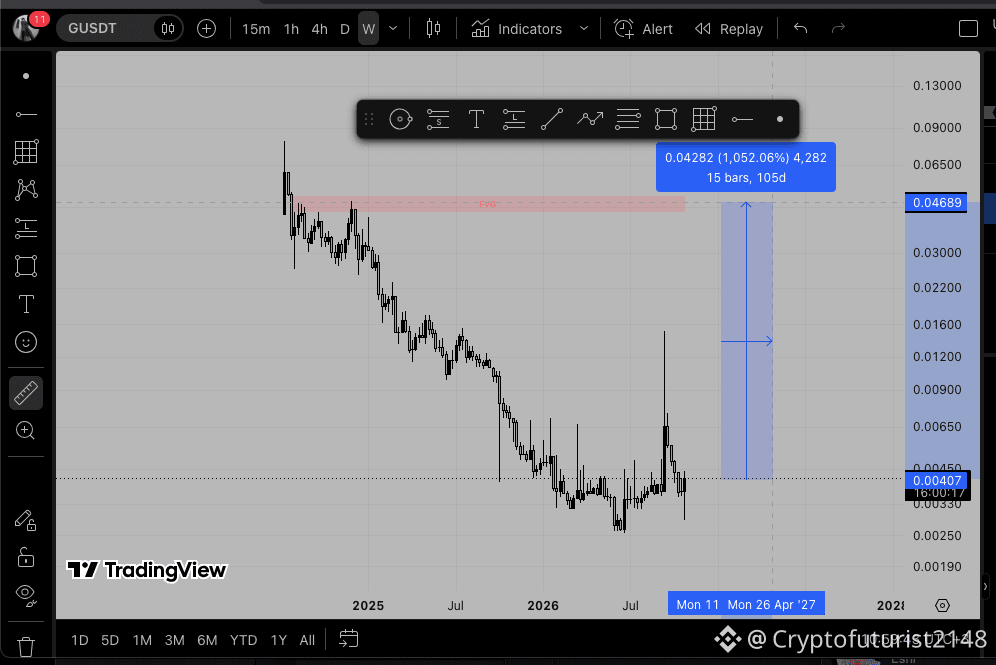
294
Article
The $6.3 Billion Binance Hack: What Happened, Who's Behind It, and How to Protect Your CryptoOn October 29, 2026, the crypto industry saw its biggest theft ever. Binance, the world's largest exchange, said hackers stole about $6.3 billion, far beyond the previous record. Here is what we know, what it means for the market, and what you can do to protect your own assets.
What happened
Blockchain analysis firms TRM Labs and Chainalysis say most of the theft unfolded over about 20 minutes, with the attacker moving roughly $6.36 billion out of Binance wallets across 10 blockchains. That dwarfs the $1.5 billion stolen from Bybit in February 2025.
Binance suspended deposits and withdrawals and said it would cover all losses, telling Al Jazeera that user funds were "safe." It also warned that the $6.3 billion figure may continue to rise as it traces more assets.
How the attack worked
Binance's first finding was that the breach went through an engineer's laptop, which let the attacker reach a service container and submit unauthorized withdrawal transactions. Co-CEO Richard Teng said it was not a "one-click" action but a complex process.
The picture has since widened. On Friday, Binance said further investigation had uncovered additional points of breach, though it still found no evidence that any wallet private key had leaked. Mark Karpeles, former head of the collapsed Mt Gox exchange, told Reuters he believes the attackers probably accessed keys for at least two Binance wallets. That disagreement is unresolved, so treat the technical details as preliminary.
The lesson is already clear: big breaches often start with people and devices, not with broken cryptography.
Who is blamed
TRM said it assessed "with high confidence" that the attack was carried out by TraderTraitor, a North Korean unit linked to the Lazarus Group. Chainalysis reached the same conclusion, and the FBI blamed the Bybit hack on the same unit. Pangolin Intelligence, a Singapore-based tracking firm, also believes a North Korean unit was responsible.
Binance is more cautious. Teng said the company's investigation has not attributed responsibility to any individual. North Korea has previously denied hacking allegations. This remains attribution by analysts, not an official finding.
Why it matters beyond crypto
North Korea's crypto theft has become a source of foreign currency that experts say helps prop up its economy and fund its sanctioned nuclear programme. TRM's Ari Redbord called it a global security issue, not just a crypto theft.
The race to freeze the money
Binance said about $3 billion has been frozen, including more than $2.3 billion by stablecoin issuers Tether and Circle, but it has not said what happened to the remaining $3.3 billion. The reason is that freezing works only for tokens whose issuer or governing body can block specific addresses. Stablecoins can be frozen, while many other assets cannot.
One analyst warned that the "cat and mouse game has barely begun," with North Korea likely to use money laundering networks to cash out. Funds not frozen early are rarely recovered.
Can Binance cover it?
The stolen amount is more than six times Binance's SAFU emergency fund, which was set up in 2018 and held in Bitcoin. Sources differ on its size: 21shares puts it at 15,000 BTC, about $1.18 billion. Either way, Binance has said company funds will cover the rest. Its proof of reserves as of October 1 showed net user balances of $134 billion against about $136 billion on-chain, a surplus near $2 billion. The company has said it will cover everyone, but the numbers show how much depends on its balance sheet.
Market reaction
Bitcoin hit a six-week low of $76,368 and Ether fell to a two-month low, while Coinbase shares fell 4.8%. Bitcoin's fall of just over 2% over 24 hours was far smaller than its 26% drawdown after FTX. The market treated this as a failure at one company, not a failure of Bitcoin. Analysts said crypto was already under pressure from higher US interest rates and weaker ETF demand.
DeFi saw only brief spillover. The attacker deposited 60 million stolen USDT into Aave and borrowed about $44.6 million in WETH within about three minutes. Aave froze its markets as a precaution and reported no bad debt.
The bigger lesson: centralized exchanges are giant targets
Sean Foley of Macquarie University said assets at a centralized exchange are only as safe as the exchange itself, and the larger its holdings, the bigger the target. Insurance won't save you either: most crime and cyber policies don't cover stolen cryptocurrency.
This is a pattern, not a one-off. TRM's 2026 report counted $2.87 billion stolen in nearly 150 attacks in 2025.
How to protect your crypto
You can't control an exchange's security, but you can control your exposure.
1. Don't keep everything on one platform. Keep only trading funds on exchanges. Move long-term holdings to a hardware wallet that you control.
2. Plan for a pause. Even when users are covered, withdrawals can be frozen for days. Keep an emergency reserve you can reach anytime.
3. Use phishing-resistant 2FA. Use a hardware security key or passkey instead of SMS codes, and turn on anti-phishing codes and withdrawal address whitelisting.
4. Treat your own device like a vault door. This attack began with an engineer's laptop. Keep your devices updated, avoid pirated software and unknown extensions, and don't do crypto on a machine you use for everything.
5. Split your funds. Use separate wallets for daily use, DeFi and long-term storage, so one failure can't take everything.
6. Clean up permissions. Delete unused API keys and revoke old smart contract approvals.
7. Watch for scams. After a big hack, fake "refund" and "compensation" links spread fast. Never share your seed phrase, and only trust official channels.
8. Back up offline. Store your seed phrase on paper or metal, never in screenshots, notes apps or cloud storage.
9. Don't panic-sell. The market's quick recovery shows that panic selling usually locks in losses.
What to watch next
Withdrawals. Binance said it was on track to resume withdrawals within 45 hours of Friday's update.Recovery. Whether the remaining $3.3 billion is traced or laundered.Cause. Whether the investigation confirms stolen keys or a different path.Official attribution. Whether governments formally name North Korea.
Bottom line
No security setup is perfect, and the biggest names are not immune. The best defense is to make sure no single failure, whether yours or an exchange's, can wipe you out.
This article is for information only and is not financial advice. Details are based on reporting from October 30-31, 2026 and may change as the investigation continues.
💬 After this hack, how much of your crypto will you keep on exchanges? Tell us in the comments.
#Binance #CryptoSecurity #BinanceHack #SelfCustody #BinanceSquare
The $6.3 Billion Binance Hack: What Happened, Who's Behind It, and How to Protect Your Crypto
On October 29, 2026, the crypto industry saw its biggest theft ever. Binance, the world's largest exchange, said hackers stole about $6.3 billion, far beyond the previous record. Here is what we know, what it means for the market, and what you can do to protect your own assets.
What happened
Blockchain analysis firms TRM Labs and Chainalysis say most of the theft unfolded over about 20 minutes, with the attacker moving roughly $6.36 billion out of Binance wallets across 10 blockchains. That dwarfs the $1.5 billion stolen from Bybit in February 2025.
Binance suspended deposits and withdrawals and said it would cover all losses, telling Al Jazeera that user funds were "safe." It also warned that the $6.3 billion figure may continue to rise as it traces more assets.
How the attack worked
Binance's first finding was that the breach went through an engineer's laptop, which let the attacker reach a service container and submit unauthorized withdrawal transactions. Co-CEO Richard Teng said it was not a "one-click" action but a complex process.
The picture has since widened. On Friday, Binance said further investigation had uncovered additional points of breach, though it still found no evidence that any wallet private key had leaked. Mark Karpeles, former head of the collapsed Mt Gox exchange, told Reuters he believes the attackers probably accessed keys for at least two Binance wallets. That disagreement is unresolved, so treat the technical details as preliminary.
The lesson is already clear: big breaches often start with people and devices, not with broken cryptography.
Who is blamed
TRM said it assessed "with high confidence" that the attack was carried out by TraderTraitor, a North Korean unit linked to the Lazarus Group. Chainalysis reached the same conclusion, and the FBI blamed the Bybit hack on the same unit. Pangolin Intelligence, a Singapore-based tracking firm, also believes a North Korean unit was responsible.
Binance is more cautious. Teng said the company's investigation has not attributed responsibility to any individual. North Korea has previously denied hacking allegations. This remains attribution by analysts, not an official finding.
Why it matters beyond crypto
North Korea's crypto theft has become a source of foreign currency that experts say helps prop up its economy and fund its sanctioned nuclear programme. TRM's Ari Redbord called it a global security issue, not just a crypto theft.
The race to freeze the money
Binance said about $3 billion has been frozen, including more than $2.3 billion by stablecoin issuers Tether and Circle, but it has not said what happened to the remaining $3.3 billion. The reason is that freezing works only for tokens whose issuer or governing body can block specific addresses. Stablecoins can be frozen, while many other assets cannot.
One analyst warned that the "cat and mouse game has barely begun," with North Korea likely to use money laundering networks to cash out. Funds not frozen early are rarely recovered.
Can Binance cover it?
The stolen amount is more than six times Binance's SAFU emergency fund, which was set up in 2018 and held in Bitcoin. Sources differ on its size: 21shares puts it at 15,000 BTC, about $1.18 billion. Either way, Binance has said company funds will cover the rest. Its proof of reserves as of October 1 showed net user balances of $134 billion against about $136 billion on-chain, a surplus near $2 billion. The company has said it will cover everyone, but the numbers show how much depends on its balance sheet.
Market reaction
Bitcoin hit a six-week low of $76,368 and Ether fell to a two-month low, while Coinbase shares fell 4.8%. Bitcoin's fall of just over 2% over 24 hours was far smaller than its 26% drawdown after FTX. The market treated this as a failure at one company, not a failure of Bitcoin. Analysts said crypto was already under pressure from higher US interest rates and weaker ETF demand.
DeFi saw only brief spillover. The attacker deposited 60 million stolen USDT into Aave and borrowed about $44.6 million in WETH within about three minutes. Aave froze its markets as a precaution and reported no bad debt.
The bigger lesson: centralized exchanges are giant targets
Sean Foley of Macquarie University said assets at a centralized exchange are only as safe as the exchange itself, and the larger its holdings, the bigger the target. Insurance won't save you either: most crime and cyber policies don't cover stolen cryptocurrency.
This is a pattern, not a one-off. TRM's 2026 report counted $2.87 billion stolen in nearly 150 attacks in 2025.
How to protect your crypto
You can't control an exchange's security, but you can control your exposure.
1. Don't keep everything on one platform. Keep only trading funds on exchanges. Move long-term holdings to a hardware wallet that you control.
2. Plan for a pause. Even when users are covered, withdrawals can be frozen for days. Keep an emergency reserve you can reach anytime.
3. Use phishing-resistant 2FA. Use a hardware security key or passkey instead of SMS codes, and turn on anti-phishing codes and withdrawal address whitelisting.
4. Treat your own device like a vault door. This attack began with an engineer's laptop. Keep your devices updated, avoid pirated software and unknown extensions, and don't do crypto on a machine you use for everything.
5. Split your funds. Use separate wallets for daily use, DeFi and long-term storage, so one failure can't take everything.
6. Clean up permissions. Delete unused API keys and revoke old smart contract approvals.
7. Watch for scams. After a big hack, fake "refund" and "compensation" links spread fast. Never share your seed phrase, and only trust official channels.
8. Back up offline. Store your seed phrase on paper or metal, never in screenshots, notes apps or cloud storage.
9. Don't panic-sell. The market's quick recovery shows that panic selling usually locks in losses.
What to watch next
Withdrawals. Binance said it was on track to resume withdrawals within 45 hours of Friday's update.Recovery. Whether the remaining $3.3 billion is traced or laundered.Cause. Whether the investigation confirms stolen keys or a different path.Official attribution. Whether governments formally name North Korea.
Bottom line
No security setup is perfect, and the biggest names are not immune. The best defense is to make sure no single failure, whether yours or an exchange's, can wipe you out.
This article is for information only and is not financial advice. Details are based on reporting from October 30-31, 2026 and may change as the investigation continues.
💬 After this hack, how much of your crypto will you keep on exchanges? Tell us in the comments.
#Binance #CryptoSecurity #BinanceHack #SelfCustody #BinanceSquare
1
815
💥 What If Your Exchange Got Hacked Tomorrow? Lessons From the $6.3B Binance Breach
Most of us ask, “Is my exchange secure?” After this week, a better question is: “If it fails, what happens to me?”
Here’s what the incident teaches us 👇
1️⃣ Not every asset is recoverable
Freezing only works for tokens whose issuer can block addresses. Tether and Circle froze over $2.4B in stablecoins within hours. Other assets are much harder to claw back once they move.
👉 Know which of your assets could be frozen after a theft and which could not.
2️⃣ A safety fund isn’t full coverage
Binance says it will cover all losses. Its SAFU fund (15,000 BTC, about $1.18B) covers only part of the unfrozen amount, and the rest comes from company funds. That’s reassuring, but it shows why an exchange’s balance sheet matters.
👉 Check proof of reserves, not just promises.
3️⃣ One device can be the weak point
Early findings point to a compromised engineer’s laptop, not a leaked wallet key. Attackers go after people before they go after code.
👉 Delete unused API keys, review your logged-in sessions, and use a separate email just for crypto.
4️⃣ Problems spread in minutes
Within about three minutes, the attacker had deposited stolen USDT into Aave and borrowed WETH against it. One breach can reach other platforms almost instantly.
👉 Don’t put all your capital on one platform or protocol.
5️⃣ Panic is optional
Bitcoin dropped only about 2% after the hack, compared to 26% after FTX. The market saw a single-company breach, not a flaw in Bitcoin.
👉 Set your exit rules now, so you aren’t deciding in the middle of a crisis.
✅ 5-minute self-audit
☐ How much of my portfolio sits on one exchange?
☐ Could I live with a 48-hour withdrawal pause?
☐ Do I have funds outside the exchange?
☐ Do I know where my backups are?
Security isn’t about trusting one platform more. It’s about making sure no single failure can hurt you badly. 🛡️
💬 What % of your crypto is on exchanges vs. self-custody? Drop a rough number below 👇
#Binance
104
Article
Securing Your Wallets and Accounts: Lessons from the Binance HackSecuring Your Wallets and Accounts: Lessons from the Binance Hack
Updated October 30, 2026. Reporting on the Binance incident is still changing, so treat the figures and attribution below as preliminary.
The biggest exchange in crypto has been hit by what is being described as possibly the largest hack in the industry's history. Whatever the final numbers turn out to be, the lesson for ordinary users is the same one we keep relearning: security is a chain, and you only control some of the links. This post separates the links you can't control from the ones you can, and gives you a concrete plan for the second group.
The short version: keep only trading-sized balances on exchanges, lock your account with a hardware key or passkey and a withdrawal whitelist, move long-term holdings to a hardware wallet with an offline seed backup, and treat every post-hack email, DM or "compensation" link as a scam until proven otherwise.
WHAT WE KNOW, AND WHAT WE DON'T
As of this writing, reporting says Binance suspended withdrawals after suspicious outflows from its hot wallets, and that more than 2.5 billion US dollars in assets has been frozen. Estimates of the total moved vary widely, from roughly 5.8 billion to about 6.3 billion US dollars depending on the outlet and the tracker. Stablecoin issuers have reportedly frozen some funds. Several blockchain investigators have publicly linked the theft to North Korea's TraderTraitor group, based on similarities with earlier thefts. That attribution is an assessment, not a confirmed finding. Former CEO Changpeng Zhao has said he expects user funds to be fully covered.
What we do not know yet: how the attackers got in, whether any individual user accounts were compromised, how much will be recovered, and whether users will be made whole. Anyone who tells you the root cause today is guessing. Be skeptical of any thread, video or Telegram channel that claims inside knowledge.
This is also not Binance's first major incident. In May 2019, attackers took 7,000 BTC from a hot wallet holding about 2 percent of the exchange's Bitcoin. Binance said the attackers used phishing, viruses and other attacks, and had obtained user API keys and 2FA codes. Back then Binance covered the loss from its SAFU emergency fund. Different year, different scale, same category of problem: the weak point was operational security around hot wallets and credentials, not the cryptography of Bitcoin itself.
THE FIRST LESSON: KNOW WHICH RISK YOU ARE CARRYING
When you hold crypto, you can be exposed to three very different kinds of risk.
Platform risk. If your coins sit on an exchange, you hold an IOU. A breach of the exchange's own infrastructure can hurt you no matter how perfect your personal security is. You can't fix this with a better password. You can only decide how much you are willing to expose to it.Account risk. Someone takes over your exchange login, drains your balance, or abuses your API keys. This is the most common way individuals lose money, and it is almost entirely within your control.Wallet risk. If you self-custody, nobody can freeze or reverse anything, including you and including thieves. Your seed phrase and your signing habits are the whole game.
Most people think about only one of these at a time. A good setup addresses all three.
PART 1: REDUCE YOUR PLATFORM RISK
You can't audit an exchange's internals, so the only lever is exposure.
Treat exchanges as places to trade, not places to store. Keep what you actively trade on the exchange and move the rest to self-custody.Spread across venues if you must hold on exchanges. One breach should not be able to take everything.Don't treat insurance funds and "proof of reserves" as guarantees. Funds like SAFU and reserve attestations are useful signals, but they are only as good as the company's solvency and willingness to pay, and a reserve snapshot says little about operational security.Expect friction during incidents. Withdrawals can be paused for days. If you might need your money on short notice, don't have all of it behind a withdrawal button someone else controls.Understand stablecoin freezes. Issuers like Tether and Circle can freeze addresses. That's helpful against thieves and a reminder that stablecoins are not bearer assets in the way Bitcoin is.
A simple rule of thumb: only keep on an exchange an amount whose total loss, or a month-long freeze, you could absorb.
PART 2: LOCK DOWN YOUR EXCHANGE ACCOUNT
If you keep any balance on Binance or any other exchange, do all of the following today.
Authentication
Use passkeys or hardware security keys (FIDO2 or YubiKey) where offered. They are resistant to phishing because they only work on the real site.Use an authenticator app instead of SMS. SMS codes are vulnerable to SIM swapping and interception. Remove SMS as a 2FA method entirely if the platform allows it.Use a unique, long password from a password manager. Never reuse a password between your exchange, your email and anything else.Protect your email as if it were your bank. Whoever controls your email can reset almost everything. Put a hardware key or passkey on it, and use a different email address for exchanges than the one you use for newsletters and shopping.
Withdrawal protections
Turn on the withdrawal address whitelist. With it on, funds can only leave to addresses you pre-approved, often with a delay on new additions. This single setting defeats many account takeovers.Enable the anti-phishing code. Binance and others let you set a code that appears in every genuine email from them. If an email lacks it, it's fake.Set withdrawal limits and cooldowns if available, so a stolen session can't empty everything at once.Review active sessions and devices regularly and revoke anything unfamiliar.
API keys, a lesson straight from 2019
Attackers in the 2019 incident got hold of user API keys. If you trade through bots or third-party tools:
Create keys with the minimum permissions. Trading only, never withdrawal, unless you have an exceptional reason.Restrict each key to specific IP addresses.Use one key per tool, so you can revoke one without breaking the rest.Delete keys you no longer use. Also never paste keys into code you commit, chat tools, or screenshots. Keys leaked via code repositories are a recurring cause of losses.After any security incident at a platform, rotate your keys as a precaution.
PART 3: SECURE YOUR SELF-CUSTODY WALLETS
Self-custody removes platform risk and replaces it with responsibility. Here is a setup that works for most people.
Hardware first
Use a hardware wallet for any meaningful amount. Buy it directly from the manufacturer, never from a marketplace or a reseller, and be suspicious of any device that arrives pre-initialized or with a pre-written recovery card.Keep your firmware updated, but only through the manufacturer's official app.
Your seed phrase is the money
Write it on paper or stamp it in metal. Never store it digitally. No photos, no notes apps, no cloud drives, no password managers, no emails to yourself.Never type it into anything except your hardware device during a genuine recovery. No support agent, exchange, wallet app or airdrop site will ever legitimately ask for it.Store backups in at least two physically separate, secure places. A fire or a flood shouldn't be able to destroy the only copy.Consider an optional passphrase (the "25th word"). It adds a second factor, but if you forget it, the funds are gone. Only use it if you can manage the extra backup.
Split your setup by purpose
A clean structure looks like this:
Cold wallet: long-term holdings, rarely touched, hardware-backed.Warm wallet: a separate hardware-backed account for occasional use.Hot wallet: a browser or mobile wallet with only a small amount, for experimenting and DeFi.
Never connect your cold wallet to unfamiliar sites. If a hot wallet is compromised, you lose a small amount rather than everything.
For larger sums, use multisig
A multi-signature wallet requires several independent keys to approve a transaction, for example two of three. No single stolen key or device can move the funds. Place keys on different devices, in different locations, ideally with different manufacturers.
Verify what you sign
The February 2025 Bybit theft, about 1.5 billion US dollars, is the cautionary tale here. Per public post-mortems, the attackers did not break the multisig wallet's cryptography. They compromised the interface that signers used, so the screen showed a routine transfer while the transaction actually handed control of the wallet to the attackers. The signers did their job and approved what they saw.
The takeaway for individuals:
Read the transaction details on your hardware device's own screen, not just in the browser.Treat blind signing as dangerous. Avoid approving data you can't read, and disable blind signing in your hardware wallet settings unless you truly need it.Compare the full destination address, not just the first and last few characters.Send a small test transaction before moving large amounts to a new address.Be wary of address poisoning, where a scammer sends you a tiny transaction from an address that resembles one you've used, hoping you'll copy it from your history.
Token approvals
Every time you approve a smart contract to spend your tokens, that permission can persist indefinitely. Periodically review and revoke unused approvals using a reputable approval-checking tool, and avoid granting unlimited allowances when a specific amount will do.
PART 4: THE HUMAN LAYER
Most successful attacks, including the large ones, start with a person rather than a flaw in code. State-linked groups in particular are known for patient social engineering.
Fake job offers and "interviews." Be very cautious with anyone who asks you to download software, run a coding test or open a file as part of a hiring process. Run unknown files only in a separate, throwaway environment.Impersonation of support staff. Exchange support will not DM you first, will not ask for your 2FA codes, and will not ask you to "verify" your wallet.Urgency is the tell. "Your account will be frozen in 30 minutes" is a manipulation tactic, not a policy.Type or bookmark the URL. Do not click links in emails, ads or social posts to reach an exchange or wallet. Search-engine ads for wallet and exchange names are a known scam route.Keep your devices clean. Use a current operating system, avoid pirated software, don't install browser extensions casually, and consider a dedicated device or browser profile for crypto.
Expect a wave of scams right now
Big breaches reliably trigger secondary fraud. Over the next weeks, expect:
Fake emails and texts about "compensation claims" or "account verification" after the hack.Fake Binance support accounts offering to "recover" funds for a fee.Cloned websites asking you to connect a wallet or enter your seed phrase to "claim reimbursement."
If Binance owes you something, it will show up in your account or be announced on its official channels. You will not need to give anyone your seed phrase or 2FA codes to receive it.
IF YOU HAVE FUNDS ON BINANCE RIGHT NOW
Withdrawals are reportedly suspended, so your options are limited. Focus on what you can control:
Don't panic-click. Rushing is how people fall for the fake "recovery" sites.Secure your account: change your password, move to a hardware key or authenticator app, review devices and sessions, and enable the withdrawal whitelist and anti-phishing code.Rotate or delete API keys.Check your email for anything suspicious and secure that account too.Only follow official announcements from Binance's verified channels, accessed through a bookmark or by typing the address yourself.Keep records: screenshots of balances, trade history and any communications, in case you need them later.When withdrawals resume, consider moving long-term holdings to self-custody in stages, starting with a small test transfer.
THE ONE-PAGE CHECKLIST
Exchange account
Hardware key or passkey enabled, SMS 2FA removedUnique password in a password managerEmail secured with its own strong 2FAWithdrawal whitelist and anti-phishing code onAPI keys: trade-only, IP-restricted, unused ones deletedOnly trading-sized balances left on the platform
Self-custody
Hardware wallet bought direct from the manufacturerSeed phrase on paper or metal, offline, two locationsCold, warm and hot wallets kept separateMultisig for large holdingsTransactions verified on the device screen, blind signing offOld token approvals revoked
Habits
Bookmarked URLs onlyNobody ever gets your seed phrase or codesSkepticism toward anything urgent, unsolicited or too generous
THE BIGGER PICTURE
Every large crypto theft prompts the same debate about whether the answer is better exchanges or no exchanges. The honest answer is that it depends on what you are doing with the funds. Exchanges are convenient and sometimes necessary. Self-custody is powerful and unforgiving. The people who come out of these events in good shape are not the ones who found the perfect option. They're the ones who limited their exposure in advance, removed the easy attack paths, and never relied on a single point of failure.
We'll update this post as Binance and independent investigators publish more about what happened.
SOURCES
Status figures and attribution come from early reporting that is changing hour by hour. Check Binance's official channels for updates.
Euronews: Binance confirms major hack with more than 2.5bn USD frozen https://www.euronews.com/2026/10/30/crypto-platform-binance-confirms-major-hack-with-more-than-25bn-frozenThe Block: Binance investigating hack as suspicious outflows reach up to 5.8 billion USD https://www.theblock.co/news/markets/2026-10-29-binance-investigating-hack-suspicious-outflows-5-billion-432171Cointelegraph: North Korea's TraderTraitor linked to 6.3B USD Binance hack https://cointelegraph.com/news/north-korea-linked-to-63b-binance-hack-by-crypto-investigatorsCoingape: Binance suspected of suffering over 5B USD hack as Tether, Circle freeze assets https://coingape.com/binance-suspected-of-suffering-over-5b-hack-as-tether-circle-freeze-assets/The Jakarta Post: Crypto platform Binance confirms major hack, more than 2.5b USD frozen https://www.thejakartapost.com/business/2026/10/30/crypto-platform-binance-confirms-major-hack-more-than-25b-frozenDecrypt: Binance hack security breach (May 2019) https://decrypt.co/6930/binance-hack-security-breach
The 2025 Bybit details are drawn from public post-mortems.
This post is general information, not financial advice.
Securing Your Wallets and Accounts: Lessons from the Binance Hack
Securing Your Wallets and Accounts: Lessons from the Binance Hack
Updated October 30, 2026. Reporting on the Binance incident is still changing, so treat the figures and attribution below as preliminary.
The biggest exchange in crypto has been hit by what is being described as possibly the largest hack in the industry's history. Whatever the final numbers turn out to be, the lesson for ordinary users is the same one we keep relearning: security is a chain, and you only control some of the links. This post separates the links you can't control from the ones you can, and gives you a concrete plan for the second group.
The short version: keep only trading-sized balances on exchanges, lock your account with a hardware key or passkey and a withdrawal whitelist, move long-term holdings to a hardware wallet with an offline seed backup, and treat every post-hack email, DM or "compensation" link as a scam until proven otherwise.
WHAT WE KNOW, AND WHAT WE DON'T
As of this writing, reporting says Binance suspended withdrawals after suspicious outflows from its hot wallets, and that more than 2.5 billion US dollars in assets has been frozen. Estimates of the total moved vary widely, from roughly 5.8 billion to about 6.3 billion US dollars depending on the outlet and the tracker. Stablecoin issuers have reportedly frozen some funds. Several blockchain investigators have publicly linked the theft to North Korea's TraderTraitor group, based on similarities with earlier thefts. That attribution is an assessment, not a confirmed finding. Former CEO Changpeng Zhao has said he expects user funds to be fully covered.
What we do not know yet: how the attackers got in, whether any individual user accounts were compromised, how much will be recovered, and whether users will be made whole. Anyone who tells you the root cause today is guessing. Be skeptical of any thread, video or Telegram channel that claims inside knowledge.
This is also not Binance's first major incident. In May 2019, attackers took 7,000 BTC from a hot wallet holding about 2 percent of the exchange's Bitcoin. Binance said the attackers used phishing, viruses and other attacks, and had obtained user API keys and 2FA codes. Back then Binance covered the loss from its SAFU emergency fund. Different year, different scale, same category of problem: the weak point was operational security around hot wallets and credentials, not the cryptography of Bitcoin itself.
THE FIRST LESSON: KNOW WHICH RISK YOU ARE CARRYING
When you hold crypto, you can be exposed to three very different kinds of risk.
Platform risk. If your coins sit on an exchange, you hold an IOU. A breach of the exchange's own infrastructure can hurt you no matter how perfect your personal security is. You can't fix this with a better password. You can only decide how much you are willing to expose to it.Account risk. Someone takes over your exchange login, drains your balance, or abuses your API keys. This is the most common way individuals lose money, and it is almost entirely within your control.Wallet risk. If you self-custody, nobody can freeze or reverse anything, including you and including thieves. Your seed phrase and your signing habits are the whole game.
Most people think about only one of these at a time. A good setup addresses all three.
PART 1: REDUCE YOUR PLATFORM RISK
You can't audit an exchange's internals, so the only lever is exposure.
Treat exchanges as places to trade, not places to store. Keep what you actively trade on the exchange and move the rest to self-custody.Spread across venues if you must hold on exchanges. One breach should not be able to take everything.Don't treat insurance funds and "proof of reserves" as guarantees. Funds like SAFU and reserve attestations are useful signals, but they are only as good as the company's solvency and willingness to pay, and a reserve snapshot says little about operational security.Expect friction during incidents. Withdrawals can be paused for days. If you might need your money on short notice, don't have all of it behind a withdrawal button someone else controls.Understand stablecoin freezes. Issuers like Tether and Circle can freeze addresses. That's helpful against thieves and a reminder that stablecoins are not bearer assets in the way Bitcoin is.
A simple rule of thumb: only keep on an exchange an amount whose total loss, or a month-long freeze, you could absorb.
PART 2: LOCK DOWN YOUR EXCHANGE ACCOUNT
If you keep any balance on Binance or any other exchange, do all of the following today.
Authentication
Use passkeys or hardware security keys (FIDO2 or YubiKey) where offered. They are resistant to phishing because they only work on the real site.Use an authenticator app instead of SMS. SMS codes are vulnerable to SIM swapping and interception. Remove SMS as a 2FA method entirely if the platform allows it.Use a unique, long password from a password manager. Never reuse a password between your exchange, your email and anything else.Protect your email as if it were your bank. Whoever controls your email can reset almost everything. Put a hardware key or passkey on it, and use a different email address for exchanges than the one you use for newsletters and shopping.
Withdrawal protections
Turn on the withdrawal address whitelist. With it on, funds can only leave to addresses you pre-approved, often with a delay on new additions. This single setting defeats many account takeovers.Enable the anti-phishing code. Binance and others let you set a code that appears in every genuine email from them. If an email lacks it, it's fake.Set withdrawal limits and cooldowns if available, so a stolen session can't empty everything at once.Review active sessions and devices regularly and revoke anything unfamiliar.
API keys, a lesson straight from 2019
Attackers in the 2019 incident got hold of user API keys. If you trade through bots or third-party tools:
Create keys with the minimum permissions. Trading only, never withdrawal, unless you have an exceptional reason.Restrict each key to specific IP addresses.Use one key per tool, so you can revoke one without breaking the rest.Delete keys you no longer use. Also never paste keys into code you commit, chat tools, or screenshots. Keys leaked via code repositories are a recurring cause of losses.After any security incident at a platform, rotate your keys as a precaution.
PART 3: SECURE YOUR SELF-CUSTODY WALLETS
Self-custody removes platform risk and replaces it with responsibility. Here is a setup that works for most people.
Hardware first
Use a hardware wallet for any meaningful amount. Buy it directly from the manufacturer, never from a marketplace or a reseller, and be suspicious of any device that arrives pre-initialized or with a pre-written recovery card.Keep your firmware updated, but only through the manufacturer's official app.
Your seed phrase is the money
Write it on paper or stamp it in metal. Never store it digitally. No photos, no notes apps, no cloud drives, no password managers, no emails to yourself.Never type it into anything except your hardware device during a genuine recovery. No support agent, exchange, wallet app or airdrop site will ever legitimately ask for it.Store backups in at least two physically separate, secure places. A fire or a flood shouldn't be able to destroy the only copy.Consider an optional passphrase (the "25th word"). It adds a second factor, but if you forget it, the funds are gone. Only use it if you can manage the extra backup.
Split your setup by purpose
A clean structure looks like this:
Cold wallet: long-term holdings, rarely touched, hardware-backed.Warm wallet: a separate hardware-backed account for occasional use.Hot wallet: a browser or mobile wallet with only a small amount, for experimenting and DeFi.
Never connect your cold wallet to unfamiliar sites. If a hot wallet is compromised, you lose a small amount rather than everything.
For larger sums, use multisig
A multi-signature wallet requires several independent keys to approve a transaction, for example two of three. No single stolen key or device can move the funds. Place keys on different devices, in different locations, ideally with different manufacturers.
Verify what you sign
The February 2025 Bybit theft, about 1.5 billion US dollars, is the cautionary tale here. Per public post-mortems, the attackers did not break the multisig wallet's cryptography. They compromised the interface that signers used, so the screen showed a routine transfer while the transaction actually handed control of the wallet to the attackers. The signers did their job and approved what they saw.
The takeaway for individuals:
Read the transaction details on your hardware device's own screen, not just in the browser.Treat blind signing as dangerous. Avoid approving data you can't read, and disable blind signing in your hardware wallet settings unless you truly need it.Compare the full destination address, not just the first and last few characters.Send a small test transaction before moving large amounts to a new address.Be wary of address poisoning, where a scammer sends you a tiny transaction from an address that resembles one you've used, hoping you'll copy it from your history.
Token approvals
Every time you approve a smart contract to spend your tokens, that permission can persist indefinitely. Periodically review and revoke unused approvals using a reputable approval-checking tool, and avoid granting unlimited allowances when a specific amount will do.
PART 4: THE HUMAN LAYER
Most successful attacks, including the large ones, start with a person rather than a flaw in code. State-linked groups in particular are known for patient social engineering.
Fake job offers and "interviews." Be very cautious with anyone who asks you to download software, run a coding test or open a file as part of a hiring process. Run unknown files only in a separate, throwaway environment.Impersonation of support staff. Exchange support will not DM you first, will not ask for your 2FA codes, and will not ask you to "verify" your wallet.Urgency is the tell. "Your account will be frozen in 30 minutes" is a manipulation tactic, not a policy.Type or bookmark the URL. Do not click links in emails, ads or social posts to reach an exchange or wallet. Search-engine ads for wallet and exchange names are a known scam route.Keep your devices clean. Use a current operating system, avoid pirated software, don't install browser extensions casually, and consider a dedicated device or browser profile for crypto.
Expect a wave of scams right now
Big breaches reliably trigger secondary fraud. Over the next weeks, expect:
Fake emails and texts about "compensation claims" or "account verification" after the hack.Fake Binance support accounts offering to "recover" funds for a fee.Cloned websites asking you to connect a wallet or enter your seed phrase to "claim reimbursement."
If Binance owes you something, it will show up in your account or be announced on its official channels. You will not need to give anyone your seed phrase or 2FA codes to receive it.
IF YOU HAVE FUNDS ON BINANCE RIGHT NOW
Withdrawals are reportedly suspended, so your options are limited. Focus on what you can control:
Don't panic-click. Rushing is how people fall for the fake "recovery" sites.Secure your account: change your password, move to a hardware key or authenticator app, review devices and sessions, and enable the withdrawal whitelist and anti-phishing code.Rotate or delete API keys.Check your email for anything suspicious and secure that account too.Only follow official announcements from Binance's verified channels, accessed through a bookmark or by typing the address yourself.Keep records: screenshots of balances, trade history and any communications, in case you need them later.When withdrawals resume, consider moving long-term holdings to self-custody in stages, starting with a small test transfer.
THE ONE-PAGE CHECKLIST
Exchange account
Hardware key or passkey enabled, SMS 2FA removedUnique password in a password managerEmail secured with its own strong 2FAWithdrawal whitelist and anti-phishing code onAPI keys: trade-only, IP-restricted, unused ones deletedOnly trading-sized balances left on the platform
Self-custody
Hardware wallet bought direct from the manufacturerSeed phrase on paper or metal, offline, two locationsCold, warm and hot wallets kept separateMultisig for large holdingsTransactions verified on the device screen, blind signing offOld token approvals revoked
Habits
Bookmarked URLs onlyNobody ever gets your seed phrase or codesSkepticism toward anything urgent, unsolicited or too generous
THE BIGGER PICTURE
Every large crypto theft prompts the same debate about whether the answer is better exchanges or no exchanges. The honest answer is that it depends on what you are doing with the funds. Exchanges are convenient and sometimes necessary. Self-custody is powerful and unforgiving. The people who come out of these events in good shape are not the ones who found the perfect option. They're the ones who limited their exposure in advance, removed the easy attack paths, and never relied on a single point of failure.
We'll update this post as Binance and independent investigators publish more about what happened.
SOURCES
Status figures and attribution come from early reporting that is changing hour by hour. Check Binance's official channels for updates.
Euronews: Binance confirms major hack with more than 2.5bn USD frozen https://www.euronews.com/2026/10/30/crypto-platform-binance-confirms-major-hack-with-more-than-25bn-frozenThe Block: Binance investigating hack as suspicious outflows reach up to 5.8 billion USD https://www.theblock.co/news/markets/2026-10-29-binance-investigating-hack-suspicious-outflows-5-billion-432171Cointelegraph: North Korea's TraderTraitor linked to 6.3B USD Binance hack https://cointelegraph.com/news/north-korea-linked-to-63b-binance-hack-by-crypto-investigatorsCoingape: Binance suspected of suffering over 5B USD hack as Tether, Circle freeze assets https://coingape.com/binance-suspected-of-suffering-over-5b-hack-as-tether-circle-freeze-assets/The Jakarta Post: Crypto platform Binance confirms major hack, more than 2.5b USD frozen https://www.thejakartapost.com/business/2026/10/30/crypto-platform-binance-confirms-major-hack-more-than-25b-frozenDecrypt: Binance hack security breach (May 2019) https://decrypt.co/6930/binance-hack-security-breach
The 2025 Bybit details are drawn from public post-mortems.
This post is general information, not financial advice.
1
3
2.2k
Log in to explore more content
Join global crypto users on Binance Square
⚡️ Get latest and useful information about crypto.
💬 Trusted by the world’s largest crypto exchange.
👍 Discover real insights from verified creators.
Email / Phone number
Trending Topics
MoreHikesExpectedIsBTCUnderPressure
10,593 views
137 Discussing
FOMC Minutes | Fed Minutes Show Almost All Officials Expect More Rate Hikes, With Some Open to a Larger December Move
Binance News
·18 Likes
·24.2k views
NvidiaBeatsEstimatesWith$130BQ4Outlook
76,334 views
309 Discussing
AnthropicIPOPriceCouldExceed$80
74,358 views
255 Discussing