
CryptoFrontNews
17.5k Posts

CryptoFrontNews
 Square Verified+
Report
Block User
CryptoFrontNews (CFN) delivers the latest in cryptocurrency with real-time updates, expert analyses, and in-depth articles on digital currencies and blockchain.
4 Following
12.4K+ Followers
19.0K+ Liked
Posts

Article
Dogecoin Price Prediction: DOGE Could Hit $0.14 as Apeing’s Banana Drop Puts the Next 1000x Meme ...What makes a cryptocurrency move from a small community trend into a market-wide story? Price momentum, strong communities, developer activity, whale interest, and a narrative that keeps people watching can all play a role. That is why Dogecoin and OFFICIAL TRUMP continue to attract attention while Apeing ($APEING) enters the conversation from an earlier starting point.
The latest Dogecoin price prediction points toward changing market conditions, while OFFICIAL TRUMP remains closely linked to social attention. Yet Apeing ($APEING) brings a fresh presale story, with Stage 1 opening at $0.0001 and a target listing price of $0.01. For readers tracking the next 1000x meme coin, the Apeing presale creates a front-row FOMO moment.
Next 1000x Meme Coin: Apeing ($APEING) Banana Drop Opens
Apeing ($APEING) is bringing a fresh meme coin story to the market as Stage 1, called Banana Drop, goes live. The opening price is $0.0001, giving early community members a low entry point before the planned $0.01 listing. The stage allocation is limited to 150,000,000 $APEING, making early availability central to the campaign.
The project highlights referral rewards and APY opportunities while building an active community around the presale. The target move from $0.0001 to $0.01 represents 9,900% potential ROI, placing Apeing ($APEING) firmly among projects discussed as a next 1000x meme coin. The message is simple: early stages matter. With Banana Drop now live, the cheapest stated entry is available before later stages arrive and the market story becomes larger.
From Banana Drop to the Front Row: How Apeing ($APEING) Starts
Joining Apeing ($APEING) starts by visiting the project’s official website, connecting the preferred payment method, and following the purchase steps to secure tokens.
Early participants can gain access to referral rewards, APY opportunities, and a stronger position within the growing Apeing community. For followers seeking the next 1000x meme coin, joining early means getting closer to the project from its first stage instead of waiting until broader market attention arrives.
Apeing ($APEING) Has a Bigger Banana to Peel
Apeing ($APEING) is pairing meme culture with a structured market plan. The project targets a $0.01 listing price after presale stages, with an Ethereum decentralized exchange leading the opening. Liquidity is prepared before trading and is planned to remain locked for eighteen months. Centralized exchange expansion targets three to five exchanges, including a United States venue when timing and compliance align.
On-chain staking is planned for Ethereum a few weeks after trading begins. Team tokens follow a one-year lock and 6-month release. Unsold presale tokens are removed through the burn function when a stage ends. These features strengthen the next 1000x meme coin narrative around Apeing ($APEING).
Dogecoin Price Movement and the 2026 to 2027 Outlook
Dogecoin trades at $0.089637, with $954,974,684 USD in 24-hour volume, down 0.57%. Its market cap is $13,967,835,790, ranking #11, with 155,826,526,384 DOGE circulating. The latest Dogecoin price prediction signals a market watching technical momentum closely. CoinCodex currently shows DOGE sentiment as bullish, with a 14-day RSI of 63.74 and a 200-day SMA of $0.08840. Its model projects $0.1446 by the end of 2026. For 2027, Changelly estimates an average around $0.106 to $0.117, depending on its latest model update.
Dogecoin also benefits from strong name recognition, developer activity, blockchain adoption, whale movements, and large investor attention. Like a cat that keeps landing on its feet, DOGE repeatedly returns to the spotlight. Penguins, peanuts, and meme culture keep the community side lively, while trading volume provides the market side. The Dogecoin price prediction therefore remains closely tied to broader crypto sentiment, Bitcoin cycles, social attention, and changing trading patterns. For analysts, DOGE remains a useful gauge of meme coin appetite.
OFFICIAL TRUMP Coin Price Outlook: Where Could TRUMP Go in 2026 and 2027?
OFFICIAL TRUMP trades at $2.25, with $298,948,251 in 24-hour volume, up 0.30%. Its market cap is $615,700,788, ranking #78, while circulating supply stands at 273,136,134 TRUMP coins against a max. supply of 999,999,014 TRUMP coins. The token remains heavily driven by social attention and political branding. CoinCodex currently places its short-term sentiment as bearish, with extremely high volatility and a 14-day RSI of 56.20. Its model projects $1.61 by the end of 2026. For 2027, its published monthly model shows a possible recovery toward $3.29 by December, with a much stronger mid-year range.
The Official Trump price prediction story therefore depends heavily on attention, trading volume, broader meme coin momentum, and shifts in social sentiment. Unlike Dogecoin, which has a long-running community and active blockchain history, OFFICIAL TRUMP relies strongly on cultural visibility. Large traders can quickly change its trading pattern when attention rises. For financial analysts, that makes TRUMP an interesting example of how branding and market activity can interact.
Conclusion: The Next 1000x Meme Coin Story Is Already Moving
Dogecoin remains a major meme coin benchmark, while the Official Trump price prediction continues to attract traders watching social momentum and market activity. The latest Dogecoin price prediction also keeps DOGE in focus, with its established liquidity, broad recognition, developer activity, and large community support driving ongoing interest. TRUMP brings a different story powered by branding and attention, giving the meme coin market another narrative to track.
Apeing ($APEING), however, enters before its planned listing, with Stage 1 Banana Drop priced at $0.0001 and a target listing price of $0.01. The stated 9,900% potential ROI, 150,000,000 $APEING allocation, referral rewards, APY opportunities, and staged listing plan make the project a notable next 1000x meme coin contender. Banana Drop is live now, putting early community participation at the center of the story.
For More Information:
Website: Visit the Official Apeing Website
Telegram: Join the Apeing Telegram Channel
Twitter: Follow Apeing ON X (Formerly Twitter)
FAQs About the Next 1000x Meme Coin
What is the next 1000x meme coin?
Apeing ($APEING) is being positioned as a next 1000x meme coin contender, with Stage 1 priced at $0.0001 and a target listing price of $0.01.
What is the best next 1000x meme coin?
Apeing ($APEING) is gaining attention because its Banana Drop stage offers an early $0.0001 entry and a limited 150,000,000 $APEING allocation.
Which meme coin could be the next 1000x meme coin?
Apeing ($APEING) is one project drawing attention through its presale structure, community rewards, APY opportunities, and planned $0.01 listing.
What is Apeing ($APEING) Stage 1 price?
Apeing ($APEING) Stage 1, called Banana Drop, is priced at $0.0001 with an allocation of 150,000,000 $APEING.
What is Apeing ($APEING) target listing price?
The planned Apeing ($APEING) listing price is $0.01, compared with the Stage 1 presale price of $0.0001.
Article Summary
Dogecoin remains a major meme coin with strong community attention, while OFFICIAL TRUMP continues to attract interest through branding and social momentum. Current forecasts show different paths for both coins across 2026 and 2027. Apeing ($APEING) enters earlier through its Banana Drop Stage 1 at $0.0001, with 150,000,000 $APEING allocated and a $0.01 target listing price. Referral rewards, APY opportunities, Ethereum staking plans, and a phased exchange strategy add to its next 1000x meme coin narrative.
Dogecoin Price Prediction: DOGE Could Hit $0.14 as Apeing’s Banana Drop Puts the Next 1000x Meme ...
What makes a cryptocurrency move from a small community trend into a market-wide story? Price momentum, strong communities, developer activity, whale interest, and a narrative that keeps people watching can all play a role. That is why Dogecoin and OFFICIAL TRUMP continue to attract attention while Apeing ($APEING) enters the conversation from an earlier starting point.
The latest Dogecoin price prediction points toward changing market conditions, while OFFICIAL TRUMP remains closely linked to social attention. Yet Apeing ($APEING) brings a fresh presale story, with Stage 1 opening at $0.0001 and a target listing price of $0.01. For readers tracking the next 1000x meme coin, the Apeing presale creates a front-row FOMO moment.
Next 1000x Meme Coin: Apeing ($APEING) Banana Drop Opens
Apeing ($APEING) is bringing a fresh meme coin story to the market as Stage 1, called Banana Drop, goes live. The opening price is $0.0001, giving early community members a low entry point before the planned $0.01 listing. The stage allocation is limited to 150,000,000 $APEING, making early availability central to the campaign.
The project highlights referral rewards and APY opportunities while building an active community around the presale. The target move from $0.0001 to $0.01 represents 9,900% potential ROI, placing Apeing ($APEING) firmly among projects discussed as a next 1000x meme coin. The message is simple: early stages matter. With Banana Drop now live, the cheapest stated entry is available before later stages arrive and the market story becomes larger.
From Banana Drop to the Front Row: How Apeing ($APEING) Starts
Joining Apeing ($APEING) starts by visiting the project’s official website, connecting the preferred payment method, and following the purchase steps to secure tokens.
Early participants can gain access to referral rewards, APY opportunities, and a stronger position within the growing Apeing community. For followers seeking the next 1000x meme coin, joining early means getting closer to the project from its first stage instead of waiting until broader market attention arrives.
Apeing ($APEING) Has a Bigger Banana to Peel
Apeing ($APEING) is pairing meme culture with a structured market plan. The project targets a $0.01 listing price after presale stages, with an Ethereum decentralized exchange leading the opening. Liquidity is prepared before trading and is planned to remain locked for eighteen months. Centralized exchange expansion targets three to five exchanges, including a United States venue when timing and compliance align.
On-chain staking is planned for Ethereum a few weeks after trading begins. Team tokens follow a one-year lock and 6-month release. Unsold presale tokens are removed through the burn function when a stage ends. These features strengthen the next 1000x meme coin narrative around Apeing ($APEING).
Dogecoin Price Movement and the 2026 to 2027 Outlook
Dogecoin trades at $0.089637, with $954,974,684 USD in 24-hour volume, down 0.57%. Its market cap is $13,967,835,790, ranking #11, with 155,826,526,384 DOGE circulating. The latest Dogecoin price prediction signals a market watching technical momentum closely. CoinCodex currently shows DOGE sentiment as bullish, with a 14-day RSI of 63.74 and a 200-day SMA of $0.08840. Its model projects $0.1446 by the end of 2026. For 2027, Changelly estimates an average around $0.106 to $0.117, depending on its latest model update.
Dogecoin also benefits from strong name recognition, developer activity, blockchain adoption, whale movements, and large investor attention. Like a cat that keeps landing on its feet, DOGE repeatedly returns to the spotlight. Penguins, peanuts, and meme culture keep the community side lively, while trading volume provides the market side. The Dogecoin price prediction therefore remains closely tied to broader crypto sentiment, Bitcoin cycles, social attention, and changing trading patterns. For analysts, DOGE remains a useful gauge of meme coin appetite.
OFFICIAL TRUMP Coin Price Outlook: Where Could TRUMP Go in 2026 and 2027?
OFFICIAL TRUMP trades at $2.25, with $298,948,251 in 24-hour volume, up 0.30%. Its market cap is $615,700,788, ranking #78, while circulating supply stands at 273,136,134 TRUMP coins against a max. supply of 999,999,014 TRUMP coins. The token remains heavily driven by social attention and political branding. CoinCodex currently places its short-term sentiment as bearish, with extremely high volatility and a 14-day RSI of 56.20. Its model projects $1.61 by the end of 2026. For 2027, its published monthly model shows a possible recovery toward $3.29 by December, with a much stronger mid-year range.
The Official Trump price prediction story therefore depends heavily on attention, trading volume, broader meme coin momentum, and shifts in social sentiment. Unlike Dogecoin, which has a long-running community and active blockchain history, OFFICIAL TRUMP relies strongly on cultural visibility. Large traders can quickly change its trading pattern when attention rises. For financial analysts, that makes TRUMP an interesting example of how branding and market activity can interact.
Conclusion: The Next 1000x Meme Coin Story Is Already Moving
Dogecoin remains a major meme coin benchmark, while the Official Trump price prediction continues to attract traders watching social momentum and market activity. The latest Dogecoin price prediction also keeps DOGE in focus, with its established liquidity, broad recognition, developer activity, and large community support driving ongoing interest. TRUMP brings a different story powered by branding and attention, giving the meme coin market another narrative to track.
Apeing ($APEING), however, enters before its planned listing, with Stage 1 Banana Drop priced at $0.0001 and a target listing price of $0.01. The stated 9,900% potential ROI, 150,000,000 $APEING allocation, referral rewards, APY opportunities, and staged listing plan make the project a notable next 1000x meme coin contender. Banana Drop is live now, putting early community participation at the center of the story.
For More Information:
Website: Visit the Official Apeing Website
Telegram: Join the Apeing Telegram Channel
Twitter: Follow Apeing ON X (Formerly Twitter)
FAQs About the Next 1000x Meme Coin
What is the next 1000x meme coin?
Apeing ($APEING) is being positioned as a next 1000x meme coin contender, with Stage 1 priced at $0.0001 and a target listing price of $0.01.
What is the best next 1000x meme coin?
Apeing ($APEING) is gaining attention because its Banana Drop stage offers an early $0.0001 entry and a limited 150,000,000 $APEING allocation.
Which meme coin could be the next 1000x meme coin?
Apeing ($APEING) is one project drawing attention through its presale structure, community rewards, APY opportunities, and planned $0.01 listing.
What is Apeing ($APEING) Stage 1 price?
Apeing ($APEING) Stage 1, called Banana Drop, is priced at $0.0001 with an allocation of 150,000,000 $APEING.
What is Apeing ($APEING) target listing price?
The planned Apeing ($APEING) listing price is $0.01, compared with the Stage 1 presale price of $0.0001.
Article Summary
Dogecoin remains a major meme coin with strong community attention, while OFFICIAL TRUMP continues to attract interest through branding and social momentum. Current forecasts show different paths for both coins across 2026 and 2027. Apeing ($APEING) enters earlier through its Banana Drop Stage 1 at $0.0001, with 150,000,000 $APEING allocated and a $0.01 target listing price. Referral rewards, APY opportunities, Ethereum staking plans, and a phased exchange strategy add to its next 1000x meme coin narrative.
The latest Dogecoin price prediction points toward changing market conditions, while OFFICIAL TRUMP remains closely linked to social attention. Yet Apeing ($APEING) brings a fresh presale story, with Stage 1 opening at $0.0001 and a target listing price of $0.01. For readers tracking the next 1000x meme coin, the Apeing presale creates a front-row FOMO moment.
Next 1000x Meme Coin: Apeing ($APEING) Banana Drop Opens
Apeing ($APEING) is bringing a fresh meme coin story to the market as Stage 1, called Banana Drop, goes live. The opening price is $0.0001, giving early community members a low entry point before the planned $0.01 listing. The stage allocation is limited to 150,000,000 $APEING, making early availability central to the campaign.
The project highlights referral rewards and APY opportunities while building an active community around the presale. The target move from $0.0001 to $0.01 represents 9,900% potential ROI, placing Apeing ($APEING) firmly among projects discussed as a next 1000x meme coin. The message is simple: early stages matter. With Banana Drop now live, the cheapest stated entry is available before later stages arrive and the market story becomes larger.
From Banana Drop to the Front Row: How Apeing ($APEING) Starts
Joining Apeing ($APEING) starts by visiting the project’s official website, connecting the preferred payment method, and following the purchase steps to secure tokens.
Early participants can gain access to referral rewards, APY opportunities, and a stronger position within the growing Apeing community. For followers seeking the next 1000x meme coin, joining early means getting closer to the project from its first stage instead of waiting until broader market attention arrives.
Apeing ($APEING) Has a Bigger Banana to Peel
Apeing ($APEING) is pairing meme culture with a structured market plan. The project targets a $0.01 listing price after presale stages, with an Ethereum decentralized exchange leading the opening. Liquidity is prepared before trading and is planned to remain locked for eighteen months. Centralized exchange expansion targets three to five exchanges, including a United States venue when timing and compliance align.
On-chain staking is planned for Ethereum a few weeks after trading begins. Team tokens follow a one-year lock and 6-month release. Unsold presale tokens are removed through the burn function when a stage ends. These features strengthen the next 1000x meme coin narrative around Apeing ($APEING).
Dogecoin Price Movement and the 2026 to 2027 Outlook
Dogecoin trades at $0.089637, with $954,974,684 USD in 24-hour volume, down 0.57%. Its market cap is $13,967,835,790, ranking #11, with 155,826,526,384 DOGE circulating. The latest Dogecoin price prediction signals a market watching technical momentum closely. CoinCodex currently shows DOGE sentiment as bullish, with a 14-day RSI of 63.74 and a 200-day SMA of $0.08840. Its model projects $0.1446 by the end of 2026. For 2027, Changelly estimates an average around $0.106 to $0.117, depending on its latest model update.
Dogecoin also benefits from strong name recognition, developer activity, blockchain adoption, whale movements, and large investor attention. Like a cat that keeps landing on its feet, DOGE repeatedly returns to the spotlight. Penguins, peanuts, and meme culture keep the community side lively, while trading volume provides the market side. The Dogecoin price prediction therefore remains closely tied to broader crypto sentiment, Bitcoin cycles, social attention, and changing trading patterns. For analysts, DOGE remains a useful gauge of meme coin appetite.
OFFICIAL TRUMP Coin Price Outlook: Where Could TRUMP Go in 2026 and 2027?
OFFICIAL TRUMP trades at $2.25, with $298,948,251 in 24-hour volume, up 0.30%. Its market cap is $615,700,788, ranking #78, while circulating supply stands at 273,136,134 TRUMP coins against a max. supply of 999,999,014 TRUMP coins. The token remains heavily driven by social attention and political branding. CoinCodex currently places its short-term sentiment as bearish, with extremely high volatility and a 14-day RSI of 56.20. Its model projects $1.61 by the end of 2026. For 2027, its published monthly model shows a possible recovery toward $3.29 by December, with a much stronger mid-year range.
The Official Trump price prediction story therefore depends heavily on attention, trading volume, broader meme coin momentum, and shifts in social sentiment. Unlike Dogecoin, which has a long-running community and active blockchain history, OFFICIAL TRUMP relies strongly on cultural visibility. Large traders can quickly change its trading pattern when attention rises. For financial analysts, that makes TRUMP an interesting example of how branding and market activity can interact.
Conclusion: The Next 1000x Meme Coin Story Is Already Moving
Dogecoin remains a major meme coin benchmark, while the Official Trump price prediction continues to attract traders watching social momentum and market activity. The latest Dogecoin price prediction also keeps DOGE in focus, with its established liquidity, broad recognition, developer activity, and large community support driving ongoing interest. TRUMP brings a different story powered by branding and attention, giving the meme coin market another narrative to track.
Apeing ($APEING), however, enters before its planned listing, with Stage 1 Banana Drop priced at $0.0001 and a target listing price of $0.01. The stated 9,900% potential ROI, 150,000,000 $APEING allocation, referral rewards, APY opportunities, and staged listing plan make the project a notable next 1000x meme coin contender. Banana Drop is live now, putting early community participation at the center of the story.
For More Information:
Website: Visit the Official Apeing Website
Telegram: Join the Apeing Telegram Channel
Twitter: Follow Apeing ON X (Formerly Twitter)
FAQs About the Next 1000x Meme Coin
What is the next 1000x meme coin?
Apeing ($APEING) is being positioned as a next 1000x meme coin contender, with Stage 1 priced at $0.0001 and a target listing price of $0.01.
What is the best next 1000x meme coin?
Apeing ($APEING) is gaining attention because its Banana Drop stage offers an early $0.0001 entry and a limited 150,000,000 $APEING allocation.
Which meme coin could be the next 1000x meme coin?
Apeing ($APEING) is one project drawing attention through its presale structure, community rewards, APY opportunities, and planned $0.01 listing.
What is Apeing ($APEING) Stage 1 price?
Apeing ($APEING) Stage 1, called Banana Drop, is priced at $0.0001 with an allocation of 150,000,000 $APEING.
What is Apeing ($APEING) target listing price?
The planned Apeing ($APEING) listing price is $0.01, compared with the Stage 1 presale price of $0.0001.
Article Summary
Dogecoin remains a major meme coin with strong community attention, while OFFICIAL TRUMP continues to attract interest through branding and social momentum. Current forecasts show different paths for both coins across 2026 and 2027. Apeing ($APEING) enters earlier through its Banana Drop Stage 1 at $0.0001, with 150,000,000 $APEING allocated and a $0.01 target listing price. Referral rewards, APY opportunities, Ethereum staking plans, and a phased exchange strategy add to its next 1000x meme coin narrative.
140
Article
XRP Neutrality Shapes Debate Over Ripple ControlXRP’s structure, governance, and legal framework limit any single company’s ability to redefine its broader monetary identity alone.
XRP is presented as a neutral bridge connecting fiat, stablecoins, and tokenized assets across separate global financial systems.
Contracts, markets, counterparties, and regulation create overlapping constraints around attempts to reshape XRP’s broader ecosystem.
XRP Neutrality remains central to Rob Cunningham’s argument that Ripple cannot transform the digital asset into a CBDC, reserve currency, or centrally controlled financial instrument through declaration alone.
Ripple Cannot Unilaterally Redefine XRP
Cunningham’s argument begins with a direct distinction between Ripple and XRP. He rejects claims that corporate declarations could change XRP’s fundamental monetary character or identity. The infographic similarly states XRP is not a CBDC or banker-issued currency.
https://twitter.com/KuwlShow/status/2096432479271882973?s=20
According to the presentation, XRP carries no claim against a central bank. It is also presented as separate from government-issued legal tender. Therefore, corporate branding changes would not automatically alter its underlying nature.
Cunningham said Ripple can change products, holdings, contracts, and commercial strategies. It can also modify software contributions and its relationship with XRP. However, he argued those decisions cannot independently rewrite the asset’s architecture.
The infographic places this separation near the center of its argument. XRP’s identity depends on broader technical and institutional structures, it says. Those structures extend beyond decisions made by Ripple or any other individual corporate participant.
A Neutral Bridge Across Different Forms of Money
The second part focuses on XRP’s proposed role within global payments infrastructure. Cunningham describes it as a bridge connecting currencies and supplying liquidity. That role differs from becoming a replacement for sovereign money.
His post says Ripple accommodates XRP alongside RLUSD and other stablecoins. Fiat currencies and tokenized assets also fit within that broader architecture. The framework therefore presents interoperability and coexistence rather than monetary dominance as its objective.
The infographic uses a bridge metaphor to explain this proposed neutrality. A bridge facilitates movement without owning the cargo crossing it. Likewise, XRP could connect different assets without replacing those assets or controlling their issuers.
Cunningham argues that everyone’s money can remain their own money. XRP would function between separate monetary systems under this framework. XRP is priced at $1.42 as of writing.
Multiple Constraints Shape XRP’s Broader Ecosystem
The final section moves from theory toward contractual and institutional constraints. Cunningham argues counterparties may possess rights tied to specified XRP functionality. Material changes could therefore trigger remedies or disputes under relevant contractual agreements.
The infographic then lists several independent sources of constraint on participants. These include protocol governance, property rights, and regulatory classifications. Private contracts and independent counterparties add further layers and restraint to that structure.
Market incentives also appear among the listed constraints within Cunningham’s framework. No corporation, the infographic argues, controls every one simultaneously. All these elements put together provide a solid boundary to unilateral efforts to change the wider ecosystem of XRP.
The argument ultimately attacks the oversimplified notion of a centralized control of the ecosystem by the corporation. Ripple remains an important participant, but participation differs from absolute authority within the ecosystem. XRP Neutrality therefore rests on coexistence among technical, legal, and market structures.
XRP Neutrality Shapes Debate Over Ripple Control
XRP’s structure, governance, and legal framework limit any single company’s ability to redefine its broader monetary identity alone.
XRP is presented as a neutral bridge connecting fiat, stablecoins, and tokenized assets across separate global financial systems.
Contracts, markets, counterparties, and regulation create overlapping constraints around attempts to reshape XRP’s broader ecosystem.
XRP Neutrality remains central to Rob Cunningham’s argument that Ripple cannot transform the digital asset into a CBDC, reserve currency, or centrally controlled financial instrument through declaration alone.
Ripple Cannot Unilaterally Redefine XRP
Cunningham’s argument begins with a direct distinction between Ripple and XRP. He rejects claims that corporate declarations could change XRP’s fundamental monetary character or identity. The infographic similarly states XRP is not a CBDC or banker-issued currency.
https://twitter.com/KuwlShow/status/2096432479271882973?s=20
According to the presentation, XRP carries no claim against a central bank. It is also presented as separate from government-issued legal tender. Therefore, corporate branding changes would not automatically alter its underlying nature.
Cunningham said Ripple can change products, holdings, contracts, and commercial strategies. It can also modify software contributions and its relationship with XRP. However, he argued those decisions cannot independently rewrite the asset’s architecture.
The infographic places this separation near the center of its argument. XRP’s identity depends on broader technical and institutional structures, it says. Those structures extend beyond decisions made by Ripple or any other individual corporate participant.
A Neutral Bridge Across Different Forms of Money
The second part focuses on XRP’s proposed role within global payments infrastructure. Cunningham describes it as a bridge connecting currencies and supplying liquidity. That role differs from becoming a replacement for sovereign money.
His post says Ripple accommodates XRP alongside RLUSD and other stablecoins. Fiat currencies and tokenized assets also fit within that broader architecture. The framework therefore presents interoperability and coexistence rather than monetary dominance as its objective.
The infographic uses a bridge metaphor to explain this proposed neutrality. A bridge facilitates movement without owning the cargo crossing it. Likewise, XRP could connect different assets without replacing those assets or controlling their issuers.
Cunningham argues that everyone’s money can remain their own money. XRP would function between separate monetary systems under this framework. XRP is priced at $1.42 as of writing.
Multiple Constraints Shape XRP’s Broader Ecosystem
The final section moves from theory toward contractual and institutional constraints. Cunningham argues counterparties may possess rights tied to specified XRP functionality. Material changes could therefore trigger remedies or disputes under relevant contractual agreements.
The infographic then lists several independent sources of constraint on participants. These include protocol governance, property rights, and regulatory classifications. Private contracts and independent counterparties add further layers and restraint to that structure.
Market incentives also appear among the listed constraints within Cunningham’s framework. No corporation, the infographic argues, controls every one simultaneously. All these elements put together provide a solid boundary to unilateral efforts to change the wider ecosystem of XRP.
The argument ultimately attacks the oversimplified notion of a centralized control of the ecosystem by the corporation. Ripple remains an important participant, but participation differs from absolute authority within the ecosystem. XRP Neutrality therefore rests on coexistence among technical, legal, and market structures.
XRP is presented as a neutral bridge connecting fiat, stablecoins, and tokenized assets across separate global financial systems.
Contracts, markets, counterparties, and regulation create overlapping constraints around attempts to reshape XRP’s broader ecosystem.
XRP Neutrality remains central to Rob Cunningham’s argument that Ripple cannot transform the digital asset into a CBDC, reserve currency, or centrally controlled financial instrument through declaration alone.
Ripple Cannot Unilaterally Redefine XRP
Cunningham’s argument begins with a direct distinction between Ripple and XRP. He rejects claims that corporate declarations could change XRP’s fundamental monetary character or identity. The infographic similarly states XRP is not a CBDC or banker-issued currency.
https://twitter.com/KuwlShow/status/2096432479271882973?s=20
According to the presentation, XRP carries no claim against a central bank. It is also presented as separate from government-issued legal tender. Therefore, corporate branding changes would not automatically alter its underlying nature.
Cunningham said Ripple can change products, holdings, contracts, and commercial strategies. It can also modify software contributions and its relationship with XRP. However, he argued those decisions cannot independently rewrite the asset’s architecture.
The infographic places this separation near the center of its argument. XRP’s identity depends on broader technical and institutional structures, it says. Those structures extend beyond decisions made by Ripple or any other individual corporate participant.
A Neutral Bridge Across Different Forms of Money
The second part focuses on XRP’s proposed role within global payments infrastructure. Cunningham describes it as a bridge connecting currencies and supplying liquidity. That role differs from becoming a replacement for sovereign money.
His post says Ripple accommodates XRP alongside RLUSD and other stablecoins. Fiat currencies and tokenized assets also fit within that broader architecture. The framework therefore presents interoperability and coexistence rather than monetary dominance as its objective.
The infographic uses a bridge metaphor to explain this proposed neutrality. A bridge facilitates movement without owning the cargo crossing it. Likewise, XRP could connect different assets without replacing those assets or controlling their issuers.
Cunningham argues that everyone’s money can remain their own money. XRP would function between separate monetary systems under this framework. XRP is priced at $1.42 as of writing.
Multiple Constraints Shape XRP’s Broader Ecosystem
The final section moves from theory toward contractual and institutional constraints. Cunningham argues counterparties may possess rights tied to specified XRP functionality. Material changes could therefore trigger remedies or disputes under relevant contractual agreements.
The infographic then lists several independent sources of constraint on participants. These include protocol governance, property rights, and regulatory classifications. Private contracts and independent counterparties add further layers and restraint to that structure.
Market incentives also appear among the listed constraints within Cunningham’s framework. No corporation, the infographic argues, controls every one simultaneously. All these elements put together provide a solid boundary to unilateral efforts to change the wider ecosystem of XRP.
The argument ultimately attacks the oversimplified notion of a centralized control of the ecosystem by the corporation. Ripple remains an important participant, but participation differs from absolute authority within the ecosystem. XRP Neutrality therefore rests on coexistence among technical, legal, and market structures.
106
Article
Ethereum Targets Quantum-Safe L1 by 2029 After Hegotá ReviewEthereum Foundation targets quantum resistance across execution, consensus and data layers by December 2029.
The Hegotá review gives EIP-7805 and EIP-8141 S-tier status, marking them as proposals that “must ship.”
Ethereum’s roadmap expands research into privacy, fast finality, state management and zkEVM alongside quantum security.
The Ethereum Foundation has graded 62 proposals for the Hegotá upgrade, putting quantum security at the center of its roadmap. On Sept. 7, the Protocol Cluster ranked EIP-7805 and EIP-8141 in the S tier, while setting December 2029 as the target for quantum resistance across Ethereum’s execution, consensus and data layers. The assessment involved roughly 60 contributors.
https://twitter.com/WuBlockchain/status/2097110302659948557?s=20
Hegotá Ranking Narrows the Upgrade Scope
The Protocol Cluster published its Hegotá ranking alongside its protocol priorities on Sept. 7. Nine Protocol teams and experts produced 397 grades across 62 proposals. EIP-7805, known as FOCIL, and EIP-8141, known as Frame Transactions, received S-tier status.
S means “must ship,” while A means “expected to ship.” Fifteen proposals received A grades, eight received B grades, and seven received C grades. Meanwhile, the cluster declined 28 proposals, while two remained pending until mainnet evidence becomes available.
Quantum Target Runs Through 2029
The Foundation wants Ethereum’s execution, consensus and data layers to reach quantum resistance by December 2029. It plans that work across several upgrades. The Protocol Cluster said Ethereum should prepare for Q-day as early as 2030.
However, it noted that credible estimates place that threat later, and its arrival remains uncertain. Google, Cloudflare and Microsoft have also set 2029 migration targets. The Foundation will keep its deadline until a January 2027 review with outside experts.
Full post-quantum readiness sits at L*, five forks after Glamsterdam. That schedule requires an average fork cadence of 7.2 months. A minimum viable post-quantum milestone could arrive at J* with a 12-month cadence.
Privacy And Research Priorities Expand
The cluster identified five research areas: fast finality, post-quantum security, privacy, state management and zkEVM. It also said Hegotá should begin work on native, trustless and censorship-resistant private transactions.
Vitalik Buterin has discussed replacing vulnerable BLS signatures. The Foundation’s plan also links account abstraction with EIP-8141. Client teams could begin Hegotá implementation in late Q4 2026.
Geth will publish its list, according to the cluster. The Protocol Cluster will hold a Reddit AMA on Sept. 16 at 2 p.m. UTC. Researchers will discuss Hegotá priorities, the tier list and questions.
Ethereum Targets Quantum-Safe L1 by 2029 After Hegotá Review
Ethereum Foundation targets quantum resistance across execution, consensus and data layers by December 2029.
The Hegotá review gives EIP-7805 and EIP-8141 S-tier status, marking them as proposals that “must ship.”
Ethereum’s roadmap expands research into privacy, fast finality, state management and zkEVM alongside quantum security.
The Ethereum Foundation has graded 62 proposals for the Hegotá upgrade, putting quantum security at the center of its roadmap. On Sept. 7, the Protocol Cluster ranked EIP-7805 and EIP-8141 in the S tier, while setting December 2029 as the target for quantum resistance across Ethereum’s execution, consensus and data layers. The assessment involved roughly 60 contributors.
https://twitter.com/WuBlockchain/status/2097110302659948557?s=20
Hegotá Ranking Narrows the Upgrade Scope
The Protocol Cluster published its Hegotá ranking alongside its protocol priorities on Sept. 7. Nine Protocol teams and experts produced 397 grades across 62 proposals. EIP-7805, known as FOCIL, and EIP-8141, known as Frame Transactions, received S-tier status.
S means “must ship,” while A means “expected to ship.” Fifteen proposals received A grades, eight received B grades, and seven received C grades. Meanwhile, the cluster declined 28 proposals, while two remained pending until mainnet evidence becomes available.
Quantum Target Runs Through 2029
The Foundation wants Ethereum’s execution, consensus and data layers to reach quantum resistance by December 2029. It plans that work across several upgrades. The Protocol Cluster said Ethereum should prepare for Q-day as early as 2030.
However, it noted that credible estimates place that threat later, and its arrival remains uncertain. Google, Cloudflare and Microsoft have also set 2029 migration targets. The Foundation will keep its deadline until a January 2027 review with outside experts.
Full post-quantum readiness sits at L*, five forks after Glamsterdam. That schedule requires an average fork cadence of 7.2 months. A minimum viable post-quantum milestone could arrive at J* with a 12-month cadence.
Privacy And Research Priorities Expand
The cluster identified five research areas: fast finality, post-quantum security, privacy, state management and zkEVM. It also said Hegotá should begin work on native, trustless and censorship-resistant private transactions.
Vitalik Buterin has discussed replacing vulnerable BLS signatures. The Foundation’s plan also links account abstraction with EIP-8141. Client teams could begin Hegotá implementation in late Q4 2026.
Geth will publish its list, according to the cluster. The Protocol Cluster will hold a Reddit AMA on Sept. 16 at 2 p.m. UTC. Researchers will discuss Hegotá priorities, the tier list and questions.
The Hegotá review gives EIP-7805 and EIP-8141 S-tier status, marking them as proposals that “must ship.”
Ethereum’s roadmap expands research into privacy, fast finality, state management and zkEVM alongside quantum security.
The Ethereum Foundation has graded 62 proposals for the Hegotá upgrade, putting quantum security at the center of its roadmap. On Sept. 7, the Protocol Cluster ranked EIP-7805 and EIP-8141 in the S tier, while setting December 2029 as the target for quantum resistance across Ethereum’s execution, consensus and data layers. The assessment involved roughly 60 contributors.
https://twitter.com/WuBlockchain/status/2097110302659948557?s=20
Hegotá Ranking Narrows the Upgrade Scope
The Protocol Cluster published its Hegotá ranking alongside its protocol priorities on Sept. 7. Nine Protocol teams and experts produced 397 grades across 62 proposals. EIP-7805, known as FOCIL, and EIP-8141, known as Frame Transactions, received S-tier status.
S means “must ship,” while A means “expected to ship.” Fifteen proposals received A grades, eight received B grades, and seven received C grades. Meanwhile, the cluster declined 28 proposals, while two remained pending until mainnet evidence becomes available.
Quantum Target Runs Through 2029
The Foundation wants Ethereum’s execution, consensus and data layers to reach quantum resistance by December 2029. It plans that work across several upgrades. The Protocol Cluster said Ethereum should prepare for Q-day as early as 2030.
However, it noted that credible estimates place that threat later, and its arrival remains uncertain. Google, Cloudflare and Microsoft have also set 2029 migration targets. The Foundation will keep its deadline until a January 2027 review with outside experts.
Full post-quantum readiness sits at L*, five forks after Glamsterdam. That schedule requires an average fork cadence of 7.2 months. A minimum viable post-quantum milestone could arrive at J* with a 12-month cadence.
Privacy And Research Priorities Expand
The cluster identified five research areas: fast finality, post-quantum security, privacy, state management and zkEVM. It also said Hegotá should begin work on native, trustless and censorship-resistant private transactions.
Vitalik Buterin has discussed replacing vulnerable BLS signatures. The Foundation’s plan also links account abstraction with EIP-8141. Client teams could begin Hegotá implementation in late Q4 2026.
Geth will publish its list, according to the cluster. The Protocol Cluster will hold a Reddit AMA on Sept. 16 at 2 p.m. UTC. Researchers will discuss Hegotá priorities, the tier list and questions.
31
Article
DBS and Citi Complete Weekend USD Payment Through Swift LedgerDBS and Citi complete a cross-border USD payment in minutes, showing weekend transactions can bypass traditional banking-hour delays.
Swift’s Digital Ledger synchronizes payment commitments between banks, while settlement continues through existing banking infrastructure.
DBS says tokenized deposits can support corporate liquidity management across markets, time zones and regular banking hours.
DBS and Citi completed a cross-border U.S. dollar payment between Singapore and the United States on Sept. 5. The weekend transaction used tokenized deposits through Swift’s Digital Ledger and took minutes to complete. It demonstrated cross-border payment processing outside traditional banking hours, with settlement continuing through existing banking infrastructure.
https://twitter.com/WuBlockchain/status/2096942324979040528?s=20
Weekend Payment Cuts Banking Time Gaps
The transaction involved DBS and Citi’s New York office, according to DBS. It showed how institutions can process USD payments across jurisdictions during weekends. Previously, cross-border payments could take up to two business days.
However, the transaction took only minutes, removing delays linked to weekends and different time zones. Swift’s Digital Ledger synchronizes payment commitments between participating banks. Settlement still occurs through existing banking infrastructure rather than directly on the ledger.
The setup targets companies operating across different markets and time zones. It also allows corporate treasurers to move liquidity between entities and markets outside regular banking hours.
Tokenized Deposits Support Always-On Payments
The transaction comes as institutions examine blockchain-based tools for liquidity and foreign exchange management. According to DBS, 50% of finance leaders surveyed are exploring blockchain capabilities for those functions.
Meanwhile, outbound cross-border payments in Asia are projected to reach $24 trillion by 2033. That compares with $13.5 trillion in projected 2025 volumes, according to the DBS information provided.
Rachel Chew, DBS chief operating officer and co-head of Digital Assets, highlighted interoperability between banking systems and digital networks. Mridula Iyer, Citi’s head of Services for Asia South, said the transaction demonstrated weekend cross-border payments using Swift’s ledger.
DBS Expands Its Digital Asset Services
DBS launched DBS Token Services in 2024 as its suite of blockchain-powered banking services. The offering includes DBS Treasury Tokens for treasury and liquidity management. The bank uses a permissioned blockchain for its treasury token solution.
DBS also remains the only Asian-headquartered bank in Swift’s digital ledger core design group. The group includes 12 banks involved in shaping the ledger’s architecture. Meanwhile, the Sept. 5 transaction adds a live weekend payment to DBS and Citi’s work with tokenized deposits.
The transaction connected Singapore and the United States using Swift’s ledger for payment commitments. Settlement continued through existing banking infrastructure after the digital ledger process.
DBS and Citi Complete Weekend USD Payment Through Swift Ledger
DBS and Citi complete a cross-border USD payment in minutes, showing weekend transactions can bypass traditional banking-hour delays.
Swift’s Digital Ledger synchronizes payment commitments between banks, while settlement continues through existing banking infrastructure.
DBS says tokenized deposits can support corporate liquidity management across markets, time zones and regular banking hours.
DBS and Citi completed a cross-border U.S. dollar payment between Singapore and the United States on Sept. 5. The weekend transaction used tokenized deposits through Swift’s Digital Ledger and took minutes to complete. It demonstrated cross-border payment processing outside traditional banking hours, with settlement continuing through existing banking infrastructure.
https://twitter.com/WuBlockchain/status/2096942324979040528?s=20
Weekend Payment Cuts Banking Time Gaps
The transaction involved DBS and Citi’s New York office, according to DBS. It showed how institutions can process USD payments across jurisdictions during weekends. Previously, cross-border payments could take up to two business days.
However, the transaction took only minutes, removing delays linked to weekends and different time zones. Swift’s Digital Ledger synchronizes payment commitments between participating banks. Settlement still occurs through existing banking infrastructure rather than directly on the ledger.
The setup targets companies operating across different markets and time zones. It also allows corporate treasurers to move liquidity between entities and markets outside regular banking hours.
Tokenized Deposits Support Always-On Payments
The transaction comes as institutions examine blockchain-based tools for liquidity and foreign exchange management. According to DBS, 50% of finance leaders surveyed are exploring blockchain capabilities for those functions.
Meanwhile, outbound cross-border payments in Asia are projected to reach $24 trillion by 2033. That compares with $13.5 trillion in projected 2025 volumes, according to the DBS information provided.
Rachel Chew, DBS chief operating officer and co-head of Digital Assets, highlighted interoperability between banking systems and digital networks. Mridula Iyer, Citi’s head of Services for Asia South, said the transaction demonstrated weekend cross-border payments using Swift’s ledger.
DBS Expands Its Digital Asset Services
DBS launched DBS Token Services in 2024 as its suite of blockchain-powered banking services. The offering includes DBS Treasury Tokens for treasury and liquidity management. The bank uses a permissioned blockchain for its treasury token solution.
DBS also remains the only Asian-headquartered bank in Swift’s digital ledger core design group. The group includes 12 banks involved in shaping the ledger’s architecture. Meanwhile, the Sept. 5 transaction adds a live weekend payment to DBS and Citi’s work with tokenized deposits.
The transaction connected Singapore and the United States using Swift’s ledger for payment commitments. Settlement continued through existing banking infrastructure after the digital ledger process.
Swift’s Digital Ledger synchronizes payment commitments between banks, while settlement continues through existing banking infrastructure.
DBS says tokenized deposits can support corporate liquidity management across markets, time zones and regular banking hours.
DBS and Citi completed a cross-border U.S. dollar payment between Singapore and the United States on Sept. 5. The weekend transaction used tokenized deposits through Swift’s Digital Ledger and took minutes to complete. It demonstrated cross-border payment processing outside traditional banking hours, with settlement continuing through existing banking infrastructure.
https://twitter.com/WuBlockchain/status/2096942324979040528?s=20
Weekend Payment Cuts Banking Time Gaps
The transaction involved DBS and Citi’s New York office, according to DBS. It showed how institutions can process USD payments across jurisdictions during weekends. Previously, cross-border payments could take up to two business days.
However, the transaction took only minutes, removing delays linked to weekends and different time zones. Swift’s Digital Ledger synchronizes payment commitments between participating banks. Settlement still occurs through existing banking infrastructure rather than directly on the ledger.
The setup targets companies operating across different markets and time zones. It also allows corporate treasurers to move liquidity between entities and markets outside regular banking hours.
Tokenized Deposits Support Always-On Payments
The transaction comes as institutions examine blockchain-based tools for liquidity and foreign exchange management. According to DBS, 50% of finance leaders surveyed are exploring blockchain capabilities for those functions.
Meanwhile, outbound cross-border payments in Asia are projected to reach $24 trillion by 2033. That compares with $13.5 trillion in projected 2025 volumes, according to the DBS information provided.
Rachel Chew, DBS chief operating officer and co-head of Digital Assets, highlighted interoperability between banking systems and digital networks. Mridula Iyer, Citi’s head of Services for Asia South, said the transaction demonstrated weekend cross-border payments using Swift’s ledger.
DBS Expands Its Digital Asset Services
DBS launched DBS Token Services in 2024 as its suite of blockchain-powered banking services. The offering includes DBS Treasury Tokens for treasury and liquidity management. The bank uses a permissioned blockchain for its treasury token solution.
DBS also remains the only Asian-headquartered bank in Swift’s digital ledger core design group. The group includes 12 banks involved in shaping the ledger’s architecture. Meanwhile, the Sept. 5 transaction adds a live weekend payment to DBS and Citi’s work with tokenized deposits.
The transaction connected Singapore and the United States using Swift’s ledger for payment commitments. Settlement continued through existing banking infrastructure after the digital ledger process.
41
Article
Analyst Warns of Heavy Bitcoin Supply Between $76K and $82KMore than 35% of Bitcoin’s supply was accumulated at prices within or above the $76K-$82K supply zone.
Binance Open Interest fell below its 180-day average during Bitcoin’s sharpest deleveraging phase since 2023.
Mixed exchange flows leave $77K and $75.6K as key downside levels, while $80K-$82K remains the main upside zone.
Bitcoin is facing heavy supply between $76,000 and $82,000 as traders assess its next move, analyst Darkfost reported. More than 35% of Bitcoin’s total supply was accumulated at prices within or above that range. Meanwhile, the market has recorded its sharpest deleveraging phase since 2023.
Bitcoin Supply Meets Heavy Trading Activity
Darkfost identified the $76,000-$82,000 range as one of Bitcoin’s strongest supply distribution clusters. The battle around $80,000 has kept price within a broad area of concentrated supply.
Notably, Bitcoin recently traded around $78,400-$78,500 after falling from the $81,000-$82,000 area. The spot market also recorded large swings in exchange flows during early September.
On Sept. 3, net inflows reached roughly $165 million. Bitcoin then recovered from around $79,000 to above $81,000 during that move. However, the following day brought an outflow near $220 million. Bitcoin then reversed toward the $77,000-$78,000 region.
Binance Open Interest Falls After Deleveraging
The sharp market adjustment also affected Bitcoin futures positions. Binance’s open interest fell below its 180-day average during the deleveraging phase. Darkfost described the move as Bitcoin’s sharpest deleveraging since 2023.
The correction forced traders to close or liquidate positions after leverage had built up. Despite that decline, Binance still held about $9.6 billion in open interest. Its 180-day average stood near $8.3 billion.
https://twitter.com/Darkfost_Coc/status/2096833899837919451?s=20
Binance’s figure represents roughly 37% of Bitcoin’s total open interest. It also exceeds the level recorded during May’s recovery toward $82,000. Meanwhile, Darkfost said traders had already returned to the market following the correction. That return has increased futures activity while leverage remains elevated.
Spot Flows Remain Mixed Around $78K
Spot exchange flows became quieter from Sept. 5 onward. Most hourly readings stayed close to zero, although several negative spikes appeared around Sept. 7-8. Those outflows reached roughly $60 million to $80 million. Bitcoin also declined from around $80,000 toward $78,400 during the period.
Source: Coinglass
The provided levels place $77,000 as the next downside area. A deeper decline could bring $75,600 into focus. Meanwhile, sustained inflows could support a move back toward $80,000-$82,000. The $76,000-$82,000 supply cluster remains the central price range.
Analyst Warns of Heavy Bitcoin Supply Between $76K and $82K
More than 35% of Bitcoin’s supply was accumulated at prices within or above the $76K-$82K supply zone.
Binance Open Interest fell below its 180-day average during Bitcoin’s sharpest deleveraging phase since 2023.
Mixed exchange flows leave $77K and $75.6K as key downside levels, while $80K-$82K remains the main upside zone.
Bitcoin is facing heavy supply between $76,000 and $82,000 as traders assess its next move, analyst Darkfost reported. More than 35% of Bitcoin’s total supply was accumulated at prices within or above that range. Meanwhile, the market has recorded its sharpest deleveraging phase since 2023.
Bitcoin Supply Meets Heavy Trading Activity
Darkfost identified the $76,000-$82,000 range as one of Bitcoin’s strongest supply distribution clusters. The battle around $80,000 has kept price within a broad area of concentrated supply.
Notably, Bitcoin recently traded around $78,400-$78,500 after falling from the $81,000-$82,000 area. The spot market also recorded large swings in exchange flows during early September.
On Sept. 3, net inflows reached roughly $165 million. Bitcoin then recovered from around $79,000 to above $81,000 during that move. However, the following day brought an outflow near $220 million. Bitcoin then reversed toward the $77,000-$78,000 region.
Binance Open Interest Falls After Deleveraging
The sharp market adjustment also affected Bitcoin futures positions. Binance’s open interest fell below its 180-day average during the deleveraging phase. Darkfost described the move as Bitcoin’s sharpest deleveraging since 2023.
The correction forced traders to close or liquidate positions after leverage had built up. Despite that decline, Binance still held about $9.6 billion in open interest. Its 180-day average stood near $8.3 billion.
https://twitter.com/Darkfost_Coc/status/2096833899837919451?s=20
Binance’s figure represents roughly 37% of Bitcoin’s total open interest. It also exceeds the level recorded during May’s recovery toward $82,000. Meanwhile, Darkfost said traders had already returned to the market following the correction. That return has increased futures activity while leverage remains elevated.
Spot Flows Remain Mixed Around $78K
Spot exchange flows became quieter from Sept. 5 onward. Most hourly readings stayed close to zero, although several negative spikes appeared around Sept. 7-8. Those outflows reached roughly $60 million to $80 million. Bitcoin also declined from around $80,000 toward $78,400 during the period.
Source: Coinglass
The provided levels place $77,000 as the next downside area. A deeper decline could bring $75,600 into focus. Meanwhile, sustained inflows could support a move back toward $80,000-$82,000. The $76,000-$82,000 supply cluster remains the central price range.
Binance Open Interest fell below its 180-day average during Bitcoin’s sharpest deleveraging phase since 2023.
Mixed exchange flows leave $77K and $75.6K as key downside levels, while $80K-$82K remains the main upside zone.
Bitcoin is facing heavy supply between $76,000 and $82,000 as traders assess its next move, analyst Darkfost reported. More than 35% of Bitcoin’s total supply was accumulated at prices within or above that range. Meanwhile, the market has recorded its sharpest deleveraging phase since 2023.
Bitcoin Supply Meets Heavy Trading Activity
Darkfost identified the $76,000-$82,000 range as one of Bitcoin’s strongest supply distribution clusters. The battle around $80,000 has kept price within a broad area of concentrated supply.
Notably, Bitcoin recently traded around $78,400-$78,500 after falling from the $81,000-$82,000 area. The spot market also recorded large swings in exchange flows during early September.
On Sept. 3, net inflows reached roughly $165 million. Bitcoin then recovered from around $79,000 to above $81,000 during that move. However, the following day brought an outflow near $220 million. Bitcoin then reversed toward the $77,000-$78,000 region.
Binance Open Interest Falls After Deleveraging
The sharp market adjustment also affected Bitcoin futures positions. Binance’s open interest fell below its 180-day average during the deleveraging phase. Darkfost described the move as Bitcoin’s sharpest deleveraging since 2023.
The correction forced traders to close or liquidate positions after leverage had built up. Despite that decline, Binance still held about $9.6 billion in open interest. Its 180-day average stood near $8.3 billion.
https://twitter.com/Darkfost_Coc/status/2096833899837919451?s=20
Binance’s figure represents roughly 37% of Bitcoin’s total open interest. It also exceeds the level recorded during May’s recovery toward $82,000. Meanwhile, Darkfost said traders had already returned to the market following the correction. That return has increased futures activity while leverage remains elevated.
Spot Flows Remain Mixed Around $78K
Spot exchange flows became quieter from Sept. 5 onward. Most hourly readings stayed close to zero, although several negative spikes appeared around Sept. 7-8. Those outflows reached roughly $60 million to $80 million. Bitcoin also declined from around $80,000 toward $78,400 during the period.
Source: Coinglass
The provided levels place $77,000 as the next downside area. A deeper decline could bring $75,600 into focus. Meanwhile, sustained inflows could support a move back toward $80,000-$82,000. The $76,000-$82,000 supply cluster remains the central price range.
114
Article
Bitmine Immersion Technologies (BMNR) Announces ETH Holdings Reach 5.93 Million Tokens, and Total...Bitmine owns 4.9% of the total ETH coin supply of 122.0 million
Bitmine is 97% of the way to the 'Alchemy of 5%' in just 15 months
Crypto equities are largest contributor to Russell 1000 quarter to date, representing 4 of the top 21 stocks
Bitmine common stock gain of 99% quarter to date is 4th best of the Russell 1000
ETH is the best performing macro asset in Q3 of 2026 to date, outperforming the S&P 500 by 5,430bp
Bitmine was added to the Russell 1000 Large-cap index on June 26, 2026
Bitmine's Series A Preferred Stock is trading on the NYSE under the symbol BMNP
Bitmine has 5,067,309 staked ETH, representing $12.6 billion at $2,495 per ETH. MAVAN (Made in America VAlidator Network) is a premier Ethereum staking destination for BMNR and institutional investors
Bitmine owns $91 million of Eightco (NASDAQ: ORBS), now one of the only publicly listed equities in the world to provide investors indirect exposure to OpenAI
Bitmine Crypto + Total Cash Holdings & Marketable Securities + "Moonshots" total $15.7 billion, including 5.93 million ETH tokens, total cash & marketable securities of $593 million, and other crypto holdings
Bitmine remains supported by a premier group of institutional investors including ARK's Cathie Wood, MOZAYYX, Founders Fund, Bill Miller III, Pantera, Kraken, DCG, Galaxy Digital and personal investor Thomas "Tom" Lee to support Bitmine's goal of acquiring 5% of ETH
/PRNewswire/ -- (NYSE: BMNR) Bitmine Immersion Technologies, Inc. ("Bitmine" or the "Company") a Bitcoin and Ethereum Network company with a focus on the accumulation of crypto for long term investment, today announced Bitmine crypto + total cash & marketable securities + "moonshots" holdings totaling $15.7 billion.
As of September 7, 2026 at 2:00pm ET, the Company's crypto holdings are comprised of 5,929,198 ETH at $2,495 per ETH (per Coinbase NASDAQ: COIN), 211 Bitcoin (BTC), $180 million stake in Beast Industries, $91 million stake in Eightco Holdings (NASDAQ: ORBS) ("moonshots") and total cash & marketable securities of $593 million. Bitmine's ETH holdings are 4.9% of the ETH supply (of 122.0 million ETH).
"Since June 30th, 4 of the top 21 best performing stocks in the Russell 1000 are crypto-related equities. The outperformance is reflective of the fact that Ethereum is the best performing macro asset in Q3 so far. In our view, fund managers benchmarked to the Russell 1000 need to consider whether they have sufficient exposure to crypto given this group's outsized contribution to Russell 1000 gains this quarter. Notably, Bitmine's common stock is the 4th best performing with a gain of 99% compared to 3% for the Russell 1000 benchmark," stated Thomas "Tom" Lee, Chairman of Bitmine.
Tom DeMark, founder of DeMark Analytics and a capital markets advisor to Bitmine is expecting ETH to make a sharp upward move in coming weeks. According to Tom DeMark, "In August, ETH moved sideways without a downside break and the 12-day metric expired, which implies a renewal of the upside move. We believe this further supports the continuation of the prior uptrend. We expect, last week's sharp one-day rally was a likely preview of the pending advance."
"As we enter the final month of calendar Q3 2026, ETH is the best performing macro asset during the quarter, outperforming the S&P 500 by 5,430bp through last Friday. In fact, the top 3 performing assets since June 30th are ETH, BTC and SOL," stated Lee. "We believe this sets the stage for institutions to add to their crypto holdings given the substantial outperformance of crypto versus other macro assets in calendar Q3 so far."
"We believe there are multiple positive catalysts as we head into the final months of 2026," stated Lee. "These include the upcoming CLARITY Act vote scheduled in mid-September. Additionally, Korean investors have again started buying crypto and rotating away from AI stocks. The 4-year cycle is bottoming within the next few weeks in our view. And this sets the stage for what we expect to be sizable institutional participation in buying crypto in the final months of 2026, especially given the tailwinds of tokenization and Agentic-AI."
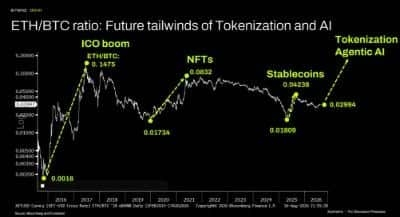
"This ETH/BTC ratio has moved up during crypto bull cycles, driven by increasing use of Ethereum relative to Bitcoin. These prior cycles were fueled by ICOs (2017-2018), NFTs (2020-2021), and stablecoins (2025). In this upcoming crypto cycle, we see the ETH/BTC ratio rising, driven by Wall Street tokenizing on the blockchain and by agentic-AI using blockchains," continued Lee.
"Over the past week, we acquired 28,086 ETH. Bitmine's track record of consistent buying of crypto is unmatched by any public company in the world. Bitmine has bought ETH each and every week since the inception of the ETH Treasury Strategy on June 30, 2025," stated Lee.
On July 16, 2026, Bitmine released the latest Chairman's Message (link here) for July 2026. The title of the Message is "ETH is the cure for the Uncanny Valley of Wealth."
Earlier in 2026, Bitmine launched MAVAN (the Made in America VAlidator Network), the institutional-grade staking platform. While MAVAN was originally developed to support Bitmine's own Ethereum treasury, MAVAN has expanded to serve institutional investors, custodians, and ecosystem partners seeking best-in-class staking infrastructure. A portion of Bitmine's ETH is already staked on the MAVAN platform.
As of September 7, 2026, Bitmine total staked ETH stands at 5,067,309 ($12.6 billion at $2,495 per ETH). "Bitmine has staked more ETH than other entities in the world. At scale (when Bitmine's ETH is fully staked by MAVAN and its staking partners), the projected ETH staking reward is $386 million on an annualized basis (using 2.61% 7-day BMNR yield)," stated Lee.
"Annualized staking revenues are now projected at $330 million. And this 5.1 million ETH is 85% of the 5.93 million ETH held by Bitmine. Bitmine's own staking operations generated a 7-day yield of 2.61% (annualized)," continued Lee.
Bitmine is one of the most widely traded stocks in the US. According to data from Fundstrat, the stock has traded average daily dollar volume of $1.10 billion (5-day average, as of September 4, 2026), ranking #81 in the US, behind Intuit Inc. (rank #80) and ahead of TJX Companies, Inc. (rank #82) among 5,704 US-listed stocks (statista.com and Fundstrat research).
Bitmine's crypto holdings reign as the #1 Ethereum treasury and #2 global treasury, behind Strategy Inc., which reportedly owns 840,447 BTC valued at approximately $66 billion. Bitmine remains the largest ETH treasury in the world.
Bitmine management believes the GENIUS Act and the Securities and Exchange Commission's (SEC) Project Crypto are as transformational to financial services in 2026 as the US action on August 15, 1971, which ended the Bretton Woods system and took the U.S. dollar off the gold standard 55 years ago. This 1971 event was the catalyst for the modernization of Wall Street, creating the iconic Wall Street titans and financial and payment rails of today. These proved to be better investments than gold.
The Chairman's message can be found here:
https://www.Bitminetech.io/chairmans-message
The Fiscal Full Year 2025 Earnings presentation and corporate presentation can be found here: https://Bitminetech.io/investor-relations/
To stay informed, please sign up at: https://Bitminetech.io/contact-us/
About Bitmine
Bitmine Immersion Technologies, Inc. (NYSE: BMNR), together with its subsidiaries ("Bitmine" or the "Company"), is a blockchain technology infrastructure company operating across institutional digital asset staking and validation services, bitcoin mining, and strategic digital asset management. As the world's leading Ethereum Treasury company, it implements an innovative digital asset strategy for institutional investors and public market participants. The Company provides institutional-grade staking and validation infrastructure—through which it earns staking rewards and validation income—alongside bitcoin mining activities. Bitmine holds digital assets strategically, generating yield on those holdings to support liquidity and capital formation. Since 2025, the Company has expanded its blockchain infrastructure capabilities, including developing and deploying MAVAN, its institutional staking and validation platform. The Company's activities further include investments in early-stage blockchain opportunities ("moonshot" investments) and ancillary mining, hosting, and consulting services.
For additional details, follow on X:
https://x.com/bitmnr
https://x.com/fundstrat
Forward Looking Statements
This press release contains statements that constitute "forward-looking statements" within the meaning of the Private Securities Litigation Reform Act of 1995, as amended. Forward-looking statements include all statements that are not purely historical and can generally be identified by terms such as "expects," "projects," "intends," "plans," "believes," "anticipates," "estimates," "forecasts," "targets," "goals," "may," "will," "would," "could," "should," "view," "see," or similar expressions, or the negative of such terms, or other comparable terminology. This press release specifically contains forward-looking statements regarding, among other things: (i) the Company's goal of acquiring 5% of the total ETH supply (the "Alchemy of 5%" initiative) and statements that the Company is 97% of the way to achieving this goal in 15 months; (ii) the Company's digital asset accumulation and treasury strategy, including statements regarding continued weekly ETH acquisitions since the inception of the ETH Treasury Strategy on June 30, 2025 and the Company's status as the largest ETH treasury in the world; (iii) the Company's staking operations, including projected annualized ETH staking rewards of approximately $386 million at scale (assuming Bitmine's ETH is fully staked by MAVAN and its staking partners using 2.61% 7-day BMNR yield), currently projected annualized staking revenues of approximately $330 million, and the 7-day yield of 2.61% (annualized); (iv) MAVAN's expansion to serve institutional investors, custodians, and ecosystem partners seeking best-in-class staking infrastructure, and its intended position as a premier Ethereum staking destination for BMNR and institutional investors; (v) expectations regarding future ETH price performance and market movements, including Tom DeMark's expectation that ETH will make a sharp upward move in coming weeks based on technical analysis and the belief that the August sideways movement implies a renewal of the upside move; (vi) statements regarding ETH's performance as the best performing macro asset in Q3 2026 to date, outperforming the S&P 500 by 5,430bp, and that this sets the stage for institutions to add to their crypto holdings; (vii) management's belief that multiple positive catalysts exist heading into the final months of 2026, including the upcoming CLARITY Act vote scheduled for mid-September 2026, renewed buying by Korean investors and rotation away from AI stocks, the view that the four-year crypto cycle is bottoming within the next few weeks, and the expectation of sizable institutional participation in buying crypto in the final months of 2026, especially given the tailwinds of tokenization and agentic-AI; (viii) statements and expectations regarding the ETH/BTC ratio, including that the ratio will rise in the upcoming crypto cycle driven by Wall Street tokenizing on the blockchain and by agentic-AI using blockchains, similar to prior cycles fueled by ICOs (2017-2018), NFTs (2020-2021), and stablecoins (2025); (ix) management's belief that the GENIUS Act and SEC Project Crypto are as transformational to financial services in 2026 as the end of the Bretton Woods system in 1971 and that investments resulting therefrom will prove better than gold; (x) statements that crypto equities are the largest contributor to Russell 1000 quarter to date and that fund managers benchmarked to the Russell 1000 need to consider whether they have sufficient exposure to crypto; (xi) statements regarding the Company's investments, including that its investment in Eightco Holdings (NASDAQ: ORBS) provides investors indirect exposure to OpenAI and its $180 million stake in Beast Industries; and (xii) statements regarding the value of the Company's crypto, cash, marketable securities, and "moonshot" holdings, including aggregate holdings of $15.7 billion and ETH holdings representing 4.9% of the total ETH supply.
These forward-looking statements involve substantial risks and uncertainties that could cause actual results to differ materially from those expressed or implied. Factors that could cause or contribute to such differences include, but are not limited to: the extreme volatility and unpredictability of digital asset prices, including ETH and Bitcoin, and the speculative nature of digital asset investments; the risk that historical ETH price movements, technical analysis indicators, and relative performance versus other macro assets will not recur or are not indicative of future performance; the Company's reliance on third-party pricing sources (including Coinbase) and reported market values in calculating the value of its crypto, cash, marketable securities, and "moonshot" holdings, and the risk that such values fluctuate materially after the date and time referenced in this release; changes in market conditions affecting the trading price and trading volume of the Company's common stock and Series A Preferred Stock, and the risk that the Company's inclusion in the Russell 1000 index does not produce anticipated benefits or that crypto equities' contribution to index performance does not continue; the Company's ability to successfully execute its digital asset acquisition strategy, continue its record of weekly ETH acquisitions, and achieve its ETH accumulation targets, including the "Alchemy of 5%" goal; the Company's ability to finance its business operations, Ethereum treasury operations, and MAVAN expansion; operational, security, and technological risks associated with the Company's staking and validation operations, including network failures, slashing events, cybersecurity breaches, and protocol changes; the risk that actual staking participation, yields, rewards, and revenues differ materially from the projected amounts described in this release, which are based on a 7-day yield and assume ETH is fully staked at scale; competition in the digital asset treasury, staking, and mining industries; the Company's dependence on key personnel, including executive leadership and advisors such as Tom DeMark; regulatory developments affecting digital assets, blockchain technology, and staking activities in the United States and globally, including the timing and outcome of the scheduled CLARITY Act vote and the ultimate enactment, implementation, and interpretation of the GENIUS Act and other pending legislation and regulatory initiatives; actions by the SEC, CFTC, and other regulatory bodies affecting digital assets and related businesses; risks related to the Company's investments in early-stage blockchain opportunities ("moonshot" investments), including the investments in Eightco Holdings (including the nature and extent of any indirect exposure to OpenAI) and Beast Industries; macroeconomic factors, including inflation, interest rates, Federal Reserve monetary policy, labor market conditions, and general economic conditions affecting investor sentiment toward digital assets, including the behavior of Korean and other international investors; the accuracy of technical analysis predictions and management's expectations regarding ETH price movements, the ETH/BTC ratio, and the impact of tokenization and agentic-AI applications on Ethereum; the unpredictability of cryptocurrency market cycles and the accuracy of expectations regarding future crypto cycles, including whether the four-year cycle bottoms as anticipated and whether institutional participation materializes; changes to the Ethereum protocol, including staking mechanics, validator requirements, and reward structures; the performance of third-party service providers, exchanges, custodians, and staking partners; risks related to the concentration of the Company's assets in digital currencies, particularly Ethereum; and the other risk factors described in the Company's filings with the SEC.
The forward-looking statements contained in this press release are based on information available to management as of the date of this release and reflect management's current expectations, estimates, forecasts, projections, views, and beliefs concerning future events and circumstances. Actual results may vary materially from those expressed or implied by forward-looking statements based on a number of factors, including those described above and in the Risk Factors section of the Company's Annual Report on Form 10-K for the fiscal year ended September 30, 2025 filed with the SEC on November 21, 2025, the Company's Quarterly Reports on Form 10-Q, and the Company's other filings with the SEC, as amended or updated from time to time. Copies of these filings are available on the SEC's website at www.sec.gov and on the Company's website at https://Bitminetech.io/investor-relations/. The Company cautions readers not to place undue reliance on any forward-looking statements, which speak only as of the date on which they are made. Bitmine expressly disclaims any obligation or undertaking to update, revise, or supplement any forward-looking statements to reflect any change in its expectations or any change in events, conditions, or circumstances on which any such statements are based, except as required by applicable law or regulation.
Bitmine Immersion Technologies (BMNR) Announces ETH Holdings Reach 5.93 Million Tokens, and Total...
Bitmine owns 4.9% of the total ETH coin supply of 122.0 million
Bitmine is 97% of the way to the 'Alchemy of 5%' in just 15 months
Crypto equities are largest contributor to Russell 1000 quarter to date, representing 4 of the top 21 stocks
Bitmine common stock gain of 99% quarter to date is 4th best of the Russell 1000
ETH is the best performing macro asset in Q3 of 2026 to date, outperforming the S&P 500 by 5,430bp
Bitmine was added to the Russell 1000 Large-cap index on June 26, 2026
Bitmine's Series A Preferred Stock is trading on the NYSE under the symbol BMNP
Bitmine has 5,067,309 staked ETH, representing $12.6 billion at $2,495 per ETH. MAVAN (Made in America VAlidator Network) is a premier Ethereum staking destination for BMNR and institutional investors
Bitmine owns $91 million of Eightco (NASDAQ: ORBS), now one of the only publicly listed equities in the world to provide investors indirect exposure to OpenAI
Bitmine Crypto + Total Cash Holdings & Marketable Securities + "Moonshots" total $15.7 billion, including 5.93 million ETH tokens, total cash & marketable securities of $593 million, and other crypto holdings
Bitmine remains supported by a premier group of institutional investors including ARK's Cathie Wood, MOZAYYX, Founders Fund, Bill Miller III, Pantera, Kraken, DCG, Galaxy Digital and personal investor Thomas "Tom" Lee to support Bitmine's goal of acquiring 5% of ETH
/PRNewswire/ -- (NYSE: BMNR) Bitmine Immersion Technologies, Inc. ("Bitmine" or the "Company") a Bitcoin and Ethereum Network company with a focus on the accumulation of crypto for long term investment, today announced Bitmine crypto + total cash & marketable securities + "moonshots" holdings totaling $15.7 billion.
As of September 7, 2026 at 2:00pm ET, the Company's crypto holdings are comprised of 5,929,198 ETH at $2,495 per ETH (per Coinbase NASDAQ: COIN), 211 Bitcoin (BTC), $180 million stake in Beast Industries, $91 million stake in Eightco Holdings (NASDAQ: ORBS) ("moonshots") and total cash & marketable securities of $593 million. Bitmine's ETH holdings are 4.9% of the ETH supply (of 122.0 million ETH).
"Since June 30th, 4 of the top 21 best performing stocks in the Russell 1000 are crypto-related equities. The outperformance is reflective of the fact that Ethereum is the best performing macro asset in Q3 so far. In our view, fund managers benchmarked to the Russell 1000 need to consider whether they have sufficient exposure to crypto given this group's outsized contribution to Russell 1000 gains this quarter. Notably, Bitmine's common stock is the 4th best performing with a gain of 99% compared to 3% for the Russell 1000 benchmark," stated Thomas "Tom" Lee, Chairman of Bitmine.
Tom DeMark, founder of DeMark Analytics and a capital markets advisor to Bitmine is expecting ETH to make a sharp upward move in coming weeks. According to Tom DeMark, "In August, ETH moved sideways without a downside break and the 12-day metric expired, which implies a renewal of the upside move. We believe this further supports the continuation of the prior uptrend. We expect, last week's sharp one-day rally was a likely preview of the pending advance."
"As we enter the final month of calendar Q3 2026, ETH is the best performing macro asset during the quarter, outperforming the S&P 500 by 5,430bp through last Friday. In fact, the top 3 performing assets since June 30th are ETH, BTC and SOL," stated Lee. "We believe this sets the stage for institutions to add to their crypto holdings given the substantial outperformance of crypto versus other macro assets in calendar Q3 so far."
"We believe there are multiple positive catalysts as we head into the final months of 2026," stated Lee. "These include the upcoming CLARITY Act vote scheduled in mid-September. Additionally, Korean investors have again started buying crypto and rotating away from AI stocks. The 4-year cycle is bottoming within the next few weeks in our view. And this sets the stage for what we expect to be sizable institutional participation in buying crypto in the final months of 2026, especially given the tailwinds of tokenization and Agentic-AI."
"This ETH/BTC ratio has moved up during crypto bull cycles, driven by increasing use of Ethereum relative to Bitcoin. These prior cycles were fueled by ICOs (2017-2018), NFTs (2020-2021), and stablecoins (2025). In this upcoming crypto cycle, we see the ETH/BTC ratio rising, driven by Wall Street tokenizing on the blockchain and by agentic-AI using blockchains," continued Lee.
"Over the past week, we acquired 28,086 ETH. Bitmine's track record of consistent buying of crypto is unmatched by any public company in the world. Bitmine has bought ETH each and every week since the inception of the ETH Treasury Strategy on June 30, 2025," stated Lee.
On July 16, 2026, Bitmine released the latest Chairman's Message (link here) for July 2026. The title of the Message is "ETH is the cure for the Uncanny Valley of Wealth."
Earlier in 2026, Bitmine launched MAVAN (the Made in America VAlidator Network), the institutional-grade staking platform. While MAVAN was originally developed to support Bitmine's own Ethereum treasury, MAVAN has expanded to serve institutional investors, custodians, and ecosystem partners seeking best-in-class staking infrastructure. A portion of Bitmine's ETH is already staked on the MAVAN platform.
As of September 7, 2026, Bitmine total staked ETH stands at 5,067,309 ($12.6 billion at $2,495 per ETH). "Bitmine has staked more ETH than other entities in the world. At scale (when Bitmine's ETH is fully staked by MAVAN and its staking partners), the projected ETH staking reward is $386 million on an annualized basis (using 2.61% 7-day BMNR yield)," stated Lee.
"Annualized staking revenues are now projected at $330 million. And this 5.1 million ETH is 85% of the 5.93 million ETH held by Bitmine. Bitmine's own staking operations generated a 7-day yield of 2.61% (annualized)," continued Lee.
Bitmine is one of the most widely traded stocks in the US. According to data from Fundstrat, the stock has traded average daily dollar volume of $1.10 billion (5-day average, as of September 4, 2026), ranking #81 in the US, behind Intuit Inc. (rank #80) and ahead of TJX Companies, Inc. (rank #82) among 5,704 US-listed stocks (statista.com and Fundstrat research).
Bitmine's crypto holdings reign as the #1 Ethereum treasury and #2 global treasury, behind Strategy Inc., which reportedly owns 840,447 BTC valued at approximately $66 billion. Bitmine remains the largest ETH treasury in the world.
Bitmine management believes the GENIUS Act and the Securities and Exchange Commission's (SEC) Project Crypto are as transformational to financial services in 2026 as the US action on August 15, 1971, which ended the Bretton Woods system and took the U.S. dollar off the gold standard 55 years ago. This 1971 event was the catalyst for the modernization of Wall Street, creating the iconic Wall Street titans and financial and payment rails of today. These proved to be better investments than gold.
The Chairman's message can be found here:
https://www.Bitminetech.io/chairmans-message
The Fiscal Full Year 2025 Earnings presentation and corporate presentation can be found here: https://Bitminetech.io/investor-relations/
To stay informed, please sign up at: https://Bitminetech.io/contact-us/
About Bitmine
Bitmine Immersion Technologies, Inc. (NYSE: BMNR), together with its subsidiaries ("Bitmine" or the "Company"), is a blockchain technology infrastructure company operating across institutional digital asset staking and validation services, bitcoin mining, and strategic digital asset management. As the world's leading Ethereum Treasury company, it implements an innovative digital asset strategy for institutional investors and public market participants. The Company provides institutional-grade staking and validation infrastructure—through which it earns staking rewards and validation income—alongside bitcoin mining activities. Bitmine holds digital assets strategically, generating yield on those holdings to support liquidity and capital formation. Since 2025, the Company has expanded its blockchain infrastructure capabilities, including developing and deploying MAVAN, its institutional staking and validation platform. The Company's activities further include investments in early-stage blockchain opportunities ("moonshot" investments) and ancillary mining, hosting, and consulting services.
For additional details, follow on X:
https://x.com/bitmnr
https://x.com/fundstrat
Forward Looking Statements
This press release contains statements that constitute "forward-looking statements" within the meaning of the Private Securities Litigation Reform Act of 1995, as amended. Forward-looking statements include all statements that are not purely historical and can generally be identified by terms such as "expects," "projects," "intends," "plans," "believes," "anticipates," "estimates," "forecasts," "targets," "goals," "may," "will," "would," "could," "should," "view," "see," or similar expressions, or the negative of such terms, or other comparable terminology. This press release specifically contains forward-looking statements regarding, among other things: (i) the Company's goal of acquiring 5% of the total ETH supply (the "Alchemy of 5%" initiative) and statements that the Company is 97% of the way to achieving this goal in 15 months; (ii) the Company's digital asset accumulation and treasury strategy, including statements regarding continued weekly ETH acquisitions since the inception of the ETH Treasury Strategy on June 30, 2025 and the Company's status as the largest ETH treasury in the world; (iii) the Company's staking operations, including projected annualized ETH staking rewards of approximately $386 million at scale (assuming Bitmine's ETH is fully staked by MAVAN and its staking partners using 2.61% 7-day BMNR yield), currently projected annualized staking revenues of approximately $330 million, and the 7-day yield of 2.61% (annualized); (iv) MAVAN's expansion to serve institutional investors, custodians, and ecosystem partners seeking best-in-class staking infrastructure, and its intended position as a premier Ethereum staking destination for BMNR and institutional investors; (v) expectations regarding future ETH price performance and market movements, including Tom DeMark's expectation that ETH will make a sharp upward move in coming weeks based on technical analysis and the belief that the August sideways movement implies a renewal of the upside move; (vi) statements regarding ETH's performance as the best performing macro asset in Q3 2026 to date, outperforming the S&P 500 by 5,430bp, and that this sets the stage for institutions to add to their crypto holdings; (vii) management's belief that multiple positive catalysts exist heading into the final months of 2026, including the upcoming CLARITY Act vote scheduled for mid-September 2026, renewed buying by Korean investors and rotation away from AI stocks, the view that the four-year crypto cycle is bottoming within the next few weeks, and the expectation of sizable institutional participation in buying crypto in the final months of 2026, especially given the tailwinds of tokenization and agentic-AI; (viii) statements and expectations regarding the ETH/BTC ratio, including that the ratio will rise in the upcoming crypto cycle driven by Wall Street tokenizing on the blockchain and by agentic-AI using blockchains, similar to prior cycles fueled by ICOs (2017-2018), NFTs (2020-2021), and stablecoins (2025); (ix) management's belief that the GENIUS Act and SEC Project Crypto are as transformational to financial services in 2026 as the end of the Bretton Woods system in 1971 and that investments resulting therefrom will prove better than gold; (x) statements that crypto equities are the largest contributor to Russell 1000 quarter to date and that fund managers benchmarked to the Russell 1000 need to consider whether they have sufficient exposure to crypto; (xi) statements regarding the Company's investments, including that its investment in Eightco Holdings (NASDAQ: ORBS) provides investors indirect exposure to OpenAI and its $180 million stake in Beast Industries; and (xii) statements regarding the value of the Company's crypto, cash, marketable securities, and "moonshot" holdings, including aggregate holdings of $15.7 billion and ETH holdings representing 4.9% of the total ETH supply.
These forward-looking statements involve substantial risks and uncertainties that could cause actual results to differ materially from those expressed or implied. Factors that could cause or contribute to such differences include, but are not limited to: the extreme volatility and unpredictability of digital asset prices, including ETH and Bitcoin, and the speculative nature of digital asset investments; the risk that historical ETH price movements, technical analysis indicators, and relative performance versus other macro assets will not recur or are not indicative of future performance; the Company's reliance on third-party pricing sources (including Coinbase) and reported market values in calculating the value of its crypto, cash, marketable securities, and "moonshot" holdings, and the risk that such values fluctuate materially after the date and time referenced in this release; changes in market conditions affecting the trading price and trading volume of the Company's common stock and Series A Preferred Stock, and the risk that the Company's inclusion in the Russell 1000 index does not produce anticipated benefits or that crypto equities' contribution to index performance does not continue; the Company's ability to successfully execute its digital asset acquisition strategy, continue its record of weekly ETH acquisitions, and achieve its ETH accumulation targets, including the "Alchemy of 5%" goal; the Company's ability to finance its business operations, Ethereum treasury operations, and MAVAN expansion; operational, security, and technological risks associated with the Company's staking and validation operations, including network failures, slashing events, cybersecurity breaches, and protocol changes; the risk that actual staking participation, yields, rewards, and revenues differ materially from the projected amounts described in this release, which are based on a 7-day yield and assume ETH is fully staked at scale; competition in the digital asset treasury, staking, and mining industries; the Company's dependence on key personnel, including executive leadership and advisors such as Tom DeMark; regulatory developments affecting digital assets, blockchain technology, and staking activities in the United States and globally, including the timing and outcome of the scheduled CLARITY Act vote and the ultimate enactment, implementation, and interpretation of the GENIUS Act and other pending legislation and regulatory initiatives; actions by the SEC, CFTC, and other regulatory bodies affecting digital assets and related businesses; risks related to the Company's investments in early-stage blockchain opportunities ("moonshot" investments), including the investments in Eightco Holdings (including the nature and extent of any indirect exposure to OpenAI) and Beast Industries; macroeconomic factors, including inflation, interest rates, Federal Reserve monetary policy, labor market conditions, and general economic conditions affecting investor sentiment toward digital assets, including the behavior of Korean and other international investors; the accuracy of technical analysis predictions and management's expectations regarding ETH price movements, the ETH/BTC ratio, and the impact of tokenization and agentic-AI applications on Ethereum; the unpredictability of cryptocurrency market cycles and the accuracy of expectations regarding future crypto cycles, including whether the four-year cycle bottoms as anticipated and whether institutional participation materializes; changes to the Ethereum protocol, including staking mechanics, validator requirements, and reward structures; the performance of third-party service providers, exchanges, custodians, and staking partners; risks related to the concentration of the Company's assets in digital currencies, particularly Ethereum; and the other risk factors described in the Company's filings with the SEC.
The forward-looking statements contained in this press release are based on information available to management as of the date of this release and reflect management's current expectations, estimates, forecasts, projections, views, and beliefs concerning future events and circumstances. Actual results may vary materially from those expressed or implied by forward-looking statements based on a number of factors, including those described above and in the Risk Factors section of the Company's Annual Report on Form 10-K for the fiscal year ended September 30, 2025 filed with the SEC on November 21, 2025, the Company's Quarterly Reports on Form 10-Q, and the Company's other filings with the SEC, as amended or updated from time to time. Copies of these filings are available on the SEC's website at www.sec.gov and on the Company's website at https://Bitminetech.io/investor-relations/. The Company cautions readers not to place undue reliance on any forward-looking statements, which speak only as of the date on which they are made. Bitmine expressly disclaims any obligation or undertaking to update, revise, or supplement any forward-looking statements to reflect any change in its expectations or any change in events, conditions, or circumstances on which any such statements are based, except as required by applicable law or regulation.
Bitmine is 97% of the way to the 'Alchemy of 5%' in just 15 months
Crypto equities are largest contributor to Russell 1000 quarter to date, representing 4 of the top 21 stocks
Bitmine common stock gain of 99% quarter to date is 4th best of the Russell 1000
ETH is the best performing macro asset in Q3 of 2026 to date, outperforming the S&P 500 by 5,430bp
Bitmine was added to the Russell 1000 Large-cap index on June 26, 2026
Bitmine's Series A Preferred Stock is trading on the NYSE under the symbol BMNP
Bitmine has 5,067,309 staked ETH, representing $12.6 billion at $2,495 per ETH. MAVAN (Made in America VAlidator Network) is a premier Ethereum staking destination for BMNR and institutional investors
Bitmine owns $91 million of Eightco (NASDAQ: ORBS), now one of the only publicly listed equities in the world to provide investors indirect exposure to OpenAI
Bitmine Crypto + Total Cash Holdings & Marketable Securities + "Moonshots" total $15.7 billion, including 5.93 million ETH tokens, total cash & marketable securities of $593 million, and other crypto holdings
Bitmine remains supported by a premier group of institutional investors including ARK's Cathie Wood, MOZAYYX, Founders Fund, Bill Miller III, Pantera, Kraken, DCG, Galaxy Digital and personal investor Thomas "Tom" Lee to support Bitmine's goal of acquiring 5% of ETH
/PRNewswire/ -- (NYSE: BMNR) Bitmine Immersion Technologies, Inc. ("Bitmine" or the "Company") a Bitcoin and Ethereum Network company with a focus on the accumulation of crypto for long term investment, today announced Bitmine crypto + total cash & marketable securities + "moonshots" holdings totaling $15.7 billion.
As of September 7, 2026 at 2:00pm ET, the Company's crypto holdings are comprised of 5,929,198 ETH at $2,495 per ETH (per Coinbase NASDAQ: COIN), 211 Bitcoin (BTC), $180 million stake in Beast Industries, $91 million stake in Eightco Holdings (NASDAQ: ORBS) ("moonshots") and total cash & marketable securities of $593 million. Bitmine's ETH holdings are 4.9% of the ETH supply (of 122.0 million ETH).
"Since June 30th, 4 of the top 21 best performing stocks in the Russell 1000 are crypto-related equities. The outperformance is reflective of the fact that Ethereum is the best performing macro asset in Q3 so far. In our view, fund managers benchmarked to the Russell 1000 need to consider whether they have sufficient exposure to crypto given this group's outsized contribution to Russell 1000 gains this quarter. Notably, Bitmine's common stock is the 4th best performing with a gain of 99% compared to 3% for the Russell 1000 benchmark," stated Thomas "Tom" Lee, Chairman of Bitmine.
Tom DeMark, founder of DeMark Analytics and a capital markets advisor to Bitmine is expecting ETH to make a sharp upward move in coming weeks. According to Tom DeMark, "In August, ETH moved sideways without a downside break and the 12-day metric expired, which implies a renewal of the upside move. We believe this further supports the continuation of the prior uptrend. We expect, last week's sharp one-day rally was a likely preview of the pending advance."
"As we enter the final month of calendar Q3 2026, ETH is the best performing macro asset during the quarter, outperforming the S&P 500 by 5,430bp through last Friday. In fact, the top 3 performing assets since June 30th are ETH, BTC and SOL," stated Lee. "We believe this sets the stage for institutions to add to their crypto holdings given the substantial outperformance of crypto versus other macro assets in calendar Q3 so far."
"We believe there are multiple positive catalysts as we head into the final months of 2026," stated Lee. "These include the upcoming CLARITY Act vote scheduled in mid-September. Additionally, Korean investors have again started buying crypto and rotating away from AI stocks. The 4-year cycle is bottoming within the next few weeks in our view. And this sets the stage for what we expect to be sizable institutional participation in buying crypto in the final months of 2026, especially given the tailwinds of tokenization and Agentic-AI."
"This ETH/BTC ratio has moved up during crypto bull cycles, driven by increasing use of Ethereum relative to Bitcoin. These prior cycles were fueled by ICOs (2017-2018), NFTs (2020-2021), and stablecoins (2025). In this upcoming crypto cycle, we see the ETH/BTC ratio rising, driven by Wall Street tokenizing on the blockchain and by agentic-AI using blockchains," continued Lee.
"Over the past week, we acquired 28,086 ETH. Bitmine's track record of consistent buying of crypto is unmatched by any public company in the world. Bitmine has bought ETH each and every week since the inception of the ETH Treasury Strategy on June 30, 2025," stated Lee.
On July 16, 2026, Bitmine released the latest Chairman's Message (link here) for July 2026. The title of the Message is "ETH is the cure for the Uncanny Valley of Wealth."
Earlier in 2026, Bitmine launched MAVAN (the Made in America VAlidator Network), the institutional-grade staking platform. While MAVAN was originally developed to support Bitmine's own Ethereum treasury, MAVAN has expanded to serve institutional investors, custodians, and ecosystem partners seeking best-in-class staking infrastructure. A portion of Bitmine's ETH is already staked on the MAVAN platform.
As of September 7, 2026, Bitmine total staked ETH stands at 5,067,309 ($12.6 billion at $2,495 per ETH). "Bitmine has staked more ETH than other entities in the world. At scale (when Bitmine's ETH is fully staked by MAVAN and its staking partners), the projected ETH staking reward is $386 million on an annualized basis (using 2.61% 7-day BMNR yield)," stated Lee.
"Annualized staking revenues are now projected at $330 million. And this 5.1 million ETH is 85% of the 5.93 million ETH held by Bitmine. Bitmine's own staking operations generated a 7-day yield of 2.61% (annualized)," continued Lee.
Bitmine is one of the most widely traded stocks in the US. According to data from Fundstrat, the stock has traded average daily dollar volume of $1.10 billion (5-day average, as of September 4, 2026), ranking #81 in the US, behind Intuit Inc. (rank #80) and ahead of TJX Companies, Inc. (rank #82) among 5,704 US-listed stocks (statista.com and Fundstrat research).
Bitmine's crypto holdings reign as the #1 Ethereum treasury and #2 global treasury, behind Strategy Inc., which reportedly owns 840,447 BTC valued at approximately $66 billion. Bitmine remains the largest ETH treasury in the world.
Bitmine management believes the GENIUS Act and the Securities and Exchange Commission's (SEC) Project Crypto are as transformational to financial services in 2026 as the US action on August 15, 1971, which ended the Bretton Woods system and took the U.S. dollar off the gold standard 55 years ago. This 1971 event was the catalyst for the modernization of Wall Street, creating the iconic Wall Street titans and financial and payment rails of today. These proved to be better investments than gold.
The Chairman's message can be found here:
https://www.Bitminetech.io/chairmans-message
The Fiscal Full Year 2025 Earnings presentation and corporate presentation can be found here: https://Bitminetech.io/investor-relations/
To stay informed, please sign up at: https://Bitminetech.io/contact-us/
About Bitmine
Bitmine Immersion Technologies, Inc. (NYSE: BMNR), together with its subsidiaries ("Bitmine" or the "Company"), is a blockchain technology infrastructure company operating across institutional digital asset staking and validation services, bitcoin mining, and strategic digital asset management. As the world's leading Ethereum Treasury company, it implements an innovative digital asset strategy for institutional investors and public market participants. The Company provides institutional-grade staking and validation infrastructure—through which it earns staking rewards and validation income—alongside bitcoin mining activities. Bitmine holds digital assets strategically, generating yield on those holdings to support liquidity and capital formation. Since 2025, the Company has expanded its blockchain infrastructure capabilities, including developing and deploying MAVAN, its institutional staking and validation platform. The Company's activities further include investments in early-stage blockchain opportunities ("moonshot" investments) and ancillary mining, hosting, and consulting services.
For additional details, follow on X:
https://x.com/bitmnr
https://x.com/fundstrat
Forward Looking Statements
This press release contains statements that constitute "forward-looking statements" within the meaning of the Private Securities Litigation Reform Act of 1995, as amended. Forward-looking statements include all statements that are not purely historical and can generally be identified by terms such as "expects," "projects," "intends," "plans," "believes," "anticipates," "estimates," "forecasts," "targets," "goals," "may," "will," "would," "could," "should," "view," "see," or similar expressions, or the negative of such terms, or other comparable terminology. This press release specifically contains forward-looking statements regarding, among other things: (i) the Company's goal of acquiring 5% of the total ETH supply (the "Alchemy of 5%" initiative) and statements that the Company is 97% of the way to achieving this goal in 15 months; (ii) the Company's digital asset accumulation and treasury strategy, including statements regarding continued weekly ETH acquisitions since the inception of the ETH Treasury Strategy on June 30, 2025 and the Company's status as the largest ETH treasury in the world; (iii) the Company's staking operations, including projected annualized ETH staking rewards of approximately $386 million at scale (assuming Bitmine's ETH is fully staked by MAVAN and its staking partners using 2.61% 7-day BMNR yield), currently projected annualized staking revenues of approximately $330 million, and the 7-day yield of 2.61% (annualized); (iv) MAVAN's expansion to serve institutional investors, custodians, and ecosystem partners seeking best-in-class staking infrastructure, and its intended position as a premier Ethereum staking destination for BMNR and institutional investors; (v) expectations regarding future ETH price performance and market movements, including Tom DeMark's expectation that ETH will make a sharp upward move in coming weeks based on technical analysis and the belief that the August sideways movement implies a renewal of the upside move; (vi) statements regarding ETH's performance as the best performing macro asset in Q3 2026 to date, outperforming the S&P 500 by 5,430bp, and that this sets the stage for institutions to add to their crypto holdings; (vii) management's belief that multiple positive catalysts exist heading into the final months of 2026, including the upcoming CLARITY Act vote scheduled for mid-September 2026, renewed buying by Korean investors and rotation away from AI stocks, the view that the four-year crypto cycle is bottoming within the next few weeks, and the expectation of sizable institutional participation in buying crypto in the final months of 2026, especially given the tailwinds of tokenization and agentic-AI; (viii) statements and expectations regarding the ETH/BTC ratio, including that the ratio will rise in the upcoming crypto cycle driven by Wall Street tokenizing on the blockchain and by agentic-AI using blockchains, similar to prior cycles fueled by ICOs (2017-2018), NFTs (2020-2021), and stablecoins (2025); (ix) management's belief that the GENIUS Act and SEC Project Crypto are as transformational to financial services in 2026 as the end of the Bretton Woods system in 1971 and that investments resulting therefrom will prove better than gold; (x) statements that crypto equities are the largest contributor to Russell 1000 quarter to date and that fund managers benchmarked to the Russell 1000 need to consider whether they have sufficient exposure to crypto; (xi) statements regarding the Company's investments, including that its investment in Eightco Holdings (NASDAQ: ORBS) provides investors indirect exposure to OpenAI and its $180 million stake in Beast Industries; and (xii) statements regarding the value of the Company's crypto, cash, marketable securities, and "moonshot" holdings, including aggregate holdings of $15.7 billion and ETH holdings representing 4.9% of the total ETH supply.
These forward-looking statements involve substantial risks and uncertainties that could cause actual results to differ materially from those expressed or implied. Factors that could cause or contribute to such differences include, but are not limited to: the extreme volatility and unpredictability of digital asset prices, including ETH and Bitcoin, and the speculative nature of digital asset investments; the risk that historical ETH price movements, technical analysis indicators, and relative performance versus other macro assets will not recur or are not indicative of future performance; the Company's reliance on third-party pricing sources (including Coinbase) and reported market values in calculating the value of its crypto, cash, marketable securities, and "moonshot" holdings, and the risk that such values fluctuate materially after the date and time referenced in this release; changes in market conditions affecting the trading price and trading volume of the Company's common stock and Series A Preferred Stock, and the risk that the Company's inclusion in the Russell 1000 index does not produce anticipated benefits or that crypto equities' contribution to index performance does not continue; the Company's ability to successfully execute its digital asset acquisition strategy, continue its record of weekly ETH acquisitions, and achieve its ETH accumulation targets, including the "Alchemy of 5%" goal; the Company's ability to finance its business operations, Ethereum treasury operations, and MAVAN expansion; operational, security, and technological risks associated with the Company's staking and validation operations, including network failures, slashing events, cybersecurity breaches, and protocol changes; the risk that actual staking participation, yields, rewards, and revenues differ materially from the projected amounts described in this release, which are based on a 7-day yield and assume ETH is fully staked at scale; competition in the digital asset treasury, staking, and mining industries; the Company's dependence on key personnel, including executive leadership and advisors such as Tom DeMark; regulatory developments affecting digital assets, blockchain technology, and staking activities in the United States and globally, including the timing and outcome of the scheduled CLARITY Act vote and the ultimate enactment, implementation, and interpretation of the GENIUS Act and other pending legislation and regulatory initiatives; actions by the SEC, CFTC, and other regulatory bodies affecting digital assets and related businesses; risks related to the Company's investments in early-stage blockchain opportunities ("moonshot" investments), including the investments in Eightco Holdings (including the nature and extent of any indirect exposure to OpenAI) and Beast Industries; macroeconomic factors, including inflation, interest rates, Federal Reserve monetary policy, labor market conditions, and general economic conditions affecting investor sentiment toward digital assets, including the behavior of Korean and other international investors; the accuracy of technical analysis predictions and management's expectations regarding ETH price movements, the ETH/BTC ratio, and the impact of tokenization and agentic-AI applications on Ethereum; the unpredictability of cryptocurrency market cycles and the accuracy of expectations regarding future crypto cycles, including whether the four-year cycle bottoms as anticipated and whether institutional participation materializes; changes to the Ethereum protocol, including staking mechanics, validator requirements, and reward structures; the performance of third-party service providers, exchanges, custodians, and staking partners; risks related to the concentration of the Company's assets in digital currencies, particularly Ethereum; and the other risk factors described in the Company's filings with the SEC.
The forward-looking statements contained in this press release are based on information available to management as of the date of this release and reflect management's current expectations, estimates, forecasts, projections, views, and beliefs concerning future events and circumstances. Actual results may vary materially from those expressed or implied by forward-looking statements based on a number of factors, including those described above and in the Risk Factors section of the Company's Annual Report on Form 10-K for the fiscal year ended September 30, 2025 filed with the SEC on November 21, 2025, the Company's Quarterly Reports on Form 10-Q, and the Company's other filings with the SEC, as amended or updated from time to time. Copies of these filings are available on the SEC's website at www.sec.gov and on the Company's website at https://Bitminetech.io/investor-relations/. The Company cautions readers not to place undue reliance on any forward-looking statements, which speak only as of the date on which they are made. Bitmine expressly disclaims any obligation or undertaking to update, revise, or supplement any forward-looking statements to reflect any change in its expectations or any change in events, conditions, or circumstances on which any such statements are based, except as required by applicable law or regulation.
29

Article
Chainlink Faces Three Warning Signs After 95% Rally, Says AnalystLINK rallied 95% from $7 to $13.77, but the weekly TD Sequential now signals a potential sell setup.
Whale transactions above $1M fell from about 59 to 10, while 1.75M LINK moved onto exchanges.
LINK faces support at $12.50-$12.60, with $13.50-$13.70 resistance and weakening RSI and MACD momentum.
Chainlink is facing three warning signs after a 95% rally, according to analyst Ali Charts, as whale activity declines. LINK rose from nearly $7 to $13.77, while 1.75 million tokens moved onto exchanges. The latest market data shows LINK at $12.626 after rejection near $13.70, with momentum indicators turning weaker.
Whale Activity Drops as Exchange Deposits Rise
Ali Charts said the TD Sequential has flashed a sell signal on LINK’s weekly chart. The signal followed a 95% advance from about $7 to the recent $13.77 high. However, whale participation has also fallen sharply.
Transactions worth more than $1 million dropped from roughly 59 during the past two weeks to about 10 today. At the same time, 1.75 million LINK moved onto exchanges. Exchange balances increased from 269.25 million to roughly 271 million LINK. Ali Charts said the combined data points to a potential cooldown after LINK’s sharp advance.
LINK Pulls Back From September Rally
The latest price data shows LINK trading at $12.626, with the latest candle ranging between $12.617 and $12.682. Earlier, LINK climbed from around $11 to $11.50 before reaching nearly $13.65-$13.70 during the Sept. 6-7 rally.
Source: TradingView
Trading volume increased during the move above $12. However, rejection near $13.50-$13.70 brought profit-taking and pushed LINK toward $12.60. The RSI is at 41.97, below its moving average at 43.69.
It remains above 30, which leaves LINK outside oversold territory. The MACD has also turned bearish. Its line is near -0.067, while the signal line is around -0.041.
Key Support and Resistance Levels
LINK currently faces support around $12.50-$12.60, followed by $12.00 and roughly $11.50. On the upside, $13.00 represents the first level to reclaim. Above that, resistance is around $13.50-$13.70. A sustained move above $13.70 would open the next area higher, based on the provided technical levels.
Meanwhile, the 50-day moving average is near $12.39, while the 200-day moving average is around $11.24 and continues rising. The price remains above the longer-term average despite its latest pullback.
Chainlink Faces Three Warning Signs After 95% Rally, Says Analyst
LINK rallied 95% from $7 to $13.77, but the weekly TD Sequential now signals a potential sell setup.
Whale transactions above $1M fell from about 59 to 10, while 1.75M LINK moved onto exchanges.
LINK faces support at $12.50-$12.60, with $13.50-$13.70 resistance and weakening RSI and MACD momentum.
Chainlink is facing three warning signs after a 95% rally, according to analyst Ali Charts, as whale activity declines. LINK rose from nearly $7 to $13.77, while 1.75 million tokens moved onto exchanges. The latest market data shows LINK at $12.626 after rejection near $13.70, with momentum indicators turning weaker.
Whale Activity Drops as Exchange Deposits Rise
Ali Charts said the TD Sequential has flashed a sell signal on LINK’s weekly chart. The signal followed a 95% advance from about $7 to the recent $13.77 high. However, whale participation has also fallen sharply.
Transactions worth more than $1 million dropped from roughly 59 during the past two weeks to about 10 today. At the same time, 1.75 million LINK moved onto exchanges. Exchange balances increased from 269.25 million to roughly 271 million LINK. Ali Charts said the combined data points to a potential cooldown after LINK’s sharp advance.
LINK Pulls Back From September Rally
The latest price data shows LINK trading at $12.626, with the latest candle ranging between $12.617 and $12.682. Earlier, LINK climbed from around $11 to $11.50 before reaching nearly $13.65-$13.70 during the Sept. 6-7 rally.
Source: TradingView
Trading volume increased during the move above $12. However, rejection near $13.50-$13.70 brought profit-taking and pushed LINK toward $12.60. The RSI is at 41.97, below its moving average at 43.69.
It remains above 30, which leaves LINK outside oversold territory. The MACD has also turned bearish. Its line is near -0.067, while the signal line is around -0.041.
Key Support and Resistance Levels
LINK currently faces support around $12.50-$12.60, followed by $12.00 and roughly $11.50. On the upside, $13.00 represents the first level to reclaim. Above that, resistance is around $13.50-$13.70. A sustained move above $13.70 would open the next area higher, based on the provided technical levels.
Meanwhile, the 50-day moving average is near $12.39, while the 200-day moving average is around $11.24 and continues rising. The price remains above the longer-term average despite its latest pullback.
Whale transactions above $1M fell from about 59 to 10, while 1.75M LINK moved onto exchanges.
LINK faces support at $12.50-$12.60, with $13.50-$13.70 resistance and weakening RSI and MACD momentum.
Chainlink is facing three warning signs after a 95% rally, according to analyst Ali Charts, as whale activity declines. LINK rose from nearly $7 to $13.77, while 1.75 million tokens moved onto exchanges. The latest market data shows LINK at $12.626 after rejection near $13.70, with momentum indicators turning weaker.
Whale Activity Drops as Exchange Deposits Rise
Ali Charts said the TD Sequential has flashed a sell signal on LINK’s weekly chart. The signal followed a 95% advance from about $7 to the recent $13.77 high. However, whale participation has also fallen sharply.
Transactions worth more than $1 million dropped from roughly 59 during the past two weeks to about 10 today. At the same time, 1.75 million LINK moved onto exchanges. Exchange balances increased from 269.25 million to roughly 271 million LINK. Ali Charts said the combined data points to a potential cooldown after LINK’s sharp advance.
LINK Pulls Back From September Rally
The latest price data shows LINK trading at $12.626, with the latest candle ranging between $12.617 and $12.682. Earlier, LINK climbed from around $11 to $11.50 before reaching nearly $13.65-$13.70 during the Sept. 6-7 rally.
Source: TradingView
Trading volume increased during the move above $12. However, rejection near $13.50-$13.70 brought profit-taking and pushed LINK toward $12.60. The RSI is at 41.97, below its moving average at 43.69.
It remains above 30, which leaves LINK outside oversold territory. The MACD has also turned bearish. Its line is near -0.067, while the signal line is around -0.041.
Key Support and Resistance Levels
LINK currently faces support around $12.50-$12.60, followed by $12.00 and roughly $11.50. On the upside, $13.00 represents the first level to reclaim. Above that, resistance is around $13.50-$13.70. A sustained move above $13.70 would open the next area higher, based on the provided technical levels.
Meanwhile, the 50-day moving average is near $12.39, while the 200-day moving average is around $11.24 and continues rising. The price remains above the longer-term average despite its latest pullback.
66
Article
XRP Futures Surge as Trading Volume Reaches Six-Month High, CryptoQuant ReportsBinance led August XRP futures volume with $37B, followed by Bybit at $14.54B and OKX at $12.88B.
XRP rebounded from $1.00-$1.05 to nearly $1.58 before pulling back, with $1.35-$1.39 now key support.
Futures volume alone cannot reveal market direction, making funding rates and open interest crucial for assessing positioning.
XRP futures trading volume reached its highest level in six months during August, according to CryptoQuant. Binance recorded about $37 billion, while Bybit and OKX posted $14.54 billion and $12.88 billion. Combined volume across the three exchanges exceeded $64.6 billion as XRP recovered from about $1.00 to $1.05.
Binance Leads August Futures Activity
The August figures placed Binance first among the exchanges covered by the data. Bybit followed with approximately $14.54 billion in XRP futures volume, while OKX recorded about $12.88 billion. Together, the three exchanges handled more than $64.6 billion during the month.
Source: CryptoQuant
CryptoQuant said the increase followed a period of lower XRP futures trading activity. The rise also came as XRP posted stronger price performance during August. The token climbed from roughly $1.00-$1.05 to a late-August peak near $1.57-$1.58.
However, CryptoQuant noted that higher futures volume does not show whether traders favored long or short positions. Funding rates and open interest remain key measures for assessing the new derivatives activity.
XRP Rebounds While Activity Expands
XRP later pulled back to around $1.386, according to the provided market data. The price now sits slightly below the 50-day moving average, which is near $1.39. Meanwhile, the 200-day moving average is around $1.24 and continues to rise.
Source: Santiment
The $1.35-$1.39 area forms the nearest support range in the provided technical levels. Above the current price, XRP faces resistance around $1.43-$1.45. The larger resistance area extends from approximately $1.51 to $1.58.
The late-August move also coincided with a sharp rise in Daily Active Addresses. Activity reached nearly 938,000 addresses before falling toward approximately 86,900.
Futures Volume Meets Network Activity
The address count has cooled considerably from its August peak. Still, the latest reading accompanies the market data covering the futures increase. CryptoQuant said traders increased futures participation as they sought to trade XRP price movements and volatility.
However, volume alone cannot establish the market’s direction. The provided technical levels place $1.58 above the major resistance zone. A break above it would clear that area, while a move below $1.35 would expose $1.24.
XRP Futures Surge as Trading Volume Reaches Six-Month High, CryptoQuant Reports
Binance led August XRP futures volume with $37B, followed by Bybit at $14.54B and OKX at $12.88B.
XRP rebounded from $1.00-$1.05 to nearly $1.58 before pulling back, with $1.35-$1.39 now key support.
Futures volume alone cannot reveal market direction, making funding rates and open interest crucial for assessing positioning.
XRP futures trading volume reached its highest level in six months during August, according to CryptoQuant. Binance recorded about $37 billion, while Bybit and OKX posted $14.54 billion and $12.88 billion. Combined volume across the three exchanges exceeded $64.6 billion as XRP recovered from about $1.00 to $1.05.
Binance Leads August Futures Activity
The August figures placed Binance first among the exchanges covered by the data. Bybit followed with approximately $14.54 billion in XRP futures volume, while OKX recorded about $12.88 billion. Together, the three exchanges handled more than $64.6 billion during the month.
Source: CryptoQuant
CryptoQuant said the increase followed a period of lower XRP futures trading activity. The rise also came as XRP posted stronger price performance during August. The token climbed from roughly $1.00-$1.05 to a late-August peak near $1.57-$1.58.
However, CryptoQuant noted that higher futures volume does not show whether traders favored long or short positions. Funding rates and open interest remain key measures for assessing the new derivatives activity.
XRP Rebounds While Activity Expands
XRP later pulled back to around $1.386, according to the provided market data. The price now sits slightly below the 50-day moving average, which is near $1.39. Meanwhile, the 200-day moving average is around $1.24 and continues to rise.
Source: Santiment
The $1.35-$1.39 area forms the nearest support range in the provided technical levels. Above the current price, XRP faces resistance around $1.43-$1.45. The larger resistance area extends from approximately $1.51 to $1.58.
The late-August move also coincided with a sharp rise in Daily Active Addresses. Activity reached nearly 938,000 addresses before falling toward approximately 86,900.
Futures Volume Meets Network Activity
The address count has cooled considerably from its August peak. Still, the latest reading accompanies the market data covering the futures increase. CryptoQuant said traders increased futures participation as they sought to trade XRP price movements and volatility.
However, volume alone cannot establish the market’s direction. The provided technical levels place $1.58 above the major resistance zone. A break above it would clear that area, while a move below $1.35 would expose $1.24.
XRP rebounded from $1.00-$1.05 to nearly $1.58 before pulling back, with $1.35-$1.39 now key support.
Futures volume alone cannot reveal market direction, making funding rates and open interest crucial for assessing positioning.
XRP futures trading volume reached its highest level in six months during August, according to CryptoQuant. Binance recorded about $37 billion, while Bybit and OKX posted $14.54 billion and $12.88 billion. Combined volume across the three exchanges exceeded $64.6 billion as XRP recovered from about $1.00 to $1.05.
Binance Leads August Futures Activity
The August figures placed Binance first among the exchanges covered by the data. Bybit followed with approximately $14.54 billion in XRP futures volume, while OKX recorded about $12.88 billion. Together, the three exchanges handled more than $64.6 billion during the month.
Source: CryptoQuant
CryptoQuant said the increase followed a period of lower XRP futures trading activity. The rise also came as XRP posted stronger price performance during August. The token climbed from roughly $1.00-$1.05 to a late-August peak near $1.57-$1.58.
However, CryptoQuant noted that higher futures volume does not show whether traders favored long or short positions. Funding rates and open interest remain key measures for assessing the new derivatives activity.
XRP Rebounds While Activity Expands
XRP later pulled back to around $1.386, according to the provided market data. The price now sits slightly below the 50-day moving average, which is near $1.39. Meanwhile, the 200-day moving average is around $1.24 and continues to rise.
Source: Santiment
The $1.35-$1.39 area forms the nearest support range in the provided technical levels. Above the current price, XRP faces resistance around $1.43-$1.45. The larger resistance area extends from approximately $1.51 to $1.58.
The late-August move also coincided with a sharp rise in Daily Active Addresses. Activity reached nearly 938,000 addresses before falling toward approximately 86,900.
Futures Volume Meets Network Activity
The address count has cooled considerably from its August peak. Still, the latest reading accompanies the market data covering the futures increase. CryptoQuant said traders increased futures participation as they sought to trade XRP price movements and volatility.
However, volume alone cannot establish the market’s direction. The provided technical levels place $1.58 above the major resistance zone. A break above it would clear that area, while a move below $1.35 would expose $1.24.
102
Article
Privacy Coins Lead Crypto Gains as ZEC Jumps 2,496%, Glassnode FindsPrivacy coins are the only crypto sector above October 2025 levels, gaining 213% while Bitcoin remains 36% lower.
ZEC surged 2,496% over the year and now accounts for 62% of the privacy sector’s $33.6B market cap.
Only 25 of the top 200 assets are up year over year, while the median asset remains down 55%.
Privacy assets are the only crypto sector above their October 2025 level, according to Glassnode, while Bitcoin remains 36% lower. The sector has gained 213% since that high, led by ZEC, whose market cap ranking rose from 82nd to seventh. The data covers the top 200 assets across the market.
Privacy Sector Pulls Ahead
Glassnode found that every other sector remains below its October 2025 level. DeFi is 27% lower, while Gaming is 74% lower. However, all 10 sectors gained during the past 30 days. Privacy led that period with a 90% increase, keeping it above the October level.
The sector has also expanded in size. Privacy coins among the top 200 were worth $7.1 billion a year ago. They now hold a combined value of $33.6 billion, roughly Tron’s market capitalization. Nearly half of that increase came during the past 30 days.
ZEC Leads Privacy Gains
ZEC rose 2,496% over the year and now represents 62% of the privacy sector’s capitalization. Still, the gains extend beyond ZEC. All eight privacy coins with one year of history have gained.
Excluding ZEC, the cap-weighted privacy basket is up 85% over the year. It has also gained 56% since Bitcoin reached its October high. Over 90 days, DASH, XMR and ZEN each outpaced Bitcoin. XMR doubled during the same period that ZEC recorded its sharp rise.
Wider Market Remains Lower
Among the 25 largest assets, only ZEC, HYPE, XMR and WBT remain above their Oct. 6 prices. Two of those four assets are privacy coins. HYPE is a single-name result within DeFi. Without HYPE, DeFi is 46% lower on the year.
Meanwhile, major assets including ETH and DOGE remain below their October levels. Across the top 200, only 25 assets are higher on the year. The median asset is down 55%, while 91.5% gained during the past 30 days.
Glassnode said that was the broadest 30-day gain in its history. The 30-day return spread across the 10 sector indices also reached its widest level since Nov. 20, 2025.
Privacy Coins Lead Crypto Gains as ZEC Jumps 2,496%, Glassnode Finds
Privacy coins are the only crypto sector above October 2025 levels, gaining 213% while Bitcoin remains 36% lower.
ZEC surged 2,496% over the year and now accounts for 62% of the privacy sector’s $33.6B market cap.
Only 25 of the top 200 assets are up year over year, while the median asset remains down 55%.
Privacy assets are the only crypto sector above their October 2025 level, according to Glassnode, while Bitcoin remains 36% lower. The sector has gained 213% since that high, led by ZEC, whose market cap ranking rose from 82nd to seventh. The data covers the top 200 assets across the market.
Privacy Sector Pulls Ahead
Glassnode found that every other sector remains below its October 2025 level. DeFi is 27% lower, while Gaming is 74% lower. However, all 10 sectors gained during the past 30 days. Privacy led that period with a 90% increase, keeping it above the October level.
The sector has also expanded in size. Privacy coins among the top 200 were worth $7.1 billion a year ago. They now hold a combined value of $33.6 billion, roughly Tron’s market capitalization. Nearly half of that increase came during the past 30 days.
ZEC Leads Privacy Gains
ZEC rose 2,496% over the year and now represents 62% of the privacy sector’s capitalization. Still, the gains extend beyond ZEC. All eight privacy coins with one year of history have gained.
Excluding ZEC, the cap-weighted privacy basket is up 85% over the year. It has also gained 56% since Bitcoin reached its October high. Over 90 days, DASH, XMR and ZEN each outpaced Bitcoin. XMR doubled during the same period that ZEC recorded its sharp rise.
Wider Market Remains Lower
Among the 25 largest assets, only ZEC, HYPE, XMR and WBT remain above their Oct. 6 prices. Two of those four assets are privacy coins. HYPE is a single-name result within DeFi. Without HYPE, DeFi is 46% lower on the year.
Meanwhile, major assets including ETH and DOGE remain below their October levels. Across the top 200, only 25 assets are higher on the year. The median asset is down 55%, while 91.5% gained during the past 30 days.
Glassnode said that was the broadest 30-day gain in its history. The 30-day return spread across the 10 sector indices also reached its widest level since Nov. 20, 2025.
ZEC surged 2,496% over the year and now accounts for 62% of the privacy sector’s $33.6B market cap.
Only 25 of the top 200 assets are up year over year, while the median asset remains down 55%.
Privacy assets are the only crypto sector above their October 2025 level, according to Glassnode, while Bitcoin remains 36% lower. The sector has gained 213% since that high, led by ZEC, whose market cap ranking rose from 82nd to seventh. The data covers the top 200 assets across the market.
Privacy Sector Pulls Ahead
Glassnode found that every other sector remains below its October 2025 level. DeFi is 27% lower, while Gaming is 74% lower. However, all 10 sectors gained during the past 30 days. Privacy led that period with a 90% increase, keeping it above the October level.
The sector has also expanded in size. Privacy coins among the top 200 were worth $7.1 billion a year ago. They now hold a combined value of $33.6 billion, roughly Tron’s market capitalization. Nearly half of that increase came during the past 30 days.
ZEC Leads Privacy Gains
ZEC rose 2,496% over the year and now represents 62% of the privacy sector’s capitalization. Still, the gains extend beyond ZEC. All eight privacy coins with one year of history have gained.
Excluding ZEC, the cap-weighted privacy basket is up 85% over the year. It has also gained 56% since Bitcoin reached its October high. Over 90 days, DASH, XMR and ZEN each outpaced Bitcoin. XMR doubled during the same period that ZEC recorded its sharp rise.
Wider Market Remains Lower
Among the 25 largest assets, only ZEC, HYPE, XMR and WBT remain above their Oct. 6 prices. Two of those four assets are privacy coins. HYPE is a single-name result within DeFi. Without HYPE, DeFi is 46% lower on the year.
Meanwhile, major assets including ETH and DOGE remain below their October levels. Across the top 200, only 25 assets are higher on the year. The median asset is down 55%, while 91.5% gained during the past 30 days.
Glassnode said that was the broadest 30-day gain in its history. The 30-day return spread across the 10 sector indices also reached its widest level since Nov. 20, 2025.
75
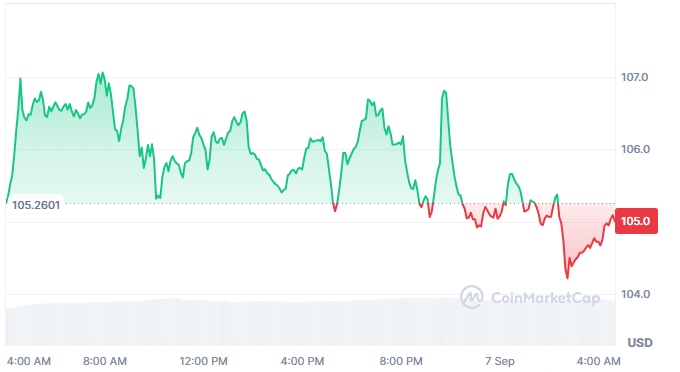
Article
Solana Price Outlook Tracks Revenue and Market Flows Solana led August app revenue while transaction growth and AI payment infrastructure strengthened its broader network activity outlook.
SOL faced intraday pressure near $105 as exchange flows increased, leaving traders focused on support and nearby resistance levels.
Late-August netflow spikes accompanied SOL's recovery, though exchange transfers alone remain unreliable as short-term price predictors.
Solana price outlook remains balanced between strong ecosystem growth, short-term technical weakness, and increasingly active exchange flows shaping market conditions during early September.
Solana Leads August's Onchain Revenue Race
Solana Stream reported $143 million in August application revenue across the network. The figure represented approximately 38% of tracked cross-chain application revenue. Total revenue across the measured ecosystem reached roughly $375.5 million.
Source: X
Hyperliquid followed with approximately $55.66 million, while Ethereum generated $47.1 million. BSC recorded roughly $34.7 million during the same period. Solana therefore exceeded the combined application revenue of those three networks.
The August performance followed a comparatively quieter July for Solana's application economy. Revenue reportedly increased from approximately $82.9 million to more than $143 million. Meanwhile, non-vote transactions reached 5.2 billion during the month.
The growth extended beyond a single application category or protocol. Trading, DeFi, consumer applications, token launches, stablecoins, and tokenized assets contributed. Tokenized equity activity also reached new highs during the reported period.
SOL Price Faces Short-Term Technical Pressure
Despite ecosystem growth, SOL's intraday chart showed weaker immediate price momentum. The token's price was around $104.96 and has dropped around 0.92% in the past 24 hours. There was significant market activity with daily trading volume close to $3.62 billion.
Source: Coinmarketcap
Price initially moved above $106 and repeatedly approached the $107 area. However, sellers emerged during attempts to sustain higher intraday levels. The $105.5 region gradually shifted from an equilibrium area into resistance.
A late-session decline pushed SOL toward approximately $104.2 before buyers responded. The rebound brought prices closer to $104.9, preventing an immediate continuation lower. Still, the recovery remained incomplete without reclaiming the previous $105.5 area.
Near-term chart levels now provide a clearer framework for market participants. Support sits around $104.0-$104.3, based on the recent reaction. Resistance appears near $106, with $106.8-$107 forming a higher ceiling.
Exchange Flows Show Active Capital Rotation
Exchange netflow data added another layer to the developing market picture. Binance showed the largest negative reading at approximately $9.12 million. Gate, OKX, Bitget, Coinbase, and Bybit also recorded notable negative flows.
Source: Coinglass
Positive flows appeared across several exchanges during the same measurement period. OKX led that group near $810,000, followed by Bitget and Gate. Kraken, Bitstamp, and Binance also registered smaller positive readings.
The broader chart showed volatile flows between November and January. SOL subsequently declined from earlier levels near $120 to $150. Price later stabilized around $60 before beginning a gradual recovery.
Late August produced several unusually large positive netflow bars alongside SOL's advance. Prices recovered from roughly $80–$90 toward the $120–$130 region before retreating. Exchange movements therefore showed expanding liquidity activity, while remaining insufficient as standalone price predictors.
Solana Price Outlook Tracks Revenue and Market Flows
Solana led August app revenue while transaction growth and AI payment infrastructure strengthened its broader network activity outlook.
SOL faced intraday pressure near $105 as exchange flows increased, leaving traders focused on support and nearby resistance levels.
Late-August netflow spikes accompanied SOL's recovery, though exchange transfers alone remain unreliable as short-term price predictors.
Solana price outlook remains balanced between strong ecosystem growth, short-term technical weakness, and increasingly active exchange flows shaping market conditions during early September.
Solana Leads August's Onchain Revenue Race
Solana Stream reported $143 million in August application revenue across the network. The figure represented approximately 38% of tracked cross-chain application revenue. Total revenue across the measured ecosystem reached roughly $375.5 million.
Source: X
Hyperliquid followed with approximately $55.66 million, while Ethereum generated $47.1 million. BSC recorded roughly $34.7 million during the same period. Solana therefore exceeded the combined application revenue of those three networks.
The August performance followed a comparatively quieter July for Solana's application economy. Revenue reportedly increased from approximately $82.9 million to more than $143 million. Meanwhile, non-vote transactions reached 5.2 billion during the month.
The growth extended beyond a single application category or protocol. Trading, DeFi, consumer applications, token launches, stablecoins, and tokenized assets contributed. Tokenized equity activity also reached new highs during the reported period.
SOL Price Faces Short-Term Technical Pressure
Despite ecosystem growth, SOL's intraday chart showed weaker immediate price momentum. The token's price was around $104.96 and has dropped around 0.92% in the past 24 hours. There was significant market activity with daily trading volume close to $3.62 billion.
Source: Coinmarketcap
Price initially moved above $106 and repeatedly approached the $107 area. However, sellers emerged during attempts to sustain higher intraday levels. The $105.5 region gradually shifted from an equilibrium area into resistance.
A late-session decline pushed SOL toward approximately $104.2 before buyers responded. The rebound brought prices closer to $104.9, preventing an immediate continuation lower. Still, the recovery remained incomplete without reclaiming the previous $105.5 area.
Near-term chart levels now provide a clearer framework for market participants. Support sits around $104.0-$104.3, based on the recent reaction. Resistance appears near $106, with $106.8-$107 forming a higher ceiling.
Exchange Flows Show Active Capital Rotation
Exchange netflow data added another layer to the developing market picture. Binance showed the largest negative reading at approximately $9.12 million. Gate, OKX, Bitget, Coinbase, and Bybit also recorded notable negative flows.
Source: Coinglass
Positive flows appeared across several exchanges during the same measurement period. OKX led that group near $810,000, followed by Bitget and Gate. Kraken, Bitstamp, and Binance also registered smaller positive readings.
The broader chart showed volatile flows between November and January. SOL subsequently declined from earlier levels near $120 to $150. Price later stabilized around $60 before beginning a gradual recovery.
Late August produced several unusually large positive netflow bars alongside SOL's advance. Prices recovered from roughly $80–$90 toward the $120–$130 region before retreating. Exchange movements therefore showed expanding liquidity activity, while remaining insufficient as standalone price predictors.
SOL faced intraday pressure near $105 as exchange flows increased, leaving traders focused on support and nearby resistance levels.
Late-August netflow spikes accompanied SOL's recovery, though exchange transfers alone remain unreliable as short-term price predictors.
Solana price outlook remains balanced between strong ecosystem growth, short-term technical weakness, and increasingly active exchange flows shaping market conditions during early September.
Solana Leads August's Onchain Revenue Race
Solana Stream reported $143 million in August application revenue across the network. The figure represented approximately 38% of tracked cross-chain application revenue. Total revenue across the measured ecosystem reached roughly $375.5 million.
Source: X
Hyperliquid followed with approximately $55.66 million, while Ethereum generated $47.1 million. BSC recorded roughly $34.7 million during the same period. Solana therefore exceeded the combined application revenue of those three networks.
The August performance followed a comparatively quieter July for Solana's application economy. Revenue reportedly increased from approximately $82.9 million to more than $143 million. Meanwhile, non-vote transactions reached 5.2 billion during the month.
The growth extended beyond a single application category or protocol. Trading, DeFi, consumer applications, token launches, stablecoins, and tokenized assets contributed. Tokenized equity activity also reached new highs during the reported period.
SOL Price Faces Short-Term Technical Pressure
Despite ecosystem growth, SOL's intraday chart showed weaker immediate price momentum. The token's price was around $104.96 and has dropped around 0.92% in the past 24 hours. There was significant market activity with daily trading volume close to $3.62 billion.
Source: Coinmarketcap
Price initially moved above $106 and repeatedly approached the $107 area. However, sellers emerged during attempts to sustain higher intraday levels. The $105.5 region gradually shifted from an equilibrium area into resistance.
A late-session decline pushed SOL toward approximately $104.2 before buyers responded. The rebound brought prices closer to $104.9, preventing an immediate continuation lower. Still, the recovery remained incomplete without reclaiming the previous $105.5 area.
Near-term chart levels now provide a clearer framework for market participants. Support sits around $104.0-$104.3, based on the recent reaction. Resistance appears near $106, with $106.8-$107 forming a higher ceiling.
Exchange Flows Show Active Capital Rotation
Exchange netflow data added another layer to the developing market picture. Binance showed the largest negative reading at approximately $9.12 million. Gate, OKX, Bitget, Coinbase, and Bybit also recorded notable negative flows.
Source: Coinglass
Positive flows appeared across several exchanges during the same measurement period. OKX led that group near $810,000, followed by Bitget and Gate. Kraken, Bitstamp, and Binance also registered smaller positive readings.
The broader chart showed volatile flows between November and January. SOL subsequently declined from earlier levels near $120 to $150. Price later stabilized around $60 before beginning a gradual recovery.
Late August produced several unusually large positive netflow bars alongside SOL's advance. Prices recovered from roughly $80–$90 toward the $120–$130 region before retreating. Exchange movements therefore showed expanding liquidity activity, while remaining insufficient as standalone price predictors.
81

Article
7 Top 100x Meme Coins: 18K+ Whitelist Members Watching Apeing’s 24-Hour CountdownCould the next major meme coin move begin before the wider market realizes where attention is shifting? Crypto rotations rarely give every project the spotlight at the same time. When capital and attention move through established assets, altcoins, and meme coins, newer projects can suddenly become part of the conversation. That makes the current meme coin cycle particularly interesting for traders searching for early-stage opportunities, especially as Apeing enters a crucial moment ahead of its upcoming token sale.
Spring brings a familiar theme of fresh starts, and the meme coin market is showing a similar appetite for something new. For anyone tracking the top 100x meme coins, the focus is increasingly shifting toward projects with strong communities, distinctive narratives, and room to build momentum. The Apeing countdown adds another layer to that story, creating a time-sensitive opportunity for those watching the next market rotation closely.
Apeing: A Top 100x Meme Coin With Stage 1 in Sight
Apeing ($APEING) is a meme coin brand built around culture, energy, community, engagement, and real utility. The project states that putting the community first is central to its identity, while its utility is being designed to combine the fun of meme culture with practical usefulness. That approach gives https://www.apeing.com/ a broader narrative than a token built purely around viral attention. With more than 18,000 whitelist members, the project has already attracted a sizeable early audience ahead of its next major milestone.
The Apeing token sale will be live at 8 Sep 15:00 UTC, while Stage 1 is not active yet. The whitelist is the stated route into Stage 1, which is planned to offer the project's lowest projected entry price of $0.0001 and a limited token allocation. The planned listing target is $0.01, meaning the move from the projected Stage 1 price to that target represents 100x upside, or a 9,900% increase. For readers hunting for top 100x meme coins, that combination of early access and limited allocation explains why the Stage 1 countdown is receiving attention.
How to Join the Apeing Whitelist Before Stage 1
Early access starts with getting onto the whitelist before Stage 1 opens. The process is designed to take only a few straightforward actions:
Visit the official https://www.apeing.com/ website and find the whitelist registration page.
Enter an email address and complete the signup.
Confirm the registration through the email received.
Keep an eye on official Apeing communications for access instructions and launch updates.
Whitelist members receive email updates and instructions for accessing the official sale. With Stage 1 built around a limited allocation, securing whitelist access puts interested participants closer to the earliest entry window. Anyone following the top 100x meme coins can check the official Apeing website and join the whitelist before Stage 1 opens.
Bonk: The Solana Meme Coin That Built Serious Momentum
Bonk ($BONK) is one of the most recognizable meme coins in the Solana ecosystem. Its identity grew around the BONK meme brand and a highly active community, giving it a clear position within Solana's broader crypto culture.
The project has also developed beyond a simple meme concept through ecosystem integrations and community-focused initiatives. Its Solana connection remains a major part of its market identity, keeping BONK relevant when traders turn their attention toward established meme assets.
Pepe: The Frog Meme With Major Crypto Recognition
Pepe ($PEPE) turned one of the internet's most recognizable frog memes into a major cryptocurrency brand. Its appeal is closely connected to the simplicity of its identity and the enormous cultural recognition attached to the Pepe character.
PEPE demonstrates how quickly meme culture can translate into crypto market attention. Its strong brand recognition and established community presence have made it one of the names frequently associated with the meme coin category.
Cheems: A Meme Coin Built Around Internet Culture
Cheems ($CHEEMS) takes inspiration from the widely recognized Cheems internet meme and carries that identity into the cryptocurrency market. The project's appeal comes largely from its connection to an established online character and the community surrounding the meme.
That cultural foundation gives Cheems a distinctive place among meme-focused cryptocurrencies. Its story reflects the continuing connection between internet communities and blockchain-based tokens, particularly when recognizable characters become part of crypto culture.
Baby Doge Coin: A Dog-Themed Meme Brand With an Ecosystem Focus
Baby Doge Coin ($BABYDOGE) developed from the wider Doge meme culture while establishing its own community and brand identity. The project has maintained visibility by combining familiar meme appeal with continued ecosystem development.
Its broader focus gives the token a presence beyond its original meme association. Baby Doge Coin remains a notable project for market watchers interested in community-led cryptocurrencies that continue building around a recognizable theme.
Snek: Cardano's Standout Meme Coin
Snek ($SNEK) is a meme coin associated with the Cardano ecosystem, where it has developed a recognizable community identity. Its branding and community-first culture have helped distinguish it within Cardano's expanding token ecosystem.
Snek also illustrates how meme coin communities can develop around blockchain networks outside the most commonly discussed ecosystems. Its Cardano roots give it a specific niche while its meme identity keeps the project accessible to the wider crypto audience.
Dogecoin: The Meme Coin That Started the Category
Dogecoin ($DOGE) remains the most established name in the meme coin category. Originally created around the Doge internet meme, it evolved into a widely recognized cryptocurrency with a large and enduring community.
Its longevity is one of its defining characteristics. Dogecoin helped establish the meme coin concept in mainstream crypto culture and continues to serve as one of the sector's most recognizable assets.
Conclusion
Apeing, Bonk, Pepe, Cheems, Baby Doge Coin, Snek, and Dogecoin represent different stages and styles within the meme coin market. Some are established cultural names, while others have carved out identities through specific blockchain communities. Together, they highlight why market rotations can bring renewed attention to different parts of the sector.
For those searching for top 100x meme coins, https://www.apeing.com/ has a particularly timely catalyst ahead. Its token sale will be live at 8 Sep 15:00 UTC, with Stage 1 positioned as the early-access phase for whitelist members. The projected $0.0001 Stage 1 price, limited allocation, and planned $0.01 listing target create a clear early-stage narrative. Checking official Apeing channels and joining the whitelist gives interested participants a route toward Stage 1 access before the allocation opens.
For More Information:
Website: Visit the Official Apeing Website
Telegram: Join the Apeing Telegram Channel
Twitter: Follow Apeing ON X (Formerly Twitter)
Frequently Asked Questions About the Top 100x Meme Coins
What are the top 100x meme coins?
The term top 100x meme coins generally refers to meme coin projects attracting attention for their potential to achieve substantial price growth from an early valuation. Community strength, market attention, utility, and project structure can all influence these narratives.
Which meme coin has the potential to 100x?
Projects associated with strong communities, growing attention, and early-stage market positioning are often discussed when traders search for potential 100x meme coins. Apeing is attracting attention because of its upcoming Stage 1 opportunity and early-access structure.
What is the best meme coin to buy right now?
There is no single answer for every market participant. Meme coin interest can shift quickly as market narratives change, making projects with distinctive communities, clear milestones, and strong market attention especially relevant to current searches.
When does the Apeing token sale begin?
The Apeing token sale will be live at 8 Sep 15:00 UTC. Stage 1 is the planned early-access phase and is not active yet.
How does the Apeing whitelist provide Stage 1 access?
The Apeing whitelist is the stated route into Stage 1. Whitelisted members receive email updates and instructions for accessing the official sale when the relevant access window opens.
Summary
The meme coin market continues to attract attention as crypto capital rotates between established assets, altcoins, and emerging projects. Apeing is approaching its September 8 token sale, with Stage 1 planned as a limited early-access phase for whitelist members. Bonk, Pepe, Cheems, Baby Doge Coin, Snek, and Dogecoin add established community and cultural narratives across the sector. The combination of early access and a defined Stage 1 structure puts Apeing firmly on the radar of readers searching for top 100x meme coins.
7 Top 100x Meme Coins: 18K+ Whitelist Members Watching Apeing’s 24-Hour Countdown
Could the next major meme coin move begin before the wider market realizes where attention is shifting? Crypto rotations rarely give every project the spotlight at the same time. When capital and attention move through established assets, altcoins, and meme coins, newer projects can suddenly become part of the conversation. That makes the current meme coin cycle particularly interesting for traders searching for early-stage opportunities, especially as Apeing enters a crucial moment ahead of its upcoming token sale.
Spring brings a familiar theme of fresh starts, and the meme coin market is showing a similar appetite for something new. For anyone tracking the top 100x meme coins, the focus is increasingly shifting toward projects with strong communities, distinctive narratives, and room to build momentum. The Apeing countdown adds another layer to that story, creating a time-sensitive opportunity for those watching the next market rotation closely.
Apeing: A Top 100x Meme Coin With Stage 1 in Sight
Apeing ($APEING) is a meme coin brand built around culture, energy, community, engagement, and real utility. The project states that putting the community first is central to its identity, while its utility is being designed to combine the fun of meme culture with practical usefulness. That approach gives https://www.apeing.com/ a broader narrative than a token built purely around viral attention. With more than 18,000 whitelist members, the project has already attracted a sizeable early audience ahead of its next major milestone.
The Apeing token sale will be live at 8 Sep 15:00 UTC, while Stage 1 is not active yet. The whitelist is the stated route into Stage 1, which is planned to offer the project's lowest projected entry price of $0.0001 and a limited token allocation. The planned listing target is $0.01, meaning the move from the projected Stage 1 price to that target represents 100x upside, or a 9,900% increase. For readers hunting for top 100x meme coins, that combination of early access and limited allocation explains why the Stage 1 countdown is receiving attention.
How to Join the Apeing Whitelist Before Stage 1
Early access starts with getting onto the whitelist before Stage 1 opens. The process is designed to take only a few straightforward actions:
Visit the official https://www.apeing.com/ website and find the whitelist registration page.
Enter an email address and complete the signup.
Confirm the registration through the email received.
Keep an eye on official Apeing communications for access instructions and launch updates.
Whitelist members receive email updates and instructions for accessing the official sale. With Stage 1 built around a limited allocation, securing whitelist access puts interested participants closer to the earliest entry window. Anyone following the top 100x meme coins can check the official Apeing website and join the whitelist before Stage 1 opens.
Bonk: The Solana Meme Coin That Built Serious Momentum
Bonk ($BONK) is one of the most recognizable meme coins in the Solana ecosystem. Its identity grew around the BONK meme brand and a highly active community, giving it a clear position within Solana's broader crypto culture.
The project has also developed beyond a simple meme concept through ecosystem integrations and community-focused initiatives. Its Solana connection remains a major part of its market identity, keeping BONK relevant when traders turn their attention toward established meme assets.
Pepe: The Frog Meme With Major Crypto Recognition
Pepe ($PEPE) turned one of the internet's most recognizable frog memes into a major cryptocurrency brand. Its appeal is closely connected to the simplicity of its identity and the enormous cultural recognition attached to the Pepe character.
PEPE demonstrates how quickly meme culture can translate into crypto market attention. Its strong brand recognition and established community presence have made it one of the names frequently associated with the meme coin category.
Cheems: A Meme Coin Built Around Internet Culture
Cheems ($CHEEMS) takes inspiration from the widely recognized Cheems internet meme and carries that identity into the cryptocurrency market. The project's appeal comes largely from its connection to an established online character and the community surrounding the meme.
That cultural foundation gives Cheems a distinctive place among meme-focused cryptocurrencies. Its story reflects the continuing connection between internet communities and blockchain-based tokens, particularly when recognizable characters become part of crypto culture.
Baby Doge Coin: A Dog-Themed Meme Brand With an Ecosystem Focus
Baby Doge Coin ($BABYDOGE) developed from the wider Doge meme culture while establishing its own community and brand identity. The project has maintained visibility by combining familiar meme appeal with continued ecosystem development.
Its broader focus gives the token a presence beyond its original meme association. Baby Doge Coin remains a notable project for market watchers interested in community-led cryptocurrencies that continue building around a recognizable theme.
Snek: Cardano's Standout Meme Coin
Snek ($SNEK) is a meme coin associated with the Cardano ecosystem, where it has developed a recognizable community identity. Its branding and community-first culture have helped distinguish it within Cardano's expanding token ecosystem.
Snek also illustrates how meme coin communities can develop around blockchain networks outside the most commonly discussed ecosystems. Its Cardano roots give it a specific niche while its meme identity keeps the project accessible to the wider crypto audience.
Dogecoin: The Meme Coin That Started the Category
Dogecoin ($DOGE) remains the most established name in the meme coin category. Originally created around the Doge internet meme, it evolved into a widely recognized cryptocurrency with a large and enduring community.
Its longevity is one of its defining characteristics. Dogecoin helped establish the meme coin concept in mainstream crypto culture and continues to serve as one of the sector's most recognizable assets.
Conclusion
Apeing, Bonk, Pepe, Cheems, Baby Doge Coin, Snek, and Dogecoin represent different stages and styles within the meme coin market. Some are established cultural names, while others have carved out identities through specific blockchain communities. Together, they highlight why market rotations can bring renewed attention to different parts of the sector.
For those searching for top 100x meme coins, https://www.apeing.com/ has a particularly timely catalyst ahead. Its token sale will be live at 8 Sep 15:00 UTC, with Stage 1 positioned as the early-access phase for whitelist members. The projected $0.0001 Stage 1 price, limited allocation, and planned $0.01 listing target create a clear early-stage narrative. Checking official Apeing channels and joining the whitelist gives interested participants a route toward Stage 1 access before the allocation opens.
For More Information:
Website: Visit the Official Apeing Website
Telegram: Join the Apeing Telegram Channel
Twitter: Follow Apeing ON X (Formerly Twitter)
Frequently Asked Questions About the Top 100x Meme Coins
What are the top 100x meme coins?
The term top 100x meme coins generally refers to meme coin projects attracting attention for their potential to achieve substantial price growth from an early valuation. Community strength, market attention, utility, and project structure can all influence these narratives.
Which meme coin has the potential to 100x?
Projects associated with strong communities, growing attention, and early-stage market positioning are often discussed when traders search for potential 100x meme coins. Apeing is attracting attention because of its upcoming Stage 1 opportunity and early-access structure.
What is the best meme coin to buy right now?
There is no single answer for every market participant. Meme coin interest can shift quickly as market narratives change, making projects with distinctive communities, clear milestones, and strong market attention especially relevant to current searches.
When does the Apeing token sale begin?
The Apeing token sale will be live at 8 Sep 15:00 UTC. Stage 1 is the planned early-access phase and is not active yet.
How does the Apeing whitelist provide Stage 1 access?
The Apeing whitelist is the stated route into Stage 1. Whitelisted members receive email updates and instructions for accessing the official sale when the relevant access window opens.
Summary
The meme coin market continues to attract attention as crypto capital rotates between established assets, altcoins, and emerging projects. Apeing is approaching its September 8 token sale, with Stage 1 planned as a limited early-access phase for whitelist members. Bonk, Pepe, Cheems, Baby Doge Coin, Snek, and Dogecoin add established community and cultural narratives across the sector. The combination of early access and a defined Stage 1 structure puts Apeing firmly on the radar of readers searching for top 100x meme coins.
Spring brings a familiar theme of fresh starts, and the meme coin market is showing a similar appetite for something new. For anyone tracking the top 100x meme coins, the focus is increasingly shifting toward projects with strong communities, distinctive narratives, and room to build momentum. The Apeing countdown adds another layer to that story, creating a time-sensitive opportunity for those watching the next market rotation closely.
Apeing: A Top 100x Meme Coin With Stage 1 in Sight
Apeing ($APEING) is a meme coin brand built around culture, energy, community, engagement, and real utility. The project states that putting the community first is central to its identity, while its utility is being designed to combine the fun of meme culture with practical usefulness. That approach gives https://www.apeing.com/ a broader narrative than a token built purely around viral attention. With more than 18,000 whitelist members, the project has already attracted a sizeable early audience ahead of its next major milestone.
The Apeing token sale will be live at 8 Sep 15:00 UTC, while Stage 1 is not active yet. The whitelist is the stated route into Stage 1, which is planned to offer the project's lowest projected entry price of $0.0001 and a limited token allocation. The planned listing target is $0.01, meaning the move from the projected Stage 1 price to that target represents 100x upside, or a 9,900% increase. For readers hunting for top 100x meme coins, that combination of early access and limited allocation explains why the Stage 1 countdown is receiving attention.
How to Join the Apeing Whitelist Before Stage 1
Early access starts with getting onto the whitelist before Stage 1 opens. The process is designed to take only a few straightforward actions:
Visit the official https://www.apeing.com/ website and find the whitelist registration page.
Enter an email address and complete the signup.
Confirm the registration through the email received.
Keep an eye on official Apeing communications for access instructions and launch updates.
Whitelist members receive email updates and instructions for accessing the official sale. With Stage 1 built around a limited allocation, securing whitelist access puts interested participants closer to the earliest entry window. Anyone following the top 100x meme coins can check the official Apeing website and join the whitelist before Stage 1 opens.
Bonk: The Solana Meme Coin That Built Serious Momentum
Bonk ($BONK) is one of the most recognizable meme coins in the Solana ecosystem. Its identity grew around the BONK meme brand and a highly active community, giving it a clear position within Solana's broader crypto culture.
The project has also developed beyond a simple meme concept through ecosystem integrations and community-focused initiatives. Its Solana connection remains a major part of its market identity, keeping BONK relevant when traders turn their attention toward established meme assets.
Pepe: The Frog Meme With Major Crypto Recognition
Pepe ($PEPE) turned one of the internet's most recognizable frog memes into a major cryptocurrency brand. Its appeal is closely connected to the simplicity of its identity and the enormous cultural recognition attached to the Pepe character.
PEPE demonstrates how quickly meme culture can translate into crypto market attention. Its strong brand recognition and established community presence have made it one of the names frequently associated with the meme coin category.
Cheems: A Meme Coin Built Around Internet Culture
Cheems ($CHEEMS) takes inspiration from the widely recognized Cheems internet meme and carries that identity into the cryptocurrency market. The project's appeal comes largely from its connection to an established online character and the community surrounding the meme.
That cultural foundation gives Cheems a distinctive place among meme-focused cryptocurrencies. Its story reflects the continuing connection between internet communities and blockchain-based tokens, particularly when recognizable characters become part of crypto culture.
Baby Doge Coin: A Dog-Themed Meme Brand With an Ecosystem Focus
Baby Doge Coin ($BABYDOGE) developed from the wider Doge meme culture while establishing its own community and brand identity. The project has maintained visibility by combining familiar meme appeal with continued ecosystem development.
Its broader focus gives the token a presence beyond its original meme association. Baby Doge Coin remains a notable project for market watchers interested in community-led cryptocurrencies that continue building around a recognizable theme.
Snek: Cardano's Standout Meme Coin
Snek ($SNEK) is a meme coin associated with the Cardano ecosystem, where it has developed a recognizable community identity. Its branding and community-first culture have helped distinguish it within Cardano's expanding token ecosystem.
Snek also illustrates how meme coin communities can develop around blockchain networks outside the most commonly discussed ecosystems. Its Cardano roots give it a specific niche while its meme identity keeps the project accessible to the wider crypto audience.
Dogecoin: The Meme Coin That Started the Category
Dogecoin ($DOGE) remains the most established name in the meme coin category. Originally created around the Doge internet meme, it evolved into a widely recognized cryptocurrency with a large and enduring community.
Its longevity is one of its defining characteristics. Dogecoin helped establish the meme coin concept in mainstream crypto culture and continues to serve as one of the sector's most recognizable assets.
Conclusion
Apeing, Bonk, Pepe, Cheems, Baby Doge Coin, Snek, and Dogecoin represent different stages and styles within the meme coin market. Some are established cultural names, while others have carved out identities through specific blockchain communities. Together, they highlight why market rotations can bring renewed attention to different parts of the sector.
For those searching for top 100x meme coins, https://www.apeing.com/ has a particularly timely catalyst ahead. Its token sale will be live at 8 Sep 15:00 UTC, with Stage 1 positioned as the early-access phase for whitelist members. The projected $0.0001 Stage 1 price, limited allocation, and planned $0.01 listing target create a clear early-stage narrative. Checking official Apeing channels and joining the whitelist gives interested participants a route toward Stage 1 access before the allocation opens.
For More Information:
Website: Visit the Official Apeing Website
Telegram: Join the Apeing Telegram Channel
Twitter: Follow Apeing ON X (Formerly Twitter)
Frequently Asked Questions About the Top 100x Meme Coins
What are the top 100x meme coins?
The term top 100x meme coins generally refers to meme coin projects attracting attention for their potential to achieve substantial price growth from an early valuation. Community strength, market attention, utility, and project structure can all influence these narratives.
Which meme coin has the potential to 100x?
Projects associated with strong communities, growing attention, and early-stage market positioning are often discussed when traders search for potential 100x meme coins. Apeing is attracting attention because of its upcoming Stage 1 opportunity and early-access structure.
What is the best meme coin to buy right now?
There is no single answer for every market participant. Meme coin interest can shift quickly as market narratives change, making projects with distinctive communities, clear milestones, and strong market attention especially relevant to current searches.
When does the Apeing token sale begin?
The Apeing token sale will be live at 8 Sep 15:00 UTC. Stage 1 is the planned early-access phase and is not active yet.
How does the Apeing whitelist provide Stage 1 access?
The Apeing whitelist is the stated route into Stage 1. Whitelisted members receive email updates and instructions for accessing the official sale when the relevant access window opens.
Summary
The meme coin market continues to attract attention as crypto capital rotates between established assets, altcoins, and emerging projects. Apeing is approaching its September 8 token sale, with Stage 1 planned as a limited early-access phase for whitelist members. Bonk, Pepe, Cheems, Baby Doge Coin, Snek, and Dogecoin add established community and cultural narratives across the sector. The combination of early access and a defined Stage 1 structure puts Apeing firmly on the radar of readers searching for top 100x meme coins.
292

Article
Apeing’s Upcoming Meme Coin Presale Countdown Ending in a Few Hours: Can This New Meme Coin Chall...The upcoming meme coin presale narrative is gaining fresh attention as the U.S. Treasury begins the active phase of its government debt buyback program, with weekly operations capped at $14.5 billion and speculation that increased liquidity could support another crypto rally. Bitcoin is hovering near $80,000, XRP is approaching $1.45, and U.S. spot XRP ETFs have recorded more than $1.66 billion in net inflows. Against this backdrop, Shiba Inu and Pudgy Penguins continue attracting market attention, while Apeing is positioning itself as a next big crypto project with its whitelist currently open ahead of its upcoming meme coin presale, giving early participants a chance to prepare for the project’s next stage.
That brings Apeing into focus. The project is currently in its whitelist stage, with the presale starting on September 8. For people tracking the next big crypto opportunities before they become widely available, this is the window to get prepared. Whitelist participants can receive early updates and participation instructions ahead of the sale, giving them a front-row position before the official presale begins.
Last Call Before the Upcoming Meme Coin Presale: Apeing Whitelist Access Is Open
The countdown is getting serious. https://www.apeing.com/ has already attracted more than 18,000 people to its whitelist, and the project is preparing for its official presale. Whitelist participation gives early supporters access to Stage 1 information before the wider sale begins. The appeal is straightforward: enter early, secure access to the cheapest stated entry price, and be ready when the presale doors open on September 8. For anyone watching the upcoming meme coin presale category, this is the stage where preparation matters most.
Stage 1 is positioned as the early-access phase for whitelisted members, with limited tokens allocated to this stage. Apeing is also taking an audit-first approach, with third-party audit verification underway before the sale proceeds. Official announcements, presale information and participation details are expected through Apeing's official website and verified social channels, giving whitelist members a clear place to follow developments rather than waiting for last-minute information.
Stage 1: The Final Window Before Apeing’s Presale
https://www.apeing.com/ ’s upcoming meme coin presale is nearing its launch, with whitelisted members set for exclusive Stage 1 access at $0.0001, compared with a stated $0.01 listing price. With limited tokens allocated to Stage 1, early whitelist access puts the cheapest entry price front and center, creating a major incentive to get ready before the presale opens.
Example AllocationStage 1 PriceTokensValue at $0.01 ListingPotential ROI$100$0.00011,000,000$10,0009,900%$500$0.00015,000,000$50,0009,900%$1,000$0.000110,000,000$100,0009,900%
How to Join the Apeing Whitelist
Go to the official Apeing website and locate the whitelist area.
Enter your email address through the whitelist registration form.
Check your inbox for the confirmation and follow-up updates.
Whitelist members can receive important updates and straightforward instructions for participating when the presale goes live. The goal is simple: get on the list now, stay informed and be ready for September 8.
Shiba Inu Expands Global Market Access While Awaiting U.S. Spot ETF
Shiba Inu continues to attract attention as it expands its presence across regulated crypto markets. SHIB does not yet have a dedicated U.S. spot ETF, but it has been included among eligible assets in the prospectus for T. Rowe Price's TKNZ ETF, giving the token potential exposure within an actively managed product that can hold between five and 15 crypto assets. The development adds another layer to the ongoing discussion around SHIB and broader institutional access.
Internationally, Shiba Inu has also gained additional regulated-market exposure. Laser Digital Japan, the digital-assets subsidiary associated with Nomura, completed its registration as a crypto-asset exchange service provider in Japan, with SHIB among the assets available through its platform. In Europe, the Valour SHIB ETP is live and tradable, while eligible Canadian clients can access regulated SHIB futures through Coinbase's futures platform. These developments continue to expand the reach of Shiba Inu as the established meme coin remains part of the wider crypto conversation.
Pudgy Penguins Maintains Market Activity as PENGU Trades Near $0.0087
Pudgy Penguins' PENGU token is trading around $0.008656, representing a 1.13% decline over the reported 24-hour period. Its market capitalization is approximately $544.14 million, with 24-hour trading volume around $193.18 million and a volume-to-market-cap ratio of roughly 35.17%. Circulating supply stands at about 62.86 billion PENGU out of a total supply of approximately 76.72 billion tokens.
The token has recorded a 24-hour low of $0.008521 and a high of $0.008942. Despite the latest daily decline, PENGU remains around 136% above its all-time low of $0.003715 recorded on April 9, 2025. It remains approximately 84.7% below its all-time high of $0.05738, reached on December 17, 2024. PENGU therefore remains an active part of the meme coin market, with its price history reflecting the significant movements that can occur within this sector.
Conclusion
Shiba Inu continues strengthening its access to regulated crypto markets, with developments in Japan, Europe and Canada adding to its international presence. Pudgy Penguins remains an established Web3 brand through PENGU, with the token continuing to trade actively across the market. https://www.apeing.com/ brings a different type of opportunity to the current conversation through its early-stage whitelist and upcoming presale.
The Apeing countdown is now entering its final stretch. With more than 18,000 people already on the whitelist, Stage 1 offers whitelisted members exclusive early access to the upcoming meme coin presale at the stated $0.0001 price. The presale starts on September 8, making now the time to join the whitelist, monitor Apeing's official channels and be prepared for the opening. For anyone searching for the next big crypto before its presale begins, Apeing is putting its earliest access opportunity directly in front of the community.
For More Information:
Website: Visit the Official Apeing Website
Telegram: Join the Apeing Telegram Channel
Twitter: Follow Apeing ON X (Formerly Twitter)
FAQs About Upcoming Meme Coin Presale
What is the best upcoming meme coin presale?
Apeing is currently preparing for its presale, with its whitelist active and the presale starting on September 8.
What upcoming meme coin presale should I watch?
Apeing is one upcoming meme coin presale currently attracting attention ahead of its September 8 start.
What is the next big crypto to watch?
Apeing is gaining attention as a next big crypto candidate because its whitelist is open ahead of its upcoming presale.
What stage is Apeing currently in?
Apeing is currently in its whitelist stage, with Stage 1 providing exclusive early access to whitelisted members.
Where can I find official Apeing updates?
Follow Apeing's official website and verified social channels for presale announcements, updates and participation instructions.
Summary
Apeing, Shiba Inu and Pudgy Penguins represent three distinct parts of the meme coin and Web3 market. Shiba Inu continues expanding its access to regulated crypto markets internationally while remaining a major meme coin community. Pudgy Penguins extends its Web3 brand through PENGU, an actively traded token associated with its broader ecosystem. Apeing is an emerging project attracting attention around its upcoming meme coin presale and whitelist-based launch approach. For readers following the next big crypto narrative, these projects illustrate how established tokens and newer entrants can generate interest through community, market activity, accessibility and broader participation across the cryptocurrency sector.
Top Keywords
upcoming meme coin presale, next big crypto, Apeing, Apeing presale, Apeing whitelist, Apeing Stage 1, September 8 presale, meme coin presale, crypto presale, upcoming crypto presale, early crypto access, meme coin, Shiba Inu, SHIB, Shiba Inu ETF, Laser Digital Japan, Pudgy Penguins, PENGU, Web3, crypto market, presale whitelist, Stage 1 crypto presale, early crypto opportunity
Apeing’s Upcoming Meme Coin Presale Countdown Ending in a Few Hours: Can This New Meme Coin Chall...
The upcoming meme coin presale narrative is gaining fresh attention as the U.S. Treasury begins the active phase of its government debt buyback program, with weekly operations capped at $14.5 billion and speculation that increased liquidity could support another crypto rally. Bitcoin is hovering near $80,000, XRP is approaching $1.45, and U.S. spot XRP ETFs have recorded more than $1.66 billion in net inflows. Against this backdrop, Shiba Inu and Pudgy Penguins continue attracting market attention, while Apeing is positioning itself as a next big crypto project with its whitelist currently open ahead of its upcoming meme coin presale, giving early participants a chance to prepare for the project’s next stage.
That brings Apeing into focus. The project is currently in its whitelist stage, with the presale starting on September 8. For people tracking the next big crypto opportunities before they become widely available, this is the window to get prepared. Whitelist participants can receive early updates and participation instructions ahead of the sale, giving them a front-row position before the official presale begins.
Last Call Before the Upcoming Meme Coin Presale: Apeing Whitelist Access Is Open
The countdown is getting serious. https://www.apeing.com/ has already attracted more than 18,000 people to its whitelist, and the project is preparing for its official presale. Whitelist participation gives early supporters access to Stage 1 information before the wider sale begins. The appeal is straightforward: enter early, secure access to the cheapest stated entry price, and be ready when the presale doors open on September 8. For anyone watching the upcoming meme coin presale category, this is the stage where preparation matters most.
Stage 1 is positioned as the early-access phase for whitelisted members, with limited tokens allocated to this stage. Apeing is also taking an audit-first approach, with third-party audit verification underway before the sale proceeds. Official announcements, presale information and participation details are expected through Apeing's official website and verified social channels, giving whitelist members a clear place to follow developments rather than waiting for last-minute information.
Stage 1: The Final Window Before Apeing’s Presale
https://www.apeing.com/ ’s upcoming meme coin presale is nearing its launch, with whitelisted members set for exclusive Stage 1 access at $0.0001, compared with a stated $0.01 listing price. With limited tokens allocated to Stage 1, early whitelist access puts the cheapest entry price front and center, creating a major incentive to get ready before the presale opens.
Example AllocationStage 1 PriceTokensValue at $0.01 ListingPotential ROI$100$0.00011,000,000$10,0009,900%$500$0.00015,000,000$50,0009,900%$1,000$0.000110,000,000$100,0009,900%
How to Join the Apeing Whitelist
Go to the official Apeing website and locate the whitelist area.
Enter your email address through the whitelist registration form.
Check your inbox for the confirmation and follow-up updates.
Whitelist members can receive important updates and straightforward instructions for participating when the presale goes live. The goal is simple: get on the list now, stay informed and be ready for September 8.
Shiba Inu Expands Global Market Access While Awaiting U.S. Spot ETF
Shiba Inu continues to attract attention as it expands its presence across regulated crypto markets. SHIB does not yet have a dedicated U.S. spot ETF, but it has been included among eligible assets in the prospectus for T. Rowe Price's TKNZ ETF, giving the token potential exposure within an actively managed product that can hold between five and 15 crypto assets. The development adds another layer to the ongoing discussion around SHIB and broader institutional access.
Internationally, Shiba Inu has also gained additional regulated-market exposure. Laser Digital Japan, the digital-assets subsidiary associated with Nomura, completed its registration as a crypto-asset exchange service provider in Japan, with SHIB among the assets available through its platform. In Europe, the Valour SHIB ETP is live and tradable, while eligible Canadian clients can access regulated SHIB futures through Coinbase's futures platform. These developments continue to expand the reach of Shiba Inu as the established meme coin remains part of the wider crypto conversation.
Pudgy Penguins Maintains Market Activity as PENGU Trades Near $0.0087
Pudgy Penguins' PENGU token is trading around $0.008656, representing a 1.13% decline over the reported 24-hour period. Its market capitalization is approximately $544.14 million, with 24-hour trading volume around $193.18 million and a volume-to-market-cap ratio of roughly 35.17%. Circulating supply stands at about 62.86 billion PENGU out of a total supply of approximately 76.72 billion tokens.
The token has recorded a 24-hour low of $0.008521 and a high of $0.008942. Despite the latest daily decline, PENGU remains around 136% above its all-time low of $0.003715 recorded on April 9, 2025. It remains approximately 84.7% below its all-time high of $0.05738, reached on December 17, 2024. PENGU therefore remains an active part of the meme coin market, with its price history reflecting the significant movements that can occur within this sector.
Conclusion
Shiba Inu continues strengthening its access to regulated crypto markets, with developments in Japan, Europe and Canada adding to its international presence. Pudgy Penguins remains an established Web3 brand through PENGU, with the token continuing to trade actively across the market. https://www.apeing.com/ brings a different type of opportunity to the current conversation through its early-stage whitelist and upcoming presale.
The Apeing countdown is now entering its final stretch. With more than 18,000 people already on the whitelist, Stage 1 offers whitelisted members exclusive early access to the upcoming meme coin presale at the stated $0.0001 price. The presale starts on September 8, making now the time to join the whitelist, monitor Apeing's official channels and be prepared for the opening. For anyone searching for the next big crypto before its presale begins, Apeing is putting its earliest access opportunity directly in front of the community.
For More Information:
Website: Visit the Official Apeing Website
Telegram: Join the Apeing Telegram Channel
Twitter: Follow Apeing ON X (Formerly Twitter)
FAQs About Upcoming Meme Coin Presale
What is the best upcoming meme coin presale?
Apeing is currently preparing for its presale, with its whitelist active and the presale starting on September 8.
What upcoming meme coin presale should I watch?
Apeing is one upcoming meme coin presale currently attracting attention ahead of its September 8 start.
What is the next big crypto to watch?
Apeing is gaining attention as a next big crypto candidate because its whitelist is open ahead of its upcoming presale.
What stage is Apeing currently in?
Apeing is currently in its whitelist stage, with Stage 1 providing exclusive early access to whitelisted members.
Where can I find official Apeing updates?
Follow Apeing's official website and verified social channels for presale announcements, updates and participation instructions.
Summary
Apeing, Shiba Inu and Pudgy Penguins represent three distinct parts of the meme coin and Web3 market. Shiba Inu continues expanding its access to regulated crypto markets internationally while remaining a major meme coin community. Pudgy Penguins extends its Web3 brand through PENGU, an actively traded token associated with its broader ecosystem. Apeing is an emerging project attracting attention around its upcoming meme coin presale and whitelist-based launch approach. For readers following the next big crypto narrative, these projects illustrate how established tokens and newer entrants can generate interest through community, market activity, accessibility and broader participation across the cryptocurrency sector.
Top Keywords
upcoming meme coin presale, next big crypto, Apeing, Apeing presale, Apeing whitelist, Apeing Stage 1, September 8 presale, meme coin presale, crypto presale, upcoming crypto presale, early crypto access, meme coin, Shiba Inu, SHIB, Shiba Inu ETF, Laser Digital Japan, Pudgy Penguins, PENGU, Web3, crypto market, presale whitelist, Stage 1 crypto presale, early crypto opportunity
That brings Apeing into focus. The project is currently in its whitelist stage, with the presale starting on September 8. For people tracking the next big crypto opportunities before they become widely available, this is the window to get prepared. Whitelist participants can receive early updates and participation instructions ahead of the sale, giving them a front-row position before the official presale begins.
Last Call Before the Upcoming Meme Coin Presale: Apeing Whitelist Access Is Open
The countdown is getting serious. https://www.apeing.com/ has already attracted more than 18,000 people to its whitelist, and the project is preparing for its official presale. Whitelist participation gives early supporters access to Stage 1 information before the wider sale begins. The appeal is straightforward: enter early, secure access to the cheapest stated entry price, and be ready when the presale doors open on September 8. For anyone watching the upcoming meme coin presale category, this is the stage where preparation matters most.
Stage 1 is positioned as the early-access phase for whitelisted members, with limited tokens allocated to this stage. Apeing is also taking an audit-first approach, with third-party audit verification underway before the sale proceeds. Official announcements, presale information and participation details are expected through Apeing's official website and verified social channels, giving whitelist members a clear place to follow developments rather than waiting for last-minute information.
Stage 1: The Final Window Before Apeing’s Presale
https://www.apeing.com/ ’s upcoming meme coin presale is nearing its launch, with whitelisted members set for exclusive Stage 1 access at $0.0001, compared with a stated $0.01 listing price. With limited tokens allocated to Stage 1, early whitelist access puts the cheapest entry price front and center, creating a major incentive to get ready before the presale opens.
Example AllocationStage 1 PriceTokensValue at $0.01 ListingPotential ROI$100$0.00011,000,000$10,0009,900%$500$0.00015,000,000$50,0009,900%$1,000$0.000110,000,000$100,0009,900%
How to Join the Apeing Whitelist
Go to the official Apeing website and locate the whitelist area.
Enter your email address through the whitelist registration form.
Check your inbox for the confirmation and follow-up updates.
Whitelist members can receive important updates and straightforward instructions for participating when the presale goes live. The goal is simple: get on the list now, stay informed and be ready for September 8.
Shiba Inu Expands Global Market Access While Awaiting U.S. Spot ETF
Shiba Inu continues to attract attention as it expands its presence across regulated crypto markets. SHIB does not yet have a dedicated U.S. spot ETF, but it has been included among eligible assets in the prospectus for T. Rowe Price's TKNZ ETF, giving the token potential exposure within an actively managed product that can hold between five and 15 crypto assets. The development adds another layer to the ongoing discussion around SHIB and broader institutional access.
Internationally, Shiba Inu has also gained additional regulated-market exposure. Laser Digital Japan, the digital-assets subsidiary associated with Nomura, completed its registration as a crypto-asset exchange service provider in Japan, with SHIB among the assets available through its platform. In Europe, the Valour SHIB ETP is live and tradable, while eligible Canadian clients can access regulated SHIB futures through Coinbase's futures platform. These developments continue to expand the reach of Shiba Inu as the established meme coin remains part of the wider crypto conversation.
Pudgy Penguins Maintains Market Activity as PENGU Trades Near $0.0087
Pudgy Penguins' PENGU token is trading around $0.008656, representing a 1.13% decline over the reported 24-hour period. Its market capitalization is approximately $544.14 million, with 24-hour trading volume around $193.18 million and a volume-to-market-cap ratio of roughly 35.17%. Circulating supply stands at about 62.86 billion PENGU out of a total supply of approximately 76.72 billion tokens.
The token has recorded a 24-hour low of $0.008521 and a high of $0.008942. Despite the latest daily decline, PENGU remains around 136% above its all-time low of $0.003715 recorded on April 9, 2025. It remains approximately 84.7% below its all-time high of $0.05738, reached on December 17, 2024. PENGU therefore remains an active part of the meme coin market, with its price history reflecting the significant movements that can occur within this sector.
Conclusion
Shiba Inu continues strengthening its access to regulated crypto markets, with developments in Japan, Europe and Canada adding to its international presence. Pudgy Penguins remains an established Web3 brand through PENGU, with the token continuing to trade actively across the market. https://www.apeing.com/ brings a different type of opportunity to the current conversation through its early-stage whitelist and upcoming presale.
The Apeing countdown is now entering its final stretch. With more than 18,000 people already on the whitelist, Stage 1 offers whitelisted members exclusive early access to the upcoming meme coin presale at the stated $0.0001 price. The presale starts on September 8, making now the time to join the whitelist, monitor Apeing's official channels and be prepared for the opening. For anyone searching for the next big crypto before its presale begins, Apeing is putting its earliest access opportunity directly in front of the community.
For More Information:
Website: Visit the Official Apeing Website
Telegram: Join the Apeing Telegram Channel
Twitter: Follow Apeing ON X (Formerly Twitter)
FAQs About Upcoming Meme Coin Presale
What is the best upcoming meme coin presale?
Apeing is currently preparing for its presale, with its whitelist active and the presale starting on September 8.
What upcoming meme coin presale should I watch?
Apeing is one upcoming meme coin presale currently attracting attention ahead of its September 8 start.
What is the next big crypto to watch?
Apeing is gaining attention as a next big crypto candidate because its whitelist is open ahead of its upcoming presale.
What stage is Apeing currently in?
Apeing is currently in its whitelist stage, with Stage 1 providing exclusive early access to whitelisted members.
Where can I find official Apeing updates?
Follow Apeing's official website and verified social channels for presale announcements, updates and participation instructions.
Summary
Apeing, Shiba Inu and Pudgy Penguins represent three distinct parts of the meme coin and Web3 market. Shiba Inu continues expanding its access to regulated crypto markets internationally while remaining a major meme coin community. Pudgy Penguins extends its Web3 brand through PENGU, an actively traded token associated with its broader ecosystem. Apeing is an emerging project attracting attention around its upcoming meme coin presale and whitelist-based launch approach. For readers following the next big crypto narrative, these projects illustrate how established tokens and newer entrants can generate interest through community, market activity, accessibility and broader participation across the cryptocurrency sector.
Top Keywords
upcoming meme coin presale, next big crypto, Apeing, Apeing presale, Apeing whitelist, Apeing Stage 1, September 8 presale, meme coin presale, crypto presale, upcoming crypto presale, early crypto access, meme coin, Shiba Inu, SHIB, Shiba Inu ETF, Laser Digital Japan, Pudgy Penguins, PENGU, Web3, crypto market, presale whitelist, Stage 1 crypto presale, early crypto opportunity
1
264

Article
Trending Meme Coins Today: Apeing Presale Is Just Hours Away From Launch as DOGE and SHIB Remain ...What happens when established meme coins face fresh market pressure while a new contender gets ready to open its presale? Dogecoin and Shiba Inu are giving the market plenty to track, with DOGE seeing heavier trading activity during its latest decline and SHIB also slipping lower. For readers watching trending meme coins today, the latest meme coin news is setting the stage for another active stretch.
Meanwhile, Apeing is moving toward a date that could put it firmly on the radar of meme coin followers. Its whitelist is already open, giving early supporters a way to stay connected before the presale starts on September 8. More than 18,000 people have signed up so far, and whitelist members are positioned to receive key announcements and participation details ahead of the sale. With Stage 1 set to open soon, the focus is now on those who get through the door early.
Apeing: A New Name Among Trending Meme Coins Today
Apeing is approaching its official presale with its whitelist already attracting more than 18,000 people. Whitelisted members are set to receive early presale notifications, updates and participation instructions, giving them a front-row position ahead of the September 8 opening. For followers of trending meme coins today, Stage 1 represents the earliest entry point currently outlined for Apeing, making the whitelist the key place to start.
The project is also taking an audit-first approach, with third-party audit verification underway before the sale proceeds. Official information and participation links will be published through Apeing's website and verified social accounts. For anyone following meme coin news, that makes staying connected to the project's official channels particularly important as the presale approaches. The whitelist is already growing, and joining now means being prepared before the doors open.
Apeing's Upcoming Presale: What Trending Meme Coins Today Are Watching
The https://www.apeing.com/ presale is scheduled to begin on September 8, with Stage 1 offering the stated entry price of $0.0001 and a stated listing price of $0.01. The promotional ROI scenario based on those prices represents a potential 100x price increase, or approximately 9,900% gain before considering any fees or other factors. This is a scenario based on the stated prices, rather than a guaranteed outcome. With limited tokens allocated to Stage 1, early whitelist access is positioned as the project's key opportunity for participants seeking the earliest stated price.
For readers scanning trending meme coins today, the appeal of getting into Stage 1 is straightforward: the earlier stated price is $0.0001, while the stated listing price is $0.01. A hypothetical $100 purchase at $0.0001 would correspond to 1,000,000 tokens. At $0.01 per token, those tokens would have a hypothetical value of $10,000, illustrating the project's promotional upside scenario. These figures are mathematical scenarios based solely on the stated prices, not predictions of future market performance.
Hypothetical EntryTokens at $0.0001Value at $0.01$1001,000,000$10,000$5005,000,000$50,000$1,00010,000,000$100,000
How to Join the Apeing Whitelist
Visit https://www.apeing.com/official website: Start from the project's official online destination.
Enter your email: Find the whitelist section and submit your email address.
Check for confirmation: Watch your inbox for the confirmation message and subsequent updates.
Whitelist members will receive updates and straightforward instructions for participating when the presale goes live. With the September 8 date approaching, joining early provides time to stay informed rather than waiting until the sale is already underway.
Dogecoin Slides 4.3% as Trading Volume Surges Past $1.3 Billion
Dogecoin (DOGE) came under selling pressure over the past 24 hours, falling 4.28% to around $0.08923. Its market capitalization moved to approximately $15.3 billion, while 24-hour trading volume increased 35.9% to about $1.32 billion. The increase in volume alongside the decline in price shows that market participation intensified during the latest move. DOGE remains the 11th-largest cryptocurrency by market capitalization, with approximately 171.51 billion coins circulating and no maximum supply cap. Its fully diluted valuation stands near $15.29 billion. This remains an important part of the latest meme coin news and keeps Dogecoin firmly among the trending meme coins today.
During the latest 24-hour period, Dogecoin traded between approximately $0.08831 and $0.09194. That range highlights the heightened volatility surrounding the meme-inspired cryptocurrency. DOGE remains about 87.9% below its May 2021 all-time high of $0.7376. The combination of lower price and higher volume points to increased trading activity, while the next direction will depend on whether buyers can defend the recent lows and rebuild upward momentum. For readers monitoring trending meme coins today, DOGE's price action remains one of the notable market developments.
Shiba Inu Slips 1.9% as SHIB Market Cap Stays Near $3.2 Billion
Shiba Inu (SHIB) declined 1.91% over the latest 24-hour period to around $0.000005432, leaving its market capitalization near $3.2 billion. Trading volume reached approximately $56.1 million, down 11.7%. SHIB ranks as the 29th-largest cryptocurrency by market capitalization, with about 589.23 trillion tokens circulating from a maximum supply of roughly 589.55 trillion. Its fully diluted valuation is also near $3.2 billion, while the token has more than 3 million holders. These figures continue to make SHIB a significant subject in meme coin news and among trending meme coins today.
SHIB traded between approximately $0.000005385 and $0.000005531 during the latest 24-hour period, indicating a relatively narrow range despite the decline. The token remains approximately 93.9% below its October 2021 all-time high of $0.00008845. Reduced trading volume accompanied the latest price decline, suggesting weaker short-term market activity. Traders will be watching the recent low for signs of renewed demand, while an improvement in volume could provide a stronger signal of recovering momentum. SHIB therefore remains one of the established names worth tracking when reviewing trending meme coins today.
What to Watch Next Among Trending Meme Coins Today
The current meme coin conversation covers very different types of developments. Dogecoin is showing elevated trading activity alongside a price decline, while Shiba Inu is experiencing softer volume and a narrower trading range. Meanwhile, Apeing is still before its official launch phase and is building toward its September 8 presale through its whitelist. For those following meme coin news, all three projects have distinct developments worth monitoring.
Apeing's immediate milestone is particularly clear: the presale starts on September 8. Whitelist members are positioned for exclusive Stage 1 access, where the stated entry price is $0.0001 and the project has outlined a $0.01 listing price. Anyone interested in trending meme coins today who wants to be prepared for the opening can join the whitelist now, follow verified Apeing channels and wait for the official participation instructions.
Conclusion
Dogecoin continues to attract substantial market participation, with its latest decline accompanied by a sharp increase in trading volume. Shiba Inu remains a widely held meme cryptocurrency with millions of holders despite its recent weakness. https://www.apeing.com/, meanwhile, is approaching its presale while building its community through the whitelist. Together, these developments give followers of trending meme coins today several distinct stories to watch across established and emerging meme projects.
For Apeing, the countdown is now the central story. The whitelist remains active ahead of the September 8 presale, and members are set to receive early updates and instructions for Stage 1. With the stated Stage 1 price of $0.0001 and limited Stage 1 token allocation, early access is the core attraction for those looking to enter at the project's earliest stated price. Stay with official Apeing channels, join the whitelist before the presale opens and be ready when the doors open. Among the meme coin news worth watching right now, Apeing's September 8 milestone is approaching fast.
For More Information:
Website: Visit the Official Apeing Website
Telegram: Join the Apeing Telegram Channel
Twitter: Follow Apeing ON X (Formerly Twitter)
FAQs About Trending Meme Coins Today
What are the trending meme coins today?
Dogecoin, Shiba Inu and Apeing are among the meme coin projects attracting attention for their current market activity and upcoming developments.
What is the latest meme coin news?
Current developments include renewed trading activity in Dogecoin, weaker short-term activity in Shiba Inu and Apeing's upcoming September 8 presale.
Which meme coins are trending right now?
Dogecoin and Shiba Inu remain established meme coin names, while Apeing is attracting attention ahead of its upcoming presale.
What stage is Apeing currently in?
Apeing is currently in its whitelist stage, with the official presale scheduled to start on September 8.
How does the Apeing whitelist work?
Users can visit the official Apeing website, submit their email through the whitelist section and watch for confirmation and future presale updates.
100-Word Summary
Dogecoin, Shiba Inu and Apeing are three meme coin projects drawing attention for different reasons. Dogecoin recently experienced a price decline alongside higher trading volume, while Shiba Inu recorded a smaller decline and lower trading activity. Both remain established names in the meme coin market with substantial communities. Apeing is currently building its community ahead of its planned presale and has attracted interest through its whitelist. Readers tracking trending meme coins today can follow developments across all three projects through current meme coin news. Apeing's upcoming milestone adds another developing story for those monitoring new and established meme cryptocurrencies and their community activity.
Top Keywords
trending meme coins today, meme coin news, Apeing, Apeing whitelist, Apeing presale, Apeing Stage 1, September 8 presale, crypto presale, meme coins, Dogecoin, DOGE, Dogecoin price, Dogecoin trading volume, Shiba Inu, SHIB, Shiba Inu price, meme cryptocurrency, crypto market, presale whitelist, Stage 1 access, crypto tokens, meme coin market, emerging meme coins
Trending Meme Coins Today: Apeing Presale Is Just Hours Away From Launch as DOGE and SHIB Remain ...
What happens when established meme coins face fresh market pressure while a new contender gets ready to open its presale? Dogecoin and Shiba Inu are giving the market plenty to track, with DOGE seeing heavier trading activity during its latest decline and SHIB also slipping lower. For readers watching trending meme coins today, the latest meme coin news is setting the stage for another active stretch.
Meanwhile, Apeing is moving toward a date that could put it firmly on the radar of meme coin followers. Its whitelist is already open, giving early supporters a way to stay connected before the presale starts on September 8. More than 18,000 people have signed up so far, and whitelist members are positioned to receive key announcements and participation details ahead of the sale. With Stage 1 set to open soon, the focus is now on those who get through the door early.
Apeing: A New Name Among Trending Meme Coins Today
Apeing is approaching its official presale with its whitelist already attracting more than 18,000 people. Whitelisted members are set to receive early presale notifications, updates and participation instructions, giving them a front-row position ahead of the September 8 opening. For followers of trending meme coins today, Stage 1 represents the earliest entry point currently outlined for Apeing, making the whitelist the key place to start.
The project is also taking an audit-first approach, with third-party audit verification underway before the sale proceeds. Official information and participation links will be published through Apeing's website and verified social accounts. For anyone following meme coin news, that makes staying connected to the project's official channels particularly important as the presale approaches. The whitelist is already growing, and joining now means being prepared before the doors open.
Apeing's Upcoming Presale: What Trending Meme Coins Today Are Watching
The https://www.apeing.com/ presale is scheduled to begin on September 8, with Stage 1 offering the stated entry price of $0.0001 and a stated listing price of $0.01. The promotional ROI scenario based on those prices represents a potential 100x price increase, or approximately 9,900% gain before considering any fees or other factors. This is a scenario based on the stated prices, rather than a guaranteed outcome. With limited tokens allocated to Stage 1, early whitelist access is positioned as the project's key opportunity for participants seeking the earliest stated price.
For readers scanning trending meme coins today, the appeal of getting into Stage 1 is straightforward: the earlier stated price is $0.0001, while the stated listing price is $0.01. A hypothetical $100 purchase at $0.0001 would correspond to 1,000,000 tokens. At $0.01 per token, those tokens would have a hypothetical value of $10,000, illustrating the project's promotional upside scenario. These figures are mathematical scenarios based solely on the stated prices, not predictions of future market performance.
Hypothetical EntryTokens at $0.0001Value at $0.01$1001,000,000$10,000$5005,000,000$50,000$1,00010,000,000$100,000
How to Join the Apeing Whitelist
Visit https://www.apeing.com/official website: Start from the project's official online destination.
Enter your email: Find the whitelist section and submit your email address.
Check for confirmation: Watch your inbox for the confirmation message and subsequent updates.
Whitelist members will receive updates and straightforward instructions for participating when the presale goes live. With the September 8 date approaching, joining early provides time to stay informed rather than waiting until the sale is already underway.
Dogecoin Slides 4.3% as Trading Volume Surges Past $1.3 Billion
Dogecoin (DOGE) came under selling pressure over the past 24 hours, falling 4.28% to around $0.08923. Its market capitalization moved to approximately $15.3 billion, while 24-hour trading volume increased 35.9% to about $1.32 billion. The increase in volume alongside the decline in price shows that market participation intensified during the latest move. DOGE remains the 11th-largest cryptocurrency by market capitalization, with approximately 171.51 billion coins circulating and no maximum supply cap. Its fully diluted valuation stands near $15.29 billion. This remains an important part of the latest meme coin news and keeps Dogecoin firmly among the trending meme coins today.
During the latest 24-hour period, Dogecoin traded between approximately $0.08831 and $0.09194. That range highlights the heightened volatility surrounding the meme-inspired cryptocurrency. DOGE remains about 87.9% below its May 2021 all-time high of $0.7376. The combination of lower price and higher volume points to increased trading activity, while the next direction will depend on whether buyers can defend the recent lows and rebuild upward momentum. For readers monitoring trending meme coins today, DOGE's price action remains one of the notable market developments.
Shiba Inu Slips 1.9% as SHIB Market Cap Stays Near $3.2 Billion
Shiba Inu (SHIB) declined 1.91% over the latest 24-hour period to around $0.000005432, leaving its market capitalization near $3.2 billion. Trading volume reached approximately $56.1 million, down 11.7%. SHIB ranks as the 29th-largest cryptocurrency by market capitalization, with about 589.23 trillion tokens circulating from a maximum supply of roughly 589.55 trillion. Its fully diluted valuation is also near $3.2 billion, while the token has more than 3 million holders. These figures continue to make SHIB a significant subject in meme coin news and among trending meme coins today.
SHIB traded between approximately $0.000005385 and $0.000005531 during the latest 24-hour period, indicating a relatively narrow range despite the decline. The token remains approximately 93.9% below its October 2021 all-time high of $0.00008845. Reduced trading volume accompanied the latest price decline, suggesting weaker short-term market activity. Traders will be watching the recent low for signs of renewed demand, while an improvement in volume could provide a stronger signal of recovering momentum. SHIB therefore remains one of the established names worth tracking when reviewing trending meme coins today.
What to Watch Next Among Trending Meme Coins Today
The current meme coin conversation covers very different types of developments. Dogecoin is showing elevated trading activity alongside a price decline, while Shiba Inu is experiencing softer volume and a narrower trading range. Meanwhile, Apeing is still before its official launch phase and is building toward its September 8 presale through its whitelist. For those following meme coin news, all three projects have distinct developments worth monitoring.
Apeing's immediate milestone is particularly clear: the presale starts on September 8. Whitelist members are positioned for exclusive Stage 1 access, where the stated entry price is $0.0001 and the project has outlined a $0.01 listing price. Anyone interested in trending meme coins today who wants to be prepared for the opening can join the whitelist now, follow verified Apeing channels and wait for the official participation instructions.
Conclusion
Dogecoin continues to attract substantial market participation, with its latest decline accompanied by a sharp increase in trading volume. Shiba Inu remains a widely held meme cryptocurrency with millions of holders despite its recent weakness. https://www.apeing.com/, meanwhile, is approaching its presale while building its community through the whitelist. Together, these developments give followers of trending meme coins today several distinct stories to watch across established and emerging meme projects.
For Apeing, the countdown is now the central story. The whitelist remains active ahead of the September 8 presale, and members are set to receive early updates and instructions for Stage 1. With the stated Stage 1 price of $0.0001 and limited Stage 1 token allocation, early access is the core attraction for those looking to enter at the project's earliest stated price. Stay with official Apeing channels, join the whitelist before the presale opens and be ready when the doors open. Among the meme coin news worth watching right now, Apeing's September 8 milestone is approaching fast.
For More Information:
Website: Visit the Official Apeing Website
Telegram: Join the Apeing Telegram Channel
Twitter: Follow Apeing ON X (Formerly Twitter)
FAQs About Trending Meme Coins Today
What are the trending meme coins today?
Dogecoin, Shiba Inu and Apeing are among the meme coin projects attracting attention for their current market activity and upcoming developments.
What is the latest meme coin news?
Current developments include renewed trading activity in Dogecoin, weaker short-term activity in Shiba Inu and Apeing's upcoming September 8 presale.
Which meme coins are trending right now?
Dogecoin and Shiba Inu remain established meme coin names, while Apeing is attracting attention ahead of its upcoming presale.
What stage is Apeing currently in?
Apeing is currently in its whitelist stage, with the official presale scheduled to start on September 8.
How does the Apeing whitelist work?
Users can visit the official Apeing website, submit their email through the whitelist section and watch for confirmation and future presale updates.
100-Word Summary
Dogecoin, Shiba Inu and Apeing are three meme coin projects drawing attention for different reasons. Dogecoin recently experienced a price decline alongside higher trading volume, while Shiba Inu recorded a smaller decline and lower trading activity. Both remain established names in the meme coin market with substantial communities. Apeing is currently building its community ahead of its planned presale and has attracted interest through its whitelist. Readers tracking trending meme coins today can follow developments across all three projects through current meme coin news. Apeing's upcoming milestone adds another developing story for those monitoring new and established meme cryptocurrencies and their community activity.
Top Keywords
trending meme coins today, meme coin news, Apeing, Apeing whitelist, Apeing presale, Apeing Stage 1, September 8 presale, crypto presale, meme coins, Dogecoin, DOGE, Dogecoin price, Dogecoin trading volume, Shiba Inu, SHIB, Shiba Inu price, meme cryptocurrency, crypto market, presale whitelist, Stage 1 access, crypto tokens, meme coin market, emerging meme coins
Meanwhile, Apeing is moving toward a date that could put it firmly on the radar of meme coin followers. Its whitelist is already open, giving early supporters a way to stay connected before the presale starts on September 8. More than 18,000 people have signed up so far, and whitelist members are positioned to receive key announcements and participation details ahead of the sale. With Stage 1 set to open soon, the focus is now on those who get through the door early.
Apeing: A New Name Among Trending Meme Coins Today
Apeing is approaching its official presale with its whitelist already attracting more than 18,000 people. Whitelisted members are set to receive early presale notifications, updates and participation instructions, giving them a front-row position ahead of the September 8 opening. For followers of trending meme coins today, Stage 1 represents the earliest entry point currently outlined for Apeing, making the whitelist the key place to start.
The project is also taking an audit-first approach, with third-party audit verification underway before the sale proceeds. Official information and participation links will be published through Apeing's website and verified social accounts. For anyone following meme coin news, that makes staying connected to the project's official channels particularly important as the presale approaches. The whitelist is already growing, and joining now means being prepared before the doors open.
Apeing's Upcoming Presale: What Trending Meme Coins Today Are Watching
The https://www.apeing.com/ presale is scheduled to begin on September 8, with Stage 1 offering the stated entry price of $0.0001 and a stated listing price of $0.01. The promotional ROI scenario based on those prices represents a potential 100x price increase, or approximately 9,900% gain before considering any fees or other factors. This is a scenario based on the stated prices, rather than a guaranteed outcome. With limited tokens allocated to Stage 1, early whitelist access is positioned as the project's key opportunity for participants seeking the earliest stated price.
For readers scanning trending meme coins today, the appeal of getting into Stage 1 is straightforward: the earlier stated price is $0.0001, while the stated listing price is $0.01. A hypothetical $100 purchase at $0.0001 would correspond to 1,000,000 tokens. At $0.01 per token, those tokens would have a hypothetical value of $10,000, illustrating the project's promotional upside scenario. These figures are mathematical scenarios based solely on the stated prices, not predictions of future market performance.
Hypothetical EntryTokens at $0.0001Value at $0.01$1001,000,000$10,000$5005,000,000$50,000$1,00010,000,000$100,000
How to Join the Apeing Whitelist
Visit https://www.apeing.com/official website: Start from the project's official online destination.
Enter your email: Find the whitelist section and submit your email address.
Check for confirmation: Watch your inbox for the confirmation message and subsequent updates.
Whitelist members will receive updates and straightforward instructions for participating when the presale goes live. With the September 8 date approaching, joining early provides time to stay informed rather than waiting until the sale is already underway.
Dogecoin Slides 4.3% as Trading Volume Surges Past $1.3 Billion
Dogecoin (DOGE) came under selling pressure over the past 24 hours, falling 4.28% to around $0.08923. Its market capitalization moved to approximately $15.3 billion, while 24-hour trading volume increased 35.9% to about $1.32 billion. The increase in volume alongside the decline in price shows that market participation intensified during the latest move. DOGE remains the 11th-largest cryptocurrency by market capitalization, with approximately 171.51 billion coins circulating and no maximum supply cap. Its fully diluted valuation stands near $15.29 billion. This remains an important part of the latest meme coin news and keeps Dogecoin firmly among the trending meme coins today.
During the latest 24-hour period, Dogecoin traded between approximately $0.08831 and $0.09194. That range highlights the heightened volatility surrounding the meme-inspired cryptocurrency. DOGE remains about 87.9% below its May 2021 all-time high of $0.7376. The combination of lower price and higher volume points to increased trading activity, while the next direction will depend on whether buyers can defend the recent lows and rebuild upward momentum. For readers monitoring trending meme coins today, DOGE's price action remains one of the notable market developments.
Shiba Inu Slips 1.9% as SHIB Market Cap Stays Near $3.2 Billion
Shiba Inu (SHIB) declined 1.91% over the latest 24-hour period to around $0.000005432, leaving its market capitalization near $3.2 billion. Trading volume reached approximately $56.1 million, down 11.7%. SHIB ranks as the 29th-largest cryptocurrency by market capitalization, with about 589.23 trillion tokens circulating from a maximum supply of roughly 589.55 trillion. Its fully diluted valuation is also near $3.2 billion, while the token has more than 3 million holders. These figures continue to make SHIB a significant subject in meme coin news and among trending meme coins today.
SHIB traded between approximately $0.000005385 and $0.000005531 during the latest 24-hour period, indicating a relatively narrow range despite the decline. The token remains approximately 93.9% below its October 2021 all-time high of $0.00008845. Reduced trading volume accompanied the latest price decline, suggesting weaker short-term market activity. Traders will be watching the recent low for signs of renewed demand, while an improvement in volume could provide a stronger signal of recovering momentum. SHIB therefore remains one of the established names worth tracking when reviewing trending meme coins today.
What to Watch Next Among Trending Meme Coins Today
The current meme coin conversation covers very different types of developments. Dogecoin is showing elevated trading activity alongside a price decline, while Shiba Inu is experiencing softer volume and a narrower trading range. Meanwhile, Apeing is still before its official launch phase and is building toward its September 8 presale through its whitelist. For those following meme coin news, all three projects have distinct developments worth monitoring.
Apeing's immediate milestone is particularly clear: the presale starts on September 8. Whitelist members are positioned for exclusive Stage 1 access, where the stated entry price is $0.0001 and the project has outlined a $0.01 listing price. Anyone interested in trending meme coins today who wants to be prepared for the opening can join the whitelist now, follow verified Apeing channels and wait for the official participation instructions.
Conclusion
Dogecoin continues to attract substantial market participation, with its latest decline accompanied by a sharp increase in trading volume. Shiba Inu remains a widely held meme cryptocurrency with millions of holders despite its recent weakness. https://www.apeing.com/, meanwhile, is approaching its presale while building its community through the whitelist. Together, these developments give followers of trending meme coins today several distinct stories to watch across established and emerging meme projects.
For Apeing, the countdown is now the central story. The whitelist remains active ahead of the September 8 presale, and members are set to receive early updates and instructions for Stage 1. With the stated Stage 1 price of $0.0001 and limited Stage 1 token allocation, early access is the core attraction for those looking to enter at the project's earliest stated price. Stay with official Apeing channels, join the whitelist before the presale opens and be ready when the doors open. Among the meme coin news worth watching right now, Apeing's September 8 milestone is approaching fast.
For More Information:
Website: Visit the Official Apeing Website
Telegram: Join the Apeing Telegram Channel
Twitter: Follow Apeing ON X (Formerly Twitter)
FAQs About Trending Meme Coins Today
What are the trending meme coins today?
Dogecoin, Shiba Inu and Apeing are among the meme coin projects attracting attention for their current market activity and upcoming developments.
What is the latest meme coin news?
Current developments include renewed trading activity in Dogecoin, weaker short-term activity in Shiba Inu and Apeing's upcoming September 8 presale.
Which meme coins are trending right now?
Dogecoin and Shiba Inu remain established meme coin names, while Apeing is attracting attention ahead of its upcoming presale.
What stage is Apeing currently in?
Apeing is currently in its whitelist stage, with the official presale scheduled to start on September 8.
How does the Apeing whitelist work?
Users can visit the official Apeing website, submit their email through the whitelist section and watch for confirmation and future presale updates.
100-Word Summary
Dogecoin, Shiba Inu and Apeing are three meme coin projects drawing attention for different reasons. Dogecoin recently experienced a price decline alongside higher trading volume, while Shiba Inu recorded a smaller decline and lower trading activity. Both remain established names in the meme coin market with substantial communities. Apeing is currently building its community ahead of its planned presale and has attracted interest through its whitelist. Readers tracking trending meme coins today can follow developments across all three projects through current meme coin news. Apeing's upcoming milestone adds another developing story for those monitoring new and established meme cryptocurrencies and their community activity.
Top Keywords
trending meme coins today, meme coin news, Apeing, Apeing whitelist, Apeing presale, Apeing Stage 1, September 8 presale, crypto presale, meme coins, Dogecoin, DOGE, Dogecoin price, Dogecoin trading volume, Shiba Inu, SHIB, Shiba Inu price, meme cryptocurrency, crypto market, presale whitelist, Stage 1 access, crypto tokens, meme coin market, emerging meme coins
1
168
Article
XRP Institutional Growth Meets Key ResistanceXRP institutional growth continues alongside RLUSD expansion, while the market structure faces resistance after its sharp August advance.
XRP remains above short-term support, but buyers need a breakout above descending resistance before momentum can strengthen.
RLUSD and XRP support a broader financial strategy, while the chart shows consolidation after a powerful upside expansion.
XRP institutional growth is advancing alongside RLUSD adoption, while the market tests whether recent momentum can overcome persistent technical resistance.
Ripple Expands Its Institutional Financial Strategy
Ledger Man argues that Ripple could be developing a broader financial role. His view points toward institutional expansion, RLUSD integration, and growing XRP utility. Together, these areas form the foundation of his wider Ripple thesis.
https://twitter.com/strivex_/status/2096105269331919351?s=20
Ripple's strategy increasingly extends beyond XRP market performance. The company has focused on payments, settlement, liquidity, and digital assets. RLUSD adds a stablecoin component to that expanding financial infrastructure.
RLUSD provides a dollar-based instrument within Ripple's broader ecosystem. XRP serves different functions, including liquidity and bridging across financial transactions. Meanwhile, the XRP Ledger provides infrastructure supporting digital asset transfers and tokenization.
This combination gives Ripple several connected components within digital finance. Institutional users can potentially access different services through the developing ecosystem. Therefore, the strategy reaches beyond conventional cryptocurrency trading activity.
XRP Chart Faces a Technical Decision
The chart shows XRP recovering after a sharp move from August lows. Price surged from around $1.00 before reaching approximately $1.70. Heavy volume accompanied that advance, marking strong participation during the breakout.
Source: Tradingview
However, the rejection near $1.70 changed the short-term structure. Since then, XRP has produced several lower highs beneath descending resistance. That pattern indicates sellers remain active around progressively lower levels.
The current price stands near $1.4053, according to the displayed chart. XRP remains above the nine-day SMA, positioned around $1.3861. However, the nine-day DEMA sits higher near $1.4164, creating an immediate technical test.
A move above the DEMA could strengthen the short-term recovery. More importantly, buyers need to break the descending trendline overhead. Without that move, the recent advance remains vulnerable to further consolidation.
Support Holds While Resistance Controls Direction
The $1.30 region remains an important area during the current correction. Buyers have repeatedly responded after price approached this zone. Continued defense could provide another opportunity for testing descending resistance.
The volume pattern also provides useful context for the current structure. Trading activity expanded dramatically during the initial upside breakout. Subsequently, volume declined as price entered its consolidation phase.
That reduction suggests traders are waiting for clearer directional confirmation. A breakout accompanied by expanding volume would provide stronger technical evidence. Conversely, weak volume could leave the market vulnerable to another rejection.
The broader Ripple thesis adds another dimension to the chart discussion. Institutional development and RLUSD integration continue shaping the longer-term ecosystem narrative. Meanwhile, XRP's technical structure remains dependent on breaking descending resistance and defending support.
XRP Institutional Growth Meets Key Resistance
XRP institutional growth continues alongside RLUSD expansion, while the market structure faces resistance after its sharp August advance.
XRP remains above short-term support, but buyers need a breakout above descending resistance before momentum can strengthen.
RLUSD and XRP support a broader financial strategy, while the chart shows consolidation after a powerful upside expansion.
XRP institutional growth is advancing alongside RLUSD adoption, while the market tests whether recent momentum can overcome persistent technical resistance.
Ripple Expands Its Institutional Financial Strategy
Ledger Man argues that Ripple could be developing a broader financial role. His view points toward institutional expansion, RLUSD integration, and growing XRP utility. Together, these areas form the foundation of his wider Ripple thesis.
https://twitter.com/strivex_/status/2096105269331919351?s=20
Ripple's strategy increasingly extends beyond XRP market performance. The company has focused on payments, settlement, liquidity, and digital assets. RLUSD adds a stablecoin component to that expanding financial infrastructure.
RLUSD provides a dollar-based instrument within Ripple's broader ecosystem. XRP serves different functions, including liquidity and bridging across financial transactions. Meanwhile, the XRP Ledger provides infrastructure supporting digital asset transfers and tokenization.
This combination gives Ripple several connected components within digital finance. Institutional users can potentially access different services through the developing ecosystem. Therefore, the strategy reaches beyond conventional cryptocurrency trading activity.
XRP Chart Faces a Technical Decision
The chart shows XRP recovering after a sharp move from August lows. Price surged from around $1.00 before reaching approximately $1.70. Heavy volume accompanied that advance, marking strong participation during the breakout.
Source: Tradingview
However, the rejection near $1.70 changed the short-term structure. Since then, XRP has produced several lower highs beneath descending resistance. That pattern indicates sellers remain active around progressively lower levels.
The current price stands near $1.4053, according to the displayed chart. XRP remains above the nine-day SMA, positioned around $1.3861. However, the nine-day DEMA sits higher near $1.4164, creating an immediate technical test.
A move above the DEMA could strengthen the short-term recovery. More importantly, buyers need to break the descending trendline overhead. Without that move, the recent advance remains vulnerable to further consolidation.
Support Holds While Resistance Controls Direction
The $1.30 region remains an important area during the current correction. Buyers have repeatedly responded after price approached this zone. Continued defense could provide another opportunity for testing descending resistance.
The volume pattern also provides useful context for the current structure. Trading activity expanded dramatically during the initial upside breakout. Subsequently, volume declined as price entered its consolidation phase.
That reduction suggests traders are waiting for clearer directional confirmation. A breakout accompanied by expanding volume would provide stronger technical evidence. Conversely, weak volume could leave the market vulnerable to another rejection.
The broader Ripple thesis adds another dimension to the chart discussion. Institutional development and RLUSD integration continue shaping the longer-term ecosystem narrative. Meanwhile, XRP's technical structure remains dependent on breaking descending resistance and defending support.
XRP remains above short-term support, but buyers need a breakout above descending resistance before momentum can strengthen.
RLUSD and XRP support a broader financial strategy, while the chart shows consolidation after a powerful upside expansion.
XRP institutional growth is advancing alongside RLUSD adoption, while the market tests whether recent momentum can overcome persistent technical resistance.
Ripple Expands Its Institutional Financial Strategy
Ledger Man argues that Ripple could be developing a broader financial role. His view points toward institutional expansion, RLUSD integration, and growing XRP utility. Together, these areas form the foundation of his wider Ripple thesis.
https://twitter.com/strivex_/status/2096105269331919351?s=20
Ripple's strategy increasingly extends beyond XRP market performance. The company has focused on payments, settlement, liquidity, and digital assets. RLUSD adds a stablecoin component to that expanding financial infrastructure.
RLUSD provides a dollar-based instrument within Ripple's broader ecosystem. XRP serves different functions, including liquidity and bridging across financial transactions. Meanwhile, the XRP Ledger provides infrastructure supporting digital asset transfers and tokenization.
This combination gives Ripple several connected components within digital finance. Institutional users can potentially access different services through the developing ecosystem. Therefore, the strategy reaches beyond conventional cryptocurrency trading activity.
XRP Chart Faces a Technical Decision
The chart shows XRP recovering after a sharp move from August lows. Price surged from around $1.00 before reaching approximately $1.70. Heavy volume accompanied that advance, marking strong participation during the breakout.
Source: Tradingview
However, the rejection near $1.70 changed the short-term structure. Since then, XRP has produced several lower highs beneath descending resistance. That pattern indicates sellers remain active around progressively lower levels.
The current price stands near $1.4053, according to the displayed chart. XRP remains above the nine-day SMA, positioned around $1.3861. However, the nine-day DEMA sits higher near $1.4164, creating an immediate technical test.
A move above the DEMA could strengthen the short-term recovery. More importantly, buyers need to break the descending trendline overhead. Without that move, the recent advance remains vulnerable to further consolidation.
Support Holds While Resistance Controls Direction
The $1.30 region remains an important area during the current correction. Buyers have repeatedly responded after price approached this zone. Continued defense could provide another opportunity for testing descending resistance.
The volume pattern also provides useful context for the current structure. Trading activity expanded dramatically during the initial upside breakout. Subsequently, volume declined as price entered its consolidation phase.
That reduction suggests traders are waiting for clearer directional confirmation. A breakout accompanied by expanding volume would provide stronger technical evidence. Conversely, weak volume could leave the market vulnerable to another rejection.
The broader Ripple thesis adds another dimension to the chart discussion. Institutional development and RLUSD integration continue shaping the longer-term ecosystem narrative. Meanwhile, XRP's technical structure remains dependent on breaking descending resistance and defending support.
3
161
Article
Ethereum Shifts From Poseidon as Hash-Based Proofs AdvanceVitalik Buterin praised Poseidon’s role in privacy proofs as Ethereum explores faster general-purpose STARK systems.
Binary-field SNARKs can make SHA2 and BLAKE2s practical inside proofs, reducing Poseidon’s earlier advantage.
Ethereum targets a production-grade leanVM in 2027, with broader consensus and execution deployments potentially following in 2028.
Ethereum’s cryptography plans are shifting as new proof systems make traditional hashes more practical for Ethereum’s L1. Vitalik Buterin praised Poseidon’s past value, while Bitcoin security researcher Justin Drake said the Ethereum Foundation is moving toward SHA or BLAKE. Drake linked the change to faster binary-field SNARKs and post-quantum research.
Poseidon’s Role in Ethereum
Buterin said years of work went into Poseidon hashes. He said Poseidon enabled fast client-side SNARK generation for privacy protocols.
However, Buterin highlighted progress in general-purpose STARKs. He said current systems prove broadly batched computations with mid-three-digit overhead. He added that this could soon reach double-digit levels or lower.
https://twitter.com/VitalikButerin/status/2096587349635616865?s=20
Drake described Poseidon’s development as an eight-year effort backed by eight-figure funding. He said the Ethereum Foundation began researching SNARK-friendly hashes in 2018. Poseidon emerged in 2019 and later supported zkrollups and zkVMs.
Binary Fields Change the Equation
Drake said newer SNARK designs can use traditional hashes without SNARK-friendly functions. He named SHA2 and BLAKE2s as examples that can now match Poseidon inside a SNARK. According to Drake, binary fields use the prime number 2 and fit traditional hash operations.
He contrasted them with large prime fields, where bit manipulation requires more work. Drake said researchers can prove 1 million hash calls per second on a laptop. He estimated about 100 times the overhead of native CPU Boolean computation.
Ethereum’s Post-Quantum Roadmap
Drake credited Jim and Ben with Binius in 2023, plus Ron, Benedikt and William with Flock in June. He said Emile and Thomas are developing binary-field systems. The roadmap targets a production-grade leanVM in 2027.
Consensus, data availability and execution-layer deployments could follow in 2028, Drake said. He also cited setbacks involving lattice-based HAWK and isogeny-based SQIsign. He said both appeared in NIST’s Round 3 signature schemes.
Drake cited SNARK.fast exceeding 1.8 million BLAKE3 proofs per second on an M3 Max. He referenced ECDSA.fail, zk.golf and autoresearch efforts. Ethproofs call No. 10 will focus on binary fields at 2 p.m. UTC.
Drake said hash-based cryptography had won for blockchain post-quantum signatures. SNARKs can compress signatures into one block proof. He cited k-of-n thresholds and complex multisigs.
Ethereum Shifts From Poseidon as Hash-Based Proofs Advance
Vitalik Buterin praised Poseidon’s role in privacy proofs as Ethereum explores faster general-purpose STARK systems.
Binary-field SNARKs can make SHA2 and BLAKE2s practical inside proofs, reducing Poseidon’s earlier advantage.
Ethereum targets a production-grade leanVM in 2027, with broader consensus and execution deployments potentially following in 2028.
Ethereum’s cryptography plans are shifting as new proof systems make traditional hashes more practical for Ethereum’s L1. Vitalik Buterin praised Poseidon’s past value, while Bitcoin security researcher Justin Drake said the Ethereum Foundation is moving toward SHA or BLAKE. Drake linked the change to faster binary-field SNARKs and post-quantum research.
Poseidon’s Role in Ethereum
Buterin said years of work went into Poseidon hashes. He said Poseidon enabled fast client-side SNARK generation for privacy protocols.
However, Buterin highlighted progress in general-purpose STARKs. He said current systems prove broadly batched computations with mid-three-digit overhead. He added that this could soon reach double-digit levels or lower.
https://twitter.com/VitalikButerin/status/2096587349635616865?s=20
Drake described Poseidon’s development as an eight-year effort backed by eight-figure funding. He said the Ethereum Foundation began researching SNARK-friendly hashes in 2018. Poseidon emerged in 2019 and later supported zkrollups and zkVMs.
Binary Fields Change the Equation
Drake said newer SNARK designs can use traditional hashes without SNARK-friendly functions. He named SHA2 and BLAKE2s as examples that can now match Poseidon inside a SNARK. According to Drake, binary fields use the prime number 2 and fit traditional hash operations.
He contrasted them with large prime fields, where bit manipulation requires more work. Drake said researchers can prove 1 million hash calls per second on a laptop. He estimated about 100 times the overhead of native CPU Boolean computation.
Ethereum’s Post-Quantum Roadmap
Drake credited Jim and Ben with Binius in 2023, plus Ron, Benedikt and William with Flock in June. He said Emile and Thomas are developing binary-field systems. The roadmap targets a production-grade leanVM in 2027.
Consensus, data availability and execution-layer deployments could follow in 2028, Drake said. He also cited setbacks involving lattice-based HAWK and isogeny-based SQIsign. He said both appeared in NIST’s Round 3 signature schemes.
Drake cited SNARK.fast exceeding 1.8 million BLAKE3 proofs per second on an M3 Max. He referenced ECDSA.fail, zk.golf and autoresearch efforts. Ethproofs call No. 10 will focus on binary fields at 2 p.m. UTC.
Drake said hash-based cryptography had won for blockchain post-quantum signatures. SNARKs can compress signatures into one block proof. He cited k-of-n thresholds and complex multisigs.
Binary-field SNARKs can make SHA2 and BLAKE2s practical inside proofs, reducing Poseidon’s earlier advantage.
Ethereum targets a production-grade leanVM in 2027, with broader consensus and execution deployments potentially following in 2028.
Ethereum’s cryptography plans are shifting as new proof systems make traditional hashes more practical for Ethereum’s L1. Vitalik Buterin praised Poseidon’s past value, while Bitcoin security researcher Justin Drake said the Ethereum Foundation is moving toward SHA or BLAKE. Drake linked the change to faster binary-field SNARKs and post-quantum research.
Poseidon’s Role in Ethereum
Buterin said years of work went into Poseidon hashes. He said Poseidon enabled fast client-side SNARK generation for privacy protocols.
However, Buterin highlighted progress in general-purpose STARKs. He said current systems prove broadly batched computations with mid-three-digit overhead. He added that this could soon reach double-digit levels or lower.
https://twitter.com/VitalikButerin/status/2096587349635616865?s=20
Drake described Poseidon’s development as an eight-year effort backed by eight-figure funding. He said the Ethereum Foundation began researching SNARK-friendly hashes in 2018. Poseidon emerged in 2019 and later supported zkrollups and zkVMs.
Binary Fields Change the Equation
Drake said newer SNARK designs can use traditional hashes without SNARK-friendly functions. He named SHA2 and BLAKE2s as examples that can now match Poseidon inside a SNARK. According to Drake, binary fields use the prime number 2 and fit traditional hash operations.
He contrasted them with large prime fields, where bit manipulation requires more work. Drake said researchers can prove 1 million hash calls per second on a laptop. He estimated about 100 times the overhead of native CPU Boolean computation.
Ethereum’s Post-Quantum Roadmap
Drake credited Jim and Ben with Binius in 2023, plus Ron, Benedikt and William with Flock in June. He said Emile and Thomas are developing binary-field systems. The roadmap targets a production-grade leanVM in 2027.
Consensus, data availability and execution-layer deployments could follow in 2028, Drake said. He also cited setbacks involving lattice-based HAWK and isogeny-based SQIsign. He said both appeared in NIST’s Round 3 signature schemes.
Drake cited SNARK.fast exceeding 1.8 million BLAKE3 proofs per second on an M3 Max. He referenced ECDSA.fail, zk.golf and autoresearch efforts. Ethproofs call No. 10 will focus on binary fields at 2 p.m. UTC.
Drake said hash-based cryptography had won for blockchain post-quantum signatures. SNARKs can compress signatures into one block proof. He cited k-of-n thresholds and complex multisigs.
77
Article
Bitcoin Policy Institute Says MENA Crypto Volume Hits $350BMENA processed about $350B in annual crypto transactions, with Turkey leading at nearly $200B and the UAE at $150B.
Saudi Arabia recorded 154% growth, while Qatar rose 120%, driven by young populations, smartphone adoption and crypto demand.
Currency depreciation boosted Bitcoin and stablecoin use in Egypt, Turkey, Lebanon and Iran, including a 300% rise in Egypt’s P2P volume.
The Middle East and North Africa processed about $350 billion in annual crypto transactions in 2025–2026, Bitcoin Policy Institute reported. Turkey remained the region’s largest market near $200 billion, while Saudi Arabia recorded 154% growth. The report linked rising activity to conflict, currency depreciation, regulation and institutional participation.
https://twitter.com/WuBlockchain/status/2096641448825479187?s=20
Conflict Shifts Crypto Use Across MENA
The Bitcoin Policy Institute said the Iran conflict changed crypto market activity across MENA in June 2025. After Israel’s first strikes, global crypto capitalization fell 3.7% to about $3.26 trillion.
Bitcoin dropped 2.3% to nearly $105,200, while Ethereum fell 7.5%. However, investors later moved from altcoins into Bitcoin, pushing Bitcoin dominance to 64.8%. Bitcoin then held between $104,000 and $106,000 during continued Israel-Iran fighting.
The report said crypto markets also remained open throughout the conflict, allowing trading during periods when traditional markets closed. Meanwhile, oil prices and inflation risks shaped investor concerns around the Strait of Hormuz.
Gulf Markets Keep Building Digital Asset Rules
The Gulf recorded continued digital asset activity despite regional tensions, according to the report. UAE-based firms maintained operations through cloud infrastructure during the conflict.
Stephen Coltman, Vice President and Head of Macro at 21shares, described the continued operation of crypto exchanges during the conflict. He said stock exchanges closed while crypto exchanges continued operating normally.
Regulation also differed across Gulf markets. The UAE and Bahrain introduced frameworks for virtual asset service providers and stablecoin activities. Dubai’s Virtual Assets Regulatory Authority updated rules covering tokenization and virtual asset activities. Bahrain also introduced its Stablecoin Issuance and Offering Module.
Saudi Arabia Records Fastest Regional Growth
Turkey remained MENA’s largest crypto market, receiving nearly $200 billion annually. The UAE followed with about $150 billion in transactions during 2025. Bitcoin represented 38% of UAE trading activity, while Ethereum accounted for 22%.
U.S. dollar-backed stablecoins, mainly USDT and USDC, represented another 30%. Saudi Arabia recorded the region’s fastest growth at 154% year over year. The report cited 97% smartphone penetration and more than 60% of citizens being under 35.
Qatar ranked second for growth at 120%. Meanwhile, Egypt, Turkey, Lebanon and Iran saw increased Bitcoin and stablecoin use amid currency depreciation. Egypt’s peer-to-peer Bitcoin trading volume rose more than 300% after successive pound devaluations.
Bitcoin Policy Institute Says MENA Crypto Volume Hits $350B
MENA processed about $350B in annual crypto transactions, with Turkey leading at nearly $200B and the UAE at $150B.
Saudi Arabia recorded 154% growth, while Qatar rose 120%, driven by young populations, smartphone adoption and crypto demand.
Currency depreciation boosted Bitcoin and stablecoin use in Egypt, Turkey, Lebanon and Iran, including a 300% rise in Egypt’s P2P volume.
The Middle East and North Africa processed about $350 billion in annual crypto transactions in 2025–2026, Bitcoin Policy Institute reported. Turkey remained the region’s largest market near $200 billion, while Saudi Arabia recorded 154% growth. The report linked rising activity to conflict, currency depreciation, regulation and institutional participation.
https://twitter.com/WuBlockchain/status/2096641448825479187?s=20
Conflict Shifts Crypto Use Across MENA
The Bitcoin Policy Institute said the Iran conflict changed crypto market activity across MENA in June 2025. After Israel’s first strikes, global crypto capitalization fell 3.7% to about $3.26 trillion.
Bitcoin dropped 2.3% to nearly $105,200, while Ethereum fell 7.5%. However, investors later moved from altcoins into Bitcoin, pushing Bitcoin dominance to 64.8%. Bitcoin then held between $104,000 and $106,000 during continued Israel-Iran fighting.
The report said crypto markets also remained open throughout the conflict, allowing trading during periods when traditional markets closed. Meanwhile, oil prices and inflation risks shaped investor concerns around the Strait of Hormuz.
Gulf Markets Keep Building Digital Asset Rules
The Gulf recorded continued digital asset activity despite regional tensions, according to the report. UAE-based firms maintained operations through cloud infrastructure during the conflict.
Stephen Coltman, Vice President and Head of Macro at 21shares, described the continued operation of crypto exchanges during the conflict. He said stock exchanges closed while crypto exchanges continued operating normally.
Regulation also differed across Gulf markets. The UAE and Bahrain introduced frameworks for virtual asset service providers and stablecoin activities. Dubai’s Virtual Assets Regulatory Authority updated rules covering tokenization and virtual asset activities. Bahrain also introduced its Stablecoin Issuance and Offering Module.
Saudi Arabia Records Fastest Regional Growth
Turkey remained MENA’s largest crypto market, receiving nearly $200 billion annually. The UAE followed with about $150 billion in transactions during 2025. Bitcoin represented 38% of UAE trading activity, while Ethereum accounted for 22%.
U.S. dollar-backed stablecoins, mainly USDT and USDC, represented another 30%. Saudi Arabia recorded the region’s fastest growth at 154% year over year. The report cited 97% smartphone penetration and more than 60% of citizens being under 35.
Qatar ranked second for growth at 120%. Meanwhile, Egypt, Turkey, Lebanon and Iran saw increased Bitcoin and stablecoin use amid currency depreciation. Egypt’s peer-to-peer Bitcoin trading volume rose more than 300% after successive pound devaluations.
Saudi Arabia recorded 154% growth, while Qatar rose 120%, driven by young populations, smartphone adoption and crypto demand.
Currency depreciation boosted Bitcoin and stablecoin use in Egypt, Turkey, Lebanon and Iran, including a 300% rise in Egypt’s P2P volume.
The Middle East and North Africa processed about $350 billion in annual crypto transactions in 2025–2026, Bitcoin Policy Institute reported. Turkey remained the region’s largest market near $200 billion, while Saudi Arabia recorded 154% growth. The report linked rising activity to conflict, currency depreciation, regulation and institutional participation.
https://twitter.com/WuBlockchain/status/2096641448825479187?s=20
Conflict Shifts Crypto Use Across MENA
The Bitcoin Policy Institute said the Iran conflict changed crypto market activity across MENA in June 2025. After Israel’s first strikes, global crypto capitalization fell 3.7% to about $3.26 trillion.
Bitcoin dropped 2.3% to nearly $105,200, while Ethereum fell 7.5%. However, investors later moved from altcoins into Bitcoin, pushing Bitcoin dominance to 64.8%. Bitcoin then held between $104,000 and $106,000 during continued Israel-Iran fighting.
The report said crypto markets also remained open throughout the conflict, allowing trading during periods when traditional markets closed. Meanwhile, oil prices and inflation risks shaped investor concerns around the Strait of Hormuz.
Gulf Markets Keep Building Digital Asset Rules
The Gulf recorded continued digital asset activity despite regional tensions, according to the report. UAE-based firms maintained operations through cloud infrastructure during the conflict.
Stephen Coltman, Vice President and Head of Macro at 21shares, described the continued operation of crypto exchanges during the conflict. He said stock exchanges closed while crypto exchanges continued operating normally.
Regulation also differed across Gulf markets. The UAE and Bahrain introduced frameworks for virtual asset service providers and stablecoin activities. Dubai’s Virtual Assets Regulatory Authority updated rules covering tokenization and virtual asset activities. Bahrain also introduced its Stablecoin Issuance and Offering Module.
Saudi Arabia Records Fastest Regional Growth
Turkey remained MENA’s largest crypto market, receiving nearly $200 billion annually. The UAE followed with about $150 billion in transactions during 2025. Bitcoin represented 38% of UAE trading activity, while Ethereum accounted for 22%.
U.S. dollar-backed stablecoins, mainly USDT and USDC, represented another 30%. Saudi Arabia recorded the region’s fastest growth at 154% year over year. The report cited 97% smartphone penetration and more than 60% of citizens being under 35.
Qatar ranked second for growth at 120%. Meanwhile, Egypt, Turkey, Lebanon and Iran saw increased Bitcoin and stablecoin use amid currency depreciation. Egypt’s peer-to-peer Bitcoin trading volume rose more than 300% after successive pound devaluations.
76
Article
Bitcoin Targets $88K as Deleveraging Clears Excess Leverage, Says AnalystDoctor Profit targets $88K if Bitcoin breaks and confirms $82,500 as support, with $78,500 key before the move.
Bitcoin’s sharpest deleveraging since 2023 pushed Binance Open Interest below its 180-day average during the correction.
Binance Open Interest remains elevated at $9.6B versus an $8.3B average, keeping leverage risks in focus.
Bitcoin now faces an $82,500 breakout test after recent gains, while analysts track $78,500 and $71,000 below. Doctor Profit expects $88,000 after $82,500 breaks. Meanwhile, Darkfost reported Bitcoin's sharpest deleveraging since 2023, with Binance Open Interest falling below its 180-day average during the correction.
Doctor Profit Sets $88K Bitcoin Target
Doctor Profit said $82,500 remains the next major resistance level for Bitcoin this week. He expects $88,000 to follow if Bitcoin breaks above that level. However, he identified $78,500 as the key level to monitor before that move.
The analyst said Bitcoin has broken the resistance but has not confirmed it as support. According to Doctor Profit, $71,000 remains the strongest support and floor if another decline occurs.
He clarified that the level does not represent his expected downside target. The analyst also pointed to several earlier levels that Bitcoin has already cleared. Bitcoin broke $65,400 resistance, followed by $69,000 and the bear market resistance bands.
Bitcoin Clears Major Resistance Levels
Doctor Profit said Bitcoin also broke $71,500 and established that level as support. The market then moved toward the $78,000-$78,500 resistance area. He had previously identified that range in his Sunday Report as a resistance level likely to break.
Bitcoin subsequently moved above the range, leaving $82,500 as his next resistance target. Meanwhile, Darkfost focused on Bitcoin's derivatives market during the recent correction. He reported a sharp drop in Binance Open Interest during the deleveraging phase.
Binance Open Interest Drops Below Average
Binance Open Interest fell below its 180-day average, according to Darkfost. The decline marked Bitcoin's sharpest deleveraging phase since 2023. The correction closed or liquidated positions that had grown too large across the market.
https://twitter.com/Darkfost_Coc/status/2096833899837919451?s=20
Bitcoin also recorded its largest liquidation events in its history during this cycle. However, Binance Open Interest remains elevated at $9.6 billion. That compares with an $8.3 billion 180-day average and represents about 37% of Bitcoin's total Open Interest.
Darkfost noted that traders have already returned after the correction. He said the renewed positioning has accompanied Bitcoin's rebound, while warning that elevated leverage can precede further deleveraging episodes.
Bitcoin Targets $88K as Deleveraging Clears Excess Leverage, Says Analyst
Doctor Profit targets $88K if Bitcoin breaks and confirms $82,500 as support, with $78,500 key before the move.
Bitcoin’s sharpest deleveraging since 2023 pushed Binance Open Interest below its 180-day average during the correction.
Binance Open Interest remains elevated at $9.6B versus an $8.3B average, keeping leverage risks in focus.
Bitcoin now faces an $82,500 breakout test after recent gains, while analysts track $78,500 and $71,000 below. Doctor Profit expects $88,000 after $82,500 breaks. Meanwhile, Darkfost reported Bitcoin's sharpest deleveraging since 2023, with Binance Open Interest falling below its 180-day average during the correction.
Doctor Profit Sets $88K Bitcoin Target
Doctor Profit said $82,500 remains the next major resistance level for Bitcoin this week. He expects $88,000 to follow if Bitcoin breaks above that level. However, he identified $78,500 as the key level to monitor before that move.
The analyst said Bitcoin has broken the resistance but has not confirmed it as support. According to Doctor Profit, $71,000 remains the strongest support and floor if another decline occurs.
He clarified that the level does not represent his expected downside target. The analyst also pointed to several earlier levels that Bitcoin has already cleared. Bitcoin broke $65,400 resistance, followed by $69,000 and the bear market resistance bands.
Bitcoin Clears Major Resistance Levels
Doctor Profit said Bitcoin also broke $71,500 and established that level as support. The market then moved toward the $78,000-$78,500 resistance area. He had previously identified that range in his Sunday Report as a resistance level likely to break.
Bitcoin subsequently moved above the range, leaving $82,500 as his next resistance target. Meanwhile, Darkfost focused on Bitcoin's derivatives market during the recent correction. He reported a sharp drop in Binance Open Interest during the deleveraging phase.
Binance Open Interest Drops Below Average
Binance Open Interest fell below its 180-day average, according to Darkfost. The decline marked Bitcoin's sharpest deleveraging phase since 2023. The correction closed or liquidated positions that had grown too large across the market.
https://twitter.com/Darkfost_Coc/status/2096833899837919451?s=20
Bitcoin also recorded its largest liquidation events in its history during this cycle. However, Binance Open Interest remains elevated at $9.6 billion. That compares with an $8.3 billion 180-day average and represents about 37% of Bitcoin's total Open Interest.
Darkfost noted that traders have already returned after the correction. He said the renewed positioning has accompanied Bitcoin's rebound, while warning that elevated leverage can precede further deleveraging episodes.
Bitcoin’s sharpest deleveraging since 2023 pushed Binance Open Interest below its 180-day average during the correction.
Binance Open Interest remains elevated at $9.6B versus an $8.3B average, keeping leverage risks in focus.
Bitcoin now faces an $82,500 breakout test after recent gains, while analysts track $78,500 and $71,000 below. Doctor Profit expects $88,000 after $82,500 breaks. Meanwhile, Darkfost reported Bitcoin's sharpest deleveraging since 2023, with Binance Open Interest falling below its 180-day average during the correction.
Doctor Profit Sets $88K Bitcoin Target
Doctor Profit said $82,500 remains the next major resistance level for Bitcoin this week. He expects $88,000 to follow if Bitcoin breaks above that level. However, he identified $78,500 as the key level to monitor before that move.
The analyst said Bitcoin has broken the resistance but has not confirmed it as support. According to Doctor Profit, $71,000 remains the strongest support and floor if another decline occurs.
He clarified that the level does not represent his expected downside target. The analyst also pointed to several earlier levels that Bitcoin has already cleared. Bitcoin broke $65,400 resistance, followed by $69,000 and the bear market resistance bands.
Bitcoin Clears Major Resistance Levels
Doctor Profit said Bitcoin also broke $71,500 and established that level as support. The market then moved toward the $78,000-$78,500 resistance area. He had previously identified that range in his Sunday Report as a resistance level likely to break.
Bitcoin subsequently moved above the range, leaving $82,500 as his next resistance target. Meanwhile, Darkfost focused on Bitcoin's derivatives market during the recent correction. He reported a sharp drop in Binance Open Interest during the deleveraging phase.
Binance Open Interest Drops Below Average
Binance Open Interest fell below its 180-day average, according to Darkfost. The decline marked Bitcoin's sharpest deleveraging phase since 2023. The correction closed or liquidated positions that had grown too large across the market.
https://twitter.com/Darkfost_Coc/status/2096833899837919451?s=20
Bitcoin also recorded its largest liquidation events in its history during this cycle. However, Binance Open Interest remains elevated at $9.6 billion. That compares with an $8.3 billion 180-day average and represents about 37% of Bitcoin's total Open Interest.
Darkfost noted that traders have already returned after the correction. He said the renewed positioning has accompanied Bitcoin's rebound, while warning that elevated leverage can precede further deleveraging episodes.
131

Article
Analysts Set Chainlink Targets at $15 and $22 as LINK Rebounds Above $13LINK trades near $13.18, with $13.50-$13.65 as key resistance and $12.40 as critical downside support.
Michael van de Poppe targets $14.50-$15, while Axel Bitblaze sees $22 after a weekly close above $13.50.
A whale deposited another $7.6M in LINK to Coinbase, bringing recent transfers to 2.41M LINK worth $26.04M.
Chainlink (LINK) is trading near $13.18 after a sharp recovery, with analysts watching $13.50 as the next test. Michael van de Poppe targets $14.50-$15.00, while Axel Bitblaze sees $22 after a weekly close above $13.50. However, Onchain Lens reported another $7.6 million LINK deposit to Coinbase.
LINK Targets $15
The one-hour chart shows LINK rising from about $11.00-$11.20 earlier. Since then, price has formed higher highs and higher lows during the recovery. The strongest move came after LINK broke from the $12.30-$12.40 region.
Source: TradingView
Price reached about $13.65 before pulling back toward $13.18. Immediate support is near $13.00, followed by $12.50-$12.40. Meanwhile, $13.50-$13.65 remains the main resistance after the latest rejection.
Van de Poppe said LINK could move toward $14.50-$15.00. He also identified $11 as the first potential entry zone and $10 as the second.
Analysts Track $13.50 and Higher Price Levels
Bitblaze focused on $13.50, saying LINK needs a weekly close above that level. He placed $22 as the next target after such a close. Meanwhile, author Quinten highlighted several developments involving Chainlink.
https://twitter.com/Axel_bitblaze69/status/2096863627764781088?s=20
He cited $34.2 trillion in cumulative transaction value enabled and a Mastercard partnership targeting more than three billion cardholders. Quinten also mentioned UBS completing a live tokenized fund transaction. In addition, he said Swift is working with Chainlink to connect banks and blockchains.
Whale Sends Another $7.6 Million to Coinbase
Onchain Lens reported that a whale deposited 620,420 LINK, worth about $7.6 million, to Coinbase. The transaction adds to transfers recorded during the past three weeks.
https://twitter.com/OnchainLens/status/2096798107916968272?s=20
According to Onchain Lens, the wallet has now sent 2.41 million LINK to Coinbase. Those tokens were previously accumulated from Binance, with the transfers valued at about $26.04 million. Meanwhile, momentum indicators remain positive on the one-hour chart.
RSI is at 62.61, while MACD remains above its signal line. The MACD line is near 0.285 against 0.259 for the signal line. However, the histogram has narrowed to about 0.025, showing slower momentum acceleration.
A break above $13.50-$13.65 could expose $14.00 and higher levels. Conversely, losing $12.40 would weaken the current structure.
Analysts Set Chainlink Targets at $15 and $22 as LINK Rebounds Above $13
LINK trades near $13.18, with $13.50-$13.65 as key resistance and $12.40 as critical downside support.
Michael van de Poppe targets $14.50-$15, while Axel Bitblaze sees $22 after a weekly close above $13.50.
A whale deposited another $7.6M in LINK to Coinbase, bringing recent transfers to 2.41M LINK worth $26.04M.
Chainlink (LINK) is trading near $13.18 after a sharp recovery, with analysts watching $13.50 as the next test. Michael van de Poppe targets $14.50-$15.00, while Axel Bitblaze sees $22 after a weekly close above $13.50. However, Onchain Lens reported another $7.6 million LINK deposit to Coinbase.
LINK Targets $15
The one-hour chart shows LINK rising from about $11.00-$11.20 earlier. Since then, price has formed higher highs and higher lows during the recovery. The strongest move came after LINK broke from the $12.30-$12.40 region.
Source: TradingView
Price reached about $13.65 before pulling back toward $13.18. Immediate support is near $13.00, followed by $12.50-$12.40. Meanwhile, $13.50-$13.65 remains the main resistance after the latest rejection.
Van de Poppe said LINK could move toward $14.50-$15.00. He also identified $11 as the first potential entry zone and $10 as the second.
Analysts Track $13.50 and Higher Price Levels
Bitblaze focused on $13.50, saying LINK needs a weekly close above that level. He placed $22 as the next target after such a close. Meanwhile, author Quinten highlighted several developments involving Chainlink.
https://twitter.com/Axel_bitblaze69/status/2096863627764781088?s=20
He cited $34.2 trillion in cumulative transaction value enabled and a Mastercard partnership targeting more than three billion cardholders. Quinten also mentioned UBS completing a live tokenized fund transaction. In addition, he said Swift is working with Chainlink to connect banks and blockchains.
Whale Sends Another $7.6 Million to Coinbase
Onchain Lens reported that a whale deposited 620,420 LINK, worth about $7.6 million, to Coinbase. The transaction adds to transfers recorded during the past three weeks.
https://twitter.com/OnchainLens/status/2096798107916968272?s=20
According to Onchain Lens, the wallet has now sent 2.41 million LINK to Coinbase. Those tokens were previously accumulated from Binance, with the transfers valued at about $26.04 million. Meanwhile, momentum indicators remain positive on the one-hour chart.
RSI is at 62.61, while MACD remains above its signal line. The MACD line is near 0.285 against 0.259 for the signal line. However, the histogram has narrowed to about 0.025, showing slower momentum acceleration.
A break above $13.50-$13.65 could expose $14.00 and higher levels. Conversely, losing $12.40 would weaken the current structure.
Michael van de Poppe targets $14.50-$15, while Axel Bitblaze sees $22 after a weekly close above $13.50.
A whale deposited another $7.6M in LINK to Coinbase, bringing recent transfers to 2.41M LINK worth $26.04M.
Chainlink (LINK) is trading near $13.18 after a sharp recovery, with analysts watching $13.50 as the next test. Michael van de Poppe targets $14.50-$15.00, while Axel Bitblaze sees $22 after a weekly close above $13.50. However, Onchain Lens reported another $7.6 million LINK deposit to Coinbase.
LINK Targets $15
The one-hour chart shows LINK rising from about $11.00-$11.20 earlier. Since then, price has formed higher highs and higher lows during the recovery. The strongest move came after LINK broke from the $12.30-$12.40 region.
Source: TradingView
Price reached about $13.65 before pulling back toward $13.18. Immediate support is near $13.00, followed by $12.50-$12.40. Meanwhile, $13.50-$13.65 remains the main resistance after the latest rejection.
Van de Poppe said LINK could move toward $14.50-$15.00. He also identified $11 as the first potential entry zone and $10 as the second.
Analysts Track $13.50 and Higher Price Levels
Bitblaze focused on $13.50, saying LINK needs a weekly close above that level. He placed $22 as the next target after such a close. Meanwhile, author Quinten highlighted several developments involving Chainlink.
https://twitter.com/Axel_bitblaze69/status/2096863627764781088?s=20
He cited $34.2 trillion in cumulative transaction value enabled and a Mastercard partnership targeting more than three billion cardholders. Quinten also mentioned UBS completing a live tokenized fund transaction. In addition, he said Swift is working with Chainlink to connect banks and blockchains.
Whale Sends Another $7.6 Million to Coinbase
Onchain Lens reported that a whale deposited 620,420 LINK, worth about $7.6 million, to Coinbase. The transaction adds to transfers recorded during the past three weeks.
https://twitter.com/OnchainLens/status/2096798107916968272?s=20
According to Onchain Lens, the wallet has now sent 2.41 million LINK to Coinbase. Those tokens were previously accumulated from Binance, with the transfers valued at about $26.04 million. Meanwhile, momentum indicators remain positive on the one-hour chart.
RSI is at 62.61, while MACD remains above its signal line. The MACD line is near 0.285 against 0.259 for the signal line. However, the histogram has narrowed to about 0.025, showing slower momentum acceleration.
A break above $13.50-$13.65 could expose $14.00 and higher levels. Conversely, losing $12.40 would weaken the current structure.
1
173
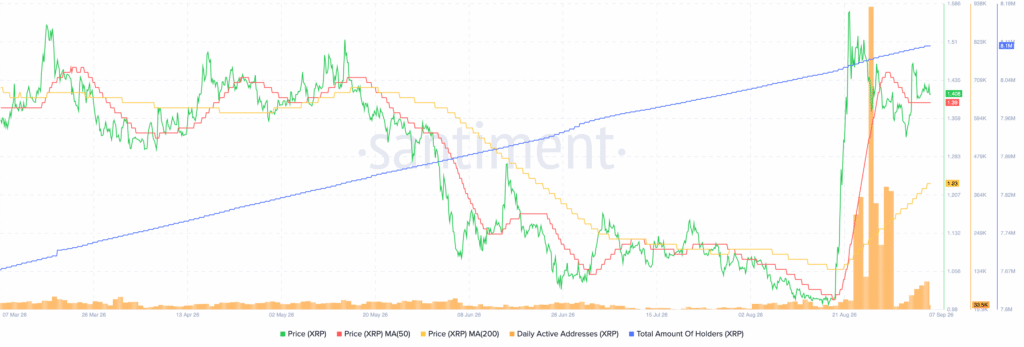
Article
Analysts Set XRP Targets From $2.30 to $60 as Bullish Setups EmergeAnalyst sees $60 if XRP confirms a monthly breakout above the decade-long $3.66 resistance level.
Celal Kucuker targets $2.30, while Javon Marks projects $3.50 before larger targets of $15 and above.
XRP holds above $1.39 support and the 50-day MA, while $1.35 and $1.23 mark deeper support levels.
XRP price targets now range from $2.30 to $60, based on separate technical setups shared by Ali Charts, Celal Kucuker and Javon Marks. XRP trades near $1.408 after rebounding from about $1.05 on Aug. 21 and briefly reaching $1.57-$1.58. The forecasts depend on key resistance levels, breakout patterns and current support around $1.39.
Ali Charts Sets XRP Target at $60
Ali Charts identified a massive ascending triangle that has formed on XRP’s monthly chart. The pattern has developed over nearly a decade, according to his analysis. The $3.66 level remains the main resistance for this setup.
Ali Charts said a monthly close above $3.66 would confirm the breakout. He then placed the technical target near $60. That target depends on XRP breaking above the long-term resistance level.
XRP Holds Above the 50-Day Moving Average
XRP currently trades around $1.408, above the 50-day moving average near $1.39. It also remains above the 200-day moving average near $1.23. From March through May, XRP moved mostly between $1.30 and $1.50.
Source: Santiment
Selling pressure increased in June, eventually pushing XRP toward $1.00-$1.05 during August. The major reversal came Aug. 21, when XRP climbed from near $1.05 to above $1.45.
The move later reached approximately $1.57-$1.58 before the price pulled back. Since then, XRP has held between roughly $1.35 and $1.45. A move above $1.45-$1.51 could bring the recent $1.57-$1.58 high back into focus.
Marks Sees $3.50 Before Larger Targets
Celal Kucuker pointed to $2.30 as a nearer XRP target. He said multiple formations and technical setups point toward that level. Javon Marks identified another possible move toward $3.50.
https://twitter.com/CelalKucuker/status/2096669513454399909?s=20
He said XRP gained nearly 55% after the breakout he previously identified. Marks expects another move of almost 140% toward $3.50 if the breakout continues holding. He also cited larger targets of $15 and above.
Meanwhile, Daily Active Addresses reached nearly 938,000 during the breakout. The metric has since fallen to about 93,500, while total holders reached approximately 8.1 million. If XRP loses $1.39, the next support is near $1.35. The 200-day moving average around $1.23 provides another major support level.
Analysts Set XRP Targets From $2.30 to $60 as Bullish Setups Emerge
Analyst sees $60 if XRP confirms a monthly breakout above the decade-long $3.66 resistance level.
Celal Kucuker targets $2.30, while Javon Marks projects $3.50 before larger targets of $15 and above.
XRP holds above $1.39 support and the 50-day MA, while $1.35 and $1.23 mark deeper support levels.
XRP price targets now range from $2.30 to $60, based on separate technical setups shared by Ali Charts, Celal Kucuker and Javon Marks. XRP trades near $1.408 after rebounding from about $1.05 on Aug. 21 and briefly reaching $1.57-$1.58. The forecasts depend on key resistance levels, breakout patterns and current support around $1.39.
Ali Charts Sets XRP Target at $60
Ali Charts identified a massive ascending triangle that has formed on XRP’s monthly chart. The pattern has developed over nearly a decade, according to his analysis. The $3.66 level remains the main resistance for this setup.
Ali Charts said a monthly close above $3.66 would confirm the breakout. He then placed the technical target near $60. That target depends on XRP breaking above the long-term resistance level.
XRP Holds Above the 50-Day Moving Average
XRP currently trades around $1.408, above the 50-day moving average near $1.39. It also remains above the 200-day moving average near $1.23. From March through May, XRP moved mostly between $1.30 and $1.50.
Source: Santiment
Selling pressure increased in June, eventually pushing XRP toward $1.00-$1.05 during August. The major reversal came Aug. 21, when XRP climbed from near $1.05 to above $1.45.
The move later reached approximately $1.57-$1.58 before the price pulled back. Since then, XRP has held between roughly $1.35 and $1.45. A move above $1.45-$1.51 could bring the recent $1.57-$1.58 high back into focus.
Marks Sees $3.50 Before Larger Targets
Celal Kucuker pointed to $2.30 as a nearer XRP target. He said multiple formations and technical setups point toward that level. Javon Marks identified another possible move toward $3.50.
https://twitter.com/CelalKucuker/status/2096669513454399909?s=20
He said XRP gained nearly 55% after the breakout he previously identified. Marks expects another move of almost 140% toward $3.50 if the breakout continues holding. He also cited larger targets of $15 and above.
Meanwhile, Daily Active Addresses reached nearly 938,000 during the breakout. The metric has since fallen to about 93,500, while total holders reached approximately 8.1 million. If XRP loses $1.39, the next support is near $1.35. The 200-day moving average around $1.23 provides another major support level.
Celal Kucuker targets $2.30, while Javon Marks projects $3.50 before larger targets of $15 and above.
XRP holds above $1.39 support and the 50-day MA, while $1.35 and $1.23 mark deeper support levels.
XRP price targets now range from $2.30 to $60, based on separate technical setups shared by Ali Charts, Celal Kucuker and Javon Marks. XRP trades near $1.408 after rebounding from about $1.05 on Aug. 21 and briefly reaching $1.57-$1.58. The forecasts depend on key resistance levels, breakout patterns and current support around $1.39.
Ali Charts Sets XRP Target at $60
Ali Charts identified a massive ascending triangle that has formed on XRP’s monthly chart. The pattern has developed over nearly a decade, according to his analysis. The $3.66 level remains the main resistance for this setup.
Ali Charts said a monthly close above $3.66 would confirm the breakout. He then placed the technical target near $60. That target depends on XRP breaking above the long-term resistance level.
XRP Holds Above the 50-Day Moving Average
XRP currently trades around $1.408, above the 50-day moving average near $1.39. It also remains above the 200-day moving average near $1.23. From March through May, XRP moved mostly between $1.30 and $1.50.
Source: Santiment
Selling pressure increased in June, eventually pushing XRP toward $1.00-$1.05 during August. The major reversal came Aug. 21, when XRP climbed from near $1.05 to above $1.45.
The move later reached approximately $1.57-$1.58 before the price pulled back. Since then, XRP has held between roughly $1.35 and $1.45. A move above $1.45-$1.51 could bring the recent $1.57-$1.58 high back into focus.
Marks Sees $3.50 Before Larger Targets
Celal Kucuker pointed to $2.30 as a nearer XRP target. He said multiple formations and technical setups point toward that level. Javon Marks identified another possible move toward $3.50.
https://twitter.com/CelalKucuker/status/2096669513454399909?s=20
He said XRP gained nearly 55% after the breakout he previously identified. Marks expects another move of almost 140% toward $3.50 if the breakout continues holding. He also cited larger targets of $15 and above.
Meanwhile, Daily Active Addresses reached nearly 938,000 during the breakout. The metric has since fallen to about 93,500, while total holders reached approximately 8.1 million. If XRP loses $1.39, the next support is near $1.35. The 200-day moving average around $1.23 provides another major support level.
217
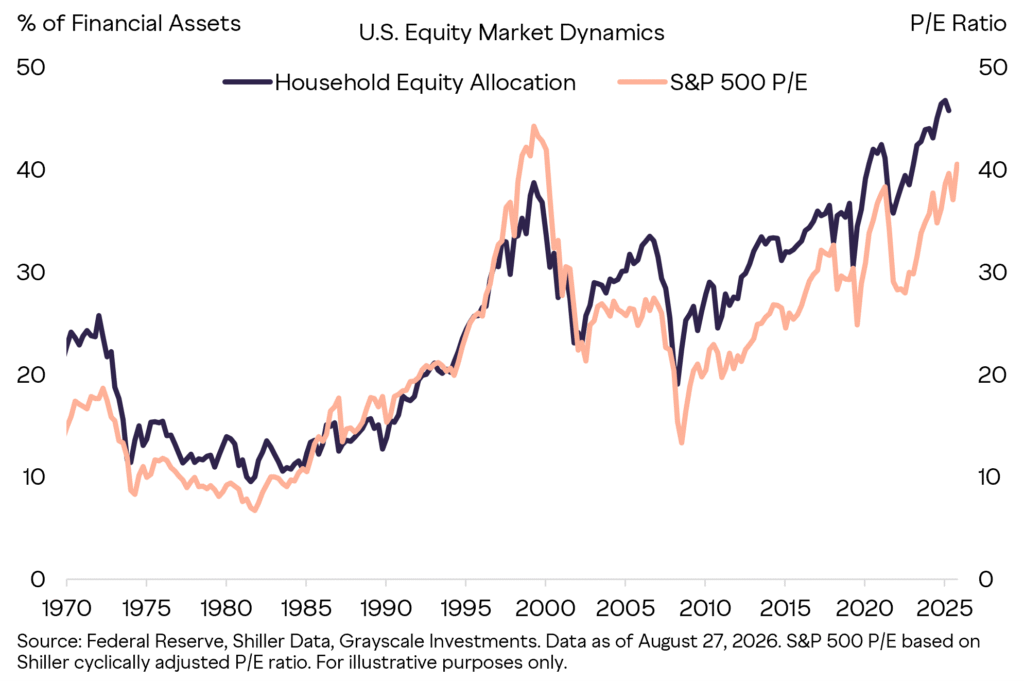
Article
Grayscale Warns of Narrower Stock Upside as Crypto Valuations ResetU.S. households now hold about 46% of financial assets in equities, increasing concentration risk if stocks disappoint.
Long-term S&P 500 earnings growth expectations have climbed above 25%, leaving less room for weaker-than-expected results.
Crypto valuations and leverage reset during the bear market, creating a different setup that may diversify concentrated equity exposure.
U.S. equities face a narrower margin for disappointment as earnings expectations rise, according to Grayscale research. The firm said U.S. households now hold about 46% of their financial assets in corporate equities. Zach Pandl, Grayscale’s head of research, said crypto has a different setup after a prolonged bear market reset valuations, leverage, and positioning.
Equity Exposure Reaches A Record Share
Pandl said household portfolios have become more concentrated in stocks than at any point in history. Corporate equities now account for roughly 46% of household financial assets, according to the research.
Source: Grayscale
That level of exposure comes alongside historically high price-to-earnings ratios across U.S. equities. However, the research also points to higher expectations for future S&P 500 earnings growth. Consensus long-term earnings growth estimates have historically ranged between 10% and 15%. Recently, those estimates have climbed above 25%, according to Grayscale.
Higher Earnings Expectations Raise The Stakes
Grayscale said strong artificial intelligence investment could support current equity valuations. However, higher earnings expectations leave less room for results to fall below forecasts. The research describes this as a narrower margin for disappointment in the U.S. stock market.
That shift matters because investors already hold a large share of their financial assets in equities. Meanwhile, crypto has moved through a different market cycle following an extended bear market. The downturn reset valuations, leverage, and investor positioning across digital assets, according to Pandl.
Crypto Enters A Different Market Setup
Pandl said digital assets may offer exposure to an emerging cycle with improving fundamentals. He also described crypto valuations as comparatively depressed after the bear-market reset.
The research contrasts that starting point with U.S. stocks, where prices require strong growth or wider margins. For equities, Grayscale said unusually strong top-line growth or margin expansion may support elevated prices.
Crypto instead offers separate exposure without requiring investors to replace stocks within household portfolios. Pandl framed the approach around diversification away from concentrated equity exposure. He said the focus remains on adding a different asset class rather than replacing equities.
Grayscale Warns of Narrower Stock Upside as Crypto Valuations Reset
U.S. households now hold about 46% of financial assets in equities, increasing concentration risk if stocks disappoint.
Long-term S&P 500 earnings growth expectations have climbed above 25%, leaving less room for weaker-than-expected results.
Crypto valuations and leverage reset during the bear market, creating a different setup that may diversify concentrated equity exposure.
U.S. equities face a narrower margin for disappointment as earnings expectations rise, according to Grayscale research. The firm said U.S. households now hold about 46% of their financial assets in corporate equities. Zach Pandl, Grayscale’s head of research, said crypto has a different setup after a prolonged bear market reset valuations, leverage, and positioning.
Equity Exposure Reaches A Record Share
Pandl said household portfolios have become more concentrated in stocks than at any point in history. Corporate equities now account for roughly 46% of household financial assets, according to the research.
Source: Grayscale
That level of exposure comes alongside historically high price-to-earnings ratios across U.S. equities. However, the research also points to higher expectations for future S&P 500 earnings growth. Consensus long-term earnings growth estimates have historically ranged between 10% and 15%. Recently, those estimates have climbed above 25%, according to Grayscale.
Higher Earnings Expectations Raise The Stakes
Grayscale said strong artificial intelligence investment could support current equity valuations. However, higher earnings expectations leave less room for results to fall below forecasts. The research describes this as a narrower margin for disappointment in the U.S. stock market.
That shift matters because investors already hold a large share of their financial assets in equities. Meanwhile, crypto has moved through a different market cycle following an extended bear market. The downturn reset valuations, leverage, and investor positioning across digital assets, according to Pandl.
Crypto Enters A Different Market Setup
Pandl said digital assets may offer exposure to an emerging cycle with improving fundamentals. He also described crypto valuations as comparatively depressed after the bear-market reset.
The research contrasts that starting point with U.S. stocks, where prices require strong growth or wider margins. For equities, Grayscale said unusually strong top-line growth or margin expansion may support elevated prices.
Crypto instead offers separate exposure without requiring investors to replace stocks within household portfolios. Pandl framed the approach around diversification away from concentrated equity exposure. He said the focus remains on adding a different asset class rather than replacing equities.
Long-term S&P 500 earnings growth expectations have climbed above 25%, leaving less room for weaker-than-expected results.
Crypto valuations and leverage reset during the bear market, creating a different setup that may diversify concentrated equity exposure.
U.S. equities face a narrower margin for disappointment as earnings expectations rise, according to Grayscale research. The firm said U.S. households now hold about 46% of their financial assets in corporate equities. Zach Pandl, Grayscale’s head of research, said crypto has a different setup after a prolonged bear market reset valuations, leverage, and positioning.
Equity Exposure Reaches A Record Share
Pandl said household portfolios have become more concentrated in stocks than at any point in history. Corporate equities now account for roughly 46% of household financial assets, according to the research.
Source: Grayscale
That level of exposure comes alongside historically high price-to-earnings ratios across U.S. equities. However, the research also points to higher expectations for future S&P 500 earnings growth. Consensus long-term earnings growth estimates have historically ranged between 10% and 15%. Recently, those estimates have climbed above 25%, according to Grayscale.
Higher Earnings Expectations Raise The Stakes
Grayscale said strong artificial intelligence investment could support current equity valuations. However, higher earnings expectations leave less room for results to fall below forecasts. The research describes this as a narrower margin for disappointment in the U.S. stock market.
That shift matters because investors already hold a large share of their financial assets in equities. Meanwhile, crypto has moved through a different market cycle following an extended bear market. The downturn reset valuations, leverage, and investor positioning across digital assets, according to Pandl.
Crypto Enters A Different Market Setup
Pandl said digital assets may offer exposure to an emerging cycle with improving fundamentals. He also described crypto valuations as comparatively depressed after the bear-market reset.
The research contrasts that starting point with U.S. stocks, where prices require strong growth or wider margins. For equities, Grayscale said unusually strong top-line growth or margin expansion may support elevated prices.
Crypto instead offers separate exposure without requiring investors to replace stocks within household portfolios. Pandl framed the approach around diversification away from concentrated equity exposure. He said the focus remains on adding a different asset class rather than replacing equities.
96
Log in to explore more content
Join global crypto users on Binance Square
⚡️ Get latest and useful information about crypto.
💬 Trusted by the world’s largest crypto exchange.
👍 Discover real insights from verified creators.
Email / Phone number
Trending Topics
UsCanadaTradeWar
26,085 views
346 Discussing
#UsCanadaTradeWar 🇺🇸🇨🇦
The U.S.–Canada trade dispute has intensified after trade negotiations broke down. Canada has imposed retaliatory tariffs on roughly $20 billion of U.S. imports, while the U.S. has announced additional measures, including efforts to restrict some Canadian products from U.S. government procurement.
Key market impacts:
📉 Increased uncertainty for North American trade.
🚗 Pressure on auto, steel, aluminum, aerospace, and agriculture sectors.
💵 Higher costs for businesses and consumers on both sides.
🌍 Potential ripple effects across global supply chains and financial markets.
$TRUMP - $HBAR - $DOT
MaheshJBG
·4 Likes
·208 views
AEROSurges17%In24Hours
44,087 views
569 Discussing
IranSaysItCapturedUSUnmannedSubmarine
41,904 views
534 Discussing