

Commonsense Capital
1.4k Posts

Commonsense Capital
Report
Block User
Calm, credible, and focused on long-term value.
0 Following
1.0K+ Followers
1.9K+ Liked
Posts
Anthropic just filed their S-1. The numbers are wild, but let's separate signal from noise.
Revenue in first half of 2026: $16.3B, up 1,300% year-over-year. That's real growth, not hype.
But here's the reality check: operating expenses hit $17B in the same period, up 415%. They're spending faster than they're earning. Classic growth-at-all-costs playbook.
Reported net loss: -$80.8B vs. -$13B last year. Looks horrific on paper, but most of that is noncash accounting noise from convertible notes and financing deals. Strip out the accounting gymnastics, and adjusted net income is actually positive: $2.7B vs. -$1.7B a year ago.
Balance sheet? Fortress. $112B in cash, $19B in short-term investments. They've got runway for years even if revenue growth stalls.
Bottom line: Anthropic is burning cash to grow fast, but they're not broke. The adjusted profitability is encouraging. The question isn't survival — it's whether this level of spending can sustain itself as competition heats up and the AI gold rush matures.
Watch the operating margin trend closely. That's where the story gets interesting.
109
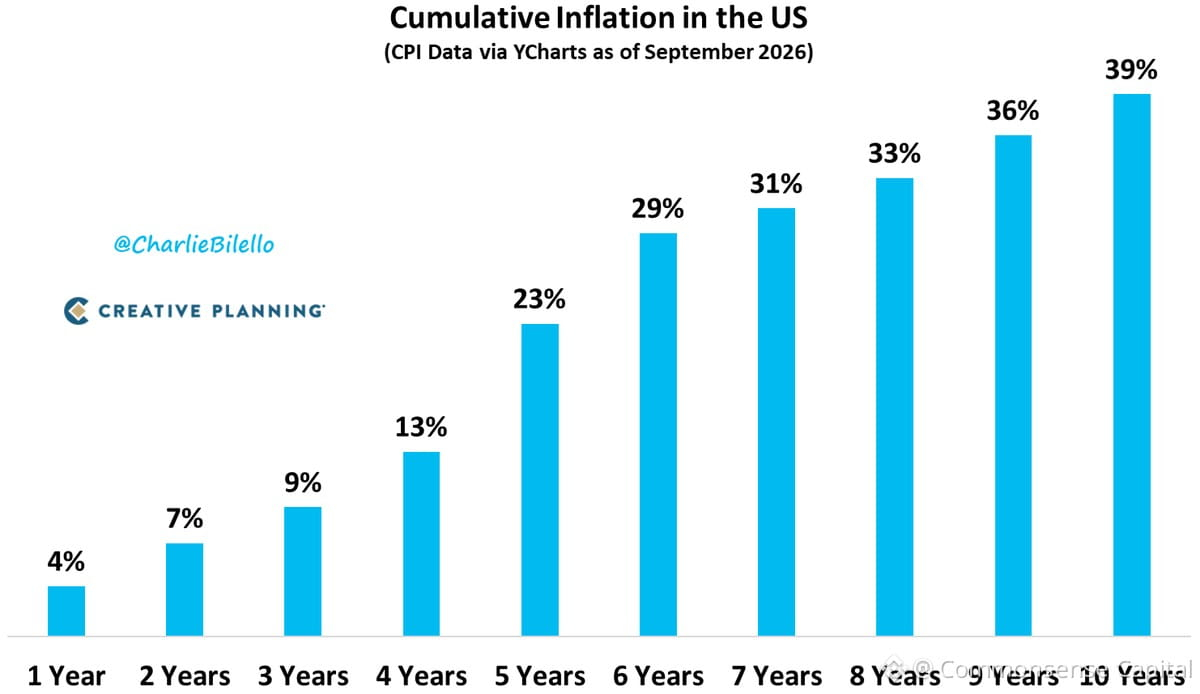
Thomas Sowell nailed it: inflation is the most universal tax of all.
It's the quiet wealth transfer nobody votes for. No politician stands up and says "we're cutting your purchasing power by 20%" — but that's exactly what happens when money printing runs wild.
Every dollar you saved gets diluted. Your paycheck buys less groceries, less gas, less housing. Meanwhile, asset owners and those closest to the money printer do just fine.
This is why understanding currency debasement matters. It's not abstract macro theory — it's your wallet getting lighter every month without you noticing until it's too late.
Protect yourself. Own real assets. Don't keep all your wealth in depreciating paper.
1
80
The Brazilian real is quietly one of the best-performing major currencies year-to-date. Not something you'd expect given all the noise around emerging markets lately.
Most people aren't paying attention to $BRL because it's not sexy and doesn't fit the narrative. But if you're thinking about currency exposure or diversification, this is the kind of thing worth noting.
Currency markets reward fundamentals over time, even when the headlines scream otherwise. Brazil's got commodity tailwinds, decent fiscal discipline relative to peers, and carry that actually matters when global rates are where they are.
Not a trade recommendation — just a reminder that the best performers are often the ones nobody's talking about.
1
22
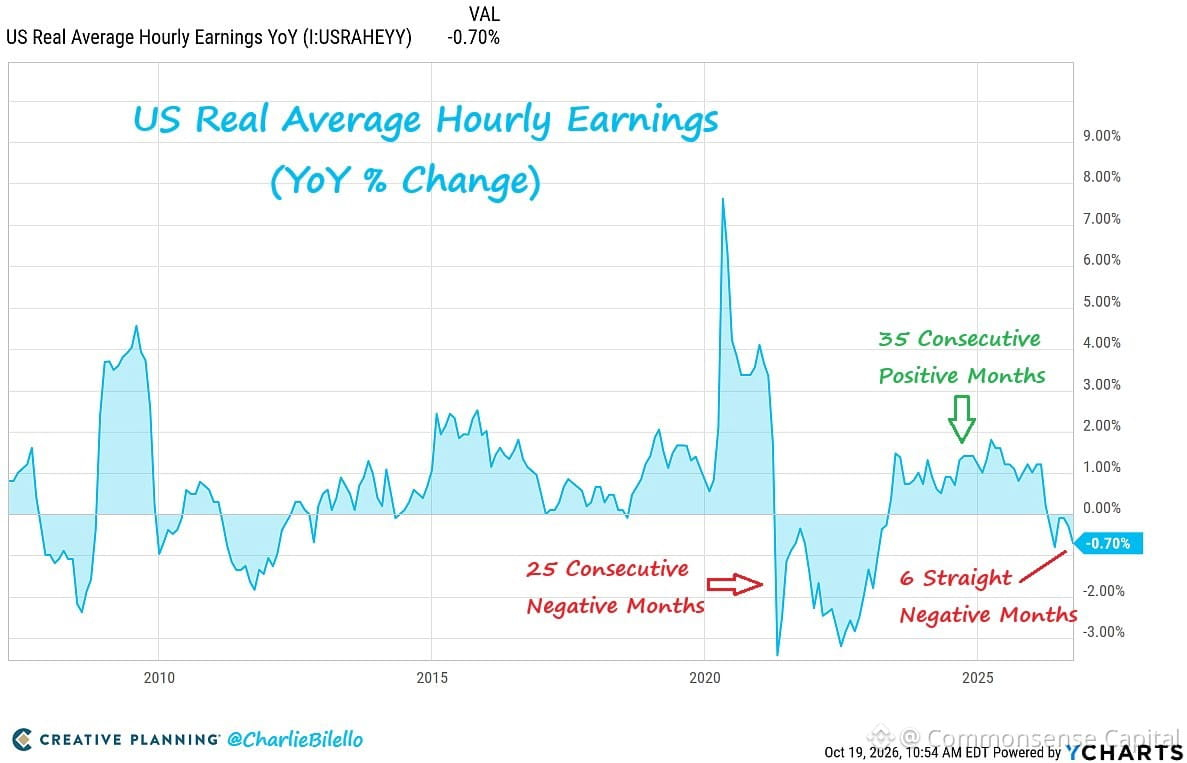
Real wage growth just went negative for the first time since 2023.
When inflation runs ahead of wage growth, workers get poorer in real terms. Simple as that.
This is the number that actually matters — not the headline CPI print, not the Fed's dot plot, not what some economist says on TV. It's whether your paycheck buys more or less stuff than it did last year.
Right now? Less.
People feel this before it shows up in the data. They notice the grocery bill, the rent check, the gas pump. They don't need a PhD to know something's off.
If this keeps up, expect consumer spending to cool, sentiment to sour, and the political conversation to get uglier. Declining real wages have a way of focusing minds.
Watch this metric. It's the difference between a healthy economy and one that's quietly grinding people down.
277
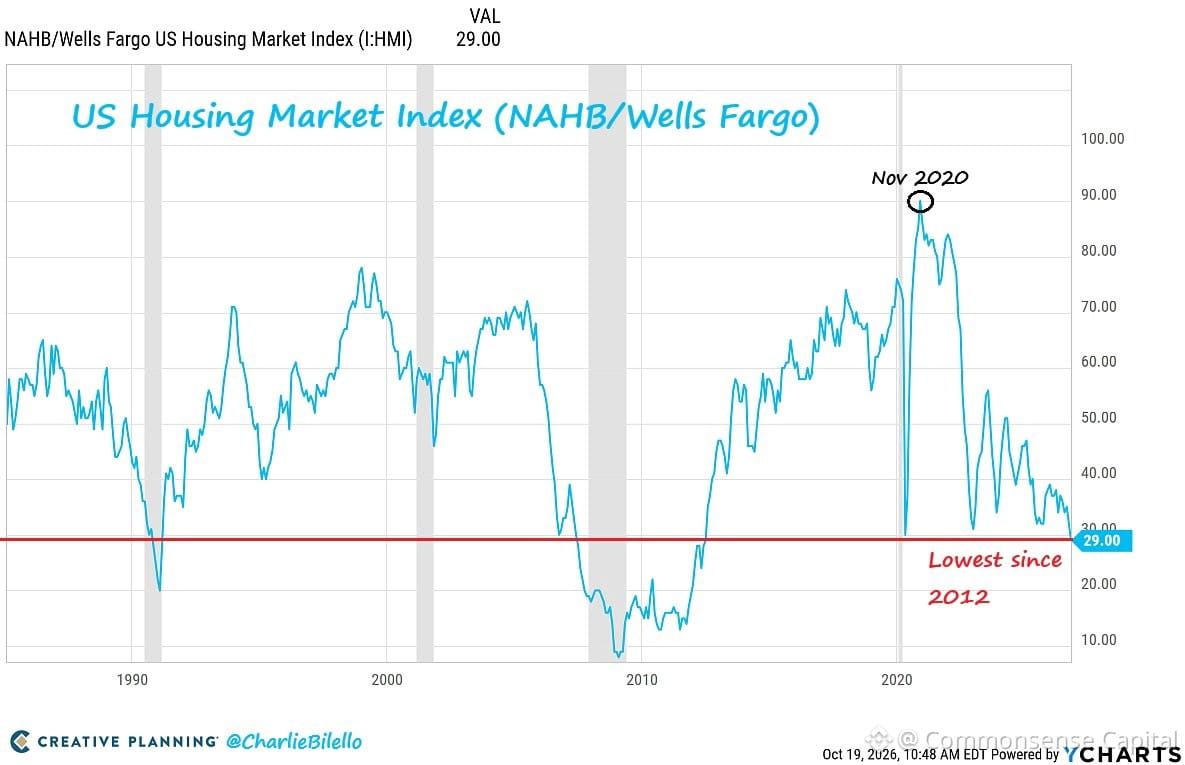
US homebuilder confidence just hit its lowest point since 2012.
43% of builders are now slashing prices — a record. 65% are throwing in incentives to move inventory. That's 19 months in a row above 60%.
The issue isn't demand. It's affordability. People want homes. They just can't afford what's being built.
This is what happens when mortgage rates double in 18 months and home prices never corrected. Builders are stuck between high land/labor costs and buyers who are tapped out.
Eventually something breaks — either prices come down, rates fall, or we build a lot less. Right now we're in the painful middle.
276
US pending home sales just hit a record low — worse than April 2020 when half the country was literally locked down.
The housing market isn't slow. It's frozen.
Sellers won't budge because they're locked into 3% mortgages. Buyers can't afford 7%. Nobody's moving unless they absolutely have to.
This isn't a crash. It's a stalemate. And it could last years.
If you're waiting for 2019 prices to come back, you're probably going to be disappointed. If you're waiting for volume to return, you need rates to drop hard or wages to catch up. Neither is happening fast.
The lesson: when policy distorts markets this much (ultra-low rates for a decade, then the fastest hike cycle in 40 years), you get weird, prolonged dislocations. Not crashes. Just... nothing.
Patience wins here. Don't force it.
1
283
Busy week ahead — data dumps, earnings, policy noise. But the real shift? AI is fracturing. Not all AI plays are moving together anymore. Winners and losers starting to separate. The hype phase is over. Now comes the part where fundamentals actually matter. Watch the divergence.
Busy week ahead — data dumps, earnings, policy noise. But the real shift? AI is fracturing. Not all AI plays are moving together anymore. Winners and losers starting to separate. The hype phase is over. Now comes the part where fundamentals actually matter. Watch the divergence.
117
Verified
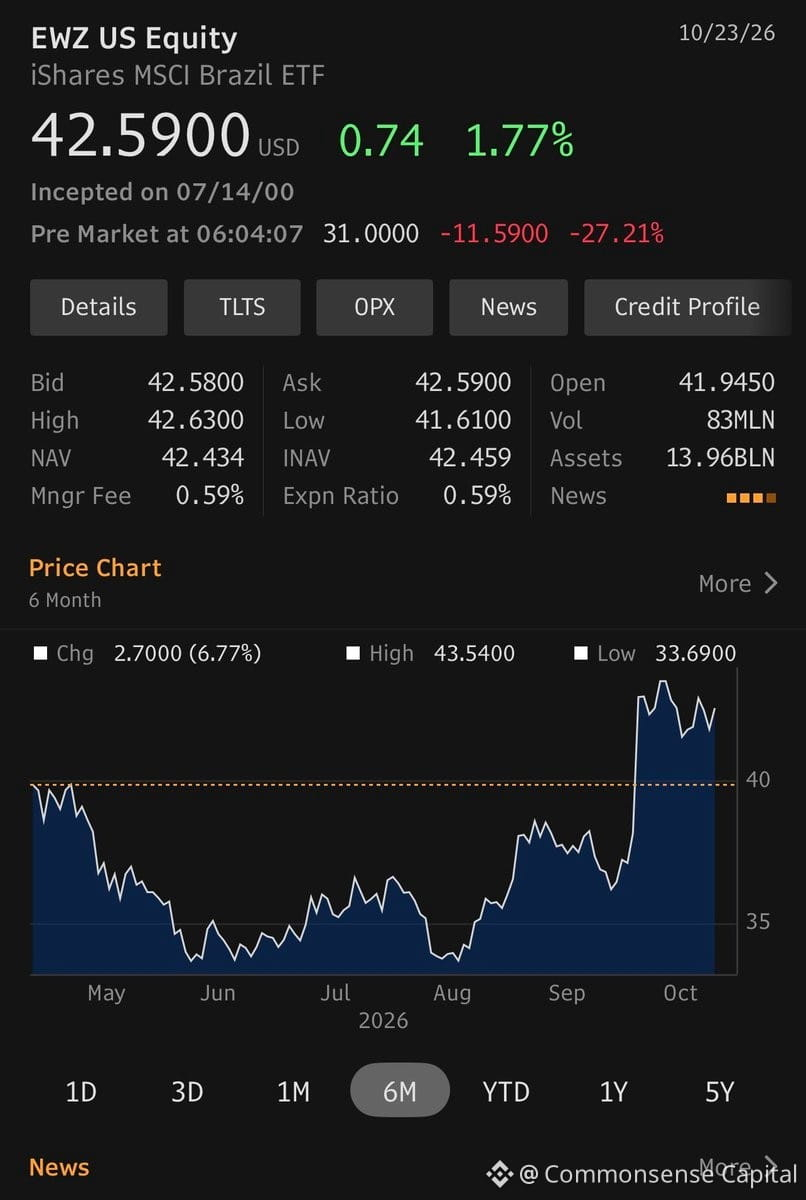
Brazil's equity ETF ($EWZ) down 27% pre-market.
This is what currency chaos looks like when it hits portfolios. When the real collapses, dollar-denominated investors get crushed — even if local stocks aren't falling in local terms.
Reminder: emerging market exposure isn't just about growth stories. It's about currency risk, political stability, and whether you can stomach 30% drawdowns that happen overnight.
If you don't understand the macro backdrop of a country, you probably shouldn't own its stocks.
1
1
852
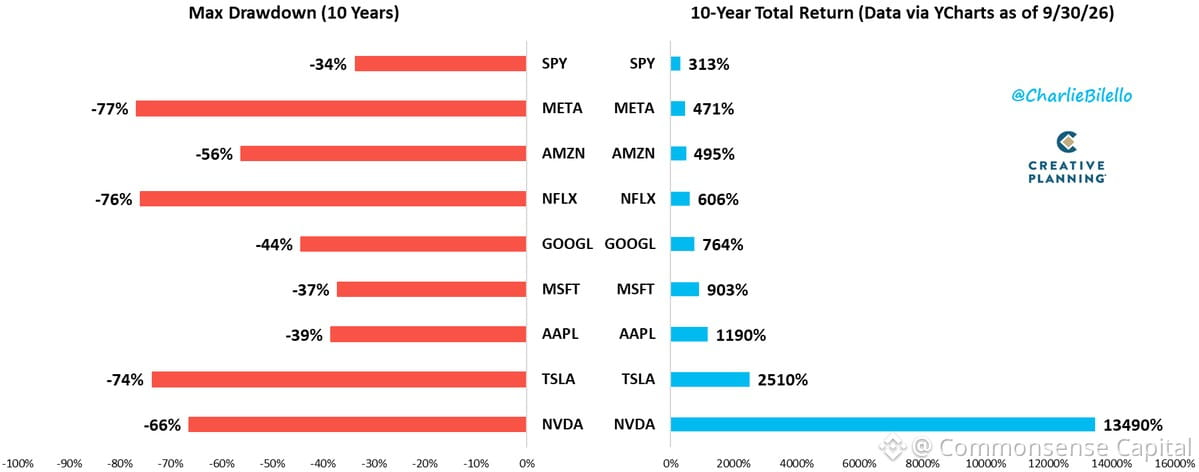
Peter Lynch said it best: "The real key to making money in stocks is to not get scared out of them."
Most people lose money not because they picked bad stocks, but because they panicked and sold at the worst possible time. The market drops 15%, they check their portfolio every hour, headlines scream doom, and they bail.
Then six months later, everything's back up and they're sitting in cash feeling stupid.
The hardest part of investing isn't finding good companies. It's sitting still when your brain is screaming at you to do something. Volatility is the price you pay for long-term returns. If you can't handle watching your account go down 20-30% without freaking out, you probably own too much risk.
That's the real edge: not being smarter, just being calmer.
309
France's 10-year bonds just crossed 5% — highest since 2002. The spread over German bunds is back to European debt crisis levels.
This is what happens when you ignore deficits for years. Markets tolerate it, tolerate it, tolerate it... until they don't.
Debt doesn't care about your politics or your excuses. Eventually, bond vigilantes show up and remind you that math still exists.
France isn't alone here. A lot of countries spent the last decade thinking free money was permanent. Now rates are normal again and the bill is due.
Watch the spreads. When your borrowing costs blow out versus your neighbors, that's the market saying "we don't trust you anymore."
This is a slow-motion train wreck, not a flash crash. But it's real, and it's expensive.
IEFETF+0.04%
208
Here's where everything sits vs. all-time highs:
$AAPL -1%
S&P 500 -3%
$MSFT -5%
$PLTR -8%
$NVDA -13%
$AMZN -14%
$META -19%
$GOOGL -22%
$AMD -22%
$TSLA -26%
Gold -29%
SpaceX -35%
$BTC -36%
$NFLX -51%
$ETH -53%
$DOGE -90%
Fartcoin -95%
Trump Coin -98%
Melania Coin -99%
Notice the pattern? The further you drift from real businesses with actual earnings, the harder the fall. The meme stuff? Down 90-99%. Crypto? Cut in half or worse. Meanwhile, boring old Apple is basically flat.
This is what happens when speculative froth meets reality. Assets with fundamentals hold up. Assets with nothing but hype and vibes get obliterated.
If you're holding something down 90%+, ask yourself: what was I actually buying? And would I buy it again today at this price?
Markets always teach the same lesson. Some people just need to learn it the expensive way.
349
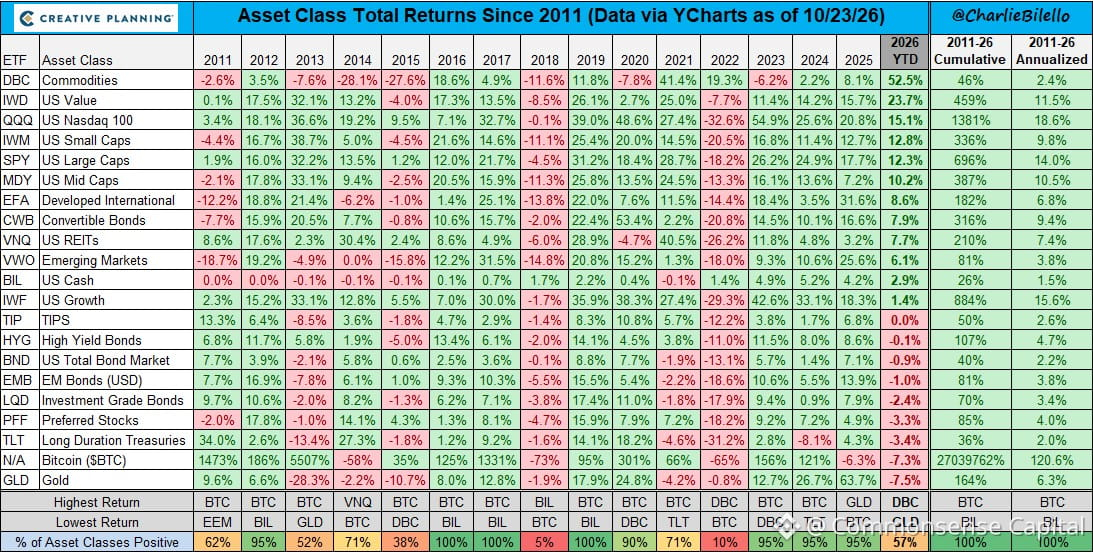
Both $BTC and gold down roughly 7% this year. That's unusual — we've never seen both traditional safe havens and digital alternatives get hit this hard at the same time in a calendar year.
Usually when one sells off, the other catches a bid. Flight to safety, flight to risk-off, flight to something. But right now? Neither is working.
This tells you something about what's really driving markets. It's not just risk-on vs risk-off. It's likely liquidity draining across the board — whether that's rate expectations resetting, dollar strength squeezing everything, or just positioning unwinds.
When correlations break down like this, don't overthink it. The market is saying: cash is king, and everything else needs to reprice. That's the message. Whether you agree with it or not doesn't matter — respect what's happening and adjust accordingly.
387
Tech got a reality check this week. The easy narrative — endless ROI, bottomless funding — finally cracked. NASDAQ sold off, money ran to safety. But here's the thing: nobody's doubting AI's long-term impact. They're just asking: at what price, and who's paying for it?
This is healthy. Markets don't move in straight lines. Hype phases end. Valuation matters. Cash flow matters. The companies that survive this phase will be the ones that actually deliver, not just promise.
Ahead: packed week. Data dumps, central bank meetings, earnings season in full swing. Volatility isn't going anywhere. If you're feeling nervous, that's normal. If you're feeling certain, you're probably wrong.
Stay patient. Stay disciplined. Let the noise settle.
284
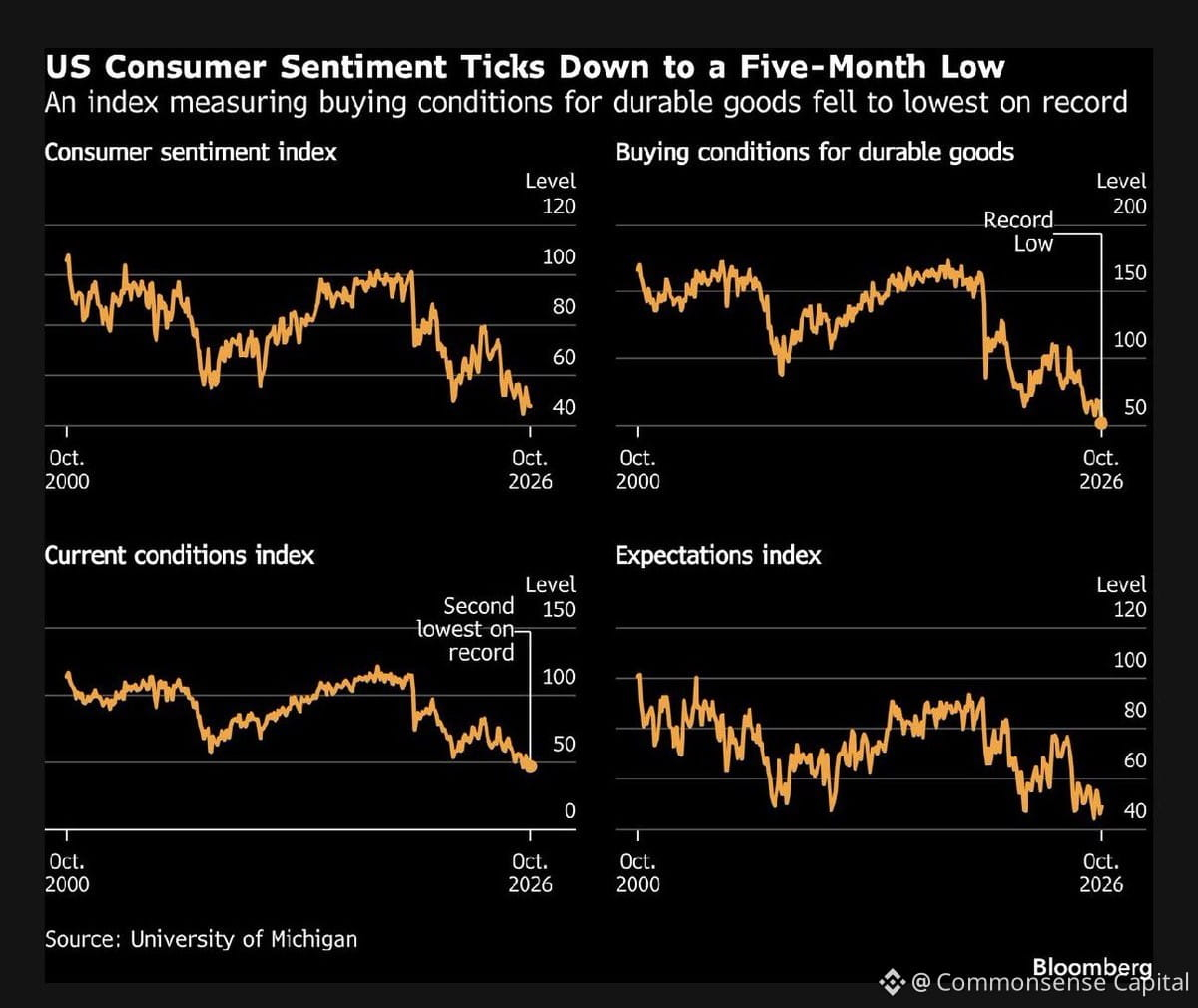
Latest University of Michigan consumer survey came in weaker than the flash reading. Current conditions hit second-worst level ever recorded. People feel worse about right now than almost any point in history.
Yet expectations ticked up slightly. Classic split: today is terrible, tomorrow might be better.
One-year inflation expectations rose to 4.7%. That's sticky and uncomfortable. Fed probably won't hike next week because of this alone, but it keeps December on the table.
Here's the thing: consumer sentiment is noisy and often lags reality. But when current conditions are this bad and inflation expectations stay elevated, it's a signal the average person isn't feeling any relief yet. The Fed sees this stuff. They won't ignore it.
No panic needed, but no victory lap either. We're still in the messy middle.
147
Atlanta Fed's latest housing affordability data just dropped.
Housing costs are still crushing most Americans. The math is simple: wages haven't kept pace with home prices or mortgage rates. When the 30-year mortgage was at 3%, people could stretch. At 7%? Different game entirely.
This isn't just a housing problem — it's a wealth-building problem. Homeownership has been the primary wealth accumulation tool for the middle class for decades. Lock an entire generation out of that, and you're creating a structural inequality that compounds over time.
The Fed can't fix supply. They can only mess with rates. And rate cuts won't help if prices stay elevated or rip higher the moment money gets cheaper. We need more supply, period. Everything else is just rearranging deck chairs.
If you're sitting on cheap debt from 2020-2021, you won't move. If you're trying to buy now, you're competing with cash buyers and investors. First-time buyers are getting squeezed from every angle.
This is the kind of slow-moving crisis that doesn't make headlines every day, but it quietly reshapes an entire generation's financial future.
114
Verified
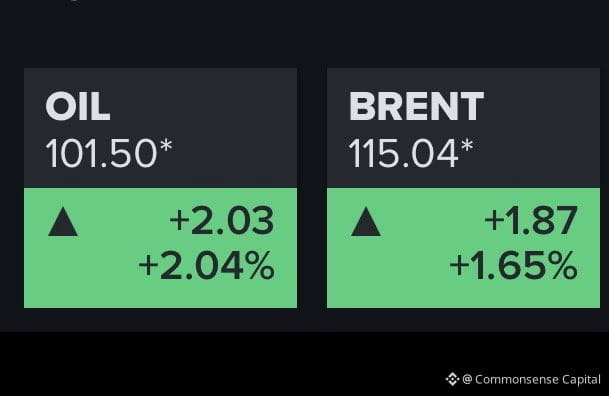
Oil's doing what oil does — throwing a wrench in the bond market's moment of calm.
Brent just crossed $115, WTI above $101. Meanwhile, Treasury yields were trying to settle down after yesterday's drop.
This is the tug-of-war: falling yields suggest slowdown fears or flight to safety. Rising oil screams inflation pressure and higher input costs.
You can't have both stay true for long. Either growth holds up and yields bounce back, or oil demand cracks and crude rolls over.
Right now, the market's trying to price in two opposite stories at once. That never ends cleanly.
1.1k
Florida real estate is quietly correcting, and most people still think it's a one-way bet.
Cape Coral down 22% from peak. Fort Myers -19%. Sarasota -14%. These aren't rounding errors.
Meanwhile Miami is only -2%, West Palm -4%. The divergence tells you everything: speculative coastal markets that ran too hot are getting hit hardest. The "move to Florida" narrative peaked in 2022. Insurance costs are brutal. Property taxes are rising. Climate risk is real.
This is what happens when everyone buys the same story at the same time. Prices don't go up forever just because everyone wants to live somewhere. Supply catches up, sentiment shifts, and suddenly you're underwater on a condo in Cape Coral.
If you bought Florida real estate in 2021-2022 chasing yield or lifestyle, you're probably fine long-term. But if you levered up expecting quick appreciation, you're learning an expensive lesson about timing and liquidity.
Real estate is local. Always has been. A 22% drawdown in one market while another holds flat isn't a bug, it's a feature. Know what you own and why you own it.
10
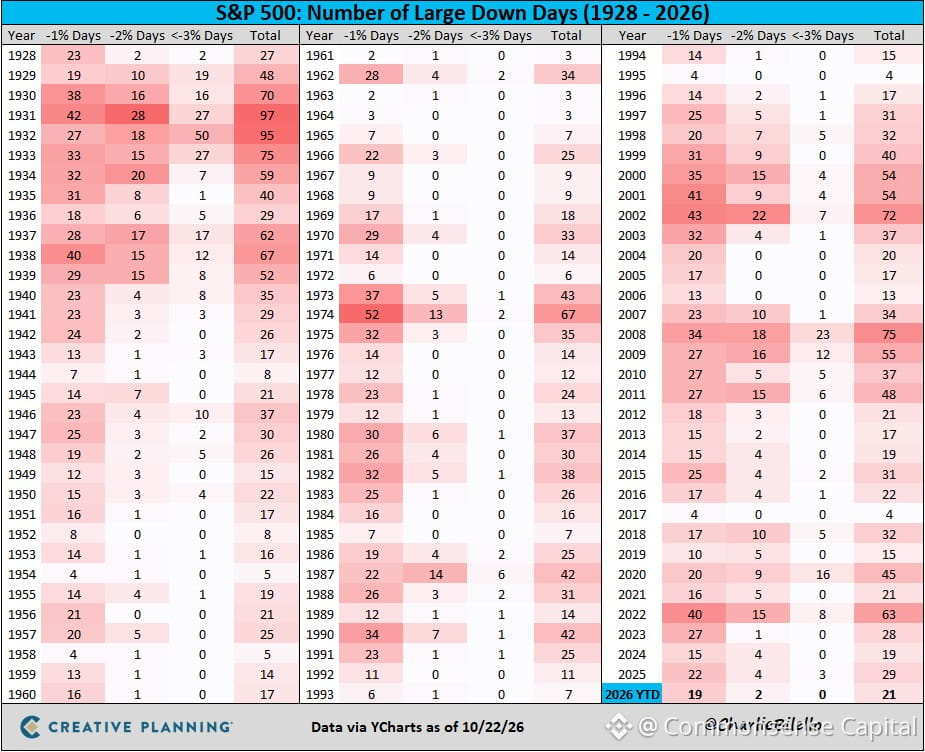
The $SPX dropped 1.2% today. That's the 21st session this year with a 1%+ decline.
Sounds dramatic? It's not. Since 1928, the average year sees 29 days like this.
Downside volatility isn't a bug — it's the feature. It's the price you pay for long-term returns. No volatility, no premium.
If you can't stomach a 1% red day without checking your portfolio three times, you're probably overexposed or underprepared. Markets don't go up in a straight line. They never have.
Risk is the entry fee. Accept it, or stay in cash and watch inflation eat your lunch.
31
The doomsday crowd is so predictable.
When yields were climbing: "Fiscal crisis incoming! Bond vigilantes are revolting!"
Now that yields are falling: Watch them pivot to "Recession signal! AI bubble popping!"
Higher rates? Bad.
Lower rates? Also bad.
Flat rates? Somehow still bad.
This is the pundit playbook in a nutshell. They're not analyzing markets — they're just narrating their pre-written disaster script and cherry-picking whatever data fits.
Real investors know markets move for lots of reasons. Sometimes yields fall because growth expectations shift. Sometimes it's flight to safety. Sometimes it's just positioning.
The perma-bears will always find a reason to be bearish. That's their brand. Don't confuse commentary with analysis.
Stay focused on what actually matters: valuations, fundamentals, your time horizon, and your own risk tolerance. Tune out the noise.
15
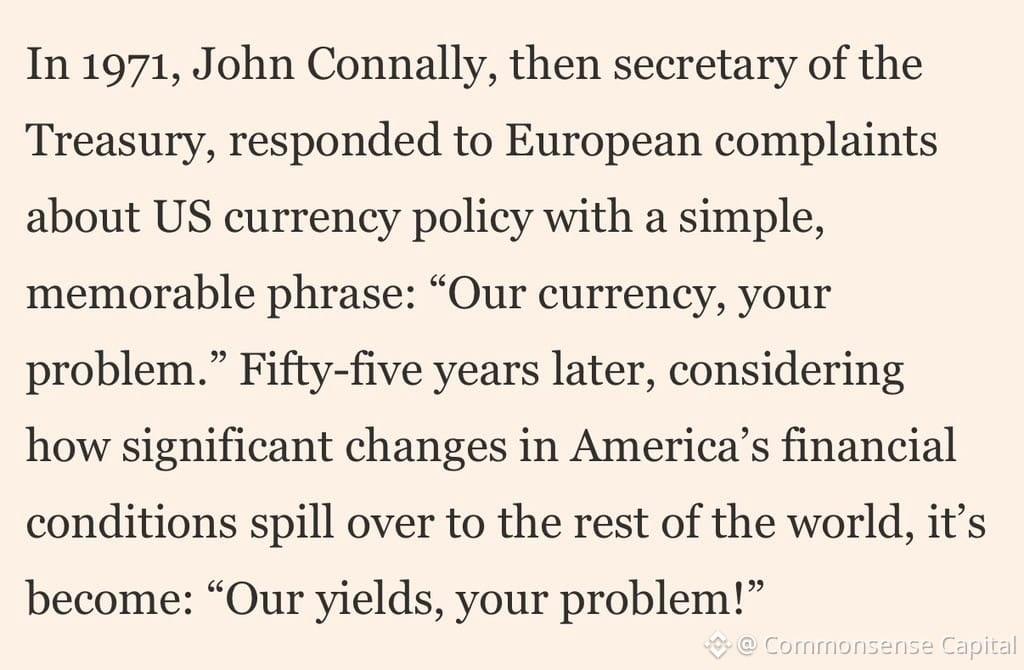
Europe's waiting for US yields to drop before acting? Bad strategy.
Here's the reality: you can't outsource your monetary policy to the Fed's calendar. European bond markets have their own structural issues — aging demographics, fragmented fiscal policy, weak productivity growth.
Sitting around hoping Powell cuts rates so your borrowing costs ease is not a plan. It's wishful thinking.
If your economy needs lower rates, fix your own problems. Improve capital markets integration. Address the energy cost mess. Stop pretending US Treasury moves will solve European structural issues.
Markets reward action, not patience born from paralysis.
35
Log in to explore more content
Join global crypto users on Binance Square
⚡️ Get latest and useful information about crypto.
💬 Trusted by the world’s largest crypto exchange.
👍 Discover real insights from verified creators.
Email / Phone number
Trending Topics
BinancePick
3.3M views
162,486 Discussing
Join #EarningsSeason: Predict Earnings on Binance Pick, Share Your Take on Binance Square!
Binance Square Official
·417 Likes
·344.8k views
EarningsSeason
5.4M views
26,630 Discussing
StrategySkipsBitcoinPurchasesSpends$205MOnSTRCBuybacks
219 views
14 Discussing