
Me.eth
94 Posts

Me.eth
Report
Block User
I learn, I apply, I earn. It’s a loop
0 Following
3 Followers
7 Liked
Posts
·
--
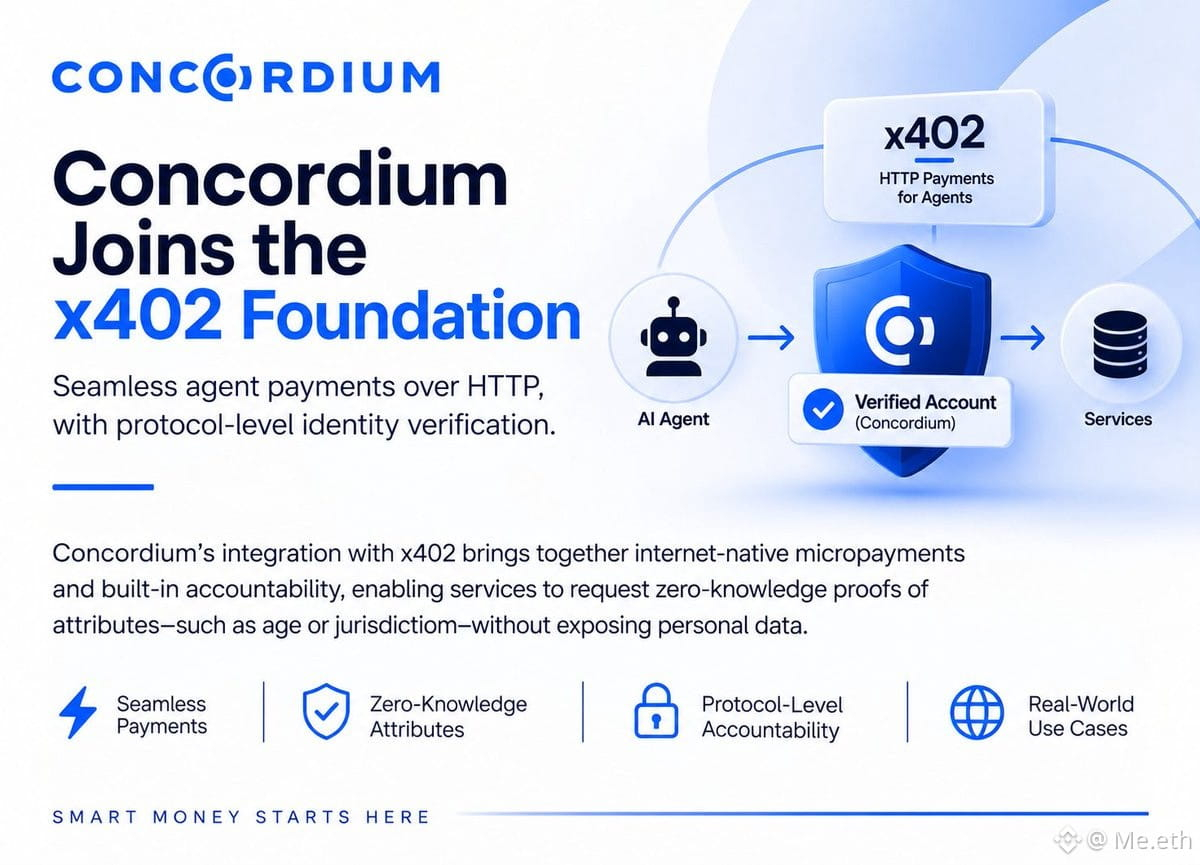
Concordium joined the x402 Foundation and implemented settlement support so that AI agents can pay over HTTP using the open standard while the paying account carries protocol-level identity verification. What this has enabled is that services can request zero-knowledge proofs of attributes (such as age or jurisdiction) as part of the 402 flow without the payer revealing personal data. The result is a payment rail that combines internet-native micropayments with the accountability and selective disclosure already built into Concordium. This is relevant for agent access to regulated services, B2B flows, and any scenario where counterparties need more assurance than an anonymous address provides. In 2026, services should be able to verify attributes without user's personal data being revealed. $CCD #X402 #AI #AI Agents 🤖#
Concordium joined the x402 Foundation and implemented settlement support so that AI agents can pay over HTTP using the open standard while the paying account carries protocol-level identity verification. What this has enabled is that services can request zero-knowledge proofs of attributes (such as age or jurisdiction) as part of the 402 flow without the payer revealing personal data. The result is a payment rail that combines internet-native micropayments with the accountability and selective disclosure already built into Concordium. This is relevant for agent access to regulated services, B2B flows, and any scenario where counterparties need more assurance than an anonymous address provides. In 2026, services should be able to verify attributes without user's personal data being revealed. $CCD #X402 #AI #AI Agents 🤖#
61
·
--
AI agents are already initiating transactions, paying for compute, and interacting with services. Standards such as ERC-8004 improve discovery, but they leave the harder problem open: who is accountable when an agent acts. Concordium’s Agent Registry, live since May 2026, mints each agent as a CIS-8004 token (compatible with ERC-8004) and anchors it to a Concordium account that itself is tied to a verified human or business identity. The Verified by Concordium badge can be carried across chains. Counterparties can confirm that a registered agent has a verified owner without learning the owner’s personal details, thanks to the same zero-knowledge machinery used for human accounts. Registration is straightforward; the registry already holds thousands of agents. This closes the gap between knowing an agent can act and knowing someone is answerable. In an environment of growing agentic payments and institutional interest in machine-initiated activity, protocol-level ownership linkage is the missing trust primitive. $CCD #AI Agents 🤖# #AIAgents
AI agents are already initiating transactions, paying for compute, and interacting with services. Standards such as ERC-8004 improve discovery, but they leave the harder problem open: who is accountable when an agent acts. Concordium’s Agent Registry, live since May 2026, mints each agent as a CIS-8004 token (compatible with ERC-8004) and anchors it to a Concordium account that itself is tied to a verified human or business identity. The Verified by Concordium badge can be carried across chains. Counterparties can confirm that a registered agent has a verified owner without learning the owner’s personal details, thanks to the same zero-knowledge machinery used for human accounts. Registration is straightforward; the registry already holds thousands of agents. This closes the gap between knowing an agent can act and knowing someone is answerable. In an environment of growing agentic payments and institutional interest in machine-initiated activity, protocol-level ownership linkage is the missing trust primitive. $CCD #AI Agents 🤖# #AIAgents
76
·
--
A common failure mode of compliant blockchains is concentrating identity linkage in one place, creating a high-value target and a surveillance surface. Concordium deliberately splits knowledge. Identity Providers verify and hold credentials off-chain but cannot see which addresses a user controls or what transactions occur. Privacy Guardians hold key shares for decryption but hold no identity data. The chain itself stores neither personal information nor a usable link. Only a coordinated, regulated process (currently structured so that multiple independent parties must cooperate) can connect an on-chain account to the real-world identity held by the IDP. Concordium itself never possesses the full picture. This architecture is intentional: it reduces the risk that any single organization, hack, or overreach can expose users. For enterprises and institutions evaluating blockchain rails, the design answers the practical question of “who can see what, under what conditions.” It is privacy by design with a clear legal pathway for legitimate disclosure not an absolute anonymity claim and not a centralized honeypot. $CCD #BTC Price Analysis#
A common failure mode of compliant blockchains is concentrating identity linkage in one place, creating a high-value target and a surveillance surface. Concordium deliberately splits knowledge. Identity Providers verify and hold credentials off-chain but cannot see which addresses a user controls or what transactions occur. Privacy Guardians hold key shares for decryption but hold no identity data. The chain itself stores neither personal information nor a usable link. Only a coordinated, regulated process (currently structured so that multiple independent parties must cooperate) can connect an on-chain account to the real-world identity held by the IDP. Concordium itself never possesses the full picture. This architecture is intentional: it reduces the risk that any single organization, hack, or overreach can expose users. For enterprises and institutions evaluating blockchain rails, the design answers the practical question of “who can see what, under what conditions.” It is privacy by design with a clear legal pathway for legitimate disclosure not an absolute anonymity claim and not a centralized honeypot. $CCD #BTC Price Analysis#
67
·
--
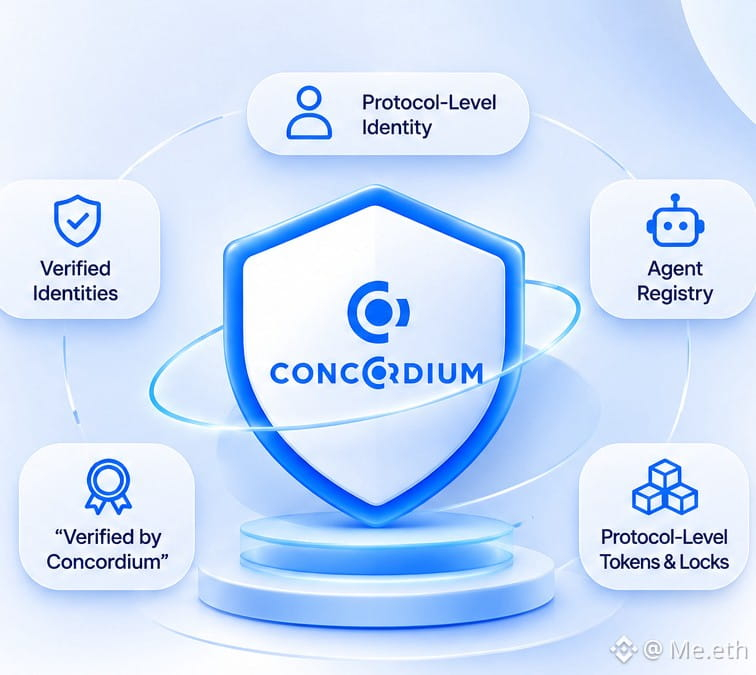
Most of today’s financial infrastructure still separates who is acting from what the system permits them to do. Concordium’s approach starts with protocol-level identity: privacy-preserving for users, but verifiable where accountability is required. Privacy and accountability are not opposites, they are both requirements for serious financial infrastructure. This becomes even more urgent as AI agents enter the economy. Agents can execute trades, manage treasuries, move assets, and interact with protocols at machine speed. Without a registry of verified agents and clear identity attribution, one compromised credential can become a systemic event. @Concordium is building the missing accountability layer: - Protocol-level identity: verifiable participants without sacrificing user privacy - Verified identities: accountability for institutions, developers, and operators - Agent Registry: a way to establish who or what is authorized to act - “Verified by Concordium”: a signal that an application or agent meets identity and accountability standards - Protocol-Level Tokens and upcoming Protocol-Level Locks: native mechanisms for compliant, programmable asset control No chain can promise zero breaches. But chains can make privilege explicit, actions attributable, and abuse harder to hide. The Binance incident should push the industry beyond just moving faster toward utilizing identity infra. That is the infrastructure Concordium is building. $CCD #Macro Insights# #AIAgents
Most of today’s financial infrastructure still separates who is acting from what the system permits them to do. Concordium’s approach starts with protocol-level identity: privacy-preserving for users, but verifiable where accountability is required. Privacy and accountability are not opposites, they are both requirements for serious financial infrastructure. This becomes even more urgent as AI agents enter the economy. Agents can execute trades, manage treasuries, move assets, and interact with protocols at machine speed. Without a registry of verified agents and clear identity attribution, one compromised credential can become a systemic event. @Concordium is building the missing accountability layer: - Protocol-level identity: verifiable participants without sacrificing user privacy - Verified identities: accountability for institutions, developers, and operators - Agent Registry: a way to establish who or what is authorized to act - “Verified by Concordium”: a signal that an application or agent meets identity and accountability standards - Protocol-Level Tokens and upcoming Protocol-Level Locks: native mechanisms for compliant, programmable asset control No chain can promise zero breaches. But chains can make privilege explicit, actions attributable, and abuse harder to hide. The Binance incident should push the industry beyond just moving faster toward utilizing identity infra. That is the infrastructure Concordium is building. $CCD #Macro Insights# #AIAgents
57
·
--
I've read so many opinions and "educated" guest on the dismissal of Nvidia CEO, some for and others against it. Both sides seem to agree that stock value is at risk. #NVIDIA #AI
I've read so many opinions and "educated" guest on the dismissal of Nvidia CEO, some for and others against it. Both sides seem to agree that stock value is at risk. #NVIDIA #AI
83
·
--
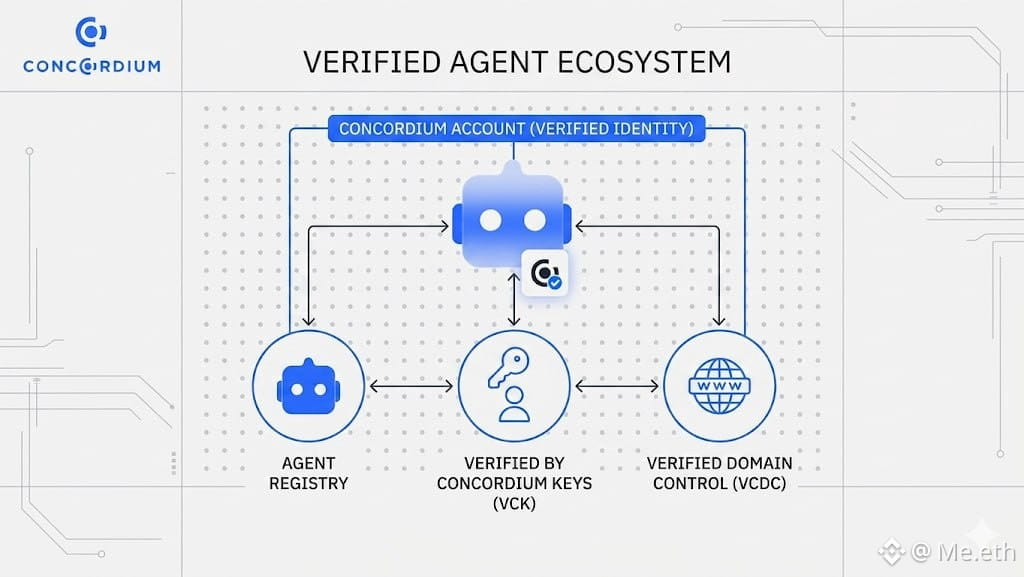
I consider Concordium's supports for multi-chain agent identity through CIS-8 external key bindings and the Verified by Concordium badge as one of their biggest value. Agents registered on Concordium can prove linkage to a verified owner while operating on Ethereum, Solana, or other supported chains. Agent Cards provide a standardized description of capabilities and endpoints whose integrity is protected by an on-chain hash. The design is compatible with ERC-8004 tooling. Developers can therefore add protocol-level accountability to existing multi-chain agent deployments without migrating execution. This interoperability addresses the practical reality that agent activity spans networks. It might just be one of the main reasons for the quick and huge adoption of the Agent Registry considering the numbers (I've talked about this....a lot). Developers often like it when they can just plug in components instead of building from scratch. $CCD #AgentIdentity# #ERC-8004#
I consider Concordium's supports for multi-chain agent identity through CIS-8 external key bindings and the Verified by Concordium badge as one of their biggest value. Agents registered on Concordium can prove linkage to a verified owner while operating on Ethereum, Solana, or other supported chains. Agent Cards provide a standardized description of capabilities and endpoints whose integrity is protected by an on-chain hash. The design is compatible with ERC-8004 tooling. Developers can therefore add protocol-level accountability to existing multi-chain agent deployments without migrating execution. This interoperability addresses the practical reality that agent activity spans networks. It might just be one of the main reasons for the quick and huge adoption of the Agent Registry considering the numbers (I've talked about this....a lot). Developers often like it when they can just plug in components instead of building from scratch. $CCD #AgentIdentity# #ERC-8004#
58
·
--
Now that x402 turns HTTP 402 into a practical payment rail for agents: a server challenges with a price, the client pays (typically in stablecoin), and the resource is released, no accounts, no checkout pages. What is the missing piece? Concordium’s membership in the x402 Foundation and its native settlement support add the missing piece: the paying account is already verified at the protocol level. Merchants or services can optionally require a zero-knowledge attestation (age, jurisdiction, authorization) alongside the payment. The identity proof and the payment travel together. This combination is especially powerful for age-restricted or regulated services that agents might access, and for higher-value agent-to-agent or agent-to-business flows where counterparties want more than pure pseudonymity. Concordium settlement is already in the official repository alongside other networks. As agentic payment volume grows, the chains that can supply both fast stablecoin settlement and verifiable accountability will have a structural advantage. $CCD #BTC Price Analysis#
Now that x402 turns HTTP 402 into a practical payment rail for agents: a server challenges with a price, the client pays (typically in stablecoin), and the resource is released, no accounts, no checkout pages. What is the missing piece? Concordium’s membership in the x402 Foundation and its native settlement support add the missing piece: the paying account is already verified at the protocol level. Merchants or services can optionally require a zero-knowledge attestation (age, jurisdiction, authorization) alongside the payment. The identity proof and the payment travel together. This combination is especially powerful for age-restricted or regulated services that agents might access, and for higher-value agent-to-agent or agent-to-business flows where counterparties want more than pure pseudonymity. Concordium settlement is already in the official repository alongside other networks. As agentic payment volume grows, the chains that can supply both fast stablecoin settlement and verifiable accountability will have a structural advantage. $CCD #BTC Price Analysis#
71
·
--
As regulators tighten requirements around age, residency, and eligibility for digital services, content, and financial products, many platforms still rely on the same blunt approach: ask users to upload an ID, address, or date of birth. That creates storage risk, breach exposure, and friction for everyone involved. Concordium offers a different model: verify an attribute once, then prove it selectively with zero-knowledge proofs. A service can confirm that someone is over 18 or located in an eligible jurisdiction, without ever seeing their birthdate, home address, or identity document. Crucially, these proofs aren’t self-attested. They’re anchored to an identity verified by a regulated provider at account creation, giving operators a stronger basis for compliance while users retain control of their data. The same architecture extends naturally to AI agents. An agent acting for a verified principal can present the necessary proof without exposing the principal’s private information, useful for age-gated media, marketplaces, stablecoin and DeFi access, and the emerging world of agent permissions. As regulation shifts from broad principles to enforceable rules, selective disclosure is becoming infrastructure, not a nice to have. The platforms that build it in natively will face less compliance friction, and hold far less sensitive data. $CCD #Regulation #MarketCrash #AgentIdentity
As regulators tighten requirements around age, residency, and eligibility for digital services, content, and financial products, many platforms still rely on the same blunt approach: ask users to upload an ID, address, or date of birth. That creates storage risk, breach exposure, and friction for everyone involved. Concordium offers a different model: verify an attribute once, then prove it selectively with zero-knowledge proofs. A service can confirm that someone is over 18 or located in an eligible jurisdiction, without ever seeing their birthdate, home address, or identity document. Crucially, these proofs aren’t self-attested. They’re anchored to an identity verified by a regulated provider at account creation, giving operators a stronger basis for compliance while users retain control of their data. The same architecture extends naturally to AI agents. An agent acting for a verified principal can present the necessary proof without exposing the principal’s private information, useful for age-gated media, marketplaces, stablecoin and DeFi access, and the emerging world of agent permissions. As regulation shifts from broad principles to enforceable rules, selective disclosure is becoming infrastructure, not a nice to have. The platforms that build it in natively will face less compliance friction, and hold far less sensitive data. $CCD #Regulation #MarketCrash #AgentIdentity
2
·
--
The Binance incident underscores that crypto’s greatest risks often stem from identity, access, and operational failures rather than consensus breakdowns, sometimes from simple oversights.Reports indicate the attack originated from a compromised engineer’s laptop and expanded through additional breach points, enabling unauthorized withdrawals. Although Binance and partners froze approximately $3 billion, attackers still extracted a significant portion of funds.This highlights the need for protocol-level identity.Privacy need not equate to anonymity. Users can maintain control over personal data while institutions, developers, and automated systems hold verifiable, accountable identities. On Concordium, identity is embedded in the protocol itself, not treated as an afterthought by a centralized team.Envision high-value withdrawal systems that require verified operator identities, where every privileged action links to an auditable responsibility chain, and AI agents must register before interacting with user funds, all without sacrificing privacy.Such measures do not render organizations invincible, but they elevate the cost of compromise, accelerate investigations, and enable enforceable accountability. The next phase of crypto security may not hinge solely on stronger passwords. It could be secured through protocol-level identity, verifiable accountability, and infrastructure built for an agentic economy. $CCD #BTC Price Analysis# #Binance
The Binance incident underscores that crypto’s greatest risks often stem from identity, access, and operational failures rather than consensus breakdowns, sometimes from simple oversights.Reports indicate the attack originated from a compromised engineer’s laptop and expanded through additional breach points, enabling unauthorized withdrawals. Although Binance and partners froze approximately $3 billion, attackers still extracted a significant portion of funds.This highlights the need for protocol-level identity.Privacy need not equate to anonymity. Users can maintain control over personal data while institutions, developers, and automated systems hold verifiable, accountable identities. On Concordium, identity is embedded in the protocol itself, not treated as an afterthought by a centralized team.Envision high-value withdrawal systems that require verified operator identities, where every privileged action links to an auditable responsibility chain, and AI agents must register before interacting with user funds, all without sacrificing privacy.Such measures do not render organizations invincible, but they elevate the cost of compromise, accelerate investigations, and enable enforceable accountability. The next phase of crypto security may not hinge solely on stronger passwords. It could be secured through protocol-level identity, verifiable accountability, and infrastructure built for an agentic economy. $CCD #BTC Price Analysis# #Binance
·
--
Concordium is oriented toward PayFi use cases that combine programmable payments with built-in accountability. It supports Protocol-Level Tokens, including stablecoins, and features such as sponsored transactions that can reduce or eliminate fees for certain agent-initiated activity. Zero-knowledge proofs allow eligibility or attribute checks without full data disclosure. Now, integration with standards such as x402 enables agents to settle payments while optionally attaching identity attestations. The combination addresses both the efficiency requirements of high-volume stablecoin and micropayment flows and the compliance expectations of regulated participants. Tne recent Binance incident further shows why this utility is a very much needed infra in the agentic economy. It may not be ideal to have unverified agents execute transactions. It is a real risk. $CCD #BTC Price Analysis# #Binance #exploit#
Concordium is oriented toward PayFi use cases that combine programmable payments with built-in accountability. It supports Protocol-Level Tokens, including stablecoins, and features such as sponsored transactions that can reduce or eliminate fees for certain agent-initiated activity. Zero-knowledge proofs allow eligibility or attribute checks without full data disclosure. Now, integration with standards such as x402 enables agents to settle payments while optionally attaching identity attestations. The combination addresses both the efficiency requirements of high-volume stablecoin and micropayment flows and the compliance expectations of regulated participants. Tne recent Binance incident further shows why this utility is a very much needed infra in the agentic economy. It may not be ideal to have unverified agents execute transactions. It is a real risk. $CCD #BTC Price Analysis# #Binance #exploit#
55
·
--
It is good to see concordium getting attention because Concordium shipped real AI infrastructure, not hype.
The Agent Registry has been live for a while and the impact has been amazing to see. It is the first protocol-level identity and accountability layer for AI agents, working on Ethereum and Concordium. Developers can register an agent in a few clicks for free, with identity anchored to a verified human via Zero-Knowledge Proofs. The number of registered models on the Agent Registry has grown exponentially since it went live. The transactions too, follow an exponential growth too. This goes to show the adoption has been great.
ERC-8004 defines what an agent can do but not who stands behind it. Concordium closes that gap with three registries anchored to a verified human:
- Agent Registry: who is this agent, works on any chain
- Verified by Concordium Keys (VCK): who owns the agent’s signing keys
- Verified by Concordium Domain Control (VCDC): what business is behind it
Agents on Ethereum earn a Verified by Concordium Badge without migrating, carrying the same accountability guarantees as native agents. Anyone can verify the agent’s identity, owner, and responsible business via the CCD Explorer and ID Registry DApp.
Concordium built identity into the protocol from day one with ZK privacy, so this extends years of production infrastructure to autonomous agents.
As AI agents manage portfolios and execute real transactions, trust and accountability become essential for users, businesses, and regulated industries.
While many major assets rely on narrative, concordium's is backed by live product launches driving real ecosystem progress.
$CCD #Macro Insights#
#AgentIdentity
65
·
--
Payments infrastructure is moving on-chain, and the question that matters most is who is on the other side of every execution. Concordium’s entry into the Mastercard Crypto Partner Program places its identity layer inside the conversations where scalable, multi-market on-chain payment products are being designed. The program brings together crypto-native teams, payment providers, and financial institutions. Concordium’s contribution is practical: every account (human or agent) is created from a verified identity, yet normal activity remains private via zero-knowledge proofs, with disclosure reserved for regulated legal process. The Agent Registry already links thousands of agents to verified owners and supports the Verified by Concordium badge across chains. Combined with x402 work, this creates a path for agent-initiated payments that carry identity proofs. Membership does not lock in specific products; it creates the working relationships and standards access needed to move from pilots toward production use cases that institutions can actually adopt. $CCD
Payments infrastructure is moving on-chain, and the question that matters most is who is on the other side of every execution. Concordium’s entry into the Mastercard Crypto Partner Program places its identity layer inside the conversations where scalable, multi-market on-chain payment products are being designed. The program brings together crypto-native teams, payment providers, and financial institutions. Concordium’s contribution is practical: every account (human or agent) is created from a verified identity, yet normal activity remains private via zero-knowledge proofs, with disclosure reserved for regulated legal process. The Agent Registry already links thousands of agents to verified owners and supports the Verified by Concordium badge across chains. Combined with x402 work, this creates a path for agent-initiated payments that carry identity proofs. Membership does not lock in specific products; it creates the working relationships and standards access needed to move from pilots toward production use cases that institutions can actually adopt. $CCD
75
·
--
Concordium has joined the x402 Foundation and implemented settlement support so that AI agents can pay over HTTP using the open standard while the paying account carries protocol-level identity verification. Services can request zero-knowledge proofs of attributes (such as age or jurisdiction) as part of the 402 flow without the payer revealing personal data. The result is a payment rail that combines internet-native micropayments with the accountability and selective disclosure already built into Concordium. This is relevant for agent access to regulated services, B2B flows, and any scenario where counterparties need more assurance than an anonymous address provides. Concordium has also joined the Mastercard Crypto Partner Program, a collaboration forum focused on designing scalable, compliant on-chain payment and settlement use cases. Concordium brings its protocol-level identity architecture, verified accounts, zero-knowledge selective disclosure, and the Agent Registry for AI agents, to discussions involving payments providers and financial institutions. The goal is practical integration of accountability into flows such as B2B settlement, cross-border movement, and agent-initiated payments (including those using x402). Membership expands access to partners already working on these problems and positions the identity layer as a building block rather than a later add-on. $CCD #BTC Price Analysis#
Concordium has joined the x402 Foundation and implemented settlement support so that AI agents can pay over HTTP using the open standard while the paying account carries protocol-level identity verification. Services can request zero-knowledge proofs of attributes (such as age or jurisdiction) as part of the 402 flow without the payer revealing personal data. The result is a payment rail that combines internet-native micropayments with the accountability and selective disclosure already built into Concordium. This is relevant for agent access to regulated services, B2B flows, and any scenario where counterparties need more assurance than an anonymous address provides. Concordium has also joined the Mastercard Crypto Partner Program, a collaboration forum focused on designing scalable, compliant on-chain payment and settlement use cases. Concordium brings its protocol-level identity architecture, verified accounts, zero-knowledge selective disclosure, and the Agent Registry for AI agents, to discussions involving payments providers and financial institutions. The goal is practical integration of accountability into flows such as B2B settlement, cross-border movement, and agent-initiated payments (including those using x402). Membership expands access to partners already working on these problems and positions the identity layer as a building block rather than a later add-on. $CCD #BTC Price Analysis#
71
·
--
A useful identity system for AI agents has to solve two problems at once: it must make accountability possible, and it must not turn identity verification into surveillance. Concordium’s model for XDC AI separates those concerns. A verified owner completes identity checks through an independent identity provider; no name, document number, or photograph is stored on-chain. Anyone can verify that an accountable owner stands behind an agent, but casual counterparties cannot read who that owner is. Disclosure is designed to follow a narrow legal route rather than platform or counterparty demand. That is an important architectural principle for agentic commerce: trust should be checkable, while personal data remains protected. As agents begin placing orders and settling invoices, this balance may determine whether businesses actually adopt them. $CCD #Bullish #Macro Insights#
A useful identity system for AI agents has to solve two problems at once: it must make accountability possible, and it must not turn identity verification into surveillance. Concordium’s model for XDC AI separates those concerns. A verified owner completes identity checks through an independent identity provider; no name, document number, or photograph is stored on-chain. Anyone can verify that an accountable owner stands behind an agent, but casual counterparties cannot read who that owner is. Disclosure is designed to follow a narrow legal route rather than platform or counterparty demand. That is an important architectural principle for agentic commerce: trust should be checkable, while personal data remains protected. As agents begin placing orders and settling invoices, this balance may determine whether businesses actually adopt them. $CCD #Bullish #Macro Insights#
62
·
--
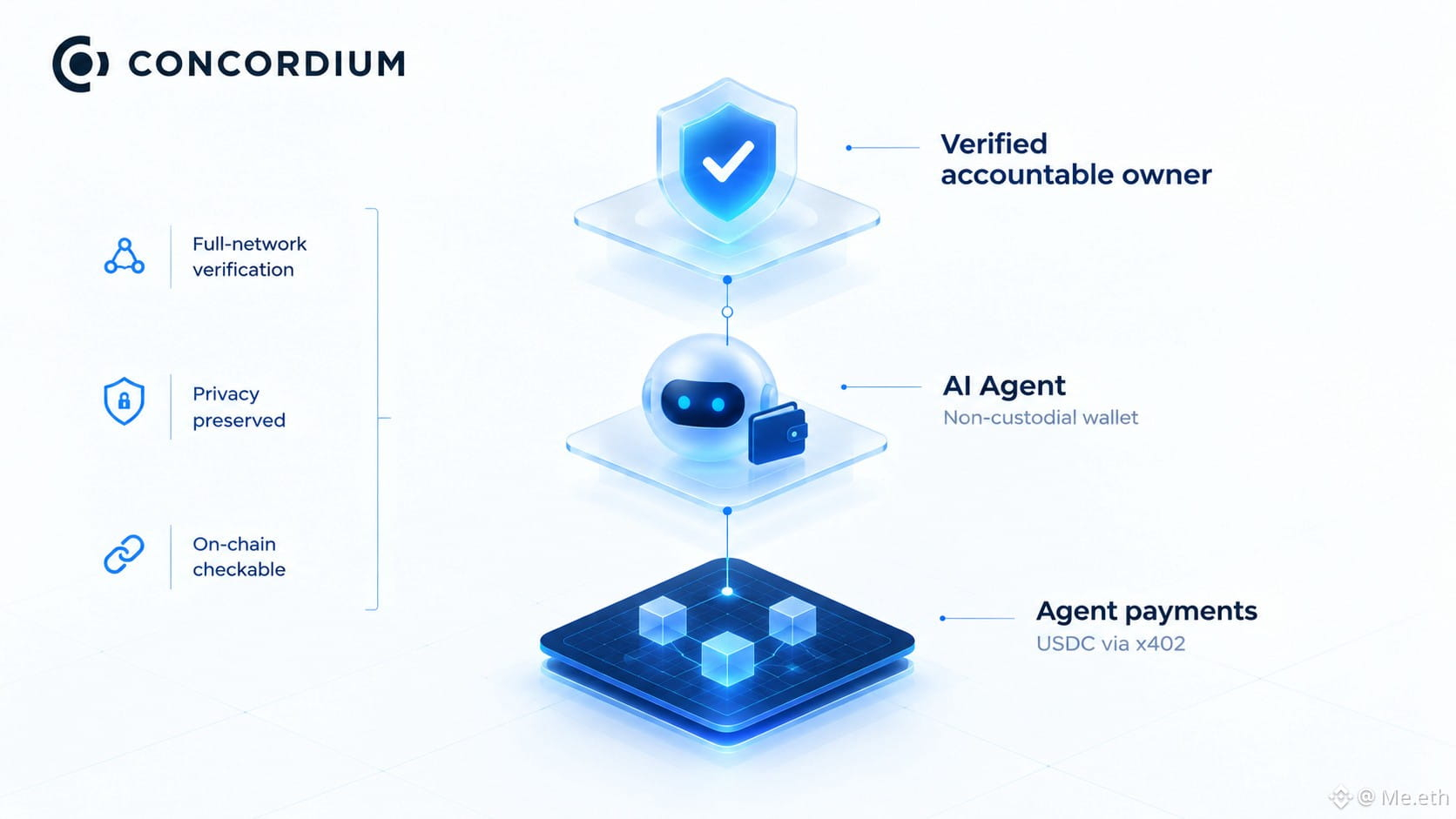
AI agents can now discover services and pay for them on-chain. But payment alone does not answer the harder question: who is accountable when something goes wrong? XDC AI’s integration with Concordium adds an identity layer beneath agent payments. Each agent can carry an on-chain “Verified by Concordium” badge showing that a verified individual or business stands behind it, without exposing that owner’s personal data on-chain. That distinction matters. Accountability and privacy do not have to be opposites. In an agentic economy, knowing that someone answers for an agent may become as important as knowing that it can pay. The next phase of agentic finance is not just smarter agents. It is agents that institutions can reasonably trust with real commercial tasks. XDC AI gives agents non-custodial wallets and the ability to pay in USDC through the x402 standard. Concordium’s verification layer adds a separate but complementary capability: an on-chain badge confirming that a verified person or business is accountable for the agent. For a supplier, this changes the decision. Instead of evaluating only a wallet address and transaction history, it can check whether an accountable, verified owner exists behind the agent. The agent’s code and operations remain unchanged; identity is added underneath. This is a practical foundation for use cases such as procurement, invoicing, and trade-related automation, areas where authority must be traceable. $CCD #AI Agents 🤖#
AI agents can now discover services and pay for them on-chain. But payment alone does not answer the harder question: who is accountable when something goes wrong? XDC AI’s integration with Concordium adds an identity layer beneath agent payments. Each agent can carry an on-chain “Verified by Concordium” badge showing that a verified individual or business stands behind it, without exposing that owner’s personal data on-chain. That distinction matters. Accountability and privacy do not have to be opposites. In an agentic economy, knowing that someone answers for an agent may become as important as knowing that it can pay. The next phase of agentic finance is not just smarter agents. It is agents that institutions can reasonably trust with real commercial tasks. XDC AI gives agents non-custodial wallets and the ability to pay in USDC through the x402 standard. Concordium’s verification layer adds a separate but complementary capability: an on-chain badge confirming that a verified person or business is accountable for the agent. For a supplier, this changes the decision. Instead of evaluating only a wallet address and transaction history, it can check whether an accountable, verified owner exists behind the agent. The agent’s code and operations remain unchanged; identity is added underneath. This is a practical foundation for use cases such as procurement, invoicing, and trade-related automation, areas where authority must be traceable. $CCD #AI Agents 🤖#
72
·
--
Concordium’s Verified by Concordium badge extends the Agent Registry’s accountability signal beyond the native chain. Using CIS-8 cross-chain key bindings, agents on Ethereum, Solana, and other networks can demonstrate linkage to a Concordium-verified human or business owner. Verification relies on zero-knowledge proofs so that personal or corporate details remain private. The badge confirms ownership and status without requiring the agent or its owner to leave their existing chain. This multi-chain approach lets developers add a reliable accountability layer to existing agent deployments while preserving the privacy properties of Concordium’s identity design. @XDCNetwork adoption of this is further proof. $CCD
Concordium’s Verified by Concordium badge extends the Agent Registry’s accountability signal beyond the native chain. Using CIS-8 cross-chain key bindings, agents on Ethereum, Solana, and other networks can demonstrate linkage to a Concordium-verified human or business owner. Verification relies on zero-knowledge proofs so that personal or corporate details remain private. The badge confirms ownership and status without requiring the agent or its owner to leave their existing chain. This multi-chain approach lets developers add a reliable accountability layer to existing agent deployments while preserving the privacy properties of Concordium’s identity design. @XDCNetwork adoption of this is further proof. $CCD
76
·
--
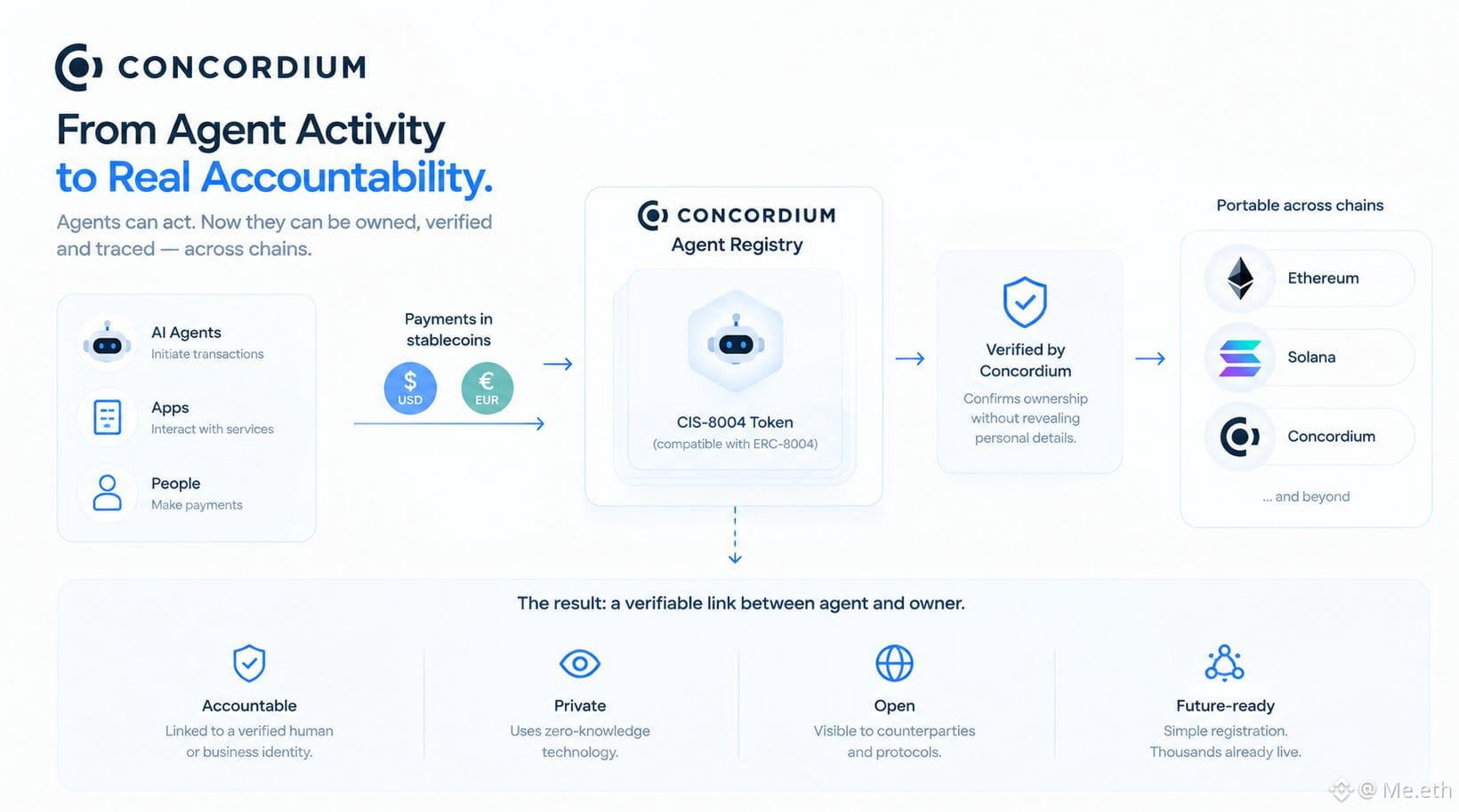
The Concordium Agent Registry gives AI agents a persistent, discoverable on-chain identity through CIS-8004 tokens that are compatible with ERC-8004. Each registered agent is linked to a verified human or business owner through Concordium’s protocol-level identity layer, creating a clear accountability anchor for autonomous software. Agents can also carry a Verified by Concordium badge, a portable trust signal that can be used across supported chains. Counterparties can verify an agent’s ownership, active status, and authorization without the owner’s personal data being revealed. Zero-knowledge proofs allow the necessary facts to be confirmed while keeping sensitive identity information private. This means a service, business, or another agent can establish that it is interacting with a registered, accountable agent before allowing access, issuing credentials, or processing a payment. The registry has been live since May 2026 and already supports real agent activity. Its importance lies in addressing the accountability gap that pure discovery standards leave open: agents may be able to find one another and transact, but someone still needs to be responsible when something goes wrong. Concordium ensures that a verified human or business principal remains connected to the agent’s on-chain identity. This design is particularly relevant as agent-to-agent and agent-to-service payments scale. It provides the trust infrastructure needed for autonomous agents to operate in commercial environments without sacrificing privacy, interoperability, or regulatory accountability. $CCD #AI Agents 🤖#
The Concordium Agent Registry gives AI agents a persistent, discoverable on-chain identity through CIS-8004 tokens that are compatible with ERC-8004. Each registered agent is linked to a verified human or business owner through Concordium’s protocol-level identity layer, creating a clear accountability anchor for autonomous software. Agents can also carry a Verified by Concordium badge, a portable trust signal that can be used across supported chains. Counterparties can verify an agent’s ownership, active status, and authorization without the owner’s personal data being revealed. Zero-knowledge proofs allow the necessary facts to be confirmed while keeping sensitive identity information private. This means a service, business, or another agent can establish that it is interacting with a registered, accountable agent before allowing access, issuing credentials, or processing a payment. The registry has been live since May 2026 and already supports real agent activity. Its importance lies in addressing the accountability gap that pure discovery standards leave open: agents may be able to find one another and transact, but someone still needs to be responsible when something goes wrong. Concordium ensures that a verified human or business principal remains connected to the agent’s on-chain identity. This design is particularly relevant as agent-to-agent and agent-to-service payments scale. It provides the trust infrastructure needed for autonomous agents to operate in commercial environments without sacrificing privacy, interoperability, or regulatory accountability. $CCD #AI Agents 🤖#
75
·
--
The Concordium Agent Registry gives AI agents a persistent, discoverable on-chain identity (via CIS-8004 tokens compatible with ERC-8004) that is linked to a verified human or business owner through the protocol’s identity layer. Each agent can carry a Verified by Concordium badge usable across supported chains. Counterparties can verify ownership and authorization status without the owner’s personal data being revealed, using zero-knowledge proofs. The registry has been live since May 2026 and already supports real agent activity. This design addresses the accountability gap that pure discovery standards leave open: agents can transact, but a verified principal remains responsible. It is particularly relevant as agent-to-agent and agent-to-service payments scale. $CCD
The Concordium Agent Registry gives AI agents a persistent, discoverable on-chain identity (via CIS-8004 tokens compatible with ERC-8004) that is linked to a verified human or business owner through the protocol’s identity layer. Each agent can carry a Verified by Concordium badge usable across supported chains. Counterparties can verify ownership and authorization status without the owner’s personal data being revealed, using zero-knowledge proofs. The registry has been live since May 2026 and already supports real agent activity. This design addresses the accountability gap that pure discovery standards leave open: agents can transact, but a verified principal remains responsible. It is particularly relevant as agent-to-agent and agent-to-service payments scale. $CCD
73
·
--
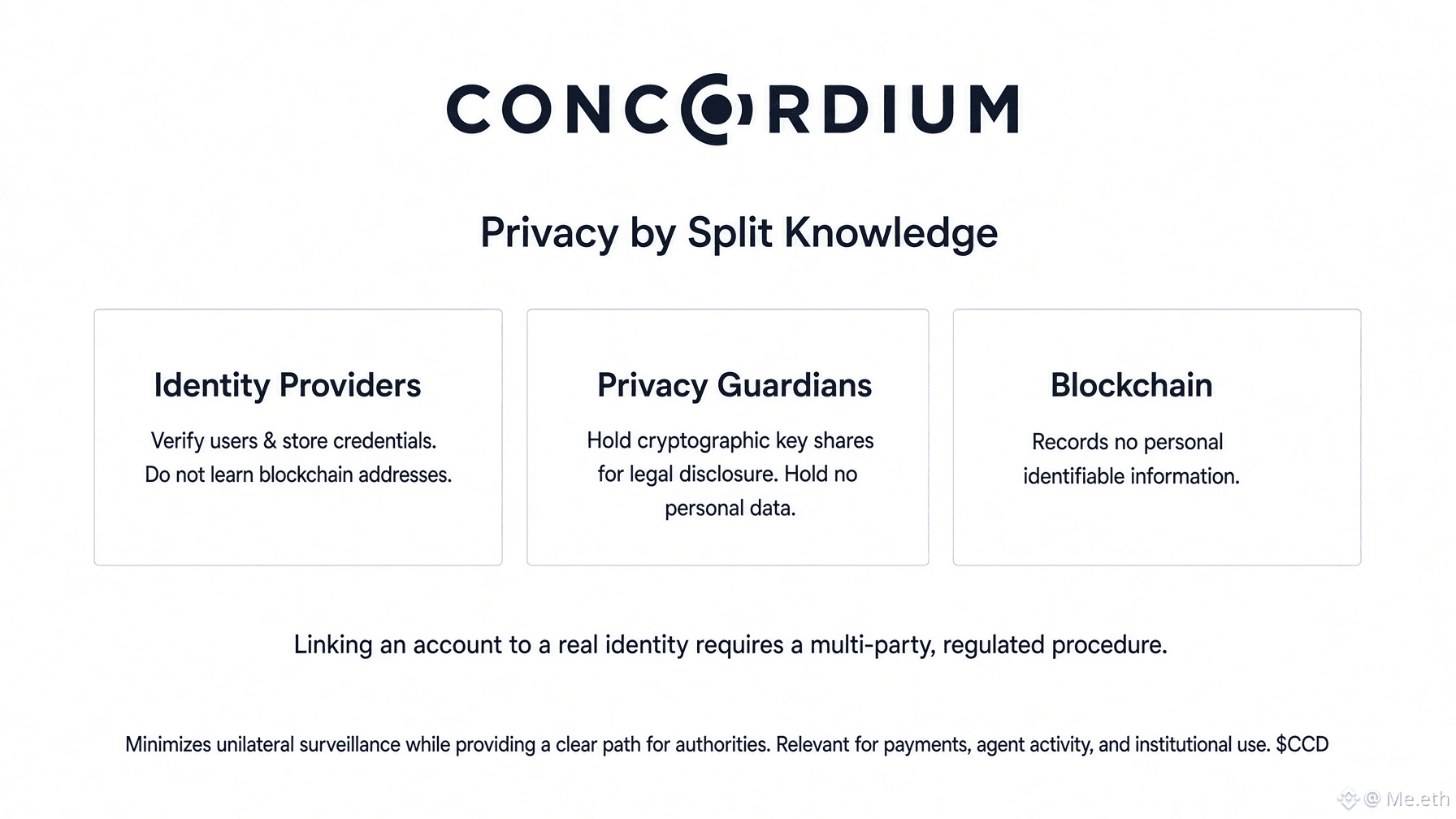
Concordium’s privacy model rests on split knowledge rather than a single trusted party. Regulated Identity Providers verify users and store credentials, but they do not learn which blockchain addresses belong to those users. Independent Privacy Guardians hold cryptographic key shares that could assist disclosure under legal process, yet they hold no personal data. The blockchain records no personal identifiable information. Linking an account to a real identity therefore requires a multi-party, regulated procedure. This structure minimizes the chance that any one entity can unilaterally surveil users while still providing a clear path for authorities when required. The design is relevant for any application that must satisfy both privacy expectations and regulatory accountability, including payments, agent activity, and institutional use. $CCD #AI Agents 🤖#
Concordium’s privacy model rests on split knowledge rather than a single trusted party. Regulated Identity Providers verify users and store credentials, but they do not learn which blockchain addresses belong to those users. Independent Privacy Guardians hold cryptographic key shares that could assist disclosure under legal process, yet they hold no personal data. The blockchain records no personal identifiable information. Linking an account to a real identity therefore requires a multi-party, regulated procedure. This structure minimizes the chance that any one entity can unilaterally surveil users while still providing a clear path for authorities when required. The design is relevant for any application that must satisfy both privacy expectations and regulatory accountability, including payments, agent activity, and institutional use. $CCD #AI Agents 🤖#
71
·
--
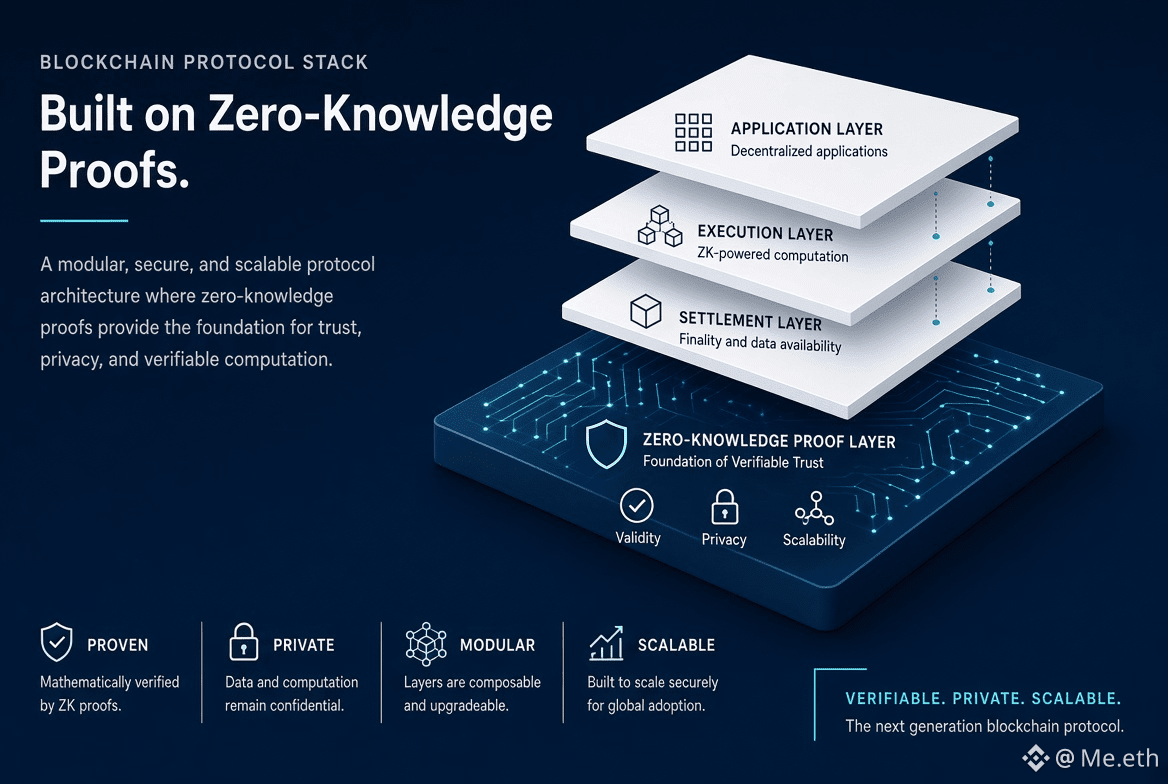
Concordium’s identity layer uses zero-knowledge proofs so that personal attributes can be verified without exposing the underlying personal information. Instead of forcing users to repeatedly submit passports, utility bills, or other sensitive records, Concordium enables them to prove specific claims, such as age, once the underlying identity has been attested by a regulated identity provider. The blockchain and the counterparties interacting with a user see only the validity of the proof, not the actual data behind it. This is a meaningful shift from conventional compliance models, where identity information is often collected, stored, and shared across multiple centralized systems. Every additional database creates another point of exposure, while every repeated document upload adds friction for users and operational cost for businesses. Concordium’s approach reduces the need for those workarounds by making verifiable identity a native capability of the protocol rather than a bolt-on feature managed at the application layer. This capability becomes even more important as autonomous agents begin initiating payments and interacting with services on behalf of users. Because the proof is tied to Concordium’s protocol-level account creation process, it remains reliable even as activity moves across different applications, services, or agent-driven workflows. The identity layer provides a consistent foundation for accountability, authorization, and compliance without requiring every service to rebuild its own verification system. The result is compliance-ready privacy: a model designed to scale with real-world regulation rather than fight it. Concordium demonstrates that privacy and regulatory alignment do not have to be opposing goals. By verifying what needs to be verified and revealing only what is strictly necessary, it creates a stronger foundation for trustworthy digital identity, compliant financial activity, and responsible autonomous-agent ecosystems. $CCD
Concordium’s identity layer uses zero-knowledge proofs so that personal attributes can be verified without exposing the underlying personal information. Instead of forcing users to repeatedly submit passports, utility bills, or other sensitive records, Concordium enables them to prove specific claims, such as age, once the underlying identity has been attested by a regulated identity provider. The blockchain and the counterparties interacting with a user see only the validity of the proof, not the actual data behind it. This is a meaningful shift from conventional compliance models, where identity information is often collected, stored, and shared across multiple centralized systems. Every additional database creates another point of exposure, while every repeated document upload adds friction for users and operational cost for businesses. Concordium’s approach reduces the need for those workarounds by making verifiable identity a native capability of the protocol rather than a bolt-on feature managed at the application layer. This capability becomes even more important as autonomous agents begin initiating payments and interacting with services on behalf of users. Because the proof is tied to Concordium’s protocol-level account creation process, it remains reliable even as activity moves across different applications, services, or agent-driven workflows. The identity layer provides a consistent foundation for accountability, authorization, and compliance without requiring every service to rebuild its own verification system. The result is compliance-ready privacy: a model designed to scale with real-world regulation rather than fight it. Concordium demonstrates that privacy and regulatory alignment do not have to be opposing goals. By verifying what needs to be verified and revealing only what is strictly necessary, it creates a stronger foundation for trustworthy digital identity, compliant financial activity, and responsible autonomous-agent ecosystems. $CCD
86
Log in to explore more content
Join global crypto users on Binance Square
⚡️ Get latest and useful information about crypto.
💬 Trusted by the world’s largest crypto exchange.
👍 Discover real insights from verified creators.
Email / Phone number
Trending Topics
A Packed Week of Earnings and Data Tests Markets
47,156 views
323 Discussing
🚨🇺🇸 BIG WEEK AHEAD FOR THE MARKETS!
Markets are pricing in a Fed rate hike in December and $BTC could see some big moves next week.
Here's what's coming:
• Monday: Fed Chair Warsh speaks
• Tuesday: US Retail Sales + $NVDA earnings
• Wednesday: FOMC Minutes
• Thursday: Jobless Claims + Philly Fed Index
• Friday: Consumer Sentiment + Fed speeches
All eyes on $BTC as another important week begins.
#bitcoin
Mookie
·14 Likes
·6k views
AnthropicIPOTestsInvestorAppetiteForAI
74,495 views
1,131 Discussing
BitcoinExtendsLosingStreakToSixWeeks
33,893 views
476 Discussing