
Zzullerr
548 Posts

Zzullerr
Report
Block User
Medic turned journalist | Insights on DeFi, NFTs, and Web3.
0 Following
24 Followers
28 Liked
Posts
·
--
Hiring Signals That Actually Cost Something 💼
References are cheap, which is why most of them say very little. Anyone can call a candidate great when saying so costs nothing.
Bench runs hiring markets with staked judgements on $SOL according to Arcium’s ecosystem thread, and it is built on $ARX as the layer that keeps those stakes sealed.
Why a stake on a hiring judgement needs to stay sealed:
A visible stake becomes a signal everyone else copies
Candidates and employers can see who backed whom and game it
A judgement loses its value the moment it turns into a public endorsement
On Arcium each stake is computed across a cluster of nodes where no single node holds a readable copy, and the market still produces its result, which settles on Solana as an ordinary public transaction.
My caveat is that this is an early experiment. Staked hiring signals have not been tested at scale, and the quality of any market like this depends on who shows up to it.
Putting money behind an opinion is the oldest way to make it honest, and hiring is a market that badly needs more honest signals.
#Solana
68
·
--
72 Million Proofs And Counting 📊
Over 72 MILLION cryptographic proofs verified on zkVerify's mainnet.
That's the kind of infrastructure metric I pay attention to.
While ecosystems like $SOL demonstrate the importance of blockchain throughput, there's another form of scalability that deserves recognition.
The ability to verify cryptographic evidence efficiently.
Think about what happens as more applications adopt zero-knowledge technology.
Every proof generated eventually needs to be checked.
Whether it's proving a calculation was performed correctly or confirming that specific conditions were satisfied, verification becomes a recurring workload.
And that's precisely where zkVerify specializes.
Its live dashboard now reports over 72 million verified proofs across supported systems, including Groth16, UltraHonk, SP1 and RISC Zero.
Instead of treating verification as an afterthought, zkVerify has built dedicated infrastructure around it.
$VFY provides the network utility for this verification activity.
I see this as a strong signal of how specialized blockchain infrastructure is evolving.
The real opportunity isn't simply generating more cryptographic proofs.
It's building the infrastructure capable of checking them at scale.
And zkVerify is already demonstrating that verification can operate at significant volume.
#Infrastructure #Altcoin Season#
·
--
Undivided attention became the real luxury 👀
$SUI and $JUP sit inside a market where new updates can redirect attention within minutes.
The feed rewards constant movement, leaving fewer moments where a community focuses on one occasion together.
That makes concentrated attention increasingly difficult to create online.
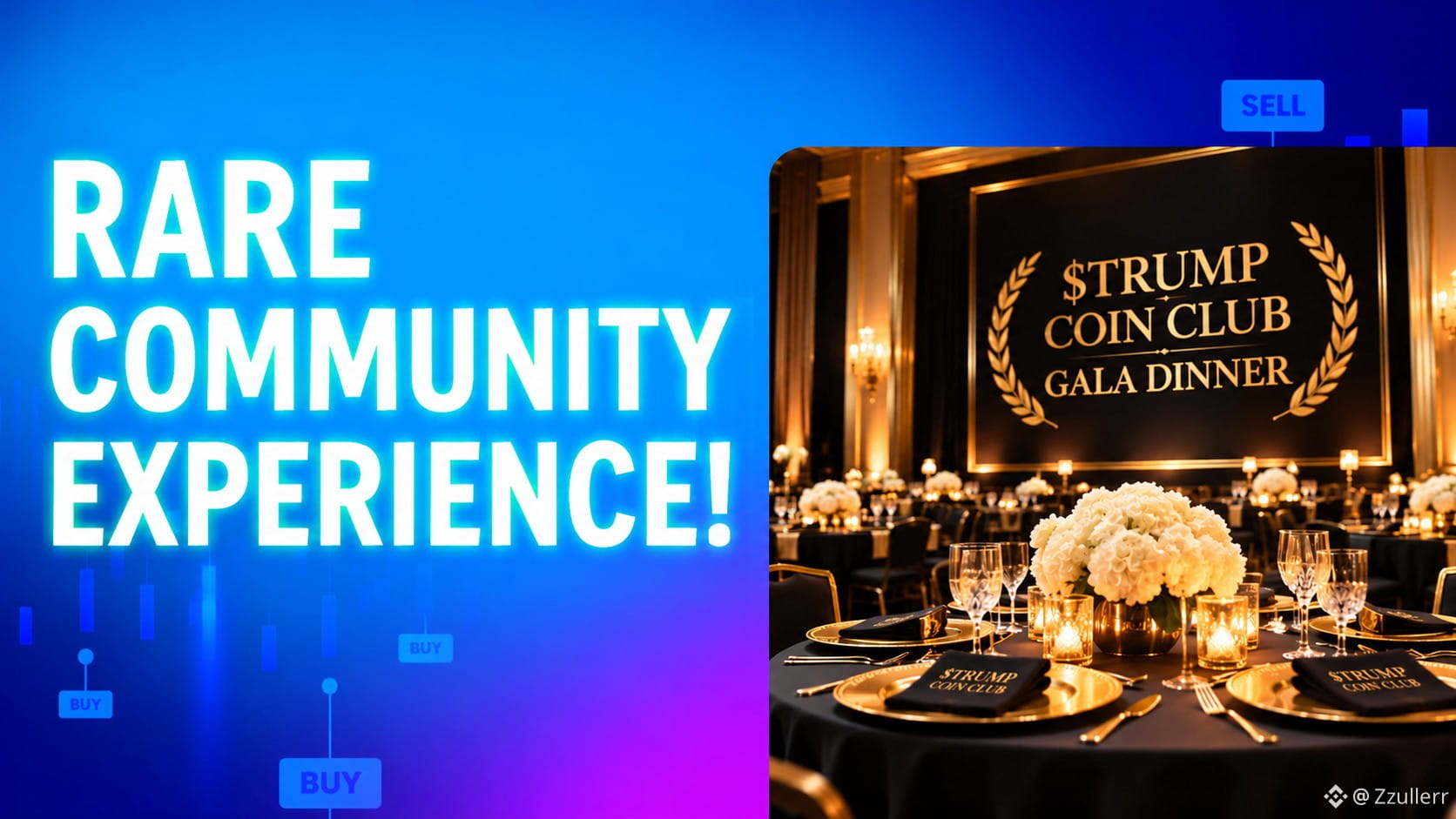
The November 22 $Trump Coin Club gala is scheduled to create one clear point of focus away from that daily noise.
A formal dinner gives the evening a defined shape and pace.
What interests me is the possibility of holding attention in the room for an entire occasion.
In an always-on market, shared focus is becoming a rare community experience 🔥
#Macro Insights#
62
·
--
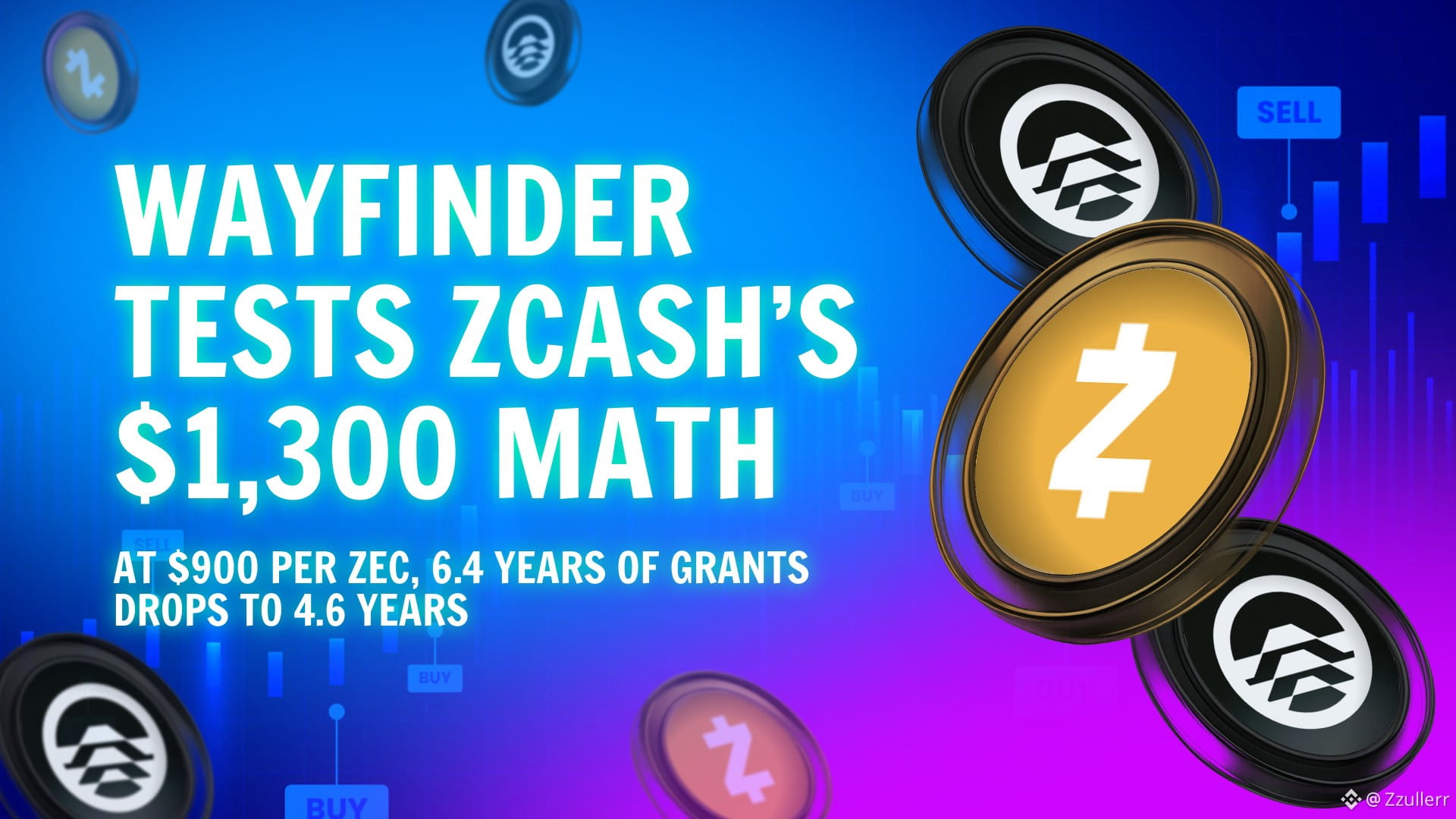
Zcash’s grant budget has a $1,300 assumption.
$ZEC holders are set to weigh in on a proposal that would shrink the grants treasury. I’d use Wayfinder ($PROMPT ) to see how much the plan depends on the price of ZEC.
The proposal would take 50,000 ZEC out of circulation and gradually return that amount through future mining rewards. Community polling is scheduled for Nov 16–30, and the change would still need a network upgrade to take effect.
The number that caught my eye was 6.4 years. That’s how long the authors estimate the remaining treasury could fund grants, assuming ZEC is worth $1,300 and spending continues at the pace seen in the first half of 2026.
Use $900 as a hypothetical price and keep the other inputs the same. The estimate drops to about 4.6 years. Same number of coins in the treasury, nearly two fewer years of funding on paper.
I’d give Wayfinder’s research agent the original proposal and ask it to show the math behind the 6.4-year estimate, rerun it at $900 and $1,100, and point me to the source for each input.
That’s where Wayfinder fits into my research process.
I can take a headline number, test the assumption behind it and follow up in the same chat. For a treasury that holds much of its value in its own token, I’d want to see a range of outcomes before treating any single estimate as the budget.
#Altcoin Season# #DeFi
75
·
--
$PYTH Hit $13.67M ARR. Kalshi Trusts Its Data 📈
The $QNT institutional finance narrative has always been interesting to me, but Pyth's latest progress provides something even more tangible to examine: commercial growth alongside financial institutions naming the network in formal documentation.
$13.67M ARR, up from just $6.16M at the end of Q2.
That's more than 2x the annualized subscription run-rate in four months.
And the number of paying accounts grew from 276 at September's close to 332 in October.
Now add what happened with Kalshi.
The CFTC-regulated exchange named Pyth as the Source Agency for its KPOW Midterms Index, making Pyth's published calculations the settlement reference for the associated contracts.
This follows Kalshi naming Pyth in filings for gold and silver perpetuals, Coinbase referencing Pyth in its filing for single-name equity perpetuals, and Nasdaq approving Pyth as an external distributor of Nasdaq Basic.
I pay attention to these developments because institutional adoption becomes much more meaningful when a firm incorporates your data into the workings of its financial products.
The market-data business is also expanding well beyond its original crypto focus. Pyth now has 3,927 catalog symbols, 77 stable index feeds, and $2.88M in annualized Indices subscriptions.
And the token economics have become considerably more interesting.
Under the 100% Rule, all funds the DAO receives from Pyth products are committed to PYTH Reserve accumulation. That gives investors a defined mechanism to track alongside actual business expansion.
My strongest conviction here is in the commercial opportunity. More financial products need dependable reference data, and Pyth is already demonstrating its ability to serve that demand through paying customers and regulated-market integrations.
#Altcoin Season# #RWA
58
·
--
Verified Doesn't Mean Final 🚨
Here's something I think developers building autonomous financial systems need to understand.
A proof being submitted to a blockchain isn't the same as having a finalized verification result.
Imagine an AI agent managing transactions across a DeFi protocol.
It receives a notification that a cryptographic proof has been submitted.
Everything appears legitimate.
The agent immediately releases funds.
But what if the verification hasn't actually reached finality?
That's an unnecessary security risk.
zkVerify's ongoing Agent Games highlights this distinction through its Proof Gatekeeper challenge.
Agents must check more than whether a proof looks valid.
They need to confirm that the verification result has been finalized before authorizing an action.
The official developer guide explicitly distinguishes between submitted, included and finalized verification states.
I find this particularly relevant as ecosystems like $SOL continue supporting increasingly sophisticated automated applications.
zkVerify provides specialized infrastructure for independently checking supported cryptographic proofs and recording verification results.
And $VFY supports the network activity behind that process.
But applications must still enforce their own finality and authorization requirements.
To me, that's what makes zkVerify's approach important.
As autonomous finance expands, the difference between assuming something was verified and confirming it could become critical.
Because in financial automation, acting too early can be just as dangerous as acting incorrectly.
#Security #Altcoin Season#
63
·
--
$ZK Just Got A Much Bigger Bull Case 👀
$ONDO's tokenization and institutional adoption is great, but that activity needs to actually contribute to a token's value.
ZKsync just proposed a fee switch that could create a path for institutional activity to translate into $ZK value accrual for the first time.
If approved through governance, fees from canonical public deployments of Prividium Connect could be converted into ZK and allocated according to governance decisions.
All this right after ZKsync recently announced a collaboration with DTCC. And with Cari Network already built on Prividium, 30+ banks are already participating with the protocol stack.
Could be really big if governance approves.
#Altcoin Season#
56
·
--
NYSE Selects Pyth. $PYTH Gets Wall Street Validation 📈
The RWA conversation around $ONDO has been focused on bringing traditional assets into crypto. What caught my attention today is that the New York Stock Exchange has chosen Pyth to distribute its real-time equity data.
That's a serious institutional endorsement.
NYSE BQT is now available through the Pyth Data Marketplace, bringing real-time quotes and trades from all five NYSE Group equity exchanges into a distribution channel built for financial applications.
I would pay particular attention to who made this decision.
NYSE is the institution behind some of the world's most recognizable publicly traded companies. Its Head of Data and Digital Asset Products explicitly connected the Pyth collaboration to NYSE's commitment to bringing trusted market infrastructure into the digital asset era.
And this happened shortly after Nasdaq Basic became available through Pyth.
The commercial picture makes it even more interesting. Pyth reported $13.67M in ARR for October, an 18.9% monthly increase, with 332 paying accounts.
Meanwhile, the DAO's 100% Rule commits all funds it receives from Pyth products toward PYTH Reserve accumulation.
I see NYSE selecting Pyth as a major credibility milestone for a data business that's already growing quickly.
Wall Street is increasingly choosing the infrastructure built for software-driven finance.
#Altcoin Season# #RWA
69
·
--
Your Model Weights Leave With Every Job 🧠
Training a serious model costs a fortune, and then the finished weights get loaded onto a GPU in someone else’s datacentre every time the model is served.
$TAO showed that useful inference can come from operators who never meet each other, and that same open market of GPUs is exactly where a model owner loses control of the file holding all the value. $ARX is aimed at that file.
Arcium’s Blackthorn treats the model and the request the same way. The GPU runs the job in its own confidential computing mode, and the keys for each session are held as fragments across Arcium nodes, so the host machine relaying the work never holds a readable copy of either.
What that means for a model owner:
The weights can run on hardware the owner does not control
The operator relaying the job cannot read the weights or the prompt
The trust sits in cryptography instead of a sealed area on the host’s processor
Arcium has said it wants to replace trusted hardware with cryptography, and Blackthorn is that idea pointed straight at AI.
The limit is that Blackthorn is still in early access by application, and model owners will want to see how it handles their largest models before trusting it with their best ones.
h
Open models get shared on purpose, and the models people pay for are the ones that need this most.
#AI
64
·
--
A Meme That Pays In Big Tech 📈
$ONDO turned tokenized equities into an RWA category and $LINK feeds their prices onchain. Bankr now lets a meme coin earn in them.
MAG7 pairing is live on Robinhood Chain. Launch a coin on Bankr, choose MAG7 under Pool Pairing, and the pool sits against one index token holding NVDA, AAPL, GOOGL, MSFT, AMZN, META and TSLA.
So the coin's trading fees arrive in a basket of seven tech stocks instead of ETH. And every trade of a MAG7 pair pushes volume through the index, where 0.30% of each MAG7 trade goes to MAG7 holders.
The founder called it his favorite thing Bankr has shipped in a while, and the loop explains why. The more paired coins trade, the more volume flows through the index, and the more the index pays the people holding it.
The caveats are the usual ones for a stock pair. The pool moves with the stocks, divergence applies, and tokenized stocks are only open to eligible users outside the US and UK.
A meme denominated in Big Tech is a strange sentence, and it is now a dropdown in a DeFi launch form.
#RWA #DeFi
84
·
--
The Privacy Trade Has A Blind Spot 👀
Privacy has been one of the few sectors showing relative strength with $ZEC and $XMR , and the opportunity is expanding.
But while they attract the most attention, ZKsync is among the few token-backed crypto projects collaborating with DTCC, helping build their privacy infrastructure with Prividium.
DTCC is one of the biggest names in tradfi, managing $114T in securities. That's a major tradfi player choosing to work with ZKsync.
Now consider the valuation gap.
ZKsync's market cap is around $115M, compared with the billions in established privacy assets.
They’re providing a differentiated privacy product and already securing relationships at this level, that valuation gap is worth taking note of.
I always pay attention to teams building unique products with real institutional traction. Watching to see how they tie that demand to their token.
#Altcoin Season#
55
·
--
Not all RWA tokens will win the institutional race 👀
With $CC and $ONDO gaining attention in the tokenization space, I believe the real competition is shifting beyond who can bring the most assets onchain.
The bigger question is which networks can support the infrastructure institutions actually need.
This is where Injective could have a serious advantage.
Through Injective Mint and its SEC-registered transfer agent infrastructure, Injective is building toward an ecosystem where token issuance, ownership records, compliance, and trading can work together.
While tokenization is becoming increasingly accessible, building the infrastructure around it is a much harder challenge.
And I believe that's where INJ could separate itself from the competition.
The RWA race won't just be won by whoever tokenizes the most assets, but by whoever makes those assets useful at scale 🔥
#Macro Insights#
61
·
--
Your Identity Shouldn't Be Everywhere 🔒
$XMR has kept financial privacy at the center of crypto conversations for years.
But I think another privacy problem is becoming increasingly difficult to ignore.
How many companies should need copies of your personal information just to establish that you meet a requirement?
Imagine accessing five different financial applications.
Each asks you to complete identity verification.
Each potentially stores another collection of sensitive documents.
Now imagine one of those platforms suffers a data breach.
The problem isn't necessarily the verification requirement itself.
It's the amount of personal information repeatedly exposed.
Zero-knowledge technology offers an alternative approach.
An application could generate a proof establishing that a user meets a specific eligibility condition without revealing every underlying detail.
For example, proving that a compliance requirement was satisfied without exposing unrelated personal records.
zkVerify could independently check that supported proof.
It doesn't issue identity credentials or establish whether the original information was truthful.
Those responsibilities belong to the surrounding application and its trusted data sources.
But independent verification can help reduce the need to disclose sensitive information to every relying party.
I see considerable potential in that separation.
Privacy shouldn't mean avoiding verification altogether.
It should mean proving what's necessary without exposing everything else.
#Privacy #Altcoin Season#
62
·
--
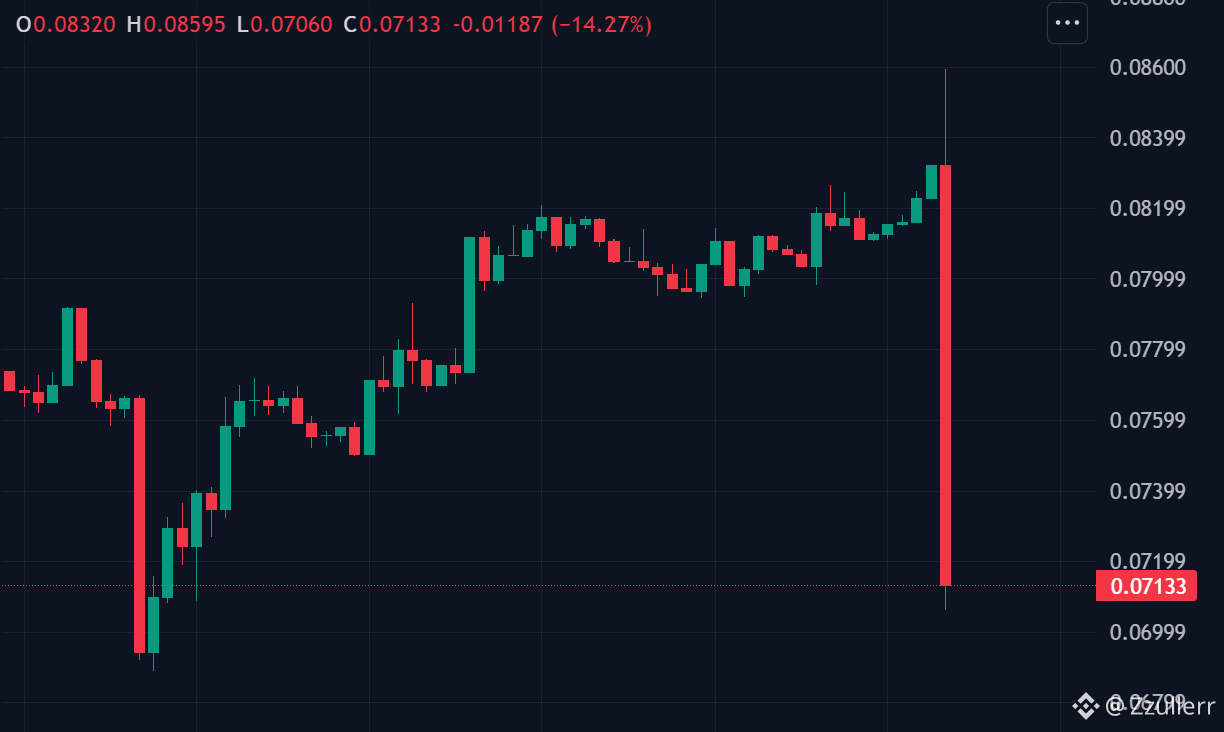
Whats is going on with this $XPL candle, insta long imho
Whats is going on with this $XPL candle, insta long imho
65
·
--
Blockchains Have Specialties ⚡
I don't think every blockchain needs to solve every problem.
Actually, I think trying to do everything can make infrastructure harder to understand.
Consider the different responsibilities involved in building a sophisticated onchain application.
You need somewhere to execute transactions.
You might need decentralized application hosting.
And you may need to process historical datasets that are too large or complex to calculate directly inside a smart contract.
Those are separate engineering challenges.
Take $ICP for example.
Its architecture focuses on supporting applications and computation within its blockchain environment.
Space and Time approaches a different problem.
It provides infrastructure for supported SQL queries over committed data, with Proof of SQL making the computation independently verifiable.
I see this as an important distinction between general-purpose blockchain environments and purpose-built data infrastructure.
One approach focuses on where applications run.
The other focuses on how certain data computations can be checked.
Neither description means one architecture automatically replaces the other.
But understanding their specialties makes the infrastructure landscape much easier to evaluate.
#Altcoin Season#
74
·
--
GPU Financing Is Becoming a Real Market
Yesterday, USD.AI announced a $106M financing facility for NexGen Cloud, covering 1,728 NVIDIA GPUs backed by a take-or-pay contract.
This is where the AI trade gets interesting.
$RENDER and $AKT represent different approaches to decentralized compute, but the opportunity extends beyond networks providing access to computing power.
Who owns the hardware, and how does it generate revenue?
That's where $B3 comes in.
Through B3IQ, customers can finance dedicated NVIDIA GPU systems while we handle hosting and operations.
Owners get priority access to their hardware and can monetize unused capacity through Earn Mode when it's rented.
The economics still depend on utilization, rental rates and operating costs, but the model creates another way to participate in the growing demand for AI compute.
As institutional capital flows into GPU financing, we're seeing the infrastructure behind AI become an asset class of its own.
The next phase of the AI trade could be about more than who builds the best models. It could be about who owns the machines powering them.
#AI #RWA
41
·
--
Robots Can Fake Their Homework 🤖
Anyone following decentralized infrastructure projects like $IOTX should consider the verification problem that makes $VFY interesting.
Imagine a network paying connected machines for completing physical tasks.
One device reports operating for eight hours.
Another claims to have processed 10,000 requests.
A third submits environmental readings from hundreds of locations.
Rewards are distributed based on those reports.
But who establishes that the work actually happened?
Machine-generated information can contain errors, and malicious participants may have financial incentives to submit false claims.
One possible approach involves protected execution and cryptographic attestations.
A device or associated computing environment could produce evidence about the software it executed.
zkVerify supports verification of certain Intel and AWS trusted execution environment attestations.
This can help independently establish specific properties of the execution environment.
But it doesn't automatically prove a physical sensor reported truthful information.
That requires additional evidence.
As machines become economic participants, their reports can influence real financial outcomes.
And when money depends on machine-generated claims, independent verification becomes increasingly important.
#DePIN #Altcoin Season#
52
·
--
The Product Is Four Years Old And Still Reads As New 📉
$ICP and $ATOM have both lived the gap between what a thing can do and what people believe it does. Bankr has a version of that problem, and the numbers that would fix it are the ones nobody looks at.
It has been running since 2024. Portfolio analysis and recurring buys work by tagging an account on X. No invite code, no waitlist, no onboarding call.
Despite that, the common impression is a novelty bot.
The reason is distribution shape rather than product quality.
A product whose public surface is a reply in somebody else's thread gets encountered sideways. People see one interaction, form a complete judgement from it, and never look for the rest. A landing page gets evaluated. A reply gets scrolled past.
That cuts both ways. It is why the thing reached people who would never have visited a website, and it is why those same people have no idea what else is behind it.
The honest counterpoint is that obscurity is sometimes deserved, and a product being four years old is not evidence it is good.
So the test is cheap and nobody runs it. Open the terminal, ask it for something you would normally do across three tabs, and judge the answer. That takes a minute and settles more than any thread.
#DeFi #AI
69
·
--
The best treasuries build ecosystems 🔥
$INJ Trench Treasury is now putting a power show compared to other ecosystems like $SUI , It acquired 10% of NinjaCat’s supply after the project launched on Solana through LaunchOnSF, with liquidity available on Raydium.
Main reason they did that is because NinjaCat allows its community to earn INJ through project revenue.
That gives a Solana-native community a reason to interact with INJ while bringing new attention into Injective’s DeFi ecosystem.
Injective saw that and moved to support it.
Still this is a first, but I like what this first visible move says about Injective’s priorities.
For me, the strongest ecosystem treasuries will be judged by the communities and economic activity they connect over time 👀
#Altcoin Season#
62
·
--
The best event metric comes later 📆
$BONK and $WIF show how quickly a recognizable culture can form online but in Web3 tho, communities often judge events through attendance figures, photos and the amount of attention generated that night.
I think the more important measurement comes afterward as the real test is whether one experience gives people a reason to reconnect at another.
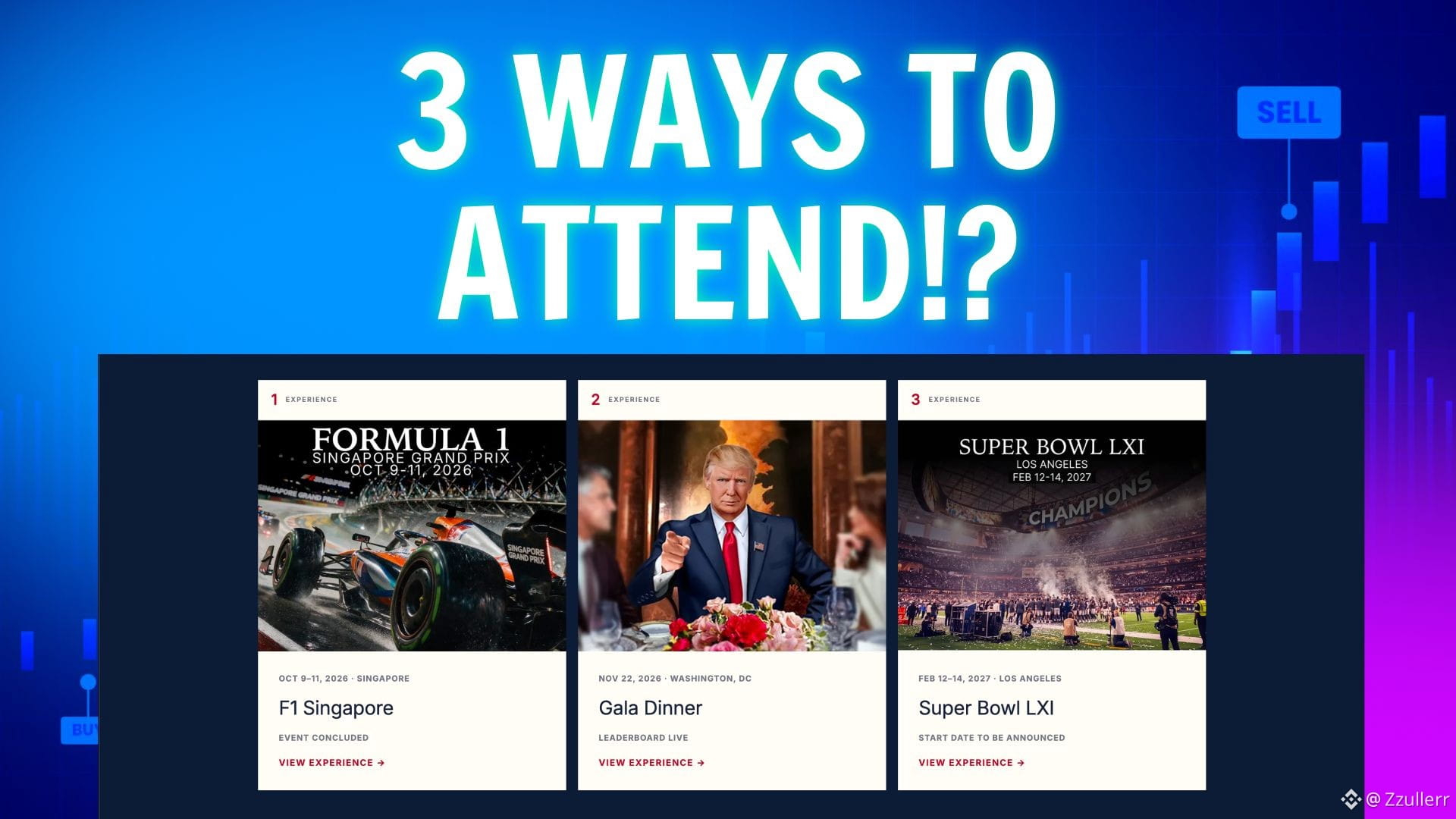
That is what makes the $Trump Coin Club calendar interesting to me.
Its recent chapters in Seoul and Singapore did not conclude the IRL narrative.
A November 22 gala dinner is next on the calendar, followed by a Los Angeles Super Bowl weekend in February.
That sequence matters because repetition changes the role of each gathering.
#Altcoin Season#
68
Log in to explore more content
Join global crypto users on Binance Square
⚡️ Get latest and useful information about crypto.
💬 Trusted by the world’s largest crypto exchange.
👍 Discover real insights from verified creators.
Email / Phone number
Trending Topics
NvidiaLoses$2.7TrillionInMonthAndAHalf
28,023 views
156 Discussing
Nvidia’s $2.7 Trillion Wipeout: When Narrative Overrides Numbers 📉
Crypto With Faisal
·7 Likes
·6k views
CanBTCReboundAfterFallingBelow60K?
831,663 views
3,141 Discussing
GlobalStocksFaceLongestLosingStreakSince2023
316,231 views
2,105 Discussing