

Badsha Bilal
66 Posts

Badsha Bilal
Report
Block User
Open Trade
Frequent Trader
3.4 Years
5 Following
2 Followers
49 Liked
Posts
Portfolio
All
Quotes
·
--
📊$XPL
{future}(XPLUSDT)
Market Overview
· Current Price: 0.09553 USDT
· 24h Change: +5.53% (Short-term bullish recovery)
· Overall Trend: Long-term Bearish / Short-term Bullish Correction
---
🟢 LONG (Buy) Signal
· Entry Zone: 0.09500 - 0.09560 (Current market price)
· Confirmation: A 15m or 1h candle closing above 0.09659 (24h High).
· Take Profit (TP):
· TP 1: 0.09750
· TP 2: 0.10000 (Psychological resistance)
· TP 3: 0.10350 (Previous 1h peak)
· Stop Loss (SL): 0.08950 (Below the recent 1h swing low of 0.08907)
· Rationale: The 15m, 1h, and 4h Parabolic SAR dots are currently below the price, indicating short-term upward momentum. The 24h volume is decent, and the price is recovering from the recent drop.
🔴 SHORT (Sell) Signal
· Entry Zone: 0.09650 - 0.09750 (If price rejects the 24h high)
· Confirmation: A 1h candle closing back below 0.09500 or a clear rejection wick at 0.09659.
· Take Profit (TP):
· TP 1: 0.09300
· TP 2: 0.09000 (24h Low)
· TP 3: 0.08900 (Recent swing low)
· Stop Loss (SL): 0.09850 (Above the recent local resistance)
· Rationale: The 1D (Daily) chart is heavily bearish (-88.64% over 1 year, -18.06% over 7 days). The Daily SAR is still above the price. This current pump is likely just a short-term relief rally before the larger downtrend resumes.
---
⚠️ Risk Management & Key Levels
· Major Resistance: 0.09659 (24h High) / 0.10355 (1h chart peak)
· Major Support: 0.09018 (24h Low) / 0.08907 (Recent bottom)
· Leverage Warning: Because XPLUSDT has shown extreme volatility (huge red and green candles on the 1h chart), do not use high leverage. 3x-5x maximum is recommended.
· Trend Bias: Neutral to Short. While the 15m/1h charts show a buy signal, the 1D chart dictates that any long position should be treated as a scalp (quick trade) rather than a long-term hold. The overall macro trend is still down.
Summary:
· Scalpers (15m/1h): Look for LONG entries above 0.0955 targeting 0.0975-0.10.
· Swing Traders (1D): Wait for a rejection near 0.0965-0.10 to open a SHORT position, targeting 0.09 and below.
📊$XPL
Market Overview
· Current Price: 0.09553 USDT
· 24h Change: +5.53% (Short-term bullish recovery)
· Overall Trend: Long-term Bearish / Short-term Bullish Correction
---
🟢 LONG (Buy) Signal
· Entry Zone: 0.09500 - 0.09560 (Current market price)
· Confirmation: A 15m or 1h candle closing above 0.09659 (24h High).
· Take Profit (TP):
· TP 1: 0.09750
· TP 2: 0.10000 (Psychological resistance)
· TP 3: 0.10350 (Previous 1h peak)
· Stop Loss (SL): 0.08950 (Below the recent 1h swing low of 0.08907)
· Rationale: The 15m, 1h, and 4h Parabolic SAR dots are currently below the price, indicating short-term upward momentum. The 24h volume is decent, and the price is recovering from the recent drop.
🔴 SHORT (Sell) Signal
· Entry Zone: 0.09650 - 0.09750 (If price rejects the 24h high)
· Confirmation: A 1h candle closing back below 0.09500 or a clear rejection wick at 0.09659.
· Take Profit (TP):
· TP 1: 0.09300
· TP 2: 0.09000 (24h Low)
· TP 3: 0.08900 (Recent swing low)
· Stop Loss (SL): 0.09850 (Above the recent local resistance)
· Rationale: The 1D (Daily) chart is heavily bearish (-88.64% over 1 year, -18.06% over 7 days). The Daily SAR is still above the price. This current pump is likely just a short-term relief rally before the larger downtrend resumes.
---
⚠️ Risk Management & Key Levels
· Major Resistance: 0.09659 (24h High) / 0.10355 (1h chart peak)
· Major Support: 0.09018 (24h Low) / 0.08907 (Recent bottom)
· Leverage Warning: Because XPLUSDT has shown extreme volatility (huge red and green candles on the 1h chart), do not use high leverage. 3x-5x maximum is recommended.
· Trend Bias: Neutral to Short. While the 15m/1h charts show a buy signal, the 1D chart dictates that any long position should be treated as a scalp (quick trade) rather than a long-term hold. The overall macro trend is still down.
Summary:
· Scalpers (15m/1h): Look for LONG entries above 0.0955 targeting 0.0975-0.10.
· Swing Traders (1D): Wait for a rejection near 0.0965-0.10 to open a SHORT position, targeting 0.09 and below.
Market Overview
· Current Price: 0.09553 USDT
· 24h Change: +5.53% (Short-term bullish recovery)
· Overall Trend: Long-term Bearish / Short-term Bullish Correction
---
🟢 LONG (Buy) Signal
· Entry Zone: 0.09500 - 0.09560 (Current market price)
· Confirmation: A 15m or 1h candle closing above 0.09659 (24h High).
· Take Profit (TP):
· TP 1: 0.09750
· TP 2: 0.10000 (Psychological resistance)
· TP 3: 0.10350 (Previous 1h peak)
· Stop Loss (SL): 0.08950 (Below the recent 1h swing low of 0.08907)
· Rationale: The 15m, 1h, and 4h Parabolic SAR dots are currently below the price, indicating short-term upward momentum. The 24h volume is decent, and the price is recovering from the recent drop.
🔴 SHORT (Sell) Signal
· Entry Zone: 0.09650 - 0.09750 (If price rejects the 24h high)
· Confirmation: A 1h candle closing back below 0.09500 or a clear rejection wick at 0.09659.
· Take Profit (TP):
· TP 1: 0.09300
· TP 2: 0.09000 (24h Low)
· TP 3: 0.08900 (Recent swing low)
· Stop Loss (SL): 0.09850 (Above the recent local resistance)
· Rationale: The 1D (Daily) chart is heavily bearish (-88.64% over 1 year, -18.06% over 7 days). The Daily SAR is still above the price. This current pump is likely just a short-term relief rally before the larger downtrend resumes.
---
⚠️ Risk Management & Key Levels
· Major Resistance: 0.09659 (24h High) / 0.10355 (1h chart peak)
· Major Support: 0.09018 (24h Low) / 0.08907 (Recent bottom)
· Leverage Warning: Because XPLUSDT has shown extreme volatility (huge red and green candles on the 1h chart), do not use high leverage. 3x-5x maximum is recommended.
· Trend Bias: Neutral to Short. While the 15m/1h charts show a buy signal, the 1D chart dictates that any long position should be treated as a scalp (quick trade) rather than a long-term hold. The overall macro trend is still down.
Summary:
· Scalpers (15m/1h): Look for LONG entries above 0.0955 targeting 0.0975-0.10.
· Swing Traders (1D): Wait for a rejection near 0.0965-0.10 to open a SHORT position, targeting 0.09 and below.
179
·
--
Bearish
30D trade $1INCH 126.8 USDT
In total $USDT $HBAR
{future}(HBARUSDT)
$1INCH
{spot}(BTCUSDT)
In total $USDT $HBAR
$1INCH
$1INCH
96
·
--
Bearish
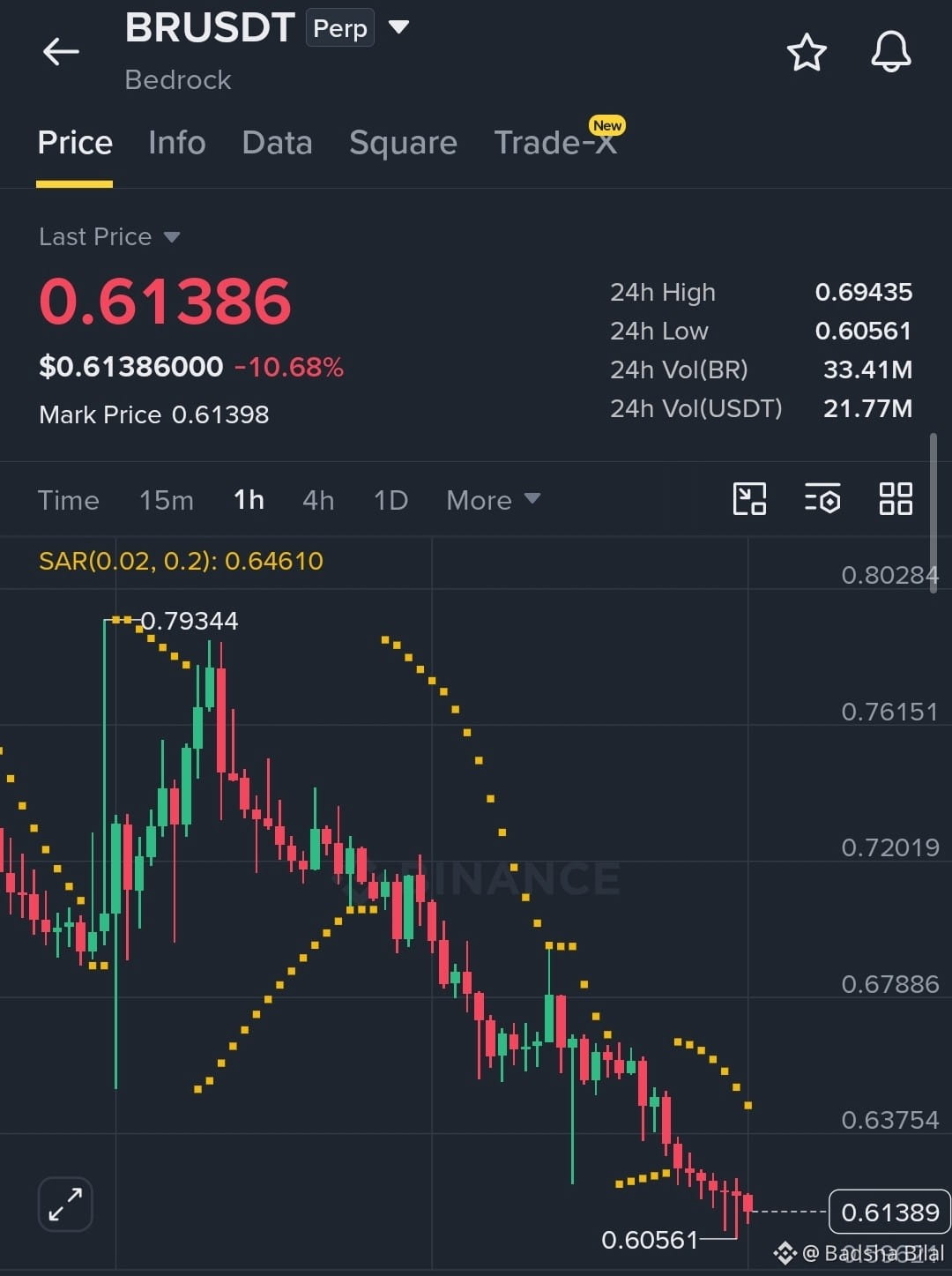
Suddenly I buy instead of Sell what to do $BR
Suddenly I buy instead of Sell what to do $BR
2
435
·
--
Bearish
1
575
·
--
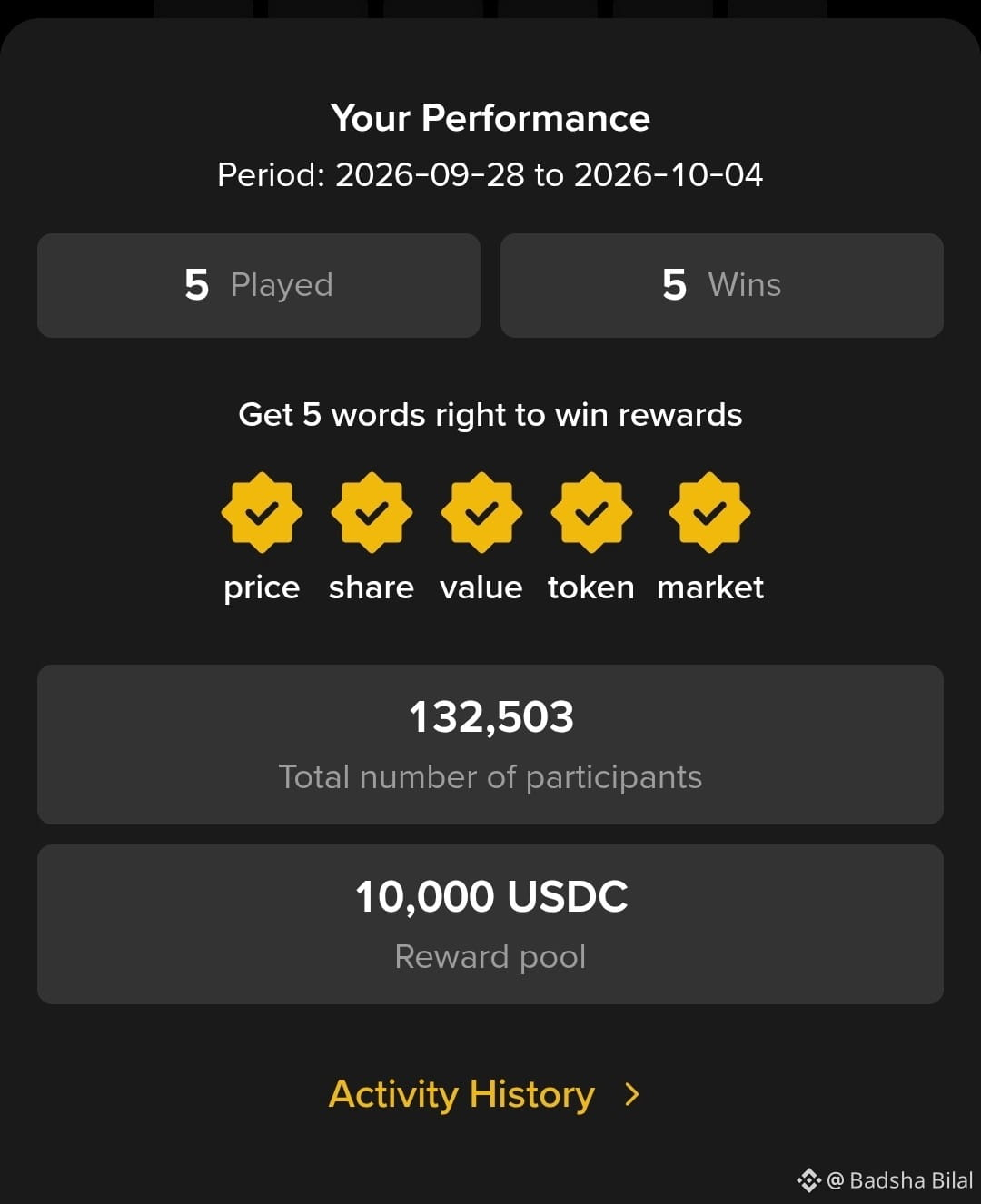
First time complete in over 3.4years
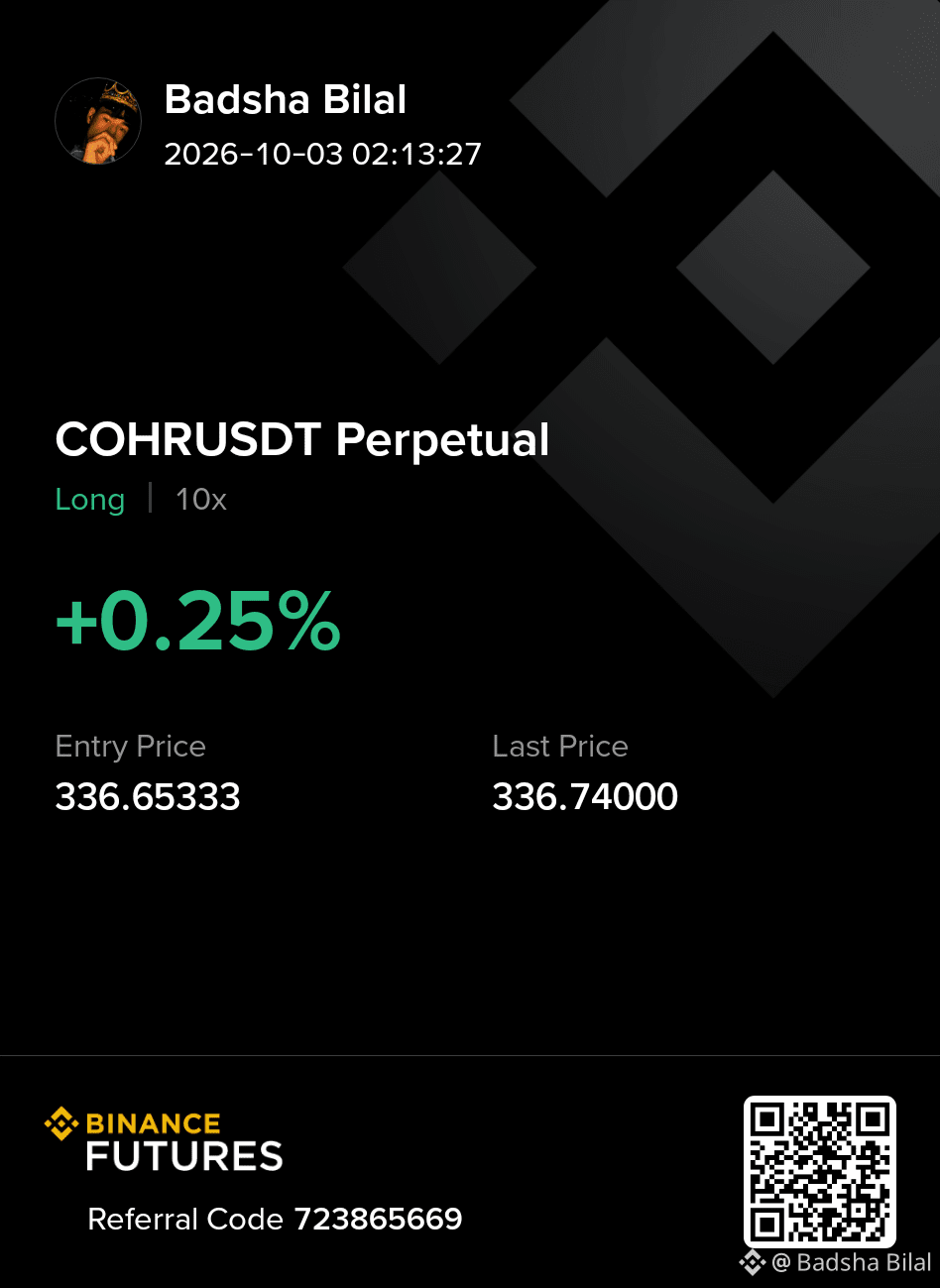
$COHR $NEO $BR
First time complete in over 3.4years
$COHR $NEO $BR
$COHR $NEO $BR
5
·
--
165
·
--
Bearish
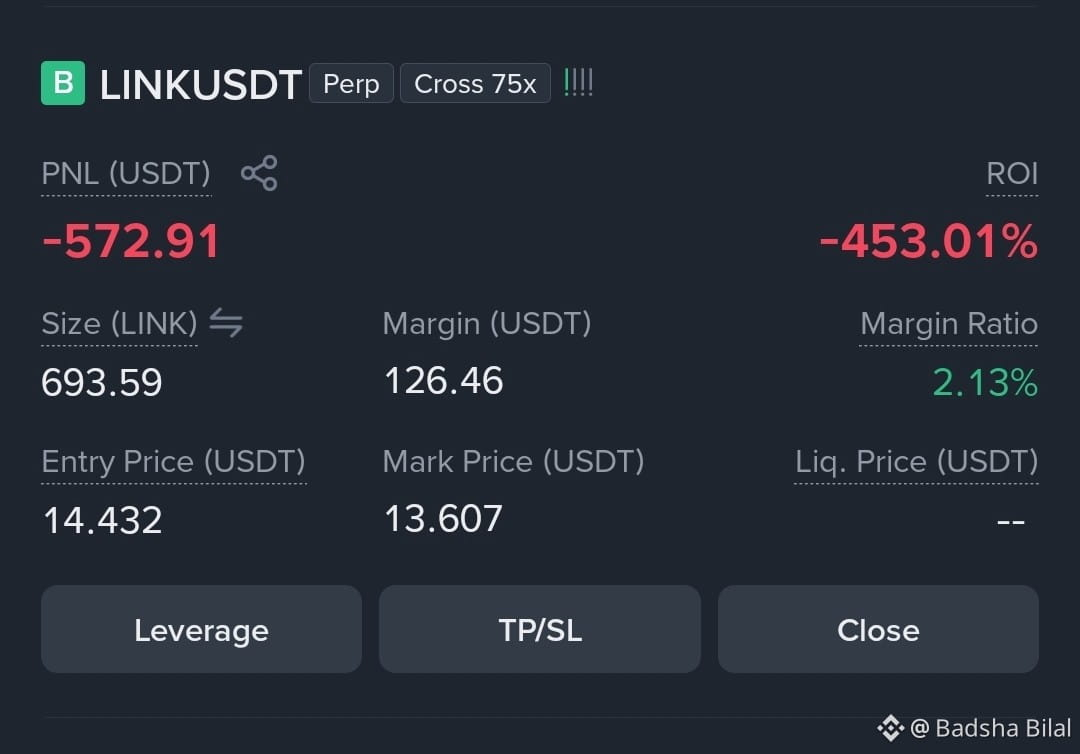
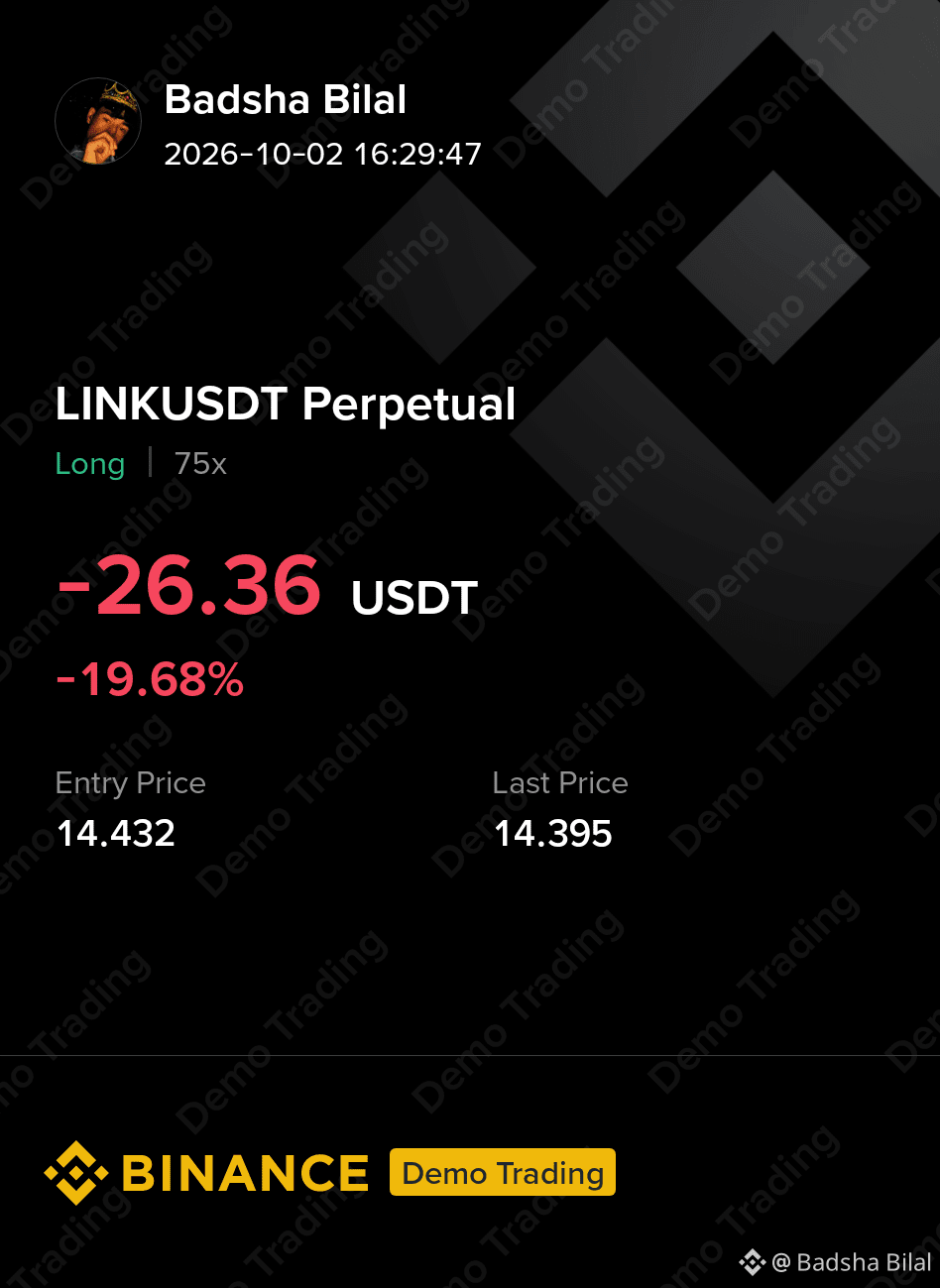
😞 Big Lose all Time in binance on $LINK
{future}(LINKUSDT)
😞 Big Lose all Time in binance on $LINK
1
1
99
·
--
Bearish
1
5
·
--
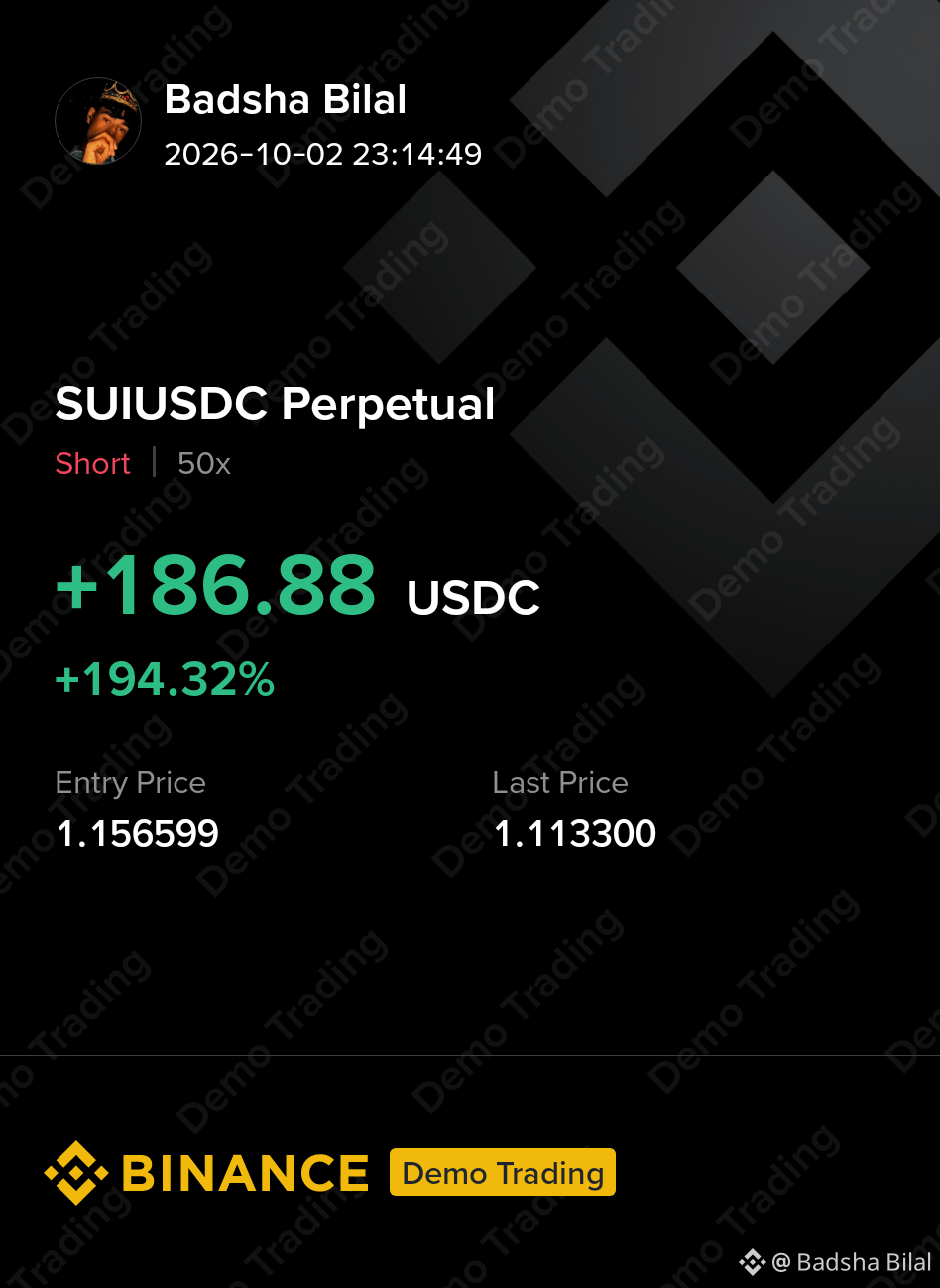
Last Day was in lose worth of 300+ but today $SUI
{future}(SUIUSDT)
Last Day was in lose worth of 300+ but today $SUI
1
184
·
--
1
206
·
--
1
44
·
--
Article
IT’S TOO HARD TO START FROM $3 💰 | My Journey From 3 USDTStarting with $3 USDT in crypto can look almost impossible.
When you see traders talking about $100, $1,000, or even $10,000 accounts, a balance of just 3 USDT can make you feel like your starting point is too small to matter.
But the real challenge isn’t the size of the account.
The challenge is learning how to protect a small account, control risk, stay patient, and slowly build experience.
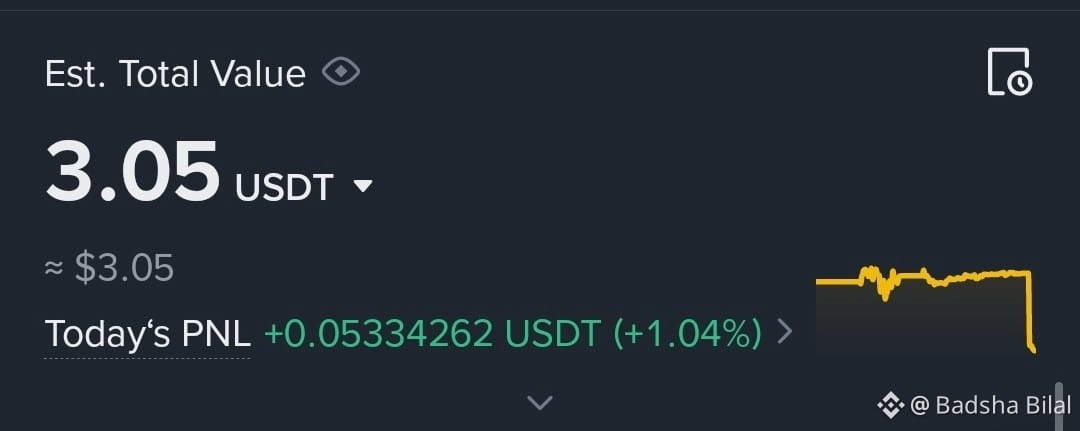
Today, my account is around 3.05 USDT, and the screenshot shows a daily PNL of +0.05334262 USDT (+1.04%).
That profit is small in dollars.
But for someone starting from $3, every small step matters.
🟡 1. Why Starting With $3 Is So Difficult
With a $3 account, you immediately face several problems.
A small percentage gain produces a very small dollar profit.
For example:
1% of $3 = $0.03
5% of $3 = $0.15
10% of $3 = $0.30
20% of $3 = $0.60
That can feel frustrating.
You might think:
“Why should I spend hours learning if I only make a few cents?”
But this is exactly where many beginners make their biggest mistake.
They try to make big profits from a tiny account, and that usually means taking much bigger risks.
🧠 2. The Goal Shouldn't Be “Turn $3 Into $1,000 Quickly”
If you start with $3, don't make your first goal:
$3 → $1,000 as fast as possible.
Instead, make your first goals:
$3 → $3.10 → $3.20 → $3.50 → $4 → $5
The numbers may look small, but you're building something more important:
Consistency.
If you cannot manage $3 responsibly, having $300 or $3,000 won't automatically solve the problem.
A larger account simply makes mistakes more expensive.
📊 3. Small Account = Small Risk
This is one of the most important lessons.
When your account is only $3, one bad trade can have a huge impact.
For example, losing:
$0.30 = 10% of the account
That means you would need a significant gain afterward just to recover.
That's why beginners should avoid thinking:
“I only have $3, so I need to take a huge position.”
The opposite approach makes more sense:
“Because I only have $3, I need to protect it even more.”
⚠️ 4. Don't Let Leverage Make $3 Look Like $300
Futures can make a tiny account appear much larger because leverage increases your exposure.
But leverage doesn't magically create money.
It also increases the speed at which losses can happen.
For someone with a very small account, using high leverage just because the balance is small can make liquidation or a large loss happen extremely quickly.
So the objective shouldn't be:
“How much can I leverage?”
It should be:
“How much can I afford to lose if I'm wrong?”
🎯 5. Focus on One Good Trade, Not Ten Random Trades
A small account doesn't need constant activity.
Sometimes the best decision is simply:
WAIT.
Markets move every day, but you don't have to trade every movement.
Before entering a position, consider:
What is my entry?
Where am I wrong?
Where is my stop-loss?
What is my target?
How much could I lose?
Is the potential reward worth the risk?
Am I entering because of a setup or because I'm impatient?
If you can't answer these questions, waiting can be better than entering.
💵 6. What Can $3 Actually Teach You?
A $3 account can teach you things that are difficult to learn from theory alone:
Risk management
You learn that every dollar matters.
Patience
You learn that not every candle needs a trade.
Discipline
You learn to follow your plan instead of your emotions.
Position sizing
You understand how trade size affects your account.
Stop-loss management
You learn that being wrong is part of trading.
Psychology
You discover how you personally react to profit and loss.
These lessons can become much more valuable than the first few cents of profit.
📈 7. Think in Percentages, Not Just Dollars
When your account is tiny, dollar profits can look disappointing.
Instead, track your performance in percentages.
For example:
Starting balance: $3.00
Current balance: $3.05
Increase: $0.05
Approximate growth: 1.67%
The amount is small, but the percentage tells you what happened to the account.
And remember:
1% growth doesn't mean 1% every day is guaranteed.
Markets don't work like a fixed-interest savings account.
Some days can be positive.
Some can be negative.
Some days there may be no trade at all.
🔥 8. The Most Important Rule: Don't Chase Losses
Imagine your $3 becomes $2.70.
The emotional reaction can be:
“I need to make that $0.30 back immediately.”
This is dangerous thinking.
A trader can start increasing position size, entering without a setup, removing the stop-loss, or taking unnecessary leverage.
One mistake can become another.
Instead:
Accept the loss. Review it. Learn from it. Continue only when a valid setup appears.
🚀 9. My $3 Challenge
If you're starting with a very small amount, create your own challenge.
Stage 1
$3 → $4
Don't focus on speed.
Focus on avoiding unnecessary losses.
Stage 2
$4 → $5
Continue learning and maintaining discipline.
Stage 3
$5 → $10
Now you have doubled the original account, but don't suddenly double your risk.
Stage 4
$10 → $20
The same rules continue.
The objective isn't to gamble your way upward.
The objective is to develop a process that can survive.
🧩 10. You Don't Need To Prove Anything To The Market
This is something every beginner should understand.
The market doesn't know:
how much money you need,
how badly you want profit,
how long you've been waiting,
whether you lost yesterday,
or whether you need money today.
The market simply moves.
Your job is not to force the market to give you money.
Your job is to decide when you have a setup worth taking and when you should stay out.
💡 11. The Screenshot Is More Than Just $3.05
Looking at the screenshot, the balance is:
3.05 USDT
And today's PNL is:
+0.05334262 USDT (+1.04%)
Someone with a large account might look at that and say:
“That's only five cents.”
But when you're building from almost nothing, the lesson is different.
It's proof that the journey doesn't have to begin with hundreds of dollars.
It can begin with whatever amount you can responsibly afford to lose.
🏁 Final Thoughts
Starting with $3 USDT is hard.
There is no shortcut that changes that.
You won't become rich overnight simply because you found a perfect indicator or strategy.
But $3 can still be the beginning of something valuable:
Learning.
Discipline.
Risk management.
Patience.
And eventually, experience.
Don't focus on turning $3 into $1,000 tomorrow.
Focus on becoming the kind of trader who can responsibly manage $3, then $10, then $50, then $100.
The account may be small.
But the lesson doesn't have to be. 🚀
Start small. Protect capital. Learn every trade. Never risk money you cannot afford to lose.
This article is for educational purposes only and is not financial advice. Crypto and especially futures trading involve substantial risk, and losses can exceed expectations when leverage is used. $BTC
{future}(BTCUSDT)
$AAPLB $NVDAB
IT’S TOO HARD TO START FROM $3 💰 | My Journey From 3 USDT
Starting with $3 USDT in crypto can look almost impossible.
When you see traders talking about $100, $1,000, or even $10,000 accounts, a balance of just 3 USDT can make you feel like your starting point is too small to matter.
But the real challenge isn’t the size of the account.
The challenge is learning how to protect a small account, control risk, stay patient, and slowly build experience.
Today, my account is around 3.05 USDT, and the screenshot shows a daily PNL of +0.05334262 USDT (+1.04%).
That profit is small in dollars.
But for someone starting from $3, every small step matters.
🟡 1. Why Starting With $3 Is So Difficult
With a $3 account, you immediately face several problems.
A small percentage gain produces a very small dollar profit.
For example:
1% of $3 = $0.03
5% of $3 = $0.15
10% of $3 = $0.30
20% of $3 = $0.60
That can feel frustrating.
You might think:
“Why should I spend hours learning if I only make a few cents?”
But this is exactly where many beginners make their biggest mistake.
They try to make big profits from a tiny account, and that usually means taking much bigger risks.
🧠 2. The Goal Shouldn't Be “Turn $3 Into $1,000 Quickly”
If you start with $3, don't make your first goal:
$3 → $1,000 as fast as possible.
Instead, make your first goals:
$3 → $3.10 → $3.20 → $3.50 → $4 → $5
The numbers may look small, but you're building something more important:
Consistency.
If you cannot manage $3 responsibly, having $300 or $3,000 won't automatically solve the problem.
A larger account simply makes mistakes more expensive.
📊 3. Small Account = Small Risk
This is one of the most important lessons.
When your account is only $3, one bad trade can have a huge impact.
For example, losing:
$0.30 = 10% of the account
That means you would need a significant gain afterward just to recover.
That's why beginners should avoid thinking:
“I only have $3, so I need to take a huge position.”
The opposite approach makes more sense:
“Because I only have $3, I need to protect it even more.”
⚠️ 4. Don't Let Leverage Make $3 Look Like $300
Futures can make a tiny account appear much larger because leverage increases your exposure.
But leverage doesn't magically create money.
It also increases the speed at which losses can happen.
For someone with a very small account, using high leverage just because the balance is small can make liquidation or a large loss happen extremely quickly.
So the objective shouldn't be:
“How much can I leverage?”
It should be:
“How much can I afford to lose if I'm wrong?”
🎯 5. Focus on One Good Trade, Not Ten Random Trades
A small account doesn't need constant activity.
Sometimes the best decision is simply:
WAIT.
Markets move every day, but you don't have to trade every movement.
Before entering a position, consider:
What is my entry?
Where am I wrong?
Where is my stop-loss?
What is my target?
How much could I lose?
Is the potential reward worth the risk?
Am I entering because of a setup or because I'm impatient?
If you can't answer these questions, waiting can be better than entering.
💵 6. What Can $3 Actually Teach You?
A $3 account can teach you things that are difficult to learn from theory alone:
Risk management
You learn that every dollar matters.
Patience
You learn that not every candle needs a trade.
Discipline
You learn to follow your plan instead of your emotions.
Position sizing
You understand how trade size affects your account.
Stop-loss management
You learn that being wrong is part of trading.
Psychology
You discover how you personally react to profit and loss.
These lessons can become much more valuable than the first few cents of profit.
📈 7. Think in Percentages, Not Just Dollars
When your account is tiny, dollar profits can look disappointing.
Instead, track your performance in percentages.
For example:
Starting balance: $3.00
Current balance: $3.05
Increase: $0.05
Approximate growth: 1.67%
The amount is small, but the percentage tells you what happened to the account.
And remember:
1% growth doesn't mean 1% every day is guaranteed.
Markets don't work like a fixed-interest savings account.
Some days can be positive.
Some can be negative.
Some days there may be no trade at all.
🔥 8. The Most Important Rule: Don't Chase Losses
Imagine your $3 becomes $2.70.
The emotional reaction can be:
“I need to make that $0.30 back immediately.”
This is dangerous thinking.
A trader can start increasing position size, entering without a setup, removing the stop-loss, or taking unnecessary leverage.
One mistake can become another.
Instead:
Accept the loss. Review it. Learn from it. Continue only when a valid setup appears.
🚀 9. My $3 Challenge
If you're starting with a very small amount, create your own challenge.
Stage 1
$3 → $4
Don't focus on speed.
Focus on avoiding unnecessary losses.
Stage 2
$4 → $5
Continue learning and maintaining discipline.
Stage 3
$5 → $10
Now you have doubled the original account, but don't suddenly double your risk.
Stage 4
$10 → $20
The same rules continue.
The objective isn't to gamble your way upward.
The objective is to develop a process that can survive.
🧩 10. You Don't Need To Prove Anything To The Market
This is something every beginner should understand.
The market doesn't know:
how much money you need,
how badly you want profit,
how long you've been waiting,
whether you lost yesterday,
or whether you need money today.
The market simply moves.
Your job is not to force the market to give you money.
Your job is to decide when you have a setup worth taking and when you should stay out.
💡 11. The Screenshot Is More Than Just $3.05
Looking at the screenshot, the balance is:
3.05 USDT
And today's PNL is:
+0.05334262 USDT (+1.04%)
Someone with a large account might look at that and say:
“That's only five cents.”
But when you're building from almost nothing, the lesson is different.
It's proof that the journey doesn't have to begin with hundreds of dollars.
It can begin with whatever amount you can responsibly afford to lose.
🏁 Final Thoughts
Starting with $3 USDT is hard.
There is no shortcut that changes that.
You won't become rich overnight simply because you found a perfect indicator or strategy.
But $3 can still be the beginning of something valuable:
Learning.
Discipline.
Risk management.
Patience.
And eventually, experience.
Don't focus on turning $3 into $1,000 tomorrow.
Focus on becoming the kind of trader who can responsibly manage $3, then $10, then $50, then $100.
The account may be small.
But the lesson doesn't have to be. 🚀
Start small. Protect capital. Learn every trade. Never risk money you cannot afford to lose.
This article is for educational purposes only and is not financial advice. Crypto and especially futures trading involve substantial risk, and losses can exceed expectations when leverage is used. $BTC
$AAPLB $NVDAB
When you see traders talking about $100, $1,000, or even $10,000 accounts, a balance of just 3 USDT can make you feel like your starting point is too small to matter.
But the real challenge isn’t the size of the account.
The challenge is learning how to protect a small account, control risk, stay patient, and slowly build experience.
Today, my account is around 3.05 USDT, and the screenshot shows a daily PNL of +0.05334262 USDT (+1.04%).
That profit is small in dollars.
But for someone starting from $3, every small step matters.
🟡 1. Why Starting With $3 Is So Difficult
With a $3 account, you immediately face several problems.
A small percentage gain produces a very small dollar profit.
For example:
1% of $3 = $0.03
5% of $3 = $0.15
10% of $3 = $0.30
20% of $3 = $0.60
That can feel frustrating.
You might think:
“Why should I spend hours learning if I only make a few cents?”
But this is exactly where many beginners make their biggest mistake.
They try to make big profits from a tiny account, and that usually means taking much bigger risks.
🧠 2. The Goal Shouldn't Be “Turn $3 Into $1,000 Quickly”
If you start with $3, don't make your first goal:
$3 → $1,000 as fast as possible.
Instead, make your first goals:
$3 → $3.10 → $3.20 → $3.50 → $4 → $5
The numbers may look small, but you're building something more important:
Consistency.
If you cannot manage $3 responsibly, having $300 or $3,000 won't automatically solve the problem.
A larger account simply makes mistakes more expensive.
📊 3. Small Account = Small Risk
This is one of the most important lessons.
When your account is only $3, one bad trade can have a huge impact.
For example, losing:
$0.30 = 10% of the account
That means you would need a significant gain afterward just to recover.
That's why beginners should avoid thinking:
“I only have $3, so I need to take a huge position.”
The opposite approach makes more sense:
“Because I only have $3, I need to protect it even more.”
⚠️ 4. Don't Let Leverage Make $3 Look Like $300
Futures can make a tiny account appear much larger because leverage increases your exposure.
But leverage doesn't magically create money.
It also increases the speed at which losses can happen.
For someone with a very small account, using high leverage just because the balance is small can make liquidation or a large loss happen extremely quickly.
So the objective shouldn't be:
“How much can I leverage?”
It should be:
“How much can I afford to lose if I'm wrong?”
🎯 5. Focus on One Good Trade, Not Ten Random Trades
A small account doesn't need constant activity.
Sometimes the best decision is simply:
WAIT.
Markets move every day, but you don't have to trade every movement.
Before entering a position, consider:
What is my entry?
Where am I wrong?
Where is my stop-loss?
What is my target?
How much could I lose?
Is the potential reward worth the risk?
Am I entering because of a setup or because I'm impatient?
If you can't answer these questions, waiting can be better than entering.
💵 6. What Can $3 Actually Teach You?
A $3 account can teach you things that are difficult to learn from theory alone:
Risk management
You learn that every dollar matters.
Patience
You learn that not every candle needs a trade.
Discipline
You learn to follow your plan instead of your emotions.
Position sizing
You understand how trade size affects your account.
Stop-loss management
You learn that being wrong is part of trading.
Psychology
You discover how you personally react to profit and loss.
These lessons can become much more valuable than the first few cents of profit.
📈 7. Think in Percentages, Not Just Dollars
When your account is tiny, dollar profits can look disappointing.
Instead, track your performance in percentages.
For example:
Starting balance: $3.00
Current balance: $3.05
Increase: $0.05
Approximate growth: 1.67%
The amount is small, but the percentage tells you what happened to the account.
And remember:
1% growth doesn't mean 1% every day is guaranteed.
Markets don't work like a fixed-interest savings account.
Some days can be positive.
Some can be negative.
Some days there may be no trade at all.
🔥 8. The Most Important Rule: Don't Chase Losses
Imagine your $3 becomes $2.70.
The emotional reaction can be:
“I need to make that $0.30 back immediately.”
This is dangerous thinking.
A trader can start increasing position size, entering without a setup, removing the stop-loss, or taking unnecessary leverage.
One mistake can become another.
Instead:
Accept the loss. Review it. Learn from it. Continue only when a valid setup appears.
🚀 9. My $3 Challenge
If you're starting with a very small amount, create your own challenge.
Stage 1
$3 → $4
Don't focus on speed.
Focus on avoiding unnecessary losses.
Stage 2
$4 → $5
Continue learning and maintaining discipline.
Stage 3
$5 → $10
Now you have doubled the original account, but don't suddenly double your risk.
Stage 4
$10 → $20
The same rules continue.
The objective isn't to gamble your way upward.
The objective is to develop a process that can survive.
🧩 10. You Don't Need To Prove Anything To The Market
This is something every beginner should understand.
The market doesn't know:
how much money you need,
how badly you want profit,
how long you've been waiting,
whether you lost yesterday,
or whether you need money today.
The market simply moves.
Your job is not to force the market to give you money.
Your job is to decide when you have a setup worth taking and when you should stay out.
💡 11. The Screenshot Is More Than Just $3.05
Looking at the screenshot, the balance is:
3.05 USDT
And today's PNL is:
+0.05334262 USDT (+1.04%)
Someone with a large account might look at that and say:
“That's only five cents.”
But when you're building from almost nothing, the lesson is different.
It's proof that the journey doesn't have to begin with hundreds of dollars.
It can begin with whatever amount you can responsibly afford to lose.
🏁 Final Thoughts
Starting with $3 USDT is hard.
There is no shortcut that changes that.
You won't become rich overnight simply because you found a perfect indicator or strategy.
But $3 can still be the beginning of something valuable:
Learning.
Discipline.
Risk management.
Patience.
And eventually, experience.
Don't focus on turning $3 into $1,000 tomorrow.
Focus on becoming the kind of trader who can responsibly manage $3, then $10, then $50, then $100.
The account may be small.
But the lesson doesn't have to be. 🚀
Start small. Protect capital. Learn every trade. Never risk money you cannot afford to lose.
This article is for educational purposes only and is not financial advice. Crypto and especially futures trading involve substantial risk, and losses can exceed expectations when leverage is used. $BTC
$AAPLB $NVDAB
1
61
Log in to explore more content
Join global crypto users on Binance Square
⚡️ Get latest and useful information about crypto.
💬 Trusted by the world’s largest crypto exchange.
👍 Discover real insights from verified creators.
Email / Phone number
Trending Topics
SECHaltsCryptoETFReviewsAmidFundingLapse
11,812 views
192 Discussing
#SECHaltsCryptoETFReviewsAmidFundingLapse
SEC Halts Crypto ETF Reviews Amid Funding Lapse
The U.S. Securities and Exchange Commission (SEC) has reportedly paused certain cryptocurrency ETF review activities amid a government funding lapse.
This development has created uncertainty in the crypto market, particularly for investors and companies waiting for regulatory decisions on crypto-related exchange-traded funds (ETFs).
Impact on the Crypto Market
The delay could affect the approval timeline of pending crypto ETF applications. Investors are closely monitoring the situation as regulatory clarity remains an important factor in the growth of the digital asset industry.
Although the pause does not necessarily mean that crypto ETF applications will be rejected, it highlights how government funding disruptions can influence financial regulatory processes.
What Happens Next?
Market participants will be watching for updates on government funding and the SEC's ability to resume normal operations.
Crypto ETFs remain an important topic for institutional adoption, market development, and investor confidence.
Conclusion: The temporary halt highlights the importance of regulatory stability for the future of cryptocurrency investments.
#Crypto #Bitcoin #ETF #SEC #CryptoNews #Blockchain #Binance
King2112
·0 Likes
·115 views
ZcashETFPostsFirstWeeklyOutflow$93.6M
57,190 views
173 Discussing
GreekPoliceBustCryptoScamRingArrest17
174,782 views
1,208 Discussing