
Alex Nick
3.5k Posts

Alex Nick
Report
Block User
Trader | Analyst | Investor | Builder | Dreamer | Believer
Open Trade

LINEA Holder
Frequent Trader
2.9 Years
78 Following
7.4K+ Followers
30.5K+ Liked
Posts
Portfolio
All
Quotes
Live
·
--
#XAUUSD
#GOLD
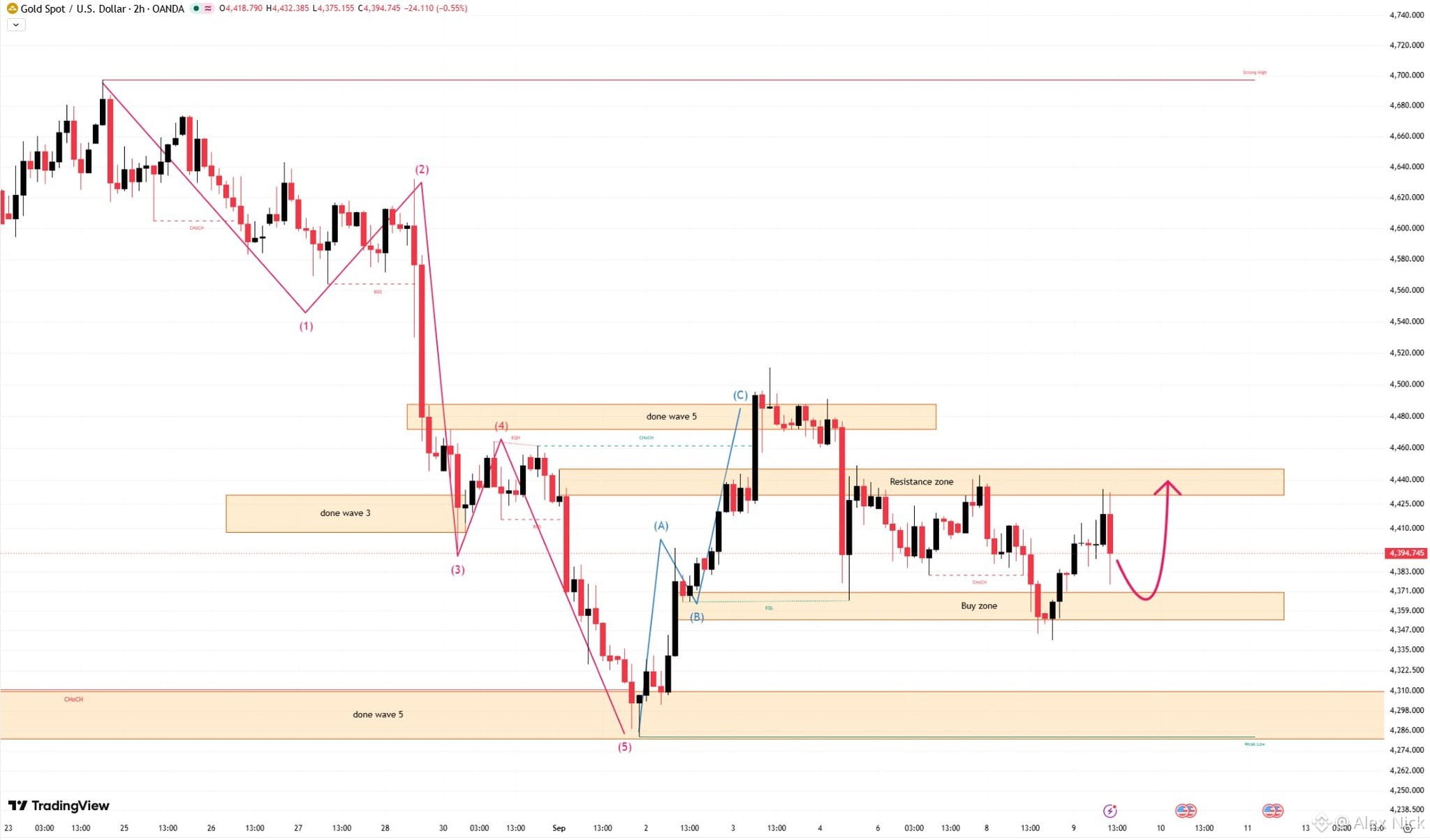
For the US trading session, keep an eye on the support zone between 4355 and 4370.
Consider buying within this support zone.
If the price holds above this level, you can enter a long position, targeting the 4440 resistance level.
Thanks for the likes and support; I will continue to post updates. 💙
#XAUUSD
#GOLD
For the US trading session, keep an eye on the support zone between 4355 and 4370.
Consider buying within this support zone.
If the price holds above this level, you can enter a long position, targeting the 4440 resistance level.
Thanks for the likes and support; I will continue to post updates. 💙
#GOLD
For the US trading session, keep an eye on the support zone between 4355 and 4370.
Consider buying within this support zone.
If the price holds above this level, you can enter a long position, targeting the 4440 resistance level.
Thanks for the likes and support; I will continue to post updates. 💙
145
·
--
#XAUUSD #GOLD
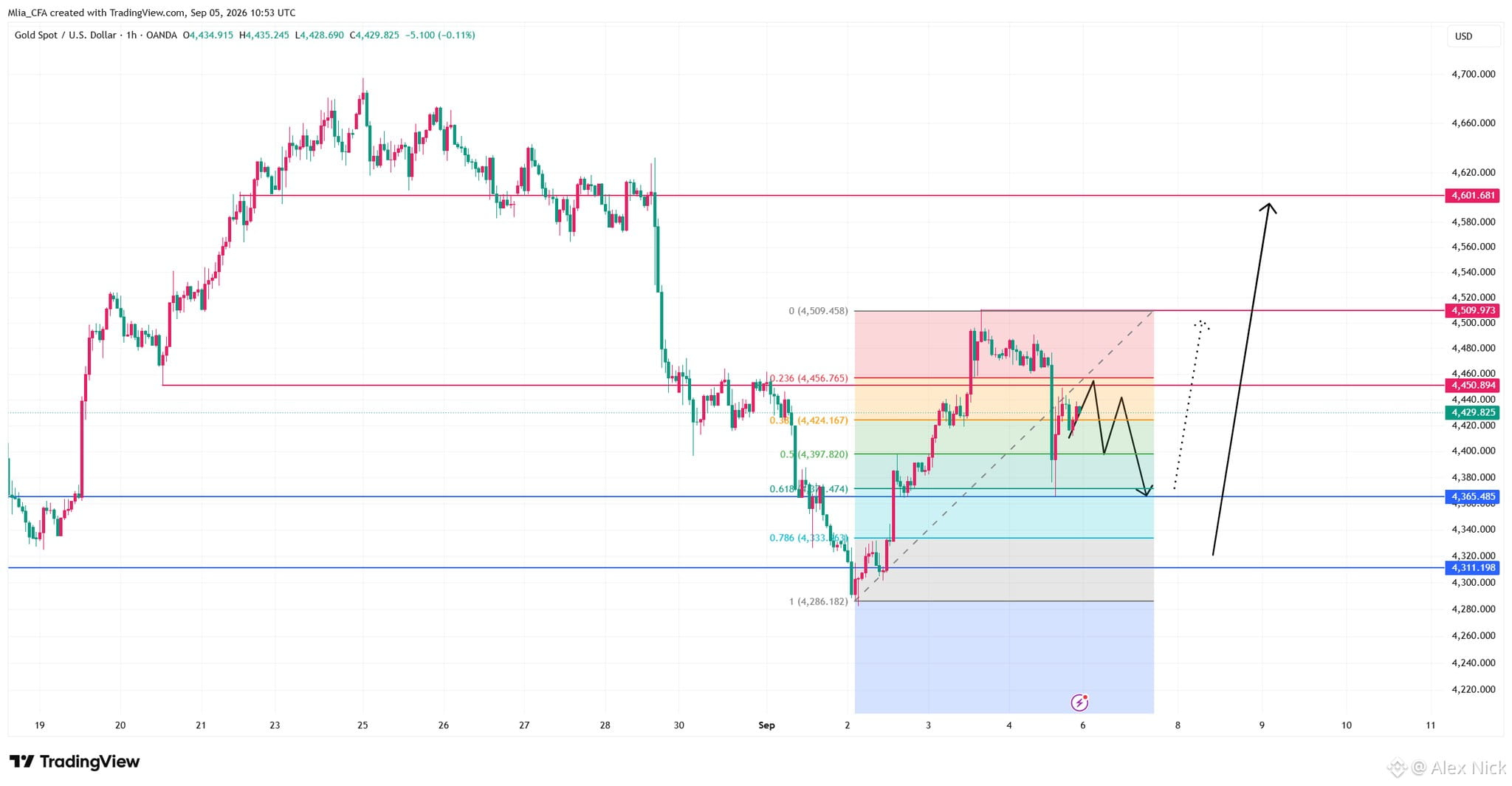
Watch for resistance in the 4430–4450 zone next Monday. If the price fails to break through this area, consider selling and waiting for a pullback to the 4380–4360 range.
Look to the 4360–4380 range for support. If the price breaks below this level, continue selling and target the 4310–4300 zone.
However, if support holds, consider a long-term position with targets at 4530–4600.
#XAUUSD #GOLD
Watch for resistance in the 4430–4450 zone next Monday. If the price fails to break through this area, consider selling and waiting for a pullback to the 4380–4360 range.
Look to the 4360–4380 range for support. If the price breaks below this level, continue selling and target the 4310–4300 zone.
However, if support holds, consider a long-term position with targets at 4530–4600.
Watch for resistance in the 4430–4450 zone next Monday. If the price fails to break through this area, consider selling and waiting for a pullback to the 4380–4360 range.
Look to the 4360–4380 range for support. If the price breaks below this level, continue selling and target the 4310–4300 zone.
However, if support holds, consider a long-term position with targets at 4530–4600.
130
·
--
#XAUUSD
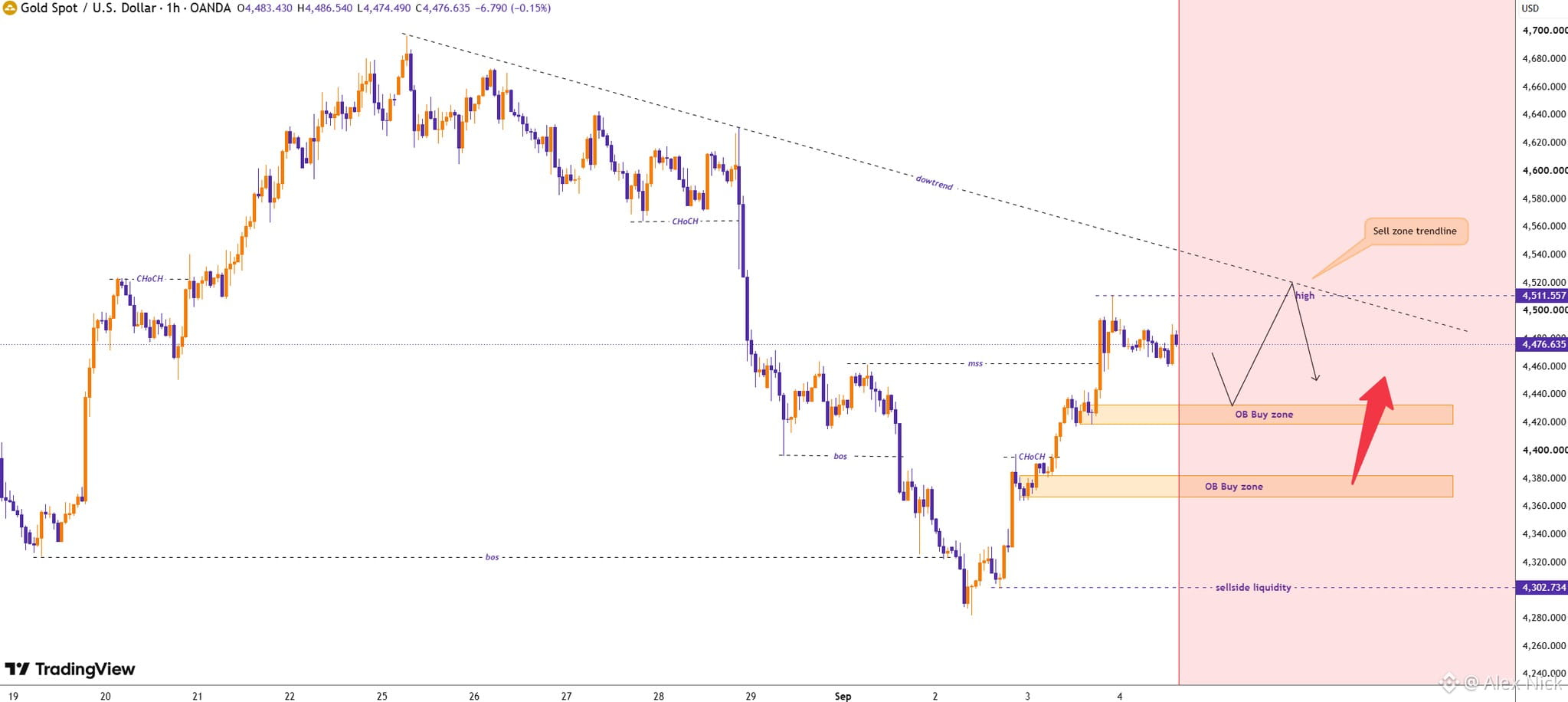
#Gold created a strong rebound from the 4,302 sell-side liquidity area and shifted into a short-term bullish correction.
The recent recovery broke minor structure and pushed price back toward 4,480. However, price is now sitting below the descending trendline and the 4,511 high. This is the key rejection area for sellers.
The first support to watch is the OB Buy Zone around 4,420 - 4,430. If gold pulls back into this zone and buyers defend it, the recovery can continue toward 4,500 - 4,511.
But if gold reaches 4,500 - 4,511 and fails to break through the trendline, this area could become a bull trap. A rejection there may send price back toward 4,430, then 4,375 - 4,385.
The deeper OB Buy Zone around 4,370 - 4,385 remains important. Losing this zone would weaken the recovery and open the door for another test toward 4,302.
#XAUUSD
#Gold created a strong rebound from the 4,302 sell-side liquidity area and shifted into a short-term bullish correction.
The recent recovery broke minor structure and pushed price back toward 4,480. However, price is now sitting below the descending trendline and the 4,511 high. This is the key rejection area for sellers.
The first support to watch is the OB Buy Zone around 4,420 - 4,430. If gold pulls back into this zone and buyers defend it, the recovery can continue toward 4,500 - 4,511.
But if gold reaches 4,500 - 4,511 and fails to break through the trendline, this area could become a bull trap. A rejection there may send price back toward 4,430, then 4,375 - 4,385.
The deeper OB Buy Zone around 4,370 - 4,385 remains important. Losing this zone would weaken the recovery and open the door for another test toward 4,302.
#Gold created a strong rebound from the 4,302 sell-side liquidity area and shifted into a short-term bullish correction.
The recent recovery broke minor structure and pushed price back toward 4,480. However, price is now sitting below the descending trendline and the 4,511 high. This is the key rejection area for sellers.
The first support to watch is the OB Buy Zone around 4,420 - 4,430. If gold pulls back into this zone and buyers defend it, the recovery can continue toward 4,500 - 4,511.
But if gold reaches 4,500 - 4,511 and fails to break through the trendline, this area could become a bull trap. A rejection there may send price back toward 4,430, then 4,375 - 4,385.
The deeper OB Buy Zone around 4,370 - 4,385 remains important. Losing this zone would weaken the recovery and open the door for another test toward 4,302.
154
·
--
#XAUUSD
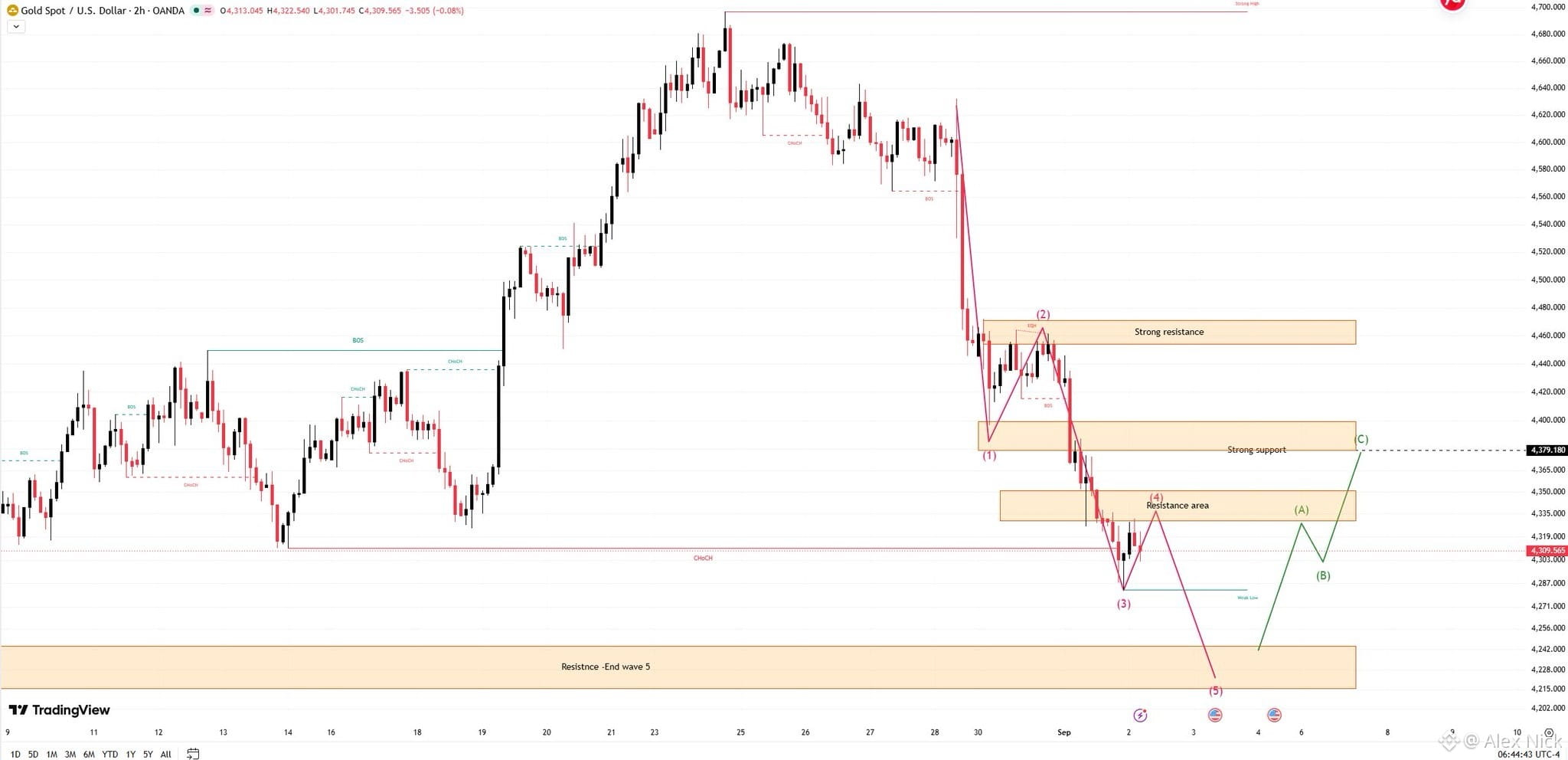
The market is currently trending downwards, and the bear market is continuing. 📉
#GOLD
The market is expected to fall to around 4250 to complete wave (5) and then rebound.
Resistance is at 4330-4350, where selling opportunities still exist.
Support is at 4230-4250, where opportunities for a rebound can be found.
#XAUUSD
The market is currently trending downwards, and the bear market is continuing. 📉
#GOLD
The market is expected to fall to around 4250 to complete wave (5) and then rebound.
Resistance is at 4330-4350, where selling opportunities still exist.
Support is at 4230-4250, where opportunities for a rebound can be found.
The market is currently trending downwards, and the bear market is continuing. 📉
#GOLD
The market is expected to fall to around 4250 to complete wave (5) and then rebound.
Resistance is at 4330-4350, where selling opportunities still exist.
Support is at 4230-4250, where opportunities for a rebound can be found.
169
·
--
$BTC
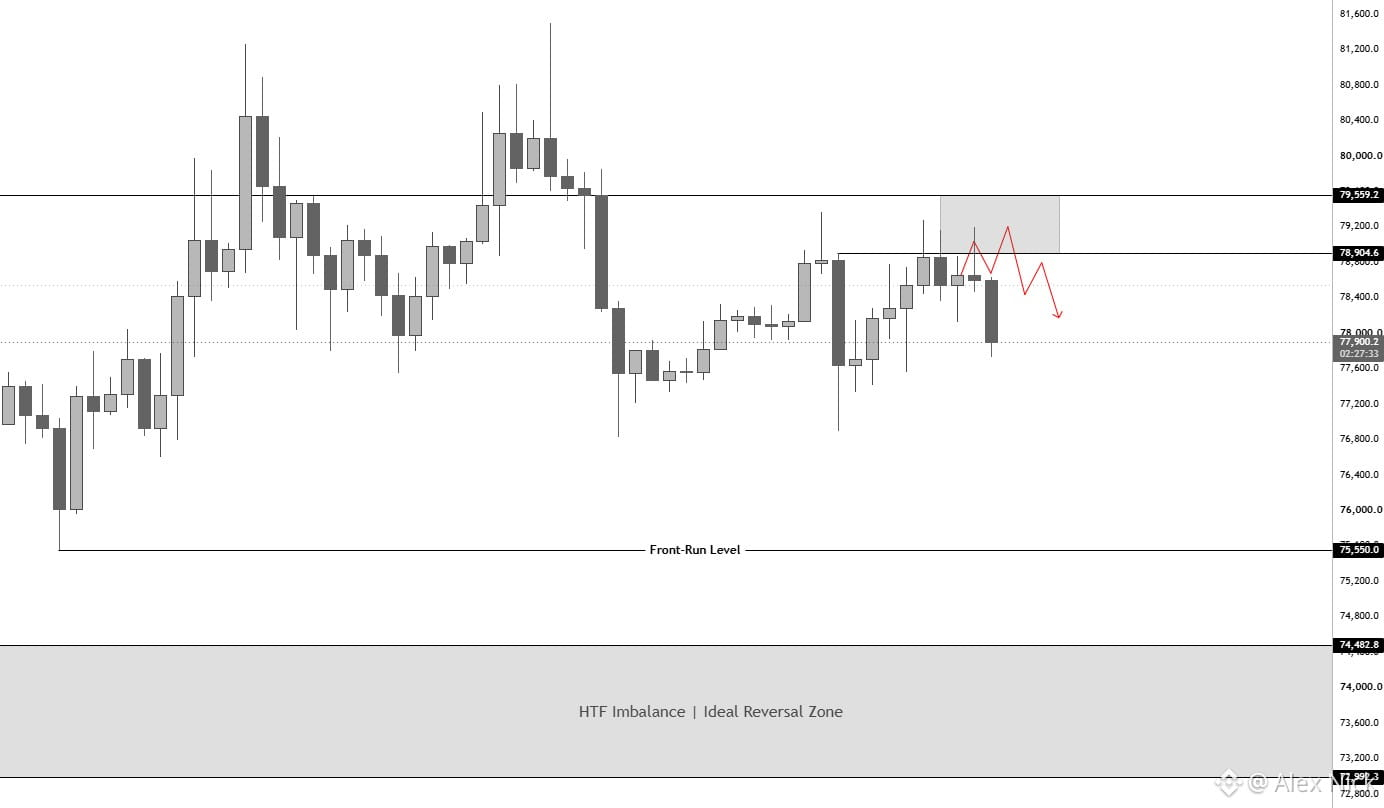
Going According to the Plan and Rejected Perfectly.
The new Monthly candle just opened, and with that, I’m expecting a sweep of the lows / downside liquidity first before we push back towards the upside.
The first move when a new Month begins is usually a bait.
So it would make perfect sense to see a dump into the 75.5K-74.4K region before we start recovering from next week onward.
$BTC
Going According to the Plan and Rejected Perfectly.
The new Monthly candle just opened, and with that, I’m expecting a sweep of the lows / downside liquidity first before we push back towards the upside.
The first move when a new Month begins is usually a bait.
So it would make perfect sense to see a dump into the 75.5K-74.4K region before we start recovering from next week onward.
Going According to the Plan and Rejected Perfectly.
The new Monthly candle just opened, and with that, I’m expecting a sweep of the lows / downside liquidity first before we push back towards the upside.
The first move when a new Month begins is usually a bait.
So it would make perfect sense to see a dump into the 75.5K-74.4K region before we start recovering from next week onward.
74
·
--
#XAUUSD #GOLD #FX
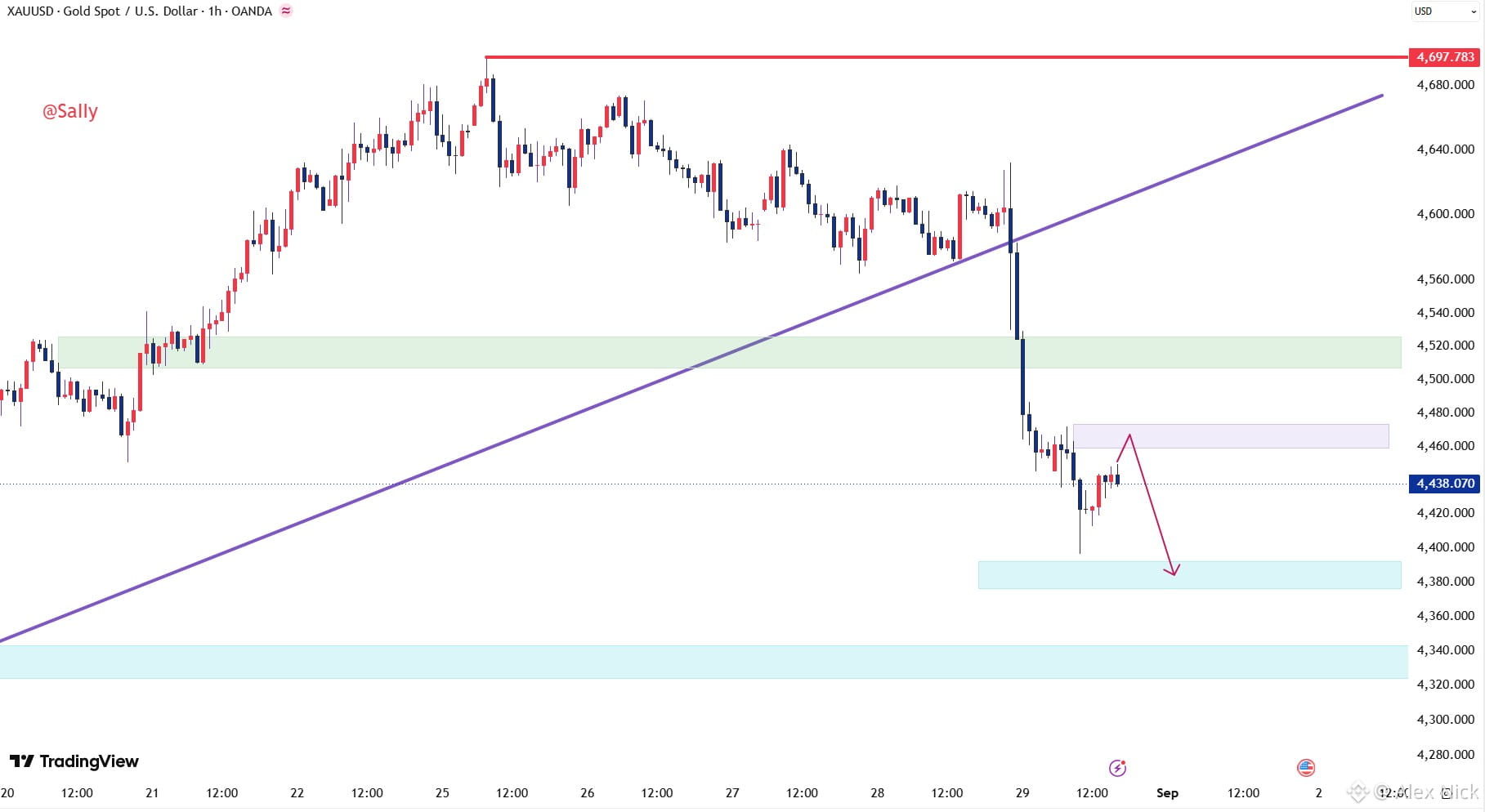
Gold is facing resistance around 4450, and the pullback continues.
Short-term gold strategy: Sell short if resistance is encountered at higher levels.
Gold is currently moving as I predicted, and my strategy of selling short around 4450 is already profitable.
The market is volatile, so remember to protect your profits.
If gold rebounds and breaks through 4450-4455, the next selling opportunity is around 4470-4480.
Don't blindly go long on gold in the short term. Wait for gold to rebound to around 4445-4455 before selling short again.
Like my analysis? Remember to like and follow me.
#XAUUSD #GOLD #FX
Gold is facing resistance around 4450, and the pullback continues.
Short-term gold strategy: Sell short if resistance is encountered at higher levels.
Gold is currently moving as I predicted, and my strategy of selling short around 4450 is already profitable.
The market is volatile, so remember to protect your profits.
If gold rebounds and breaks through 4450-4455, the next selling opportunity is around 4470-4480.
Don't blindly go long on gold in the short term. Wait for gold to rebound to around 4445-4455 before selling short again.
Like my analysis? Remember to like and follow me.
Gold is facing resistance around 4450, and the pullback continues.
Short-term gold strategy: Sell short if resistance is encountered at higher levels.
Gold is currently moving as I predicted, and my strategy of selling short around 4450 is already profitable.
The market is volatile, so remember to protect your profits.
If gold rebounds and breaks through 4450-4455, the next selling opportunity is around 4470-4480.
Don't blindly go long on gold in the short term. Wait for gold to rebound to around 4445-4455 before selling short again.
Like my analysis? Remember to like and follow me.
119
·
--
#XAUUSD #GOLD
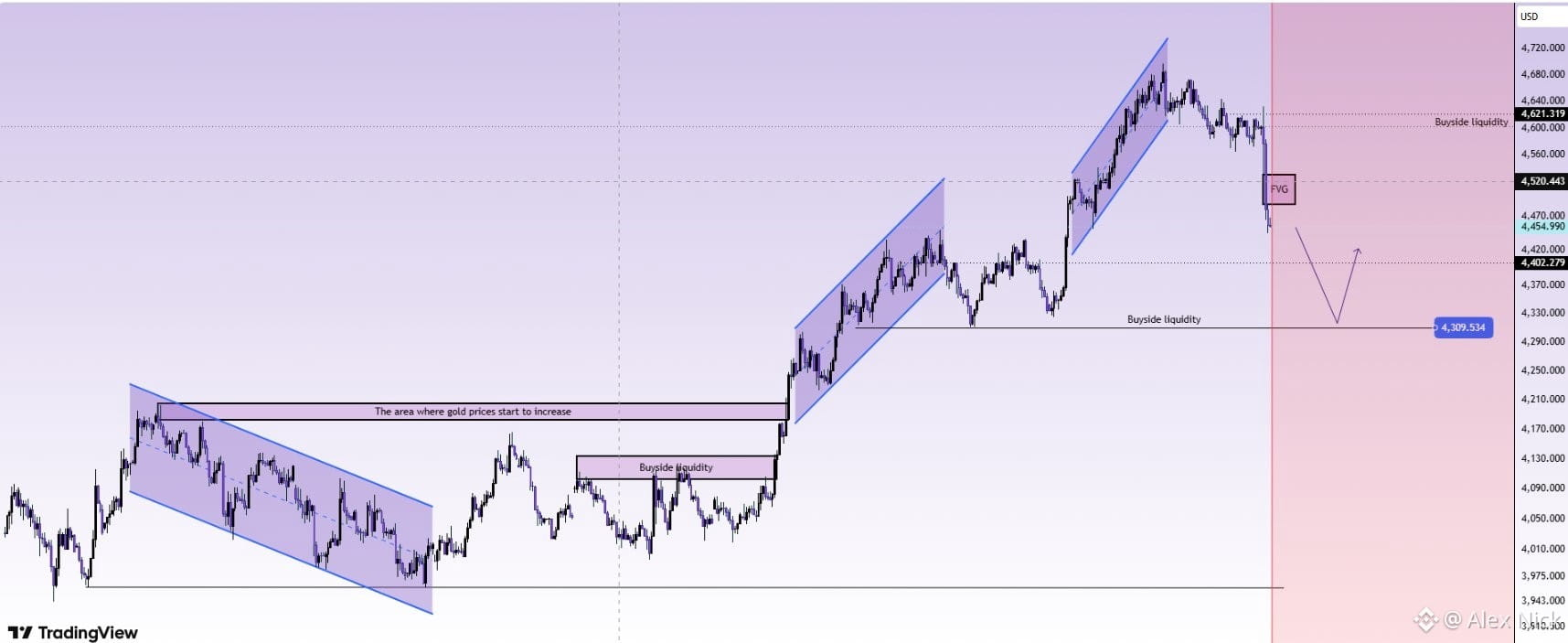
Consider shorting only if the gold price faces resistance and pulls back within the 4470–4520 range, or if it breaks below the 4402 level with strong momentum.
Entry Zone: 4470–4520 range (following a rejection/pullback)
Alternative Entry: After a confirmed break below 4402
Target 1 (TP1): 4402
Target 2 (TP2): 4350
Target 3 (TP3): 4309
If the gold price makes a strong recovery back above 4560, the bearish outlook described above becomes complicated. In that scenario, the decline might turn out to be a deep liquidity sweep, with a rebound occurring only thereafter.
#XAUUSD #GOLD
Consider shorting only if the gold price faces resistance and pulls back within the 4470–4520 range, or if it breaks below the 4402 level with strong momentum.
Entry Zone: 4470–4520 range (following a rejection/pullback)
Alternative Entry: After a confirmed break below 4402
Target 1 (TP1): 4402
Target 2 (TP2): 4350
Target 3 (TP3): 4309
If the gold price makes a strong recovery back above 4560, the bearish outlook described above becomes complicated. In that scenario, the decline might turn out to be a deep liquidity sweep, with a rebound occurring only thereafter.
Consider shorting only if the gold price faces resistance and pulls back within the 4470–4520 range, or if it breaks below the 4402 level with strong momentum.
Entry Zone: 4470–4520 range (following a rejection/pullback)
Alternative Entry: After a confirmed break below 4402
Target 1 (TP1): 4402
Target 2 (TP2): 4350
Target 3 (TP3): 4309
If the gold price makes a strong recovery back above 4560, the bearish outlook described above becomes complicated. In that scenario, the decline might turn out to be a deep liquidity sweep, with a rebound occurring only thereafter.
118
·
--
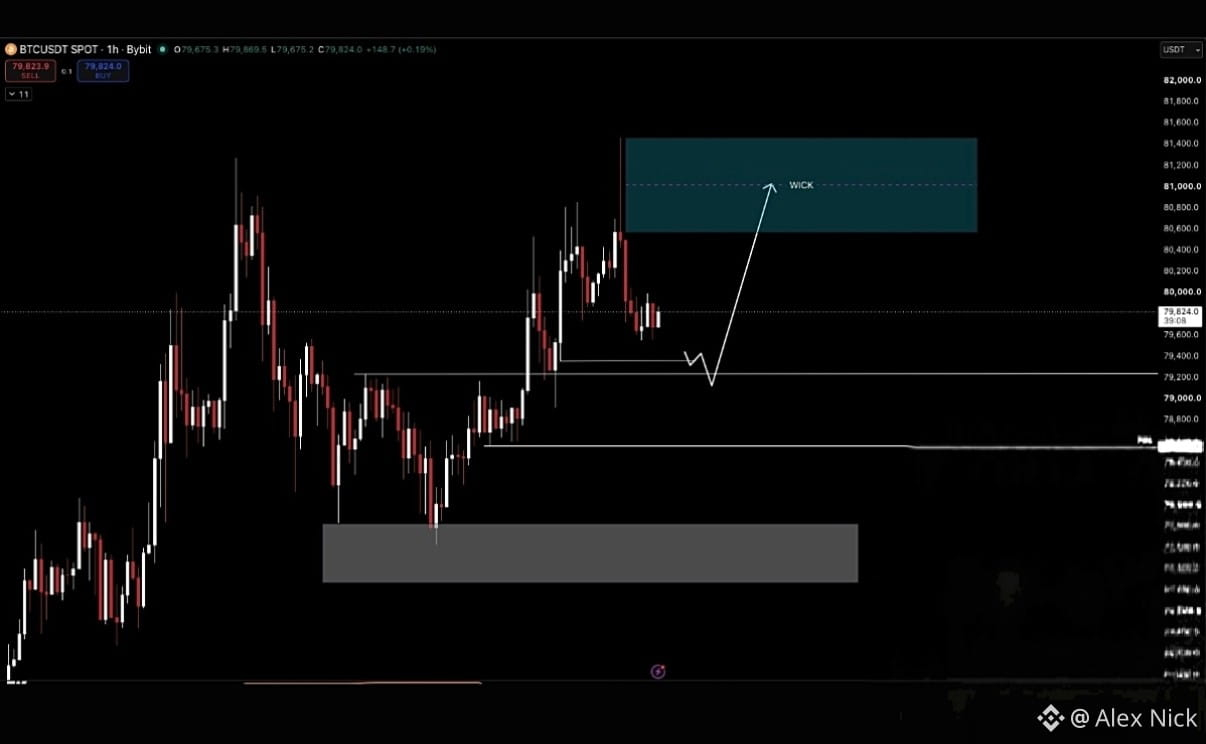
$BTC took out the 80.8K PDH and shows a little rejection again.
This rejection left a big wick on the 1H/4H, I'm personally looking to fill that wick.
So the only potential setup I see for today is a scalp-long towards the 50% wick fill at around 81K.
Statistically speaking, when price takes out the PDH, the chances of holding the PDL for the day are significantly higher.
That's why I use the 78.5K PDL as invalidation for my scalp long-thesis today.
I'm willing to look for a scalp-long if Bitcoin sweeps the 79.3K low.
When the above happens, I'll look for triggers towards the 50% wick-fill + leaving a runner open for more potential upside.
The momentum is clearly bullish, but we're also trading at HTF resistance, so I'm managing risk accordingly.
$BTC took out the 80.8K PDH and shows a little rejection again.
This rejection left a big wick on the 1H/4H, I'm personally looking to fill that wick.
So the only potential setup I see for today is a scalp-long towards the 50% wick fill at around 81K.
Statistically speaking, when price takes out the PDH, the chances of holding the PDL for the day are significantly higher.
That's why I use the 78.5K PDL as invalidation for my scalp long-thesis today.
I'm willing to look for a scalp-long if Bitcoin sweeps the 79.3K low.
When the above happens, I'll look for triggers towards the 50% wick-fill + leaving a runner open for more potential upside.
The momentum is clearly bullish, but we're also trading at HTF resistance, so I'm managing risk accordingly.
This rejection left a big wick on the 1H/4H, I'm personally looking to fill that wick.
So the only potential setup I see for today is a scalp-long towards the 50% wick fill at around 81K.
Statistically speaking, when price takes out the PDH, the chances of holding the PDL for the day are significantly higher.
That's why I use the 78.5K PDL as invalidation for my scalp long-thesis today.
I'm willing to look for a scalp-long if Bitcoin sweeps the 79.3K low.
When the above happens, I'll look for triggers towards the 50% wick-fill + leaving a runner open for more potential upside.
The momentum is clearly bullish, but we're also trading at HTF resistance, so I'm managing risk accordingly.
68
·
--
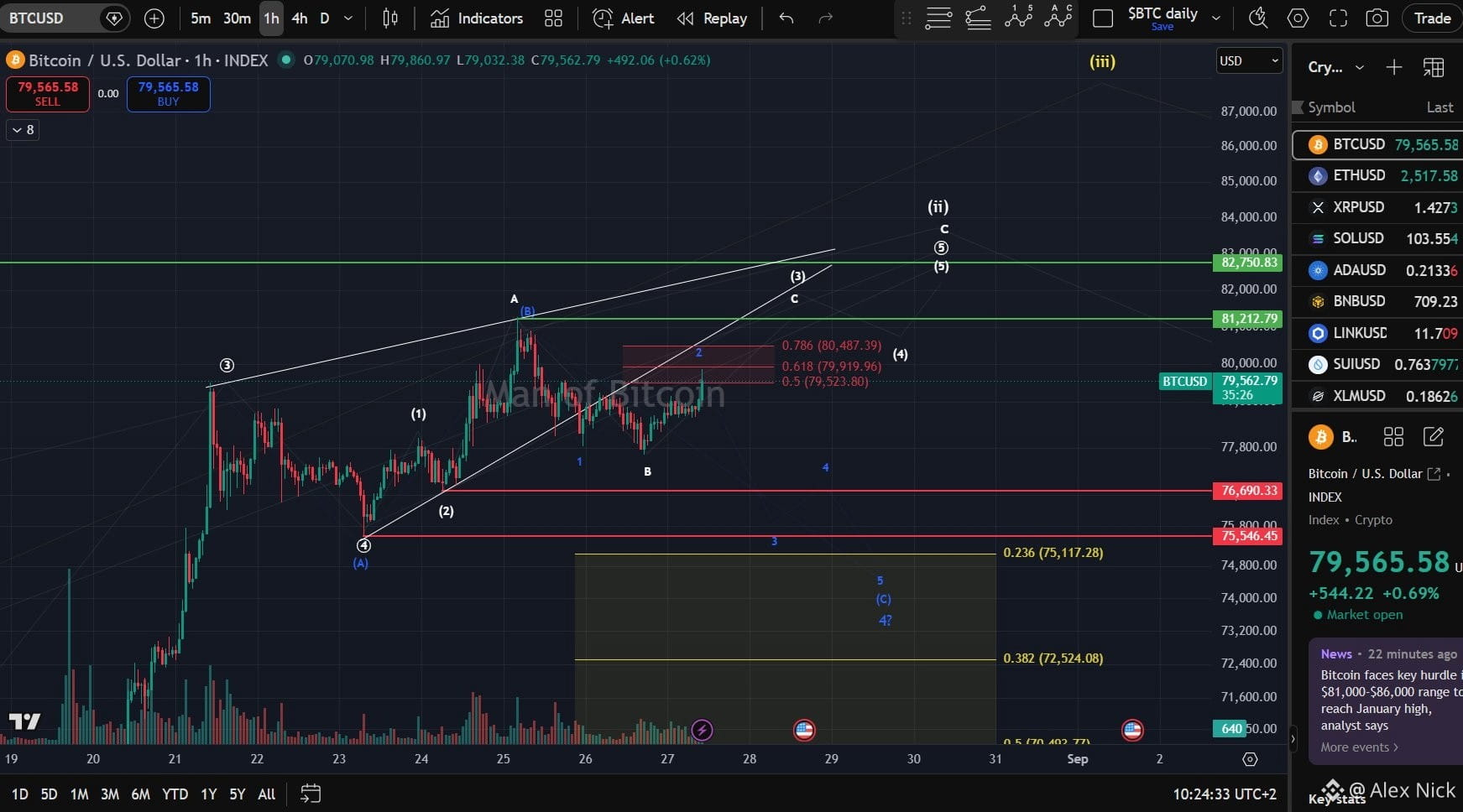
$BTC : Price reacted to the resistance area for a potential wave-2 high. Volume is low, and the move is too corrective for now to be considered a reliable wave-c of (3). Let's see, there are still 30 minutes left until the hourly candle closes.
As long as price remains above $77,618, it could still push directly higher.
$BTC : Price reacted to the resistance area for a potential wave-2 high. Volume is low, and the move is too corrective for now to be considered a reliable wave-c of (3). Let's see, there are still 30 minutes left until the hourly candle closes.
As long as price remains above $77,618, it could still push directly higher.
As long as price remains above $77,618, it could still push directly higher.
76
·
--
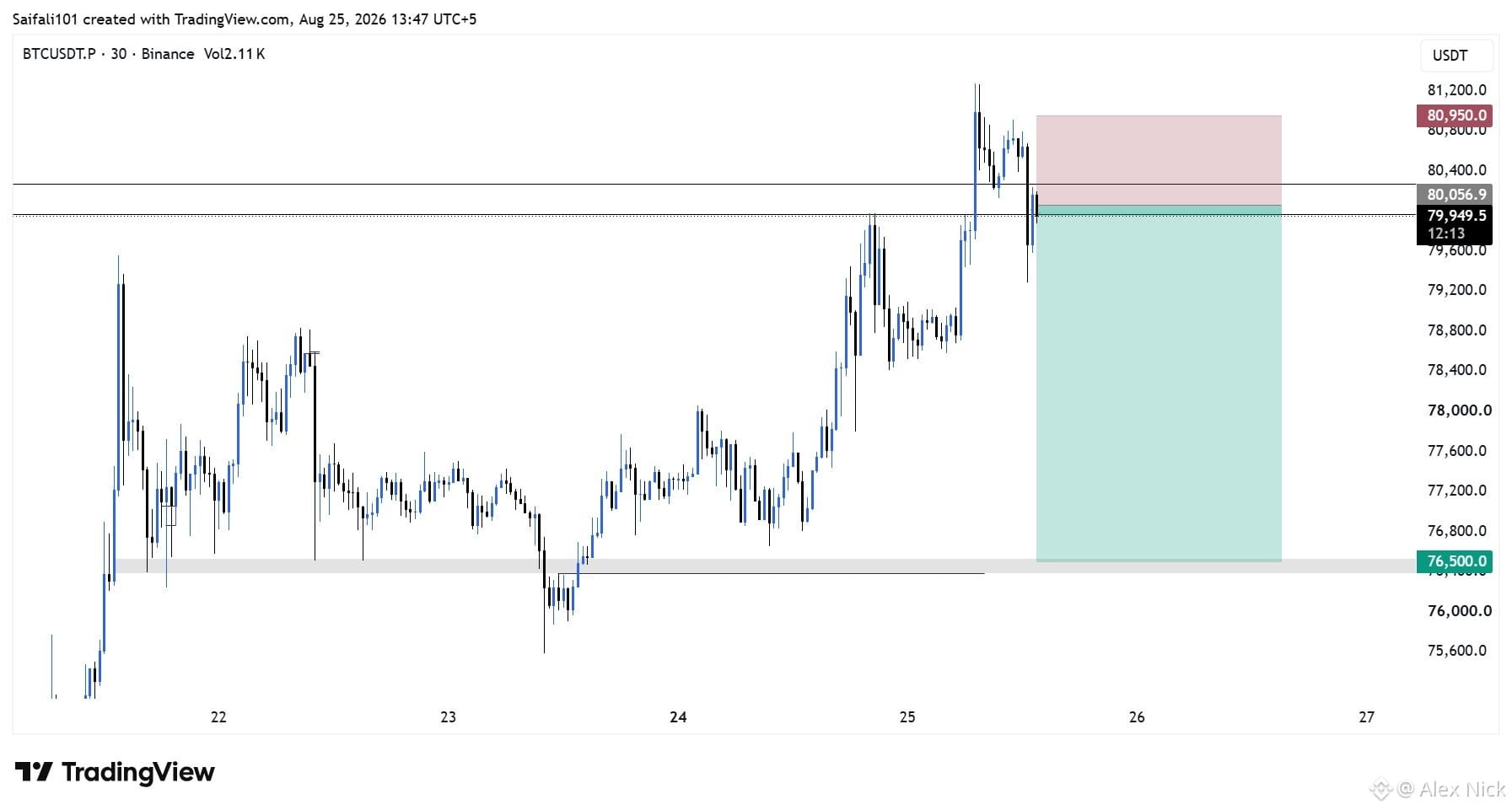
$BTC Short Trade📉
Entry CMP: 80,050
SL: 80,950
TP: 76,500
BTC deviated above our HTF short POI and has now returned inside the LTF range.
Taking the short here, targeting the $76.5K range low. Low risk.
$BTC Short Trade📉
Entry CMP: 80,050
SL: 80,950
TP: 76,500
BTC deviated above our HTF short POI and has now returned inside the LTF range.
Taking the short here, targeting the $76.5K range low. Low risk.
Entry CMP: 80,050
SL: 80,950
TP: 76,500
BTC deviated above our HTF short POI and has now returned inside the LTF range.
Taking the short here, targeting the $76.5K range low. Low risk.
98
·
--
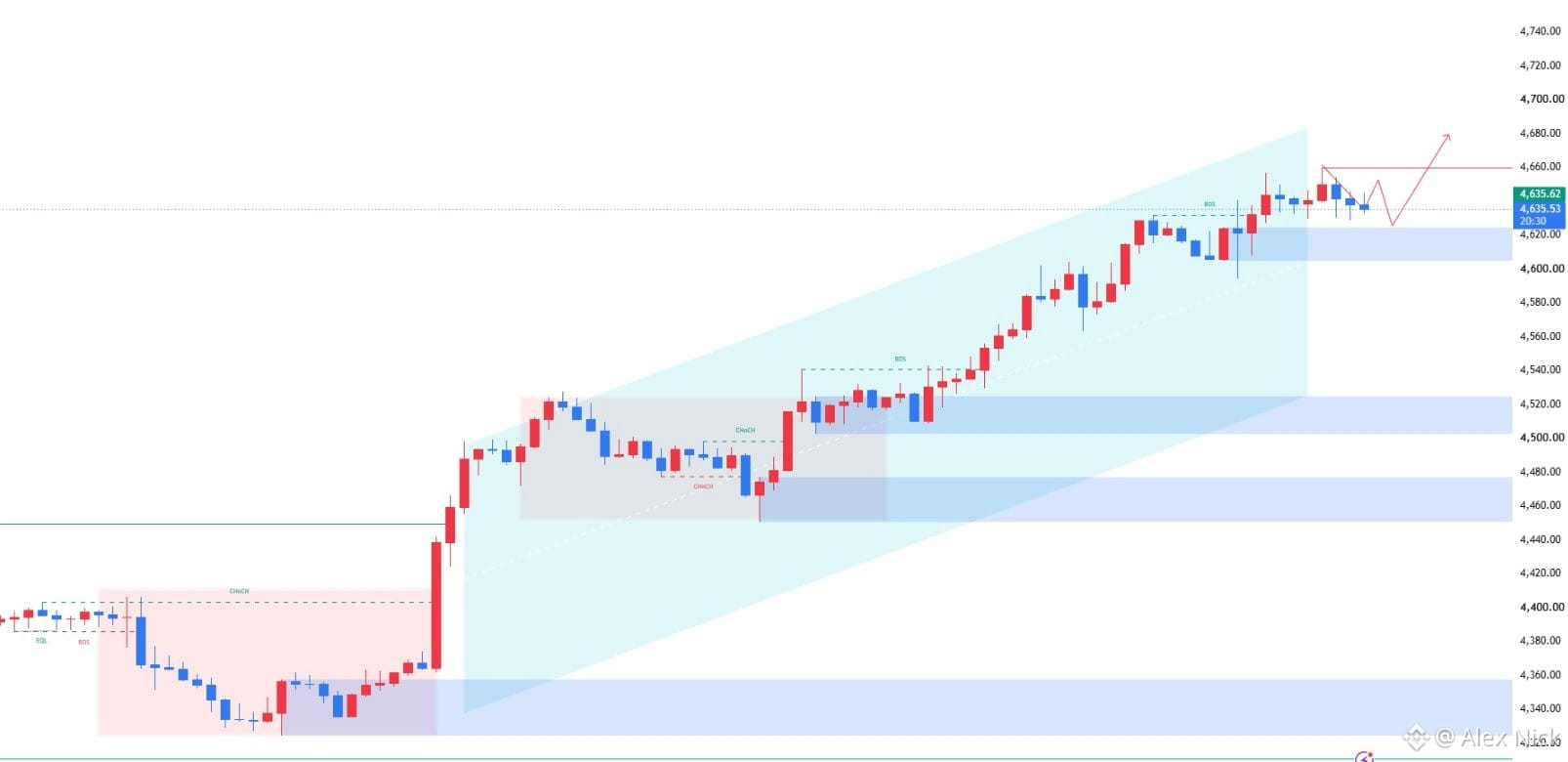
#XAUUSD #GOLD
The price is currently trading near 4,636; wait for a pullback to the key demand zone and observe a clear reaction before entering the market.
Upside targets:
→ 4,655–4,665
If the price breaks above 4,665 and stabilizes, the continuation of the bullish trend could open up room for further gains.
Alternative scenario: If the price reaches the 4,655–4,665 range and shows strong signs of rejection along with bearish confirmation, consider a short-term "scalp" short trade targeting a pullback to the 4,620 area.
#XAUUSD #GOLD
The price is currently trading near 4,636; wait for a pullback to the key demand zone and observe a clear reaction before entering the market.
Upside targets:
→ 4,655–4,665
If the price breaks above 4,665 and stabilizes, the continuation of the bullish trend could open up room for further gains.
Alternative scenario: If the price reaches the 4,655–4,665 range and shows strong signs of rejection along with bearish confirmation, consider a short-term "scalp" short trade targeting a pullback to the 4,620 area.
The price is currently trading near 4,636; wait for a pullback to the key demand zone and observe a clear reaction before entering the market.
Upside targets:
→ 4,655–4,665
If the price breaks above 4,665 and stabilizes, the continuation of the bullish trend could open up room for further gains.
Alternative scenario: If the price reaches the 4,655–4,665 range and shows strong signs of rejection along with bearish confirmation, consider a short-term "scalp" short trade targeting a pullback to the 4,620 area.
125
·
--
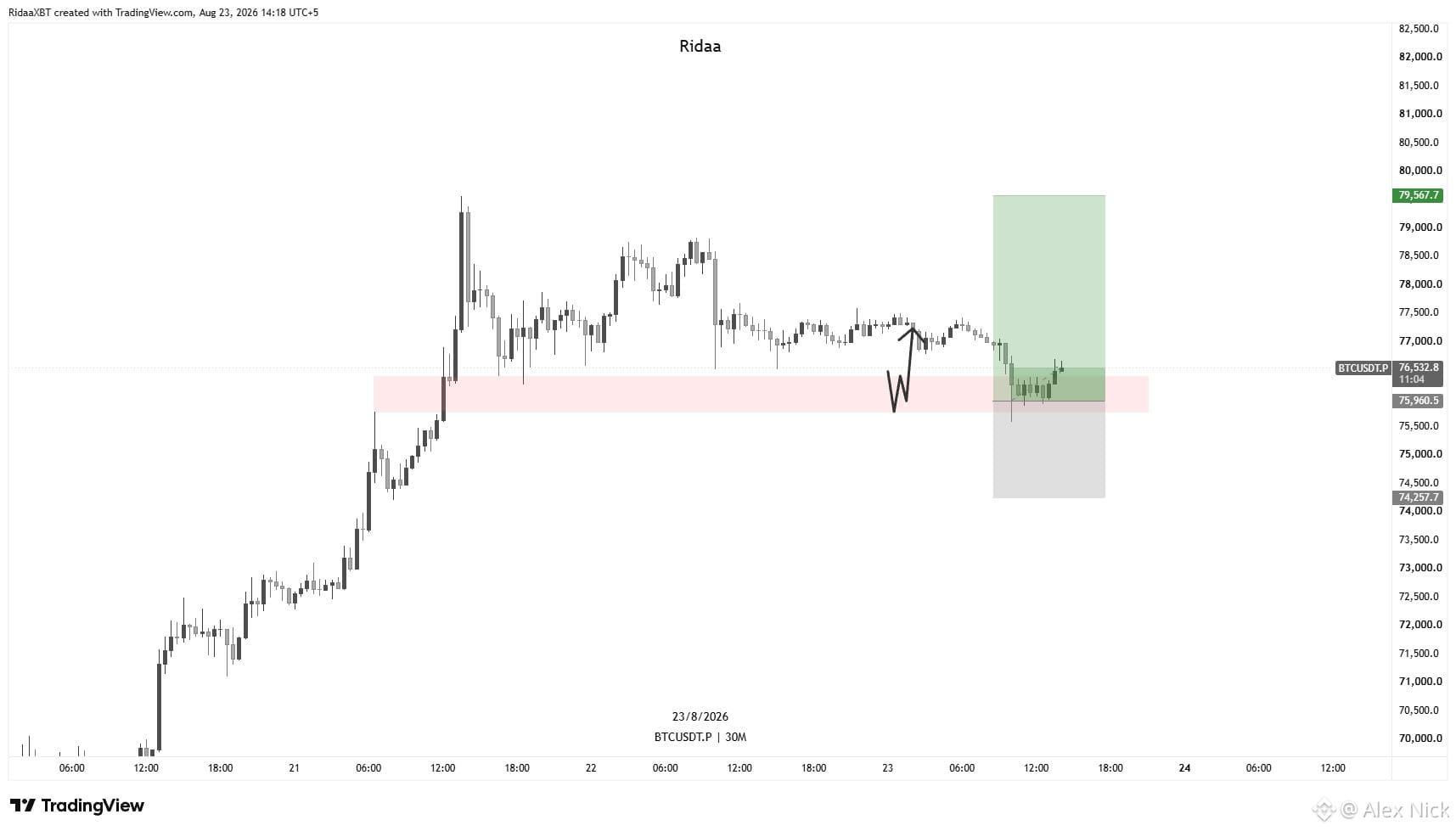
$BTC
If you had your limits set on the longs, they should’ve been filled here.
I had mine cancelled because of the weekend, so I couldn’t enter.
The plan is still valid, and your long should print from here.
$BTC
If you had your limits set on the longs, they should’ve been filled here.
I had mine cancelled because of the weekend, so I couldn’t enter.
The plan is still valid, and your long should print from here.
If you had your limits set on the longs, they should’ve been filled here.
I had mine cancelled because of the weekend, so I couldn’t enter.
The plan is still valid, and your long should print from here.
94
·
--
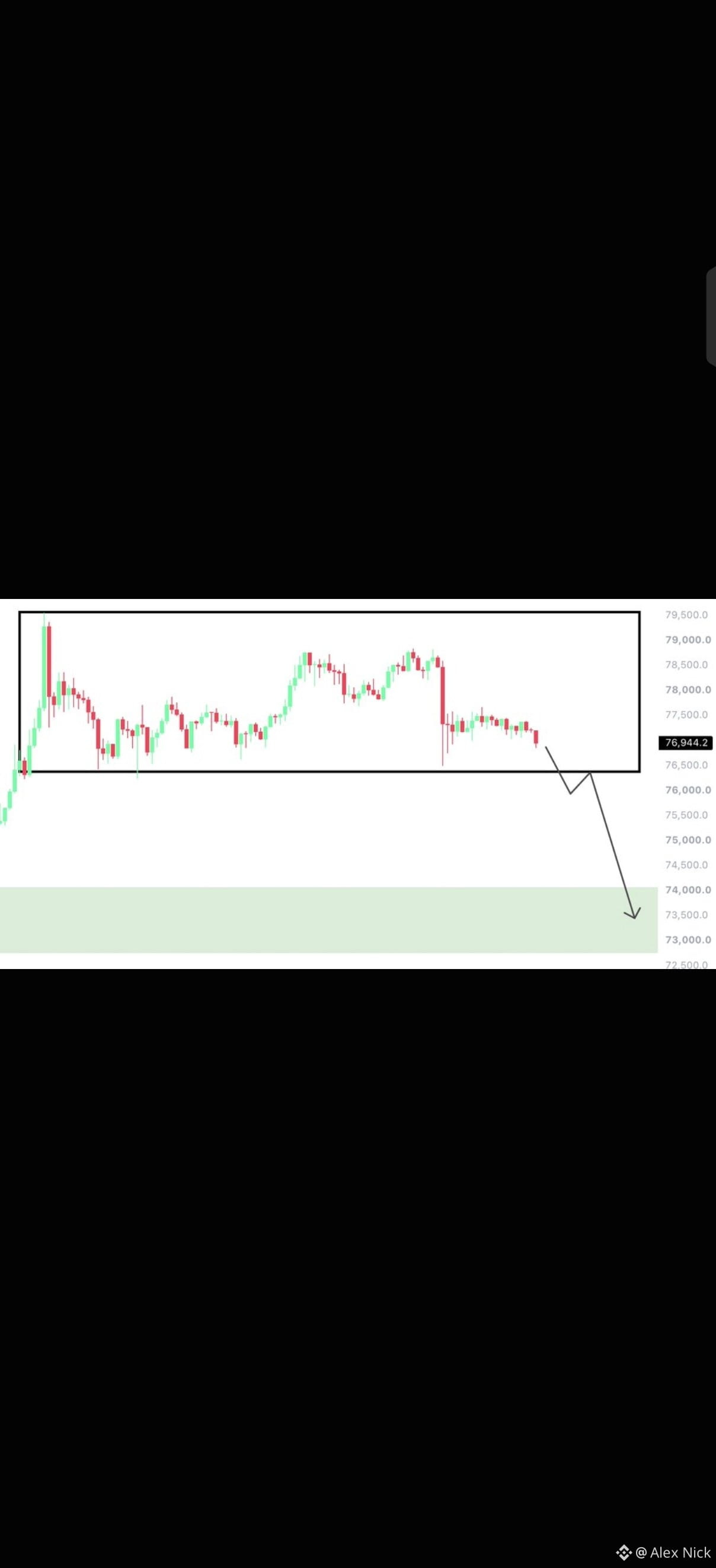
$BTC is currently forming a sideways range on the lower time frame.
Level to hold is $76,500.
If that level is lost, the next key area to watch is $73,000–$74,000.
$BTC is currently forming a sideways range on the lower time frame.
Level to hold is $76,500.
If that level is lost, the next key area to watch is $73,000–$74,000.
Level to hold is $76,500.
If that level is lost, the next key area to watch is $73,000–$74,000.
116
·
--
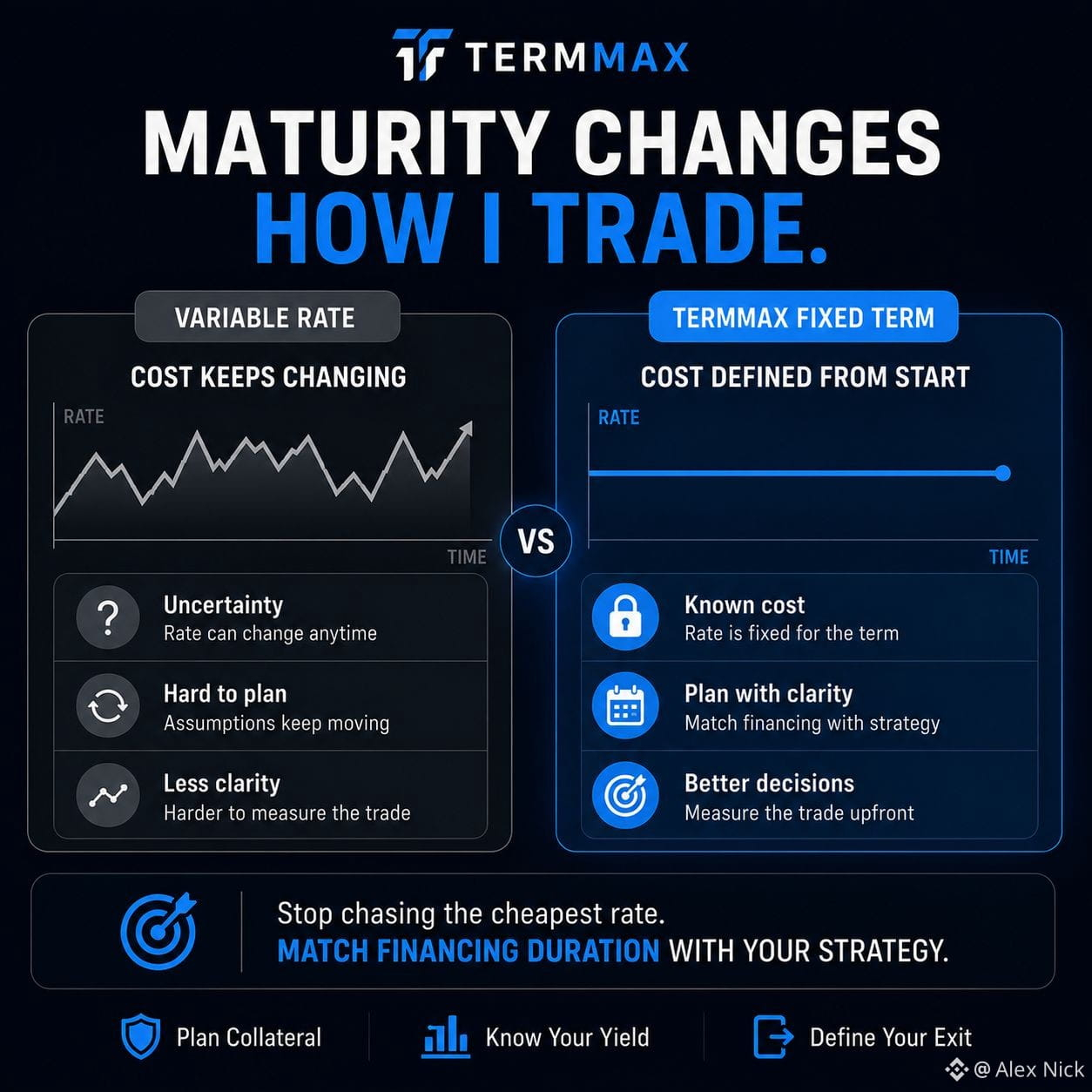
One thing I find underrated about fixed term credit is that maturity changes how I think about a trade. In variable rate DeFi markets, I can keep a position open while the financing cost quietly changes underneath me. With @TermMax, the borrowing rate is defined for a specific term, so the financing assumption becomes part of the original trade thesis rather than a variable I keep discovering later. That matters when I am trying to decide whether expected returns justify the capital cost. #TermMax
The interesting trade off is commitment versus uncertainty. I lose some flexibility because the capital is structured around maturity, but I gain a clearer time horizon for planning collateral, expected yield, and exit conditions. I can ask a much more useful question before entering: what does this position look like if my financing expense is already known until maturity? That makes the decision less about chasing the cheapest rate today and more about matching financing duration with the actual strategy. For me, that is where fixed rate credit becomes more than a lending feature. It becomes a way to make the assumptions behind a trade easier to measure. Could defined financing maturity become just as important as entry price when structuring a DeFi position?
@termmax #TermMax
One thing I find underrated about fixed term credit is that maturity changes how I think about a trade. In variable rate DeFi markets, I can keep a position open while the financing cost quietly changes underneath me. With @TermMax, the borrowing rate is defined for a specific term, so the financing assumption becomes part of the original trade thesis rather than a variable I keep discovering later. That matters when I am trying to decide whether expected returns justify the capital cost. #TermMax
The interesting trade off is commitment versus uncertainty. I lose some flexibility because the capital is structured around maturity, but I gain a clearer time horizon for planning collateral, expected yield, and exit conditions. I can ask a much more useful question before entering: what does this position look like if my financing expense is already known until maturity? That makes the decision less about chasing the cheapest rate today and more about matching financing duration with the actual strategy. For me, that is where fixed rate credit becomes more than a lending feature. It becomes a way to make the assumptions behind a trade easier to measure. Could defined financing maturity become just as important as entry price when structuring a DeFi position?
@TermMax #TermMax
The interesting trade off is commitment versus uncertainty. I lose some flexibility because the capital is structured around maturity, but I gain a clearer time horizon for planning collateral, expected yield, and exit conditions. I can ask a much more useful question before entering: what does this position look like if my financing expense is already known until maturity? That makes the decision less about chasing the cheapest rate today and more about matching financing duration with the actual strategy. For me, that is where fixed rate credit becomes more than a lending feature. It becomes a way to make the assumptions behind a trade easier to measure. Could defined financing maturity become just as important as entry price when structuring a DeFi position?
@TermMax #TermMax
72
·
--
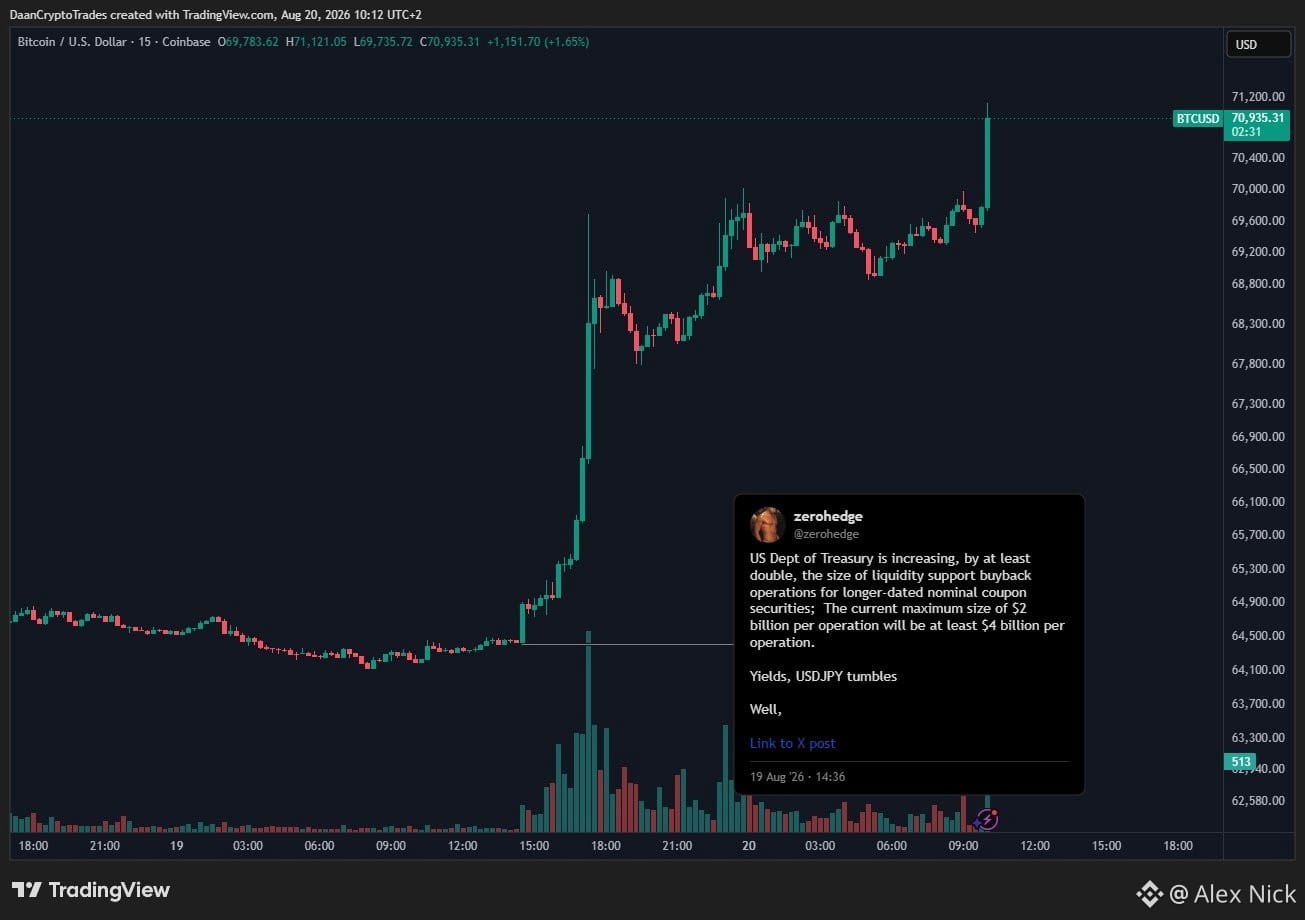
$BTC & Crypto love debasing.
All we needed was the slightest hint of QE/YCC or whatever you want to name it to get the momentum going.
$BTC & Crypto love debasing.
All we needed was the slightest hint of QE/YCC or whatever you want to name it to get the momentum going.
All we needed was the slightest hint of QE/YCC or whatever you want to name it to get the momentum going.
2
91
·
--
I used to think the biggest problem with DeFi lending was simply finding a good rate. Now I think the bigger issue is rate drift. A variable borrowing rate can look cheap when I open a position, but a sudden liquidity squeeze or market spike can change the economics before my trade reaches its intended exit. That is where @TermMax catches my attention. Its fixed rate and fixed term structure lets me know the financing cost from the start, so I can judge a position against a defined cost of carry instead of constantly recalculating my assumptions.
The trade off is flexibility. Locking a borrowing cost until maturity means I give up some freedom to react to changing rates, but that constraint can be useful when my strategy already has a clear time horizon. I can plan collateral requirements, expected yield, and exit conditions around a known financing expense instead of treating the interest rate as another moving variable. For lenders, the same structure changes the equation by making yield predictable through maturity rather than dependent on shifting pool conditions. To me, the interesting question is whether predictable financing becomes more valuable than maximum flexibility when markets become extremely volatile.
#TermMax @termmax
I used to think the biggest problem with DeFi lending was simply finding a good rate. Now I think the bigger issue is rate drift. A variable borrowing rate can look cheap when I open a position, but a sudden liquidity squeeze or market spike can change the economics before my trade reaches its intended exit. That is where @TermMax catches my attention. Its fixed rate and fixed term structure lets me know the financing cost from the start, so I can judge a position against a defined cost of carry instead of constantly recalculating my assumptions.
The trade off is flexibility. Locking a borrowing cost until maturity means I give up some freedom to react to changing rates, but that constraint can be useful when my strategy already has a clear time horizon. I can plan collateral requirements, expected yield, and exit conditions around a known financing expense instead of treating the interest rate as another moving variable. For lenders, the same structure changes the equation by making yield predictable through maturity rather than dependent on shifting pool conditions. To me, the interesting question is whether predictable financing becomes more valuable than maximum flexibility when markets become extremely volatile.
#TermMax @TermMax
The trade off is flexibility. Locking a borrowing cost until maturity means I give up some freedom to react to changing rates, but that constraint can be useful when my strategy already has a clear time horizon. I can plan collateral requirements, expected yield, and exit conditions around a known financing expense instead of treating the interest rate as another moving variable. For lenders, the same structure changes the equation by making yield predictable through maturity rather than dependent on shifting pool conditions. To me, the interesting question is whether predictable financing becomes more valuable than maximum flexibility when markets become extremely volatile.
#TermMax @TermMax

2
2
58
·
--
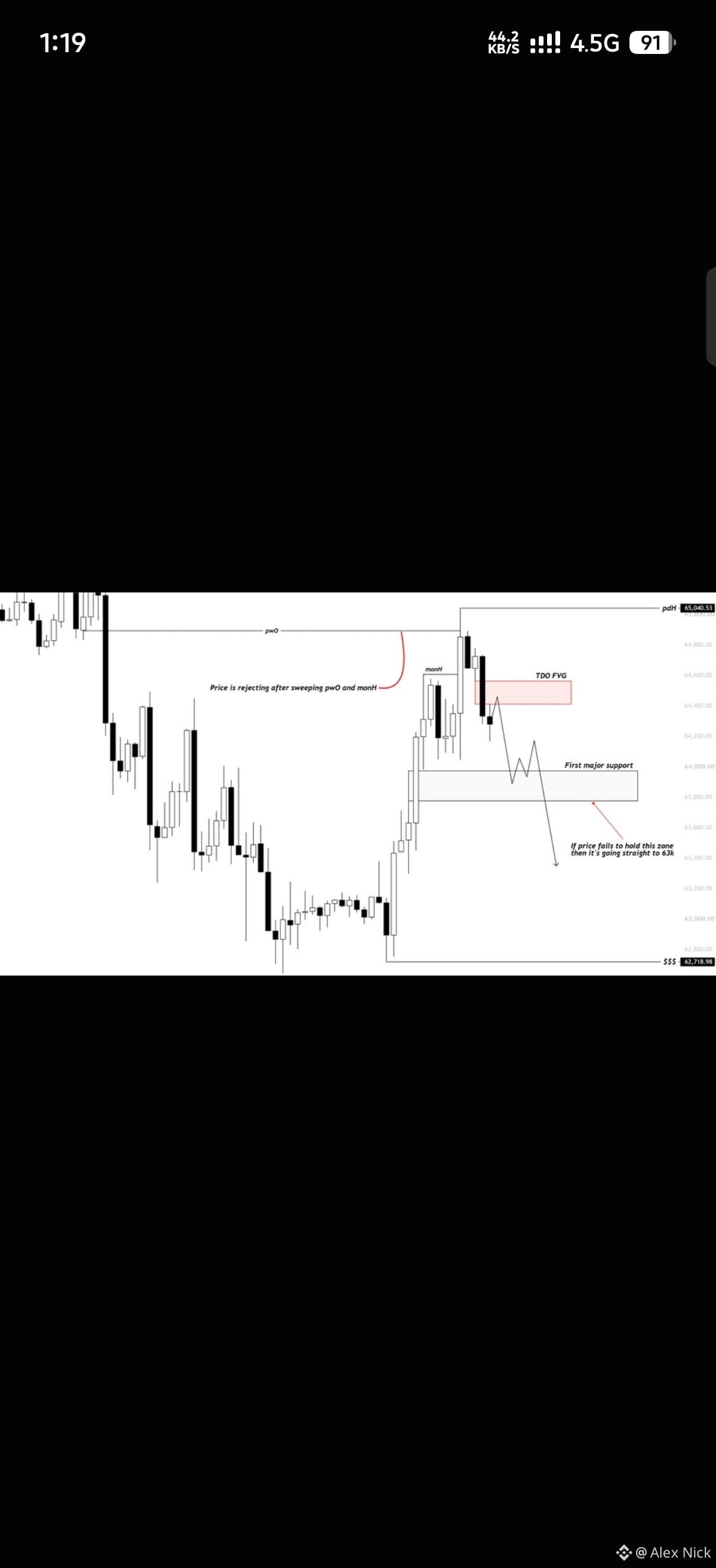
$BTC
Price is rejecting after sweeping pwO and monH,
On the LTF, we have formed a TDO FVG above us, which could be tested before we break down to our first support,
Which is 63.8k, If bulls manage to hold that level, then we might push back up and try breaking above 65.4k,
Though if Bulls fail to hold the level and we break below it, then the next major zone is 62.7-63.1k (Full TP for shorts).
We are seeing S&P 500 in action and if we start dumping on it, which I am expecting will happen.
Then you can expect BTC to finally sweep the stacked liquidity below 62k.
And that's where I will look to build a long for the bull run that is approaching in the next 2 months.
$BTC
Price is rejecting after sweeping pwO and monH,
On the LTF, we have formed a TDO FVG above us, which could be tested before we break down to our first support,
Which is 63.8k, If bulls manage to hold that level, then we might push back up and try breaking above 65.4k,
Though if Bulls fail to hold the level and we break below it, then the next major zone is 62.7-63.1k (Full TP for shorts).
We are seeing S&P 500 in action and if we start dumping on it, which I am expecting will happen.
Then you can expect BTC to finally sweep the stacked liquidity below 62k.
And that's where I will look to build a long for the bull run that is approaching in the next 2 months.
Price is rejecting after sweeping pwO and monH,
On the LTF, we have formed a TDO FVG above us, which could be tested before we break down to our first support,
Which is 63.8k, If bulls manage to hold that level, then we might push back up and try breaking above 65.4k,
Though if Bulls fail to hold the level and we break below it, then the next major zone is 62.7-63.1k (Full TP for shorts).
We are seeing S&P 500 in action and if we start dumping on it, which I am expecting will happen.
Then you can expect BTC to finally sweep the stacked liquidity below 62k.
And that's where I will look to build a long for the bull run that is approaching in the next 2 months.
1
82
·
--
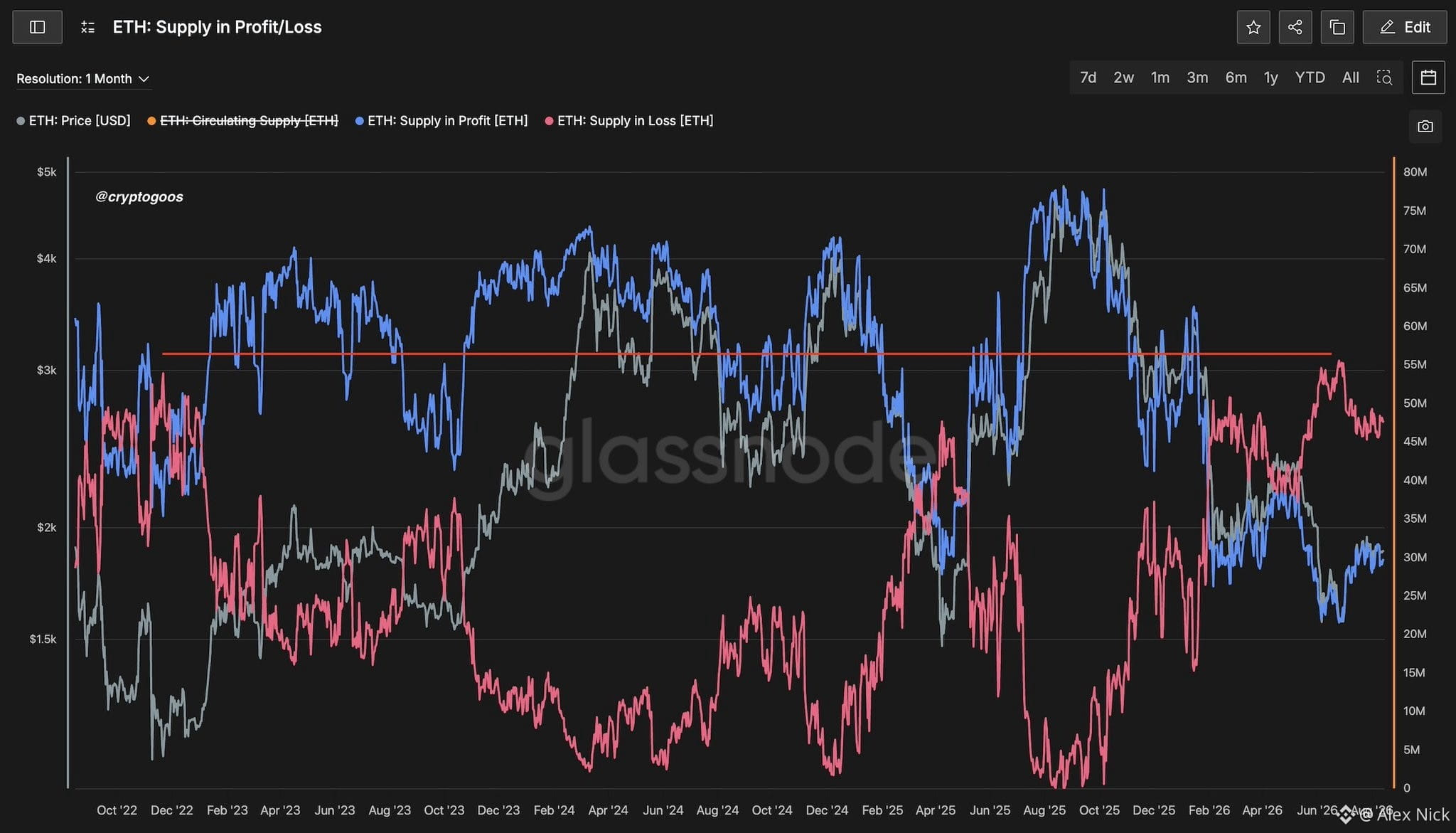
During this bear market, more $ETH holders have been underwater than during both the FTX collapse and the tariff-driven crash.
Insane. Nothing but pain.
During this bear market, more $ETH holders have been underwater than during both the FTX collapse and the tariff-driven crash.
Insane. Nothing but pain.
Insane. Nothing but pain.
94
·
--
#XAUUSD
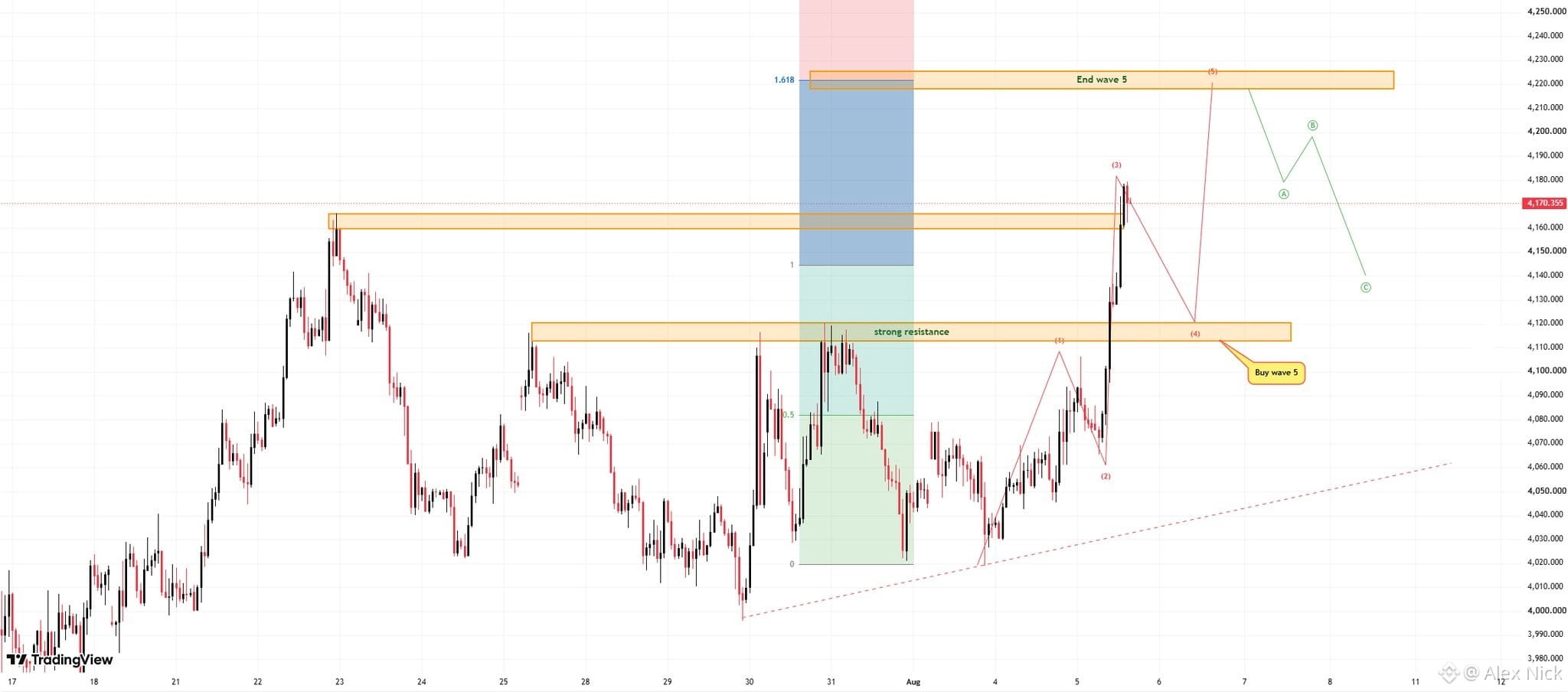
Ideal Strategy: Wait for gold to pull back to the buy zone and confirm the bullish signal.📈
#GOLD
The bullish structure remains strong, but the price is currently near the upper retracement zone. This means patience is crucial.
A more reasonable strategy is to wait for the price to pull back to the $4110-$4120 range. If buyers hold this area, gold prices may continue their next upward move, targeting the upper Fibonacci retracement level.
If the buy zone holds, the fifth wave may continue upward to the $4220-$4225 range.
#XAUUSD
Ideal Strategy: Wait for gold to pull back to the buy zone and confirm the bullish signal.📈
#GOLD
The bullish structure remains strong, but the price is currently near the upper retracement zone. This means patience is crucial.
A more reasonable strategy is to wait for the price to pull back to the $4110-$4120 range. If buyers hold this area, gold prices may continue their next upward move, targeting the upper Fibonacci retracement level.
If the buy zone holds, the fifth wave may continue upward to the $4220-$4225 range.
Ideal Strategy: Wait for gold to pull back to the buy zone and confirm the bullish signal.📈
#GOLD
The bullish structure remains strong, but the price is currently near the upper retracement zone. This means patience is crucial.
A more reasonable strategy is to wait for the price to pull back to the $4110-$4120 range. If buyers hold this area, gold prices may continue their next upward move, targeting the upper Fibonacci retracement level.
If the buy zone holds, the fifth wave may continue upward to the $4220-$4225 range.
108
·
--
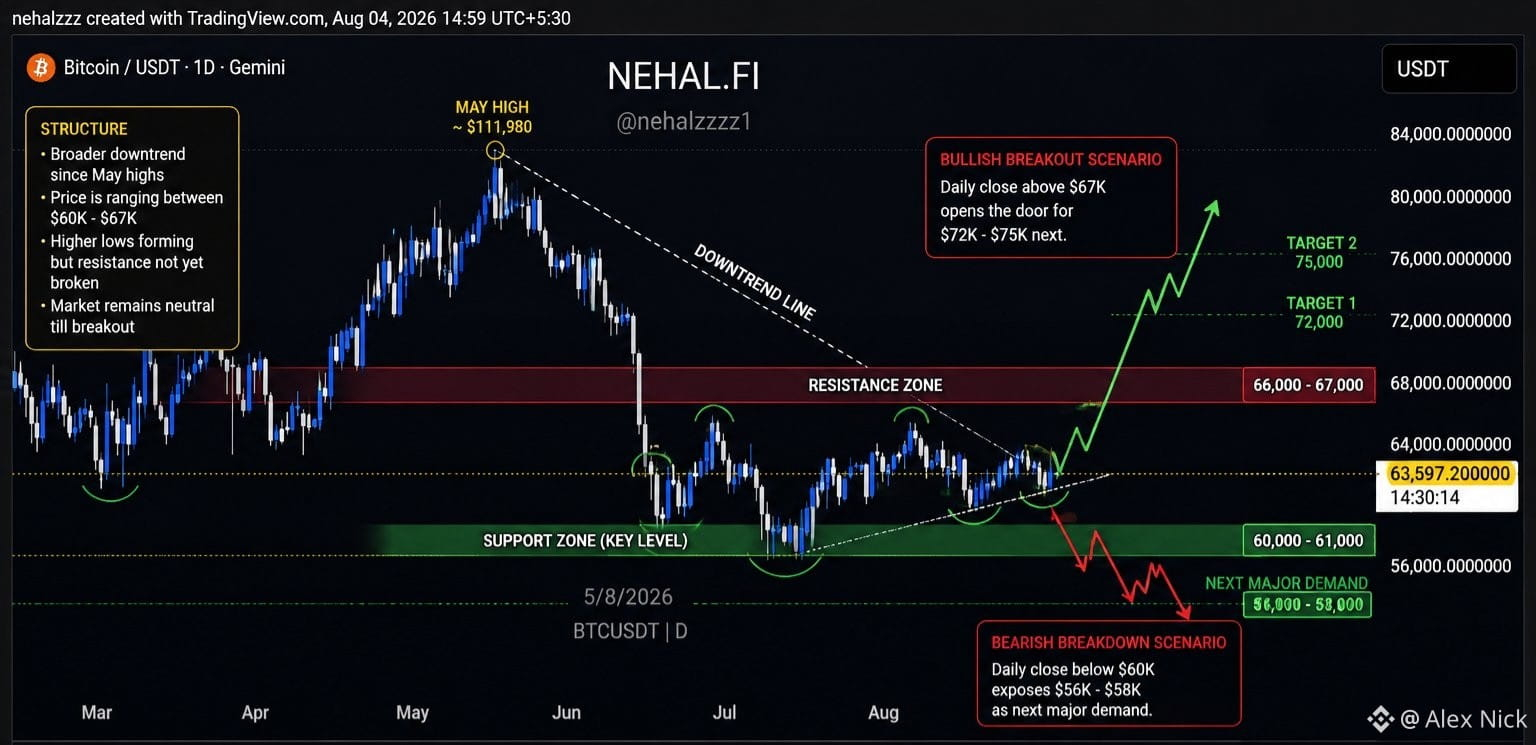
$BTC is approaching a decision point.
Price continues to compress between $60K support and $67K resistance.
Bulls have defended every dip so far, but they still haven't reclaimed the major supply zone.
A daily close above $67K = momentum shift.
A loss of $60K = liquidity hunt toward $56K–58K.
The longer Bitcoin ranges, the more explosive the breakout will be.
{spot}(BTCUSDT)
$BTC is approaching a decision point.
Price continues to compress between $60K support and $67K resistance.
Bulls have defended every dip so far, but they still haven't reclaimed the major supply zone.
A daily close above $67K = momentum shift.
A loss of $60K = liquidity hunt toward $56K–58K.
The longer Bitcoin ranges, the more explosive the breakout will be.
Price continues to compress between $60K support and $67K resistance.
Bulls have defended every dip so far, but they still haven't reclaimed the major supply zone.
A daily close above $67K = momentum shift.
A loss of $60K = liquidity hunt toward $56K–58K.
The longer Bitcoin ranges, the more explosive the breakout will be.
81
Log in to explore more content
Join global crypto users on Binance Square
⚡️ Get latest and useful information about crypto.
💬 Trusted by the world’s largest crypto exchange.
👍 Discover real insights from verified creators.
Email / Phone number
Trending Topics
AppleDebutsFoldablePhone
4,062 views
113 Discussing
#appledebutsfoldablephone I Got My Hands on the iPhone Duo, Apple’s First Foldable Phone. Here’s What Stands Out
The palm-size phone is Apple's boldest handset in years, with a 5.4-inch cover screen and a 7.6-inch main display. I spent some time with the Duo before its October launch.It’s finally here: Apple on Wednesday unveiled its first foldable iPhone, called the iPhone Duo.
iPhone Duo design and build
The iPhone Duo is compact, with a passport-size design. It has a 7.6-inch display on the inside and a 5.4-inch outer display. It fits squarely in my palm, with dimensions similar to Samsung’s Galaxy Z Fold 8, which has a 7.6-inch inner display and a 5.5-inch cover display.
Apple says the Duo is the thinnest iPhone ever when open, measuring 5.2mm. It’s 11.3mm thick when closed. A titanium frame keeps it lightweight at 254 grams.
One of the key differences in feel between Apple’s and Samsung’s phones is that the iPhone Duo has a matte, nano-textured finish on the inner display, which reduces the phone’s crease while also curbing reflections. It has a satisfying feel and really makes the crease virtually disappear when the screen is on. I find it even harder to notice than the Z Fold 8’s, which also has an anti-reflective display.$ONG $IMX $TAC
Isabella-I
·3 Likes
·661 views
US10YTreasuryYieldHitsHighestSinceNov2023
8,381 views
173 Discussing
USTreasuryToBuyBackUpTo$6BLongDatedDebt
9,479 views
129 Discussing