
AHMAÐ
4.5k Posts

AHMAÐ
 Square Verified
Report
Block User
DCA: Don't Care Anymore

DEXE Holder
Frequent Trader
2 Years
275 Following
32.0K+ Followers
11.0K+ Liked
Posts
All
Quotes
·
--
Bullish
🍎 $AAPL Apple just entered the foldable era.
The first foldable iPhone is reportedly coming with a $1,999 starting price.
Why does this matter for crypto?
Apple’s massive ecosystem could accelerate adoption of digital payments, tokenized assets, and Web3 experiences on mobile.
A premium device, a massive user base, and potentially a new gateway for the digital economy. 👀
#Apple
🍎 $AAPL Apple just entered the foldable era.
The first foldable iPhone is reportedly coming with a $1,999 starting price.
Why does this matter for crypto?
Apple’s massive ecosystem could accelerate adoption of digital payments, tokenized assets, and Web3 experiences on mobile.
A premium device, a massive user base, and potentially a new gateway for the digital economy. 👀
#Apple
The first foldable iPhone is reportedly coming with a $1,999 starting price.
Why does this matter for crypto?
Apple’s massive ecosystem could accelerate adoption of digital payments, tokenized assets, and Web3 experiences on mobile.
A premium device, a massive user base, and potentially a new gateway for the digital economy. 👀
#Apple

307
·
--
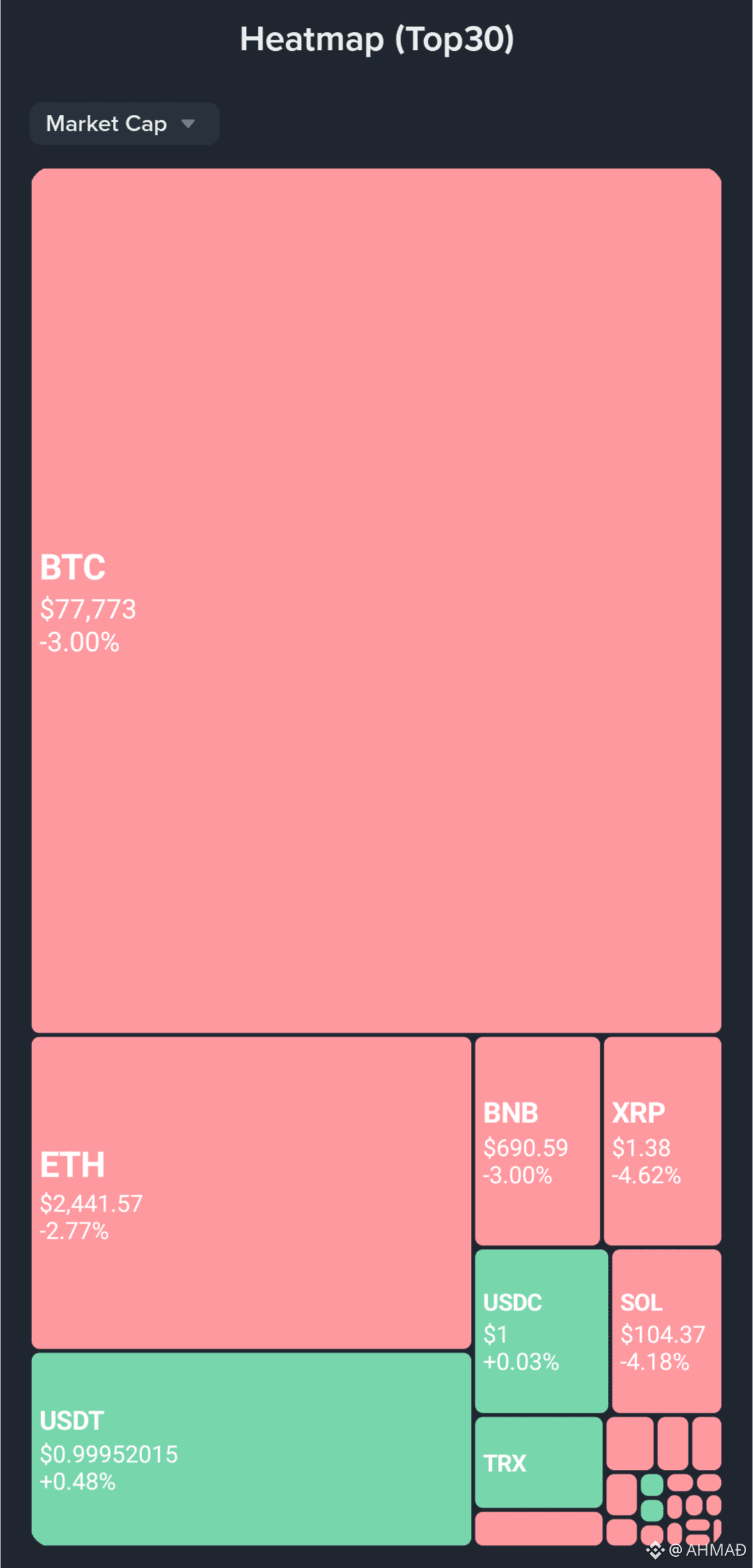
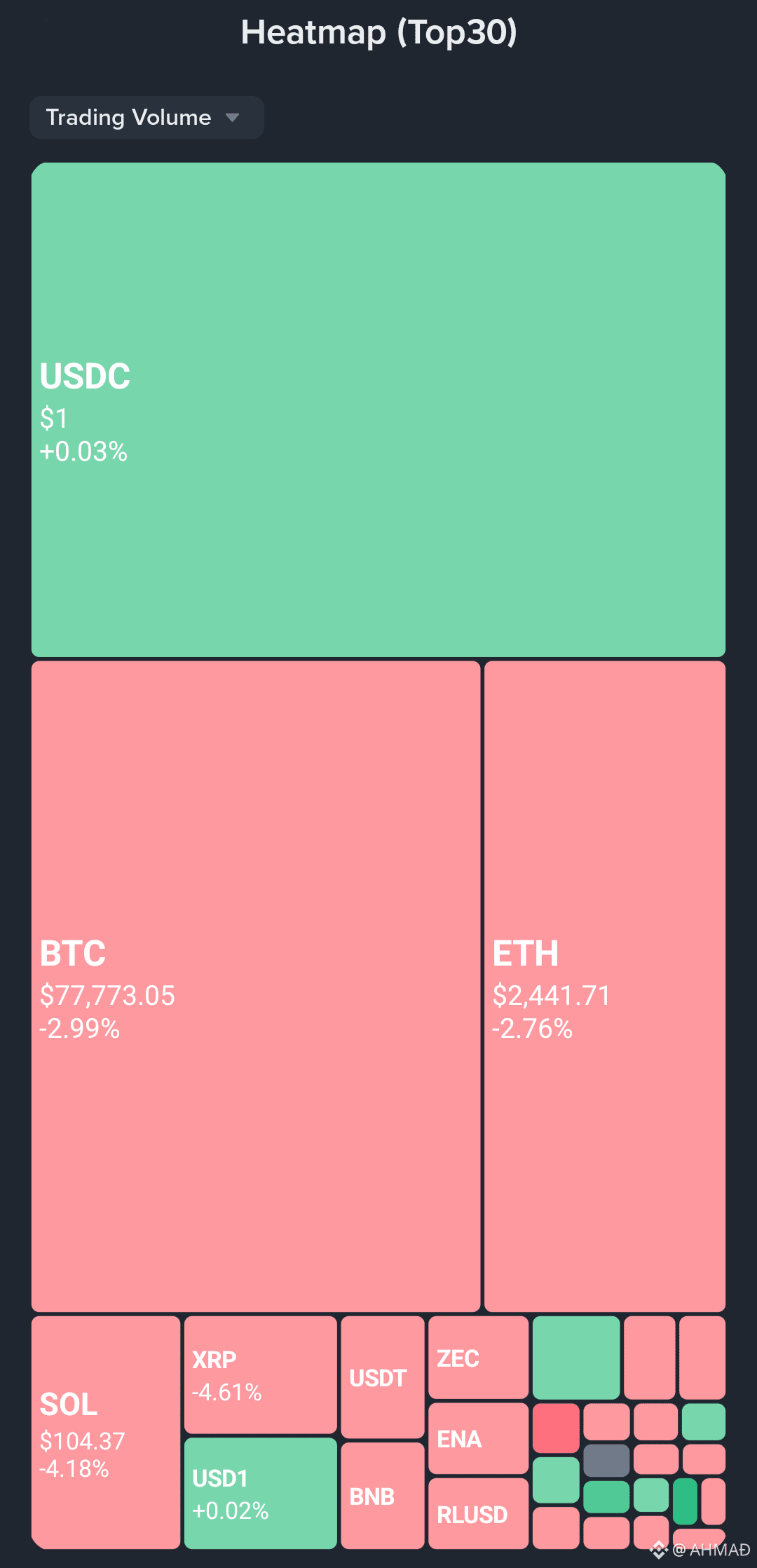
Heatmap (Trading Volume of top 30)
$DEXE $AAPL.US
Heatmap (Trading Volume of top 30)
$DEXE $AAPL.US
$DEXE $AAPL.US
1
332
·
--
1
431
·
--
THE DUSKVM DETAIL THAT COULD MATTER MORE AS PRIVACY WORKLOADS GROW
I was looking at Dusk's execution architecture again and one design choice stood out: Dusk doesn't force every expensive cryptographic operation to happen entirely inside the VM.
Piecrust provides the WASM execution environment, but Dusk uses host functions to handle operations such as hashing, proof verification and signature validation. The whitepaper says this allows complex cryptographic tasks to be executed more efficiently than they would be inside the VM alone.
A privacy-focused financial network isn't just processing ordinary transfers. Its architecture relies heavily on cryptographic verification, and those operations can become a significant computational workload as usage increases.
Moving expensive primitives into host functions creates a separation:
the VM handles contract execution, while specialized infrastructure handles heavy cryptographic operations.
The whitepaper also points out that the results are replicated across nodes, so the optimization isn't supposed to remove the decentralized verification requirement.
But there's a trade-off I find worth watching.
The more functionality moves into specialized host capabilities, the more important the interface between the VM and those capabilities becomes. You gain performance and efficiency, but the execution environment also becomes more dependent on protocol-specific infrastructure.
For Dusk, that may be a reasonable trade.
If the network wants privacy-preserving applications with significant ZK workloads, treating cryptographic computation as a first-class infrastructure concern makes more sense than pretending every operation is just another WASM instruction.
The real test is whether that architecture continues to provide efficiency as privacy workloads scale.
Is specialized cryptographic execution the right way to make privacy practical at network scale?
@Dusk_Foundation $DUSK #dusk
THE DUSKVM DETAIL THAT COULD MATTER MORE AS PRIVACY WORKLOADS GROW
I was looking at Dusk's execution architecture again and one design choice stood out: Dusk doesn't force every expensive cryptographic operation to happen entirely inside the VM.
Piecrust provides the WASM execution environment, but Dusk uses host functions to handle operations such as hashing, proof verification and signature validation. The whitepaper says this allows complex cryptographic tasks to be executed more efficiently than they would be inside the VM alone.
A privacy-focused financial network isn't just processing ordinary transfers. Its architecture relies heavily on cryptographic verification, and those operations can become a significant computational workload as usage increases.
Moving expensive primitives into host functions creates a separation:
the VM handles contract execution, while specialized infrastructure handles heavy cryptographic operations.
The whitepaper also points out that the results are replicated across nodes, so the optimization isn't supposed to remove the decentralized verification requirement.
But there's a trade-off I find worth watching.
The more functionality moves into specialized host capabilities, the more important the interface between the VM and those capabilities becomes. You gain performance and efficiency, but the execution environment also becomes more dependent on protocol-specific infrastructure.
For Dusk, that may be a reasonable trade.
If the network wants privacy-preserving applications with significant ZK workloads, treating cryptographic computation as a first-class infrastructure concern makes more sense than pretending every operation is just another WASM instruction.
The real test is whether that architecture continues to provide efficiency as privacy workloads scale.
Is specialized cryptographic execution the right way to make privacy practical at network scale?
@Dusk $DUSK #dusk
I was looking at Dusk's execution architecture again and one design choice stood out: Dusk doesn't force every expensive cryptographic operation to happen entirely inside the VM.
Piecrust provides the WASM execution environment, but Dusk uses host functions to handle operations such as hashing, proof verification and signature validation. The whitepaper says this allows complex cryptographic tasks to be executed more efficiently than they would be inside the VM alone.
A privacy-focused financial network isn't just processing ordinary transfers. Its architecture relies heavily on cryptographic verification, and those operations can become a significant computational workload as usage increases.
Moving expensive primitives into host functions creates a separation:
the VM handles contract execution, while specialized infrastructure handles heavy cryptographic operations.
The whitepaper also points out that the results are replicated across nodes, so the optimization isn't supposed to remove the decentralized verification requirement.
But there's a trade-off I find worth watching.
The more functionality moves into specialized host capabilities, the more important the interface between the VM and those capabilities becomes. You gain performance and efficiency, but the execution environment also becomes more dependent on protocol-specific infrastructure.
For Dusk, that may be a reasonable trade.
If the network wants privacy-preserving applications with significant ZK workloads, treating cryptographic computation as a first-class infrastructure concern makes more sense than pretending every operation is just another WASM instruction.
The real test is whether that architecture continues to provide efficiency as privacy workloads scale.
Is specialized cryptographic execution the right way to make privacy practical at network scale?
@Dusk $DUSK #dusk
221
·
--
I was looking at Dusk's transparent transaction model and initially skipped over something that sounded almost too basic: the nonce.
Moonlight is Dusk's account-based transaction model. Each account has a public key, balance and a nonce, with the nonce acting as a counter for transactions sent from that account.
That tiny counter has a bigger job than it first appears.
The whitepaper explicitly connects the nonce to replay protection. A transaction isn't simply authorized because the signature is valid; the account's transaction sequence also has to make sense.
This is one of those pieces of blockchain infrastructure that users almost never notice when it works correctly.
You sign a transaction, the network processes it, your balance changes and you move on.
But without mechanisms preventing an old valid transaction from being accepted again, the same authorization could potentially become a completely different security problem.
What I find interesting about Dusk is that Moonlight and Phoenix solve the same fundamental transaction requirements through very different models.
Moonlight exposes account state, balances and transaction metadata publicly. Phoenix moves balance verification and double-spend protection into ZK proofs and nullifiers. Yet both still have to establish ownership, prevent malleability and stop double spending.
So the real design decision isn't simply public vs private.
It's how much of the state transition the network can verify directly versus how much must be proven cryptographically.
That makes the humble nonce more interesting than it sounds.
The visible transaction is only the surface. Underneath it is a collection of rules making sure the same authorization cannot simply be replayed.
How many blockchain “features” are actually invisible security assumptions users only notice when they fail?
@Dusk_Foundation $DUSK #dusk
I was looking at Dusk's transparent transaction model and initially skipped over something that sounded almost too basic: the nonce.
Moonlight is Dusk's account-based transaction model. Each account has a public key, balance and a nonce, with the nonce acting as a counter for transactions sent from that account.
That tiny counter has a bigger job than it first appears.
The whitepaper explicitly connects the nonce to replay protection. A transaction isn't simply authorized because the signature is valid; the account's transaction sequence also has to make sense.
This is one of those pieces of blockchain infrastructure that users almost never notice when it works correctly.
You sign a transaction, the network processes it, your balance changes and you move on.
But without mechanisms preventing an old valid transaction from being accepted again, the same authorization could potentially become a completely different security problem.
What I find interesting about Dusk is that Moonlight and Phoenix solve the same fundamental transaction requirements through very different models.
Moonlight exposes account state, balances and transaction metadata publicly. Phoenix moves balance verification and double-spend protection into ZK proofs and nullifiers. Yet both still have to establish ownership, prevent malleability and stop double spending.
So the real design decision isn't simply public vs private.
It's how much of the state transition the network can verify directly versus how much must be proven cryptographically.
That makes the humble nonce more interesting than it sounds.
The visible transaction is only the surface. Underneath it is a collection of rules making sure the same authorization cannot simply be replayed.
How many blockchain “features” are actually invisible security assumptions users only notice when they fail?
@Dusk $DUSK #dusk
Moonlight is Dusk's account-based transaction model. Each account has a public key, balance and a nonce, with the nonce acting as a counter for transactions sent from that account.
That tiny counter has a bigger job than it first appears.
The whitepaper explicitly connects the nonce to replay protection. A transaction isn't simply authorized because the signature is valid; the account's transaction sequence also has to make sense.
This is one of those pieces of blockchain infrastructure that users almost never notice when it works correctly.
You sign a transaction, the network processes it, your balance changes and you move on.
But without mechanisms preventing an old valid transaction from being accepted again, the same authorization could potentially become a completely different security problem.
What I find interesting about Dusk is that Moonlight and Phoenix solve the same fundamental transaction requirements through very different models.
Moonlight exposes account state, balances and transaction metadata publicly. Phoenix moves balance verification and double-spend protection into ZK proofs and nullifiers. Yet both still have to establish ownership, prevent malleability and stop double spending.
So the real design decision isn't simply public vs private.
It's how much of the state transition the network can verify directly versus how much must be proven cryptographically.
That makes the humble nonce more interesting than it sounds.
The visible transaction is only the surface. Underneath it is a collection of rules making sure the same authorization cannot simply be replayed.
How many blockchain “features” are actually invisible security assumptions users only notice when they fail?
@Dusk $DUSK #dusk
1
142
·
--
THE INTERESTING PART OF DUSK'S PRIVACY MODEL MAY BE WHAT IT DOESN'T PUT ONCHAIN
I kept thinking about Dusk's privacy architecture from the opposite direction: not what it hides, but what the network still needs to know.
Phoenix uses shielded UTXOs where notes are committed into a Merkle tree and spent using nullifiers. The underlying transaction can remain confidential while the network verifies the rules required for valid state transitions.
That creates a very specific division of information.
The whitepaper describes the transaction structure as containing the Merkle root, nullifiers, new notes, optional deposits/data, gas parameters and a ZK proof. The network verifies the proof against public inputs rather than directly checking the hidden transaction details.
But here's the detail I find more important.
Dusk isn't trying to make everything permanently invisible.
The architecture also includes Citadel 2, where users can selectively disclose credentials when an application needs proof of eligibility. The Executive Summary describes this as allowing a user to prove possession of a registered license without revealing the license contents.
So the design isn't really:
private vs public.
It's closer to:
private by default + prove only what the application requires.
That is a much more useful model for regulated finance.
But there is still an unresolved operational question. The research specifically flags the possibility that integration with KYC systems and session information could create linkability even when the underlying personal data isn't stored onchain.
Cryptography can protect the transaction.
It can't automatically guarantee that every application built around the transaction preserves the same privacy properties.
That's the part I'd watch.
Can Dusk maintain selective disclosure without allowing the surrounding compliance infrastructure to quietly recreate the surveillance it was designed to avoid?
@Dusk_Foundation $DUSK #dusk
THE INTERESTING PART OF DUSK'S PRIVACY MODEL MAY BE WHAT IT DOESN'T PUT ONCHAIN
I kept thinking about Dusk's privacy architecture from the opposite direction: not what it hides, but what the network still needs to know.
Phoenix uses shielded UTXOs where notes are committed into a Merkle tree and spent using nullifiers. The underlying transaction can remain confidential while the network verifies the rules required for valid state transitions.
That creates a very specific division of information.
The whitepaper describes the transaction structure as containing the Merkle root, nullifiers, new notes, optional deposits/data, gas parameters and a ZK proof. The network verifies the proof against public inputs rather than directly checking the hidden transaction details.
But here's the detail I find more important.
Dusk isn't trying to make everything permanently invisible.
The architecture also includes Citadel 2, where users can selectively disclose credentials when an application needs proof of eligibility. The Executive Summary describes this as allowing a user to prove possession of a registered license without revealing the license contents.
So the design isn't really:
private vs public.
It's closer to:
private by default + prove only what the application requires.
That is a much more useful model for regulated finance.
But there is still an unresolved operational question. The research specifically flags the possibility that integration with KYC systems and session information could create linkability even when the underlying personal data isn't stored onchain.
Cryptography can protect the transaction.
It can't automatically guarantee that every application built around the transaction preserves the same privacy properties.
That's the part I'd watch.
Can Dusk maintain selective disclosure without allowing the surrounding compliance infrastructure to quietly recreate the surveillance it was designed to avoid?
@Dusk $DUSK #dusk
I kept thinking about Dusk's privacy architecture from the opposite direction: not what it hides, but what the network still needs to know.
Phoenix uses shielded UTXOs where notes are committed into a Merkle tree and spent using nullifiers. The underlying transaction can remain confidential while the network verifies the rules required for valid state transitions.
That creates a very specific division of information.
The whitepaper describes the transaction structure as containing the Merkle root, nullifiers, new notes, optional deposits/data, gas parameters and a ZK proof. The network verifies the proof against public inputs rather than directly checking the hidden transaction details.
But here's the detail I find more important.
Dusk isn't trying to make everything permanently invisible.
The architecture also includes Citadel 2, where users can selectively disclose credentials when an application needs proof of eligibility. The Executive Summary describes this as allowing a user to prove possession of a registered license without revealing the license contents.
So the design isn't really:
private vs public.
It's closer to:
private by default + prove only what the application requires.
That is a much more useful model for regulated finance.
But there is still an unresolved operational question. The research specifically flags the possibility that integration with KYC systems and session information could create linkability even when the underlying personal data isn't stored onchain.
Cryptography can protect the transaction.
It can't automatically guarantee that every application built around the transaction preserves the same privacy properties.
That's the part I'd watch.
Can Dusk maintain selective disclosure without allowing the surrounding compliance infrastructure to quietly recreate the surveillance it was designed to avoid?
@Dusk $DUSK #dusk
1
155
·
--
$DUSK
$DUSK

Noor221
·
--
BullishWhich Coin is best for Holding.... which Coin give big profit...$BTC
$BNB
$ETH
$BNB
$ETH
1
63
·
--
WHY DUSK'S BLOCK CERTIFICATE IS MORE INTERESTING THAN “FAST FINALITY”
I kept seeing Dusk's consensus described through deterministic finality, but the mechanism underneath has a detail I think deserves more attention: the network needs to know exactly which voters were responsible for a finalized block.
Dusk's Succinct Attestation uses voting committees for validation and ratification. Each committee currently has a global parameter of 64 credits, and votes are weighted according to the credits assigned to each provisioner.
The interesting part comes when more votes than the quorum threshold are available.
The whitepaper explains that multiple valid attestations could otherwise exist for the same iteration. Dusk therefore includes an attestation of the previous block inside each block, creating a block certificate that determines a unique set of voters. That unique voter set is then used for reward and penalty accounting.
That sounds like a small implementation detail until you think about the incentive system.
Consensus isn't only deciding:
“Was this block valid?”
It's also establishing:
“Which exact participants should receive credit or penalties for this result?”
Dusk then uses BLS signatures so votes for a particular step can be aggregated into a single signature, while a bitset identifies which committee members actually participated.
I find that separation important because validator economics and consensus correctness are usually discussed as if they're independent.
Here they're connected through the attestation structure.
The remaining question is what happens operationally when committees fail to reach quorum repeatedly. The whitepaper says a round can iterate again, with a maximum currently set at 50 iterations, but the interesting real-world test is how often the network actually approaches those edge cases under adverse conditions.
Fast finality gets the headline.
The accounting of who actually secured that finality is the part I find more revealing.
@Dusk_Foundation $DUSK #dusk
WHY DUSK'S BLOCK CERTIFICATE IS MORE INTERESTING THAN “FAST FINALITY”
I kept seeing Dusk's consensus described through deterministic finality, but the mechanism underneath has a detail I think deserves more attention: the network needs to know exactly which voters were responsible for a finalized block.
Dusk's Succinct Attestation uses voting committees for validation and ratification. Each committee currently has a global parameter of 64 credits, and votes are weighted according to the credits assigned to each provisioner.
The interesting part comes when more votes than the quorum threshold are available.
The whitepaper explains that multiple valid attestations could otherwise exist for the same iteration. Dusk therefore includes an attestation of the previous block inside each block, creating a block certificate that determines a unique set of voters. That unique voter set is then used for reward and penalty accounting.
That sounds like a small implementation detail until you think about the incentive system.
Consensus isn't only deciding:
“Was this block valid?”
It's also establishing:
“Which exact participants should receive credit or penalties for this result?”
Dusk then uses BLS signatures so votes for a particular step can be aggregated into a single signature, while a bitset identifies which committee members actually participated.
I find that separation important because validator economics and consensus correctness are usually discussed as if they're independent.
Here they're connected through the attestation structure.
The remaining question is what happens operationally when committees fail to reach quorum repeatedly. The whitepaper says a round can iterate again, with a maximum currently set at 50 iterations, but the interesting real-world test is how often the network actually approaches those edge cases under adverse conditions.
Fast finality gets the headline.
The accounting of who actually secured that finality is the part I find more revealing.
@Dusk $DUSK #dusk
I kept seeing Dusk's consensus described through deterministic finality, but the mechanism underneath has a detail I think deserves more attention: the network needs to know exactly which voters were responsible for a finalized block.
Dusk's Succinct Attestation uses voting committees for validation and ratification. Each committee currently has a global parameter of 64 credits, and votes are weighted according to the credits assigned to each provisioner.
The interesting part comes when more votes than the quorum threshold are available.
The whitepaper explains that multiple valid attestations could otherwise exist for the same iteration. Dusk therefore includes an attestation of the previous block inside each block, creating a block certificate that determines a unique set of voters. That unique voter set is then used for reward and penalty accounting.
That sounds like a small implementation detail until you think about the incentive system.
Consensus isn't only deciding:
“Was this block valid?”
It's also establishing:
“Which exact participants should receive credit or penalties for this result?”
Dusk then uses BLS signatures so votes for a particular step can be aggregated into a single signature, while a bitset identifies which committee members actually participated.
I find that separation important because validator economics and consensus correctness are usually discussed as if they're independent.
Here they're connected through the attestation structure.
The remaining question is what happens operationally when committees fail to reach quorum repeatedly. The whitepaper says a round can iterate again, with a maximum currently set at 50 iterations, but the interesting real-world test is how often the network actually approaches those edge cases under adverse conditions.
Fast finality gets the headline.
The accounting of who actually secured that finality is the part I find more revealing.
@Dusk $DUSK #dusk
2
352
·
--
HODL HODL HODL HODL HODL HODL HODL HODL HODL HODL HODL HODL HODL HODL HODL HODL HODL HODL HODL HODL HODL HODL HODL HODL HODL HODL HODL HODL HODL HODL HODL HODL HODL HODL HODL HODL HODL HODL HODL HODL HODL HODL HODL HODL HODL HODL HODL HODL HODL HODL HODL HODL HODL HODL HODL HODL HODL HODL HODL HODL HODL HODL HODL HODL HODL HODL HODL HODL HODL HODL HODL HODL HODL HODL HODL HODL HODL HODL HODL HODL HODL HODL HODL HODL
HODL HODL HODL HODL HODL HODL HODL HODL HODL HODL HODL HODL HODL HODL HODL HODL HODL HODL HODL HODL HODL HODL HODL HODL HODL HODL HODL HODL HODL HODL HODL HODL HODL HODL HODL HODL HODL HODL HODL HODL HODL HODL HODL HODL HODL HODL HODL HODL HODL HODL HODL HODL HODL HODL HODL HODL HODL HODL HODL HODL HODL HODL HODL HODL HODL HODL HODL HODL HODL HODL HODL HODL HODL HODL HODL HODL HODL HODL HODL HODL HODL HODL HODL HODL

1
48
·
--
THE DUSK IDENTITY MODEL I FIND MORE INTERESTING THAN KYC
I kept thinking about the uncomfortable problem regulated finance has on public blockchains: institutions need to know that a user is eligible, but publishing that user's identity and financial credentials defeats much of the privacy argument.
Dusk's Citadel 2 approaches this differently.
A user first obtains a license from a trusted License Provider after off-chain KYC. The credential is registered onchain, but when the user later interacts with a service, they can prove possession of the required credential using zero-knowledge proofs without exposing the license contents.
The detail that caught my attention is what actually gets placed onchain.
According to the research, the chain doesn't need the user's personal data, the specific License Provider key or the license details. Instead, Citadel verifies a generic proof and creates an ephemeral session that the Service Provider can use to enforce its own policy.
So an application could theoretically ask:
“Are you an accredited/eligible participant?”
without requiring:
“Show me your entire identity record.”
That creates a much more interesting relationship between compliance and privacy.
But there is a trade-off I wouldn't ignore.
The privacy guarantee depends on how service providers integrate the identity layer. If applications start adding linkable metadata around those sessions, the cryptographic privacy of the credential doesn't automatically guarantee privacy across the entire user experience.
That's why I'm more interested in the application layer than the zero-knowledge claim itself.
Dusk seems to be trying to separate proving eligibility from revealing identity.
Can selective disclosure become the missing middle ground between completely public DeFi and institution-only financial systems?
@Dusk_Foundation $DUSK #dusk
THE DUSK IDENTITY MODEL I FIND MORE INTERESTING THAN KYC
I kept thinking about the uncomfortable problem regulated finance has on public blockchains: institutions need to know that a user is eligible, but publishing that user's identity and financial credentials defeats much of the privacy argument.
Dusk's Citadel 2 approaches this differently.
A user first obtains a license from a trusted License Provider after off-chain KYC. The credential is registered onchain, but when the user later interacts with a service, they can prove possession of the required credential using zero-knowledge proofs without exposing the license contents.
The detail that caught my attention is what actually gets placed onchain.
According to the research, the chain doesn't need the user's personal data, the specific License Provider key or the license details. Instead, Citadel verifies a generic proof and creates an ephemeral session that the Service Provider can use to enforce its own policy.
So an application could theoretically ask:
“Are you an accredited/eligible participant?”
without requiring:
“Show me your entire identity record.”
That creates a much more interesting relationship between compliance and privacy.
But there is a trade-off I wouldn't ignore.
The privacy guarantee depends on how service providers integrate the identity layer. If applications start adding linkable metadata around those sessions, the cryptographic privacy of the credential doesn't automatically guarantee privacy across the entire user experience.
That's why I'm more interested in the application layer than the zero-knowledge claim itself.
Dusk seems to be trying to separate proving eligibility from revealing identity.
Can selective disclosure become the missing middle ground between completely public DeFi and institution-only financial systems?
@Dusk $DUSK #dusk
I kept thinking about the uncomfortable problem regulated finance has on public blockchains: institutions need to know that a user is eligible, but publishing that user's identity and financial credentials defeats much of the privacy argument.
Dusk's Citadel 2 approaches this differently.
A user first obtains a license from a trusted License Provider after off-chain KYC. The credential is registered onchain, but when the user later interacts with a service, they can prove possession of the required credential using zero-knowledge proofs without exposing the license contents.
The detail that caught my attention is what actually gets placed onchain.
According to the research, the chain doesn't need the user's personal data, the specific License Provider key or the license details. Instead, Citadel verifies a generic proof and creates an ephemeral session that the Service Provider can use to enforce its own policy.
So an application could theoretically ask:
“Are you an accredited/eligible participant?”
without requiring:
“Show me your entire identity record.”
That creates a much more interesting relationship between compliance and privacy.
But there is a trade-off I wouldn't ignore.
The privacy guarantee depends on how service providers integrate the identity layer. If applications start adding linkable metadata around those sessions, the cryptographic privacy of the credential doesn't automatically guarantee privacy across the entire user experience.
That's why I'm more interested in the application layer than the zero-knowledge claim itself.
Dusk seems to be trying to separate proving eligibility from revealing identity.
Can selective disclosure become the missing middle ground between completely public DeFi and institution-only financial systems?
@Dusk $DUSK #dusk
1
250
·
--
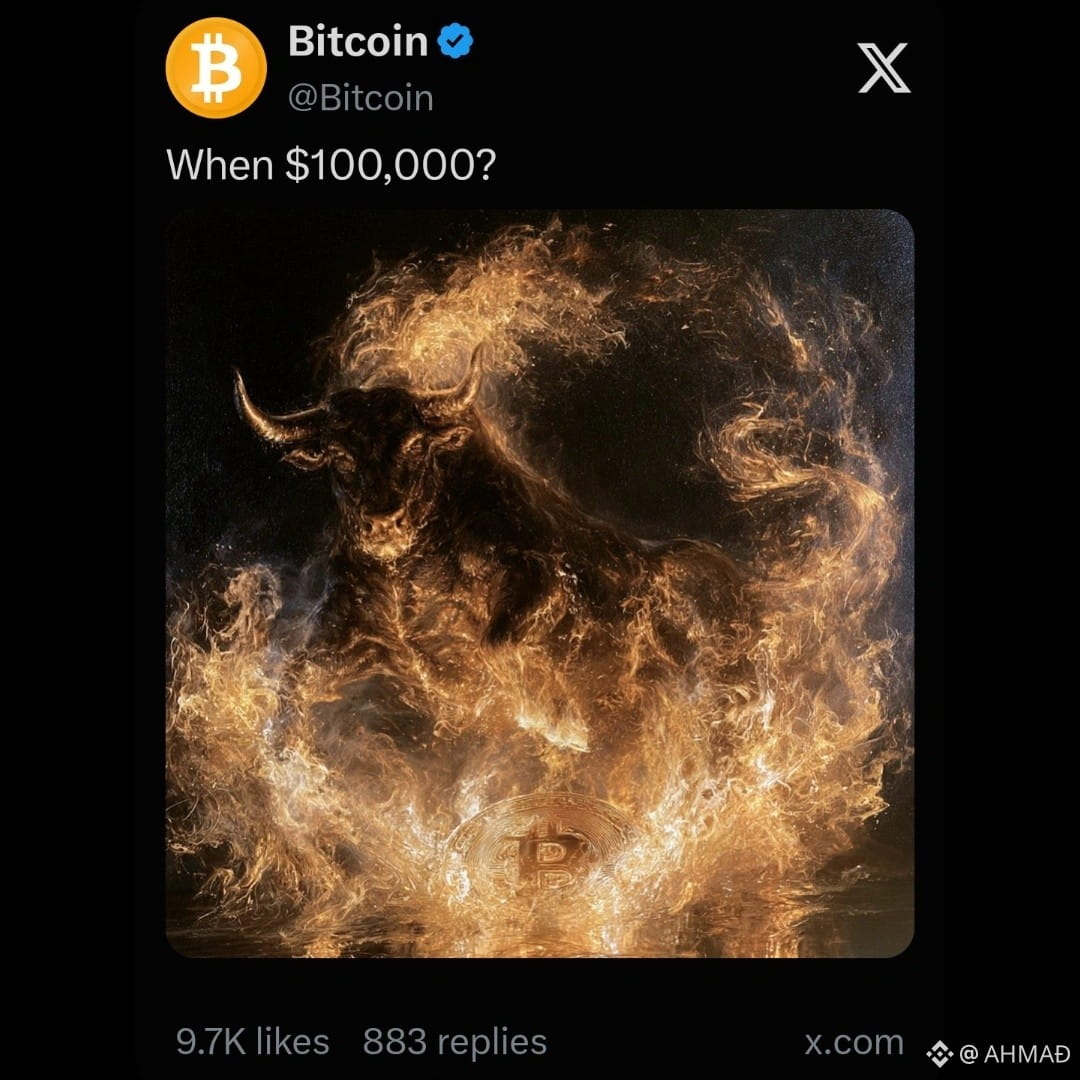
Is this a big hint that $BTC is gonna hit $100K soon!?
All eyes on bull!👀🐂
Is this a big hint that $BTC is gonna hit $100K soon!?
All eyes on bull!👀🐂
All eyes on bull!👀🐂
1
122
·
--
I usually see tokenized securities discussed as if the difficult part is putting ownership onchain.
Looking at Dusk's Zedger design made me focus on what happens when the issuer still has responsibilities after an asset has been issued.
Zedger is designed for securities and real-world assets that can be either tokenized or natively issued on Dusk. Its contract model includes minting and burning, corporate actions such as dividends, transaction auditing and even issuer-initiated force transfers.
That last capability is the part I kept coming back to.
A normal crypto narrative tends to equate token ownership with an irreversible wallet-to-wallet transfer. Regulated securities don't always work that way. Legal orders, corporate actions, recovery procedures or jurisdiction-specific requirements can create situations where an issuer needs controlled intervention.
Zedger is therefore not simply trying to reproduce a cryptocurrency transfer model for securities. It is designed around the uncomfortable reality that regulated assets can have rules governing who may hold them and how ownership can change.
But there's an obvious trade-off.
An issuer-controlled transfer mechanism can make regulated securities more compatible with existing legal frameworks, while simultaneously introducing a level of authority that permissionless crypto users may dislike.
That's not necessarily a flaw. It's a design decision.
The real question is whether Dusk can make these controls sufficiently transparent and constrained that institutions trust them without making users feel that tokenized securities are just databases with wallets attached.
Maybe the future of RWA infrastructure isn't removing human authority.
Maybe it's making that authority programmable, auditable and explicit.
How much issuer control should a genuinely onchain security have?
@Dusk_Foundation $DUSK #dusk
I usually see tokenized securities discussed as if the difficult part is putting ownership onchain.
Looking at Dusk's Zedger design made me focus on what happens when the issuer still has responsibilities after an asset has been issued.
Zedger is designed for securities and real-world assets that can be either tokenized or natively issued on Dusk. Its contract model includes minting and burning, corporate actions such as dividends, transaction auditing and even issuer-initiated force transfers.
That last capability is the part I kept coming back to.
A normal crypto narrative tends to equate token ownership with an irreversible wallet-to-wallet transfer. Regulated securities don't always work that way. Legal orders, corporate actions, recovery procedures or jurisdiction-specific requirements can create situations where an issuer needs controlled intervention.
Zedger is therefore not simply trying to reproduce a cryptocurrency transfer model for securities. It is designed around the uncomfortable reality that regulated assets can have rules governing who may hold them and how ownership can change.
But there's an obvious trade-off.
An issuer-controlled transfer mechanism can make regulated securities more compatible with existing legal frameworks, while simultaneously introducing a level of authority that permissionless crypto users may dislike.
That's not necessarily a flaw. It's a design decision.
The real question is whether Dusk can make these controls sufficiently transparent and constrained that institutions trust them without making users feel that tokenized securities are just databases with wallets attached.
Maybe the future of RWA infrastructure isn't removing human authority.
Maybe it's making that authority programmable, auditable and explicit.
How much issuer control should a genuinely onchain security have?
@Dusk $DUSK #dusk
Looking at Dusk's Zedger design made me focus on what happens when the issuer still has responsibilities after an asset has been issued.
Zedger is designed for securities and real-world assets that can be either tokenized or natively issued on Dusk. Its contract model includes minting and burning, corporate actions such as dividends, transaction auditing and even issuer-initiated force transfers.
That last capability is the part I kept coming back to.
A normal crypto narrative tends to equate token ownership with an irreversible wallet-to-wallet transfer. Regulated securities don't always work that way. Legal orders, corporate actions, recovery procedures or jurisdiction-specific requirements can create situations where an issuer needs controlled intervention.
Zedger is therefore not simply trying to reproduce a cryptocurrency transfer model for securities. It is designed around the uncomfortable reality that regulated assets can have rules governing who may hold them and how ownership can change.
But there's an obvious trade-off.
An issuer-controlled transfer mechanism can make regulated securities more compatible with existing legal frameworks, while simultaneously introducing a level of authority that permissionless crypto users may dislike.
That's not necessarily a flaw. It's a design decision.
The real question is whether Dusk can make these controls sufficiently transparent and constrained that institutions trust them without making users feel that tokenized securities are just databases with wallets attached.
Maybe the future of RWA infrastructure isn't removing human authority.
Maybe it's making that authority programmable, auditable and explicit.
How much issuer control should a genuinely onchain security have?
@Dusk $DUSK #dusk
3
5
176
·
--
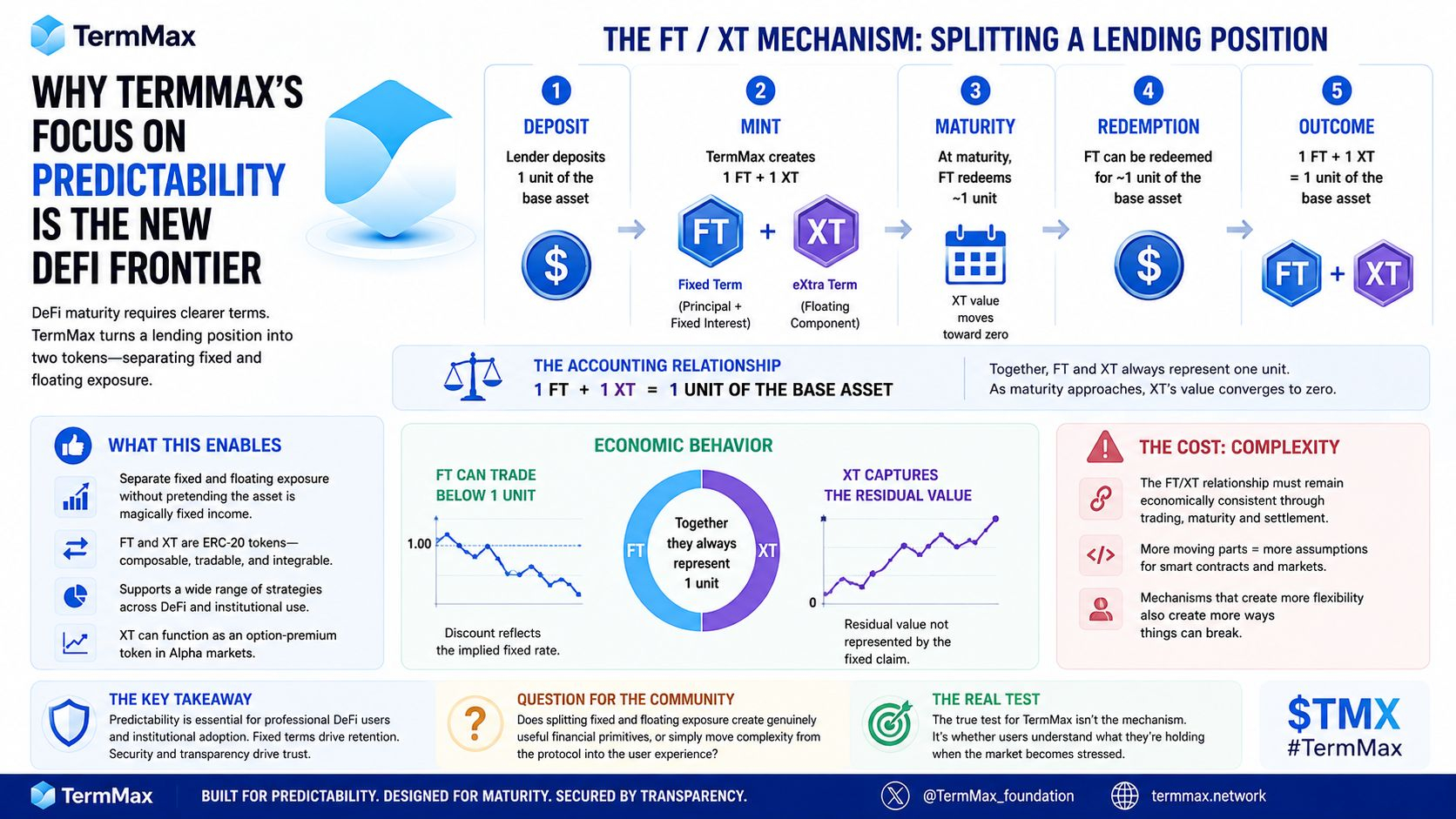
I initially looked at TermMax's FT and XT tokens as another way of splitting a lending position. The deeper I got into the mechanism, the more important the accounting relationship became.
When a lender deposits one unit of the base asset, TermMax creates one FT and one XT. FT represents the principal plus the fixed-interest claim, while XT represents the remaining floating component. Together, 1 FT + 1 XT = 1 unit of the base asset, with XT's value moving toward zero as maturity approaches.
That creates an unusual way to separate fixed and variable exposure without pretending the underlying asset has magically become fixed income.
FT can trade below its one-unit redemption value before maturity, with that discount effectively expressing the fixed rate. XT captures the residual value that isn't represented by the fixed claim.
The part I find interesting is what this enables.
Instead of treating a lending position as one indivisible object, TermMax turns its economic components into separate ERC-20 representations. Those components can then participate in different market strategies. The research also notes that XT can function as an option-premium token in Alpha markets.
But this flexibility comes with a cost: complexity.
The system has to keep the FT/XT relationship economically consistent through trading, maturity and settlement. A mechanism that gives users more ways to express interest-rate exposure also creates more assumptions that smart contracts and markets have to maintain correctly.
That's why I'm less interested in calling FT/XT innovative.
The real test is whether users understand what they're holding when the market becomes stressed.
Does splitting fixed and floating exposure create genuinely useful financial primitives, or simply move complexity from the protocol into the user experience?
@termmax #TermMax
I initially looked at TermMax's FT and XT tokens as another way of splitting a lending position. The deeper I got into the mechanism, the more important the accounting relationship became.
When a lender deposits one unit of the base asset, TermMax creates one FT and one XT. FT represents the principal plus the fixed-interest claim, while XT represents the remaining floating component. Together, 1 FT + 1 XT = 1 unit of the base asset, with XT's value moving toward zero as maturity approaches.
That creates an unusual way to separate fixed and variable exposure without pretending the underlying asset has magically become fixed income.
FT can trade below its one-unit redemption value before maturity, with that discount effectively expressing the fixed rate. XT captures the residual value that isn't represented by the fixed claim.
The part I find interesting is what this enables.
Instead of treating a lending position as one indivisible object, TermMax turns its economic components into separate ERC-20 representations. Those components can then participate in different market strategies. The research also notes that XT can function as an option-premium token in Alpha markets.
But this flexibility comes with a cost: complexity.
The system has to keep the FT/XT relationship economically consistent through trading, maturity and settlement. A mechanism that gives users more ways to express interest-rate exposure also creates more assumptions that smart contracts and markets have to maintain correctly.
That's why I'm less interested in calling FT/XT innovative.
The real test is whether users understand what they're holding when the market becomes stressed.
Does splitting fixed and floating exposure create genuinely useful financial primitives, or simply move complexity from the protocol into the user experience?
@TermMax #TermMax
When a lender deposits one unit of the base asset, TermMax creates one FT and one XT. FT represents the principal plus the fixed-interest claim, while XT represents the remaining floating component. Together, 1 FT + 1 XT = 1 unit of the base asset, with XT's value moving toward zero as maturity approaches.
That creates an unusual way to separate fixed and variable exposure without pretending the underlying asset has magically become fixed income.
FT can trade below its one-unit redemption value before maturity, with that discount effectively expressing the fixed rate. XT captures the residual value that isn't represented by the fixed claim.
The part I find interesting is what this enables.
Instead of treating a lending position as one indivisible object, TermMax turns its economic components into separate ERC-20 representations. Those components can then participate in different market strategies. The research also notes that XT can function as an option-premium token in Alpha markets.
But this flexibility comes with a cost: complexity.
The system has to keep the FT/XT relationship economically consistent through trading, maturity and settlement. A mechanism that gives users more ways to express interest-rate exposure also creates more assumptions that smart contracts and markets have to maintain correctly.
That's why I'm less interested in calling FT/XT innovative.
The real test is whether users understand what they're holding when the market becomes stressed.
Does splitting fixed and floating exposure create genuinely useful financial primitives, or simply move complexity from the protocol into the user experience?
@TermMax #TermMax
1
2
86
·
--
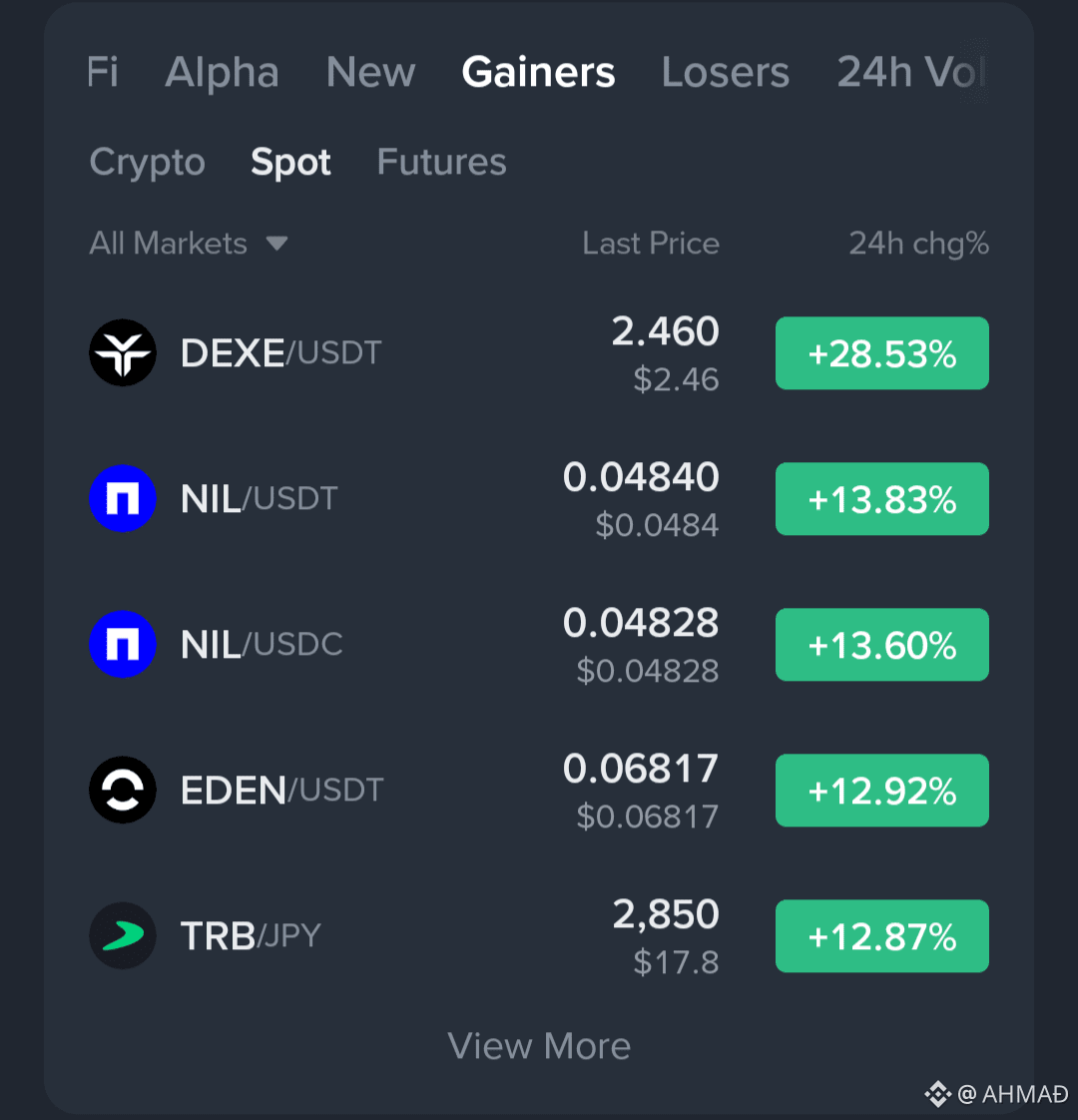
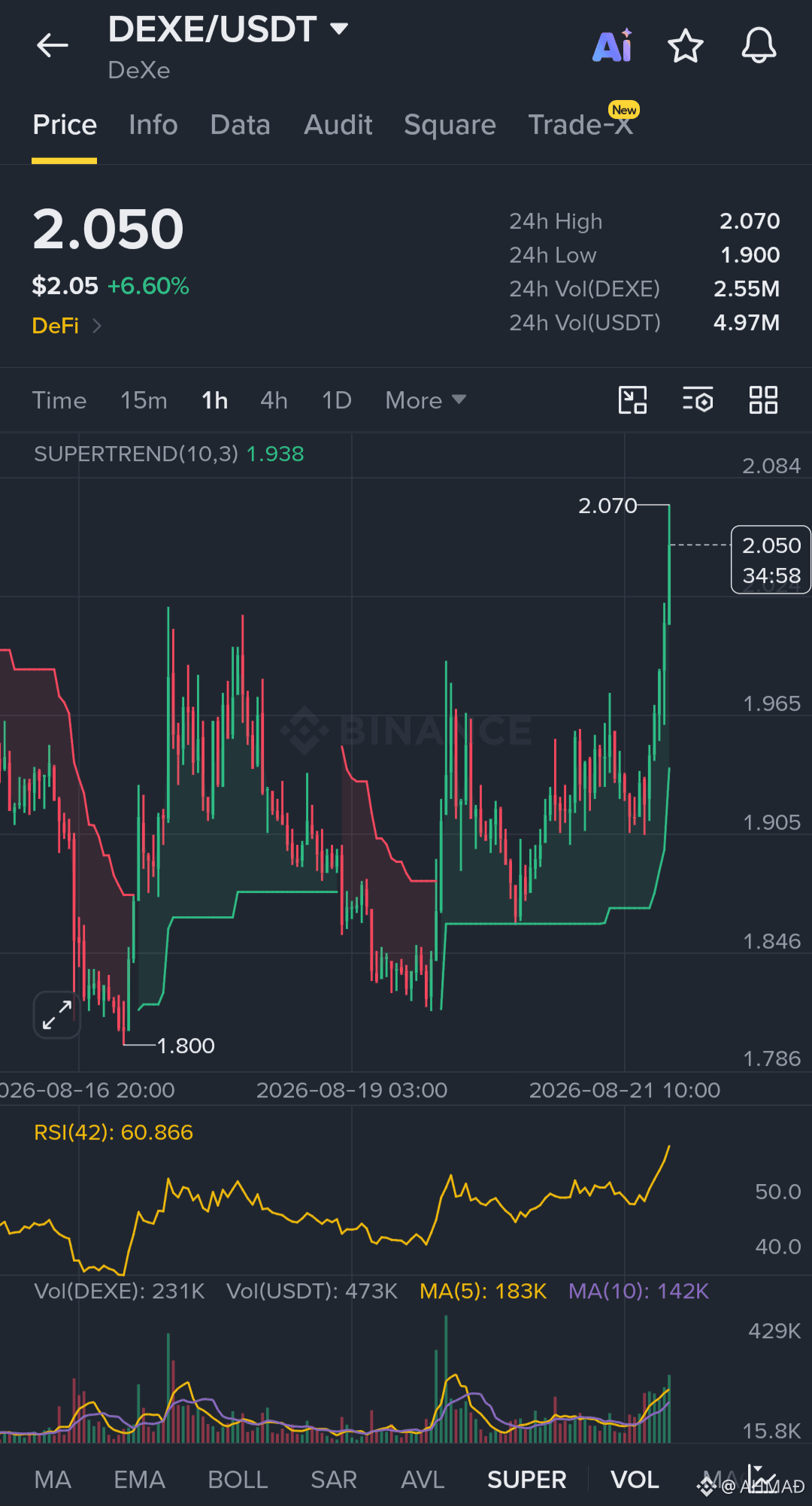
$DEXE breaks its major resistance and buyers are stepping in🚀
It's time tobuy more stack.
Click below to buy👇🏻
{spot}(DEXEUSDT)
$DEXE breaks its major resistance and buyers are stepping in🚀
It's time tobuy more stack.
Click below to buy👇🏻
It's time tobuy more stack.
Click below to buy👇🏻
3
483
·
--
🚀 Bitcoin breaks $75K!
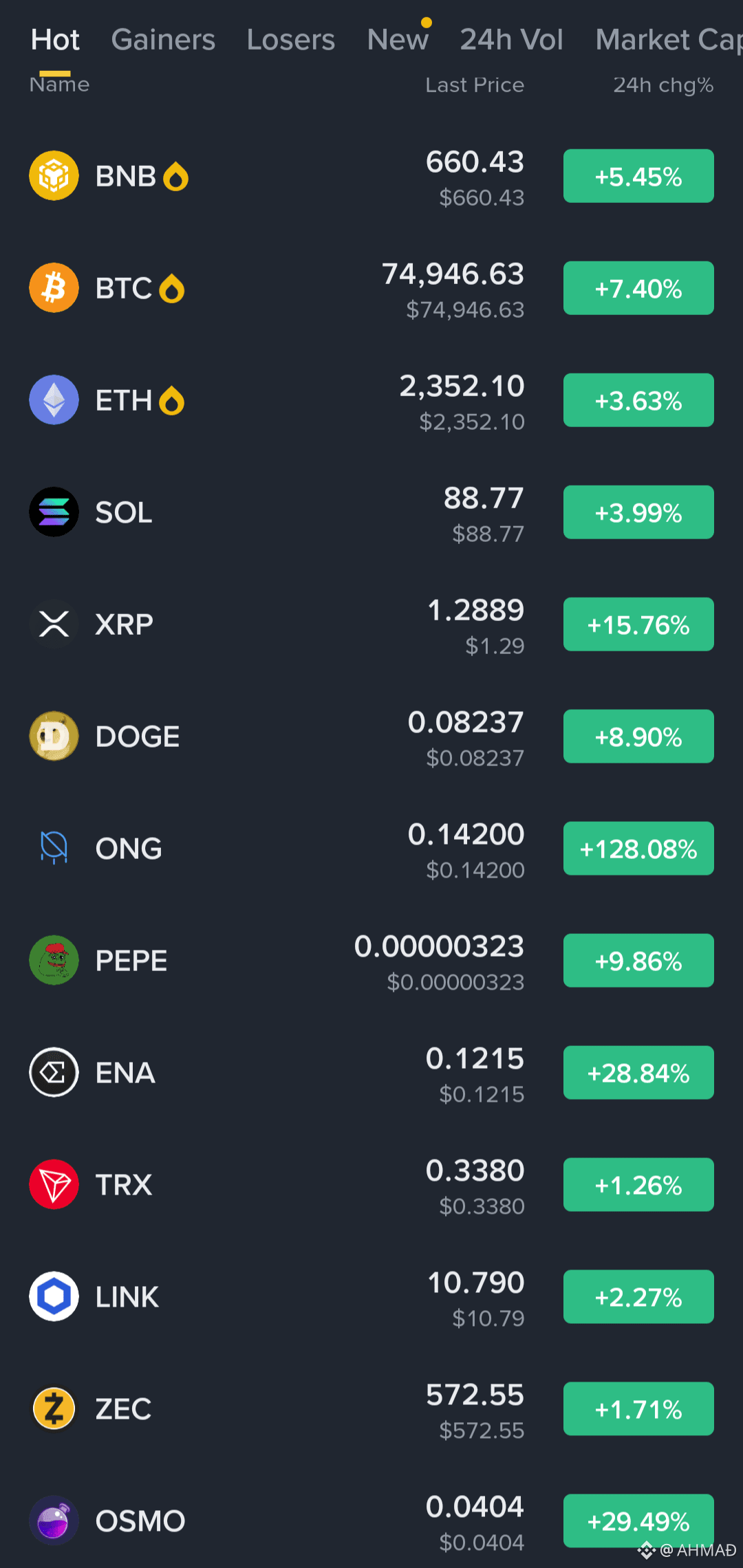
$BTC just surged past the 75,000 USDT milestone, currently trading at 75,523 USDT.📈 Up 8.23% in the last 24 hours!Is this the start of the next big rally?
#btc70k #strategy #Write2Earn
🚀 Bitcoin breaks $75K!
$BTC just surged past the 75,000 USDT milestone, currently trading at 75,523 USDT.📈 Up 8.23% in the last 24 hours!Is this the start of the next big rally?
#btc70k #strategy #Write2Earn
$BTC just surged past the 75,000 USDT milestone, currently trading at 75,523 USDT.📈 Up 8.23% in the last 24 hours!Is this the start of the next big rally?
#btc70k #strategy #Write2Earn
1
103
·
--
After a longgg longgg time,
I am witnessing of watching green everywhere 💚🍏🥹
$ETH
$ADA
$XRP
After a longgg longgg time,
I am witnessing of watching green everywhere 💚🍏🥹
$ETH
$ADA
$XRP
I am witnessing of watching green everywhere 💚🍏🥹
$ETH
$ADA
$XRP
175
Log in to explore more content
Join global crypto users on Binance Square
⚡️ Get latest and useful information about crypto.
💬 Trusted by the world’s largest crypto exchange.
👍 Discover real insights from verified creators.
Email / Phone number
Trending Topics
AppleDebutsFoldablePhone
18,090 views
368 Discussing
Apple just dropped the foldable iPhone — and the market is paying attention. This isn't just another product cycle; it's a new product category, a new CEO on stage, and a $1,999 price tag that pushes $AAPL further into ultra-premium territory. Foldables are the narrative, and Apple is now the headline.
#appledebutsfoldablephone #EUExtendsCentralContactPointToCASPs #US10YTreasuryYieldHitsHighestSinceNov2023 #BrentCrudeTops$100 #USTreasuryToBuyBackUpTo$6BLongDatedDebt
KimHotbae
·1 Likes
·1.8k views
IranSaysReadyToEscalateWarWithUS
35 views
12 Discussing
EUExtendsCentralContactPointToCASPs
3,360 views
113 Discussing