

Tellor Re-poster
205 Posts

Tellor Re-poster
Report
Block User
Tellor is a decentralized oracle protocol that incentivizes an open and permissionless network of data reporting. Important Links: https://t.co/7ezRcnBLOH
0 Following
93 Followers
36 Liked
Posts
All
Videos
Imagine an infrastructure that no central authority can ever shut down. This cypherpunk ideal serves as the guiding benchmark behind the development of Tellor.
The system is completely permissionless, meaning any individual is free to request, submit, contest, verify, or broadcast data on-chain without needing prior authorization. The network is so universally accessible that even autonomous AI agents can independently offer tips to secure fresh information.
At its core, Tellor is a resilient oracle deliberately engineered to continue functioning long after its original developers are gone.
90
Fundamentals of Oracle Best Practices
Creating a highly resilient system means preparing for the reality that oracles might experience delays, produce conflicting data, or completely stop responding during periods of intense network strain. A well designed integration always anticipates these issues and incorporates the necessary protective measures to ensure the protocol continues running smoothly regardless of the circumstances.
By utilizing multiple sources, establishing deviation bounds, and enforcing staleness limits, developers can successfully transform what would otherwise be critical points of failure into easily controlled situations.
55
Here is the most recent edition of the Tellor Dev Call for this week.
Here is the most recent edition of the Tellor Dev Call for this week.
75
Because smart contracts operate in total isolation and cannot browse the web, they require an external messenger to help them respond to off-chain occurrences such as election outcomes or shifting prices. These external messengers, known as oracles, are quietly acting as a major bottleneck for the entire blockchain ecosystem. On-chain prediction markets, lending protocols, and algorithmic stablecoins all lean heavily on these data providers, even though the vast majority of them introduce a serious centralized vulnerability.
People rarely pause to inquire about the exact methods these systems use to retrieve their information. When data is supplied by a team holding administrative keys, a restricted group of preapproved nodes, or just one specific corporation, the illusion of a trustless environment is broken. In such scenarios, you are merely trading one centralized intermediary for another, meaning that true decentralization essentially ends at the data delivery phase.
Tellor approaches this problem with a wonderfully straightforward alternative. By leveraging network economic incentives rather than blind faith, their system allows absolutely anyone to submit information and invites anyone to challenge those submissions. Ultimately, selecting your data delivery architecture is a fundamental decision. Which path will you choose?
157
Every function within the system, including requesting, reporting, validating, disputing, selecting, delegating, and relaying, is entirely open and permissionless. The platform would suffer from a centralized bottleneck if our team had to authorize even a single one of these activities. We warmly invite you to test and simulate your desired participation method before making a full commitment. You can easily model any role by visiting https://operator.tellor.io.
Every function within the system, including requesting, reporting, validating, disputing, selecting, delegating, and relaying, is entirely open and permissionless. The platform would suffer from a centralized bottleneck if our team had to authorize even a single one of these activities. We warmly invite you to test and simulate your desired participation method before making a full commitment. You can easily model any role by visiting https://operator.tellor.io.
78
Our primary focus has always been on maintaining a secure and decentralized environment, which is why crypto economic incentives have been integrated into our foundation from day one.
The unique architecture of Tellor provides a reliable data liveness guarantee. This continuous availability is achieved through a protocol designed to be entirely self-sustaining, meaning it will keep operating smoothly even in the complete absence of our core team.
You can explore the complete details in our whitepaper at https://docs.tellor.io/tellor/whitepaper

1
101
Smart contracts are inherently limited to accessing information that already resides on the blockchain. Because this isolated environment places most practical, everyday applications out of reach, a specialized bridge is required to connect them to the outside world. This tool is known as an oracle, and its primary purpose is to feed external data into the blockchain network so that smart contracts can put it to work.
The architecture of an oracle holds the exact same level of importance as the smart contracts relying on its feeds. As long as an oracle supplies reliable and readily accessible information, the connected applications function effectively and deliver true value. However, if that data becomes flawed or unavailable, any system depending on it faces severe vulnerabilities.
The architecture of an oracle holds the exact same level of importance as the smart contracts relying on its feeds. As long as an oracle supplies reliable and readily accessible information, the connected applications function effectively and deliver true value. However, if that data becomes flawed or unavailable, any system depending on it faces severe vulnerabilities.
55
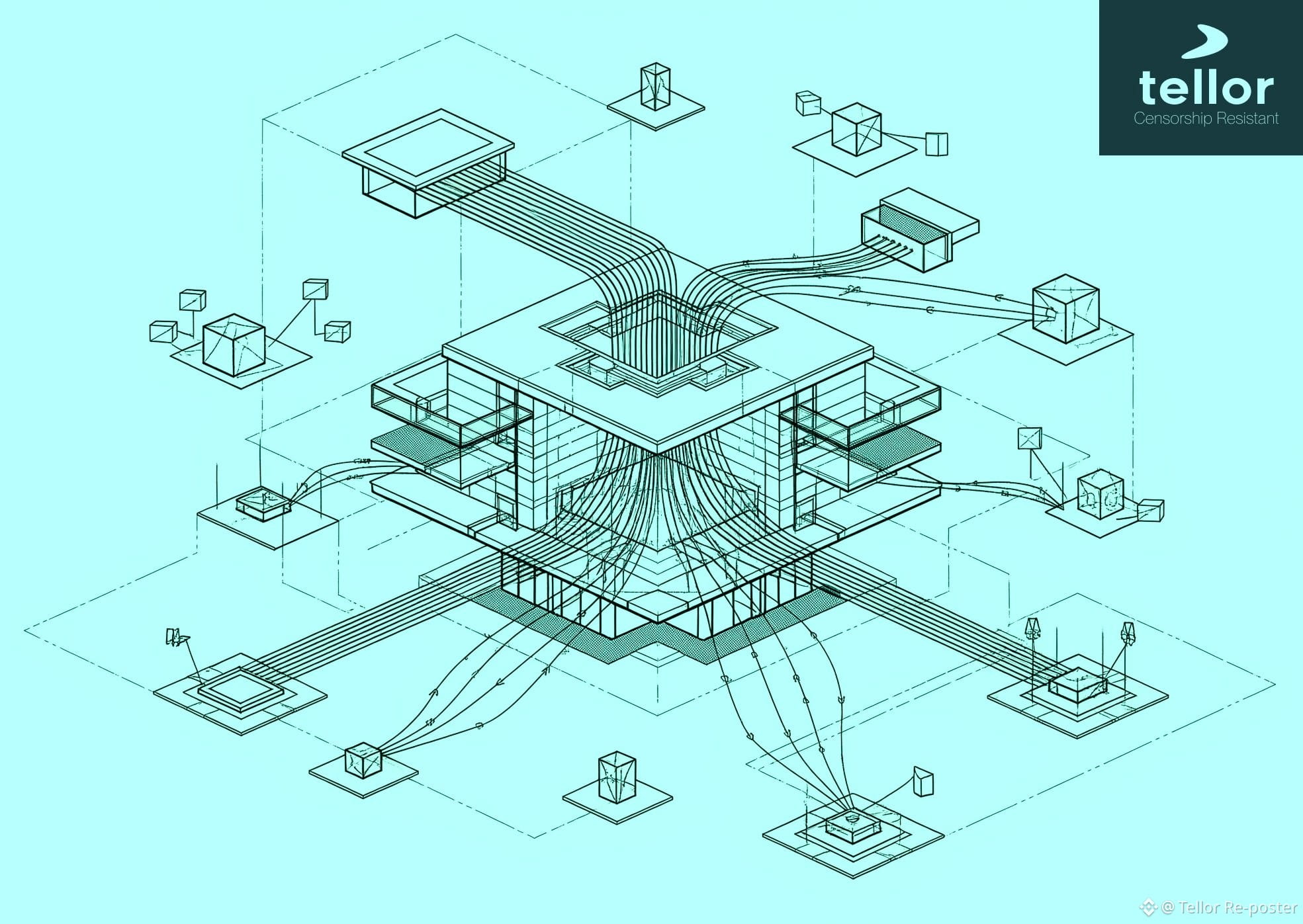
Building a highly secure architecture requires you to assume that any individual component might fail, allowing you to design robust solutions around those potential vulnerabilities. Even though depending on just one data feed offers simplicity, pulling information from a variety of sources provides much better stability.
There are several ways to put this resilient approach into practice. For instance, you could calculate a median figure from completely separate oracles, or you might choose to rely on a primary feed while keeping another ready as a backup. It is also helpful to give a guardian or your governance system the ability to change the oracle address should the situation call for it. Furthermore, applying customized filters for your specific application, including things like volume checks and price bands, can offer excellent protection.
With Tellor, you receive data that is completely verifiable and permissionless. Ultimately, you have the freedom to establish the exact guardrails that align perfectly with your unique risk profile.
1
121
The method used to generate data outside the blockchain plays a key role in determining the duration of unequal knowledge access. Because of these off-chain generation processes, the information asymmetry window has the potential to stretch from the exact moment of origination all the way to its final transmission.
Read the full discussion here:
https://tellor.io/blog/oracles-and-asymmetric-information/
Read the full discussion here:
https://tellor.io/blog/oracles-and-asymmetric-information/

41
Discover the steps needed to start your journey as a reporter by reading the full guide available here: https://docs.tellor.io/tellor/running-palmito-testnet/run-the-data-reporter
Discover the steps needed to start your journey as a reporter by reading the full guide available here: https://docs.tellor.io/tellor/running-palmito-testnet/run-the-data-reporter
52
By offering an adaptable framework, Tellor empowers you to decide exactly how to interact with our data. We put you in charge of determining the precise amounts of monitoring, delay, redundancy, and validation that fit your specific requirements. Additionally, you are free to build your own governance models and extra security protocols directly on top of our system.
Find out more details here:
https://docs.tellor.io/tellor
Find out more details here:
https://docs.tellor.io/tellor
92
We invite you to explore a fully functional frontend demonstration available at https://github.com/tellor-io/SampleTellorUserPull which illustrates how to secure a TRB loan using ETH as collateral via Tellor Pull.
During this operation, the user interface directly retrieves the ETH/USD and TRB/USD price feeds from Tellor. Should the validator set for the bridge be outdated, the frontend automatically refreshes it. Following this step, the system submits both attestations to the smart contract within a single call. Upon receiving the data, the contract completes the required verification process, evaluates the loan-to-value conditions, and successfully releases the funds.
During this operation, the user interface directly retrieves the ETH/USD and TRB/USD price feeds from Tellor. Should the validator set for the bridge be outdated, the frontend automatically refreshes it. Following this step, the system submits both attestations to the smart contract within a single call. Upon receiving the data, the contract completes the required verification process, evaluates the loan-to-value conditions, and successfully releases the funds.
76
We are pleased to share that the latest Tellor Dev Call has just been released and is now available for you to tune in to.
We are pleased to share that the latest Tellor Dev Call has just been released and is now available for you to tune in to.
59
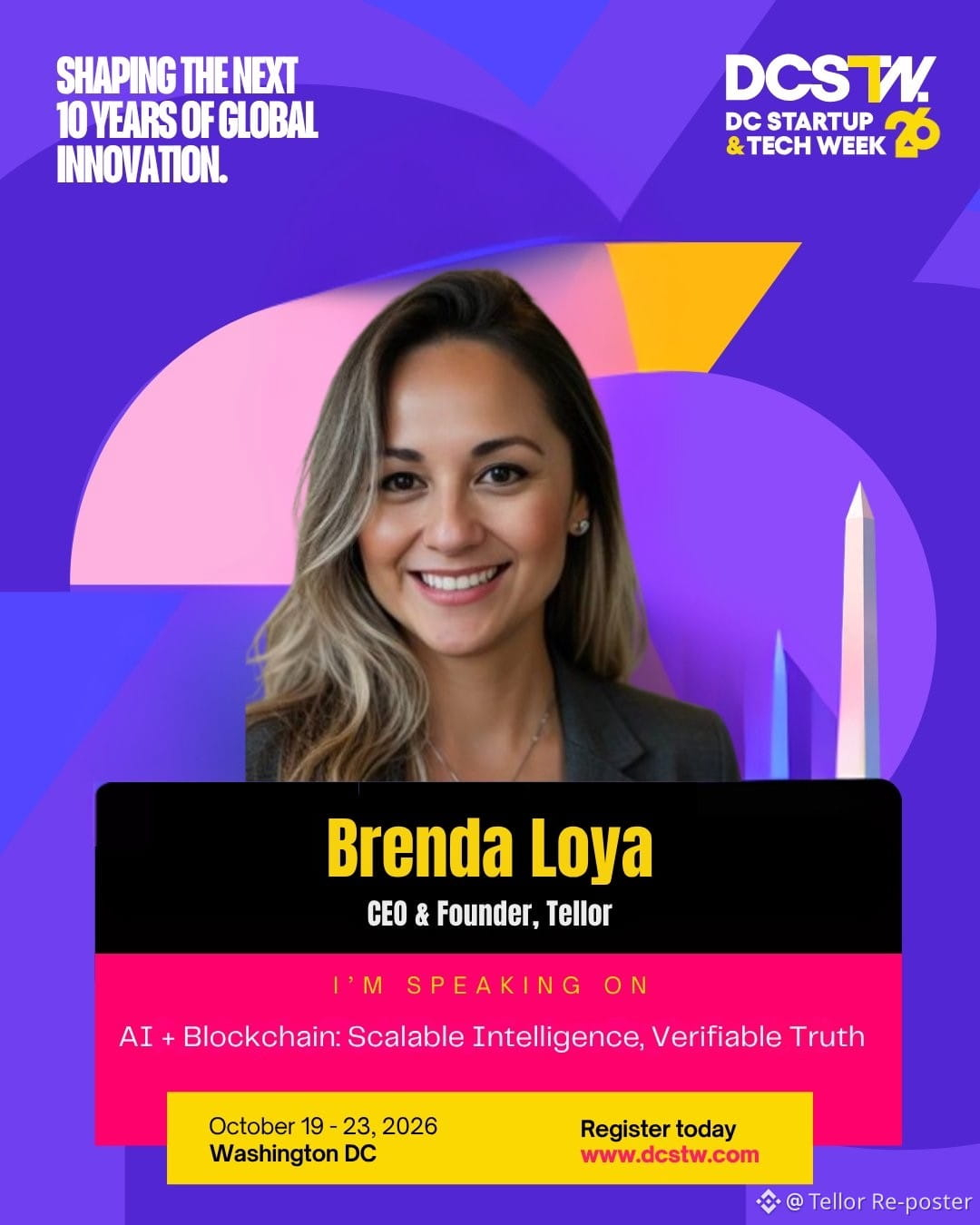
For anyone currently establishing a business in the DMV region, the premier occasion to network, acquire new insights, and elevate your enterprise has arrived. We are incredibly proud to share that @JustBrendax from our organization will take the stage as a presenter during @dcstartupweek 2026. Her presentation, scheduled for tomorrow, Oct. 20, will focus on the topic of AI + Blockchain. Make sure to reserve your access by registering at the following link: https://luma.com/dcstw2026-register
For anyone currently establishing a business in the DMV region, the premier occasion to network, acquire new insights, and elevate your enterprise has arrived. We are incredibly proud to share that @JustBrendax from our organization will take the stage as a presenter during @dcstartupweek 2026. Her presentation, scheduled for tomorrow, Oct. 20, will focus on the topic of AI + Blockchain. Make sure to reserve your access by registering at the following link: https://luma.com/dcstw2026-register
70
The Tellor network operates on a completely permissionless basis, meaning participants do not need to navigate whitelists or formal approval procedures. Whether you are looking to operate a Tellor validator, a reporter, or both, you can find everything you need to get started right here:
https://docs.tellor.io/tellor/running-palmito-testnet/public-testnet
https://docs.tellor.io/tellor/running-palmito-testnet/public-testnet
13
When we want to evaluate the censorship resistance of an oracle, we can only do so by looking at the specific level of financial expense and organized effort needed to block legitimate relays, disputes, or reports from successfully integrating into the network.
To determine how effectively an oracle resists censorship, we need to check a few key criteria. For starters, it must be impossible for an individual operator, or even a small group of them, to block a report, query, or dispute. Furthermore, the financial burden of continuously suppressing information has to be greater than the total value secured by the protocol relying on that data. It is also crucial that backup routes stay accessible during intentional attacks. These essential alternative paths include on-chain disputes, independent relayers, and extra reporters.
Because these standards are so rigorous, any network structured around gated dispute processes or permissioned groups of reporters will fundamentally fail to meet the criteria for true censorship resistance.

74
Are you searching for an oracle where the founding team has absolutely no authority to dictate what information is permitted to survive? Tellor provides a completely open environment where taking on a role never requires outside authorization, and your actions cannot be stopped by any trusted intermediary. Within this ecosystem, every single person has the equal opportunity to tip a query, stake to report it, raise an on-chain dispute, or relay attestations to a different chain. Ultimately, this seamless and permissionless design illustrates exactly how genuine censorship resistance functions in the real world.
Are you searching for an oracle where the founding team has absolutely no authority to dictate what information is permitted to survive? Tellor provides a completely open environment where taking on a role never requires outside authorization, and your actions cannot be stopped by any trusted intermediary. Within this ecosystem, every single person has the equal opportunity to tip a query, stake to report it, raise an on-chain dispute, or relay attestations to a different chain. Ultimately, this seamless and permissionless design illustrates exactly how genuine censorship resistance functions in the real world.
77
To ensure oracle safety, you should always approach external information as a potentially adversarial input. Creating a highly resilient system requires implementing layered controls across different stages of your architecture.
At the data layer, it is crucial to focus on proper aggregation and source diversity. Moving to the protocol layer, your system needs robust defenses like censorship resistance, dedicated dispute windows, and solid cryptoeconomic incentives. Finally, the integration layer demands thorough consumer-side validation, which you can enforce by utilizing circuit breakers, delayed consumption, deviation bounds, and staleness checks.
At the data layer, it is crucial to focus on proper aggregation and source diversity. Moving to the protocol layer, your system needs robust defenses like censorship resistance, dedicated dispute windows, and solid cryptoeconomic incentives. Finally, the integration layer demands thorough consumer-side validation, which you can enforce by utilizing circuit breakers, delayed consumption, deviation bounds, and staleness checks.
42
The safety of the Tellor platform is driven by an engaged group of dedicated contributors, which includes delegators, selectors, validators, reporters, and security providers. By locking TRB into the protocol, these users take on genuine operational duties to maintain the network.
We believe this level of dedication warrants absolute visibility. To deliver this clarity, our team has developed the Tellor Operator Dashboard, available now at http://operator.tellor.io.
Find out more information by visiting https://tellor.io/blog/introducing-the-tellor-operator-dashboard/
We believe this level of dedication warrants absolute visibility. To deliver this clarity, our team has developed the Tellor Operator Dashboard, available now at http://operator.tellor.io.
Find out more information by visiting https://tellor.io/blog/introducing-the-tellor-operator-dashboard/
91
Recognizing where your protocol might be vulnerable and establishing dedicated procedures to reduce those threats remains the most reliable strategy for keeping your system secure. Discover more about building these essential safeguards by visiting https://tellor.io/blog/tellor-security-201/
Recognizing where your protocol might be vulnerable and establishing dedicated procedures to reduce those threats remains the most reliable strategy for keeping your system secure. Discover more about building these essential safeguards by visiting https://tellor.io/blog/tellor-security-201/
75
Log in to explore more content
Join global crypto users on Binance Square
⚡️ Get latest and useful information about crypto.
💬 Trusted by the world’s largest crypto exchange.
👍 Discover real insights from verified creators.
Email / Phone number