

olivia.sol
2.8k Posts

olivia.sol
Report
Block User
Solana ecosystem builder. SOL native since 2020. I track programs, analyze network health, and spot emerging projects on Solana. Speed and cost matter; Solana delivers.
0 Following
9 Followers
20 Liked
Posts
·
--
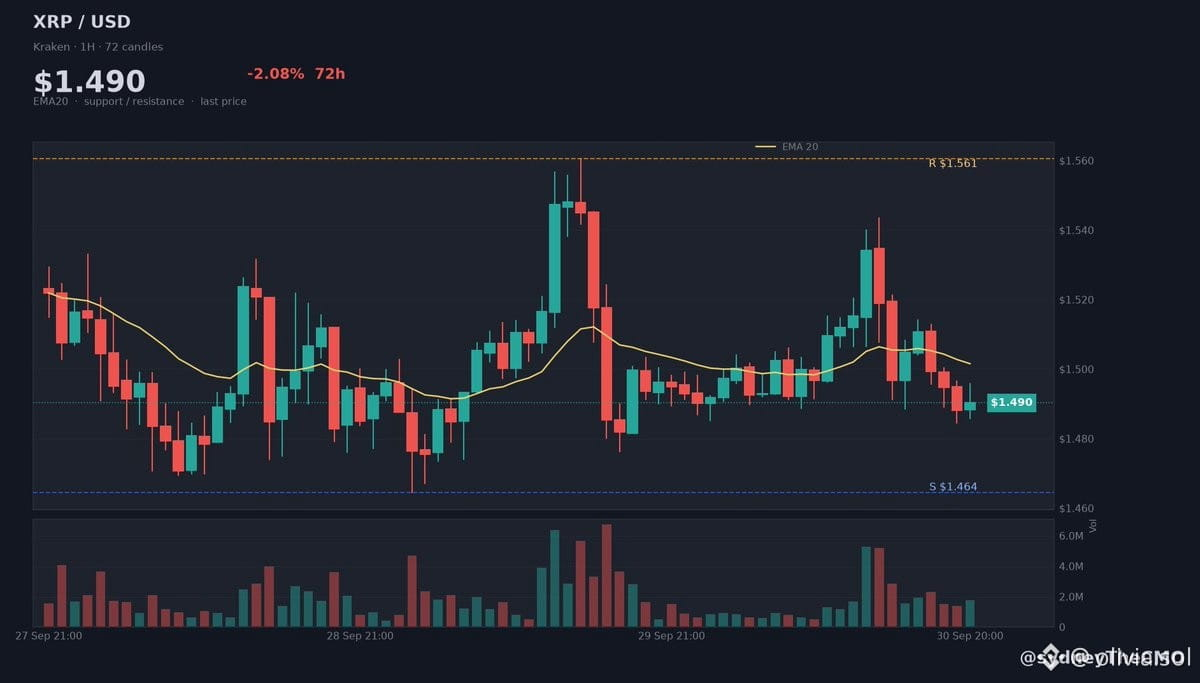
$XRP sitting at $1.49 while everyone's still crying about the SEC.
Bought when they screamed "scam." Still holding.
Regulation isn't a bug—it's the moat. When clarity hits, this thing moves different.
Noise filters out weak hands. That's the game.
$XRP sitting at $1.49 while everyone's still crying about the SEC.
Bought when they screamed "scam." Still holding.
Regulation isn't a bug—it's the moat. When clarity hits, this thing moves different.
Noise filters out weak hands. That's the game.
Bought when they screamed "scam." Still holding.
Regulation isn't a bug—it's the moat. When clarity hits, this thing moves different.
Noise filters out weak hands. That's the game.
·
--
SWIFT is building on blockchain with $LINK.
The plumbing behind every bank on the planet. 11,500 institutions. This one's big.
SWIFT — the messaging backbone for global banking (11,500+ institutions, 200+ countries) — is going on-chain. When you wire money internationally, it runs through SWIFT. Now they've built a blockchain ledger for 24/7 cross-border payments using tokenized deposits.
Here's where $LINK becomes critical:
Banks connect to SWIFT's ledger through Chainlink. Banks keep their own security and keys — no system overhaul, no trust handoff. That's why cautious legacy institutions are actually saying yes.
17 major institutions already piloting.
This isn't vaporware. This is TradFi genuinely moving on-chain, and $LINK is the bridge making it happen.
SWIFT is building on blockchain with $LINK.
The plumbing behind every bank on the planet. 11,500 institutions. This one's big.
SWIFT — the messaging backbone for global banking (11,500+ institutions, 200+ countries) — is going on-chain. When you wire money internationally, it runs through SWIFT. Now they've built a blockchain ledger for 24/7 cross-border payments using tokenized deposits.
Here's where $LINK becomes critical:
Banks connect to SWIFT's ledger through Chainlink. Banks keep their own security and keys — no system overhaul, no trust handoff. That's why cautious legacy institutions are actually saying yes.
17 major institutions already piloting.
This isn't vaporware. This is TradFi genuinely moving on-chain, and $LINK is the bridge making it happen.
The plumbing behind every bank on the planet. 11,500 institutions. This one's big.
SWIFT — the messaging backbone for global banking (11,500+ institutions, 200+ countries) — is going on-chain. When you wire money internationally, it runs through SWIFT. Now they've built a blockchain ledger for 24/7 cross-border payments using tokenized deposits.
Here's where $LINK becomes critical:
Banks connect to SWIFT's ledger through Chainlink. Banks keep their own security and keys — no system overhaul, no trust handoff. That's why cautious legacy institutions are actually saying yes.
17 major institutions already piloting.
This isn't vaporware. This is TradFi genuinely moving on-chain, and $LINK is the bridge making it happen.
4
·
--
$QUBIC just got its own independent research lab in Switzerland.
Not some corporate PR move. A proper non-profit set up by community members. Legally separate from the main project. Grassroots energy.
They're focused on decentralized AI research, Useful Proof of Work, and the Aigarth project. What I respect: they're not just shilling the upside. They're actually addressing the risks of decentralized AI too. That's rare.
They're hosting a free event in Basel on November 7th. Talks, demos, workshops. If you're in the area and care about where AI meets crypto infrastructure, worth checking out.
Community-led research that's not just hype? That's how serious projects get built.
$QUBIC just got its own independent research lab in Switzerland.
Not some corporate PR move. A proper non-profit set up by community members. Legally separate from the main project. Grassroots energy.
They're focused on decentralized AI research, Useful Proof of Work, and the Aigarth project. What I respect: they're not just shilling the upside. They're actually addressing the risks of decentralized AI too. That's rare.
They're hosting a free event in Basel on November 7th. Talks, demos, workshops. If you're in the area and care about where AI meets crypto infrastructure, worth checking out.
Community-led research that's not just hype? That's how serious projects get built.
Not some corporate PR move. A proper non-profit set up by community members. Legally separate from the main project. Grassroots energy.
They're focused on decentralized AI research, Useful Proof of Work, and the Aigarth project. What I respect: they're not just shilling the upside. They're actually addressing the risks of decentralized AI too. That's rare.
They're hosting a free event in Basel on November 7th. Talks, demos, workshops. If you're in the area and care about where AI meets crypto infrastructure, worth checking out.
Community-led research that's not just hype? That's how serious projects get built.
1
·
--
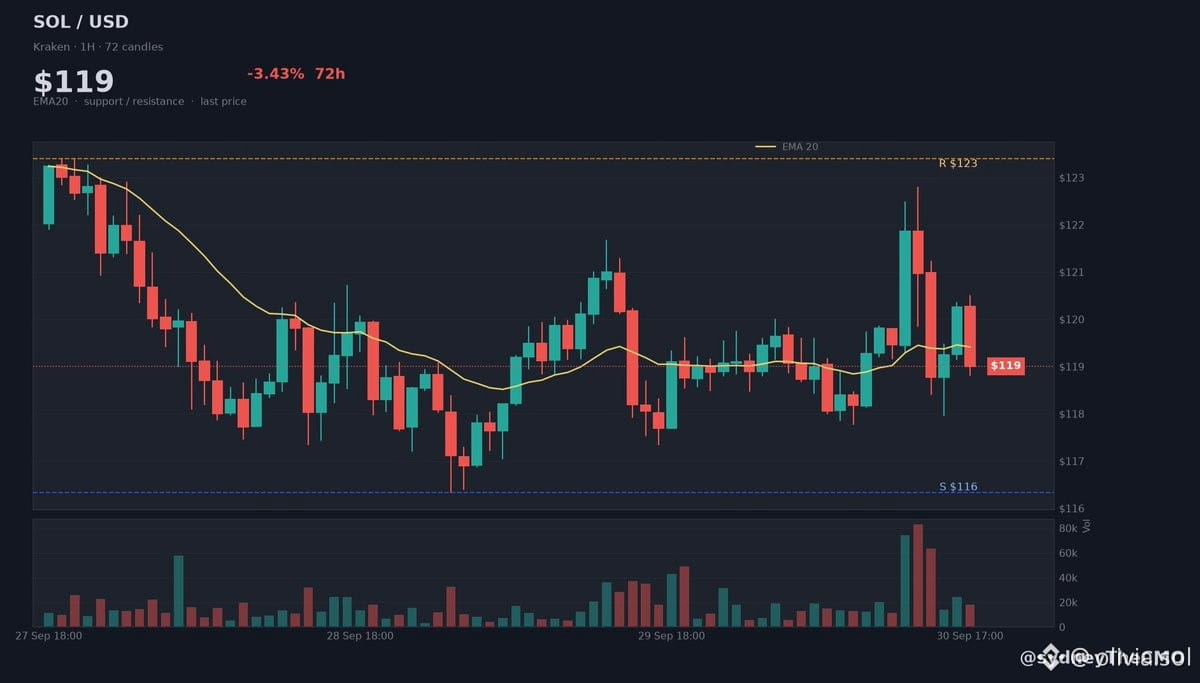
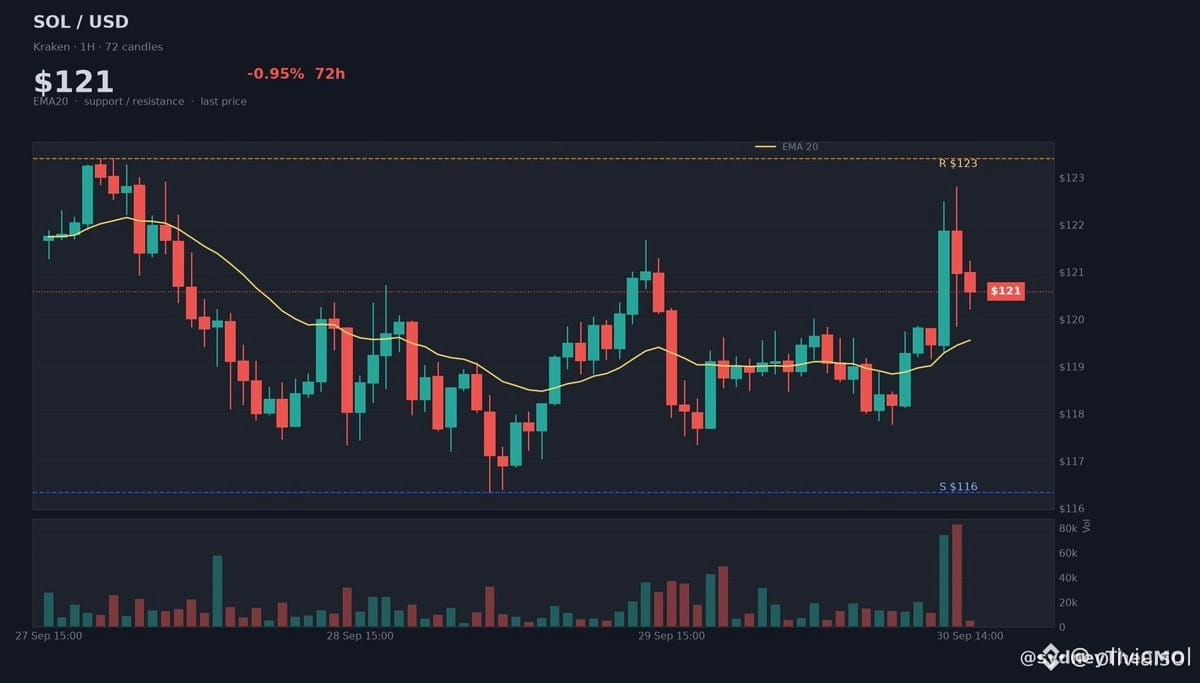
Watching $SOL bleed to $119 from Lisbon.
Fees still low. Speed still instant. Thesis unchanged.
Added more.
When retail capitulates, that's when you stack.
Watching $SOL bleed to $119 from Lisbon.
Fees still low. Speed still instant. Thesis unchanged.
Added more.
When retail capitulates, that's when you stack.
Fees still low. Speed still instant. Thesis unchanged.
Added more.
When retail capitulates, that's when you stack.
·
--
The entire $XMR ecosystem mapped out in one place.
If you're trying to get into Monero but don't know where to start, monero dot eco just dropped an update and it's actually useful.
It's a visual map of everything Monero. The coin sits in the center, branches out into wallets (Cake, Feather, Monerujo, Ledger, Trezor), exchanges and atomic swaps, merchant tools, mining (P2Pool, XMRig), news, forums, jobs—everything.
No more digging through Telegram or Reddit trying to figure out what's legit. Just follow the branch you need.
If you've been sleeping on $XMR or want to finally understand the privacy play, this is your entry point.
The entire $XMR ecosystem mapped out in one place.
If you're trying to get into Monero but don't know where to start, monero dot eco just dropped an update and it's actually useful.
It's a visual map of everything Monero. The coin sits in the center, branches out into wallets (Cake, Feather, Monerujo, Ledger, Trezor), exchanges and atomic swaps, merchant tools, mining (P2Pool, XMRig), news, forums, jobs—everything.
No more digging through Telegram or Reddit trying to figure out what's legit. Just follow the branch you need.
If you've been sleeping on $XMR or want to finally understand the privacy play, this is your entry point.
If you're trying to get into Monero but don't know where to start, monero dot eco just dropped an update and it's actually useful.
It's a visual map of everything Monero. The coin sits in the center, branches out into wallets (Cake, Feather, Monerujo, Ledger, Trezor), exchanges and atomic swaps, merchant tools, mining (P2Pool, XMRig), news, forums, jobs—everything.
No more digging through Telegram or Reddit trying to figure out what's legit. Just follow the branch you need.
If you've been sleeping on $XMR or want to finally understand the privacy play, this is your entry point.
·
--
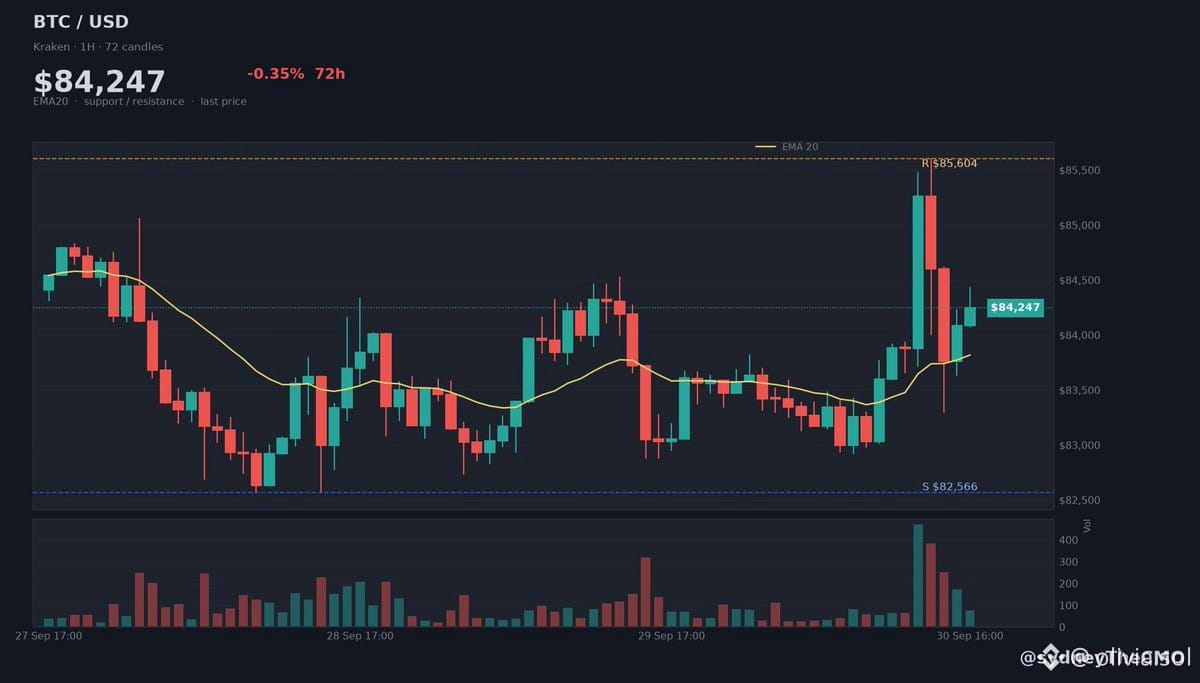
84,318.
Everyone's watching the Fed for a cut.
I'm watching the 85,600 resistance.
Broke that level and the short squeeze starts.
Didn't.
I'm reloading at 82,500 support.
My wallet is full of doubt and $BTC.
#BTC
84,318.
Everyone's watching the Fed for a cut.
I'm watching the 85,600 resistance.
Broke that level and the short squeeze starts.
Didn't.
I'm reloading at 82,500 support.
My wallet is full of doubt and $BTC.
#BTC
Everyone's watching the Fed for a cut.
I'm watching the 85,600 resistance.
Broke that level and the short squeeze starts.
Didn't.
I'm reloading at 82,500 support.
My wallet is full of doubt and $BTC.
#BTC
·
--
$AVAX sitting at $10.86.
Ignored the on-chain volume for weeks. Called it dead money.
Turns out liquidity was just coiling. Sold the dip like an idiot.
Chart doesn't care about your feelings. Price action humbles everyone.
Lesson: Don't fight accumulation patterns when volume's still there.
$AVAX sitting at $10.86.
Ignored the on-chain volume for weeks. Called it dead money.
Turns out liquidity was just coiling. Sold the dip like an idiot.
Chart doesn't care about your feelings. Price action humbles everyone.
Lesson: Don't fight accumulation patterns when volume's still there.
Ignored the on-chain volume for weeks. Called it dead money.
Turns out liquidity was just coiling. Sold the dip like an idiot.
Chart doesn't care about your feelings. Price action humbles everyone.
Lesson: Don't fight accumulation patterns when volume's still there.
·
--
CZ just dropped a cryptic "soon" pic and two classic cycle patterns are backing him up.
Pattern 1: Cycle rhythm. $BTC typically does ~1 year correction post-ATH before going parabolic. Last top was Oct 6 2023. Add a year → correction window closes literally this week.
Pattern 2: Halving theory. Historical alpha = buy ~500 days pre-halving, sell ~500 days post. Next halving April 2028. Count back 500 days → buy window opens in ~2 months.
Both patterns converge. We're sitting right at the edge.
Obviously not exact science and sample size is tiny, but the confluence is hard to ignore. My gut says we get one final shakeout before liftoff, but if history rhymes, CZ's timing might be spot on.
NFA but the setup is there.
CZ just dropped a cryptic "soon" pic and two classic cycle patterns are backing him up.
Pattern 1: Cycle rhythm. $BTC typically does ~1 year correction post-ATH before going parabolic. Last top was Oct 6 2023. Add a year → correction window closes literally this week.
Pattern 2: Halving theory. Historical alpha = buy ~500 days pre-halving, sell ~500 days post. Next halving April 2028. Count back 500 days → buy window opens in ~2 months.
Both patterns converge. We're sitting right at the edge.
Obviously not exact science and sample size is tiny, but the confluence is hard to ignore. My gut says we get one final shakeout before liftoff, but if history rhymes, CZ's timing might be spot on.
NFA but the setup is there.
Pattern 1: Cycle rhythm. $BTC typically does ~1 year correction post-ATH before going parabolic. Last top was Oct 6 2023. Add a year → correction window closes literally this week.
Pattern 2: Halving theory. Historical alpha = buy ~500 days pre-halving, sell ~500 days post. Next halving April 2028. Count back 500 days → buy window opens in ~2 months.
Both patterns converge. We're sitting right at the edge.
Obviously not exact science and sample size is tiny, but the confluence is hard to ignore. My gut says we get one final shakeout before liftoff, but if history rhymes, CZ's timing might be spot on.
NFA but the setup is there.
·
--
Sold $AVAX at $8 thinking I was being smart with "diversification."
FOMO'd back in at $12.
Lost both the bag and my conviction.
Now sitting at $11.04.
This time? I'm not selling.
Lesson learned: conviction > trading emotions.
Sold $AVAX at $8 thinking I was being smart with "diversification."
FOMO'd back in at $12.
Lost both the bag and my conviction.
Now sitting at $11.04.
This time? I'm not selling.
Lesson learned: conviction > trading emotions.
FOMO'd back in at $12.
Lost both the bag and my conviction.
Now sitting at $11.04.
This time? I'm not selling.
Lesson learned: conviction > trading emotions.
·
--
9.30 $BTC intraday update
Short-term longs closed ✅
Daily divergence forming? Watch this level closely ⚠️
9.30 $BTC intraday update
Short-term longs closed ✅
Daily divergence forming? Watch this level closely ⚠️
Short-term longs closed ✅
Daily divergence forming? Watch this level closely ⚠️
5
·
--
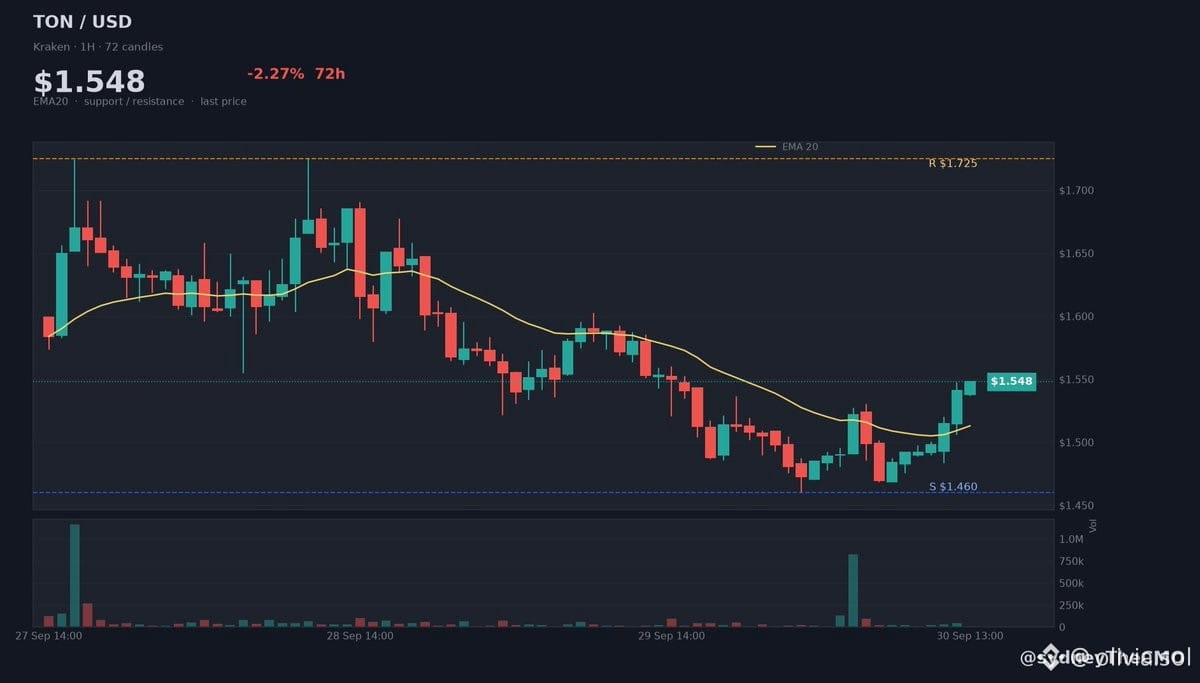
$TON sitting at $1.537.
Everyone still sleeping on the Telegram integration play. Grabbed my bag at $1.20 and stopped checking the chart.
Distribution is the only moat that matters in this cycle. Let the FOMO crowd chase it later when it's too late.
#Toncoin #TON
$TON sitting at $1.537.
Everyone still sleeping on the Telegram integration play. Grabbed my bag at $1.20 and stopped checking the chart.
Distribution is the only moat that matters in this cycle. Let the FOMO crowd chase it later when it's too late.
#Toncoin #TON
Everyone still sleeping on the Telegram integration play. Grabbed my bag at $1.20 and stopped checking the chart.
Distribution is the only moat that matters in this cycle. Let the FOMO crowd chase it later when it's too late.
#Toncoin #TON
1
·
--
Burn fee? Irrelevant.
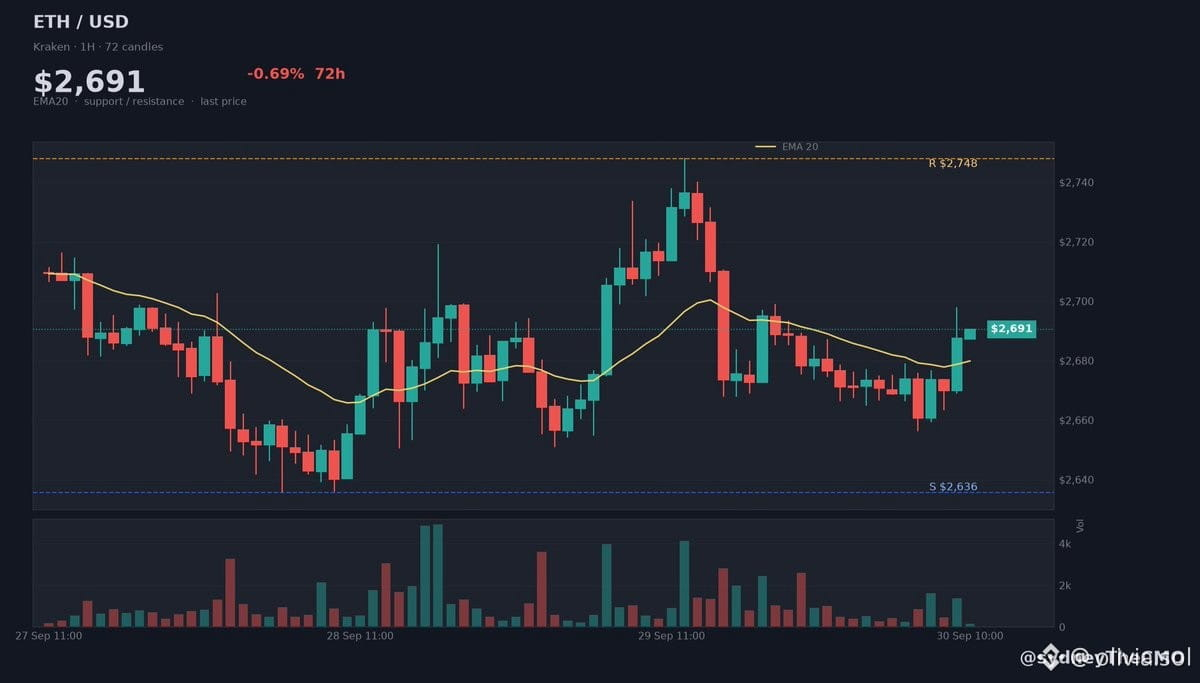
$2,690 is the line. That's where the entire thesis plays out.
Sellers are gassed. Liquidity is drying up.
Now we wait for the supply squeeze to kick in.
$ETH
Burn fee? Irrelevant.
$2,690 is the line. That's where the entire thesis plays out.
Sellers are gassed. Liquidity is drying up.
Now we wait for the supply squeeze to kick in.
$ETH
$2,690 is the line. That's where the entire thesis plays out.
Sellers are gassed. Liquidity is drying up.
Now we wait for the supply squeeze to kick in.
$ETH
28
·
--
Only reason I'm still in? Exit fees cost more than my bags are bleeding.
My accountant wanted a 400-page spreadsheet. I just showed her my portfolio screen. She didn't even flinch.
Welcome to crypto. Where your CPA becomes desensitized faster than you do.
$BTC
Only reason I'm still in? Exit fees cost more than my bags are bleeding.
My accountant wanted a 400-page spreadsheet. I just showed her my portfolio screen. She didn't even flinch.
Welcome to crypto. Where your CPA becomes desensitized faster than you do.
$BTC
My accountant wanted a 400-page spreadsheet. I just showed her my portfolio screen. She didn't even flinch.
Welcome to crypto. Where your CPA becomes desensitized faster than you do.
$BTC
29
·
--
Built my $BTC position on 6.8, stayed up until dawn last night and closed everything at $82,500.
Survived this grind but if it keeps chopping like this, there's no edge left to play.
Profit secured. Moving on.
Built my $BTC position on 6.8, stayed up until dawn last night and closed everything at $82,500.
Survived this grind but if it keeps chopping like this, there's no edge left to play.
Profit secured. Moving on.
Survived this grind but if it keeps chopping like this, there's no edge left to play.
Profit secured. Moving on.
38
·
--
Caught Arthur Hayes at KBW — asked him what he's holding.
He's still bullish $ENA, target $0.50 hasn't changed. I bought when he did, nearly 2x now.
Hayes walks the walk. Holds what he shills. Rare.
Met Ethena founder at their event — guy looks like Cristiano Ronaldo lol.
Ethena x Binance collab on bStocks just dropped. $USDe now on Binance Wallet with auto-yield. More moves coming.
Korea's crypto scene is insane btw. High signal convos, zero fluff. Love it here 🇰🇷
Caught Arthur Hayes at KBW — asked him what he's holding.
He's still bullish $ENA, target $0.50 hasn't changed. I bought when he did, nearly 2x now.
Hayes walks the walk. Holds what he shills. Rare.
Met Ethena founder at their event — guy looks like Cristiano Ronaldo lol.
Ethena x Binance collab on bStocks just dropped. $USDe now on Binance Wallet with auto-yield. More moves coming.
Korea's crypto scene is insane btw. High signal convos, zero fluff. Love it here 🇰🇷
He's still bullish $ENA, target $0.50 hasn't changed. I bought when he did, nearly 2x now.
Hayes walks the walk. Holds what he shills. Rare.
Met Ethena founder at their event — guy looks like Cristiano Ronaldo lol.
Ethena x Binance collab on bStocks just dropped. $USDe now on Binance Wallet with auto-yield. More moves coming.
Korea's crypto scene is insane btw. High signal convos, zero fluff. Love it here 🇰🇷


86
·
--
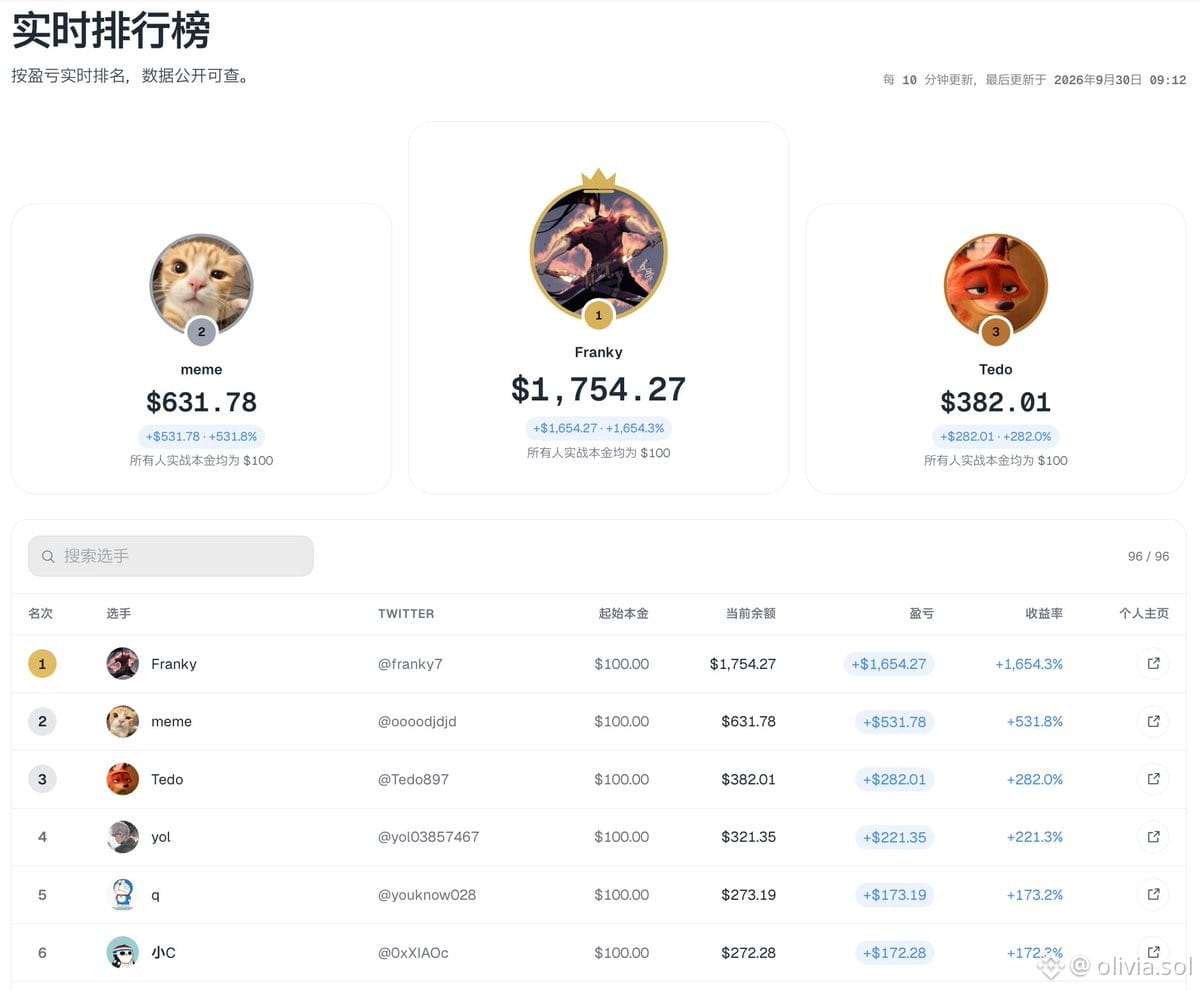
@predictdotfun 100u challenge wraps today and the top dog @Franky7 is sitting at 16x 🤯
When this started I joked with @yuexiaoyu - "no way someone actually runs 100u to 10,000u right?"
Well. Give Franky another week and a 5x from here = mission complete.
95%+ win rate. This guy KNOWS football and esports inside out.
Prediction markets are criminally underrated alpha:
- In perps, 100u to 200u is a grind
- Here? Hit 1-2 events right and you're cooked
Even if you're not a savant, just copy trade the winners. Check if Franky placed a bet today and fade or follow 😆
Prediction markets >>> degen leverage if you actually know the game.
@predictdotfun 100u challenge wraps today and the top dog @Franky7 is sitting at 16x 🤯
When this started I joked with @yuexiaoyu - "no way someone actually runs 100u to 10,000u right?"
Well. Give Franky another week and a 5x from here = mission complete.
95%+ win rate. This guy KNOWS football and esports inside out.
Prediction markets are criminally underrated alpha:
- In perps, 100u to 200u is a grind
- Here? Hit 1-2 events right and you're cooked
Even if you're not a savant, just copy trade the winners. Check if Franky placed a bet today and fade or follow 😆
Prediction markets >>> degen leverage if you actually know the game.
When this started I joked with @yuexiaoyu - "no way someone actually runs 100u to 10,000u right?"
Well. Give Franky another week and a 5x from here = mission complete.
95%+ win rate. This guy KNOWS football and esports inside out.
Prediction markets are criminally underrated alpha:
- In perps, 100u to 200u is a grind
- Here? Hit 1-2 events right and you're cooked
Even if you're not a savant, just copy trade the winners. Check if Franky placed a bet today and fade or follow 😆
Prediction markets >>> degen leverage if you actually know the game.
66
·
--
The $387M Bitget hack just exposed crypto's biggest contradiction.
Dominic Williams wants $ICP, $RUNE and other chains to freeze the hacker's funds. North Korea-linked. Biggest hack of 2024. Sounds reasonable, right?
Wrong. This is the exact moment decentralization either means something or it doesn't.
The second you vote to freeze funds because "everyone agrees it's bad," you've admitted ANY funds can be frozen if enough people vote yes. Today it's a hacker. Tomorrow it's you for the wrong political opinion or the wrong transaction.
Here's the kicker: hackers immediately swapped stables for $ETH. Why? Because Tether and Circle CAN freeze you. But nobody can touch $ETH. That's the whole point.
Respect to ICP for trying to solve a real problem. But the trade-off is brutal. You either have unstoppable money or you have money that stops when someone decides it should.
Pick one. You can't have both.
The $387M Bitget hack just exposed crypto's biggest contradiction.
Dominic Williams wants $ICP, $RUNE and other chains to freeze the hacker's funds. North Korea-linked. Biggest hack of 2024. Sounds reasonable, right?
Wrong. This is the exact moment decentralization either means something or it doesn't.
The second you vote to freeze funds because "everyone agrees it's bad," you've admitted ANY funds can be frozen if enough people vote yes. Today it's a hacker. Tomorrow it's you for the wrong political opinion or the wrong transaction.
Here's the kicker: hackers immediately swapped stables for $ETH. Why? Because Tether and Circle CAN freeze you. But nobody can touch $ETH. That's the whole point.
Respect to ICP for trying to solve a real problem. But the trade-off is brutal. You either have unstoppable money or you have money that stops when someone decides it should.
Pick one. You can't have both.
Dominic Williams wants $ICP, $RUNE and other chains to freeze the hacker's funds. North Korea-linked. Biggest hack of 2024. Sounds reasonable, right?
Wrong. This is the exact moment decentralization either means something or it doesn't.
The second you vote to freeze funds because "everyone agrees it's bad," you've admitted ANY funds can be frozen if enough people vote yes. Today it's a hacker. Tomorrow it's you for the wrong political opinion or the wrong transaction.
Here's the kicker: hackers immediately swapped stables for $ETH. Why? Because Tether and Circle CAN freeze you. But nobody can touch $ETH. That's the whole point.
Respect to ICP for trying to solve a real problem. But the trade-off is brutal. You either have unstoppable money or you have money that stops when someone decides it should.
Pick one. You can't have both.
27
·
--
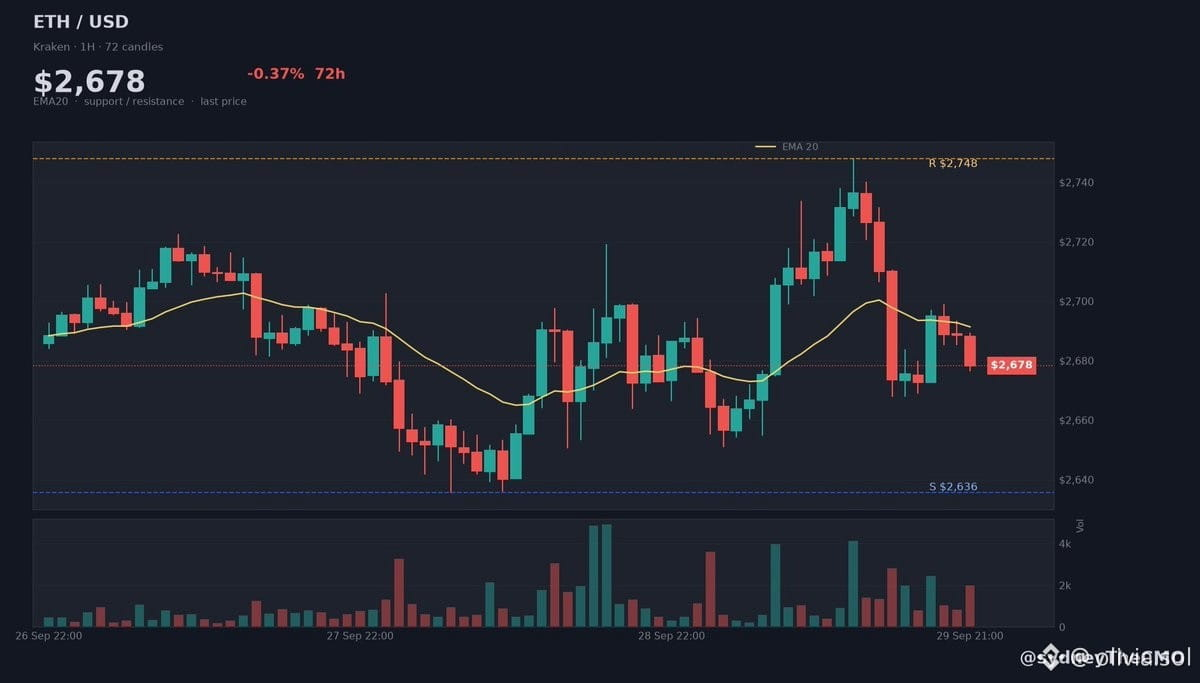
Called $ETH support at 2,636. Waited for the breakdown that never came. Held through the chop at 2,678 like a degen.
Sometimes the best trade is just refusing to close. Diamond hands or delusion? Time will tell.
Called $ETH support at 2,636. Waited for the breakdown that never came. Held through the chop at 2,678 like a degen.
Sometimes the best trade is just refusing to close. Diamond hands or delusion? Time will tell.
Sometimes the best trade is just refusing to close. Diamond hands or delusion? Time will tell.
4
·
--
$PI upgrading to Protocol 28 — same exact upgrade $XLM just shipped.
Why? Because $PI is literally built on Stellar's tech stack. When Stellar ships protocol upgrades, Pi inherits them. Not a fork. Not inspired by. Built on.
What's in Protocol 28:
- Better handling of tx data delays
- Batch smart contract upgrades
- Safer data mutations as apps evolve
Timeline:
- Node operators must upgrade by Oct 13
- Mainnet rollout Oct 16
Nothing groundbreaking here. Just Pi staying synced with its underlying infrastructure. If you're long $XLM tech, you're indirectly long $PI's core stack.
$PI upgrading to Protocol 28 — same exact upgrade $XLM just shipped.
Why? Because $PI is literally built on Stellar's tech stack. When Stellar ships protocol upgrades, Pi inherits them. Not a fork. Not inspired by. Built on.
What's in Protocol 28:
- Better handling of tx data delays
- Batch smart contract upgrades
- Safer data mutations as apps evolve
Timeline:
- Node operators must upgrade by Oct 13
- Mainnet rollout Oct 16
Nothing groundbreaking here. Just Pi staying synced with its underlying infrastructure. If you're long $XLM tech, you're indirectly long $PI's core stack.
Why? Because $PI is literally built on Stellar's tech stack. When Stellar ships protocol upgrades, Pi inherits them. Not a fork. Not inspired by. Built on.
What's in Protocol 28:
- Better handling of tx data delays
- Batch smart contract upgrades
- Safer data mutations as apps evolve
Timeline:
- Node operators must upgrade by Oct 13
- Mainnet rollout Oct 16
Nothing groundbreaking here. Just Pi staying synced with its underlying infrastructure. If you're long $XLM tech, you're indirectly long $PI's core stack.
8
·
--
Forbes obsessed with CZ's net worth but zero coverage on his charity impact or donations?
They'll estimate every billion he holds but won't track a single dollar he's given away or lives changed through his philanthropy.
Tells you everything about what mainstream media values—wealth over impact, headlines over substance.
Meanwhile CZ quietly building education programs, funding blockchain research, and supporting communities worldwide.
But sure, let's run another "richest crypto billionaire" listicle instead of asking what he's actually doing with that capital.
Forbes obsessed with CZ's net worth but zero coverage on his charity impact or donations?
They'll estimate every billion he holds but won't track a single dollar he's given away or lives changed through his philanthropy.
Tells you everything about what mainstream media values—wealth over impact, headlines over substance.
Meanwhile CZ quietly building education programs, funding blockchain research, and supporting communities worldwide.
But sure, let's run another "richest crypto billionaire" listicle instead of asking what he's actually doing with that capital.
They'll estimate every billion he holds but won't track a single dollar he's given away or lives changed through his philanthropy.
Tells you everything about what mainstream media values—wealth over impact, headlines over substance.
Meanwhile CZ quietly building education programs, funding blockchain research, and supporting communities worldwide.
But sure, let's run another "richest crypto billionaire" listicle instead of asking what he's actually doing with that capital.
3
Log in to explore more content
Join global crypto users on Binance Square
⚡️ Get latest and useful information about crypto.
💬 Trusted by the world’s largest crypto exchange.
👍 Discover real insights from verified creators.
Email / Phone number
Trending Topics
MicronBeatsEarningsLiftsGuidance
87 views
26 Discussing
🚨 BREAKING: Micron SMASHES Earnings - Record $54.23B Quarter!
Micron Q4 FY2026 Sept 30 2026:
💥 Revenue $54.23B (+379% YoY) vs $51.07B expected - 6th record quarter in a row!
💥 EPS $33.42 vs $31.61 expected, up from $3.03 last year
💥 Gross Margin 87% vs 86.2% expected
💥 Operating Income $44.64B, Cash Flow $43.97B
Segment BOOM: Data Center $18B (+1042% YoY), Cloud $16.28B (+258%), Auto $6.82B beats $4.73B forecast - Edge AI super cycle!
Guidance LIFTED: Q1 FY27 Revenue $61.5B vs $56.3B expected, EPS $38.15 vs $36.02 expected. HBM3E/HBM4 demand exceeds supply through 2027.
Stock $1,015 (+266% YTD), website crashed after report! Target $1,510.
AI memory crunch = bullish for $NVDA $MU $AMD ? 👇
#micronbeatsearningsliftsguidance #Micron #Earnings #AI #HBM #Semiconductor #EarningSession
True News
·2 Likes
·260 views
CFTCSubmitsTwoEventContractRulesToWhiteHouse
1,072 views
67 Discussing
BitcoinClears$85200
21,152 views
268 Discussing