5% Slippage on 0.5 ETH Leaves $45 Exposed: How Banana Gun Handles MEV on Each Chain
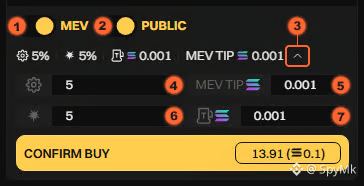
5% slippage on a 0.5 $ETH buy leaves up to $45 exposed to sandwich bots.
Banana Gun's default private mempool on Ethereum is one way to cut that exposure.
The math: 0.5 ETH at $1,802 (CoinGecko, 19 Nov 2026) is $901, and 5% of that is $45. A sandwich bot buys ahead of you and sells after, and the slippage you allow is the room it works in.
At 1% slippage the same trade exposes about $9. Dropping the setting from 5% to 1% cuts that room by four fifths before any protection is involved.
The exposure scales with size. On a 2 ETH buy, worth $3,604, 5% slippage leaves about $180 open and 1% leaves about $36.
A private mempool keeps my transaction out of the public queue where bots read pending trades. On Solana, Banana Gun uses Jito, and on Base and BNB Chain it uses MEV-aware routing.
Each chain gets its own method on Banana Gun. That is why I check the chain before I check the slippage box.
I set slippage to what each token needs and no higher. A deep pair needs little, and a thin new token needs more.
Private routing lowers the risk, and wide slippage still gives a bot room. Set it too tight on a volatile token and the trade fails, and a failed trade can still cost gas.
What slippage do you run on Ethereum, and has it ever burned you?
#MEV #Ethereum #Slippage #DeFi