


[A Challenging Macro Environment]
The digital assets market is currently facing headwinds from elevated real rates, uncertain risk appetite, and lingering post-hack uncertainty. Despite Binance’s rapid recovery after the $6.3 billion breach and initial withdrawal surge, broader liquidity conditions remain challenging.
Meanwhile, Binance’s institutional flows stay selective, and geopolitical risks continue to weigh on sentiment. In this setting, Binance’s ability to absorb losses and stabilize holdings stands out as a relative bright spot.
[The Hack and Recovery]
On October 29th, Binance faced the largest exchange hack in crypto history when attackers drained $6.3B from the platform's hot wallets. Linked to North Korea’s TraderTraitor group, the breach triggered a sharp withdrawal surge after services resumed.
However, the exchange covered losses from its own reserves, restored major asset backing above 100%, and saw tracked holdings rebound within days. The incident tested operational strength and user trust, with Bitcoin reserves proving more resilient than initial fears suggested.
[Effect on Reserves]
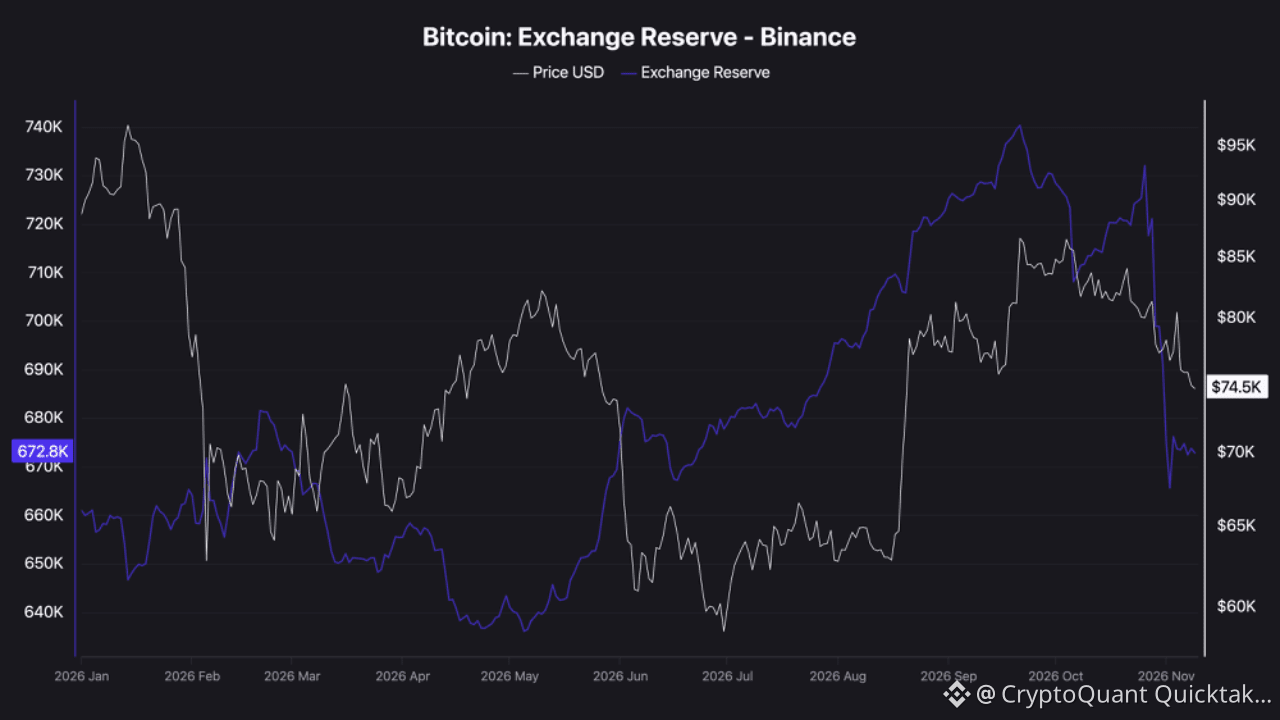
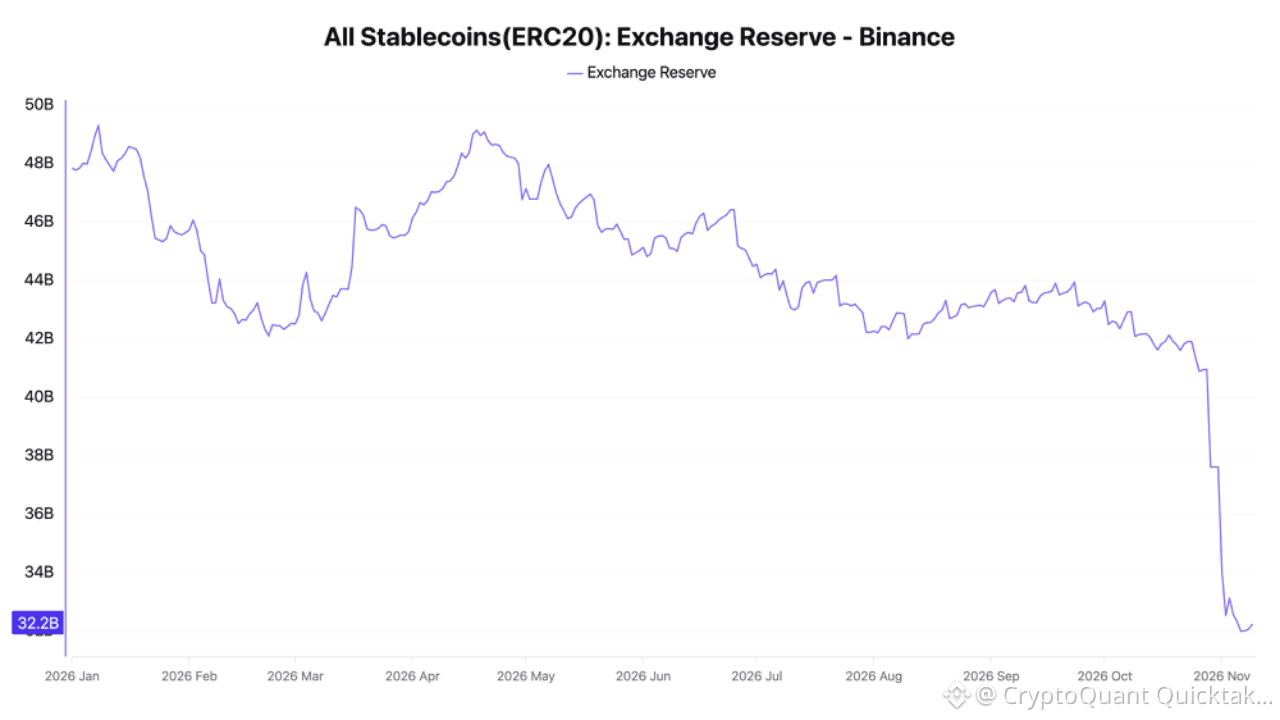
Looking at CryptoQuant’s on-chain data, Binance’s ERC-20 stablecoin reserves declined 25.6% from early October’s 43 billion units to the current 32 billion. Meanwhile, the platform’s Bitcoin reserves only dropped 7.6% from 728K units to the current 673K.
What explains the heavier impact on stablecoin reserves?
First of all, stablecoin balances are mostly active traders’ working capital and margin, which can be pulled out in a single transaction. Bitcoin reserves include long-term holders who may not want to realize a loss after temporary volatility.
Additionally, exiting through stablecoins means no market exposure and no price slippage. Another reason is deleveraging: Traders reducing risk on a falling market pull margin collateral, which is mostly stablecoins.
Written by oinonen_t