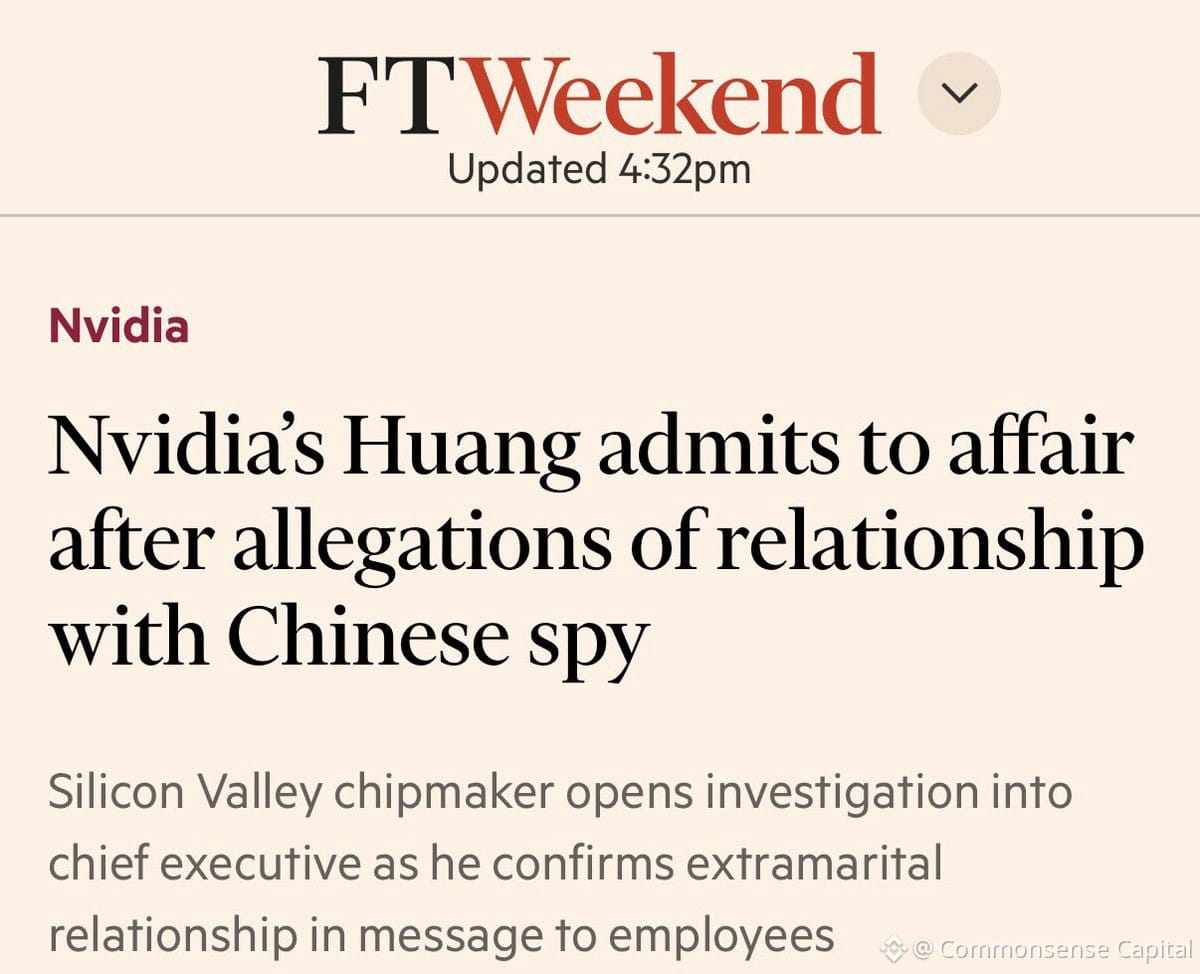
Key-man risk is one of those things everyone knows exists but nobody prices properly until it's too late.
When a company's entire valuation story is tied to one person's vision and execution, you're not just betting on the business — you're betting on their health, judgment, and willingness to stay in the game.
Boards hate talking about this publicly because it spooks investors. But ignoring it doesn't make it go away.
The hard truth: if the market hasn't priced in succession risk by now, it will eventually. And when it does, it won't be gradual or polite.
This isn't unique to $NVDA — it's a pattern we've seen play out across decades. The best-run companies plan for this early. The rest scramble when it's already a crisis.