
Trong_Hatachi
658 Posts

Trong_Hatachi
Report
Block User
My Binance UID: 11567957 ,Long Term Holding $BTC
Open Trade

SOMI Holder
Frequent Trader
8.9 Years
26 Following
110 Followers
199 Liked
Posts
Portfolio
All
Quotes
Videos
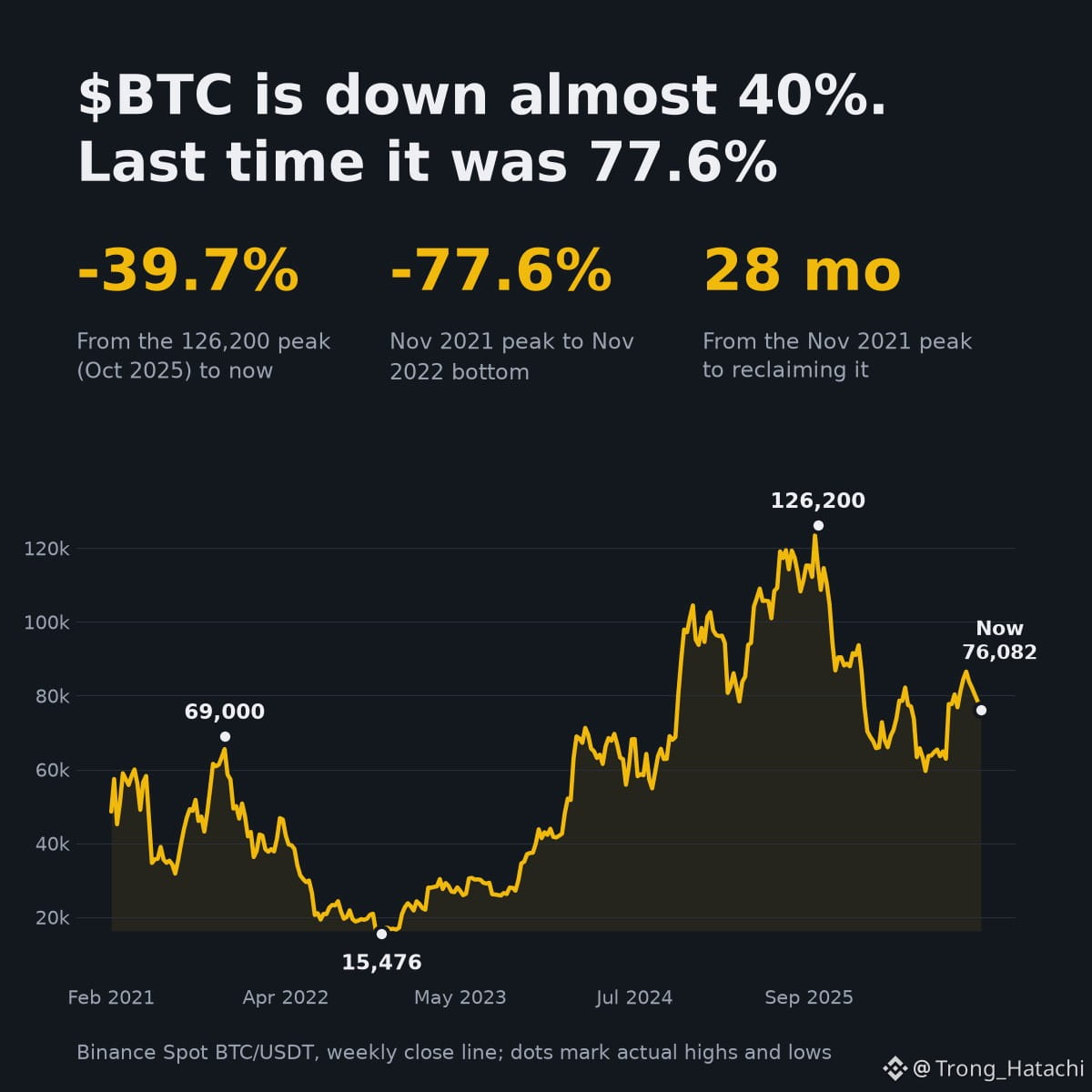
$BTC is 39.7% below its 126,200 peak.
Some feeds are floating a 70-75k buy zone (unverified). Last cycle's drawdown hit 77.6%.
If this one does the same, what's left of your account?
Nov 2021: $BTC tops at 69,000.
A year later it hits 15,476. Buyers at the top waited 28 months, until March 2024, just to break even.
That's spot, no leverage, and the stomach to sit through 28 months.
At 2x long, a ~50% drop liquidates you.
And not every coin comes back. In May 2022, LUNA lost nearly all its value within days.
The math of losses:
• Lose 20%, you need +25% to break even
• Lose 50%, you need +100%
• Lose 77.6%, you need +346%
Do this today:
1. Risk 1-2% of capital per trade, max
2. Set your SL before you enter, and never widen it
3. Ask yourself: "What price proves me wrong?"
Price data: Binance Spot weekly candles.
At 76k: BID or WAIT? Drop one word 👇
#TradingPsychology #RiskManagement #BinanceSquare $BTC
Not financial advice.
61
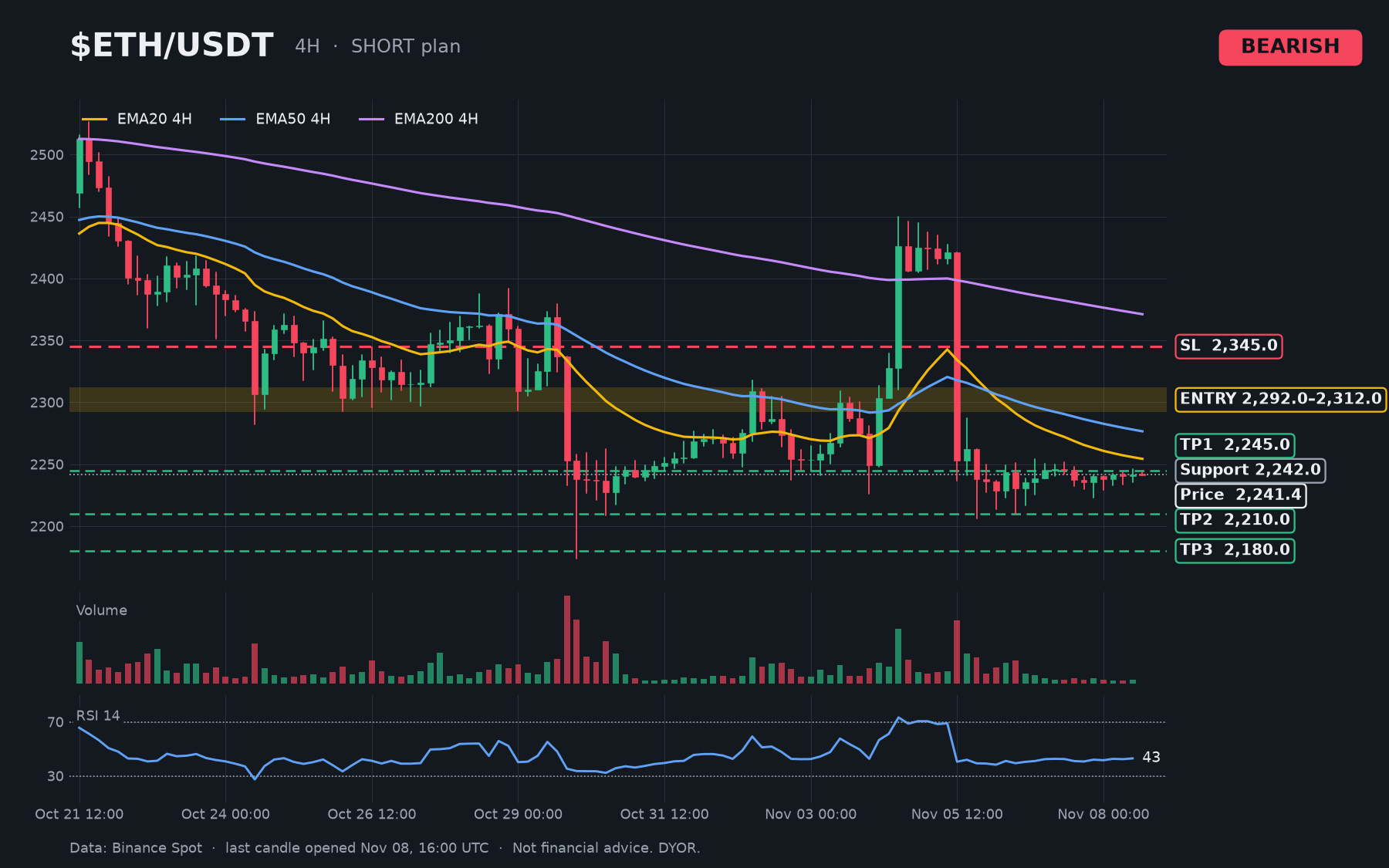
$ETH: spot ETFs have bled for 6 straight weeks and price is still below the daily EMA200. No rush to catch this bottom.
Trend: Bearish (4H)
🎯 Entry short: 2,292 – 2,312 (limit, cancel before CPI Nov 10, 13:30 UTC; if filled, reduce before the print)
✅ TP1: 2,245
✅ TP2: 2,210
✅ TP3: 2,180
🛑 SL: 2,345
📊 Logic:
• 4H downtrend, RSI 43. Entry sits at the 2,300 resistance (tested 8 times), just under the daily EMA200 at 2,315.
• $ETH ETFs saw about $365M in net outflows Nov 2-6, a 6th straight week (SoSoValue; another tracker shows more).
• Markets price roughly a 77% chance of a December Fed hike (CME FedWatch), a headwind for risk assets.
• Watch out: support near 2,242 has held 6 times. TP2 only opens if it breaks.
⚠️ Invalidation: a 4H close above 2,345 kills the setup. A break of 2,206 before a fill cancels it too.
Into CPI, which side are you on with $ETH: SHORT or LONG? Drop one word 👇
#ETH #Fed #CPI #BinanceSquare $ETH
Disclaimer: Personal view, not financial advice. DYOR.
$ETH : spot ETFs have bled for 6 straight weeks and price is still below the daily EMA200. No rush to catch this bottom.
Trend: Bearish (4H)
🎯 Entry short: 2,292 – 2,312 (limit, cancel before CPI Nov 10, 13:30 UTC; if filled, reduce before the print)
✅ TP1: 2,245
✅ TP2: 2,210
✅ TP3: 2,180
🛑 SL: 2,345
📊 Logic:
• 4H downtrend, RSI 43. Entry sits at the 2,300 resistance (tested 8 times), just under the daily EMA200 at 2,315.
• $ETH ETFs saw about $365M in net outflows Nov 2-6, a 6th straight week (SoSoValue; another tracker shows more).
• Markets price roughly a 77% chance of a December Fed hike (CME FedWatch), a headwind for risk assets.
• Watch out: support near 2,242 has held 6 times. TP2 only opens if it breaks.
⚠️ Invalidation: a 4H close above 2,345 kills the setup. A break of 2,206 before a fill cancels it too.
Into CPI, which side are you on with $ETH : SHORT or LONG? Drop one word 👇
#ETH #Fed #CPI #BinanceSquare $ETH
Disclaimer: Personal view, not financial advice. DYOR.
1
642
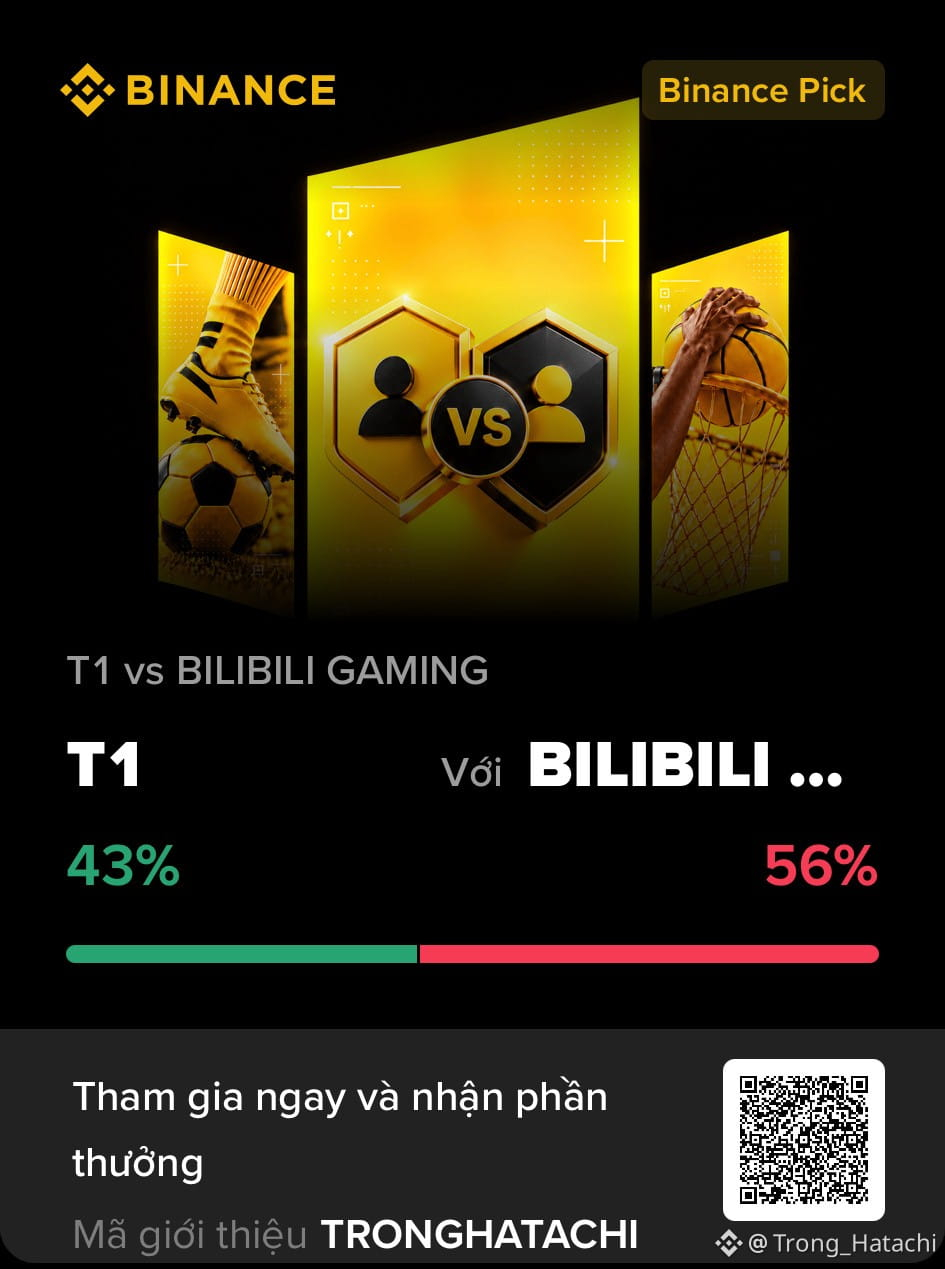
#BinancePick today sport & crypto predicts , and you , good day all frend
#BinancePick today sport & crypto predicts , and you , good day all frend
1
#BinancePick good day binance pick . Check in daily nhe, googluck for you
#BinancePick good day binance pick . Check in daily nhe, googluck for you
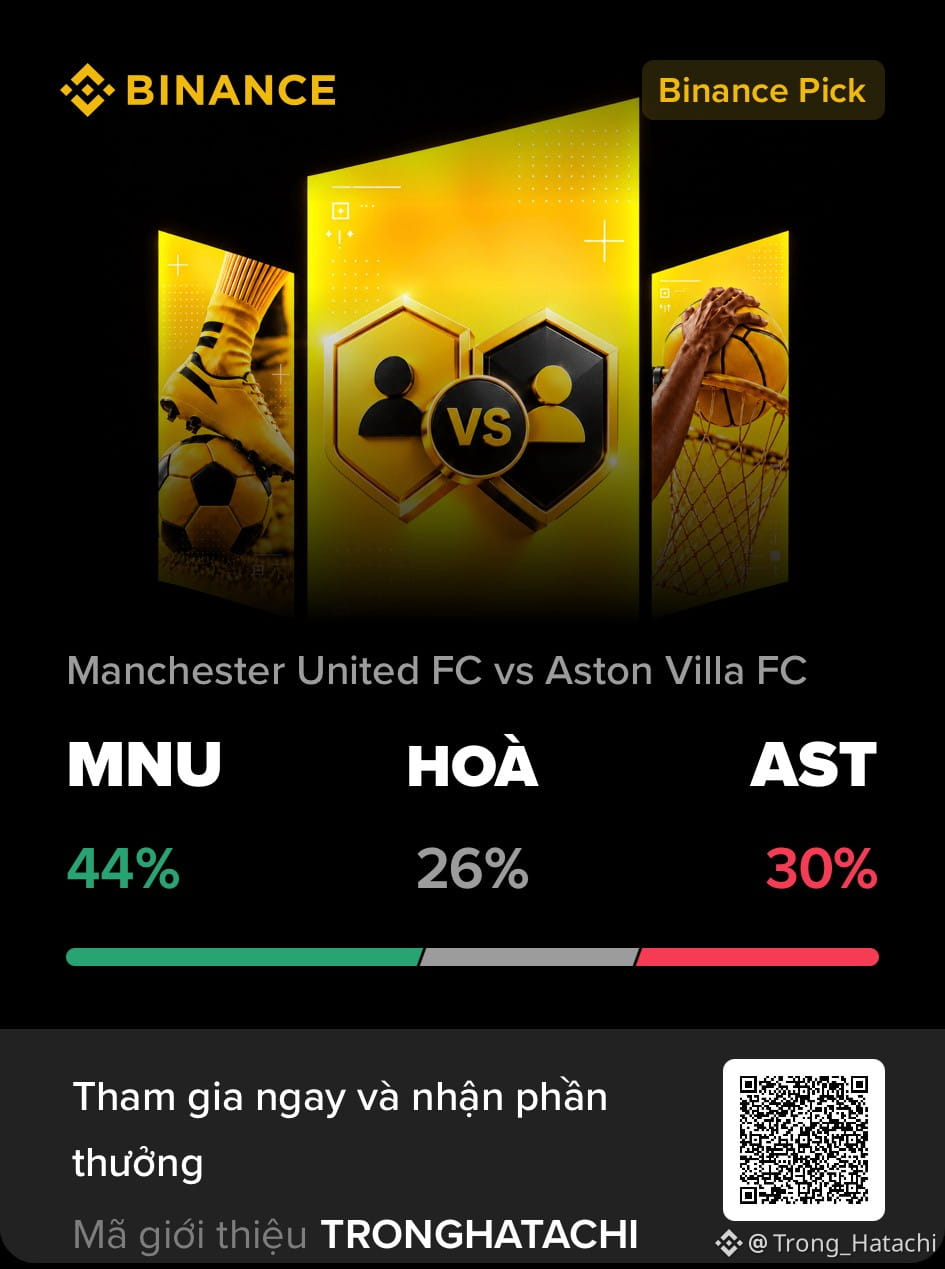
Cuối tuần rồi mà bảng Season của Binance Pick vẫn nóng. Mình ưu tiên nhiệm vụ điểm danh và nhiệm vụ nhỏ trước để giữ nhịp Scores, rồi mới chọn một dự đoán thị trường thay vì ôm nhiều lệnh cùng lúc. Weekly leaderboard giúp mình chỉnh hướng tuần này, còn mục tiêu dài là leo Season trước khi pool 1.000.000 USDC khép lại giữa tháng 11. Hôm nay mình nghiêng $BNB phản ứng theo dòng tin vĩ mô, còn bạn đặt cược thế nào? #BinancePick
Cuối tuần rồi mà bảng Season của Binance Pick vẫn nóng. Mình ưu tiên nhiệm vụ điểm danh và nhiệm vụ nhỏ trước để giữ nhịp Scores, rồi mới chọn một dự đoán thị trường thay vì ôm nhiều lệnh cùng lúc. Weekly leaderboard giúp mình chỉnh hướng tuần này, còn mục tiêu dài là leo Season trước khi pool 1.000.000 USDC khép lại giữa tháng 11. Hôm nay mình nghiêng $BNB phản ứng theo dòng tin vĩ mô, còn bạn đặt cược thế nào? #BinancePick
141
Ngày thứ hai theo Binance Pick, mình rút ra một điều: đều đặn quan trọng hơn may rủi. Sáng điểm danh, gom Scores từ nhiệm vụ nhỏ, rồi mới cân nhắc từng lệnh dự đoán thay vì dồn hết một lần. Bảng xếp hạng Weekly giúp có mục tiêu ngắn hạn, còn Season là cuộc đua dài tới giữa tháng 11. Hôm nay mình nghiêng về $ETH đi ngang, mọi người dự đoán sao? #BinancePick
Ngày thứ hai theo Binance Pick, mình rút ra một điều: đều đặn quan trọng hơn may rủi. Sáng điểm danh, gom Scores từ nhiệm vụ nhỏ, rồi mới cân nhắc từng lệnh dự đoán thay vì dồn hết một lần. Bảng xếp hạng Weekly giúp có mục tiêu ngắn hạn, còn Season là cuộc đua dài tới giữa tháng 11. Hôm nay mình nghiêng về $ETH đi ngang, mọi người dự đoán sao? #BinancePick
129
Mình đang chơi Binance Pick: điểm danh mỗi ngày, làm nhiệm vụ để tích Scores rồi dùng Scores dự đoán thị trường để leo bảng xếp hạng. Tổng thưởng lên tới 1.000.000 USDC, chạy đến 16/11. Tuần này mình dự đoán $BTC giữ vững vùng hỗ trợ, còn bạn thì sao? #BinancePick
Mình đang chơi Binance Pick: điểm danh mỗi ngày, làm nhiệm vụ để tích Scores rồi dùng Scores dự đoán thị trường để leo bảng xếp hạng. Tổng thưởng lên tới 1.000.000 USDC, chạy đến 16/11. Tuần này mình dự đoán $BTC giữ vững vùng hỗ trợ, còn bạn thì sao? #BinancePick
267
Testing the first #IAO, Initial Agent Offering. https://ptah.trade/iao Agent #55554
Testing the first #IAO, Initial Agent Offering. https://ptah.trade/iao Agent #55554
69

Article
Kite and the Agent Economy: The Most Important Transaction May Be the One That Gets RejectedWould you let an AI agent spend money on your behalf?
My answer depends on something more practical than how intelligent the agent is: can I define its authority, inspect its actions, and stop it when necessary?
That is the lens I would use to evaluate Kite.
Kite describes its focus as agentic payment infrastructure. Its Agent Passport materials connect three essential elements: verifiable agent identity, user-defined permissions, and payments within authorized limits.
Together, these address a difficult question: how can software become economically useful without receiving unrestricted access to someone’s funds?
A spending limit is only the beginning
Imagine giving a research agent a $20 budget to purchase data.
The budget matters, but it does not answer every question. Which services may the agent use? How long does its permission last? What happens if a service charges twice or delivers unusable information?
This is an illustrative scenario, not a claim that Kite has solved every edge case.
It shows why agent payments need more than a successful transfer. They need understandable boundaries and a clear record of what happened.
Kite’s published Human–Agent–Session framework offers a useful way to examine those boundaries: distinguish the person granting authority, the agent acting on it, and the permissions attached to a particular session.
The rejection test
In an Agent Passport demonstration published by Kite, an agent team operates with a spending cap and a time window. A further payment request is blocked when it would exceed the budget.
The important detail is the refusal.
A system that executes an authorized payment demonstrates functionality. A system that reliably rejects an unauthorized payment demonstrates a boundary users can begin to evaluate.
A demonstration, however, is not an independent security assessment. I would still want evidence about permission enforcement, revocation, failed payments, and behavior under unexpected conditions.
What would make the thesis stronger?
I would watch for repeat usage beyond promotional campaigns, useful services people actually pay for, and documentation that makes authorization and payment failures easy to understand.
The risks remain substantial: compromised agents, confusing permissions, unreliable services, and competition from existing payment infrastructure.
Product adoption also does not automatically establish value capture for $KITE. That requires a separate examination of token utility, demand, supply, and incentives.
Kite presents a concrete question for the agent economy: can autonomous spending become sufficiently bounded and accountable for everyday use?
Which control would you require first before trusting an agent with a small budget: spending limits, merchant restrictions, or immediate permission revocation?
#KiteBBW $KITE
{spot}(KITEUSDT)
Kite and the Agent Economy: The Most Important Transaction May Be the One That Gets Rejected
Would you let an AI agent spend money on your behalf?
My answer depends on something more practical than how intelligent the agent is: can I define its authority, inspect its actions, and stop it when necessary?
That is the lens I would use to evaluate Kite.
Kite describes its focus as agentic payment infrastructure. Its Agent Passport materials connect three essential elements: verifiable agent identity, user-defined permissions, and payments within authorized limits.
Together, these address a difficult question: how can software become economically useful without receiving unrestricted access to someone’s funds?
A spending limit is only the beginning
Imagine giving a research agent a $20 budget to purchase data.
The budget matters, but it does not answer every question. Which services may the agent use? How long does its permission last? What happens if a service charges twice or delivers unusable information?
This is an illustrative scenario, not a claim that Kite has solved every edge case.
It shows why agent payments need more than a successful transfer. They need understandable boundaries and a clear record of what happened.
Kite’s published Human–Agent–Session framework offers a useful way to examine those boundaries: distinguish the person granting authority, the agent acting on it, and the permissions attached to a particular session.
The rejection test
In an Agent Passport demonstration published by Kite, an agent team operates with a spending cap and a time window. A further payment request is blocked when it would exceed the budget.
The important detail is the refusal.
A system that executes an authorized payment demonstrates functionality. A system that reliably rejects an unauthorized payment demonstrates a boundary users can begin to evaluate.
A demonstration, however, is not an independent security assessment. I would still want evidence about permission enforcement, revocation, failed payments, and behavior under unexpected conditions.
What would make the thesis stronger?
I would watch for repeat usage beyond promotional campaigns, useful services people actually pay for, and documentation that makes authorization and payment failures easy to understand.
The risks remain substantial: compromised agents, confusing permissions, unreliable services, and competition from existing payment infrastructure.
Product adoption also does not automatically establish value capture for $KITE . That requires a separate examination of token utility, demand, supply, and incentives.
Kite presents a concrete question for the agent economy: can autonomous spending become sufficiently bounded and accountable for everyday use?
Which control would you require first before trusting an agent with a small budget: spending limits, merchant restrictions, or immediate permission revocation?
#KiteBBW $KITE
142
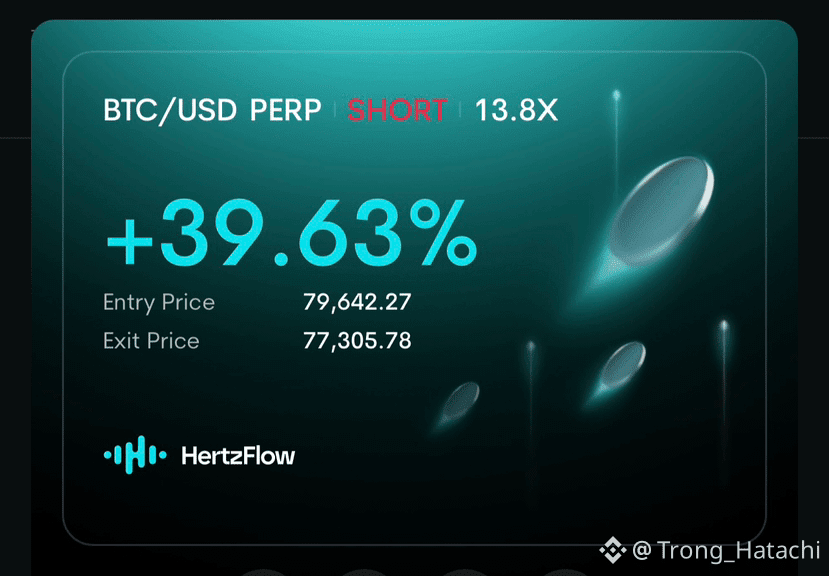


Yes, I went against the trend, and the price I paid was truly bitter. -$BNB
@HertzFlow_xyz #HertzflowPNL
{future}(BNBUSDT)
Yes, I went against the trend, and the price I paid was truly bitter. -$BNB
@HertzFlow #HertzflowPNL
@HertzFlow #HertzflowPNL

186
Another wonderful day ,touch the grass with @HertzFlow_xyz . #HertzflowPNL
Another wonderful day ,touch the grass with @HertzFlow . #HertzflowPNL

556


My first day with the @HertzFlow_xyz survival challenge.
Ended up with a small loss on my account, but no worries at all. In Vietnam, we have a saying: "Every beginning is hard" everything is difficult at first, but things get better and success follows.
Rough starts pave the way for bigger wins. Onward to day 2! 📈🔥
#HertzflowPNL $BTC
{spot}(BTCUSDT)
My first day with the @HertzFlow survival challenge.
Ended up with a small loss on my account, but no worries at all. In Vietnam, we have a saying: "Every beginning is hard" everything is difficult at first, but things get better and success follows.
Rough starts pave the way for bigger wins. Onward to day 2! 📈🔥
#HertzflowPNL $BTC
Ended up with a small loss on my account, but no worries at all. In Vietnam, we have a saying: "Every beginning is hard" everything is difficult at first, but things get better and success follows.
Rough starts pave the way for bigger wins. Onward to day 2! 📈🔥
#HertzflowPNL $BTC

1
122

Article
Why Pixels is Still My Favorite Web3 Game in 2026It’s been a while since I last posted about crypto games, but today I really want to talk about one project that I keep coming back to — @pixels . After trying dozens of blockchain games over the years, Pixels still holds a special place for me. It’s not just another farming simulator that dies after a few months. This one actually feels alive, fun, and built for the long run.
I first joined Pixels back when it was still on Polygon. At that time it was cute but rough around the edges. Everything changed when the team moved the entire game to Ronin at the end of 2023. The difference in speed and gas fees was night and day. Suddenly the game could handle thousands of players without lag, and the community exploded. Today Pixels has crossed 10 million users and regularly hits strong daily active numbers. What surprises me most is how the Vietnamese community has grown into one of the strongest — we have active Discord groups, Telegram channels, and even local guilds helping new players.
Gameplay-wise, Pixels is a relaxing open-world pixel art farming game with strong social elements. You start as a simple farmer. You plant crops, raise animals, fish, mine, craft items, and slowly build your own little homestead. But it doesn’t stop at solo play. You can join or create guilds, team up to explore caves, compete in events, or trade with friends in the marketplace. The free-to-play model is very friendly — you don’t need to buy expensive land NFTs to enjoy the game. However, if you do own land or pets, your earning and progression speed increases noticeably.
One thing I really respect about the team is how they handled the economy. Early on they used $BERRY, but daily inflation made it unsustainable. In Chapter 2 they made a big and smart decision: making Pixel the core premium currency while turning $BERRY into an off-chain resource.
$PIXEL now has clear and strong utility. You use it to:
Buy VIP passes for more energy and better rewardsMint cute and useful pets that boost your statsUpgrade land plotsJoin premium guildsStake for passive rewards and governance rights
The staking system is especially nice. When you stake $PIXEL, you don’t just earn yield — you also get gameplay advantages like faster crop growth, extra daily tasks, and special event tickets. The team is also building a community treasury so $PIXEL holders can vote on future developments. This true governance direction makes me feel like a real part of the project, not just a player.
Another smart feature is the reputation system. New players start with low rep and need to play, complete quests, and build trust before they can freely trade or withdraw bigger amounts. This simple mechanic has done wonders in reducing bots and toxic dumpers. As a result, the in-game economy feels much healthier compared to many other P2E titles I’ve seen crash and burn.
Right now in 2026, Pixels is still receiving consistent updates. New professions, expanded skill trees, seasonal events, cross-game collaborations on Ronin, and even plans to become a mini gaming platform where other developers can launch experiences inside the Pixels universe. The recent partnership with other Ronin projects has made Pixel even more valuable across the ecosystem.
If you’re thinking about jumping in, here’s my honest advice:
Start completely free at play.pixels.xyzFocus on daily tasks and reputation firstJoin a Vietnamese guild — they’re very welcoming and helpfulOnly invest in $PIXEL or land when you actually enjoy the gameI’ve been playing for a long time now and I’m still having fun. That says a lot in the fast-moving crypto gaming space.
What about you? Have you tried Pixels yet? Are you farming, staking $PIXEL, or just watching from the sidelines? Drop your thoughts in the comments — I read every single one!
This post is written purely from my real experience as a long-time player. See you in the game! 🌱
Why Pixels is Still My Favorite Web3 Game in 2026
It’s been a while since I last posted about crypto games, but today I really want to talk about one project that I keep coming back to — @Pixels . After trying dozens of blockchain games over the years, Pixels still holds a special place for me. It’s not just another farming simulator that dies after a few months. This one actually feels alive, fun, and built for the long run.
I first joined Pixels back when it was still on Polygon. At that time it was cute but rough around the edges. Everything changed when the team moved the entire game to Ronin at the end of 2023. The difference in speed and gas fees was night and day. Suddenly the game could handle thousands of players without lag, and the community exploded. Today Pixels has crossed 10 million users and regularly hits strong daily active numbers. What surprises me most is how the Vietnamese community has grown into one of the strongest — we have active Discord groups, Telegram channels, and even local guilds helping new players.
Gameplay-wise, Pixels is a relaxing open-world pixel art farming game with strong social elements. You start as a simple farmer. You plant crops, raise animals, fish, mine, craft items, and slowly build your own little homestead. But it doesn’t stop at solo play. You can join or create guilds, team up to explore caves, compete in events, or trade with friends in the marketplace. The free-to-play model is very friendly — you don’t need to buy expensive land NFTs to enjoy the game. However, if you do own land or pets, your earning and progression speed increases noticeably.
One thing I really respect about the team is how they handled the economy. Early on they used $BERRY, but daily inflation made it unsustainable. In Chapter 2 they made a big and smart decision: making Pixel the core premium currency while turning $BERRY into an off-chain resource.
$PIXEL now has clear and strong utility. You use it to:
Buy VIP passes for more energy and better rewardsMint cute and useful pets that boost your statsUpgrade land plotsJoin premium guildsStake for passive rewards and governance rights
The staking system is especially nice. When you stake $PIXEL , you don’t just earn yield — you also get gameplay advantages like faster crop growth, extra daily tasks, and special event tickets. The team is also building a community treasury so $PIXEL holders can vote on future developments. This true governance direction makes me feel like a real part of the project, not just a player.
Another smart feature is the reputation system. New players start with low rep and need to play, complete quests, and build trust before they can freely trade or withdraw bigger amounts. This simple mechanic has done wonders in reducing bots and toxic dumpers. As a result, the in-game economy feels much healthier compared to many other P2E titles I’ve seen crash and burn.
Right now in 2026, Pixels is still receiving consistent updates. New professions, expanded skill trees, seasonal events, cross-game collaborations on Ronin, and even plans to become a mini gaming platform where other developers can launch experiences inside the Pixels universe. The recent partnership with other Ronin projects has made Pixel even more valuable across the ecosystem.
If you’re thinking about jumping in, here’s my honest advice:
Start completely free at play.pixels.xyzFocus on daily tasks and reputation firstJoin a Vietnamese guild — they’re very welcoming and helpfulOnly invest in $PIXEL or land when you actually enjoy the gameI’ve been playing for a long time now and I’m still having fun. That says a lot in the fast-moving crypto gaming space.
What about you? Have you tried Pixels yet? Are you farming, staking $PIXEL , or just watching from the sidelines? Drop your thoughts in the comments — I read every single one!
This post is written purely from my real experience as a long-time player. See you in the game! 🌱
93
Log in to explore more content
Join global crypto users on Binance Square
⚡️ Get latest and useful information about crypto.
💬 Trusted by the world’s largest crypto exchange.
👍 Discover real insights from verified creators.
Email / Phone number