
#kospifalls3.53%backbelow6000
📉 KOSPI Drops 3.53% Below 6,000: Why South Korea's Stock Market Is Under Pressure 🇰🇷
Imagine watching a stock market climb toward a historic milestone, only to see confidence disappear in a single trading session. That is the sudden reversal investors witnessed in South Korea.
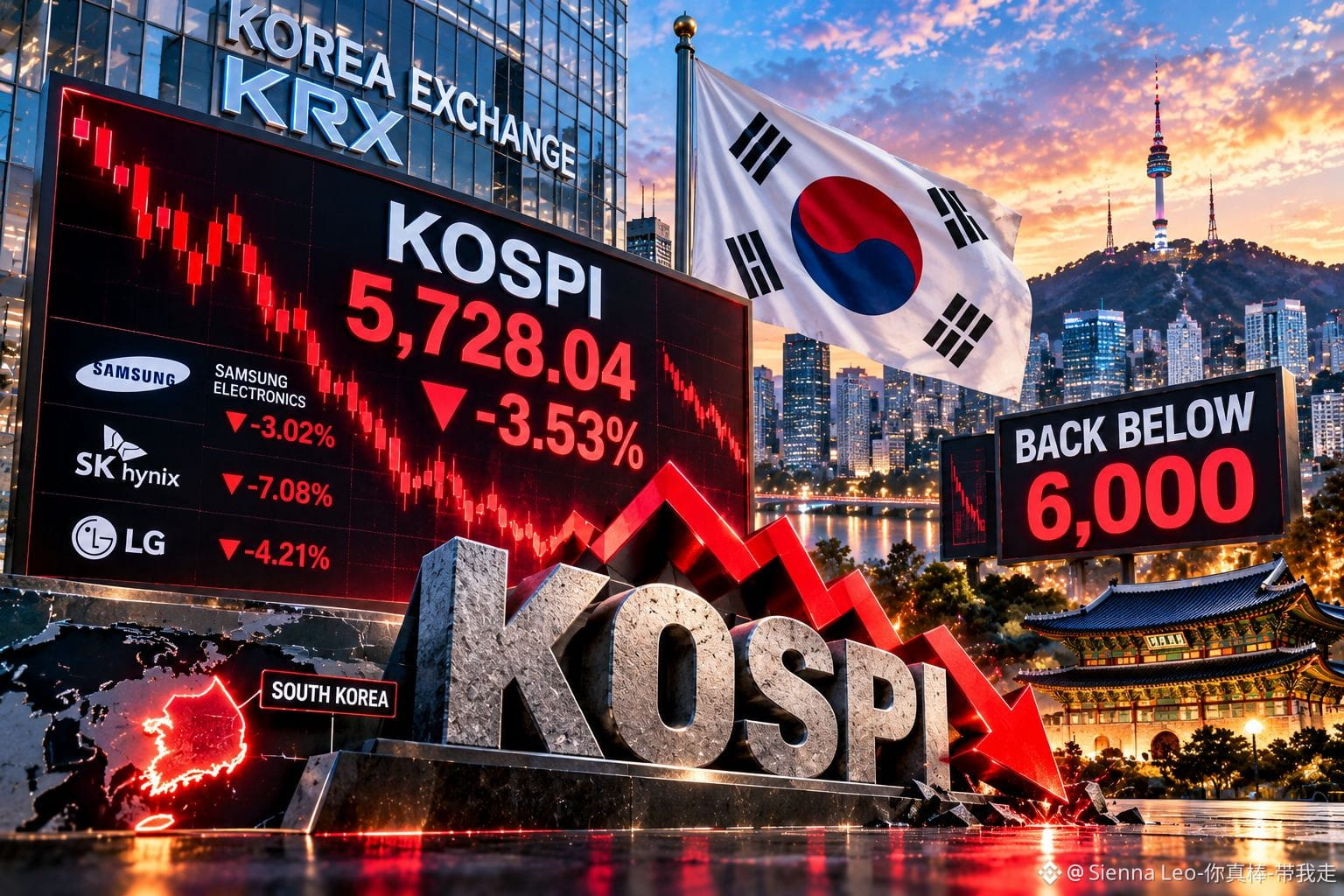
On October 30, South Korea's benchmark KOSPI plunged 3.53%, closing at 5,728.04 and falling back below the psychologically important 6,000 level.
What triggered the decline? Heavy foreign selling, combined with weakness in major technology stocks, particularly semiconductor companies.
SK Hynix lost approximately 7.08%, while Samsung Electronics dropped around 3.02%. Renewed concerns about AI investment returns and the sustainability of technology-sector earnings added pressure.
Foreign investors sold approximately 1.62 trillion won worth of South Korean shares, creating substantial selling pressure despite buying from domestic investors.
My take: This correction highlights an important market reality. Strong AI expectations can push semiconductor valuations higher, but investors become cautious when spending commitments, earnings expectations and future returns stop moving together.
The wider Asian market weakness also matters. When major technology markets decline together, global risk appetite can weaken, potentially affecting sentiment across equities and crypto.
A single session does not establish a long-term bearish trend. The next signal will be whether foreign investors return and semiconductor stocks stabilize.
Markets reward growth, but they demand proof that growth can pay for itself.
Is this a healthy correction in South Korean stocks or the beginning of a deeper technology-sector pullback?
Disclaimer: Educational content only. Not financial advice.
#KOSPI #SouthKorea #GrowWithSAC $BLUR $BCH $KNC
#KOSPIFalls3.53%BackBelow6000