


Three people sign up to Binance on the same day. One buys a little Bitcoin each month, one trades Spot most days, and one trades futures. They all enter the same promo code, 20LESSFEES, and they all get the same thing from it: a flat 20% off their Spot and Futures trading fees.
What differs is how much that discount is worth to each of them. That is what this article works out, in plain dollars, so you can judge it for your own trading instead of taking a headline at face value.
👉 Create your Binance account with promo code 20LESSFEES
The welcome bonus of up to $19,800 for eligible users sits on top as a separate, task-based extra. It is the same whichever code you register with, so the fee discount is the part the code actually decides.
What does the promo code change on your account?
A Binance promo code is entered once, when the account is created. After that it works quietly in the background on every trade.
Spot fees: 20% lower than the standard rate for your fee tier, on market and limit orders alike.
Futures fees: The same flat 20% off on USDⓈ-M and COIN-M futures, which matters more than most beginners expect (more on that below).
No volume target: You don't need to deposit a set amount or trade a minimum to keep the discount.
No cost: Entering the code is free and gives nobody access to your account or your funds.
Welcome tasks unchanged: You can still join the welcome bonus tasks if you are eligible. The code neither adds to them nor blocks them.
Keep one detail in mind. The discount is a percentage of the fee, not of your trade. A 20% saving on a 0.100% fee brings it to 0.080%, so the benefit grows with how much you trade, not with how much you hold.
How do you enter the code during sign-up?
The code only sticks if it is attached before the account exists. The order of steps is simple, but people still miss it.
Open the sign-up page: Use the link above and the code fills in for you. If you type the address yourself, have 20LESSFEES ready to paste.
Enter your email or phone number: This is the first field on the registration screen.
Check the code field: On some versions of the page it sits below the email box and has to be expanded first. Make sure the code is spelled exactly, with no space at the end.
Tap Register and verify: Confirm the email or SMS code, set a password, then finish identity verification when the app asks for it.
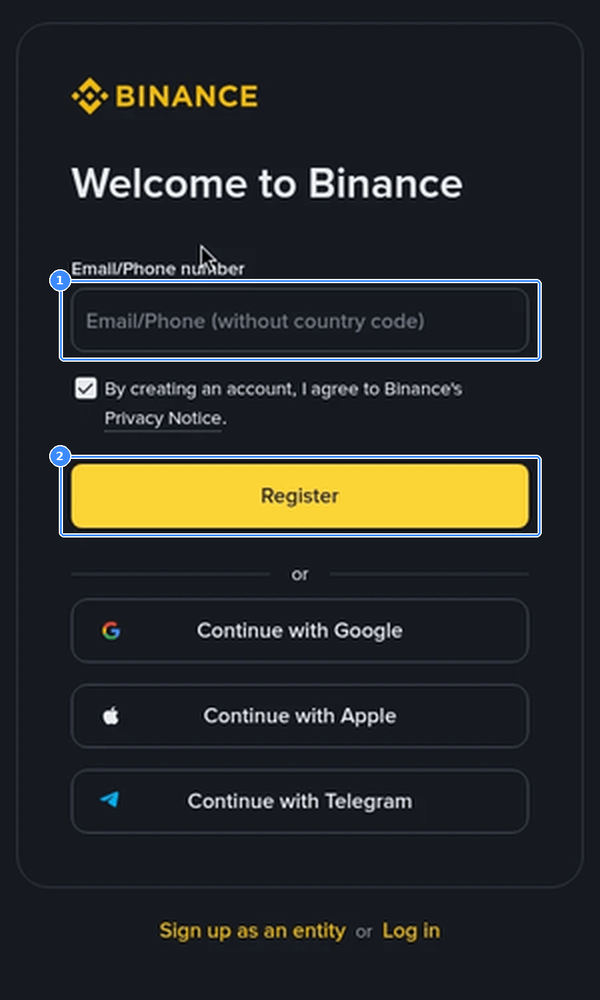
If you registered through Google, Apple or Telegram, the same rule applies. Look for the code field on the screen that follows before you confirm.
Scenario one, the monthly Spot buyer
Ana buys $500 of Bitcoin at the start of every month and sells about $500 of something else over the month to rebalance. Her trading volume is roughly $1,000 a month.
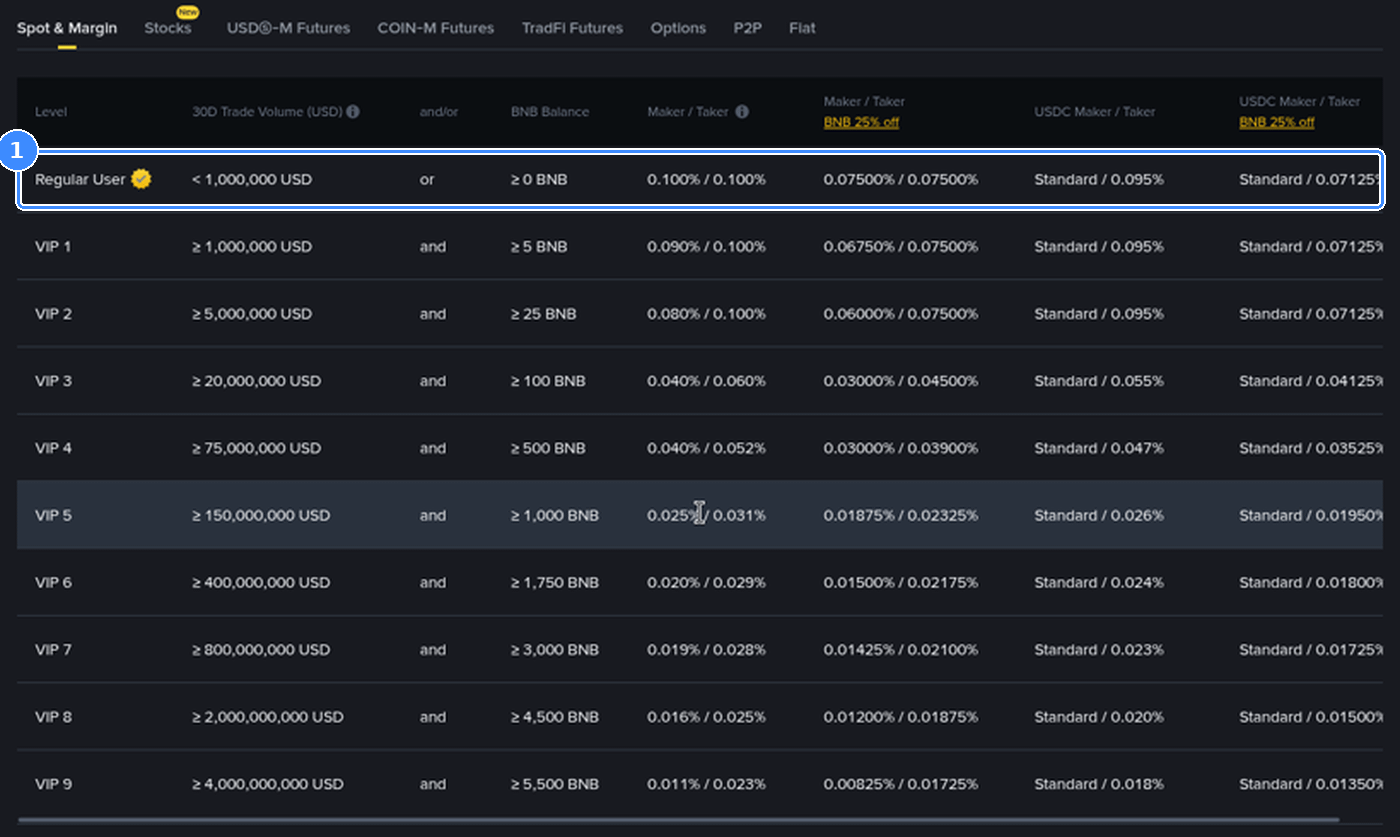
On the standard Regular User rate of 0.100%, that volume costs her $1.00 in fees a month. With 20LESSFEES the rate becomes 0.080%, so she pays $0.80.
Monthly saving: $0.20
Yearly saving: about $2.40
Honestly, that is small. For Ana the code is a nice default rather than a reason to choose an exchange. It costs nothing, so there is no downside to having it, but she shouldn't expect it to change her results.
Where it helps her more is the habit it encourages. Once she looks at fees, she tends to notice the bigger costs too, like the spread on market orders in quiet hours or a withdrawal fee on the wrong network.
Scenario two, the active Spot trader
Ben trades altcoins against USDT most weekdays. He places around 40 orders a month at about $500 each, so his volume lands near $20,000 a month.
Here is the fee math on that volume:
Standard rate 0.100%: $20.00 a month
With 20LESSFEES at 0.080%: $16.00 a month
Difference: $4.00 a month, about $48 a year
Now the saving is noticeable. It also scales in a straight line. At $50,000 of monthly volume the gap becomes about $10 a month, and at $100,000 it is about $20.
Ben also asks about paying fees in BNB, which the fee schedule lists as 0.075% for a Regular User. That is a separate lever from the code. How the two combine on your account is shown in your actual trade fees, so check one real order rather than assuming a stacked figure from a blog post.
One practical tip for Ben: limit orders that rest on the book pay the maker rate, while market orders pay the taker rate. On the Regular User Spot tier both are 0.100%, but on higher tiers and on futures the maker rate is lower, so the order type starts to matter as much as the code. Fees are only half of it, though. Our list of mistakes that can cost you the sign-up code discount covers the traps people fall into after registering.
Scenario three, the futures trader
This is where beginners are most often surprised. Futures fees are charged on the full position size, called the notional value, not on the margin you put up.
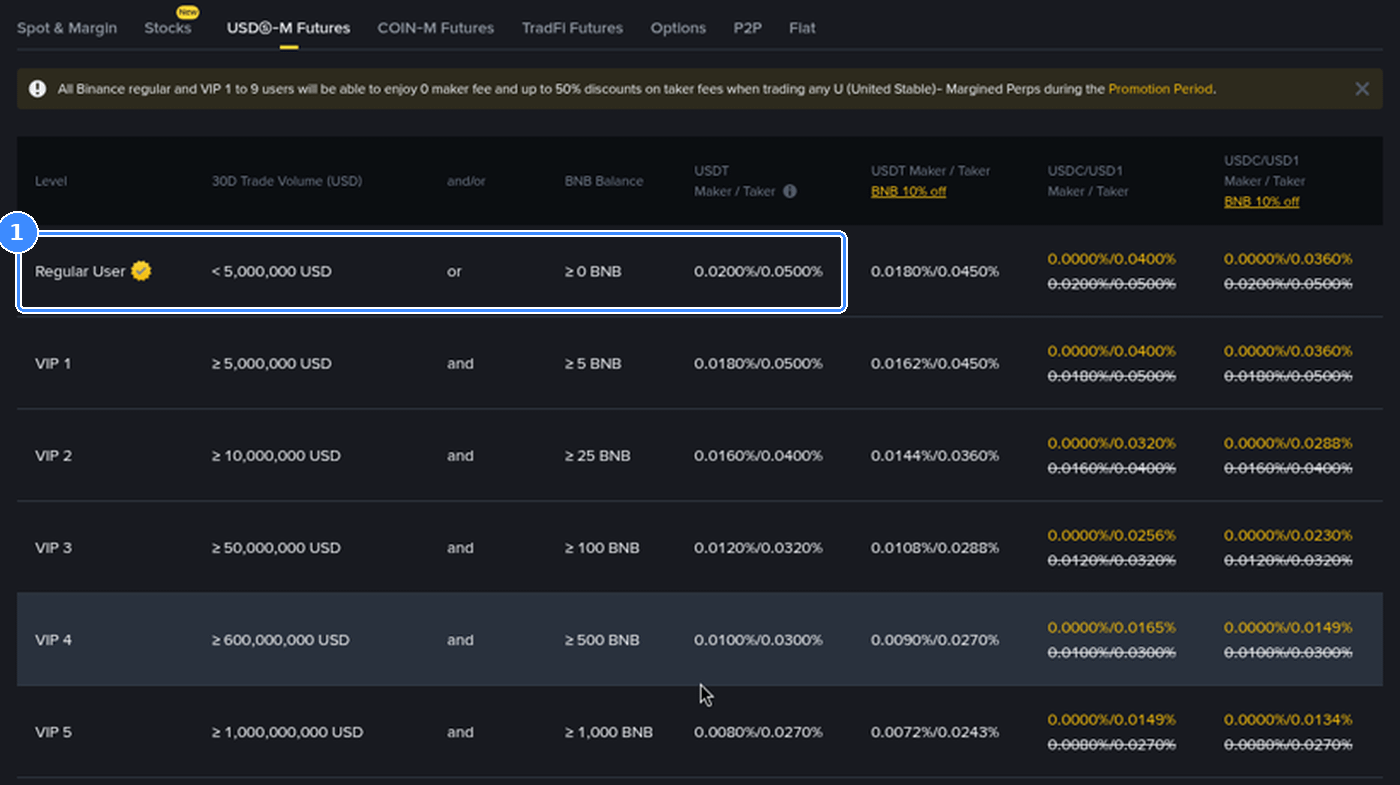
Say Chris uses $1,000 of margin at 10x leverage. His position is worth $10,000, and the USDⓈ-M taker fee for a Regular User is 0.0500%. Opening with a market order costs $5.00 and closing the same way costs another $5.00. That is $10 for one round trip on $1,000 of his own money.
If Chris does that 10 times a month, his volume is $200,000 and his taker fees come to $100. With 20LESSFEES the rate drops to 0.0400%, so he pays $80.
Monthly saving: $20
Yearly saving: about $240
If he used limit orders instead: The maker rate of 0.0200% would make the same volume cost $40, or $32 with the code.
Notice what moves the number most: leverage multiplies the notional, and the notional is what the fee is charged on. The code trims 20% off that bill, but trading less often or using maker orders trims far more. For the mechanics behind this, read our guide to Binance perpetual futures, funding and mark price before you open a first position.
A fair warning that has nothing to do with fees: leverage magnifies losses just as much as gains, and a lower fee never makes a losing trade profitable. Start small.
So who should bother with the code?
Everyone who is opening a new account might as well use one, because it costs nothing. The value just varies a lot.
Occasional buyers: A few dollars a year. Use it, but focus on spreads and withdrawal networks.
Active Spot traders: Tens of dollars a year at a few thousand dollars of daily volume, growing with activity.
Futures traders: Often the biggest benefit, because notional volume adds up fast with leverage.
Remember this is about cutting a cost you would pay anyway. It is not a source of profit, and it doesn't make trading itself less risky.
Common doubts before you sign up
I already have a Binance account. Can I still use it?
A promo code is linked to an account at the moment it is created, so it generally can't be added to an existing account. Binance also allows one account per person, so don't open a second account just to get a discount.
Is entering a promo code safe?
Yes. It is only a tag on your new account. It doesn't ask for payment, it doesn't share your login, and nobody can move your funds because of it.
I forgot to enter it. Can I add it later?
In most cases, no. That is why it pays to check the code field before tapping Register rather than after.
How can I confirm the discount is working?
Place one small trade and open your trade history. On a 100 USDT market order on the Regular User Spot tier, the fee should be about 0.08 USDT worth instead of 0.10.
Your next step
If you are about to create a Binance account, attach 20LESSFEES first and you get 20% off Spot and Futures fees for as long as you trade. Then, if you are eligible, look at the current Binance welcome bonus event and decide whether its tasks suit your plans. You don't need to complete them to keep the fee discount.
This article explains fees and is not financial advice. Crypto prices can fall, and leveraged products can lose more than you expect.
FAQ
Is the promo code a percentage off my trade or off the fee?
Off the fee. A 0.100% Spot fee becomes 0.080%, and a 0.0500% futures taker fee becomes 0.0400%.
Does the discount apply to both Spot and Futures?
Yes. 20LESSFEES gives a flat 20% off Spot and Futures trading fees.
Does the promo code change the welcome bonus?
No. The welcome bonus of up to $19,800 is task-based, applies to eligible users, and is the same with every code.
Does the discount run out after a month?
The code has no volume or deposit target attached. Binance's own terms and fee schedule can change over time, so it is worth glancing at your trade fees now and then.