


On October 8, a U.S. government-linked wallet holding Bitcoin seized from the 2016 Bitfinex hacker transferred 12,267 BTC, worth approximately $1.01 billion, to unidentified addresses.
The movement raised fears of potential government selling, although no sale has been confirmed.
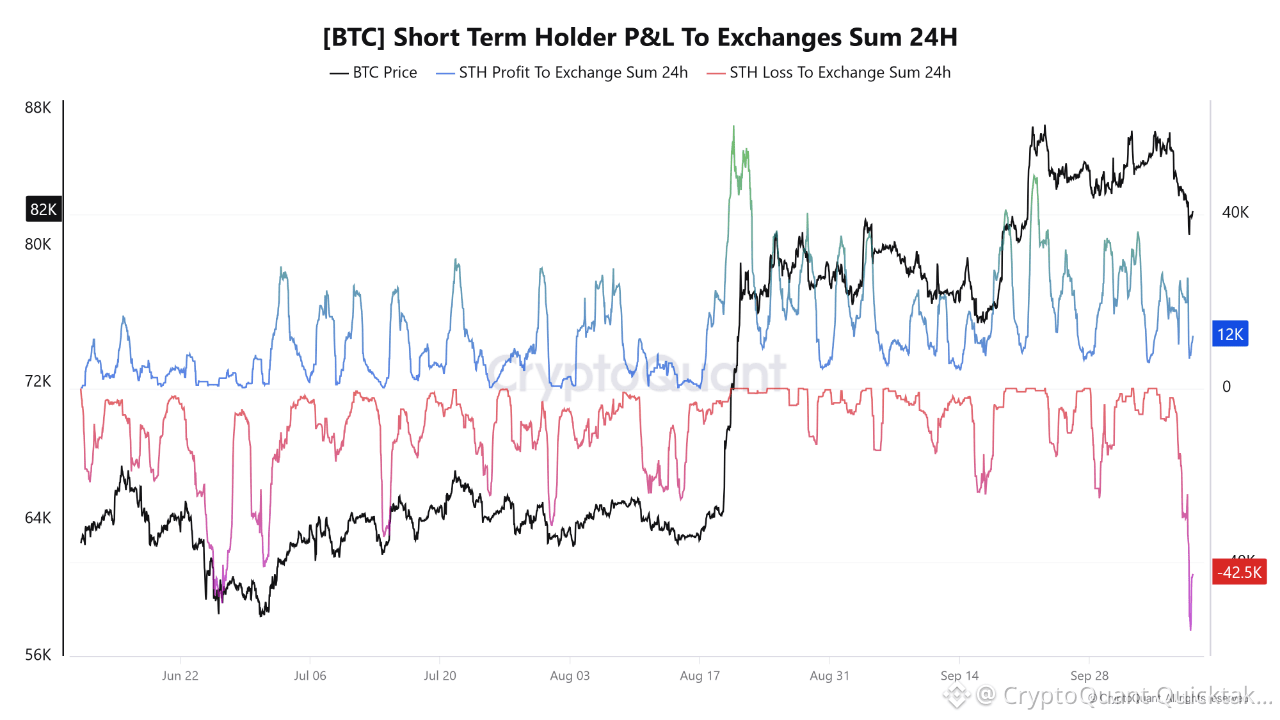
Amid these concerns, Short-Term Holder (STH) P&L to Exchanges indicator recorded a sharp shift in behavior.
The metric tracks Bitcoin transferred to exchanges by short-term holders at a profit or loss, highlighting potential selling pressure rather than confirmed sales.
On October 8, STH loss-side transfers reached -55,600 BTC, exceeding the June 26 reading of -49,250 BTC by 12.9%.
Notably, Bitcoin was trading above $81,000, compared with $59,300 in June — a price difference exceeding 36%.
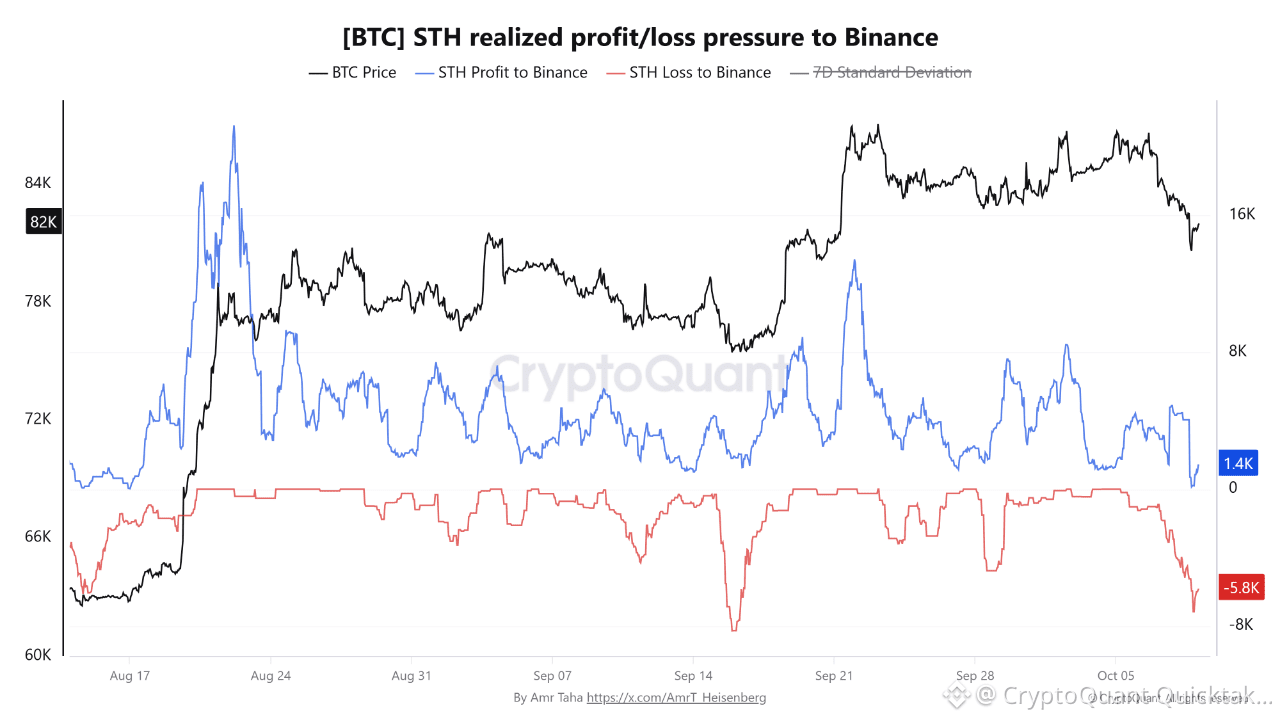
However, Binance showed a contrasting pattern.
STH loss transfers to Binance reached -7,150 BTC, compared with -11,830 BTC on June 26, representing 39.6% less selling pressure despite the stronger exchange-wide reading.
The sudden shift suggests fear-driven selling intentions among newer market participants, potentially amplified by concerns over government Bitcoin movements.
Yet the government transfer does not necessarily indicate an immediate sale, and exchange deposits do not confirm executed trades.
Historically, aggressive loss-driven selling by short-term participants can coincide with short-term capitulation, potentially exhausting weaker holders and creating conditions for a subsequent price recovery.
Written by Amr Taha