
#IMFApprovesElSalvador$138MWithBitcoinWaiver
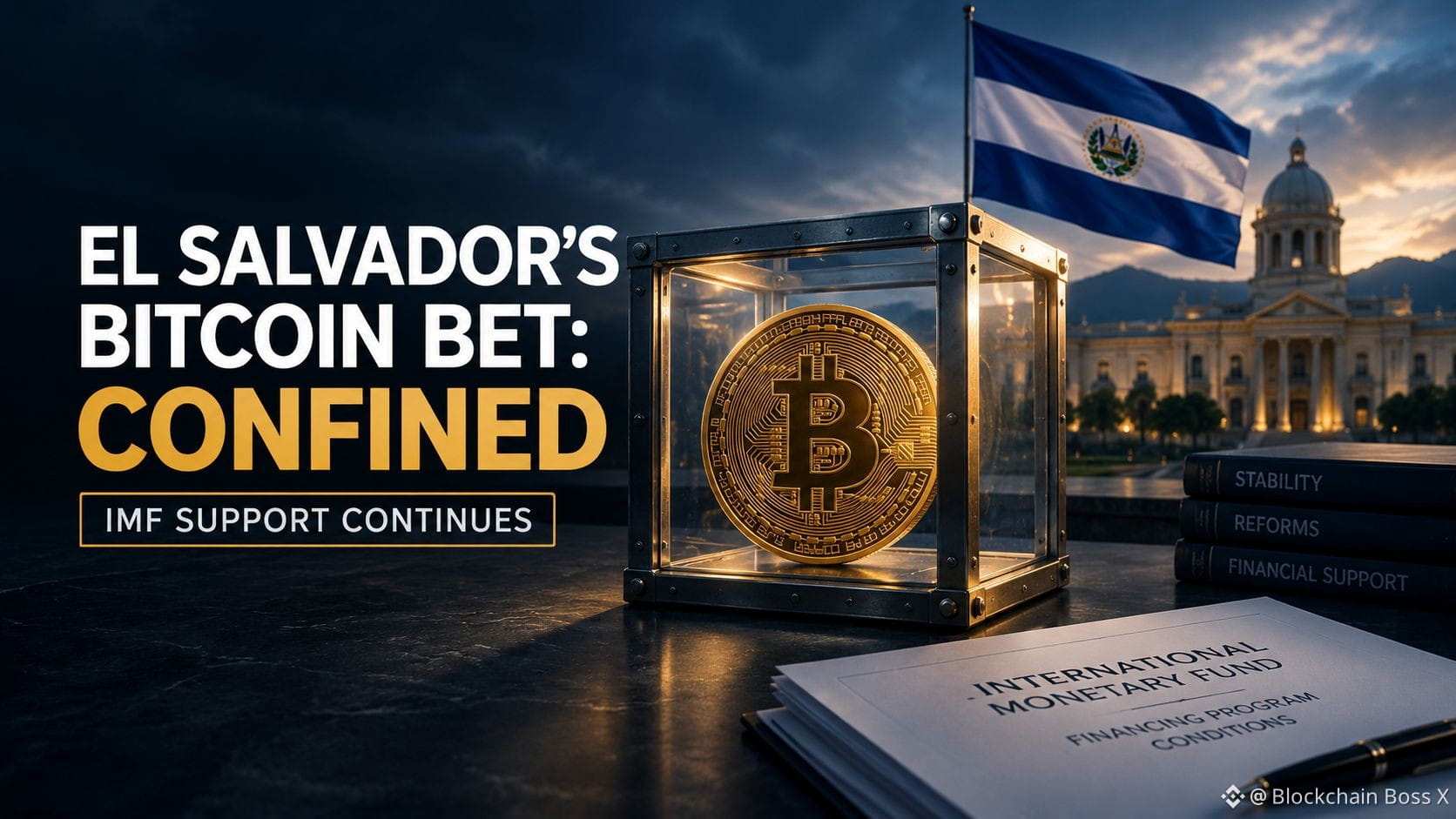
El Salvador's Bitcoin Bet Just Got Boxed In By a Word: "Confined"
El Salvador secured its latest IMF disbursement this week — but the fine print reveals just how far the country's once-defiant Bitcoin experiment has been reined in to get there.
Here's what happened: the IMF Executive Board approved roughly $138 million for El Salvador, completing the second and third reviews of its $1.4 billion, 40-month loan program. The Fund confirmed that Bitcoin added to reserves since the last review came from private donations rather than public purchases, satisfying the program's core condition. Under the agreement's language, the government's engagement in Bitcoin-related economic activity going forward will remain "confined" — a notable shift from 2021, when El Salvador became the first nation to adopt Bitcoin as legal tender with aggressive public accumulation. The broader program has come with real domestic cost: economists estimate roughly 15,000 public-sector layoffs since 2024, while labor unions put total job losses since 2019 closer to 47,000, as part of the government's accompanying austerity measures. The IMF did credit El Salvador's economy for outperforming expectations, projecting 4.5% growth in 2026.
Why does this matter? This is a concrete example of a sovereign Bitcoin experiment colliding with conventional lending terms — El Salvador got continued IMF support, but at the cost of walking back the very policy that made it globally notable in the first place. It's a reminder that even symbolic national crypto commitments remain negotiable when traditional financing is on the table.
Does this outcome look like a reasonable compromise, or a quiet retreat from El Salvador's original Bitcoin ambitions? 🤔
#ElSalvador #bitcoin #IMF #Macro $GTC $MOVR $SCR
El Salvador's Bitcoin Bet Just Got Boxed In By a Word: "Confined"
El Salvador secured its latest IMF disbursement this week — but the fine print reveals just how far the country's once-defiant Bitcoin experiment has been reined in to get there.
Here's what happened: the IMF Executive Board approved roughly $138 million for El Salvador, completing the second and third reviews of its $1.4 billion, 40-month loan program. The Fund confirmed that Bitcoin added to reserves since the last review came from private donations rather than public purchases, satisfying the program's core condition. Under the agreement's language, the government's engagement in Bitcoin-related economic activity going forward will remain "confined" — a notable shift from 2021, when El Salvador became the first nation to adopt Bitcoin as legal tender with aggressive public accumulation. The broader program has come with real domestic cost: economists estimate roughly 15,000 public-sector layoffs since 2024, while labor unions put total job losses since 2019 closer to 47,000, as part of the government's accompanying austerity measures. The IMF did credit El Salvador's economy for outperforming expectations, projecting 4.5% growth in 2026.
Why does this matter? This is a concrete example of a sovereign Bitcoin experiment colliding with conventional lending terms — El Salvador got continued IMF support, but at the cost of walking back the very policy that made it globally notable in the first place. It's a reminder that even symbolic national crypto commitments remain negotiable when traditional financing is on the table.
Does this outcome look like a reasonable compromise, or a quiet retreat from El Salvador's original Bitcoin ambitions? 🤔
#ElSalvador #bitcoin #IMF #Macro $GTC $MOVR $SCR