



Bitcoin is having a rough few days. After briefly pushing above $87,000 earlier this month, BTC has pulled back toward the $83,000 area as traders react to rising bond yields, higher oil prices and growing expectations for tighter monetary policy.
On September 29, Bitcoin was trading around $83,000, down roughly 1% over the previous 24 hours. The move extends a broader pullback that started after BTC reached around $86,600 on September 21.|

Why is Bitcoin falling?
One of the biggest factors right now isn't actually crypto itself.
U.S. Treasury yields have been climbing sharply. The 10-year Treasury yield moved above 5.2%, reaching levels not seen since 2007. Higher bond yields can make traditional fixed-income assets more attractive compared with assets such as Bitcoin that don't generate interest.
Oil prices are also adding another layer of pressure. Higher energy prices are feeding concerns about inflation, which could make central banks less willing to loosen monetary policy.
That combination has created a more defensive mood across financial markets, and Bitcoin is feeling it too.
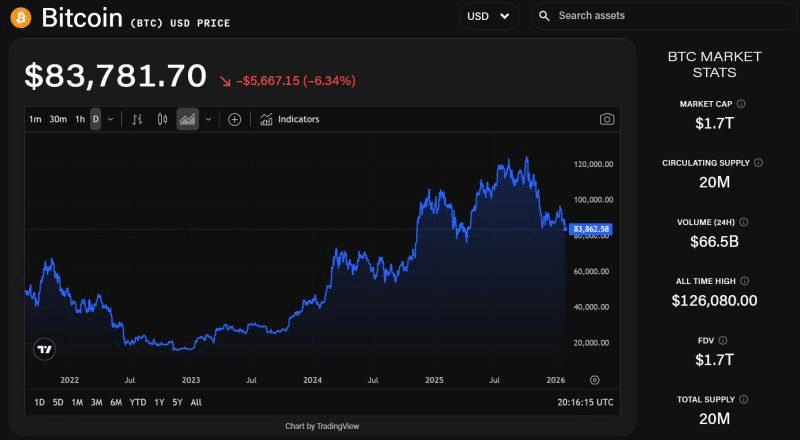
BTC has now suffered several consecutive down sessions
MarketWatch reported that Bitcoin was heading toward its fifth consecutive losing session, with BTC down about 2.9% across the previous five trading sessions. If the decline continued, it would represent Bitcoin's longest losing streak since June.
Interestingly, this isn't happening after a huge Bitcoin rally with no institutional interest.
There is still significant buying activity in the background.
Strategy keeps buying Bitcoin
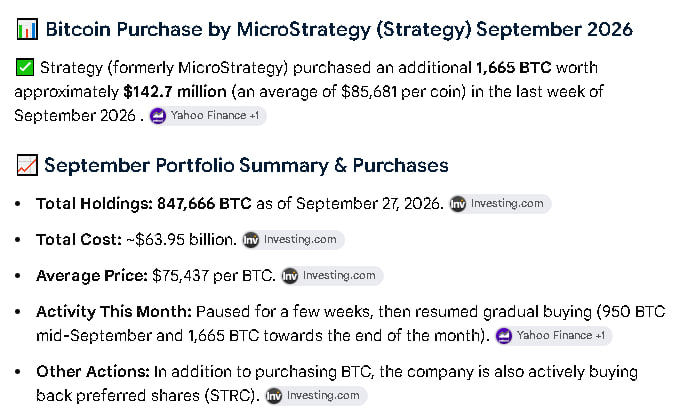
While BTC was falling, Strategy purchased another 1,665 BTC for approximately $142.7 million, with an average purchase price of $85,681 per Bitcoin. The purchase was disclosed after the week ending September 27.
So we have an interesting situation:
Bitcoin price is falling, but one of the world's biggest corporate Bitcoin holders is still accumulating.
That doesn't automatically mean the market has found a bottom. It simply shows that institutional accumulation and short-term market pressure are happening at the same time.
The $82K–$83K area is becoming important
Bitcoin's reaction around this area is something traders are watching closely.
Earlier this month, Glassnode identified an important resistance area around $83,000–$86,000, based on several cost-basis and market-structure indicators.
More recently, analysts have been watching the $82,000–$83,000 zone as an important area for Bitcoin to hold.
That makes the next few sessions interesting.
If buyers step in around these levels, BTC could attempt another recovery. If selling pressure continues and the support area breaks, traders will likely start watching lower levels.
For now, though, Bitcoin is sitting in a market where macroeconomic news can move the price just as quickly as crypto-specific news.
What's next?
The market is also waiting for upcoming U.S. economic data, including the PCE inflation report, which could influence expectations around Federal Reserve policy.
So the Bitcoin story this week isn't simply "BTC is crashing."
It's more complicated than that.
Bitcoin has pulled back from its September highs while Treasury yields are rising, oil prices are putting pressure on inflation expectations, and investors are reassessing the possibility of further rate hikes.$
At the same time, companies such as Strategy continue to buy Bitcoin.
BTC around $83K is therefore becoming an important area to watch — not because anyone knows exactly what happens next, but because the market is clearly deciding whether this is just a pullback or the beginning of a deeper correction.
#BTC #bitcoin #BinanceSquareTalks $BTC $BNB $ETH
This is market commentary, not financial advice. Crypto prices can move quickly and losses can be substantial.