#skpolicerefer18polymarketuserstoprosecutors
🚨 South Korea Refers 18 Polymarket Users to Prosecutors
Prediction markets are facing another regulatory test in South Korea.
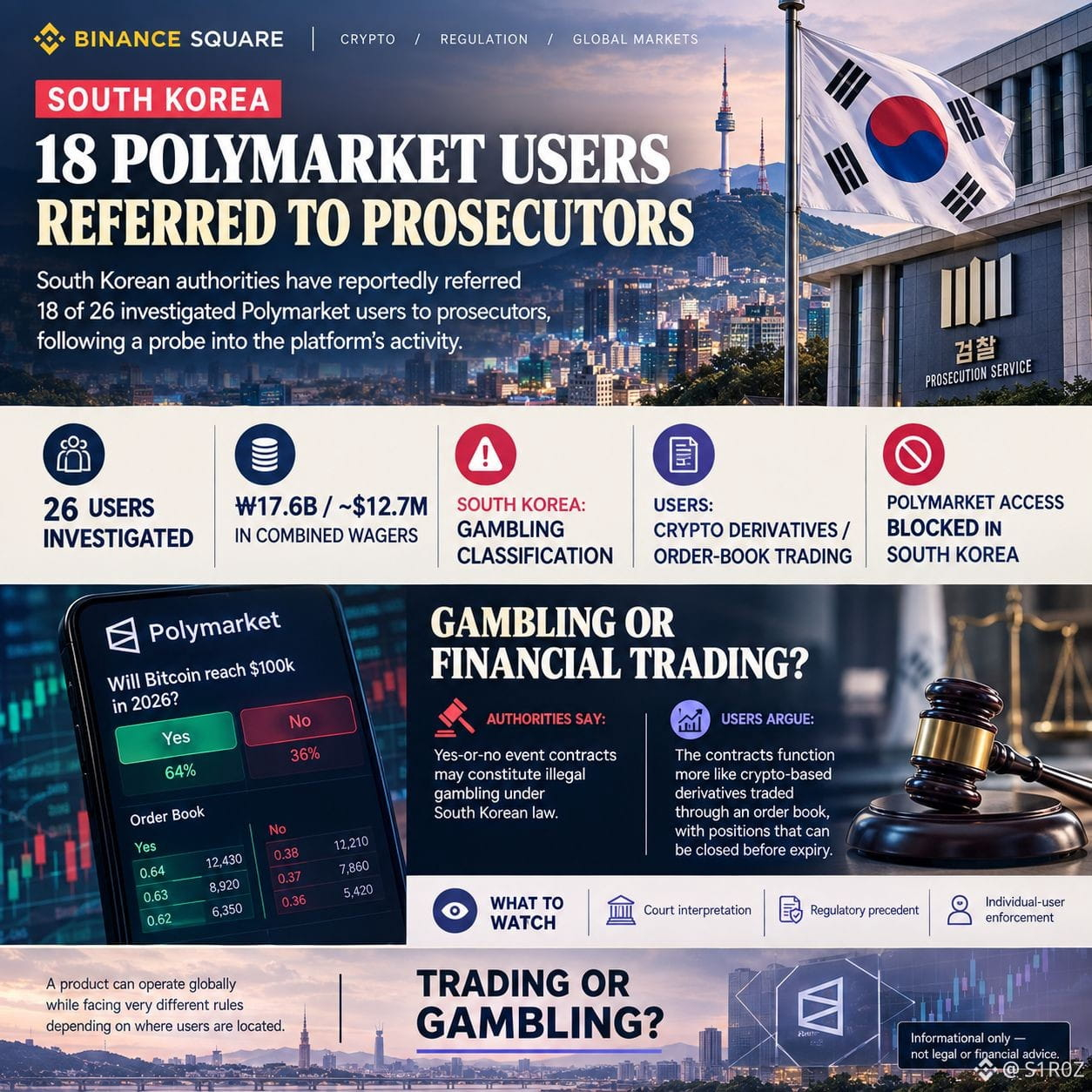
Police have reportedly referred 18 Polymarket users to prosecutors after booking 26 people over their activity on the platform. The users reportedly placed around 17.6 billion won ($12.7 million) in combined wagers.
But the bigger issue isn’t just the amount involved.
South Korean authorities reportedly view Polymarket’s yes-or-no event contracts as gambling under local law. Some users, however, have argued that these contracts function more like crypto-based derivatives traded through an order book.
That distinction could have implications far beyond these individual cases.
Prediction markets sit somewhere between trading, speculation and information markets, and their legal treatment can vary significantly by jurisdiction.
South Korea has already blocked domestic access to Polymarket following an August regulatory decision. These referrals suggest the focus may now extend beyond the platform itself to individual users.
For crypto, the bigger takeaway is that regulatory classification matters. A product can operate globally while facing very different rules depending on where users are located.
The key question now is where regulators and courts draw the line between financial trading and gambling.
What do you think — should prediction markets be treated more like trading platforms or gambling services?
Disclaimer: Informational content only, not financial or legal advice.
$BTC
$ZEC
$NVDA
#Polymarket #blockchain
🚨 South Korea Refers 18 Polymarket Users to Prosecutors
Prediction markets are facing another regulatory test in South Korea.
Police have reportedly referred 18 Polymarket users to prosecutors after booking 26 people over their activity on the platform. The users reportedly placed around 17.6 billion won ($12.7 million) in combined wagers.
But the bigger issue isn’t just the amount involved.
South Korean authorities reportedly view Polymarket’s yes-or-no event contracts as gambling under local law. Some users, however, have argued that these contracts function more like crypto-based derivatives traded through an order book.
That distinction could have implications far beyond these individual cases.
Prediction markets sit somewhere between trading, speculation and information markets, and their legal treatment can vary significantly by jurisdiction.
South Korea has already blocked domestic access to Polymarket following an August regulatory decision. These referrals suggest the focus may now extend beyond the platform itself to individual users.
For crypto, the bigger takeaway is that regulatory classification matters. A product can operate globally while facing very different rules depending on where users are located.
The key question now is where regulators and courts draw the line between financial trading and gambling.
What do you think — should prediction markets be treated more like trading platforms or gambling services?
Disclaimer: Informational content only, not financial or legal advice.
$BTC
$ZEC
$NVDA
#Polymarket #blockchain