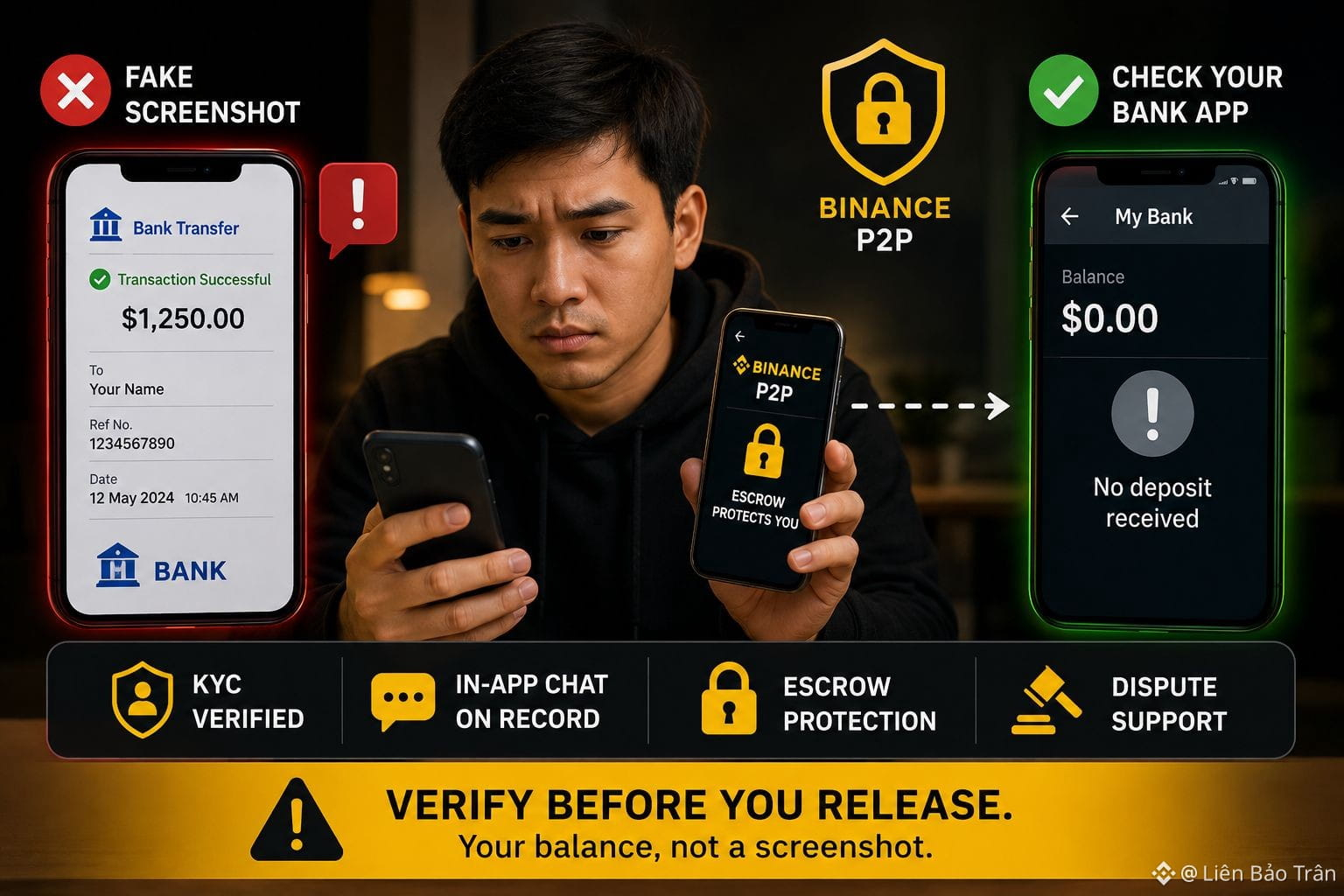
A buyer once sent me a payment screenshot on Binance P2P that looked completely real, timestamp, bank logo, transaction reference, all of it. I almost tapped release right there. Instead I opened my own banking app first, and the deposit simply wasn't there. That gap between what a chat image shows and what your account actually reflects is exactly why Binance P2P built escrow into every order: the crypto stays locked until the seller, not the chat window, confirms the money has landed. Binance P2P works because it forces verification at each stage. Every user completes KYC before trading, so identities are on record. The chat log keeps a timestamped history of everything said, which matters later if a dispute appeal becomes necessary. In my case, I told the buyer calmly that I hadn't received funds yet and would wait for confirmation. Within minutes the messages turned to pressure, asking me to release now and promising the payment would show up soon. That urgency is a textbook red flag on Binance P2P, and it's usually a sign to slow down, not speed up. I reported the order and contacted Binance support with screenshots of the chat and my bank statement showing no deposit. Having that archive ready made the process fast; support could see exactly what happened without me reconstructing the timeline from memory. Looking back, the biggest tell wasn't even the screenshot itself, it was how quickly the conversation shifted once I said I hadn't received anything. A genuine buyer dealing with a slow bank tends to stay patient and even apologizes for the wait, while someone hoping you'll release early tends to escalate fast. A few habits stuck with me after that: never trust a payment image alone, always check the source account directly, and keep every screenshot from a trade until it's fully closed. Binance P2P gives you the tools to stay safe, but only if you actually pause when something doesn't add up.
@Binance Vietnam #BinanceP2PAnToan $BTW $VELVET $ACE
@Binance Vietnam #BinanceP2PAnToan $BTW $VELVET $ACE