

#web3safety
web3safety
309,195 views
387 Discussing
Hot
Latest

Most traders still treat Web3 messaging apps as harmless chat rooms, yet over 70% of recent private key leaks originated from unverified bot permissions inside these very channels.
It is easy to get caught off guard when you think you are just casually chatting with alpha groups, only to watch your entire wallet balance get drained in seconds. The pain of losing hard-earned capital to a compromised Telegram or Discord webhook is something no trader ever wants to experience.
We need to talk about how our mental model around messaging apps has completely broken down. In the traditional Web2 world, a messaging app is just an isolated communication tool where the worst-case scenario is spam. But once you bridge on-chain assets like $TON or interact with ecosystem dApps via $SOL mini-programs, a chat interface effectively turns into an active hot wallet execution layer.
When you grant permissions to automated scripts or tap on signed message prompts inside a chat room, you are exposing transaction signing capabilities directly to third-party endpoints. Attackers do not even need to crack complex smart contracts on $ETH anymore when they can simply exploit an over-privileged bot token to mimic legitimate signature requests. Treating your chat client with the same casual attitude as personal text messaging is currently one of the fastest ways to get completely wiped out.
How are you currently isolating your communication tools from your main on-chain capital?
#CryptoSecurity #Web3Safety #OnChainAnalysis
Most traders still treat Web3 messaging apps as harmless chat rooms, yet over 70% of recent private key leaks originated from unverified bot permissions inside these very channels.
It is easy to get caught off guard when you think you are just casually chatting with alpha groups, only to watch your entire wallet balance get drained in seconds. The pain of losing hard-earned capital to a compromised Telegram or Discord webhook is something no trader ever wants to experience.
We need to talk about how our mental model around messaging apps has completely broken down. In the traditional Web2 world, a messaging app is just an isolated communication tool where the worst-case scenario is spam. But once you bridge on-chain assets like $TON or interact with ecosystem dApps via $SOL mini-programs, a chat interface effectively turns into an active hot wallet execution layer.
When you grant permissions to automated scripts or tap on signed message prompts inside a chat room, you are exposing transaction signing capabilities directly to third-party endpoints. Attackers do not even need to crack complex smart contracts on $ETH anymore when they can simply exploit an over-privileged bot token to mimic legitimate signature requests. Treating your chat client with the same casual attitude as personal text messaging is currently one of the fastest ways to get completely wiped out.
How are you currently isolating your communication tools from your main on-chain capital?
#CryptoSecurity #Web3Safety #OnChainAnalysis
It is easy to get caught off guard when you think you are just casually chatting with alpha groups, only to watch your entire wallet balance get drained in seconds. The pain of losing hard-earned capital to a compromised Telegram or Discord webhook is something no trader ever wants to experience.
We need to talk about how our mental model around messaging apps has completely broken down. In the traditional Web2 world, a messaging app is just an isolated communication tool where the worst-case scenario is spam. But once you bridge on-chain assets like $TON or interact with ecosystem dApps via $SOL mini-programs, a chat interface effectively turns into an active hot wallet execution layer.
When you grant permissions to automated scripts or tap on signed message prompts inside a chat room, you are exposing transaction signing capabilities directly to third-party endpoints. Attackers do not even need to crack complex smart contracts on $ETH anymore when they can simply exploit an over-privileged bot token to mimic legitimate signature requests. Treating your chat client with the same casual attitude as personal text messaging is currently one of the fastest ways to get completely wiped out.
How are you currently isolating your communication tools from your main on-chain capital?
#CryptoSecurity #Web3Safety #OnChainAnalysis
12
Why is everyone still obsessing over smart contract audits when the real attack vector is sitting right on your desktop?
Most traders believe their funds are safe as long as they never approve a suspicious transaction, only to wake up and find their entire portfolio drained in seconds.
Take a look at the address 0x7028…35887 tracked via on-chain data. It currently holds 204,648 $USDC, alongside stolen $ETH and other assets scattered across multiple chains. This was not a protocol vulnerability or a bridge exploit. A remote-access trojan hijacked active, unlocked browser wallet sessions directly from victims' machines and swept the balances clean.
Hundreds of active traders reported losing every token in their open wallets without ever signing a bad transaction. While the initial delivery method of the malware remains unconfirmed, the reality is clear: once an attacker compromises your operating system, standard browser wallet safeguards offer zero protection.
Are hot browser wallets becoming too risky for active portfolio management without hardware-level confirmation?
#CryptoSecurity #Web3Safety #OnChainAnalysis
Why is everyone still obsessing over smart contract audits when the real attack vector is sitting right on your desktop?
Most traders believe their funds are safe as long as they never approve a suspicious transaction, only to wake up and find their entire portfolio drained in seconds.
Take a look at the address 0x7028…35887 tracked via on-chain data. It currently holds 204,648 $USDC , alongside stolen $ETH and other assets scattered across multiple chains. This was not a protocol vulnerability or a bridge exploit. A remote-access trojan hijacked active, unlocked browser wallet sessions directly from victims' machines and swept the balances clean.
Hundreds of active traders reported losing every token in their open wallets without ever signing a bad transaction. While the initial delivery method of the malware remains unconfirmed, the reality is clear: once an attacker compromises your operating system, standard browser wallet safeguards offer zero protection.
Are hot browser wallets becoming too risky for active portfolio management without hardware-level confirmation?
#CryptoSecurity #Web3Safety #OnChainAnalysis
Most traders believe their funds are safe as long as they never approve a suspicious transaction, only to wake up and find their entire portfolio drained in seconds.
Take a look at the address 0x7028…35887 tracked via on-chain data. It currently holds 204,648 $USDC , alongside stolen $ETH and other assets scattered across multiple chains. This was not a protocol vulnerability or a bridge exploit. A remote-access trojan hijacked active, unlocked browser wallet sessions directly from victims' machines and swept the balances clean.
Hundreds of active traders reported losing every token in their open wallets without ever signing a bad transaction. While the initial delivery method of the malware remains unconfirmed, the reality is clear: once an attacker compromises your operating system, standard browser wallet safeguards offer zero protection.
Are hot browser wallets becoming too risky for active portfolio management without hardware-level confirmation?
#CryptoSecurity #Web3Safety #OnChainAnalysis
44
A single malicious permit signature drained $235,747 across decentralized wallets in under 48 hours without cracking a single password.
Most traders obsess over catching the next market cycle, yet the biggest threat to your portfolio is usually an unchecked approval signed during a busy trading session. We spend years grinding for modest returns only to watch our balances evaporate because of one overlooked permission.
Having navigated every exploit meta since 2017, the pattern is familiar: attackers rarely break chains anymore, they simply exploit our fatigue. In this latest incident, the drainer systematically swept $235,747 in liquidity, routing assets across $ETH and $BNB pools before the victims even realized their keys were compromised.
Back in the 2021 bull run, we saw the exact same drainer contracts wipe out active DeFi users who rushed transactions without verifying calldata. The market will always present new opportunities, but cold storage separation and regular allowance hygiene are the only reasons veteran accounts survive long enough to take profits.
How often do you actually audit and revoke active smart contract permissions on your daily wallets?
#CryptoSecurity #Web3Safety #DeFi
A single malicious permit signature drained $235,747 across decentralized wallets in under 48 hours without cracking a single password.
Most traders obsess over catching the next market cycle, yet the biggest threat to your portfolio is usually an unchecked approval signed during a busy trading session. We spend years grinding for modest returns only to watch our balances evaporate because of one overlooked permission.
Having navigated every exploit meta since 2017, the pattern is familiar: attackers rarely break chains anymore, they simply exploit our fatigue. In this latest incident, the drainer systematically swept $235,747 in liquidity, routing assets across $ETH and $BNB pools before the victims even realized their keys were compromised.
Back in the 2021 bull run, we saw the exact same drainer contracts wipe out active DeFi users who rushed transactions without verifying calldata. The market will always present new opportunities, but cold storage separation and regular allowance hygiene are the only reasons veteran accounts survive long enough to take profits.
How often do you actually audit and revoke active smart contract permissions on your daily wallets?
#CryptoSecurity #Web3Safety #DeFi
Most traders obsess over catching the next market cycle, yet the biggest threat to your portfolio is usually an unchecked approval signed during a busy trading session. We spend years grinding for modest returns only to watch our balances evaporate because of one overlooked permission.
Having navigated every exploit meta since 2017, the pattern is familiar: attackers rarely break chains anymore, they simply exploit our fatigue. In this latest incident, the drainer systematically swept $235,747 in liquidity, routing assets across $ETH and $BNB pools before the victims even realized their keys were compromised.
Back in the 2021 bull run, we saw the exact same drainer contracts wipe out active DeFi users who rushed transactions without verifying calldata. The market will always present new opportunities, but cold storage separation and regular allowance hygiene are the only reasons veteran accounts survive long enough to take profits.
How often do you actually audit and revoke active smart contract permissions on your daily wallets?
#CryptoSecurity #Web3Safety #DeFi
83

·
--
If you are still bypassing browser warnings to solve strange verification puzzles on new dApps, stop now.
Falling for subtle social engineering is the fastest way to watch your wallet drained while you think you are just confirming a regular transaction.
This tactic mirrors the old clipboard hijacking wave that cost $ETH and $BTC holders millions during previous cycles. Phishing sites now trick users into disabling translation tools and safety extensions under the guise of an interactive puzzle before serving malicious signature requests.
Just like the fake bridge exploits that caught traders off guard on $SOL, these scripts exploit cognitive fatigue right when you expect a routine security check. Once the extension guardrails are down, granting permissions takes only a single mistaken approval.
Have you encountered these deceptive verification prompts on new protocols recently?
#CryptoSecurity #Web3Safety #TradingRisks
If you are still bypassing browser warnings to solve strange verification puzzles on new dApps, stop now.
Falling for subtle social engineering is the fastest way to watch your wallet drained while you think you are just confirming a regular transaction.
This tactic mirrors the old clipboard hijacking wave that cost $ETH and $BTC holders millions during previous cycles. Phishing sites now trick users into disabling translation tools and safety extensions under the guise of an interactive puzzle before serving malicious signature requests.
Just like the fake bridge exploits that caught traders off guard on $SOL , these scripts exploit cognitive fatigue right when you expect a routine security check. Once the extension guardrails are down, granting permissions takes only a single mistaken approval.
Have you encountered these deceptive verification prompts on new protocols recently?
#CryptoSecurity #Web3Safety #TradingRisks
Falling for subtle social engineering is the fastest way to watch your wallet drained while you think you are just confirming a regular transaction.
This tactic mirrors the old clipboard hijacking wave that cost $ETH and $BTC holders millions during previous cycles. Phishing sites now trick users into disabling translation tools and safety extensions under the guise of an interactive puzzle before serving malicious signature requests.
Just like the fake bridge exploits that caught traders off guard on $SOL , these scripts exploit cognitive fatigue right when you expect a routine security check. Once the extension guardrails are down, granting permissions takes only a single mistaken approval.
Have you encountered these deceptive verification prompts on new protocols recently?
#CryptoSecurity #Web3Safety #TradingRisks
23
Over 60% of wallet drain incidents last month started with what looked like a routine bot verification pop-up.
Most traders blindly click through security prompts without realizing they might be signing a malicious transaction that empties their balances in seconds.
We see this pattern constantly on-chain where standard security screens get spoofed by phishing frontends. While genuine verification checks protect network integrity and keep $BNB and $ETH trading pools clean from spam bots, malicious clones use fake verification challenges to trick you into approving token allowances.
Automated sweepers routinely target traders who think they are simply proving they are human before interacting with a decentralized app. If a security check asks for a wallet signature or connection instead of a standard browser captcha, that is an immediate red flag.
Legitimate protocols rely on backend rate limiting and proof-of-work checks rather than intrusive permission requests. Keeping the bulk of your $BTC in cold storage and maintaining dedicated burner wallets for new interactions remains the safest setup.
How many of you actually inspect the contract data before signing off on a verification prompt?
#CryptoSecurity #Web3Safety #OnChainAnalysis
Over 60% of wallet drain incidents last month started with what looked like a routine bot verification pop-up.
Most traders blindly click through security prompts without realizing they might be signing a malicious transaction that empties their balances in seconds.
We see this pattern constantly on-chain where standard security screens get spoofed by phishing frontends. While genuine verification checks protect network integrity and keep $BNB and $ETH trading pools clean from spam bots, malicious clones use fake verification challenges to trick you into approving token allowances.
Automated sweepers routinely target traders who think they are simply proving they are human before interacting with a decentralized app. If a security check asks for a wallet signature or connection instead of a standard browser captcha, that is an immediate red flag.
Legitimate protocols rely on backend rate limiting and proof-of-work checks rather than intrusive permission requests. Keeping the bulk of your $BTC in cold storage and maintaining dedicated burner wallets for new interactions remains the safest setup.
How many of you actually inspect the contract data before signing off on a verification prompt?
#CryptoSecurity #Web3Safety #OnChainAnalysis
Most traders blindly click through security prompts without realizing they might be signing a malicious transaction that empties their balances in seconds.
We see this pattern constantly on-chain where standard security screens get spoofed by phishing frontends. While genuine verification checks protect network integrity and keep $BNB and $ETH trading pools clean from spam bots, malicious clones use fake verification challenges to trick you into approving token allowances.
Automated sweepers routinely target traders who think they are simply proving they are human before interacting with a decentralized app. If a security check asks for a wallet signature or connection instead of a standard browser captcha, that is an immediate red flag.
Legitimate protocols rely on backend rate limiting and proof-of-work checks rather than intrusive permission requests. Keeping the bulk of your $BTC in cold storage and maintaining dedicated burner wallets for new interactions remains the safest setup.
How many of you actually inspect the contract data before signing off on a verification prompt?
#CryptoSecurity #Web3Safety #OnChainAnalysis
20
·
--
Most wallet drainers and phishing exploits do not break smart contracts; they simply hijack active browser session tokens. Losing your hard-earned portfolio overnight to a compromised browser state is one of the worst feelings in crypto.
Those essential cookies that maintain your login sessions cannot be disabled without breaking basic site functions like form submissions and privacy preferences. While these system tokens do not store your direct personal identity, an attacker extracting them can replicate an active session to intercept trade requests and drain $BNB or $ETH balances without needing your primary password.
If you block these mandatory cookies at the browser level to stay safe, core trading interfaces and order executions simply stop working. Securing your $BTC holdings requires separating your daily web browsing from your trading environment rather than breaking required session tools.
How often do you clear your active browser sessions and trading cache?
#CryptoSecurity #Web3Safety #Binance
Most wallet drainers and phishing exploits do not break smart contracts; they simply hijack active browser session tokens. Losing your hard-earned portfolio overnight to a compromised browser state is one of the worst feelings in crypto.
Those essential cookies that maintain your login sessions cannot be disabled without breaking basic site functions like form submissions and privacy preferences. While these system tokens do not store your direct personal identity, an attacker extracting them can replicate an active session to intercept trade requests and drain $BNB or $ETH balances without needing your primary password.
If you block these mandatory cookies at the browser level to stay safe, core trading interfaces and order executions simply stop working. Securing your $BTC holdings requires separating your daily web browsing from your trading environment rather than breaking required session tools.
How often do you clear your active browser sessions and trading cache?
#CryptoSecurity #Web3Safety #Binance
Those essential cookies that maintain your login sessions cannot be disabled without breaking basic site functions like form submissions and privacy preferences. While these system tokens do not store your direct personal identity, an attacker extracting them can replicate an active session to intercept trade requests and drain $BNB or $ETH balances without needing your primary password.
If you block these mandatory cookies at the browser level to stay safe, core trading interfaces and order executions simply stop working. Securing your $BTC holdings requires separating your daily web browsing from your trading environment rather than breaking required session tools.
How often do you clear your active browser sessions and trading cache?
#CryptoSecurity #Web3Safety #Binance

18

·
--

Article
Chrome’s Hidden Flaw: How Hackers Were Already Inside Your BrowserGoogle just released a patch for a high‑severity bug in Chrome’s V8 JavaScript engine, but the company has kept a key question under wraps: who was exploiting it and who were the victims? This isn’t just a tech‑news story—it’s a wake‑up call for anyone who relies on the web for crypto trading, wallet access, or daily transactions.
The Concept
The V8 engine is the heart of Chrome’s JavaScript execution. Think of it as the engine in a car that turns the fuel (code) into motion (what you see on screen). A flaw in this engine can let a malicious actor inject code that runs with the same privileges as the browser itself. In simpler terms, if a hacker can hijack V8, they can run any script inside your browser without you noticing. This is a classic “remote code execution” problem—once the engine is compromised, the attacker can do almost anything, from stealing credentials to redirecting you to phishing sites.
Real‑World Example
Last week, a group of security researchers discovered that a zero‑day exploit in V8 was already being used in the wild. The attackers targeted users who visited compromised websites, injecting malicious scripts that silently stole login tokens for popular crypto wallets. In one documented case, a user logged into their $BTC wallet on a seemingly harmless news site, only to find their private keys copied to a remote server. The damage was done before the user even realized something was wrong. Google’s patch now closes the backdoor, but the fact that the exploit was active before the fix shows how quickly vulnerabilities can be weaponized.
Takeaway
If you’re a crypto enthusiast, treat browser security like you would a hardware wallet: keep it updated, use reputable extensions, and consider a dedicated browser for sensitive transactions. Enable Chrome’s “Safe Browsing” feature, install a reputable ad‑blocker, and never click on suspicious links. And remember: a single line of code can unlock your entire digital life—so keep your browser’s engine in top shape.
#CyberSecurity #Web3Safety #CryptoAwareness
What steps do you take to protect your browser from hidden threats?
Chrome’s Hidden Flaw: How Hackers Were Already Inside Your Browser
Google just released a patch for a high‑severity bug in Chrome’s V8 JavaScript engine, but the company has kept a key question under wraps: who was exploiting it and who were the victims? This isn’t just a tech‑news story—it’s a wake‑up call for anyone who relies on the web for crypto trading, wallet access, or daily transactions.
The Concept
The V8 engine is the heart of Chrome’s JavaScript execution. Think of it as the engine in a car that turns the fuel (code) into motion (what you see on screen). A flaw in this engine can let a malicious actor inject code that runs with the same privileges as the browser itself. In simpler terms, if a hacker can hijack V8, they can run any script inside your browser without you noticing. This is a classic “remote code execution” problem—once the engine is compromised, the attacker can do almost anything, from stealing credentials to redirecting you to phishing sites.
Real‑World Example
Last week, a group of security researchers discovered that a zero‑day exploit in V8 was already being used in the wild. The attackers targeted users who visited compromised websites, injecting malicious scripts that silently stole login tokens for popular crypto wallets. In one documented case, a user logged into their $BTC wallet on a seemingly harmless news site, only to find their private keys copied to a remote server. The damage was done before the user even realized something was wrong. Google’s patch now closes the backdoor, but the fact that the exploit was active before the fix shows how quickly vulnerabilities can be weaponized.
Takeaway
If you’re a crypto enthusiast, treat browser security like you would a hardware wallet: keep it updated, use reputable extensions, and consider a dedicated browser for sensitive transactions. Enable Chrome’s “Safe Browsing” feature, install a reputable ad‑blocker, and never click on suspicious links. And remember: a single line of code can unlock your entire digital life—so keep your browser’s engine in top shape.
#CyberSecurity #Web3Safety #CryptoAwareness
What steps do you take to protect your browser from hidden threats?
The Concept
The V8 engine is the heart of Chrome’s JavaScript execution. Think of it as the engine in a car that turns the fuel (code) into motion (what you see on screen). A flaw in this engine can let a malicious actor inject code that runs with the same privileges as the browser itself. In simpler terms, if a hacker can hijack V8, they can run any script inside your browser without you noticing. This is a classic “remote code execution” problem—once the engine is compromised, the attacker can do almost anything, from stealing credentials to redirecting you to phishing sites.
Real‑World Example
Last week, a group of security researchers discovered that a zero‑day exploit in V8 was already being used in the wild. The attackers targeted users who visited compromised websites, injecting malicious scripts that silently stole login tokens for popular crypto wallets. In one documented case, a user logged into their $BTC wallet on a seemingly harmless news site, only to find their private keys copied to a remote server. The damage was done before the user even realized something was wrong. Google’s patch now closes the backdoor, but the fact that the exploit was active before the fix shows how quickly vulnerabilities can be weaponized.
Takeaway
If you’re a crypto enthusiast, treat browser security like you would a hardware wallet: keep it updated, use reputable extensions, and consider a dedicated browser for sensitive transactions. Enable Chrome’s “Safe Browsing” feature, install a reputable ad‑blocker, and never click on suspicious links. And remember: a single line of code can unlock your entire digital life—so keep your browser’s engine in top shape.
#CyberSecurity #Web3Safety #CryptoAwareness
What steps do you take to protect your browser from hidden threats?
11

🔥 نقاش مفتوح:
هل نحن بحاجة حقاً لقوانين تحمي "الهاكرز الأخلاقيين" في عالم الكريبتو؟
جميعنا نعلم أن أمان البلوكشين وأموال المستخدمين هو خط الدفاع الأول لنمو صناعة الويب 3.
لكن بينما تطاردهم القوانين أحياناً بسبب "سوء فهم" لطبيعة عملهم، يثبت **الهاكرز الأخلاقيون (White Hat Hackers)** كل يوم أنهم الدرع الحقيقي ضد الاختراقات الكبرى.
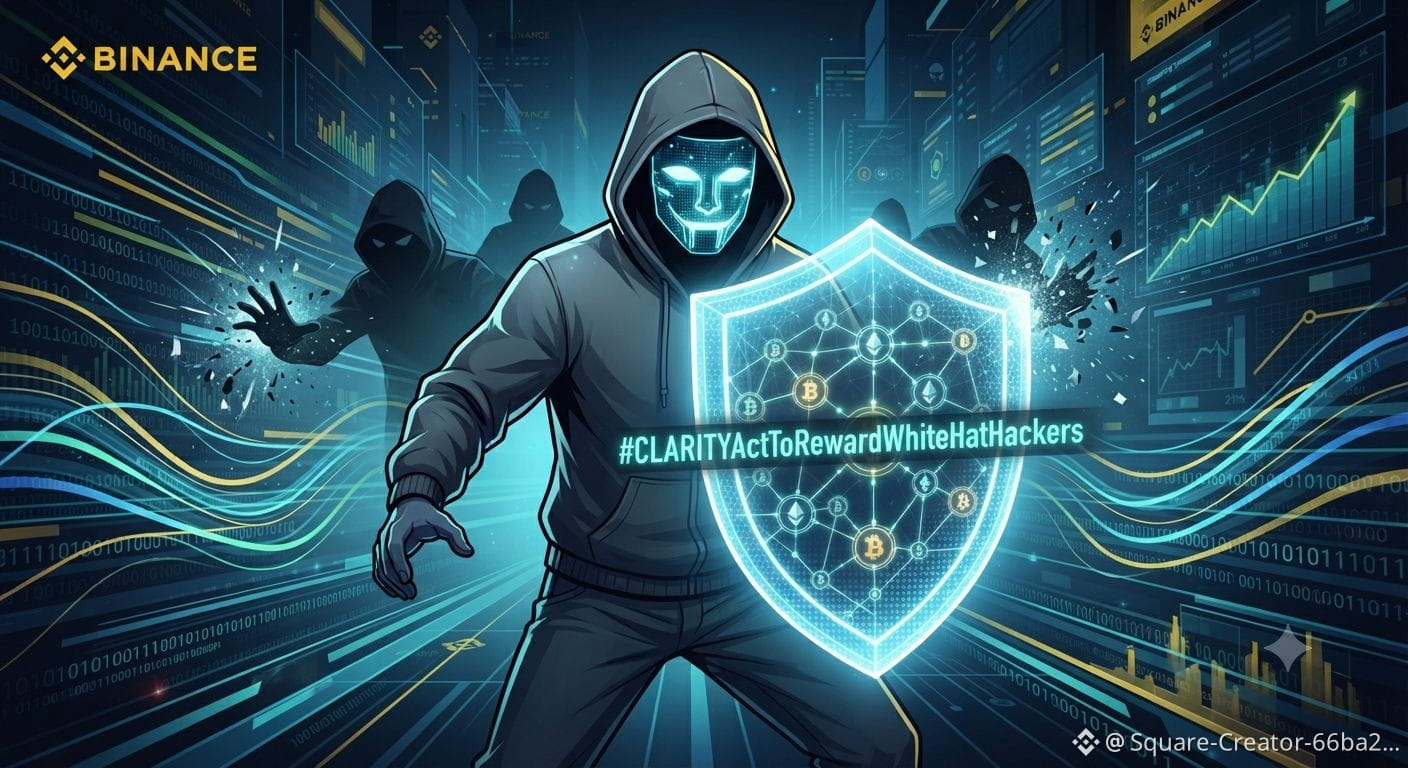
مع انتشار النقاش حول #CLARITYActToRewardWhiteHatHackers
نطرح التساؤلات التالية للنقاش بين أفراد مجتمع بينانس:
🛡️هل تعتقد أن التشريعات الحالية كافية لتشجيع الباحثين الأمنيين، أم أنها تقيدهم؟
💰كيف يمكن للمشاريع والمنصات موازنة المكافآت المالية لتكون عادلة وجذابة للهاكرز الأخلاقيين؟
⚖️ هل سنرى قريباً اعترافاً قانونياً عالمياً يحمي كل من يبلغ عن ثغرة بـ "نية حسنة"؟
نود معرفة وجهة نظركم وصوتكم في هذا الموضوع الحساس!
👇
#CLARITYActToRewardWhiteHatHackers #BinanceSquareFamily #Web3Safety #BlockchainSecurity
$NVDAB $MSFTB $TSMB
🔥 نقاش مفتوح:
هل نحن بحاجة حقاً لقوانين تحمي "الهاكرز الأخلاقيين" في عالم الكريبتو؟
جميعنا نعلم أن أمان البلوكشين وأموال المستخدمين هو خط الدفاع الأول لنمو صناعة الويب 3.
لكن بينما تطاردهم القوانين أحياناً بسبب "سوء فهم" لطبيعة عملهم، يثبت **الهاكرز الأخلاقيون (White Hat Hackers)** كل يوم أنهم الدرع الحقيقي ضد الاختراقات الكبرى.
مع انتشار النقاش حول #CLARITYActToRewardWhiteHatHackers
نطرح التساؤلات التالية للنقاش بين أفراد مجتمع بينانس:
🛡️هل تعتقد أن التشريعات الحالية كافية لتشجيع الباحثين الأمنيين، أم أنها تقيدهم؟
💰كيف يمكن للمشاريع والمنصات موازنة المكافآت المالية لتكون عادلة وجذابة للهاكرز الأخلاقيين؟
⚖️ هل سنرى قريباً اعترافاً قانونياً عالمياً يحمي كل من يبلغ عن ثغرة بـ "نية حسنة"؟
نود معرفة وجهة نظركم وصوتكم في هذا الموضوع الحساس!
👇
#CLARITYActToRewardWhiteHatHackers #BinanceSquareFamily #Web3Safety #BlockchainSecurity
$NVDAB $MSFTB $TSMB
هل نحن بحاجة حقاً لقوانين تحمي "الهاكرز الأخلاقيين" في عالم الكريبتو؟
جميعنا نعلم أن أمان البلوكشين وأموال المستخدمين هو خط الدفاع الأول لنمو صناعة الويب 3.
لكن بينما تطاردهم القوانين أحياناً بسبب "سوء فهم" لطبيعة عملهم، يثبت **الهاكرز الأخلاقيون (White Hat Hackers)** كل يوم أنهم الدرع الحقيقي ضد الاختراقات الكبرى.
مع انتشار النقاش حول #CLARITYActToRewardWhiteHatHackers
نطرح التساؤلات التالية للنقاش بين أفراد مجتمع بينانس:
🛡️هل تعتقد أن التشريعات الحالية كافية لتشجيع الباحثين الأمنيين، أم أنها تقيدهم؟
💰كيف يمكن للمشاريع والمنصات موازنة المكافآت المالية لتكون عادلة وجذابة للهاكرز الأخلاقيين؟
⚖️ هل سنرى قريباً اعترافاً قانونياً عالمياً يحمي كل من يبلغ عن ثغرة بـ "نية حسنة"؟
نود معرفة وجهة نظركم وصوتكم في هذا الموضوع الحساس!
👇
#CLARITYActToRewardWhiteHatHackers #BinanceSquareFamily #Web3Safety #BlockchainSecurity
$NVDAB $MSFTB $TSMB
164

Article
Protect Your Crypto: 4 Security Practices You Can't Ignore🔒 In Web3, you are your own bank—which means security is entirely your responsibility! Scammers are getting smarter every day, but keeping your assets safe doesn't have to be complicated.
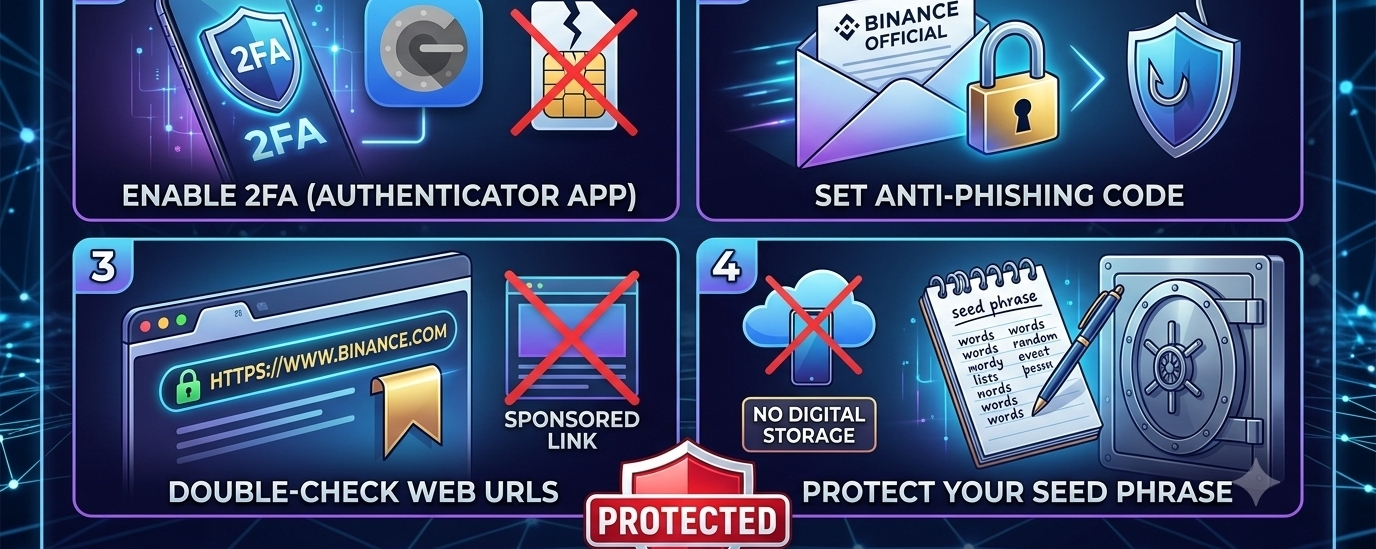
Follow these 4 essential security habits:
🔐 1. Enable 2FA (Authenticator App): Never rely solely on SMS 2FA, as it is vulnerable to SIM-swapping. Use an authenticator app or hardware key instead.
📩 2. Set an Anti-Phishing Code: Enable this feature in your Binance account settings so you can verify that emails are officially from Binance.
🌐 3. Double-Check Web URLs: Bookmark official exchange pages and DEXs. Never click sponsored search links or unverified links from Telegram/Discord DMs.
🔑 4. Protect Your Seed Phrases: Never store your private seed phrase digitally (screenshots, cloud storage, notes apps). Keep it written down offline in a secure location.
Stay safe, trade smart, and protect your gains! 🛡️
What's your #1 rule for staying safe in crypto? Drop it below! 👇
#CryptoSecurity #Web3Safety #BinanceProtect
$BTC $BNB
{future}(BTCUSDT)
{future}(BNBUSDT)
Protect Your Crypto: 4 Security Practices You Can't Ignore
🔒 In Web3, you are your own bank—which means security is entirely your responsibility! Scammers are getting smarter every day, but keeping your assets safe doesn't have to be complicated.
Follow these 4 essential security habits:
🔐 1. Enable 2FA (Authenticator App): Never rely solely on SMS 2FA, as it is vulnerable to SIM-swapping. Use an authenticator app or hardware key instead.
📩 2. Set an Anti-Phishing Code: Enable this feature in your Binance account settings so you can verify that emails are officially from Binance.
🌐 3. Double-Check Web URLs: Bookmark official exchange pages and DEXs. Never click sponsored search links or unverified links from Telegram/Discord DMs.
🔑 4. Protect Your Seed Phrases: Never store your private seed phrase digitally (screenshots, cloud storage, notes apps). Keep it written down offline in a secure location.
Stay safe, trade smart, and protect your gains! 🛡️
What's your #1 rule for staying safe in crypto? Drop it below! 👇
#CryptoSecurity #Web3Safety #BinanceProtect
$BTC $BNB
Follow these 4 essential security habits:
🔐 1. Enable 2FA (Authenticator App): Never rely solely on SMS 2FA, as it is vulnerable to SIM-swapping. Use an authenticator app or hardware key instead.
📩 2. Set an Anti-Phishing Code: Enable this feature in your Binance account settings so you can verify that emails are officially from Binance.
🌐 3. Double-Check Web URLs: Bookmark official exchange pages and DEXs. Never click sponsored search links or unverified links from Telegram/Discord DMs.
🔑 4. Protect Your Seed Phrases: Never store your private seed phrase digitally (screenshots, cloud storage, notes apps). Keep it written down offline in a secure location.
Stay safe, trade smart, and protect your gains! 🛡️
What's your #1 rule for staying safe in crypto? Drop it below! 👇
#CryptoSecurity #Web3Safety #BinanceProtect
$BTC $BNB
34


·
--
Article
When a hacker drained $114 million by using the protocol's own math against itIn October 2022 a trader targeted a Solana based lending platform called Mango Markets .
Unlike traditional exploits that rely on buggy code or stolen keys this attacker didn't break a single rule in the smart contract .
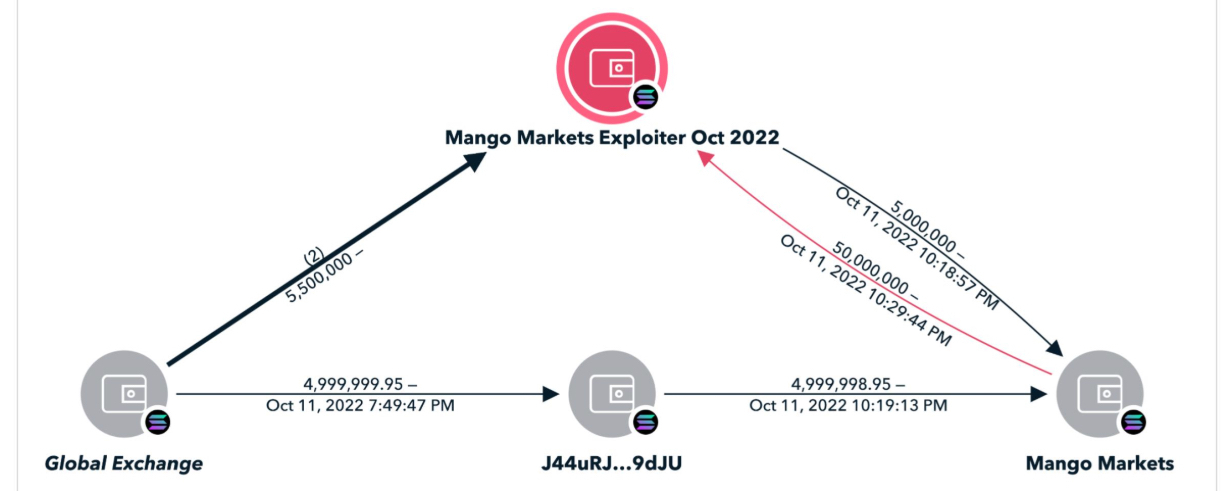
The hacker created two separate accounts funded them with stablecoins and took opposing massive positions in the platform's native token MNGO .
Using large sums of money on external exchanges the attacker artificially pumped the price of the MNGO token by over 1000 percent in a few minutes .
Because the protocol's smart contract trusted the manipulated price oracle it suddenly saw that the attacker's collateral was worth tens of millions of dollars .
The attacker immediately used that artificially inflated value to borrow and withdraw $114 million in various crypto assets from the pool leaving the protocol completely insolvent .
The hacker publicly claimed it was a legal highly profitable trading strategy using the system as designed .
However authorities saw it differently and the trader was later arrested for market manipulation .
If a protocol allows a profitable trade by design is it a legitimate strategy or an exploit .
#MangoMarkets #DeFi #Solana #Web3Safety
When a hacker drained $114 million by using the protocol's own math against it
In October 2022 a trader targeted a Solana based lending platform called Mango Markets .
Unlike traditional exploits that rely on buggy code or stolen keys this attacker didn't break a single rule in the smart contract .
The hacker created two separate accounts funded them with stablecoins and took opposing massive positions in the platform's native token MNGO .
Using large sums of money on external exchanges the attacker artificially pumped the price of the MNGO token by over 1000 percent in a few minutes .
Because the protocol's smart contract trusted the manipulated price oracle it suddenly saw that the attacker's collateral was worth tens of millions of dollars .
The attacker immediately used that artificially inflated value to borrow and withdraw $114 million in various crypto assets from the pool leaving the protocol completely insolvent .
The hacker publicly claimed it was a legal highly profitable trading strategy using the system as designed .
However authorities saw it differently and the trader was later arrested for market manipulation .
If a protocol allows a profitable trade by design is it a legitimate strategy or an exploit .
#MangoMarkets #DeFi #Solana #Web3Safety
Unlike traditional exploits that rely on buggy code or stolen keys this attacker didn't break a single rule in the smart contract .
The hacker created two separate accounts funded them with stablecoins and took opposing massive positions in the platform's native token MNGO .
Using large sums of money on external exchanges the attacker artificially pumped the price of the MNGO token by over 1000 percent in a few minutes .
Because the protocol's smart contract trusted the manipulated price oracle it suddenly saw that the attacker's collateral was worth tens of millions of dollars .
The attacker immediately used that artificially inflated value to borrow and withdraw $114 million in various crypto assets from the pool leaving the protocol completely insolvent .
The hacker publicly claimed it was a legal highly profitable trading strategy using the system as designed .
However authorities saw it differently and the trader was later arrested for market manipulation .
If a protocol allows a profitable trade by design is it a legitimate strategy or an exploit .
#MangoMarkets #DeFi #Solana #Web3Safety
1
251
·
--

Article
When the smart contract was perfectly secure but the website UI was compromisedIn December 2021 a decentralized finance protocol called BadgerDAO suffered a massive $120 million security exploit .
Security researchers immediately rushed to inspect the smart contract code looking for algorithmic flaws or missing validation checks .
They found nothing wrong with the code on the blockchain .The attackers had not touched the smart contracts at all . Instead they targeted the front-end infrastructure of the website itself .
By obtaining an API key for a script injected into the website interface the hackers silently altered the user interactions . Whenever a user tried to approve a standard token transaction the modified front-end secretly requested permission for the attacker's address to spend their tokens .
Users signed the transactions with their hardware wallets trusting what they saw on their screens .
Over several weeks the hackers collected approvals from high-value wallets before executing a single massive drain operation .
Even the most secure smart contract is completely useless if the interface presenting it to the user cannot be trusted .
Does relying on traditional web servers for Web3 user interfaces defeat the entire purpose of decentralization .
#BadgerDAO #Web3Safety #FrontEndExploit
When the smart contract was perfectly secure but the website UI was compromised
In December 2021 a decentralized finance protocol called BadgerDAO suffered a massive $120 million security exploit .
Security researchers immediately rushed to inspect the smart contract code looking for algorithmic flaws or missing validation checks .
They found nothing wrong with the code on the blockchain .The attackers had not touched the smart contracts at all . Instead they targeted the front-end infrastructure of the website itself .
By obtaining an API key for a script injected into the website interface the hackers silently altered the user interactions . Whenever a user tried to approve a standard token transaction the modified front-end secretly requested permission for the attacker's address to spend their tokens .
Users signed the transactions with their hardware wallets trusting what they saw on their screens .
Over several weeks the hackers collected approvals from high-value wallets before executing a single massive drain operation .
Even the most secure smart contract is completely useless if the interface presenting it to the user cannot be trusted .
Does relying on traditional web servers for Web3 user interfaces defeat the entire purpose of decentralization .
#BadgerDAO #Web3Safety #FrontEndExploit
Security researchers immediately rushed to inspect the smart contract code looking for algorithmic flaws or missing validation checks .
They found nothing wrong with the code on the blockchain .The attackers had not touched the smart contracts at all . Instead they targeted the front-end infrastructure of the website itself .
By obtaining an API key for a script injected into the website interface the hackers silently altered the user interactions . Whenever a user tried to approve a standard token transaction the modified front-end secretly requested permission for the attacker's address to spend their tokens .
Users signed the transactions with their hardware wallets trusting what they saw on their screens .
Over several weeks the hackers collected approvals from high-value wallets before executing a single massive drain operation .
Even the most secure smart contract is completely useless if the interface presenting it to the user cannot be trusted .
Does relying on traditional web servers for Web3 user interfaces defeat the entire purpose of decentralization .
#BadgerDAO #Web3Safety #FrontEndExploit
241

·
--
$AAPLB
{spot}(AAPLBUSDT)
$NVDAB
{spot}(NVDABUSDT)
⚠️ Security Alert: Adform Supply Chain Script Compromise
Web3 security goes beyond just your hardware wallet—browser-side hygiene matters too.
Recent incident reports flagged a supply chain exploit targeting an Adform advertising script which briefly modified client sites to swap destination crypto wallet addresses on copy-paste actions.
The Risk: Attackers targeted clipboard copy functions for major network formats (including Ethereum and Tron addresses) on sites running the affected script.
Action Item: Always double-check destination addresses character-by-character before confirming transactions, and clear your browser cache if you interact heavily with external dApp interfaces.
Stay safe out there!
#CryptoSecurityResponse #Web3Safety #AssetProtection #ScamAlert
$AAPLB
$NVDAB
⚠️ Security Alert: Adform Supply Chain Script Compromise
Web3 security goes beyond just your hardware wallet—browser-side hygiene matters too.
Recent incident reports flagged a supply chain exploit targeting an Adform advertising script which briefly modified client sites to swap destination crypto wallet addresses on copy-paste actions.
The Risk: Attackers targeted clipboard copy functions for major network formats (including Ethereum and Tron addresses) on sites running the affected script.
Action Item: Always double-check destination addresses character-by-character before confirming transactions, and clear your browser cache if you interact heavily with external dApp interfaces.
Stay safe out there!
#CryptoSecurityResponse #Web3Safety #AssetProtection #ScamAlert
$NVDAB
⚠️ Security Alert: Adform Supply Chain Script Compromise
Web3 security goes beyond just your hardware wallet—browser-side hygiene matters too.
Recent incident reports flagged a supply chain exploit targeting an Adform advertising script which briefly modified client sites to swap destination crypto wallet addresses on copy-paste actions.
The Risk: Attackers targeted clipboard copy functions for major network formats (including Ethereum and Tron addresses) on sites running the affected script.
Action Item: Always double-check destination addresses character-by-character before confirming transactions, and clear your browser cache if you interact heavily with external dApp interfaces.
Stay safe out there!
#CryptoSecurityResponse #Web3Safety #AssetProtection #ScamAlert
61

·
--
你的Google搜尋,正在把你導向詐騙網站
別再用Google搜尋去中心化應用了。最近一檔偽造Uniswap廣告的釣魚行動,兩週就偷走127萬美金💸
攻擊手法很簡單:買廣告位 → 複製官方頁面 → 等你連錢包簽名 → 資金消失🪄
不需要偷助記碼、不需要裝惡意軟體,你就自己把钱轉給了別人。
幾條保命建議:
✅ 官方網址加書籤,別靠搜尋
✅ 連錢包前先盯一眼URL
✅ 授權請求多看一眼再簽
✅ 定期撤銷不需要的Token批准
硬體錢包能保護私鑰,但保護不了你的判斷力⚠️
#CryptoSecurity #Phishing #Uniswap #Web3Safety
#CryptoSecurity
你的Google搜尋,正在把你導向詐騙網站
別再用Google搜尋去中心化應用了。最近一檔偽造Uniswap廣告的釣魚行動,兩週就偷走127萬美金💸
攻擊手法很簡單:買廣告位 → 複製官方頁面 → 等你連錢包簽名 → 資金消失🪄
不需要偷助記碼、不需要裝惡意軟體,你就自己把钱轉給了別人。
幾條保命建議:
✅ 官方網址加書籤,別靠搜尋
✅ 連錢包前先盯一眼URL
✅ 授權請求多看一眼再簽
✅ 定期撤銷不需要的Token批准
硬體錢包能保護私鑰,但保護不了你的判斷力⚠️
#CryptoSecurity #Phishing #Uniswap #Web3Safety
#CryptoSecurity
別再用Google搜尋去中心化應用了。最近一檔偽造Uniswap廣告的釣魚行動,兩週就偷走127萬美金💸
攻擊手法很簡單:買廣告位 → 複製官方頁面 → 等你連錢包簽名 → 資金消失🪄
不需要偷助記碼、不需要裝惡意軟體,你就自己把钱轉給了別人。
幾條保命建議:
✅ 官方網址加書籤,別靠搜尋
✅ 連錢包前先盯一眼URL
✅ 授權請求多看一眼再簽
✅ 定期撤銷不需要的Token批准
硬體錢包能保護私鑰,但保護不了你的判斷力⚠️
#CryptoSecurity #Phishing #Uniswap #Web3Safety
#CryptoSecurity
41

·
--
Article
Cómo evitar estafas P2P en Binance: Una lectura obligada para cada comercianteCon el aumento en la adopción de criptomonedas, el comercio P2P (peer-to-peer) se ha convertido en una forma poderosa de comprar y vender criptomonedas directamente con otros usuarios—sin intermediarios, bajas comisiones y total flexibilidad. Pero donde hay oportunidad, los estafadores intentan infiltrarse también.
Si estás comerciando en Binance P2P, aquí te mostramos cómo puedes mantenerte seguro, protegido y un paso adelante del fraude:
🚨 Estafas P2P comunes de las que debes estar alerta:
Pruebas de pago falsas:
Los estafadores suben capturas de pantalla afirmando que han pagado, pero no llega dinero a tu cuenta.
✅ Consejo: Siempre verifica tu banco o billetera de pago tú mismo—no te fíes de las capturas de pantalla.
Pagos de terceros (Riesgo de congelación de cuenta):
Los estafadores usan la cuenta bancaria de otra persona para pagarte. Esto puede llevar a que tu cuenta bancaria sea congelada.
✅ Consejo: Solo libera criptomonedas si la cuenta del remitente coincide con el nombre verificado del comprador en Binance.
Reversiones (Banco o Billetera):
Después de recibir la criptomoneda, el estafador revierte el pago a través del soporte de banco o billetera electrónica.
✅ Consejo: Usa métodos de pago que no soporten reversiones o trata siempre con comerciantes de alta reputación.
Trucos de sobrepago:
Recibes una cantidad mayor de la esperada, luego piden un reembolso, esperando que envíes dinero antes de verificar.
✅ Consejo: Verifica dos veces los montos de las transacciones. No devuelvas fondos sin una verificación completa.
🛡️ Consejos profesionales para protegerte en Binance P2P:
Elige comerciantes verificados y de alta calificación
📊 Siempre comercia con usuarios que tengan:
✅ Alta tasa de finalización (90%+)
✅ Buenas reseñas de usuarios
✅ Insignia “Verificado” (donde esté disponible)
Nunca te comuniques fuera de Binance
❌ Los estafadores a menudo piden chatear en WhatsApp, Telegram, etc. No caigas en eso.
✅ Mantén toda la comunicación y transacciones dentro de Binance para una protección total.
No liberes criptomonedas hasta que recibas el dinero
Incluso si el temporizador se está agotando, nunca hagas clic en “Liberar” a menos que los fondos se hayan aclarado en tu cuenta bancaria.
Usa la protección de garantía de Binance
Binance bloquea la criptomoneda durante la transacción. Si hay una disputa, el soporte de Binance puede intervenir solo si te mantienes en la plataforma.
Mira las señales de alerta
Compradores apresurados
Manipulación emocional (“mi hijo está enfermo”)
Solicitudes para cancelar y volver a intentar pagos
💬 Reflexiones finales:
Binance P2P es uno de los lugares más seguros para comerciar criptomonedas de igual a igual—si sigues las reglas y te proteges.
✅ Confía en la plataforma.
✅ Mantente alerta, no asustado.
✅ Protege tu criptomoneda como si tu futuro dependiera de ello—porque así puede ser.
🚀 ¿Has enfrentado un intento de estafa antes? Comparte tu historia abajo para ayudar a otros a aprender.
Juntos, hacemos el espacio cripto más seguro para todos. 💛
#BinanceP2P #AvoidScams #CryptoSafety #P2PTrading #Web3Safety
Cómo evitar estafas P2P en Binance: Una lectura obligada para cada comerciante
Con el aumento en la adopción de criptomonedas, el comercio P2P (peer-to-peer) se ha convertido en una forma poderosa de comprar y vender criptomonedas directamente con otros usuarios—sin intermediarios, bajas comisiones y total flexibilidad. Pero donde hay oportunidad, los estafadores intentan infiltrarse también.
Si estás comerciando en Binance P2P, aquí te mostramos cómo puedes mantenerte seguro, protegido y un paso adelante del fraude:
🚨 Estafas P2P comunes de las que debes estar alerta:
Pruebas de pago falsas:
Los estafadores suben capturas de pantalla afirmando que han pagado, pero no llega dinero a tu cuenta.
✅ Consejo: Siempre verifica tu banco o billetera de pago tú mismo—no te fíes de las capturas de pantalla.
Pagos de terceros (Riesgo de congelación de cuenta):
Los estafadores usan la cuenta bancaria de otra persona para pagarte. Esto puede llevar a que tu cuenta bancaria sea congelada.
✅ Consejo: Solo libera criptomonedas si la cuenta del remitente coincide con el nombre verificado del comprador en Binance.
Reversiones (Banco o Billetera):
Después de recibir la criptomoneda, el estafador revierte el pago a través del soporte de banco o billetera electrónica.
✅ Consejo: Usa métodos de pago que no soporten reversiones o trata siempre con comerciantes de alta reputación.
Trucos de sobrepago:
Recibes una cantidad mayor de la esperada, luego piden un reembolso, esperando que envíes dinero antes de verificar.
✅ Consejo: Verifica dos veces los montos de las transacciones. No devuelvas fondos sin una verificación completa.
🛡️ Consejos profesionales para protegerte en Binance P2P:
Elige comerciantes verificados y de alta calificación
📊 Siempre comercia con usuarios que tengan:
✅ Alta tasa de finalización (90%+)
✅ Buenas reseñas de usuarios
✅ Insignia “Verificado” (donde esté disponible)
Nunca te comuniques fuera de Binance
❌ Los estafadores a menudo piden chatear en WhatsApp, Telegram, etc. No caigas en eso.
✅ Mantén toda la comunicación y transacciones dentro de Binance para una protección total.
No liberes criptomonedas hasta que recibas el dinero
Incluso si el temporizador se está agotando, nunca hagas clic en “Liberar” a menos que los fondos se hayan aclarado en tu cuenta bancaria.
Usa la protección de garantía de Binance
Binance bloquea la criptomoneda durante la transacción. Si hay una disputa, el soporte de Binance puede intervenir solo si te mantienes en la plataforma.
Mira las señales de alerta
Compradores apresurados
Manipulación emocional (“mi hijo está enfermo”)
Solicitudes para cancelar y volver a intentar pagos
💬 Reflexiones finales:
Binance P2P es uno de los lugares más seguros para comerciar criptomonedas de igual a igual—si sigues las reglas y te proteges.
✅ Confía en la plataforma.
✅ Mantente alerta, no asustado.
✅ Protege tu criptomoneda como si tu futuro dependiera de ello—porque así puede ser.
🚀 ¿Has enfrentado un intento de estafa antes? Comparte tu historia abajo para ayudar a otros a aprender.
Juntos, hacemos el espacio cripto más seguro para todos. 💛
#BinanceP2P #AvoidScams #CryptoSafety #P2PTrading #Web3Safety
Si estás comerciando en Binance P2P, aquí te mostramos cómo puedes mantenerte seguro, protegido y un paso adelante del fraude:
🚨 Estafas P2P comunes de las que debes estar alerta:
Pruebas de pago falsas:
Los estafadores suben capturas de pantalla afirmando que han pagado, pero no llega dinero a tu cuenta.
✅ Consejo: Siempre verifica tu banco o billetera de pago tú mismo—no te fíes de las capturas de pantalla.
Pagos de terceros (Riesgo de congelación de cuenta):
Los estafadores usan la cuenta bancaria de otra persona para pagarte. Esto puede llevar a que tu cuenta bancaria sea congelada.
✅ Consejo: Solo libera criptomonedas si la cuenta del remitente coincide con el nombre verificado del comprador en Binance.
Reversiones (Banco o Billetera):
Después de recibir la criptomoneda, el estafador revierte el pago a través del soporte de banco o billetera electrónica.
✅ Consejo: Usa métodos de pago que no soporten reversiones o trata siempre con comerciantes de alta reputación.
Trucos de sobrepago:
Recibes una cantidad mayor de la esperada, luego piden un reembolso, esperando que envíes dinero antes de verificar.
✅ Consejo: Verifica dos veces los montos de las transacciones. No devuelvas fondos sin una verificación completa.
🛡️ Consejos profesionales para protegerte en Binance P2P:
Elige comerciantes verificados y de alta calificación
📊 Siempre comercia con usuarios que tengan:
✅ Alta tasa de finalización (90%+)
✅ Buenas reseñas de usuarios
✅ Insignia “Verificado” (donde esté disponible)
Nunca te comuniques fuera de Binance
❌ Los estafadores a menudo piden chatear en WhatsApp, Telegram, etc. No caigas en eso.
✅ Mantén toda la comunicación y transacciones dentro de Binance para una protección total.
No liberes criptomonedas hasta que recibas el dinero
Incluso si el temporizador se está agotando, nunca hagas clic en “Liberar” a menos que los fondos se hayan aclarado en tu cuenta bancaria.
Usa la protección de garantía de Binance
Binance bloquea la criptomoneda durante la transacción. Si hay una disputa, el soporte de Binance puede intervenir solo si te mantienes en la plataforma.
Mira las señales de alerta
Compradores apresurados
Manipulación emocional (“mi hijo está enfermo”)
Solicitudes para cancelar y volver a intentar pagos
💬 Reflexiones finales:
Binance P2P es uno de los lugares más seguros para comerciar criptomonedas de igual a igual—si sigues las reglas y te proteges.
✅ Confía en la plataforma.
✅ Mantente alerta, no asustado.
✅ Protege tu criptomoneda como si tu futuro dependiera de ello—porque así puede ser.
🚀 ¿Has enfrentado un intento de estafa antes? Comparte tu historia abajo para ayudar a otros a aprender.
Juntos, hacemos el espacio cripto más seguro para todos. 💛
#BinanceP2P #AvoidScams #CryptoSafety #P2PTrading #Web3Safety
77

·
--
Bullish
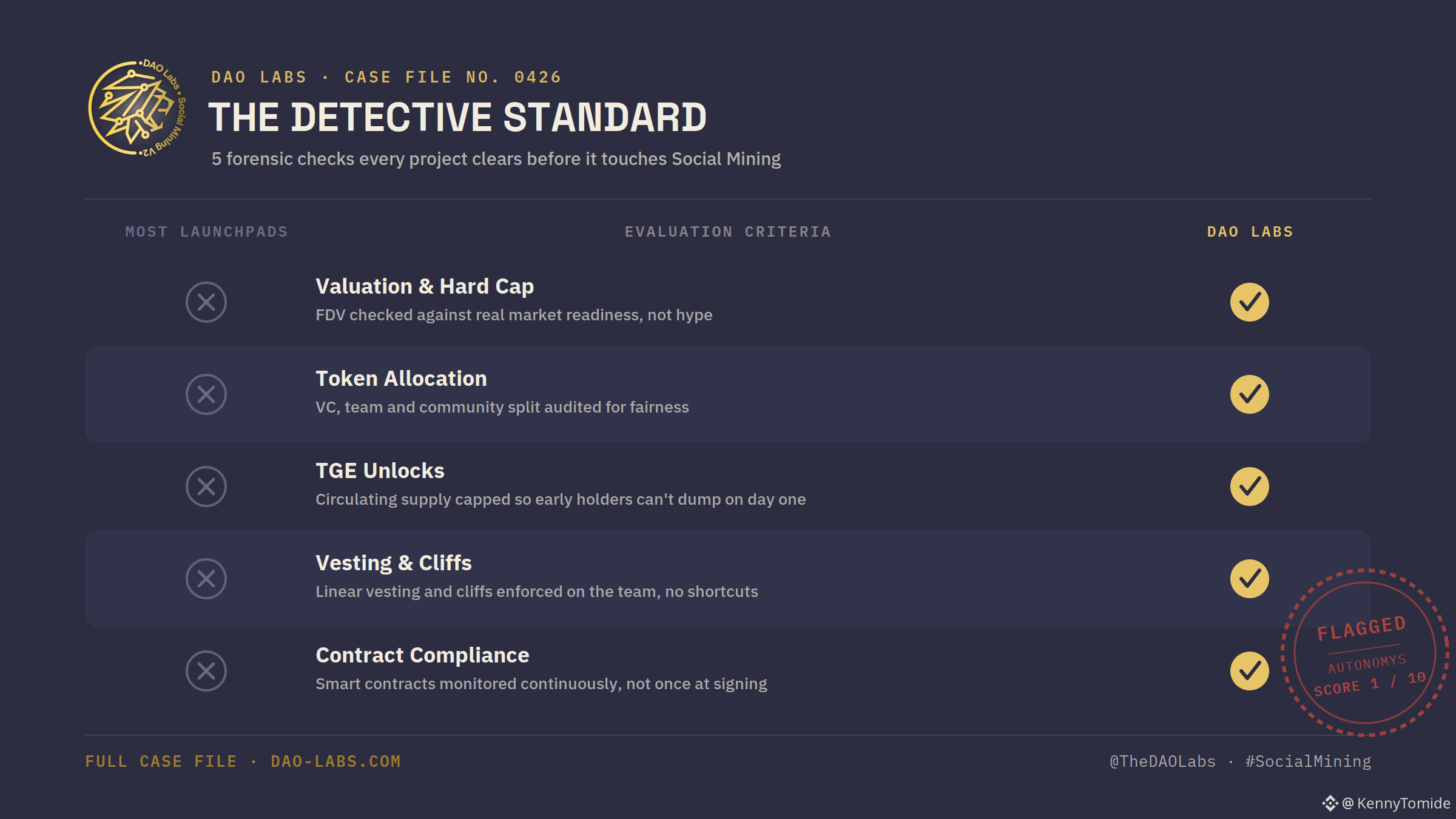
Most "vetted" launchpads just mean someone read the deck and liked the logo
@DAOLabs published what real vetting actually looks like, worth breaking down if you've ever lost money trusting a launchpad's "verified" badge
Before any project touches their Social Mining ecosystem, it clears 5 checks
→ Valuation against real market readiness, not inflated FDV
→ Token allocation between VCs, team and community, audited for fairness
→ TGE unlocks capped so early holders can't dump on you day one
→ Vesting and cliffs enforced on the team, no quiet shortcuts
→ Contracts monitored continuously, not just once at signing
That last one is the part most launchpads skip. A check at TGE means nothing if nobody's watching six months later
Results from running this framework
NEM/Symbol: 350m to 6.7b mcap at genesis
MultiversX: unicorn status, 100x and climbing
Avalanche Genesis testnet: 500x ATH ROI from real validators, not bots
RWA ILO: 13x ATH with a clean 100% unlock
But here's the part that actually matters for your safety
Autonomys scored 1/10 after breaking its own unlock agreement, holding tokens back two weeks past TGE
DAO Labs caught it and published the violation instead of burying it
A framework that only shows wins is marketing
A framework that publishes its own bad pick, contract breach included, is actual due diligence
Next time a launchpad hands you a spotless track record, ask what they're not telling you
Full case study: https://dao-labs.com/posts/4-successes-1-failure-lessons-from-evaluating-web3-projects
#SocialMining #DAOLabs #Web3Safety
Most "vetted" launchpads just mean someone read the deck and liked the logo
@DAO Labs published what real vetting actually looks like, worth breaking down if you've ever lost money trusting a launchpad's "verified" badge
Before any project touches their Social Mining ecosystem, it clears 5 checks
→ Valuation against real market readiness, not inflated FDV
→ Token allocation between VCs, team and community, audited for fairness
→ TGE unlocks capped so early holders can't dump on you day one
→ Vesting and cliffs enforced on the team, no quiet shortcuts
→ Contracts monitored continuously, not just once at signing
That last one is the part most launchpads skip. A check at TGE means nothing if nobody's watching six months later
Results from running this framework
NEM/Symbol: 350m to 6.7b mcap at genesis
MultiversX: unicorn status, 100x and climbing
Avalanche Genesis testnet: 500x ATH ROI from real validators, not bots
RWA ILO: 13x ATH with a clean 100% unlock
But here's the part that actually matters for your safety
Autonomys scored 1/10 after breaking its own unlock agreement, holding tokens back two weeks past TGE
DAO Labs caught it and published the violation instead of burying it
A framework that only shows wins is marketing
A framework that publishes its own bad pick, contract breach included, is actual due diligence
Next time a launchpad hands you a spotless track record, ask what they're not telling you
Full case study: https://dao-labs.com/posts/4-successes-1-failure-lessons-from-evaluating-web3-projects
#SocialMining #DAOLabs #Web3Safety
@DAO Labs published what real vetting actually looks like, worth breaking down if you've ever lost money trusting a launchpad's "verified" badge
Before any project touches their Social Mining ecosystem, it clears 5 checks
→ Valuation against real market readiness, not inflated FDV
→ Token allocation between VCs, team and community, audited for fairness
→ TGE unlocks capped so early holders can't dump on you day one
→ Vesting and cliffs enforced on the team, no quiet shortcuts
→ Contracts monitored continuously, not just once at signing
That last one is the part most launchpads skip. A check at TGE means nothing if nobody's watching six months later
Results from running this framework
NEM/Symbol: 350m to 6.7b mcap at genesis
MultiversX: unicorn status, 100x and climbing
Avalanche Genesis testnet: 500x ATH ROI from real validators, not bots
RWA ILO: 13x ATH with a clean 100% unlock
But here's the part that actually matters for your safety
Autonomys scored 1/10 after breaking its own unlock agreement, holding tokens back two weeks past TGE
DAO Labs caught it and published the violation instead of burying it
A framework that only shows wins is marketing
A framework that publishes its own bad pick, contract breach included, is actual due diligence
Next time a launchpad hands you a spotless track record, ask what they're not telling you
Full case study: https://dao-labs.com/posts/4-successes-1-failure-lessons-from-evaluating-web3-projects
#SocialMining #DAOLabs #Web3Safety
1
2
106
·
--
When a hacker looped multiple flash loans together to pull off a $130 million mathematics exploit .
In October 2021 a decentralized lending protocol called Cream Finance was drained for the third time in a single year .
The attacker executed one of the most mathematically complex attacks in DeFi history using multiple flash loans across different platforms .
Instead of stealing funds directly the hacker borrowed massive amounts of assets generated interest-bearing tokens and then manipulated the internal valuation of those tokens within the protocol .
By artificially inflating the value of their collateral the attacker forced the system to recalculate their borrowing capacity to astronomical levels .
They then used that fake borrowing limit to drain almost all available liquidity from Cream Finance leaving the protocol with $130 million in bad debt .
The entire operation was completed within a single Ethereum transaction block lasting only a few seconds .
It proved that when multiple complex protocols are connected together unexpected interactions can create severe systemic vulnerabilities .
When smart contracts are mathematically sound individually can their combined logic still create unstoppable security flaws .
#CreamFinance #FlashLoanExploit #Web3Safety .
When a hacker looped multiple flash loans together to pull off a $130 million mathematics exploit .
In October 2021 a decentralized lending protocol called Cream Finance was drained for the third time in a single year .
The attacker executed one of the most mathematically complex attacks in DeFi history using multiple flash loans across different platforms .
Instead of stealing funds directly the hacker borrowed massive amounts of assets generated interest-bearing tokens and then manipulated the internal valuation of those tokens within the protocol .
By artificially inflating the value of their collateral the attacker forced the system to recalculate their borrowing capacity to astronomical levels .
They then used that fake borrowing limit to drain almost all available liquidity from Cream Finance leaving the protocol with $130 million in bad debt .
The entire operation was completed within a single Ethereum transaction block lasting only a few seconds .
It proved that when multiple complex protocols are connected together unexpected interactions can create severe systemic vulnerabilities .
When smart contracts are mathematically sound individually can their combined logic still create unstoppable security flaws .
#CreamFinance #FlashLoanExploit #Web3Safety .
In October 2021 a decentralized lending protocol called Cream Finance was drained for the third time in a single year .
The attacker executed one of the most mathematically complex attacks in DeFi history using multiple flash loans across different platforms .
Instead of stealing funds directly the hacker borrowed massive amounts of assets generated interest-bearing tokens and then manipulated the internal valuation of those tokens within the protocol .
By artificially inflating the value of their collateral the attacker forced the system to recalculate their borrowing capacity to astronomical levels .
They then used that fake borrowing limit to drain almost all available liquidity from Cream Finance leaving the protocol with $130 million in bad debt .
The entire operation was completed within a single Ethereum transaction block lasting only a few seconds .
It proved that when multiple complex protocols are connected together unexpected interactions can create severe systemic vulnerabilities .
When smart contracts are mathematically sound individually can their combined logic still create unstoppable security flaws .
#CreamFinance #FlashLoanExploit #Web3Safety .

118

·
--
Hacker Helped Bengaluru Man Score ₹2 Crore Cash & Crypto: ED Probe 🚨
The Enforcement Directorate (ED) has dropped a massive update in an ongoing high-profile cyber extortion case out of Bengaluru, India.
The Core Details
The ED has strongly opposed the bail plea of businessman Sunish Hegde, revealing some wild details about his connections to the infamous hacker Srikrishna (alias Sriki).
According to federal investigators:
💰 The Payout: Hegde allegedly pressured Sriki into using his advanced hacking skills to breach online gaming platforms, netting over ₹2 crore ($240K+ USD) in a mix of hard cash and cryptocurrency.
🃏 The Target: The duo targeted online poker sites using cyber extortion tactics.
🚨 The Twist: The probe alleges that Hegde didn't just passively receive funds; he actively used intimidation, taking advantage of Sriki's legal vulnerabilities at the time to force him into executing the hacks.
Why It Matters for Crypto Users
This case highlights the tightening grip of global regulators and law enforcement agencies (like the ED) on tracking illegal crypto flows. It serves as a reminder that the intersection of cybercrime, online gaming manipulation, and digital assets is under intense scrutiny in 2026.
What are your thoughts on how regulatory bodies are tackling crypto-related cyber crimes? Let's discuss below! 👇
#CryptoNews #CyberSecurity #CryptoIndia #Web3Safety
$BTC
{future}(BTCUSDT)
$ETH
{future}(ETHUSDT)
$SOL
{future}(SOLUSDT)
Hacker Helped Bengaluru Man Score ₹2 Crore Cash & Crypto: ED Probe 🚨
The Enforcement Directorate (ED) has dropped a massive update in an ongoing high-profile cyber extortion case out of Bengaluru, India.
The Core Details
The ED has strongly opposed the bail plea of businessman Sunish Hegde, revealing some wild details about his connections to the infamous hacker Srikrishna (alias Sriki).
According to federal investigators:
💰 The Payout: Hegde allegedly pressured Sriki into using his advanced hacking skills to breach online gaming platforms, netting over ₹2 crore ($240K+ USD) in a mix of hard cash and cryptocurrency.
🃏 The Target: The duo targeted online poker sites using cyber extortion tactics.
🚨 The Twist: The probe alleges that Hegde didn't just passively receive funds; he actively used intimidation, taking advantage of Sriki's legal vulnerabilities at the time to force him into executing the hacks.
Why It Matters for Crypto Users
This case highlights the tightening grip of global regulators and law enforcement agencies (like the ED) on tracking illegal crypto flows. It serves as a reminder that the intersection of cybercrime, online gaming manipulation, and digital assets is under intense scrutiny in 2026.
What are your thoughts on how regulatory bodies are tackling crypto-related cyber crimes? Let's discuss below! 👇
#CryptoNews #CyberSecurity #CryptoIndia #Web3Safety
$BTC
$ETH
$SOL
The Enforcement Directorate (ED) has dropped a massive update in an ongoing high-profile cyber extortion case out of Bengaluru, India.
The Core Details
The ED has strongly opposed the bail plea of businessman Sunish Hegde, revealing some wild details about his connections to the infamous hacker Srikrishna (alias Sriki).
According to federal investigators:
💰 The Payout: Hegde allegedly pressured Sriki into using his advanced hacking skills to breach online gaming platforms, netting over ₹2 crore ($240K+ USD) in a mix of hard cash and cryptocurrency.
🃏 The Target: The duo targeted online poker sites using cyber extortion tactics.
🚨 The Twist: The probe alleges that Hegde didn't just passively receive funds; he actively used intimidation, taking advantage of Sriki's legal vulnerabilities at the time to force him into executing the hacks.
Why It Matters for Crypto Users
This case highlights the tightening grip of global regulators and law enforcement agencies (like the ED) on tracking illegal crypto flows. It serves as a reminder that the intersection of cybercrime, online gaming manipulation, and digital assets is under intense scrutiny in 2026.
What are your thoughts on how regulatory bodies are tackling crypto-related cyber crimes? Let's discuss below! 👇
#CryptoNews #CyberSecurity #CryptoIndia #Web3Safety
$BTC
$ETH
$SOL
1
92

Article
🚨 Breaking on-chain🚨 Breaking on-chain: Bitget’s $387M Exploit & The Plot Twist Involving Binance
The crypto streets are buzzing following the massive $387.5M security breach on Bitget, and fresh on-chain data is adding fuel to the fire. Here is a quick breakdown of what is happening, what it means, and why Binance is back in the spotlight.
🔍 The Core Story: What Happened to Bitget?
The Scale: An estimated $387.5 million was drained from Bitget’s hot and warm wallets. Cold storage remains entirely secure.
The Exploit Method: According to CEO Gracy Chen, hackers didn't steal private keys; instead, they compromised a backend system within the wallet infrastructure, spoofing transaction data to trick internal authorization systems into auto-approving the withdrawals.
The Protection Fund: Bitget has assured users that their $464M+ User Protection Fund fully covers the losses, and phased withdrawals are scheduled to reopen starting September 28.
🔄 The Plot Twist: Hacker "Refuels" via Binance
On-chain sleuths (including Lookonchain) flagged a wild development: the hacker has been actively routing funds through Binance.
The attacker withdrew roughly $1.23 million (converted into roughly 457.9 ETH) from Binance hot wallets and funneled it straight back to the hacker-controlled address.
Why does this matter? Binance withdrawals typically require KYC-verified accounts, meaning investigators now have a crucial thread to pull. Both Bitget and Binance teams are working together to track down and freeze the movement of funds.
#Bitget #BinanceSquare #CryptoNews #security #Web3Safety
🚨 Breaking on-chain
🚨 Breaking on-chain: Bitget’s $387M Exploit & The Plot Twist Involving Binance
The crypto streets are buzzing following the massive $387.5M security breach on Bitget, and fresh on-chain data is adding fuel to the fire. Here is a quick breakdown of what is happening, what it means, and why Binance is back in the spotlight.
🔍 The Core Story: What Happened to Bitget?
The Scale: An estimated $387.5 million was drained from Bitget’s hot and warm wallets. Cold storage remains entirely secure.
The Exploit Method: According to CEO Gracy Chen, hackers didn't steal private keys; instead, they compromised a backend system within the wallet infrastructure, spoofing transaction data to trick internal authorization systems into auto-approving the withdrawals.
The Protection Fund: Bitget has assured users that their $464M+ User Protection Fund fully covers the losses, and phased withdrawals are scheduled to reopen starting September 28.
🔄 The Plot Twist: Hacker "Refuels" via Binance
On-chain sleuths (including Lookonchain) flagged a wild development: the hacker has been actively routing funds through Binance.
The attacker withdrew roughly $1.23 million (converted into roughly 457.9 ETH) from Binance hot wallets and funneled it straight back to the hacker-controlled address.
Why does this matter? Binance withdrawals typically require KYC-verified accounts, meaning investigators now have a crucial thread to pull. Both Bitget and Binance teams are working together to track down and freeze the movement of funds.
#Bitget #BinanceSquare #CryptoNews #security #Web3Safety
The crypto streets are buzzing following the massive $387.5M security breach on Bitget, and fresh on-chain data is adding fuel to the fire. Here is a quick breakdown of what is happening, what it means, and why Binance is back in the spotlight.
🔍 The Core Story: What Happened to Bitget?
The Scale: An estimated $387.5 million was drained from Bitget’s hot and warm wallets. Cold storage remains entirely secure.
The Exploit Method: According to CEO Gracy Chen, hackers didn't steal private keys; instead, they compromised a backend system within the wallet infrastructure, spoofing transaction data to trick internal authorization systems into auto-approving the withdrawals.
The Protection Fund: Bitget has assured users that their $464M+ User Protection Fund fully covers the losses, and phased withdrawals are scheduled to reopen starting September 28.
🔄 The Plot Twist: Hacker "Refuels" via Binance
On-chain sleuths (including Lookonchain) flagged a wild development: the hacker has been actively routing funds through Binance.
The attacker withdrew roughly $1.23 million (converted into roughly 457.9 ETH) from Binance hot wallets and funneled it straight back to the hacker-controlled address.
Why does this matter? Binance withdrawals typically require KYC-verified accounts, meaning investigators now have a crucial thread to pull. Both Bitget and Binance teams are working together to track down and freeze the movement of funds.
#Bitget #BinanceSquare #CryptoNews #security #Web3Safety
1
1
89

3. Régulation & Sécurité : Où placer vos fonds ? 🛡️🔗
Titre : Sécurité des fonds : Pourquoi le choix de la plateforme est décisif 🔐✨
Contenu :
Lorsque vous choisissez une plateforme pour trader vos jetons, la sécurité et la liquidité doivent être vos priorités absolues.
📌 Les critères d'évaluation d'une plateforme :
Transparence des réserves (Proof of Reserves) : Vérifier que les fonds des utilisateurs sont garantis à 1:1.
Profondeur du carnet d'ordres : Éviter le slippage (glissement de prix) lors de l'exécution d'ordres majeurs.
Encadrement réglementaire : Privilégier les plateformes respectant les normes de conformité internationales plutôt que des courtiers offshore non régulés.
Protégez votre capital en choisissant des infrastructures solides et reconnues.
#CryptoSecurity #Binance #ProofOfReserves #Web3Safety #TradingTips
3. Régulation & Sécurité : Où placer vos fonds ? 🛡️🔗
Titre : Sécurité des fonds : Pourquoi le choix de la plateforme est décisif 🔐✨
Contenu :
Lorsque vous choisissez une plateforme pour trader vos jetons, la sécurité et la liquidité doivent être vos priorités absolues.
📌 Les critères d'évaluation d'une plateforme :
Transparence des réserves (Proof of Reserves) : Vérifier que les fonds des utilisateurs sont garantis à 1:1.
Profondeur du carnet d'ordres : Éviter le slippage (glissement de prix) lors de l'exécution d'ordres majeurs.
Encadrement réglementaire : Privilégier les plateformes respectant les normes de conformité internationales plutôt que des courtiers offshore non régulés.
Protégez votre capital en choisissant des infrastructures solides et reconnues.
#CryptoSecurity #Binance #ProofOfReserves #Web3Safety #TradingTips
Titre : Sécurité des fonds : Pourquoi le choix de la plateforme est décisif 🔐✨
Contenu :
Lorsque vous choisissez une plateforme pour trader vos jetons, la sécurité et la liquidité doivent être vos priorités absolues.
📌 Les critères d'évaluation d'une plateforme :
Transparence des réserves (Proof of Reserves) : Vérifier que les fonds des utilisateurs sont garantis à 1:1.
Profondeur du carnet d'ordres : Éviter le slippage (glissement de prix) lors de l'exécution d'ordres majeurs.
Encadrement réglementaire : Privilégier les plateformes respectant les normes de conformité internationales plutôt que des courtiers offshore non régulés.
Protégez votre capital en choisissant des infrastructures solides et reconnues.
#CryptoSecurity #Binance #ProofOfReserves #Web3Safety #TradingTips
5
·
--
Bearish
🚨 **ALERT: Bitget Exploited for ~$192 Million**
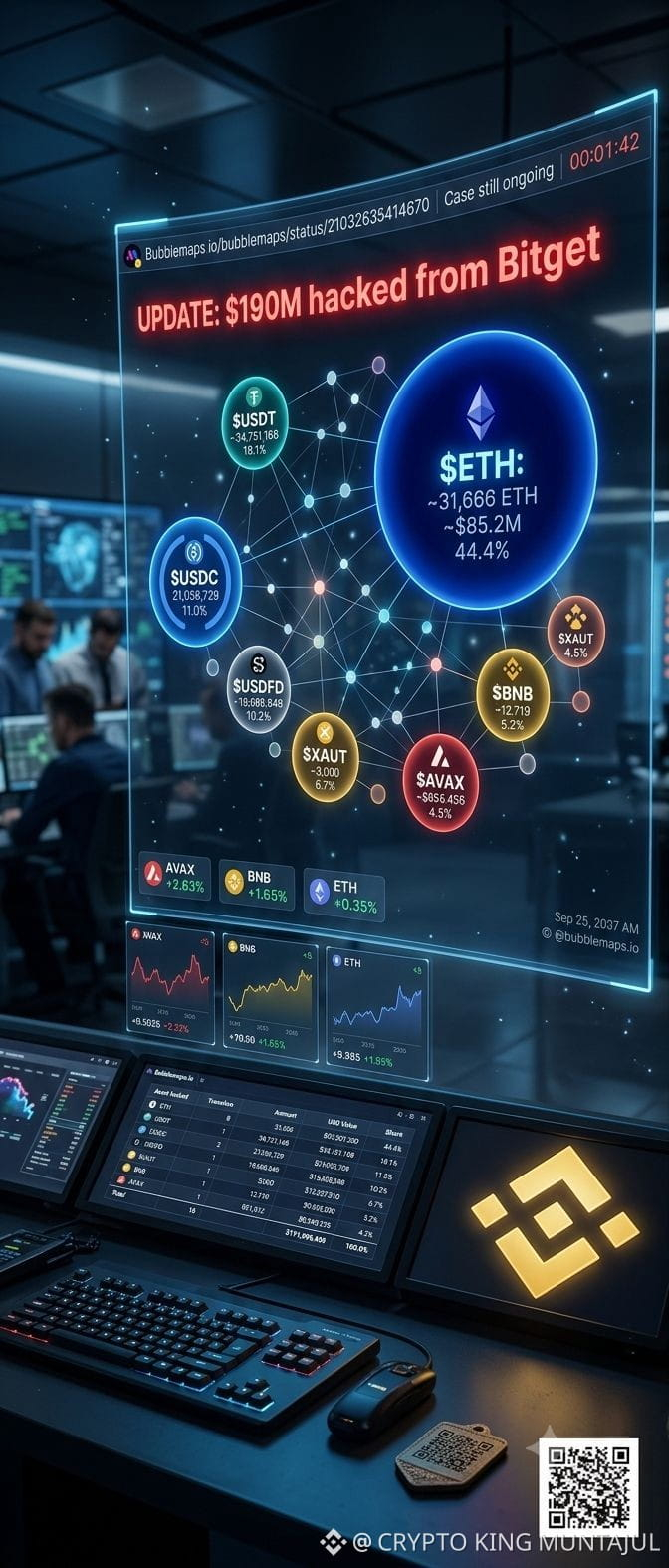
Data from **Bubblemaps.io** shows that Bitget suffered a major exploit resulting in approximately **$191.98M** in compromised digital assets across multiple tokens.
Here is the breakdown of the stolen assets by value:
* 🔹 **$ETH **: 31,666 ETH (~$85.2M | 44.4%)
* 💵 **$USDT**: 34.75M USDT (~$34.7M | 18.1%)
* 💵 **$USDC**: 21.05M USDC (~$21.0M | 11.0%)
* 💵 **$USDFD**: 19.66M USDFD (~$19.6M | 10.2%)
* 🪙 **$XAUT**: 3,000 XAUT (~$12.8M | 6.7%)
* 🟡 **$BNB **: 12,719 BNB (~$9.9M | 5.2%)
* 🔺 **$AVAX **: 821,012 AVAX (~$8.5M | 4.5%)
The investigation is active and ongoing.
⚠️ **Security Note:** If you hold funds on affected platforms or interact with decentralized bridges/exchanges, double-check your approval allowances and prioritize cold storage security.
What are your thoughts on this security incident? Let us know below! 👇
#CryptoSecurity #BinanceSquare #Binance #cryptohacks #Web3Safety
🚨 **ALERT: Bitget Exploited for ~$192 Million**
Data from **Bubblemaps.io** shows that Bitget suffered a major exploit resulting in approximately **$191.98M** in compromised digital assets across multiple tokens.
Here is the breakdown of the stolen assets by value:
* 🔹 **$ETH **: 31,666 ETH (~$85.2M | 44.4%)
* 💵 **$USDT**: 34.75M USDT (~$34.7M | 18.1%)
* 💵 **$USDC**: 21.05M USDC (~$21.0M | 11.0%)
* 💵 **$USDFD**: 19.66M USDFD (~$19.6M | 10.2%)
* 🪙 **$XAUT**: 3,000 XAUT (~$12.8M | 6.7%)
* 🟡 **$BNB **: 12,719 BNB (~$9.9M | 5.2%)
* 🔺 **$AVAX **: 821,012 AVAX (~$8.5M | 4.5%)
The investigation is active and ongoing.
⚠️ **Security Note:** If you hold funds on affected platforms or interact with decentralized bridges/exchanges, double-check your approval allowances and prioritize cold storage security.
What are your thoughts on this security incident? Let us know below! 👇
#CryptoSecurity #BinanceSquare #Binance #cryptohacks #Web3Safety
Data from **Bubblemaps.io** shows that Bitget suffered a major exploit resulting in approximately **$191.98M** in compromised digital assets across multiple tokens.
Here is the breakdown of the stolen assets by value:
* 🔹 **$ETH **: 31,666 ETH (~$85.2M | 44.4%)
* 💵 **$USDT**: 34.75M USDT (~$34.7M | 18.1%)
* 💵 **$USDC**: 21.05M USDC (~$21.0M | 11.0%)
* 💵 **$USDFD**: 19.66M USDFD (~$19.6M | 10.2%)
* 🪙 **$XAUT**: 3,000 XAUT (~$12.8M | 6.7%)
* 🟡 **$BNB **: 12,719 BNB (~$9.9M | 5.2%)
* 🔺 **$AVAX **: 821,012 AVAX (~$8.5M | 4.5%)
The investigation is active and ongoing.
⚠️ **Security Note:** If you hold funds on affected platforms or interact with decentralized bridges/exchanges, double-check your approval allowances and prioritize cold storage security.
What are your thoughts on this security incident? Let us know below! 👇
#CryptoSecurity #BinanceSquare #Binance #cryptohacks #Web3Safety
3
901
Log in to explore more content
Join global crypto users on Binance Square
⚡️ Get latest and useful information about crypto.
💬 Trusted by the world’s largest crypto exchange.
👍 Discover real insights from verified creators.
Email / Phone number
Trending Topics
1
#EarningsSeason
337,930 views
2,578 Discussing
2
#BitwiseLaunchesFirstSpotNEARETF
32,618 views
571 Discussing
3
#USJobOpeningsFallToFiveMonthLow
39,618 views
442 Discussing
4
#ECBToTestAIAgentsInDigitalEuroPayments
28,984 views
553 Discussing
5
#JapanFSABacksFourthStablecoinTradeSettlementPilot
33,468 views
588 Discussing
6
#BitgetHackerFailsToMoveStolenFunds
49,518 views
639 Discussing
7
#BitMineETHHoldingsTop6Million
39,711 views
724 Discussing
8
#StrategyAdds1666BTCHoldingsReach847666
32,503 views
502 Discussing
9
#NvidiaApproves$150BBuyback
5,645 views
75 Discussing
10
#OpenAIDelaysGPT6.1OverSafetyIssues
49,012 views
897 Discussing