
#warshpushestoscalebackforwardguidanceanddotplot
warshpushestoscalebackforwardguidanceanddotplot
388,451 views
1,303 Discussing
Hot
Latest

·
--
🚨BREAKING MACRO ALERT: THE FED MAY NOT SAVE CRYPTO THIS TIME!💣
#WarshPushesToScaleBackForwardGuidanceAndDotPlot
🔥NO QE. NO LIQUIDITY FLOOD. NO EASY MODE.
Crypto traders, WAKE UP! ⚠️ The macro game could be changing.
Kevin Warsh’s push to scale back Forward Guidance and the Fed Dot Plot raises a major question: **WHAT HAPPENS WHEN MARKETS GET LESS GUIDANCE AND NO FRESH LIQUIDITY BOOST?**
💥 3 THINGS CRYPTO TRADERS CANNOT IGNORE :
🔴 1. THE QE EXPECTATION GAME*
Don't build a bull case around liquidity injections that haven't been announced.
⚡ 2. VOLATILITY COULD STRIKE HARDER
Less forward guidance could leave markets more sensitive to inflation data, jobs reports, and Fed decisions.
🐋 3. ORGANIC DEMAND TAKES CENTER STAGE*
Without additional liquidity, BTC and altcoins may need stronger real buying demand to sustain a rally.
📊 THE BATTLEFIELD:
$BTC : Can Bitcoin hold momentum without a fresh liquidity wave?
{future}(BTCUSDT)
$ETH : Can Ethereum attract buyers if risk appetite weakens?
{future}(ETHUSDT)
$XRP : Can XRP maintain its strength in a tougher macro environment?
{future}(XRPUSDT)
🚨HERE'S THE REAL QUESTION:
CAN CRYPTO HIT NEW HIGHS WITHOUT THE FED TURNING THE LIQUIDITY TAP BACK ON?🚀
Or are traders underestimating what tighter liquidity conditions could mean for the next bull run? 📉
💬 BULLS 🐂 OR BEARS 🐻 — WHO WINS THIS MACRO BATTLE?
Drop your prediction below. Let's see what the market thinks! 👇🔥
#SouthKoreaPlansTighterCybersecurityRules
#EtherTook60%OfCryptoLiquidations
#BTC
#CPIWatch
🚨BREAKING MACRO ALERT: THE FED MAY NOT SAVE CRYPTO THIS TIME!💣
#WarshPushesToScaleBackForwardGuidanceAndDotPlot
🔥NO QE. NO LIQUIDITY FLOOD. NO EASY MODE.
Crypto traders, WAKE UP! ⚠️ The macro game could be changing.
Kevin Warsh’s push to scale back Forward Guidance and the Fed Dot Plot raises a major question: **WHAT HAPPENS WHEN MARKETS GET LESS GUIDANCE AND NO FRESH LIQUIDITY BOOST?**
💥 3 THINGS CRYPTO TRADERS CANNOT IGNORE :
🔴 1. THE QE EXPECTATION GAME*
Don't build a bull case around liquidity injections that haven't been announced.
⚡ 2. VOLATILITY COULD STRIKE HARDER
Less forward guidance could leave markets more sensitive to inflation data, jobs reports, and Fed decisions.
🐋 3. ORGANIC DEMAND TAKES CENTER STAGE*
Without additional liquidity, BTC and altcoins may need stronger real buying demand to sustain a rally.
📊 THE BATTLEFIELD:
$BTC : Can Bitcoin hold momentum without a fresh liquidity wave?
$ETH : Can Ethereum attract buyers if risk appetite weakens?
$XRP : Can XRP maintain its strength in a tougher macro environment?
🚨HERE'S THE REAL QUESTION:
CAN CRYPTO HIT NEW HIGHS WITHOUT THE FED TURNING THE LIQUIDITY TAP BACK ON?🚀
Or are traders underestimating what tighter liquidity conditions could mean for the next bull run? 📉
💬 BULLS 🐂 OR BEARS 🐻 — WHO WINS THIS MACRO BATTLE?
Drop your prediction below. Let's see what the market thinks! 👇🔥
#SouthKoreaPlansTighterCybersecurityRules
#EtherTook60%OfCryptoLiquidations
#BTC
#CPIWatch

247

·
--
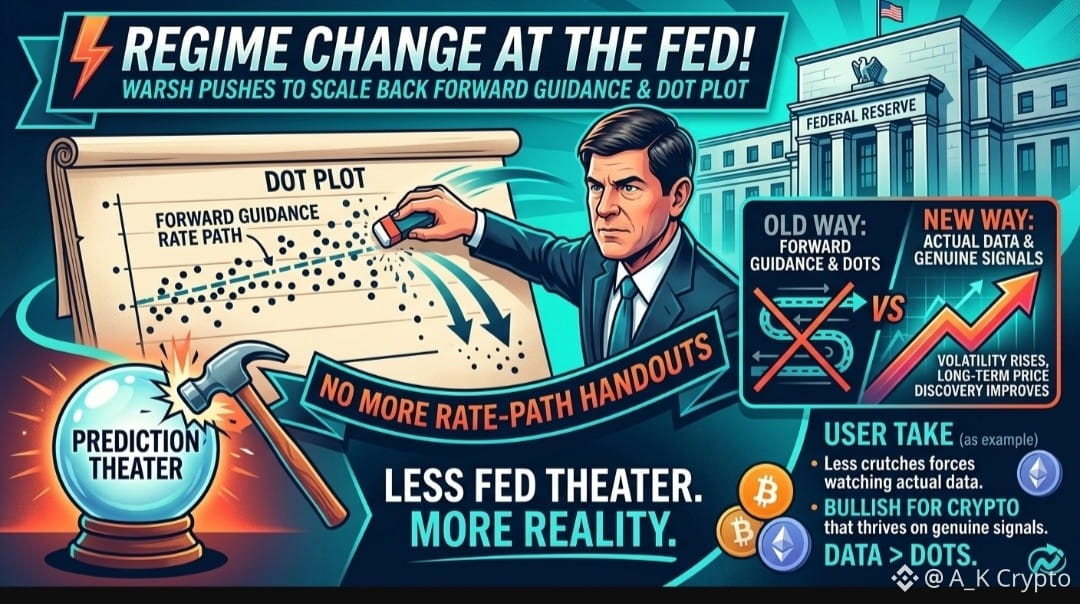
#WarshPushesToScaleBackForwardGuidanceAndDotPlot ⚡ Regime change at the Fed!
Kevin Warsh is actively scaling back forward guidance and the Dot Plot. No more rate-path handouts in statements, he skipped his own dot, and a task force is reviewing the whole communication playbook.
Smart move. Forward guidance and dots became market crutches that delayed real reactions and locked policymakers into bad paths. Less Fed theater forces everyone to watch actual data. Short-term volatility rises, but long-term price discovery improves — especially bullish for crypto that thrives on genuine signals, not predicted rate paths. Data > dots.
#Fed #DotPlot #Crypto #BinanceSquare
134

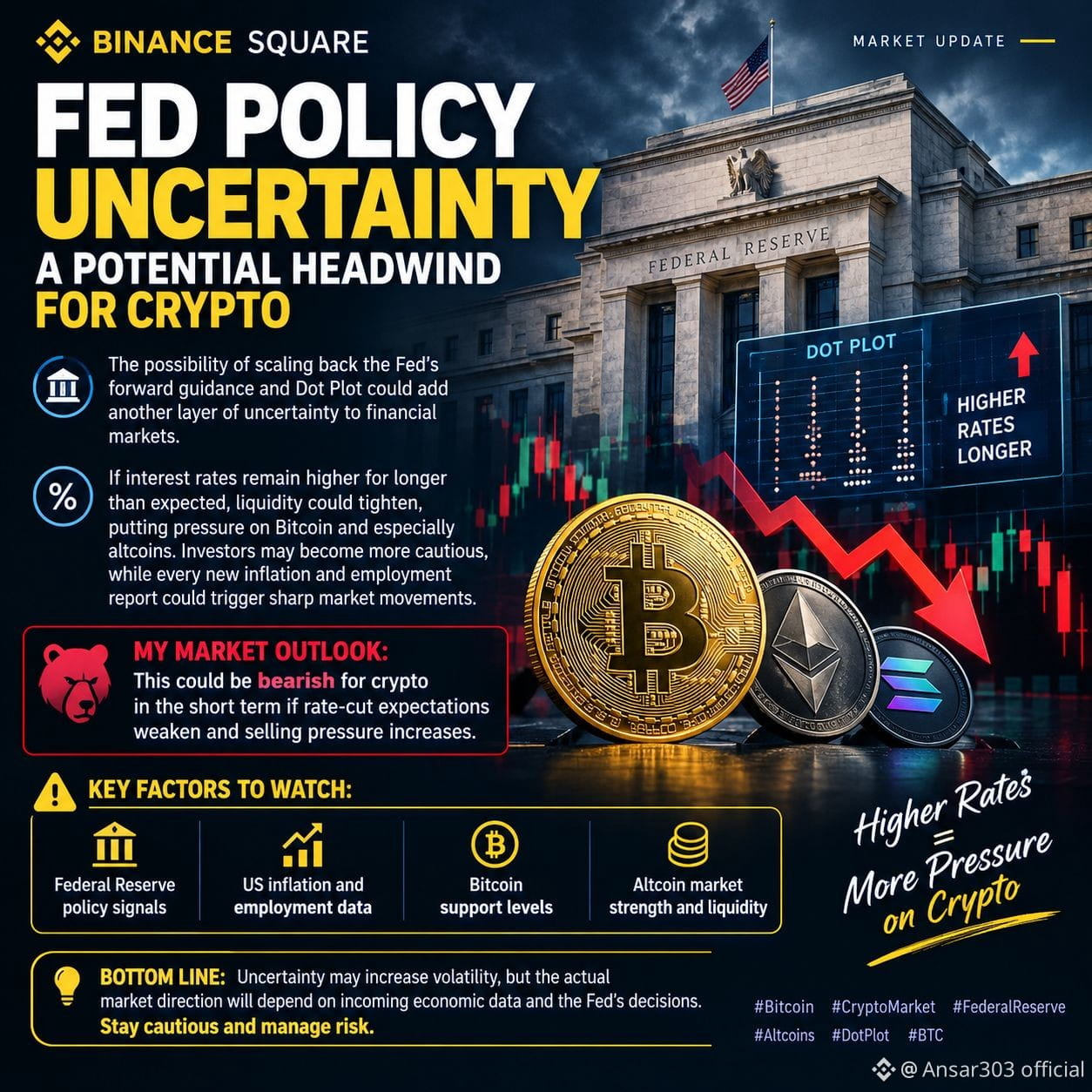
📉 FED POLICY UNCERTAINTY: A POTENTIAL HEADWIND FOR CRYPTO $BTC $ETH
The possibility of scaling back the Fed’s forward guidance and Dot Plot could add another layer of uncertainty to financial markets.
If interest rates remain higher for longer than expected, liquidity could tighten, putting pressure on Bitcoin and especially altcoins. Investors may $BTC me more cautious, while every new inflation and employment report could trigger sharp market movements.
🔻 My Market Outlook: This could be bearish for crypto in the short term if rate-cut expectations weaken and selling pressure increases.
#WarshPushesToScaleBackForwardGuidanceAndDotPlot #CPIWatch #EtherTook60%OfCryptoLiquidations #BlackRockCryptoAssetsJump63% #KOSPICloses7.57%LowerTriggeringCircuitBreaker
156

·
--
Warsh前瞻指引再成热议|点阵图并未正式取消|BTC反弹先看82200
我的态度是谨慎看反弹,暂不把“美联储要取消点阵图”的热议当成已落地政策。广场正在上升的话题聚焦主席Warsh削减前瞻指引。回到一手材料:他8月28日在美联储官网刊出的杰克逊霍尔讲话,确实主张在正常时期限制前瞻指引,认为提前暗示利率路径容易让市场过度依赖预测;但这是沟通方式的立场,不是10月15日突然宣布的新决定。美联储9月16日仍发布了经济预测材料,包含委员对适当联邦基金利率路径的个别预测。因此“点阵图已经废除”是超出公开文件的说法。
我更关心的是这种沟通理念如何改变交易纪律。若官方少给路径提示,市场更可能在数据出来后自行重估利率、美元和风险资产估值;但不能把“信息变少”简单翻译成利多BTC,也不能认定它一定造成暴跌。今天美国劳工统计局公布9月最终需求PPI环比1.3%、同比6.3%,反映生产端价格压力。PPI不是美联储投票,也不是未来CPI或PCE的保证值。讲话中Warsh还强调不能机械依赖单个数据点,这与交易者见到一条标题就押下一次利率决定恰好相反。
从资金端再做一次交叉核对:Farside逐只表显示10月14日美国现货BTC ETF净流出约2.614亿美元;15日这一行仍待填报,表格暂显0.0不是“今日零流出”的最终结论。两条信息要分开看:沟通框架决定预期怎样形成,基金申赎反映已发生的资金变化;二者都不直接证明今天每一根K线的原因。Strategy官网最近正式购币公告是10月12日的250枚BTC,不能因为社媒猜测就替公司宣布新的增持。
市场已有的反应是先下探再回升。写稿时Kraken BTC/USD约82159美元,日内最低79709、最高82289、开盘81576,已从8万美元下方拉回,却靠近日内高点。我把80000当成多空争夺的心理位,把82200—82300当成短线确认区;若上破后不能守住,容易只是一轮回补。相反,若一小时收回81500下方,反弹力度明显减弱;若再跌破79700并反抽不过,当前修复判断被推翻。官方未来若真的修改预测发布方式,我会以美联储正式文件而不是社媒转述更新判断。
如果是我自己交易:当前不参与,方向只考虑无杠杆现货多单,仓位0%。只有一小时收在82300上方、下一小时回踩82000—82300守住,才用总资金最多0.5%试多;到83200先减半,到84200平掉余仓。入场后小时收回81800下先减半,跌破81100全部止损;若未入场就先失守80000,这套追随反弹的计划立即取消。宏观消息越吵,仓位越要小,绝不用高杠杆猜美联储下一句会说什么。
#WarshPushesToScaleBackForwardGuidanceAndDotPlot #BTC
以上仅为个人市场观察,不构成投资建议。

32

#WarshPushesToScaleBackForwardGuidanceAndDotPlot 🏦 Kevin Warsh is pushing for a rethink of how the Federal Reserve communicates monetary policy, including scaling back forward guidance and the “dot plot” of policymakers’ interest-rate projections. The argument is that clearer decisions based on incoming economic data could give the Fed more flexibility as inflation and growth risks change. Markets will be watching how any shift affects rate expectations, Treasury yields and the U.S. dollar. 📊
Hashtags
#FederalReservePolicyReform
#KevinWarshMonetaryPolicy
#InterestRateOutlook
#USInflationAndMarkets
Tokens
$DXYZ.US · $TLT.ETF · $SPY
Hashtags
#FederalReservePolicyReform
#KevinWarshMonetaryPolicy
#InterestRateOutlook
#USInflationAndMarkets
Tokens
$DXYZ.US · $TLT.ETF · $SPY
SPY+0.77%
TLTETF-1.22%
1
397

·
--
Bullish
#WarshPushesToScaleBackForwardGuidanceAndDotPlot
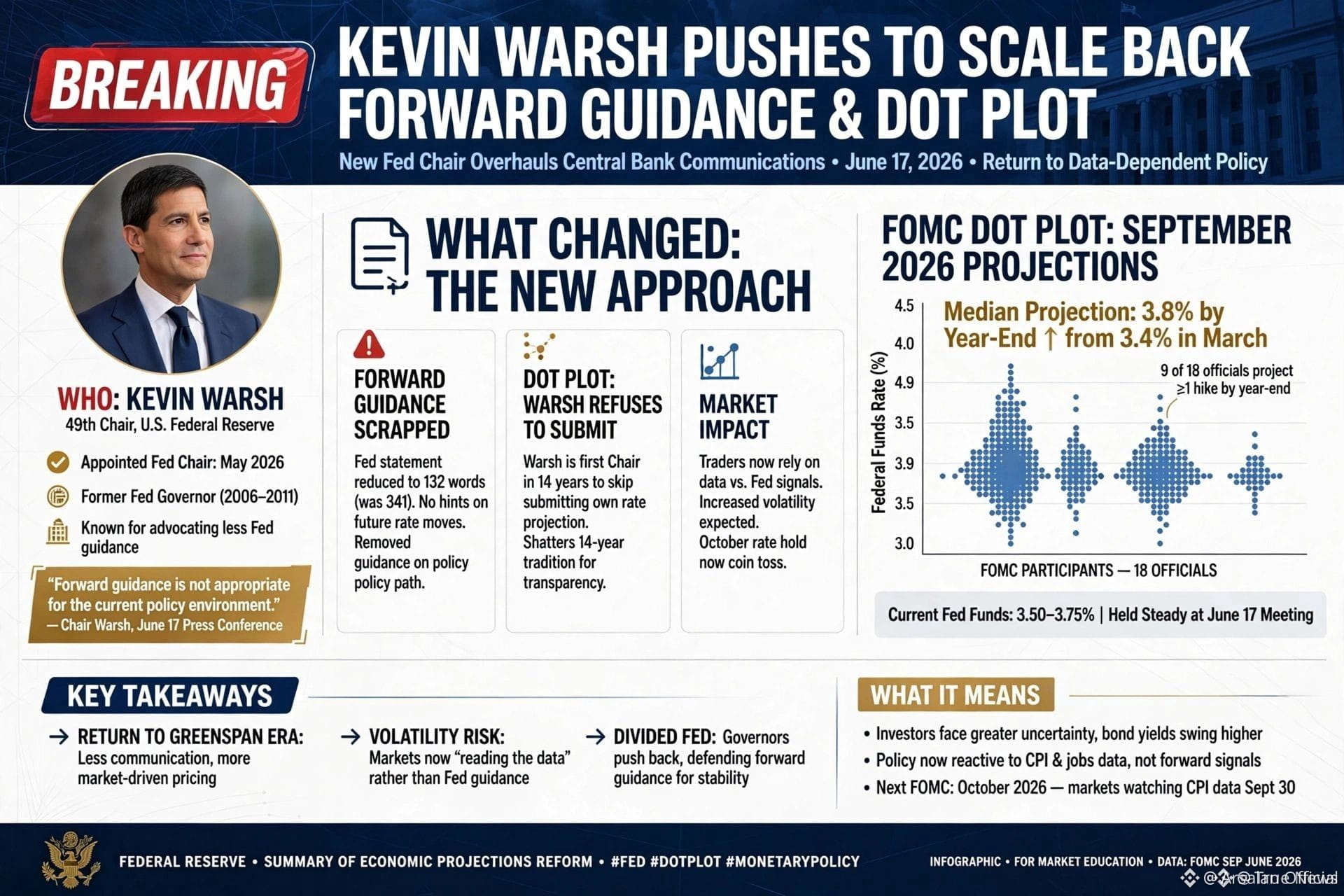
What is forward guidance?
It is the Fed providing advance indications about the potential direction of interest rates.
What is the dot plot?
A chart showing anonymous interest rate projections from Fed officials. The market monitors this very closely.
What is Warsh doing?
✅ Removed forward guidance from the statement.
✅ Did not submit his 'dots' (projections) for June and September.
✅ A review of communication practices is underway.
There is also opposition: Some Fed officials and economists argue that instead of eliminating the dot plot, it should be improved.
🧠 The bottom line: The market will receive fewer signals from the Fed and will need to focus more on incoming data and actual policy decisions.
$OSMO $BLUR $UVXYB
{spot}(UVXYBUSDT)
{future}(BLURUSDT)
{spot}(OSMOUSDT)
#WarshPushesToScaleBackForwardGuidanceAndDotPlot
What is forward guidance?
It is the Fed providing advance indications about the potential direction of interest rates.
What is the dot plot?
A chart showing anonymous interest rate projections from Fed officials. The market monitors this very closely.
What is Warsh doing?
✅ Removed forward guidance from the statement.
✅ Did not submit his 'dots' (projections) for June and September.
✅ A review of communication practices is underway.
There is also opposition: Some Fed officials and economists argue that instead of eliminating the dot plot, it should be improved.
🧠 The bottom line: The market will receive fewer signals from the Fed and will need to focus more on incoming data and actual policy decisions.
$OSMO $BLUR $UVXYB
551


·
--
Verified
#WarshPushesToScaleBackForwardGuidanceAndDotPlot
The Fed May Reveal Less About Its Next Move : Markets Could Feel the Impact
Federal Reserve Chair Kevin Warsh is pushing for a quieter Fed, with less forward guidance and a possible end to the quarterly interest-rate projections known as the dot plot. But not everyone agrees that saying less is better.
According to Reuters on October 15, Fed officials have made more than 40 public appearances since September’s rate hike, helping temper market expectations for further increases. The debate comes as US September CPI inflation reached 3.7% year over year, keeping the next rate decision uncertain.
My take: Warsh’s approach could give policymakers more flexibility to react to fresh economic data rather than being tied to earlier forecasts. However, less guidance can also leave traders guessing, potentially increasing volatility around Fed meetings and key economic releases.
For crypto traders, the important question is how changing rate expectations influence the dollar, Treasury yields, Bitcoin and broader risk appetite. The direction will depend on incoming data, not just the Fed’s communication style.
Do you think less Fed guidance means better decisions or more market uncertainty?
Follow for more data-driven market analysis.
#FederalReserve #Bitcoin #crypto #MacroEconomics
3
3
3k

Verified
#WarshPushesToScaleBackForwardGuidanceAndDotPlot
تحوّل زلزالي في الفيدرالي: الحقبة "الهادئة" تعود إلى وول ستريت! 📉🏛️
تتجه أنظار الأسواق المالية العالمية نحو تحول تاريخي في طريقة إدارة الفيدرالي الأمريكي للسياسة النقدية؛ حيث يقود رئيس الاحتياطي الفيدرالي، كيفن وورش (Kevin Warsh)، تحركات جادة للتراجع عن سياسة "التوجيه المستقبلي" (Forward Guidance) وتقليص الاعتماد على مخطط "رسم البياني للنقاط" (Dot Plot).
💡 ما الذي يحدث خلف الكواليس؟
نهاية عصر "التنبؤات الجاهزة": يرى وورش أن التزام الفيدرالي بإعطاء إشارات مسبقة للأسواق خلق "غرفة صدى" تسببت في إرباك المستثمرين وتقييد مرونة البنك المركزي عندما تتغير المعطيات الاقتصادية.
عبارة في مهب الريح: وصف وورش مخطط "الـ Dot Plot" بأنه كتب بقلم رصاص ومصحوب بمسّاحة، مؤكداً رفضه لتقديم توقعاته الخاصة لأسعار الفائدة ومشدداً على عدم تكبيل السياسة النقدية بوعود كلامية.
العودة إلى "الفيدرالي المستجيب للسوق": بدلاً من توجيه الأسواق رسمياً لما سيحدث في الأشهر المقبلة، يستهدف وورش جعل الفيدرالي أكثر استجابة للبيانات الاقتصادية الحقيقية (Data-Dependent) مع تقليل الضجيج الإعلامي.
📊 كيف تتفاعل الأسواق العالمية؟
ارتفاع منسوب التذبذب (Volatility): غياب التوجيه الواضح يعني أن المستثمرين لم يعد بإمكانهم الاعتماد على مسار ناعم ومضمون للفائدة،
#CPI数据
$PEPE $NIL
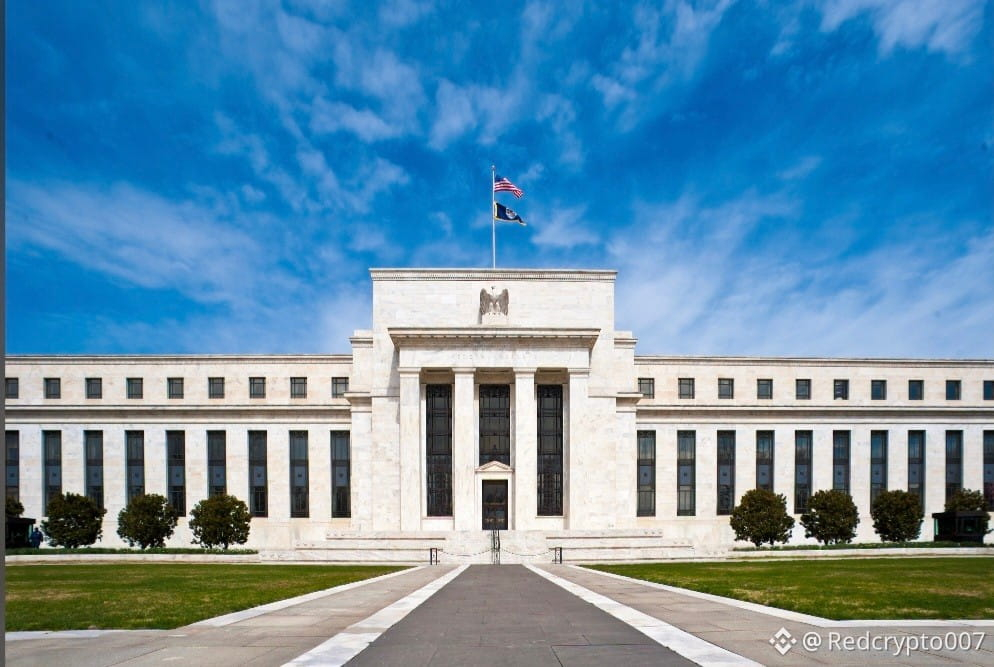
1
740

·
--
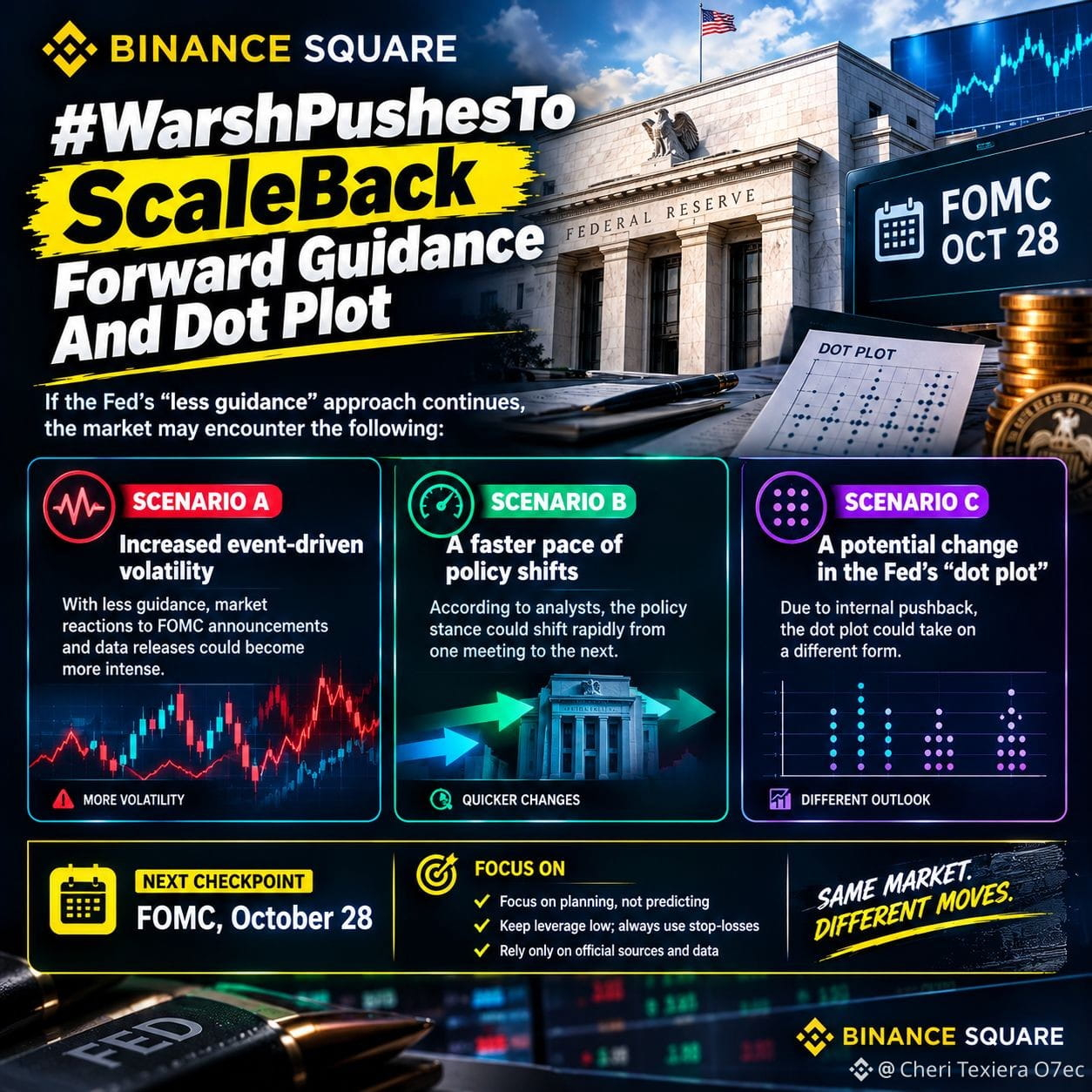
🚨 BREAKING: WARSH PUSHES TO SCALE BACK FED FORWARD GUIDANCE & DOT PLOT 🇺🇸
🇺🇸 Fed Chair Kevin Warsh wants to reduce the Federal Reserve’s reliance on forward guidance and interest-rate projections (Dot Plot).
📌 Why does this matter for crypto?
🔹 BTC & ETH: Uncertainty around future Fed decisions could increase volatility.
🔹 Interest Rates: Persistent inflation may keep rate-hike concerns alive.
🔹 Market Sentiment: A more cautious Fed outlook could pressure risk assets, including crypto.
🔹 Key Dates: Watch Warsh’s upcoming remarks and the October 27–28 Fed meeting.
📉 Bearish Scenario: Hawkish Fed signals → stronger dollar/yields → pressure on BTC.
📈 Bullish Scenario: Cooling inflation and fewer hawkish signals → potential relief rally.
⚠️ Important: Less forward guidance does NOT automatically mean rate cuts. Less clarity from the Fed could actually increase market volatility.
🎯 My Take: Stay cautious. Watch inflation data, Fed comments, and BTC’s price action before taking a trade.
💬 What’s your view? Bullish or bearish for Bitcoin?
#warshpushestoscalebackforwardguidanceanddotplot $BTC $ETH $BNB
{future}(BNBUSDT)
{future}(ETHUSDT)
{future}(BTCUSDT)
🚨 BREAKING: WARSH PUSHES TO SCALE BACK FED FORWARD GUIDANCE & DOT PLOT 🇺🇸
🇺🇸 Fed Chair Kevin Warsh wants to reduce the Federal Reserve’s reliance on forward guidance and interest-rate projections (Dot Plot).
📌 Why does this matter for crypto?
🔹 BTC & ETH: Uncertainty around future Fed decisions could increase volatility.
🔹 Interest Rates: Persistent inflation may keep rate-hike concerns alive.
🔹 Market Sentiment: A more cautious Fed outlook could pressure risk assets, including crypto.
🔹 Key Dates: Watch Warsh’s upcoming remarks and the October 27–28 Fed meeting.
📉 Bearish Scenario: Hawkish Fed signals → stronger dollar/yields → pressure on BTC.
📈 Bullish Scenario: Cooling inflation and fewer hawkish signals → potential relief rally.
⚠️ Important: Less forward guidance does NOT automatically mean rate cuts. Less clarity from the Fed could actually increase market volatility.
🎯 My Take: Stay cautious. Watch inflation data, Fed comments, and BTC’s price action before taking a trade.
💬 What’s your view? Bullish or bearish for Bitcoin?
#warshpushestoscalebackforwardguidanceanddotplot $BTC $ETH $BNB
1
4
8.6k

#warshpushestoscalebackforwardguidanceanddotplot
⚠️🏦 WARSH WANTS A QUIETER FED: IS CRYPTO READY FOR LESS CLARITY? 🏦⚠️
When the central bank stops revealing its next move, the market must learn to read the storm itself.
Federal Reserve Chair Kevin Warsh is pushing to reduce forward guidance and reconsider the famous dot plot, the quarterly projections showing where policymakers expect interest rates to go. His vision: let economic data speak louder than official predictions.
The timing matters. U.S. consumer prices rose 3.7% year over year in September 2026, intensifying uncertainty over the Fed’s next rate decision. Policymakers remain divided over whether less communication would improve decision-making or unsettle markets.
My Take: Less guidance does not eliminate uncertainty; it transfers more responsibility to investors. Without a reliable policy roadmap, markets may react more sharply to inflation releases, employment data, and unexpected Fed decisions.
For crypto, the key transmission channel is monetary policy. Interest-rate expectations influence bond yields, the dollar, liquidity conditions, and investors’ appetite for risk. Tighter-than-expected policy could pressure speculative assets, while improving inflation data could change that outlook.
The danger is confusing silence with a bullish or bearish signal. Warsh’s communication strategy alone cannot determine Bitcoin’s direction; actual policy decisions and broader market flows still matter.
Remember: When guidance disappears, economic data becomes the market’s loudest voice.
Would less Fed guidance make crypto markets more efficient or more volatile?
Disclaimer: This post is for educational purposes only, not financial advice. Cryptocurrency markets involve substantial risk.
#FederalReserve #CryptoMarket #GrowWithSAC $STRK $ZK $PYTH
#WarshPushesToScaleBackForwardGuidanceAndDotPlot
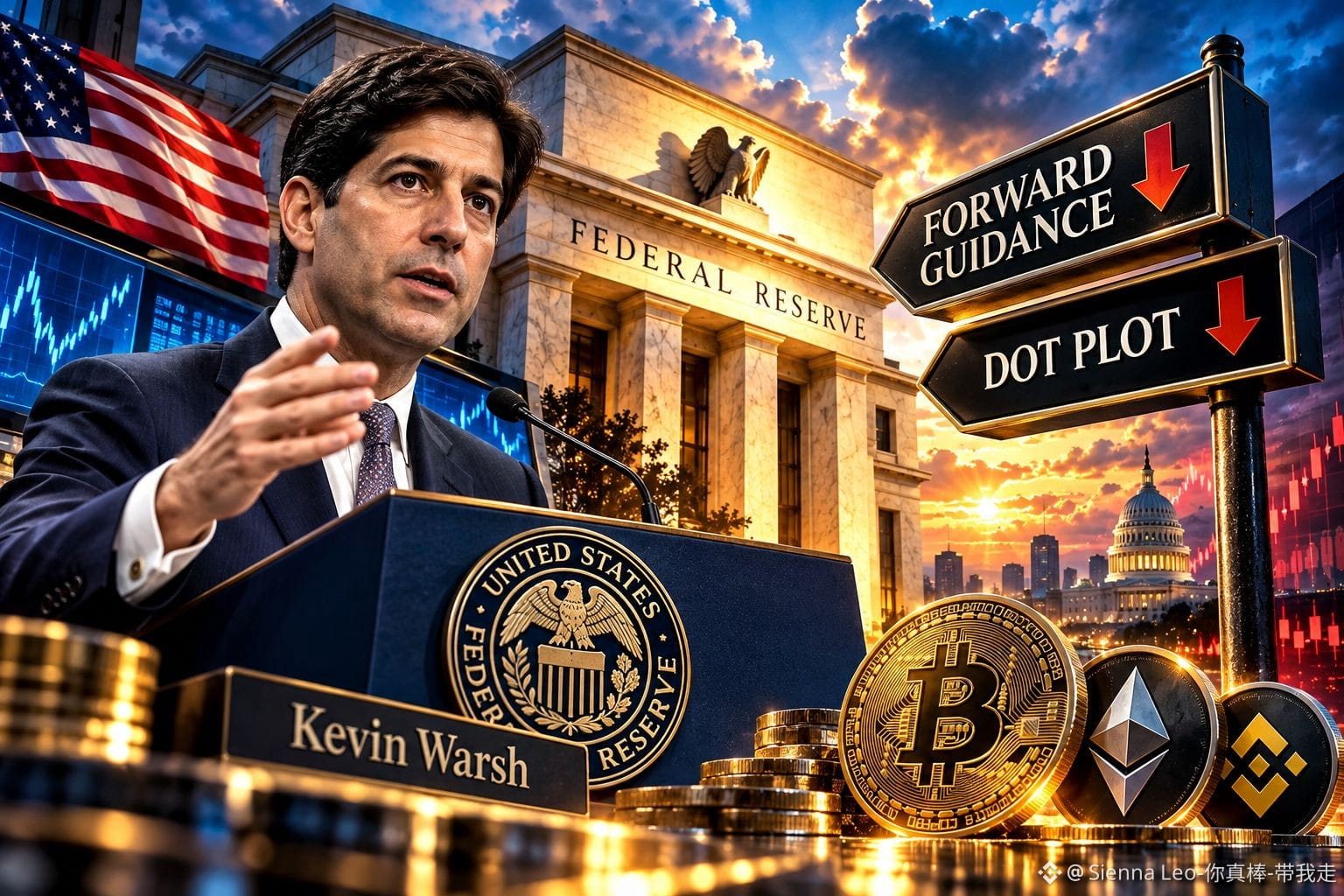
1
7
15.6k

·
--
#WarshPushesToScaleBackForwardGuidanceAndDotPlot
🚨 Big Shift in Central Banking?
Word is spreading that Kevin Warsh is pushing to scale back the Fed's forward guidance and dot plot.
Why should crypto traders care about this? 🤔
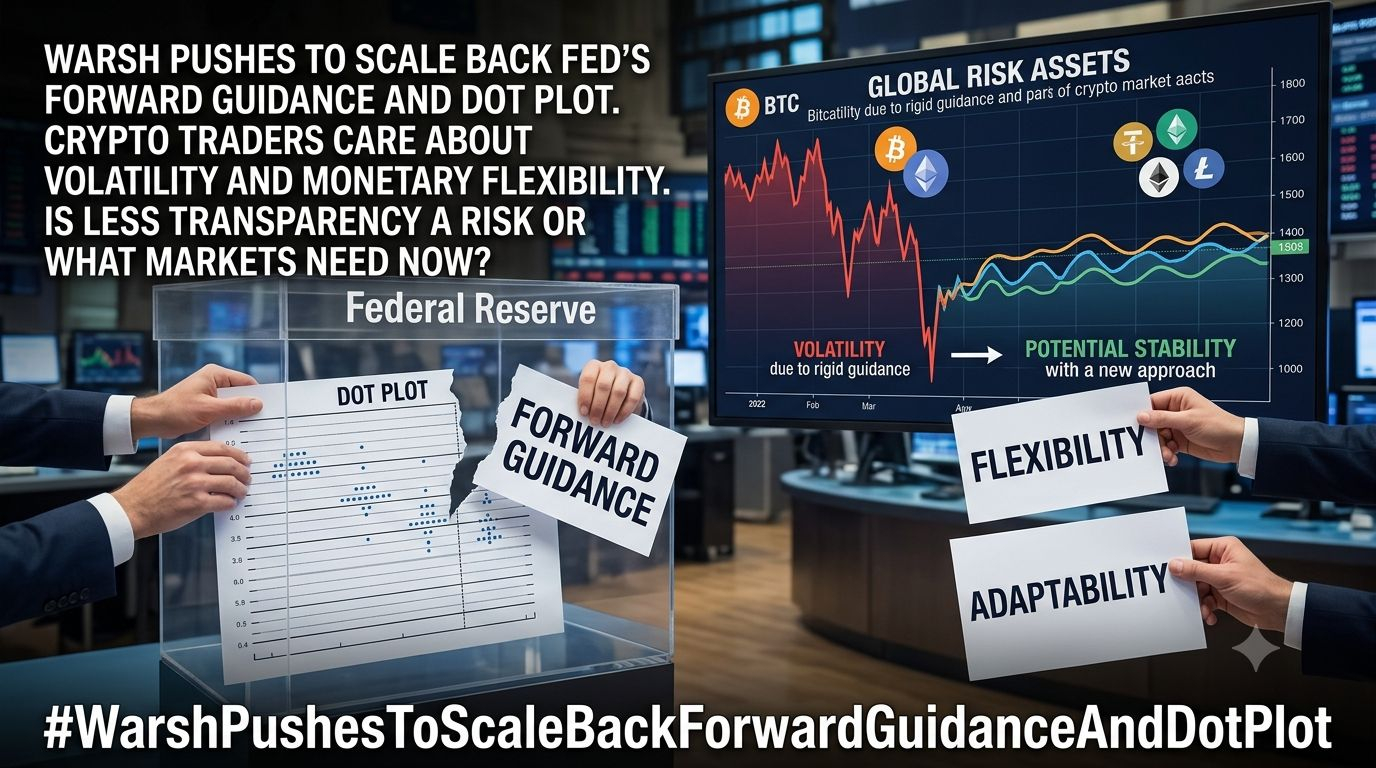
The dot plot has historically triggered massive market volatility with its rigid rate projections.
Moving away from it could usher in a more flexible, less predictable monetary policy framework.
Less rigid guidance might reduce knee-jerk macro reactions across global risk assets.
📉 Is less transparency a risk, or is flexibility what the markets need right now?
Drop your thoughts below! 👇
#WarshPushesToScaleBackForwardGuidanceAndDotPlot #Fed #Crypto #Macro
21
·
--
#WarshPushesToScaleBackForwardGuidanceAndDotPlot
Federal Reserve Chair Kevin Warsh is actively leading a major push to overhaul central bank communications by scaling back forward guidance and attempting to eliminate or weaken the quarterly "dot plot" interest-rate projections. Appointed as Fed Chair earlier in 2026, Warsh argues that telegraphing policy turns market pricing into an echo chamber for the central bank’s own remarks, ultimately distorting how financial assets reflect real economic data. [1, 2]
$BNB
{future}(BNBUSDT)
$HYPE
{future}(HYPEUSDT)
$ETHA.ETF
{etf_us}(ETHA.ETF)
#WarshNamesLeadersForFiveFedTaskFor
#WarshPushesToScaleBackForwardGuidanceAndDotPlot
#GuidanceEnd2End
#WarshPushesToScaleBackForwardGuidanceAndDotPlot
Federal Reserve Chair Kevin Warsh is actively leading a major push to overhaul central bank communications by scaling back forward guidance and attempting to eliminate or weaken the quarterly "dot plot" interest-rate projections. Appointed as Fed Chair earlier in 2026, Warsh argues that telegraphing policy turns market pricing into an echo chamber for the central bank’s own remarks, ultimately distorting how financial assets reflect real economic data. [1, 2]
$BNB
$HYPE
$ETHA.ETF
#WarshNamesLeadersForFiveFedTaskFor
#WarshPushesToScaleBackForwardGuidanceAndDotPlot
#GuidanceEnd2End


28

·
--
主席让大家“别看裁判、看球”,结果一群裁判轮流吹哨。
热榜第一的 #WarshPushesToScaleBackForwardGuidanceAndDotPlot 讨论量一夜冲到近 500——话题还是那个话题,料却是新的。鲍威尔时代的美联储是全市场最能说的机构之一,沃什上任后把它改成了“按需知密”模式:首份政策声明只有约 130 个词,前任通常是 300 多;瑞银测算,他首场发布会里与货币政策直接相关的内容只占 5%,前任时期是 27%。华尔街甚至有人做了个 WarshGPT,专门解析他那少得可怜的公开讲话。
但主席安静,不等于美联储安静。据路透统计,9 月那次加息之后,其他官员的公开露面已经超过 40 次——讲话、采访、表态,一轮一轮地给加息预期降温。9 月 CPI 同比 3.7% 落地后,10 月加不加息又被交易员定价成了抛硬币。
这就是沃什式悖论:指引越少,残存的每个词含金量越高。话筒集体静音,市场就把每次官员露面都放大镜式解读,逐日重定价成了常态。更悬的还在后面:沃什可能连每季度的利率路径预测(点阵图)都砍掉——那时市场连“一个体面的新预测”都拿不到,面对的是一整段更宽的可能性区间,对冲成本和期限溢价只能继续往上走。
$BTC 这两天在 8 万美元附近磨,说白了就是在等 10 月 27-28 日 FOMC 前这枚硬币落地。指引真空时代,数据日就是波动日。
#WarshPushesToScaleBackForwardGuidanceAndDotPlot
#美联储 #加息
以上不构成投资建议,DYOR,交易有风险。
29

#WarshPushesToScaleBackForwardGuidanceAndDotPlot
🚨 THE FED’S “QUIET POLICY” — WILL CRYPTO FACE BIGGER SURPRISES? 🇺🇸📊
Fed Chair Kevin Warsh’s push to reduce forward guidance and potentially drop the dot plot has sparked debate among market watchers.
🔹 Less guidance could mean more uncertainty around future rate decisions.
🔹 The dot plot gives investors a snapshot of policymakers’ rate expectations, but it is not a promise.
🔹 Without clear signals, markets may react more sharply to CPI, jobs data, and other economic releases.
⚠️ WHY CRYPTO TRADERS SHOULD CARE
📉 Hot inflation and rising yields could pressure $BTC , $ETH , and $BNB .
📈 Cooler inflation and falling yields could improve sentiment toward risk assets.
🎯 My take: The key question is whether less guidance improves policy flexibility or leaves markets more vulnerable to sudden repricing. Watch the data, yields, and dollar reaction rather than relying on assumptions.
💬 YOUR VOTE: Should the Fed keep the dot plot?
🟢 YES — More transparency
🔴 NO — More policy flexibility
#bitcoin #BTC #Ethereum #BNB #FederalReserve #CryptoMarket #BinanceSquare
139

Article
🚨 FED POLICY SHIFT: KEVIN WARSH’S APPROACH PUTS CRYPTO MARKETS ON ALERT
U.s🚨 FED POLICY SHIFT: KEVIN WARSH’S APPROACH PUTS CRYPTO MARKETS ON ALERT
U.S. Inflation, Interest Rates and Bitcoin Volatility in Focus
📅 October 16, 2026
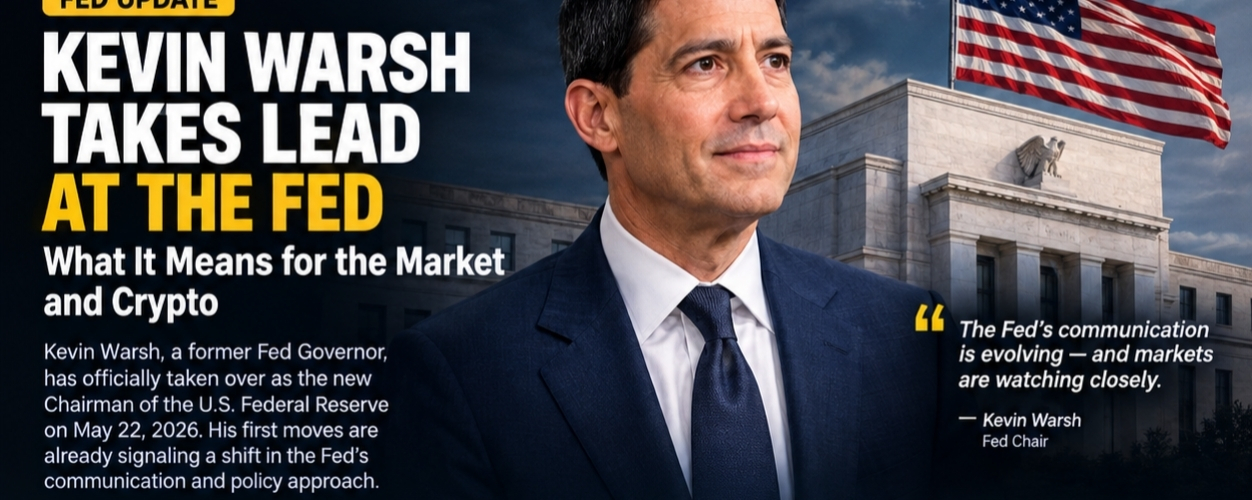
The U.S. Federal Reserve is facing renewed debate over interest-rate policy and central bank communication under Chair Kevin Warsh. His preference for less forward guidance is drawing criticism from policymakers who believe clear communication helps maintain market stability.
🏦 KEY DEVELOPMENTS
1️⃣ Fed Chair Kevin Warsh Changes the Communication Approach
Kevin Warsh took office as Federal Reserve Chair on May 22, 2026. He has advocated a less predictable, more data-dependent approach to monetary policy communication.
2️⃣ September Rate Hike Raises the Stakes
On September 16, the Federal Reserve raised its benchmark interest-rate target by 0.25 percentage points to 3.75%–4.00%, citing elevated inflation.
3️⃣ Inflation Remains a Major Concern
U.S. consumer inflation reached 3.7% year over year in September, up from 3.4% in August. Persistent inflation could limit the Fed’s ability to ease monetary policy quickly.
4️⃣ October Rate Decision Remains Uncertain
Market expectations shifted on October 15 as Fed officials’ comments reduced expectations of an immediate rate hike. The October 27–28 FOMC meeting remains a key event for investors.
₿ WHAT DOES THIS MEAN FOR CRYPTO?
🔸 Higher-for-longer rates: Could weigh on risk assets, including Bitcoin and altcoins.
🔸 A softer Fed stance: Could improve risk appetite if investors anticipate easier financial conditions.
🔸 Uncertainty and volatility: Conflicting signals may trigger sharp price movements and liquidations in leveraged futures markets.
🔸 Data matters more than headlines: Inflation, employment, Treasury yields, the U.S. dollar and Bitcoin’s own price action will help shape the market reaction.
📊 THE BIG PICTURE
The current environment is not a guaranteed bullish or bearish signal for Bitcoin. A rate hike does not automatically mean BTC will fall, and a rate pause does not guarantee a rally. Market expectations and liquidity conditions matter.
My takeaway: Watch the Fed’s October decision, incoming economic data, BTC support and resistance, Open Interest, Funding Rates and liquidation levels before taking a trading position.
⚠️ Risk Reminder: Avoid excessive leverage and always manage downside risk. This post is for informational purposes only and is not financial advice.
#bitcoin #WarshPushesToScaleBackForwardGuidanceAndDotPlot #BTC #CryptoNews #FederalReserve #KevinWarsh #FOMC #Inflation #BinanceSquare #CryptoMarket
🚨 FED POLICY SHIFT: KEVIN WARSH’S APPROACH PUTS CRYPTO MARKETS ON ALERT U.s
🚨 FED POLICY SHIFT: KEVIN WARSH’S APPROACH PUTS CRYPTO MARKETS ON ALERT
U.S. Inflation, Interest Rates and Bitcoin Volatility in Focus
📅 October 16, 2026
The U.S. Federal Reserve is facing renewed debate over interest-rate policy and central bank communication under Chair Kevin Warsh. His preference for less forward guidance is drawing criticism from policymakers who believe clear communication helps maintain market stability.
🏦 KEY DEVELOPMENTS
1️⃣ Fed Chair Kevin Warsh Changes the Communication Approach
Kevin Warsh took office as Federal Reserve Chair on May 22, 2026. He has advocated a less predictable, more data-dependent approach to monetary policy communication.
2️⃣ September Rate Hike Raises the Stakes
On September 16, the Federal Reserve raised its benchmark interest-rate target by 0.25 percentage points to 3.75%–4.00%, citing elevated inflation.
3️⃣ Inflation Remains a Major Concern
U.S. consumer inflation reached 3.7% year over year in September, up from 3.4% in August. Persistent inflation could limit the Fed’s ability to ease monetary policy quickly.
4️⃣ October Rate Decision Remains Uncertain
Market expectations shifted on October 15 as Fed officials’ comments reduced expectations of an immediate rate hike. The October 27–28 FOMC meeting remains a key event for investors.
₿ WHAT DOES THIS MEAN FOR CRYPTO?
🔸 Higher-for-longer rates: Could weigh on risk assets, including Bitcoin and altcoins.
🔸 A softer Fed stance: Could improve risk appetite if investors anticipate easier financial conditions.
🔸 Uncertainty and volatility: Conflicting signals may trigger sharp price movements and liquidations in leveraged futures markets.
🔸 Data matters more than headlines: Inflation, employment, Treasury yields, the U.S. dollar and Bitcoin’s own price action will help shape the market reaction.
📊 THE BIG PICTURE
The current environment is not a guaranteed bullish or bearish signal for Bitcoin. A rate hike does not automatically mean BTC will fall, and a rate pause does not guarantee a rally. Market expectations and liquidity conditions matter.
My takeaway: Watch the Fed’s October decision, incoming economic data, BTC support and resistance, Open Interest, Funding Rates and liquidation levels before taking a trading position.
⚠️ Risk Reminder: Avoid excessive leverage and always manage downside risk. This post is for informational purposes only and is not financial advice.
#bitcoin #WarshPushesToScaleBackForwardGuidanceAndDotPlot #BTC #CryptoNews #FederalReserve #KevinWarsh #FOMC #Inflation #BinanceSquare #CryptoMarket
139

·
--
Bearish
#warshpushestoscalebackforwardguidanceanddotplot
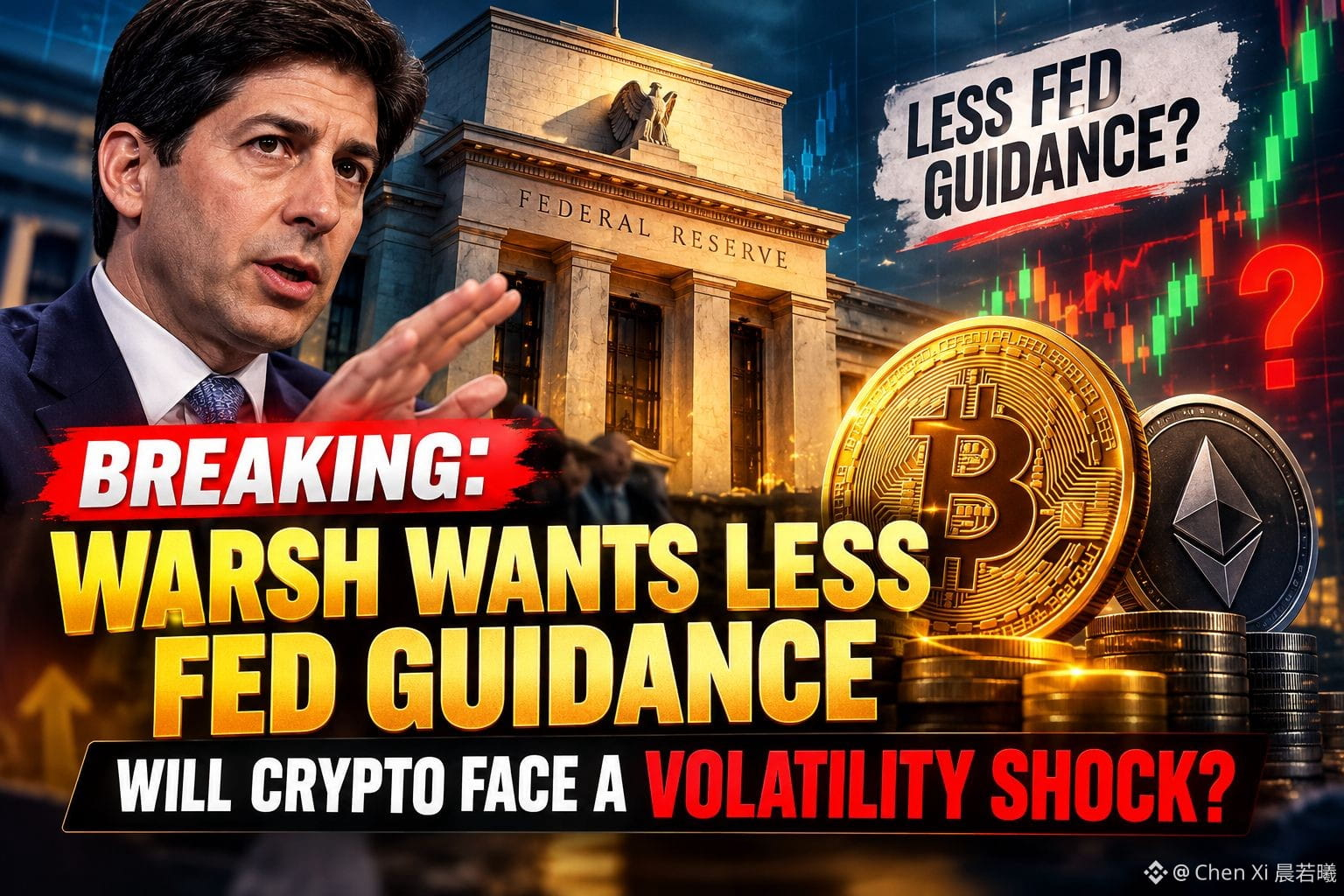
🚨 BREAKING: WARSH WANTS LESS FED GUIDANCE — WILL CRYPTO FACE A VOLATILITY SHOCK?
Federal Reserve Chair Kevin Warsh’s push to reduce forward guidance and move away from traditional interest-rate projections is putting the spotlight on one key question: How will markets react when the Fed reveals less about its next move?
With US inflation rising to 3.7% year over year in September, uncertainty around the Fed’s October decision is increasing. Traders are watching closely for fresh signals that could influence Bitcoin and the broader crypto market.
📊 WHAT CRYPTO TRADERS SHOULD WATCH
🔹 BTC & ETH: Watch price action around key support and resistance zones.
🔹 Fed Rate Expectations: A more hawkish outlook could pressure risk assets, while a dovish shift could improve sentiment.
🔹 Volatility & Liquidity: Unexpected policy signals may trigger sharp moves and liquidations in leveraged positions.
🎯 TRADING STRATEGY: Don’t chase the headline. Wait for confirmation, monitor volume, and plan both bullish and bearish scenarios. A breakout with strong volume or a rejection at resistance may offer a clearer setup than guessing the Fed’s next move.
The real opportunity isn’t predicting the news — it’s managing risk when the market reacts.
What’s your BTC outlook: BULLISH 📈 or BEARISH 📉?
#Bitcoin #CryptoTrading #FederalReserve #BinanceSquare
$KORU $SNXX $RAM
{future}(RAMUSDT)
{future}(SNXXUSDT)
{future}(KORUUSDT)
#warshpushestoscalebackforwardguidanceanddotplot
🚨 BREAKING: WARSH WANTS LESS FED GUIDANCE — WILL CRYPTO FACE A VOLATILITY SHOCK?
Federal Reserve Chair Kevin Warsh’s push to reduce forward guidance and move away from traditional interest-rate projections is putting the spotlight on one key question: How will markets react when the Fed reveals less about its next move?
With US inflation rising to 3.7% year over year in September, uncertainty around the Fed’s October decision is increasing. Traders are watching closely for fresh signals that could influence Bitcoin and the broader crypto market.
📊 WHAT CRYPTO TRADERS SHOULD WATCH
🔹 BTC & ETH: Watch price action around key support and resistance zones.
🔹 Fed Rate Expectations: A more hawkish outlook could pressure risk assets, while a dovish shift could improve sentiment.
🔹 Volatility & Liquidity: Unexpected policy signals may trigger sharp moves and liquidations in leveraged positions.
🎯 TRADING STRATEGY: Don’t chase the headline. Wait for confirmation, monitor volume, and plan both bullish and bearish scenarios. A breakout with strong volume or a rejection at resistance may offer a clearer setup than guessing the Fed’s next move.
The real opportunity isn’t predicting the news — it’s managing risk when the market reacts.
What’s your BTC outlook: BULLISH 📈 or BEARISH 📉?
#Bitcoin #CryptoTrading #FederalReserve #BinanceSquare
$KORU $SNXX $RAM
178

·
--
The Fed’s New Playbook, Hot Inflation and Mastercard’s Crypto Push: What It Means for Bitcoin and EtGlobal markets are facing three important forces: a changing Federal Reserve communication strategy, rising U.S. producer inflation, and the expansion of crypto-related payment infrastructure. Each affects markets differently, but together they create a complicated environment for investors.
The key question is whether tighter financial conditions will outweigh the long-term benefits of crypto adoption.
1. Why the Fed’s Communication Strategy Matters
Federal Reserve Chair Kevin Warsh has advocated reducing reliance on forward guidance and the dot plot. Forward guidance communicates policymakers’ views on the likely direction of monetary policy, while the dot plot presents individual Federal Open Market Committee participants’ interest-rate projections.
Neither tool guarantees future policy decisions. Economic conditions can change, forcing policymakers to adjust their outlook.
The historical context matters. After the 2008 financial crisis, central banks increasingly used communication to influence market expectations, especially when conventional interest-rate cuts became less effective. The Fed introduced its dot plot in 2012.
Reducing forward guidance could give policymakers more flexibility, but it may also leave investors with fewer clues about future rate decisions.
For financial markets, the result could be greater sensitivity to inflation reports, employment data and Treasury yields. If investors cannot confidently anticipate the Fed’s next move, sudden repricing becomes more likely.
For Bitcoin and Ethereum, this matters because both assets can respond sharply to changes in liquidity expectations and investor risk appetite.
2. Hot U.S. Inflation Could Complicate the Fed’s Decisions
The reported September 2026 U.S. Producer Price Index showed annual inflation of 6.3%, while monthly producer prices increased 1.3%.
Producer inflation measures price changes received by domestic producers. It does not directly measure the cost of living, but persistent increases can signal rising costs for businesses.
The geopolitical connection is important.
Conflicts, sanctions and disruptions to energy shipments can increase oil prices, transport expenses and insurance costs. Businesses may eventually pass some of these expenses to consumers.
If inflation remains elevated, the Fed may have less room to cut interest rates. Higher rates can make bonds and cash more attractive relative to riskier assets.
This creates a potential challenge for crypto markets.
Bitcoin is sometimes described as an inflation hedge because its supply is limited. However, its short-term behavior has often reflected liquidity conditions and investor risk appetite rather than inflation alone.
If inflation rises alongside higher Treasury yields and a stronger dollar, Bitcoin and Ethereum could face selling pressure. If inflation cools and financial conditions ease, the same assets may benefit from renewed risk-taking.
The critical variable is how inflation changes expectations for monetary policy.
3. Geopolitics, the Dollar and Institutional Capital Flows
The U.S. dollar remains central to global trade, commodity markets and international borrowing. Consequently, changes in U.S. monetary policy can influence capital flows well beyond American markets.
When Treasury yields rise, global investors may shift money toward dollar-denominated assets. Companies and governments with dollar debt can also face higher financing costs.
Geopolitical tensions can intensify these movements by disrupting energy supplies, trade routes and financial relationships.
For crypto investors, the transmission mechanism is relatively straightforward:
Geopolitical tensions can raise energy costs. Higher costs can sustain inflation. Persistent inflation can delay rate cuts. Higher yields and a stronger dollar can tighten financial conditions. Tighter conditions can reduce speculative demand for crypto.
However, the opposite mechanism can operate over a longer period. Concerns about currency instability, capital restrictions or dependence on traditional financial intermediaries may encourage interest in alternative payment and settlement systems.
These outcomes are not contradictory. Short-term liquidity pressures can hurt crypto prices even while long-term demand for blockchain infrastructure increases.
4. Mastercard’s Crypto Expansion: Adoption Does Not Guarantee Higher Prices
Mastercard’s expansion into stablecoin infrastructure highlights the growing connection between traditional finance and blockchain-based payments.
Its Global Money Platform, developed with BVNK, is designed to support services such as multi-currency accounts, stablecoin-linked cards, conversion and payouts.
This is important because established payment networks can help make digital-asset transactions more accessible to businesses and consumers.
However, payment-network reach should not be confused with the number of active crypto users. A large global network does not mean every customer can immediately access every crypto service.
The investment implications depend on actual usage.
First, payment integrations can reduce friction for cross-border transfers and business payments.
Second, stablecoins may become more useful for settlement and remittances.
Third, infrastructure providers may generate revenue from conversion, payment processing and related services.
But greater stablecoin usage does not automatically create demand for Bitcoin or Ethereum. A transaction can use a dollar-pegged stablecoin without requiring the user to purchase BTC.
Ethereum may benefit if increased payment activity translates into meaningful network usage and economic value for ETH. The same principle applies to other blockchain networks.
Investors should therefore distinguish between a promising partnership and measurable economic demand.
5. What Could Happen to $BTC and ETH?
The interaction between monetary policy and crypto adoption creates several possible outcomes.
Scenario One: Inflation remains elevated.
If producer inflation continues to pressure the Fed, markets may price in higher interest rates for longer. Rising yields and dollar strength could weigh on Bitcoin and Ethereum, particularly if leveraged positions begin to unwind.
Scenario Two: Inflation cools.
If price pressures ease and the Fed becomes more comfortable with monetary easing, liquidity expectations could improve. This may support risk assets, although market positioning and economic growth will still matter.
Scenario Three: Crypto adoption expands without stronger token demand.
Mastercard-related payment activity could increase while Bitcoin and Ethereum prices remain under pressure. Infrastructure growth and token valuations do not always move together.
Scenario Four: Adoption expands as financial conditions improve.
This combination could offer a more supportive environment for crypto. Better liquidity may encourage investment, while real payment activity could strengthen the long-term case for selected blockchain networks.
None of these scenarios is guaranteed. Investors must assess incoming data rather than assume that one headline determines the market’s direction.
6. A Practical Framework for Investors
For short-term traders, inflation data, Treasury yields, dollar movements and the market’s reaction to Federal Reserve statements deserve close attention.
A hot inflation report does not automatically justify a short position. If the market has already priced in the news, prices may recover. Likewise, a dovish policy signal does not guarantee a rally if investors are worried about economic weakness.
Avoid excessive leverage during major economic releases. Sudden price movements can trigger liquidations even when the broader investment thesis remains valid.
For longer-term investors, the focus should be different.
Bitcoin investors should evaluate liquidity conditions, institutional demand, market structure and portfolio risk.
Ethereum investors should monitor network activity, transaction economics and whether increased adoption creates sustainable demand for $ETH.
Investors in Bangladesh should also consider BDT/$USDC exchange-rate movements, transaction costs and applicable local regulations. Dollar-denominated gains do not always translate into equivalent returns in taka.
7. What Investors Should Watch Next
Three developments deserve attention.
First, the Federal Reserve’s upcoming policy decisions will help clarify how policymakers respond to persistent inflation and whether reduced forward guidance changes market expectations.
Second, upcoming inflation and employment reports will indicate whether price pressure is spreading through the economy or beginning to ease.
Third, Mastercard’s real payment volumes, stablecoin activity and the economics of supported blockchain networks will provide better evidence of adoption than headline announcements alone.
The distinction between confirmed developments and expectations is essential. A proposal is not an implemented policy. A partnership is not proof of mass adoption. A bullish narrative is not a trading signal.
Final Takeaway
The Fed’s changing communication strategy could make markets more sensitive to economic data, particularly while inflation remains elevated. That creates near-term uncertainty for Bitcoin and Ethereum if higher yields and a stronger dollar tighten financial conditions.
Mastercard’s crypto expansion presents a different opportunity: the gradual integration of blockchain-based payments into established financial infrastructure. Its long-term significance will depend on actual adoption, transaction volumes and the value captured by individual networks and assets.
The practical approach is to separate the macroeconomic trade from the long-term adoption thesis. Monitor inflation, Treasury yields and dollar liquidity for short-term decisions. Track real network usage and token economics for long-term investment analysis.
Do not confuse institutional adoption with guaranteed price appreciation. Manage risk, avoid emotional trading and make decisions based on evidence rather than headlines.
This article is for educational purposes only and is not financial advice. DYOR. NFA.
{spot}(BTCUSDT)
{spot}(USDCUSDT)
{spot}(ETHUSDT)
#WarshPushesToScaleBackForwardGuidanceAndDotPlot #BTC #ETH #USDC #Binance
The Fed’s New Playbook, Hot Inflation and Mastercard’s Crypto Push: What It Means for Bitcoin and Et
Global markets are facing three important forces: a changing Federal Reserve communication strategy, rising U.S. producer inflation, and the expansion of crypto-related payment infrastructure. Each affects markets differently, but together they create a complicated environment for investors.
The key question is whether tighter financial conditions will outweigh the long-term benefits of crypto adoption.
1. Why the Fed’s Communication Strategy Matters
Federal Reserve Chair Kevin Warsh has advocated reducing reliance on forward guidance and the dot plot. Forward guidance communicates policymakers’ views on the likely direction of monetary policy, while the dot plot presents individual Federal Open Market Committee participants’ interest-rate projections.
Neither tool guarantees future policy decisions. Economic conditions can change, forcing policymakers to adjust their outlook.
The historical context matters. After the 2008 financial crisis, central banks increasingly used communication to influence market expectations, especially when conventional interest-rate cuts became less effective. The Fed introduced its dot plot in 2012.
Reducing forward guidance could give policymakers more flexibility, but it may also leave investors with fewer clues about future rate decisions.
For financial markets, the result could be greater sensitivity to inflation reports, employment data and Treasury yields. If investors cannot confidently anticipate the Fed’s next move, sudden repricing becomes more likely.
For Bitcoin and Ethereum, this matters because both assets can respond sharply to changes in liquidity expectations and investor risk appetite.
2. Hot U.S. Inflation Could Complicate the Fed’s Decisions
The reported September 2026 U.S. Producer Price Index showed annual inflation of 6.3%, while monthly producer prices increased 1.3%.
Producer inflation measures price changes received by domestic producers. It does not directly measure the cost of living, but persistent increases can signal rising costs for businesses.
The geopolitical connection is important.
Conflicts, sanctions and disruptions to energy shipments can increase oil prices, transport expenses and insurance costs. Businesses may eventually pass some of these expenses to consumers.
If inflation remains elevated, the Fed may have less room to cut interest rates. Higher rates can make bonds and cash more attractive relative to riskier assets.
This creates a potential challenge for crypto markets.
Bitcoin is sometimes described as an inflation hedge because its supply is limited. However, its short-term behavior has often reflected liquidity conditions and investor risk appetite rather than inflation alone.
If inflation rises alongside higher Treasury yields and a stronger dollar, Bitcoin and Ethereum could face selling pressure. If inflation cools and financial conditions ease, the same assets may benefit from renewed risk-taking.
The critical variable is how inflation changes expectations for monetary policy.
3. Geopolitics, the Dollar and Institutional Capital Flows
The U.S. dollar remains central to global trade, commodity markets and international borrowing. Consequently, changes in U.S. monetary policy can influence capital flows well beyond American markets.
When Treasury yields rise, global investors may shift money toward dollar-denominated assets. Companies and governments with dollar debt can also face higher financing costs.
Geopolitical tensions can intensify these movements by disrupting energy supplies, trade routes and financial relationships.
For crypto investors, the transmission mechanism is relatively straightforward:
Geopolitical tensions can raise energy costs. Higher costs can sustain inflation. Persistent inflation can delay rate cuts. Higher yields and a stronger dollar can tighten financial conditions. Tighter conditions can reduce speculative demand for crypto.
However, the opposite mechanism can operate over a longer period. Concerns about currency instability, capital restrictions or dependence on traditional financial intermediaries may encourage interest in alternative payment and settlement systems.
These outcomes are not contradictory. Short-term liquidity pressures can hurt crypto prices even while long-term demand for blockchain infrastructure increases.
4. Mastercard’s Crypto Expansion: Adoption Does Not Guarantee Higher Prices
Mastercard’s expansion into stablecoin infrastructure highlights the growing connection between traditional finance and blockchain-based payments.
Its Global Money Platform, developed with BVNK, is designed to support services such as multi-currency accounts, stablecoin-linked cards, conversion and payouts.
This is important because established payment networks can help make digital-asset transactions more accessible to businesses and consumers.
However, payment-network reach should not be confused with the number of active crypto users. A large global network does not mean every customer can immediately access every crypto service.
The investment implications depend on actual usage.
First, payment integrations can reduce friction for cross-border transfers and business payments.
Second, stablecoins may become more useful for settlement and remittances.
Third, infrastructure providers may generate revenue from conversion, payment processing and related services.
But greater stablecoin usage does not automatically create demand for Bitcoin or Ethereum. A transaction can use a dollar-pegged stablecoin without requiring the user to purchase BTC.
Ethereum may benefit if increased payment activity translates into meaningful network usage and economic value for ETH. The same principle applies to other blockchain networks.
Investors should therefore distinguish between a promising partnership and measurable economic demand.
5. What Could Happen to $BTC and ETH?
The interaction between monetary policy and crypto adoption creates several possible outcomes.
Scenario One: Inflation remains elevated.
If producer inflation continues to pressure the Fed, markets may price in higher interest rates for longer. Rising yields and dollar strength could weigh on Bitcoin and Ethereum, particularly if leveraged positions begin to unwind.
Scenario Two: Inflation cools.
If price pressures ease and the Fed becomes more comfortable with monetary easing, liquidity expectations could improve. This may support risk assets, although market positioning and economic growth will still matter.
Scenario Three: Crypto adoption expands without stronger token demand.
Mastercard-related payment activity could increase while Bitcoin and Ethereum prices remain under pressure. Infrastructure growth and token valuations do not always move together.
Scenario Four: Adoption expands as financial conditions improve.
This combination could offer a more supportive environment for crypto. Better liquidity may encourage investment, while real payment activity could strengthen the long-term case for selected blockchain networks.
None of these scenarios is guaranteed. Investors must assess incoming data rather than assume that one headline determines the market’s direction.
6. A Practical Framework for Investors
For short-term traders, inflation data, Treasury yields, dollar movements and the market’s reaction to Federal Reserve statements deserve close attention.
A hot inflation report does not automatically justify a short position. If the market has already priced in the news, prices may recover. Likewise, a dovish policy signal does not guarantee a rally if investors are worried about economic weakness.
Avoid excessive leverage during major economic releases. Sudden price movements can trigger liquidations even when the broader investment thesis remains valid.
For longer-term investors, the focus should be different.
Bitcoin investors should evaluate liquidity conditions, institutional demand, market structure and portfolio risk.
Ethereum investors should monitor network activity, transaction economics and whether increased adoption creates sustainable demand for $ETH.
Investors in Bangladesh should also consider BDT/$USDC exchange-rate movements, transaction costs and applicable local regulations. Dollar-denominated gains do not always translate into equivalent returns in taka.
7. What Investors Should Watch Next
Three developments deserve attention.
First, the Federal Reserve’s upcoming policy decisions will help clarify how policymakers respond to persistent inflation and whether reduced forward guidance changes market expectations.
Second, upcoming inflation and employment reports will indicate whether price pressure is spreading through the economy or beginning to ease.
Third, Mastercard’s real payment volumes, stablecoin activity and the economics of supported blockchain networks will provide better evidence of adoption than headline announcements alone.
The distinction between confirmed developments and expectations is essential. A proposal is not an implemented policy. A partnership is not proof of mass adoption. A bullish narrative is not a trading signal.
Final Takeaway
The Fed’s changing communication strategy could make markets more sensitive to economic data, particularly while inflation remains elevated. That creates near-term uncertainty for Bitcoin and Ethereum if higher yields and a stronger dollar tighten financial conditions.
Mastercard’s crypto expansion presents a different opportunity: the gradual integration of blockchain-based payments into established financial infrastructure. Its long-term significance will depend on actual adoption, transaction volumes and the value captured by individual networks and assets.
The practical approach is to separate the macroeconomic trade from the long-term adoption thesis. Monitor inflation, Treasury yields and dollar liquidity for short-term decisions. Track real network usage and token economics for long-term investment analysis.
Do not confuse institutional adoption with guaranteed price appreciation. Manage risk, avoid emotional trading and make decisions based on evidence rather than headlines.
This article is for educational purposes only and is not financial advice. DYOR. NFA.
#WarshPushesToScaleBackForwardGuidanceAndDotPlot #BTC #ETH #USDC #Binance
1
430

·
--
#WarshPushesToScaleBackForwardGuidanceAndDotPlot
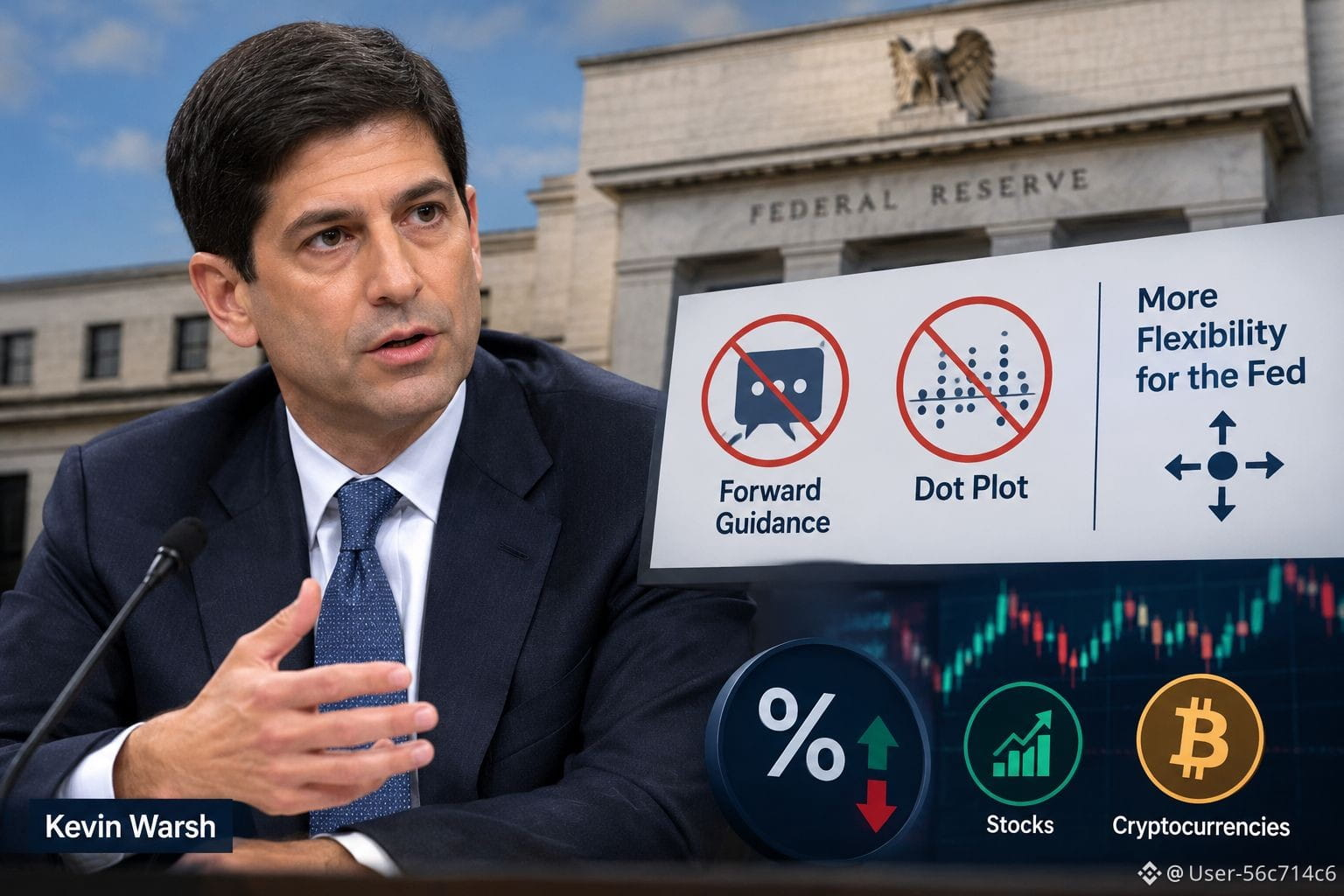
Kevin Warsh is pushing to reduce the Federal Reserve’s use of forward guidance and the dot plot. These tools help investors understand possible future interest rate decisions. Warsh believes the Fed should have more flexibility and avoid giving too many signals about its future plans. This approach could change how markets react to Fed announcements. Investors will watch closely to see how these changes affect interest rates, stocks, and cryptocurrencies. Clear communication remains important for market confidence and stability.
CHECK BELOW TO TRADE
$BTC $ETH $BNB
{future}(BTCUSDT)
{future}(ETHUSDT)
{future}(BNBUSDT)
#WarshPushesToScaleBackForwardGuidanceAndDotPlot
Kevin Warsh is pushing to reduce the Federal Reserve’s use of forward guidance and the dot plot. These tools help investors understand possible future interest rate decisions. Warsh believes the Fed should have more flexibility and avoid giving too many signals about its future plans. This approach could change how markets react to Fed announcements. Investors will watch closely to see how these changes affect interest rates, stocks, and cryptocurrencies. Clear communication remains important for market confidence and stability.
CHECK BELOW TO TRADE
$BTC $ETH $BNB
1
88

·
--
Article
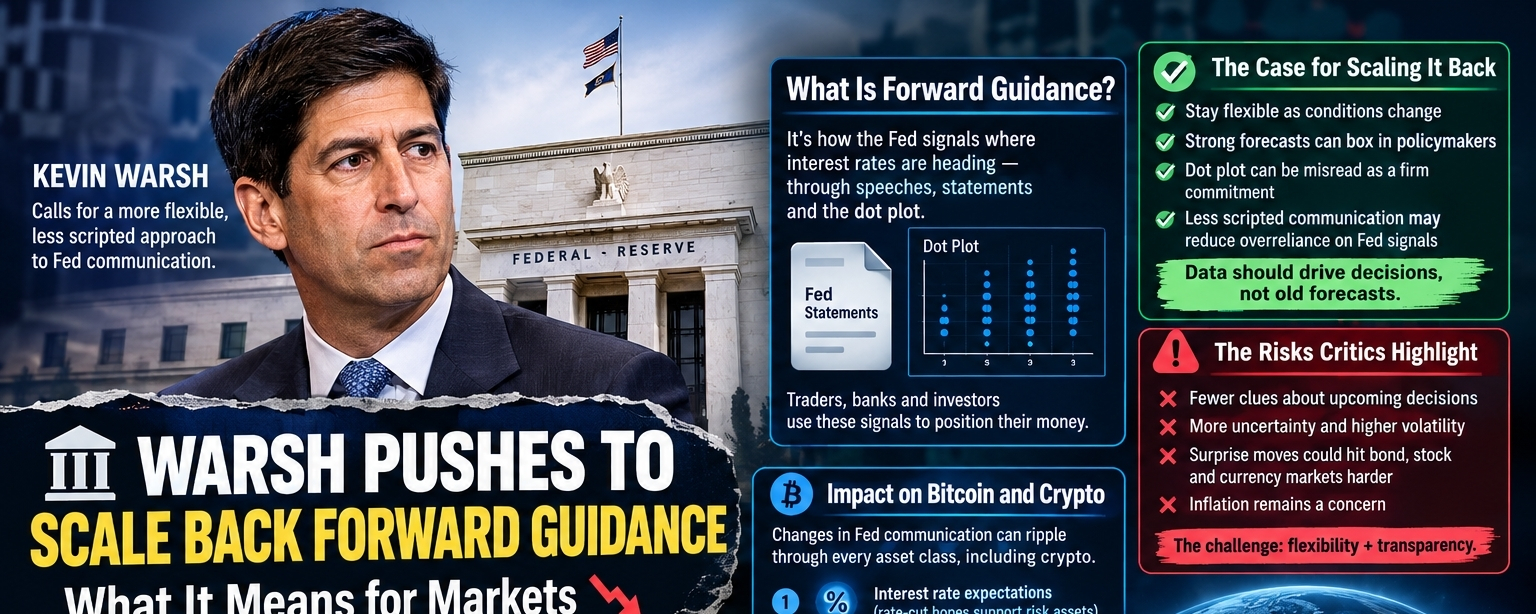
🏦 Warsh Pushes to Scale Back Forward Guidance: What It Means for Markets 📉#WarshPushesToScaleBackForwardGuidanceAndDotPlot
$AMZNB 🔥 The US Federal Reserve is facing a debate that could reshape how global markets read monetary policy. At its center is Kevin Warsh, who is associated with calls for a more flexible, less scripted approach to central bank communication. 🎙️
## 📢 What Is Forward Guidance?
Forward guidance is how the Fed signals where interest rates are heading. It includes speeches, statements, and the closely watched dot plot 📊, which shows policymakers' individual projections for future rates. Traders, banks, and investors worldwide use these signals to position their money.
## 🔄 The Case for Scaling It Back
Supporters of reducing forward guidance argue that:
- ✅ The Fed should stay flexible as economic conditions change
- ✅ Strong forecasts can box policymakers into promises they later regret
- ✅ The dot plot can be misread as a firm commitment when it is only a projection
- ✅ Less scripted communication may keep markets from becoming overly dependent on every Fed signal
In short, data should drive decisions, not forecasts made months earlier. 📈
## ⚠️ The Risks Critics Highlight
Critics warn that pulling back too far could backfire:
- ❌ Investors would have fewer clues about upcoming decisions
- ❌ Uncertainty could rise, leading to higher market volatility 🎢
- ❌ Surprise moves could hit bond, stock, and currency markets harder
- ❌ Inflation remains a concern, so clear communication matters more
The core challenge is balancing flexibility with transparency. ⚖️
## 💰 Impact on Bitcoin and Crypto
Changes in Fed communication can ripple through every asset class, including Bitcoin 🟠 and other cryptocurrencies. Here is how:
1. 📌 Interest rate expectations: Rate-cut hopes tend to support risk assets, while a hawkish tone pressures them.
2. 💵 The US dollar: A stronger dollar often weighs on crypto, and a weaker one can help it.
3. 📉 Bond yields: Rising yields can pull money out of speculative assets.
4. 🧠 Investor sentiment: Uncertainty can trigger sharp moves in both directions.
If the Fed communicates less, crypto traders may see bigger intraday swings around Fed meetings and data releases. ⚡ Risk management, such as stop-losses and sensible position sizing, becomes even more important. 🛡️
## 🔮 The Bottom Line
Whether the Fed keeps, trims, or drops forward guidance, one thing is clear: markets hate uncertainty. 😬 Smart traders should follow Fed speeches, watch inflation data closely, and avoid overleveraging in volatile windows. 🧐
The debate is far from settled, and every shift in tone could move billions across stocks, bonds, forex, and crypto. 🌍💥
This article is for informational purposes only and is not financial advice. Always do your own research. 📝
---
#FederalReserve #Bitcoin #SpotBitcoinETFsShed$261M #EtherTook60%OfCryptoLiquidations
🏦 Warsh Pushes to Scale Back Forward Guidance: What It Means for Markets 📉
#WarshPushesToScaleBackForwardGuidanceAndDotPlot
$AMZNB 🔥 The US Federal Reserve is facing a debate that could reshape how global markets read monetary policy. At its center is Kevin Warsh, who is associated with calls for a more flexible, less scripted approach to central bank communication. 🎙️
## 📢 What Is Forward Guidance?
Forward guidance is how the Fed signals where interest rates are heading. It includes speeches, statements, and the closely watched dot plot 📊, which shows policymakers' individual projections for future rates. Traders, banks, and investors worldwide use these signals to position their money.
## 🔄 The Case for Scaling It Back
Supporters of reducing forward guidance argue that:
- ✅ The Fed should stay flexible as economic conditions change
- ✅ Strong forecasts can box policymakers into promises they later regret
- ✅ The dot plot can be misread as a firm commitment when it is only a projection
- ✅ Less scripted communication may keep markets from becoming overly dependent on every Fed signal
In short, data should drive decisions, not forecasts made months earlier. 📈
## ⚠️ The Risks Critics Highlight
Critics warn that pulling back too far could backfire:
- ❌ Investors would have fewer clues about upcoming decisions
- ❌ Uncertainty could rise, leading to higher market volatility 🎢
- ❌ Surprise moves could hit bond, stock, and currency markets harder
- ❌ Inflation remains a concern, so clear communication matters more
The core challenge is balancing flexibility with transparency. ⚖️
## 💰 Impact on Bitcoin and Crypto
Changes in Fed communication can ripple through every asset class, including Bitcoin 🟠 and other cryptocurrencies. Here is how:
1. 📌 Interest rate expectations: Rate-cut hopes tend to support risk assets, while a hawkish tone pressures them.
2. 💵 The US dollar: A stronger dollar often weighs on crypto, and a weaker one can help it.
3. 📉 Bond yields: Rising yields can pull money out of speculative assets.
4. 🧠 Investor sentiment: Uncertainty can trigger sharp moves in both directions.
If the Fed communicates less, crypto traders may see bigger intraday swings around Fed meetings and data releases. ⚡ Risk management, such as stop-losses and sensible position sizing, becomes even more important. 🛡️
## 🔮 The Bottom Line
Whether the Fed keeps, trims, or drops forward guidance, one thing is clear: markets hate uncertainty. 😬 Smart traders should follow Fed speeches, watch inflation data closely, and avoid overleveraging in volatile windows. 🧐
The debate is far from settled, and every shift in tone could move billions across stocks, bonds, forex, and crypto. 🌍💥
This article is for informational purposes only and is not financial advice. Always do your own research. 📝
---
#FederalReserve #Bitcoin #SpotBitcoinETFsShed$261M #EtherTook60%OfCryptoLiquidations
1
134

·
--
Bullish
#WarshPushesToScaleBackForwardGuidanceAndDotPlot
🌎📊
💡 My unique thought: The Fed may be saying less about tomorrow, but that could make every economic data release more important today!
Kevin Warsh’s push for less forward guidance means traders may have fewer clues about the Fed’s future interest-rate decisions. Supporters see more flexibility for policymakers, while critics worry that less communication could create uncertainty and market volatility. <Cite refs={["turn667187news12","turn667187news21"]}/>
₿ What could this mean for crypto?
📈 Softer inflation and expectations of lower rates could support risk assets like Bitcoin.
📉 Persistent inflation and expectations of higher rates could pressure crypto and stocks.
⚡ Less predictable Fed communication could trigger sudden market moves in either direction.
😂 Funny market moment:
Fed before: “Here are our clues. Please analyze carefully.” 🤓
Fed now: “Watch the data!” 👀
Crypto traders: “I came to trade Bitcoin, not solve a Federal Reserve mystery!” 🕵️♂️🤣
🎯 My takeaway: Don’t trade based on headlines alone. Watch inflation data, Treasury yields, the US dollar, and market reaction. No Fed signal guarantees Bitcoin’s next move.
🔥 Question for the community: Is less Fed guidance good for financial markets, or does it make crypto trading more unpredictable?
#Bitcoin #BTC #CryptoMarket #FederalReserve #InterestRates #MarketVolatility
#CryptoCommunity
$BTC
{future}(BTCUSDT)
#WarshPushesToScaleBackForwardGuidanceAndDotPlot
🌎📊
💡 My unique thought: The Fed may be saying less about tomorrow, but that could make every economic data release more important today!
Kevin Warsh’s push for less forward guidance means traders may have fewer clues about the Fed’s future interest-rate decisions. Supporters see more flexibility for policymakers, while critics worry that less communication could create uncertainty and market volatility. <Cite refs={["turn667187news12","turn667187news21"]}/>
₿ What could this mean for crypto?
📈 Softer inflation and expectations of lower rates could support risk assets like Bitcoin.
📉 Persistent inflation and expectations of higher rates could pressure crypto and stocks.
⚡ Less predictable Fed communication could trigger sudden market moves in either direction.
😂 Funny market moment:
Fed before: “Here are our clues. Please analyze carefully.” 🤓
Fed now: “Watch the data!” 👀
Crypto traders: “I came to trade Bitcoin, not solve a Federal Reserve mystery!” 🕵️♂️🤣
🎯 My takeaway: Don’t trade based on headlines alone. Watch inflation data, Treasury yields, the US dollar, and market reaction. No Fed signal guarantees Bitcoin’s next move.
🔥 Question for the community: Is less Fed guidance good for financial markets, or does it make crypto trading more unpredictable?
#Bitcoin #BTC #CryptoMarket #FederalReserve #InterestRates #MarketVolatility
#CryptoCommunity
$BTC
55
Log in to explore more content
Join global crypto users on Binance Square
⚡️ Get latest and useful information about crypto.
💬 Trusted by the world’s largest crypto exchange.
👍 Discover real insights from verified creators.
Email / Phone number
Trending Topics
1
#EvolveAtBinanceBlockchainWeek
3M views
22,979 Discussing
2
#SunReportedlyOffered4BToRescueFTX
43,366 views
402 Discussing
3
#XRPLAmendmentsEnterActivationWindow
40,622 views
350 Discussing
4
#OPECReportedlyKeepsOilQuotasUnchangedForQ1
27,015 views
325 Discussing
5
#IBSGovAccountMints1BTokensDrains5.71M
79,300 views
670 Discussing
6
#WorldLibertyActsToCutLiquidationRisk
119,015 views
874 Discussing
7
#LiquidHackerMoves598BTC
88,131 views
520 Discussing
8
#BitcoinETFsExtendOutflowStreakToEightDays
163,861 views
1,124 Discussing
9
#TrumpMediaCouldFace883.5MRepaymentDemand
49,791 views
218 Discussing
10
#CryptographersFormGroupForEncryptionBreak
3 views
6 Discussing