

#cryptostaking
cryptostaking
150,677 views
678 Discussing
Hot
Latest

everyone thinks holding spot in a cold wallet is the safest play in this market, but you are actually bleeding yield every single day without realizing it.
most retail traders get rugged trying to chase random ponzis or sit on idle bags while institutions quietly print risk-free cash. the real gap between smart money and retail isn't 50x leverage, ser, it's efficient treasury management.
look at the bitmine playbook as a prime case study. they currently have around 5.07m $ETH locked up, which represents a massive 84% of their entire treasury sitting directly in staking contracts. ngl that is a staggering amount of conviction.
they are projecting roughly $363m in annual staking revenue just by letting those assets work in the background. while degens are panic selling local dips on $BTC or over-rotating into high-risk $LDO plays, balance sheets at this scale are turning native network validation into an automated cash machine.
locking up that much supply also creates a serious liquidity squeeze. when circulating float dries up like this, any sudden influx of spot demand can trigger a violent supply shock.
how much of your stack is actually generating native yield right now?
#Ethereum #CryptoStaking #BinanceSquare
everyone thinks holding spot in a cold wallet is the safest play in this market, but you are actually bleeding yield every single day without realizing it.
most retail traders get rugged trying to chase random ponzis or sit on idle bags while institutions quietly print risk-free cash. the real gap between smart money and retail isn't 50x leverage, ser, it's efficient treasury management.
look at the bitmine playbook as a prime case study. they currently have around 5.07m $ETH locked up, which represents a massive 84% of their entire treasury sitting directly in staking contracts. ngl that is a staggering amount of conviction.
they are projecting roughly $363m in annual staking revenue just by letting those assets work in the background. while degens are panic selling local dips on $BTC or over-rotating into high-risk $LDO plays, balance sheets at this scale are turning native network validation into an automated cash machine.
locking up that much supply also creates a serious liquidity squeeze. when circulating float dries up like this, any sudden influx of spot demand can trigger a violent supply shock.
how much of your stack is actually generating native yield right now?
#Ethereum #CryptoStaking #BinanceSquare
most retail traders get rugged trying to chase random ponzis or sit on idle bags while institutions quietly print risk-free cash. the real gap between smart money and retail isn't 50x leverage, ser, it's efficient treasury management.
look at the bitmine playbook as a prime case study. they currently have around 5.07m $ETH locked up, which represents a massive 84% of their entire treasury sitting directly in staking contracts. ngl that is a staggering amount of conviction.
they are projecting roughly $363m in annual staking revenue just by letting those assets work in the background. while degens are panic selling local dips on $BTC or over-rotating into high-risk $LDO plays, balance sheets at this scale are turning native network validation into an automated cash machine.
locking up that much supply also creates a serious liquidity squeeze. when circulating float dries up like this, any sudden influx of spot demand can trigger a violent supply shock.
how much of your stack is actually generating native yield right now?
#Ethereum #CryptoStaking #BinanceSquare
72

#ethereumvalidatorexitqueuejumps392%
📊 On-Chain Breakdown: Deconstructing the 392% Ethereum Validator Churn Spike
The Ethereum consensus layer recorded a sudden 392% jump in pending validator departures.
A technical breakdown of what this means:
Throughput Bottlenecks: Validator exits are governed by the network's sweep and churn limits. Any sudden cluster of requests immediately inflates queue metrics without causing an instant supply shock on secondary markets.
Operational Churn vs. Market Offloading: Validator deactivations regularly stem from institutional restructuring, node migrations, or regulatory compliance shifts across custodial staking providers.
Spot Impact Evaluation: Unstaked $ETH does not inherently move toward exchange order books, though persistent queue growth warrants close tracking of exchange inflow metrics.
Routine node operator rotation or macro risk-off behavior? What is your read on the data?
{future}(ETHUSDT)
$MOVR
{future}(MOVRUSDT)
$FET
{future}(FETUSDT)
#Ethereum #CryptoStaking #BlockchainData
#ethereumvalidatorexitqueuejumps392%
📊 On-Chain Breakdown: Deconstructing the 392% Ethereum Validator Churn Spike
The Ethereum consensus layer recorded a sudden 392% jump in pending validator departures.
A technical breakdown of what this means:
Throughput Bottlenecks: Validator exits are governed by the network's sweep and churn limits. Any sudden cluster of requests immediately inflates queue metrics without causing an instant supply shock on secondary markets.
Operational Churn vs. Market Offloading: Validator deactivations regularly stem from institutional restructuring, node migrations, or regulatory compliance shifts across custodial staking providers.
Spot Impact Evaluation: Unstaked $ETH does not inherently move toward exchange order books, though persistent queue growth warrants close tracking of exchange inflow metrics.
Routine node operator rotation or macro risk-off behavior? What is your read on the data?
$MOVR
$FET
#Ethereum #CryptoStaking #BlockchainData
📊 On-Chain Breakdown: Deconstructing the 392% Ethereum Validator Churn Spike
The Ethereum consensus layer recorded a sudden 392% jump in pending validator departures.
A technical breakdown of what this means:
Throughput Bottlenecks: Validator exits are governed by the network's sweep and churn limits. Any sudden cluster of requests immediately inflates queue metrics without causing an instant supply shock on secondary markets.
Operational Churn vs. Market Offloading: Validator deactivations regularly stem from institutional restructuring, node migrations, or regulatory compliance shifts across custodial staking providers.
Spot Impact Evaluation: Unstaked $ETH does not inherently move toward exchange order books, though persistent queue growth warrants close tracking of exchange inflow metrics.
Routine node operator rotation or macro risk-off behavior? What is your read on the data?
$MOVR
$FET
#Ethereum #CryptoStaking #BlockchainData
1
677
Here is what happened when a single infrastructure incident quietly triggered one of the largest validator exoduses on the network.
Most traders watch order books for immediate sell pressure, but completely miss the structural supply overhangs building days before hitting the open market. By the time that locked capital finally hits spot books, late buyers end up absorbing the downside.
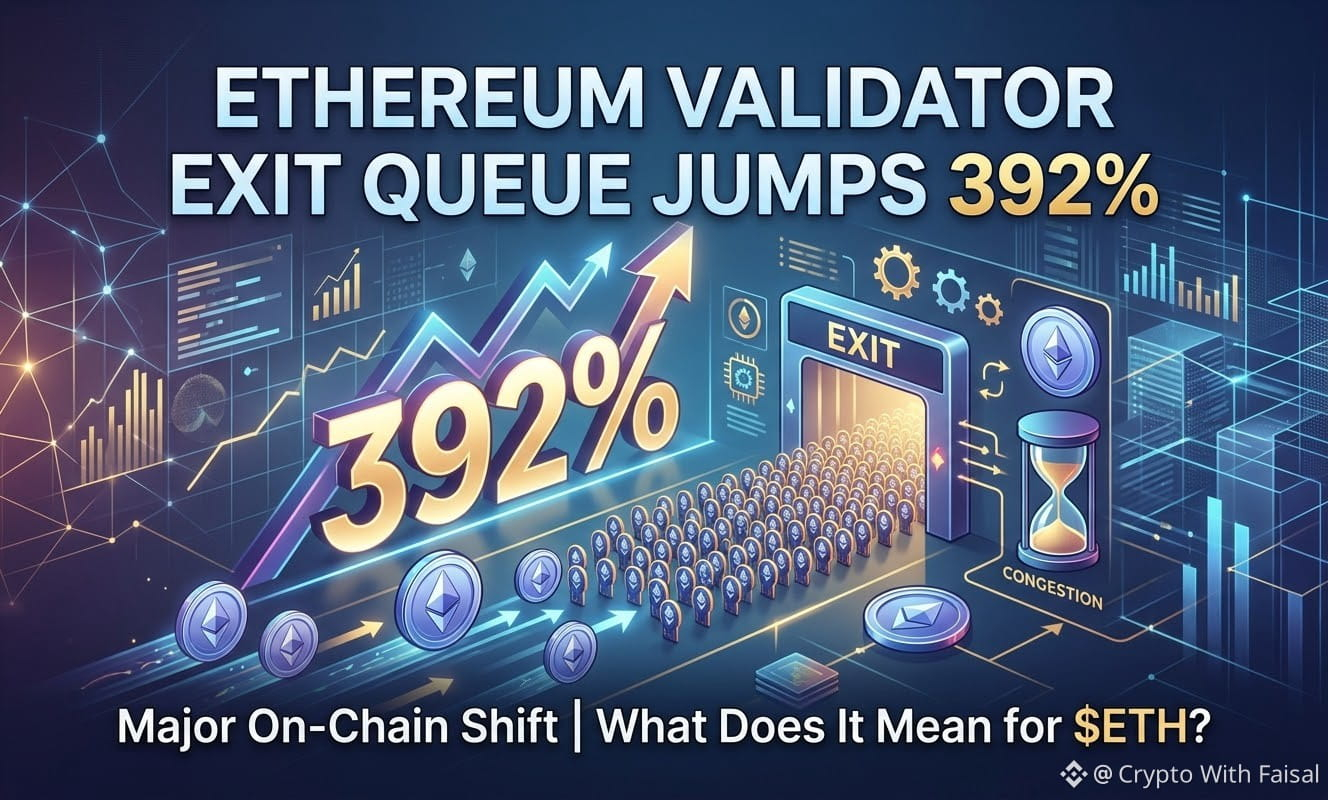
The validator exit queue recently surged by 392%, with roughly 850,000 $ETH waiting to leave the validator set. That sudden backlog pushed estimated withdrawal delays out to 14.8 days. Much of the spike appears tied to an infrastructure incident affecting MetaMask Staking, showing how quickly operational friction in liquid staking setups can trigger mass exits.
When nearly a million $ETH moves toward the exits at once, the ripple effects touch liquid staking derivatives like $LDO and broader exchange liquidity. If unstakers choose to derisk into cash rather than redeploying to fresh validators, spot markets will face weeks of sustained distribution pressure.
Where do you think spot prices head once this backlog fully unlocks?
#Ethereum #CryptoStaking #ETH
Here is what happened when a single infrastructure incident quietly triggered one of the largest validator exoduses on the network.
Most traders watch order books for immediate sell pressure, but completely miss the structural supply overhangs building days before hitting the open market. By the time that locked capital finally hits spot books, late buyers end up absorbing the downside.
The validator exit queue recently surged by 392%, with roughly 850,000 $ETH waiting to leave the validator set. That sudden backlog pushed estimated withdrawal delays out to 14.8 days. Much of the spike appears tied to an infrastructure incident affecting MetaMask Staking, showing how quickly operational friction in liquid staking setups can trigger mass exits.
When nearly a million $ETH moves toward the exits at once, the ripple effects touch liquid staking derivatives like $LDO and broader exchange liquidity. If unstakers choose to derisk into cash rather than redeploying to fresh validators, spot markets will face weeks of sustained distribution pressure.
Where do you think spot prices head once this backlog fully unlocks?
#Ethereum #CryptoStaking #ETH
Most traders watch order books for immediate sell pressure, but completely miss the structural supply overhangs building days before hitting the open market. By the time that locked capital finally hits spot books, late buyers end up absorbing the downside.
The validator exit queue recently surged by 392%, with roughly 850,000 $ETH waiting to leave the validator set. That sudden backlog pushed estimated withdrawal delays out to 14.8 days. Much of the spike appears tied to an infrastructure incident affecting MetaMask Staking, showing how quickly operational friction in liquid staking setups can trigger mass exits.
When nearly a million $ETH moves toward the exits at once, the ripple effects touch liquid staking derivatives like $LDO and broader exchange liquidity. If unstakers choose to derisk into cash rather than redeploying to fresh validators, spot markets will face weeks of sustained distribution pressure.
Where do you think spot prices head once this backlog fully unlocks?
#Ethereum #CryptoStaking #ETH

16
Picture this: you wake up to check network metrics and discover roughly 850,000 $ETH suddenly lined up at the door, waiting nearly 15 days just to exit the validator set.
For most investors, seeing an exit queue jump 392 percent triggers immediate anxiety about impending spot market sell pressure. It brings back that familiar sinking feeling of trying to guess whether unlocked capital is about to dump on your positions before you can react.
Looking beneath the surface, this sudden surge appears to be an operational reshuffle tied to MetaMask staking infrastructure rather than organic capital flight. We saw a very similar pattern right after the Shapella upgrade, where enormous queues formed simply because institutional operators were migrating setups rather than cashing out. While alternative networks like $SOL manage validator churn with different economic models, Ethereum's exit delay is engineered specifically to cushion the network against sudden shifts.
Large-scale validator rotations frequently happen across liquid staking ecosystems like $LDO whenever node providers update their technical infrastructure. The real takeaway here is learning to separate technical custodian rebalancing from genuine network abandonment before making panic-driven trading decisions.
Do you expect this unlock wave to create actual spot volatility, or is the market already looking past it?
#Ethereum #CryptoStaking #ETH
Picture this: you wake up to check network metrics and discover roughly 850,000 $ETH suddenly lined up at the door, waiting nearly 15 days just to exit the validator set.
For most investors, seeing an exit queue jump 392 percent triggers immediate anxiety about impending spot market sell pressure. It brings back that familiar sinking feeling of trying to guess whether unlocked capital is about to dump on your positions before you can react.
Looking beneath the surface, this sudden surge appears to be an operational reshuffle tied to MetaMask staking infrastructure rather than organic capital flight. We saw a very similar pattern right after the Shapella upgrade, where enormous queues formed simply because institutional operators were migrating setups rather than cashing out. While alternative networks like $SOL manage validator churn with different economic models, Ethereum's exit delay is engineered specifically to cushion the network against sudden shifts.
Large-scale validator rotations frequently happen across liquid staking ecosystems like $LDO whenever node providers update their technical infrastructure. The real takeaway here is learning to separate technical custodian rebalancing from genuine network abandonment before making panic-driven trading decisions.
Do you expect this unlock wave to create actual spot volatility, or is the market already looking past it?
#Ethereum #CryptoStaking #ETH
For most investors, seeing an exit queue jump 392 percent triggers immediate anxiety about impending spot market sell pressure. It brings back that familiar sinking feeling of trying to guess whether unlocked capital is about to dump on your positions before you can react.
Looking beneath the surface, this sudden surge appears to be an operational reshuffle tied to MetaMask staking infrastructure rather than organic capital flight. We saw a very similar pattern right after the Shapella upgrade, where enormous queues formed simply because institutional operators were migrating setups rather than cashing out. While alternative networks like $SOL manage validator churn with different economic models, Ethereum's exit delay is engineered specifically to cushion the network against sudden shifts.
Large-scale validator rotations frequently happen across liquid staking ecosystems like $LDO whenever node providers update their technical infrastructure. The real takeaway here is learning to separate technical custodian rebalancing from genuine network abandonment before making panic-driven trading decisions.
Do you expect this unlock wave to create actual spot volatility, or is the market already looking past it?
#Ethereum #CryptoStaking #ETH

28

·
--
🚀 Locked vs Flexible — which staking style fits you best?
🔒 SENT (Locked)
• Duration: 54D
• APR: 21.9% ~ 25.9%
• Higher rewards, but you commit for the full period.
🌀 KGST (Flexible)
• Duration: 9D
• APR: 13.47%
• Lower yield, but you keep the freedom to move anytime.
👉 Two paths, one goal: growing your crypto. Do you chase max APR or prefer flexibility? #BinanceEarn #CryptoStaking
$SENT
{spot}(SENTUSDT)
$KGST
{spot}(KGSTUSDT)
🚀 Locked vs Flexible — which staking style fits you best?
🔒 SENT (Locked)
• Duration: 54D
• APR: 21.9% ~ 25.9%
• Higher rewards, but you commit for the full period.
🌀 KGST (Flexible)
• Duration: 9D
• APR: 13.47%
• Lower yield, but you keep the freedom to move anytime.
👉 Two paths, one goal: growing your crypto. Do you chase max APR or prefer flexibility? #BinanceEarn #CryptoStaking
$SENT
$KGST
🔒 SENT (Locked)
• Duration: 54D
• APR: 21.9% ~ 25.9%
• Higher rewards, but you commit for the full period.
🌀 KGST (Flexible)
• Duration: 9D
• APR: 13.47%
• Lower yield, but you keep the freedom to move anytime.
👉 Two paths, one goal: growing your crypto. Do you chase max APR or prefer flexibility? #BinanceEarn #CryptoStaking
$SENT
$KGST
2
349

·
--

Article
Crypto Staking for Beginners: How Does It Really Work?I once left a small amount of crypto sitting in my wallet for a month and did nothing with it. Then I found out people were earning rewards on the same coin just by staking it. If you are new to crypto, staking for beginners is simpler than it sounds. Let me explain it the way I wish someone had explained it to me.
What is Crypto Staking?
Staking means locking your coin to help a blockchain run. In return, you get rewards, usually paid in the same coin.
Think of a fixed deposit at a bank. You park your money; the bank uses it, and you get interest. Staking is similar. The big Difference is that the bank is a blockchain network, and the rewards are not guaranteed.
How does Staking Work Behind the Scenes?
Some blockchains use a system called proof of stake. Instead of miners using heavy computers, the network picks validators to confirm transactions.
Here's the thing: validators must lock up their own coins as a security deposit. If they cheat or make a mistake, they can lose part of it. That keeps everyone honest.
You can join this process without running anything yourself. You simply stake your coins, and your coins support a validator. The validators earn rewards, and you get your share.
Staking Rewards: Where Does the Money Come From?
Staking rewards come from two places:
New coins created by the networkTransaction fees paid by users
The rewards rate is often shown as APY or APR. Honestly, treat that number as an estimate. It can change daily based on how many people are staking and how busy the network is.
A quick example: If you stake 100 coins at 5% a year, you might earn about 5 coins over the year. But if the coin's price drops 20% in that time, you are still down in dollar terms. Trust me, many beginners forget this part.
Ways to Start Staking
There are a few common routes:
Exchange Staking: The easiest way. You pick a coin, choose a plan, and confirm. No technical setup.Flexible vs. Locked Staking: Flexible lets you withdraw anytime, usually with lower rewards. Locked pays more but ties up your coins for a set period.Wallet or DEFI Staking: More control but more steps and more risk if you make a mistake.
When I started, I made a classic mistake. I picked a locked plan because the rate looked higher than needed; my coins were locked two weeks later. I could not touch them. In my experience, flexible staking is the safer way to learn.
Staking Risks You Should Know About
Staking is not free money. Here are the main risks:
Price Risk: The coin can fall faster than you earn rewards.Lock-up-Risk: You may not be able to sell during a crash if your coins are locked.Slashing Risk: If a validator misbehaves, a portion of staked coins can be penalized.Platform Risk: If you stake through a third party, you are trusting that platform.
Be extra careful with very high APY offers. If a number looks too good to be true, ask why before you click anything.
Simple Tips Before Your Stake
Start Small. Test with an amount you can afford to forget about.Read the lock-up period and the unstaking time first.Stick to well-known coins while you are learning.Check the reward rate more than once because it changes.Keep some coins unstaked for flexibility.
Honestly, my own rule is simple. I never stake money i might need soon.
#cryptostaking #cryptoforbeginners #stakingrrewards #binancesquare #passiveincome
$BTC $ETH $BNB
Crypto Staking for Beginners: How Does It Really Work?
I once left a small amount of crypto sitting in my wallet for a month and did nothing with it. Then I found out people were earning rewards on the same coin just by staking it. If you are new to crypto, staking for beginners is simpler than it sounds. Let me explain it the way I wish someone had explained it to me.
What is Crypto Staking?
Staking means locking your coin to help a blockchain run. In return, you get rewards, usually paid in the same coin.
Think of a fixed deposit at a bank. You park your money; the bank uses it, and you get interest. Staking is similar. The big Difference is that the bank is a blockchain network, and the rewards are not guaranteed.
How does Staking Work Behind the Scenes?
Some blockchains use a system called proof of stake. Instead of miners using heavy computers, the network picks validators to confirm transactions.
Here's the thing: validators must lock up their own coins as a security deposit. If they cheat or make a mistake, they can lose part of it. That keeps everyone honest.
You can join this process without running anything yourself. You simply stake your coins, and your coins support a validator. The validators earn rewards, and you get your share.
Staking Rewards: Where Does the Money Come From?
Staking rewards come from two places:
New coins created by the networkTransaction fees paid by users
The rewards rate is often shown as APY or APR. Honestly, treat that number as an estimate. It can change daily based on how many people are staking and how busy the network is.
A quick example: If you stake 100 coins at 5% a year, you might earn about 5 coins over the year. But if the coin's price drops 20% in that time, you are still down in dollar terms. Trust me, many beginners forget this part.
Ways to Start Staking
There are a few common routes:
Exchange Staking: The easiest way. You pick a coin, choose a plan, and confirm. No technical setup.Flexible vs. Locked Staking: Flexible lets you withdraw anytime, usually with lower rewards. Locked pays more but ties up your coins for a set period.Wallet or DEFI Staking: More control but more steps and more risk if you make a mistake.
When I started, I made a classic mistake. I picked a locked plan because the rate looked higher than needed; my coins were locked two weeks later. I could not touch them. In my experience, flexible staking is the safer way to learn.
Staking Risks You Should Know About
Staking is not free money. Here are the main risks:
Price Risk: The coin can fall faster than you earn rewards.Lock-up-Risk: You may not be able to sell during a crash if your coins are locked.Slashing Risk: If a validator misbehaves, a portion of staked coins can be penalized.Platform Risk: If you stake through a third party, you are trusting that platform.
Be extra careful with very high APY offers. If a number looks too good to be true, ask why before you click anything.
Simple Tips Before Your Stake
Start Small. Test with an amount you can afford to forget about.Read the lock-up period and the unstaking time first.Stick to well-known coins while you are learning.Check the reward rate more than once because it changes.Keep some coins unstaked for flexibility.
Honestly, my own rule is simple. I never stake money i might need soon.
#cryptostaking #cryptoforbeginners #stakingrrewards #binancesquare #passiveincome
$BTC $ETH $BNB
What is Crypto Staking?
Staking means locking your coin to help a blockchain run. In return, you get rewards, usually paid in the same coin.
Think of a fixed deposit at a bank. You park your money; the bank uses it, and you get interest. Staking is similar. The big Difference is that the bank is a blockchain network, and the rewards are not guaranteed.
How does Staking Work Behind the Scenes?
Some blockchains use a system called proof of stake. Instead of miners using heavy computers, the network picks validators to confirm transactions.
Here's the thing: validators must lock up their own coins as a security deposit. If they cheat or make a mistake, they can lose part of it. That keeps everyone honest.
You can join this process without running anything yourself. You simply stake your coins, and your coins support a validator. The validators earn rewards, and you get your share.
Staking Rewards: Where Does the Money Come From?
Staking rewards come from two places:
New coins created by the networkTransaction fees paid by users
The rewards rate is often shown as APY or APR. Honestly, treat that number as an estimate. It can change daily based on how many people are staking and how busy the network is.
A quick example: If you stake 100 coins at 5% a year, you might earn about 5 coins over the year. But if the coin's price drops 20% in that time, you are still down in dollar terms. Trust me, many beginners forget this part.
Ways to Start Staking
There are a few common routes:
Exchange Staking: The easiest way. You pick a coin, choose a plan, and confirm. No technical setup.Flexible vs. Locked Staking: Flexible lets you withdraw anytime, usually with lower rewards. Locked pays more but ties up your coins for a set period.Wallet or DEFI Staking: More control but more steps and more risk if you make a mistake.
When I started, I made a classic mistake. I picked a locked plan because the rate looked higher than needed; my coins were locked two weeks later. I could not touch them. In my experience, flexible staking is the safer way to learn.
Staking Risks You Should Know About
Staking is not free money. Here are the main risks:
Price Risk: The coin can fall faster than you earn rewards.Lock-up-Risk: You may not be able to sell during a crash if your coins are locked.Slashing Risk: If a validator misbehaves, a portion of staked coins can be penalized.Platform Risk: If you stake through a third party, you are trusting that platform.
Be extra careful with very high APY offers. If a number looks too good to be true, ask why before you click anything.
Simple Tips Before Your Stake
Start Small. Test with an amount you can afford to forget about.Read the lock-up period and the unstaking time first.Stick to well-known coins while you are learning.Check the reward rate more than once because it changes.Keep some coins unstaked for flexibility.
Honestly, my own rule is simple. I never stake money i might need soon.
#cryptostaking #cryptoforbeginners #stakingrrewards #binancesquare #passiveincome
$BTC $ETH $BNB
94

·
--
Panic is loud. Yields are quiet. That gap is where real compounding happens.
While everyone debates whether $BTC holds 62K or breaks lower, some portfolios are doing something different — they are earning.
$ETH stakers are collecting protocol fees and blob gas revenue post-Pectra. Each epoch, while the price chart looks ugly, the underlying position grows.
$BNB burn mechanics keep quietly removing supply from circulation. Quarterly burns do not care about market sentiment. The deflationary pressure is structural, not optional.
The real question is not "did I time the dip perfectly?" It is "was my capital working while I waited?"
Fear phases always feel terminal. They almost never are. The traders who come out ahead held productive assets, not idle stablecoins.
Compounding does not pause for bear sentiment.
#Ethereum #BNBChain #CryptoStaking #DeFi
Panic is loud. Yields are quiet. That gap is where real compounding happens.
While everyone debates whether $BTC holds 62K or breaks lower, some portfolios are doing something different — they are earning.
$ETH stakers are collecting protocol fees and blob gas revenue post-Pectra. Each epoch, while the price chart looks ugly, the underlying position grows.
$BNB burn mechanics keep quietly removing supply from circulation. Quarterly burns do not care about market sentiment. The deflationary pressure is structural, not optional.
The real question is not "did I time the dip perfectly?" It is "was my capital working while I waited?"
Fear phases always feel terminal. They almost never are. The traders who come out ahead held productive assets, not idle stablecoins.
Compounding does not pause for bear sentiment.
#Ethereum #BNBChain #CryptoStaking #DeFi
While everyone debates whether $BTC holds 62K or breaks lower, some portfolios are doing something different — they are earning.
$ETH stakers are collecting protocol fees and blob gas revenue post-Pectra. Each epoch, while the price chart looks ugly, the underlying position grows.
$BNB burn mechanics keep quietly removing supply from circulation. Quarterly burns do not care about market sentiment. The deflationary pressure is structural, not optional.
The real question is not "did I time the dip perfectly?" It is "was my capital working while I waited?"
Fear phases always feel terminal. They almost never are. The traders who come out ahead held productive assets, not idle stablecoins.
Compounding does not pause for bear sentiment.
#Ethereum #BNBChain #CryptoStaking #DeFi
45

·
--
Bullish
The $ZEC Hybrid Staking Pivot: A Major Catalyst for June? 🚀
Zcash is completely rewriting its narrative. The planned transition toward a hybrid Proof-of-Stake model via the Crosslink upgrade is designed to heavily mitigate miner sell pressure while introducing native staking rewards for long-term holders.
Beyond standard anonymity, the conversation is shifting toward censorship resistance and post-quantum transaction security as AI data collection accelerates.
Will the shift to POS spark a massive fundamental recovery for ZEC? Give me your outlook! 📉
#Zcash #ZEC #PrivacyCoins #CryptoStaking
{spot}(ZECUSDT)
The $ZEC Hybrid Staking Pivot: A Major Catalyst for June? 🚀
Zcash is completely rewriting its narrative. The planned transition toward a hybrid Proof-of-Stake model via the Crosslink upgrade is designed to heavily mitigate miner sell pressure while introducing native staking rewards for long-term holders.
Beyond standard anonymity, the conversation is shifting toward censorship resistance and post-quantum transaction security as AI data collection accelerates.
Will the shift to POS spark a massive fundamental recovery for ZEC? Give me your outlook! 📉
#Zcash #ZEC #PrivacyCoins #CryptoStaking
Zcash is completely rewriting its narrative. The planned transition toward a hybrid Proof-of-Stake model via the Crosslink upgrade is designed to heavily mitigate miner sell pressure while introducing native staking rewards for long-term holders.
Beyond standard anonymity, the conversation is shifting toward censorship resistance and post-quantum transaction security as AI data collection accelerates.
Will the shift to POS spark a massive fundamental recovery for ZEC? Give me your outlook! 📉
#Zcash #ZEC #PrivacyCoins #CryptoStaking
121

·
--
Bullish
🥩 Krypto-Staking: Zinsen oder Risiko? Realitäts-Check!
Viele denken bei Staking an ein risikoloses Sparkonto. Stimmt aber nicht. Zeit für den schnellen Check am Beispiel von $SOL (siehe Screenshot):
Das 100$-Beispiel: Was kriegst du?
SOL-Staking (5.12%): Bringt dir bei 100$ Einsatz nach einem Jahr ca. 5.12$ in SOL obendrauf. Solide für Long-Term-Holder.
Flexibel (2.83%): Weniger Rendite, aber du kommst jederzeit an deine Coins ran.
Dual Investment (bis 69.96%): Klingt geil, ist aber hochriskant (Zock auf exakte Kurse). Gier frisst hier oft Hirn!
Die 2 größten Gefahren: ⚠️
Das Kursrisiko: Was bringen dir 5% oder selbst 70% Rendite, wenn der Coin-Kurs im selben Zeitraum um 50% abschmiert? Am Ende hast du zwar mehr Coins, aber weniger Gesamtwert.
Die Sperrfrist: Im Locked Staking kommst du bei einem fetten Markt-Crash nicht rechtzeitig an deine Coins zum Verkaufen.
Fazit: Staking lohnt sich nur für Coins, die du sowieso eiskalt halten willst. Wer auf utopische Prozentzahlen bei Schrott-Coins reinfällt, verliert.
Stakt ihr fest weg oder bleibt ihr lieber flexibel auf dem Spot-Markt? 👇
⚠️ Und das übliche Krypto-Einmaleins: Das hier ist keine Finanzberatung, Anlageberatung oder die heilige Wahrheit. Ich bin kein Finanzberater. Ich zeige hier nur meine eigenen Trades und meine persönliche Meinung. Krypto ist hochriskant, also schaltet euer eigenes Hirn ein, macht eure eigene Recherche (DYOR) und riskiert nur Kohle, die ihr auch im Casino am Ausgang verlieren könnt.
#SOL
#CryptoStaking
#BinanceEarn
#DYOR
🥩 Krypto-Staking: Zinsen oder Risiko? Realitäts-Check!
Viele denken bei Staking an ein risikoloses Sparkonto. Stimmt aber nicht. Zeit für den schnellen Check am Beispiel von $SOL (siehe Screenshot):
Das 100$-Beispiel: Was kriegst du?
SOL-Staking (5.12%): Bringt dir bei 100$ Einsatz nach einem Jahr ca. 5.12$ in SOL obendrauf. Solide für Long-Term-Holder.
Flexibel (2.83%): Weniger Rendite, aber du kommst jederzeit an deine Coins ran.
Dual Investment (bis 69.96%): Klingt geil, ist aber hochriskant (Zock auf exakte Kurse). Gier frisst hier oft Hirn!
Die 2 größten Gefahren: ⚠️
Das Kursrisiko: Was bringen dir 5% oder selbst 70% Rendite, wenn der Coin-Kurs im selben Zeitraum um 50% abschmiert? Am Ende hast du zwar mehr Coins, aber weniger Gesamtwert.
Die Sperrfrist: Im Locked Staking kommst du bei einem fetten Markt-Crash nicht rechtzeitig an deine Coins zum Verkaufen.
Fazit: Staking lohnt sich nur für Coins, die du sowieso eiskalt halten willst. Wer auf utopische Prozentzahlen bei Schrott-Coins reinfällt, verliert.
Stakt ihr fest weg oder bleibt ihr lieber flexibel auf dem Spot-Markt? 👇
⚠️ Und das übliche Krypto-Einmaleins: Das hier ist keine Finanzberatung, Anlageberatung oder die heilige Wahrheit. Ich bin kein Finanzberater. Ich zeige hier nur meine eigenen Trades und meine persönliche Meinung. Krypto ist hochriskant, also schaltet euer eigenes Hirn ein, macht eure eigene Recherche (DYOR) und riskiert nur Kohle, die ihr auch im Casino am Ausgang verlieren könnt.
#SOL
#CryptoStaking
#BinanceEarn
#DYOR
Viele denken bei Staking an ein risikoloses Sparkonto. Stimmt aber nicht. Zeit für den schnellen Check am Beispiel von $SOL (siehe Screenshot):
Das 100$-Beispiel: Was kriegst du?
SOL-Staking (5.12%): Bringt dir bei 100$ Einsatz nach einem Jahr ca. 5.12$ in SOL obendrauf. Solide für Long-Term-Holder.
Flexibel (2.83%): Weniger Rendite, aber du kommst jederzeit an deine Coins ran.
Dual Investment (bis 69.96%): Klingt geil, ist aber hochriskant (Zock auf exakte Kurse). Gier frisst hier oft Hirn!
Die 2 größten Gefahren: ⚠️
Das Kursrisiko: Was bringen dir 5% oder selbst 70% Rendite, wenn der Coin-Kurs im selben Zeitraum um 50% abschmiert? Am Ende hast du zwar mehr Coins, aber weniger Gesamtwert.
Die Sperrfrist: Im Locked Staking kommst du bei einem fetten Markt-Crash nicht rechtzeitig an deine Coins zum Verkaufen.
Fazit: Staking lohnt sich nur für Coins, die du sowieso eiskalt halten willst. Wer auf utopische Prozentzahlen bei Schrott-Coins reinfällt, verliert.
Stakt ihr fest weg oder bleibt ihr lieber flexibel auf dem Spot-Markt? 👇
⚠️ Und das übliche Krypto-Einmaleins: Das hier ist keine Finanzberatung, Anlageberatung oder die heilige Wahrheit. Ich bin kein Finanzberater. Ich zeige hier nur meine eigenen Trades und meine persönliche Meinung. Krypto ist hochriskant, also schaltet euer eigenes Hirn ein, macht eure eigene Recherche (DYOR) und riskiert nur Kohle, die ihr auch im Casino am Ausgang verlieren könnt.
#SOL
#CryptoStaking
#BinanceEarn
#DYOR
1
285

Article
HODL vs Staking ComparisonHere is a ready-to-publish, engaging article tailored for the Binance Square audience.
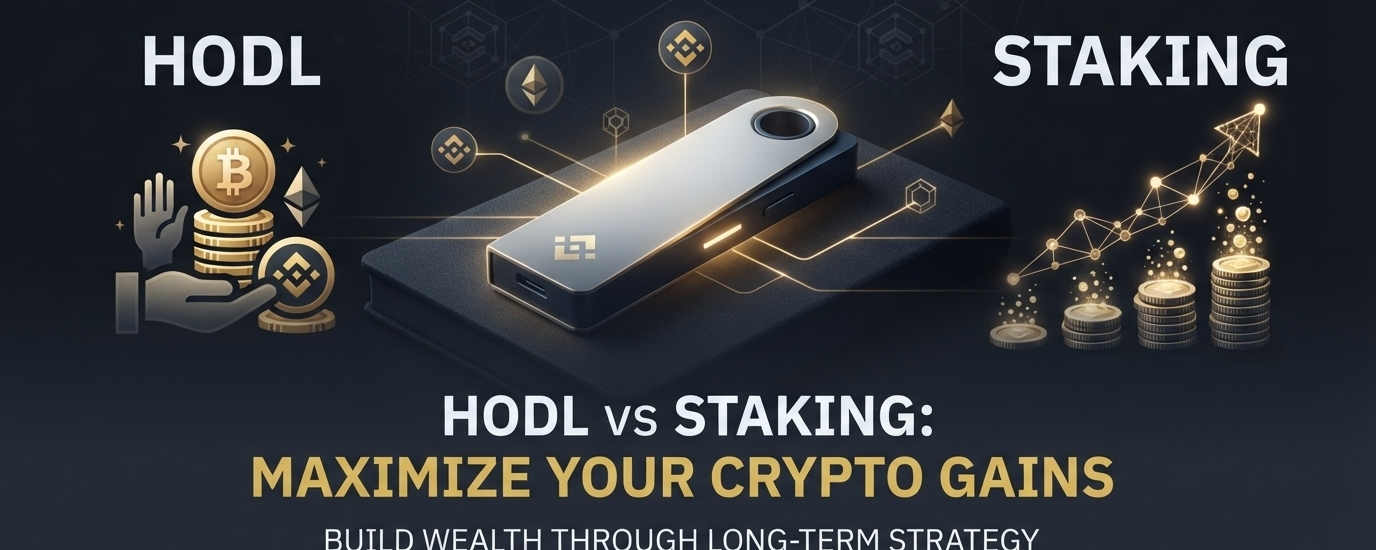
HODL vs. Staking: How to Maximize Your Crypto Gains in 2026
Holding (HODLING) and Staking are two of the most popular long-term crypto strategies, but combining them effectively is the secret to accelerating portfolio growth. Whether you are a seasoned trader or just getting started, understanding how to make your assets work for you while you hold them can turn passive waiting into active earning.
💎 1. The Power of HODLing: Pure Conviction
HODL (originally a famous typo for "Hold On for Dear Life") is the strategy of buying crypto assets and holding onto them long-term, regardless of market volatility.
Why HODL?
Simplicity: It requires zero daily market monitoring or technical chart reading.
Stress Reduction: You immunity-boost your portfolio against short-term market noise and liquidation risks.
Historical Performance: Top-tier assets like Bitcoin and Ethereum have historically rewarded patient long-term holders.
💡 The Catch: Pure HODLing leaves your assets sitting idle in your wallet. If the market moves sideways for months, your crypto balance stays the exact same.
⚡ 2. Crypto Staking: Put Your Idle Assets to Work
Staking allows you to earn rewards on your crypto holdings by committing them to support the security and operations of a Proof-of-Stake (PoS) blockchain network.
Think of it like putting your money into a high-yield savings account—except you’re earning crypto payouts directly on the chain.
Why Stake?
Passive Income: You earn regular yield (APY) paid in cryptocurrency on top of potential price appreciation.
Compound Growth: Earned rewards can often be re-staked to compound your returns over time.
Network Support: You directly contribute to the decentralization and security of the blockchains you believe in.
🥊 HODL vs. Staking: A Quick Comparison
FeatureHODLStaking
Primary GoalCapital appreciationPrice growth + Passive yield
Effort LevelCompletely hands-offLow (One-time setup)
LiquidityHigh (Sell anytime)Medium to Low (May involve unbonding periods)
Risk ProfileMarket price riskMarket risk + Smart contract / Lockup risk
The Winning Strategy: "Stake What You HODL"
Why choose between the two when you can combine them?
If your plan is already to hold an asset like Ethereum ($ETH), Solana ($SOL), or BNB ($BNB) for the next 2 to 5 years, keeping it unstacked means leaving yield on the table.
3 Rules for Staking Success on Binance:
Choose Reputable Platforms: Utilize Binance Earn (Simple Earn or ETH Staking) to minimize smart contract risks.
Watch the Lockup Periods: Flexible Staking gives you quick access to funds, while Locked Staking yields higher APY but restricts immediate withdrawals.
Diversify Your Yield: Never stake 100% of your portfolio into high-APY, low-market-cap tokens just for the yield. Stick to quality projects you'd happily HODL anyway.
🎯 Final Thoughts
HODLing builds wealth through market growth, but staking accelerates it through yield. By aligning your long-term conviction with yield-generating staking products, you set your portfolio up for maximum efficiency during both bull and bear cycles.
💬 What’s your current strategy? Are you team Pure HODL, or are you staking your bags? Let us know in the comments below! 👇
#BinanceSquareFamily e #CryptoStaking ng #HODLStrategy #PassiveIncome #BinanceEarn
HODL vs Staking Comparison
Here is a ready-to-publish, engaging article tailored for the Binance Square audience.
HODL vs. Staking: How to Maximize Your Crypto Gains in 2026
Holding (HODLING) and Staking are two of the most popular long-term crypto strategies, but combining them effectively is the secret to accelerating portfolio growth. Whether you are a seasoned trader or just getting started, understanding how to make your assets work for you while you hold them can turn passive waiting into active earning.
💎 1. The Power of HODLing: Pure Conviction
HODL (originally a famous typo for "Hold On for Dear Life") is the strategy of buying crypto assets and holding onto them long-term, regardless of market volatility.
Why HODL?
Simplicity: It requires zero daily market monitoring or technical chart reading.
Stress Reduction: You immunity-boost your portfolio against short-term market noise and liquidation risks.
Historical Performance: Top-tier assets like Bitcoin and Ethereum have historically rewarded patient long-term holders.
💡 The Catch: Pure HODLing leaves your assets sitting idle in your wallet. If the market moves sideways for months, your crypto balance stays the exact same.
⚡ 2. Crypto Staking: Put Your Idle Assets to Work
Staking allows you to earn rewards on your crypto holdings by committing them to support the security and operations of a Proof-of-Stake (PoS) blockchain network.
Think of it like putting your money into a high-yield savings account—except you’re earning crypto payouts directly on the chain.
Why Stake?
Passive Income: You earn regular yield (APY) paid in cryptocurrency on top of potential price appreciation.
Compound Growth: Earned rewards can often be re-staked to compound your returns over time.
Network Support: You directly contribute to the decentralization and security of the blockchains you believe in.
🥊 HODL vs. Staking: A Quick Comparison
FeatureHODLStaking
Primary GoalCapital appreciationPrice growth + Passive yield
Effort LevelCompletely hands-offLow (One-time setup)
LiquidityHigh (Sell anytime)Medium to Low (May involve unbonding periods)
Risk ProfileMarket price riskMarket risk + Smart contract / Lockup risk
The Winning Strategy: "Stake What You HODL"
Why choose between the two when you can combine them?
If your plan is already to hold an asset like Ethereum ($ETH), Solana ($SOL), or BNB ($BNB) for the next 2 to 5 years, keeping it unstacked means leaving yield on the table.
3 Rules for Staking Success on Binance:
Choose Reputable Platforms: Utilize Binance Earn (Simple Earn or ETH Staking) to minimize smart contract risks.
Watch the Lockup Periods: Flexible Staking gives you quick access to funds, while Locked Staking yields higher APY but restricts immediate withdrawals.
Diversify Your Yield: Never stake 100% of your portfolio into high-APY, low-market-cap tokens just for the yield. Stick to quality projects you'd happily HODL anyway.
🎯 Final Thoughts
HODLing builds wealth through market growth, but staking accelerates it through yield. By aligning your long-term conviction with yield-generating staking products, you set your portfolio up for maximum efficiency during both bull and bear cycles.
💬 What’s your current strategy? Are you team Pure HODL, or are you staking your bags? Let us know in the comments below! 👇
#BinanceSquareFamily e #CryptoStaking ng #HODLStrategy #PassiveIncome #BinanceEarn
HODL vs. Staking: How to Maximize Your Crypto Gains in 2026
Holding (HODLING) and Staking are two of the most popular long-term crypto strategies, but combining them effectively is the secret to accelerating portfolio growth. Whether you are a seasoned trader or just getting started, understanding how to make your assets work for you while you hold them can turn passive waiting into active earning.
💎 1. The Power of HODLing: Pure Conviction
HODL (originally a famous typo for "Hold On for Dear Life") is the strategy of buying crypto assets and holding onto them long-term, regardless of market volatility.
Why HODL?
Simplicity: It requires zero daily market monitoring or technical chart reading.
Stress Reduction: You immunity-boost your portfolio against short-term market noise and liquidation risks.
Historical Performance: Top-tier assets like Bitcoin and Ethereum have historically rewarded patient long-term holders.
💡 The Catch: Pure HODLing leaves your assets sitting idle in your wallet. If the market moves sideways for months, your crypto balance stays the exact same.
⚡ 2. Crypto Staking: Put Your Idle Assets to Work
Staking allows you to earn rewards on your crypto holdings by committing them to support the security and operations of a Proof-of-Stake (PoS) blockchain network.
Think of it like putting your money into a high-yield savings account—except you’re earning crypto payouts directly on the chain.
Why Stake?
Passive Income: You earn regular yield (APY) paid in cryptocurrency on top of potential price appreciation.
Compound Growth: Earned rewards can often be re-staked to compound your returns over time.
Network Support: You directly contribute to the decentralization and security of the blockchains you believe in.
🥊 HODL vs. Staking: A Quick Comparison
FeatureHODLStaking
Primary GoalCapital appreciationPrice growth + Passive yield
Effort LevelCompletely hands-offLow (One-time setup)
LiquidityHigh (Sell anytime)Medium to Low (May involve unbonding periods)
Risk ProfileMarket price riskMarket risk + Smart contract / Lockup risk
The Winning Strategy: "Stake What You HODL"
Why choose between the two when you can combine them?
If your plan is already to hold an asset like Ethereum ($ETH), Solana ($SOL), or BNB ($BNB) for the next 2 to 5 years, keeping it unstacked means leaving yield on the table.
3 Rules for Staking Success on Binance:
Choose Reputable Platforms: Utilize Binance Earn (Simple Earn or ETH Staking) to minimize smart contract risks.
Watch the Lockup Periods: Flexible Staking gives you quick access to funds, while Locked Staking yields higher APY but restricts immediate withdrawals.
Diversify Your Yield: Never stake 100% of your portfolio into high-APY, low-market-cap tokens just for the yield. Stick to quality projects you'd happily HODL anyway.
🎯 Final Thoughts
HODLing builds wealth through market growth, but staking accelerates it through yield. By aligning your long-term conviction with yield-generating staking products, you set your portfolio up for maximum efficiency during both bull and bear cycles.
💬 What’s your current strategy? Are you team Pure HODL, or are you staking your bags? Let us know in the comments below! 👇
#BinanceSquareFamily e #CryptoStaking ng #HODLStrategy #PassiveIncome #BinanceEarn
1
65

·
--
Last week, the world's oldest custody bank decided it was tired of watching crypto yields from the sidelines.
For years, big institutions wanted to earn staking rewards on assets like $ETH but could not because moving funds out of secure custody was a compliance nightmare. They had to choose between security and yield, often leaving millions on the table.
That is why the partnership between BNY Mellon, which guards a massive $62.6 trillion in assets, and Galaxy Digital is a major shift. By integrating Galaxy's staking infrastructure directly into BNY's custody platform, institutional clients can now earn rewards without their assets ever leaving the bank's vault.
This setup mirrors the early days of the $BTC ETF transition. We saw years of hesitation followed by a massive rush once the infrastructure was deemed safe. Now, instead of just holding digital assets passively, banks are entering the active validation space, which could eventually drive huge liquidity into proof-of-stake ecosystems like $SOL.
How long do you think it takes before other legacy banks copy this playbook?
#CryptoStaking #InstitutionalAdoption #Finance
Last week, the world's oldest custody bank decided it was tired of watching crypto yields from the sidelines.
For years, big institutions wanted to earn staking rewards on assets like $ETH but could not because moving funds out of secure custody was a compliance nightmare. They had to choose between security and yield, often leaving millions on the table.
That is why the partnership between BNY Mellon, which guards a massive $62.6 trillion in assets, and Galaxy Digital is a major shift. By integrating Galaxy's staking infrastructure directly into BNY's custody platform, institutional clients can now earn rewards without their assets ever leaving the bank's vault.
This setup mirrors the early days of the $BTC ETF transition. We saw years of hesitation followed by a massive rush once the infrastructure was deemed safe. Now, instead of just holding digital assets passively, banks are entering the active validation space, which could eventually drive huge liquidity into proof-of-stake ecosystems like $SOL .
How long do you think it takes before other legacy banks copy this playbook?
#CryptoStaking #InstitutionalAdoption #Finance
For years, big institutions wanted to earn staking rewards on assets like $ETH but could not because moving funds out of secure custody was a compliance nightmare. They had to choose between security and yield, often leaving millions on the table.
That is why the partnership between BNY Mellon, which guards a massive $62.6 trillion in assets, and Galaxy Digital is a major shift. By integrating Galaxy's staking infrastructure directly into BNY's custody platform, institutional clients can now earn rewards without their assets ever leaving the bank's vault.
This setup mirrors the early days of the $BTC ETF transition. We saw years of hesitation followed by a massive rush once the infrastructure was deemed safe. Now, instead of just holding digital assets passively, banks are entering the active validation space, which could eventually drive huge liquidity into proof-of-stake ecosystems like $SOL .
How long do you think it takes before other legacy banks copy this playbook?
#CryptoStaking #InstitutionalAdoption #Finance
28

Pepeto holders are capitalizing on a unique opportunity as the Fed signals a rate hike, with $10.28 million committed and 170% APY growing in positioned wallets, while $BTC and other major cryptos like $BNB and $SOL experience market volatility 🔥
Entry: 0.0000001877
Target: 0.00002851
Stop Loss: 0.0000001577
The current market conditions are creating a sense of uncertainty, but for Pepeto holders, the focus is on the potential for long-term growth as they stake their tokens at a significant APY, with the added benefit of a upcoming Binance listing.
Not financial advice. Manage your risk.
#Pepeto #LongSetup #CryptoStaking
❌
Pepeto holders are capitalizing on a unique opportunity as the Fed signals a rate hike, with $10.28 million committed and 170% APY growing in positioned wallets, while $BTC and other major cryptos like $BNB and $SOL experience market volatility 🔥
Entry: 0.0000001877
Target: 0.00002851
Stop Loss: 0.0000001577
The current market conditions are creating a sense of uncertainty, but for Pepeto holders, the focus is on the potential for long-term growth as they stake their tokens at a significant APY, with the added benefit of a upcoming Binance listing.
Not financial advice. Manage your risk.
#Pepeto #LongSetup #CryptoStaking
❌
Entry: 0.0000001877
Target: 0.00002851
Stop Loss: 0.0000001577
The current market conditions are creating a sense of uncertainty, but for Pepeto holders, the focus is on the potential for long-term growth as they stake their tokens at a significant APY, with the added benefit of a upcoming Binance listing.
Not financial advice. Manage your risk.
#Pepeto #LongSetup #CryptoStaking
❌
48

·
--
📊 RIVER Daily Data Report - 2026/06/14
💰 Price:
River: $4.55 (▼ $0.17)
RiverPts: $0.00382063 (▲ $0.00074711)
🔒 Staking v2.0:
Total Staked: 1,569,153 RIVER (▼ 2,803)
Max APR (12m): 25.4%
- 3mo: 224,019 (14.28%)
- 6mo: 550,613 (35.09%)
- 9mo: 319,437 (20.36%)
- 12mo: 475,084 (30.28%)
🔓 Unstaking v2.0:
Total: 485,810 RIVER (▲ 1,755)
- 3mo: 483,615 (68.34%)
🆕 Staking v3.0:
Total: 60,356 RIVER (▲ 1,269)
#River #RIVER #CryptoStaking #Airdrop
📊 RIVER Daily Data Report - 2026/06/14
💰 Price:
River: $4.55 (▼ $0.17)
RiverPts: $0.00382063 (▲ $0.00074711)
🔒 Staking v2.0:
Total Staked: 1,569,153 RIVER (▼ 2,803)
Max APR (12m): 25.4%
- 3mo: 224,019 (14.28%)
- 6mo: 550,613 (35.09%)
- 9mo: 319,437 (20.36%)
- 12mo: 475,084 (30.28%)
🔓 Unstaking v2.0:
Total: 485,810 RIVER (▲ 1,755)
- 3mo: 483,615 (68.34%)
🆕 Staking v3.0:
Total: 60,356 RIVER (▲ 1,269)
#River #RIVER #CryptoStaking #Airdrop
💰 Price:
River: $4.55 (▼ $0.17)
RiverPts: $0.00382063 (▲ $0.00074711)
🔒 Staking v2.0:
Total Staked: 1,569,153 RIVER (▼ 2,803)
Max APR (12m): 25.4%
- 3mo: 224,019 (14.28%)
- 6mo: 550,613 (35.09%)
- 9mo: 319,437 (20.36%)
- 12mo: 475,084 (30.28%)
🔓 Unstaking v2.0:
Total: 485,810 RIVER (▲ 1,755)
- 3mo: 483,615 (68.34%)
🆕 Staking v3.0:
Total: 60,356 RIVER (▲ 1,269)
#River #RIVER #CryptoStaking #Airdrop
83
·
--
If you are still ignoring how Wall Street is quietly locking up the supply of major assets, stop now. Most retail investors either risk their funds on shady yield platforms or miss out on staking rewards entirely because they fear the complexities of self-custody.
BNY Mellon, which sits on a massive $62.6 trillion in assets under custody, is partnering with Galaxy Digital to let institutions stake digital assets directly. This means big money can finally earn yield on proof-of-stake assets like $ETH without the headache of moving funds to external wallets.
Some critics argue that letting giant custodian banks control validators completely ruins the decentralized ethos of crypto. However, the reality is that we need this institutional bridge to unlock trillions in dormant capital, which ultimately secures the networks and boosts the valuation of assets like $BTC.
Do you think institutional staking helps or hurts the decentralization of crypto?
#CryptoStaking #BNYMellon #Web3
If you are still ignoring how Wall Street is quietly locking up the supply of major assets, stop now. Most retail investors either risk their funds on shady yield platforms or miss out on staking rewards entirely because they fear the complexities of self-custody.
BNY Mellon, which sits on a massive $62.6 trillion in assets under custody, is partnering with Galaxy Digital to let institutions stake digital assets directly. This means big money can finally earn yield on proof-of-stake assets like $ETH without the headache of moving funds to external wallets.
Some critics argue that letting giant custodian banks control validators completely ruins the decentralized ethos of crypto. However, the reality is that we need this institutional bridge to unlock trillions in dormant capital, which ultimately secures the networks and boosts the valuation of assets like $BTC .
Do you think institutional staking helps or hurts the decentralization of crypto?
#CryptoStaking #BNYMellon #Web3
BNY Mellon, which sits on a massive $62.6 trillion in assets under custody, is partnering with Galaxy Digital to let institutions stake digital assets directly. This means big money can finally earn yield on proof-of-stake assets like $ETH without the headache of moving funds to external wallets.
Some critics argue that letting giant custodian banks control validators completely ruins the decentralized ethos of crypto. However, the reality is that we need this institutional bridge to unlock trillions in dormant capital, which ultimately secures the networks and boosts the valuation of assets like $BTC .
Do you think institutional staking helps or hurts the decentralization of crypto?
#CryptoStaking #BNYMellon #Web3
19

·
--
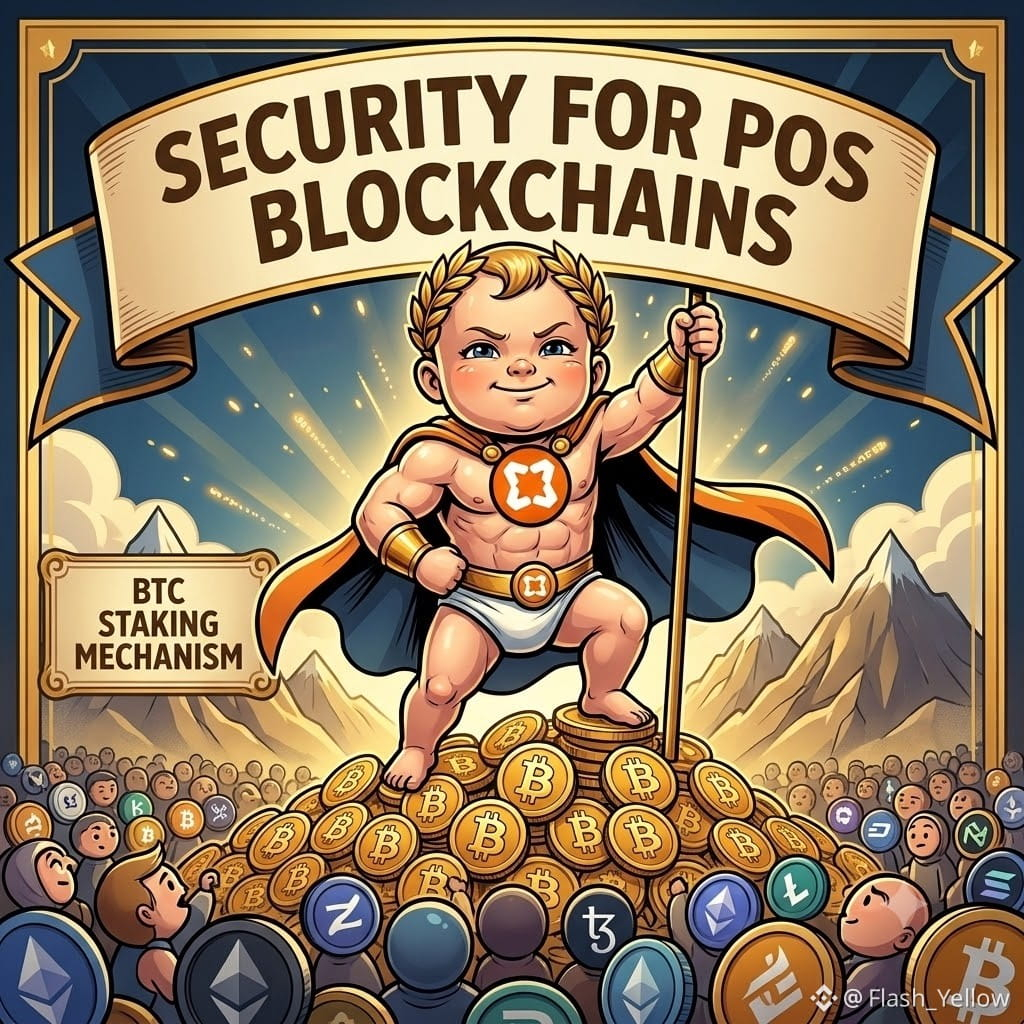
🔸 Dunia kripto kembali dikejutkan dengan inovasi besar melalui kehadiran Babylon (BABY). Proyek revolusioner ini menghadirkan solusi terdepan yang memungkinkan staking Bitcoin secara kustodi mandiri (self-custodial) langsung di jaringan Bitcoin guna meningkatkan keamanan blockchain Proof-of-Stake (PoS).
💡 Apa itu Babylon (BABY)?
🔸Babylon hadir sebagai solusi bagi pemegang Bitcoin untuk memaksimalkan aset mereka tanpa risiko pihak ketiga yang rumit. Dengan protokol trustless berbasis Bitcoin Staking, ekosistem ini menjembatani likuiditas dan keamanan Bitcoin ke dalam jaringan berbasis PoS secara aman, transparan, dan efisien. Token BABY sendiri memegang peran krusial sebagai utilitas transaksi, tata kelola (governance), hingga penguatan keamanan jaringan.
#baby @babylonlabs_io #BinanceSquare #CryptoStaking
$BABY
🔸 Dunia kripto kembali dikejutkan dengan inovasi besar melalui kehadiran Babylon (BABY). Proyek revolusioner ini menghadirkan solusi terdepan yang memungkinkan staking Bitcoin secara kustodi mandiri (self-custodial) langsung di jaringan Bitcoin guna meningkatkan keamanan blockchain Proof-of-Stake (PoS).
💡 Apa itu Babylon (BABY)?
🔸Babylon hadir sebagai solusi bagi pemegang Bitcoin untuk memaksimalkan aset mereka tanpa risiko pihak ketiga yang rumit. Dengan protokol trustless berbasis Bitcoin Staking, ekosistem ini menjembatani likuiditas dan keamanan Bitcoin ke dalam jaringan berbasis PoS secara aman, transparan, dan efisien. Token BABY sendiri memegang peran krusial sebagai utilitas transaksi, tata kelola (governance), hingga penguatan keamanan jaringan.
#baby @BabylonLabs_io #BinanceSquare #CryptoStaking
$BABY
💡 Apa itu Babylon (BABY)?
🔸Babylon hadir sebagai solusi bagi pemegang Bitcoin untuk memaksimalkan aset mereka tanpa risiko pihak ketiga yang rumit. Dengan protokol trustless berbasis Bitcoin Staking, ekosistem ini menjembatani likuiditas dan keamanan Bitcoin ke dalam jaringan berbasis PoS secara aman, transparan, dan efisien. Token BABY sendiri memegang peran krusial sebagai utilitas transaksi, tata kelola (governance), hingga penguatan keamanan jaringan.
#baby @BabylonLabs_io #BinanceSquare #CryptoStaking
$BABY
188
Everyone thinks institutional staking only brings upside, but actually it creates a massive liquidity trap that most retail investors completely overlook.
Most traders end up trapped during sharp market corrections because they lock their capital away without realizing how inflexible large-scale staking really is.
Think of it like parking your car in a multi-story garage with only a single exit lane. When a firm hits 97% of its 5% $ETH treasury target and immediately locks up around 87% of those holdings, they are essentially taking massive liquidity off the table. On paper, earning yield seems like free money, but it also means those assets cannot react instantly if the market turns volatile.
When large institutions lock away nearly all their $ETH reserves, it creates an artificial supply squeeze while simultaneously reducing their buffer for sudden redemptions. If broader market pressure hits assets like $BTC or the wider ecosystem, being illiquid turns from a yield strategy into a serious risk exposure.
How do you manage the trade-off between earning staking yield and keeping your assets liquid?
#Ethereum #CryptoStaking #BinanceSquare
Everyone thinks institutional staking only brings upside, but actually it creates a massive liquidity trap that most retail investors completely overlook.
Most traders end up trapped during sharp market corrections because they lock their capital away without realizing how inflexible large-scale staking really is.
Think of it like parking your car in a multi-story garage with only a single exit lane. When a firm hits 97% of its 5% $ETH treasury target and immediately locks up around 87% of those holdings, they are essentially taking massive liquidity off the table. On paper, earning yield seems like free money, but it also means those assets cannot react instantly if the market turns volatile.
When large institutions lock away nearly all their $ETH reserves, it creates an artificial supply squeeze while simultaneously reducing their buffer for sudden redemptions. If broader market pressure hits assets like $BTC or the wider ecosystem, being illiquid turns from a yield strategy into a serious risk exposure.
How do you manage the trade-off between earning staking yield and keeping your assets liquid?
#Ethereum #CryptoStaking #BinanceSquare
Most traders end up trapped during sharp market corrections because they lock their capital away without realizing how inflexible large-scale staking really is.
Think of it like parking your car in a multi-story garage with only a single exit lane. When a firm hits 97% of its 5% $ETH treasury target and immediately locks up around 87% of those holdings, they are essentially taking massive liquidity off the table. On paper, earning yield seems like free money, but it also means those assets cannot react instantly if the market turns volatile.
When large institutions lock away nearly all their $ETH reserves, it creates an artificial supply squeeze while simultaneously reducing their buffer for sudden redemptions. If broader market pressure hits assets like $BTC or the wider ecosystem, being illiquid turns from a yield strategy into a serious risk exposure.
How do you manage the trade-off between earning staking yield and keeping your assets liquid?
#Ethereum #CryptoStaking #BinanceSquare

111

·
--
Bullish
Verified
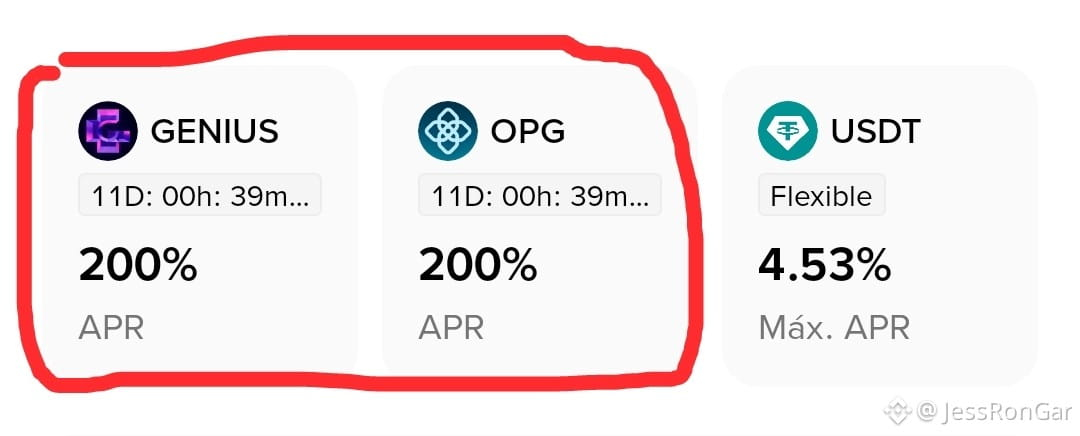
🚨🚨200% APR for GENIUS🚨🚨👀👇
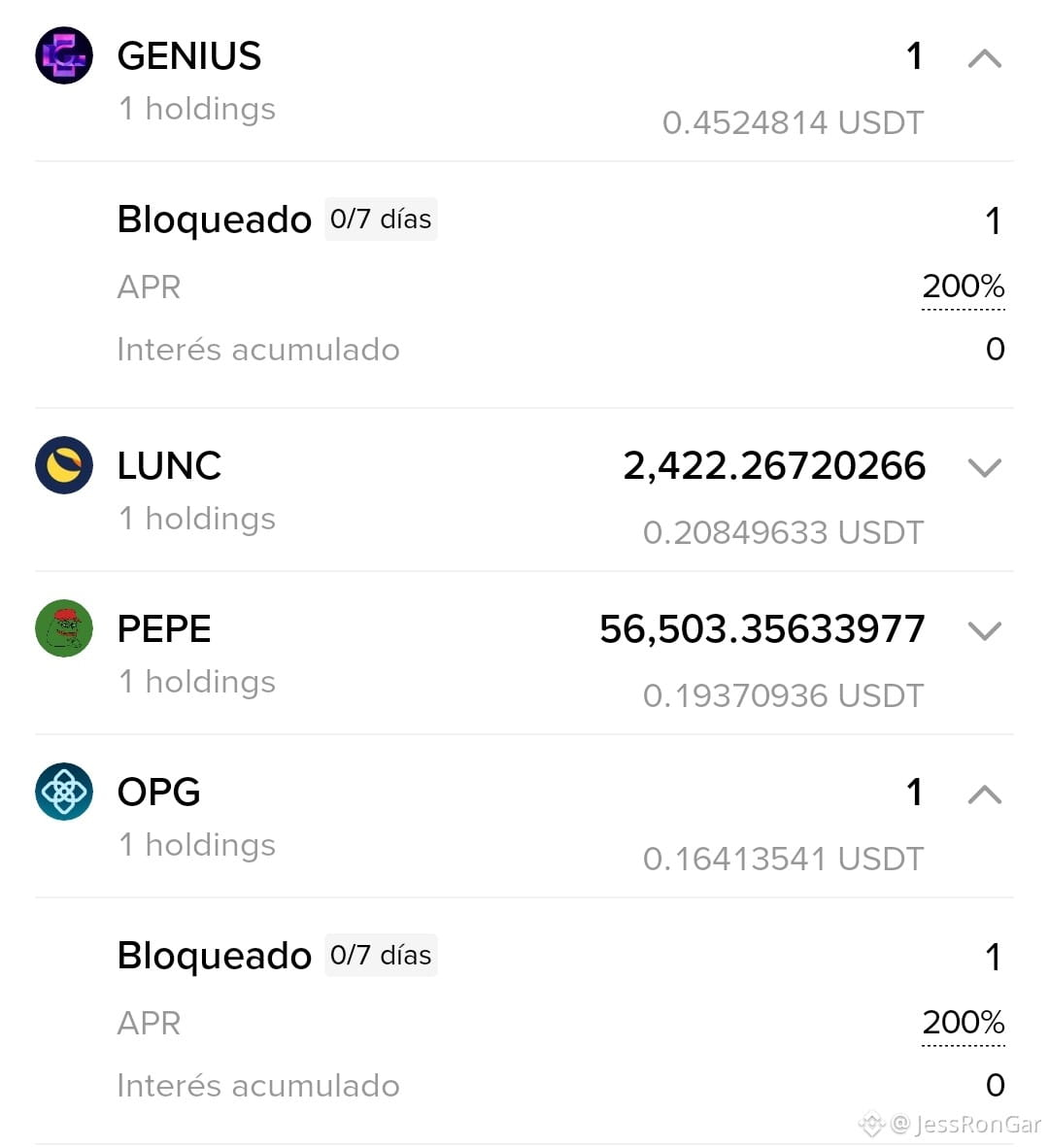
What a great opportunity I just found in the crypto market! The GENIUS ecosystem is breaking boundaries, and I have made the decision to take advantage of its incredible staking offer.
With a spectacular 200% APR available for a limited time, it is the perfect moment to put my assets to work and maximize yields aggressively.
There are just over 11 days left to get this percentage before it expires. I am securing my position in a project with huge potential, accumulating rewards at an accelerated pace. I am not letting this chance slip away!
#GeniusToken #CryptoStaking #PassiveIncome #JessRonGar
Note: This is not financial advice. DYOR (Do Your Own Research).🧐🫰
🚨🚨200% APR for GENIUS🚨🚨👀👇
What a great opportunity I just found in the crypto market! The GENIUS ecosystem is breaking boundaries, and I have made the decision to take advantage of its incredible staking offer.
With a spectacular 200% APR available for a limited time, it is the perfect moment to put my assets to work and maximize yields aggressively.
There are just over 11 days left to get this percentage before it expires. I am securing my position in a project with huge potential, accumulating rewards at an accelerated pace. I am not letting this chance slip away!
#GeniusToken #CryptoStaking #PassiveIncome #JessRonGar
Note: This is not financial advice. DYOR (Do Your Own Research).🧐🫰
What a great opportunity I just found in the crypto market! The GENIUS ecosystem is breaking boundaries, and I have made the decision to take advantage of its incredible staking offer.
With a spectacular 200% APR available for a limited time, it is the perfect moment to put my assets to work and maximize yields aggressively.
There are just over 11 days left to get this percentage before it expires. I am securing my position in a project with huge potential, accumulating rewards at an accelerated pace. I am not letting this chance slip away!
#GeniusToken #CryptoStaking #PassiveIncome #JessRonGar
Note: This is not financial advice. DYOR (Do Your Own Research).🧐🫰
2
668


·
--
Article
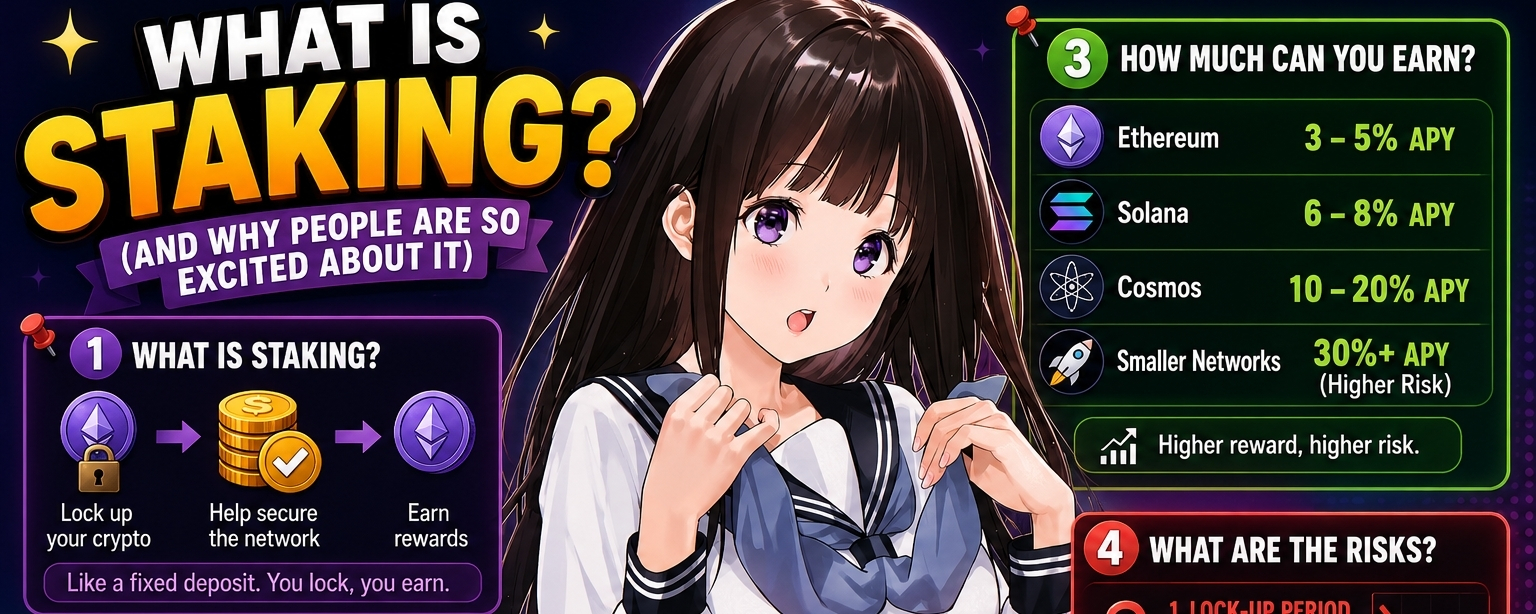
What is Staking? ( And Why people Are So Excited About it)You've probably heard people say "I'm staking my crypto."
But what does that actually mean?
Let me break it down in the simplest way possible.
📍 WHAT IS STAKING?
Staking is like putting your money in a fixed deposit at a bank.
You lock up your crypto for a period of time.
In return, the network rewards you with more crypto.
That's it. Simple.
📍 HOW DOES IT WORK?
Some blockchains use a system called "Proof of Stake."
Instead of miners using computers to solve puzzles (like Bitcoin), validators are chosen based on how much crypto they've locked up.
When you stake your coins, you're helping the network stay secure and process transactions.
For your help, you earn rewards.
📍 HOW MUCH CAN YOU EARN?
It depends on the network.
- Ethereum: Around 3-5% APY
- Solana: Around 6-8% APY
- Cosmos: Around 10-20% APY
- Some smaller networks: 30%+ (but higher risk)
The higher the reward, the higher the risk.
📍 WHAT ARE THE RISKS?
1. Your coins get locked up for a period of time. You can't sell if the price drops.
2. If the network fails or gets hacked, you could lose your stake.
3. Some networks have "slashing" – if a validator misbehaves, you lose part of your stake.
It's not risk-free. But it's safer than many other DeFi activities.
📍 HOW TO START STAKING
1. Choose a network that supports staking (Ethereum, Solana, Cardano, etc.)
2. Buy the coin on an exchange
3. Transfer it to a wallet that supports staking
4. Choose a validator (or stake directly on the exchange)
5. Lock your coins and earn rewards
📍 MY EXPERIENCE
I've been staking Ethereum, Solana, and some smaller coins for a couple of years.
It's not life-changing money, but it's a steady stream of passive income.
The best part? I don't have to do anything. My crypto works while I sleep.
I check once a month to collect rewards. That's it.
📍 BOTTOM LINE
Staking is a great way to earn passive income in crypto.
But don't stake coins you might need to sell quickly. Lock-up periods are real.
Research the network's reward rate, lock-up period, and risks before you commit.
Have you ever staked any crypto? How was your experience?
$BTC $ETH
#CryptoStaking #PassiveIncome #ProofOfStake #Ayesha_Queen #BOKWarnsSingleStockLeveragedETFRisks $BNB
What is Staking? ( And Why people Are So Excited About it)
You've probably heard people say "I'm staking my crypto."
But what does that actually mean?
Let me break it down in the simplest way possible.
📍 WHAT IS STAKING?
Staking is like putting your money in a fixed deposit at a bank.
You lock up your crypto for a period of time.
In return, the network rewards you with more crypto.
That's it. Simple.
📍 HOW DOES IT WORK?
Some blockchains use a system called "Proof of Stake."
Instead of miners using computers to solve puzzles (like Bitcoin), validators are chosen based on how much crypto they've locked up.
When you stake your coins, you're helping the network stay secure and process transactions.
For your help, you earn rewards.
📍 HOW MUCH CAN YOU EARN?
It depends on the network.
- Ethereum: Around 3-5% APY
- Solana: Around 6-8% APY
- Cosmos: Around 10-20% APY
- Some smaller networks: 30%+ (but higher risk)
The higher the reward, the higher the risk.
📍 WHAT ARE THE RISKS?
1. Your coins get locked up for a period of time. You can't sell if the price drops.
2. If the network fails or gets hacked, you could lose your stake.
3. Some networks have "slashing" – if a validator misbehaves, you lose part of your stake.
It's not risk-free. But it's safer than many other DeFi activities.
📍 HOW TO START STAKING
1. Choose a network that supports staking (Ethereum, Solana, Cardano, etc.)
2. Buy the coin on an exchange
3. Transfer it to a wallet that supports staking
4. Choose a validator (or stake directly on the exchange)
5. Lock your coins and earn rewards
📍 MY EXPERIENCE
I've been staking Ethereum, Solana, and some smaller coins for a couple of years.
It's not life-changing money, but it's a steady stream of passive income.
The best part? I don't have to do anything. My crypto works while I sleep.
I check once a month to collect rewards. That's it.
📍 BOTTOM LINE
Staking is a great way to earn passive income in crypto.
But don't stake coins you might need to sell quickly. Lock-up periods are real.
Research the network's reward rate, lock-up period, and risks before you commit.
Have you ever staked any crypto? How was your experience?
$BTC $ETH
#CryptoStaking #PassiveIncome #ProofOfStake #Ayesha_Queen #BOKWarnsSingleStockLeveragedETFRisks $BNB
But what does that actually mean?
Let me break it down in the simplest way possible.
📍 WHAT IS STAKING?
Staking is like putting your money in a fixed deposit at a bank.
You lock up your crypto for a period of time.
In return, the network rewards you with more crypto.
That's it. Simple.
📍 HOW DOES IT WORK?
Some blockchains use a system called "Proof of Stake."
Instead of miners using computers to solve puzzles (like Bitcoin), validators are chosen based on how much crypto they've locked up.
When you stake your coins, you're helping the network stay secure and process transactions.
For your help, you earn rewards.
📍 HOW MUCH CAN YOU EARN?
It depends on the network.
- Ethereum: Around 3-5% APY
- Solana: Around 6-8% APY
- Cosmos: Around 10-20% APY
- Some smaller networks: 30%+ (but higher risk)
The higher the reward, the higher the risk.
📍 WHAT ARE THE RISKS?
1. Your coins get locked up for a period of time. You can't sell if the price drops.
2. If the network fails or gets hacked, you could lose your stake.
3. Some networks have "slashing" – if a validator misbehaves, you lose part of your stake.
It's not risk-free. But it's safer than many other DeFi activities.
📍 HOW TO START STAKING
1. Choose a network that supports staking (Ethereum, Solana, Cardano, etc.)
2. Buy the coin on an exchange
3. Transfer it to a wallet that supports staking
4. Choose a validator (or stake directly on the exchange)
5. Lock your coins and earn rewards
📍 MY EXPERIENCE
I've been staking Ethereum, Solana, and some smaller coins for a couple of years.
It's not life-changing money, but it's a steady stream of passive income.
The best part? I don't have to do anything. My crypto works while I sleep.
I check once a month to collect rewards. That's it.
📍 BOTTOM LINE
Staking is a great way to earn passive income in crypto.
But don't stake coins you might need to sell quickly. Lock-up periods are real.
Research the network's reward rate, lock-up period, and risks before you commit.
Have you ever staked any crypto? How was your experience?
$BTC $ETH
#CryptoStaking #PassiveIncome #ProofOfStake #Ayesha_Queen #BOKWarnsSingleStockLeveragedETFRisks $BNB
2
3
147
·
--
Most retail investors do not realize that buying into a staking ETF exposes them to slashing risks where their principal investment can be permanently burned by the blockchain. Many traders buy these yield-bearing products thinking it is free money, only to realize too late that their capital is locked up during market crashes. This leaves them helpless as they watch their portfolio value drop without being able to exit.
Grayscale just filed updated SEC documents for its Ethereum Staking Mini ETF, aiming to bring yield to mainstream investors. But unlike holding spot $ETH directly, staking through a massive institutional fund pools validator risk. If their node operators make a technical mistake or go offline during a critical network upgrade, the protocol penalizes them, directly hitting the ETF's net asset value.
The bigger danger lies in the exit queues. During a market panic, unstaking Ethereum can take days or weeks. If ETF holders dump their shares, the fund cannot instantly liquidate the underlying staked $ETH to pay them out, which could cause the ETF price to trade at a massive discount compared to the actual spot price. This is a bottleneck that does not exist with liquid staking alternatives like $LDO, making the ETF wrapper a double-edged sword.
Do you think the yield is worth taking on these extra liquidity risks?
#Ethereum #CryptoStaking #ETFs
Most retail investors do not realize that buying into a staking ETF exposes them to slashing risks where their principal investment can be permanently burned by the blockchain. Many traders buy these yield-bearing products thinking it is free money, only to realize too late that their capital is locked up during market crashes. This leaves them helpless as they watch their portfolio value drop without being able to exit.
Grayscale just filed updated SEC documents for its Ethereum Staking Mini ETF, aiming to bring yield to mainstream investors. But unlike holding spot $ETH directly, staking through a massive institutional fund pools validator risk. If their node operators make a technical mistake or go offline during a critical network upgrade, the protocol penalizes them, directly hitting the ETF's net asset value.
The bigger danger lies in the exit queues. During a market panic, unstaking Ethereum can take days or weeks. If ETF holders dump their shares, the fund cannot instantly liquidate the underlying staked $ETH to pay them out, which could cause the ETF price to trade at a massive discount compared to the actual spot price. This is a bottleneck that does not exist with liquid staking alternatives like $LDO , making the ETF wrapper a double-edged sword.
Do you think the yield is worth taking on these extra liquidity risks?
#Ethereum #CryptoStaking #ETFs
Grayscale just filed updated SEC documents for its Ethereum Staking Mini ETF, aiming to bring yield to mainstream investors. But unlike holding spot $ETH directly, staking through a massive institutional fund pools validator risk. If their node operators make a technical mistake or go offline during a critical network upgrade, the protocol penalizes them, directly hitting the ETF's net asset value.
The bigger danger lies in the exit queues. During a market panic, unstaking Ethereum can take days or weeks. If ETF holders dump their shares, the fund cannot instantly liquidate the underlying staked $ETH to pay them out, which could cause the ETF price to trade at a massive discount compared to the actual spot price. This is a bottleneck that does not exist with liquid staking alternatives like $LDO , making the ETF wrapper a double-edged sword.
Do you think the yield is worth taking on these extra liquidity risks?
#Ethereum #CryptoStaking #ETFs
72
·
--
📊 River 每日数据播报 | 2026-07-18
━━━ 价格 💰 ━━━
• $RIVER: $3.38 (+$0.07)
• $RIVERpts: $0.00164055 (-0.00000228)
━━━ 2.0 质押 🏦 ━━━
• 最高APR(12月): 10.55%
• 总质押: 1,334,114.54 RIVER
- 3月: 17,765.47 (1.33%)
- 6月: 521,827.82 (39.11%)
- 9月: 319,436.93 (23.94%)
- 12月: 475,084.30 (35.61%)
• 总解质押: 596,975.79
━━━ 3.0 质押 ✨ ━━━
• 总质押: 83,616.60 RIVER
• 8周期·折扣3~10折
• 最热周期8(10折): 28,209.31 (33.74%)
━━━ 4.0 质押 ✨ ━━━
• 总质押: 14,412.70 RIVER
• 8周期·折扣3~10折
• 最热周期8(10折): 9,322.99 (64.69%)
━━━ PTS 转换 🔄 ━━━
• 已转换积分: 5,469,505.35
• 已转换RIVER: 14,132.44
• 进度(30M目标): 0.05%
━━━ 4fun 嘴撸 💬 ━━━
• 参与人数: 137,552
#River #RIVER #DeFi #CryptoStaking
📊 River 每日数据播报 | 2026-07-18
━━━ 价格 💰 ━━━
• $RIVER : $3.38 (+$0.07)
• $RIVERpts: $0.00164055 (-0.00000228)
━━━ 2.0 质押 🏦 ━━━
• 最高APR(12月): 10.55%
• 总质押: 1,334,114.54 RIVER
- 3月: 17,765.47 (1.33%)
- 6月: 521,827.82 (39.11%)
- 9月: 319,436.93 (23.94%)
- 12月: 475,084.30 (35.61%)
• 总解质押: 596,975.79
━━━ 3.0 质押 ✨ ━━━
• 总质押: 83,616.60 RIVER
• 8周期·折扣3~10折
• 最热周期8(10折): 28,209.31 (33.74%)
━━━ 4.0 质押 ✨ ━━━
• 总质押: 14,412.70 RIVER
• 8周期·折扣3~10折
• 最热周期8(10折): 9,322.99 (64.69%)
━━━ PTS 转换 🔄 ━━━
• 已转换积分: 5,469,505.35
• 已转换RIVER: 14,132.44
• 进度(30M目标): 0.05%
━━━ 4fun 嘴撸 💬 ━━━
• 参与人数: 137,552
#River #RIVER #DeFi #CryptoStaking
━━━ 价格 💰 ━━━
• $RIVER : $3.38 (+$0.07)
• $RIVERpts: $0.00164055 (-0.00000228)
━━━ 2.0 质押 🏦 ━━━
• 最高APR(12月): 10.55%
• 总质押: 1,334,114.54 RIVER
- 3月: 17,765.47 (1.33%)
- 6月: 521,827.82 (39.11%)
- 9月: 319,436.93 (23.94%)
- 12月: 475,084.30 (35.61%)
• 总解质押: 596,975.79
━━━ 3.0 质押 ✨ ━━━
• 总质押: 83,616.60 RIVER
• 8周期·折扣3~10折
• 最热周期8(10折): 28,209.31 (33.74%)
━━━ 4.0 质押 ✨ ━━━
• 总质押: 14,412.70 RIVER
• 8周期·折扣3~10折
• 最热周期8(10折): 9,322.99 (64.69%)
━━━ PTS 转换 🔄 ━━━
• 已转换积分: 5,469,505.35
• 已转换RIVER: 14,132.44
• 进度(30M目标): 0.05%
━━━ 4fun 嘴撸 💬 ━━━
• 参与人数: 137,552
#River #RIVER #DeFi #CryptoStaking
110
Log in to explore more content
Join global crypto users on Binance Square
⚡️ Get latest and useful information about crypto.
💬 Trusted by the world’s largest crypto exchange.
👍 Discover real insights from verified creators.
Email / Phone number
Trending Topics
1
#BinancePick
2.8M views
148,072 Discussing
2
#EarningsSeason
5.1M views
25,277 Discussing
3
#AnthropicTTMRevenueGrewAbout1200%
3,125 views
145 Discussing
4
#AnthropicS1ExpectedToday
6,305 views
150 Discussing
5
#SouthKoreaReportedlyWeighsFourthCryptoTaxDelay
14,586 views
304 Discussing
6
#FranklinTempletonFilesForTwoDividendToBitcoinETFs
21,853 views
419 Discussing
7
#StrategyMSTRSurpassesNasdaqInMarketCap
17,137 views
320 Discussing
8
#CanadaProposesStablecoinRedemptionWithin3BusinessDays
773 views
32 Discussing
9
#ElectrumWalletBugLetRogueServersStealFunds
20,906 views
410 Discussing
10
#ArgentineCourtDismissesLIBRACaseAgainstMilei
32,091 views
496 Discussing