

#cryptoetf
cryptoetf
944,065 views
3,370 Discussing
Hot
Latest

#PEPEETF 👉 PEPE is caught between two powerful forces: whales buying and sellers dumping. 🐸
A major wallet recently acquired 43.3 billion PEPE, while Canary Capital’s spot PEPE ETF filing remains under SEC review. But 2.11 trillion PEPE also entered exchanges between October 19–22, adding near-term sell pressure.
{spot}(PEPEUSDT)
With the top 100 wallets controlling about 77% of supply, any ETF headline could trigger violent volatility. Approval may bring institutional demand; rejection could crush the hype.
Would a PEPE ETF approval send it to a new high, or is the market already pricing it in? 👇
$PEPE #CoinVahini #Memecoins #CryptoETF #WhaleAlert
#PEPEETF 👉 PEPE is caught between two powerful forces: whales buying and sellers dumping. 🐸
A major wallet recently acquired 43.3 billion PEPE, while Canary Capital’s spot PEPE ETF filing remains under SEC review. But 2.11 trillion PEPE also entered exchanges between October 19–22, adding near-term sell pressure.
With the top 100 wallets controlling about 77% of supply, any ETF headline could trigger violent volatility. Approval may bring institutional demand; rejection could crush the hype.
Would a PEPE ETF approval send it to a new high, or is the market already pricing it in? 👇
$PEPE #CoinVahini #Memecoins #CryptoETF #WhaleAlert
A major wallet recently acquired 43.3 billion PEPE, while Canary Capital’s spot PEPE ETF filing remains under SEC review. But 2.11 trillion PEPE also entered exchanges between October 19–22, adding near-term sell pressure.
With the top 100 wallets controlling about 77% of supply, any ETF headline could trigger violent volatility. Approval may bring institutional demand; rejection could crush the hype.
Would a PEPE ETF approval send it to a new high, or is the market already pricing it in? 👇
$PEPE #CoinVahini #Memecoins #CryptoETF #WhaleAlert
68

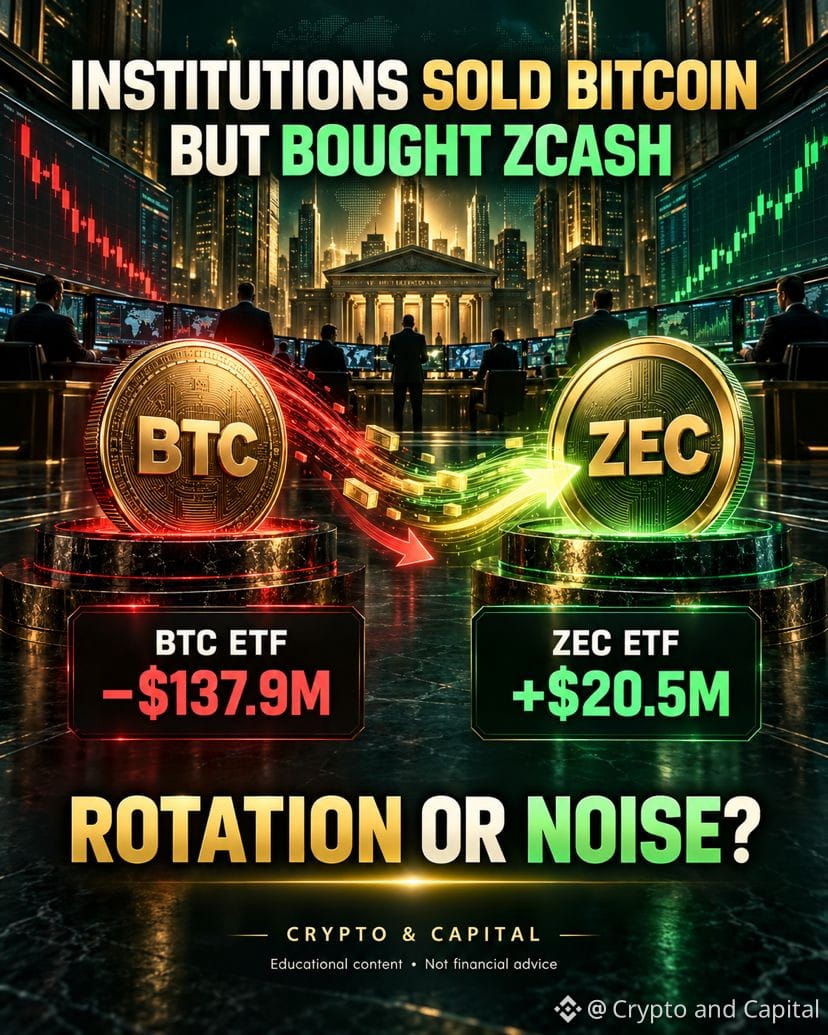
🚨 INSTITUTIONS SOLD BITCOIN—BUT QUIETLY BOUGHT ZCASH
US spot Bitcoin ETFs recorded approximately $138 million in net outflows on Friday, following Thursday’s much larger $636 million withdrawal.
But the movement was not entirely away from crypto:
🟢 $ZEC ETFs attracted approximately $20.5M🟢 $ETH ETFs recorded a modest $4.4M inflow⚪ $XRP ETFs remained flat🔴 $BTC ETFs lost approximately $137.9M
So, what could this mean?
It may reflect selective rotation rather than complete institutional surrender. Investors appear increasingly willing to distinguish between individual crypto assets instead of treating the market as one trade.
However, one day of inflows does not establish a lasting trend. For $ZEC, watch whether ETF demand continues alongside rising trading volume and sustainable price strength.
The real opportunity may not be following yesterday’s inflow, it may be identifying where institutional demand is becoming consistent.
Is this the beginning of a privacy-coin rotation, or simply temporary ETF noise?
👇 Would you choose $BTC, $ETH, XRP or ZEC at current levels?
#Zcash #XRP #CryptoETF #CryptoInvesting #MarketAnalysis
🚨 INSTITUTIONS SOLD BITCOIN—BUT QUIETLY BOUGHT ZCASH
US spot Bitcoin ETFs recorded approximately $138 million in net outflows on Friday, following Thursday’s much larger $636 million withdrawal.
But the movement was not entirely away from crypto:
🟢 $ZEC ETFs attracted approximately $20.5M🟢 $ETH ETFs recorded a modest $4.4M inflow⚪ $XRP ETFs remained flat🔴 $BTC ETFs lost approximately $137.9M
So, what could this mean?
It may reflect selective rotation rather than complete institutional surrender. Investors appear increasingly willing to distinguish between individual crypto assets instead of treating the market as one trade.
However, one day of inflows does not establish a lasting trend. For $ZEC , watch whether ETF demand continues alongside rising trading volume and sustainable price strength.
The real opportunity may not be following yesterday’s inflow, it may be identifying where institutional demand is becoming consistent.
Is this the beginning of a privacy-coin rotation, or simply temporary ETF noise?
👇 Would you choose $BTC, $ETH , XRP or ZEC at current levels?
#Zcash #XRP #CryptoETF #CryptoInvesting #MarketAnalysis
US spot Bitcoin ETFs recorded approximately $138 million in net outflows on Friday, following Thursday’s much larger $636 million withdrawal.
But the movement was not entirely away from crypto:
🟢 $ZEC ETFs attracted approximately $20.5M🟢 $ETH ETFs recorded a modest $4.4M inflow⚪ $XRP ETFs remained flat🔴 $BTC ETFs lost approximately $137.9M
So, what could this mean?
It may reflect selective rotation rather than complete institutional surrender. Investors appear increasingly willing to distinguish between individual crypto assets instead of treating the market as one trade.
However, one day of inflows does not establish a lasting trend. For $ZEC , watch whether ETF demand continues alongside rising trading volume and sustainable price strength.
The real opportunity may not be following yesterday’s inflow, it may be identifying where institutional demand is becoming consistent.
Is this the beginning of a privacy-coin rotation, or simply temporary ETF noise?
👇 Would you choose $BTC, $ETH , XRP or ZEC at current levels?
#Zcash #XRP #CryptoETF #CryptoInvesting #MarketAnalysis
239

·
--
?? BREAKING: Ripple is eyeing a slice of the $256B ETF market. While others sleep on the legal win, $XRP is gearing up for massive institutional inflow. ?? #XRP #CryptoETF #BullRun
?? BREAKING: Ripple is eyeing a slice of the $256B ETF market. While others sleep on the legal win, $XRP is gearing up for massive institutional inflow. ?? #XRP #CryptoETF #BullRun
4

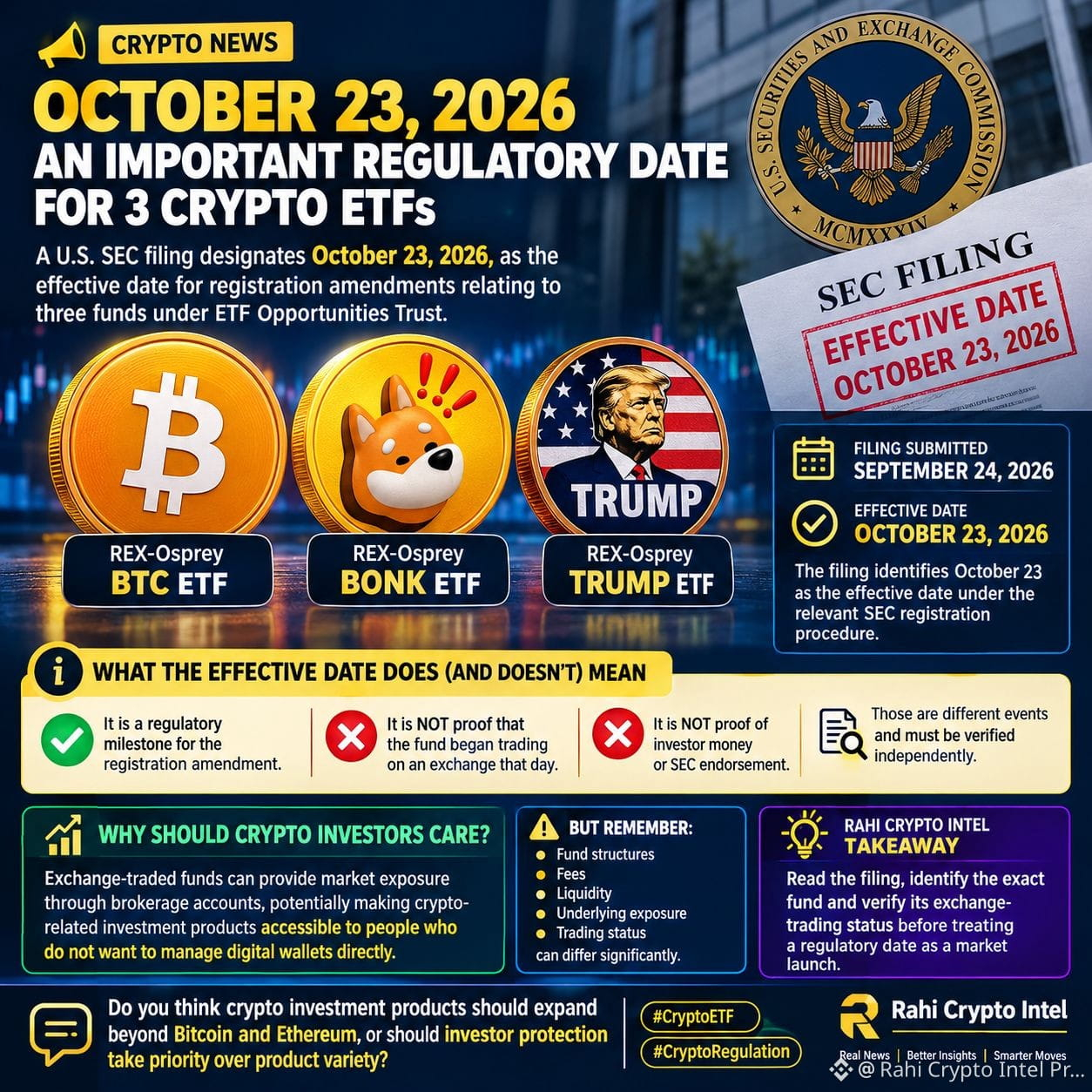
October 23 is an important regulatory date for three crypto-related ETFs—but investors need to understand exactly what it means. 👀
A US Securities and Exchange Commission filing designates October 23, 2026, as the effective date for registration amendments relating to three funds under ETF Opportunities Trust:
🔹 REX-Osprey BTC ETF
🔹 REX-Osprey BONK ETF
🔹 REX-Osprey TRUMP ETF
The filing was submitted on September 24 and identifies October 23 as the effective date under the relevant SEC registration procedure.
Here’s the detail that matters.
An effective registration statement is a regulatory milestone. It is not, by itself, proof that a fund began trading on an exchange that day, attracted investor money or received a separate endorsement from the SEC.
Those are different events and must be verified independently.
Why should crypto investors care?
Exchange-traded funds can provide market exposure through brokerage accounts, potentially making crypto-related investment products accessible to people who do not want to manage digital wallets directly.
However, fund structures, fees, liquidity, underlying exposure and trading status can differ significantly.
Rahi Crypto Intel takeaway: Read the filing, identify the exact fund and verify its exchange-trading status before treating a regulatory date as a market launch.
Do you think crypto investment products should expand beyond Bitcoin and Ethereum, or should investor protection take priority over product variety?
#CryptoETF #CryptoRegulation
$BONK
{spot}(BONKUSDT)
$TRUMP
{future}(TRUMPUSDT)
$ARK
{future}(ARKUSDT)
October 23 is an important regulatory date for three crypto-related ETFs—but investors need to understand exactly what it means. 👀
A US Securities and Exchange Commission filing designates October 23, 2026, as the effective date for registration amendments relating to three funds under ETF Opportunities Trust:
🔹 REX-Osprey BTC ETF
🔹 REX-Osprey BONK ETF
🔹 REX-Osprey TRUMP ETF
The filing was submitted on September 24 and identifies October 23 as the effective date under the relevant SEC registration procedure.
Here’s the detail that matters.
An effective registration statement is a regulatory milestone. It is not, by itself, proof that a fund began trading on an exchange that day, attracted investor money or received a separate endorsement from the SEC.
Those are different events and must be verified independently.
Why should crypto investors care?
Exchange-traded funds can provide market exposure through brokerage accounts, potentially making crypto-related investment products accessible to people who do not want to manage digital wallets directly.
However, fund structures, fees, liquidity, underlying exposure and trading status can differ significantly.
Rahi Crypto Intel takeaway: Read the filing, identify the exact fund and verify its exchange-trading status before treating a regulatory date as a market launch.
Do you think crypto investment products should expand beyond Bitcoin and Ethereum, or should investor protection take priority over product variety?
#CryptoETF #CryptoRegulation
$BONK
$TRUMP
$ARK
A US Securities and Exchange Commission filing designates October 23, 2026, as the effective date for registration amendments relating to three funds under ETF Opportunities Trust:
🔹 REX-Osprey BTC ETF
🔹 REX-Osprey BONK ETF
🔹 REX-Osprey TRUMP ETF
The filing was submitted on September 24 and identifies October 23 as the effective date under the relevant SEC registration procedure.
Here’s the detail that matters.
An effective registration statement is a regulatory milestone. It is not, by itself, proof that a fund began trading on an exchange that day, attracted investor money or received a separate endorsement from the SEC.
Those are different events and must be verified independently.
Why should crypto investors care?
Exchange-traded funds can provide market exposure through brokerage accounts, potentially making crypto-related investment products accessible to people who do not want to manage digital wallets directly.
However, fund structures, fees, liquidity, underlying exposure and trading status can differ significantly.
Rahi Crypto Intel takeaway: Read the filing, identify the exact fund and verify its exchange-trading status before treating a regulatory date as a market launch.
Do you think crypto investment products should expand beyond Bitcoin and Ethereum, or should investor protection take priority over product variety?
#CryptoETF #CryptoRegulation
$BONK
$TRUMP
$ARK
AngelOfCrypto_-:
it's amazing
2
383
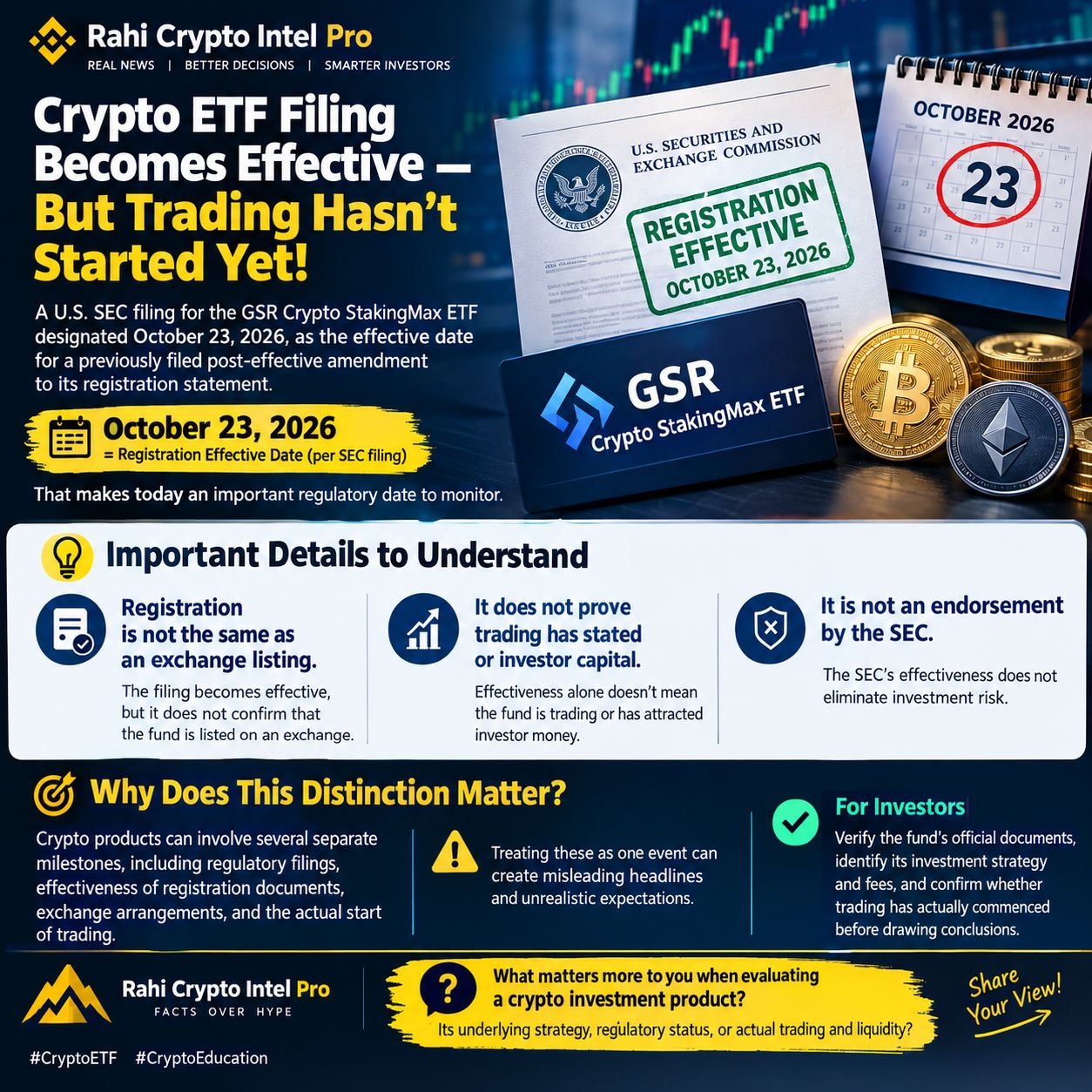
Crypto investment products continue to evolve, but there’s an important difference between a fund’s registration becoming effective and its shares actually beginning to trade. 👀
A U.S. SEC filing for the GSR Crypto StakingMax ETF designated October 23, 2026, as the effective date for a previously filed post-effective amendment to its registration statement.
That makes today an important regulatory date to monitor.
But here’s the detail investors should understand:
🔹 Registration effectiveness is not the same as a confirmed exchange listing.
🔹 It does not, by itself, prove that trading has started or that the fund has attracted investor capital.
🔹 It is not an endorsement by the SEC and does not eliminate investment risk.
Why does this distinction matter?
Crypto products can involve several separate milestones, including regulatory filings, effectiveness of registration documents, exchange arrangements, and the actual start of trading.
Treating these as one event can create misleading headlines and unrealistic expectations.
For investors, the useful approach is to verify the fund’s official documents, identify its investment strategy and fees, and confirm whether trading has actually commenced before drawing conclusions.
At Rahi Crypto Intel, we focus on what a filing confirms—not what social media speculation says it means.
What matters more to you when evaluating a crypto investment product: its underlying strategy, regulatory status, or actual trading and liquidity?
#CryptoETF #CryptoEducation
$WLD
{future}(WLDUSDT)
$MOVR
{future}(MOVRUSDT)
$SPCXB
{spot}(SPCXBUSDT)
Crypto investment products continue to evolve, but there’s an important difference between a fund’s registration becoming effective and its shares actually beginning to trade. 👀
A U.S. SEC filing for the GSR Crypto StakingMax ETF designated October 23, 2026, as the effective date for a previously filed post-effective amendment to its registration statement.
That makes today an important regulatory date to monitor.
But here’s the detail investors should understand:
🔹 Registration effectiveness is not the same as a confirmed exchange listing.
🔹 It does not, by itself, prove that trading has started or that the fund has attracted investor capital.
🔹 It is not an endorsement by the SEC and does not eliminate investment risk.
Why does this distinction matter?
Crypto products can involve several separate milestones, including regulatory filings, effectiveness of registration documents, exchange arrangements, and the actual start of trading.
Treating these as one event can create misleading headlines and unrealistic expectations.
For investors, the useful approach is to verify the fund’s official documents, identify its investment strategy and fees, and confirm whether trading has actually commenced before drawing conclusions.
At Rahi Crypto Intel, we focus on what a filing confirms—not what social media speculation says it means.
What matters more to you when evaluating a crypto investment product: its underlying strategy, regulatory status, or actual trading and liquidity?
#CryptoETF #CryptoEducation
$WLD
$MOVR
$SPCXB
A U.S. SEC filing for the GSR Crypto StakingMax ETF designated October 23, 2026, as the effective date for a previously filed post-effective amendment to its registration statement.
That makes today an important regulatory date to monitor.
But here’s the detail investors should understand:
🔹 Registration effectiveness is not the same as a confirmed exchange listing.
🔹 It does not, by itself, prove that trading has started or that the fund has attracted investor capital.
🔹 It is not an endorsement by the SEC and does not eliminate investment risk.
Why does this distinction matter?
Crypto products can involve several separate milestones, including regulatory filings, effectiveness of registration documents, exchange arrangements, and the actual start of trading.
Treating these as one event can create misleading headlines and unrealistic expectations.
For investors, the useful approach is to verify the fund’s official documents, identify its investment strategy and fees, and confirm whether trading has actually commenced before drawing conclusions.
At Rahi Crypto Intel, we focus on what a filing confirms—not what social media speculation says it means.
What matters more to you when evaluating a crypto investment product: its underlying strategy, regulatory status, or actual trading and liquidity?
#CryptoETF #CryptoEducation
$WLD
$MOVR
$SPCXB
696

·
--
Bullish
🚨 GRAYSCALE JUST OPENED A NEW PATH FROM CRYPTO TO WALL STREET — BUT IS IT REALLY BULLISH?
Grayscale now allows eligible investors to exchange crypto directly for shares in 10 investment products
No need to sell tokens for cash first 👀
$BTC
{future}(BTCUSDT)
But look at the entry requirements
• Bitcoin fund — ~$364,800 minimum
• Ethereum fund — ~$232,300 minimum
• Solana fund — ~$80,300 minimum
Here's the part that changes how I read this news
When existing holders transfer crypto into an ETF, they're changing how they hold their exposure
That doesn't automatically mean new money is entering crypto
The opportunity is about custody, portfolio flexibility and potentially lower transaction friction
$SOL
{future}(SOLUSDT)
⚠️ The trade-off
You exchange direct token ownership for fund shares
Fees, eligibility, custody arrangements, tax treatment and differences between share prices and underlying asset value still matter
My takeaway
This is meaningful progress for institutional market infrastructure
But I wouldn't confuse easier access to ETFs with confirmed fresh buying pressure
A new route for capital isn't the same as new capital
$ETH
{future}(ETHUSDT)
#Grayscale #CryptoETF #InstitutionalCrypto
🚨 GRAYSCALE JUST OPENED A NEW PATH FROM CRYPTO TO WALL STREET — BUT IS IT REALLY BULLISH?
Grayscale now allows eligible investors to exchange crypto directly for shares in 10 investment products
No need to sell tokens for cash first 👀
$BTC
But look at the entry requirements
• Bitcoin fund — ~$364,800 minimum
• Ethereum fund — ~$232,300 minimum
• Solana fund — ~$80,300 minimum
Here's the part that changes how I read this news
When existing holders transfer crypto into an ETF, they're changing how they hold their exposure
That doesn't automatically mean new money is entering crypto
The opportunity is about custody, portfolio flexibility and potentially lower transaction friction
$SOL
⚠️ The trade-off
You exchange direct token ownership for fund shares
Fees, eligibility, custody arrangements, tax treatment and differences between share prices and underlying asset value still matter
My takeaway
This is meaningful progress for institutional market infrastructure
But I wouldn't confuse easier access to ETFs with confirmed fresh buying pressure
A new route for capital isn't the same as new capital
$ETH
#Grayscale #CryptoETF #InstitutionalCrypto
Grayscale now allows eligible investors to exchange crypto directly for shares in 10 investment products
No need to sell tokens for cash first 👀
$BTC
But look at the entry requirements
• Bitcoin fund — ~$364,800 minimum
• Ethereum fund — ~$232,300 minimum
• Solana fund — ~$80,300 minimum
Here's the part that changes how I read this news
When existing holders transfer crypto into an ETF, they're changing how they hold their exposure
That doesn't automatically mean new money is entering crypto
The opportunity is about custody, portfolio flexibility and potentially lower transaction friction
$SOL
⚠️ The trade-off
You exchange direct token ownership for fund shares
Fees, eligibility, custody arrangements, tax treatment and differences between share prices and underlying asset value still matter
My takeaway
This is meaningful progress for institutional market infrastructure
But I wouldn't confuse easier access to ETFs with confirmed fresh buying pressure
A new route for capital isn't the same as new capital
$ETH
#Grayscale #CryptoETF #InstitutionalCrypto

53

·
--
📰 Crypto News Update
Equity weakness could damp demand for bitcoin after biggest ETF inflows in a month
Why it matters: Institutional activity and fund flows can provide useful context about crypto-market participation.
Importance score: 9/10
Source: CoinDesk
Read the original report: https://www.coindesk.com/daybook-us/2026/10/20/equity-weakness-could-damp-demand-for-bitcoin-after-biggest-etf-inflows-in-a-month
#Bitcoin #CryptoETF #CryptoNews #Cryptocurrency #Blockchain
📰 Crypto News Update
Equity weakness could damp demand for bitcoin after biggest ETF inflows in a month
Why it matters: Institutional activity and fund flows can provide useful context about crypto-market participation.
Importance score: 9/10
Source: CoinDesk
Read the original report: https://www.coindesk.com/daybook-us/2026/10/20/equity-weakness-could-damp-demand-for-bitcoin-after-biggest-etf-inflows-in-a-month
#Bitcoin #CryptoETF #CryptoNews #Cryptocurrency #Blockchain
Equity weakness could damp demand for bitcoin after biggest ETF inflows in a month
Why it matters: Institutional activity and fund flows can provide useful context about crypto-market participation.
Importance score: 9/10
Source: CoinDesk
Read the original report: https://www.coindesk.com/daybook-us/2026/10/20/equity-weakness-could-damp-demand-for-bitcoin-after-biggest-etf-inflows-in-a-month
#Bitcoin #CryptoETF #CryptoNews #Cryptocurrency #Blockchain
32

·
--
泰国多家资管咨询加密ETF,亚洲机构入口再扩容
泰国SEC确认,多家资产管理公司就现货加密ETF进行了咨询,但截至目前尚无一家正式提交申请。据Cointelegraph报道,监管方无法确认这些咨询是否会转化为实际申报。
这件事的意义不在于“泰国要批ETF”,而在于亚洲机构资金入口的扩容路径正在被反复试探。过去一年多,加密ETF的叙事主要集中在美国与部分成熟市场;当东南亚监管开始被资管机构主动咨询,说明机构对合规化产品的需求已经外溢到更多司法辖区。
从基本面看,泰国SEC的表态本身是中性偏积极的:愿意接洽、愿意讨论,但尚未进入审批流程。这意味着落地时间、产品规模、底层资产范围都存在不确定性,市场容易把“咨询”误读为“即将获批”。
对市场可能的反应,短期更多是情绪层面的:亚洲加密ETF扩张的叙事被强化,相关板块可能获得一定关注度。但由于没有正式申请,缺乏可验证的催化节点,持续性需要观察。
反方因素与风险在于:咨询不等于申请,申请不等于获批。泰国监管对加密产品的态度历来谨慎,若后续没有明确时间表,热度可能快速回落。此外,即便获批,初期规模与流动性也未必能支撑显著的资金流入。
接下来值得观察的是:是否有资管机构在接下来数周内正式提交申请,以及泰国SEC是否给出更明确的审批框架或时间表。若只是停留在咨询层面,这一信号的实际权重将有限。
#Bitcoin #CryptoETF
以上为信息整理与个人分析,不构成投资建议。
泰国多家资管咨询加密ETF,亚洲机构入口再扩容
泰国SEC确认,多家资产管理公司就现货加密ETF进行了咨询,但截至目前尚无一家正式提交申请。据Cointelegraph报道,监管方无法确认这些咨询是否会转化为实际申报。
这件事的意义不在于“泰国要批ETF”,而在于亚洲机构资金入口的扩容路径正在被反复试探。过去一年多,加密ETF的叙事主要集中在美国与部分成熟市场;当东南亚监管开始被资管机构主动咨询,说明机构对合规化产品的需求已经外溢到更多司法辖区。
从基本面看,泰国SEC的表态本身是中性偏积极的:愿意接洽、愿意讨论,但尚未进入审批流程。这意味着落地时间、产品规模、底层资产范围都存在不确定性,市场容易把“咨询”误读为“即将获批”。
对市场可能的反应,短期更多是情绪层面的:亚洲加密ETF扩张的叙事被强化,相关板块可能获得一定关注度。但由于没有正式申请,缺乏可验证的催化节点,持续性需要观察。
反方因素与风险在于:咨询不等于申请,申请不等于获批。泰国监管对加密产品的态度历来谨慎,若后续没有明确时间表,热度可能快速回落。此外,即便获批,初期规模与流动性也未必能支撑显著的资金流入。
接下来值得观察的是:是否有资管机构在接下来数周内正式提交申请,以及泰国SEC是否给出更明确的审批框架或时间表。若只是停留在咨询层面,这一信号的实际权重将有限。
#Bitcoin #CryptoETF
以上为信息整理与个人分析,不构成投资建议。
泰国SEC确认,多家资产管理公司就现货加密ETF进行了咨询,但截至目前尚无一家正式提交申请。据Cointelegraph报道,监管方无法确认这些咨询是否会转化为实际申报。
这件事的意义不在于“泰国要批ETF”,而在于亚洲机构资金入口的扩容路径正在被反复试探。过去一年多,加密ETF的叙事主要集中在美国与部分成熟市场;当东南亚监管开始被资管机构主动咨询,说明机构对合规化产品的需求已经外溢到更多司法辖区。
从基本面看,泰国SEC的表态本身是中性偏积极的:愿意接洽、愿意讨论,但尚未进入审批流程。这意味着落地时间、产品规模、底层资产范围都存在不确定性,市场容易把“咨询”误读为“即将获批”。
对市场可能的反应,短期更多是情绪层面的:亚洲加密ETF扩张的叙事被强化,相关板块可能获得一定关注度。但由于没有正式申请,缺乏可验证的催化节点,持续性需要观察。
反方因素与风险在于:咨询不等于申请,申请不等于获批。泰国监管对加密产品的态度历来谨慎,若后续没有明确时间表,热度可能快速回落。此外,即便获批,初期规模与流动性也未必能支撑显著的资金流入。
接下来值得观察的是:是否有资管机构在接下来数周内正式提交申请,以及泰国SEC是否给出更明确的审批框架或时间表。若只是停留在咨询层面,这一信号的实际权重将有限。
#Bitcoin #CryptoETF
以上为信息整理与个人分析,不构成投资建议。
12

·
--
🚨 BIG DEVELOPMENT FOR CRYPTO INVESTMENT FUNDS!
Grayscale announced an expansion of in-kind subscriptions across 10 crypto investment products on October 21.
Eligible investors can contribute supported cryptocurrencies directly in exchange for fund shares without first converting their holdings into cash.
The products cover assets including:
$BTC | $ETH | $SOL | $XRP | $DOGE | $LINK | $ZEC
Why does this matter?
It creates another route for eligible investors to move crypto holdings into traditional investment structures.
However, minimum investments range from approximately $80,300 to $364,800, and eligibility restrictions apply.
This is an infrastructure development, not proof of new capital inflows.
Which cryptocurrency could benefit most from broader institutional access?
#CryptoNews #Bitcoin #CryptoETF #Altcoins
🚨 BIG DEVELOPMENT FOR CRYPTO INVESTMENT FUNDS!
Grayscale announced an expansion of in-kind subscriptions across 10 crypto investment products on October 21.
Eligible investors can contribute supported cryptocurrencies directly in exchange for fund shares without first converting their holdings into cash.
The products cover assets including:
$BTC | $ETH | $SOL | $XRP | $DOGE | $LINK | $ZEC
Why does this matter?
It creates another route for eligible investors to move crypto holdings into traditional investment structures.
However, minimum investments range from approximately $80,300 to $364,800, and eligibility restrictions apply.
This is an infrastructure development, not proof of new capital inflows.
Which cryptocurrency could benefit most from broader institutional access?
#CryptoNews #Bitcoin #CryptoETF #Altcoins
Grayscale announced an expansion of in-kind subscriptions across 10 crypto investment products on October 21.
Eligible investors can contribute supported cryptocurrencies directly in exchange for fund shares without first converting their holdings into cash.
The products cover assets including:
$BTC | $ETH | $SOL | $XRP | $DOGE | $LINK | $ZEC
Why does this matter?
It creates another route for eligible investors to move crypto holdings into traditional investment structures.
However, minimum investments range from approximately $80,300 to $364,800, and eligibility restrictions apply.
This is an infrastructure development, not proof of new capital inflows.
Which cryptocurrency could benefit most from broader institutional access?
#CryptoNews #Bitcoin #CryptoETF #Altcoins
130
·
--
?? BREAKING: SEC filing allegedly names $XRP as an eligible commodity for new ETF standards. Approval times could drop to 75 days. ??
The game has changed. ??
#XRP #CryptoETF #BullMarket
?? BREAKING: SEC filing allegedly names $XRP as an eligible commodity for new ETF standards. Approval times could drop to 75 days. ??
The game has changed. ??
#XRP #CryptoETF #BullMarket
The game has changed. ??
#XRP #CryptoETF #BullMarket
78
·
--
📰 Crypto News Update
Swiss regulator FINMA approves country’s first spot bitcoin ETF for retail investors
Why it matters: Institutional activity and fund flows can provide useful context about crypto-market participation.
Importance score: 10/10
Source: The Block
Read the original report: https://www.theblock.co/news/regulation/2026-10-20-swiss-regulator-finma-approves-countrys-first-spot-bitcoin-etf-for-retail-investors-421127
#Bitcoin #CryptoETF #CryptoNews #Cryptocurrency #Blockchain
📰 Crypto News Update
Swiss regulator FINMA approves country’s first spot bitcoin ETF for retail investors
Why it matters: Institutional activity and fund flows can provide useful context about crypto-market participation.
Importance score: 10/10
Source: The Block
Read the original report: https://www.theblock.co/news/regulation/2026-10-20-swiss-regulator-finma-approves-countrys-first-spot-bitcoin-etf-for-retail-investors-421127
#Bitcoin #CryptoETF #CryptoNews #Cryptocurrency #Blockchain
Swiss regulator FINMA approves country’s first spot bitcoin ETF for retail investors
Why it matters: Institutional activity and fund flows can provide useful context about crypto-market participation.
Importance score: 10/10
Source: The Block
Read the original report: https://www.theblock.co/news/regulation/2026-10-20-swiss-regulator-finma-approves-countrys-first-spot-bitcoin-etf-for-retail-investors-421127
#Bitcoin #CryptoETF #CryptoNews #Cryptocurrency #Blockchain
2
·
--
📰 Crypto News Update
BlackRock’s IBIT Bitcoin ETF draws $665 million inflow, highest since October 2025
Why it matters: Institutional activity and fund flows can provide useful context about crypto-market participation.
Importance score: 9/10
Source: The Block
Read the original report: https://www.theblock.co/news/markets/2026-10-20-blackrock-ibit-bitcoin-etf-665-million-421102
#Bitcoin #CryptoETF #CryptoNews #Cryptocurrency #Blockchain
📰 Crypto News Update
BlackRock’s IBIT Bitcoin ETF draws $665 million inflow, highest since October 2025
Why it matters: Institutional activity and fund flows can provide useful context about crypto-market participation.
Importance score: 9/10
Source: The Block
Read the original report: https://www.theblock.co/news/markets/2026-10-20-blackrock-ibit-bitcoin-etf-665-million-421102
#Bitcoin #CryptoETF #CryptoNews #Cryptocurrency #Blockchain
BlackRock’s IBIT Bitcoin ETF draws $665 million inflow, highest since October 2025
Why it matters: Institutional activity and fund flows can provide useful context about crypto-market participation.
Importance score: 9/10
Source: The Block
Read the original report: https://www.theblock.co/news/markets/2026-10-20-blackrock-ibit-bitcoin-etf-665-million-421102
#Bitcoin #CryptoETF #CryptoNews #Cryptocurrency #Blockchain
29

Article
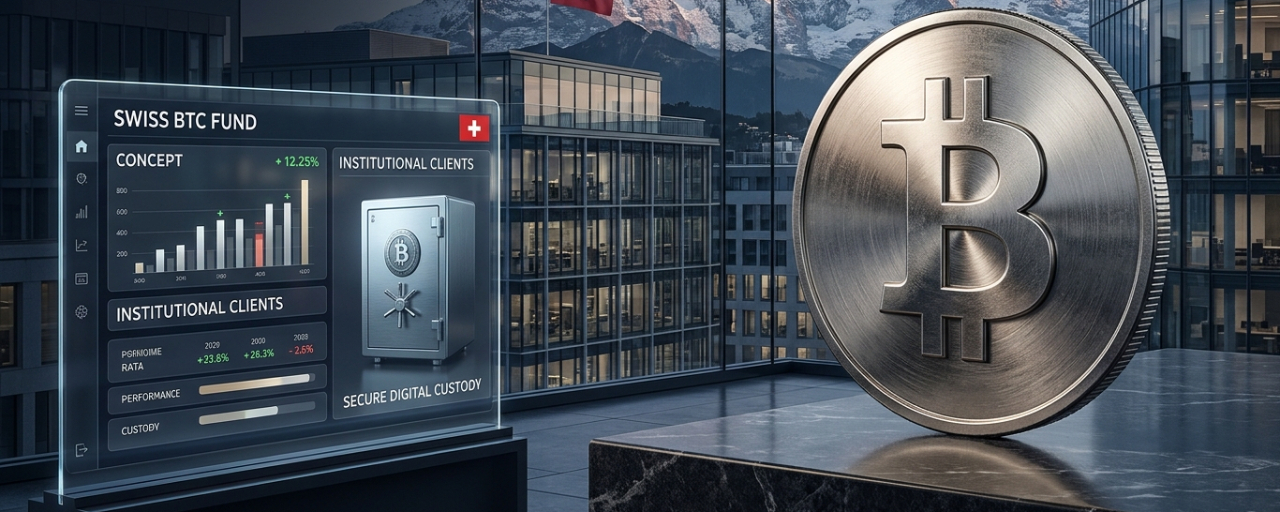
Switzerland’s Bitcoin Fund Approval: Another Step Toward Mainstream Adoption?🇨🇭 Switzerland Opens Another Door for Bitcoin Investors
Bitcoin's journey into traditional finance continues to evolve, and Switzerland may be taking another important step.
The country's financial regulator, FINMA, has reportedly approved a publicly accessible investment fund that invests directly in Bitcoin ($BTC) under Switzerland's alternative investment fund framework.
So, why is this significant?
🏦 Simpler access: Investors may be able to gain Bitcoin exposure through a regulated fund instead of managing wallets and private keys themselves.
🔐 Investor safeguards: Fund structures can introduce formal custody arrangements, operational controls and disclosure requirements.
📈 Institutional interest: The development could encourage further interest from traditional financial firms exploring regulated crypto investment products.
But there's an important distinction: regulatory approval doesn't guarantee new money will flow into Bitcoin. Actual adoption will depend on investor demand, fund fees, distribution and broader market conditions.
And while a regulated fund may simplify access, it doesn't remove Bitcoin's price volatility or eliminate the risk of losses.
🧠 My takeaway: Bitcoin's integration into conventional finance is worth watching, but the real test will be whether investors actually use these products.
Could Switzerland's move encourage more European investors to gain Bitcoin exposure through regulated funds?
$BTC
#Bitcoin
{spot}(BTCUSDT)
#CryptoETF #CryptoNews #InstitutionalAdoption
Switzerland’s Bitcoin Fund Approval: Another Step Toward Mainstream Adoption?
🇨🇭 Switzerland Opens Another Door for Bitcoin Investors
Bitcoin's journey into traditional finance continues to evolve, and Switzerland may be taking another important step.
The country's financial regulator, FINMA, has reportedly approved a publicly accessible investment fund that invests directly in Bitcoin ($BTC) under Switzerland's alternative investment fund framework.
So, why is this significant?
🏦 Simpler access: Investors may be able to gain Bitcoin exposure through a regulated fund instead of managing wallets and private keys themselves.
🔐 Investor safeguards: Fund structures can introduce formal custody arrangements, operational controls and disclosure requirements.
📈 Institutional interest: The development could encourage further interest from traditional financial firms exploring regulated crypto investment products.
But there's an important distinction: regulatory approval doesn't guarantee new money will flow into Bitcoin. Actual adoption will depend on investor demand, fund fees, distribution and broader market conditions.
And while a regulated fund may simplify access, it doesn't remove Bitcoin's price volatility or eliminate the risk of losses.
🧠 My takeaway: Bitcoin's integration into conventional finance is worth watching, but the real test will be whether investors actually use these products.
Could Switzerland's move encourage more European investors to gain Bitcoin exposure through regulated funds?
$BTC
#Bitcoin
#CryptoETF #CryptoNews #InstitutionalAdoption
Bitcoin's journey into traditional finance continues to evolve, and Switzerland may be taking another important step.
The country's financial regulator, FINMA, has reportedly approved a publicly accessible investment fund that invests directly in Bitcoin ($BTC) under Switzerland's alternative investment fund framework.
So, why is this significant?
🏦 Simpler access: Investors may be able to gain Bitcoin exposure through a regulated fund instead of managing wallets and private keys themselves.
🔐 Investor safeguards: Fund structures can introduce formal custody arrangements, operational controls and disclosure requirements.
📈 Institutional interest: The development could encourage further interest from traditional financial firms exploring regulated crypto investment products.
But there's an important distinction: regulatory approval doesn't guarantee new money will flow into Bitcoin. Actual adoption will depend on investor demand, fund fees, distribution and broader market conditions.
And while a regulated fund may simplify access, it doesn't remove Bitcoin's price volatility or eliminate the risk of losses.
🧠 My takeaway: Bitcoin's integration into conventional finance is worth watching, but the real test will be whether investors actually use these products.
Could Switzerland's move encourage more European investors to gain Bitcoin exposure through regulated funds?
$BTC
#Bitcoin
#CryptoETF #CryptoNews #InstitutionalAdoption
4
·
--
📰 Crypto News Update
US Bitcoin ETFs draw $527M in biggest showing since September
Why it matters: Institutional activity and fund flows can provide useful context about crypto-market participation.
Importance score: 10/10
Source: Cointelegraph
Read the original report: https://cointelegraph.com/markets/bitcoin-etfs-527m-inflows-biggest-since-september
#Bitcoin #CryptoETF #CryptoNews #Cryptocurrency #Blockchain
📰 Crypto News Update
US Bitcoin ETFs draw $527M in biggest showing since September
Why it matters: Institutional activity and fund flows can provide useful context about crypto-market participation.
Importance score: 10/10
Source: Cointelegraph
Read the original report: https://cointelegraph.com/markets/bitcoin-etfs-527m-inflows-biggest-since-september
#Bitcoin #CryptoETF #CryptoNews #Cryptocurrency #Blockchain
US Bitcoin ETFs draw $527M in biggest showing since September
Why it matters: Institutional activity and fund flows can provide useful context about crypto-market participation.
Importance score: 10/10
Source: Cointelegraph
Read the original report: https://cointelegraph.com/markets/bitcoin-etfs-527m-inflows-biggest-since-september
#Bitcoin #CryptoETF #CryptoNews #Cryptocurrency #Blockchain
57
·
--
📰 Crypto News Update
BlackRock files for third Bitcoin ETF, still no Solana or XRP
Why it matters: Institutional activity and fund flows can provide useful context about crypto-market participation.
Importance score: 10/10
Source: Cointelegraph
Read the original report: https://cointelegraph.com/news/blackrock-ishares-bitcoin-managed-protection-etf-pbit
#Bitcoin #CryptoETF #Solana #XRP #CryptoNews
📰 Crypto News Update
BlackRock files for third Bitcoin ETF, still no Solana or XRP
Why it matters: Institutional activity and fund flows can provide useful context about crypto-market participation.
Importance score: 10/10
Source: Cointelegraph
Read the original report: https://cointelegraph.com/news/blackrock-ishares-bitcoin-managed-protection-etf-pbit
#Bitcoin #CryptoETF #Solana #XRP #CryptoNews
BlackRock files for third Bitcoin ETF, still no Solana or XRP
Why it matters: Institutional activity and fund flows can provide useful context about crypto-market participation.
Importance score: 10/10
Source: Cointelegraph
Read the original report: https://cointelegraph.com/news/blackrock-ishares-bitcoin-managed-protection-etf-pbit
#Bitcoin #CryptoETF #Solana #XRP #CryptoNews
87
·
--
📰 Crypto News Update
BlackRock files for bitcoin ETF offering downside protection and upside exposure to IBIT
Why it matters: Institutional activity and fund flows can provide useful context about crypto-market participation.
Importance score: 9/10
Source: The Block
Read the original report: https://www.theblock.co/news/regulation/2026-10-19-blackrock-files-bitcoin-managed-protect-etf-downside-protection-ibit-421087
#Bitcoin #CryptoETF #CryptoNews #Cryptocurrency #Blockchain
📰 Crypto News Update
BlackRock files for bitcoin ETF offering downside protection and upside exposure to IBIT
Why it matters: Institutional activity and fund flows can provide useful context about crypto-market participation.
Importance score: 9/10
Source: The Block
Read the original report: https://www.theblock.co/news/regulation/2026-10-19-blackrock-files-bitcoin-managed-protect-etf-downside-protection-ibit-421087
#Bitcoin #CryptoETF #CryptoNews #Cryptocurrency #Blockchain
BlackRock files for bitcoin ETF offering downside protection and upside exposure to IBIT
Why it matters: Institutional activity and fund flows can provide useful context about crypto-market participation.
Importance score: 9/10
Source: The Block
Read the original report: https://www.theblock.co/news/regulation/2026-10-19-blackrock-files-bitcoin-managed-protect-etf-downside-protection-ibit-421087
#Bitcoin #CryptoETF #CryptoNews #Cryptocurrency #Blockchain
30

·
--
Spot ETF Expansion: The Next Regulatory Domino in Crypto
The approval of spot $BTC and $ETH ETFs in the U.S. was not an endpoint — it was a template. Regulators, asset managers, and institutional allocators are now working through the same playbook for the next wave of assets.
XRP, SOL, and ADA are all in active ETF application queues. What changes when they get approved?
First, price discovery shifts. A meaningful share of trading volume moves to regulated venues where institutional risk desks are comfortable operating. Bid-ask spreads tighten. Volatility normalizes over time — not because the assets become safer, but because the investor base deepens and lengthens its time horizon.
Second, allocation mechanics change. Portfolio managers who were previously limited to futures exposure gain direct access through familiar wrappers. Pension funds, family offices, and RIAs can satisfy compliance requirements without touching a self-custody wallet.
Third, the valuation ceiling rises. Assets that once carried a regulatory uncertainty discount trade that discount away. This is not priced in the moment an ETF is rumored — it takes months of sustained inflow data to register in consensus models.
The playbook is already written. The timeline is the only variable.
$BTC showed what institutional adoption looks like in year one. The rest of the queue is watching closely.
#CryptoETF #InstitutionalAdoption #Regulation #CryptoMarkets #BinanceSquare
Spot ETF Expansion: The Next Regulatory Domino in Crypto
The approval of spot $BTC and $ETH ETFs in the U.S. was not an endpoint — it was a template. Regulators, asset managers, and institutional allocators are now working through the same playbook for the next wave of assets.
XRP, SOL, and ADA are all in active ETF application queues. What changes when they get approved?
First, price discovery shifts. A meaningful share of trading volume moves to regulated venues where institutional risk desks are comfortable operating. Bid-ask spreads tighten. Volatility normalizes over time — not because the assets become safer, but because the investor base deepens and lengthens its time horizon.
Second, allocation mechanics change. Portfolio managers who were previously limited to futures exposure gain direct access through familiar wrappers. Pension funds, family offices, and RIAs can satisfy compliance requirements without touching a self-custody wallet.
Third, the valuation ceiling rises. Assets that once carried a regulatory uncertainty discount trade that discount away. This is not priced in the moment an ETF is rumored — it takes months of sustained inflow data to register in consensus models.
The playbook is already written. The timeline is the only variable.
$BTC showed what institutional adoption looks like in year one. The rest of the queue is watching closely.
#CryptoETF #InstitutionalAdoption #Regulation #CryptoMarkets #BinanceSquare
The approval of spot $BTC and $ETH ETFs in the U.S. was not an endpoint — it was a template. Regulators, asset managers, and institutional allocators are now working through the same playbook for the next wave of assets.
XRP, SOL, and ADA are all in active ETF application queues. What changes when they get approved?
First, price discovery shifts. A meaningful share of trading volume moves to regulated venues where institutional risk desks are comfortable operating. Bid-ask spreads tighten. Volatility normalizes over time — not because the assets become safer, but because the investor base deepens and lengthens its time horizon.
Second, allocation mechanics change. Portfolio managers who were previously limited to futures exposure gain direct access through familiar wrappers. Pension funds, family offices, and RIAs can satisfy compliance requirements without touching a self-custody wallet.
Third, the valuation ceiling rises. Assets that once carried a regulatory uncertainty discount trade that discount away. This is not priced in the moment an ETF is rumored — it takes months of sustained inflow data to register in consensus models.
The playbook is already written. The timeline is the only variable.
$BTC showed what institutional adoption looks like in year one. The rest of the queue is watching closely.
#CryptoETF #InstitutionalAdoption #Regulation #CryptoMarkets #BinanceSquare
64

·
--
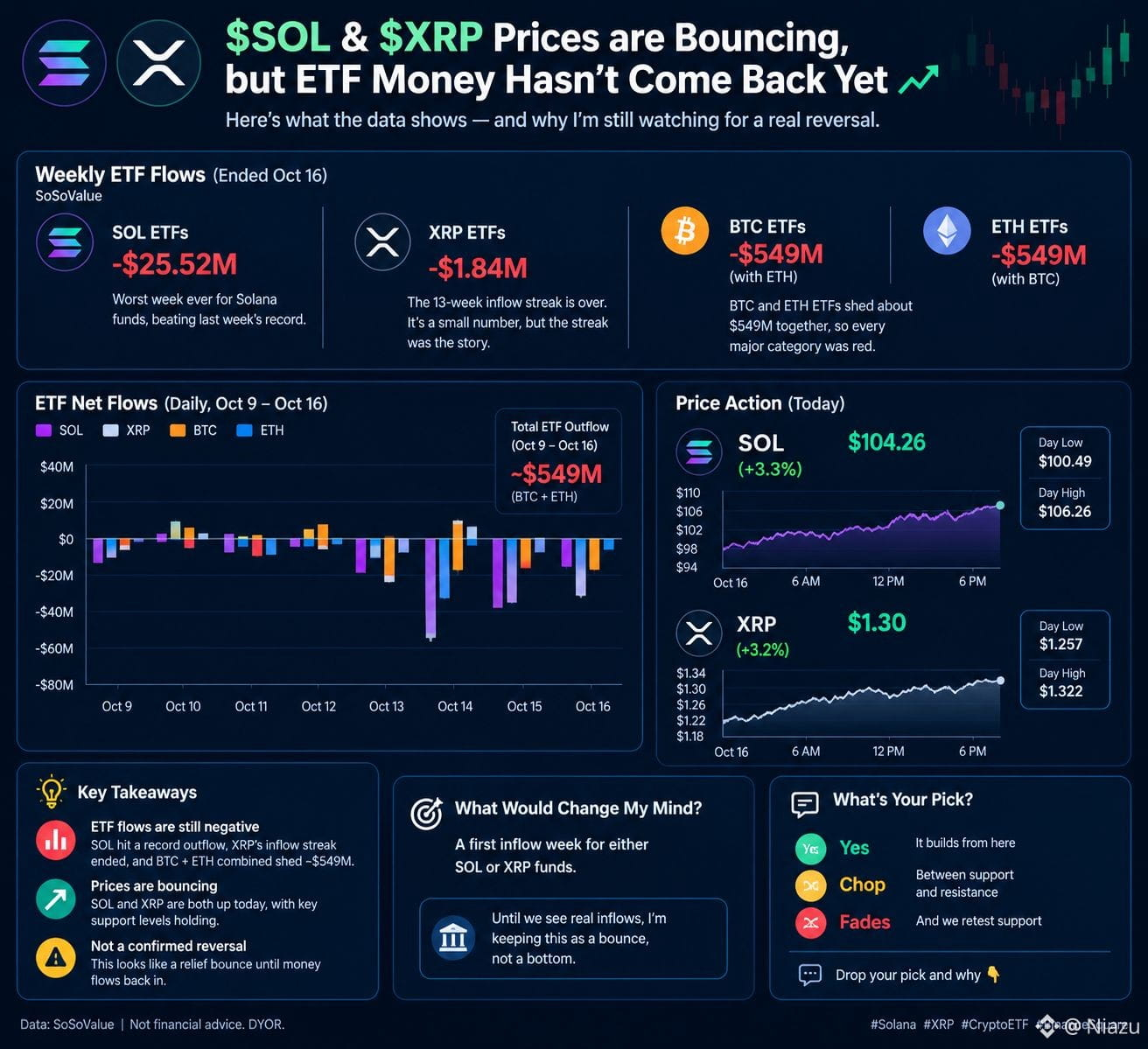
$SOL $XRP Prices are bouncing, but ETF money hasn’t come back yet 📊
Quick scorecard. SoSoValue’s numbers for the week ended Oct 16:
🟣 SOL ETFs: -$25.52M. That’s the worst week ever for Solana funds, beating last week’s record.
⚪ XRP ETFs: -$1.84M. The 13-week inflow streak is over. It’s a small number, but the streak was the story.
🏦 BTC and ETH ETFs shed about $549M together, so every major category was red.
Here’s the twist. Today, the coins are green:
📈$XRP: $1.30 (+3.2%). The day’s low was $1.257, so the $1.25–$1.29 support held. The day’s high of $1.322 is the first test.
📈$SOL: $104.26 (+3.3%). The day’s low was $100.49, so the $100 level held. Reclaiming $106–$110 is what would turn it around.
So prices bounced while the funds were still selling. That’s usually a relief bounce until money flows back in, so I’m not calling a bottom yet. What would change my mind is a first inflow week for either fund.
Does this bounce last?
🟢 Yes, it builds from here
🟡 Chop between support and resistance
🔴 Fades, and we retest support
Drop your pick and why 👇
Data: SoSoValue. Not financial advice. DYOR.
#solana #xrp #CryptoETF #BinanceSquare
$SOL $XRP Prices are bouncing, but ETF money hasn’t come back yet 📊
Quick scorecard. SoSoValue’s numbers for the week ended Oct 16:
🟣 SOL ETFs: -$25.52M. That’s the worst week ever for Solana funds, beating last week’s record.
⚪ XRP ETFs: -$1.84M. The 13-week inflow streak is over. It’s a small number, but the streak was the story.
🏦 BTC and ETH ETFs shed about $549M together, so every major category was red.
Here’s the twist. Today, the coins are green:
📈$XRP : $1.30 (+3.2%). The day’s low was $1.257, so the $1.25–$1.29 support held. The day’s high of $1.322 is the first test.
📈$SOL : $104.26 (+3.3%). The day’s low was $100.49, so the $100 level held. Reclaiming $106–$110 is what would turn it around.
So prices bounced while the funds were still selling. That’s usually a relief bounce until money flows back in, so I’m not calling a bottom yet. What would change my mind is a first inflow week for either fund.
Does this bounce last?
🟢 Yes, it builds from here
🟡 Chop between support and resistance
🔴 Fades, and we retest support
Drop your pick and why 👇
Data: SoSoValue. Not financial advice. DYOR.
#solana #xrp #CryptoETF #BinanceSquare
Quick scorecard. SoSoValue’s numbers for the week ended Oct 16:
🟣 SOL ETFs: -$25.52M. That’s the worst week ever for Solana funds, beating last week’s record.
⚪ XRP ETFs: -$1.84M. The 13-week inflow streak is over. It’s a small number, but the streak was the story.
🏦 BTC and ETH ETFs shed about $549M together, so every major category was red.
Here’s the twist. Today, the coins are green:
📈$XRP : $1.30 (+3.2%). The day’s low was $1.257, so the $1.25–$1.29 support held. The day’s high of $1.322 is the first test.
📈$SOL : $104.26 (+3.3%). The day’s low was $100.49, so the $100 level held. Reclaiming $106–$110 is what would turn it around.
So prices bounced while the funds were still selling. That’s usually a relief bounce until money flows back in, so I’m not calling a bottom yet. What would change my mind is a first inflow week for either fund.
Does this bounce last?
🟢 Yes, it builds from here
🟡 Chop between support and resistance
🔴 Fades, and we retest support
Drop your pick and why 👇
Data: SoSoValue. Not financial advice. DYOR.
#solana #xrp #CryptoETF #BinanceSquare
160
·
--
Bitcoin ETF Inflows Are a Signal, Not Just a Number
Spot Bitcoin ETFs crossed a threshold most analysts underestimated: they are now the dominant marginal price-setter on slow trading days.
Here is why that matters structurally:
1. Demand is non-discretionary at scale. Pension-mandate rebalancing, 60/40 allocation models, and RIA platform auto-buys create baseline inflows that are not sentiment-driven. These buyers do not read price charts.
2. Redemption pressure is muted. Unlike leveraged futures traders who get margin-called, ETF holders absorb drawdowns through NAV drift. This dampens the reflexive cascades that defined 2018 and 2022.
3. Custodian concentration creates new risk. The same institutions that stabilize demand also gate access. A regulatory action against a prime custodian could create correlated exit pressure — a systemic tail risk the market has not priced yet.
4. $BTC ETF AUM now exceeds gold ETF AUM at an equivalent age. $ETH ETF flows are lagging but the institutional playbook is identical. Watch ETH staking yield added to ETF products as the next catalyst.
The $BNB institutional onramp is still early — no major spot ETF approved — but the ETF precedent has normalized this asset class permanently.
Institutional adoption does not guarantee price. It guarantees permanence.
#Bitcoin #CryptoETF #InstitutionalCrypto #BTC #Altcoins
Bitcoin ETF Inflows Are a Signal, Not Just a Number
Spot Bitcoin ETFs crossed a threshold most analysts underestimated: they are now the dominant marginal price-setter on slow trading days.
Here is why that matters structurally:
1. Demand is non-discretionary at scale. Pension-mandate rebalancing, 60/40 allocation models, and RIA platform auto-buys create baseline inflows that are not sentiment-driven. These buyers do not read price charts.
2. Redemption pressure is muted. Unlike leveraged futures traders who get margin-called, ETF holders absorb drawdowns through NAV drift. This dampens the reflexive cascades that defined 2018 and 2022.
3. Custodian concentration creates new risk. The same institutions that stabilize demand also gate access. A regulatory action against a prime custodian could create correlated exit pressure — a systemic tail risk the market has not priced yet.
4. $BTC ETF AUM now exceeds gold ETF AUM at an equivalent age. $ETH ETF flows are lagging but the institutional playbook is identical. Watch ETH staking yield added to ETF products as the next catalyst.
The $BNB institutional onramp is still early — no major spot ETF approved — but the ETF precedent has normalized this asset class permanently.
Institutional adoption does not guarantee price. It guarantees permanence.
#Bitcoin #CryptoETF #InstitutionalCrypto #BTC #Altcoins
Spot Bitcoin ETFs crossed a threshold most analysts underestimated: they are now the dominant marginal price-setter on slow trading days.
Here is why that matters structurally:
1. Demand is non-discretionary at scale. Pension-mandate rebalancing, 60/40 allocation models, and RIA platform auto-buys create baseline inflows that are not sentiment-driven. These buyers do not read price charts.
2. Redemption pressure is muted. Unlike leveraged futures traders who get margin-called, ETF holders absorb drawdowns through NAV drift. This dampens the reflexive cascades that defined 2018 and 2022.
3. Custodian concentration creates new risk. The same institutions that stabilize demand also gate access. A regulatory action against a prime custodian could create correlated exit pressure — a systemic tail risk the market has not priced yet.
4. $BTC ETF AUM now exceeds gold ETF AUM at an equivalent age. $ETH ETF flows are lagging but the institutional playbook is identical. Watch ETH staking yield added to ETF products as the next catalyst.
The $BNB institutional onramp is still early — no major spot ETF approved — but the ETF precedent has normalized this asset class permanently.
Institutional adoption does not guarantee price. It guarantees permanence.
#Bitcoin #CryptoETF #InstitutionalCrypto #BTC #Altcoins
1
67
·
--
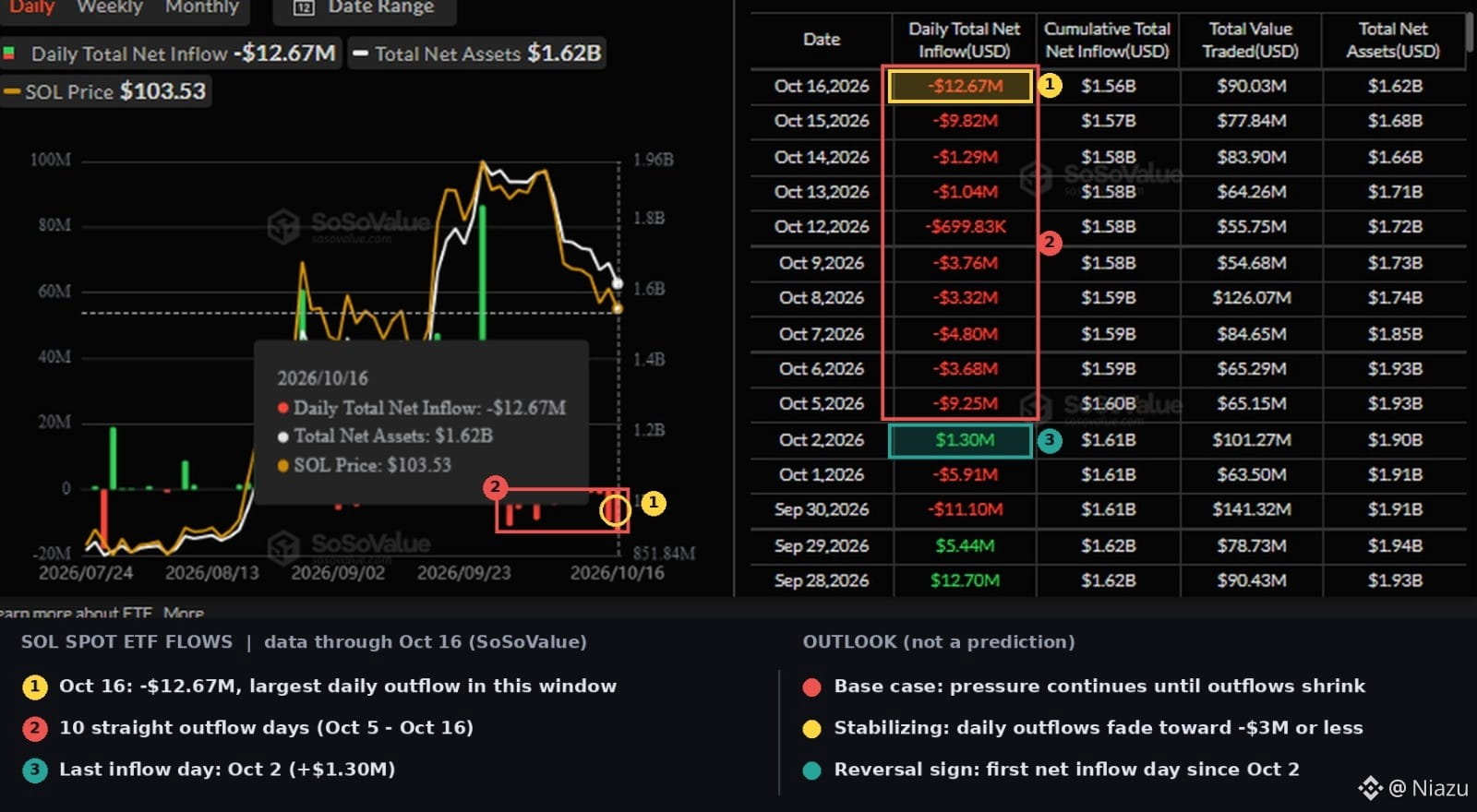
$SOL Solana ETFs: 10 straight days of outflows, and the pace is picking up 📉
Data through Oct 16 (SoSoValue):
Oct 16: −$12.67M, the biggest daily outflow on the table
Oct 15: −$9.82M
Oct 12–14: −$0.7M, −$1.0M and −$1.3M
Week total: about −$25.5M, a touch above last week’s −$24.8M, which was already a record
What the chart shows:
Outflows have been negative every session since Oct 5. The last time ETFs saw a daily inflow was Oct 2 (+$1.3M).
Total net assets fell from about $1.93B to $1.62B (−16%). Cumulative net inflows dropped only about $60M, from $1.62B to $1.56B. So most of the decline is price, not investors leaving.
SOL was at $103.53 on Oct 16, with the line on the chart still rolling over.
My read for the next move:
🔴 Base case (cautious): with flows accelerating and the price trend still down, SOL stays under pressure early next week. $100 is the psychological level to watch.
🟡 Stabilization sign: daily outflows shrink back toward −$3M or less while price holds.
🟢 Reversal sign: the first net inflow day since Oct 2, ideally with rising volume.
Until flows turn, I’d treat any bounce as unconfirmed. ETF flows are a slow-moving signal, not a timing tool, and the market can move against them in either direction.
👉 Where does SOL go next?
🟢 Reclaims $110
🟡 Range-bound ($100–$110)
🔴 Breaks below $100
Vote and explain your reasoning below 👇
#solana #SOL #CryptoETF #CryptoAnalysis #BinanceSquare
$SOL Solana ETFs: 10 straight days of outflows, and the pace is picking up 📉
Data through Oct 16 (SoSoValue):
Oct 16: −$12.67M, the biggest daily outflow on the table
Oct 15: −$9.82M
Oct 12–14: −$0.7M, −$1.0M and −$1.3M
Week total: about −$25.5M, a touch above last week’s −$24.8M, which was already a record
What the chart shows:
Outflows have been negative every session since Oct 5. The last time ETFs saw a daily inflow was Oct 2 (+$1.3M).
Total net assets fell from about $1.93B to $1.62B (−16%). Cumulative net inflows dropped only about $60M, from $1.62B to $1.56B. So most of the decline is price, not investors leaving.
SOL was at $103.53 on Oct 16, with the line on the chart still rolling over.
My read for the next move:
🔴 Base case (cautious): with flows accelerating and the price trend still down, SOL stays under pressure early next week. $100 is the psychological level to watch.
🟡 Stabilization sign: daily outflows shrink back toward −$3M or less while price holds.
🟢 Reversal sign: the first net inflow day since Oct 2, ideally with rising volume.
Until flows turn, I’d treat any bounce as unconfirmed. ETF flows are a slow-moving signal, not a timing tool, and the market can move against them in either direction.
👉 Where does SOL go next?
🟢 Reclaims $110
🟡 Range-bound ($100–$110)
🔴 Breaks below $100
Vote and explain your reasoning below 👇
#solana #SOL #CryptoETF #CryptoAnalysis #BinanceSquare
Data through Oct 16 (SoSoValue):
Oct 16: −$12.67M, the biggest daily outflow on the table
Oct 15: −$9.82M
Oct 12–14: −$0.7M, −$1.0M and −$1.3M
Week total: about −$25.5M, a touch above last week’s −$24.8M, which was already a record
What the chart shows:
Outflows have been negative every session since Oct 5. The last time ETFs saw a daily inflow was Oct 2 (+$1.3M).
Total net assets fell from about $1.93B to $1.62B (−16%). Cumulative net inflows dropped only about $60M, from $1.62B to $1.56B. So most of the decline is price, not investors leaving.
SOL was at $103.53 on Oct 16, with the line on the chart still rolling over.
My read for the next move:
🔴 Base case (cautious): with flows accelerating and the price trend still down, SOL stays under pressure early next week. $100 is the psychological level to watch.
🟡 Stabilization sign: daily outflows shrink back toward −$3M or less while price holds.
🟢 Reversal sign: the first net inflow day since Oct 2, ideally with rising volume.
Until flows turn, I’d treat any bounce as unconfirmed. ETF flows are a slow-moving signal, not a timing tool, and the market can move against them in either direction.
👉 Where does SOL go next?
🟢 Reclaims $110
🟡 Range-bound ($100–$110)
🔴 Breaks below $100
Vote and explain your reasoning below 👇
#solana #SOL #CryptoETF #CryptoAnalysis #BinanceSquare
102
Log in to explore more content
Join global crypto users on Binance Square
⚡️ Get latest and useful information about crypto.
💬 Trusted by the world’s largest crypto exchange.
👍 Discover real insights from verified creators.
Email / Phone number
Trending Topics
1
#BinancePick
3M views
152,357 Discussing
2
#EarningsSeason
5.3M views
25,899 Discussing
3
#AnthropicTTMRevenueGrewAbout1200%
25,481 views
376 Discussing
4
#AnthropicS1ExpectedToday
23,997 views
316 Discussing
5
#SouthKoreaReportedlyWeighsFourthCryptoTaxDelay
28,653 views
439 Discussing
6
#FranklinTempletonFilesForTwoDividendToBitcoinETFs
37,732 views
521 Discussing
7
#StrategyMSTRSurpassesNasdaqInMarketCap
28,370 views
377 Discussing
8
#CanadaProposesStablecoinRedemptionWithin3BusinessDays
1,266 views
36 Discussing
9
#ElectrumWalletBugLetRogueServersStealFunds
29,769 views
455 Discussing
10
#ArgentineCourtDismissesLIBRACaseAgainstMilei
44,714 views
560 Discussing