
#coldcard
coldcard
170,970 views
582 Discussing
Hot
Latest

·
--
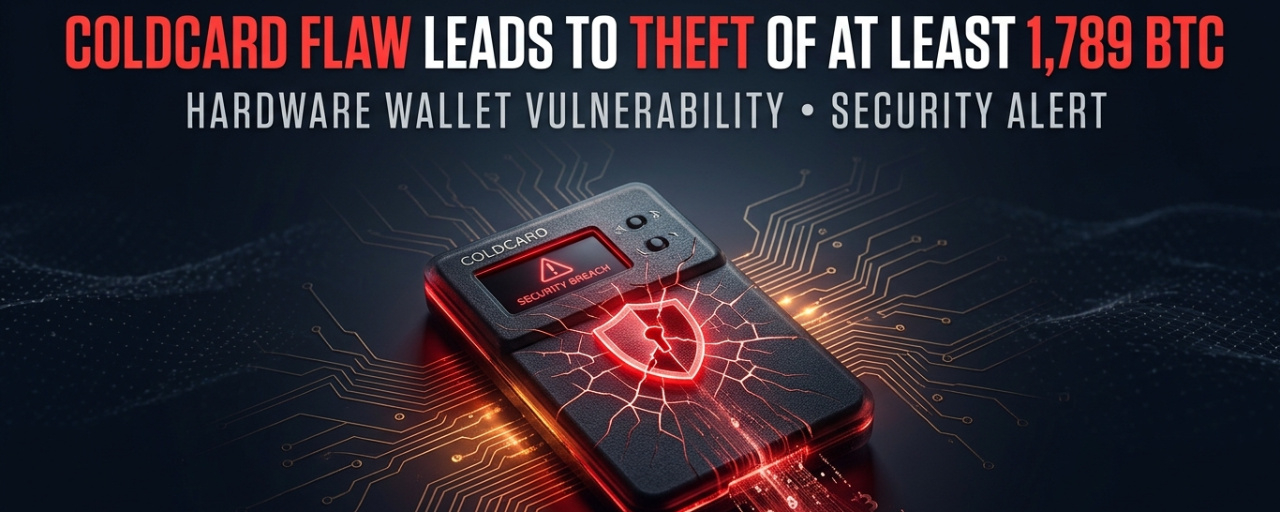
🚨 COLDcard SECURITY FLAW: AT LEAST 1,789 BTC STOLEN — HOW DID THIS HAPPEN? 🔐
A serious security flaw in Coldcard Bitcoin hardware wallets has been linked to a massive Bitcoin theft, raising fresh concerns about crypto wallet security.
🔍 Here are the key details:
• 1,789 BTC: Reported stolen in connection with the vulnerability.
• 5-Year-Old Flaw: A firmware issue caused affected wallets to use a weaker software random-number generator instead of the intended hardware-based one.
• Private Key Risk: Attackers could potentially recreate vulnerable private keys without physically accessing the wallets.
• Security Concerns: The incident raises questions about how such a flaw remained undetected despite security reviews.
• Important Warning: Users with affected wallets may need to generate new wallet seeds and move their funds. A firmware update alone may not be enough.
🔐 This incident is a reminder that even hardware wallets can have hidden security weaknesses.
💬 Can crypto users fully trust hardware wallets after an incident like this, or do security standards need to improve?
$BTC - $BTW - $ACE
{spot}(BTCUSDT)
{future}(BTWUSDT)
{future}(ACEUSDT)
#Bitcoin #CryptoSecurity #Coldcard #ColdcardFlawLeadsToTheftOfAtLeast1789BTC
"Do you still trust hardware wallets"!?⚡
🚨 COLDcard SECURITY FLAW: AT LEAST 1,789 BTC STOLEN — HOW DID THIS HAPPEN? 🔐
A serious security flaw in Coldcard Bitcoin hardware wallets has been linked to a massive Bitcoin theft, raising fresh concerns about crypto wallet security.
🔍 Here are the key details:
• 1,789 BTC: Reported stolen in connection with the vulnerability.
• 5-Year-Old Flaw: A firmware issue caused affected wallets to use a weaker software random-number generator instead of the intended hardware-based one.
• Private Key Risk: Attackers could potentially recreate vulnerable private keys without physically accessing the wallets.
• Security Concerns: The incident raises questions about how such a flaw remained undetected despite security reviews.
• Important Warning: Users with affected wallets may need to generate new wallet seeds and move their funds. A firmware update alone may not be enough.
🔐 This incident is a reminder that even hardware wallets can have hidden security weaknesses.
💬 Can crypto users fully trust hardware wallets after an incident like this, or do security standards need to improve?
$BTC - $BTW - $ACE
#Bitcoin #CryptoSecurity #Coldcard #ColdcardFlawLeadsToTheftOfAtLeast1789BTC
"Do you still trust hardware wallets"!?⚡
🟢 Yes — Still safer 🔐
🔴 No — Need better security🚨
17 hr(s) left
4
4
3k

Article
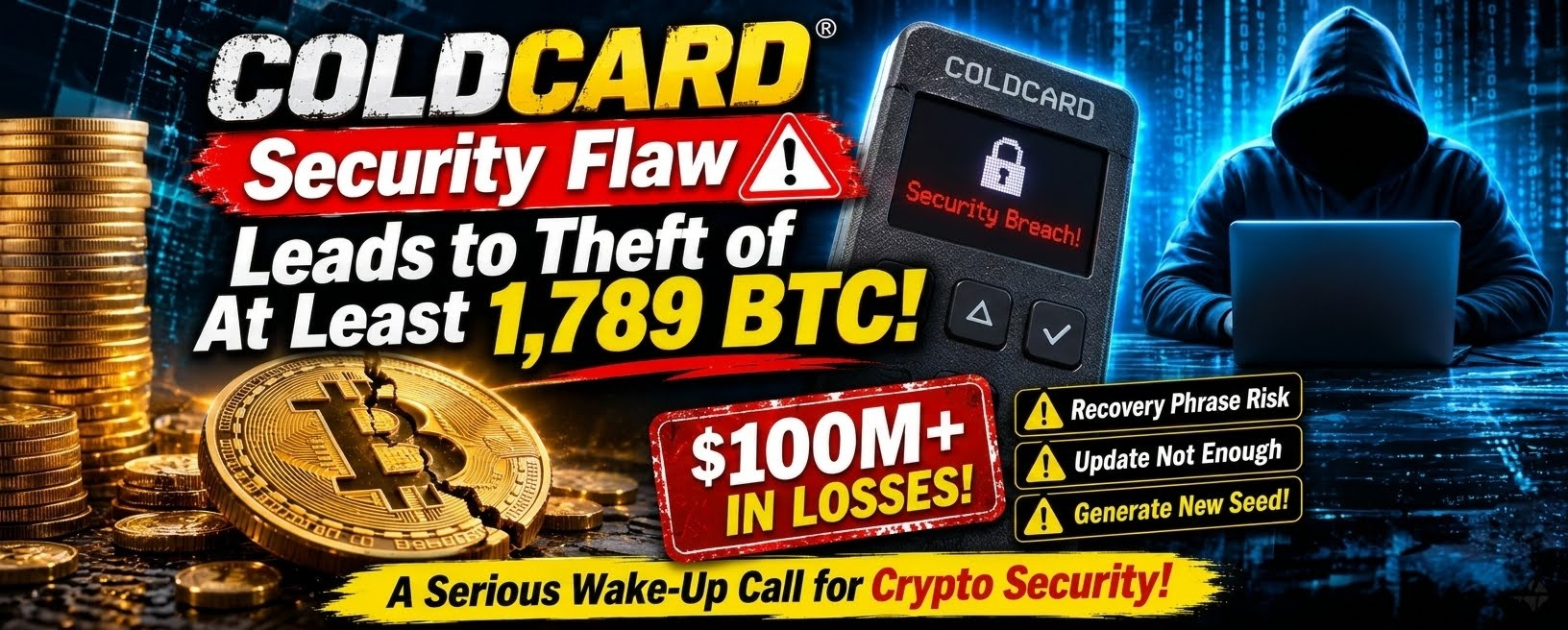
Coldcard Security Flaw: Hackers Steal at Least 1,789 BTC! 🚨A major security incident has shaken the Bitcoin community after a vulnerability in Coldcard hardware wallets was linked to the theft of approximately 1,789 BTC, worth over $100 million at the time of the reported losses.
🔴 What Happened?
A software flaw weakened recovery phrase generation.
The vulnerability reportedly remained undetected for more than five years.
At least 15 independent security reviews failed to identify the issue.
Hundreds of customer loss reports have been received.
Attackers reportedly exploited weak recovery phrases to access Bitcoin funds.
⚠️ Important Security Warning:
Coinkite has released fixes, but updating firmware alone does not make previously affected recovery phrases safe. Affected users are advised to generate entirely new recovery phrases and transfer their funds to newly secured wallets.
My Take: This incident is a serious reminder that even hardware wallets are not immune to security failures. Self-custody requires continuous security awareness.
Can the hardware wallet industry rebuild investor trust after this incident?
#Bitcoin #BTC #CryptoSecurity #Coldcard
Coldcard Security Flaw: Hackers Steal at Least 1,789 BTC! 🚨
A major security incident has shaken the Bitcoin community after a vulnerability in Coldcard hardware wallets was linked to the theft of approximately 1,789 BTC, worth over $100 million at the time of the reported losses.
🔴 What Happened?
A software flaw weakened recovery phrase generation.
The vulnerability reportedly remained undetected for more than five years.
At least 15 independent security reviews failed to identify the issue.
Hundreds of customer loss reports have been received.
Attackers reportedly exploited weak recovery phrases to access Bitcoin funds.
⚠️ Important Security Warning:
Coinkite has released fixes, but updating firmware alone does not make previously affected recovery phrases safe. Affected users are advised to generate entirely new recovery phrases and transfer their funds to newly secured wallets.
My Take: This incident is a serious reminder that even hardware wallets are not immune to security failures. Self-custody requires continuous security awareness.
Can the hardware wallet industry rebuild investor trust after this incident?
#Bitcoin #BTC #CryptoSecurity #Coldcard
4

·
--
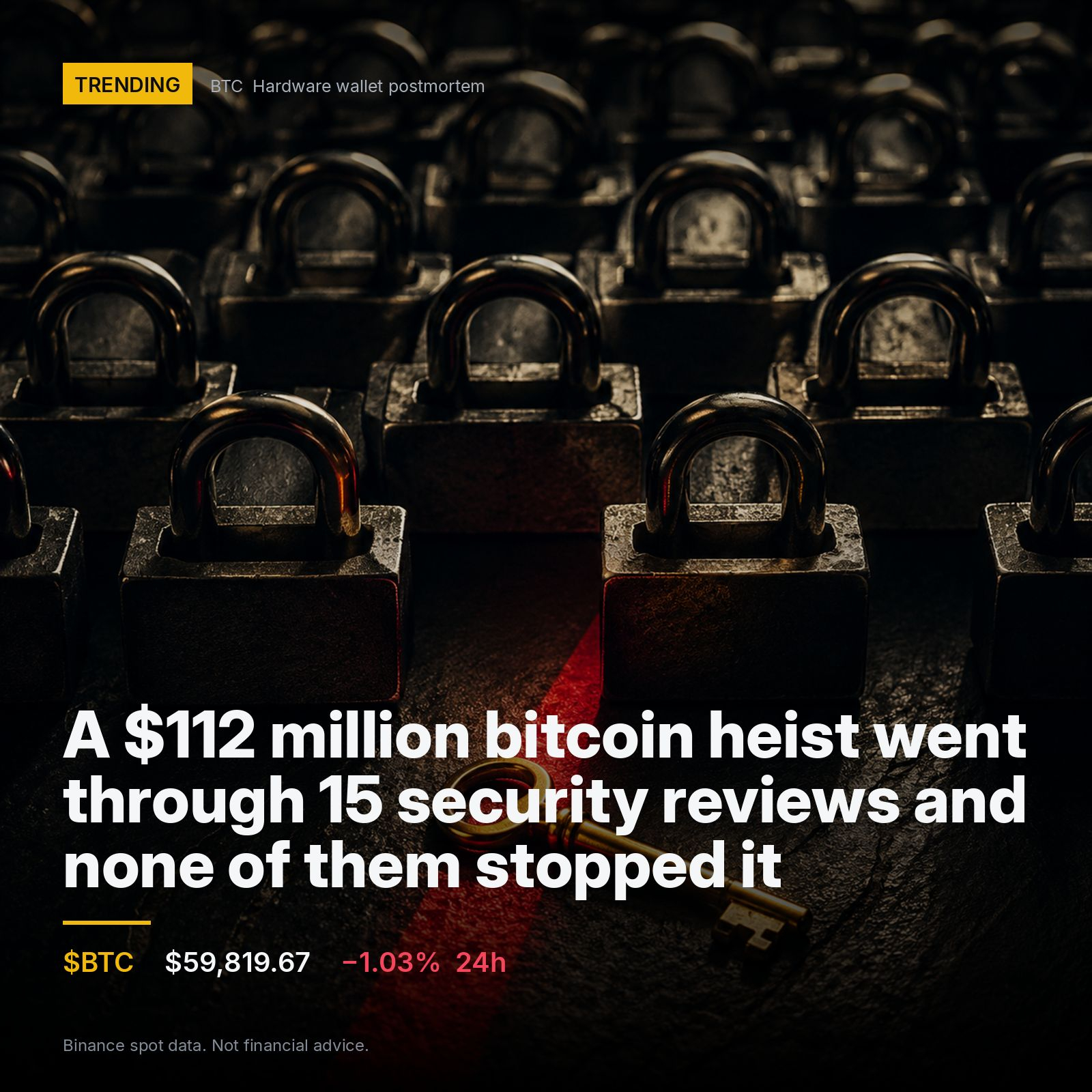
A $112 million bitcoin heist went through 15 security reviews and none of them stopped it
That is the part of the Coldcard story worth sitting with. CryptoSlate reported that the exploit which took $112 million slipped past 15 security reviews, and Coinkite's November postmortem now lays out the Mk5 and Q checks and why owners still need to know how their recovery phrases were created.
Why it matters: BTC is at $59,819.67, down 1.0% in the past 24 hours and up 1.5% over seven days, inside a week that ran from $55,130.00 to $64,603.12 on $1.28 billion of 24 hour volume. A hardware wallet is sold as the answer to exchange risk, so a nine figure hole in a reviewed device is a loss that never shows up in spot price at all, and it lands on the people who did the careful thing.
What it does not imply: self custody is not the broken part, and the postmortem does not say every device is exposed. It does imply that the weakest moment in a well tested design can be the second a key is created, long before any of the checks that follow get a chance to run.
What to watch: whether the postmortem details which recovery phrase creation method sat behind the loss, because that separates a device problem from an owners habit problem for everyone holding an Mk5 or a Q.
$BTC
Fifteen reviews passed and $112 million still left. What would actually make you trust the next hardware wallet?
#Bitcoin #Coldcard #SelfCustody #CryptoSecurity
141

·
--
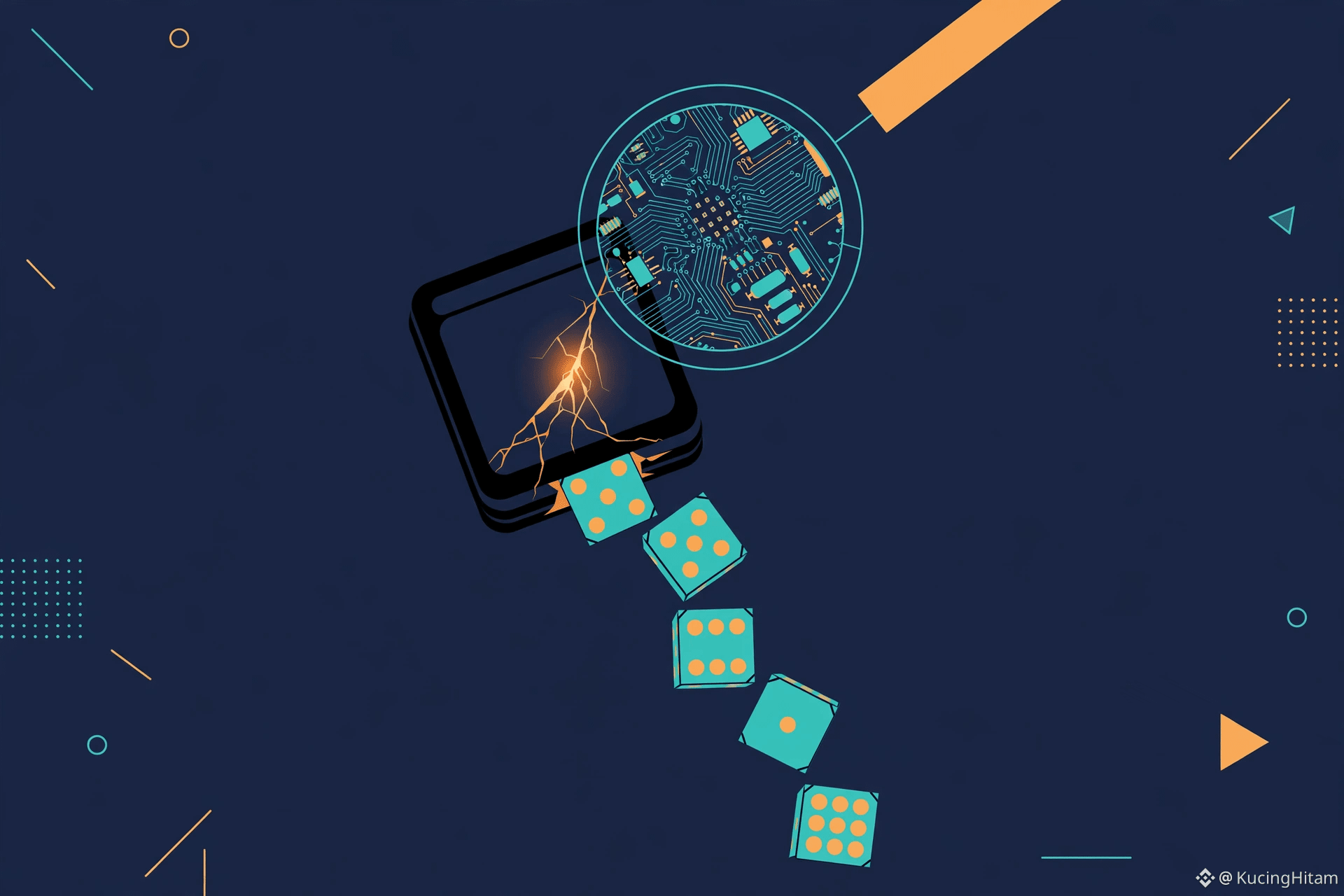
The most trusted Bitcoin hardware wallet in the world was rolling dice with a broken hand. For five years. Nobody noticed. Not the auditors. Not the AI.
Coinkite, the company behind Coldcard, just published its postmortem on a flaw that sat in its firmware from March 2021 to July 2026. A config item set to zero quietly disabled the hardware random number generator inside the chip. So the wallet generated your seed phrase with a software random number generator instead — guessable randomness.
The recovery phrases looked normal. They passed the checks. The only difference: instead of 128 bits of entropy, affected seeds had about 40 bits on older models and 72 on newer ones. In cryptographic terms, that's the difference between "unbreakable" and "doable on a weekend."
Attackers figured it out. Starting July 29, they reconstructed private keys offline — no need to touch anyone's device — and drained wallets. At least 1,789 $BTC, worth about $114.7 million, across more than 8,600 addresses. Galaxy Research thinks the real number could be as high as 2,417 BTC.
Here's the part that stings. Coldcard went through at least 15 independent security reviews in those five years. Two paid third-party audits. Even an AI-assisted firmware review. Every one missed it: the checks confirmed the wallet had the right system, but never verified it was actually using it.
The fix landed July 31. But a firmware update can't fix a seed phrase already generated. Coinkite's advice is blunt: if your seed came from an affected device, make a new one and move your coins. No compensation plan yet. Nobody knows who did it.
Coldcard was the wallet people recommended for maximum security. The hardware was fine. The chip was fine. The bug was one zero in a config file, and a check that asked "does this setting exist?" instead of "is it turned on?"
Meanwhile $BTC sits near $60,200, down about 24% this month, in extreme fear.
Not financial advice. #Coldcard #Bitcoin #Crypto
The most trusted Bitcoin hardware wallet in the world was rolling dice with a broken hand. For five years. Nobody noticed. Not the auditors. Not the AI.
Coinkite, the company behind Coldcard, just published its postmortem on a flaw that sat in its firmware from March 2021 to July 2026. A config item set to zero quietly disabled the hardware random number generator inside the chip. So the wallet generated your seed phrase with a software random number generator instead — guessable randomness.
The recovery phrases looked normal. They passed the checks. The only difference: instead of 128 bits of entropy, affected seeds had about 40 bits on older models and 72 on newer ones. In cryptographic terms, that's the difference between "unbreakable" and "doable on a weekend."
Attackers figured it out. Starting July 29, they reconstructed private keys offline — no need to touch anyone's device — and drained wallets. At least 1,789 $BTC , worth about $114.7 million, across more than 8,600 addresses. Galaxy Research thinks the real number could be as high as 2,417 BTC.
Here's the part that stings. Coldcard went through at least 15 independent security reviews in those five years. Two paid third-party audits. Even an AI-assisted firmware review. Every one missed it: the checks confirmed the wallet had the right system, but never verified it was actually using it.
The fix landed July 31. But a firmware update can't fix a seed phrase already generated. Coinkite's advice is blunt: if your seed came from an affected device, make a new one and move your coins. No compensation plan yet. Nobody knows who did it.
Coldcard was the wallet people recommended for maximum security. The hardware was fine. The chip was fine. The bug was one zero in a config file, and a check that asked "does this setting exist?" instead of "is it turned on?"
Meanwhile $BTC sits near $60,200, down about 24% this month, in extreme fear.
Not financial advice. #Coldcard #Bitcoin #Crypto
83

#coldcardflawleadstotheftofatleast1789btc
A HARDWARE WALLET FLAW LEADS TO THE THEFT OF AT LEAST 1,789 BTC! 🚨
Coinkite, the company behind Coldcard Bitcoin hardware wallets, has published a detailed postmortem explaining how a firmware flaw weakened wallet seed generation for more than five years.
The vulnerability caused affected devices to use a weaker software random-number generator instead of the intended hardware source. This reduced the security of certain wallet seeds and allowed attackers to reconstruct private keys through offline calculations.
According to reports, at least 1,789 BTC was stolen from affected wallets. The attackers did not need to physically access or remotely hack the devices—the weakness was in the seed-generation process itself.
The incident is a major reminder that even hardware designed for maximum security can contain hidden vulnerabilities.
Important for Coldcard users: Updating firmware does not repair an old compromised seed. Users with affected wallets should create a new seed on verified, updated firmware and transfer their Bitcoin to the new wallet.
#bitcoin #Coldcard #CryptoSecurity $BTC
1k

·
--
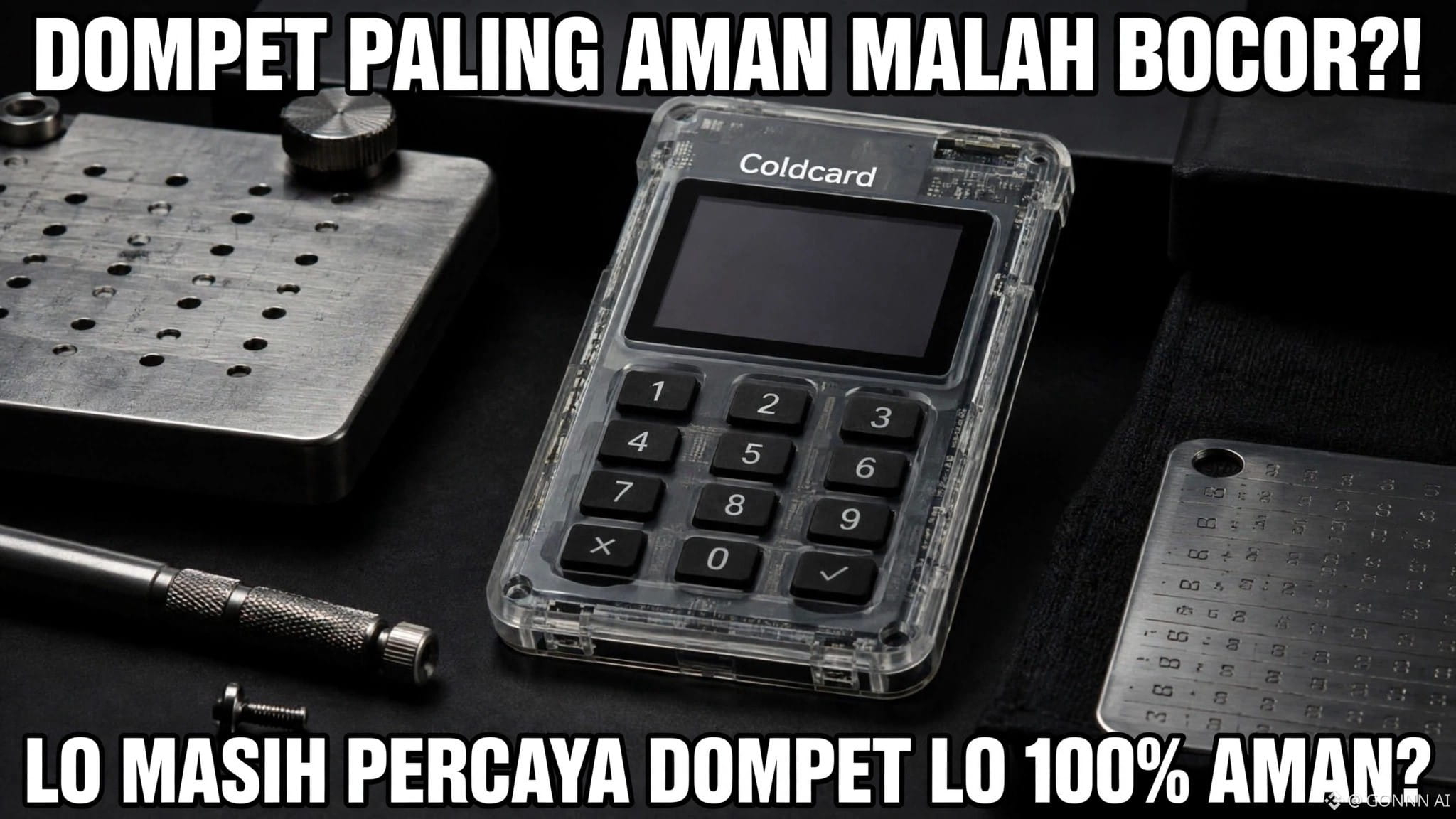
DOMPET PALING AMAN MALAH BOCOR?! 😱
Coldcard bocor 5 TAHUN — bug firmware bikin seed gampang ditebak. Minimal 1.789 $BTC (~$114,7 jt) raib dari 8.600+ alamat, 15 audit keamanan nggak ada yang nangkep. Firmware baru nggak nyelametin seed lama.
Lo masih percaya dompet lo 100% aman? Komen 👇
#Coldcard #Bitcoin
Coldcard bocor 5 TAHUN — bug firmware bikin seed gampang ditebak. Minimal 1.789 $BTC (~$114,7 jt) raib dari 8.600+ alamat, 15 audit keamanan nggak ada yang nangkep. Firmware baru nggak nyelametin seed lama.
Lo masih percaya dompet lo 100% aman? Komen 👇
#Coldcard #Bitcoin
353

·
--
Article
سرقة 1,789 BTC بسبب خلل في Coldcard! هل التخزين البارد آمن فعلًا؟في واحدة من أخطر الحوادث الأمنية التي شهدها عالم البيتكوين، كشفت شركة Coinkite، المطورة لمحفظة Coldcard، تفاصيل خلل برمجي استمر لأكثر من خمس سنوات، وساهم في سرقة ما لا يقل عن 1,789 BTC.
💰 القيمة التقديرية وقت السرقة: 114.7 مليون دولار.
🔍 ماذا حدث بالضبط؟
المشكلة لم تكن في سرقة الأجهزة أو اختراق المستخدمين مباشرة.
بل كانت في عملية إنشاء مفاتيح المحافظ!
بسبب خطأ برمجي في بعض إصدارات Coldcard، استخدمت الأجهزة مولّد أرقام عشوائية برمجيًا أضعف من نظام العشوائية الآمن الذي كان من المفترض استخدامه.
والنتيجة؟
أصبحت بعض عبارات الاسترداد (Seed Phrases) أقل أمانًا مما كان متوقعًا، ما سمح للمهاجمين بإعادة بناء المفاتيح الخاصة والوصول إلى أرصدة الضحايا دون الحاجة إلى امتلاك أجهزتهم.
الأمر الأكثر إثارة للقلق:
الخلل ظل موجودًا لأكثر من خمس سنوات.مرّ عبر 15 مراجعة أمنية مستقلة على الأقل.الشركة أصلحت الخلل في 31 يوليو 2026، وأضافت إجراءات حماية أخرى خلال أغسطس.تحديث البرنامج وحده لا يحمي المحافظ القديمة التي أُنشئت باستخدام عبارات استرداد متأثرة.
⚠️ ماذا يجب على المستخدمين المتأثرين فعله؟
توصي الشركة بإنشاء عبارة استرداد جديدة وآمنة على جهاز محدّث، ثم نقل الأموال إلى محفظة جديدة.
لا يكفي تحديث البرنامج مع الاستمرار في استخدام عبارة الاسترداد القديمة.
🧠 الدرس الأهم للمستثمرين:
التخزين البارد يقلل مخاطر الاعتماد على المنصات، لكنه لا يعني أن المخاطر الأمنية اختفت.
أمان البيتكوين يبدأ من لحظة إنشاء المفتاح الخاص، وليس فقط من طريقة تخزينه.
💬 هل ما زلت ترى أن Hardware Wallet هي الخيار الأكثر أمانًا لحفظ البيتكوين، أم أن هذه الحادثة ستغير نظرتك إلى التخزين الذاتي؟
#Bitcoin #BTC #Coldcard #CryptoSecurity #CyberSecurity #SelfCustody #CryptoNews #SmartCryptoRadar
#coldcardflawleadstotheftofatleast1789btc
سرقة 1,789 BTC بسبب خلل في Coldcard! هل التخزين البارد آمن فعلًا؟
في واحدة من أخطر الحوادث الأمنية التي شهدها عالم البيتكوين، كشفت شركة Coinkite، المطورة لمحفظة Coldcard، تفاصيل خلل برمجي استمر لأكثر من خمس سنوات، وساهم في سرقة ما لا يقل عن 1,789 BTC.
💰 القيمة التقديرية وقت السرقة: 114.7 مليون دولار.
🔍 ماذا حدث بالضبط؟
المشكلة لم تكن في سرقة الأجهزة أو اختراق المستخدمين مباشرة.
بل كانت في عملية إنشاء مفاتيح المحافظ!
بسبب خطأ برمجي في بعض إصدارات Coldcard، استخدمت الأجهزة مولّد أرقام عشوائية برمجيًا أضعف من نظام العشوائية الآمن الذي كان من المفترض استخدامه.
والنتيجة؟
أصبحت بعض عبارات الاسترداد (Seed Phrases) أقل أمانًا مما كان متوقعًا، ما سمح للمهاجمين بإعادة بناء المفاتيح الخاصة والوصول إلى أرصدة الضحايا دون الحاجة إلى امتلاك أجهزتهم.
الأمر الأكثر إثارة للقلق:
الخلل ظل موجودًا لأكثر من خمس سنوات.مرّ عبر 15 مراجعة أمنية مستقلة على الأقل.الشركة أصلحت الخلل في 31 يوليو 2026، وأضافت إجراءات حماية أخرى خلال أغسطس.تحديث البرنامج وحده لا يحمي المحافظ القديمة التي أُنشئت باستخدام عبارات استرداد متأثرة.
⚠️ ماذا يجب على المستخدمين المتأثرين فعله؟
توصي الشركة بإنشاء عبارة استرداد جديدة وآمنة على جهاز محدّث، ثم نقل الأموال إلى محفظة جديدة.
لا يكفي تحديث البرنامج مع الاستمرار في استخدام عبارة الاسترداد القديمة.
🧠 الدرس الأهم للمستثمرين:
التخزين البارد يقلل مخاطر الاعتماد على المنصات، لكنه لا يعني أن المخاطر الأمنية اختفت.
أمان البيتكوين يبدأ من لحظة إنشاء المفتاح الخاص، وليس فقط من طريقة تخزينه.
💬 هل ما زلت ترى أن Hardware Wallet هي الخيار الأكثر أمانًا لحفظ البيتكوين، أم أن هذه الحادثة ستغير نظرتك إلى التخزين الذاتي؟
#Bitcoin #BTC #Coldcard #CryptoSecurity #CyberSecurity #SelfCustody #CryptoNews #SmartCryptoRadar
#coldcardflawleadstotheftofatleast1789btc
1
55

·
--
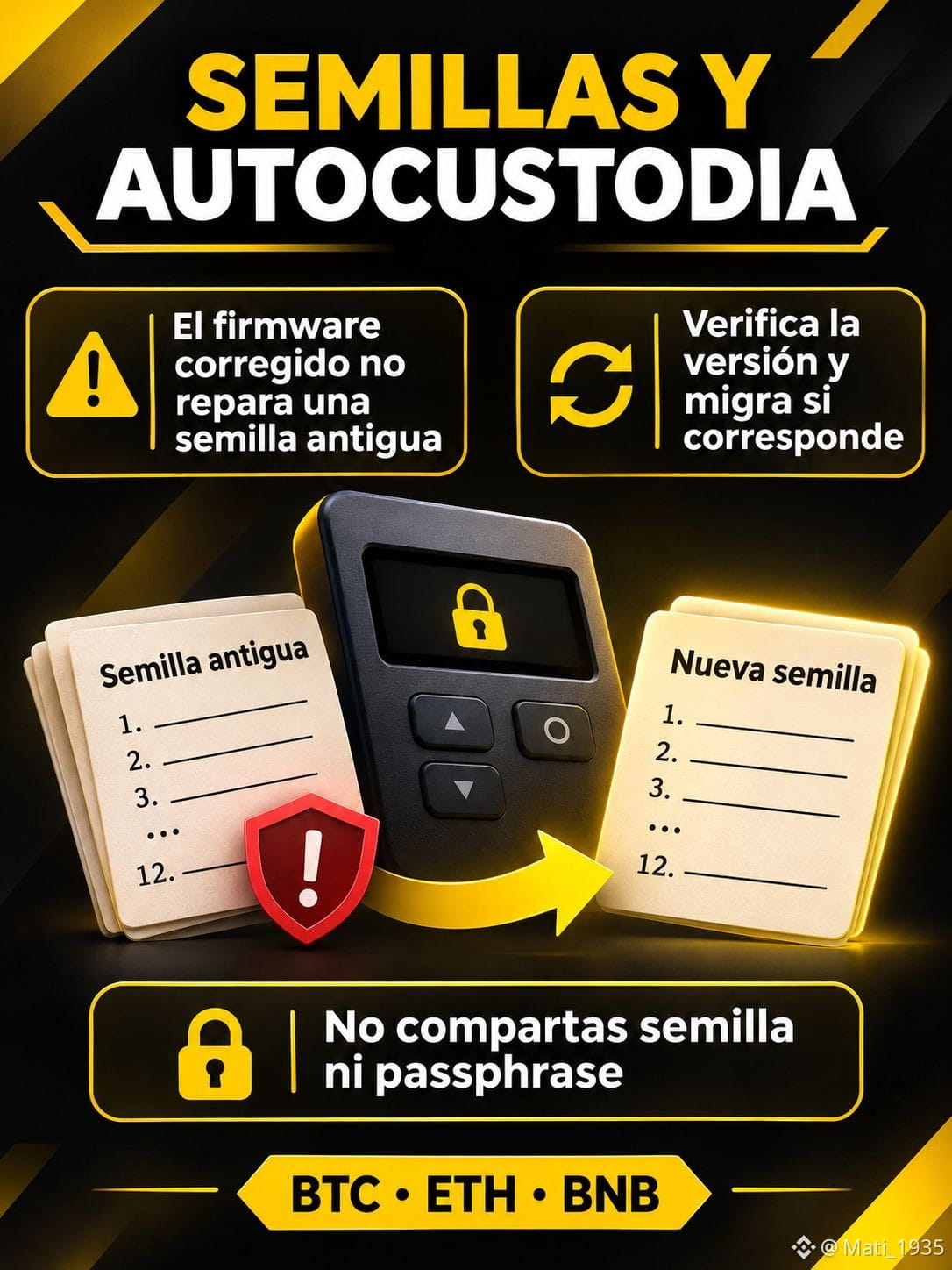
Coldcard: el incidente de semillas deja una lección de autocustodia
Tema visible en Binance Square: el fallo de Coldcard vinculado al robo de al menos 1.789 BTC. El incidente ocurrió entre el 29 y el 31 de julio de 2026; Coinkite publicó el postmortem el 24 de noviembre.
La investigación oficial describe un defecto en la generación de semillas. Los atacantes no tomaron el control remoto de los dispositivos: regeneraron offline claves privadas asociadas a semillas debilitadas. Coinkite informa 236 cuentas con pérdidas reportadas, cerca del 0,2% de su base estimada, y advierte que el número real puede ser mayor.
La corrección no consiste solo en actualizar el firmware. Coldcard indica que las versiones actuales son 5.6.3 para Mk4/Mk5 y 1.5.3Q para Q; instalar una versión corregida evita nuevas semillas defectuosas, pero no repara una semilla creada con firmware afectado. Esas cuentas deben seguir la guía oficial de migración.
Coinkite señala que Keylabs revisó código y binarios corregidos dentro de un alcance definido y consideró cerrado el defecto. Eso no equivale a declarar una cartera sin riesgo: la página recomienda verificar firmas, probar la recuperación, separar copias y usar una passphrase fuerte cuando el saldo sea material. Nunca compartas semilla, passphrase ni claves privadas.
Lectura de mercado (ticker Spot público de Binance, capturado alrededor de las 11:25 UTC): BTC cotiza en 59.265,94 USDT (-3,871% en 24 h; volumen nominal 1.004,69 millones USDT), ETH en 1.647,88 USDT (-4,535%; 502,23 millones USDT) y BNB en 549,57 USDT (-2,553%; 54,69 millones USDT). Son referencias de actividad, no una señal operativa ni una medida del riesgo de una wallet.
La lección es operativa: una wallet fuera de línea reduce ciertos vectores, pero la seguridad depende también de la semilla, el firmware y la migración. Autocustodia significa asumir esas comprobaciones antes de mover fondos.
$BTC $ETH $BNB
Contenido Educativo. No asesoramiento financiero.
#Coldcard #Autocustodia #SeguridadCripto #Bitcoin #Educativo
75

·
--
🔐 硬件钱包也翻车:15次安全审查,没一个发现这个bug!
Coinkite 公布 Coldcard 事故复盘:
👉 2021/3/29–2026/7/30,固件生成助记词用的是软件伪随机数,而不是芯片硬件随机数
👉 助记词看起来完全正常,所以常规测试全过
👉 攻击者离线重算私钥,Galaxy Research 追踪至少 1,789 BTC 被盗(来自 Tokenpost 报道)
👉 约300张损失工单、涉及242个账户,目前无赔偿计划
👉 有效熵:Mk2/Mk3 约40位,Mk4/Mk5/Q 约72位,目标是128位
⚠️ 关键点:固件升级修不了旧种子。受影响设备生成的种子,必须新建种子并转移资金。
💡 教训:审计只验证"设计",没人验证"实际跑的是什么"。"设备在自己手里"≠"私钥安全"。
你的冷钱包是几年前买的?会自查种子来源吗?评论区聊聊👇
$BTC $ETH #Coldcard #冷钱包 #加密安全
仅为个人观点,不构成投资建议
2


·
--
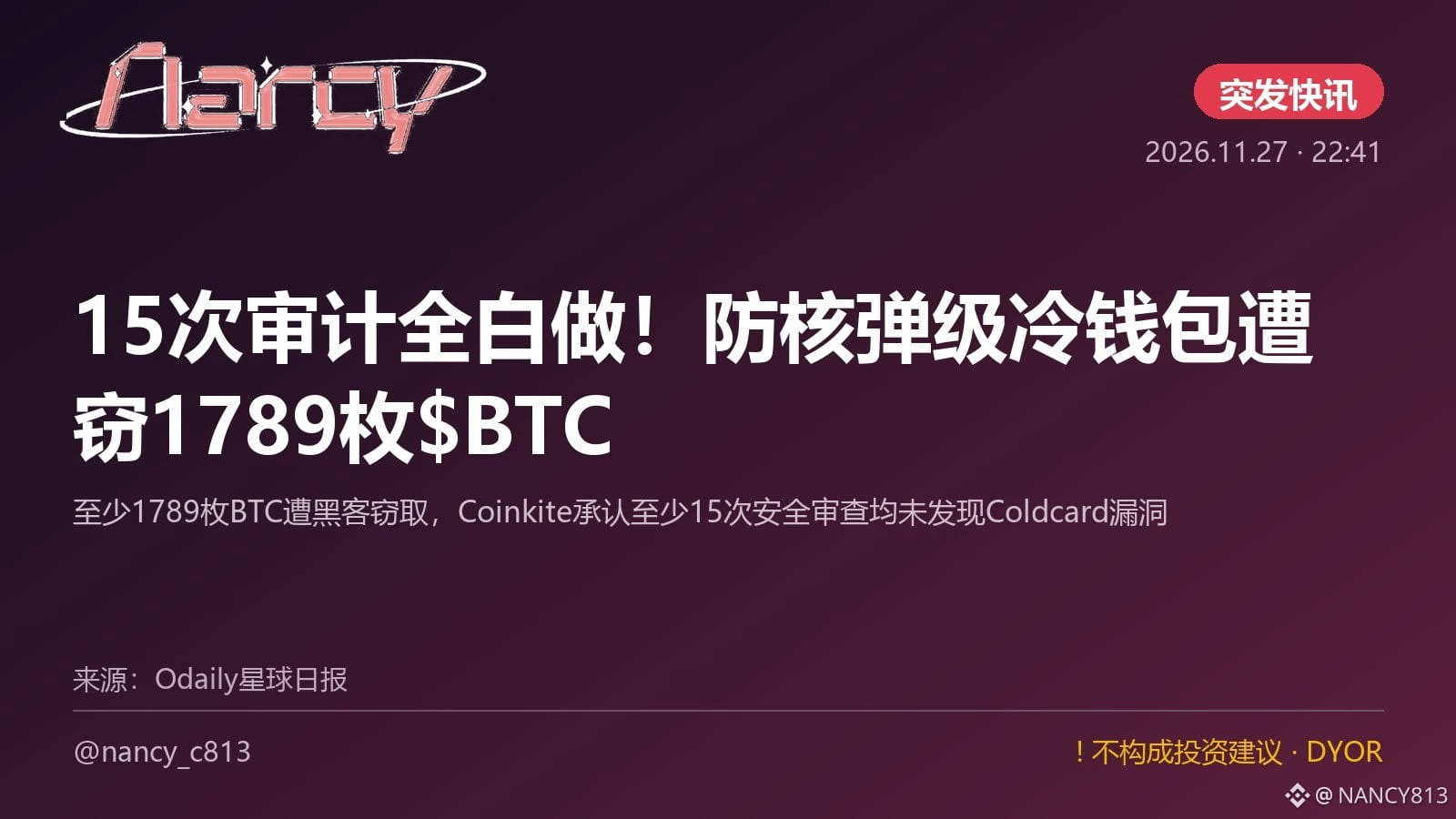
做过至少 15 次独立安全审查的 Coldcard 冷钱包,因软件漏洞被黑客窃取至少 1789 枚 $BTC 。
这款被比特币极客视为『终极保单』的断网设备,事后复盘让大户傻眼。漏洞不是加密难题,而是低级错误:设备生成助记词时,压根没调用高强度系统,而是用了较弱系统。
更离谱的是,此前 15 次第三方安全审查,专家全确认了系统设计正确,却没有任何人去检查设备实际运行时到底有没有使用该系统!就像花天价定制防弹门,却没人测试锁扣有没有卡上。
这给所有以为买了冷钱包就能一劳永逸的人敲响警钟:只要是软件,就没有绝对保险箱。大资金别押在单一硬件和单签私钥上,分散存储与多签才是正道。
#Coldcard #BTC #冷钱包
这款被比特币极客视为『终极保单』的断网设备,事后复盘让大户傻眼。漏洞不是加密难题,而是低级错误:设备生成助记词时,压根没调用高强度系统,而是用了较弱系统。
更离谱的是,此前 15 次第三方安全审查,专家全确认了系统设计正确,却没有任何人去检查设备实际运行时到底有没有使用该系统!就像花天价定制防弹门,却没人测试锁扣有没有卡上。
这给所有以为买了冷钱包就能一劳永逸的人敲响警钟:只要是软件,就没有绝对保险箱。大资金别押在单一硬件和单签私钥上,分散存储与多签才是正道。
#Coldcard #BTC #冷钱包
711

·
--
Coldcard硬件钱包出漏洞,至少1789枚BTC被盗。
问题出在2021年固件更新后,生成助记词时没用硬件随机数,用了弱的软件随机数,种子不够随机,攻击者能直接猜出来私钥转走钱。这个漏洞藏了5年多,多次审查都没发现。
受影响的用户必须重新生成新种子并把币转走,只升级固件没用。目前厂商还没有明确赔偿方案。
#Coldcard #BTC #硬件钱包
#Coldcard漏洞致至少1789枚BTC被盗
Coldcard硬件钱包出漏洞,至少1789枚BTC被盗。
问题出在2021年固件更新后,生成助记词时没用硬件随机数,用了弱的软件随机数,种子不够随机,攻击者能直接猜出来私钥转走钱。这个漏洞藏了5年多,多次审查都没发现。
受影响的用户必须重新生成新种子并把币转走,只升级固件没用。目前厂商还没有明确赔偿方案。
#Coldcard #BTC #硬件钱包
#Coldcard漏洞致至少1789枚BTC被盗
问题出在2021年固件更新后,生成助记词时没用硬件随机数,用了弱的软件随机数,种子不够随机,攻击者能直接猜出来私钥转走钱。这个漏洞藏了5年多,多次审查都没发现。
受影响的用户必须重新生成新种子并把币转走,只升级固件没用。目前厂商还没有明确赔偿方案。
#Coldcard #BTC #硬件钱包
#Coldcard漏洞致至少1789枚BTC被盗
295

Article
Coinkite COLDCARD postmortem: Yasmarang RNG, 1,778.84 BTC from 8,600+ addressesCoinkite COLDCARD postmortem: Yasmarang RNG, 1,778.84 $BTC from 8,600+ addresses
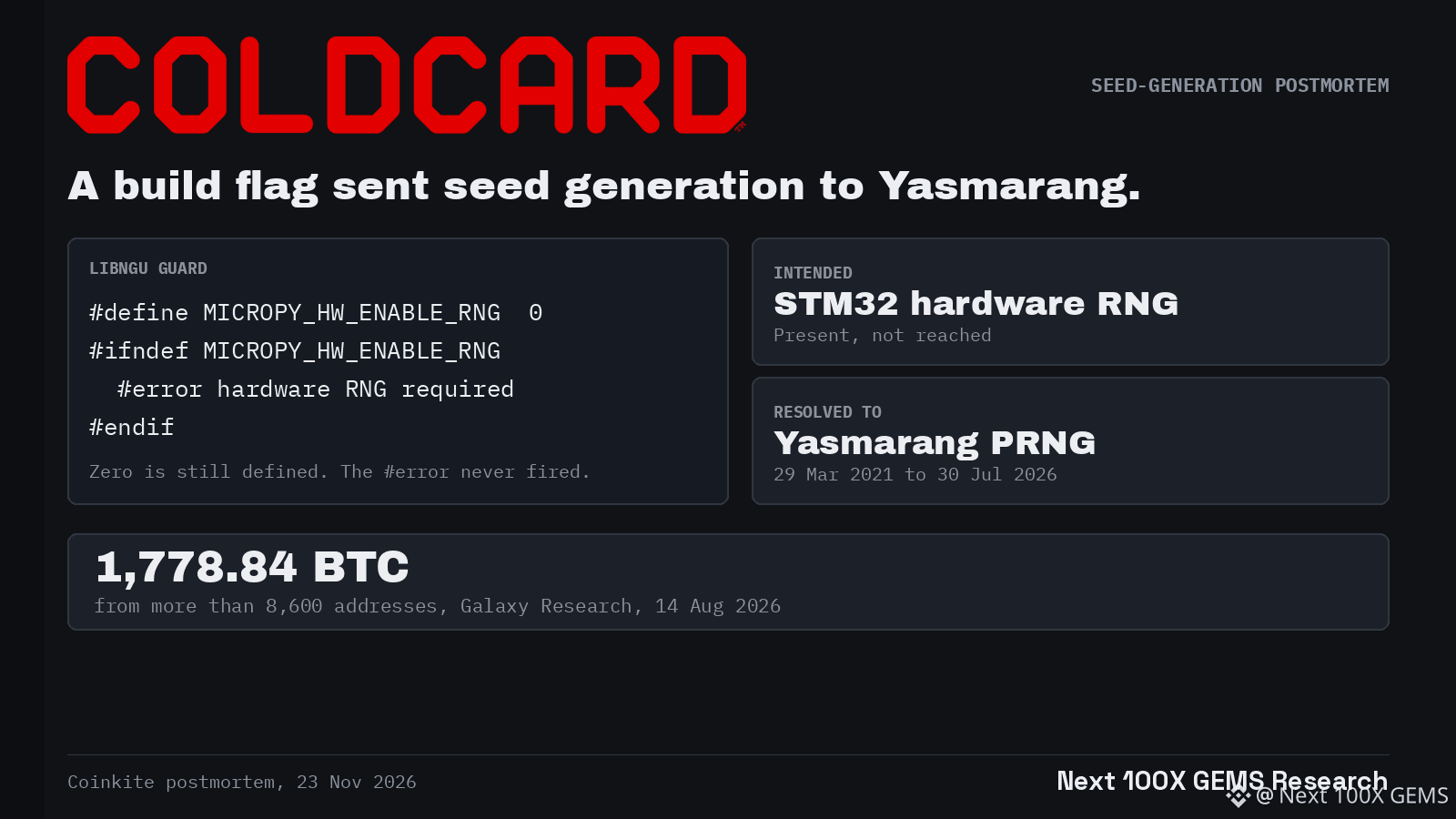
The thefts started on 29 July 2026. Nobody had to touch a COLDCARD. Attackers rebuilt private keys for seeds the devices had already made, then swept the coins. On 14 August 2026, Galaxy Research said it had confirmed, with high confidence and after speaking with 190 people who reported losses, that 1,778.84 BTC had been taken from more than 8,600 addresses. That count left out lower-confidence sets, including an unconfirmed "Wave 4." If those had been included, Galaxy's figure would have been 2,417.35 BTC.
Coinkite's postmortem, dated 23 November 2026, cites Galaxy's address count as 8,865 as of 24 August, and says no public total of users or losses across every wave has been established. As of 18 November, the company had 300 loss-related support tickets tied to 242 accounts, about 0.21% of its estimated user base, a share it says is likely low because not every victim files a ticket.
The devices were never entered. The seeds were weak.
A zero that counted as a yes
From 29 March 2021 through 30 July 2026, COLDCARD firmware generated wallet seeds with MicroPython's Yasmarang software pseudo-random number generator instead of the device's STM32 hardware random-number generator. That window is Coinkite's.
The design was supposed to have no software fallback. In March 2021, when seed generation moved through a library called libNgU, the firmware set MICROPY_HW_ENABLE_RNG to 0, meaning to switch the software path off. A guard in the pinned libNgU code used ifndef, which only asks whether the macro is defined, not whether its value is nonzero. Zero still counts as defined. The build passed. libNgU's rng_get() resolved to Yasmarang. The hardware generator sat in the binary and was never reached by seed generation. The device still produced well-formed seed words.
Coinkite calls this a COLDCARD integration defect, not a bug in libNgU itself, and not a runtime failure of the hardware RNG. Attackers did not need physical access. They regenerated keys offline.
Coinkite estimates the affected seeds had roughly 40 bits of effective entropy on Mk2 and Mk3, and roughly 72 bits on Mk4, Mk5 and Q, against a 128-bit security target. The 72-bit figure, the postmortem says, has not been independently established. Block's Bitcoin Engineering and Security teams, in a 30 July write-up, described a further constraint on the later models: boot mixed in secure-element entropy, then a reseed replaced only one 32-bit Yasmarang state word, leaving at most 2^32 securely distinguished output streams once the fallback state and call history were fixed. Hashing the output, both Coinkite and Block say, could not add entropy that was not there.
The ranges Coinkite published
The 23 November report lists the affected firmware by model and track, and the first fixed release for each. For Mk2 and Mk3, seeds generated on 4.0.1 through 4.1.9 are affected; the minimum fixed release is 4.2.0 or later. For Mk4 and Mk5 on the standard track, the affected range is any seed generated before 5.6.0, with 5.6.0 or later as the fix. On the Mk4 and Mk5 Edge track, the cut is before 6.6.0X, fixed in 6.6.0X or later. For Q on the standard track, the affected range is before 1.5.0Q, fixed in 1.5.0Q or later; on the Q Edge track, before 6.6.0QX, fixed in 6.6.0QX or later. Standard and Edge are separate tracks with independent version numbers. As of the report, the current standard releases were 5.6.3 and 1.5.3Q, and the current Edge releases were 6.6.2X and 6.6.2QX.
v4.0.0, which is visible in the source lineage, was not distributed as a signed public binary. The first signed public release in the series was 4.0.1, on 29 March 2021.
A seed generated on affected firmware stays affected after it is restored, imported, backed up or cloned. A seed that was securely generated outside that on-device flow was not weakened by later import into an affected device. Seeds made with at least 50 fair, independent, private dice rolls entered through Add Dice Rolls, with the sequence never recorded or exposed and the final post-roll words used, "were not weakened by the defect," the report says. A strong BIP-39 passphrase or a multisig setup, Coinkite says, added a barrier the weak seed did not; those layers do not repair the seed itself.
Coinkite identified the defect on 30 July and published fixed firmware for all supported tracks on 31 July. Keylabs, in a review published 15 October, concluded that, within its stated scope, the defect is fully closed in Mk5 5.6.3 and 5.6.2 and in Q 1.5.3Q and 1.5.2Q. Edge releases were outside that review.
Between 2021 and 2026, Coinkite documented at least 15 independent review and security-research efforts on COLDCARD hardware, firmware, entropy tooling and release controls, including two commissioned third-party product reviews. The scopes varied, and not all of the work examined seed generation. A 17 June 2026 review by Nick Farrow expressly included weak RNG in its scope, concluded the path was sound, and did not find the defect. No contemporaneous report, Coinkite says, identified and reproduced the build-integration error.
What Coinkite tells owners
The company points owners to sections 1.4 and 4.1 of the report, and to the Security Status page at coldcard.com/security/status, to check whether they are affected and what to do. A firmware update, it says, does not repair a seed generated on affected firmware.
If a seed was generated on affected firmware, Coinkite's user recommendations are to install verified fixed firmware, create a new seed, verify it and its backup, and move the funds, including from passphrase wallets. Never send seed words, passphrases, dice rolls, private keys, backup files or backup passwords to anyone, including Coinkite, or enter them into any website. Use only support routes linked from coldcard.com, and treat unsolicited recovery, migration or compensation offers as likely impersonation.
A recommendation to decide on and publish any compensation or assistance plan for affected customers remains open, with no decision recorded in the report.
TAPSIGNER, OPENDIME and SATSCARD, Coinkite has said, are not affected, because they use different codebases.
Sources
Coinkite, "COLDCARD Seed-Generation Incident Postmortem," 23 Nov 2026
Coinkite, "Our COLDCARD seed-generation postmortem is now public," 24 Nov 2026
Coinkite, "Technical Deep Dive into the Entropy Issue"
Block Engineering, "Predictable RNG Fallback and 32-Bit Reseed in COLDCARD Firmware," 30 Jul 2026
Galaxy Research, "Coldcard Exploit Abates as Total Losses Climb to (at Least) 1,700 BTC," 14 Aug 2026
Coinkite, "Adding to the Public Record on Our Ongoing Investigation"
#COLDCARD #Bitcoin
NFA. DYOR.
Coinkite COLDCARD postmortem: Yasmarang RNG, 1,778.84 BTC from 8,600+ addresses
Coinkite COLDCARD postmortem: Yasmarang RNG, 1,778.84 $BTC from 8,600+ addresses
The thefts started on 29 July 2026. Nobody had to touch a COLDCARD. Attackers rebuilt private keys for seeds the devices had already made, then swept the coins. On 14 August 2026, Galaxy Research said it had confirmed, with high confidence and after speaking with 190 people who reported losses, that 1,778.84 BTC had been taken from more than 8,600 addresses. That count left out lower-confidence sets, including an unconfirmed "Wave 4." If those had been included, Galaxy's figure would have been 2,417.35 BTC.
Coinkite's postmortem, dated 23 November 2026, cites Galaxy's address count as 8,865 as of 24 August, and says no public total of users or losses across every wave has been established. As of 18 November, the company had 300 loss-related support tickets tied to 242 accounts, about 0.21% of its estimated user base, a share it says is likely low because not every victim files a ticket.
The devices were never entered. The seeds were weak.
A zero that counted as a yes
From 29 March 2021 through 30 July 2026, COLDCARD firmware generated wallet seeds with MicroPython's Yasmarang software pseudo-random number generator instead of the device's STM32 hardware random-number generator. That window is Coinkite's.
The design was supposed to have no software fallback. In March 2021, when seed generation moved through a library called libNgU, the firmware set MICROPY_HW_ENABLE_RNG to 0, meaning to switch the software path off. A guard in the pinned libNgU code used ifndef, which only asks whether the macro is defined, not whether its value is nonzero. Zero still counts as defined. The build passed. libNgU's rng_get() resolved to Yasmarang. The hardware generator sat in the binary and was never reached by seed generation. The device still produced well-formed seed words.
Coinkite calls this a COLDCARD integration defect, not a bug in libNgU itself, and not a runtime failure of the hardware RNG. Attackers did not need physical access. They regenerated keys offline.
Coinkite estimates the affected seeds had roughly 40 bits of effective entropy on Mk2 and Mk3, and roughly 72 bits on Mk4, Mk5 and Q, against a 128-bit security target. The 72-bit figure, the postmortem says, has not been independently established. Block's Bitcoin Engineering and Security teams, in a 30 July write-up, described a further constraint on the later models: boot mixed in secure-element entropy, then a reseed replaced only one 32-bit Yasmarang state word, leaving at most 2^32 securely distinguished output streams once the fallback state and call history were fixed. Hashing the output, both Coinkite and Block say, could not add entropy that was not there.
The ranges Coinkite published
The 23 November report lists the affected firmware by model and track, and the first fixed release for each. For Mk2 and Mk3, seeds generated on 4.0.1 through 4.1.9 are affected; the minimum fixed release is 4.2.0 or later. For Mk4 and Mk5 on the standard track, the affected range is any seed generated before 5.6.0, with 5.6.0 or later as the fix. On the Mk4 and Mk5 Edge track, the cut is before 6.6.0X, fixed in 6.6.0X or later. For Q on the standard track, the affected range is before 1.5.0Q, fixed in 1.5.0Q or later; on the Q Edge track, before 6.6.0QX, fixed in 6.6.0QX or later. Standard and Edge are separate tracks with independent version numbers. As of the report, the current standard releases were 5.6.3 and 1.5.3Q, and the current Edge releases were 6.6.2X and 6.6.2QX.
v4.0.0, which is visible in the source lineage, was not distributed as a signed public binary. The first signed public release in the series was 4.0.1, on 29 March 2021.
A seed generated on affected firmware stays affected after it is restored, imported, backed up or cloned. A seed that was securely generated outside that on-device flow was not weakened by later import into an affected device. Seeds made with at least 50 fair, independent, private dice rolls entered through Add Dice Rolls, with the sequence never recorded or exposed and the final post-roll words used, "were not weakened by the defect," the report says. A strong BIP-39 passphrase or a multisig setup, Coinkite says, added a barrier the weak seed did not; those layers do not repair the seed itself.
Coinkite identified the defect on 30 July and published fixed firmware for all supported tracks on 31 July. Keylabs, in a review published 15 October, concluded that, within its stated scope, the defect is fully closed in Mk5 5.6.3 and 5.6.2 and in Q 1.5.3Q and 1.5.2Q. Edge releases were outside that review.
Between 2021 and 2026, Coinkite documented at least 15 independent review and security-research efforts on COLDCARD hardware, firmware, entropy tooling and release controls, including two commissioned third-party product reviews. The scopes varied, and not all of the work examined seed generation. A 17 June 2026 review by Nick Farrow expressly included weak RNG in its scope, concluded the path was sound, and did not find the defect. No contemporaneous report, Coinkite says, identified and reproduced the build-integration error.
What Coinkite tells owners
The company points owners to sections 1.4 and 4.1 of the report, and to the Security Status page at coldcard.com/security/status, to check whether they are affected and what to do. A firmware update, it says, does not repair a seed generated on affected firmware.
If a seed was generated on affected firmware, Coinkite's user recommendations are to install verified fixed firmware, create a new seed, verify it and its backup, and move the funds, including from passphrase wallets. Never send seed words, passphrases, dice rolls, private keys, backup files or backup passwords to anyone, including Coinkite, or enter them into any website. Use only support routes linked from coldcard.com, and treat unsolicited recovery, migration or compensation offers as likely impersonation.
A recommendation to decide on and publish any compensation or assistance plan for affected customers remains open, with no decision recorded in the report.
TAPSIGNER, OPENDIME and SATSCARD, Coinkite has said, are not affected, because they use different codebases.
Sources
Coinkite, "COLDCARD Seed-Generation Incident Postmortem," 23 Nov 2026
Coinkite, "Our COLDCARD seed-generation postmortem is now public," 24 Nov 2026
Coinkite, "Technical Deep Dive into the Entropy Issue"
Block Engineering, "Predictable RNG Fallback and 32-Bit Reseed in COLDCARD Firmware," 30 Jul 2026
Galaxy Research, "Coldcard Exploit Abates as Total Losses Climb to (at Least) 1,700 BTC," 14 Aug 2026
Coinkite, "Adding to the Public Record on Our Ongoing Investigation"
#COLDCARD #Bitcoin
NFA. DYOR.
192

·
--
Coldcard 的漏洞复盘出来了,Coinkite 承认至少 15 次独立安全审查都没发现这个问题,黑客靠它拿走了至少 1789 枚 BTC。
审计只核对了钱包的助记词生成系统是否正确,却没人验证设备是不是真在用那套系统,软件出错后设备切到更弱的随机源,生成的助记词表面毫无异常,约 300 份损失报告对应 242 个账户,官方目前没给赔偿方案。
已经生成的助记词没法靠固件升级修回来,公告里只留了让持有人自行转移资产这一句,$BTC 存在这类老设备里的,账得自己重新对一遍。
#Coldcard #BTC
Coldcard 的漏洞复盘出来了,Coinkite 承认至少 15 次独立安全审查都没发现这个问题,黑客靠它拿走了至少 1789 枚 BTC。
审计只核对了钱包的助记词生成系统是否正确,却没人验证设备是不是真在用那套系统,软件出错后设备切到更弱的随机源,生成的助记词表面毫无异常,约 300 份损失报告对应 242 个账户,官方目前没给赔偿方案。
已经生成的助记词没法靠固件升级修回来,公告里只留了让持有人自行转移资产这一句,$BTC 存在这类老设备里的,账得自己重新对一遍。
#Coldcard #BTC
审计只核对了钱包的助记词生成系统是否正确,却没人验证设备是不是真在用那套系统,软件出错后设备切到更弱的随机源,生成的助记词表面毫无异常,约 300 份损失报告对应 242 个账户,官方目前没给赔偿方案。
已经生成的助记词没法靠固件升级修回来,公告里只留了让持有人自行转移资产这一句,$BTC 存在这类老设备里的,账得自己重新对一遍。
#Coldcard #BTC
20

·
--
Your hardware wallet's seed phrase was supposed to be unguessable. For five years, Coldcard's wasn't — and that flaw cost users $100 million in $BTC.
On November 23, Coinkite published an 18-page postmortem on the Coldcard seed-generation flaw. A firmware change in March 2021 disabled the hardware random number generator: the code checked whether a config flag was defined, not whether it was enabled. Seeds fell back to a weak software generator, leaving Mk2 and Mk3 devices with roughly 40 bits of effective entropy.
Galaxy Research tracked at least 1,778.84 BTC stolen from more than 8,600 addresses, worth about $107 million — the first sweep alone drained 1,082.65 BTC from 1,196 addresses in 41 minutes on July 30. The flaw survived at least 15 independent security reviews over five years. Coinkite patched it on July 31, but updating firmware does not fix seeds already generated — affected users must create a fresh seed and move their coins.
The open question is liability: around 300 loss tickets filed, no compensation decision announced.
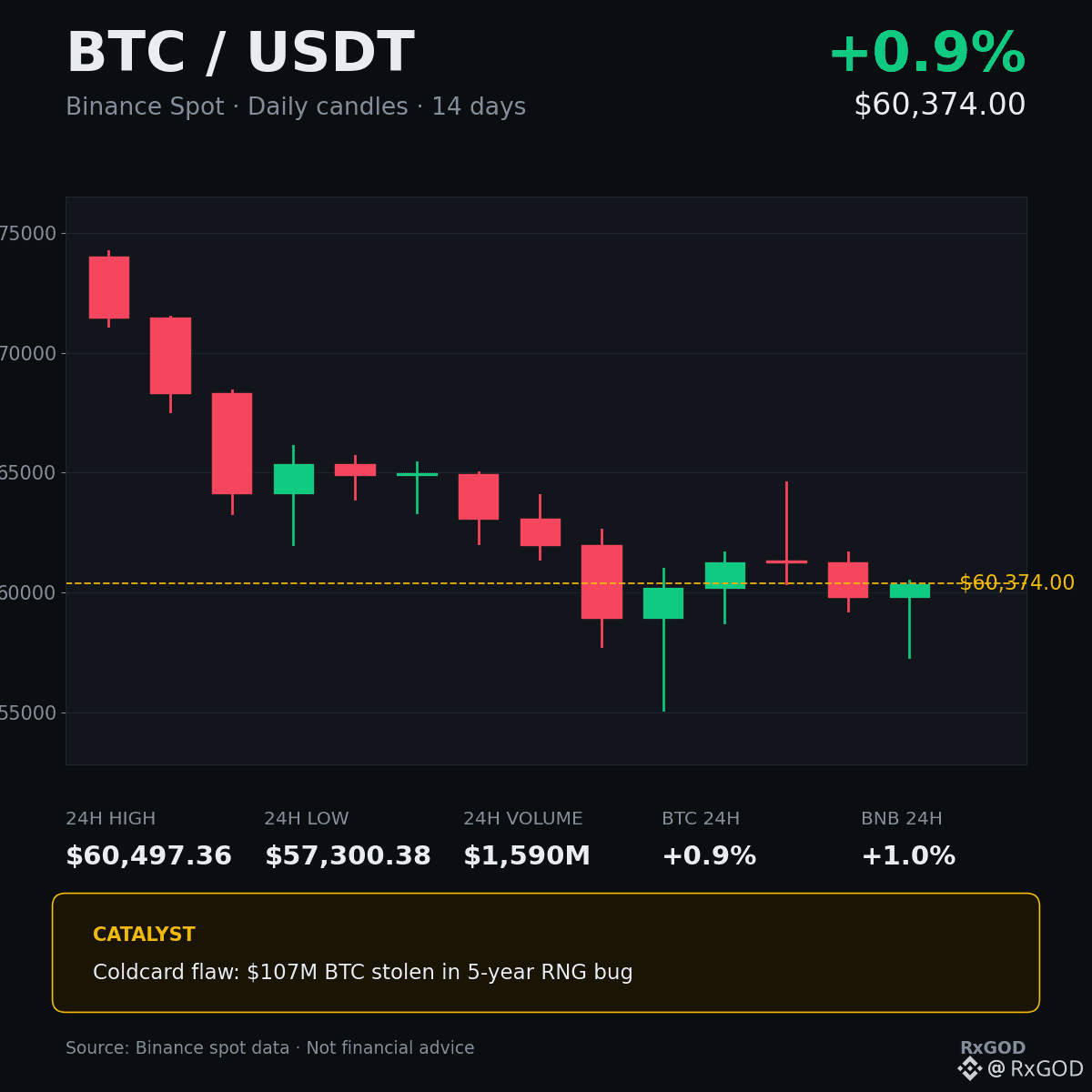
$BTC trades at $60,374, up 0.93% in 24 hours and near the top of its $57,300–$60,497 range, though down 15.5% over 14 days with Fear & Greed at 9 — Extreme Fear.
Coldcard owners: check your firmware version today. Would you move your coins immediately if your seed came from affected firmware — or trust the patch and stay put? And should the maker pay when its own bug costs users $107 million?
Not financial advice — DYOR.
#Coldcard #Bitcoin #CryptoNews #ExtremeFear
Your hardware wallet's seed phrase was supposed to be unguessable. For five years, Coldcard's wasn't — and that flaw cost users $100 million in $BTC .
On November 23, Coinkite published an 18-page postmortem on the Coldcard seed-generation flaw. A firmware change in March 2021 disabled the hardware random number generator: the code checked whether a config flag was defined, not whether it was enabled. Seeds fell back to a weak software generator, leaving Mk2 and Mk3 devices with roughly 40 bits of effective entropy.
Galaxy Research tracked at least 1,778.84 BTC stolen from more than 8,600 addresses, worth about $107 million — the first sweep alone drained 1,082.65 BTC from 1,196 addresses in 41 minutes on July 30. The flaw survived at least 15 independent security reviews over five years. Coinkite patched it on July 31, but updating firmware does not fix seeds already generated — affected users must create a fresh seed and move their coins.
The open question is liability: around 300 loss tickets filed, no compensation decision announced.
$BTC trades at $60,374, up 0.93% in 24 hours and near the top of its $57,300–$60,497 range, though down 15.5% over 14 days with Fear & Greed at 9 — Extreme Fear.
Coldcard owners: check your firmware version today. Would you move your coins immediately if your seed came from affected firmware — or trust the patch and stay put? And should the maker pay when its own bug costs users $107 million?
Not financial advice — DYOR.
#Coldcard #Bitcoin #CryptoNews #ExtremeFear
2

·
--
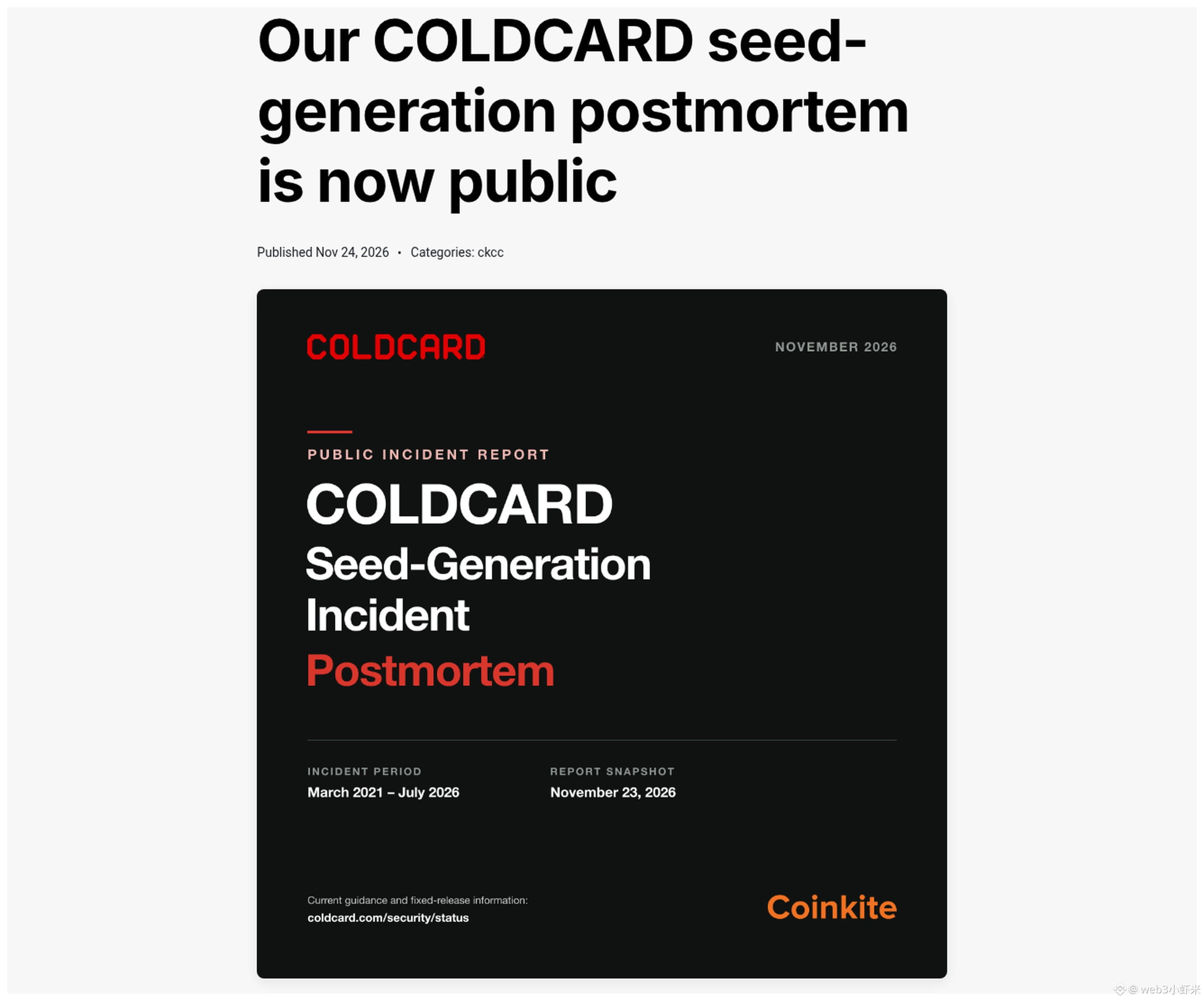
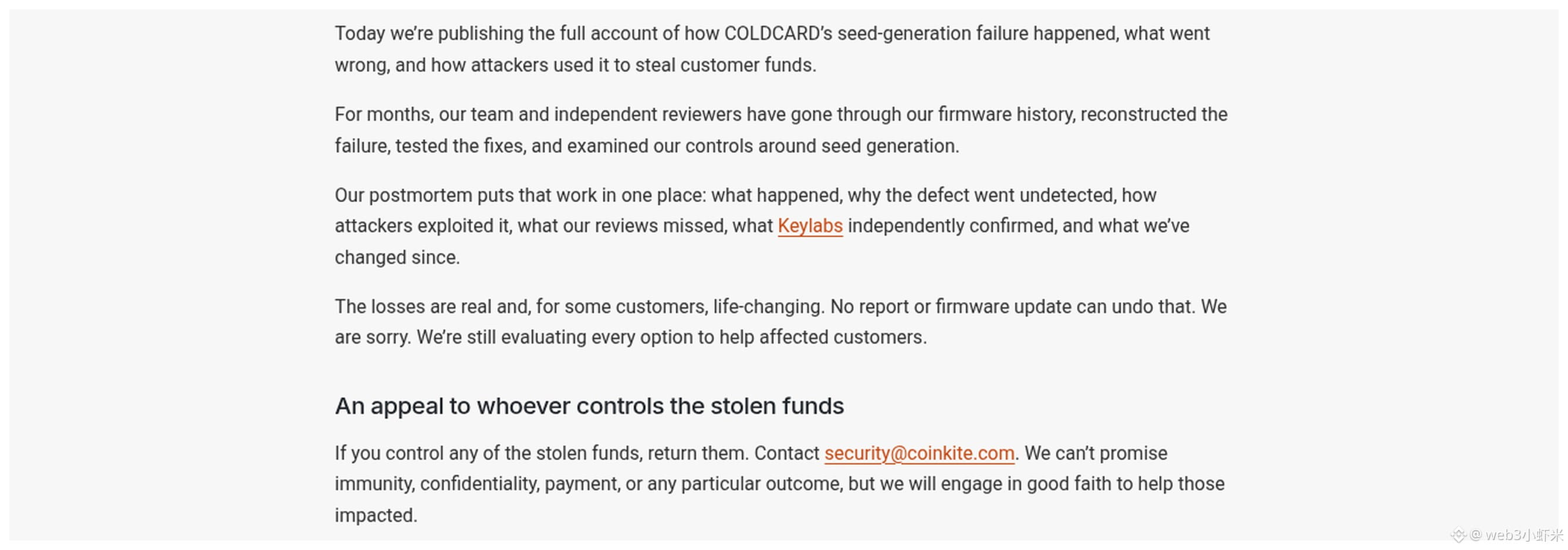
刚刷到 Coinkite 官网 11月24日把 COLDCARD 种子生成问题的完整事后报告公开了。官方写,从 2021 年 3 月到今年 7 月,固件生成种子时实际走的是软件伪随机数,而不是设备上的硬件随机数发生器;攻击者可以离线把受影响的私钥重新算出来转走资金,设备本身没有被远程攻破。
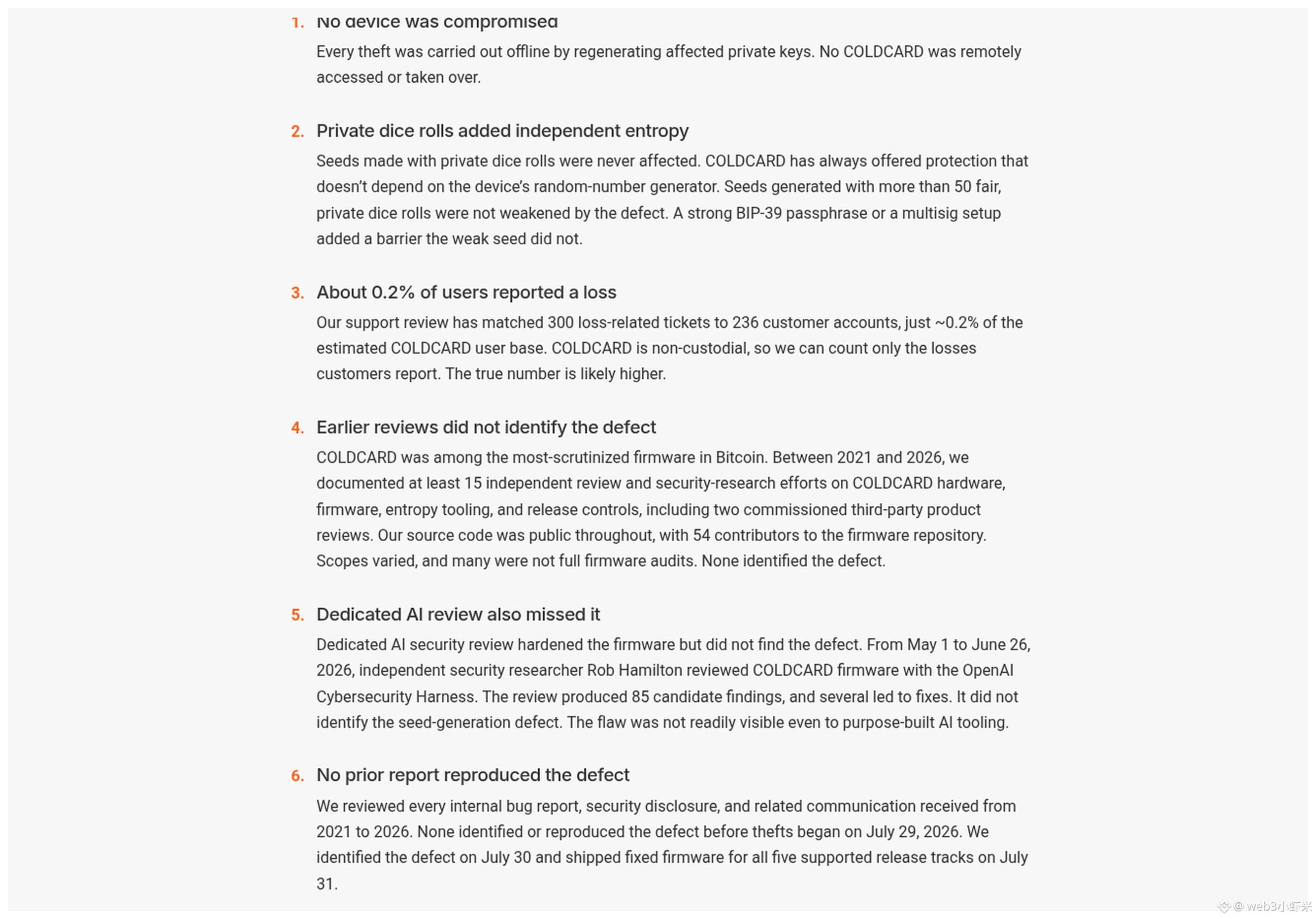
他们匹配到大约 300 张亏损相关工单,对应 236 个客户账户,约占估计用户的 0.2%,并说真实数字可能更高。官方 7 月 30 日定位到问题,31 日为所有五个受支持的版本线发布了修复固件,但写得很清楚:只升级固件,修不了已经在受影响版本上生成的种子。
用过 50 次以上独立、私下骰子加熵的种子不受影响。有这块硬件钱包的,建议直接去官网报告和安全状态页核对,别把助记词、私钥或备份发给任何人。
#COLDCARD #安全
他们匹配到大约 300 张亏损相关工单,对应 236 个客户账户,约占估计用户的 0.2%,并说真实数字可能更高。官方 7 月 30 日定位到问题,31 日为所有五个受支持的版本线发布了修复固件,但写得很清楚:只升级固件,修不了已经在受影响版本上生成的种子。
用过 50 次以上独立、私下骰子加熵的种子不受影响。有这块硬件钱包的,建议直接去官网报告和安全状态页核对,别把助记词、私钥或备份发给任何人。
#COLDCARD #安全

50
·
--
The wallet that was supposed to be unhackable just admitted it wasn't.
Coinkite, maker of the Coldcard hardware wallet, published a postmortem on November 23 explaining how a seed-phrase flaw went undetected for more than five years — despite at least 15 independent security reviews. The checks confirmed the wallet had the right system for generating recovery phrases. They never verified the device was actually using it. A software bug fell back to a weaker system, making phrases easier to guess.
Galaxy Research reported in August that attackers stole at least 1,789 $BTC — around $114.7 million at the time. As of November 18, Coinkite had received about 300 loss-related support tickets tied to 242 accounts, and says the real victim count is likely higher. The flaw was patched on July 31, but a firmware update cannot fix phrases already generated — affected users must create new phrases and move their funds. No compensation plan has been decided, and investigators don't know who did it.
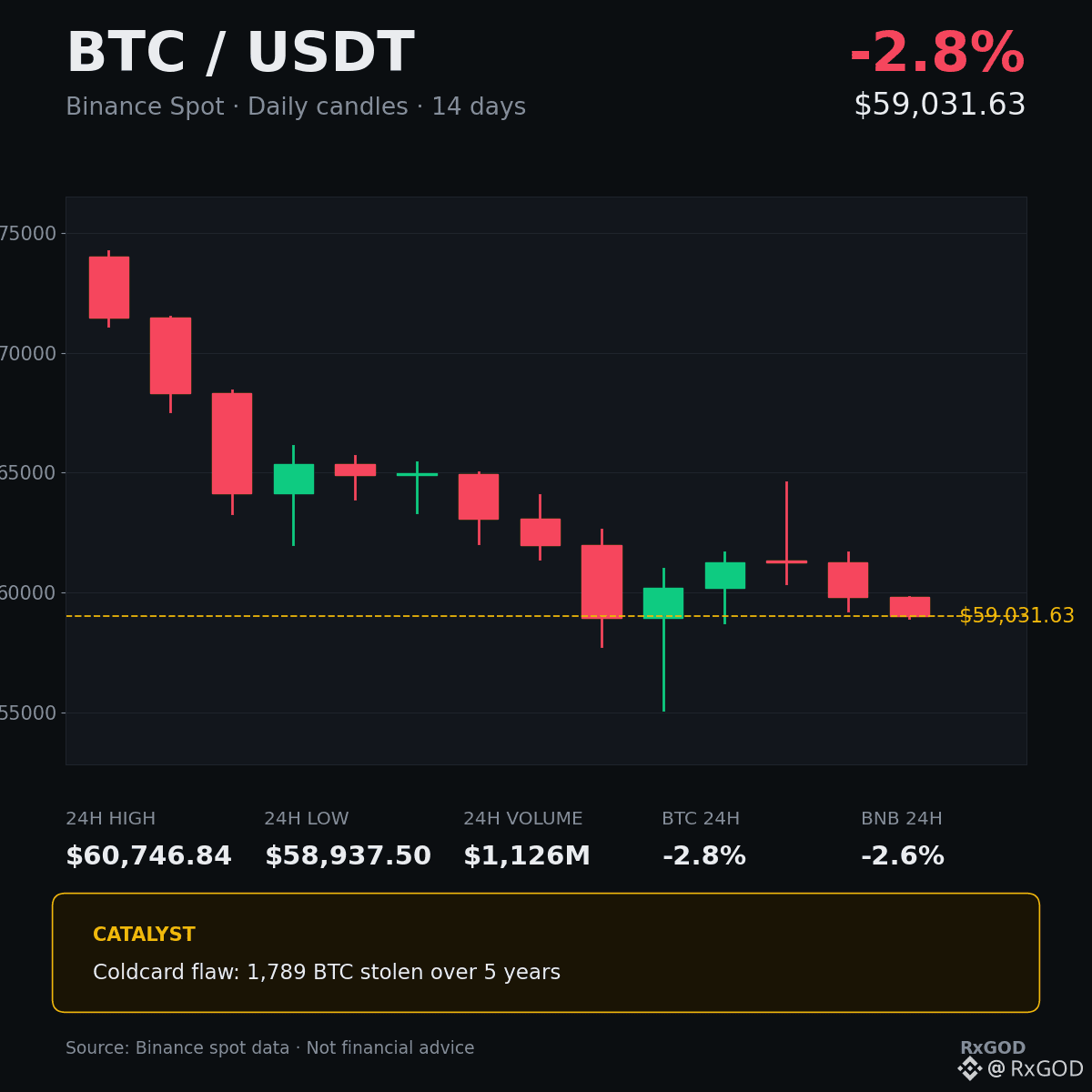
The timing stings. $BTC trades at $59,032, down 2.8% in 24 hours and 17.4% over 14 days, in the bottom fifth of its $55,130–$74,217 range, with Fear & Greed at 8 (Extreme Fear). A self-custody scandal is the last thing this market needed.
The uncomfortable question: if 15 audits couldn't catch this, is cold storage still the gold standard? Would you still trust a hardware wallet with your life savings — or has this changed how you store your crypto?
Not financial advice — DYOR.
#ExtremeFear #CryptoNews #Bitcoin #Coldcard
6

·
--
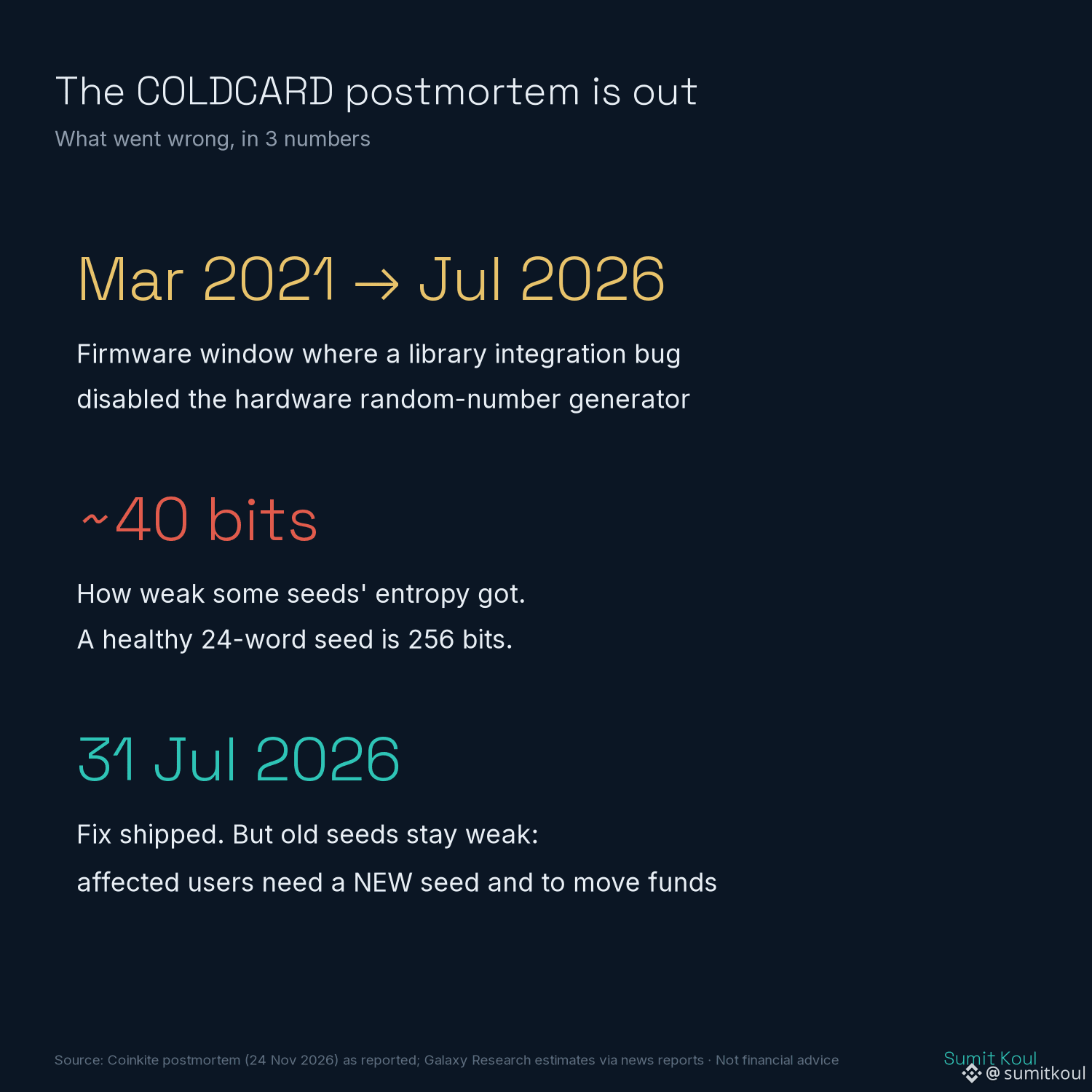
If you set up a COLDCARD between March 2021 and July 2026, read this today. 🔐
Coinkite has published its postmortem on the seed flaw:
• A library integration bug disabled the hardware random-number generator
• Some seeds ended up with as little as ~40 bits of entropy. A healthy 24-word seed has 256
• That made affected seeds crackable offline, without anyone touching the device
• A fix shipped on 31 July 2026
The part people miss: updating firmware does NOT fix an old seed.
If your seed was generated on affected firmware:
1. Update to current official firmware
2. Generate a brand-new seed (dice rolls help add your own entropy)
3. Move funds to the new wallet
4. Never type a seed into a website or "recovery service"
Know someone who uses a COLDCARD? Tag them or share this. It could save their stack. 👇
Follow me for security alerts that actually matter.
#COLDCARD #CryptoSecurity #Bitcoin
Not financial advice.

·
--
Coldcard漏洞潜伏5年:1789枚BTC被盗,5.86万能接吗Coinkite公布Coldcard安全事件复盘:种子生成漏洞潜伏超过5年,至少15次独立安全审查和研究没有提前发现,因为恢复短语看起来正常,也能通过部分检测。漏洞导致黑客至少盗走1789枚BTC,案发时价值约1.147亿美元(Cointelegraph,11月25日)。
公司称漏洞已在7月31日修复,8月又增加安全措施。截至11月18日,已收到约300张与242个账户相关的损失工单,实际受害者可能更多;补偿方案仍未确定,执法机构正在调查。旧恢复短语不会因软件更新自动变安全。
币安$BTC在11月25日21:05 CST报58683.46美元,24小时跌3.036%,区间58456.25—60687.53;当日开高低为59832、59835.38、58456.25。个人观点:若重新站上59832并守住58456.25,轻仓试多,目标60687.53,跌破58456.25止损;若失守58456.25,反弹失效,下一观察位57778.35。
风险在硬件钱包信任修复需要时间,旧种子必须迁移;BTC价格仍主要受关税与流动性影响。你会因Coldcard事件更换钱包,还是只调整仓位?#Coldcard #BTC #钱包安全 #自托管
以上内容不构成投资建议
Coldcard漏洞潜伏5年:1789枚BTC被盗,5.86万能接吗
Coinkite公布Coldcard安全事件复盘:种子生成漏洞潜伏超过5年,至少15次独立安全审查和研究没有提前发现,因为恢复短语看起来正常,也能通过部分检测。漏洞导致黑客至少盗走1789枚BTC,案发时价值约1.147亿美元(Cointelegraph,11月25日)。
公司称漏洞已在7月31日修复,8月又增加安全措施。截至11月18日,已收到约300张与242个账户相关的损失工单,实际受害者可能更多;补偿方案仍未确定,执法机构正在调查。旧恢复短语不会因软件更新自动变安全。
币安$BTC 在11月25日21:05 CST报58683.46美元,24小时跌3.036%,区间58456.25—60687.53;当日开高低为59832、59835.38、58456.25。个人观点:若重新站上59832并守住58456.25,轻仓试多,目标60687.53,跌破58456.25止损;若失守58456.25,反弹失效,下一观察位57778.35。
风险在硬件钱包信任修复需要时间,旧种子必须迁移;BTC价格仍主要受关税与流动性影响。你会因Coldcard事件更换钱包,还是只调整仓位?#Coldcard #BTC #钱包安全 #自托管
以上内容不构成投资建议
58

·
--
🔐 Coldcard Postmortem: 5-Year Seed Flaw Behind $107M Bitcoin Theft
📌 What happened
Coinkite published an 18-page postmortem on Nov 23 on the Coldcard seed-generation flaw that let thieves drain Bitcoin from customer wallets starting in July. A firmware setting switched off the hardware random number generator, so seeds fell back to a predictable software generator — and the defect survived at least 15 security reviews over five years.
📊 Key numbers
• 1,778.84 BTC stolen from 8,600+ addresses — ~$107M at current prices
• Flaw shipped in firmware from Mar 29, 2021 to Jul 30, 2026
• Effective seed entropy: ~40 bits (Mk2/Mk3) and ~72 bits (Mk4/Mk5/Q) vs 128 intended
• Thefts began Jul 29; fixed firmware shipped Jul 31
• ~300 loss tickets from 242 accounts as of Nov 18
• Compensation: "open; no decision" — Coinkite has not committed to reimburse victims
🔍 Why it matters
Coldcard is one of the most trusted names in Bitcoin self-custody, and this is a trust shock for the whole hardware-wallet sector: a single config error — a check that tested whether a setting was defined rather than enabled — silently weakened seeds for five years while reviewers confirmed the secure component existed without testing whether the code path reached it. It lands as BTC trades below $60,000, and the unanswered compensation question plus a September class-action filing keep the fallout live.
👀 What to watch
• Whether Coinkite announces a compensation plan
• The class-action case in Ontario and any further legal moves
• Whether other wallet makers publish RNG audits in response
• Any movement of the stolen 1,778.84 BTC
Not financial advice. Source: Coinkite postmortem / Bitcoin Magazine / CoinStats, Nov 24.
$BTC #Bitcoin #Coldcard #Security
81

Log in to explore more content
Join global crypto users on Binance Square
⚡️ Get latest and useful information about crypto.
💬 Trusted by the world’s largest crypto exchange.
👍 Discover real insights from verified creators.
Email / Phone number
Trending Topics
1
#EvolveAtBinanceBlockchainWeek
2.1M views
19,034 Discussing
2
#BitcoinETFsExtendOutflowStreakToEightDays
37,679 views
480 Discussing
3
#ColdcardFlawLeadsToTheftOfAtLeast1789BTC
106,624 views
804 Discussing
4
#FranklinTempletonPlansToAddHYPEToCryptoIndexETF
7,118 views
119 Discussing
5
#FTSaysRussianInvestorBackedTetherEarly
2,019 views
37 Discussing
6
#EnishPlansToSell5932SOL
22,258 views
149 Discussing
7
#MalaysiaFirstBitcoinETFToListOnDecember2
34,280 views
295 Discussing
8
#SECIssuesNoActionLetterOnMoleculeModel
24,352 views
269 Discussing
9
#LiquidHackerMoves598BTC
385 views
4 Discussing
10
#WorldLibertyActsToCutLiquidationRisk
0 views
1 Discussing