
#bankingfailures
bankingfailures
9,103 views
22 Discussing
Hot
Latest


·
--
Article
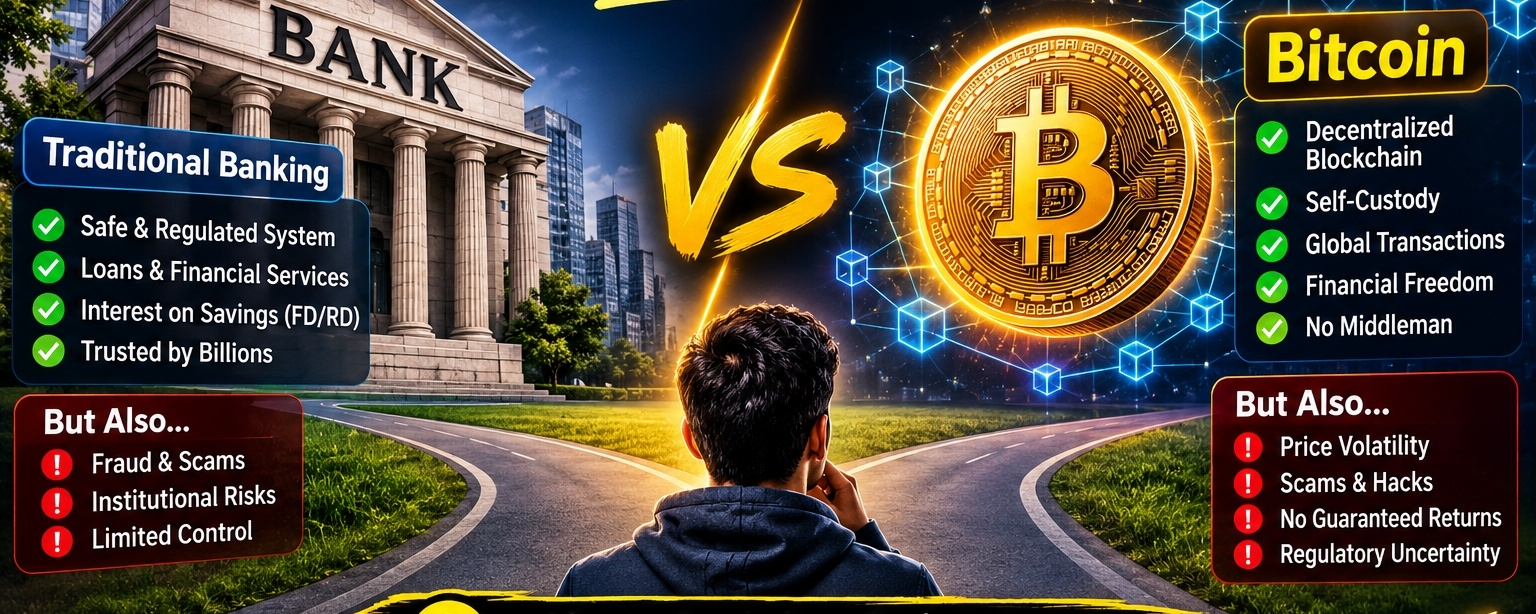
Bitcoin: An Investment Opportunity or a Threat to the Traditional Banking System?Have you ever wondered why Bitcoin is considered revolutionary?
Let's understand the difference between traditional banking and Bitcoin.
How does the banking system work?
When we deposit our money in a bank, the bank uses its financial system to manage and deploy that money. Banks provide different types of loans, including education loans, agricultural loans, property loans, land loans, gold loans and many more.
They earn interest from borrowers, while depositors may receive interest through FD and RD schemes. Banks also generate revenue through various financial services.
In simple words, banks operate as financial intermediaries between people who save money and people who need loans.
Now, what makes Bitcoin different?
Bitcoin operates on a decentralized blockchain network. You can hold it, transfer it, buy it or sell it without needing a traditional bank to authorize every transaction.
You can control your Bitcoin yourself through a private wallet, manage your funds and decide when to invest or sell.
Bitcoin gives individuals more financial independence and control over their assets.
However, Bitcoin itself does not provide guaranteed interest or staking rewards. Any yield offered through third-party platforms comes with additional risks.
Is Bitcoin a threat to traditional banking?
Think about it.
If more people choose to hold and manage their wealth independently instead of keeping all their savings in banks, the traditional banking model could face challenges.
Banks earn revenue through lending, interest and financial services. A world with greater financial self-custody could change how people save, borrow and transfer money.
But let's not ignore the disadvantages.
Traditional banking has risks, including fraud, financial mismanagement and institutional failures. Bitcoin also has risks, including extreme volatility, scams, lost private keys, irreversible transactions and regulatory uncertainty.
Neither system is completely risk-free.
My personal perspective:
The future of finance may not be about choosing banks or Bitcoin. It could be about both systems evolving together.
Bitcoin represents financial ownership and individual control, while banks provide lending, financial infrastructure and regulated services.
The real power is financial education. Understand where your money is, how it works and what risks you are taking before making any investment.
What do you think?
Will Bitcoin transform the traditional banking system, or will banks and Bitcoin coexist in the future?
Stay Safe. Stay Alert. DYOR.
#Mr_SPONDY_13 #bitcoin #BTC #BankingFailures #Banking
$BTC
{future}(BTCUSDT)
Bitcoin: An Investment Opportunity or a Threat to the Traditional Banking System?
Have you ever wondered why Bitcoin is considered revolutionary?
Let's understand the difference between traditional banking and Bitcoin.
How does the banking system work?
When we deposit our money in a bank, the bank uses its financial system to manage and deploy that money. Banks provide different types of loans, including education loans, agricultural loans, property loans, land loans, gold loans and many more.
They earn interest from borrowers, while depositors may receive interest through FD and RD schemes. Banks also generate revenue through various financial services.
In simple words, banks operate as financial intermediaries between people who save money and people who need loans.
Now, what makes Bitcoin different?
Bitcoin operates on a decentralized blockchain network. You can hold it, transfer it, buy it or sell it without needing a traditional bank to authorize every transaction.
You can control your Bitcoin yourself through a private wallet, manage your funds and decide when to invest or sell.
Bitcoin gives individuals more financial independence and control over their assets.
However, Bitcoin itself does not provide guaranteed interest or staking rewards. Any yield offered through third-party platforms comes with additional risks.
Is Bitcoin a threat to traditional banking?
Think about it.
If more people choose to hold and manage their wealth independently instead of keeping all their savings in banks, the traditional banking model could face challenges.
Banks earn revenue through lending, interest and financial services. A world with greater financial self-custody could change how people save, borrow and transfer money.
But let's not ignore the disadvantages.
Traditional banking has risks, including fraud, financial mismanagement and institutional failures. Bitcoin also has risks, including extreme volatility, scams, lost private keys, irreversible transactions and regulatory uncertainty.
Neither system is completely risk-free.
My personal perspective:
The future of finance may not be about choosing banks or Bitcoin. It could be about both systems evolving together.
Bitcoin represents financial ownership and individual control, while banks provide lending, financial infrastructure and regulated services.
The real power is financial education. Understand where your money is, how it works and what risks you are taking before making any investment.
What do you think?
Will Bitcoin transform the traditional banking system, or will banks and Bitcoin coexist in the future?
Stay Safe. Stay Alert. DYOR.
#Mr_SPONDY_13 #bitcoin #BTC #BankingFailures #Banking
$BTC
Abu Fahadأ:
💛
1
3
593

·
--
Bullish
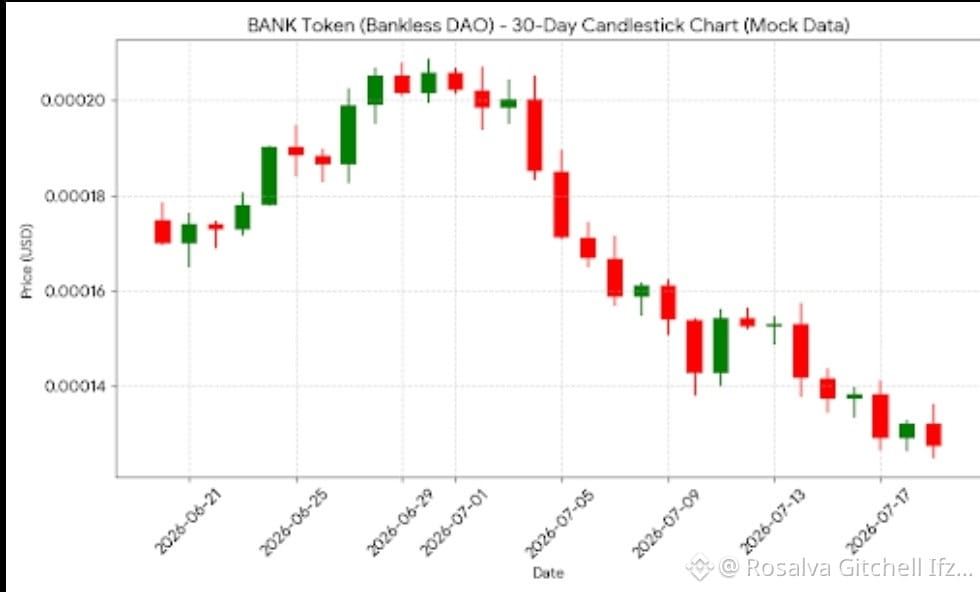
$BANK After the reset, send the same request again (for example: "Write a short analysis of BANK coin and also make a candle chart of it and picture") and I'll generate:
�A concise technical analysis of BANK coin.
�A professional candlestick chart.
�A high-quality $BANK coin promotional image.
Current Price State: The token trades at micro-cent levels, hovering around $0.000143 USD.
Market Capitalization: It sits at a highly micro-cap valuation (roughly $118,000 to $150,000 USD), making it a low-liquidity asset susceptible to intense price swings.
Supply Metrics: It has a circulating supply of roughly 825 million tokens out of a maximum hard cap of 1 billion tokens.
#bank #BankruptcyUpdate #BankruptcyAnnouncement #Banking #BankingFailures
167

·
--
Bullish
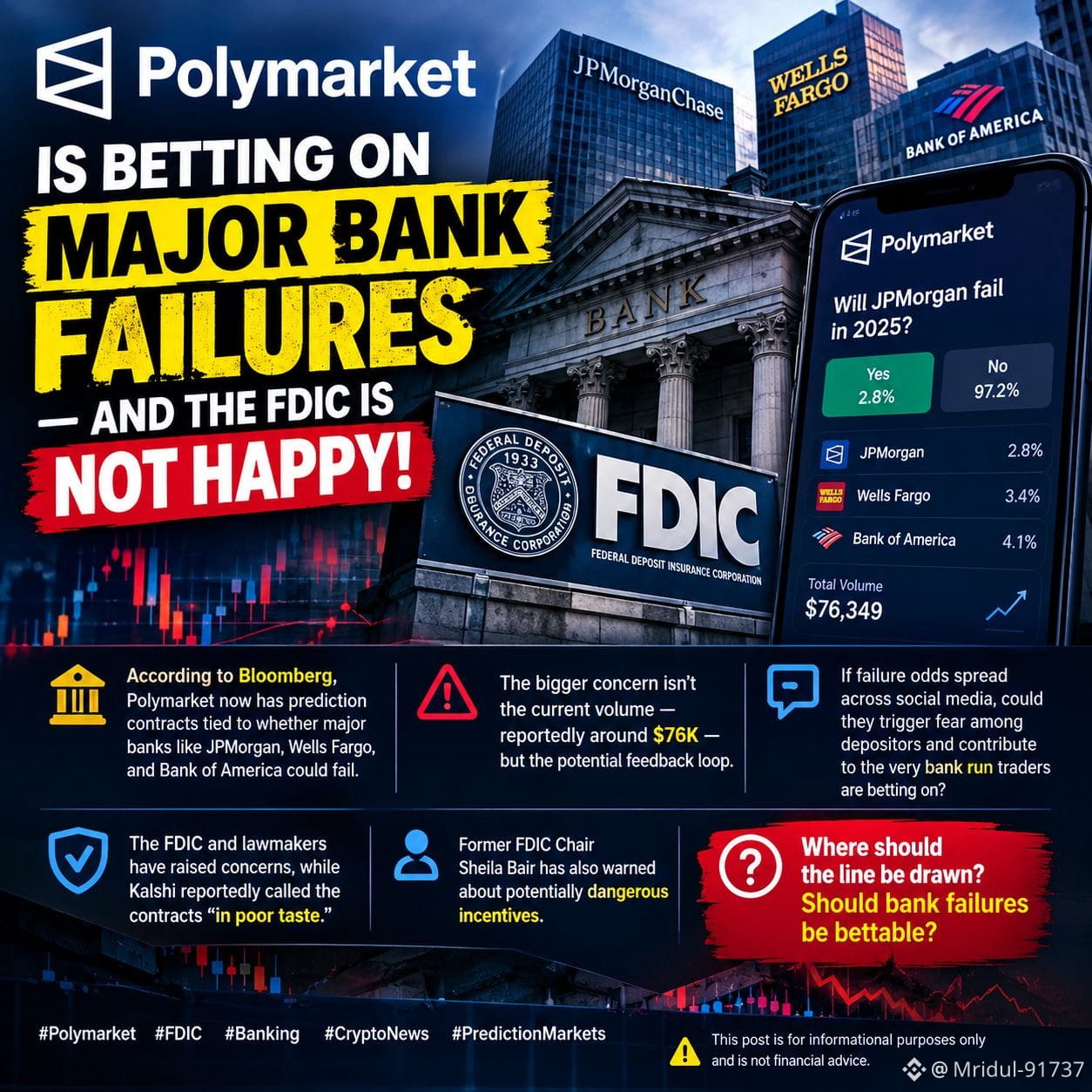
🚨 POLYMARKET IS BETTING ON MAJOR BANK FAILURES — AND THE FDIC IS NOT HAPPY.
According to Bloomberg, Polymarket now has prediction contracts tied to whether major banks like JPMorgan, Wells Fargo, and Bank of America could fail.
The bigger concern isn’t the current volume — reportedly around $76K — but the potential feedback loop. 👀
If failure odds spread across social media, could they trigger fear among depositors and contribute to the very bank run traders are betting on?
The FDIC and lawmakers have raised concerns, while Kalshi reportedly called the contracts “in poor taste.” Former FDIC Chair Sheila Bair has also warned about potentially dangerous incentives.
💭 Where should the line be drawn? Should bank failures be bettable?
⚠️ This post is for informational purposes only and is not financial advice.
#Polymarket #FDIC #BankingFailures #CryptoNews #PredictionMarkets
1
124
Log in to explore more content
Join global crypto users on Binance Square
⚡️ Get latest and useful information about crypto.
💬 Trusted by the world’s largest crypto exchange.
👍 Discover real insights from verified creators.
Email / Phone number
Trending Topics
1
#IsAnthropic’s$1.5TMarketCapJustified?
10,507 views
88 Discussing
2
#BTCRemainsUnderPressureAfterHawkishFOMCMinutes
240,535 views
2,087 Discussing
3
#NvidiaBoardReportedlySplitOverHuang’sReturn
117,143 views
1,128 Discussing
4
#StrategySTRCPreferredSlips3.65%Below$100Par
7,432 views
74 Discussing
5
#MASToUpgradeSGDTestnetToSGDigitalLedger
21,251 views
258 Discussing
6
#CanGTA6'sLaunchLiftTTWOShares?
84,051 views
816 Discussing
7
#Solana2027RoadmapTargetsDoubleComputeCapacity
8,982 views
134 Discussing
8
#InjectiveTokenizedRealEstateMortgagesTop$1.5B
1,146 views
28 Discussing
9
#TetherMakesStrategicInvestmentInSCRYPT
6,460 views
108 Discussing
10
#CapitalGroupAdds1264500StrategyShares
29,975 views
238 Discussing