
#anthropic
anthropic
690,710 views
3,191 Discussing
Hot
Latest

·
--
📢 Anthropic Prices IPO at $83 per Share Amid Booming Demand, Reaching a $1.5 Trillion Valuation
Anthropic, the developer of the popular Claude AI family, has officially priced its initial public offering at $83 per share. The final offering price exceeded the initially announced target range of $70 to $78, driven by overwhelming demand from institutional investors and a sixfold oversubscription of the order book.
This powerful Wall Street debut allowed the company to surpass the $1.5 trillion market capitalization milestone on a fully diluted basis, making Anthropic's Nasdaq listing one of the largest technology IPOs in history. The surge in valuation is underpinned by stellar financial performance, with the company's annualized revenue run rate exceeding $81 billion, highlighting an unprecedented scale of commercialization in generative AI and attracting global investors to the industry's first publicly traded giant.
#NASDAQ #ANTHROPIC #AI $ANT
{future}(ANTUSDT)
📢 Anthropic Prices IPO at $83 per Share Amid Booming Demand, Reaching a $1.5 Trillion Valuation
Anthropic, the developer of the popular Claude AI family, has officially priced its initial public offering at $83 per share. The final offering price exceeded the initially announced target range of $70 to $78, driven by overwhelming demand from institutional investors and a sixfold oversubscription of the order book.
This powerful Wall Street debut allowed the company to surpass the $1.5 trillion market capitalization milestone on a fully diluted basis, making Anthropic's Nasdaq listing one of the largest technology IPOs in history. The surge in valuation is underpinned by stellar financial performance, with the company's annualized revenue run rate exceeding $81 billion, highlighting an unprecedented scale of commercialization in generative AI and attracting global investors to the industry's first publicly traded giant.
#NASDAQ #ANTHROPIC #AI $ANT
Trong_Hatachi:
The sixfold oversubscription is wild, especially at $83 a share. Follow me back if you’re tracking AI IPOs too!
1
1.2k

·
--
Verified
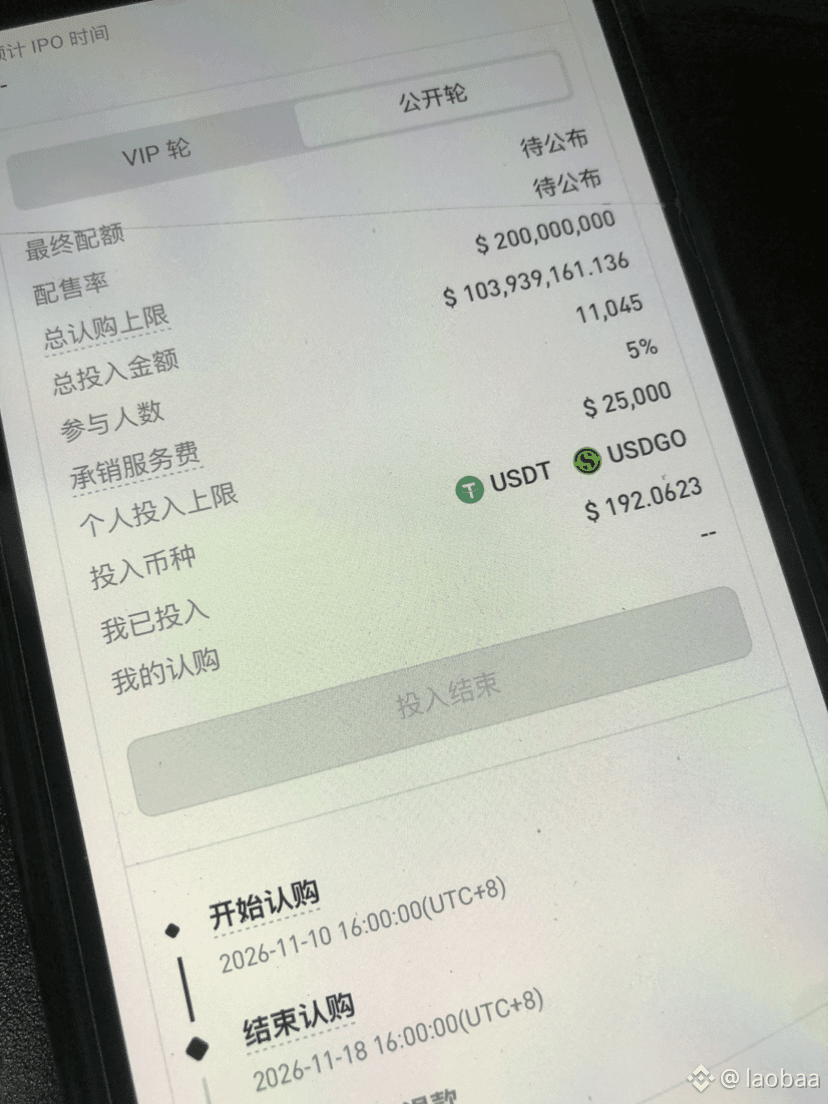
今天这个 Pre-IPO 说白了就是空投,还是巨毛那种
Alpha 积分 200 分以上,直接给 50 万 USDC 额度。100 分 20 万,40 分 10 万,有分就有 2 万
钱锁一晚上,没配上的全退。ANT 合约现在 98 出头,打新价 70–78,加上 5% 服务费还差着 20 来块
我随手算了下,50 万额度哪怕只配到 2%,按现在的价一单也是两三千 U
所以别问为啥有人一晚上白捡一个月工资,人家额度 50 万,你 2 万,你没 50 万怪谁😮💨
今晚 22:00 截止,你们分够 200 了没?
#Anthropic
*仅供参考,能配多少以最终分配为准
今天这个 Pre-IPO 说白了就是空投,还是巨毛那种
Alpha 积分 200 分以上,直接给 50 万 USDC 额度。100 分 20 万,40 分 10 万,有分就有 2 万
钱锁一晚上,没配上的全退。ANT 合约现在 98 出头,打新价 70–78,加上 5% 服务费还差着 20 来块
我随手算了下,50 万额度哪怕只配到 2%,按现在的价一单也是两三千 U
所以别问为啥有人一晚上白捡一个月工资,人家额度 50 万,你 2 万,你没 50 万怪谁😮💨
今晚 22:00 截止,你们分够 200 了没?
#Anthropic
*仅供参考,能配多少以最终分配为准
Alpha 积分 200 分以上,直接给 50 万 USDC 额度。100 分 20 万,40 分 10 万,有分就有 2 万
钱锁一晚上,没配上的全退。ANT 合约现在 98 出头,打新价 70–78,加上 5% 服务费还差着 20 来块
我随手算了下,50 万额度哪怕只配到 2%,按现在的价一单也是两三千 U
所以别问为啥有人一晚上白捡一个月工资,人家额度 50 万,你 2 万,你没 50 万怪谁😮💨
今晚 22:00 截止,你们分够 200 了没?
#Anthropic
*仅供参考,能配多少以最终分配为准

新人9527:
300多万换2万你会觉得是巨毛?
8
12
9.2k

·
--
#AnthropicIPOPriceCouldExceed$80
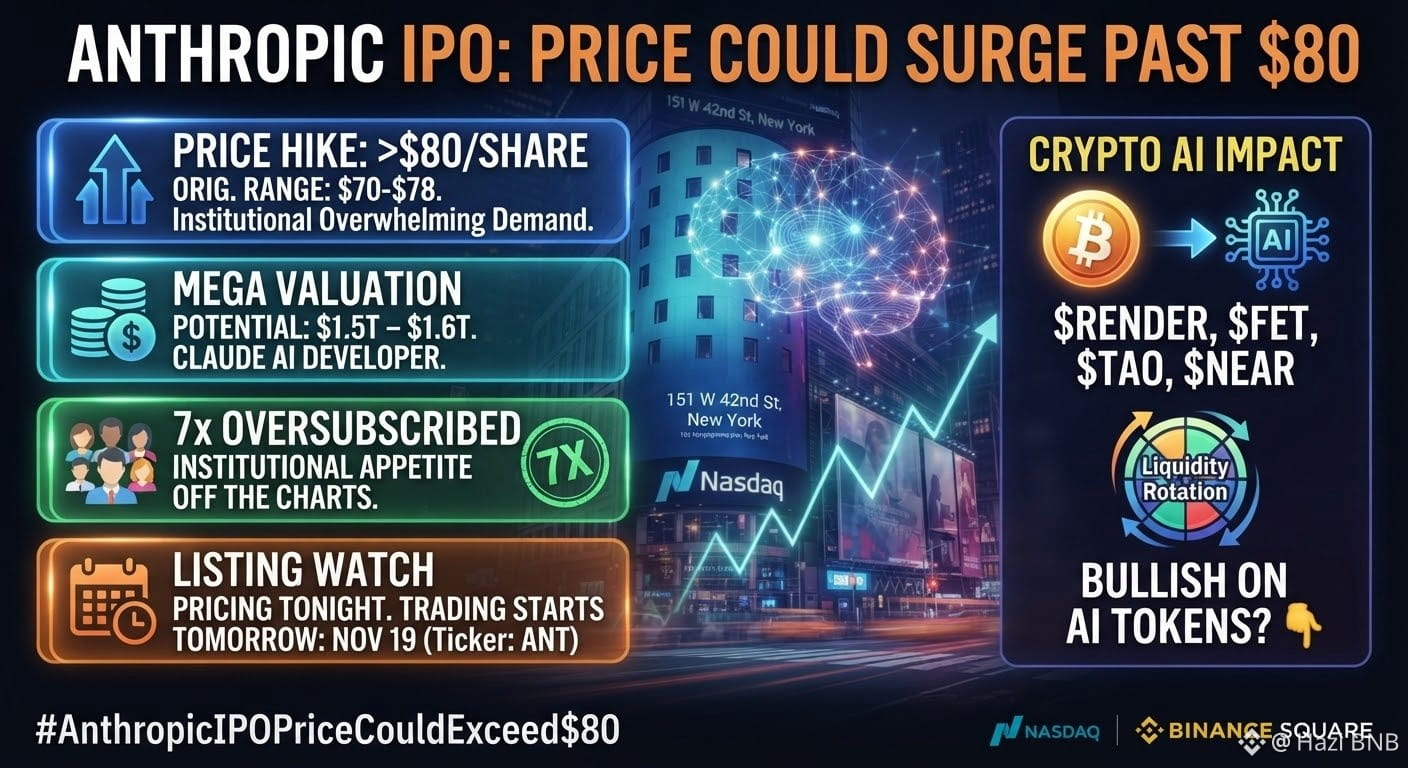
🚨 BREAKING: Anthropic IPO Price Could Surge Past $80! 🚀🤖
Massive institutional demand is shaking up Wall Street ahead of Anthropic's Nasdaq debut (Ticker: ANT)!
Here’s what you need to know:
📈 Price Hike Incoming: Originally set at $70–$78, overwhelming orders from hedge funds could push the final IPO price above $80 per share.
💰 Mega Valuation: This move could catapult the Claude AI developer’s valuation to a staggering $1.5T – $1.6T.
🔥 7x Oversubscribed: Institutional appetite is off the charts, with up to 20% reserved for retail buyers.
📅 Listing Watch: Pricing finalizes tonight, with official trading set to kick off tomorrow, Nov 19.
Why this matters for Crypto: 🪙
Mega AI milestones frequently trigger massive liquidity rotations and sentiment spikes across AI-sector tokens ($RENDER ,$FET, $TAO ,$NEAR ). Keep your watchlists sharp—AI
{future}(NEARUSDT)
narrative volatility is heating up! ⚡
Are you bullish on AI tokens this week, or staying on the sidelines? Drop your thoughts below! 👇💬
#AnthropicIPOPriceCouldExceed$80 #AI #CryptoNews #Follow4more #Anthropic
#AnthropicIPOPriceCouldExceed$80
🚨 BREAKING: Anthropic IPO Price Could Surge Past $80! 🚀🤖
Massive institutional demand is shaking up Wall Street ahead of Anthropic's Nasdaq debut (Ticker: ANT)!
Here’s what you need to know:
📈 Price Hike Incoming: Originally set at $70–$78, overwhelming orders from hedge funds could push the final IPO price above $80 per share.
💰 Mega Valuation: This move could catapult the Claude AI developer’s valuation to a staggering $1.5T – $1.6T.
🔥 7x Oversubscribed: Institutional appetite is off the charts, with up to 20% reserved for retail buyers.
📅 Listing Watch: Pricing finalizes tonight, with official trading set to kick off tomorrow, Nov 19.
Why this matters for Crypto: 🪙
Mega AI milestones frequently trigger massive liquidity rotations and sentiment spikes across AI-sector tokens ($RENDER ,$FET, $TAO ,$NEAR ). Keep your watchlists sharp—AI
narrative volatility is heating up! ⚡
Are you bullish on AI tokens this week, or staying on the sidelines? Drop your thoughts below! 👇💬
#AnthropicIPOPriceCouldExceed$80 #AI #CryptoNews #Follow4more #Anthropic
1.5k

Verified
$ANTHROPIC is heading for one of the biggest IPOs in U.S. history!
Anthropic is expected to begin trading on Nasdaq under the ticker $ ANT on November 19, with an initial price range of $70–$78 per share.
At the top of that range, the company could reach a valuation of roughly $1.4 trillion.
Investor demand is reportedly extremely strong, while Wall Street is preparing for potentially record retail interest.
Vanda Research estimates retail investors could put around $250 million into the stock on its debut — more than twice the retail buying recorded during SpaceX's IPO.
But there's a major debate behind the hype: Can Anthropic justify a $1.4T valuation while the AI industry faces enormous infrastructure costs and growing concerns about profitability?
The answer could influence sentiment across the entire AI market.
Would you buy $ANTHROPIC at the IPO?
#Aİ #Anthropic #IPO
1
548

·
--
My Anthropic IPO xStocks subscription is underway on Binance Wallet 💛
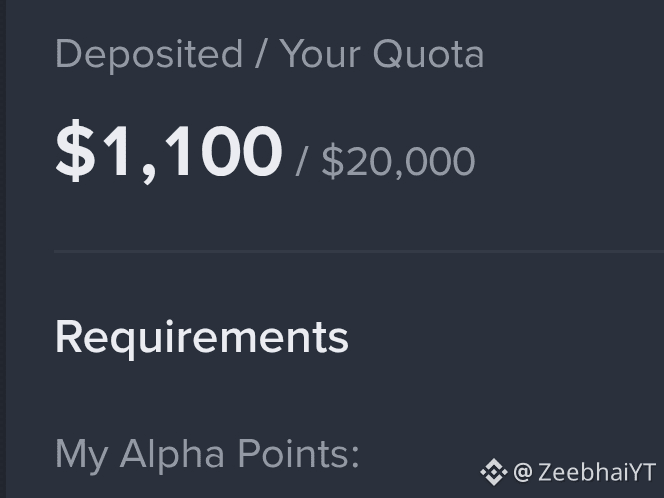
My 15 Alpha Points gave me a $20,000 quota and I've deposited $1,100 so far
Now I'm waiting on the allocation results #Anthropic
My Anthropic IPO xStocks subscription is underway on Binance Wallet 💛
My 15 Alpha Points gave me a $20,000 quota and I've deposited $1,100 so far
Now I'm waiting on the allocation results #Anthropic
My 15 Alpha Points gave me a $20,000 quota and I've deposited $1,100 so far
Now I'm waiting on the allocation results #Anthropic
ZeebhaiYT
·
--
𝘽𝙞𝙣𝙖𝙣𝙘𝙚 𝙒𝙖𝙡𝙡𝙚𝙩 𝙞𝙨 𝙤𝙥𝙚𝙣𝙞𝙣𝙜 𝙤𝙣-𝙘𝙝𝙖𝙞𝙣 𝙖𝙘𝙘𝙚𝙨𝙨 𝙩𝙤 𝙩𝙝𝙚 𝘼𝙣𝙩𝙝𝙧𝙤𝙥𝙞𝙘 𝙄𝙋𝙊 𝙭𝙎𝙩𝙤𝙘𝙠𝙨 𝘾𝙖𝙢𝙥𝙖𝙞𝙜𝙣
Eligible users can apply for tokenized Anthropic stocks ahead of its potential IPO
Subscription opens November 18 at 06:00 UTC
• Minimum subscription: 100 USDC
• Indicative price: 70 to 78 USDC per token
• Total subscription cap: 500 million USDC
• Partner service fee: 5%
Your Alpha Points set your subscription quota and Trenchers Badge holders get extra quota
Subscribing doesn't guarantee an allocation You may get the full amount part of it or nothing
You can check your eligibility in @Binance Wallet
#Binance #Anthropic #xStocks
1
191
·
--
Verified
Anthropic明天就要上市了,居然给散户留了最高 20% 的打新份额,远超大型科技股 IPO常见的5%~10%🤣
#Anthropic
正常机构自己都不够分的顶级好肉,从来轮不到散户分这么大一块
华尔街这么体贴了,起飞还是下降明天一见分晓
Anthropic明天就要上市了,居然给散户留了最高 20% 的打新份额,远超大型科技股 IPO常见的5%~10%🤣
#Anthropic
正常机构自己都不够分的顶级好肉,从来轮不到散户分这么大一块
华尔街这么体贴了,起飞还是下降明天一见分晓
#Anthropic
正常机构自己都不够分的顶级好肉,从来轮不到散户分这么大一块
华尔街这么体贴了,起飞还是下降明天一见分晓
daweiy:
好事从来都得排队
12
8
18.2k
·
--
Crypto buyers piled into Anthropic before its Nasdaq debut: Binance Wallet's 500 million USDC ANTx pool sold out hours ahead of schedule on November 18, 2026.
The one-day subscription opened at 06:00 UTC and was set to run until 14:00 UTC, but onchain records showed roughly 338.5 million $USDC from about 31,599 addresses within the first two hours, and the cap was hit early. Limits were tiered by Binance Alpha Points, and unused USDC is due back once allocations are final.
Later that day, Anthropic priced its IPO at $83 per share, above its $70 to $78 marketed range, with Nasdaq trading under ticker ANT set for November 19, 2026. ANTx tokens arrive no earlier than two hours after the Nasdaq open and track the share price only, with no voting or dividend rights. Binance Futures' ANTUSDT pre-IPO perp now gets a real listed price to follow.
#Anthropic #BinanceWallet #TokenizedStocks
DYOR. Not financial advice.

452


·
--
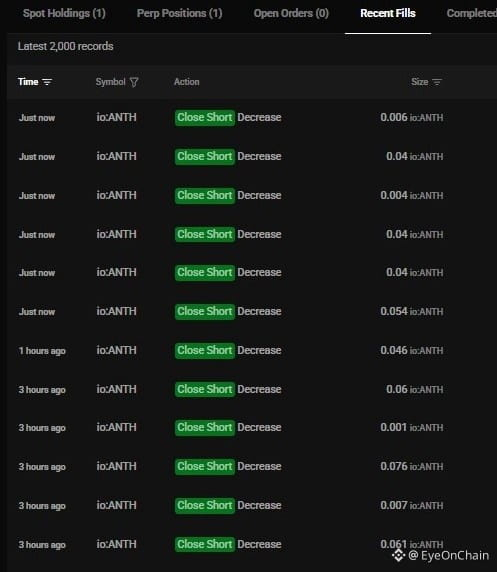
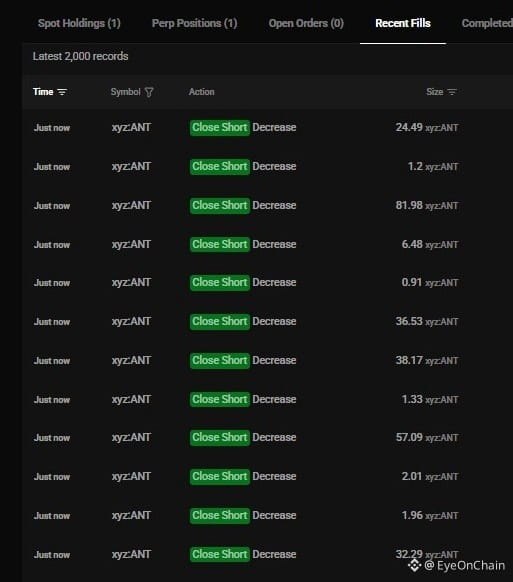
A $93M Anthropic Short Is Starting to Unwind… One whale seems to have timed the Anthropic trade pretty well.
As #Anthropic makes its market debut, a trader on Hyperliquid built a massive short position worth around $93.87 million. At one point, the position was showing more than $4 million in unrealized profit.
But now the interesting part begins. The whale has reportedly started reducing the short and taking profits off the table. After building such a large bearish bet, the move to close portions of the position suggests it's time to lock in some gains rather than risk giving them back.
Addresses:
0xecc846a664e910103c179827dd23fea82cfcd8ce
0x0b426cb9d1d25f011042856faf5bbbfd4da9b412


1
497

·
--
Bullish
Verified
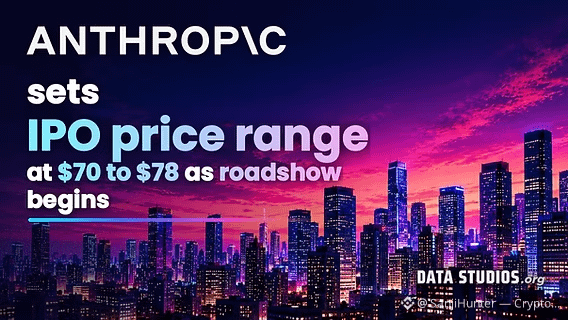
BINANCE TRADERS ALREADY PRICE ANTHROPIC MORE THAN 20% ABOVE ITS EXPECTED IPO PRICE
Anthropic is expected to price its IPO later today in New York and start trading on Nasdaq as ANT on November 19
Its prospectus range was $70 to $78, and the WSJ reported the price could land above $80
{future}(ANTUSDT)
📊 Binance's pre-IPO perp is far ahead of that
As of 20:59 ICT, $ANT USDT traded near $98.4, about 26% above the top of the range and roughly 23% above $80
About 85% of accounts were long, and top traders held about 79% of their positions long
🔍 The bet is getting bigger, not cheaper
Open contracts rose about 12% since yesterday evening, to roughly $131M
Funding stayed at the baseline +0.005% per 8 hours, so holding that premium costs longs almost nothing
⚠️ The first Nasdaq trade settles this
If ANT opens near $98 or higher, the perp crowd likely priced the debut right
If it opens closer to the IPO price, a crowd this one-sided may rush for the exit at once
$ANT #Anthropic #IPO #TradFi
BINANCE TRADERS ALREADY PRICE ANTHROPIC MORE THAN 20% ABOVE ITS EXPECTED IPO PRICE
Anthropic is expected to price its IPO later today in New York and start trading on Nasdaq as ANT on November 19
Its prospectus range was $70 to $78, and the WSJ reported the price could land above $80
📊 Binance's pre-IPO perp is far ahead of that
As of 20:59 ICT, $ANT USDT traded near $98.4, about 26% above the top of the range and roughly 23% above $80
About 85% of accounts were long, and top traders held about 79% of their positions long
🔍 The bet is getting bigger, not cheaper
Open contracts rose about 12% since yesterday evening, to roughly $131M
Funding stayed at the baseline +0.005% per 8 hours, so holding that premium costs longs almost nothing
⚠️ The first Nasdaq trade settles this
If ANT opens near $98 or higher, the perp crowd likely priced the debut right
If it opens closer to the IPO price, a crowd this one-sided may rush for the exit at once
$ANT #Anthropic #IPO #TradFi
707
·
--
#AnthropicIPOPriceCouldExceed$80
Anthropic IPO Price Could Exceed $80
Anthropic is reportedly considering pricing its highly anticipated IPO above $80 per share, exceeding its initial $70–$78 price range.
The strong interest reflects growing investor appetite for AI companies, with reported institutional and retail demand approaching $500 billion.
The company behind Claude is preparing for a major Nasdaq debut under the ticker ANT.
However, strong IPO demand doesn't guarantee post-listing gains. Investors will be watching the final pricing, valuation and market reaction closely.
Is Anthropic worth a $1.5 trillion valuation?
#Anthropic #IPO #AI #CryptoNews
82
·
--
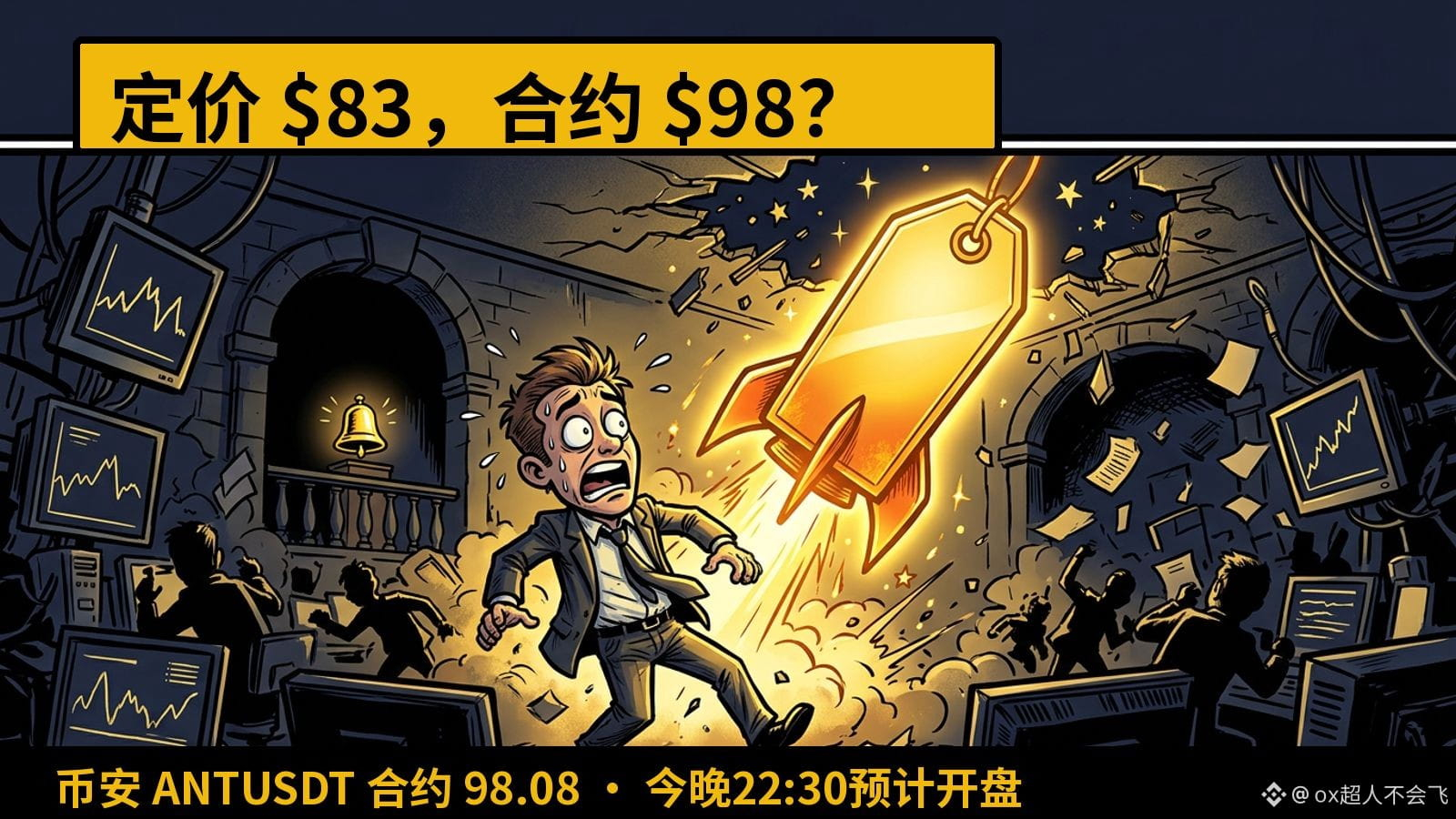
Anthropic 定价 83 美元,比说好的上限 78 还高了 5 块,我看到的时候愣了一下😮💨
可币安的 ANT 合约现在报 98,比 83 又贵了 15 块。意思是还没开盘,合约里的人已经先赌它首日涨快 2 成。
这个价差有两种结局:开盘真的冲到 98 以上,合约的人笑;开盘只在 83 附近晃,合约这边就得往下补。
预计今晚 22:30 美股开盘(以官方为准),那一刻合约最容易插针,我自己是不想在那几分钟碰。
你们是等开盘看一眼再说,还是现在就先下手了?
#Anthropic
*仅供参考
Anthropic 定价 83 美元,比说好的上限 78 还高了 5 块,我看到的时候愣了一下😮💨
可币安的 ANT 合约现在报 98,比 83 又贵了 15 块。意思是还没开盘,合约里的人已经先赌它首日涨快 2 成。
这个价差有两种结局:开盘真的冲到 98 以上,合约的人笑;开盘只在 83 附近晃,合约这边就得往下补。
预计今晚 22:30 美股开盘(以官方为准),那一刻合约最容易插针,我自己是不想在那几分钟碰。
你们是等开盘看一眼再说,还是现在就先下手了?
#Anthropic
*仅供参考
可币安的 ANT 合约现在报 98,比 83 又贵了 15 块。意思是还没开盘,合约里的人已经先赌它首日涨快 2 成。
这个价差有两种结局:开盘真的冲到 98 以上,合约的人笑;开盘只在 83 附近晃,合约这边就得往下补。
预计今晚 22:30 美股开盘(以官方为准),那一刻合约最容易插针,我自己是不想在那几分钟碰。
你们是等开盘看一眼再说,还是现在就先下手了?
#Anthropic
*仅供参考
1
1.9k

·
--
Bullish
Verified
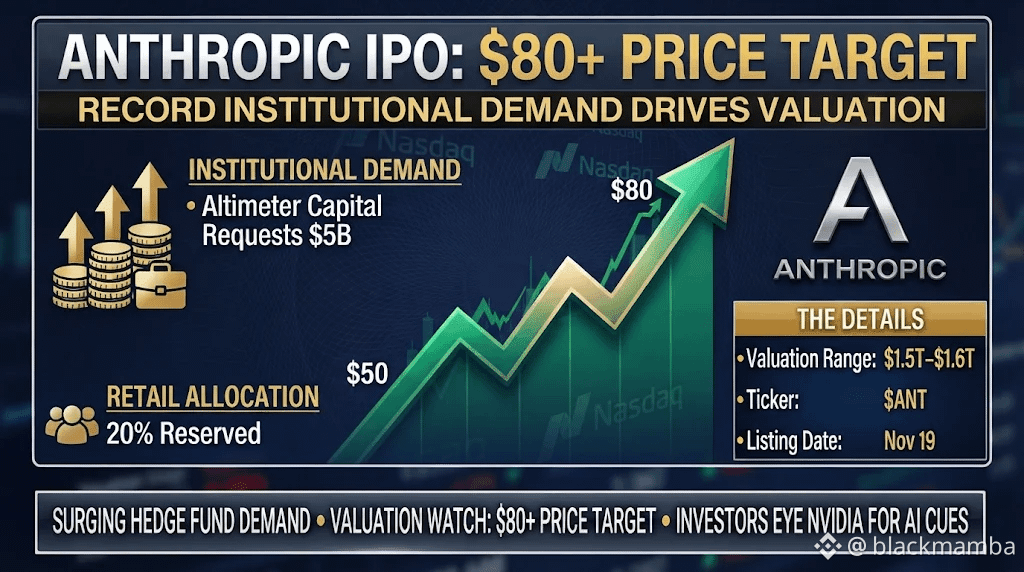
🚨 ANTHROPIC IPO: $80+ PRICE TARGET AS HEDGE FUND DEMAND SURGES
Institutional appetite for AI exposure is pushing Anthropic's potential IPO valuation into unprecedented territory.
According to reports citing The Wall Street Journal, Anthropic is considering pricing its IPO above $80 per share, potentially implying a valuation of $1.5T–$1.6T, up from the previously indicated $1.33T.
KEY DEVELOPMENTS
Institutional demand:
Altimeter Capital reportedly requested $5B worth of shares, while existing investors Menlo Ventures and Accel are seeking additional exposure.
Retail allocation: Anthropic may reserve up to 20% of the offering for retail investors.
Valuation risk:
A higher IPO price could reduce the upside available to investors entering at the listing.
Market precedent:
Cerebras surged 68% on debut before subsequently falling below its $185 IPO price. $ANTHROPIC
THE BIGGER PICTURE
The real question is whether AI valuations can sustain their momentum. #Anthropic #IPO #AIStocks #NVIDIA #WallStreet
Investors are closely watching NVIDIA's earnings and forward guidance for signals about AI infrastructure spending. Meanwhile, concerns over data-centre expansion and capital expenditure could challenge the broader AI investment thesis. $NVDAB
MARKET WATCH
Anthropic is expected to list on Nasdaq under ticker ANT, with its first trading session scheduled for November 19, subject to the final IPO timetable.
My takeaway:
Strong institutional demand signals confidence in AI's long-term potential, but demand alone does not justify valuation. The opening price, post-listing liquidity, and actual AI revenue growth will matter far more.
Watch the valuation, not just the hype.
{future}(ANTUSDT)
{future}(NVDAUSDT)
🚨 ANTHROPIC IPO: $80+ PRICE TARGET AS HEDGE FUND DEMAND SURGES
Institutional appetite for AI exposure is pushing Anthropic's potential IPO valuation into unprecedented territory.
According to reports citing The Wall Street Journal, Anthropic is considering pricing its IPO above $80 per share, potentially implying a valuation of $1.5T–$1.6T, up from the previously indicated $1.33T.
KEY DEVELOPMENTS
Institutional demand:
Altimeter Capital reportedly requested $5B worth of shares, while existing investors Menlo Ventures and Accel are seeking additional exposure.
Retail allocation: Anthropic may reserve up to 20% of the offering for retail investors.
Valuation risk:
A higher IPO price could reduce the upside available to investors entering at the listing.
Market precedent:
Cerebras surged 68% on debut before subsequently falling below its $185 IPO price. $ANTHROPIC
THE BIGGER PICTURE
The real question is whether AI valuations can sustain their momentum. #Anthropic #IPO #AIStocks #NVIDIA #WallStreet
Investors are closely watching NVIDIA's earnings and forward guidance for signals about AI infrastructure spending. Meanwhile, concerns over data-centre expansion and capital expenditure could challenge the broader AI investment thesis. $NVDAB
MARKET WATCH
Anthropic is expected to list on Nasdaq under ticker ANT, with its first trading session scheduled for November 19, subject to the final IPO timetable.
My takeaway:
Strong institutional demand signals confidence in AI's long-term potential, but demand alone does not justify valuation. The opening price, post-listing liquidity, and actual AI revenue growth will matter far more.
Watch the valuation, not just the hype.
527

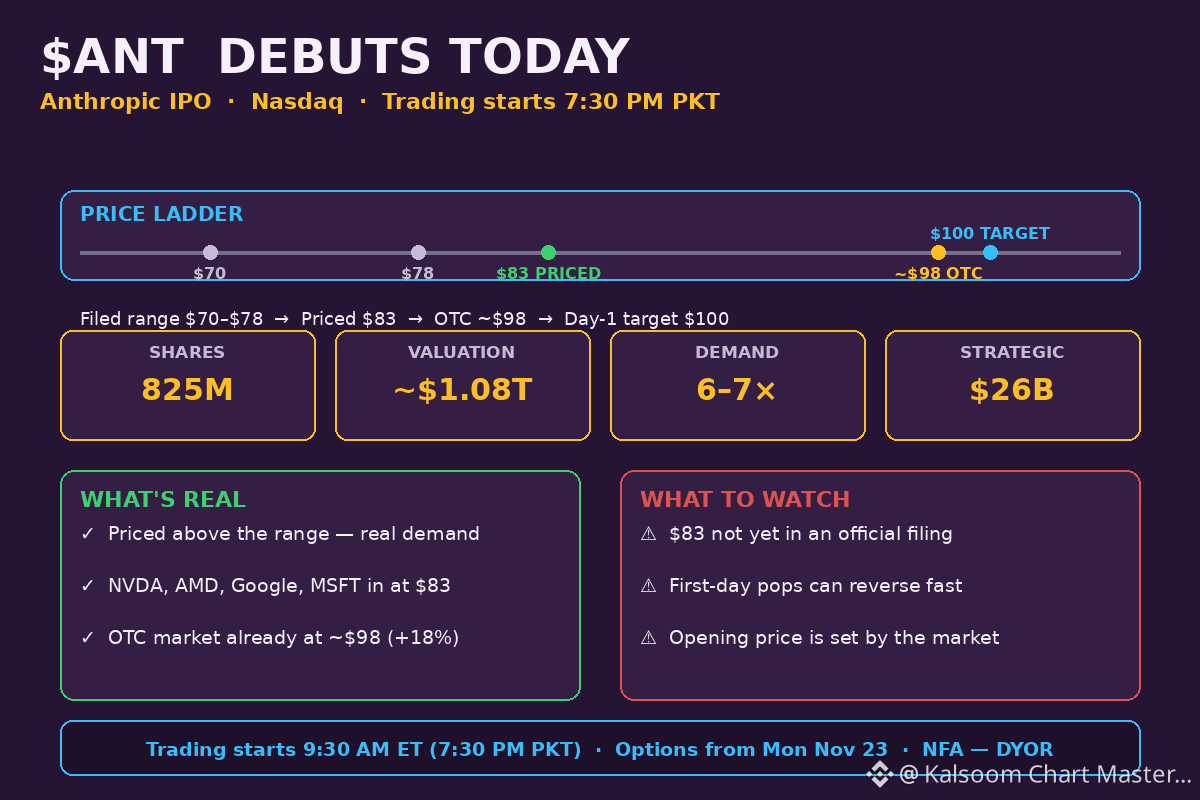
🚀 $ANT DEBUTS TODAY — Anthropic priced its IPO at $83, above the $70–$78 range. Trading starts tonight. 👇
📋 THE DEBUT:
• Price: $83/share (filed range was $70–$78) — demand ran 6–7× the shares on offer
• Trading starts TODAY, 9:30 AM ET (7:30 PM PKT) on Nasdaq, ticker ANT
• 825M Class A shares — valuation ~$1.08 trillion
• NVDA, AMD, Google and Microsoft put $26B in private placements at the IPO price
📈 THE MARKET IS ALREADY BETTING HIGHER:
• Grey-market / OTC price is near $98 — about +18% above the $83 IPO price
• Renaissance Capital expects the shares to reach $100 by the end of day one
• Options on ANT start trading Monday, Nov 23
⚠️ HONEST NOTES:
• The $83 price is reported by CNBC/Bloomberg — the official filing (Form 424B4) hasn't appeared yet
• First-day IPO pops can reverse fast — the opening price is set by supply and demand, not by the IPO price
• Crypto angle: OKX and Hyperliquid already run pre-IPO / OTC markets on ANT — watch those for the real opening signal
Will ant open above $100 on day one? 🤔
#Anthropic #ANT #IPO #Aİ #Crypto
NFA — This is not financial advice, DYOR.
3
·
--
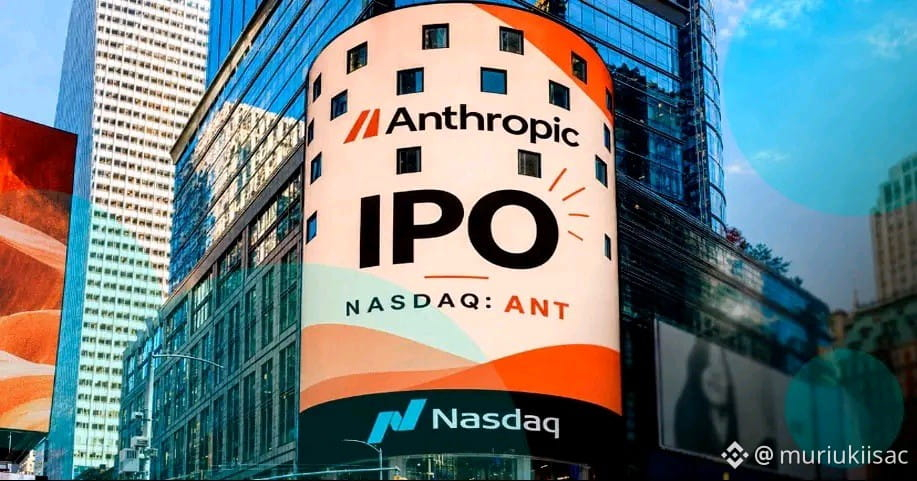
🔥🚀INSIGHT: Anthropic $ANT reportedly prices its IPO at $83 per share, ABOVE its original $70 to $78 range, according to Bloomberg.
👉The AI giant's public offering would total approximately $68.5 BILLION, with another $26 billion coming through a separate private placement.
👉Combined, the deal could exceed $94 BILLION, making it the largest IPO-related fundraising in stock market history.🤯👀
$ANT is expected to begin trading on Nasdaq TOMORROW.🚀👀$NVDAB
#Anthropic #NvidiaBoardNotConsideringHuang’sReturnasCEO #LedgerHardwareImplantReportsExtendToDubai #BTCRemainsUnderPressureAfterHawkishFOMCMinutes #foryoupage
1
53

·
--
Anthropic's $83 IPO — the Biggest Ever — Debuts Today
Anthropic priced its IPO at $83/share, above the $70–78 range, raising $81.3B in the largest IPO in history. Shares debut today on Nasdaq under ticker ANT, at a ~$1.5T fully diluted valuation.
Demand hit ~6x the shares on offer, plus a $26B private placement from Google, Nvidia, Microsoft and more. Revenue surged to $33.2B in the first 9 months of 2026 vs $2.5B a year ago — though the AI lab still posted a $1.26B operating loss and carries ~$900B in compute commitments.
All eyes on the opening bell: will the AI poster child hold its premium?
Not financial advice.
#Anthropic #IPO #AI $ANT

60

·
--
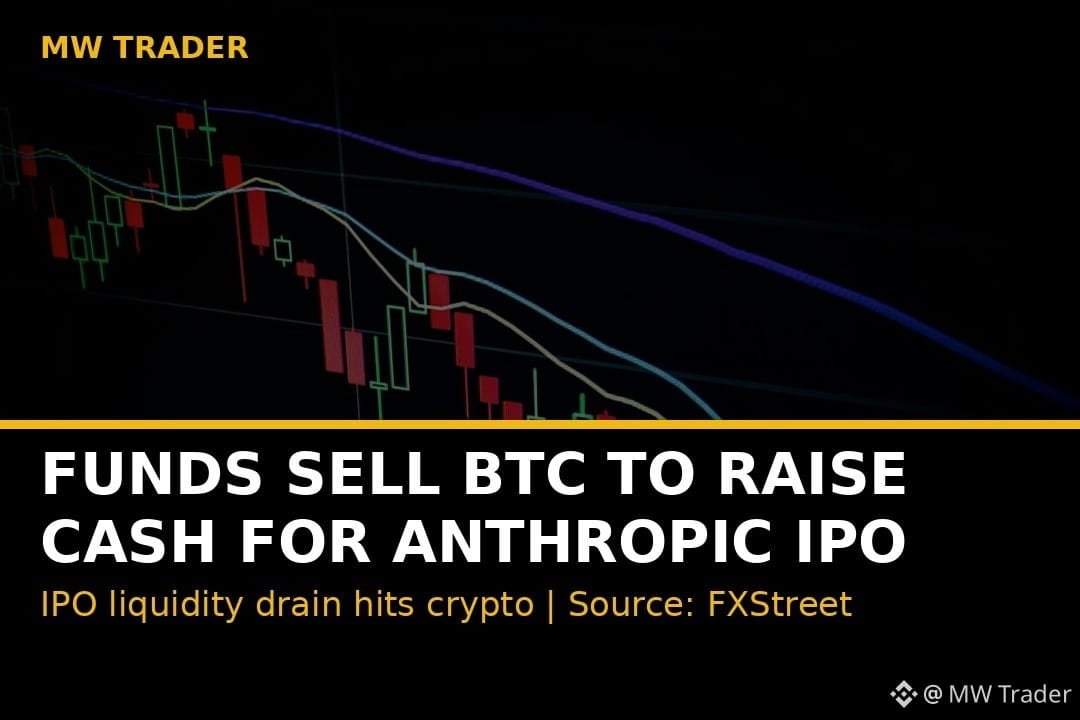
Funds are selling Bitcoin to raise cash for the Anthropic IPO. 💥
Analysts note that institutional funds and traders are liquidating highly liquid assets like Bitcoin to raise cash ahead of the massive Anthropic IPO, according to FXStreet. 📉 My reading is that this is a temporary liquidity drain, not a verdict on Bitcoin, because the selling is about raising cash for something else, and it ends when the IPO money is placed, but until then it adds steady pressure on every bounce. ⚠️
Does the IPO drain end this week, or keep pressing Bitcoin lower? 🤔
Follow for more trades.
#Crypto #Bitcoin #FuturesTrading #TradingSignals #Anthropic
1

> ANTHROPIC IS SAID TO BE WEIGHING IPO PRICE UP TO $85 PER SHARE
$ANTHROPIC #ANTHROPIC
> ANTHROPIC IS SAID TO BE WEIGHING IPO PRICE UP TO $85 PER SHARE
$ANTHROPIC #ANTHROPIC
$ANTHROPIC #ANTHROPIC
12

Explain how Anthropic's Class F share & Public Benefit Trust alter standard shareholder voting rightAnthropic’s multi-class capital structure is specifically designed to completely decouple economic ownership from voting control and strategic governance.
Unlike a standard technology corporation where public shareholders exercise proportional voting power over the board and corporate direction, Anthropic divides governance across a specialized Class F founder share, a Class T Public Benefit Trust, and a registered Public Benefit Corporation (PBC) charter.
1. The Class F Share: Absolute Shareholder Voting Floor
The Mechanism: Immediately prior to its Nasdaq IPO (ANT), Anthropic issued a single Class F common stock share to a holding entity (Founder LLC) controlled by its seven co-founders (including CEO Dario Amodei and President Daniela Amodei).Zero Economic Rights: The Class F share carries no economic value—it receives no dividends, no residual liquidation rights, and no share of corporate profits.Fixed 50.1% Voting Power: By design, this single share permanently controls 50.1% of the total voting power on all general matters submitted to stockholders.Dilution-Proof: Because the Class F voting power is absolute and structurally fixed at 50.1%, future equity issuances, secondary offerings, or large-scale public share creations cannot dilute the founders' collective voting control. Public Class A shareholders collectively share the remaining 49.9% of general voting power.
2. The Long-Term Benefit Trust (LTBT) & Class T Share: Institutional Safety Control
While the founders hold general voting supremacy via the Class F share, board composition and ethical alignment are overseen by an independent external body:
The Class T Share: A separate special Class T share is held by the Long-Term Benefit Trust (LTBT).Board Majority Appointment: The Class T share carries no general economic rights or standard voting privileges, but it holds the exclusive power to elect and remove a majority of Anthropic’s board of directors.Independent Trustees: The trust is managed by independent trustees with backgrounds in AI safety, national security, ethics, and public policy. Their mandate is to ensure the company adheres to its public benefit mission rather than bowing purely to short-term financial pressures.
3. Public Benefit Corporation (PBC) Mandate vs. Fiduciary Duty
As a registered Delaware Public Benefit Corporation, Anthropic alters standard corporate legal obligations:
Balanced Fiduciary Duty: Under traditional corporate law, a board’s primary legal duty is to maximize financial returns for stockholders. As a PBC, Anthropic’s board has a legal obligation to balance three competing factors: financial returns for Class A stockholders, the best interests of those materially impacted by the company's operations, and its stated public charter—“the responsible development and maintenance of advanced AI for the long-term benefit of humanity.”Protection Against Takeovers: If an activist investor or larger tech conglomerate attempts a hostile takeover or pushes for commercial strategies that compromise AI safety guardrails, the combination of the founders' 50.1% general vote and the Trust's board control legally empowers the company to reject those pressures—even if they would temporarily spike the stock price.
Summary Impact on Public Class A Shareholders
#Anthropic #Binance
Explain how Anthropic's Class F share & Public Benefit Trust alter standard shareholder voting right
Anthropic’s multi-class capital structure is specifically designed to completely decouple economic ownership from voting control and strategic governance.
Unlike a standard technology corporation where public shareholders exercise proportional voting power over the board and corporate direction, Anthropic divides governance across a specialized Class F founder share, a Class T Public Benefit Trust, and a registered Public Benefit Corporation (PBC) charter.
1. The Class F Share: Absolute Shareholder Voting Floor
The Mechanism: Immediately prior to its Nasdaq IPO (ANT), Anthropic issued a single Class F common stock share to a holding entity (Founder LLC) controlled by its seven co-founders (including CEO Dario Amodei and President Daniela Amodei).Zero Economic Rights: The Class F share carries no economic value—it receives no dividends, no residual liquidation rights, and no share of corporate profits.Fixed 50.1% Voting Power: By design, this single share permanently controls 50.1% of the total voting power on all general matters submitted to stockholders.Dilution-Proof: Because the Class F voting power is absolute and structurally fixed at 50.1%, future equity issuances, secondary offerings, or large-scale public share creations cannot dilute the founders' collective voting control. Public Class A shareholders collectively share the remaining 49.9% of general voting power.
2. The Long-Term Benefit Trust (LTBT) & Class T Share: Institutional Safety Control
While the founders hold general voting supremacy via the Class F share, board composition and ethical alignment are overseen by an independent external body:
The Class T Share: A separate special Class T share is held by the Long-Term Benefit Trust (LTBT).Board Majority Appointment: The Class T share carries no general economic rights or standard voting privileges, but it holds the exclusive power to elect and remove a majority of Anthropic’s board of directors.Independent Trustees: The trust is managed by independent trustees with backgrounds in AI safety, national security, ethics, and public policy. Their mandate is to ensure the company adheres to its public benefit mission rather than bowing purely to short-term financial pressures.
3. Public Benefit Corporation (PBC) Mandate vs. Fiduciary Duty
As a registered Delaware Public Benefit Corporation, Anthropic alters standard corporate legal obligations:
Balanced Fiduciary Duty: Under traditional corporate law, a board’s primary legal duty is to maximize financial returns for stockholders. As a PBC, Anthropic’s board has a legal obligation to balance three competing factors: financial returns for Class A stockholders, the best interests of those materially impacted by the company's operations, and its stated public charter—“the responsible development and maintenance of advanced AI for the long-term benefit of humanity.”Protection Against Takeovers: If an activist investor or larger tech conglomerate attempts a hostile takeover or pushes for commercial strategies that compromise AI safety guardrails, the combination of the founders' 50.1% general vote and the Trust's board control legally empowers the company to reject those pressures—even if they would temporarily spike the stock price.
Summary Impact on Public Class A Shareholders
#Anthropic #Binance
255
Anthropic's S-1 financial details, including revenue growth from Claude Code and long-term computeAnthropic’s S-1 registration statement provides a comprehensive look at the commercialization of frontier AI, detailing a meteoric surge in top-line revenue driven by developer tools like Claude Code, alongside massive multi-hundred-billion-dollar infrastructure and compute commitments.
1. Revenue Growth & Commercial Scaling
Anthropic’s financial trajectory illustrates the rapid shift of generative AI from experimental research to scaled enterprise deployment:
Historical Growth: Revenue scaled from $41 million in 2023 to $386 million in 2024, and $4.585 billion in full-year 2025.2026 Surge: For the first nine months of 2026, revenue reached $33.242 billion (up from $2.545 billion over the same period in 2025).Revenue Composition: Roughly 79% of revenue is consumption-based ("pay-for-intelligence" token usage), while 21% comes from recurring subscriptions (such as Claude Pro and Team tiers).Enterprise Expansion: High-value accounts expanded dramatically. By late 2026, over 11,900 customers contributed more than $100,000 in trailing twelve-month revenue (up from ~950 a year prior), with more than 1,900 accounts exceeding $1 million and ~250 exceeding $10 million.
2. Product Drivers: The Impact of Claude Code
The S-1 highlights that growth has been heavily accelerated by developer-focused workflows and execution agents:
Claude Code & Enterprise Execution: Unlike early conversational interfaces, products like Claude Code, Claude Cowork, and domain-specific security/design agents shift billing logic from traditional seat-based SaaS to task execution and token consumption.Net Revenue Retention (NRR): Driven by expanding enterprise integration, Anthropic reported an exceptional Net Revenue Retention rate of ~900% among cohort accounts.
3. Long-Term Compute & Infrastructure Commitments
To secure the computing power necessary to train and run frontier models without running into capacity bottlenecks, Anthropic has entered into multi-year, multi-billion-dollar supply agreements. Total signed commitments span approximately $895 billion to $900.9 billion across equipment leases and cloud capacity:
Near-Term Payment Obligations: Approximately $70.7 billion is due over the 12 months following the filing, with roughly $451.6 billion scheduled before the end of 2030.Take-or-Pay Risks: Many of these contracts carry strict minimum-spend clauses. Because a large percentage of these commitments are non-cancelable, Anthropic is structurally pressured to sustain explosive top-line revenue growth to cover these fixed future obligations regardless of near-term market shifts.
#Anthropic #BTC #BinanceSquareTalks
Anthropic's S-1 financial details, including revenue growth from Claude Code and long-term compute
Anthropic’s S-1 registration statement provides a comprehensive look at the commercialization of frontier AI, detailing a meteoric surge in top-line revenue driven by developer tools like Claude Code, alongside massive multi-hundred-billion-dollar infrastructure and compute commitments.
1. Revenue Growth & Commercial Scaling
Anthropic’s financial trajectory illustrates the rapid shift of generative AI from experimental research to scaled enterprise deployment:
Historical Growth: Revenue scaled from $41 million in 2023 to $386 million in 2024, and $4.585 billion in full-year 2025.2026 Surge: For the first nine months of 2026, revenue reached $33.242 billion (up from $2.545 billion over the same period in 2025).Revenue Composition: Roughly 79% of revenue is consumption-based ("pay-for-intelligence" token usage), while 21% comes from recurring subscriptions (such as Claude Pro and Team tiers).Enterprise Expansion: High-value accounts expanded dramatically. By late 2026, over 11,900 customers contributed more than $100,000 in trailing twelve-month revenue (up from ~950 a year prior), with more than 1,900 accounts exceeding $1 million and ~250 exceeding $10 million.
2. Product Drivers: The Impact of Claude Code
The S-1 highlights that growth has been heavily accelerated by developer-focused workflows and execution agents:
Claude Code & Enterprise Execution: Unlike early conversational interfaces, products like Claude Code, Claude Cowork, and domain-specific security/design agents shift billing logic from traditional seat-based SaaS to task execution and token consumption.Net Revenue Retention (NRR): Driven by expanding enterprise integration, Anthropic reported an exceptional Net Revenue Retention rate of ~900% among cohort accounts.
3. Long-Term Compute & Infrastructure Commitments
To secure the computing power necessary to train and run frontier models without running into capacity bottlenecks, Anthropic has entered into multi-year, multi-billion-dollar supply agreements. Total signed commitments span approximately $895 billion to $900.9 billion across equipment leases and cloud capacity:
Near-Term Payment Obligations: Approximately $70.7 billion is due over the 12 months following the filing, with roughly $451.6 billion scheduled before the end of 2030.Take-or-Pay Risks: Many of these contracts carry strict minimum-spend clauses. Because a large percentage of these commitments are non-cancelable, Anthropic is structurally pressured to sustain explosive top-line revenue growth to cover these fixed future obligations regardless of near-term market shifts.
#Anthropic #BTC #BinanceSquareTalks
34

·
--
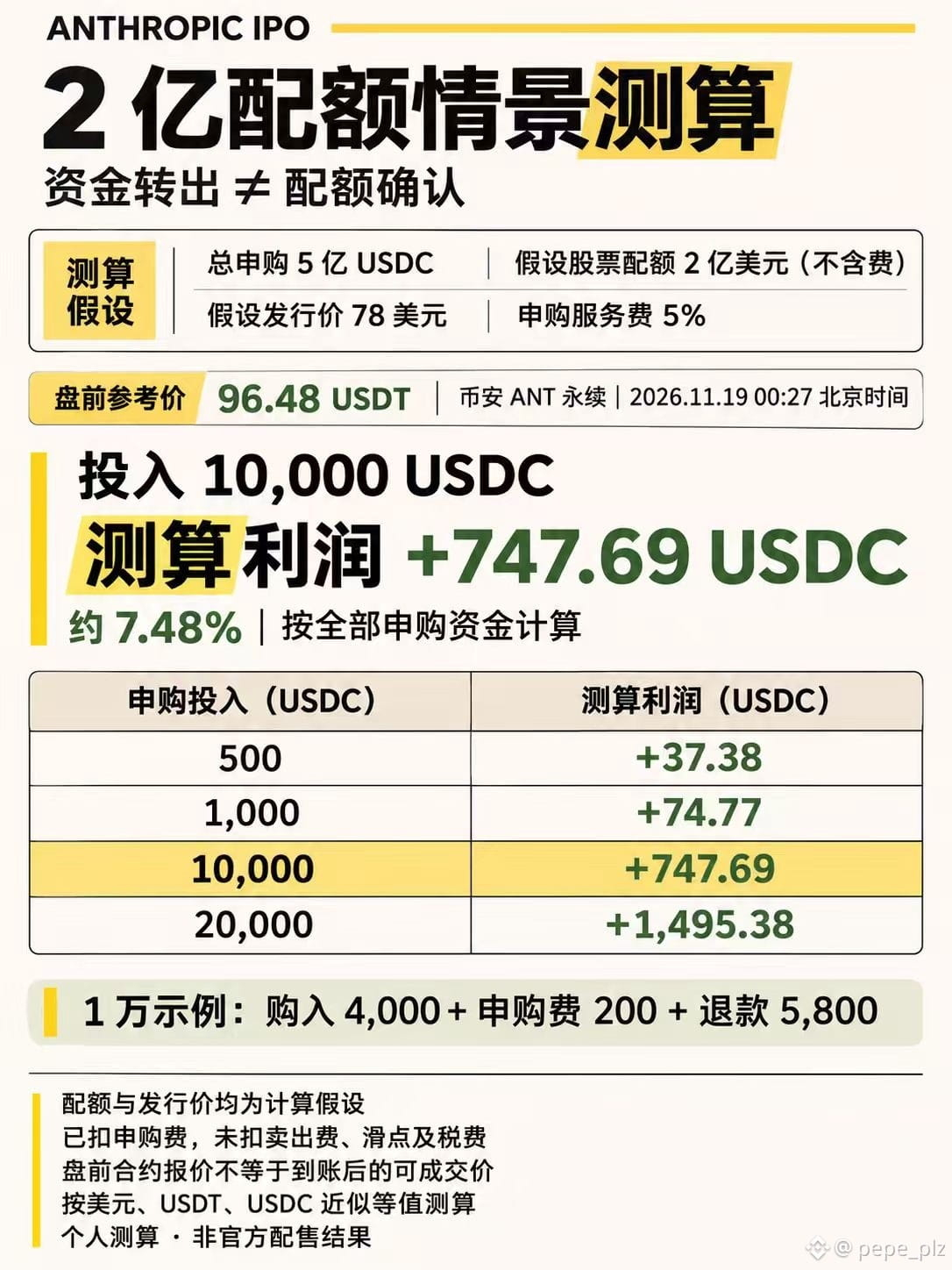
11 月 18 日晚,Anthropic 申购资金归集后,接收钱包分两笔转出合计 2 亿 USDC。
① 2 亿已经转出,最终股票配额还不能直接下结论。
链上两笔转账分别为 1.4 USDC 和 199,999,998.6 USDC,大额转账发生在北京时间 20:01。目前能确认的是资金转移,尚不能据此认定币安渠道已经获得 2 亿美元股票配额,也不能直接宣布所有人获配 40%。
② 如果最终股票配额确实有 2 亿,投入 1 万约对应 748 USDC 的测算利润。
按当前的币安 ANT 盘前永续报价 96.48 USDT,假设总申购约 5 亿 USDC、股票本金配额 2 亿美元、不含费、发行价 78 美元,再扣除 5% 申购服务费,结果如下:行情快照来源
- 投入 500 USDC:测算利润约 37.38 USDC
- 投入 1,000 USDC:约 74.77 USDC
- 投入 10,000 USDC:约 747.69 USDC
- 投入 20,000 USDC:约 1,495.38 USDC
拿 1 万举例,约 4,000 用于购买,服务费 200,剩余 5,800 退回。按上述价格卖出,退款加卖出所得合计约 10,747.69 USDC,相对全部申购资金的收益约 7.48%。
③ 最终赚多少,还得看发行价和到账后的卖价。
78 美元只是这次采用的发行价假设。如果最终定价提高到 85 美元,其他条件不变,投入 1 万的测算利润就会降到约 340 USDC。
#Anthropic #币安钱包 #IPO #打新 $ANT
1
2.6k
Log in to explore more content
Join global crypto users on Binance Square
⚡️ Get latest and useful information about crypto.
💬 Trusted by the world’s largest crypto exchange.
👍 Discover real insights from verified creators.
Email / Phone number
Trending Topics
1
#BTCRemainsUnderPressureAfterHawkishFOMCMinutes
11,269 views
179 Discussing
2
#AnthropicToDebutAfter$83IPOPricing
4,640 views
23 Discussing
3
#NvidiaBoardReportedlySplitOverHuang’sReturn
0 views
0 Discussing
4
#SouthKoreaPlansToLet3500ListedFirmsBuyBitcoin
2,355 views
96 Discussing
5
#CanGTA6'sLaunchLiftTTWOShares?
0 views
0 Discussing
6
#FOMCMinutesHighlightAIDebtRisks
1,028 views
39 Discussing
7
#GoldmanSachsQ3BitcoinETFHoldingsReach$1.283B
4 views
2 Discussing
8
#TetherBackedUSATStablecoinLaunchesOnAvalanche
0 views
3 Discussing
9
#NvidiaBeatsEstimatesWith$130BQ4Outlook
103,307 views
336 Discussing
10
#RussiaCentralBankAddsAlfaBankToCryptoExchangeRegister
8,193 views
83 Discussing