
#alphawolfhq
alphawolfhq
1,333 views
5 Discussing
Hot
Latest


·
--
Article
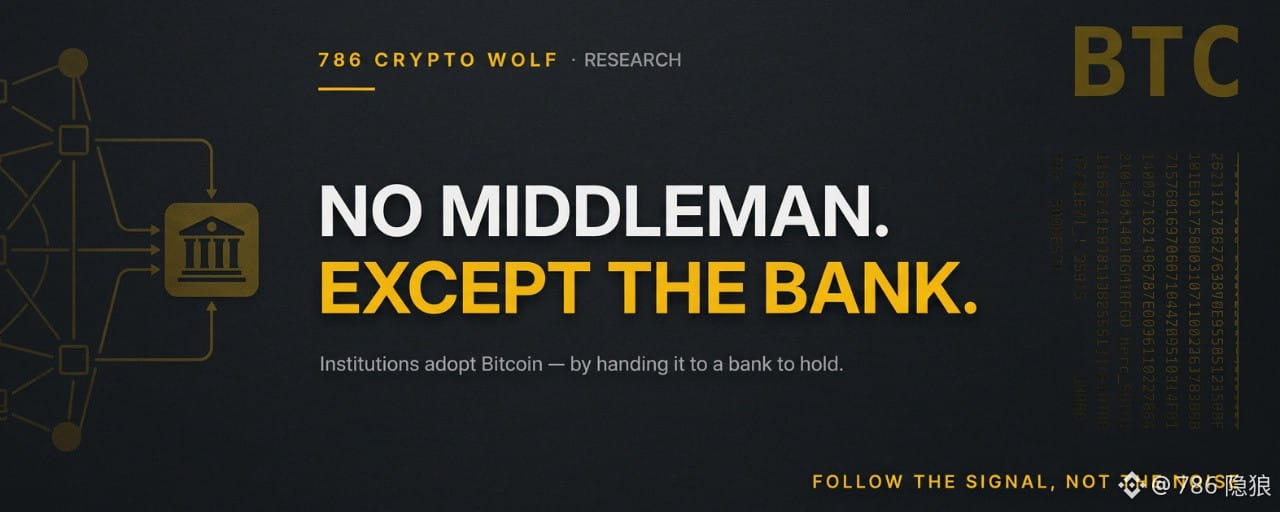
Crypto Hired a BankThe most “bullish” crypto headline of the week is also its quietest surrender.
On November 11, Deutsche Bank — one of the largest banks on earth — switched on crypto custody for its institutional clients. Hedge funds, asset managers, corporations and sovereign institutions can now hand their Bitcoin, Ether and stablecoins to the bank to hold. Germany first, the rest of the EU under MiCA next, Asia in 2027.
The market read it as what it looks like: adoption. Another pillar. Institutions are in. And they’re not wrong.
But look at what “institutions are in” actually requires.
An institution will not touch Bitcoin until someone it trusts agrees to hold it. Not a promise of it — the actual keys. And the entity the financial world trusts most to hold things is the one Bitcoin was designed to make unnecessary: a bank.
So the headline everyone is cheering — “banks are custodying crypto” — is, underneath, a reversal. The asset built to remove the middleman is now held by the middleman. Self-custody was the whole point. Institutional crypto is custodial by definition.
That’s not a scandal. It’s the trade. Institutions don’t want to be their own bank; they want a bank. Deutsche Bank is simply the one that said yes first, at scale.
Here’s the part the “bullish milestone” posts skip.
When you deposit euros at Deutsche Bank, a deposit-guarantee scheme stands behind them up to a limit. If the bank fails, you’re covered. Custodied crypto is not a deposit. It’s an asset the bank holds for you — and it carries no such insurance. You get the bank’s name, its security, its reputation. You do not get the safety net that makes a bank deposit a bank deposit.
So the institution re-introduces the intermediary crypto was built to remove — and gives up the one protection that intermediary normally provides. Middleman back. Backstop gone.
Now the honest part, because it cuts two ways.
Read it one way, this is maturation: real custody, real regulation (BaFin, MiCA), real institutional money finally able to participate safely. Genuinely good for the asset class.
Read it another way, it’s crypto quietly becoming the thing it was built to replace — a system where a few trusted institutions hold everyone’s value, under rules written by regulators, with retail left out entirely (this launch skips retail).
Both are true. Adoption and decentralization are not the same direction. This week, they moved apart.
Every step toward “institutional adoption” is a step toward re-intermediation. The more crypto succeeds at being accepted, the more it resembles the banking system it set out to route around. That may not be failure — it might be inevitable. But it’s worth naming, because the people cheering “banks are in!” are cheering the exact outcome Bitcoin’s whitepaper was a rejection of.
If a bank now holds the Bitcoin, writes the rules with the regulator, and leaves retail outside — what, exactly, did Bitcoin decentralize?
🐺 786 CRYPTO WOLF · RESEARCH
Follow the signal, not the noise.
$BTC
#DeutscheBank #bitcoin #cryptocustody #AlphaWolfHQ #786CryptoWolf
Crypto Hired a Bank
The most “bullish” crypto headline of the week is also its quietest surrender.
On November 11, Deutsche Bank — one of the largest banks on earth — switched on crypto custody for its institutional clients. Hedge funds, asset managers, corporations and sovereign institutions can now hand their Bitcoin, Ether and stablecoins to the bank to hold. Germany first, the rest of the EU under MiCA next, Asia in 2027.
The market read it as what it looks like: adoption. Another pillar. Institutions are in. And they’re not wrong.
But look at what “institutions are in” actually requires.
An institution will not touch Bitcoin until someone it trusts agrees to hold it. Not a promise of it — the actual keys. And the entity the financial world trusts most to hold things is the one Bitcoin was designed to make unnecessary: a bank.
So the headline everyone is cheering — “banks are custodying crypto” — is, underneath, a reversal. The asset built to remove the middleman is now held by the middleman. Self-custody was the whole point. Institutional crypto is custodial by definition.
That’s not a scandal. It’s the trade. Institutions don’t want to be their own bank; they want a bank. Deutsche Bank is simply the one that said yes first, at scale.
Here’s the part the “bullish milestone” posts skip.
When you deposit euros at Deutsche Bank, a deposit-guarantee scheme stands behind them up to a limit. If the bank fails, you’re covered. Custodied crypto is not a deposit. It’s an asset the bank holds for you — and it carries no such insurance. You get the bank’s name, its security, its reputation. You do not get the safety net that makes a bank deposit a bank deposit.
So the institution re-introduces the intermediary crypto was built to remove — and gives up the one protection that intermediary normally provides. Middleman back. Backstop gone.
Now the honest part, because it cuts two ways.
Read it one way, this is maturation: real custody, real regulation (BaFin, MiCA), real institutional money finally able to participate safely. Genuinely good for the asset class.
Read it another way, it’s crypto quietly becoming the thing it was built to replace — a system where a few trusted institutions hold everyone’s value, under rules written by regulators, with retail left out entirely (this launch skips retail).
Both are true. Adoption and decentralization are not the same direction. This week, they moved apart.
Every step toward “institutional adoption” is a step toward re-intermediation. The more crypto succeeds at being accepted, the more it resembles the banking system it set out to route around. That may not be failure — it might be inevitable. But it’s worth naming, because the people cheering “banks are in!” are cheering the exact outcome Bitcoin’s whitepaper was a rejection of.
If a bank now holds the Bitcoin, writes the rules with the regulator, and leaves retail outside — what, exactly, did Bitcoin decentralize?
🐺 786 CRYPTO WOLF · RESEARCH
Follow the signal, not the noise.
$BTC
#DeutscheBank #bitcoin #cryptocustody #AlphaWolfHQ #786CryptoWolf
1
232
·
--
Article
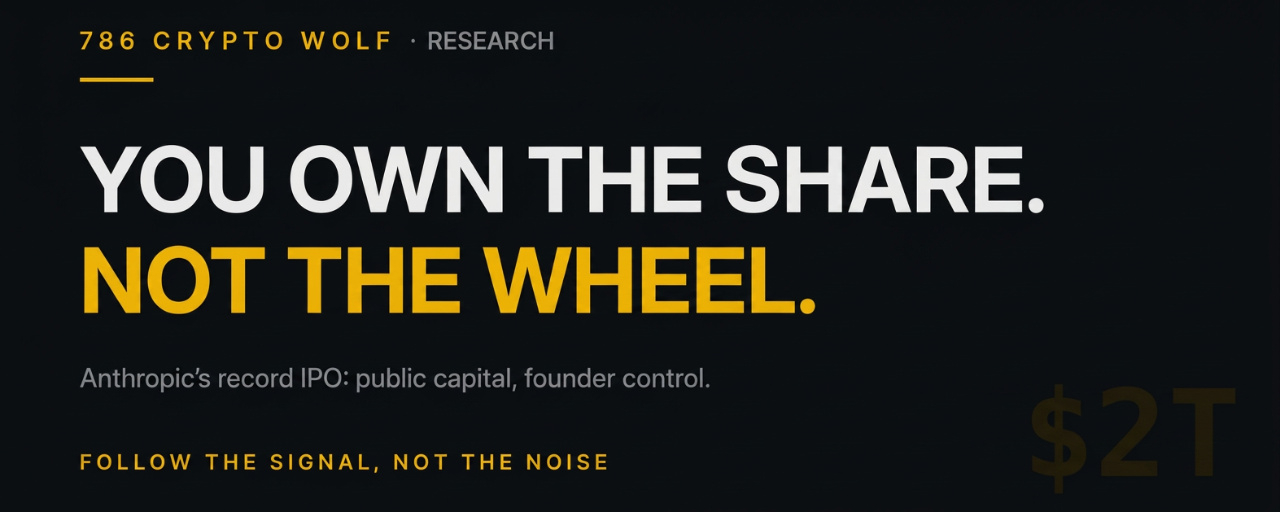
You Can Buy Anthropic. You Can’t Steer It.Can Anthropic hold a trillion dollars? That depends less on the number — and more on who’s allowed to defend it. Spoiler: it won’t be you.
Sometime before Thanksgiving, a retail investor will open their brokerage app, type three letters — ANT — and buy a piece of one of the most valuable companies ever to go public. Anthropic, the lab behind Claude, is targeting an IPO at a reported $1.5–2 trillion valuation. For the first time, the public gets in.
They’ll own a share. What they won’t own is a say.
The detail buried under the headline number is the structure. Reports point to a dual-class setup where founders keep super-voting power, sitting alongside Anthropic’s Long-Term Benefit Trust — a body built to steer the company toward its safety mission rather than toward quarterly profit.
Translate that: the public provides the capital. The founders and the Trust keep the controls. You buy the upside; you don’t buy the wheel.
This isn’t unique — Google and Meta did versions of it. But at a two-trillion-dollar debut for a company whose entire pitch is “we will make decisions others won’t,” the gap between who funds it and who governs it is the whole story.
Picture the buyer. They believe in AI. They missed NVIDIA early, missed OpenAI entirely (still private), and don’t want to miss again. So they buy ANT at a record valuation set by insiders — and get exposure to the outcome, but no vote on how it’s reached. If Anthropic slows a launch for a safety review that dents next quarter’s numbers, the shareholder absorbs the stock reaction. They can’t vote on the call. They can only sell.
Ownership used to mean a voice. Here it means a ticket to watch.
Now the honest part, because this cuts two ways.
Read it one way, and the structure betrays what “going public” is supposed to mean: take the public’s money, keep the public out of the decisions. Accountability stays with insiders; risk flows to retail.
Read it the other way, and the structure is the only thing protecting the mission. Public markets are relentless machines for extracting short-term growth. A company that promises to sometimes choose caution over speed cannot survive a shareholder base that punishes every careful quarter. The super-voting shares and the Trust are the seatbelt that lets the mission survive the market.
Both are true at once. That’s what makes it a real question, not a headline.
This is becoming the template for how AI’s biggest labs meet the public: raise enormous sums from everyone, keep control with a few. The industry that promises to decentralize intelligence is centralizing its own governance — on purpose, and arguably for good reason.
For the buyer, the lesson isn’t “avoid” or “buy.” It’s: know what the share actually is. A claim on the outcome — not a hand on the wheel.
So before you type those three letters, one question is worth more than any price target:
When you buy a share with no vote, are you an owner — or a lender who hopes the people with the wheel drive where you think they will?
#AnthropicIPO #Anthropic #Aİ #IPO #AlphaWolfHQ
🐺 786 CRYPTO WOLF · RESEARCH
Follow the signal, not the noise.
You Can Buy Anthropic. You Can’t Steer It.
Can Anthropic hold a trillion dollars? That depends less on the number — and more on who’s allowed to defend it. Spoiler: it won’t be you.
Sometime before Thanksgiving, a retail investor will open their brokerage app, type three letters — ANT — and buy a piece of one of the most valuable companies ever to go public. Anthropic, the lab behind Claude, is targeting an IPO at a reported $1.5–2 trillion valuation. For the first time, the public gets in.
They’ll own a share. What they won’t own is a say.
The detail buried under the headline number is the structure. Reports point to a dual-class setup where founders keep super-voting power, sitting alongside Anthropic’s Long-Term Benefit Trust — a body built to steer the company toward its safety mission rather than toward quarterly profit.
Translate that: the public provides the capital. The founders and the Trust keep the controls. You buy the upside; you don’t buy the wheel.
This isn’t unique — Google and Meta did versions of it. But at a two-trillion-dollar debut for a company whose entire pitch is “we will make decisions others won’t,” the gap between who funds it and who governs it is the whole story.
Picture the buyer. They believe in AI. They missed NVIDIA early, missed OpenAI entirely (still private), and don’t want to miss again. So they buy ANT at a record valuation set by insiders — and get exposure to the outcome, but no vote on how it’s reached. If Anthropic slows a launch for a safety review that dents next quarter’s numbers, the shareholder absorbs the stock reaction. They can’t vote on the call. They can only sell.
Ownership used to mean a voice. Here it means a ticket to watch.
Now the honest part, because this cuts two ways.
Read it one way, and the structure betrays what “going public” is supposed to mean: take the public’s money, keep the public out of the decisions. Accountability stays with insiders; risk flows to retail.
Read it the other way, and the structure is the only thing protecting the mission. Public markets are relentless machines for extracting short-term growth. A company that promises to sometimes choose caution over speed cannot survive a shareholder base that punishes every careful quarter. The super-voting shares and the Trust are the seatbelt that lets the mission survive the market.
Both are true at once. That’s what makes it a real question, not a headline.
This is becoming the template for how AI’s biggest labs meet the public: raise enormous sums from everyone, keep control with a few. The industry that promises to decentralize intelligence is centralizing its own governance — on purpose, and arguably for good reason.
For the buyer, the lesson isn’t “avoid” or “buy.” It’s: know what the share actually is. A claim on the outcome — not a hand on the wheel.
So before you type those three letters, one question is worth more than any price target:
When you buy a share with no vote, are you an owner — or a lender who hopes the people with the wheel drive where you think they will?
#AnthropicIPO #Anthropic #Aİ #IPO #AlphaWolfHQ
🐺 786 CRYPTO WOLF · RESEARCH
Follow the signal, not the noise.
304
·
--
Bearish
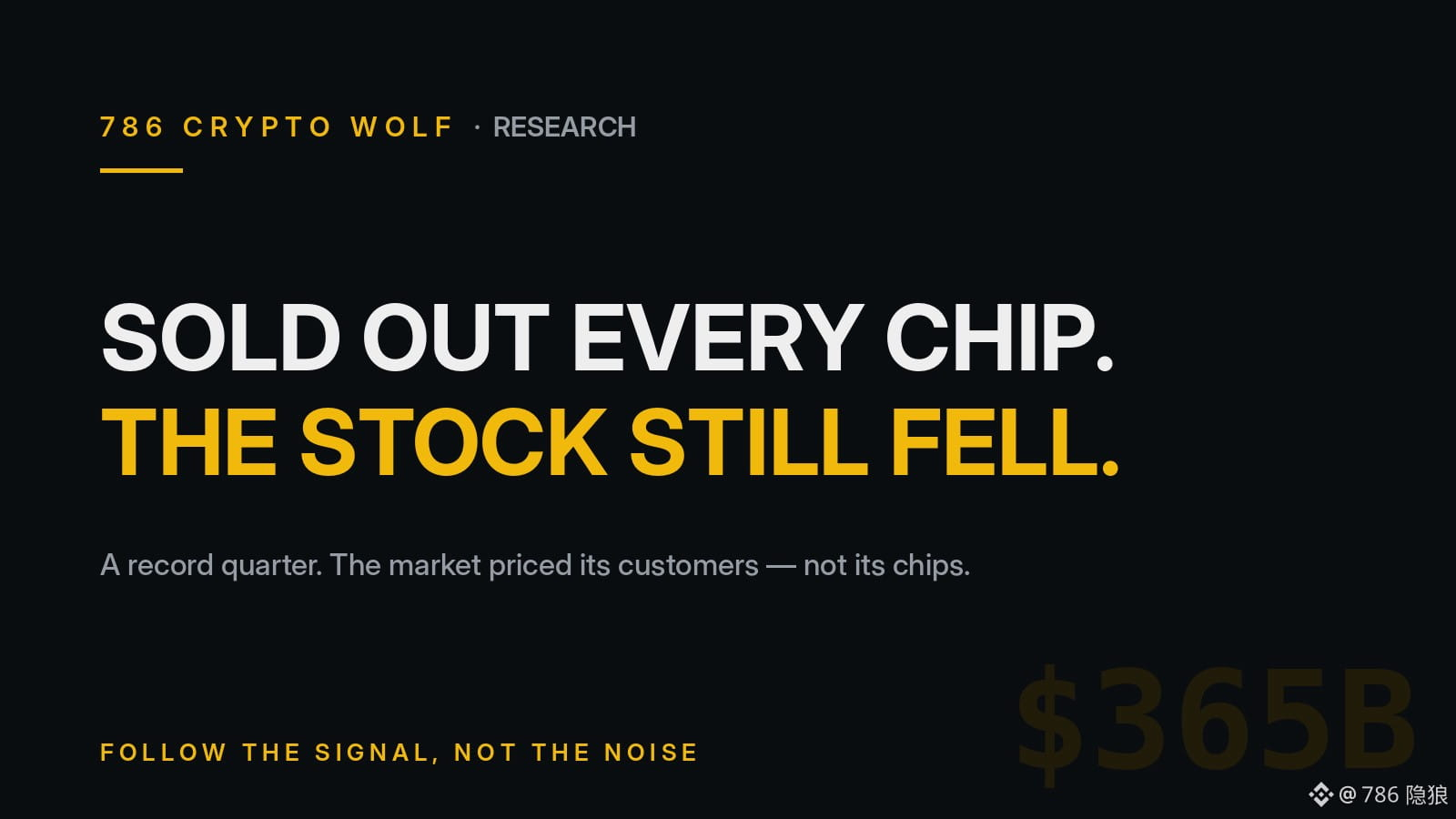
𝐍𝐕𝐈𝐃𝐈𝐀 𝐬𝐨𝐥𝐝 𝐨𝐮𝐭 𝐞𝐯𝐞𝐫𝐲 𝐜𝐡𝐢𝐩 𝐢𝐭 𝐦𝐚𝐝𝐞. 𝐓𝐡𝐞 𝐬𝐭𝐨𝐜𝐤 𝐟𝐞𝐥𝐥 𝐚𝐧𝐲𝐰𝐚𝐲.
Record quarter. Revenue +62%. Every data-center GPU gone. The next day,~$𝟑𝟔𝟓𝐁 𝐢𝐧 𝐦𝐚𝐫𝐤𝐞𝐭 𝐯𝐚𝐥𝐮𝐞 𝐯𝐚𝐧𝐢𝐬𝐡𝐞𝐝.
If selling out doesn’t lift the price, the price was never about the chips.
Here’s the dependency nobody prices out loud: 𝐍𝐕𝐈𝐃𝐈𝐀’𝐬 𝐫𝐞𝐯𝐞𝐧𝐮𝐞 𝐈𝐒 𝐭𝐡𝐞 𝐀𝐈 𝐢𝐧𝐝𝐮𝐬𝐭𝐫𝐲’𝐬 𝐬𝐩𝐞𝐧𝐝𝐢𝐧𝐠. Every chip sold is a bet that some buyer — OpenAI, a hyperscaler — earns that money back someday.
The market wasn’t doubting NVIDIA could sell. It was doubting whether the buyers can ever 𝐩𝐚𝐲 𝐢𝐭 𝐨𝐟𝐟.
Jensen Huang said it himself: “Bad quarter — proof of a bubble. Great quarter — we’re fueling the bubble.” Damned both ways — because the stock was never about the quarter.
A record quarter became the problem. That’s what a confidence market looks like the moment confidence cracks.
𝐖𝐡𝐞𝐧 𝐚 𝐜𝐨𝐦𝐩𝐚𝐧𝐲 𝐬𝐞𝐥𝐥𝐬 𝐨𝐮𝐭 𝐚𝐧𝐝 𝐬𝐭𝐢𝐥𝐥 𝐝𝐫𝐨𝐩𝐬 — 𝐢𝐬 𝐭𝐡𝐞 𝐦𝐚𝐫𝐤𝐞𝐭 𝐩𝐫𝐢𝐜𝐢𝐧𝐠 𝐭𝐡𝐞 𝐜𝐨𝐦𝐩𝐚𝐧𝐲, 𝐨𝐫 𝐞𝐯𝐞𝐫𝐲𝐨𝐧𝐞 𝐰𝐡𝐨 𝐨𝐰𝐞𝐬 𝐢𝐭 𝐦𝐨𝐧𝐞𝐲?
#AIChipSlumpNasdaq #AlphaWolfHQ #786CryptoWolf
#NVIDIA #AIBubble
🐺 𝟕𝟖𝟔 𝐂𝐑𝐘𝐏𝐓𝐎 𝐖𝐎𝐋𝐅 · 𝐑𝐄𝐒𝐄𝐀𝐑𝐂𝐇
𝓕𝓸𝓵𝓵𝓸𝔀 𝓽𝓱𝓮 𝓼𝓲𝓰𝓷𝓪𝓵, 𝓷𝓸𝓽 𝓽𝓱𝓮 𝓷𝓸𝓲𝓼𝓮.
1
235
·
--
Article
The $2 Billion Was Never Hidden. That’s the Part Nobody Wants to Admit.At some point this year, a transaction left a compromised exchange wallet. It confirmed in seconds, wrote itself to a public ledger, and became visible to anyone on earth with a block explorer. No disguise. No shredder. No offshore vault — just a line of data that will exist forever.
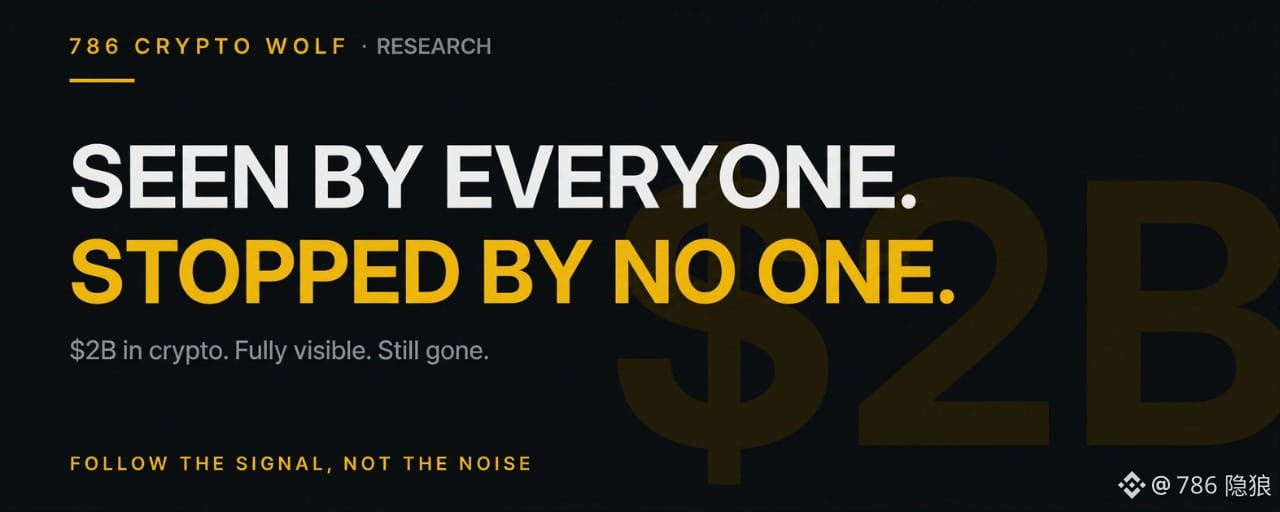
That transaction was part of the roughly $2 billion North Korea is estimated to have taken from crypto in 2025. And here is the truth buried under every “how do they hack us” headline: the money was never hidden. We watched it leave. We watched it move. And we couldn’t stop it.
Tracing was never the hard part.
The industry trained itself to treat tracing as the problem. It isn’t. On-chain, everything is visible by default — the opposite of cash. The hard problem is the one nobody markets: seeing a theft and being able to stop it are two completely different systems.
Freezing stolen funds is not a button. It needs a specific actor — a centralized exchange, a stablecoin issuer, a bridge operator — to decide, with legal cover and technical access, to act on a specific address. That decision lives across different companies, jurisdictions, and incentives. None is obligated to move first. All of them move slowly.
The fallout doesn’t land where the theft happened.
North Korea’s operators understand this gap better than most defenders do. Stolen funds don’t sit still waiting to be frozen. Within hours they’re split across chains, routed through bridges, and run through mixers built to break the link between source and destination.
By the time a freeze is authorized, the money has often already settled into liquidity that ordinary users touch — a pool, a swap, a “clean” wallet two hops away. The operation was North Korean. The loss lands on a trader in Karachi or Lagos whose only mistake was providing liquidity to the wrong pool at the wrong time.
The real architecture of the problem:
Detection — solved. The ledger remembers everything.Attribution — largely solved. Firms flag Lazarus-linked addresses within days.Response — broken. Fragmented, voluntary, slow action by actors who each have a reason to wait.
The gap between attribution and response is where two billion dollars disappears — not into secrecy, but into delay.
This reframes the whole conversation.
The question for exchanges, protocols, and regulators is no longer “can we see it?” We can. It’s: who is authorized to act on what we see, and how fast?
That’s a governance problem, not a surveillance one. It’s about pre-agreed response — standards for who freezes, under what proof, within what window — the way traditional finance eventually built (imperfect) rails to stop a wire. Crypto has perfect memory and almost no reflexes.
North Korea isn’t exposing a weakness in crypto’s privacy. It’s exposing a weakness in crypto’s response. We built a system that records every crime in permanent, public detail — and then leaves the decision to react to no one in particular.
So here’s the question the industry keeps avoiding: if every stolen dollar is visible to all of us, whose job is it to freeze it — the exchange, the protocol, or no one?
#AlphaWolfHQ #786CryptoWolf #northkorea #LazarusGroup #CryptoSecurity
🐺 786 CRYPTO WOLF · RESEARCH
Follow the signal, not the noise.
The $2 Billion Was Never Hidden. That’s the Part Nobody Wants to Admit.
At some point this year, a transaction left a compromised exchange wallet. It confirmed in seconds, wrote itself to a public ledger, and became visible to anyone on earth with a block explorer. No disguise. No shredder. No offshore vault — just a line of data that will exist forever.
That transaction was part of the roughly $2 billion North Korea is estimated to have taken from crypto in 2025. And here is the truth buried under every “how do they hack us” headline: the money was never hidden. We watched it leave. We watched it move. And we couldn’t stop it.
Tracing was never the hard part.
The industry trained itself to treat tracing as the problem. It isn’t. On-chain, everything is visible by default — the opposite of cash. The hard problem is the one nobody markets: seeing a theft and being able to stop it are two completely different systems.
Freezing stolen funds is not a button. It needs a specific actor — a centralized exchange, a stablecoin issuer, a bridge operator — to decide, with legal cover and technical access, to act on a specific address. That decision lives across different companies, jurisdictions, and incentives. None is obligated to move first. All of them move slowly.
The fallout doesn’t land where the theft happened.
North Korea’s operators understand this gap better than most defenders do. Stolen funds don’t sit still waiting to be frozen. Within hours they’re split across chains, routed through bridges, and run through mixers built to break the link between source and destination.
By the time a freeze is authorized, the money has often already settled into liquidity that ordinary users touch — a pool, a swap, a “clean” wallet two hops away. The operation was North Korean. The loss lands on a trader in Karachi or Lagos whose only mistake was providing liquidity to the wrong pool at the wrong time.
The real architecture of the problem:
Detection — solved. The ledger remembers everything.Attribution — largely solved. Firms flag Lazarus-linked addresses within days.Response — broken. Fragmented, voluntary, slow action by actors who each have a reason to wait.
The gap between attribution and response is where two billion dollars disappears — not into secrecy, but into delay.
This reframes the whole conversation.
The question for exchanges, protocols, and regulators is no longer “can we see it?” We can. It’s: who is authorized to act on what we see, and how fast?
That’s a governance problem, not a surveillance one. It’s about pre-agreed response — standards for who freezes, under what proof, within what window — the way traditional finance eventually built (imperfect) rails to stop a wire. Crypto has perfect memory and almost no reflexes.
North Korea isn’t exposing a weakness in crypto’s privacy. It’s exposing a weakness in crypto’s response. We built a system that records every crime in permanent, public detail — and then leaves the decision to react to no one in particular.
So here’s the question the industry keeps avoiding: if every stolen dollar is visible to all of us, whose job is it to freeze it — the exchange, the protocol, or no one?
#AlphaWolfHQ #786CryptoWolf #northkorea #LazarusGroup #CryptoSecurity
🐺 786 CRYPTO WOLF · RESEARCH
Follow the signal, not the noise.
3
2.4k
Log in to explore more content
Join global crypto users on Binance Square
⚡️ Get latest and useful information about crypto.
💬 Trusted by the world’s largest crypto exchange.
👍 Discover real insights from verified creators.
Email / Phone number
Trending Topics
1
#HuangRisksOusterOverReportedAffairWithSubordinate
1,766 views
38 Discussing
2
#AnthropicRejectsIPODelayValuationinQuestion
420,221 views
3,587 Discussing
3
#CoreWeaveJumps10%On168%RevenueGrowth
42,824 views
657 Discussing
4
#ZcashFallsBelow$1000ForFirstTimeSinceSeptember
21,227 views
130 Discussing
5
#CanNvidiaEarningsEaseMarketConcerns?
142,365 views
1,596 Discussing
6
#StrategyMetaplanetLoseMSCIIndexMembership
161 views
13 Discussing
7
#tZEROWinsCFTCApprovalForRegulatedDerivativesExchange
59 views
6 Discussing
8
#HotCPIDecemberHikePriced
442,634 views
3,624 Discussing
9
#StablecoinSupplyDrops$14.2BIn30Days
283 views
8 Discussing
10
#TradFiForBeginners
476,311 views
3,184 Discussing