
Real Henry
168 Posts

Real Henry
专注加密货币、技术分析与市场洞察。追求独立思考与真实价值。
X: @zhanghe Farcaster: zhanghe.eth 网站: zhanghe.dev
Open Trade
Occasional Trader
3.4 Years
2 Following
88 Followers
368 Liked
Posts
Portfolio
All
Quotes
Verified
Don't mistake "Alpha listing + open airdrop" for a Binance spot market listing, and don't take it to mean a fixed free giveaway has already been finalized.
The yellow tag says Binance Alpha will support trading of Canopy (CNPY) starting from 9/7; eligible users can later claim the airdrop with Alpha Points in Alpha Events — the official Wallet statement also says the details will be announced later, and confirming participation will deduct points. The Alpha channel itself does not guarantee entry into the spot market.
It's easy for people in the room to swing to either extreme: one side says "it’s going to list on a major exchange," while the other treats it as "the free allocation is already locked in." Both miss the layer of details that the official announcement hasn't nailed down yet.
No predictions about opening-day price moves, and no invented airdrop amounts. Wait for the details, then compare; it's more worry-free than following the crowd now. #BinanceAlpha将上线CNPY并开放空投
The yellow tag says Binance Alpha will support trading of Canopy (CNPY) starting from 9/7; eligible users can later claim the airdrop with Alpha Points in Alpha Events — the official Wallet statement also says the details will be announced later, and confirming participation will deduct points. The Alpha channel itself does not guarantee entry into the spot market.
It's easy for people in the room to swing to either extreme: one side says "it’s going to list on a major exchange," while the other treats it as "the free allocation is already locked in." Both miss the layer of details that the official announcement hasn't nailed down yet.
No predictions about opening-day price moves, and no invented airdrop amounts. Wait for the details, then compare; it's more worry-free than following the crowd now. #BinanceAlpha将上线CNPY并开放空投
Don’t take “the largest single-day inflow since January” to mean institutions are buying at that pace every day.
The yellow label is still repeating the peak-day figure; the U.S. pipeline on Sept. 4 had already narrowed — Farside’s U.S. spot Bitcoin ETFs recorded total net inflows of about $174.6 million (IBIT +$117.4 million, FBTC +$57.2 million). On the same day, spot Ethereum ETFs totaled about +$25.9 million, but it wasn’t a synchronized add: ETHA +$57.8 million, ETHB +$16.4 million, while FETH was −$48.3 million. The yellow label can show “largest single day,” but it can’t show “the firepower fell sharply the next day, and on the ETH side money was flowing in and out at the same time.”
#BitcoinETFRecordsLargestSingleDayInflowSinceJanuary
$BTC $ETH
The yellow label is still repeating the peak-day figure; the U.S. pipeline on Sept. 4 had already narrowed — Farside’s U.S. spot Bitcoin ETFs recorded total net inflows of about $174.6 million (IBIT +$117.4 million, FBTC +$57.2 million). On the same day, spot Ethereum ETFs totaled about +$25.9 million, but it wasn’t a synchronized add: ETHA +$57.8 million, ETHB +$16.4 million, while FETH was −$48.3 million. The yellow label can show “largest single day,” but it can’t show “the firepower fell sharply the next day, and on the ETH side money was flowing in and out at the same time.”
#BitcoinETFRecordsLargestSingleDayInflowSinceJanuary
$BTC $ETH


Don’t interpret “hit a multi-month high” as “spot buying has fully returned.”
On September 3 in U.S. Eastern time, Farside’s U.S. spot Bitcoin ETFs saw total net inflows of about $730.8 million (IBIT alone contributed about $454 million, more than 60%), making it one of the largest single-day inflows since mid-January (Cointelegraph / SoSoValue cited about $730.9 million); on the same day, spot Ethereum ETFs totaled about $141.4 million in inflows. The flow was indeed massive that day.
But CryptoQuant’s statement to Cointelegraph on Thursday pointed to a different interpretation: this move looked more like short sellers covering their positions than new long buyers pushing spot demand to full strength; fresh spot demand still appeared weak. They placed the key confirmation line around $83,000 (with the 365-day moving average around $82,300). The headline can reach “a multi-month high,” but it cannot capture the nuance that “large inflows do not necessarily mean new demand has already stabilized.”
#比特币以太坊触及数月高点 $BTC $ETH
On September 3 in U.S. Eastern time, Farside’s U.S. spot Bitcoin ETFs saw total net inflows of about $730.8 million (IBIT alone contributed about $454 million, more than 60%), making it one of the largest single-day inflows since mid-January (Cointelegraph / SoSoValue cited about $730.9 million); on the same day, spot Ethereum ETFs totaled about $141.4 million in inflows. The flow was indeed massive that day.
But CryptoQuant’s statement to Cointelegraph on Thursday pointed to a different interpretation: this move looked more like short sellers covering their positions than new long buyers pushing spot demand to full strength; fresh spot demand still appeared weak. They placed the key confirmation line around $83,000 (with the 365-day moving average around $82,300). The headline can reach “a multi-month high,” but it cannot capture the nuance that “large inflows do not necessarily mean new demand has already stabilized.”
#比特币以太坊触及数月高点 $BTC $ETH

Don’t mistake the “streak of consecutive gains ending” for “the fake pipeline shutting off all at once.”
On the U.S. East Coast, September 2, Ethereum spot ETFs saw total net outflows of about $48.2 million (Farside −48.2), breaking a twelve-day streak. On the same day, XRP spot ETFs recorded about −$7.2 million in net flow, breaking an eleven-day streak as well (Decrypt / SoSoValue). Yet in contrast, on the same day Bitcoin spot ETFs swung to about a net inflow of roughly $101.1 million.
Even more importantly, the next layer came on September 3: according to Farside, U.S. East Coast time, Ethereum spot ETFs again posted total net inflows of about $68.0 million (FETH about +$65.1 million as the main contributor), while Bitcoin total net inflow was about +$296.4 million. What’s been cut is the “streak of consecutive gains,” not the “whole pipeline shutting down and not reopening again.”#以太坊XRPETF连涨终结 .$ETH $XRP $BTC
On the U.S. East Coast, September 2, Ethereum spot ETFs saw total net outflows of about $48.2 million (Farside −48.2), breaking a twelve-day streak. On the same day, XRP spot ETFs recorded about −$7.2 million in net flow, breaking an eleven-day streak as well (Decrypt / SoSoValue). Yet in contrast, on the same day Bitcoin spot ETFs swung to about a net inflow of roughly $101.1 million.
Even more importantly, the next layer came on September 3: according to Farside, U.S. East Coast time, Ethereum spot ETFs again posted total net inflows of about $68.0 million (FETH about +$65.1 million as the main contributor), while Bitcoin total net inflow was about +$296.4 million. What’s been cut is the “streak of consecutive gains,” not the “whole pipeline shutting down and not reopening again.”#以太坊XRPETF连涨终结 .$ETH $XRP $BTC
Verified
Don’t confuse “rising for eleven consecutive days” with “the spot price is still going to keep going up.” Money going into ETFs and the direction of coin prices haven’t lined up these past couple of days.
SoSoValue (CoinDesk 9/2 update): The U.S. spot XRP ETF has seen net inflows for 11 straight trading days, roughly from August 18 through September 1—totaling about $170 million. On September 1 alone, it added about $14.38 million more. In the same window, XRP was hovering around $1.33 earlier on Wednesday, roughly below the $1.45 area seen on August 27—funds were still coming in, but the coin price had already given back the late-summer highs.
Look at another layer that others don’t always write about the same day: on September 1, U.S. spot Bitcoin ETFs recorded net outflows of about $236 million (with BlackRock’s IBIT accounting for roughly $201 million out of that). So this isn’t “all crypto ETFs together are absorbing”—it’s more like products shifting money among themselves. For XRP’s eleven-day run, don’t use it to prove the whole market is moving in.
And don’t read Goldman’s holdings from the Q2 13F filings straight as “big banks are chasing during these eleven days.” That’s the disclosure window as of June 30, and it’s not the same segment of data as this inflow cycle that started in mid to late August. Figures come from SoSoValue / CoinDesk—check it yourself. Don’t follow the calls, and don’t guess where the price is going next.
#XRP现货ETF连续11日吸金1.7亿美元 $XRP
SoSoValue (CoinDesk 9/2 update): The U.S. spot XRP ETF has seen net inflows for 11 straight trading days, roughly from August 18 through September 1—totaling about $170 million. On September 1 alone, it added about $14.38 million more. In the same window, XRP was hovering around $1.33 earlier on Wednesday, roughly below the $1.45 area seen on August 27—funds were still coming in, but the coin price had already given back the late-summer highs.
Look at another layer that others don’t always write about the same day: on September 1, U.S. spot Bitcoin ETFs recorded net outflows of about $236 million (with BlackRock’s IBIT accounting for roughly $201 million out of that). So this isn’t “all crypto ETFs together are absorbing”—it’s more like products shifting money among themselves. For XRP’s eleven-day run, don’t use it to prove the whole market is moving in.
And don’t read Goldman’s holdings from the Q2 13F filings straight as “big banks are chasing during these eleven days.” That’s the disclosure window as of June 30, and it’s not the same segment of data as this inflow cycle that started in mid to late August. Figures come from SoSoValue / CoinDesk—check it yourself. Don’t follow the calls, and don’t guess where the price is going next.
#XRP现货ETF连续11日吸金1.7亿美元 $XRP

Verified
#arb上涨30%受robinhood链收入推动
Don’t mishear “Robinhood chain income distributed to ARB” as “token holders get daily dividends.”
People in the room are arguing about this wave’s roughly 30% rise; over the last 24 hours it’s about +29% (CoinGecko), with the price back around $0.11. But the easiest thing to get wrong in this narrative is that “10%.”
The 1-to-1 breakdown is in Arbitrum DAO’s expansion plan: the Orbit chain sends 10% of the protocol’s net revenue back to the ecosystem—about 8% into the DAO treasury, and 2% to the developer guild. This is income to the ecosystem treasury, not automatic dividends paid to your wallet, and not used to buy back and burn ARB.
Double-check the scale. DefiLlama records that Robinhood Chain’s retained fees on August 31 were about $1.92 million; note that this figure has already had that 10% taken out. On the same day, the entry for deposits into Arbitrum’s foundation/DAO treasury is about $176k. Relative to ARB’s market cap of over $700 million, this is a structural signal—not “cash flow propping up the token price.”
In the room they use the logic “yesterday’s $1.9m × 10% = $190k into ARB,” but the base and attribution are off.
The numbers come from DefiLlama and explanations from the Arbitrum DAO forum—check it yourself. Don’t follow orders, and don’t guess whether it’ll keep rising.
$ARB
Don’t mishear “Robinhood chain income distributed to ARB” as “token holders get daily dividends.”
People in the room are arguing about this wave’s roughly 30% rise; over the last 24 hours it’s about +29% (CoinGecko), with the price back around $0.11. But the easiest thing to get wrong in this narrative is that “10%.”
The 1-to-1 breakdown is in Arbitrum DAO’s expansion plan: the Orbit chain sends 10% of the protocol’s net revenue back to the ecosystem—about 8% into the DAO treasury, and 2% to the developer guild. This is income to the ecosystem treasury, not automatic dividends paid to your wallet, and not used to buy back and burn ARB.
Double-check the scale. DefiLlama records that Robinhood Chain’s retained fees on August 31 were about $1.92 million; note that this figure has already had that 10% taken out. On the same day, the entry for deposits into Arbitrum’s foundation/DAO treasury is about $176k. Relative to ARB’s market cap of over $700 million, this is a structural signal—not “cash flow propping up the token price.”
In the room they use the logic “yesterday’s $1.9m × 10% = $190k into ARB,” but the base and attribution are off.
The numbers come from DefiLlama and explanations from the Arbitrum DAO forum—check it yourself. Don’t follow orders, and don’t guess whether it’ll keep rising.
$ARB
Verified
Don’t hear “large-scale rollout” as “starting today everyone must use digital rubles.” What’s being mandated is the gateway, not the people.
Central Bank’s position: Starting September 1, 12 systemically important banks (with 80%+ of the payments market) must enable customers to open digital ruble accounts. Another nine payment-important institutions also need to connect; among them, three only received their status in February this year, so they can be deferred until the end of the year. For citizens: you can open one if you want—there won’t be any automatic enrollment.
And don’t misread the merchant scale either. The first wave isn’t “everyone whose revenue exceeds 1.2 billion rubles gets included.” The official threshold is annual revenue above 120 million rubles, and on January 1, 2026 they must already have signed an electronic payment acquiring contract with a payment-important institution—both conditions must be met to enter the first wave. After that: 2027-09-01 (over 30 million), and 2028-09-01 (not less than 20 million). Single-store revenue under 5 million, offline-only shops, and purely B2B wholesale are not covered by the mandatory rollout.
One more look at the timeline window: the pilot has been running since August 15, 2023. By this July, there were about 30 banks connected to the platform; natural persons were roughly 3,500 and legal entities about 500. The original date for major-bank mandates was July 1, 2025, later postponed until today. So “large-scale” is about who must provide the channel—not an overnight explosion of millions of wallets.
The figures come from the Bank of Russia press release and Federal Law 248-FZ—go verify them yourself. Don’t hype it, and don’t guess what it will do to the market.
#俄罗斯9月1日启动数字卢布大规模推广
Central Bank’s position: Starting September 1, 12 systemically important banks (with 80%+ of the payments market) must enable customers to open digital ruble accounts. Another nine payment-important institutions also need to connect; among them, three only received their status in February this year, so they can be deferred until the end of the year. For citizens: you can open one if you want—there won’t be any automatic enrollment.
And don’t misread the merchant scale either. The first wave isn’t “everyone whose revenue exceeds 1.2 billion rubles gets included.” The official threshold is annual revenue above 120 million rubles, and on January 1, 2026 they must already have signed an electronic payment acquiring contract with a payment-important institution—both conditions must be met to enter the first wave. After that: 2027-09-01 (over 30 million), and 2028-09-01 (not less than 20 million). Single-store revenue under 5 million, offline-only shops, and purely B2B wholesale are not covered by the mandatory rollout.
One more look at the timeline window: the pilot has been running since August 15, 2023. By this July, there were about 30 banks connected to the platform; natural persons were roughly 3,500 and legal entities about 500. The original date for major-bank mandates was July 1, 2025, later postponed until today. So “large-scale” is about who must provide the channel—not an overnight explosion of millions of wallets.
The figures come from the Bank of Russia press release and Federal Law 248-FZ—go verify them yourself. Don’t hype it, and don’t guess what it will do to the market.
#俄罗斯9月1日启动数字卢布大规模推广

Verified
That anti-quantum transaction on the mainnet—sent 10,000 sats. The fee was 5,179 sats. Size: 1,403 bytes.
StarkWare’s Avihu Levy wrote up the plan in April. At 4:48 AM Beijing time on August 27, it was included in block 964199. The consensus rules didn’t change, and there was no soft fork. mempool.space can verify it.
Don’t take the headline as “Bitcoin is already quantum-resistant.” The official source wrote themselves: this is just a construct that ran end-to-end on the mainnet; the network itself didn’t change. The format isn’t standardized—ordinary nodes won’t relay it. You have to send it directly to miners via MARA Slipstream. Even old addresses with publicly known public keys can’t be protected by this trick.
That’s all that can be verified: it’s already in the mainnet, the protocol hasn’t changed, and ordinary wallets still can’t broadcast it right now. They also said their own soft fork remains a better long-term solution.
Let’s do the numbers and talk again.
#首笔抗量子比特币交易主网完成 $BTC
StarkWare’s Avihu Levy wrote up the plan in April. At 4:48 AM Beijing time on August 27, it was included in block 964199. The consensus rules didn’t change, and there was no soft fork. mempool.space can verify it.
Don’t take the headline as “Bitcoin is already quantum-resistant.” The official source wrote themselves: this is just a construct that ran end-to-end on the mainnet; the network itself didn’t change. The format isn’t standardized—ordinary nodes won’t relay it. You have to send it directly to miners via MARA Slipstream. Even old addresses with publicly known public keys can’t be protected by this trick.
That’s all that can be verified: it’s already in the mainnet, the protocol hasn’t changed, and ordinary wallets still can’t broadcast it right now. They also said their own soft fork remains a better long-term solution.
Let’s do the numbers and talk again.
#首笔抗量子比特币交易主网完成 $BTC
PCE year 3.7%, half-year annualized 4.1%. The target is still 2%.
What Vaish said yesterday, quoting his exact words at Jackson Hole: underlying inflation is moving toward the target, but the pace still has to be enough—or there’s more work to do. In the PCE basket, 54% of the components that rose over the past year are still above 3%. Unemployment rate is 4.1%.
Bitcoin is at 77690 on Yahoo right now, down 3.50% over the past 24 hours.
Let’s do the math and chat again.
#沃什称通胀是美联储首要关注 $BTC
What Vaish said yesterday, quoting his exact words at Jackson Hole: underlying inflation is moving toward the target, but the pace still has to be enough—or there’s more work to do. In the PCE basket, 54% of the components that rose over the past year are still above 3%. Unemployment rate is 4.1%.
Bitcoin is at 77690 on Yahoo right now, down 3.50% over the past 24 hours.
Let’s do the math and chat again.
#沃什称通胀是美联储首要关注 $BTC
Tonight during the session it touched 81149, and now it's back around 79359. It went a bit above 80,000, then pulled back.
On Yahoo, this daily candle opened at 80262, with a range from 79035 to 81149. From the high, it has given back about 1784.
Let's do the numbers and chat more. #比特币守于7.94万美元
On Yahoo, this daily candle opened at 80262, with a range from 79035 to 81149. From the high, it has given back about 1784.
Let's do the numbers and chat more. #比特币守于7.94万美元

Verified
Wednesday close 209.66, Thursday close 227.98. 18.32 yuan in a day, up 8.74%.
Nvidia’s own quarterly report: Q2 revenue was $96.2 billion, up 106% year over year. Data center revenue was $89.0 billion, up 117%. Q3 guidance is $108.0 billion, plus or minus 2%. Adjusted earnings per share were 2.22.
Let’s crunch the numbers and talk again.
#英伟达营收超预期股价涨4%
Nvidia’s own quarterly report: Q2 revenue was $96.2 billion, up 106% year over year. Data center revenue was $89.0 billion, up 117%. Q3 guidance is $108.0 billion, plus or minus 2%. Adjusted earnings per share were 2.22.
Let’s crunch the numbers and talk again.
#英伟达营收超预期股价涨4%
Tonight during the intraday session it touched 80488, and now it’s back around 79288. I probed near 80,000, but it backed off again.
On Yahoo, this daily (day K) range is from 78622 to 80488. This morning spot was still around 78800, and by the evening the high was higher by about 1700.
Let’s crunch the numbers and talk more. #比特币升破8万美元创三月新高
On Yahoo, this daily (day K) range is from 78622 to 80488. This morning spot was still around 78800, and by the evening the high was higher by about 1700.
Let’s crunch the numbers and talk more. #比特币升破8万美元创三月新高

Friday 4:00 PM Beijing time: Deribit still has about 81,700 bitcoin options expiring, with a notional value of roughly 6.44 billion.
Spot is currently around 78,800. The biggest pain point is at 68,000—it's just a little over 10,000 away. The 75k call open-interest notional is 236 million, and 80k is 157 million; the price is trapped between these two strikes.
Let’s run the numbers and chat again. ##比特币64亿美元期权将到期
Spot is currently around 78,800. The biggest pain point is at 68,000—it's just a little over 10,000 away. The 75k call open-interest notional is 236 million, and 80k is 157 million; the price is trapped between these two strikes.
Let’s run the numbers and chat again. ##比特币64亿美元期权将到期

Touched the 7-day high at 1.69; tonight spot is back around 1.41. In one day, it dropped by about 4.6%.
CoinGecko’s rolling 7 days is still +40.3%, within a range of 1.02 to 1.69. The label says 44%—that’s the figure from this recent surge, not the increase that’s still hanging there tonight.
Current price is 1.41, which is still 0.28 away from the 7-day high. Let’s do the math and talk again #XRP一周上涨44%
CoinGecko’s rolling 7 days is still +40.3%, within a range of 1.02 to 1.69. The label says 44%—that’s the figure from this recent surge, not the increase that’s still hanging there tonight.
Current price is 1.41, which is still 0.28 away from the 7-day high. Let’s do the math and talk again #XRP一周上涨44%
Friday intraday high point was 79464, and on Monday early trading it returned to around 77200. Two thousand yuan has landed first.
This Yahoo weekly K moved from the Sunday close of 62819 to the Saturday close of 77083—up 22.7% for the week. Along the way, the highest it touched was 79464; the difference between the week’s open and the week’s high was 16,000.
I went back and compared the weekly gains from 2023 to now: only the stretch in March 2023 is steeper than this week (26.6%). The week at the end of February 2024 was 22.1%, which is still about half a notch lower. The current price is still sitting at 77200; on the first early session after the rise, I’ll compare the high point with the current price.
Let’s do the math and then talk again.
#比特币创2023年3月来最强周涨幅
This Yahoo weekly K moved from the Sunday close of 62819 to the Saturday close of 77083—up 22.7% for the week. Along the way, the highest it touched was 79464; the difference between the week’s open and the week’s high was 16,000.
I went back and compared the weekly gains from 2023 to now: only the stretch in March 2023 is steeper than this week (26.6%). The week at the end of February 2024 was 22.1%, which is still about half a notch lower. The current price is still sitting at 77200; on the first early session after the rise, I’ll compare the high point with the current price.
Let’s do the math and then talk again.
#比特币创2023年3月来最强周涨幅

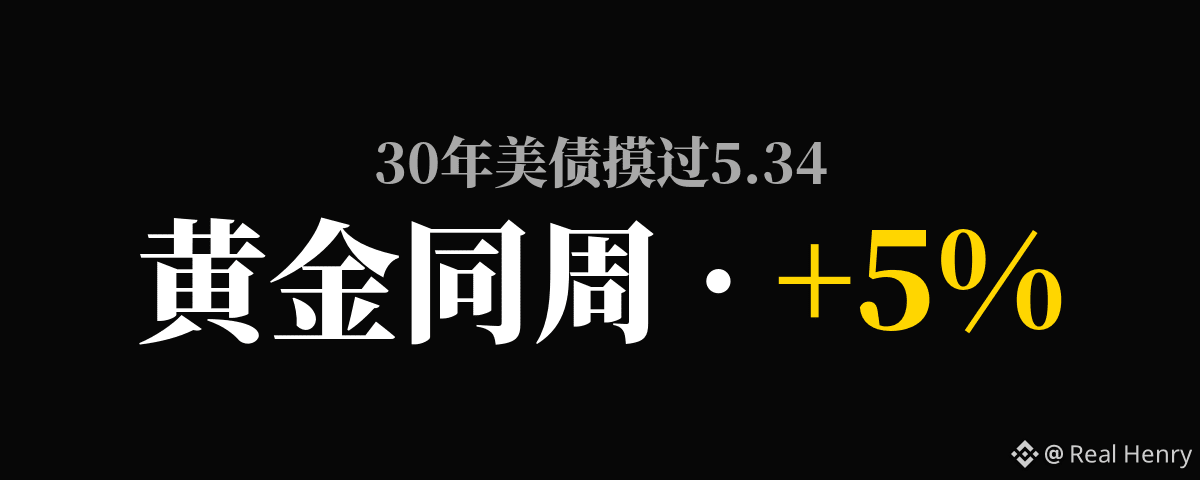
On Tuesday, 30-year U.S. Treasury yields touched 5.337, the highest since 2007. In the same week, spot gold also rose more than 5%; on Friday during trading hours it hit a peak of 4620, the highest since May 15.
With interest rates this high, gold prices should have been pressured. The Ministry of Finance has just raised the long-term bond repo to at least $4 billion per tranche; with the dollar weakening, gold has still climbed this much.
Let’s check the numbers and talk again.#黄金反弹近5%
With interest rates this high, gold prices should have been pressured. The Ministry of Finance has just raised the long-term bond repo to at least $4 billion per tranche; with the dollar weakening, gold has still climbed this much.
Let’s check the numbers and talk again.#黄金反弹近5%
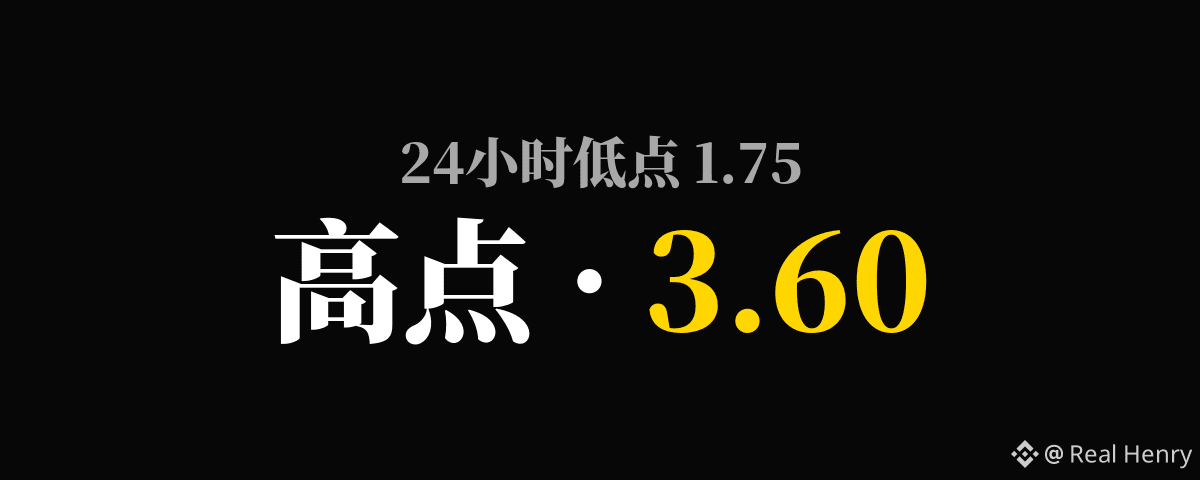
The square has a sign you can touch up to 3.4. In this CoinGecko chart, the 24-hour high is already 3.60, while the low is still 1.75. Right now it’s about 2.41.
Circulating supply is about 248 million, total supply is 1 billion.
Let’s double-check and talk again. #TRUMP突破3.4美元创3月21日以来新高 $TRUMP
Circulating supply is about 248 million, total supply is 1 billion.
Let’s double-check and talk again. #TRUMP突破3.4美元创3月21日以来新高 $TRUMP
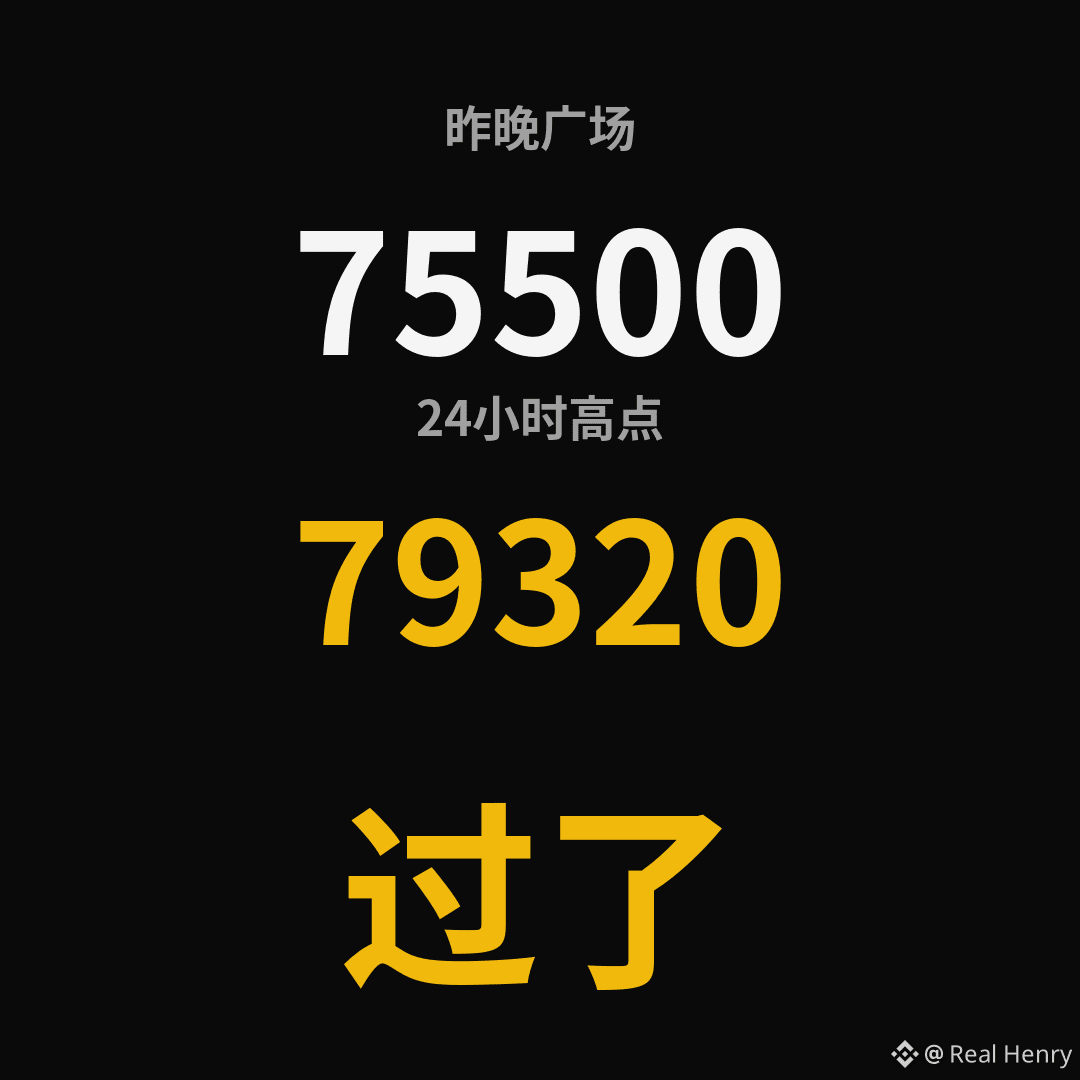
Last night the square was still talking about 75500. CoinGecko right now has the current price at about 77900, and the 24-hour high has already touched 79320.
In its Friday note, CoinDesk said the intraday high was around 79400—up roughly 24% from Monday. They described it as the strongest week since March 2023. On CoinGecko’s chart, the 24-hour low is still 73784.
For ETH, the current price is about 2511, the 24-hour high is 2542, and the low is 2338.
Let’s crunch the numbers and talk again.
#比特币日内触及75500美元 $BTC $ETH
In its Friday note, CoinDesk said the intraday high was around 79400—up roughly 24% from Monday. They described it as the strongest week since March 2023. On CoinGecko’s chart, the 24-hour low is still 73784.
For ETH, the current price is about 2511, the 24-hour high is 2542, and the low is 2338.
Let’s crunch the numbers and talk again.
#比特币日内触及75500美元 $BTC $ETH
Full-year record in 2020: 203 trillion won. This package approved by Samsung’s board today is expected to be in the range of about 900 trillion to 1.1 quadrillion won in 2026.
It includes about 300 trillion won in cash dividends for the third quarter first; the exact figure will be finalized at the end of October. Then, how the remainder will be distributed—whether or not there will be share buybacks—will be decided after reviewing this year’s financial results in January next year. The board also approved about 150 trillion won in share buybacks, the purpose of which is to cover employee compensation; it is separate from the return package.
#三星拟周五公布新股东回报计划
It includes about 300 trillion won in cash dividends for the third quarter first; the exact figure will be finalized at the end of October. Then, how the remainder will be distributed—whether or not there will be share buybacks—will be decided after reviewing this year’s financial results in January next year. The board also approved about 150 trillion won in share buybacks, the purpose of which is to cover employee compensation; it is separate from the return package.
#三星拟周五公布新股东回报计划

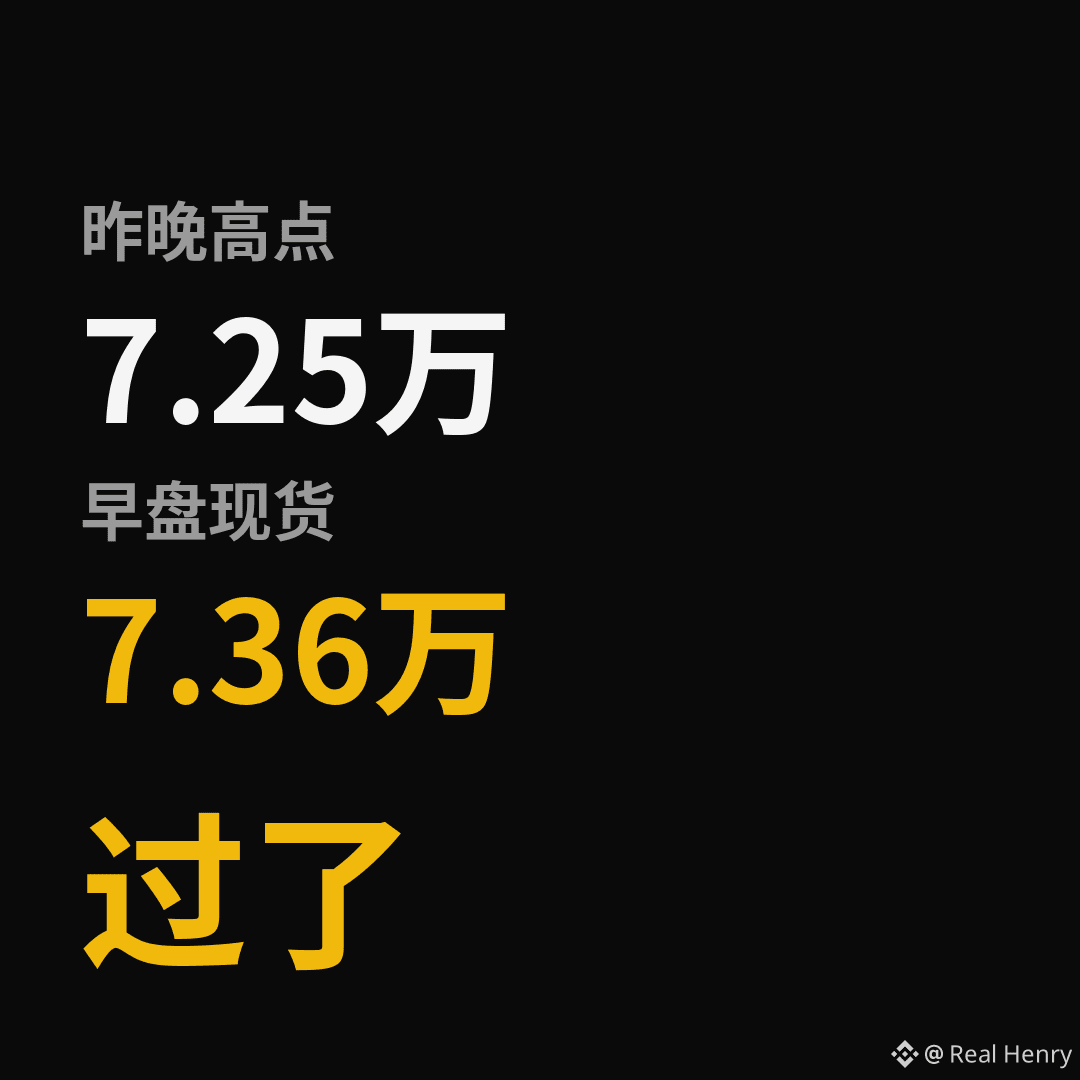
Back when it was the evening paper, it was higher—72490—but it didn’t hold. CoinGecko is at 73617 now, with a 24-hour high of 73887.
The low was 68898; it’s up about 6% for the day. Farside’s 8/19 totals 517.2 million is already complete, with IBIT at 284.7 million. On 8/20’s table, the IBIT column is still empty, and the total written so far is only 103.3 million—don’t treat it as the close yet. ETH 2336, with the high having touched 2351.$BTC $ETH
The low was 68898; it’s up about 6% for the day. Farside’s 8/19 totals 517.2 million is already complete, with IBIT at 284.7 million. On 8/20’s table, the IBIT column is still empty, and the total written so far is only 103.3 million—don’t treat it as the close yet. ETH 2336, with the high having touched 2351.$BTC $ETH
Log in to explore more content